


Kitchens tend to feel more settled when the walls and surfaces carry visible texture instead of staying perfectly smooth.
I have found that plaster and stone together can quiet a room even when the layout stays simple and the cabinets stay minimal.
Aged wood changes the balance.
When I test new ideas at home I usually start with the counters and open shelves because those surfaces get touched every day and show wear first.
Over time the materials settle into each other and the kitchen ends up looking like it belongs to the house rather than something added on later.
A Wooden Island in a Plaster Kitchen

A large wooden island can anchor a kitchen that uses plaster walls and stone floors. The natural grain and wear on the wood add warmth and weight that keep the space from feeling too bare or cold.
This works best in homes that already lean simple or rustic. Match the island wood to any open shelves or stools so the tones stay consistent, and let the plaster and stone handle the rest of the texture.
Mixing Aged Wood Cabinets with Stone and Plaster

Aged wood cabinets add warmth that keeps stone counters and plaster walls from feeling too hard or cold. The natural grain and slight imperfections in the wood give the kitchen a lived-in quality that fits the wabi-sabi approach.
This combination works especially well in narrow kitchens where you need the space to feel grounded rather than stark. Keep the wood tones simple and let the stone and plaster stay matte so the materials stay balanced.
Aged Wood For Cabinets And Furniture

Aged wood brings a quiet warmth to kitchens that newer materials often miss. The table and cabinets here show how reclaimed pieces with visible wear can sit comfortably against plaster walls without looking staged.
This works best in homes that already have some age or texture to them. Use just a few wood elements and leave the rest of the surfaces simple so the natural grain and marks do the work.
Mixing Plaster Walls with Aged Wood and Stone
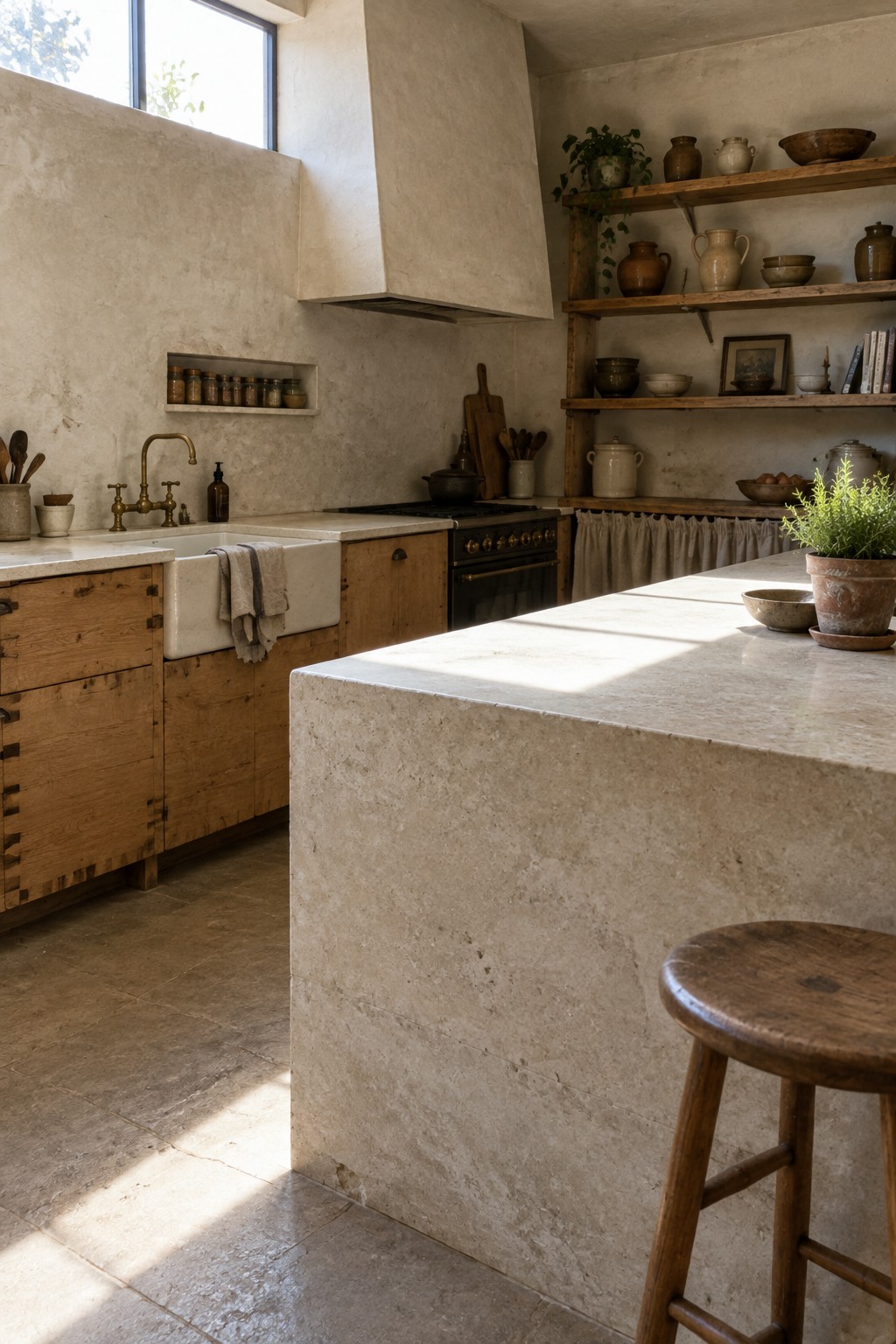
Plaster walls bring a soft, uneven texture that pairs naturally with the warmth of aged wood cabinetry and the cool weight of stone surfaces. This combination keeps a kitchen feeling grounded without looking overly finished or styled. The materials age together over time and hide daily wear in a way that smoother surfaces cannot.
It suits older homes or new builds that aim for a simple, unfussy look. Stick to a limited palette so the textures carry the space, and let the wood show its grain and marks rather than refinishing everything to match.
Aged Wood with Plaster and Stone

Many kitchens feel finished too quickly. Aged wood next to plaster walls and stone surfaces slows things down in a good way and gives the room a settled look that does not need constant updating.
This approach suits older homes or new builds that want a quieter feel. Use the wood for bigger pieces like an island or open shelves, keep the plaster simple, and let the stone handle the work areas. The mix stays interesting without extra decoration.
Aged Wood Cabinets with Plaster and Stone

Aged wood cabinetry brings a natural warmth to kitchens that use plaster walls and stone floors. The rough texture of the wood next to the soft plaster and cool stone keeps the space from feeling too polished or new. It works because the materials all show their age in different ways.
This mix suits older homes or new kitchens that aim for a relaxed, unfussy look. Stick with unfinished or lightly sealed wood so it continues to darken over time, and let the plaster stay slightly uneven rather than trying to smooth it out.
An Aged Wood Table for the Kitchen

A big wooden table made from aged wood gives a kitchen real presence without trying too hard. The surface shows its years through scratches and grain, which pairs naturally with stone sinks and plaster walls that already carry texture and age.
This works best in homes that get daily use, where the table serves for meals, prep, or just sitting. Keep the rest of the room simple so the wood stays the main material note, and choose chairs that match the same unfussy style rather than adding contrast for its own sake.
Natural Stone Kitchen Islands

A large stone island works well in this kind of kitchen because it brings real weight and texture without needing much else. The material shows natural marks and variation that fit the overall wabi sabi approach, and it pairs easily with wood cabinetry and simple plaster walls.
It suits homes that already lean toward minimal built-ins and open storage. Keep the rest of the surfaces quiet so the island stays the focus, and choose a stone with some movement rather than a perfectly uniform slab.
Stone Walls With Aged Wood Surfaces

Stone walls paired with aged wood give a kitchen an honest, settled feeling that feels right at home in wabi-sabi style. The rough texture of the stone contrasts nicely with the softer, worn look of the wood, and both materials improve with time rather than fighting it.
This approach works especially well in older homes or simple renovations where you can leave the stone exposed. Use reclaimed or naturally finished wood for counters and open shelving so the two materials sit comfortably together without looking styled.
Aged Wood Open Shelving In The Island

One simple way to bring wabi sabi into a kitchen is to use aged wood for open shelving right in the island. The wood shows its grain and age next to the plaster walls and stone top, and it keeps everyday items within easy reach without any doors or hardware to fuss with.
This works best in homes that already lean toward natural textures and softer finishes. It suits smaller kitchens especially well since open shelves keep the space from feeling boxed in, though you do need to like seeing your linens and bowls on display.
Plaster Cabinetry for a Softer Kitchen
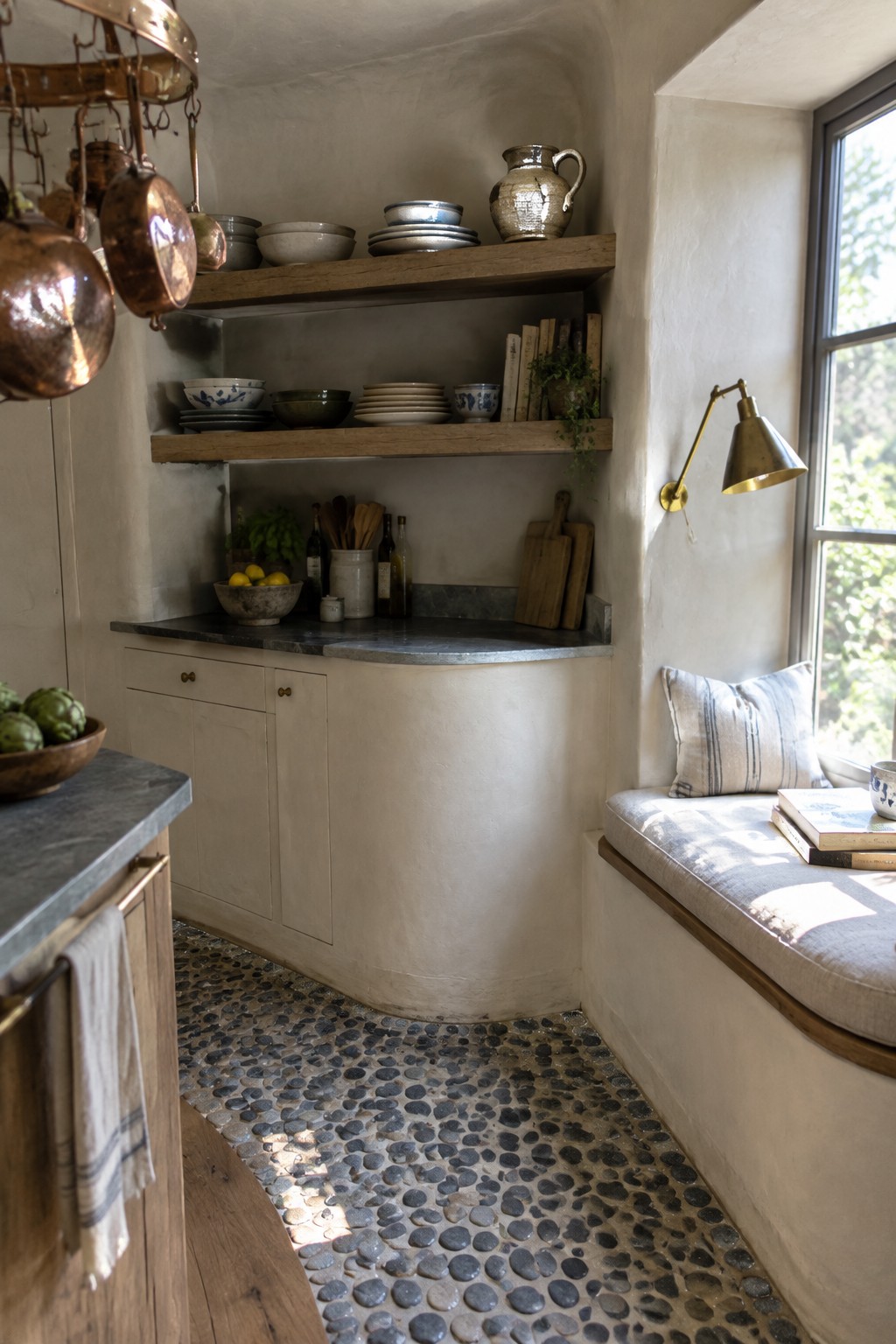
Plaster cabinetry gives a kitchen a quiet, hand-finished look that feels less built and more part of the room itself. The material wraps around curves and corners without sharp edges, which helps the space feel calmer and a little more lived in. It works especially well when the rest of the room stays simple.
This approach suits older homes or smaller kitchens where you want storage without adding visual weight. Pair it with stone counters and a few open wood shelves so the plaster does not feel too heavy or closed off. Keep the finish matte and slightly uneven for the right effect.
Built-In Wood Seating For Kitchen Corners

Built-in benches made from aged wood turn an ordinary kitchen corner into a spot that feels ready for daily use. The wood adds warmth that pairs naturally with plaster walls and stone surfaces, and the seating stays out of the way while still giving you a place to sit.
This approach suits smaller kitchens or homes that want a casual eating area without crowding the room with extra furniture. Keep the cushions simple and let the wood and plaster do the work. The bench can wrap around a corner or run along one wall, depending on the space you have.
Aged Wood Cabinets Against Plaster Walls

Aged wood cabinets stand out in a kitchen because they bring warmth and texture that newer pieces often lack. When placed against plaster walls and paired with stone surfaces, they help the room feel settled and lived in rather than styled from scratch.
This approach works best in homes that already have some age or texture to work with. Choose a low, simple cabinet with visible wear and avoid anything too refined or uniform in finish.
Concrete Kitchen Sinks
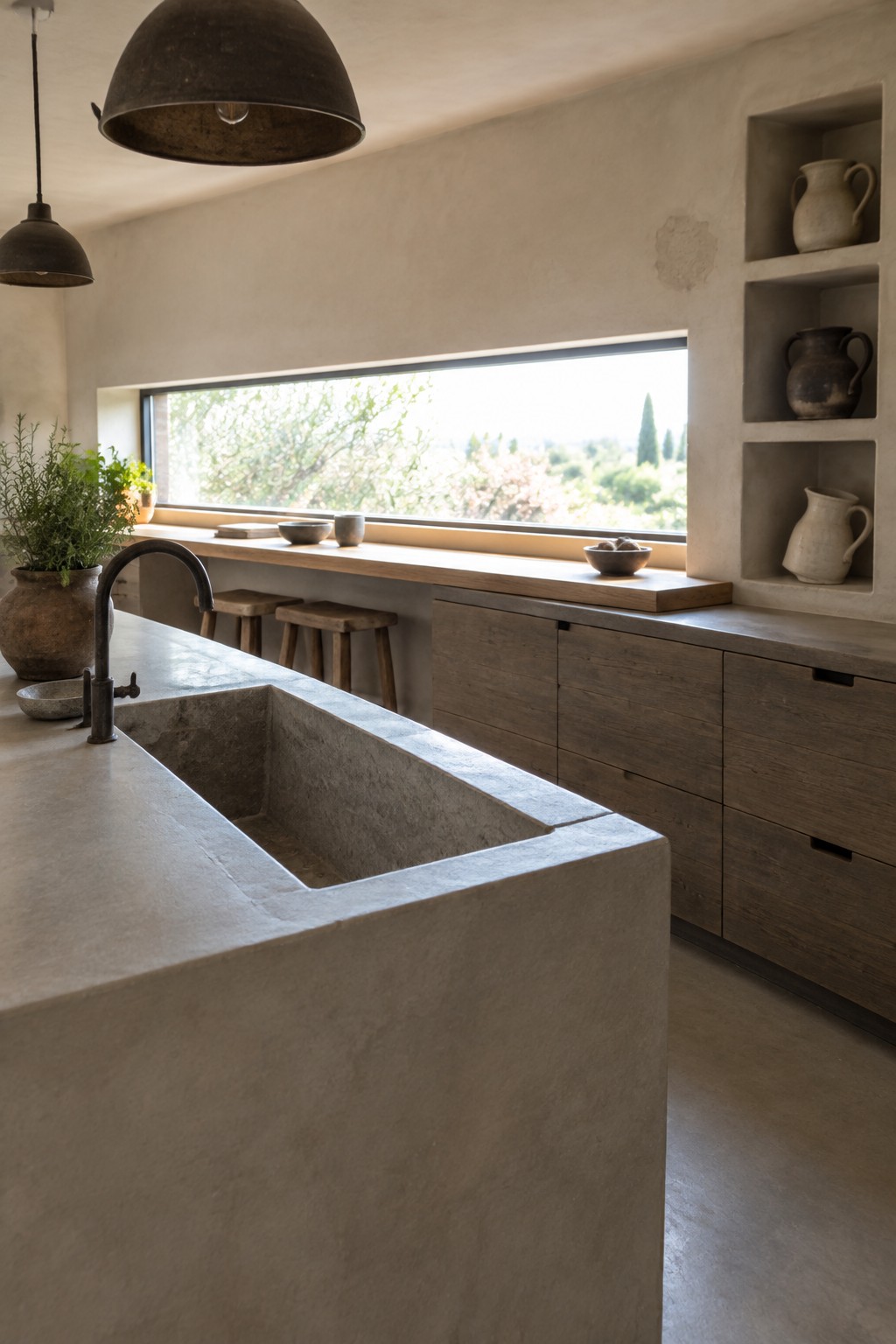
A concrete sink brings real weight and texture to a kitchen that already uses wood and plaster. The material feels solid and simple, and it ages in a way that fits the overall look without needing much extra detail.
This works best in spaces where you want one strong natural element to stand out against wood cabinetry and soft plaster walls. Keep the rest of the finishes quiet so the sink can carry the room.
Aged Wood Islands for Everyday Kitchens

An island made from aged wood brings real texture and weight to a kitchen without needing much else around it. The grain and natural marks do the talking, and the surface feels warmer under hand than stone or tile ever would.
This choice works best when the floor is stone and the walls stay simple plaster. Keep other wood tones in the room close in color so the island fits in rather than stands apart.
Aged Wood Counters Against Plaster Walls

Many kitchens feel calmer when the counters are allowed to show their age. Thick wooden tops next to plaster walls give the room a settled look that new materials often miss. The wood picks up marks and softens over time, which fits the rest of the space without extra effort.
This approach works best in homes that already have some age or texture to the walls. Use it where daily wear is expected, and keep the finish simple so the wood can continue to change. Darker cabinet paint underneath helps the wood stand out without competing.
A Substantial Wood Table As The Kitchen Island
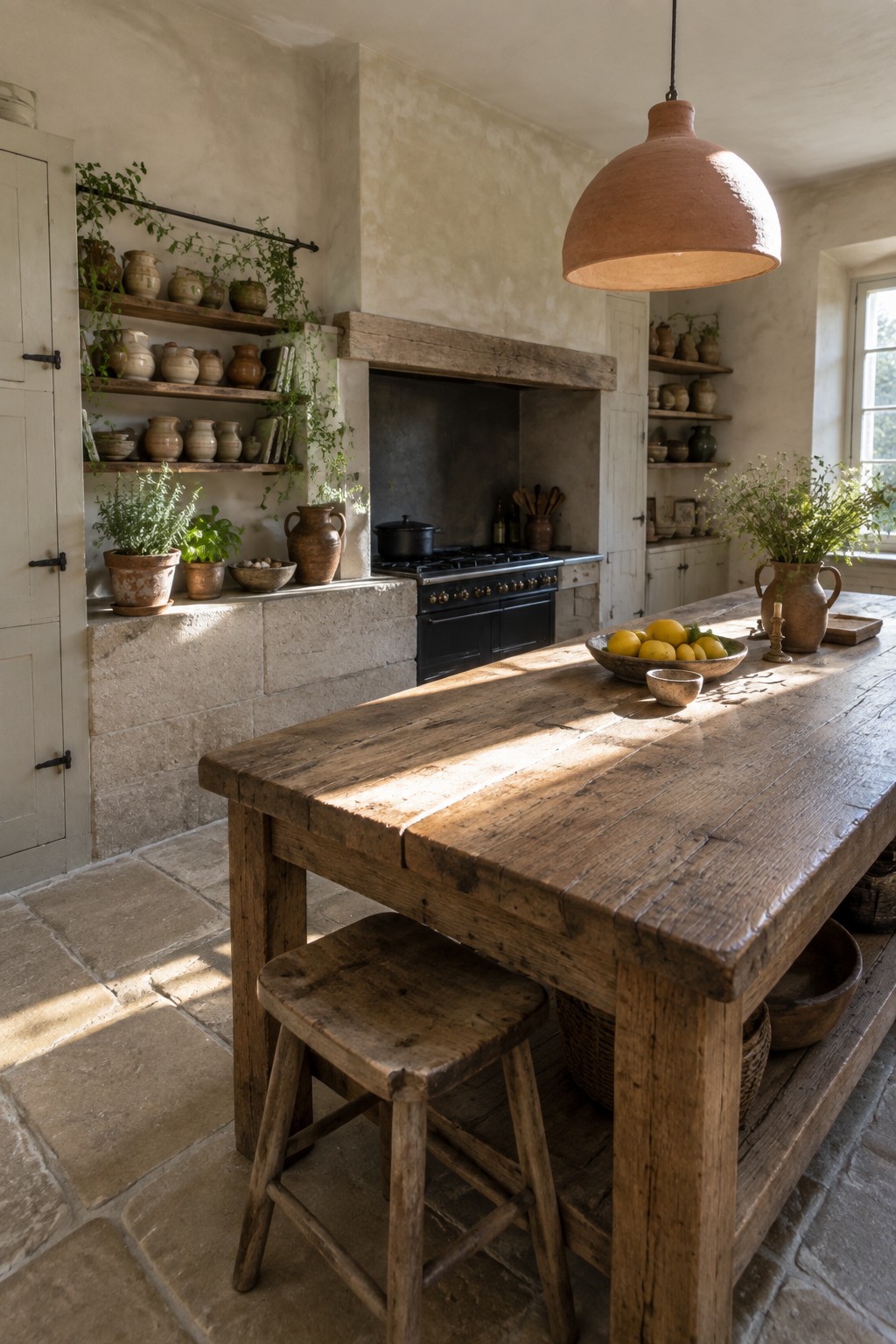
A thick wood table can serve as the main workspace in a kitchen without needing built-in cabinetry underneath. The natural grain and worn edges bring texture that pairs naturally with plaster walls and stone ledges, keeping the room from feeling too polished or rigid.
This choice suits older homes or any space where you want the kitchen to feel lived-in rather than designed. It works best when the table is scaled to the room so people can move around it easily and use both sides for daily tasks.
Stone Walls and Wood in the Kitchen

Many kitchens feel better when the walls are left as they are instead of getting covered up. Stone that has already been there for years brings texture and weight that new surfaces often lack. The wood counter then sits right against it and the two materials settle into each other without much extra work.
This approach suits older houses or any space that already has some stone showing. Keep the rest of the finishes simple so the stone and wood stay the main features. A single thick wood slab and a few open shelves are usually enough.
Mixing Aged Wood with Stone and Plaster

Aged wood brings a lot of character to a kitchen when it is used for both the lower cabinets and the open shelves. The rough grain and darkened tone stand out nicely against the smooth plaster walls and the pale stone counter and sink. This mix keeps the space from feeling too new or too finished.
It works well in older homes or in new builds that aim for a simple, unfussy look. Keep the shelves lightly styled with a few bowls and jars rather than filling every inch. The wood will darken more over time, which only adds to the effect.
Frequently Asked Questions
Q: How do I protect aged wood shelves near the sink from water damage?
A: Seal the wood with a natural oil finish that lets it breathe. Wipe up spills right away to avoid dark spots. This keeps the aged look without letting moisture sink in.
Q: Can I use real stone counters if I want a low maintenance kitchen?
A: Choose a stone like soapstone that develops its own patina. It hides marks better than marble as you cook every day. Just rub in mineral oil now and then.
Q: What if my plaster walls start to chip around the stove area?
A: Patch small chips with matching plaster. The worn spots add to the charm anyway.
