

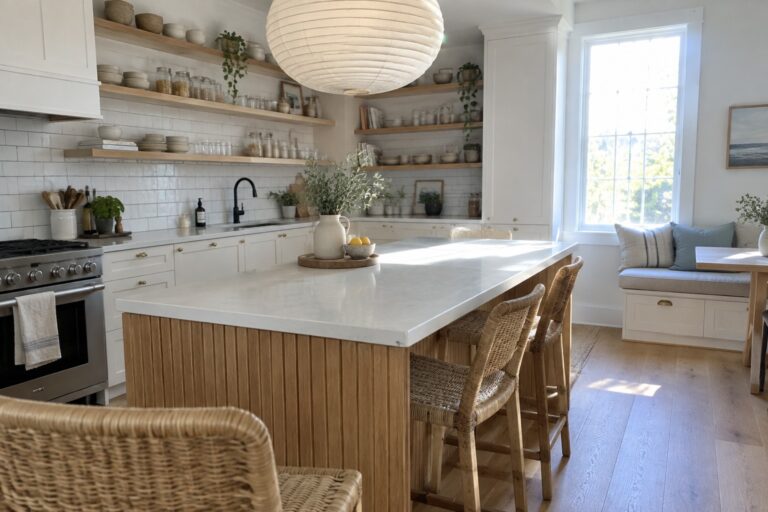
I’ve found that white and wood kitchens can feel open and calm when the materials are balanced well, but they lose that ease if everything stays too smooth and uniform.
Layering in different textures through backsplashes or seating helps the room hold up better to daily use and the mess that comes with it.
Texture makes the difference here.
When I tried mixing a rough wood island with smoother white walls in a friend’s space the whole area started to feel more inviting without any extra effort.
Ideas like these often work best when you adapt them to how your kitchen gets used rather than copying them exactly.
Fluted Wood Island Bases
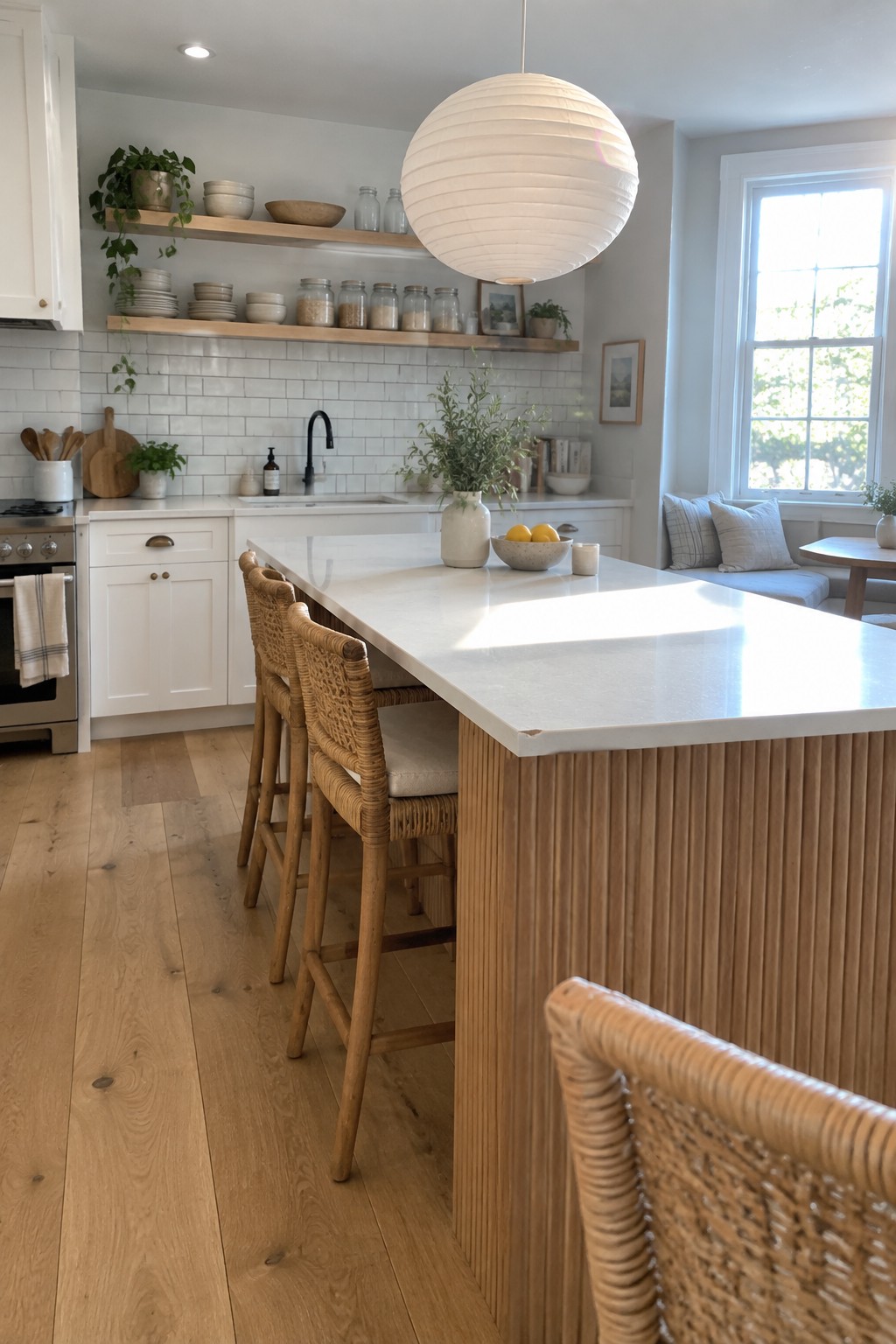
A white kitchen often needs something to break up all the smooth surfaces. A fluted wood base on the island adds vertical texture and brings in natural warmth without adding color or clutter.
This detail works best in kitchens that already have wood tones on the floor or open shelving. Keep the rest of the island simple with a light countertop so the texture on the sides can stand out on its own.
Adding Natural Wood To White Kitchens
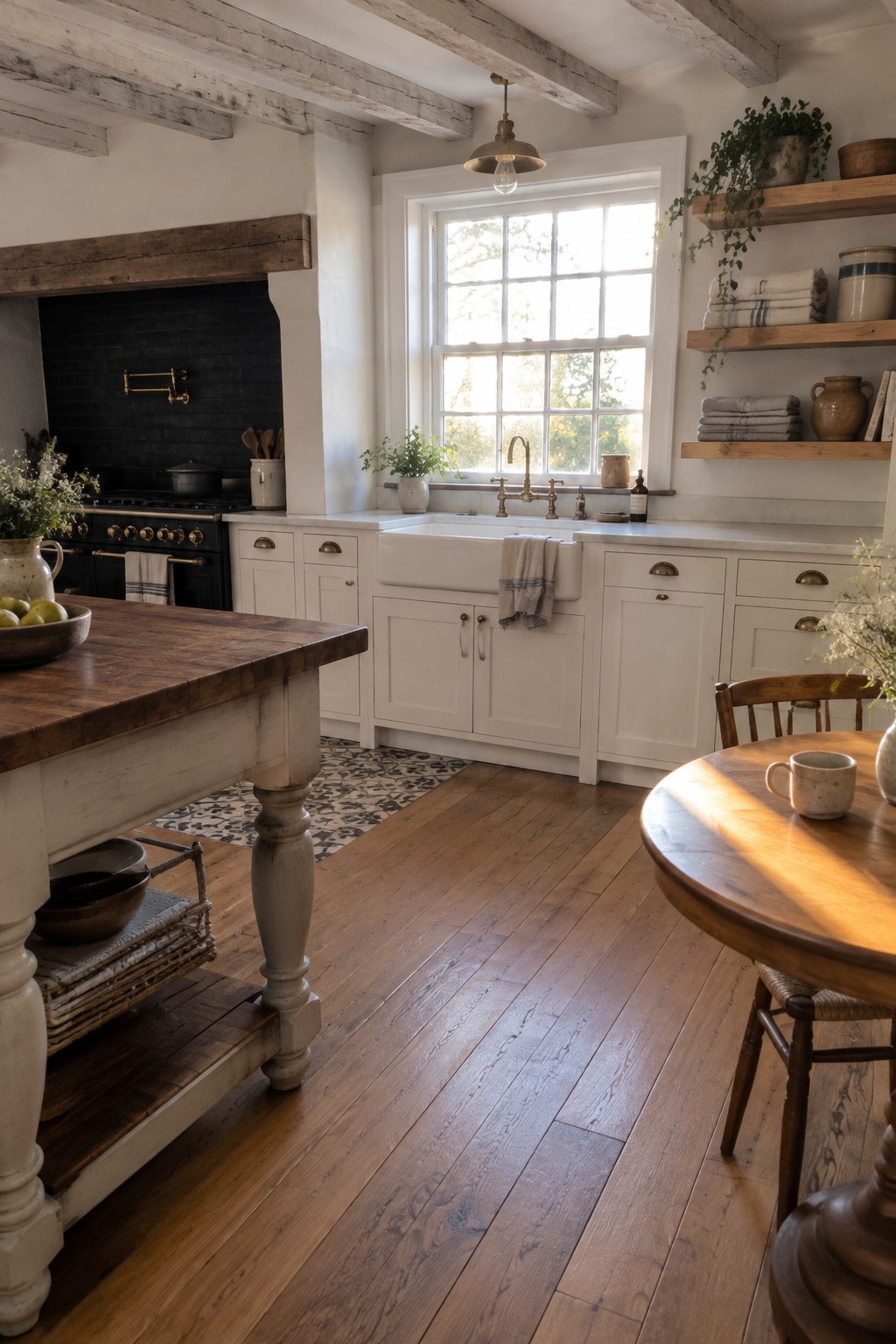
White kitchens often need something to keep them from feeling flat. Wood surfaces like a big work table, open shelves, or flooring bring in warmth and give the eye places to rest. The mix of painted cabinets with raw wood tones creates that layered look without adding much extra color.
This works best in homes that already lean traditional or cottage style. Keep the wood finishes a little varied so the textures stand out, and let one or two wood pieces carry more weight than trying to match everything.
Wood That Adds Warmth To White Kitchens

White kitchens can feel a bit stark on their own. Adding wood tones through the island, open shelves, and simple woven stools brings in just enough warmth and texture to make the space feel lived in.
This works best in homes that get good natural light. Keep the wood tones natural rather than stained dark, and limit the number of textures so the white cabinets still read as the main surface.
Marble And Wood On The Kitchen Island

A marble top over a wood base gives the island a layered feel that works well in white and wood kitchens. The stone adds a smooth cool surface while the wood brings in warmth and grain, so the space feels balanced without extra decoration.
This approach suits open kitchens where the island gets a lot of use. Keep surrounding cabinets and walls simple so the two materials can stand out clearly.
White Cabinets And Natural Wood Work Well Together
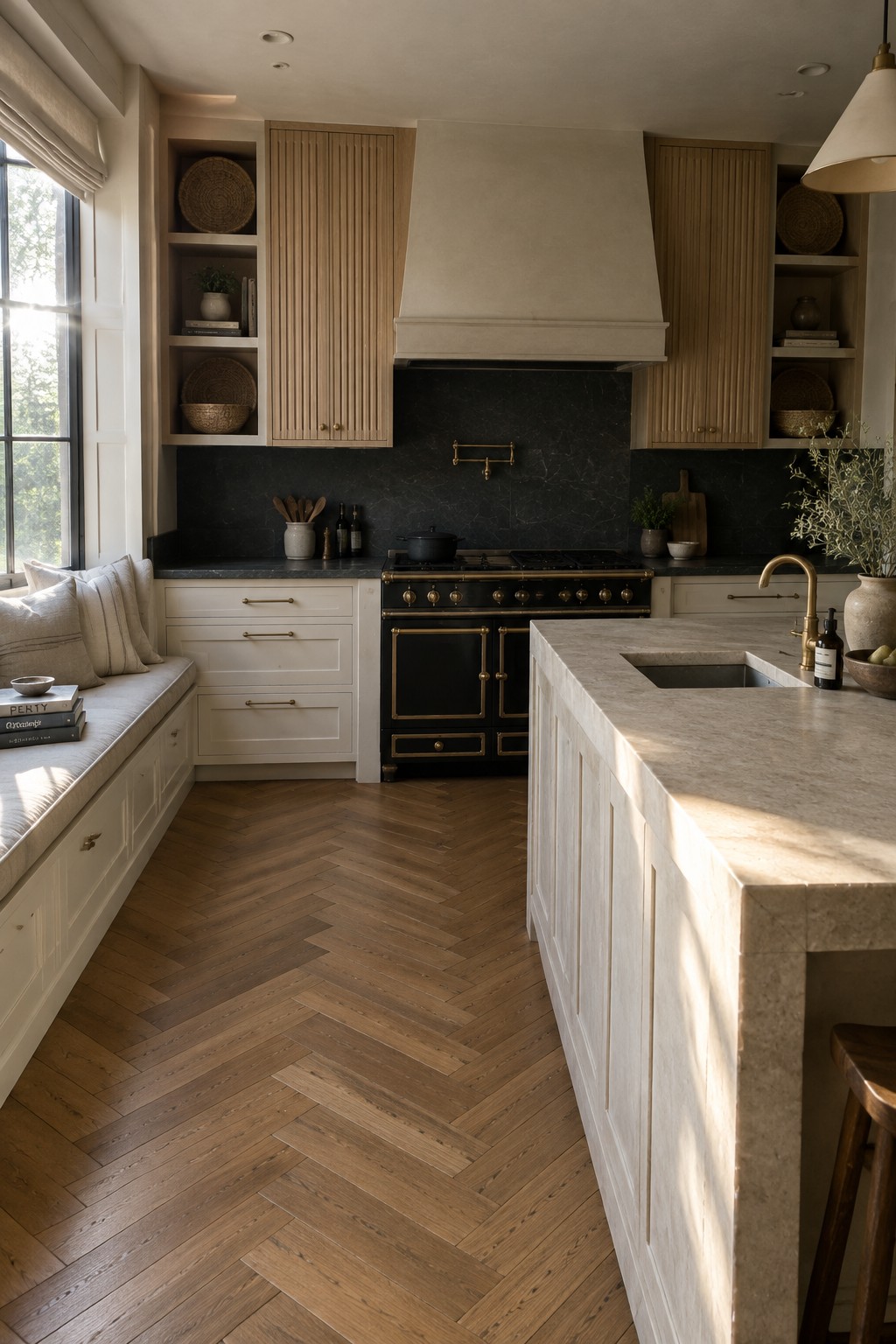
Many kitchens feel flat when everything stays the same color. Adding wood cabinetry next to painted white pieces brings in warmth and breaks up the surfaces without making the room feel busy. The mix keeps things light while giving the eye places to rest.
This approach suits homes that get steady daylight and people who want a kitchen that feels fresh but not stark. Keep the wood tones fairly light so they do not fight the white, and let one material lead on the lower cabinets so the space stays calm.
Wood Islands Bring Warmth To White Kitchens

White kitchens can start to feel flat without something to break up all the light surfaces. A wood island adds that missing layer of texture and warmth, and it gives the room a grounded spot to gather around.
This works best in homes where the kitchen stays open to other living spaces. Keep the wood tone in the medium to warm range and pair it with simple stools so the island stays the main focus without crowding the rest of the room.
Wood Countertops On White Kitchen Islands

A thick wood top on a white island gives the kitchen a grounded feel that painted surfaces alone often miss. The natural grain adds texture and warmth right where people gather most, without needing extra color or pattern.
This setup suits older homes or any kitchen that leans cottage or traditional. Keep the wood tone medium so it does not overpower the white, and let the island size match the room so the wood reads as a deliberate choice rather than an afterthought.
Wood Tables In White Kitchens
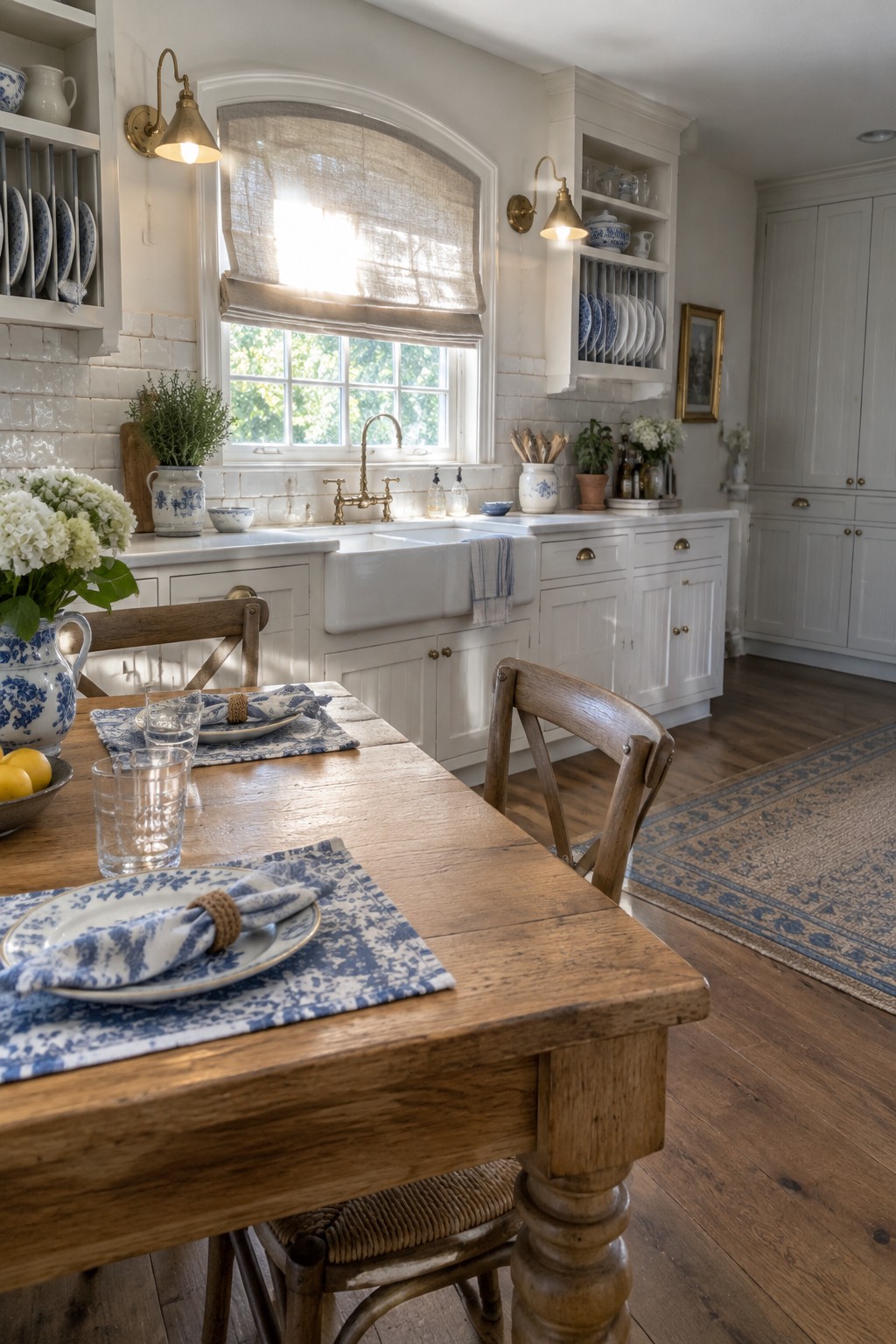
A wooden dining table brings needed warmth to an all-white kitchen. The grain and tone break up the painted surfaces and give the room a more settled feel without adding clutter.
This works especially well in homes that already have wood floors or older architecture. Keep the table finish natural rather than too dark, and let the wood connect visually to any open shelving or cutting boards already in the space.
Mixing White And Wood Cabinetry

One way to keep a kitchen feeling open but still interesting is to use white cabinets on the upper run and switch to wood on the lower cabinets and island. The change in material breaks up the space without adding extra color or clutter.
This works well in homes that want a clean base but need some natural variation to feel lived in. Keep the wood tone consistent on the stools and any open shelving so the mix stays simple rather than busy.
Built-In Window Benches Add Storage
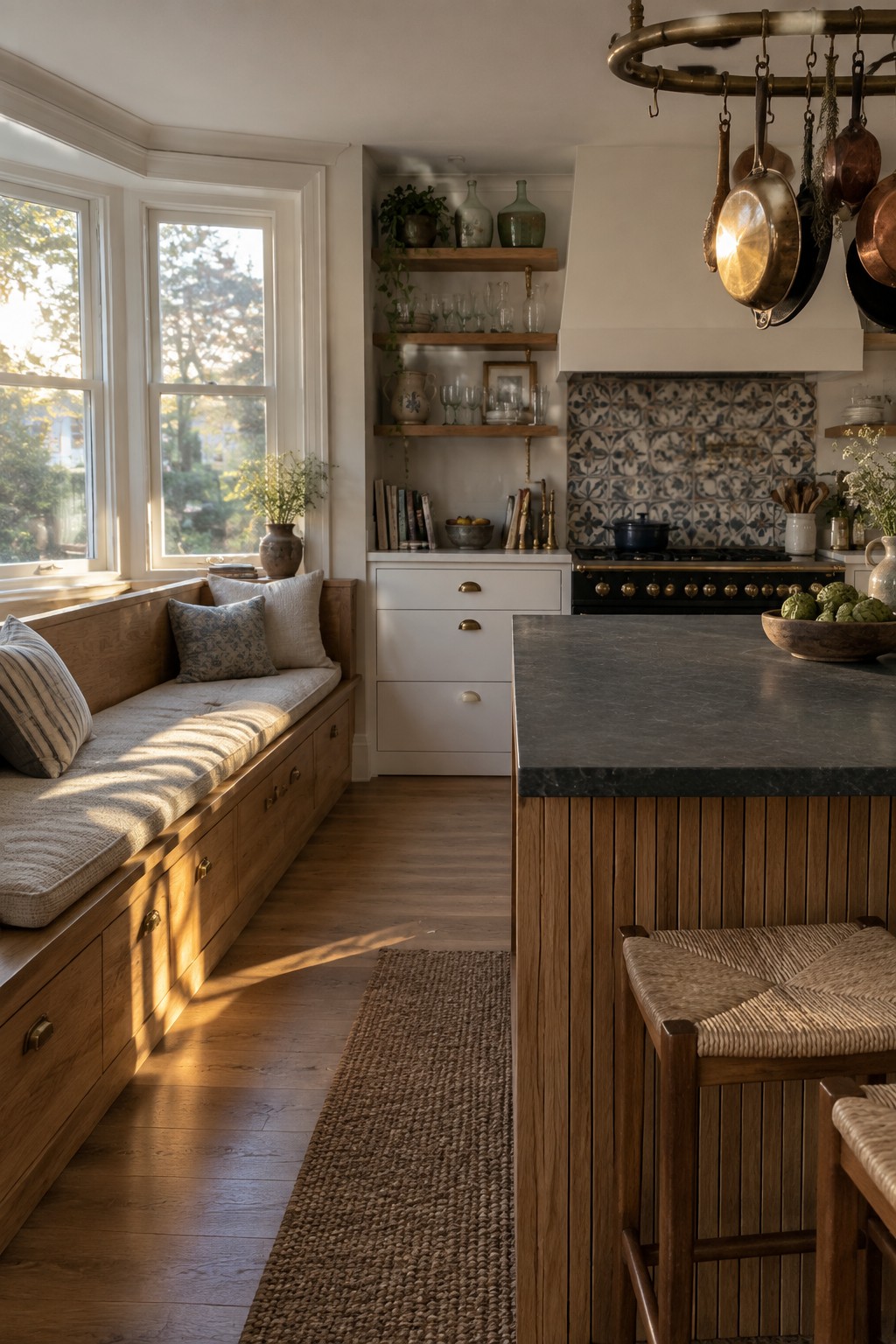
A window bench with drawers underneath gives a kitchen extra seating without taking up floor space. It also hides everyday items that would otherwise clutter the counters or nearby cabinets. The wood tones on the bench help balance all the white surfaces and keep the room from feeling too stark.
This works best in kitchens that already have a run of windows along one wall. It suits homes that need more storage but do not want to add more upper cabinets. Keep the cushion simple so it does not compete with the wood and white mix already in the room.
Open Wood Shelves Add Texture To White Kitchens
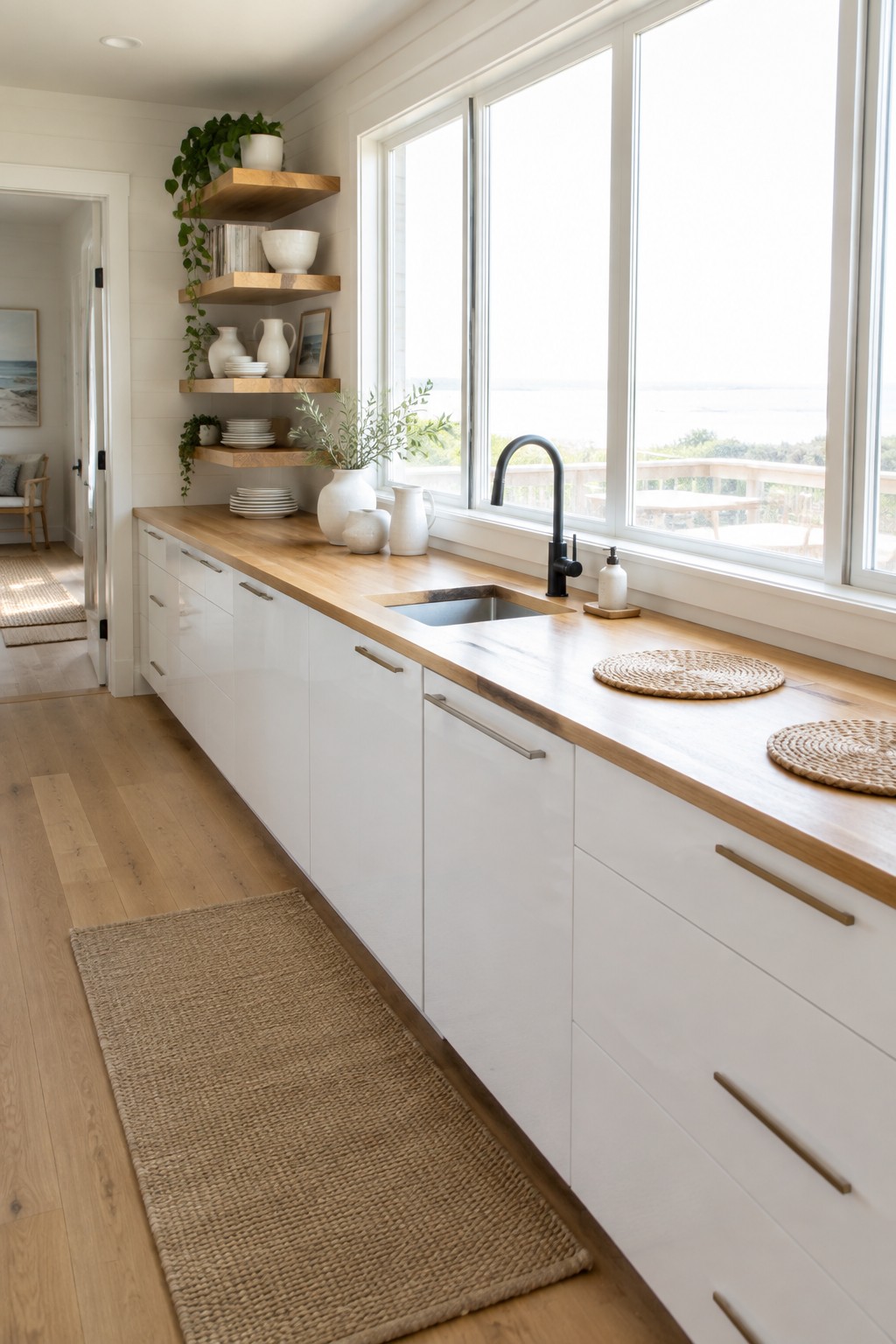
White kitchens often need a few natural elements to keep them from feeling too stark. Floating wood shelves give you a simple way to bring in warmth and texture while still keeping the overall look clean and bright. The wood ties in with the counter surface and lets you display a few pieces without filling up every surface.
This setup works best in kitchens that get plenty of light and have some room above the main workspace. Stick to a handful of items like plates, pitchers, and small plants so the shelves stay useful rather than busy. It suits homes that want a bit of everyday character without adding more closed cabinetry.
Combine White Cabinets With Wood For Added Texture

White kitchens often need something to keep them from feeling flat. Wood cabinetry on the island and bench seating adds that layer of warmth and texture without extra color or pattern.
This approach suits homes that get good natural light and already have clean lines. Keep the wood tone consistent so it reads as one material choice rather than a collection of accents.
Layer Wood With White Cabinets

White cabinets give a kitchen a clean base, but adding wood surfaces keeps the space from feeling flat. The natural grain on an island top or open shelves brings in warmth and texture that painted surfaces alone cannot provide.
This works best in homes that already have some age or character, where the wood can show a little wear. Stick with medium tones rather than very dark ones, and let the wood cover larger areas like countertops or shelving so the contrast actually registers.
A Wood Island In A White Kitchen

White cabinets keep the space feeling clean and open, but they often need something to add real warmth. A long wood island does that job well by bringing natural grain and texture right into the center of the room where it gets used most.
This works best in kitchens that already have some wood on the walls or floor. The island then pulls those elements together without adding extra color or clutter. Keep the stools simple so the wood surface stays the main focus.
White Cabinets With Natural Wood For Added Texture
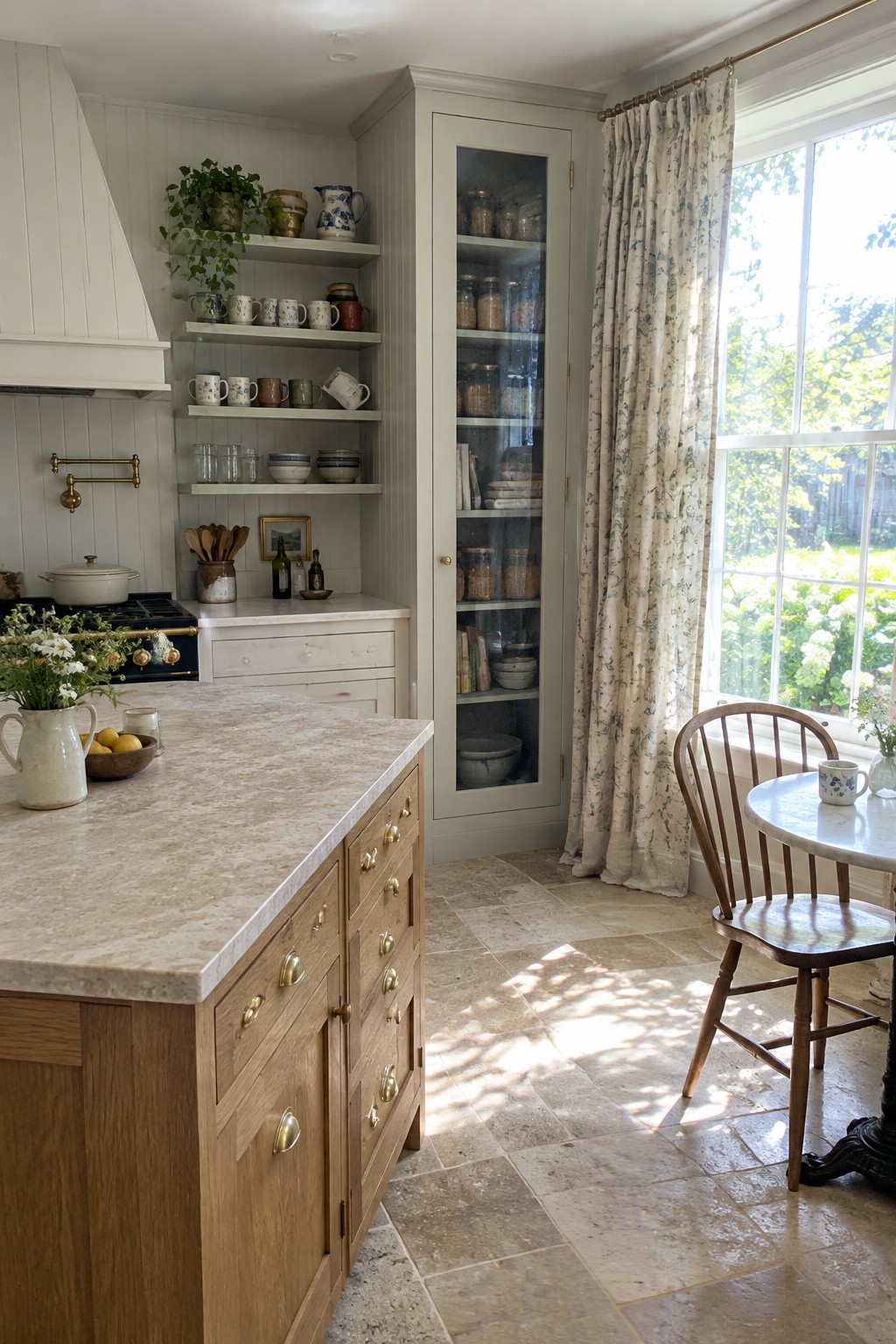
Mixing white painted cabinetry with natural wood tones gives a kitchen more depth without needing lots of extra decoration. The contrast between the smooth painted surfaces and the grain of the wood keeps the space feeling warm and lived in rather than flat.
This approach works especially well in older homes or cottage style kitchens where you want storage that still feels open. Try it on islands or lower cabinets first, then add a few open shelves to show off the mix without overdoing it.
White Cabinets With Wood Surfaces
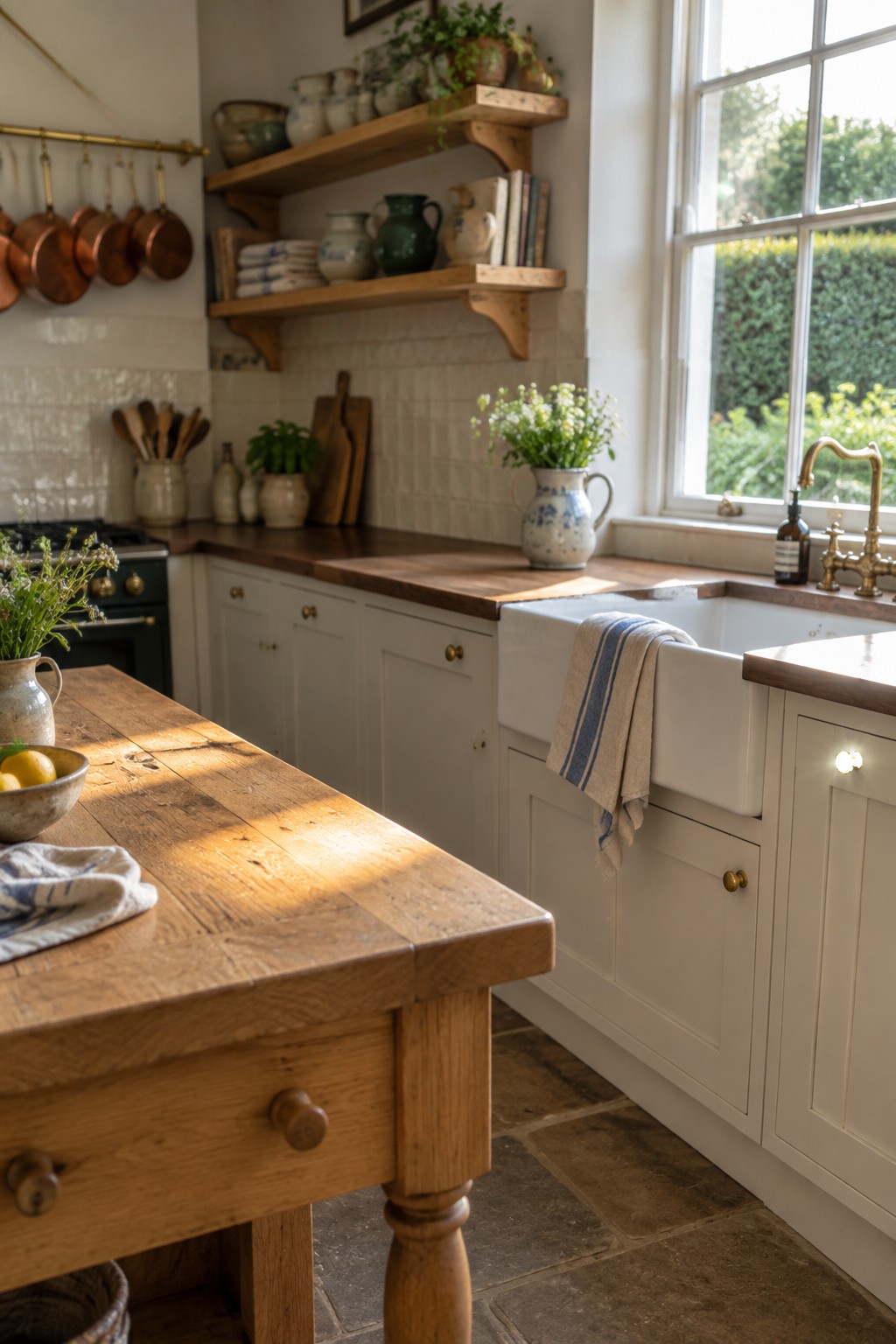
White cabinets give a kitchen a clean starting point, but the real interest comes from bringing in wood on the counters and tabletops. The mix keeps the room bright without feeling bare or too modern.
This works well in older homes or cottages where you want some warmth. Use a few different wood tones so the surfaces do not all match, and let the wood grain show instead of staining it too dark.
Long Wood Counters In Narrow Kitchens
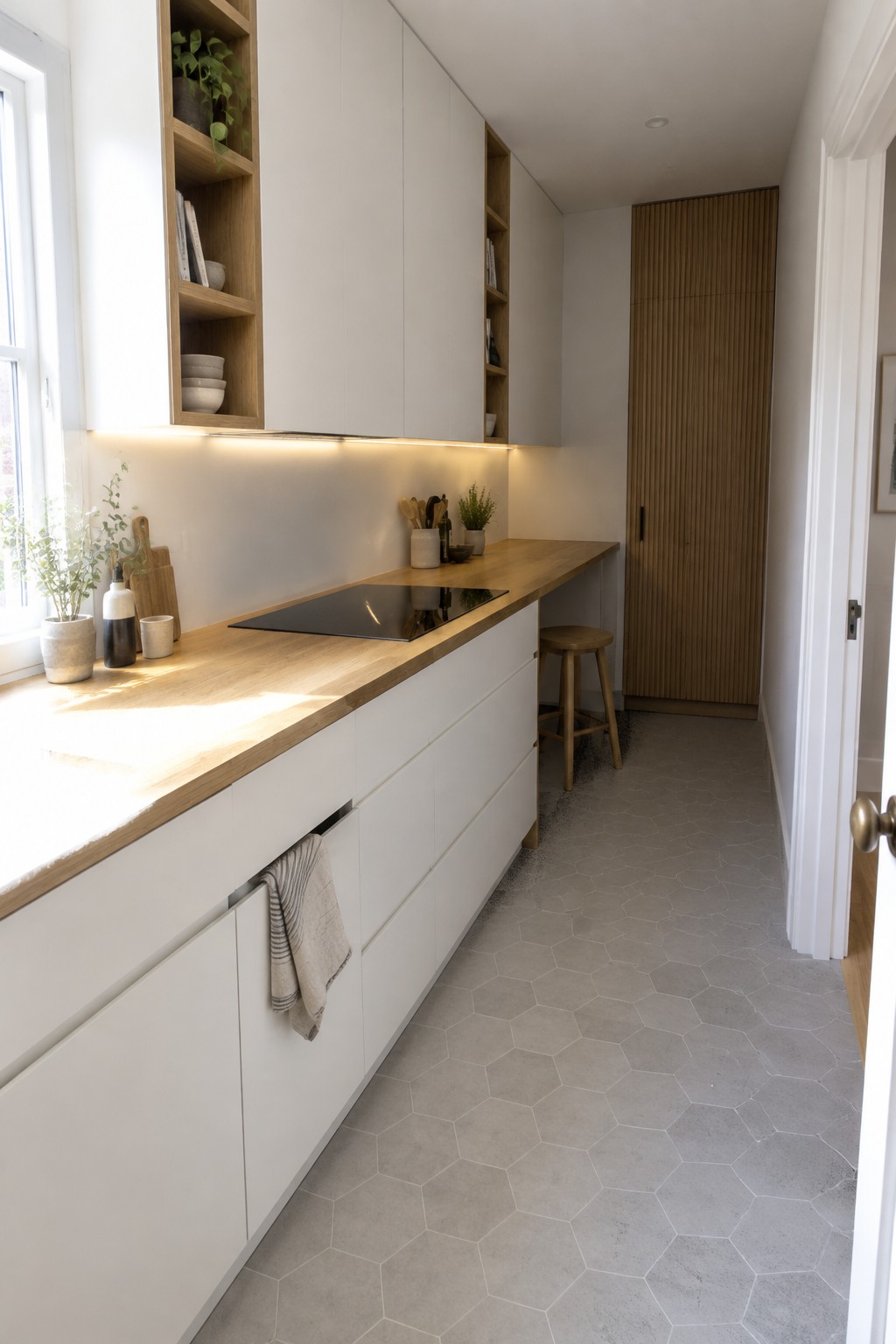
A long wood counter makes a narrow kitchen feel much more useful. It gives you one solid surface for prep work, cooking, and whatever else comes up during the day, instead of breaking the space into smaller zones that fight for room.
This setup works best in slim homes or older layouts where you cannot add an island. Keep the cabinetry simple and white so the wood stays the main focus, then add one stool at the end if you want a quick spot to eat or talk while someone cooks.
White Cabinets With A Wood Island

Many kitchens done mostly in white can start to feel a bit flat after a while. Bringing in a wood island adds warmth and a clear change in texture that makes the whole space feel more settled.
This approach works best in kitchens that already have some traditional or transitional details. Keep the wood tone medium to warm, let the grain or a simple vertical pattern show, and choose a light stone top so the island stands out without darkening the room.
Open Shelving On The Kitchen Island
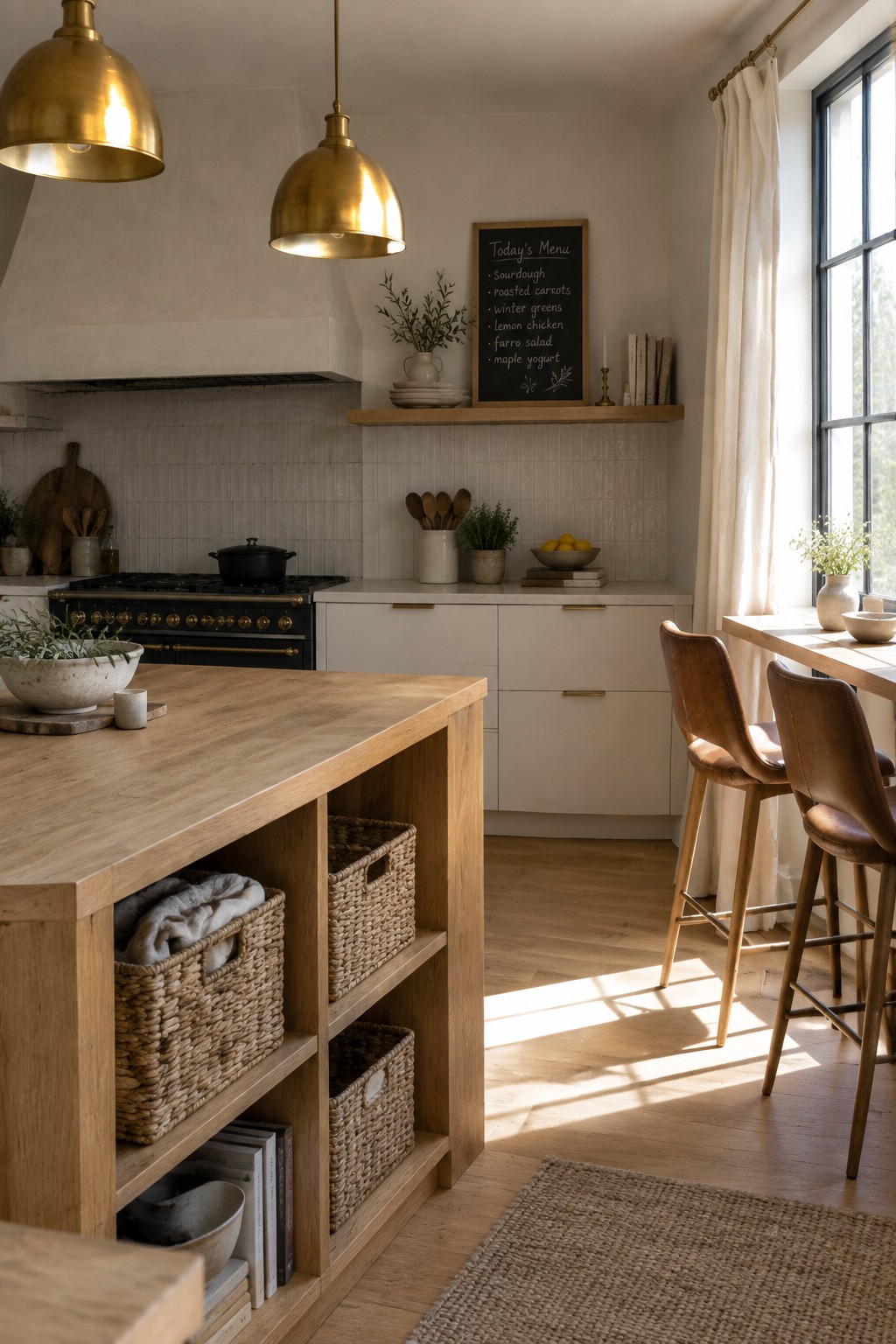
White kitchens often need a few softer layers to feel welcoming. Open shelving built into the island lets you bring in baskets and other natural pieces that add texture without crowding the space.
This works best in homes that already lean toward simple cabinetry and want a bit more warmth underfoot. Keep the shelves to just a few matching baskets and everyday items so the look stays calm instead of cluttered.
Adding Wood to White Kitchens
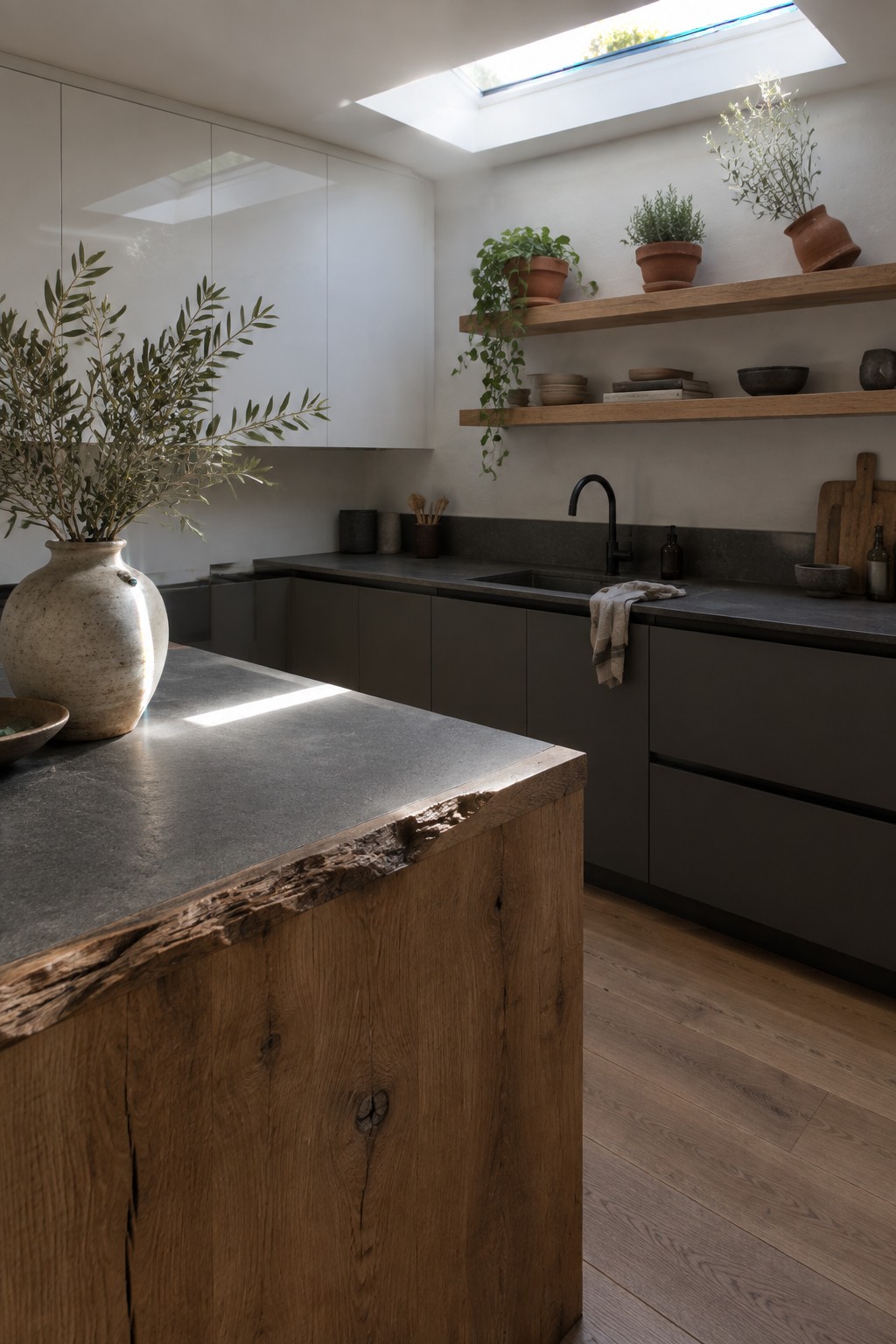
White kitchens often need something to keep them from feeling too plain. A solid wood island and a couple of floating shelves bring in warmth and texture without adding clutter or extra color.
This works best in spaces that already have clean lines and good natural light. Keep the counters and lower cabinets simple so the wood can stand out on its own.
White Cabinets With Wood Counters And Shelves
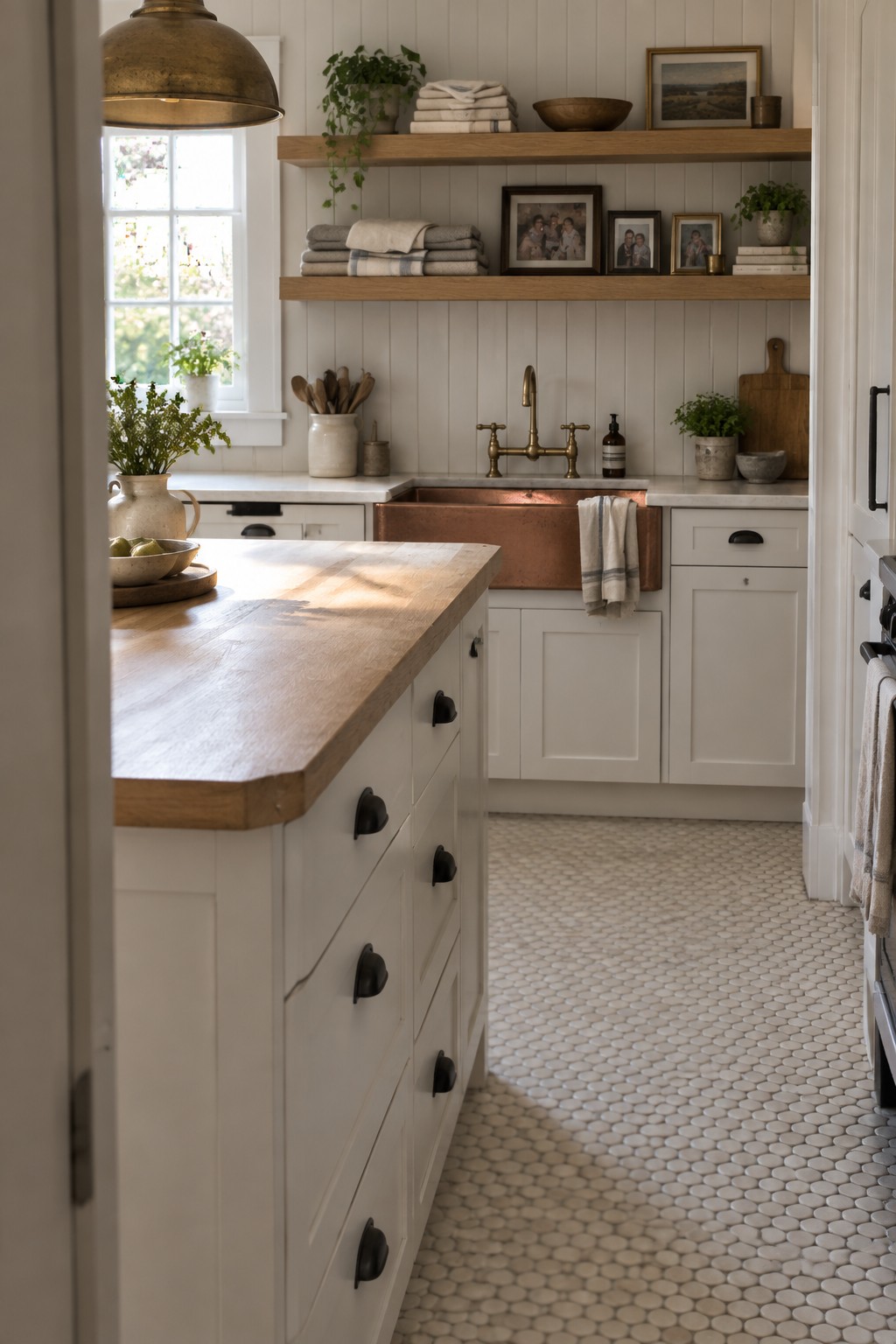
White kitchens can start to feel flat without something to break up all the painted surfaces. Adding wood on the counters and open shelves gives the space a warmer, more textured look while still keeping the overall brightness.
This approach suits homes that want a simple, lived-in feel rather than a stark all-white finish. Keep the wood tones natural and limit them to a few key spots like the island top and one floating shelf so the contrast stays balanced instead of overwhelming the room.
Fluted Wood Island Bases

Many kitchens with white cabinets and marble counters can start to feel a little flat. Adding vertical wood slats along the island base brings in texture and warmth without making the space feel heavy or busy. The contrast between the smooth stone top and the ridged wood underneath gives the room more depth while still keeping things simple.
This approach works well in homes that already lean toward clean lines and light colors. It adds interest at eye level where people spend the most time, and the wood tone helps tie in other natural elements like stools or open shelves. Just keep the slats fairly narrow so the island does not dominate the room.
Wood Islands In White Kitchens

A big wood island stands out in a white kitchen because it adds warmth and texture without complicating the look. The natural grain and darker tone give the space something solid to rest on visually while the white cabinetry and walls keep everything feeling open and bright.
This approach works best in kitchens with enough floor space for the island to serve as the main work area. It suits homes that already have wood floors or trim since the material ties the room together without extra effort.
Mixing White Cabinets With Natural Wood
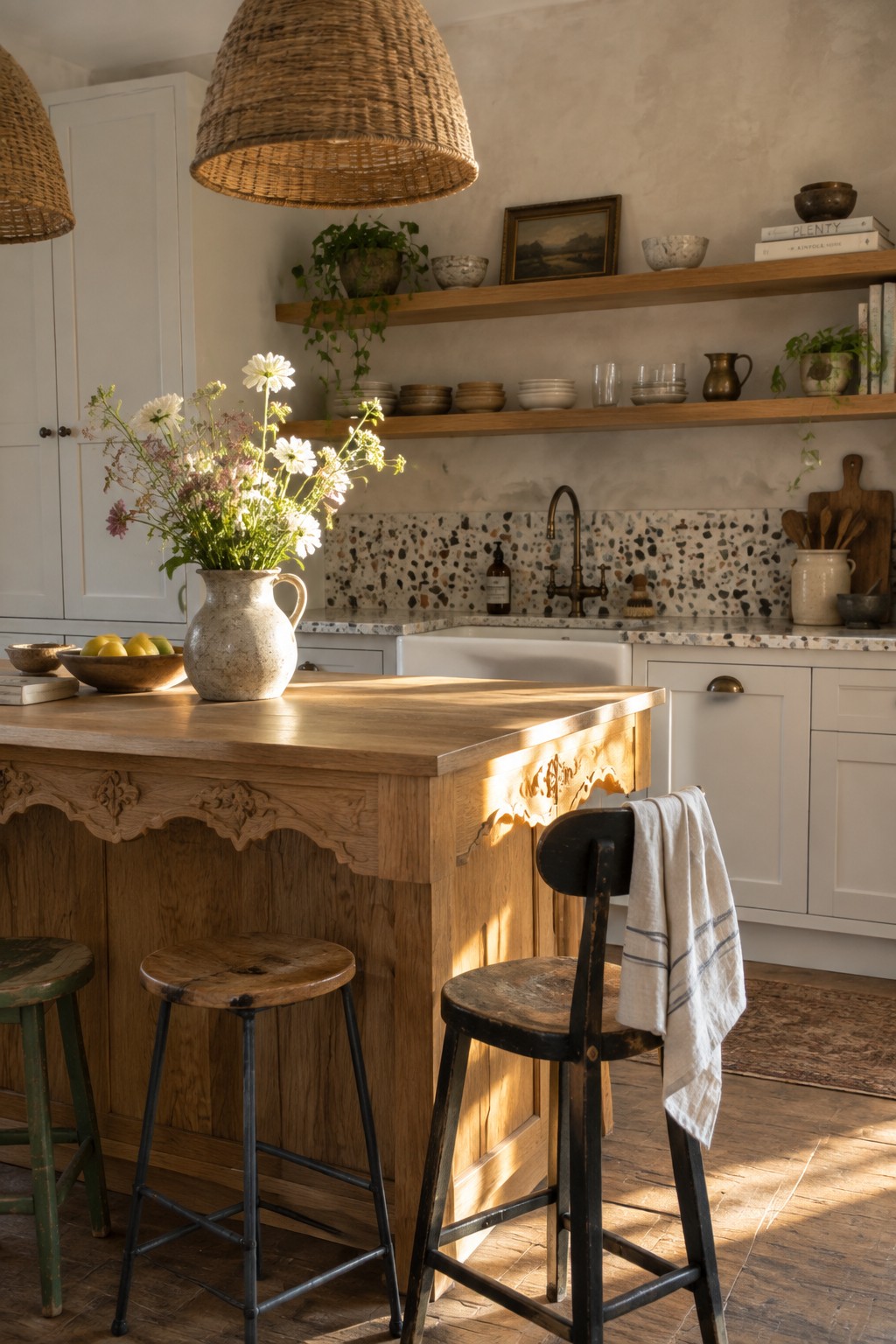
A big wood island changes how a white kitchen feels. It adds weight and texture without making the space feel dark or closed in. The natural grain and any carved details on the island give something for the eye to rest on while the white cabinetry keeps everything bright.
This approach suits kitchens that already have some age or traditional trim. Use the same wood tone on a few stools or open shelves so the materials feel connected. Avoid covering too many surfaces in wood or the white base loses its lightness.
Frequently Asked Questions
Q: How do I keep the white cabinets from feeling too stark next to the wood?
A: Pick a wood with some warmth like oak or walnut for the floors or open shelves. That pulls the eye down and softens the brightness without adding extra color.
Q: What texture should I add first if the kitchen still feels flat?
A: Start with a woven element like a jute runner or linen window shade. It breaks up the smooth surfaces and makes the layers feel lived in right away.
Q: How often do I need to oil the wood counters to protect them?
A: Wipe them down with mineral oil every few months if you cook daily. The wood stays protected and the white around it looks crisp by contrast.
Q: Can I mix in metal without losing the soft white and wood feel?
A: Use brushed brass or matte black on the hardware and a light fixture. One finish is plenty to add depth while the textures do the rest of the work.
