

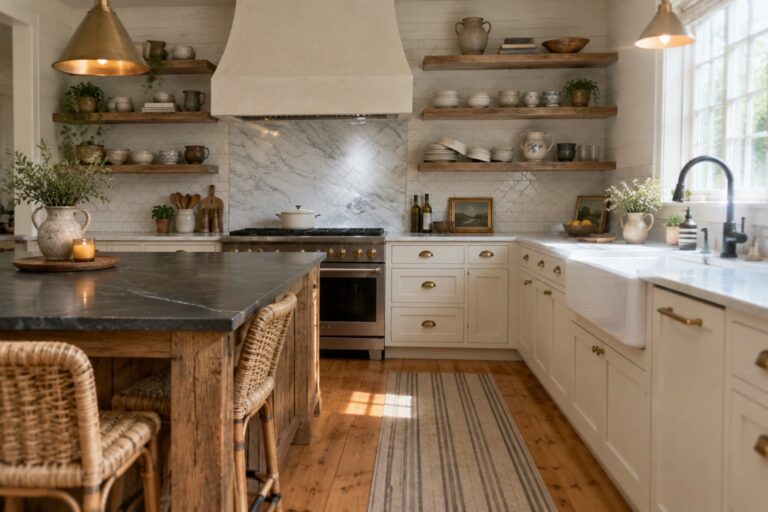
Kitchens often feel more settled once the wall behind the stove and sink has some real material on it instead of just paint or nothing at all.
I have seen layouts where the counters and cabinets never quite connected until the backsplash tied them together in a practical way.
Small details like grout color or stone variation end up mattering more than most people expect once the room is in daily use.
Tile and natural stone each bring their own weight and texture that change how the space feels when you stand at the counter.
I like to tape samples up for a week or two before deciding because the light in my own kitchen never matches what shows up in pictures.
Herringbone Tile Backsplash
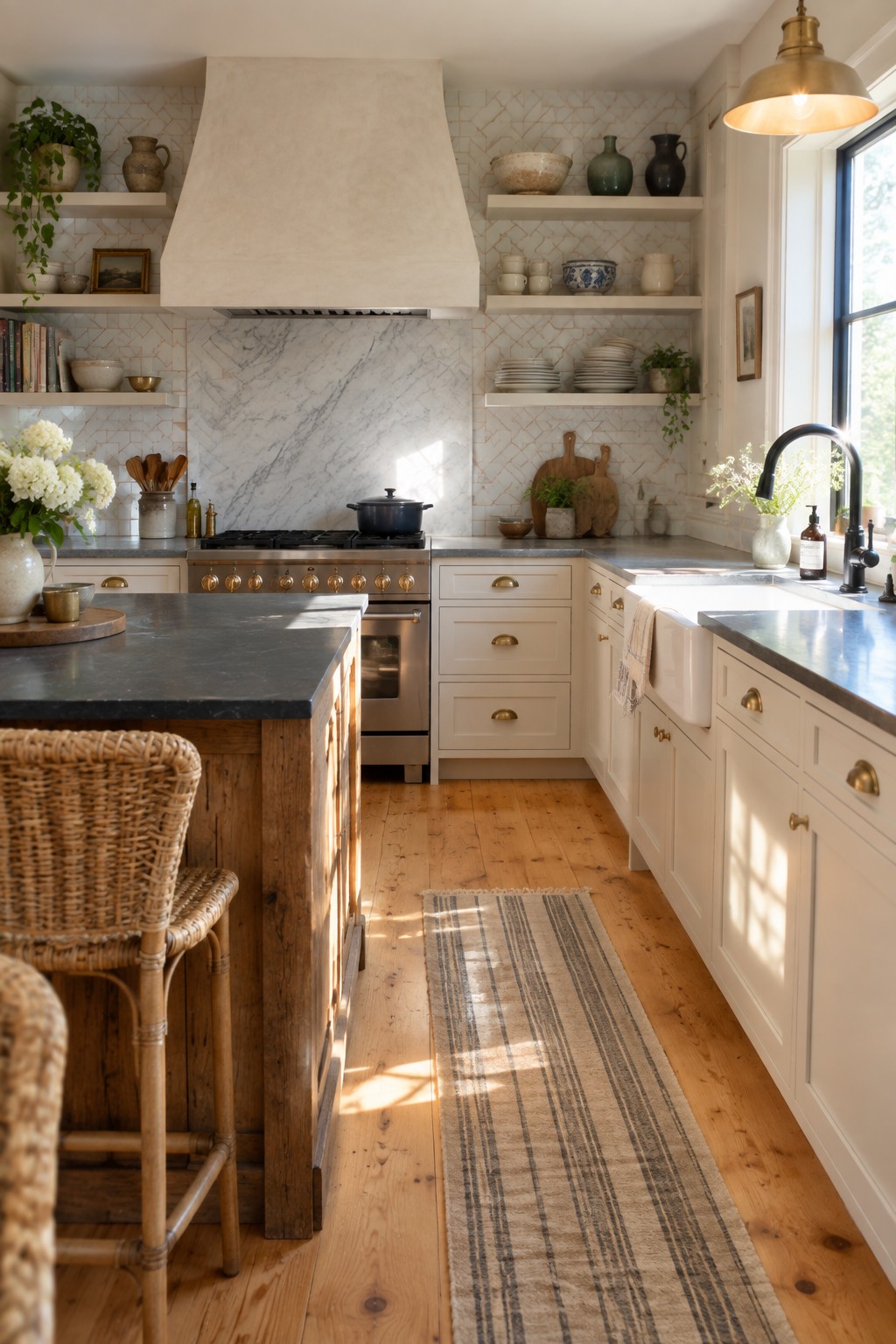
Herringbone tile gives a kitchen backsplash just enough pattern to feel interesting without taking over the room. The slight angle of the tiles catches light nicely and adds warmth, especially when the rest of the space leans toward soft neutrals and natural materials.
This approach works well in kitchens that already have some wood tones or stone details. It pairs easily with a slab of marble behind the stove and keeps the overall look simple rather than busy. Just make sure the grout stays light so the pattern stays clear instead of blending together.
Natural Stone Backsplashes That Blend With The Counters
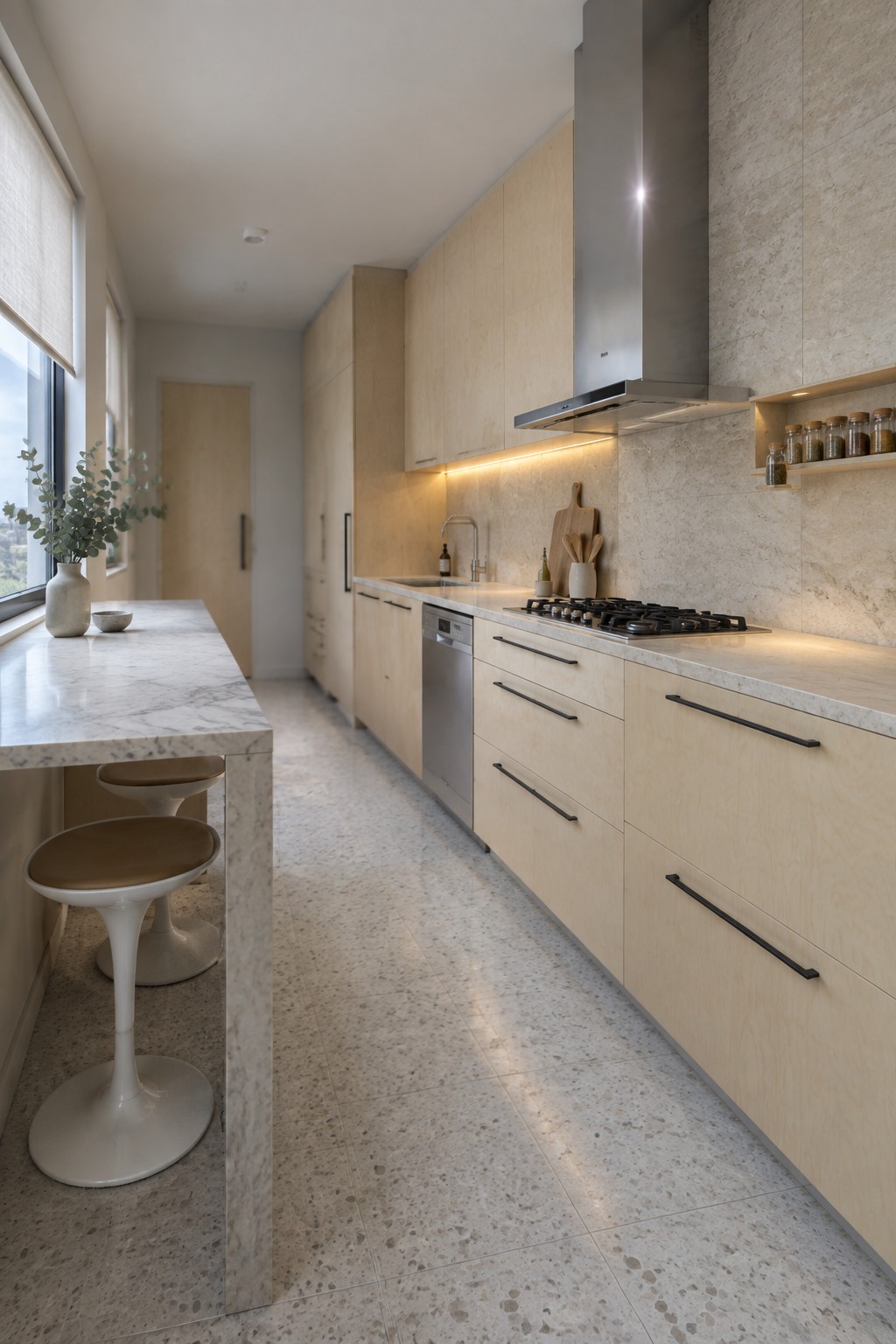
A natural stone backsplash can tie the whole kitchen together when it picks up the same tones as the countertop and surrounding walls. In this kitchen the stone runs across the cooking area without breaking the flow, so the space feels calmer and less busy than it would with a contrasting tile.
This approach works best in kitchens that already use light wood cabinetry and pale stone surfaces. Keep the stone finish consistent across the backsplash and any open shelving areas, and skip busy patterns or dark grout lines that would pull attention away from the material itself.
Blue Mosaic Tile Backsplashes
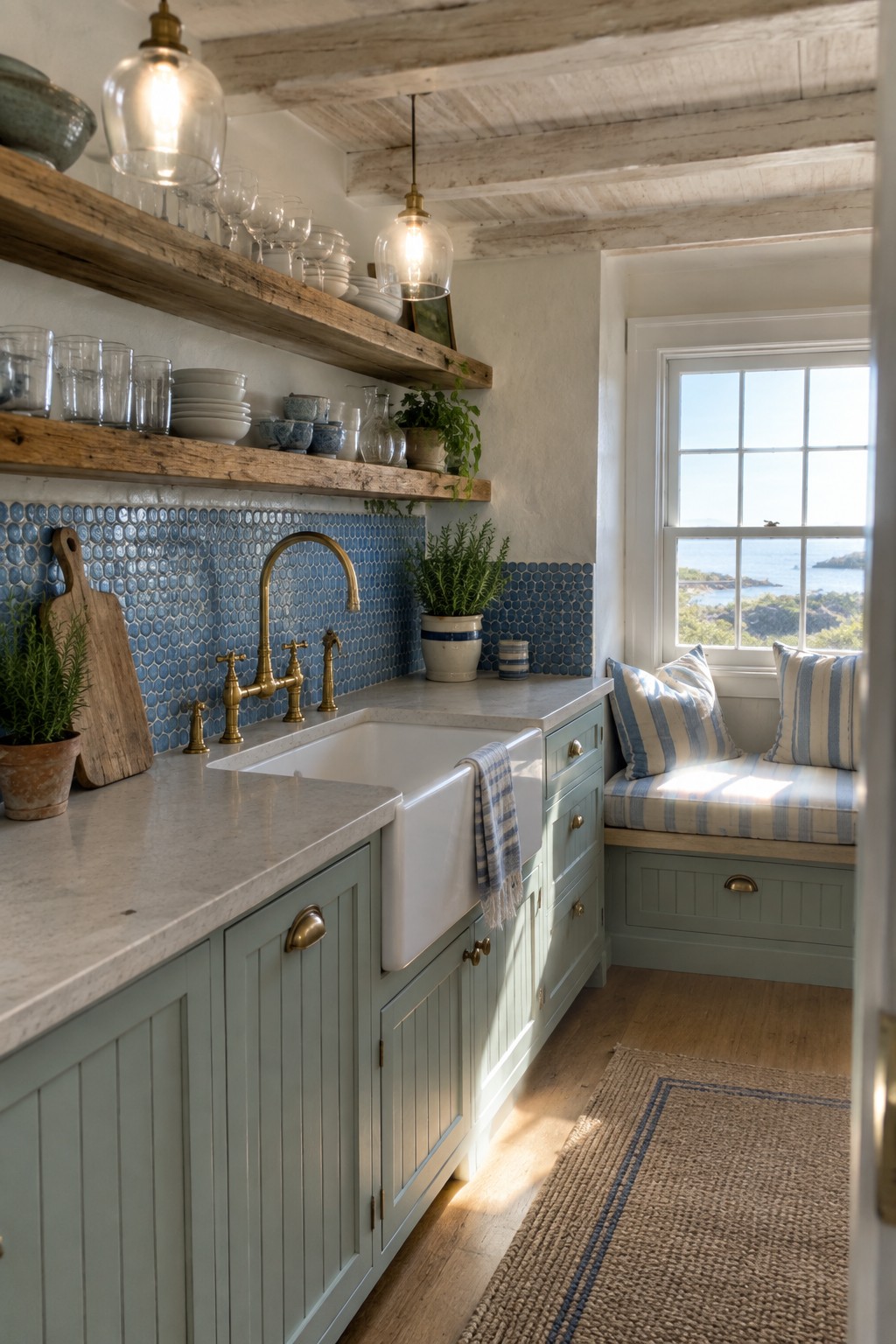
A blue mosaic backsplash gives a kitchen color without taking over the whole room. The small tiles create texture and a soft pattern that works against white or light cabinetry. Many people choose this because it feels cheerful yet still calm, especially when the rest of the space stays fairly neutral.
This approach suits kitchens with plenty of natural light and simple finishes. Keep the counters light and the upper storage open or minimal so the backsplash stays the focus. It works best in homes that already lean coastal or casual rather than formal.
Dark Stone Backsplashes For Modern Kitchens
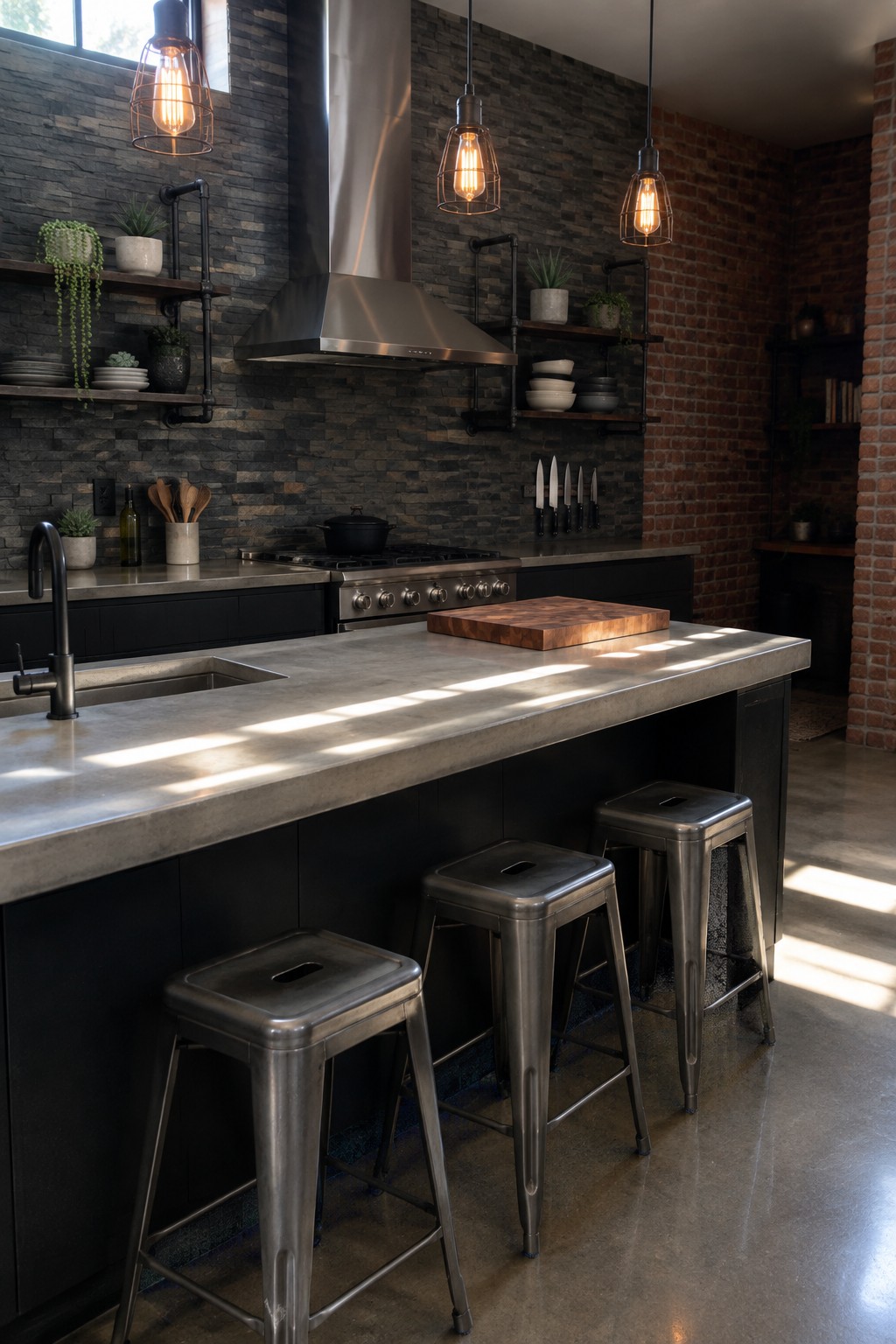
Dark natural stone backsplashes bring texture and weight to a kitchen without relying on busy patterns. The stacked stone wall behind the range creates a solid backdrop that pairs cleanly with concrete counters and black cabinetry.
This look works best in industrial or contemporary spaces where you want the backsplash to feel substantial rather than decorative. Seal the stone well and keep the surrounding finishes simple so the material stays the focus.
Using Green Tile For The Backsplash
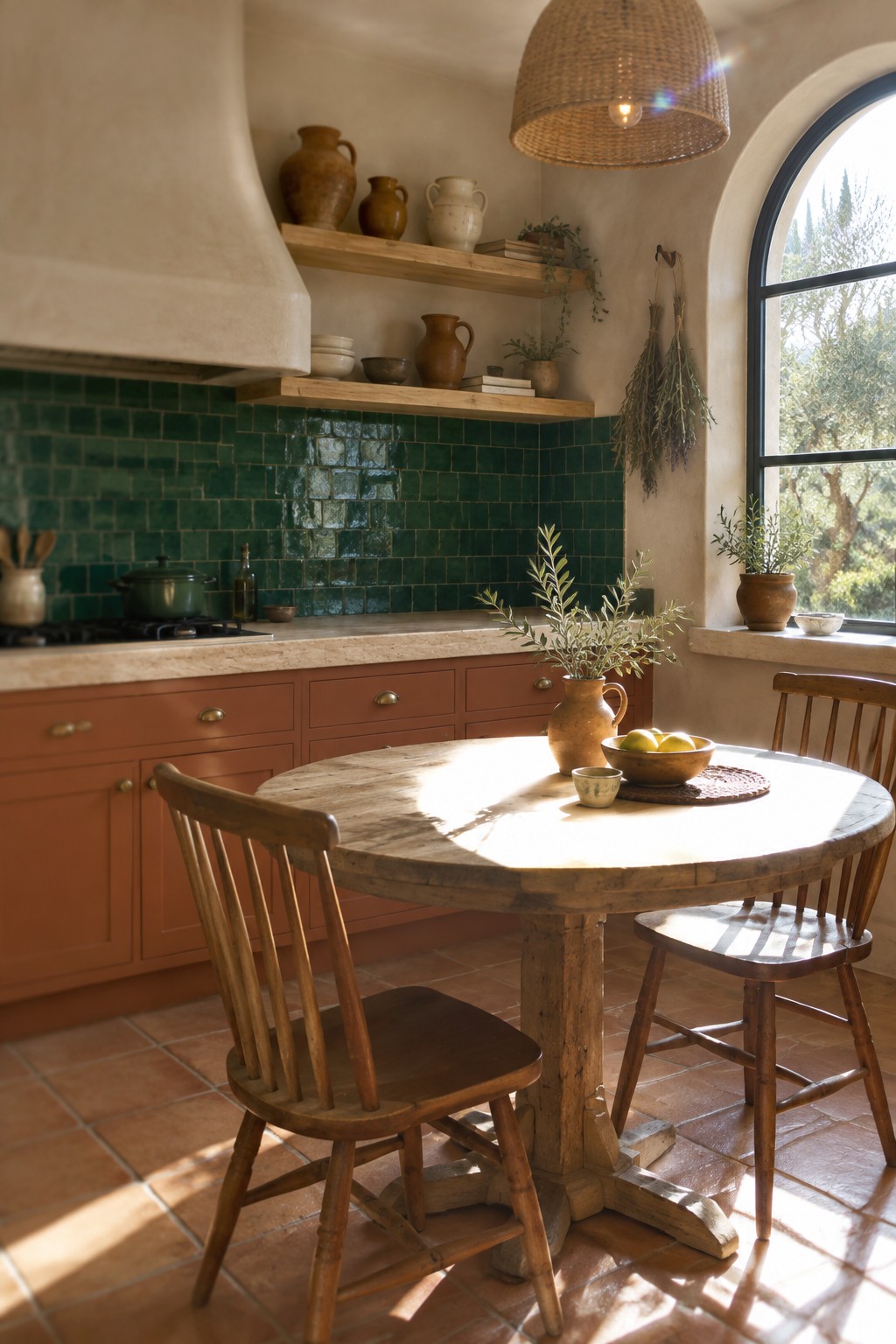
Green tile can bring a fresh contrast to kitchens that lean warm and earthy. The deep color stands out nicely against terracotta cabinets and a light stone counter, giving the space more personality without needing lots of extra decoration.
This approach works best in homes that already have natural textures and wood tones. Keep the tile glossy if you want more light bounce, and make sure the grout stays light so the pattern does not feel too heavy in a smaller kitchen.
Marble Backsplashes with Bold Veining
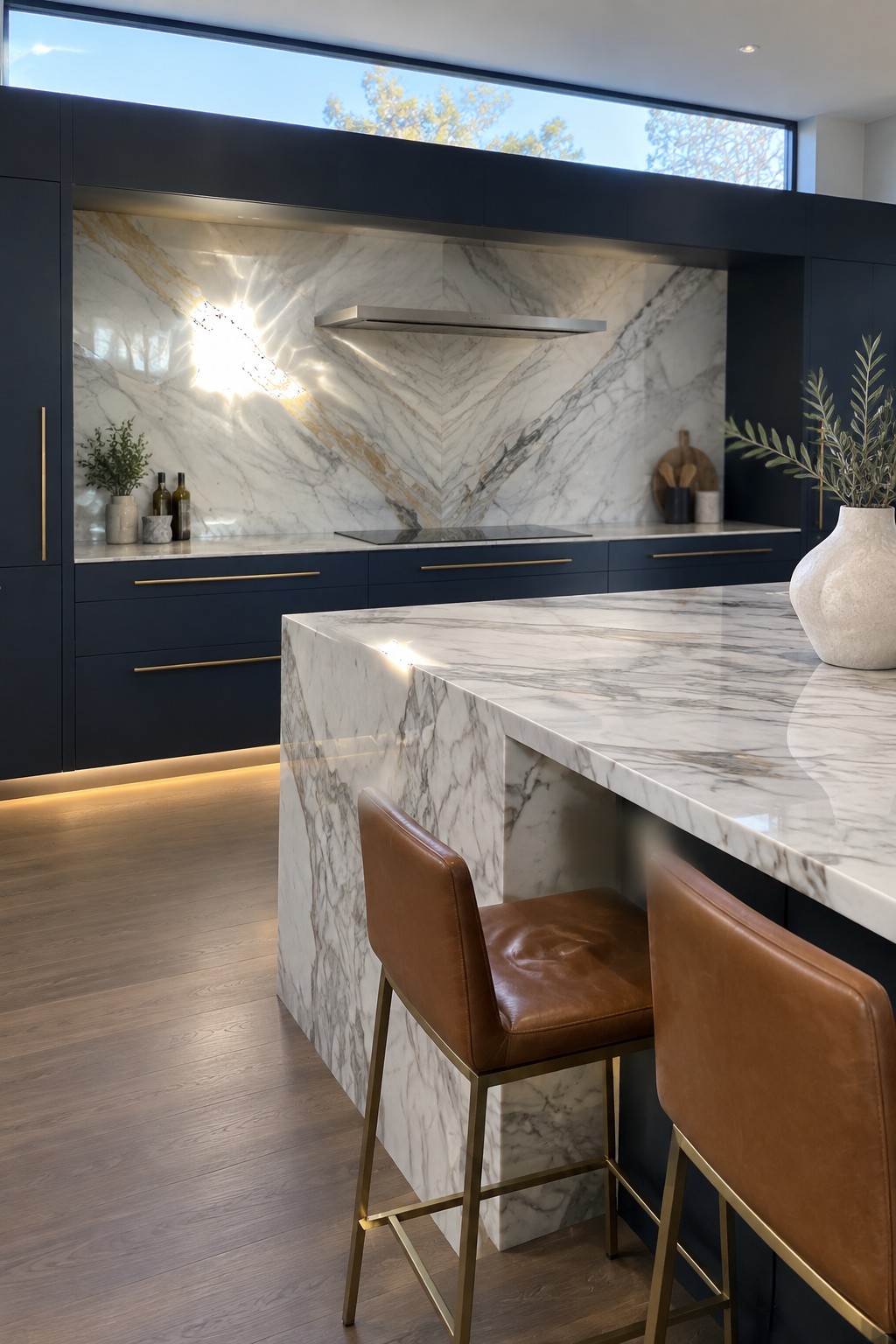
A large slab of marble with strong veining can turn the backsplash into the main feature of a kitchen. Instead of breaking the wall into smaller tiles, the single piece lets the natural pattern do the work and gives the space a cleaner, more solid look.
This works best in kitchens where the cabinets stay simple and dark so they do not fight with the stone. It suits homes that already lean modern or transitional and gives you a clear focal point without adding extra color or pattern elsewhere.
Using Patterned Tile For Kitchen Backsplashes
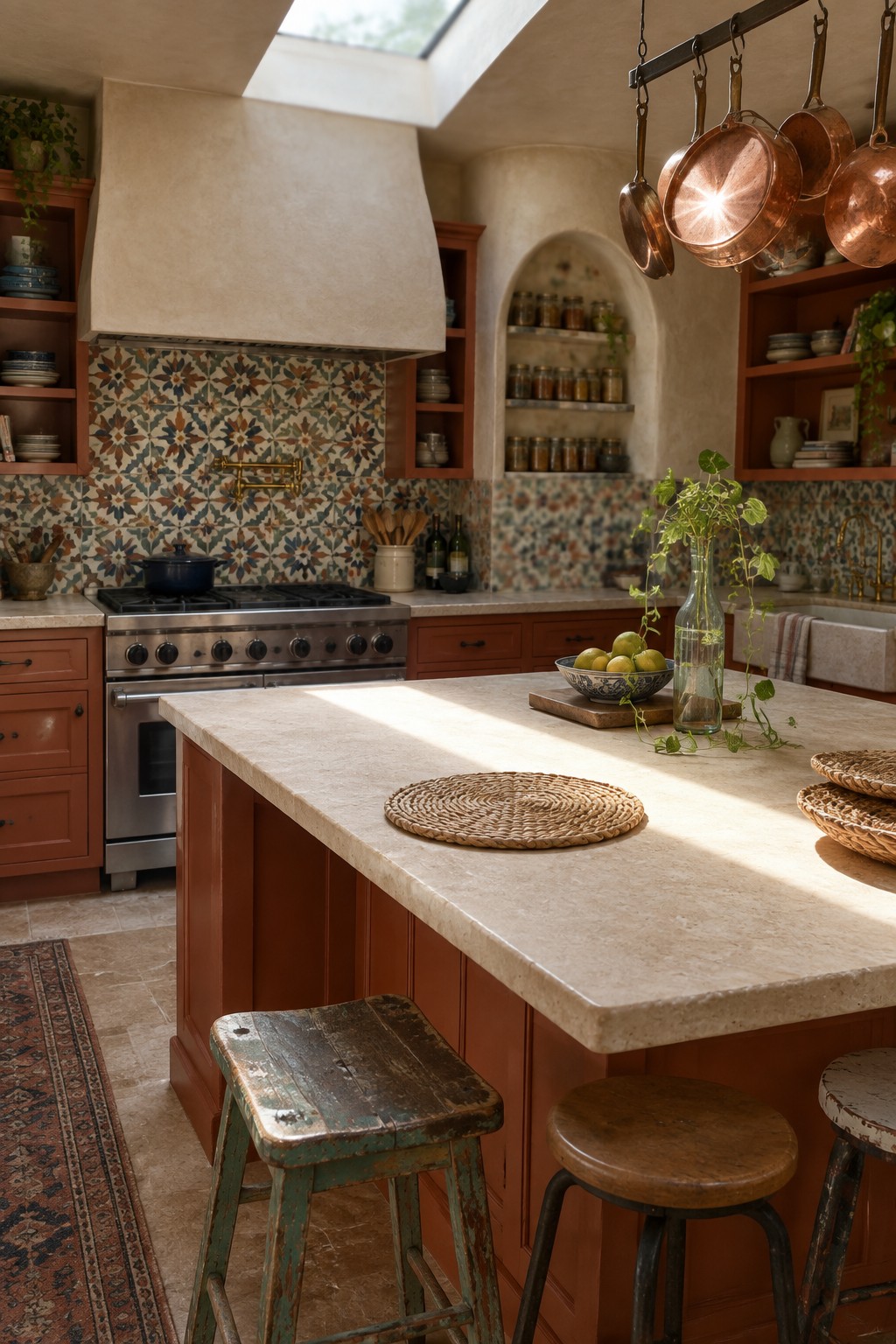
Patterned tile backsplashes give a kitchen character without needing lots of extra color elsewhere. In spaces with warm terracotta cabinets and stone counters, the tile adds movement and keeps the room from feeling too heavy or plain.
This works best in homes that already lean rustic or traditional. Stick with one strong pattern and let the rest of the materials stay simple so the backsplash can do its job without competing.
A Single Tone Hexagon Tile Backsplash
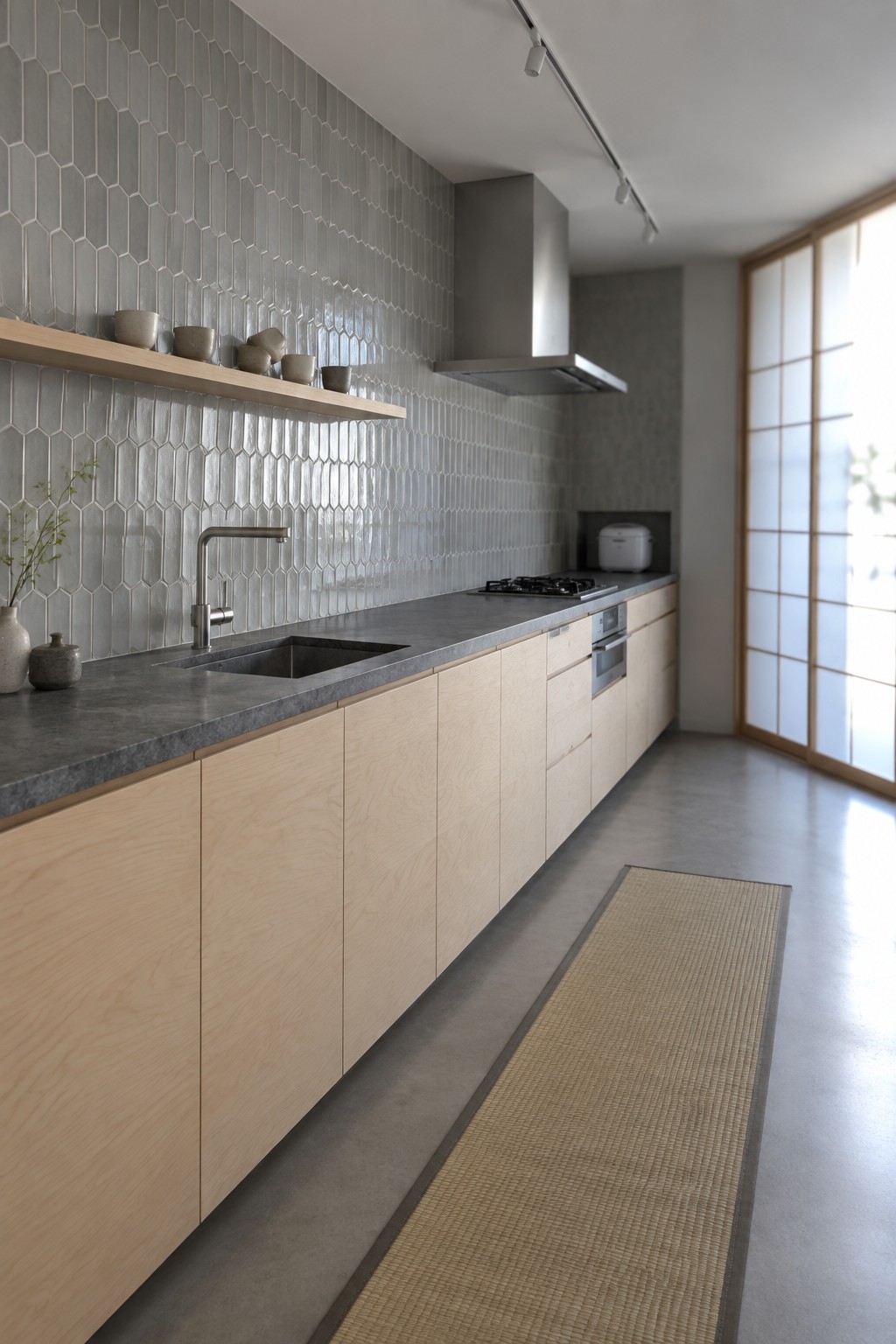
Hexagon tiles all in one soft gray range give a backsplash real texture without adding extra colors. The shape creates quiet movement across the wall while the single tone keeps everything feeling calm and pulled together next to light wood cabinets and a dark stone counter.
This kind of backsplash suits smaller kitchens or any space where you want some pattern but still need the room to feel open. Stick with grout that matches the tile closely so the hexagons read as one surface rather than a busy grid.
Mosaic Backsplash Made With Natural Stone Tiles
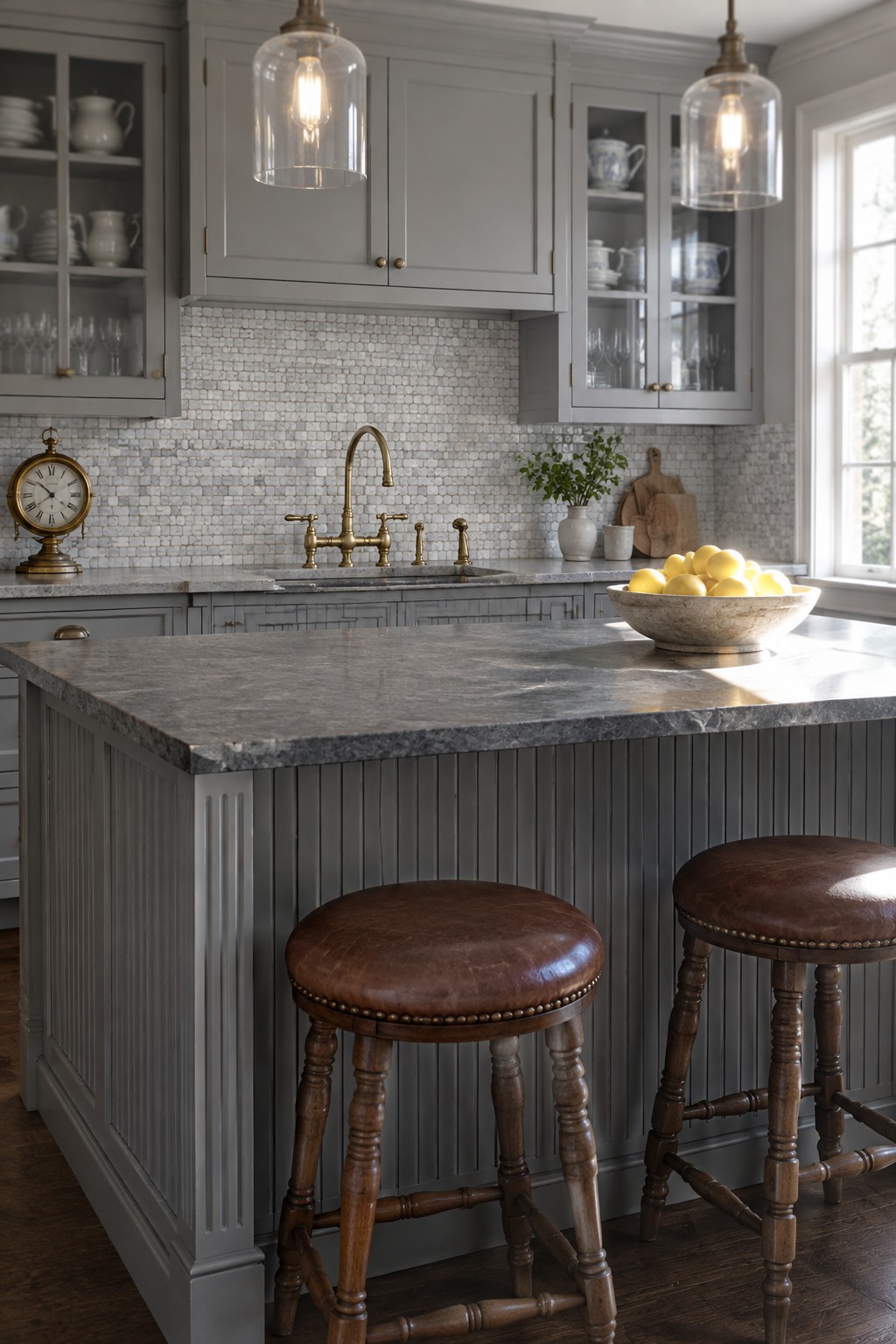
A mosaic backsplash built from small natural stone tiles gives the wall behind the sink a quiet texture that still feels calm. The irregular shapes catch light without shouting for attention, and the soft gray tones sit comfortably next to painted cabinets and stone counters.
This style works best in kitchens that already lean traditional or transitional. It pairs especially well with marble or quartzite surfaces and holds up fine in daily use once the grout is sealed. Just keep the pattern simple so the stone itself stays the focus.
Large Format Stone For A Full Height Backsplash
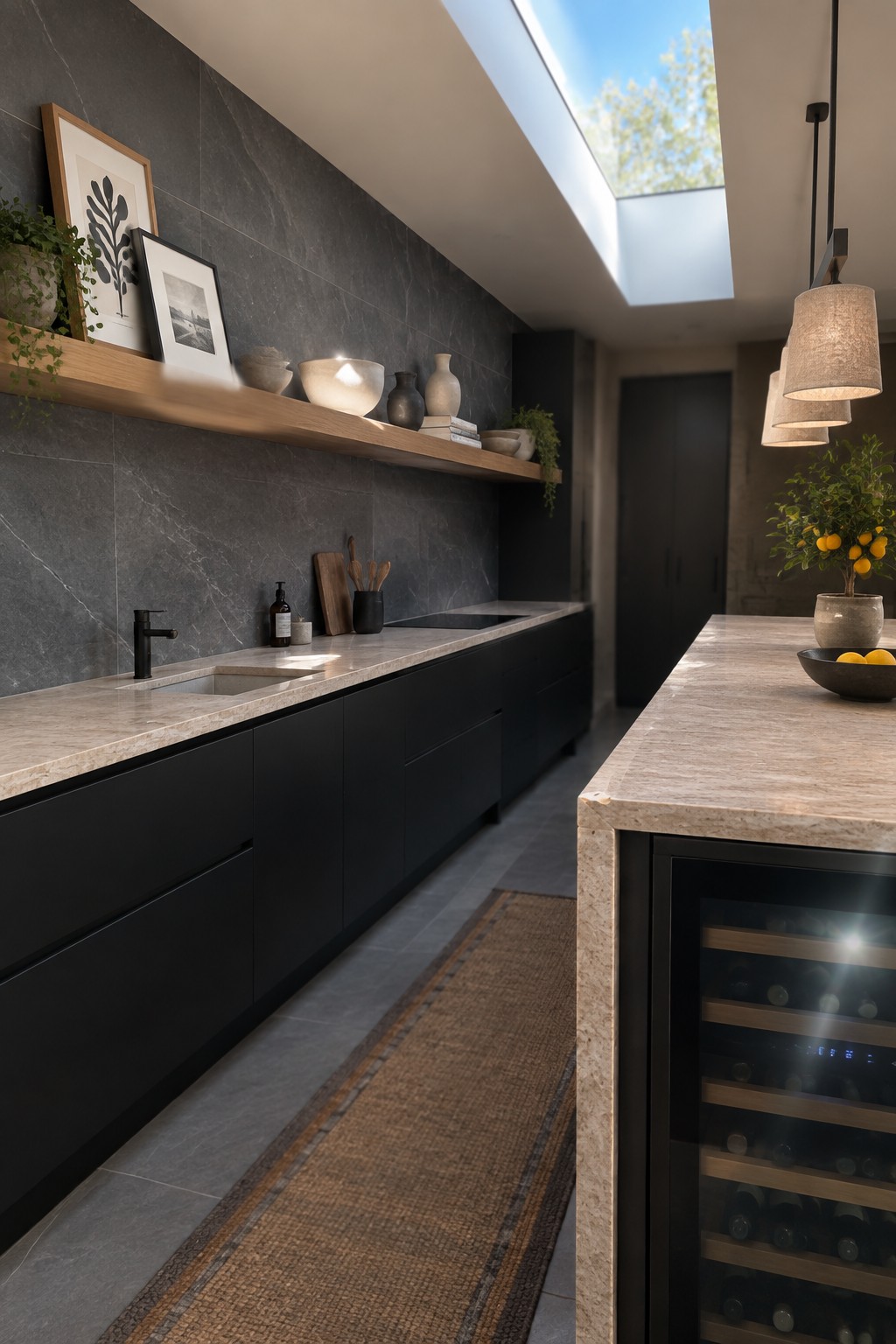
Many kitchens now run large natural stone tiles all the way up the wall behind the counter instead of keeping them to a standard backsplash height. This approach turns the wall into one solid surface that feels calmer and more finished than a patchwork of smaller tiles and trim.
It suits modern kitchens with dark cabinetry and lighter stone counters, where the single material keeps the look simple. Just check that the stone you choose is properly sealed near sinks and cooktops so it holds up over time.
Hexagon Tile Backsplashes
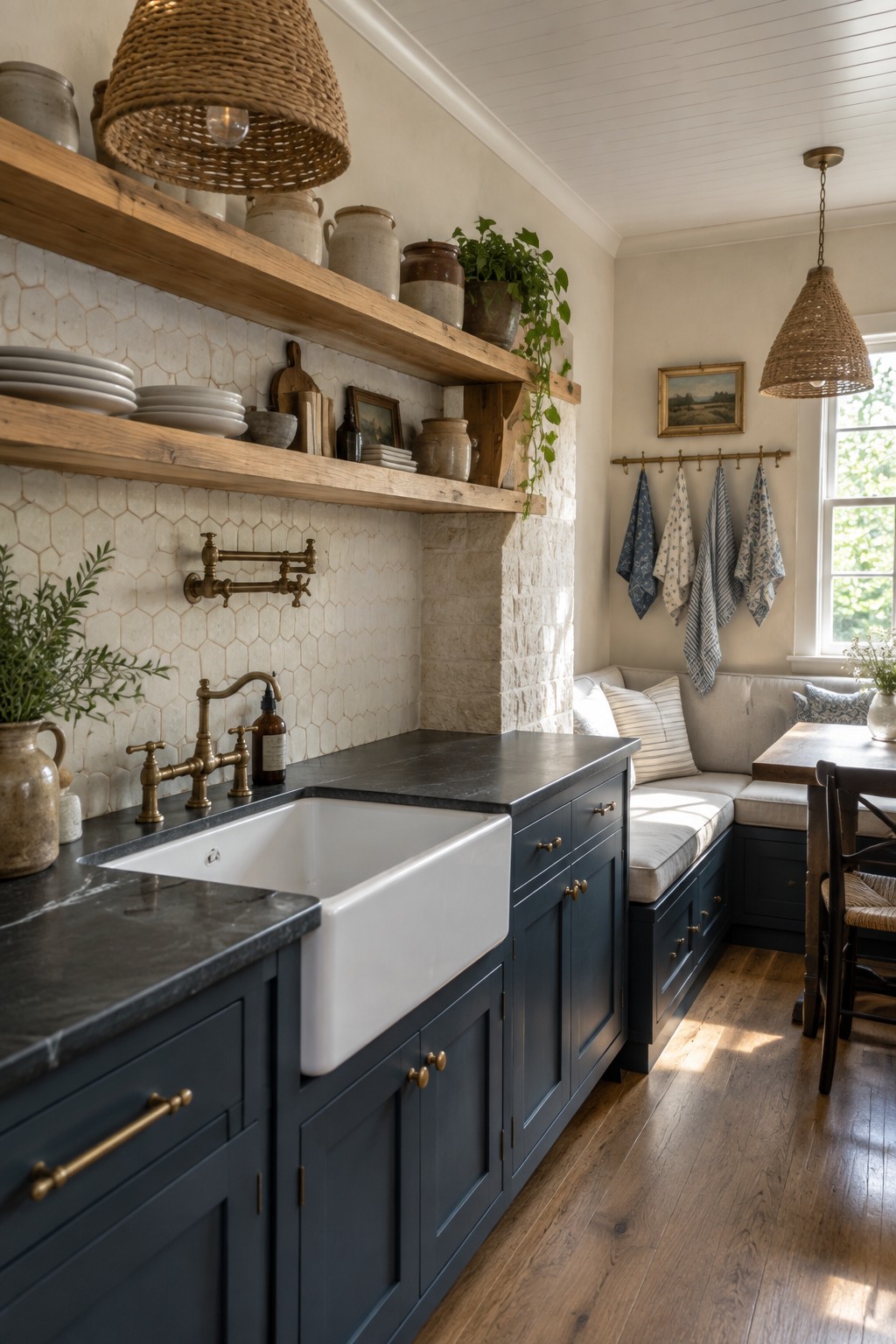
Hexagon tiles bring a gentle pattern to a backsplash that feels familiar but still stands out. The small scale keeps the look from feeling busy, and the shape adds just enough interest behind a sink or along a run of counters.
They suit kitchens that already have some weight to them, like dark cabinetry or a big farmhouse sink. Stick with a light neutral if you want the pattern to stay in the background, and avoid pairing it with too many other textures on the same wall.
Patterned Tiles for a Kitchen Backsplash
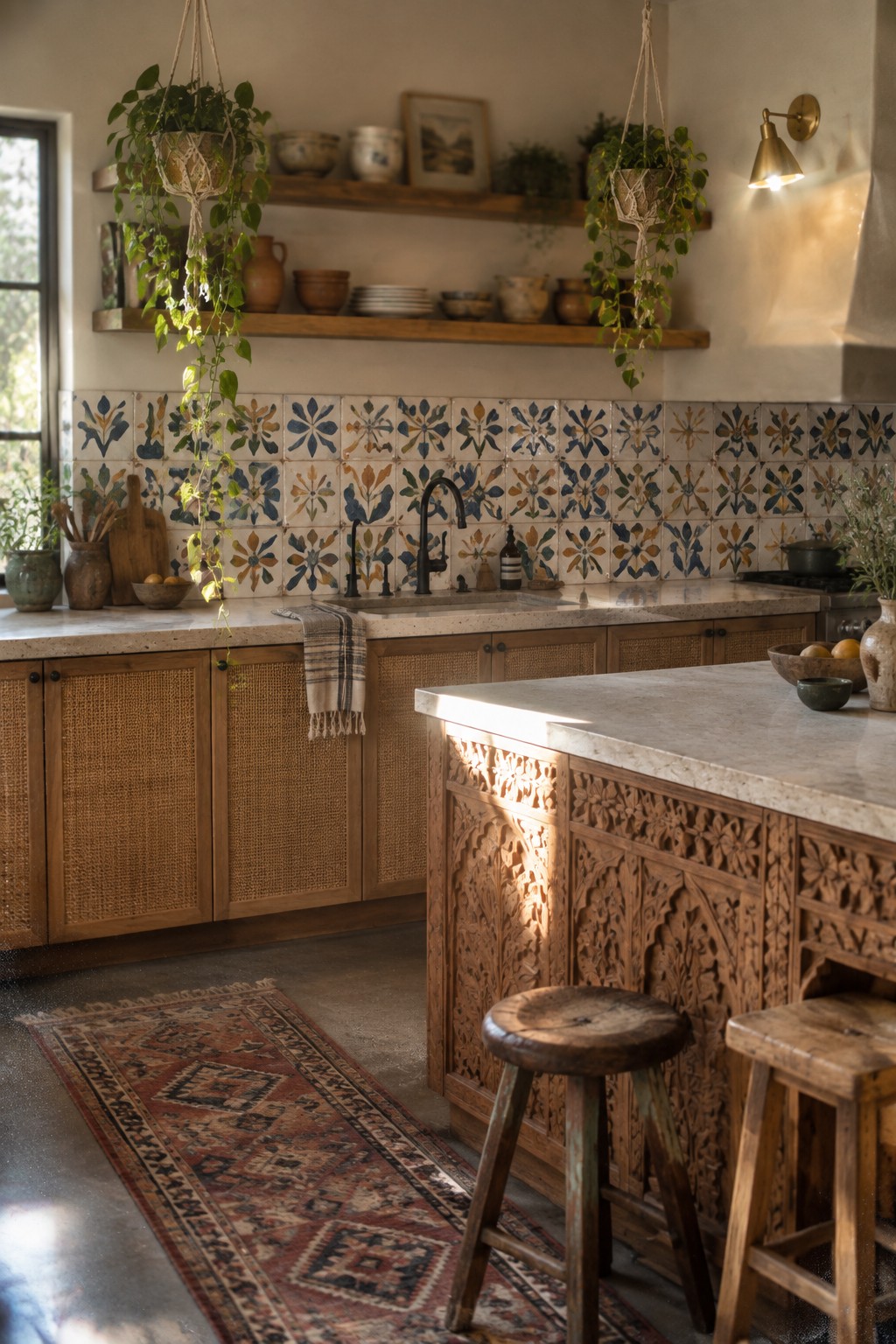
A solid color backsplash can start to feel flat after a while. Patterned tiles give the wall some movement and color while still keeping the rest of the kitchen simple and natural.
This works best in spaces that already use wood and stone. The pattern adds interest without fighting the other materials, and it suits homes that lean toward a collected rather than a perfectly matched look.
Bold Colored Tile Backsplashes
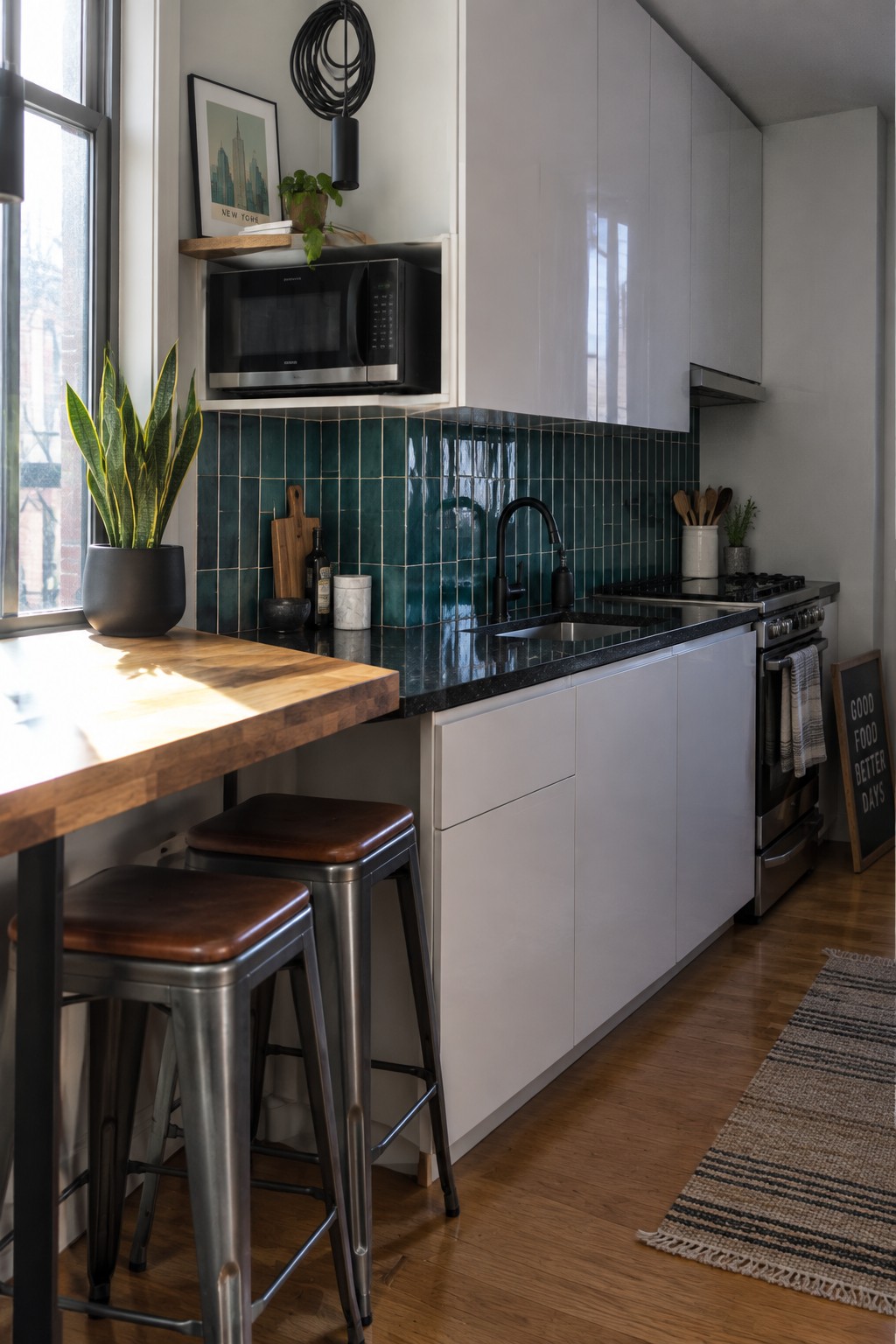
A deep teal tile backsplash stands out in a mostly white kitchen because it adds color without clutter. The glossy surface catches light and gives the area behind the sink and stove a clear focal point that feels intentional rather than plain.
This choice works well when the rest of the kitchen stays simple. Pair the tile with black counters and white cabinets so the color carries the weight. It suits smaller or medium kitchens that need a little personality without extra shelves or open storage.
Vertical Tiles With Under-Cabinet Lighting
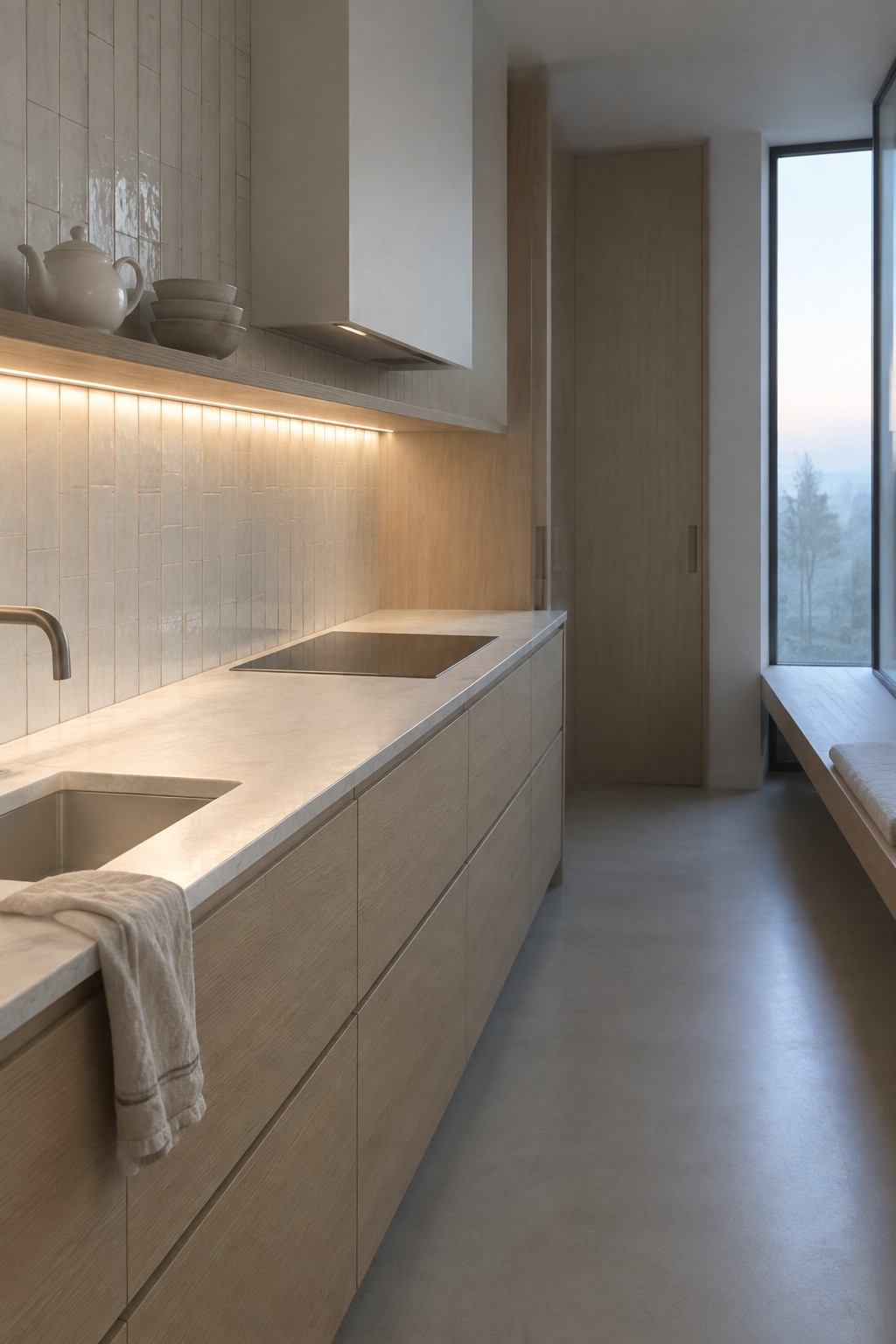
A backsplash made of light vertical tiles can make a kitchen feel noticeably brighter without adding much visual noise. The soft strip of light tucked under the upper cabinets spreads evenly across the surface and helps the whole counter area feel more usable in the evening.
This approach suits kitchens with wood cabinetry or other warm neutrals. Keep the tile simple and matte so the light stays the focus, and leave a small ledge above if you want a place for bowls or daily items without breaking the clean line.
Patterned Tile Backsplashes Behind the Range
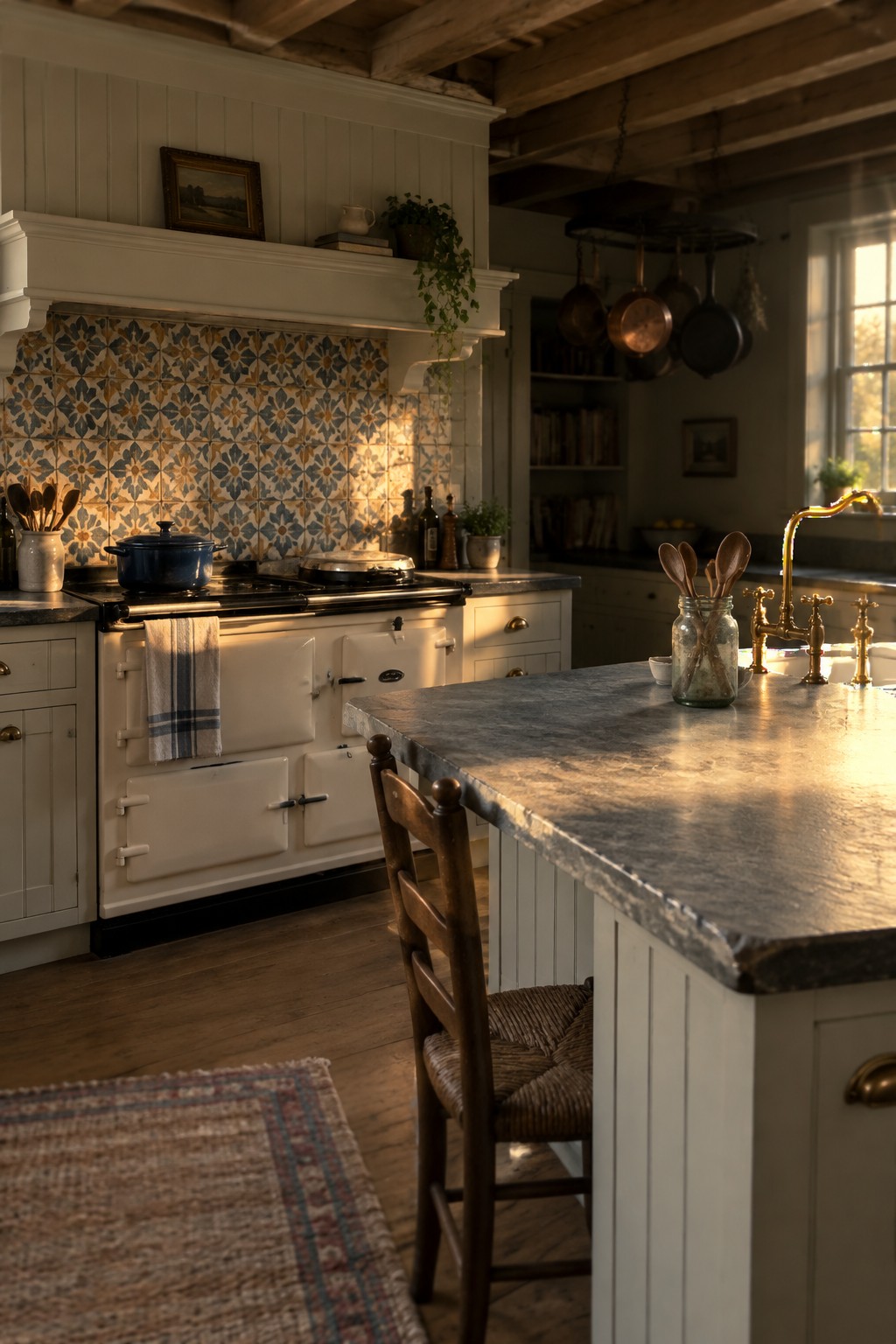
Patterned tiles work well when you want the backsplash to do more than just protect the wall. In this kitchen the colorful design behind the range adds character without fighting the white cabinetry or the dark countertops. The mix of blues and yellows gives the cooking area a focal point that feels intentional rather than busy.
This style suits older homes or any kitchen that already has traditional details. Keep the cabinets and counters fairly plain so the pattern has room to breathe. If the rest of the room stays quiet, the tile can carry the interest on its own.
Pebble Tile Backsplashes
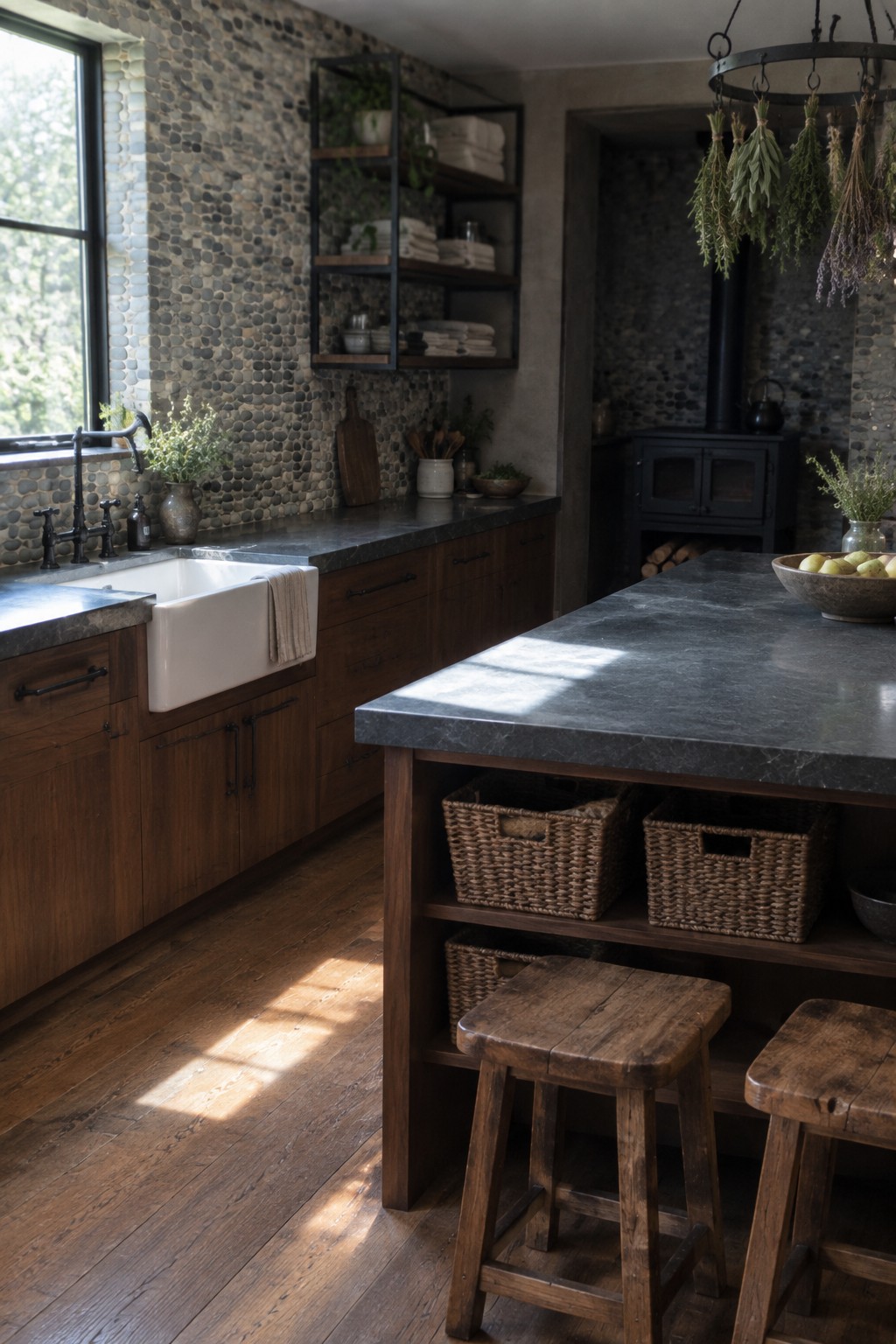
Pebble tile backsplashes give kitchens a textured surface that feels more natural than flat tile or stone slabs. The small rounded stones catch light differently across the wall and add quiet variation without needing extra color or pattern.
This approach works best in spaces that already use wood and darker stone, since the pebbles tie those materials together without competing. It suits homes that want a bit of the outdoors brought inside, though the uneven surface means wiping it down takes a little more care than smooth tiles would.
Scalloped Tile Backsplashes
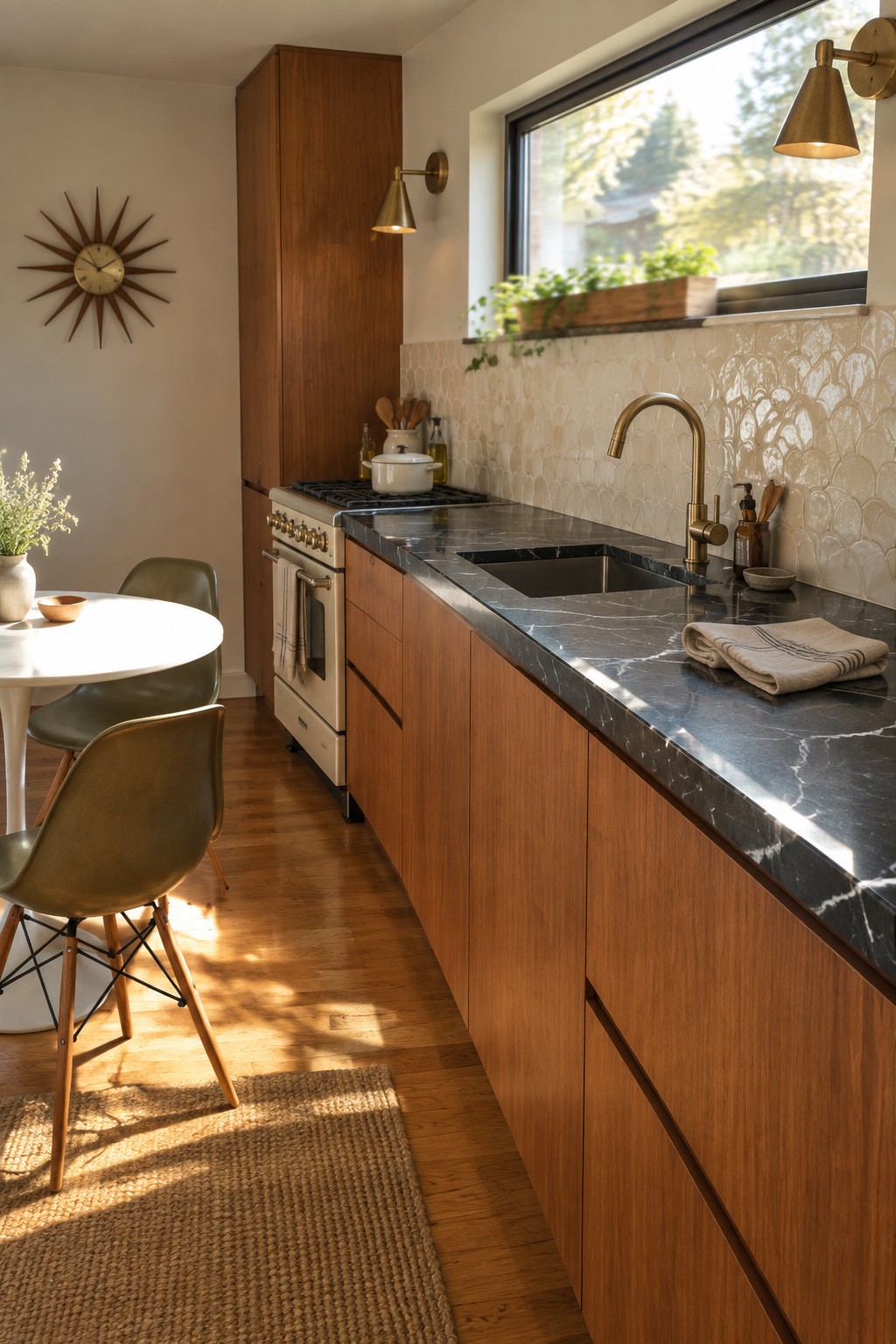
Scalloped tiles give a kitchen backsplash a soft repeating pattern that still feels calm. The shape adds just enough texture to stand out against wood cabinets and dark stone counters without competing with the rest of the room.
This approach works best in spaces that already have warm materials and simple lines. It suits both older homes and newer builds that want a bit of detail on the wall while keeping the overall look practical and easy to live with.
Frequently Asked Questions
Q: Can I mix tile and stone in one backsplash design?
A: Start with a tile base and add stone accents around the edges. This adds texture without overwhelming the space. Test a small section first to see how the colors play together.
Q: Does natural stone need extra care after installation?
A: Seal the stone right after it goes up. Then clean with a mild soap and water only. Skip harsh cleaners since they can dull the surface over time.
Q: Will these ideas work if my kitchen is pretty small?
A: Go with lighter shades to open up the room. Simpler patterns keep things from feeling cramped.
