

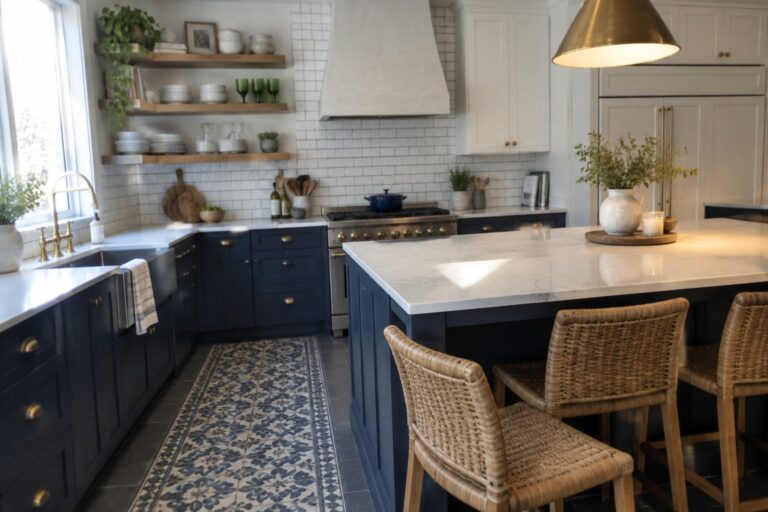
In a real kitchen the cabinet colors need to work with how you actually move between the sink and the stove every day.
Two tone setups often help by letting one shade handle the heavier lower storage while the other keeps the upper cabinets from closing in the room.
I tested a version of this split in my last place and the difference in morning light was bigger than I thought it would be.
Some pairs look clean on paper but end up feeling busy once the backsplash and hardware go in.
The examples worth keeping are the ones that still leave room for the rest of the kitchen to breathe.
Navy Lower Cabinets Balance A Light Kitchen
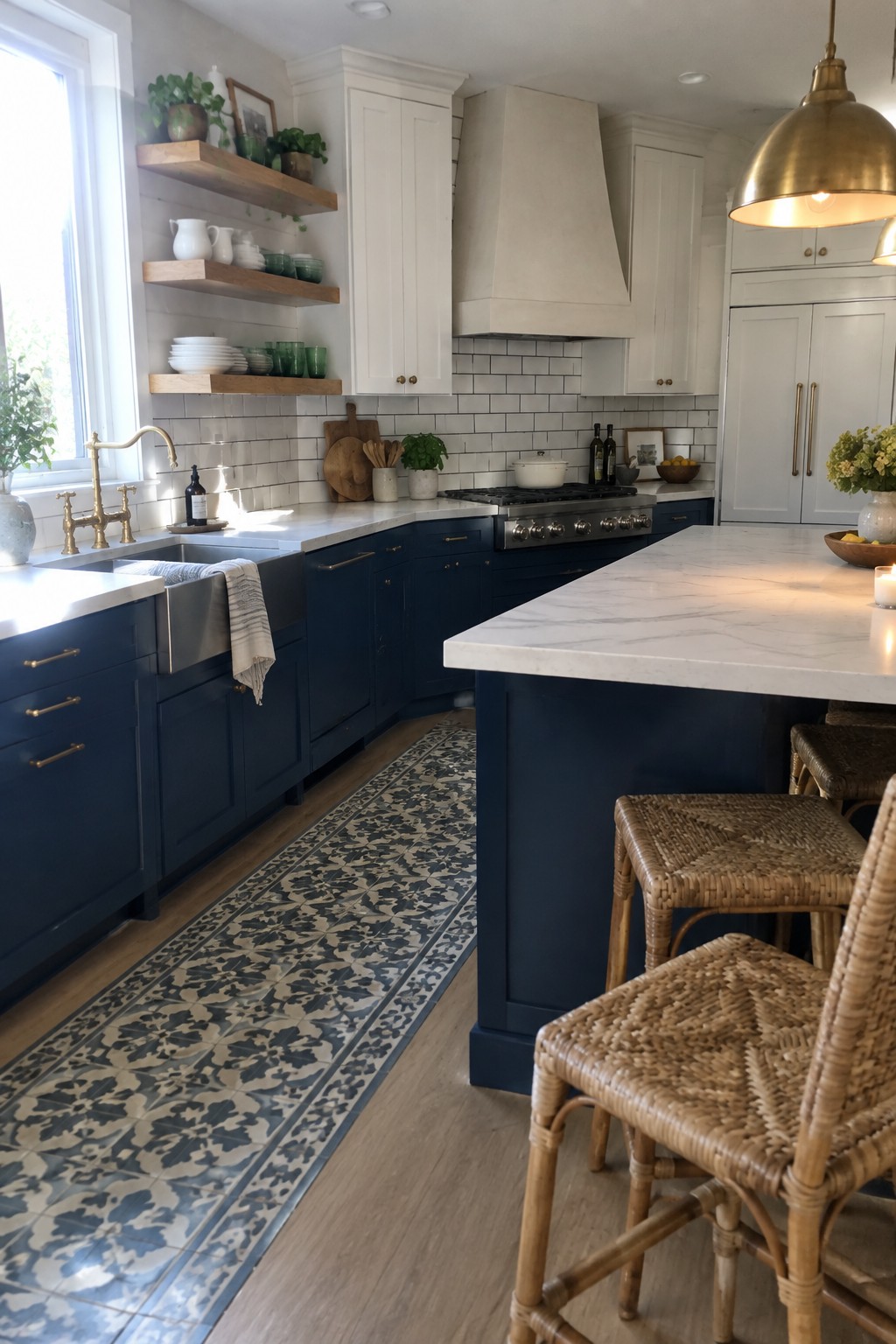
Two tone cabinetry works especially well when the darker color stays on the bottom. The navy lowers and island give the kitchen a solid base while the white uppers keep everything feeling open and bright. This mix stops the room from looking too heavy even though there is quite a bit of color.
It suits kitchens that get decent natural light and already have some wood tones or stone surfaces. Keep the upper cabinets simple and let the lower ones carry the color. Just make sure the dark shade you pick still reads clean rather than muddy once the cabinets are in place.
Two Tone Cabinetry In A Narrow Kitchen

Two tone cabinetry works especially well in a long, narrow kitchen because it keeps the space from feeling too heavy at eye level. The lighter upper cabinets open things up while the deeper green on the lowers gives the room a solid base and makes the counter feel more grounded.
This approach suits older homes or galley kitchens where you want contrast without adding extra trim or detail. Keep the countertop dark to tie the two colors together, and let the lower cabinets carry most of the storage so the upper area stays lighter and easier to reach.
Mixing Light And Dark Wood Cabinets

Two tone cabinetry can make a kitchen feel brighter without losing any warmth. Light wood uppers keep the upper half of the room open, while the darker lowers ground the space and tie into the wood floor.
This approach works best in open plan homes where the kitchen meets the living area. Keep the island a solid color like white so the two tones on the walls stay the main focus.
Mixing Wood And Dark Cabinets
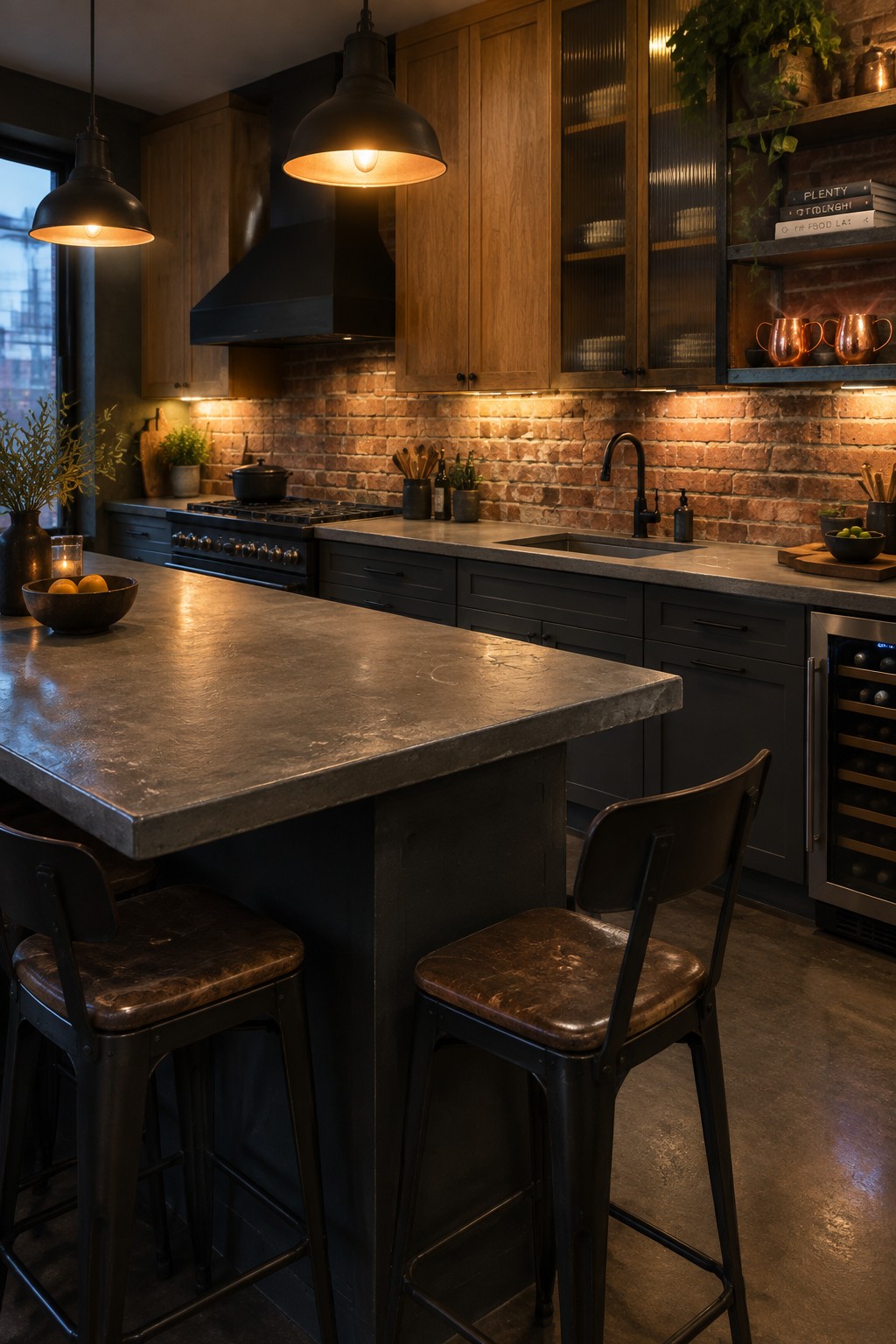
Two tone cabinetry stands out when the upper cabinets stay in a natural wood finish while the lower ones go dark. The contrast keeps the kitchen from feeling heavy or flat, and it gives the space a bit more warmth than an all dark setup would.
This works best in kitchens that already have some texture on the walls, like brick or plaster, because the wood softens the look without competing. It suits homes that want a modern feel but still need the room to read as inviting rather than stark.
Blue And White Two Tone Cabinets
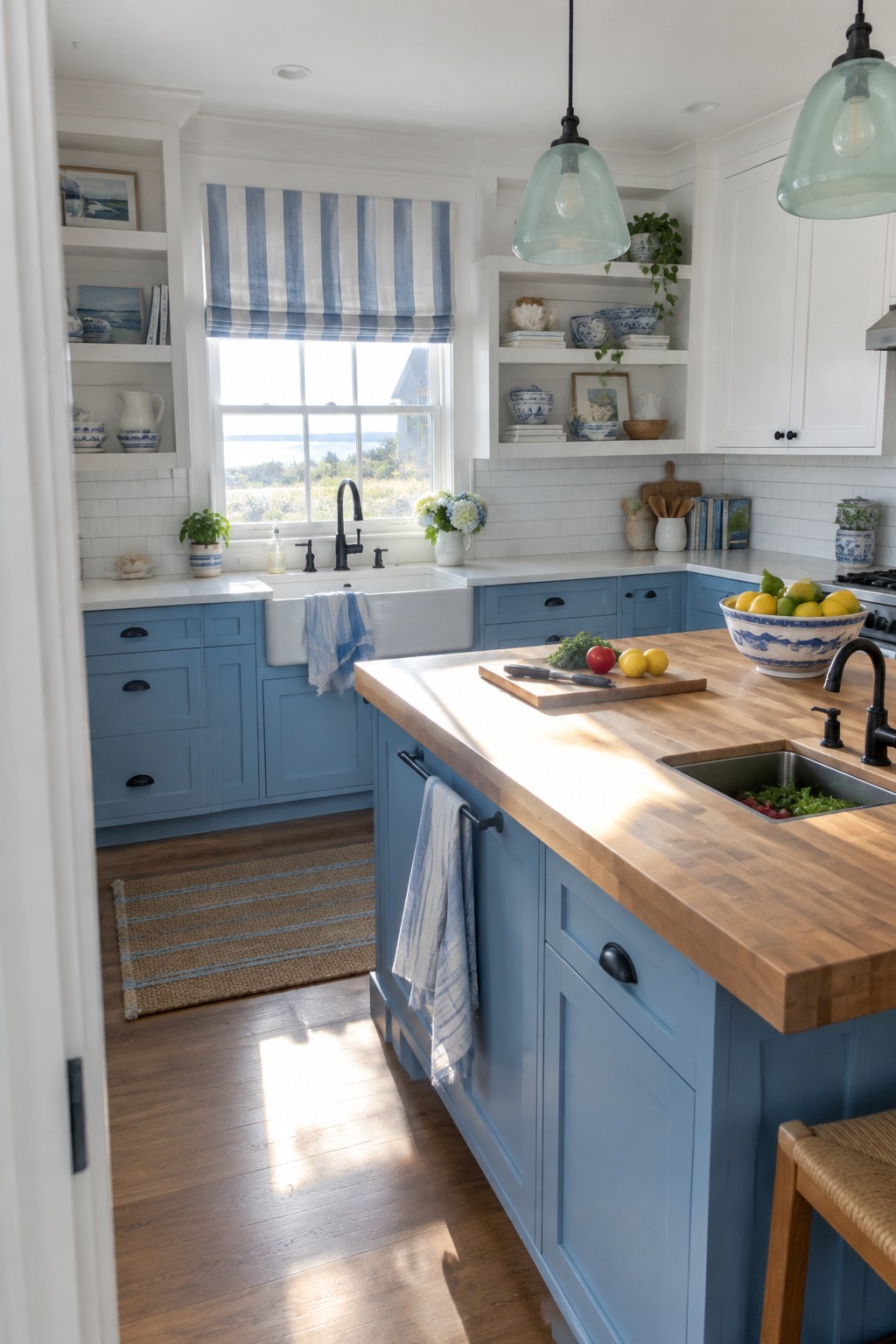
Two tone cabinetry works well when the lower cabinets carry a bit more color while the uppers stay light. In this kitchen the blue base cabinets and island give the room some weight without closing it in, and the white cabinets above keep everything feeling open and easy to clean.
This approach suits kitchens that get good natural light and do not need to feel overly formal. It also helps if you want a little color but still need the space to feel bright and practical for daily use. Stick with a soft blue rather than a deep one if your kitchen is on the smaller side.
Two Tone Cabinets With A Dark Base
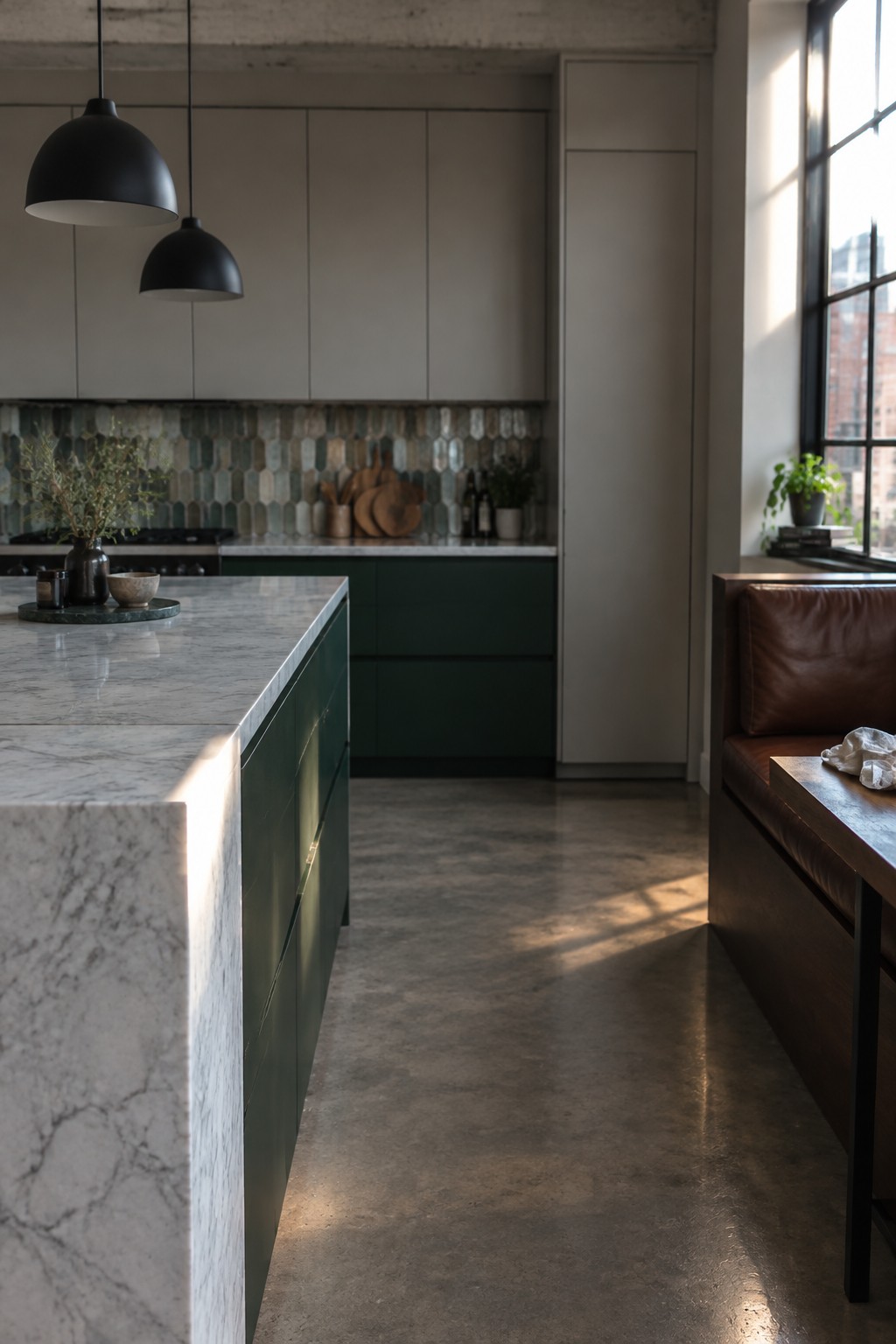
Two tone cabinetry often works best when the upper cabinets stay light and the lower ones take on a deeper color. This keeps the kitchen open and bright at eye level while the darker base adds some weight and structure where it feels grounded.
The approach suits modern homes that want contrast without going fully dark. It pairs well with simple stone counters and minimal hardware so the color split stays easy to live with.
Darker Lower Cabinets With Lighter Uppers
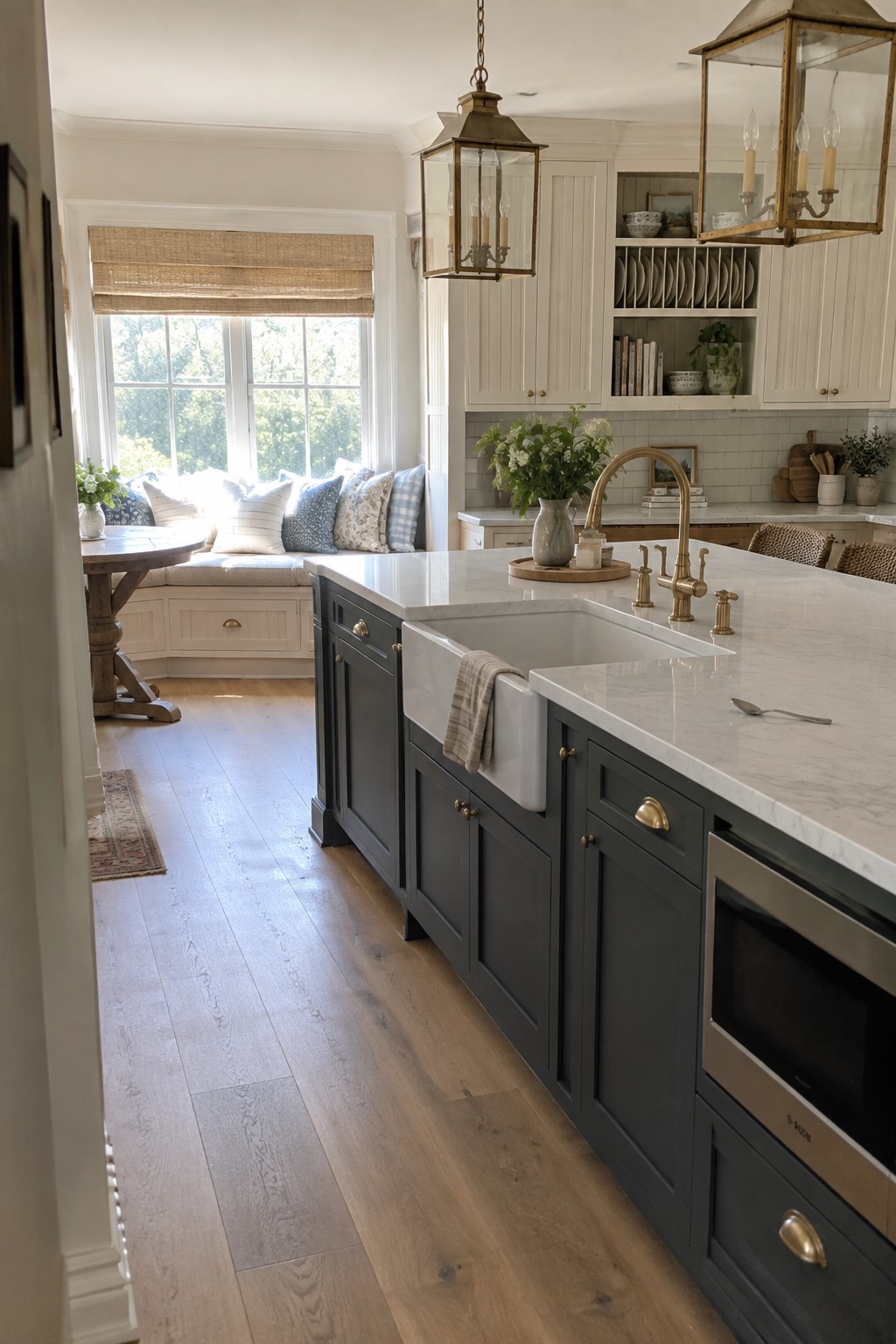
Two tone cabinetry often feels more balanced when the lower cabinets are the darker shade. The deeper color gives the kitchen a solid base and helps the counters and island stand out without the whole room feeling closed in.
This works best in spaces with white or light stone tops and some natural light coming in. It keeps the upper area bright while still adding contrast that makes the room feel more finished.
Two Tone Cabinetry With Lighter Uppers And Darker Lowers

Two tone cabinetry often feels more balanced when the upper cabinets stay light and the lower ones go darker. The light gray uppers keep the room from closing in while the deep teal bases and island add weight where it belongs. This split works especially well in kitchens with lots of natural light.
It suits modern layouts that already have clean lines and simple hardware. Try it if your countertops are light and bright, since they help connect the two colors. Just make sure the darker finish does not cover too much wall space or the room can start to feel heavier than intended.
Darker Base Cabinets With Lighter Uppers
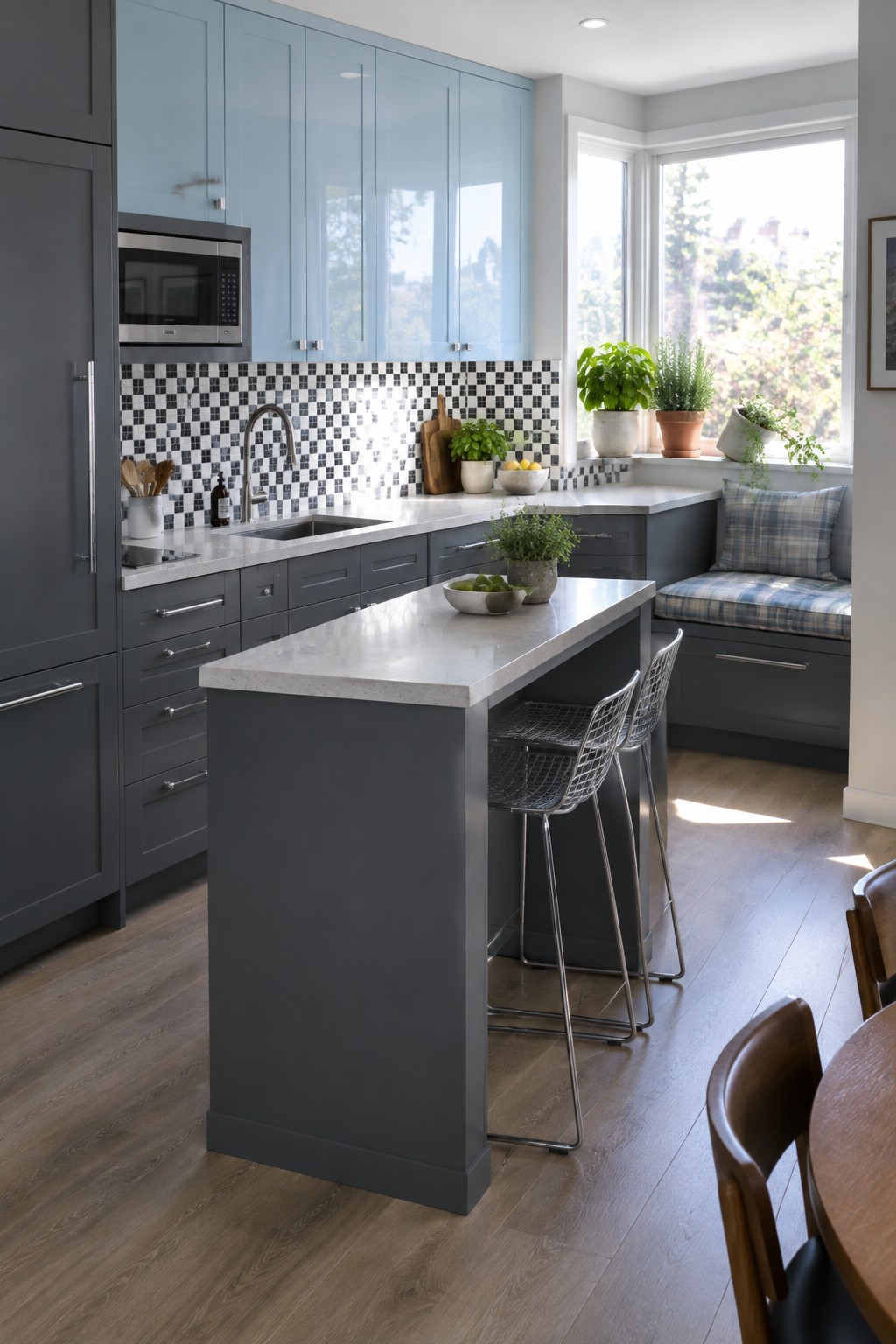
Many kitchens feel more balanced when the lower cabinets sit a few shades darker than the ones above. The darker base gives the room a solid foundation while the lighter uppers keep the whole space from closing in. It is a simple way to add contrast without needing extra trim or hardware changes.
This approach works best in kitchens that get decent daylight. It suits medium sized rooms where you want some visual weight at the counter level but still need the upper cabinets to feel airy. Stick to matte finishes on both tones so the shift reads as intentional rather than busy.
Combining White And Wood Cabinets
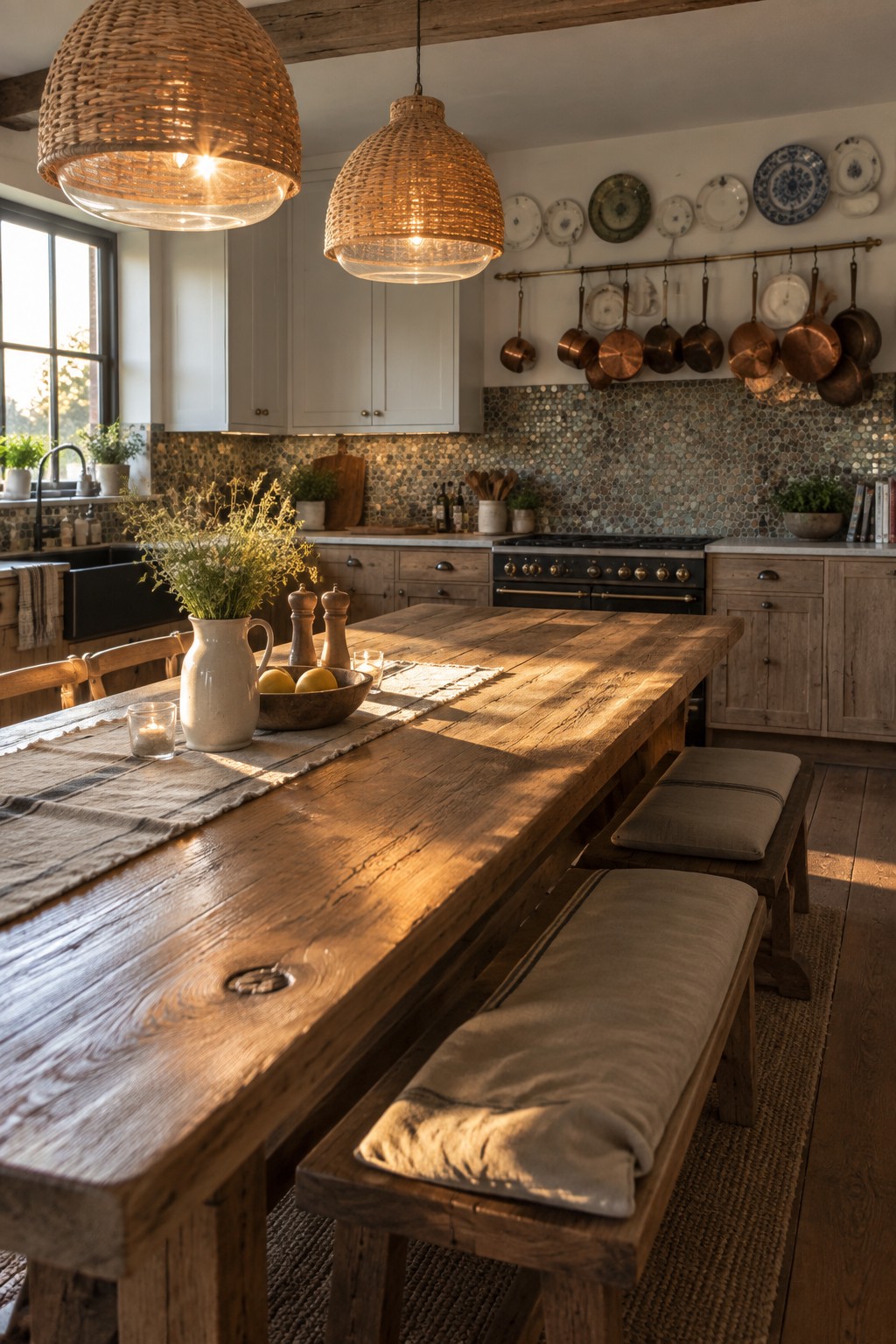
White upper cabinets paired with wood base cabinets give a kitchen both brightness and warmth. The contrast keeps the room from feeling too heavy or too stark, and it works especially well in spaces that already have wood tones elsewhere.
This setup suits homes that want a simple update without a full remodel. It tends to look best when the wood has some visible grain and the white stays soft rather than bright, so the two tones relate to each other instead of competing.
Mixing Light Wood With Dark Cabinets
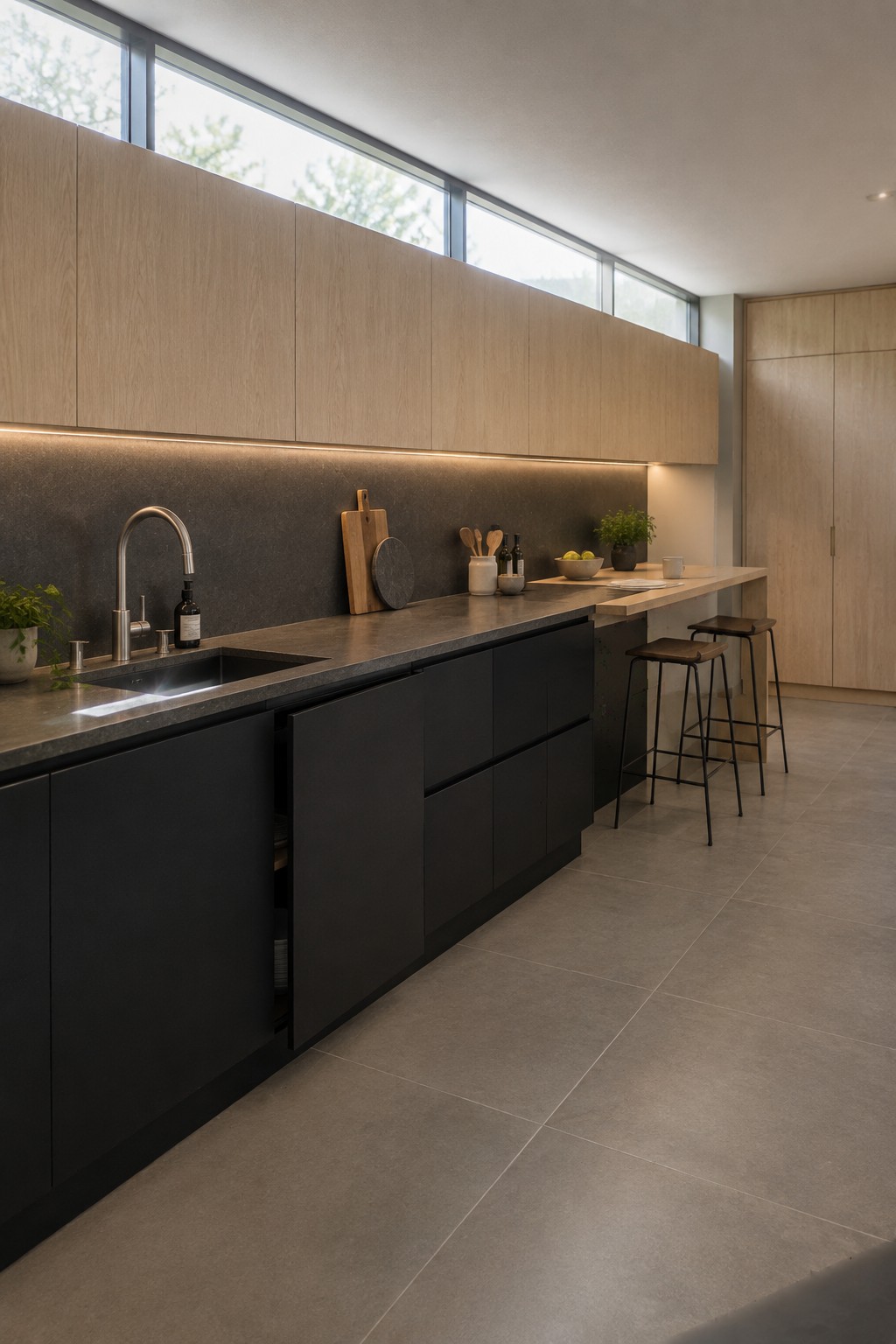
One simple way to keep a modern kitchen from feeling flat is to split the cabinet finishes. Light wood on the uppers and a dark matte finish on the lowers creates a clear break that makes the whole run look more interesting. The contrast also helps the space feel a little less heavy, especially when the cabinets stretch across a long wall.
This approach works best in kitchens that have plenty of storage to cover. The lighter wood keeps the upper cabinets from closing in the room, while the dark base makes everything feel anchored. It suits homes that want a clean look without going all white or all dark. Just keep the two tones fairly different in value so the split reads as a choice rather than an accident.
Two Tone Cabinets In Green And White
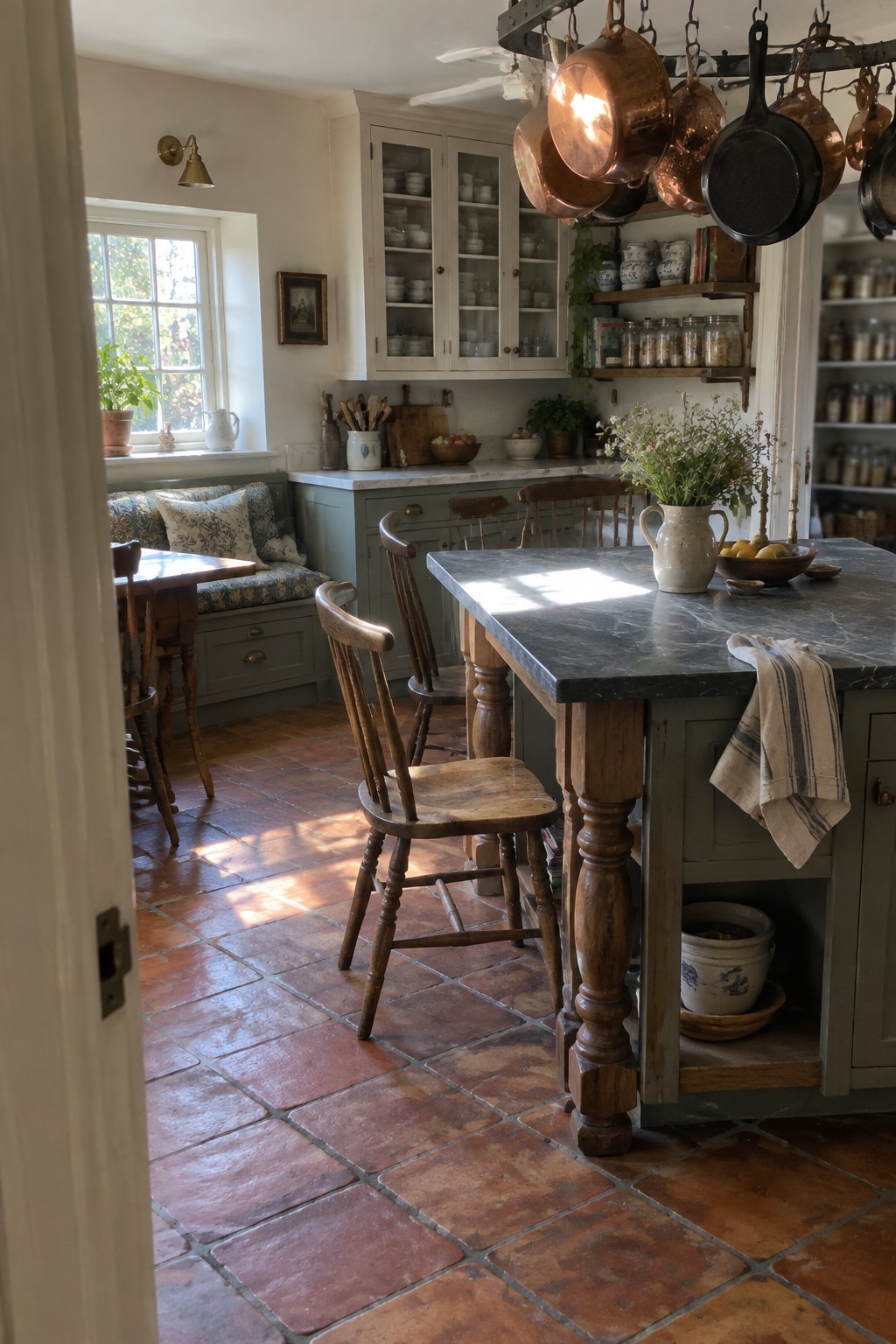
Many kitchens feel more balanced when the cabinets are not all one color. The lower cabinets here are painted a soft green while the upper ones stay white with glass doors. This mix keeps the space from feeling flat and adds just enough color to warm things up.
This approach works best in homes that already have some age or character. Stick with a muted green so it stays calm instead of trendy. White uppers help reflect light and keep the room from closing in.
Two Tone Cabinets That Add A Bright Color
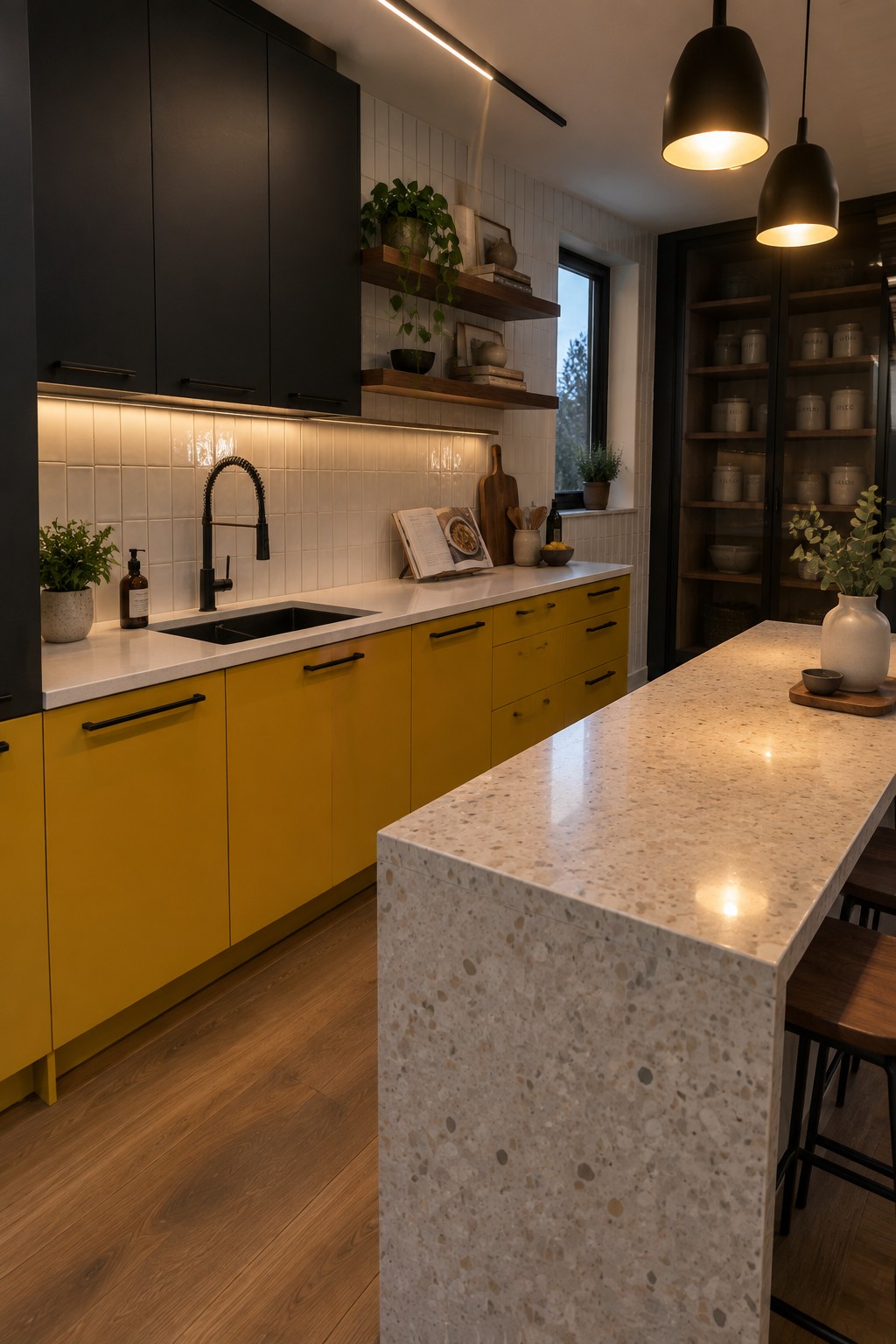
One idea that stands out in modern kitchens is pairing dark upper cabinets with a bolder color on the lower ones. The contrast keeps the room from feeling flat while still looking clean and current.
This works best in spaces with white walls and good light so the brighter shade does not take over. Stick with the color on the base cabinets only and keep the uppers simple if you want the look to stay balanced over time.
Light Uppers With A Dark Island Base
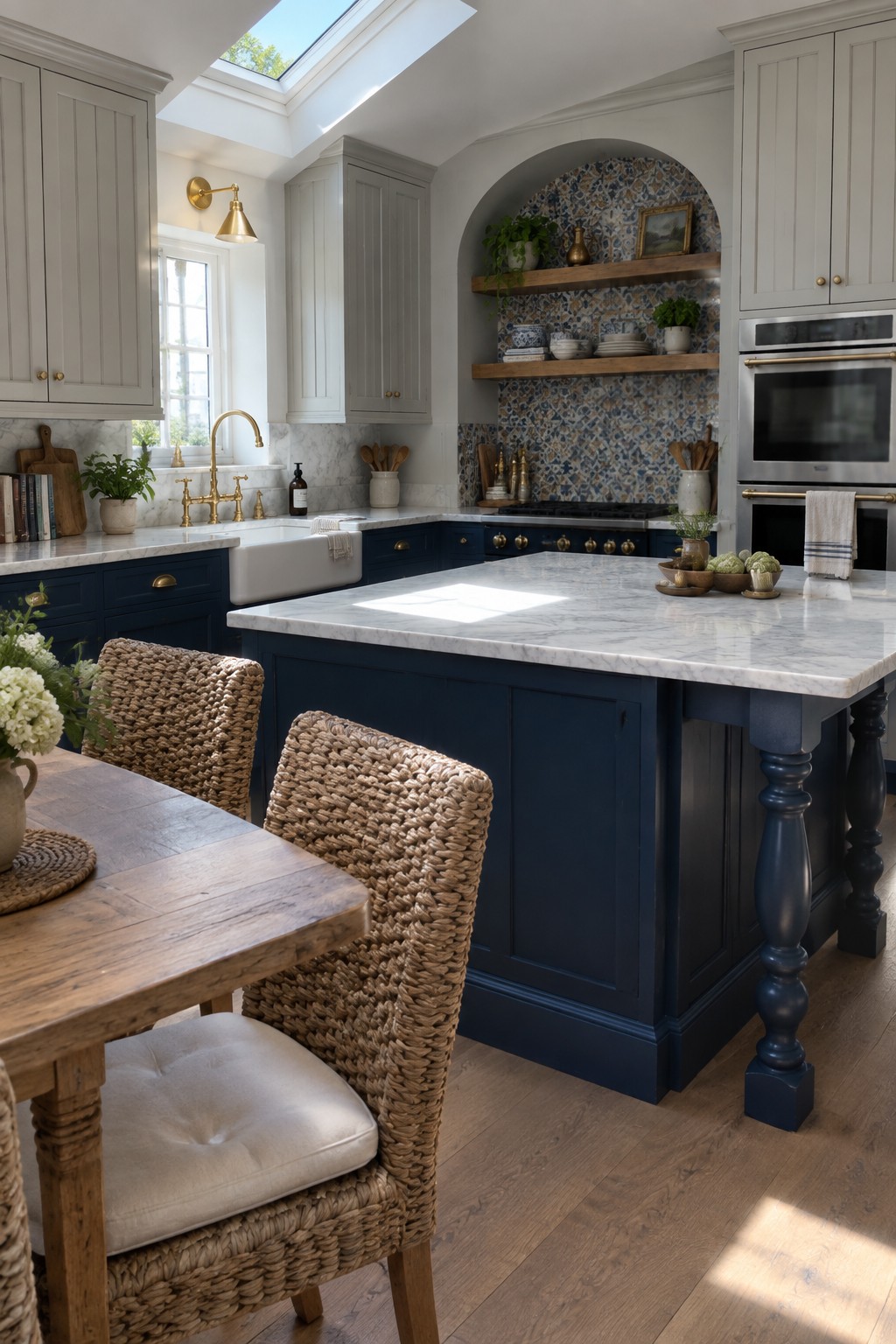
Two tone cabinetry works well when the upper cabinets stay light and the lower run plus island go dark. The contrast keeps the room from feeling top heavy and gives the island a clear place to anchor the layout.
This setup suits kitchens with decent natural light and a central island that gets daily use. Stick to simple hardware and let the color split do the work rather than adding extra trim or pattern.
Mixing White And Wood Cabinets

Many kitchens feel more balanced when the upper cabinets are painted white and the lower cabinets stay in natural wood. The white keeps the upper space open and bright, while the wood adds warmth at eye level and below without making the whole room feel dark or heavy.
This mix works best in kitchens with darker countertops or floors, since the contrast stops everything from looking flat. It also holds up well in longer or narrow layouts where you need some visual separation between the work zones.
Soft Green Lowers With Neutral Uppers
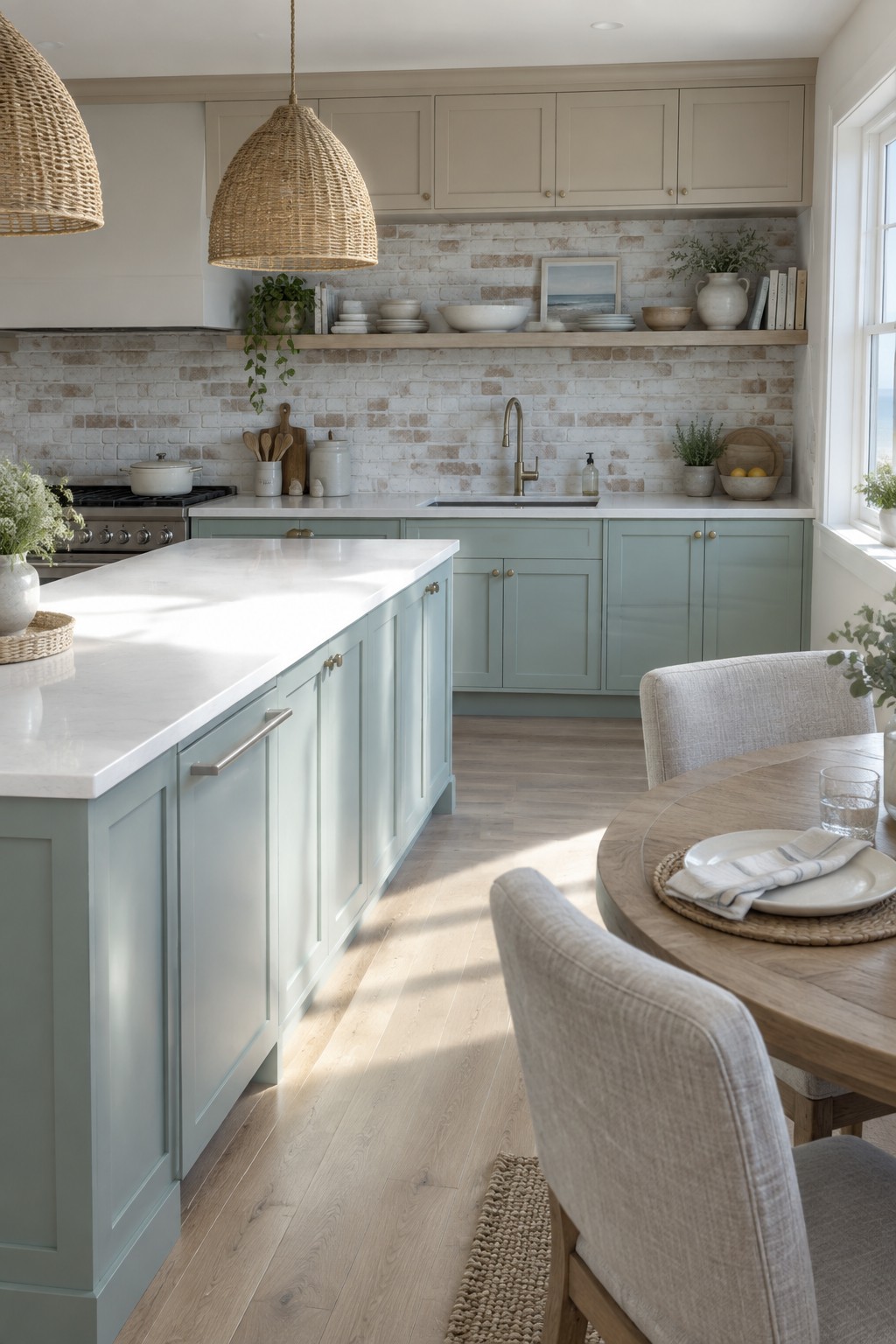
Many kitchens feel more balanced when the lower cabinets carry a soft color while the uppers stay light and neutral. The gentle green on the base cabinets here adds just enough personality without weighing the room down or making it feel too coordinated.
This works especially well in homes that want a calm kitchen that still feels fresh and livable. It pairs easily with white counters and wood floors, and it leaves room to keep the rest of the space simple rather than adding more color everywhere.
Two Tone Cabinetry Balances Light And Dark
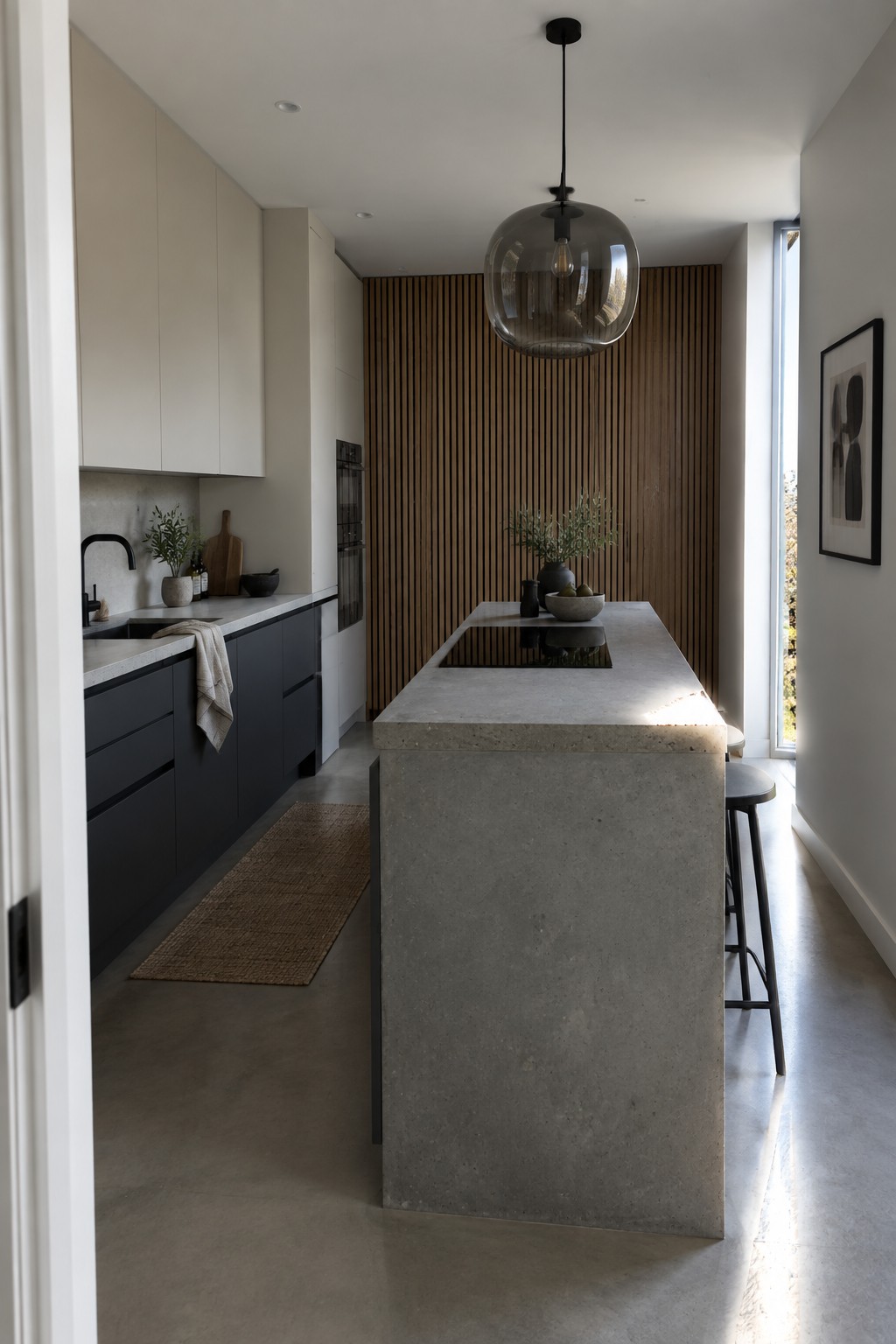
Two tone cabinetry stands out because it gives the kitchen contrast without extra color or busy details. Light upper cabinets keep the room feeling open while darker lower ones anchor the space and make the layout feel more grounded.
This approach works well in kitchens with a strong central island. It suits homes that want a modern look but still need the cabinetry to work with concrete or wood surfaces without competing for attention.
Mixing White Uppers With Darker Bases
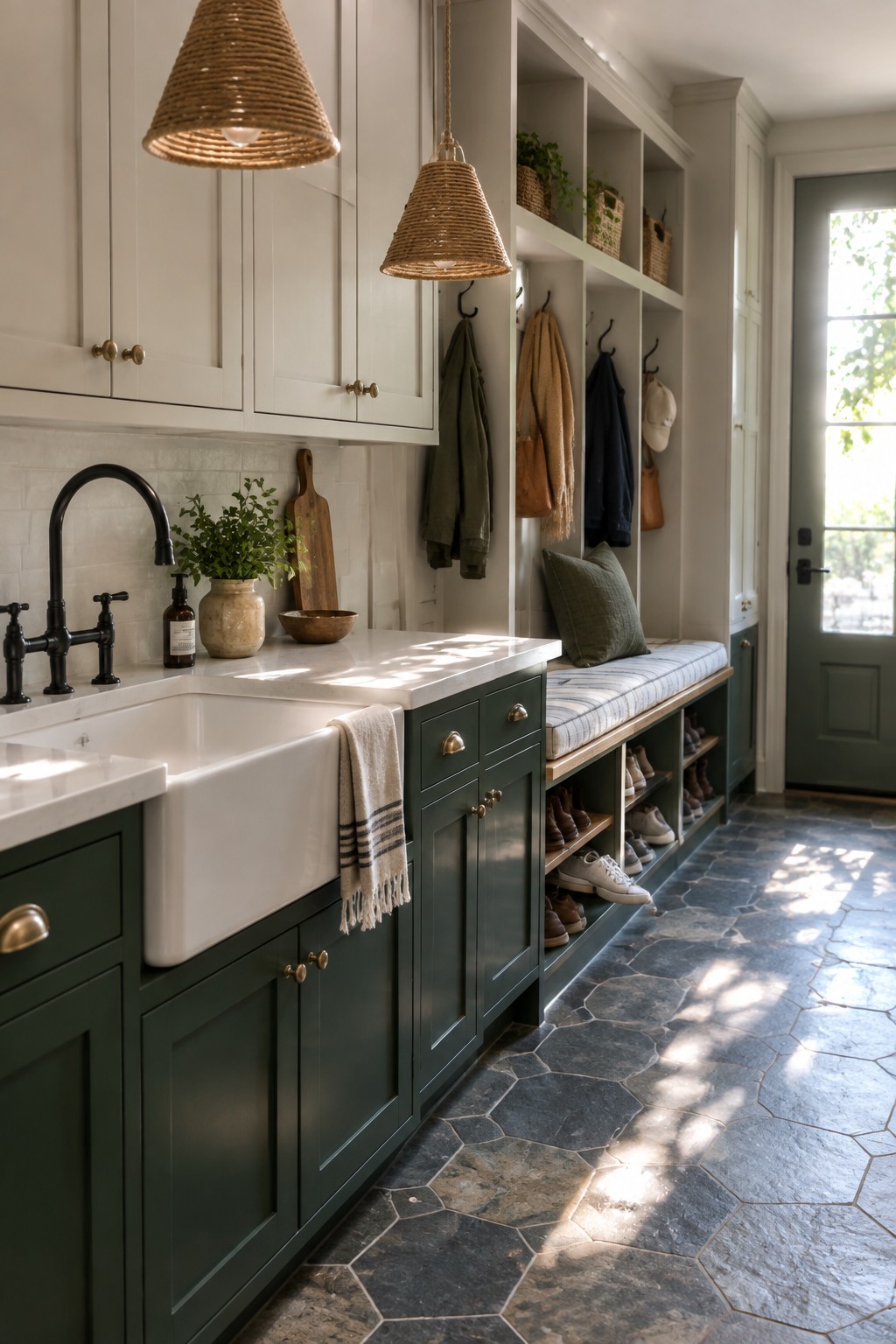
One simple way to keep a kitchen bright without looking too light is to put white on the upper cabinets and a deeper color on the lower ones. The contrast makes the room feel open while the darker base gives it some weight where it matters most.
This setup works best in spaces that need to stay practical, like kitchens that open into a mudroom or back entry. The darker color can continue into the storage area so the two zones feel connected without matching perfectly.
Mixing Light And Dark Cabinets
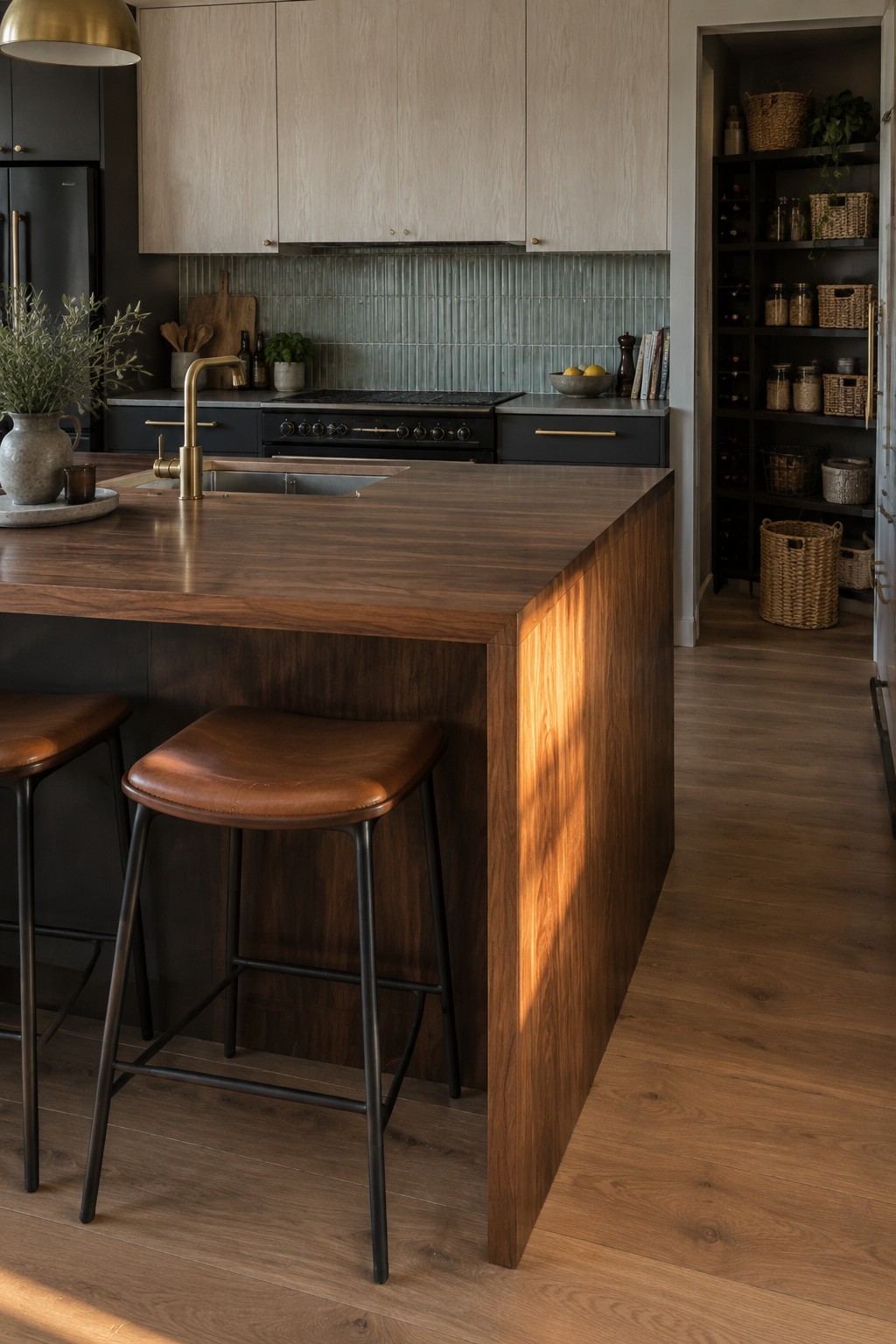
A simple way to bring contrast into a kitchen is to use light wood on the upper cabinets and darker finishes on the lower ones. This split keeps the room from feeling flat while still looking cohesive, especially when the island picks up the darker tone in a natural wood.
The combination suits kitchens that already have some warmth in the flooring or backsplash. It works best when the darker cabinets stay matte or low sheen so the lighter uppers can do most of the brightening work.
Mixing Light And Dark Cabinets
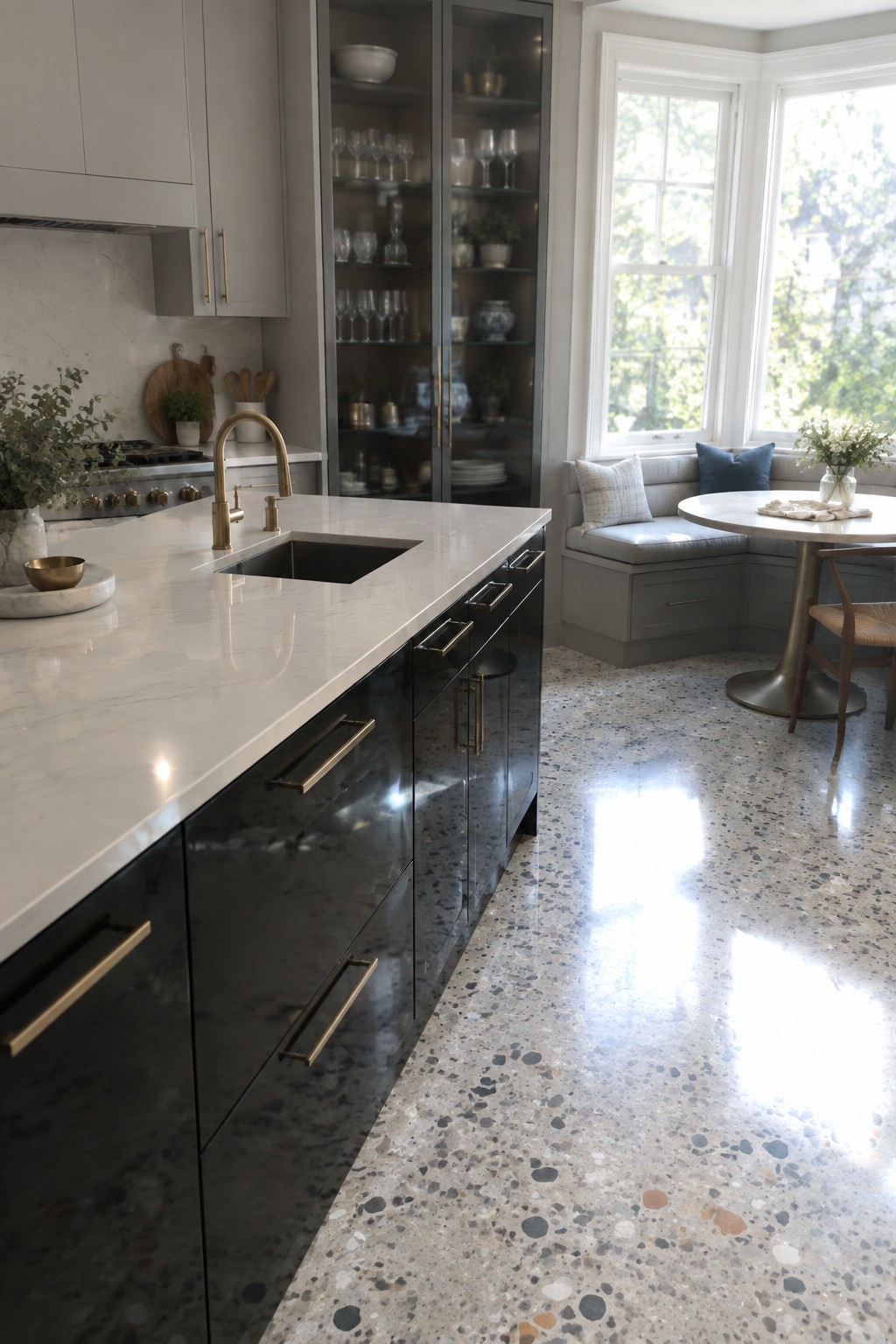
One simple way to refresh a kitchen is to use lighter cabinets on top and darker ones below. The light uppers keep the space feeling open and bright, while the darker bases add weight and make the room feel finished. This split works especially well when the countertop is a light neutral like marble.
It suits kitchens that already get decent daylight and do not need extra visual height. The dark lower cabinets also hide wear better over time. Just keep the hardware consistent so the two tones read as one deliberate choice rather than a mismatch.
Two Tone Cabinets With A Warm Base Color
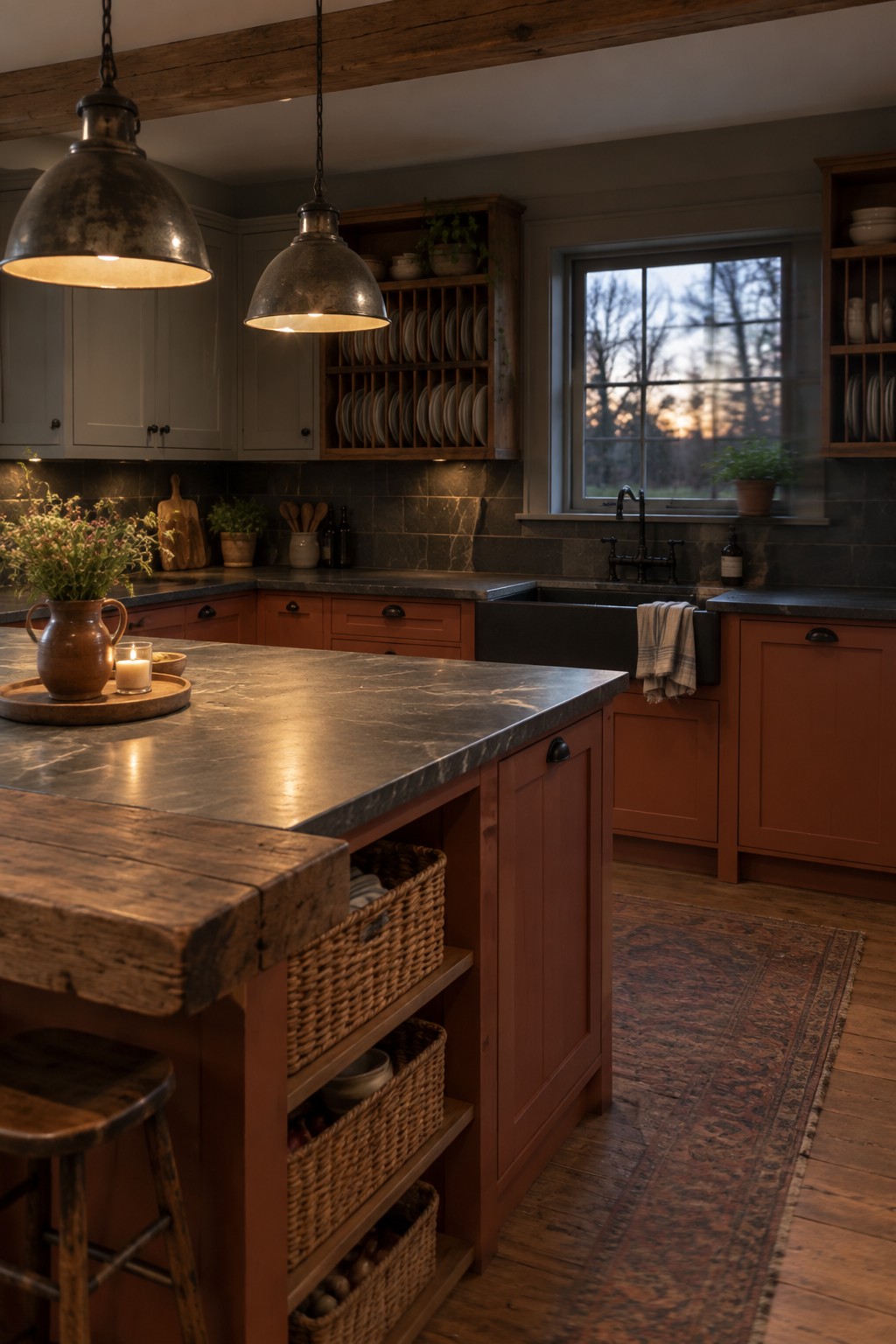
Many kitchens feel more balanced when the upper cabinets stay light and the lowers take on a richer tone. Here the soft gray uppers keep the space from feeling heavy while the terracotta base cabinets and island add warmth that works well with the dark counters and wood tones.
This approach suits older homes or any kitchen that needs a bit of color without going too bold all over. It also helps the island stand out as a separate work zone. Just keep the two colors in the same family so they still feel connected rather than competing.
Mixing White And Wood Cabinets

One simple way to keep a kitchen feeling bright but still grounded is to put white on the upper cabinets and wood on the lower ones. The white lifts the space and makes it feel more open, while the wood brings in some natural texture that stops everything from looking too plain.
This works best in kitchens with decent natural light and a fairly open layout. It suits modern homes or apartments where you want the room to feel clean without turning cold. Keep the wood tone consistent on the island base and lower cabinets so the mix reads as intentional rather than scattered.
Mixing Light And Dark Cabinet Finishes
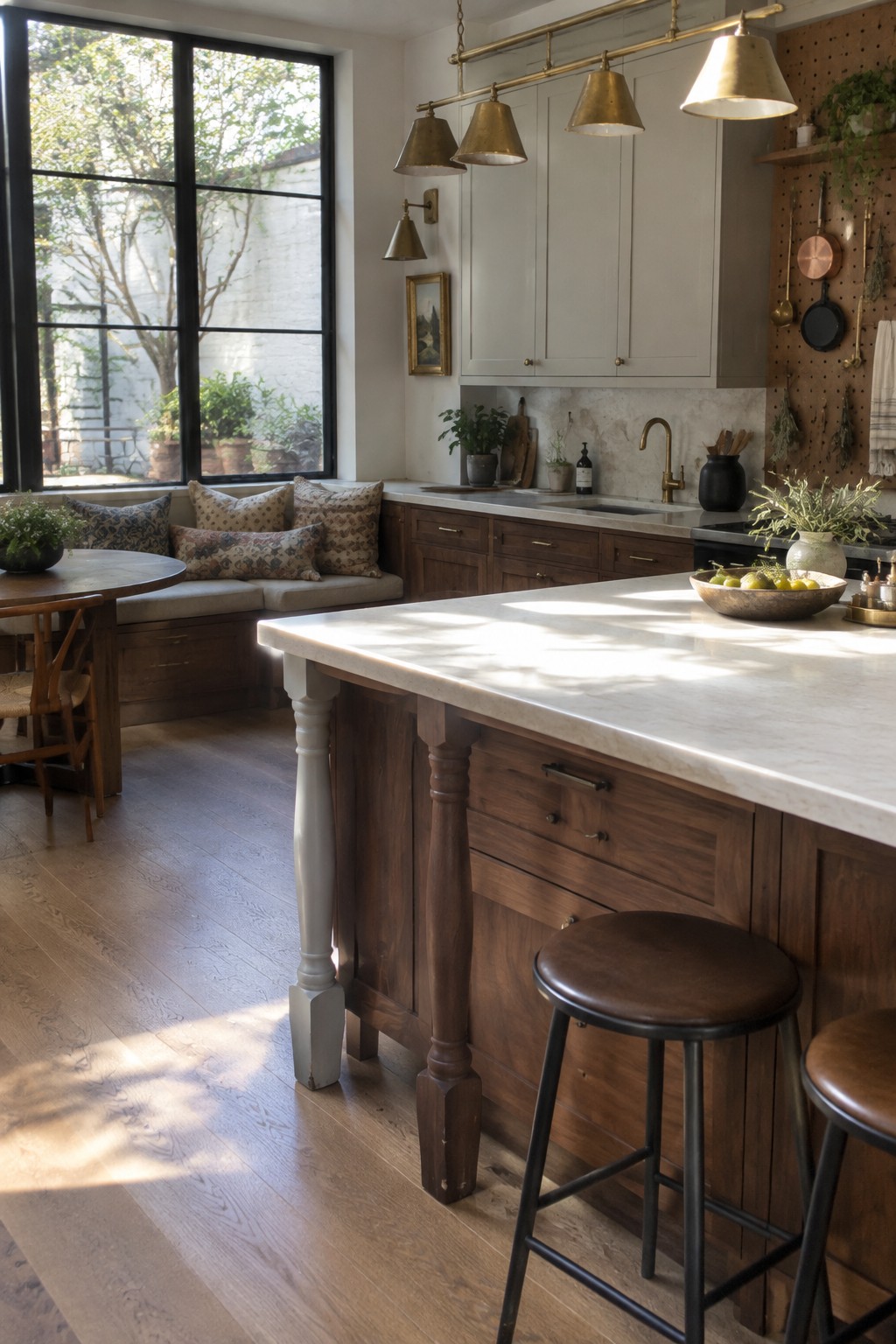
Two tone cabinetry works well when the upper cabinets stay light and the lower ones go dark. The contrast keeps the kitchen from feeling heavy on top while the wood base adds warmth that a full white kitchen often lacks.
This approach suits spaces with decent natural light and works best when the dark tone stays on the island and base cabinets only. It gives the room structure without needing extra trim or bold colors.
Frequently Asked Questions
Q: How do I pick which cabinets get the darker color? A: Go with the darker shade on the lower cabinets. It anchors the kitchen and keeps things from feeling top heavy. The lighter tone up top also helps the room feel more open.
Q: What if my counters already have a strong pattern? A: Keep the two-tone simple with neutral shades. A busy countertop needs the cabinets to stay calm so nothing fights for attention. Test a couple of paint samples right next to your counters first.
Q: Will two-tone cabinets still look good with my stainless appliances? A: They pair easily since stainless sits in the middle tone-wise. Let one cabinet color echo the metal and the other stay matte. This keeps the focus on the cabinet contrast without extra shine.
