

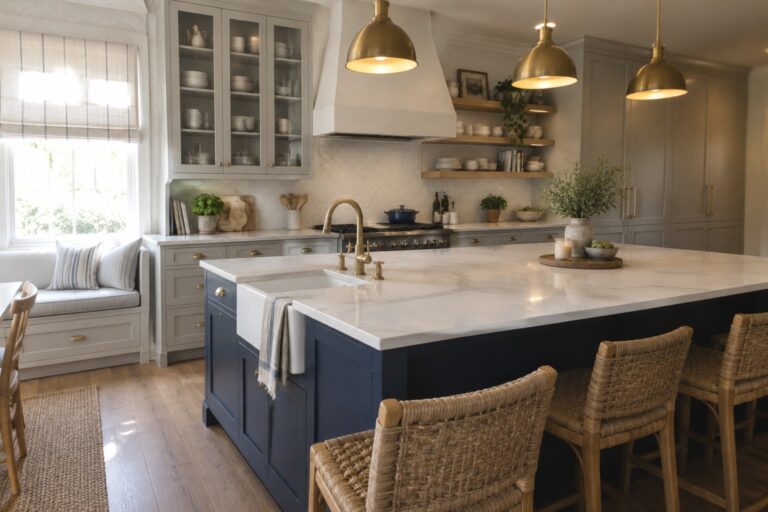
I often notice that transitional kitchens succeed when the cabinetry provides a steady backdrop instead of competing with other elements for attention.
Shaker styles work well here because their straightforward design lets other details like hardware or open shelving stand out in a balanced way.
The layout matters most.
Over time I have seen how poor storage planning can make even a nicely styled kitchen frustrating to use every day.
Testing a few of these ideas in my own space has shown me which combinations hold up once the initial newness wears off.
Two Tone Shaker Cabinets
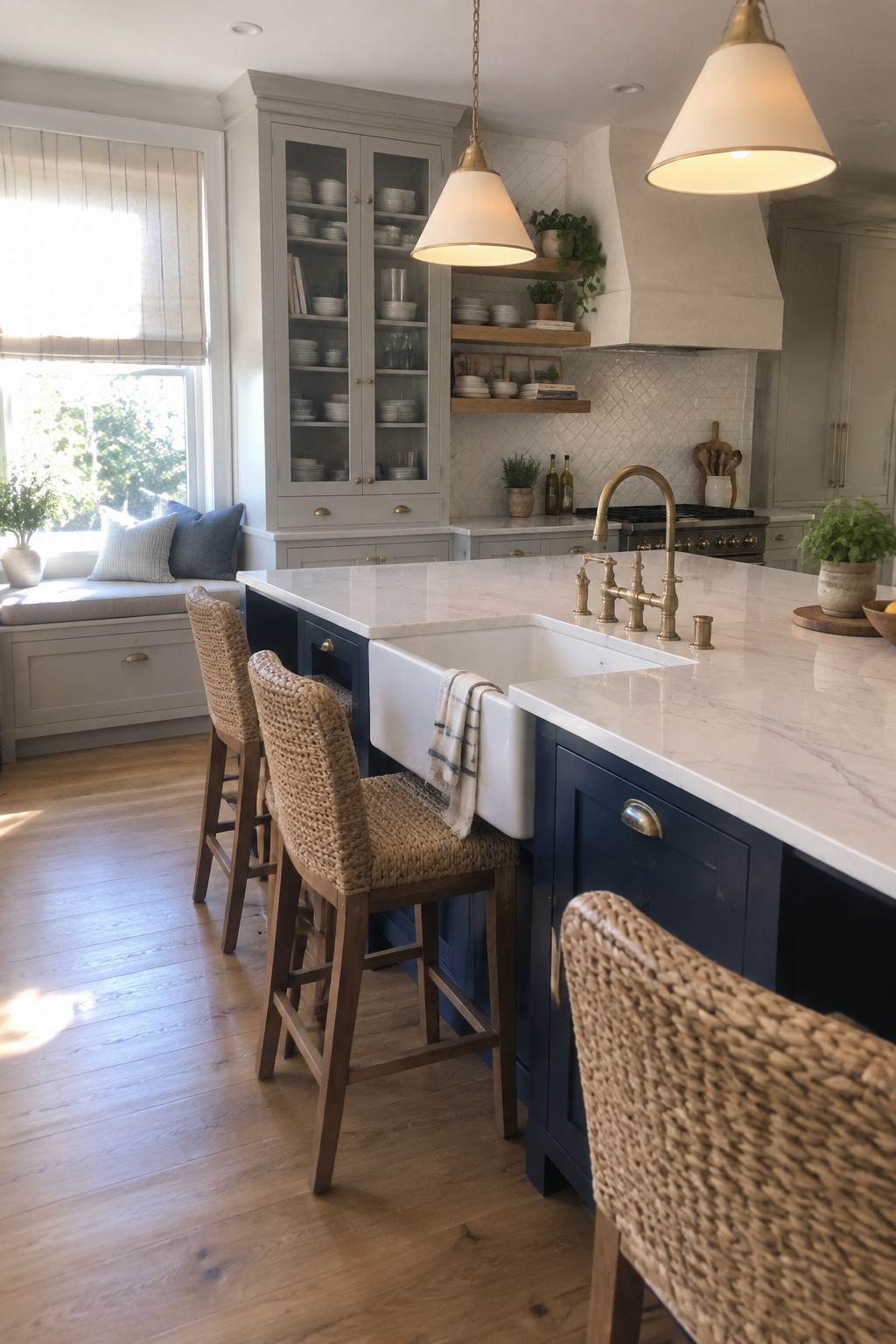
Many kitchens feel more balanced when the upper cabinets stay light and the lower ones go darker. The Shaker doors keep the look clean either way, so the color change adds depth without extra trim or detail. It works especially well when the island base matches the darker tone and the wall cabinets stay soft and pale.
This approach suits transitional homes that want a bit of contrast but still read as calm. Keep the hardware simple and let the paint colors carry the difference. It also helps the room feel a little taller when the uppers stay lighter.
Creamy Shaker Cabinets in Transitional Kitchens
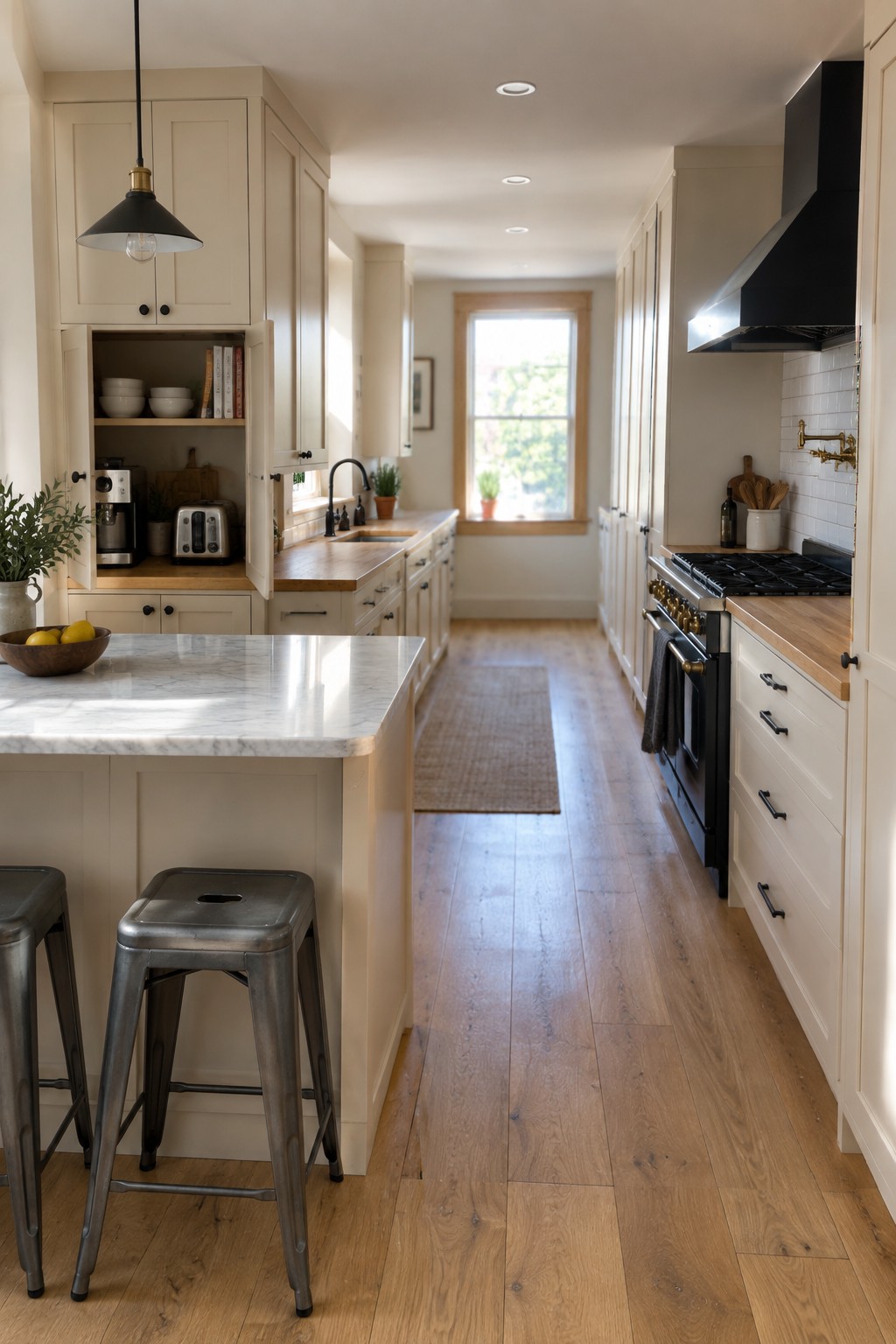
Creamy Shaker cabinets give a kitchen a calm base that ages well. They keep the room feeling light even when the layout runs long and narrow, and they pair easily with both modern appliances and older home details.
This works best in homes that want a bit of warmth without going full traditional. Stick with simple black or brass hardware, let the wood countertops bring in the natural tone, and avoid crowding the walls with too many open shelves.
Mixing White And Wood Shaker Cabinetry

A lot of kitchens feel too stark when everything stays white, even with classic Shaker doors. Bringing in a natural wood island gives the room a warmer center without changing the overall style or adding extra trim.
This approach works best in transitional homes that sit between traditional and modern. Keep the wood tone fairly light and let the island be the only place where the grain shows. The rest of the room can stay painted so the contrast stays simple and easy to live with.
Dark Green Shaker Cabinets
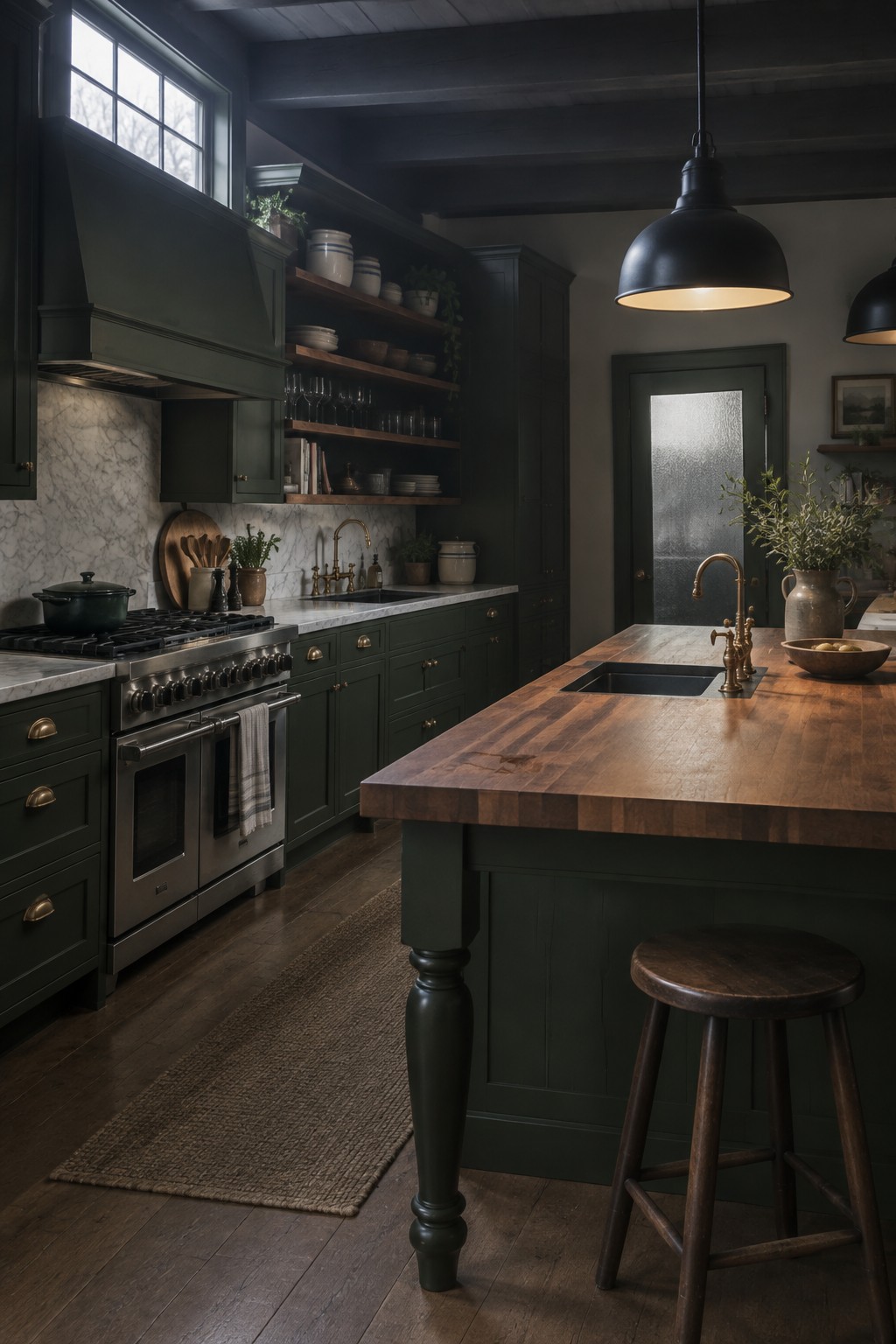
Dark green shaker cabinets give a kitchen more weight and character than the usual white or gray. The color feels rich without turning the space too formal, and it pairs naturally with wood tones that keep everything grounded.
This works especially well in homes that sit between traditional and updated styles. Use it when you want the cabinets to feel built-in rather than added on, and keep the island in a warmer wood to balance the depth of the green.
Built-In Window Seating Adds Everyday Storage
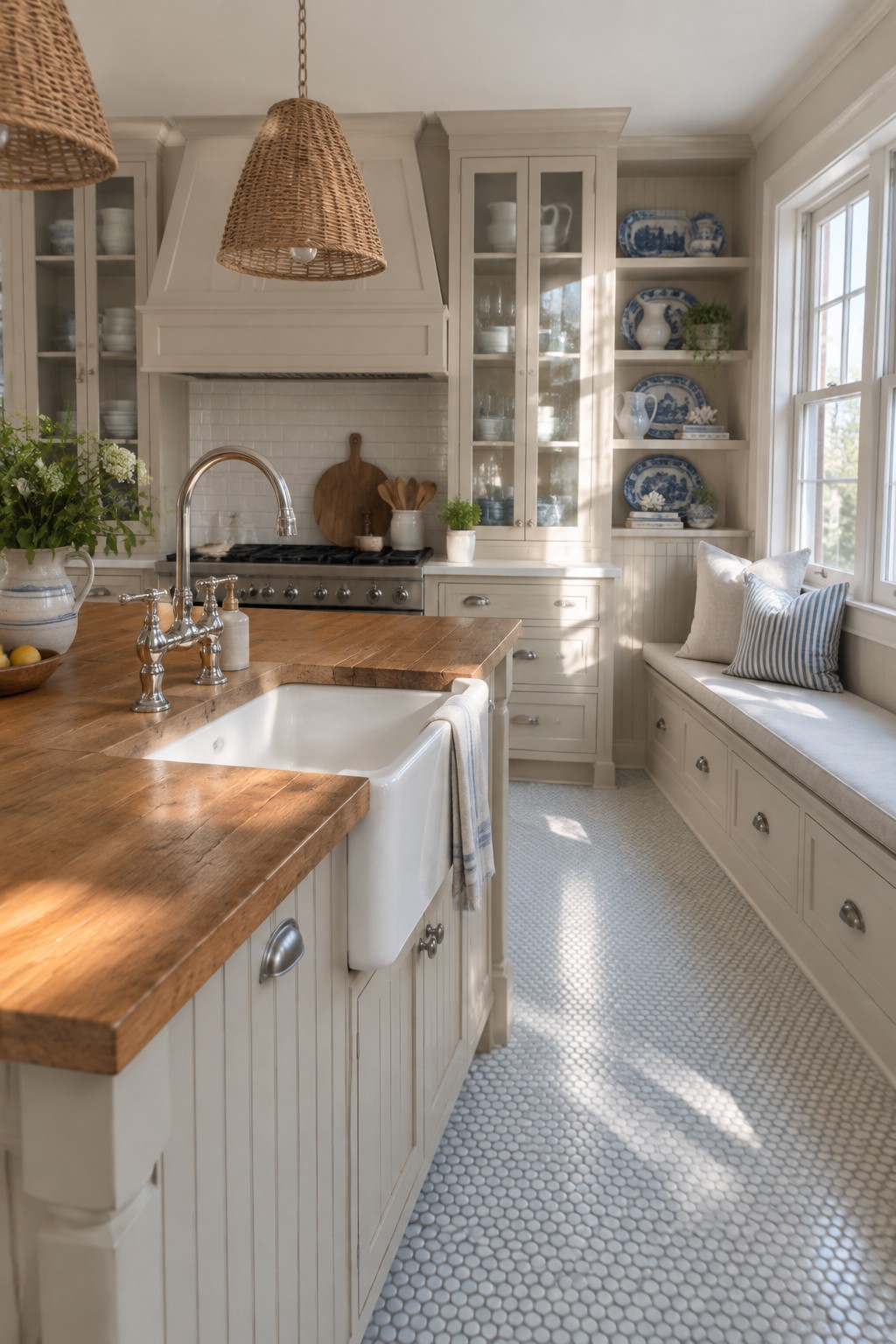
A window bench with drawers underneath turns leftover wall space into something useful. In a kitchen with Shaker cabinets, it adds seating for casual meals or conversation while keeping serving pieces and linens tucked away out of sight.
This works best in homes where the kitchen has a decent window and connects to other living areas. The bench softens the room and makes the space feel more lived-in, though it does need enough depth so the seat stays comfortable.
Light Shaker Cabinets For A Calm Kitchen
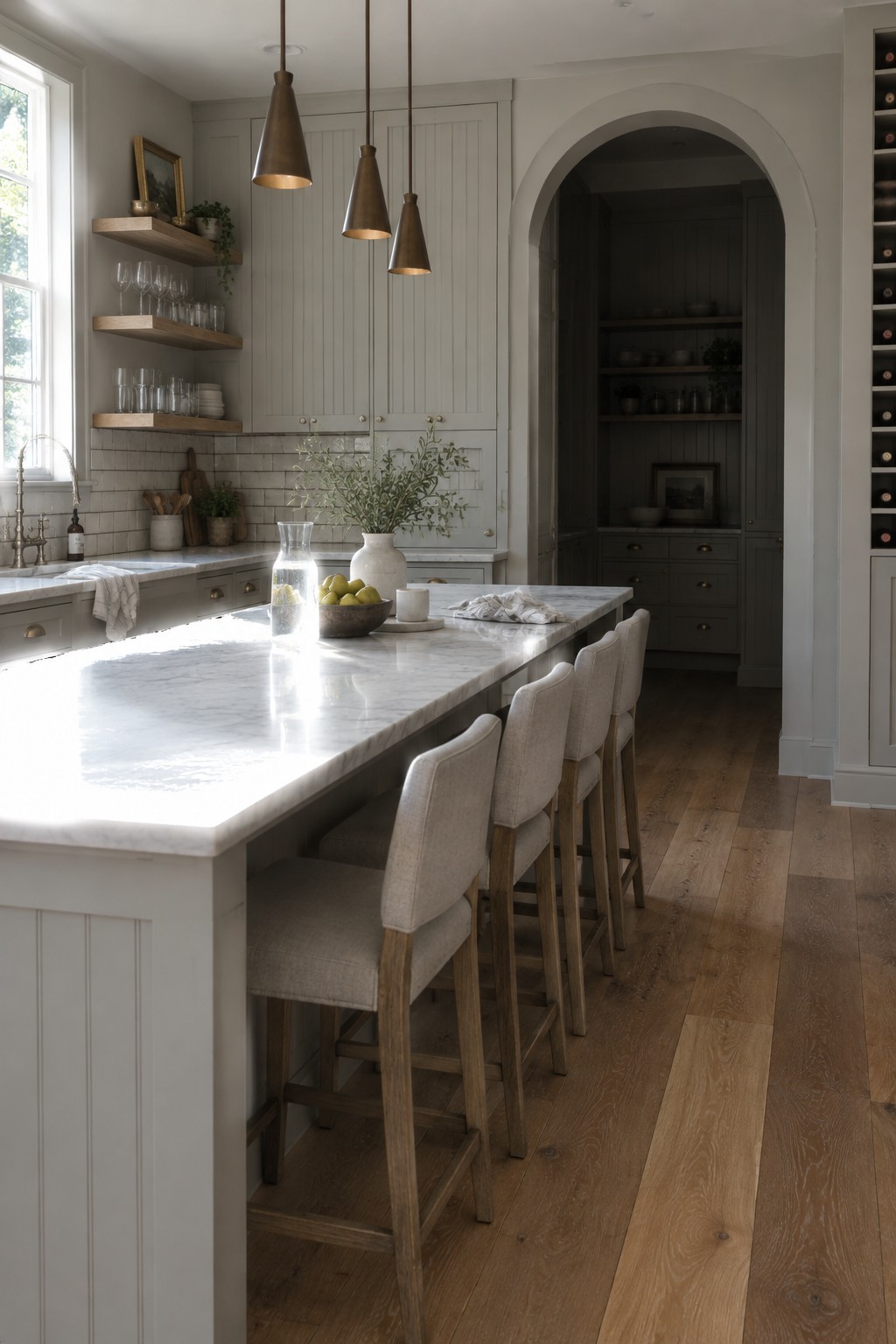
Light shaker cabinets give a kitchen a quiet, steady look that does not go out of style. The soft gray tone here keeps the space bright even when the island stretches across most of the room, and the simple door style avoids any fussy detail that might date the room later.
This approach works best in homes that see daily use and need storage without feeling heavy. Keep the counters light, add wood tones on the floor or stools, and let the cabinets stay the main background rather than adding bold color or heavy hardware.
White Shaker Cabinets With A Wood Island
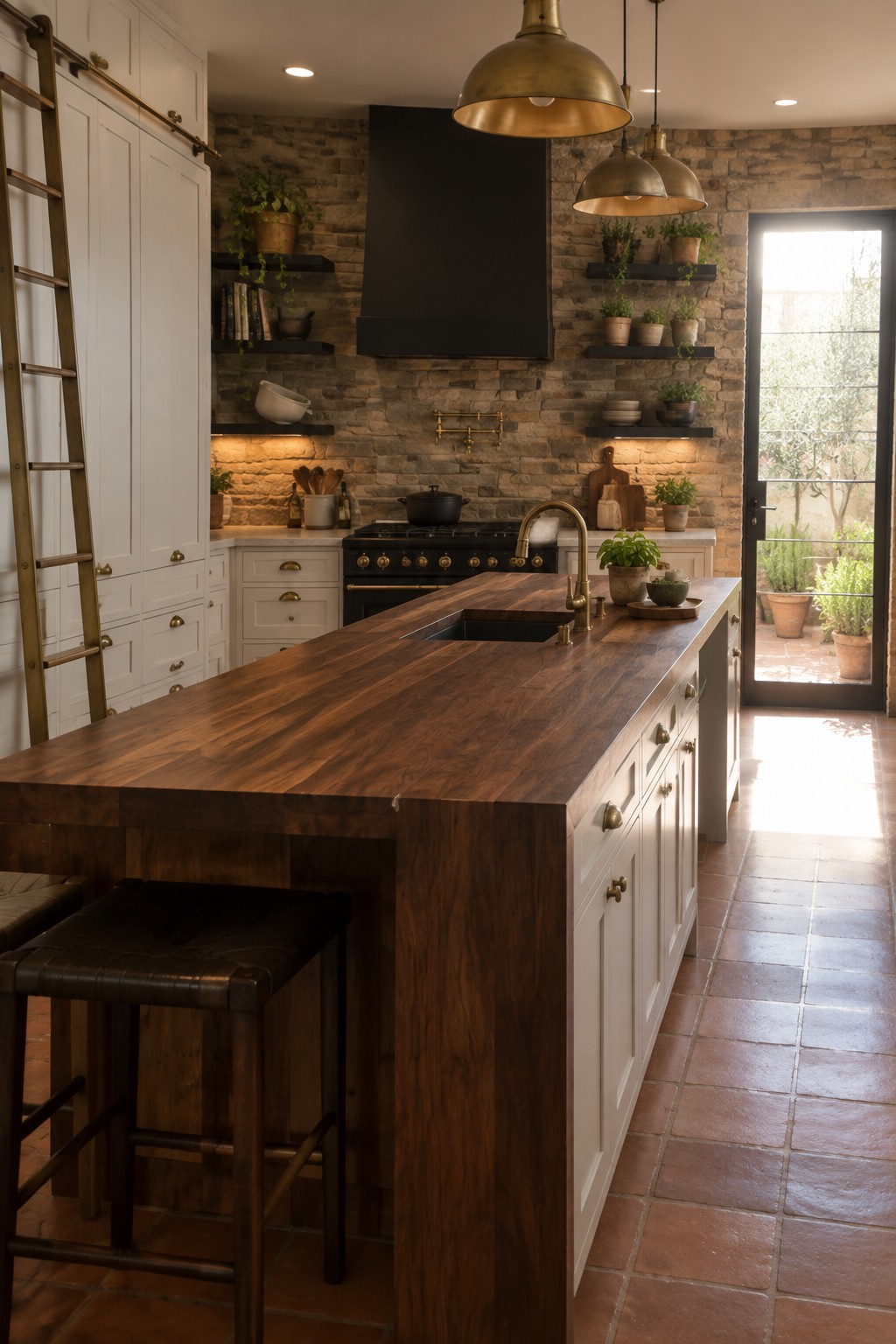
White Shaker cabinets give a kitchen a clean, familiar base that works in many homes. Pairing them with a thick wood island adds warmth and weight so the room does not feel flat or too bright. The contrast keeps the style transitional rather than purely traditional or modern.
This setup works best in homes that need both storage and a central gathering spot. The island can handle daily use while the white cabinets stay simple and easy to keep looking fresh. Just make sure the wood tone is deep enough to balance the white.
Soft Muted Colors For Shaker Cabinets
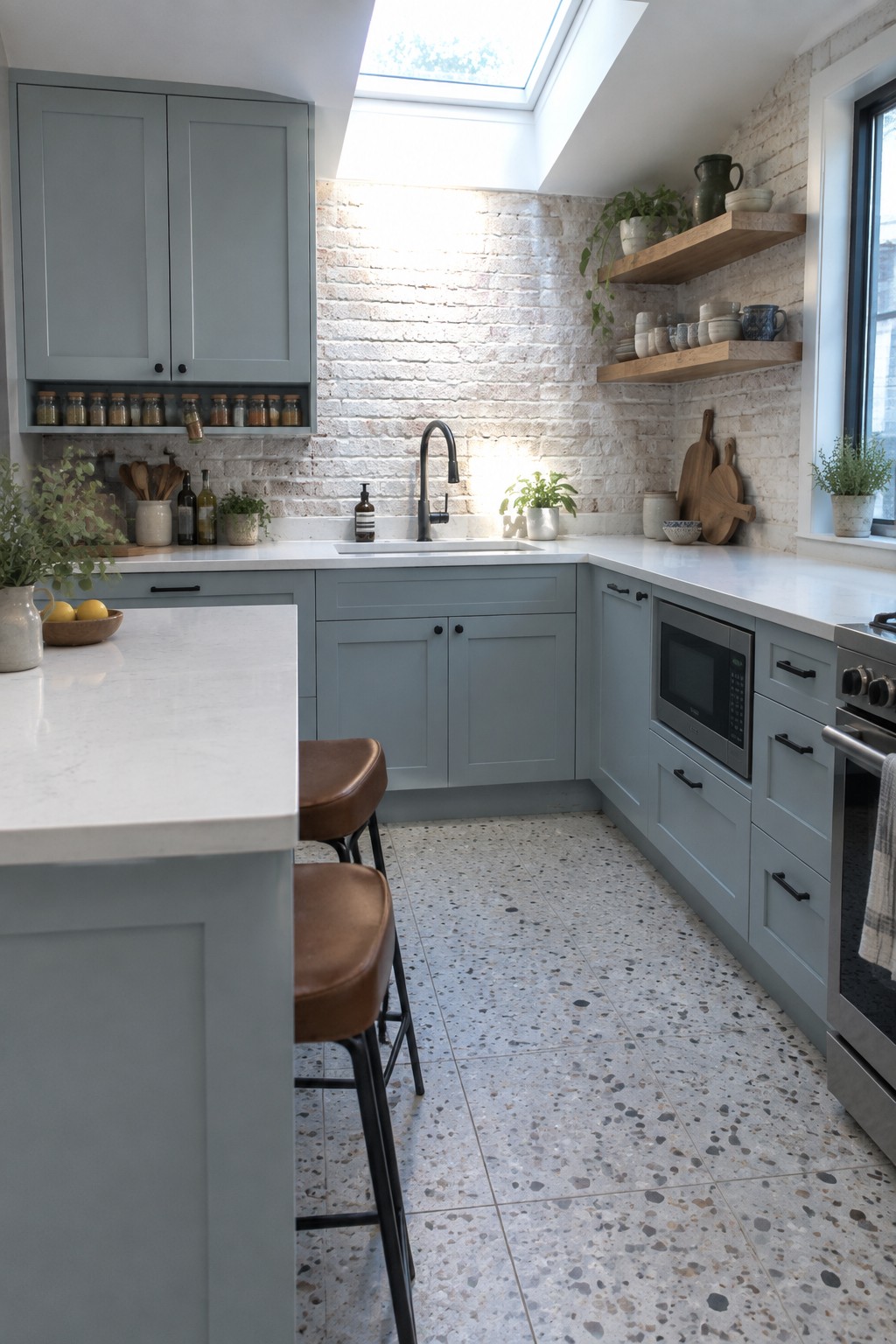
A soft blue-gray on Shaker cabinetry gives a kitchen that calm, settled feel many people want in a transitional space. It steps away from bright white without going dark, and it lets the room feel both traditional and current at the same time.
This color choice works best in homes that already have some texture or age, like brick or wood elements. Keep the rest of the palette simple so the cabinets stay the main focus, and test the shade in different lights before committing.
Light Shaker Cabinets With Warm Brass Hardware
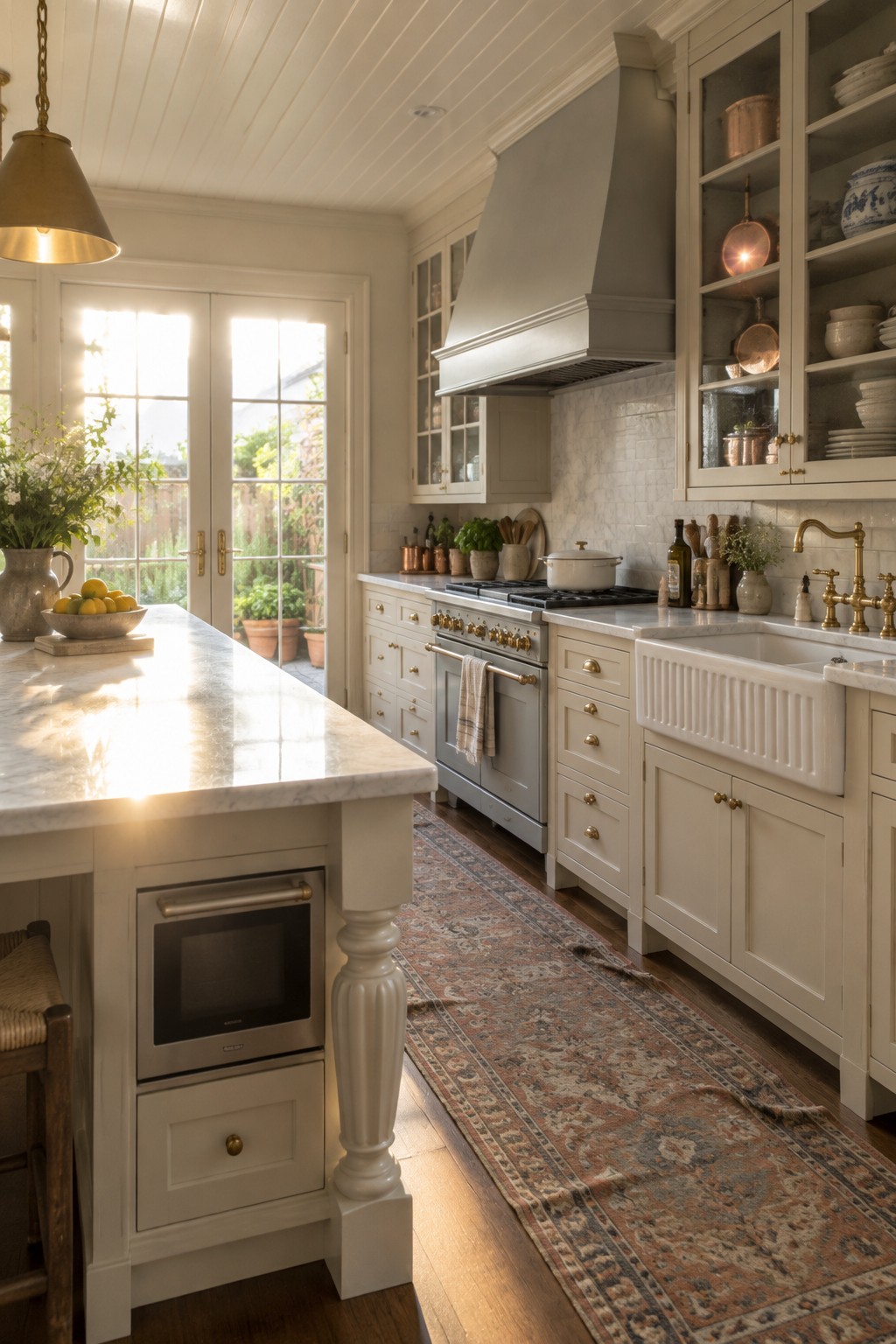
Shaker cabinets in a soft cream finish give a kitchen that clean, familiar look without feeling plain. The brass hardware adds just enough warmth to keep the space from looking too stark, especially when paired with marble surfaces that catch the light.
This combination works best in homes that want a transitional style that still feels livable. It suits kitchens with decent natural light and pairs well with simple tile backsplashes or wood floors. Stick with unlacquered brass if you like the way it develops character over time.
Built-Ins That Extend The Kitchen Into Living Space
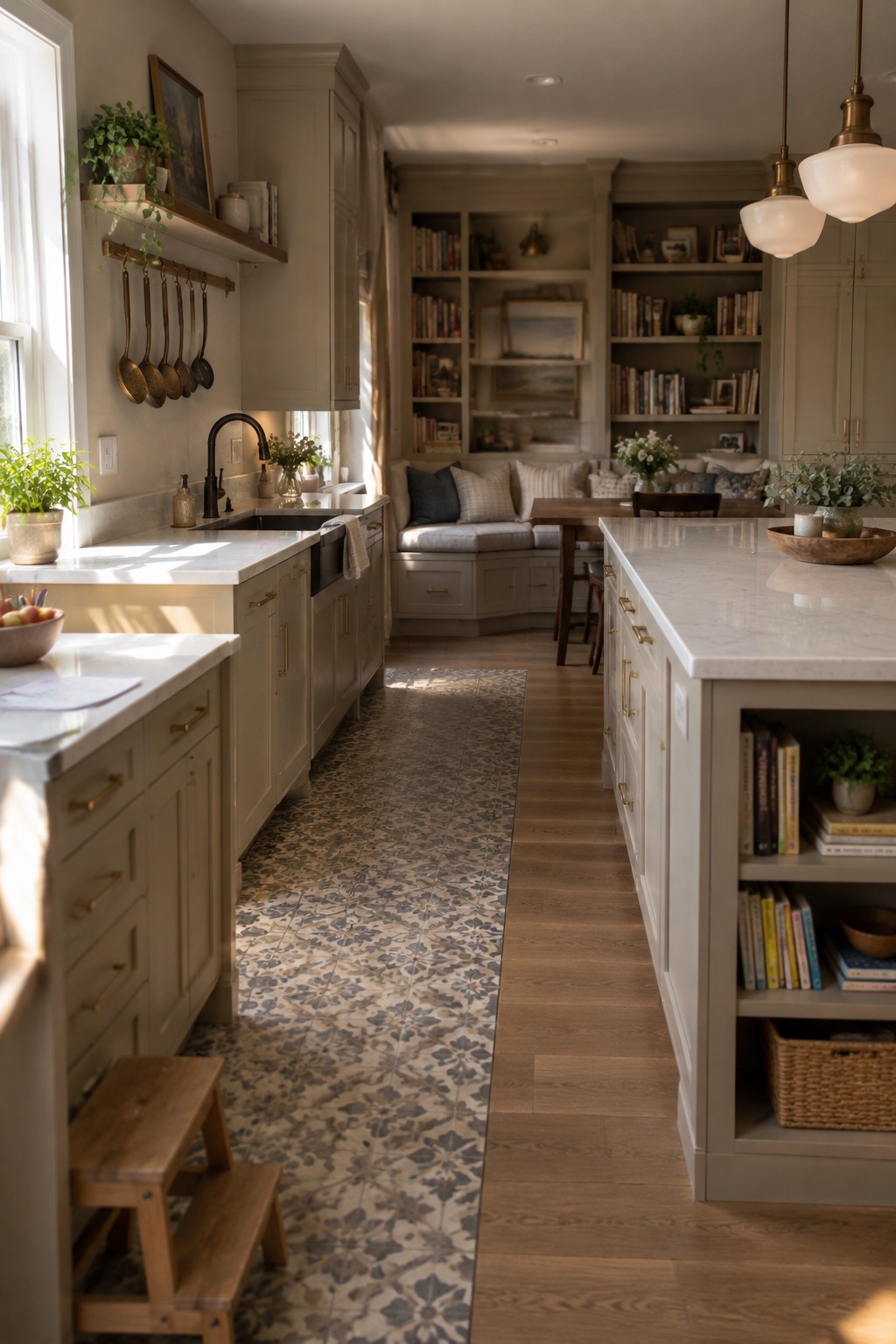
One of the easiest ways to make a kitchen feel less like a workspace and more like part of the house is to add built-in bookshelves and a banquette right beside it. The soft shaker cabinets already keep things calm and simple, so the extra storage and seating fit without fighting for attention. It turns the whole area into a place where people actually want to linger.
This setup works best in homes where the kitchen sits near a family room or hallway rather than tucked behind a wall. Keep the cabinet color consistent across both the cooking area and the built-ins so the space reads as one room instead of two separate zones. Just watch the scale. Too many shelves can start to feel busy if the rest of the kitchen stays fairly plain.
Using A Wood Island In A White Shaker Kitchen
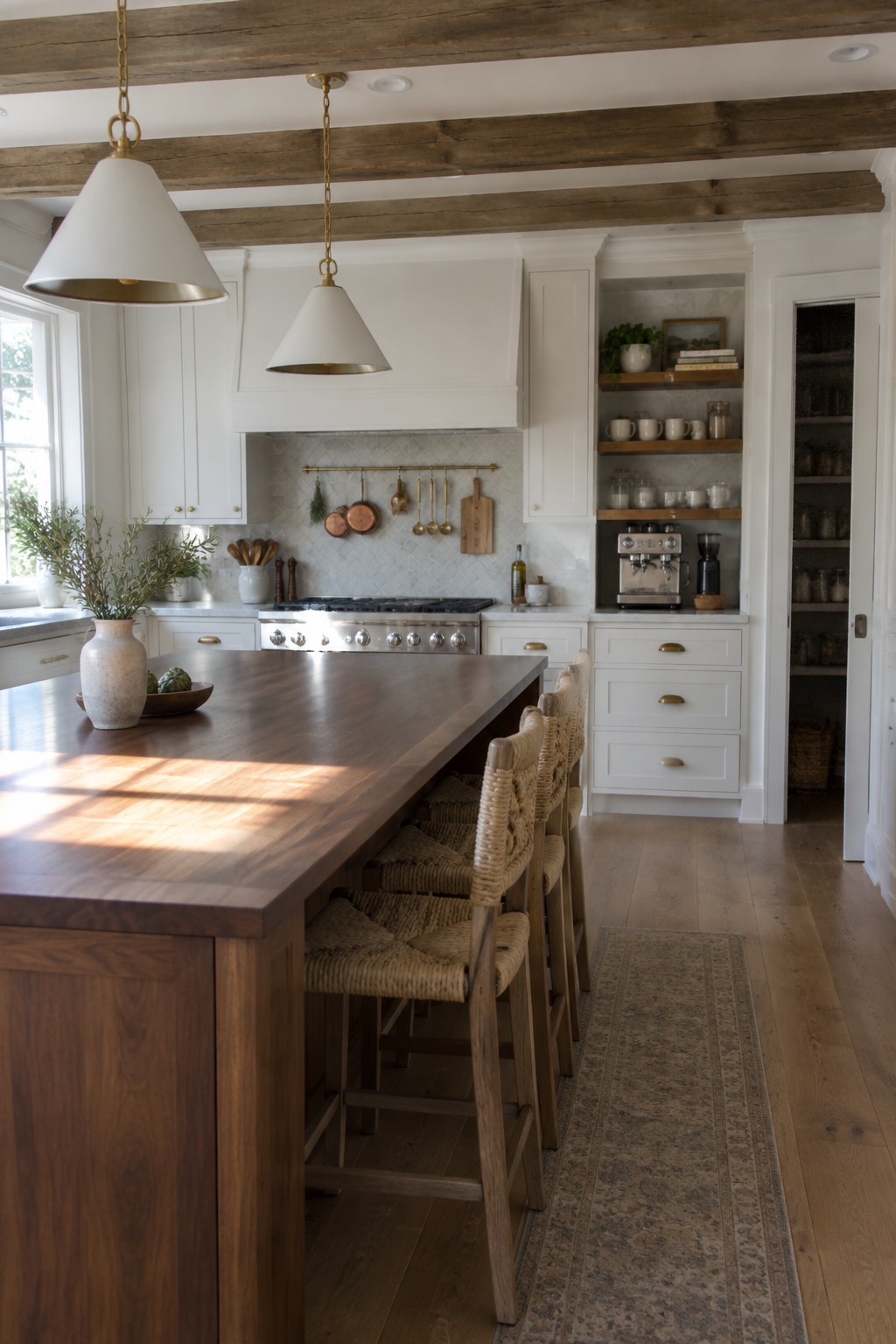
White Shaker cabinets give a kitchen that clean, classic base many people want. Adding a solid wood island changes the feel right away and keeps the room from looking too stark or plain.
This works best in transitional homes that need a little warmth without losing the simple lines of Shaker style. Keep the island tone medium to dark so it stands out, and choose seating with natural texture to tie the two materials together.
Soft Green Shaker Cabinets
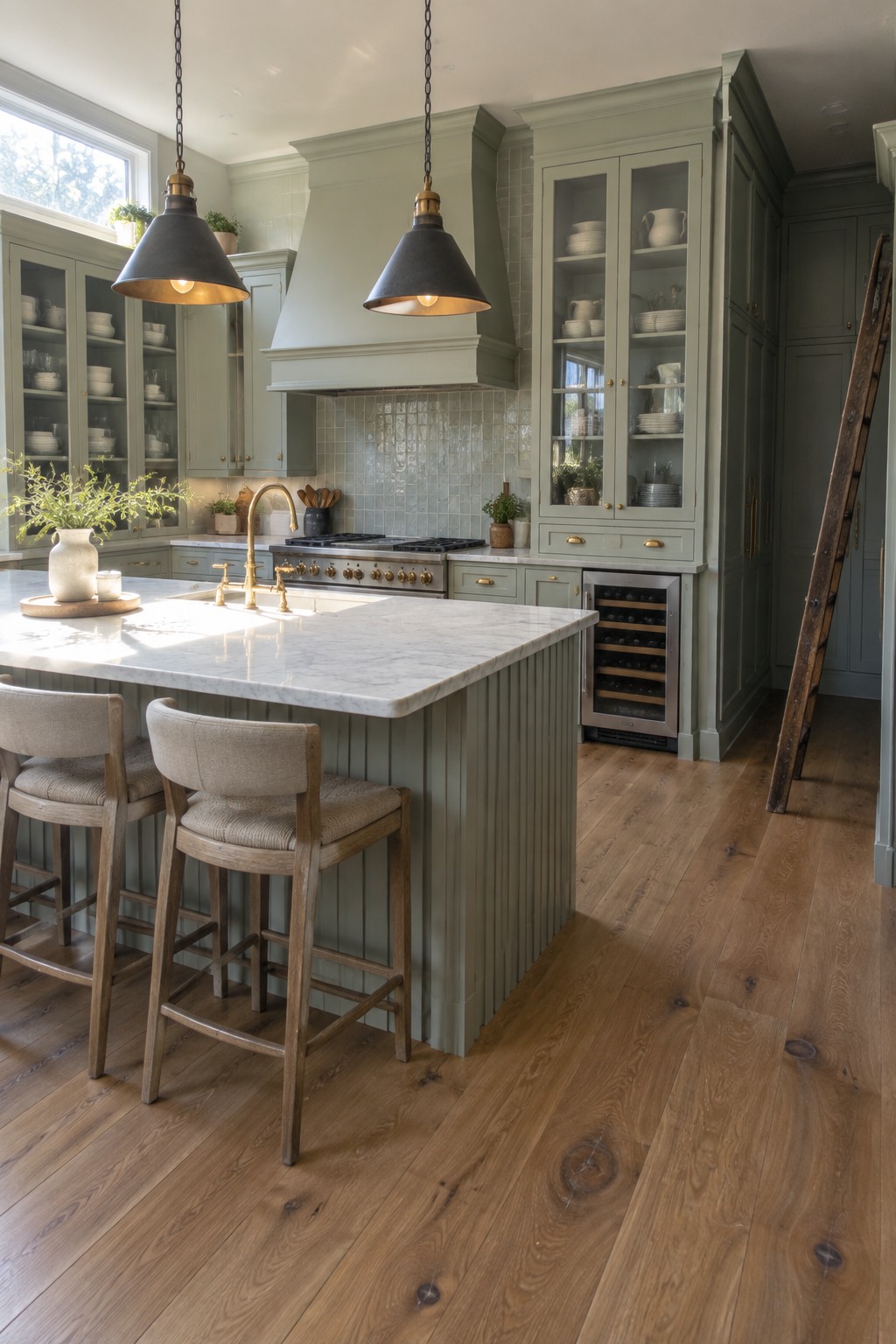
Sage green Shaker cabinets give a kitchen a calm, steady look that still feels current. The color sits nicely between classic white and anything too bold, which makes the whole space feel balanced rather than trendy.
This choice works especially well in homes that want a bit of warmth without extra pattern or contrast. It pairs cleanly with marble counters and brass hardware, and the simple door style keeps the room from feeling busy over time.
Soft Shaker Cabinets With Dark Counters
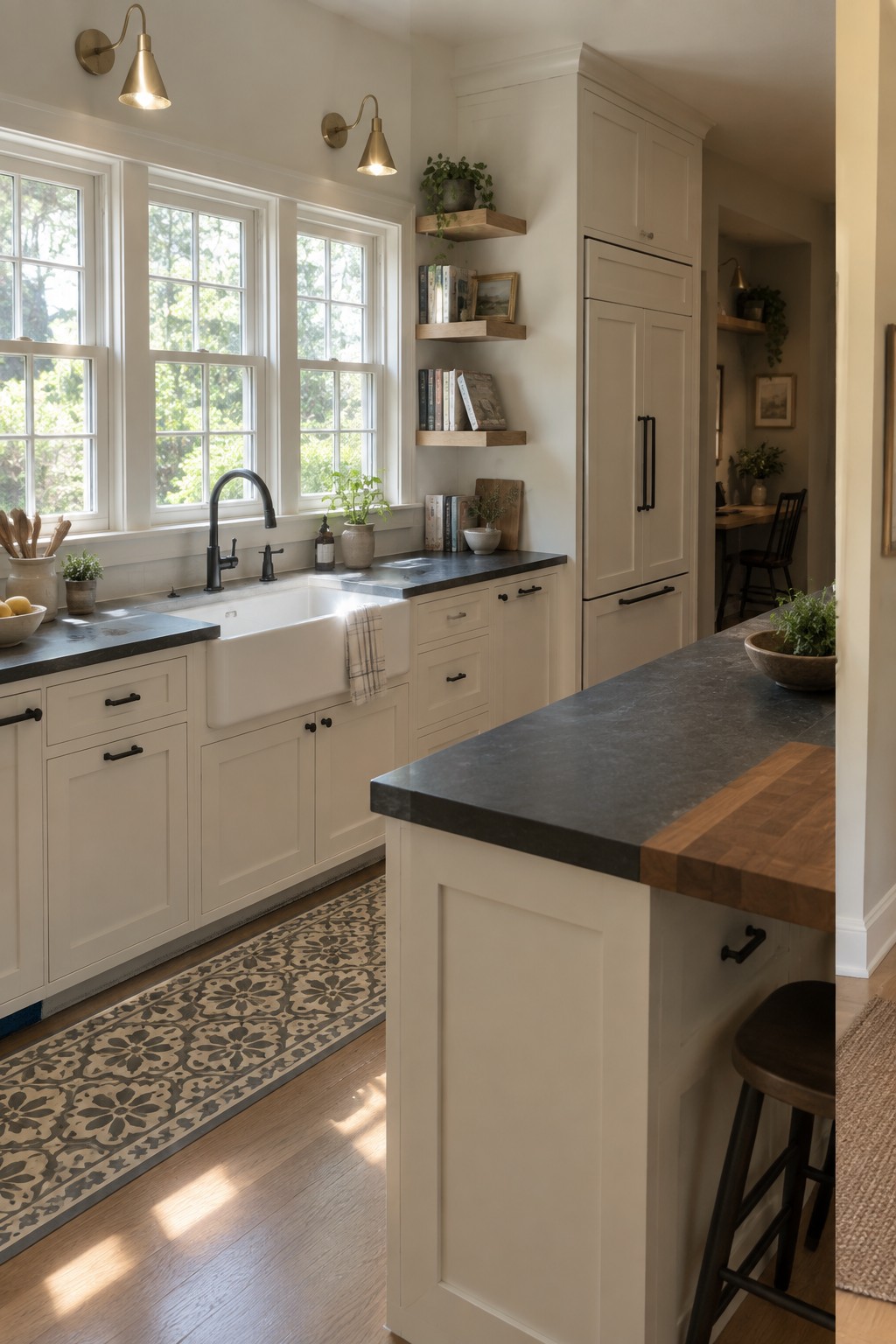
Creamy Shaker cabinets give a kitchen a calm, settled look that feels easy to live with. The lighter tone keeps the space from feeling heavy, while the dark stone counters add just enough contrast to ground everything.
This combination works well in transitional homes that want a bit of warmth without going fully traditional. Stick to simple hardware and a few natural accents on open shelves so the cabinets stay the main focus.
Dark Shaker Cabinets With Wood Accents
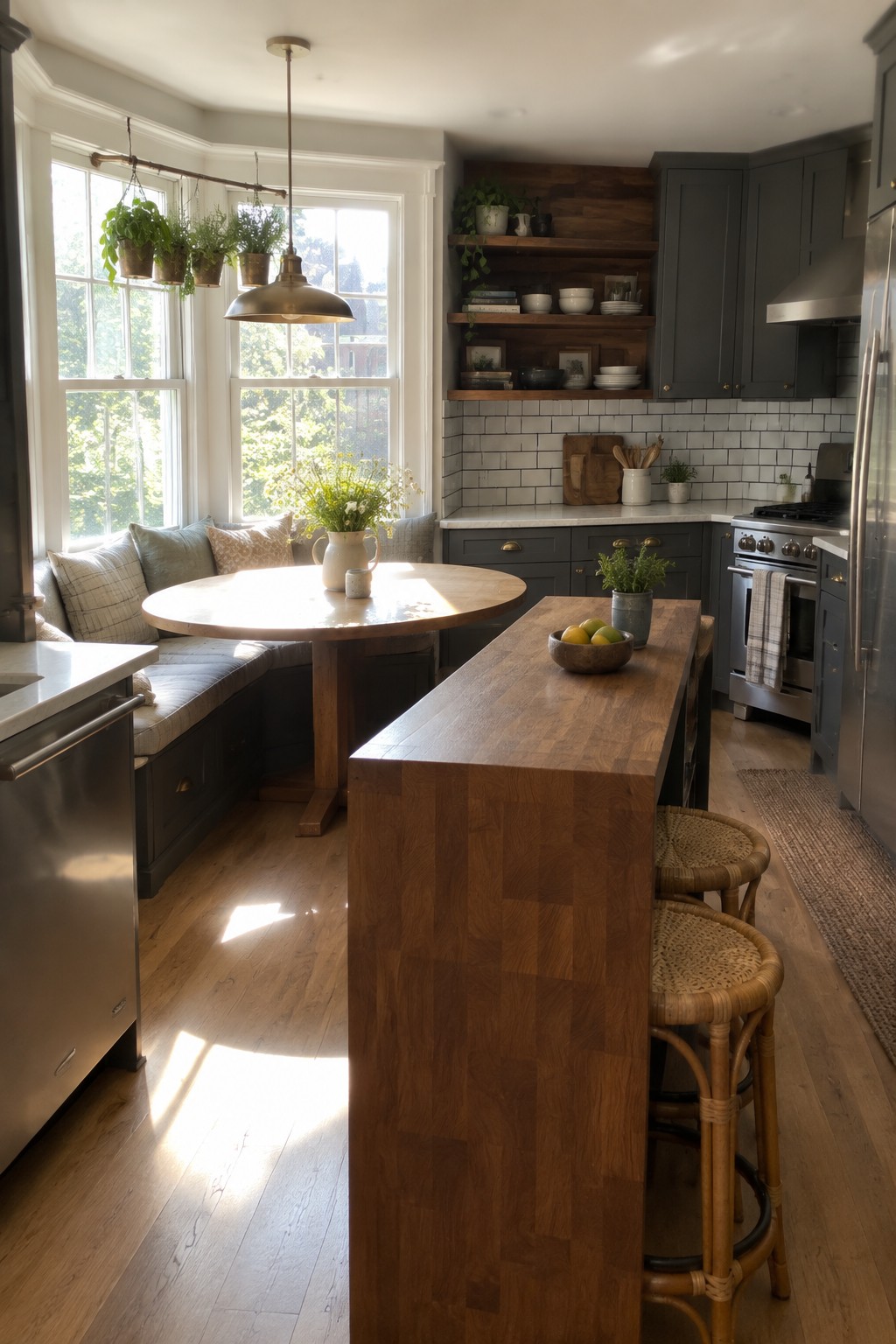
Dark shaker cabinets give a kitchen real staying power. The deep tone adds weight and definition without closing the space in, especially when you bring in wood on the island and open shelves to soften the overall look.
This works well in homes that get steady daylight and already have wood floors or trim. Keep the backsplash light and the hardware simple so the cabinets stay the focus without feeling heavy.
Shaker Cabinets With Open Island Storage
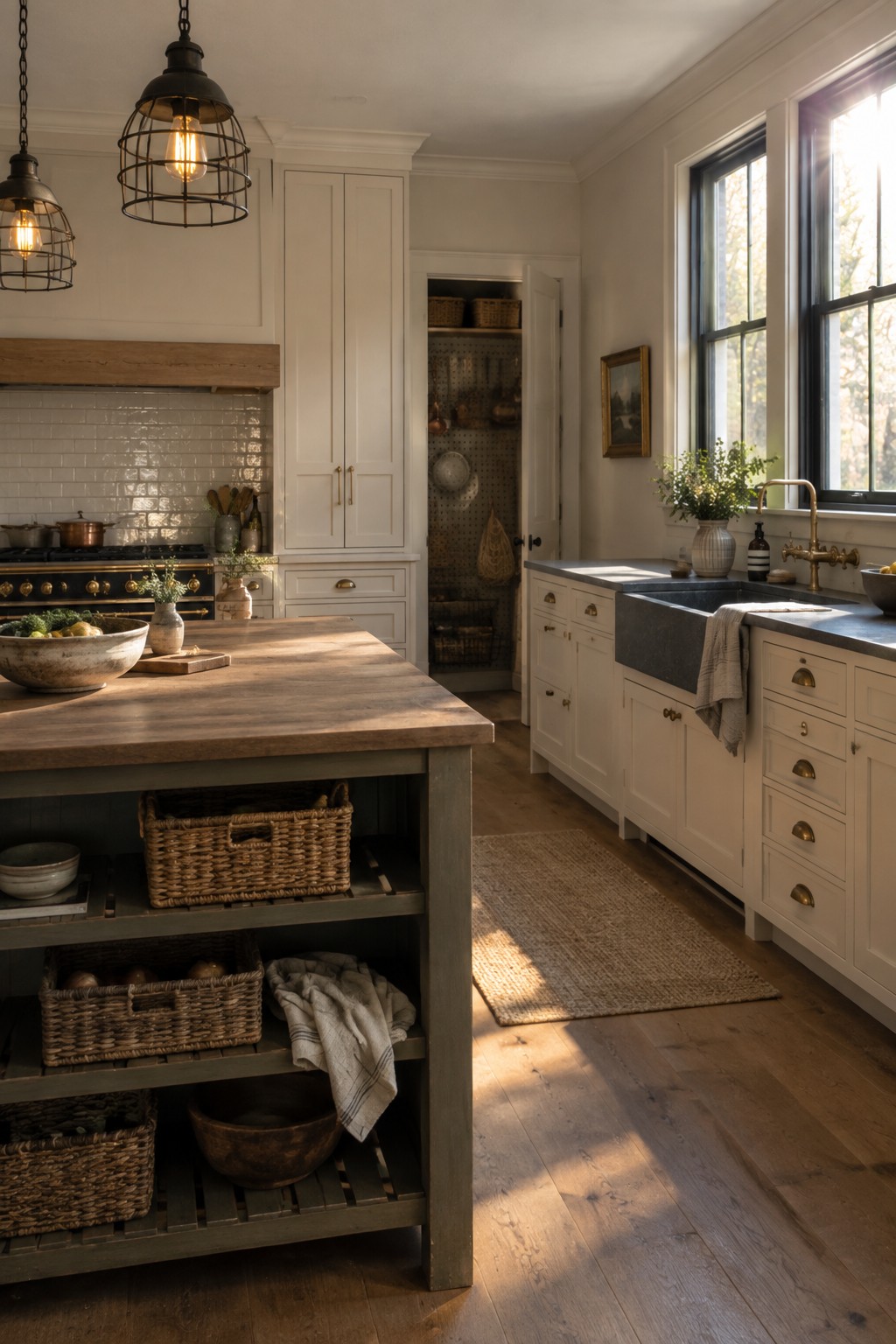
Many transitional kitchens feel more usable when the island includes open shelving below the main work surface. Shaker cabinetry keeps the upper storage simple and uniform, while the lower open area gives quick access to baskets, bowls, and linens without needing to open doors every time.
This setup suits homes that want a classic cabinet style but still need everyday items within reach. It works best when the shelves stay lightly styled so they do not compete with the clean lines of the Shaker doors above.
Two Tone Shaker Cabinets
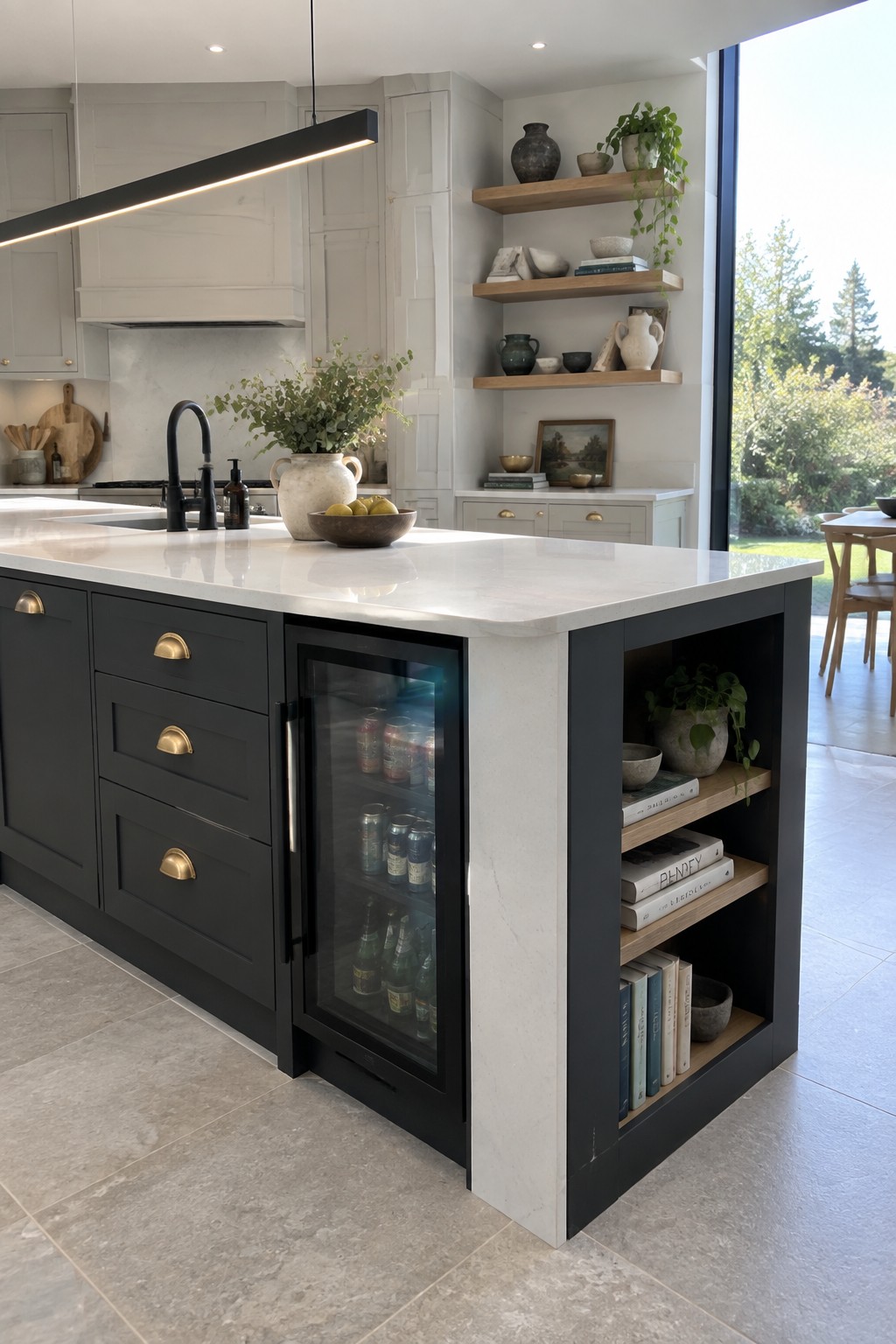
Two tone shaker cabinets give a kitchen just enough contrast to keep things interesting. The darker island base stands out against the lighter perimeter cabinets, and the simple door style keeps the whole look from feeling fussy or overly modern.
This approach works best in transitional homes that want some depth without going full two tone everywhere. It helps the island feel like a separate piece rather than just more cabinetry, and it gives you room to play with hardware and open shelving on the ends without overwhelming the space.
White Shaker Cabinets With A Wood Island Top
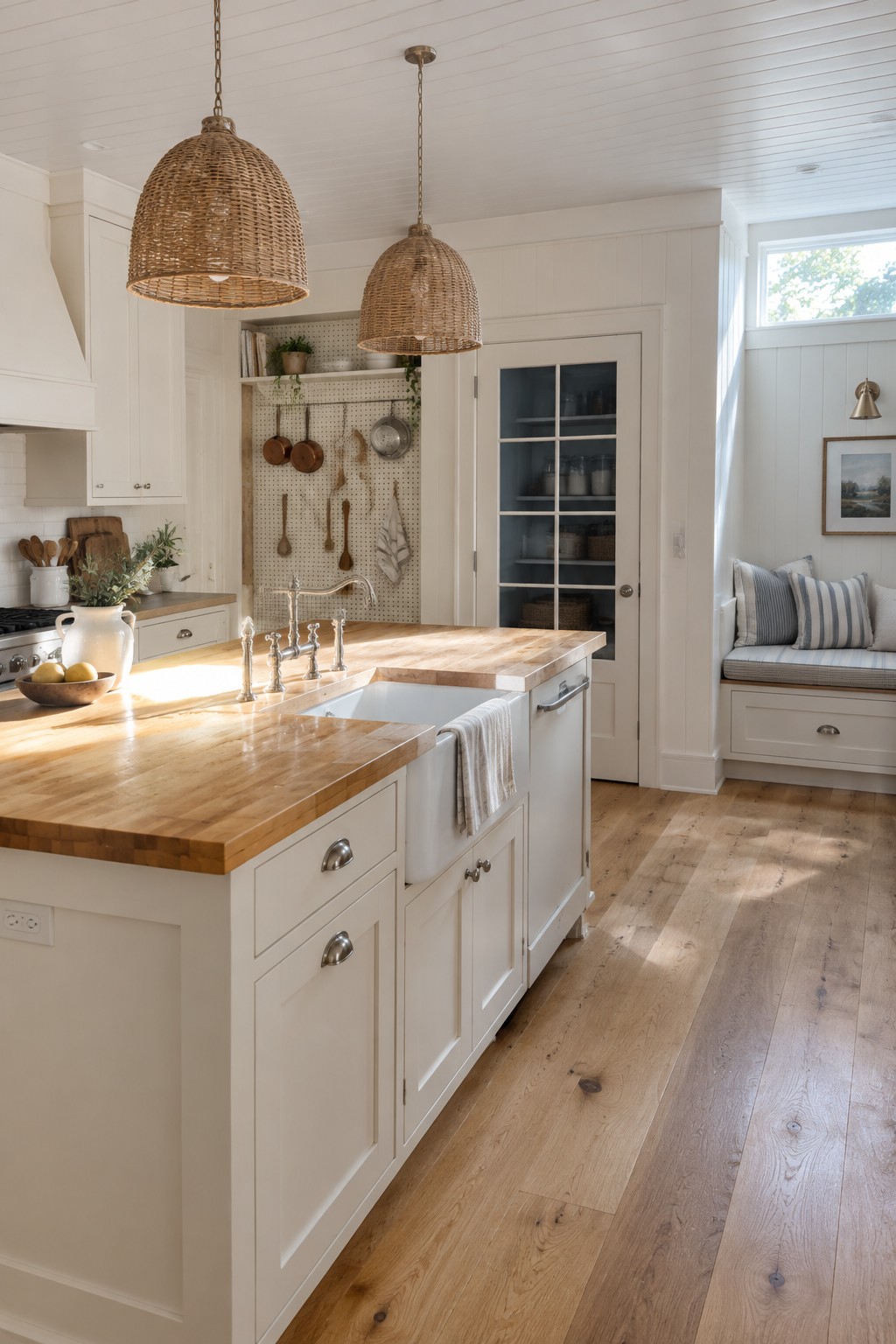
White Shaker cabinetry keeps a kitchen feeling open and simple, and pairing it with a wood island top adds just enough warmth. The contrast works because the cabinets stay crisp and the wood brings in natural texture without adding clutter or extra colors. It suits transitional spaces that want to feel current but not trendy.
This approach works best in kitchens that get good light, since the white reflects it and the wood softens the overall look. It also helps if you want the island to feel like a working surface rather than a showpiece. Just keep the wood finish matte so it ages well with daily use.
Painted Shaker Cabinets For A Calm Kitchen
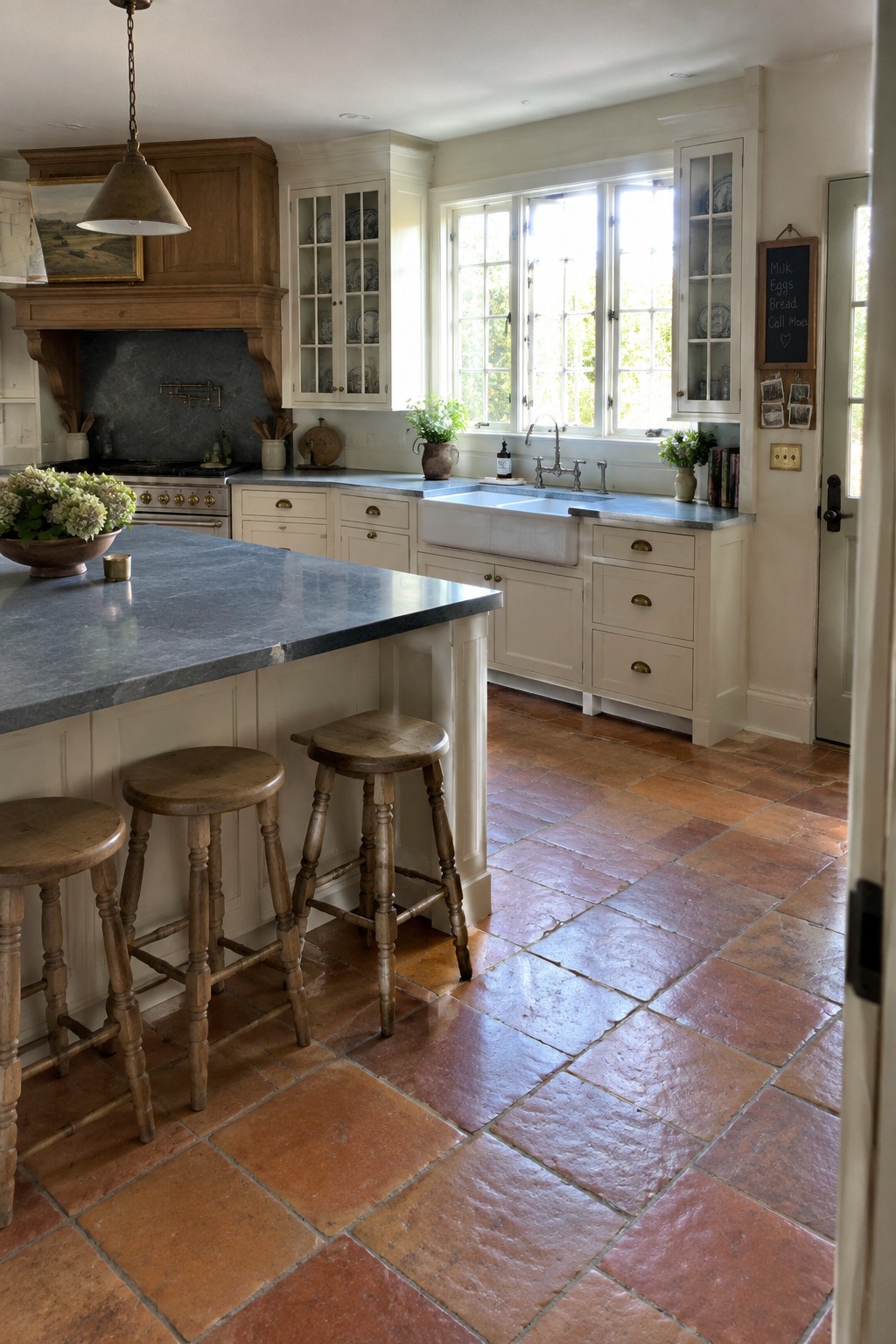
Painted Shaker cabinets give a kitchen a quiet, settled look that does not fight with other materials. The soft off-white finish on the doors and drawers keeps the space feeling open even when there are darker counters and a terracotta floor nearby.
This approach works well in homes that want a bit of warmth without going fully traditional. It pairs easily with wood range hoods, stone surfaces, and simple hardware, and it holds up to daily use without showing every mark.
Shaker Cabinetry In Soft Neutrals
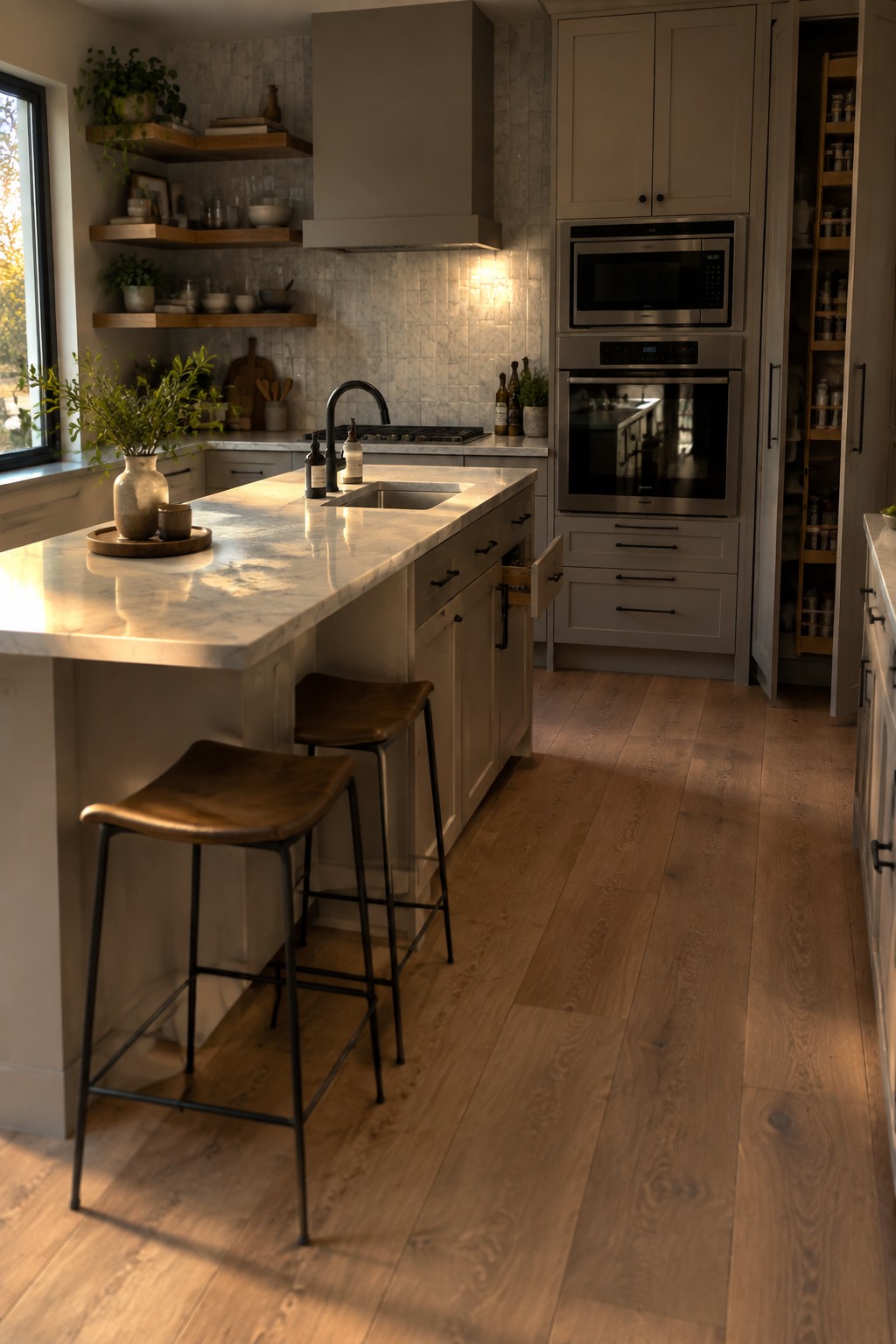
Shaker cabinets in a soft neutral finish give a transitional kitchen its calm foundation. The simple door style avoids any fuss while still feeling substantial enough to hold up against bolder materials like marble.
This approach works especially well when you want the kitchen to feel open and easy without leaning too contemporary or too traditional. It suits most homes that need a background that lasts through changing trends and pairs nicely with wood floors and stone surfaces.
Frequently Asked Questions
Q: What kind of hardware suits shaker cabinetry in a transitional kitchen?
A: Choose matte black pulls with clean lines. They give a subtle modern edge while the cabinets stay timeless. Avoid anything fussy.
Q: Which paint colors keep shaker cabinets looking fresh over time?
A: Soft whites or light grays work well. They let the transitional details like mixed metals shine through. (A warm undertone helps the space feel inviting.)
Q: How do I choose countertops that pair well with shaker doors?
A: Go for materials with a bit of movement like honed granite. This balances the flat shaker fronts. Keep the edges simple too.
Q: Is there a trick to adding personality without cluttering the kitchen?
A: Layer in a few open shelves above the sink area. Display just a couple of everyday items there.
