


White kitchens often need wood accents to avoid feeling cold and clinical in daily use.
The way the tones play off each other affects how comfortable the space feels when cooking or hosting friends.
I tend to look at how the wood integrates with existing floors or islands first because that detail decides whether the whole room comes together.
Some combinations hold up better under real wear than others, especially around high-traffic zones like the sink area.
Small tests reveal a lot.
Use A Wooden Island To Warm Up White Cabinets
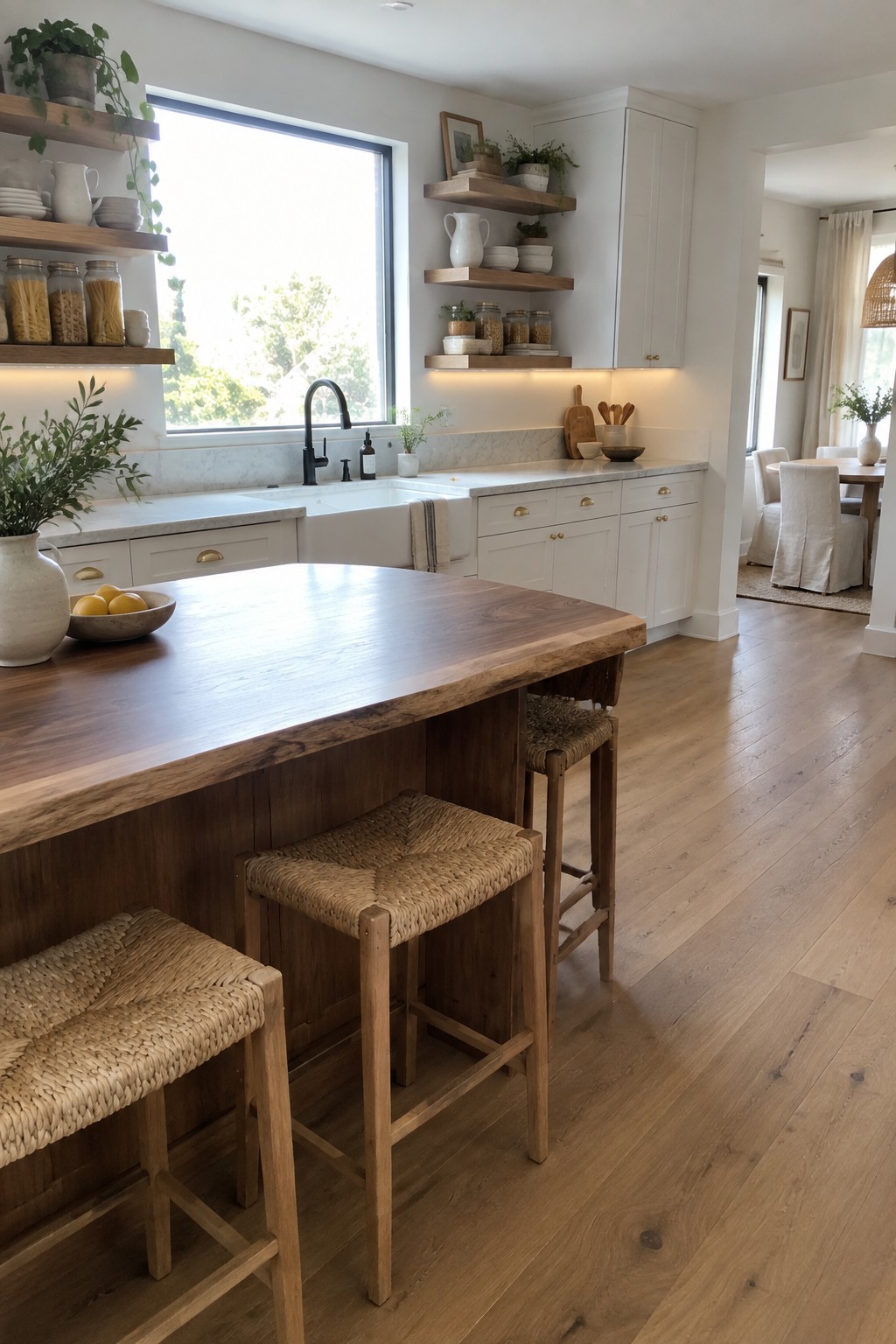
A large wood island gives a white kitchen the warmth it often needs. The natural grain and tone stand out against the painted cabinets and counters without competing with them.
This approach works best in open kitchens where the island can be seen from the living area. Keep the stools simple so the wood remains the main point of interest.
Wood Islands Bring Warmth To White Kitchens

A large wood island gives an all-white kitchen an easy focal point that feels grounded and inviting. The natural grain and darker tone cut through the brightness without making the room feel smaller or heavier.
This works best in kitchens that already have good natural light and some open floor space around the island. Keep the wood tone on the warmer side and use simple legs or a thick top so the piece reads as furniture rather than another built-in cabinet.
Adding Warm Wood Shelves To A White Kitchen

White kitchens often need a little something to keep them from feeling too cold or plain. Open wood shelves do that job well by bringing in natural tone and a bit of texture without covering up the bright surfaces.
They work best in smaller kitchens or along walls that need extra storage but not more closed cabinets. Keep what you put on them fairly simple so the wood itself stays the main feature rather than the items sitting on the shelves.
Warm Up White Kitchens With A Wood Island

White kitchens can start to feel flat when everything matches. A wood island breaks that up and brings in some natural texture without adding clutter or extra color.
This works best in open layouts where the island gets plenty of use. Stick with lighter or mid-tone wood so it feels fresh rather than heavy, and keep the surrounding cabinets simple so the island stays the main point of interest.
Mixing Warm Wood With White Cabinets

A big wood island does a lot in a white kitchen. It brings in natural color and texture that keeps the space from feeling cold or flat, especially when the rest of the room stays bright and simple.
This works best in homes that already have wood floors or older trim details. Keep the wood tone medium and let it show some grain so the contrast feels easy rather than forced.
Using Wood Stools To Warm Up White Kitchens
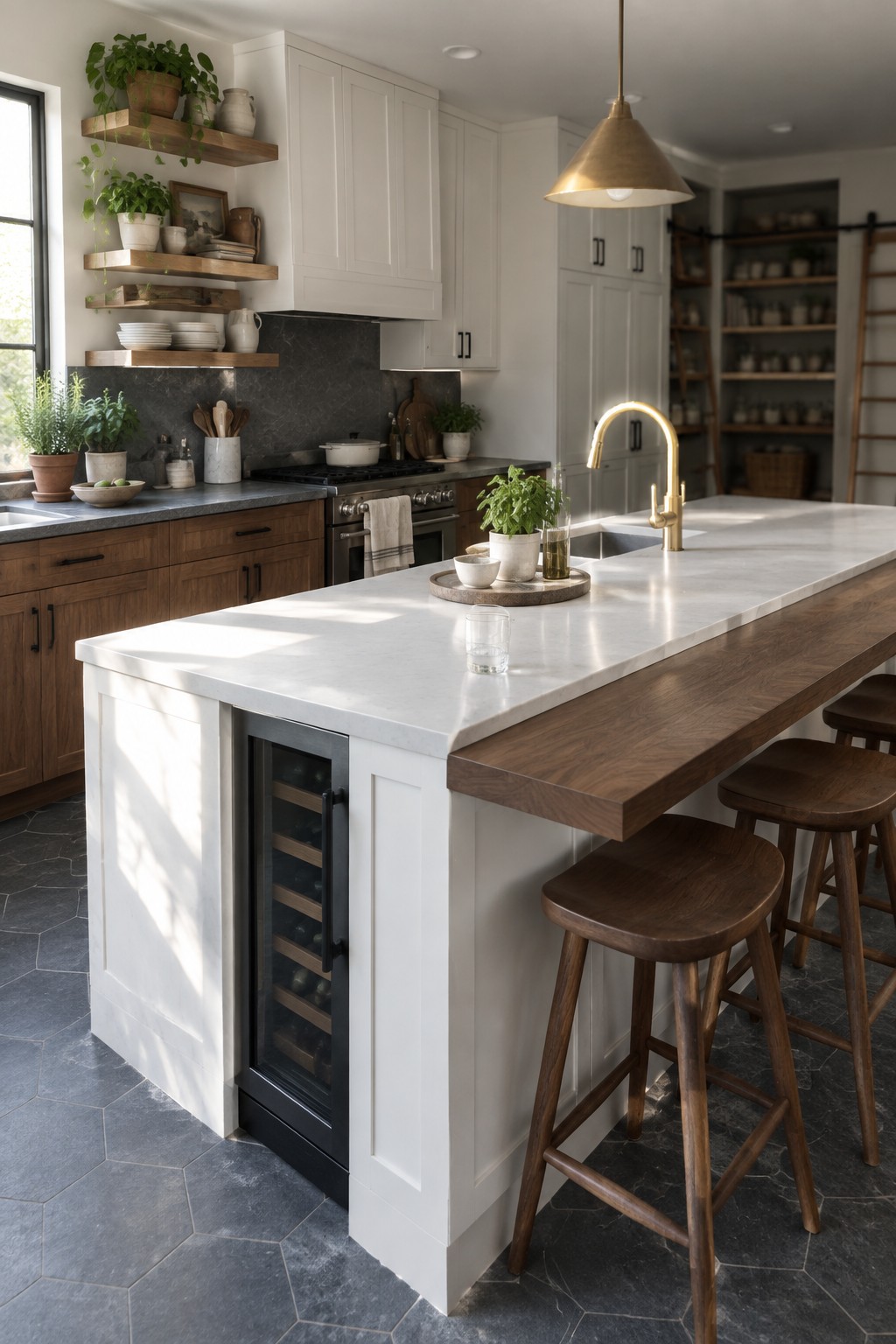
White kitchens can start to feel a little stark once everything is in place. Adding wood bar stools around the island gives the space a natural contrast that makes the room feel more lived in without adding clutter.
The stools work best when they sit in a medium wood tone that picks up on other wood elements nearby, like a butcher block overhang or open shelving. This approach suits most homes with open kitchen layouts and keeps the white surfaces looking fresh instead of sterile.
A Wood Island Adds Warmth To White Cabinets
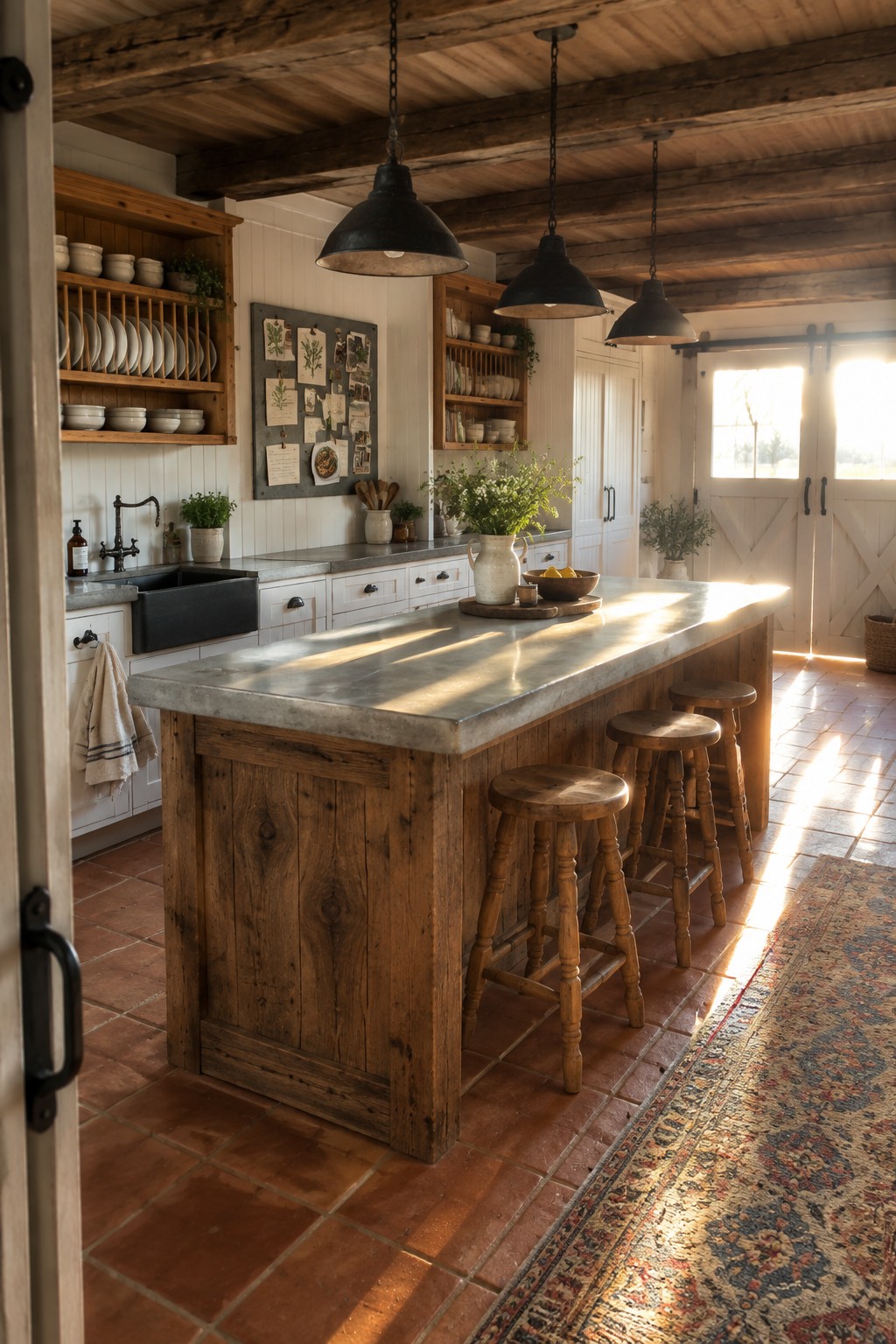
A big wood island stands out nicely against white walls and cabinets. It brings in natural color and texture without making the whole kitchen feel dark or heavy.
This approach works best in open layouts where the island gets used every day. It suits homes that already lean toward simple or farmhouse styles, and it gives you room to add wood stools or open shelves without overdoing the look.
Warm Wood On The Island Balances White Cabinets

White kitchens can start to feel a little stark once everything is painted and installed. A wood island base gives the room something solid to rest on and keeps the space from looking too cold or flat.
This approach works best in kitchens that already have wood floors or other natural materials nearby. Stick with a medium or darker wood tone so it reads as a deliberate choice, and keep the stools or seating in a similar warm range so the whole island area feels connected.
A Wood Breakfast Bar In A White Kitchen

Many white kitchens can feel a bit stark on their own. Adding a wood breakfast bar gives the space some warmth and a place to actually sit and eat without needing a separate dining table.
This setup works especially well in narrow kitchens or open layouts where the bar can double as extra counter space during cooking. Just keep the wood tone natural and simple so it does not compete with the white cabinets.
Dark Wood Island Bases Work Well With White Kitchens

White kitchens often need something to keep them from feeling too bright and empty. A dark wood base on the island brings in that needed warmth and weight without overpowering the clean look of the cabinets and counters.
This approach suits most open layouts where the island sits front and center. Keep the wood tone rich and let the seating pick up the same warmth so the whole area feels pulled together rather than stark.
Warm Wood Islands Against White Cabinets
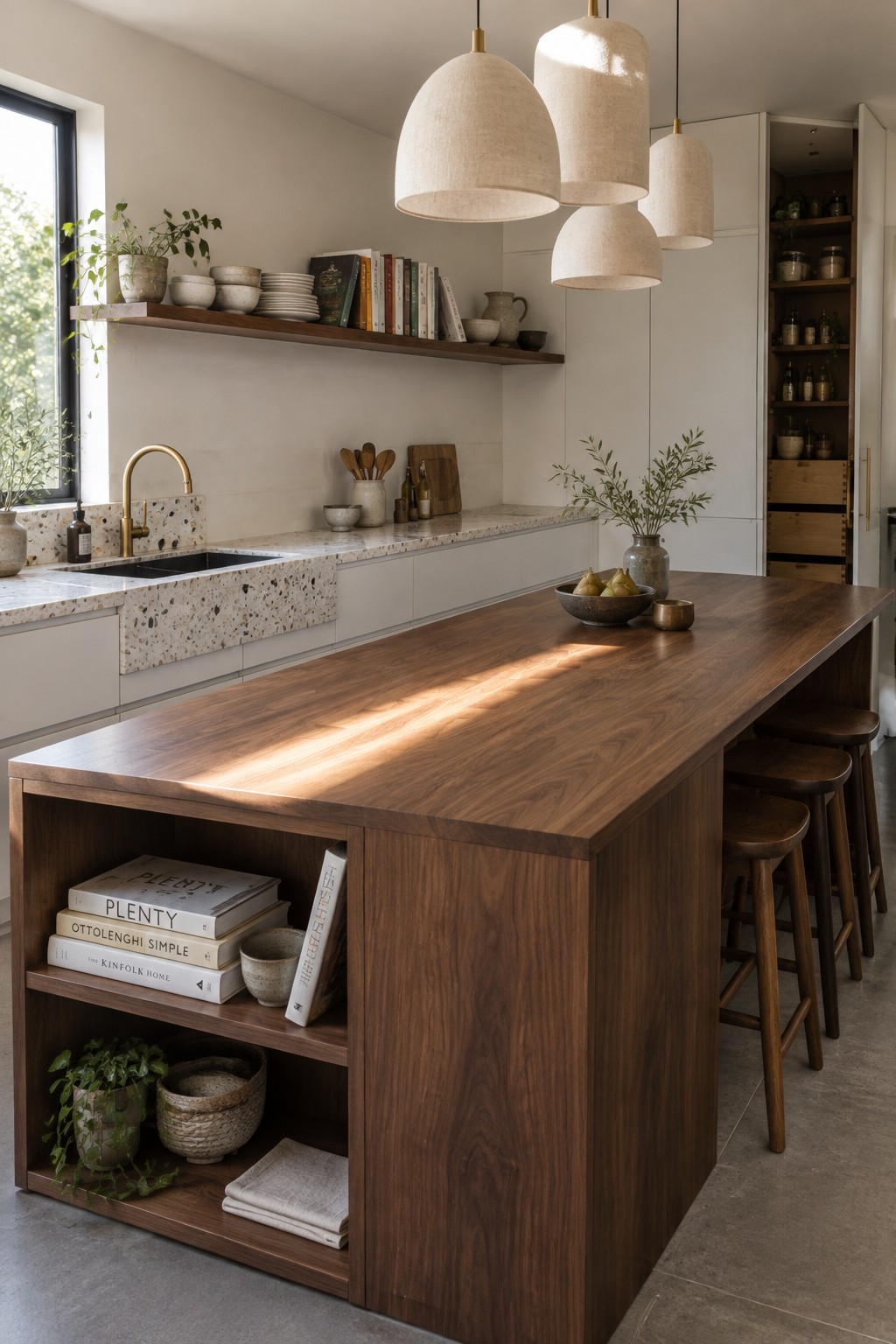
A wooden island gives a white kitchen something solid to rest on. The darker tone stands out without fighting the light cabinets, and it keeps the whole space from feeling too bright or cold.
This works best in open layouts where the kitchen flows into other rooms. Keep the wood fairly simple and let the island take up visual weight while the rest of the cabinetry stays plain and white.
Pairing White Kitchens With Warm Wood

White kitchens can feel a bit stark on their own, so bringing in warm wood tones helps ground the space and adds a natural softness that many homeowners like. The wood keeps the room from looking too cold while still letting the white cabinetry stay bright and clean.
This approach works especially well in kitchens with an island, where a wood top can serve as the main warm element. It suits homes that want a simple, lived-in look rather than something too polished, and it pairs nicely with open shelving or woven seating if you already have those pieces.
Warm Wood Details in White Kitchens
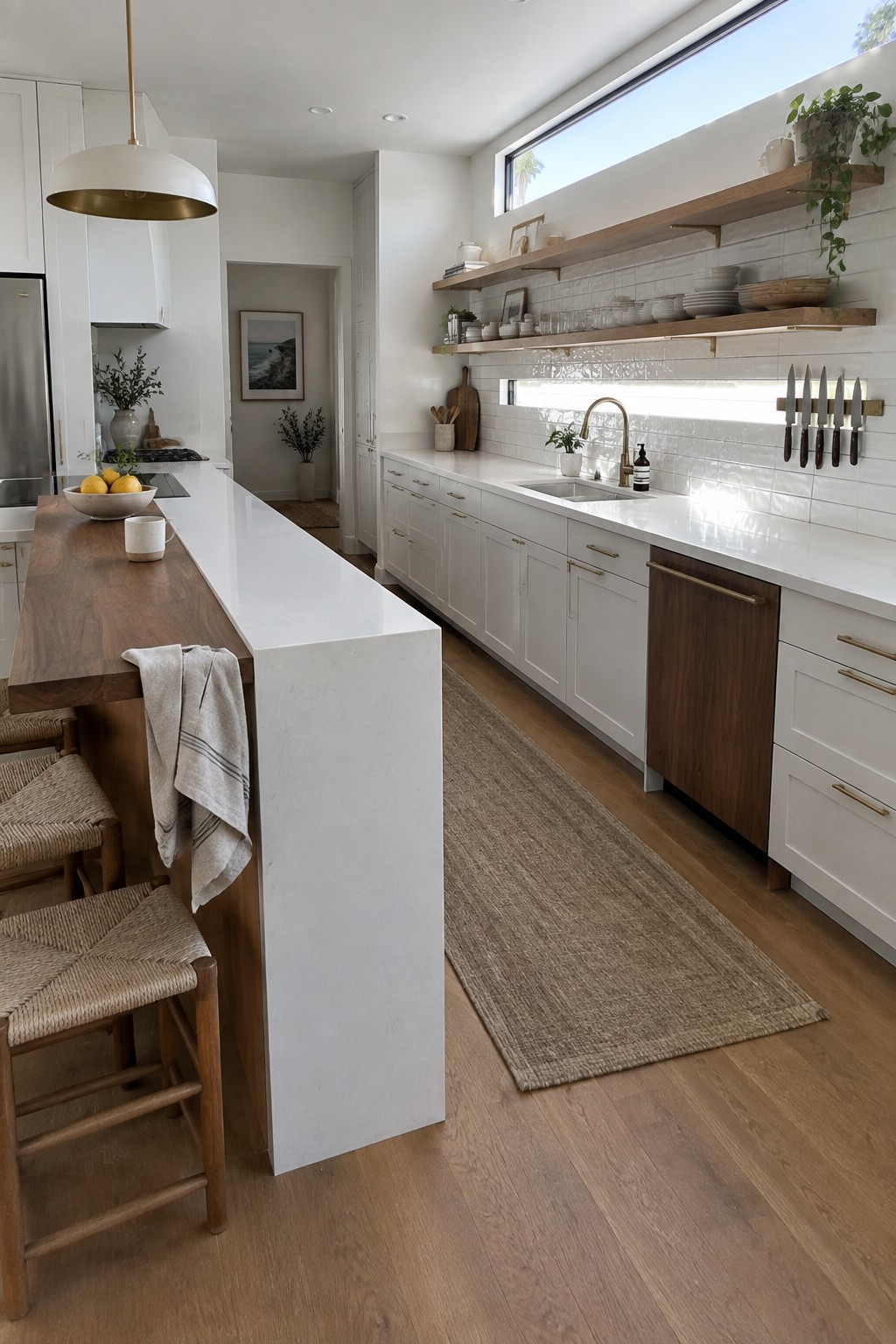
White kitchens can feel a bit stark on their own, so bringing in warm wood helps keep the space from looking too cold or flat. The wood adds a natural layer that makes the room feel more lived in without losing the clean look people like about white cabinets.
This approach works especially well in kitchens that get plenty of natural light, since the wood tones balance the brightness. Try it on an island top, open shelves, or even just the flooring to keep things simple. It suits most homes that want a fresh kitchen without going fully modern or minimalist.
Warm Wood Tones Balance White Kitchens
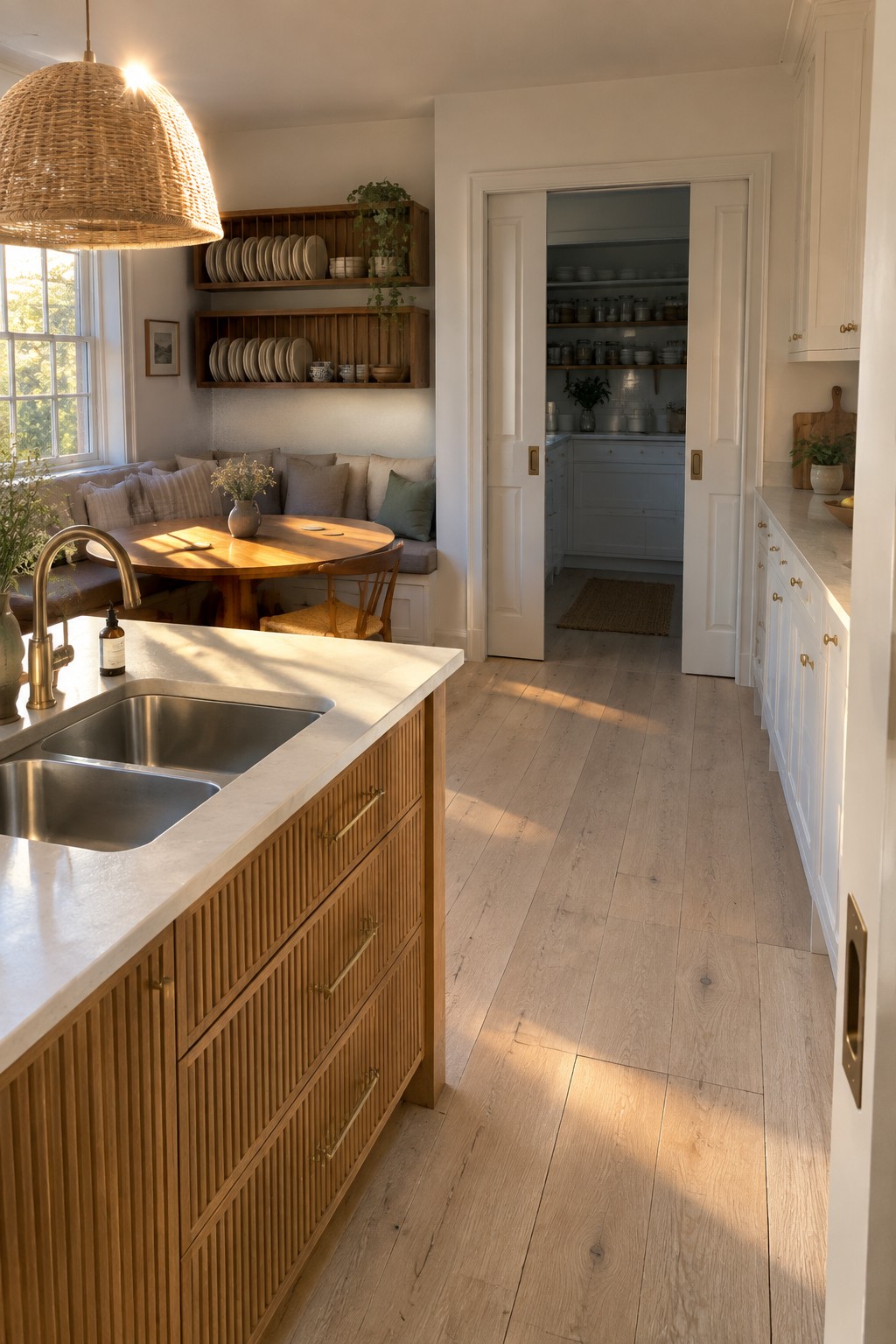
White kitchens can feel a bit stark on their own, so adding wood brings in a natural warmth that makes the space more comfortable to spend time in. The wood island and open shelves here show how the material choice keeps things light while still feeling grounded.
This works especially well in open layouts where the kitchen flows into a dining area. Stick with lighter wood finishes if your room gets plenty of sun, and avoid overloading the space with too many wood pieces at once.
Adding Wood Accents For Warmth In White Kitchens

White kitchens can feel a bit stark on their own, so many people add wood elements to bring in some natural texture. Open shelving in a warm tone and a simple wood counter extension both help soften the look without overpowering the clean white surfaces.
This approach works especially well in narrower kitchens where you want a place to sit without taking up much floor space. Keep the wood tones consistent between the shelves and any extended counter so the room feels pulled together rather than busy.
Using A Wood Island To Warm Up White Cabinets
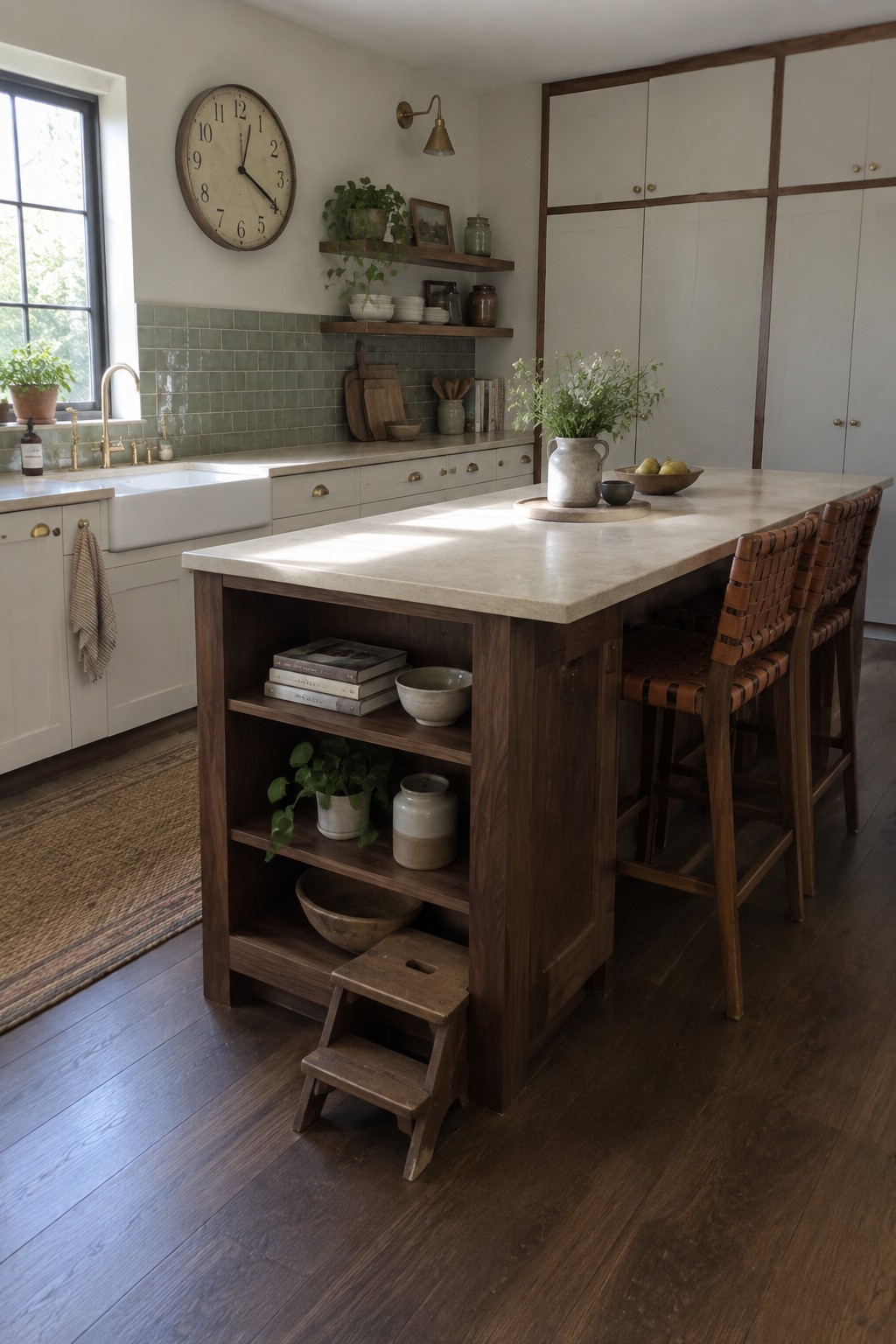
A big wood island stands out in a white kitchen because it brings natural color and texture without overpowering the space. The darker tone grounds the room and makes the white cabinets feel softer and more inviting. Open shelving on the island adds another layer of warmth while giving everyday items a place to live.
This approach works best in kitchens that already have white or off-white cabinetry and need a focal point that feels substantial. It suits homes with wood floors or other natural materials nearby. Keep the island finish simple so the wood reads as a quiet contrast rather than a bold statement.
Adding A Wood Island To A White Kitchen
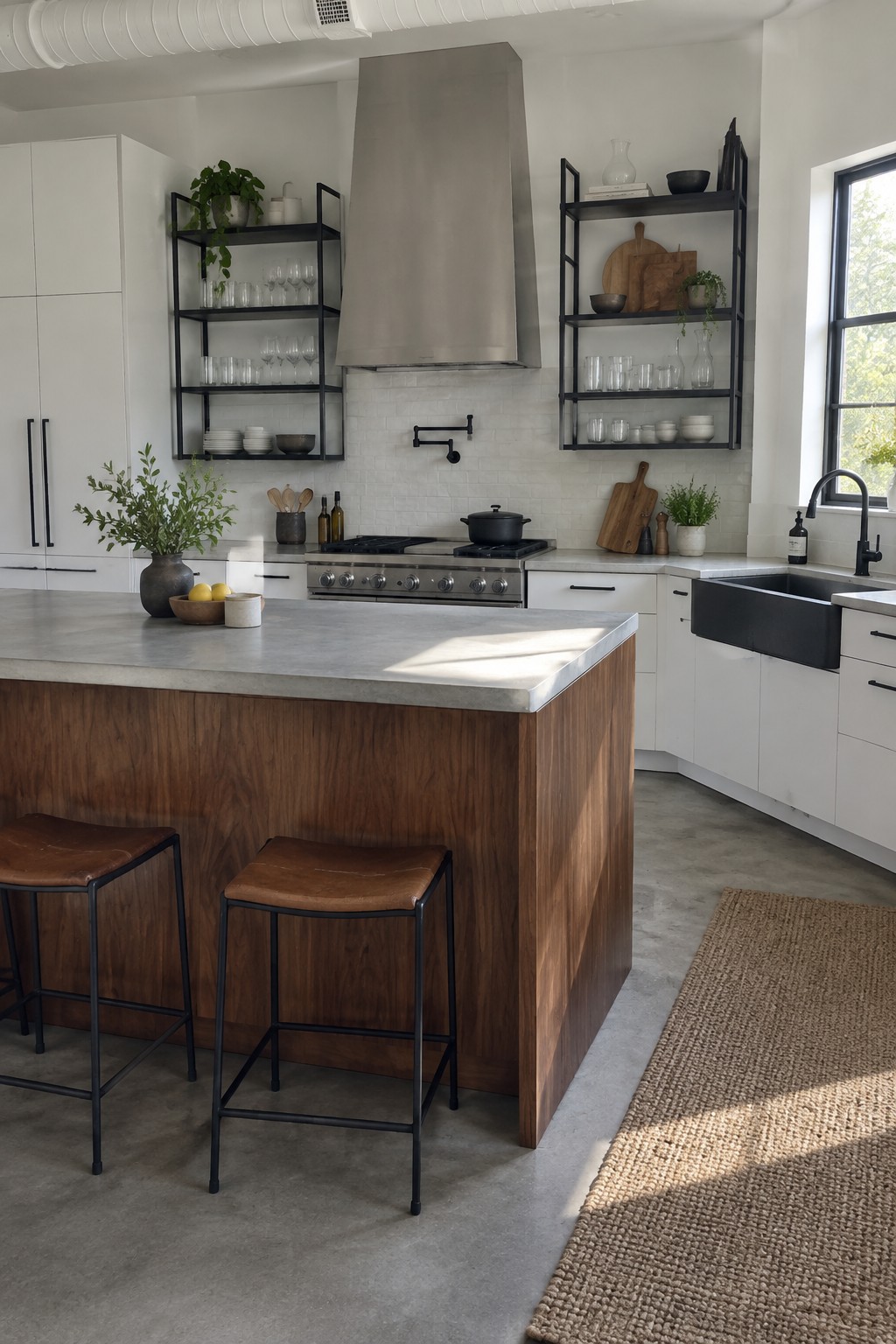
A wood island gives a white kitchen just enough warmth without losing the clean feel. The natural grain and darker tone stand out nicely against the white cabinets and light counters, and it helps the space feel more grounded and lived-in.
This approach works best in kitchens where the island gets used every day for cooking or gathering. It suits homes that want a simple modern look but still need some texture to keep things from feeling too bright or cold.
Pair White Cabinets With A Substantial Wood Island

White kitchens often need one strong element to keep them from feeling too plain. A large wood island does that job well because it brings in natural color and texture while the rest of the room stays light and simple. The contrast makes the space feel warmer and more lived in without adding clutter.
This approach works best in kitchens that see daily use since the island becomes the main work and gathering surface. Keep the wood tone medium to dark and choose stools that match rather than compete with it. The rest of the cabinetry can stay painted white so the island remains the clear focal point.
Wood Island Bases Warm Up White Kitchens

White kitchens can feel a little stark without something to soften them. A wood island base does that job well by bringing in natural tone and texture that plays against the white cabinetry and marble. It keeps the space bright but stops it from looking too cold or flat.
This approach works best in kitchens where you want warmth without adding a lot of color. It suits homes with wood floors already in place, since the island can echo that material and pull everything together. Just keep the wood tone medium to light so it does not overpower the white.
Balance White Cabinets With A Wood Island

A wood island stands out as one of the easiest ways to bring warmth into an all-white kitchen. The natural grain and darker tone give the space a grounded feel that white cabinetry alone can lack.
This approach works best in homes that already lean toward simple, clean layouts. Match the island wood to stools or flooring so the tones feel connected rather than scattered.
A Wood Island For White Cabinets

White kitchens can feel a little stark once everything is installed. A large wood island changes that without adding clutter or extra color. The natural grain and deeper tone give the space something solid to rest on visually.
This approach works best when the rest of the kitchen stays simple. Keep the cabinets and walls light so the island becomes the main point of interest. It suits homes with wood floors already in place and pairs especially well with brass or aged metal hardware.
Add Warmth With A Wood Kitchen Island

A big wood island can change how a white kitchen feels without adding much fuss. The darker tone grounds the bright space and gives you a natural surface that holds up well to daily use. Open cubbies underneath make it easy to reach bowls, baskets, and books without extra doors or hardware.
This works best in kitchens that already have white cabinetry and light floors. Keep the island size generous so it doubles as seating and storage, and let the wood grain show rather than painting over it.
Adding Warm Wood Accents To White Kitchens

White kitchens stay bright and open, but they can start to feel a little stark without some contrast. Warm wood tones on the island base, flooring, and seating bring in natural color and keep the space grounded.
This mix works especially well in homes that want a clean look without going cold or overly modern. Use the wood on lower elements like an island or stools so it balances the white without competing with it.
Frequently Asked Questions
Q: How much wood feels like the right amount with mostly white cabinets?
A: Stick to one main feature like a wood island or open shelves. This adds the warmth you want without crowding the space. Let the white handle the rest so the room stays open and bright.
Q: What wood tone should I pick if I want it to feel inviting?
A: Go for something like oak or walnut with a natural finish. These bring out that cozy contrast against the white without needing extra stains. Check a sample board in your kitchen light before committing.
Q: Will the wood hold up near the sink and stove?
A: Choose a sealed hardwood and wipe spills right away. That simple habit prevents most damage over time. Reapply a sealant once a year if the area sees heavy use.
