

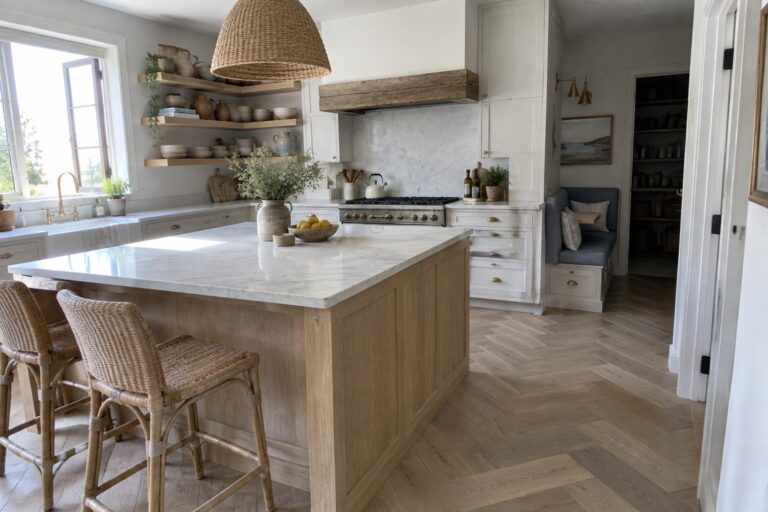
I have always noticed that kitchens feel more welcoming when the materials stay simple and the light can move freely through the space.
Natural wood brings a quiet warmth that balances the cooler tones often used in coastal styles, and light finishes help keep the room from feeling closed in during busy mornings.
Some combinations only click after you live with them for a while.
I usually test a few wood samples against the existing cabinetry before committing to a full change.
That approach has saved me from choices that look fine in photos but end up feeling too stark once the room is in use.
Light Wood Islands For Coastal Kitchens

A light wood island gives a coastal kitchen enough warmth to feel relaxed while still keeping the overall space bright. The natural tone of the wood stands out just enough against white cabinetry and a pale countertop, so the room does not feel stark or overly polished.
This choice works best in homes that already have good natural light and simple finishes throughout. It pairs easily with woven seating and open shelving, and it gives the kitchen a practical, unfussy center without adding extra color or pattern.
Light Wood Shelves And Countertops

Natural wood shows up here in two places that matter most. The long countertop and the open shelves above it both use the same light tone, which keeps the kitchen feeling warm even though the walls, tile, and cabinets stay pale. That simple repeat of wood makes the whole space feel relaxed instead of stark.
This approach works best in coastal kitchens where you want some warmth but still need the room to stay bright. Use the open shelves for plates and bowls you reach for often so the wood actually gets used. If the wood tone is too orange it can fight with the white, so stick with the softer, gray-leaning finishes that read as natural rather than yellow.
Blend Natural Wood with Light Finishes

Many kitchens feel more relaxed when light cabinet finishes are paired with natural wood tones. The wood adds warmth and texture while the pale surfaces keep the room feeling open and easy.
This mix works best in homes near the coast or anywhere you want a calm, unfussy look. Keep the wood tones consistent across the floor, table, and beams, and let simple fabrics and baskets do the rest.
Light Wood Cabinetry For Coastal Kitchens
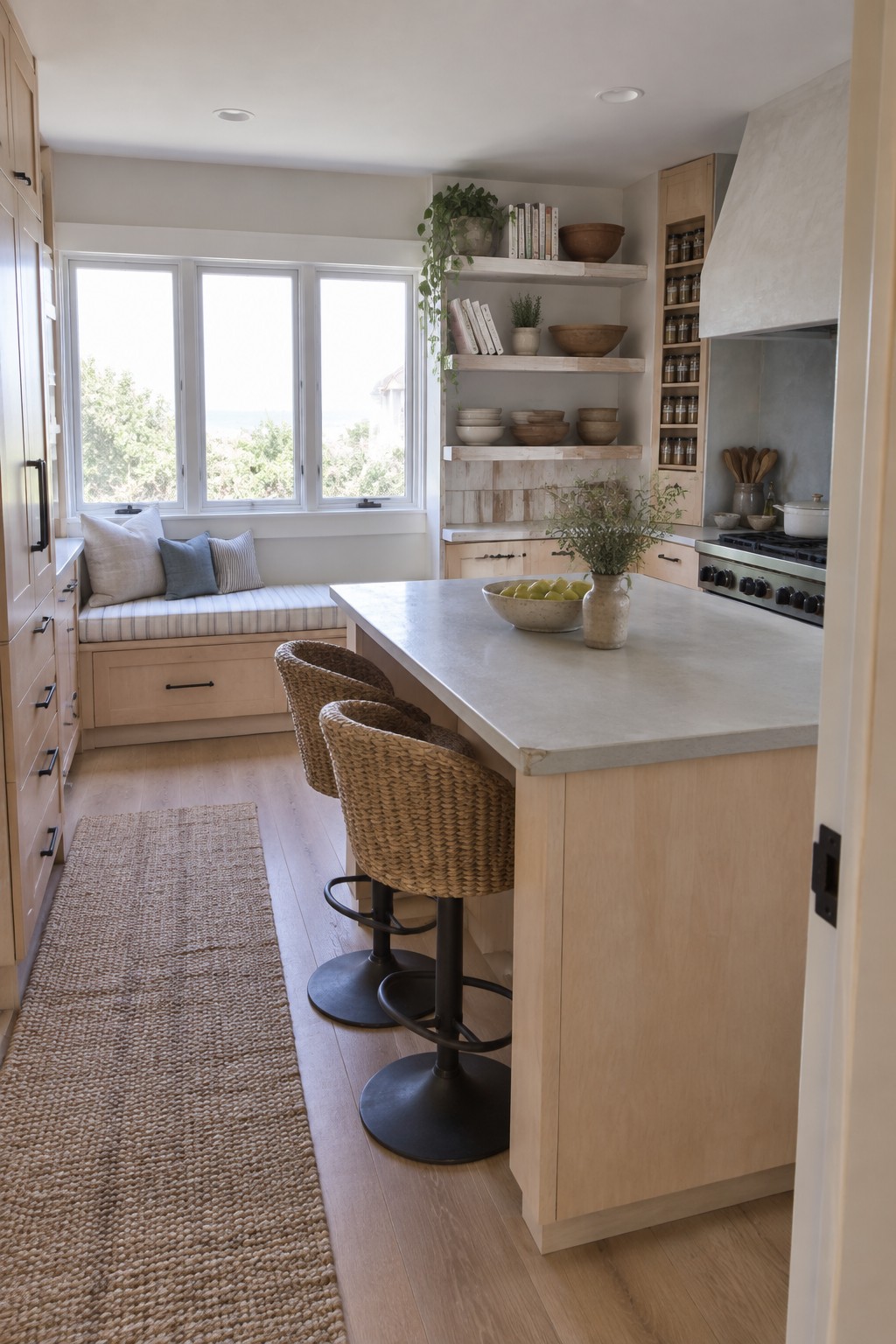
Light wood cabinetry gives a kitchen a relaxed feel without making it look too stark or plain. The natural grain adds just enough warmth while the pale tone keeps everything bright and open, which works well when you want the space to feel connected to the view outside.
This approach suits homes near the water or any kitchen that gets good daylight. Keep the wood finish simple and pair it with a light stone or concrete countertop so the room stays balanced. Avoid darker stains if you want the same easy, coastal look.
Light Wood Cabinetry For Coastal Kitchens

Light wood cabinetry and island bases help a kitchen feel relaxed and open. The natural tone adds warmth while still letting the room stay bright, which suits coastal homes that lean on simple finishes and plenty of daylight.
This approach works well in open layouts where the kitchen connects to other living spaces. Keep the wood grain visible and pair it with pale stone or concrete tops so the whole room feels calm rather than busy.
Add a Built-In Bench for Casual Kitchen Seating

A built-in bench along one wall turns unused space into a comfortable spot to sit and linger. It gives the kitchen a relaxed feel without crowding the floor with extra chairs, which works especially well when the room opens to a view.
This layout suits narrower kitchens or homes where you want everyday seating that feels easy rather than formal. Choose one with storage underneath so the bench stays useful instead of becoming a place for clutter to collect.
Light Wood Cabinetry with Open Shelving

Light wood cabinetry feels less heavy when you mix in open shelves. The pale tone keeps the kitchen bright, and the open sections give you a place to store baskets or everyday dishes without adding more doors.
This works best in coastal homes that want a simple, unfussy layout. Use the same wood throughout, add a few woven baskets for texture, and avoid crowding the shelves so the whole space stays easy to keep up.
Natural Wood Islands Work Well In Coastal Kitchens
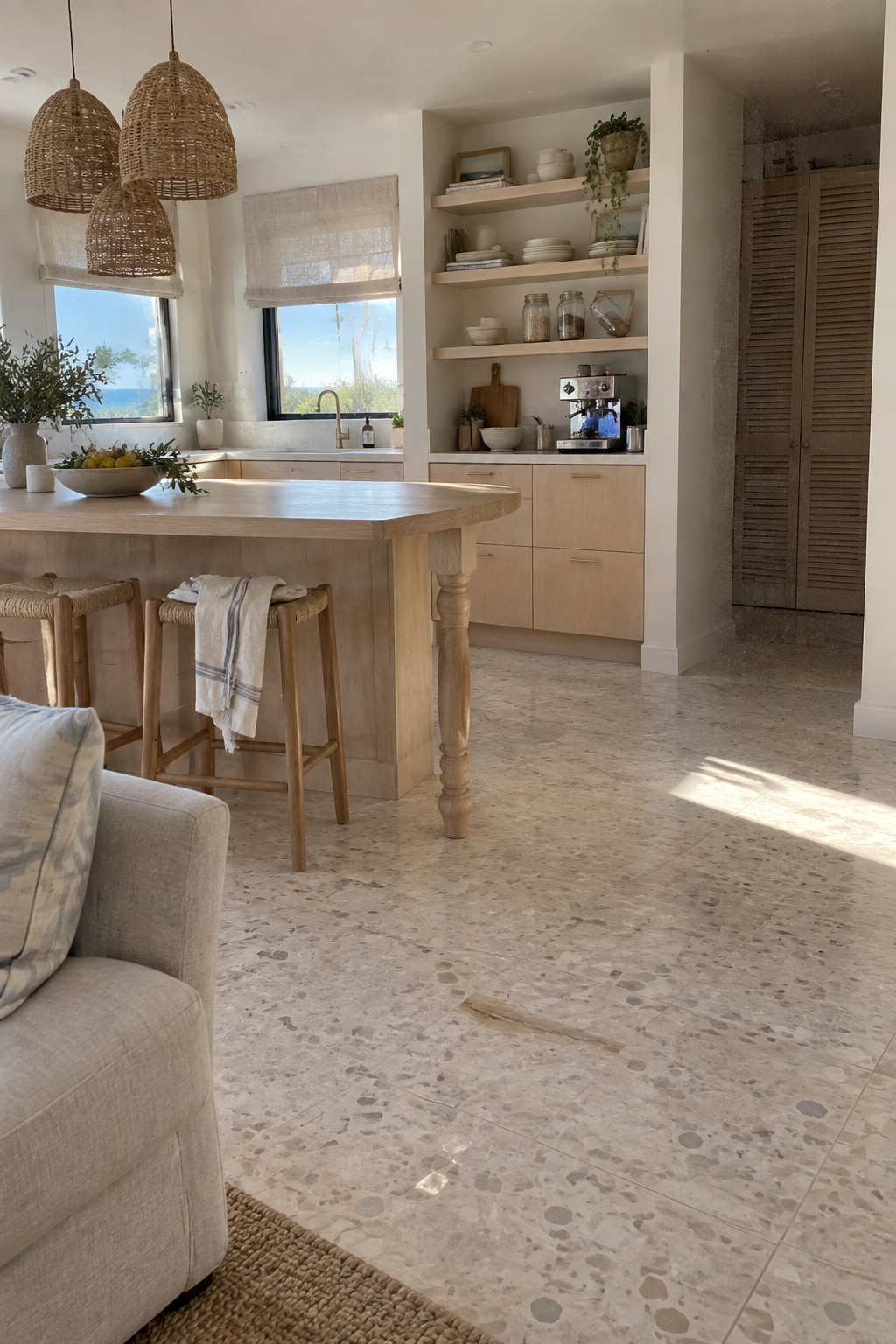
A wooden island brings needed warmth to a light coastal kitchen. It adds texture that painted cabinets often lack and helps the room feel more grounded without making it dark or heavy.
This approach works best when the rest of the space stays pale and simple. Keep cabinets light, use plain hardware, and choose stools that match the island wood so the whole setup feels relaxed and easy to live with.
Natural Wood Surfaces With Light Cabinet Finishes

Pairing natural wood with light painted cabinetry gives a kitchen an easy, lived-in look that still feels bright. The wood brings warmth and texture, while the soft finishes on the cabinets keep everything from feeling heavy or closed in.
This works best in homes that want a coastal feel without going full beach house. Keep the cabinet color pale and let the wood handle the counters, island top, and any exposed beams or open shelving.
Mixing Natural Wood With White Cabinetry

Natural wood brings a bit of warmth to kitchens that lean toward all-white finishes. In this space the island and lower cabinets use a light oak tone that softens the crisp white uppers and marble counters without making the room feel heavy.
This mix works well in coastal homes or any kitchen that needs to stay bright but not feel cold. Keep the wood finish light and limit it to the island or base cabinets so the overall look stays open and easy to live with.
Open Wood Shelving With Painted Cabinets

Open wood shelves give a kitchen breathing room when most of the storage stays closed. The light wood tone against soft painted cabinets keeps the space from feeling boxed in, and it lets you show the pieces you actually use.
This works best in smaller or open kitchens where you want everyday items close at hand without adding more upper cabinets. Stick to a few simple stacks on each shelf so the look stays relaxed rather than cluttered.
Built-In Seating Along The Kitchen Island

A built-in banquette next to the island turns the kitchen into a place where people actually sit and eat without needing a separate dining table. It works especially well in longer, narrower rooms because the seating stays tucked against the wall and leaves the center aisle clear for moving around.
This setup suits homes that want a relaxed coastal feel without losing function. Light wood cabinetry and a pale stone island keep the space bright, while the bench adds a soft, lived-in layer that makes daily meals feel easier. Just make sure the bench height lines up with the island so it feels comfortable for regular use.
Light Wood Cabinetry For A Calm Coastal Kitchen

Light wood cabinetry gives a kitchen that relaxed coastal feeling without making the space feel heavy or dark. The pale finish reflects light from nearby windows and keeps the room looking open even when cabinets run along multiple walls. Open shelving in the same tone adds to the easy look while letting you keep everyday dishes within reach.
This choice works best in homes that already get good natural light or have a simple floor plan. It pairs nicely with stone counters and woven accents but can start to feel flat if you add too many competing colors or dark hardware. Stick with brushed brass or similar finishes and let the wood do most of the work.
Open Shelving Built Into The Island

One simple way to make a kitchen feel more relaxed is to leave the side of the island open with shelving. This gives you a place to keep bowls, baskets, and a few books within easy reach while keeping the whole piece from looking too solid or closed in.
The approach works best in lighter kitchens where natural wood can add warmth without crowding the space. Use it when you want everyday items handy and a bit of casual storage that does not require extra cabinets.
Light Wood Cabinetry with Open Shelving

Light wood cabinetry paired with open shelves gives a coastal kitchen an easy, lived-in feel. The wood stays bright enough to keep the space from feeling heavy, while the open shelves make daily items simple to reach and put away.
This setup works best in homes with good natural light or a view to the outside. Keep the shelves lightly styled with jars and dishes rather than filling every inch, and choose simple dark hardware to add just enough contrast without complicating the look.
Pegboard Walls For Everyday Kitchen Storage
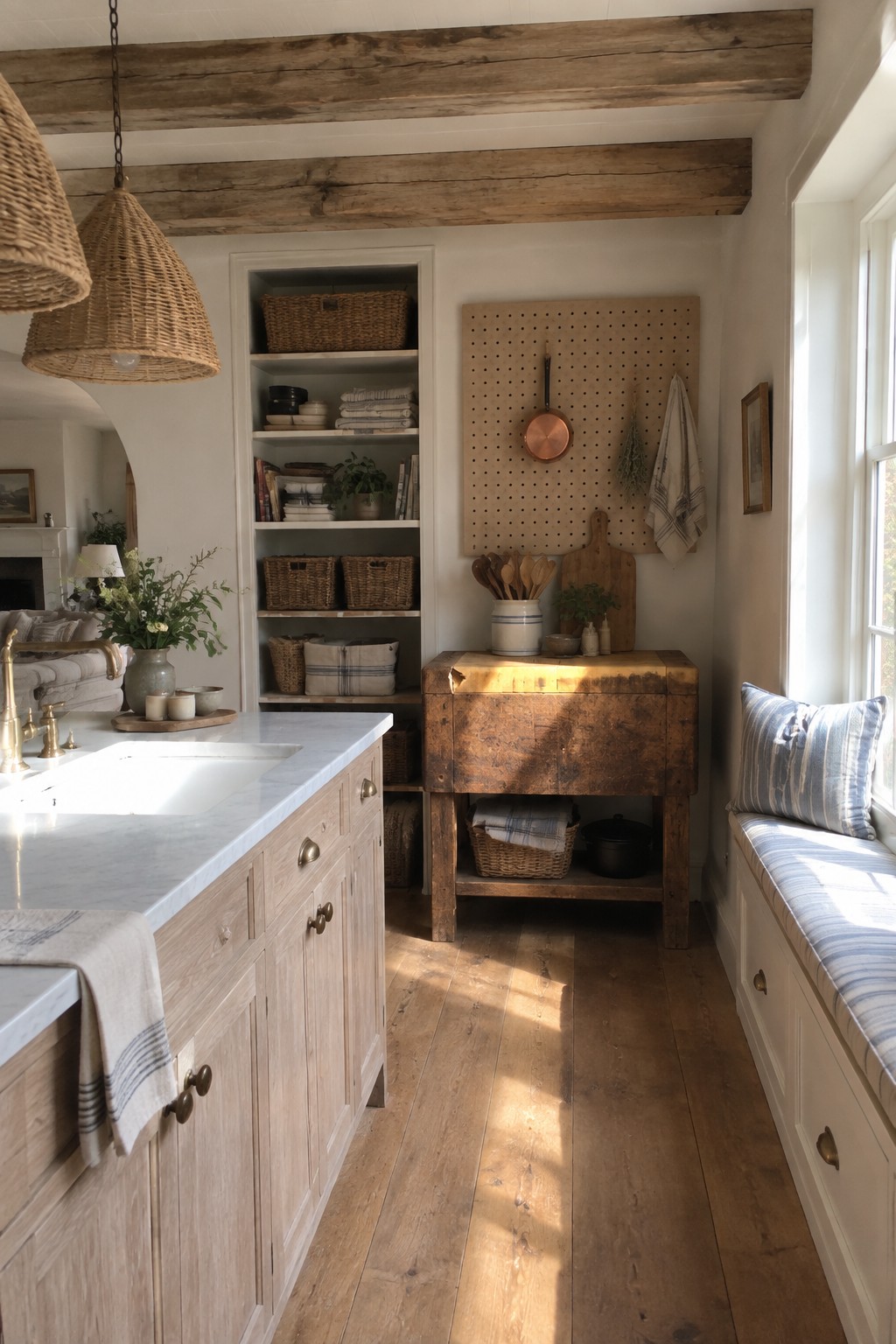
A pegboard wall gives you a simple way to keep tools and small items within reach while avoiding extra closed cabinets that can make a kitchen feel heavier. In this kind of space the board adds texture without taking up floor room, and it pairs easily with light wood cabinetry and pale counters to hold the overall look bright and open.
It works best in kitchens where you cook often and want your most used pieces visible. Hang a few pots, cutting boards, and utensils, then leave the rest of the wall clear so the wood tone and light finishes stay the main focus. Just make sure the board is mounted on a wall that can handle the weight and that you have room to stand back comfortably when reaching for things.
Add Built-In Seating Along Kitchen Windows
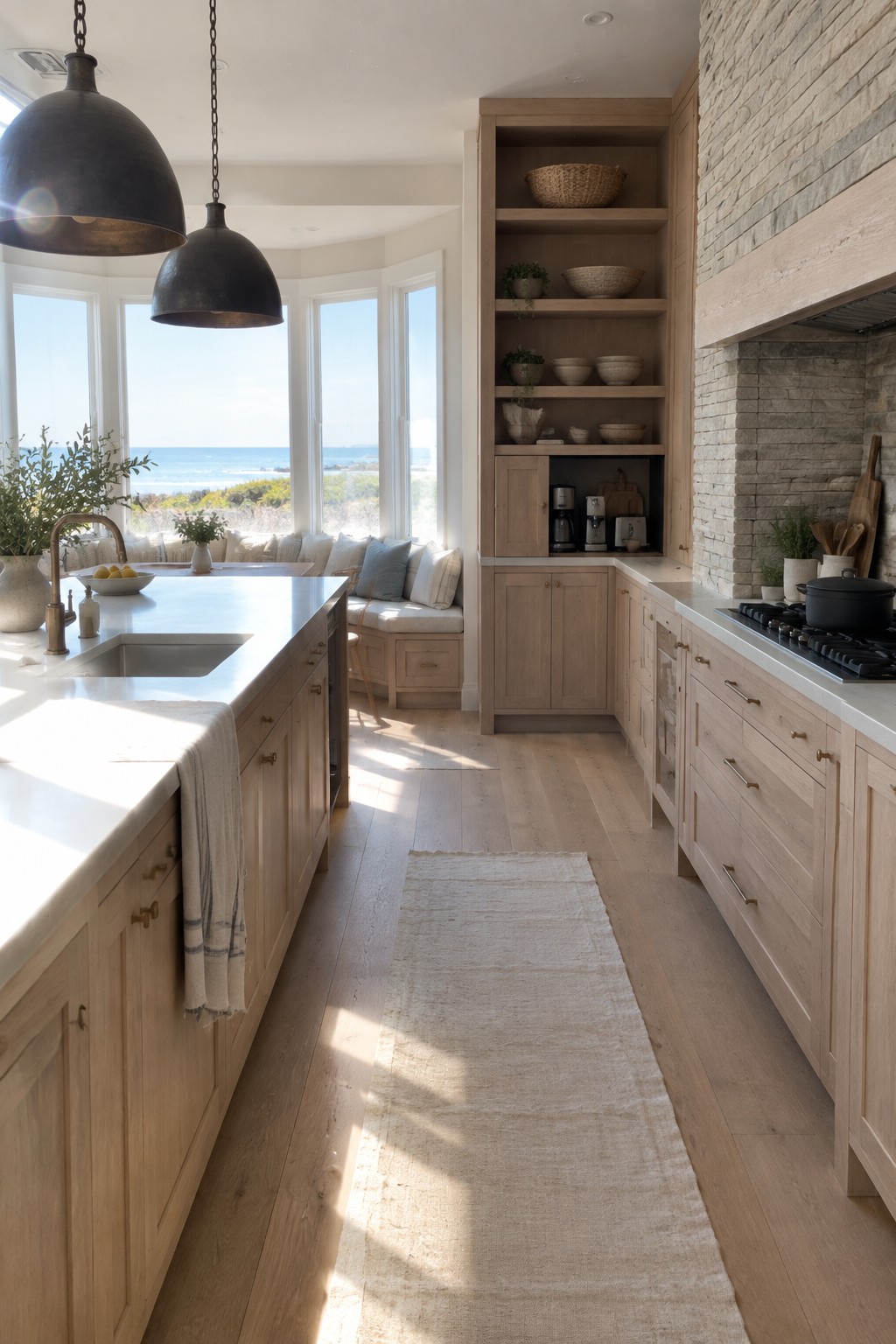
A built-in banquette under the windows turns a stretch of wall into everyday seating without crowding the room. It gives people a place to sit and talk while someone cooks, and it makes good use of natural light and views that many coastal homes already have.
This works especially well in kitchens with bay windows or long exterior walls. Keep the wood tones light and the cushions simple so the seating feels like part of the cabinetry rather than an added piece of furniture.
Open Wood Shelving for Everyday Use

Open wood shelving works well in kitchens that need storage without adding visual weight. The shelves sit above the counter and hold dishes and a few plants, while the natural tone of the wood pairs with the white cabinets and light tile to keep the whole space bright. It feels practical because everything stays within reach.
This approach suits homes that get good natural light and lean toward a relaxed coastal style. Keep the items on the shelves simple and rotate them as needed so the look stays uncluttered. It also helps to match the shelf depth to what you actually use daily rather than trying to display too much at once.
Curved Islands With Open Shelving
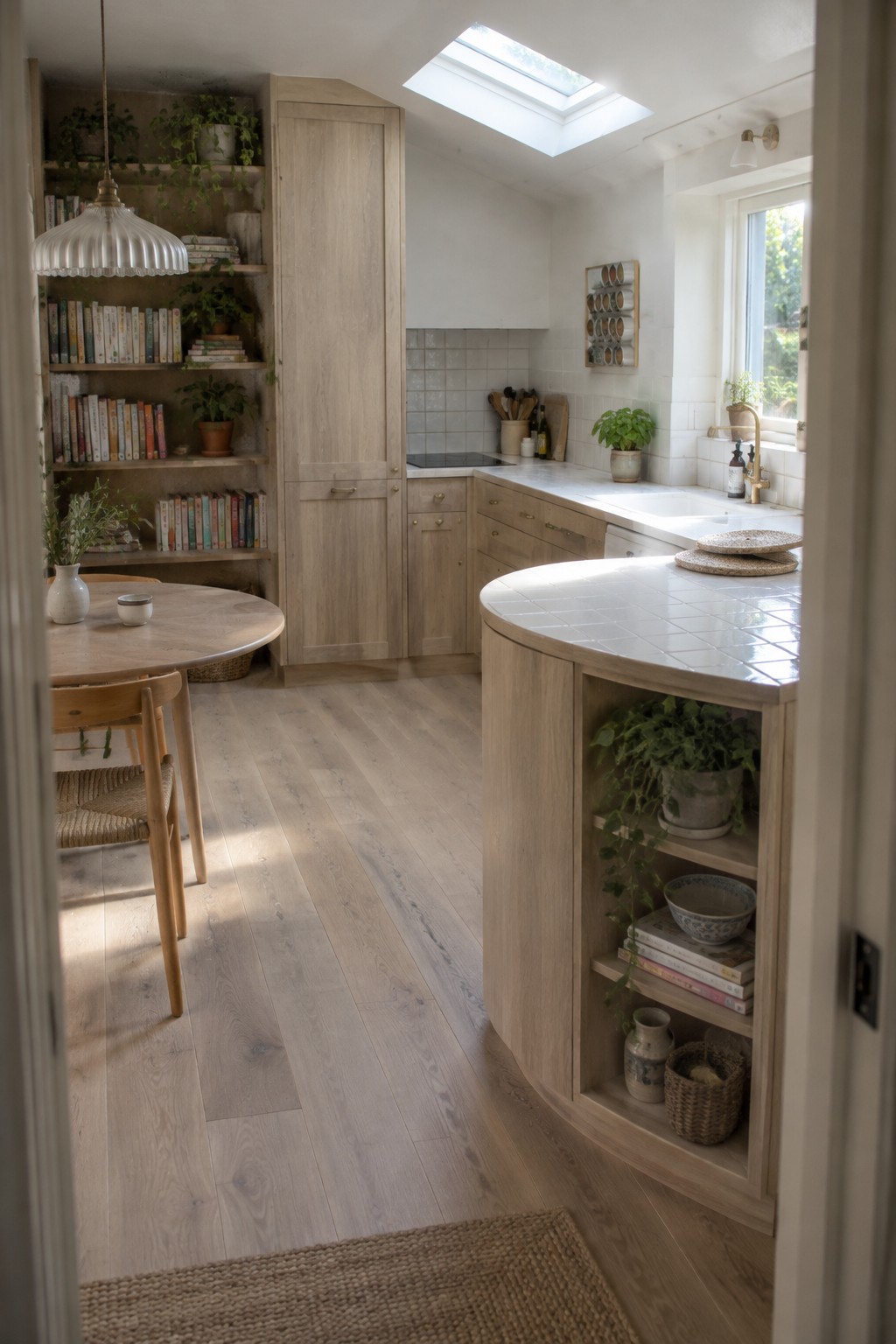
A curved island breaks up the straight lines that most kitchens end up with. When you add open shelving on the side facing the room, it turns the island into something more useful and less like a barrier. The wood stays light, the top stays simple, and you get places to keep a few plants or bowls without needing another piece of furniture.
This works best in kitchens that open into living areas or feel a bit tight on space. Stick to one or two shelves so they do not fill up fast, and choose finishes that match the rest of the cabinetry. It keeps the whole room feeling easy rather than overly planned.
Natural Wood Islands in Light Kitchens

A big natural wood island changes how a light kitchen feels. It adds weight and warmth without darkening the whole room, and it gives you a solid surface that stands up to daily use while the painted cabinets stay soft and bright.
This works best in coastal homes that already have plenty of light coming in. Keep the island simple in shape, let the wood show its grain, and use the open base for books or baskets if you want extra storage without adding more closed doors.
Light Wood Cabinetry for Coastal Kitchens
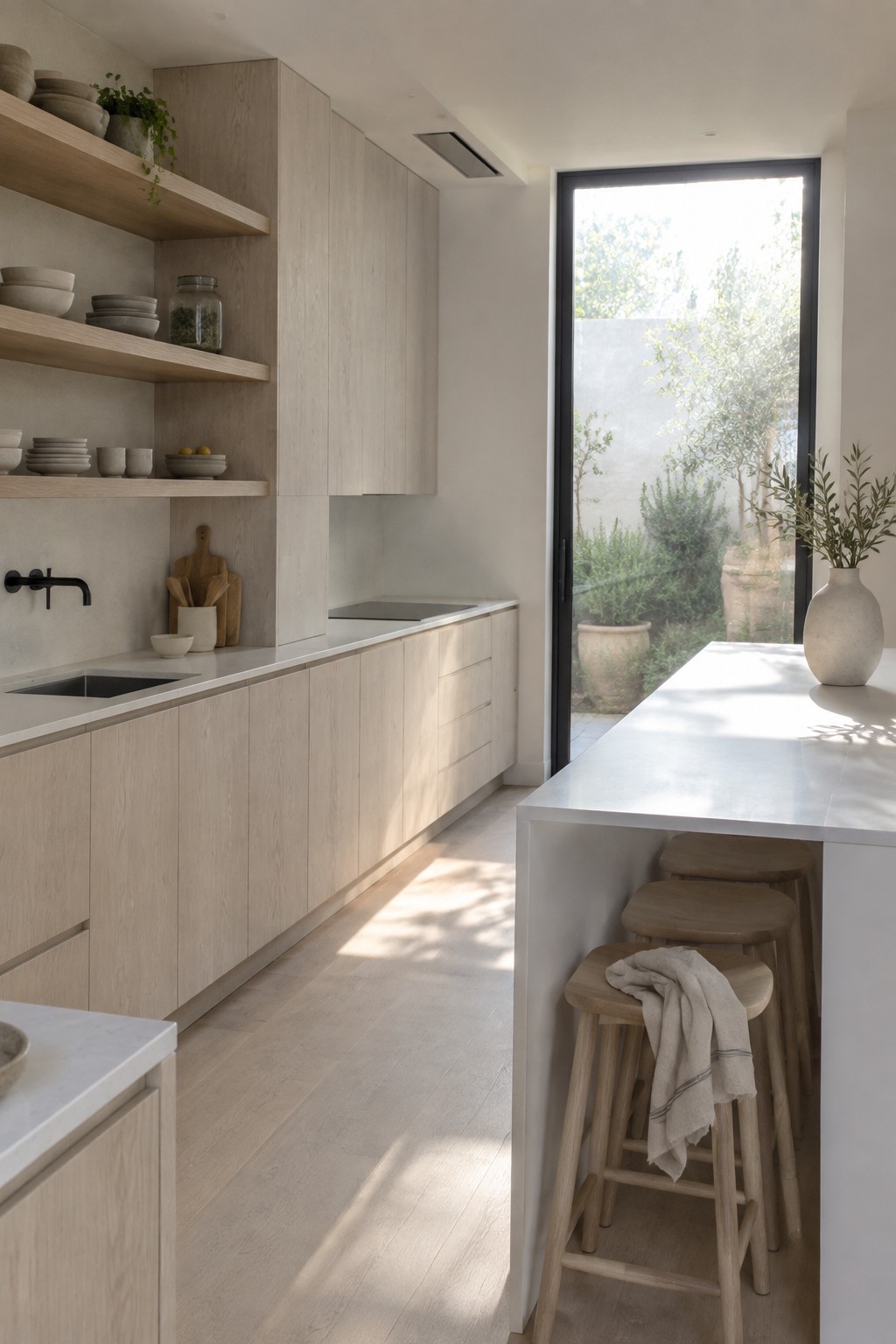
Light wood cabinetry helps a kitchen feel open and easy instead of boxed in. The pale tone reflects daylight across the room and keeps the space from feeling heavy even when you have solid runs of storage and counters.
This finish works best in homes that get steady natural light and pairs simply with white surfaces and open shelves. It suits relaxed layouts where you want the wood grain to show without adding extra color or hardware.
A Wood Table Island For Everyday Use

A big reclaimed wood table works well as the main island in a light kitchen. It adds warmth and a sturdy surface for cooking without making the room feel heavy or formal. The open space underneath also gives room for pots and baskets so everything stays close at hand.
This setup suits homes that want a relaxed coastal look. It works best when the rest of the kitchen stays simple with painted cabinets and plenty of natural light. Keep the table finish natural so the wood grain shows through.
Kitchen Islands That Connect Cooking And Living Areas

A large central island helps divide the kitchen from the rest of the space without making it feel closed off. In this setup the marble top gives a solid work surface while the open sides keep sightlines clear to the seating and windows beyond.
This layout suits homes that want the kitchen to stay part of the main living area rather than tucked away. Light wood cabinetry and simple bar stools keep the whole thing feeling casual, though the island needs enough clearance on both sides so traffic can move easily around it.
Light Wood Cabinetry For A Calmer Kitchen

Light wood cabinetry works well when you want the kitchen to feel open and easy rather than heavy or closed in. The consistent tone across both the tall cabinets and the open shelves helps everything blend together, so the room stays bright even with plenty of storage.
This finish suits homes that already get decent daylight and pairs simply with pale counters or walls. It can handle some everyday clutter on the shelves without looking messy, though it does show wear faster than darker wood if you cook a lot.
Built-In Desks in Light Wood Kitchens

One simple way to add function to a coastal kitchen is to run the same light wood cabinetry into a small desk area. It keeps the whole space feeling connected and avoids the need for a separate piece of furniture that might crowd the room.
This approach suits homes where the kitchen sees daily use beyond cooking. Keep the desk shallow, match the wood tone exactly, and choose a chair that tucks in cleanly so the area stays practical without drawing attention.
Frequently Asked Questions
Q: How do I protect natural wood from daily spills in the kitchen? A: Wipe up messes right away with a soft cloth. Seal the wood every year to keep it looking fresh. This simple habit stops most stains before they set in.
Q: What if all the light finishes make the space feel too bright? A: Add some woven baskets or linen curtains to soften the glow. They bring in texture without changing the whole feel.
Q: Can I mix in a darker wood accent here and there? A: Yes a few darker pieces balance the lightness nicely. Try a cutting board or open shelves in a deeper tone. Keep the main surfaces light so everything flows.
