

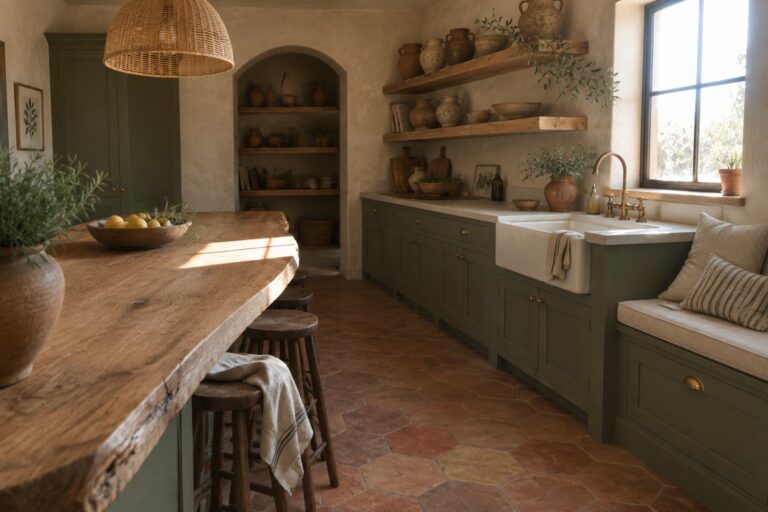
Kitchens end up feeling more usable when the colors and textures come from materials that already work well with each other in daily life.
Terracotta underfoot or olive on the walls can keep the room from feeling too stark once you add in natural wood for shelves and counters.
The balance matters more than people expect.
I have found that these tones hold up to the mess of cooking without needing constant touch-ups or special care.
It makes sense to try a few of the simpler pairings first to see how they change the way the kitchen feels during regular use.
Terracotta Tiles on the Kitchen Floor

Terracotta hex tiles work well in kitchens because they bring in a natural, slightly uneven texture that softens the whole room. The warm clay color pairs easily with olive cabinets and wood counters, creating a simple base that feels lived-in rather than styled.
This flooring suits older homes or any kitchen where you want something practical that still looks warm. Keep the walls light and add wood or woven pieces so the space stays balanced and does not feel dark.
Terracotta Backsplash With Olive Cabinets
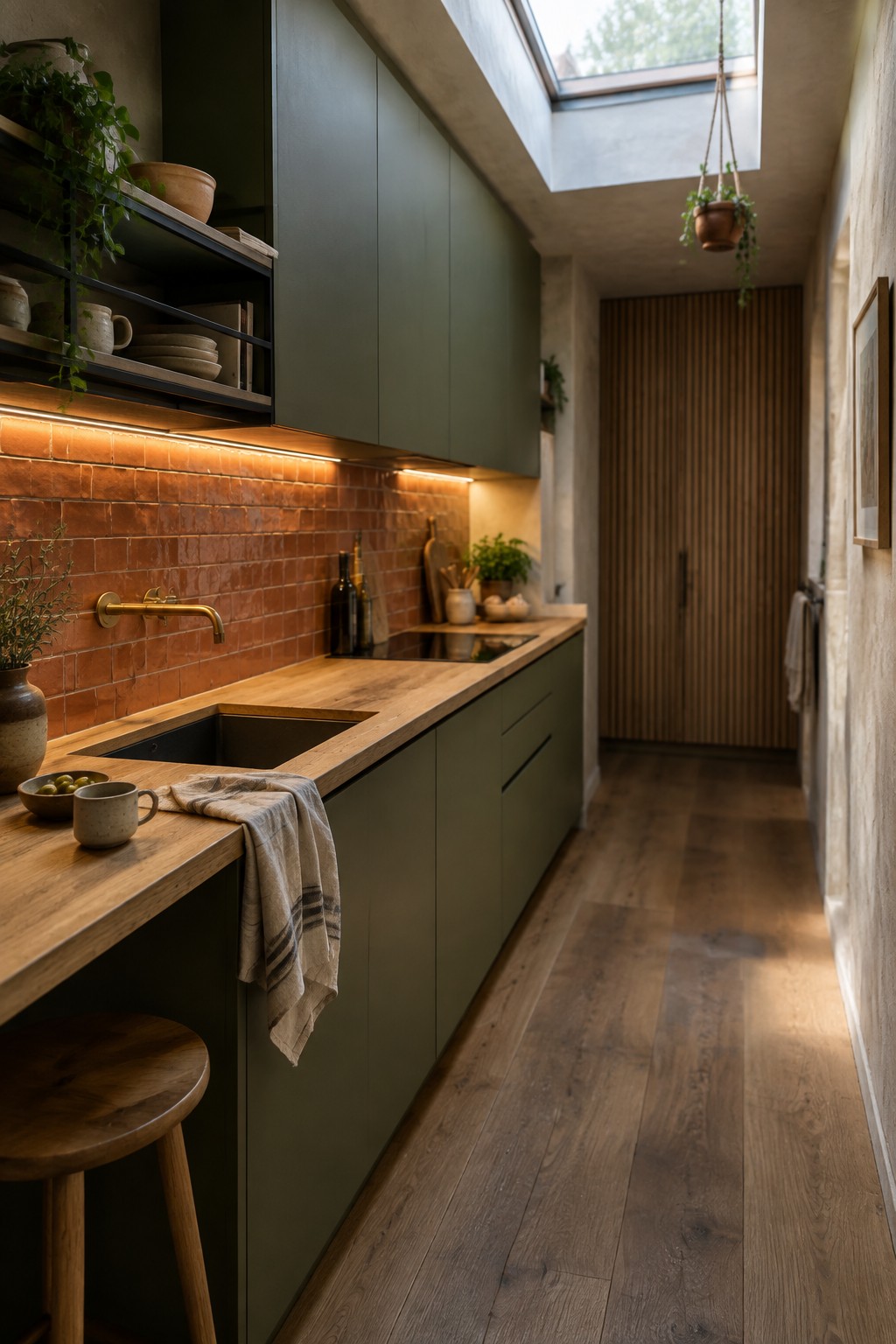
Terracotta tiles add real warmth when they sit next to olive green cabinetry. The mix keeps the green from feeling heavy and gives the wood counters a softer place to land.
This approach works best in kitchens that already have decent light. It suits homes that want an earthy feel without turning too dark or too country.
Terracotta Backsplash With Olive Cabinets
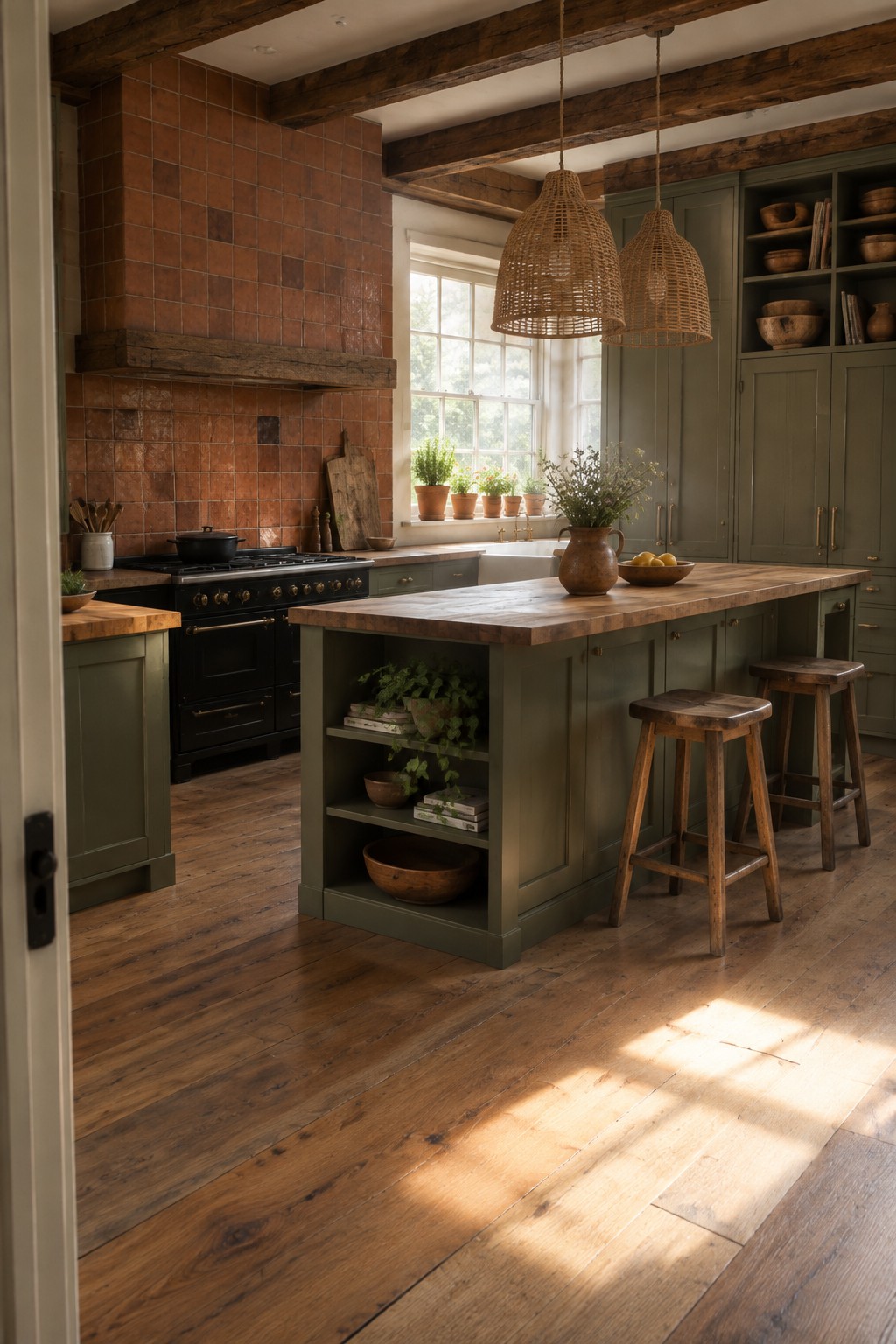
Terracotta tiles bring a lot of warmth to a kitchen when they cover the range area, and pairing them with olive green cabinets keeps the whole space feeling grounded rather than heavy. The contrast between the reddish tiles and the soft green cabinetry works because both colors come from natural sources, so they sit comfortably together without competing.
This approach suits older homes or any kitchen that already has wood floors and simple cabinet shapes. Keep the wood tones natural and limit the terracotta to the cooking wall so the green cabinetry can carry the rest of the room without the space feeling too busy.
Terracotta Backsplashes With Olive Cabinets
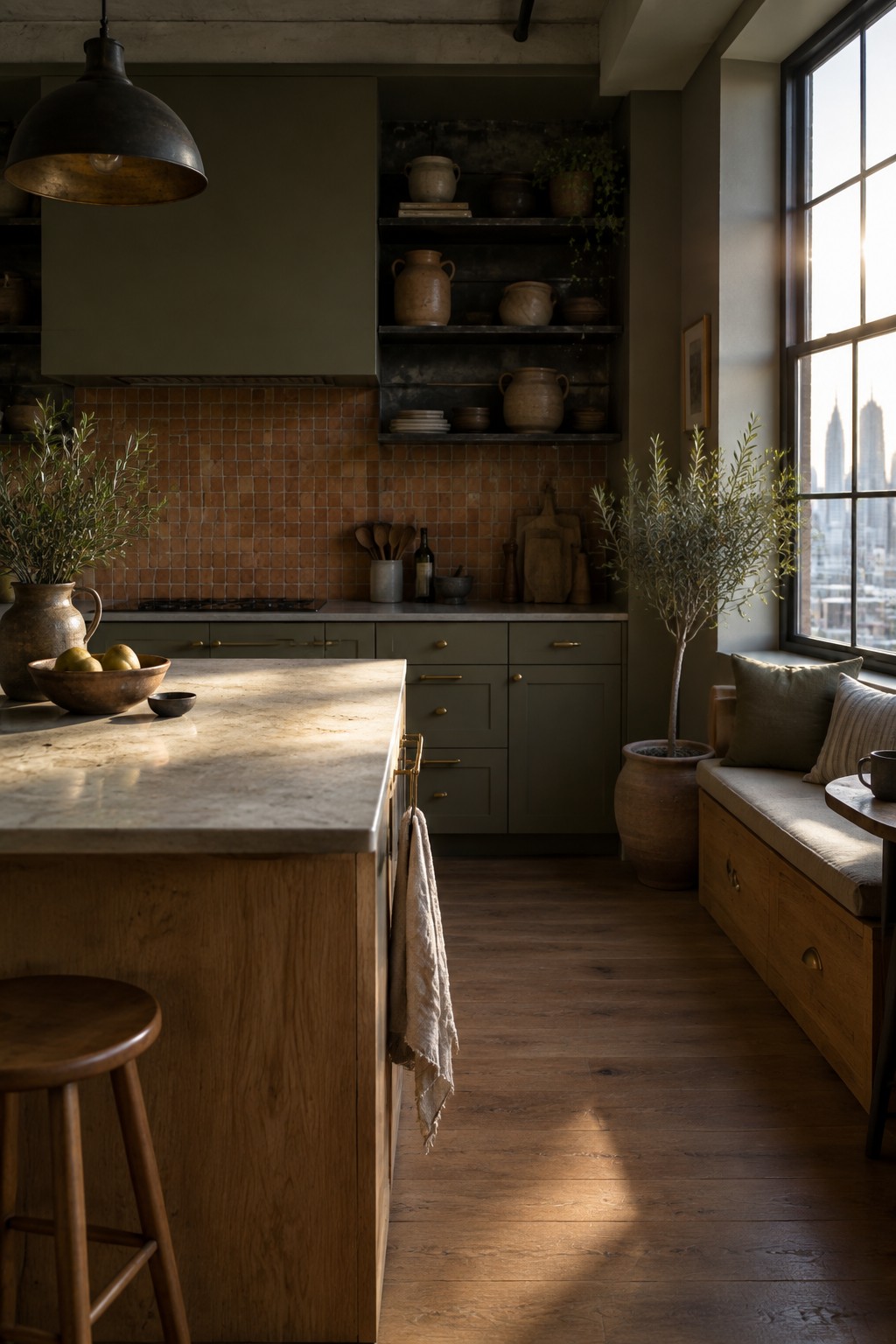
Terracotta tiles bring a grounded warmth that pairs naturally with olive cabinetry and wood tones. The earthy red-orange color softens the green and keeps the whole space from feeling too heavy or flat.
This approach works well in kitchens that already use natural materials and simple forms. Let the tiles cover just the backsplash area, then keep counters and open shelves light so the color does not overwhelm the room.
Terracotta Flooring With Olive Cabinets

Terracotta tiles give a kitchen a warm, grounded base that pairs naturally with olive green cabinetry. The reddish clay tones offset the deeper green and keep the room from feeling too cool or flat, especially when natural wood is added in the table and stools.
This combination works well in homes that already lean casual or Mediterranean. It helps to choose larger format tiles with some variation in color and to keep the grout light so the floor does not feel too busy against the solid cabinet color.
Terracotta Backsplash With Olive Cabinets
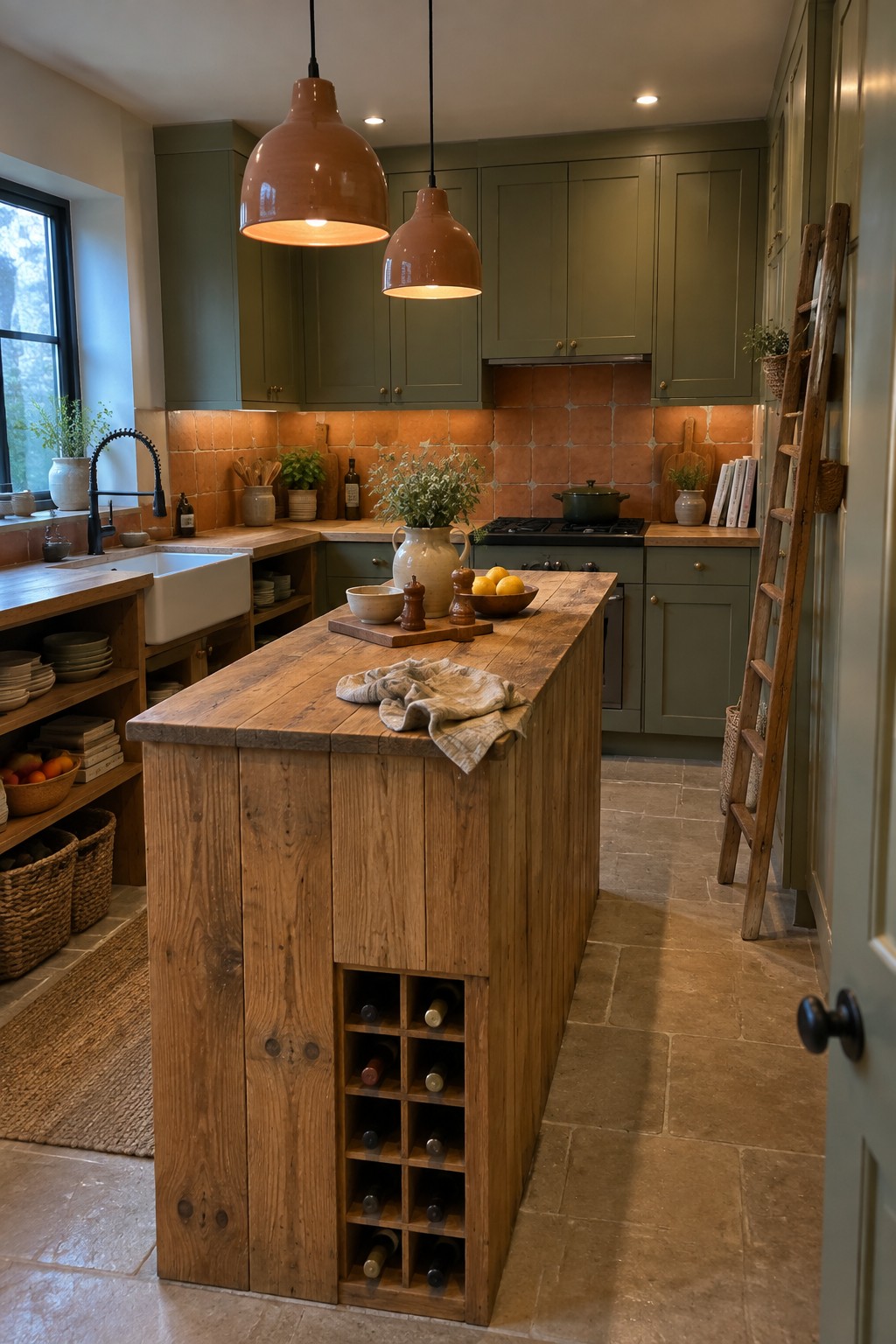
Terracotta tiles bring a warm, grounded feel to olive green cabinets that can otherwise read a little cool on their own. The clay color picks up the tones in the wood island and counters, and the whole mix feels balanced without needing a lot of extra color.
This works best in kitchens that already have some texture, like stone floors or open shelving. Use it behind the range or sink where the tiles get noticed, and keep the rest of the surfaces fairly plain so the backsplash does the work.
Terracotta Backsplash With Olive And Wood

Terracotta works especially well when it sits next to olive green and plain wood. The hexagon tiles bring a soft, earthy warmth that keeps the cooler olive tone from feeling flat, while the wood cabinets and pegboard add a simple, natural base that ties everything together. It feels balanced without trying too hard.
This approach suits kitchens that already lean toward natural materials and muted colors. Keep the wood light and the olive fairly solid so the terracotta can stand out without competing. Too many extra colors or busy patterns will weaken the effect.
Wood Islands on Terracotta Floors

A big wood island works especially well when the floor is terracotta. The two materials share a similar warmth, so the room feels settled instead of busy. The island also gives you a place to work and gather without needing a lot of extra furniture.
This setup suits older homes or any kitchen where you want the floor to stay simple and the island to do the main job. Keep the wood thick and unfinished so it ages with the terracotta instead of competing with it.
Olive Green Cabinets For A Simple Earthy Kitchen
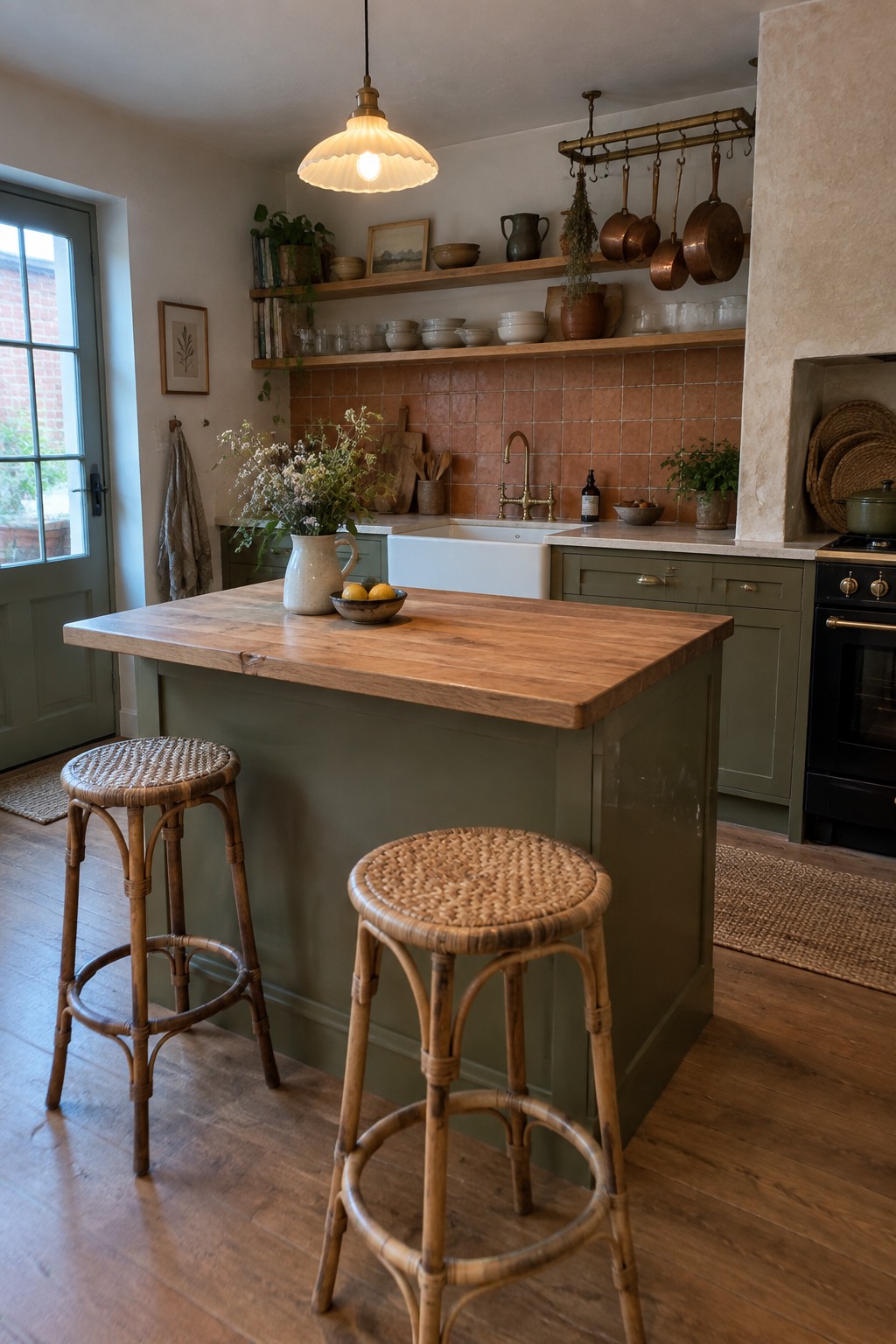
Olive green cabinetry gives a kitchen a soft base that works well with terracotta and natural wood. It feels grounded without making the space feel heavy, and it lets the warmer tones in the backsplash and countertops show up more clearly.
This color choice suits older homes or any kitchen where you want warmth without going too dark. Start with the island if you want to try it out, and keep the wood tone light so the green does not take over the room.
Natural Wood With Olive Green Countertops
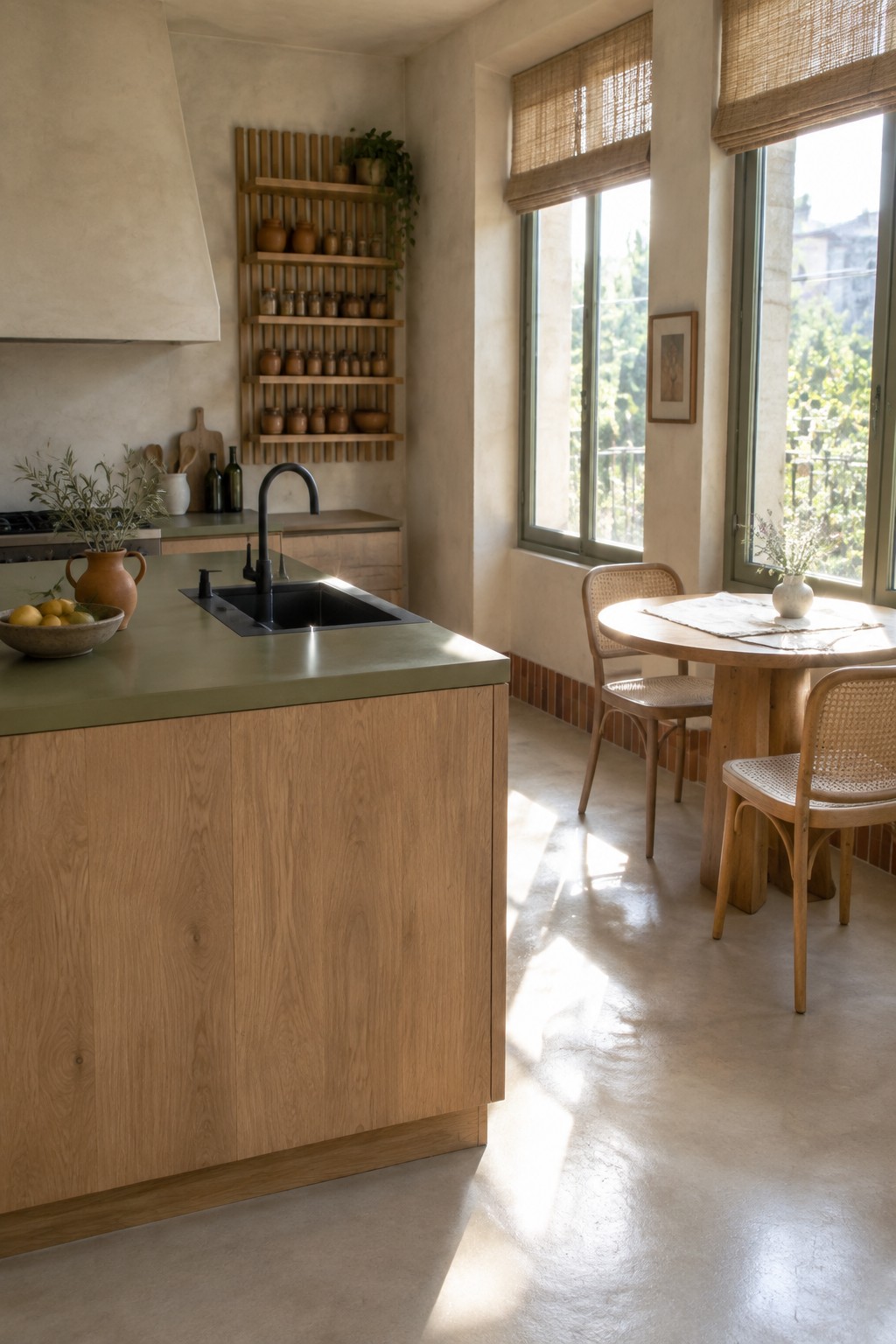
Natural wood cabinetry paired with an olive green countertop gives a kitchen a solid, grounded feel without trying too hard. The warm tone of the wood keeps things from looking too stark, while the green adds just enough color to feel fresh and connected to the outdoors. It works especially well when you want the space to feel calm and lived-in rather than styled.
This approach suits homes that already lean toward earthy materials and simple layouts. Keep the wood tones consistent across the island and any open shelving, then bring in terracotta through smaller pieces like jars or bowls so the green stays the main accent. Avoid overloading the counters if you want the wood and green to do the work.
A Wooden Kitchen Island

A big wooden island often becomes the most useful piece in an earthy kitchen. It brings in natural texture, gives a solid workspace, and helps tie together terracotta floors with olive cabinetry without needing extra color or pattern.
This setup works best in homes that already have warm wood tones and simple materials. Keep the island proportions generous but allow enough room to move around it, especially if the kitchen sees daily use from several people.
Terracotta Backsplashes In Olive Kitchens
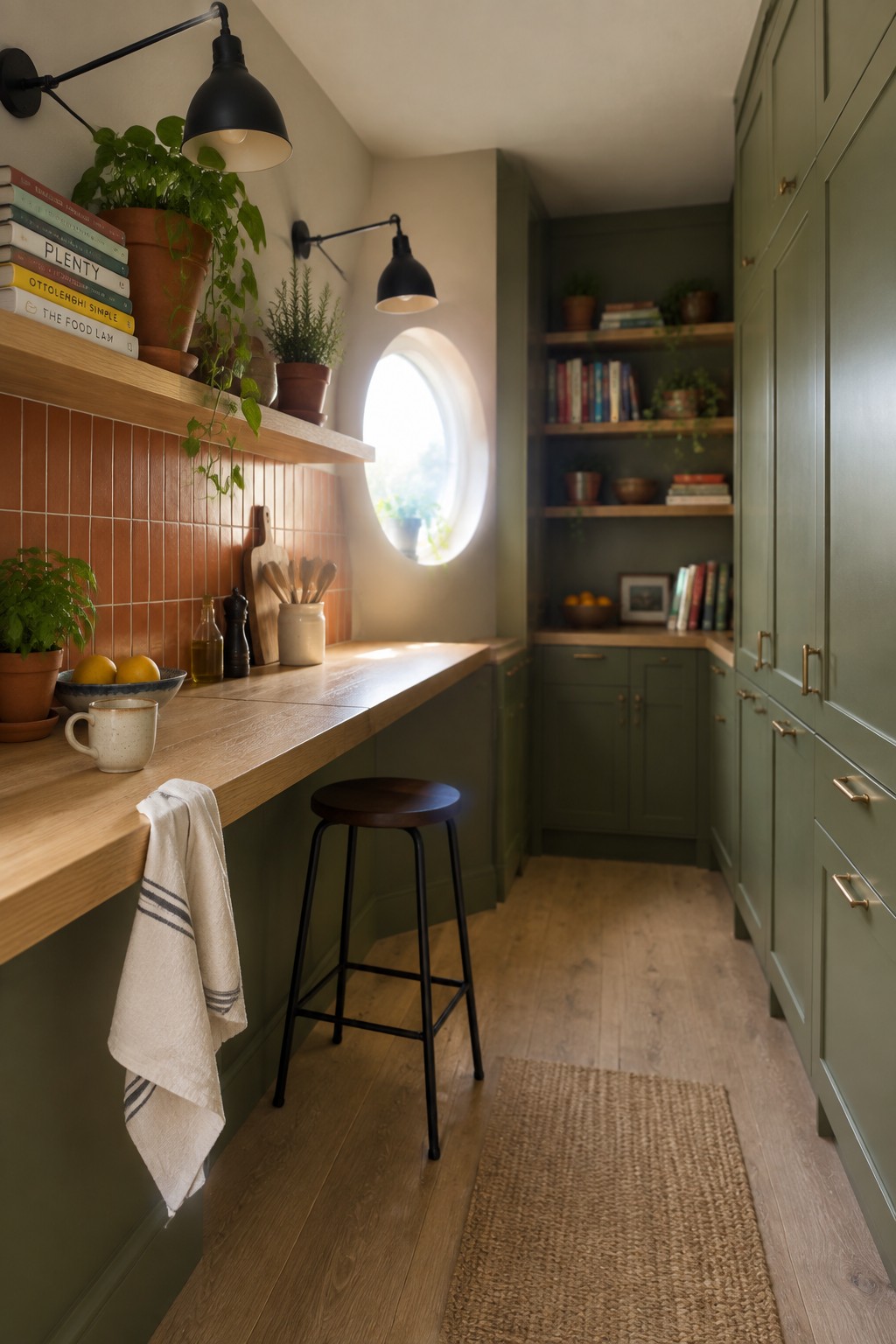
Terracotta tiles bring a natural warmth that balances the deeper tones of olive cabinetry and the lighter look of wood counters. The color contrast keeps the space from feeling too heavy while still grounding it in earthy materials that hold up well over time.
This approach works best in smaller or galley-style kitchens where you want texture without crowding the walls. Stick with a simple tile layout and let the wood and green tones carry the rest of the palette.
Terracotta Floors With Olive Cabinets
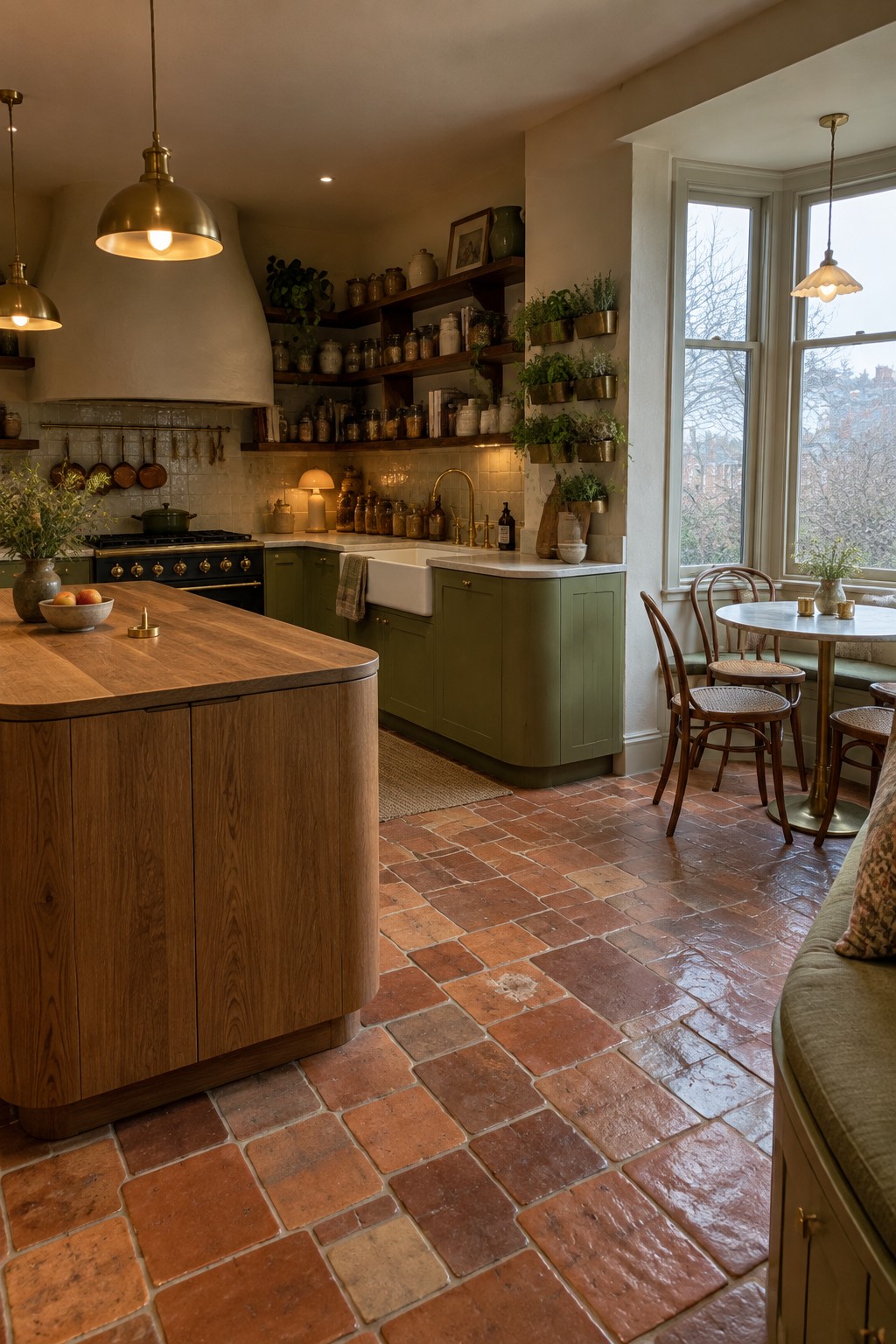
Terracotta flooring gives a kitchen a solid, grounded feel that works especially well with olive green cabinetry. The warm clay tones keep the green from feeling too cool or flat, and the natural wood elements like an island top pull the whole palette together without extra effort.
This combination suits older homes or any space that needs more warmth underfoot. The tiles handle spills and traffic easily, though they do show wear over time, which many people actually like. Keep the rest of the room simple so the floor stays the main texture.
Natural Wood Islands with Olive Bases

A large central island built from solid wood gives an earthy kitchen real presence without trying too hard. The natural oak top brings warmth and texture, while the olive green base anchors everything and keeps the scale feeling balanced rather than bulky.
This approach works especially well in kitchens that already use terracotta and wood tones, since the island then ties the palette together instead of competing with it. It suits homes where the kitchen serves as the main gathering spot, because the island naturally becomes both workspace and seating area.
Terracotta Tiles On A Kitchen Counter

Terracotta tiles bring a simple, grounded texture to a kitchen counter that painted surfaces or stone often lack. The material feels at home with natural wood and soft olive cabinetry, and the slight variations in the tiles keep the surface from looking too uniform.
This works best in kitchens that already lean toward natural materials and do not mind a bit of visible wear over time. Keep the rest of the surfaces fairly plain so the tile does not compete, and make sure the base is sturdy since terracotta needs solid support.
Terracotta Floors In Earthy Kitchens

Terracotta tiles give a kitchen floor real warmth without any extra effort. The color sits nicely with olive cabinets and wood details, and the whole room feels settled rather than styled. It is a simple way to bring in that natural look the rest of the palette is aiming for.
This flooring choice suits older homes or new builds that lean rustic or Mediterranean. It handles everyday use well, though sealing the tiles helps with kitchen spills. Keep the rest of the surfaces fairly simple so the floor can do its job.
A Substantial Wood Island For The Kitchen
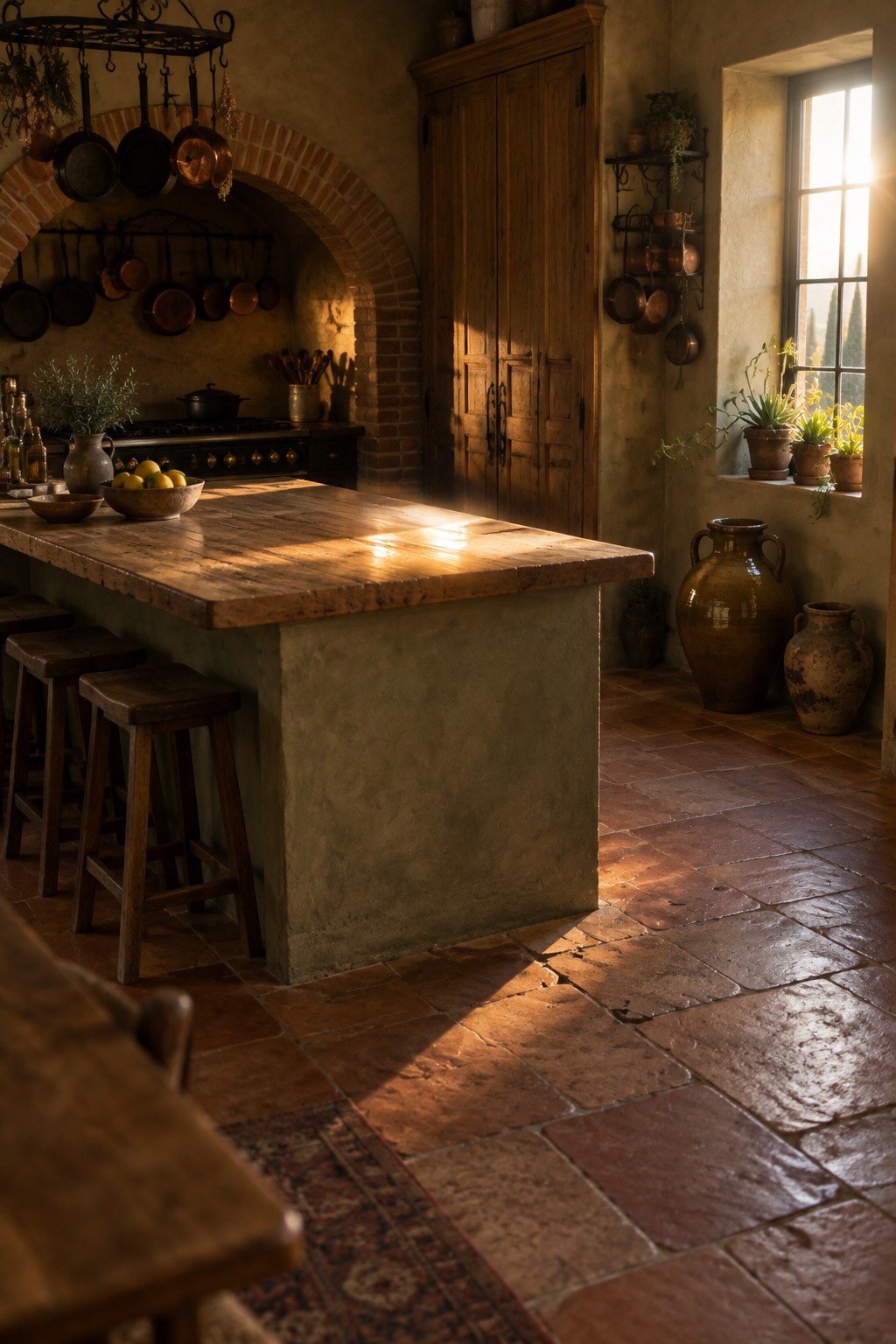
A big, thick wood island gives an earthy kitchen both a practical workspace and a natural focal point. The solid top and simple base keep the room feeling grounded while the material fits right in with terracotta floors and other wood tones.
This works best in homes that already lean rustic or Mediterranean. Keep the surrounding cabinets straightforward so the island can stand out, and make sure there is enough room around it for stools and easy movement.
Patterned Terracotta Backsplashes
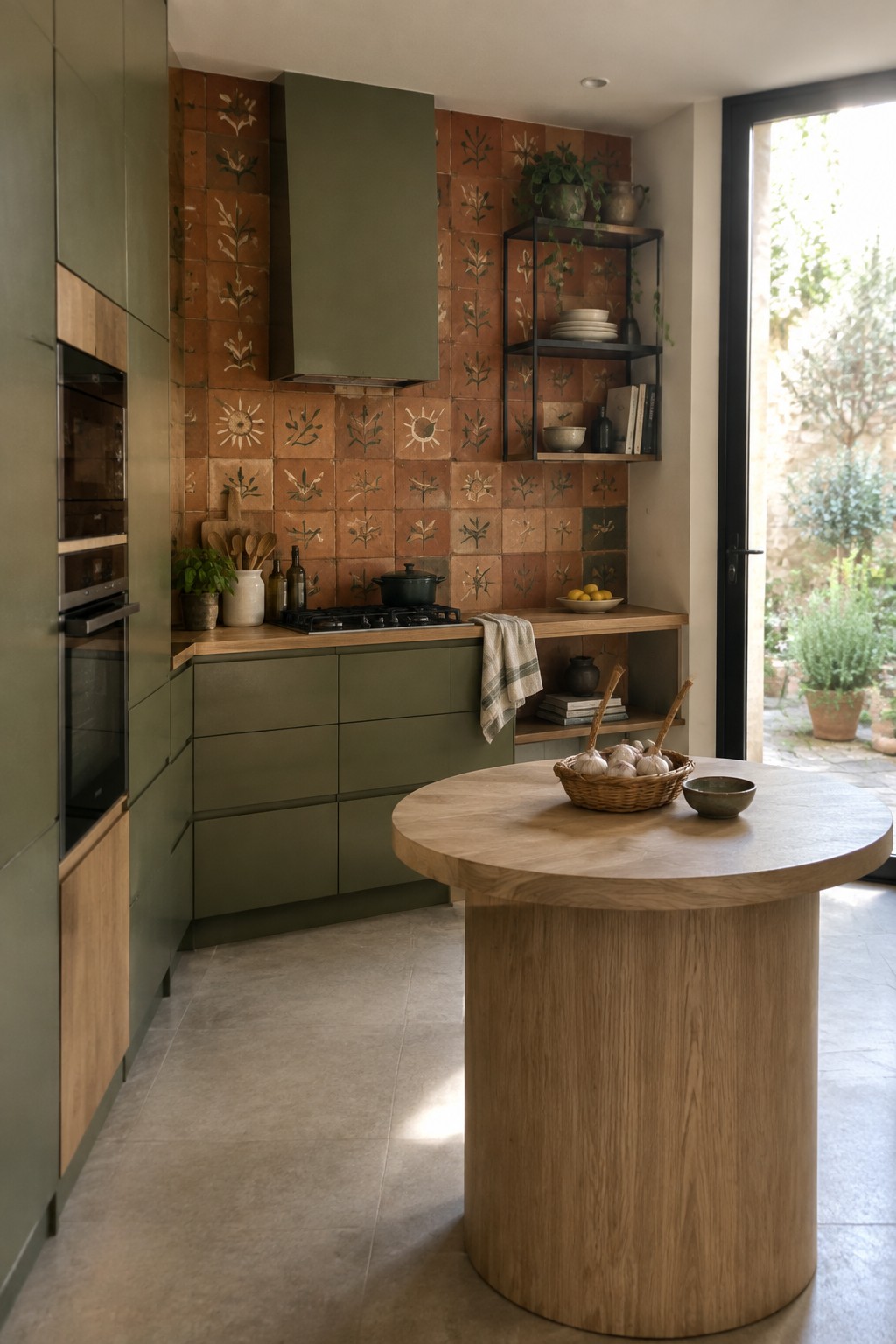
Many kitchens feel more grounded when the backsplash uses patterned terracotta tiles instead of plain ones. The mix of sun, leaf, and geometric designs adds texture and color without needing extra decor on every surface.
This approach works best in homes that already have wood counters or islands and solid cabinet colors like olive or sage. Keep the rest of the room simple so the tiles stay the main point of interest rather than competing with too many other patterns.
Terracotta Backsplashes With Olive Cabinets
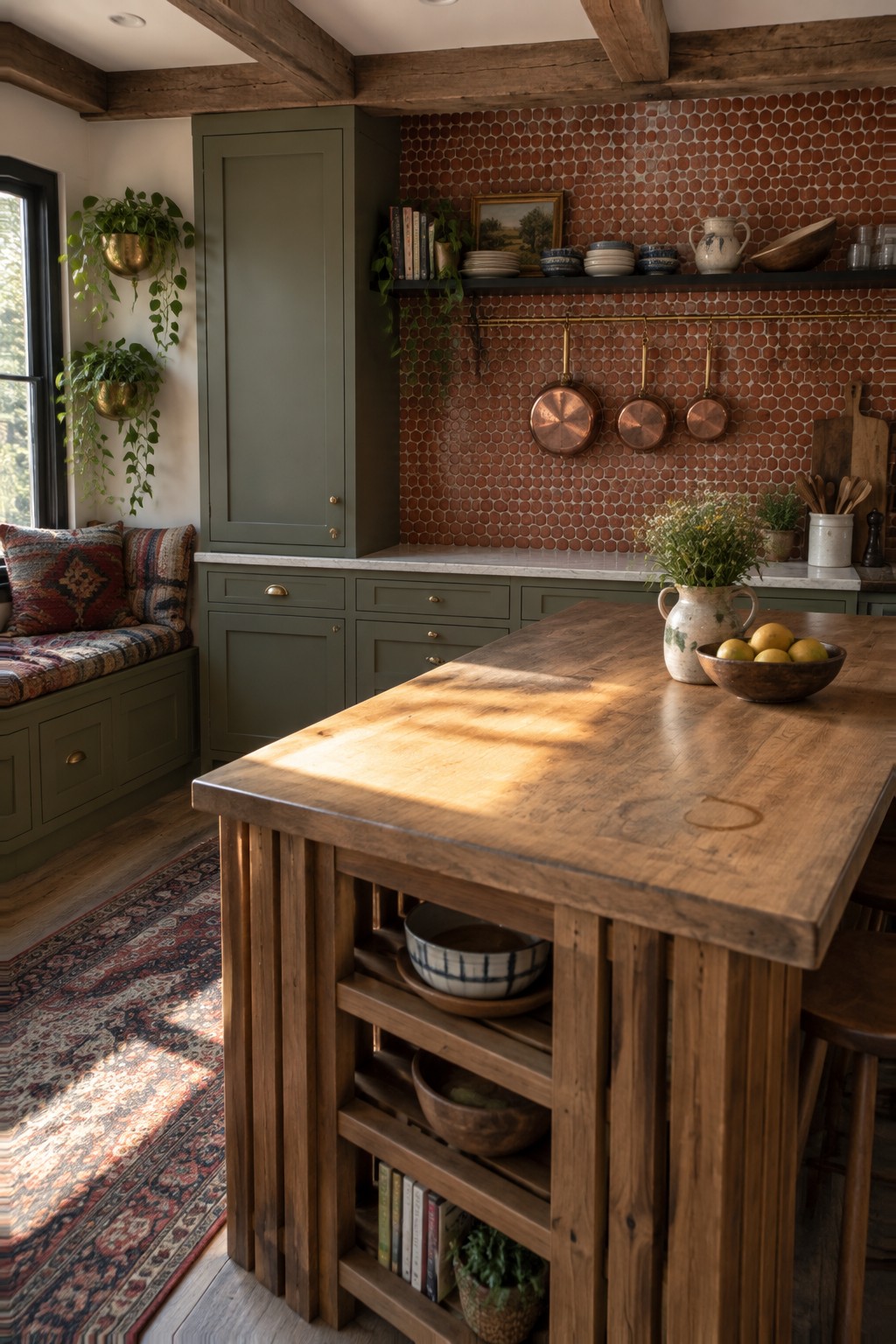
A terracotta backsplash adds real warmth to a kitchen that already uses olive cabinets and wood. The small mosaic tiles bring texture and a soft reddish tone that keeps the green from feeling too heavy or flat. It works especially well when the rest of the room stays simple.
This approach suits homes with a bit of age or a more casual style. Keep the tile running only on the main wall so it does not take over, and let the wood island and open shelving carry some of the weight.
Terracotta Tiles On The Floor And Backsplash
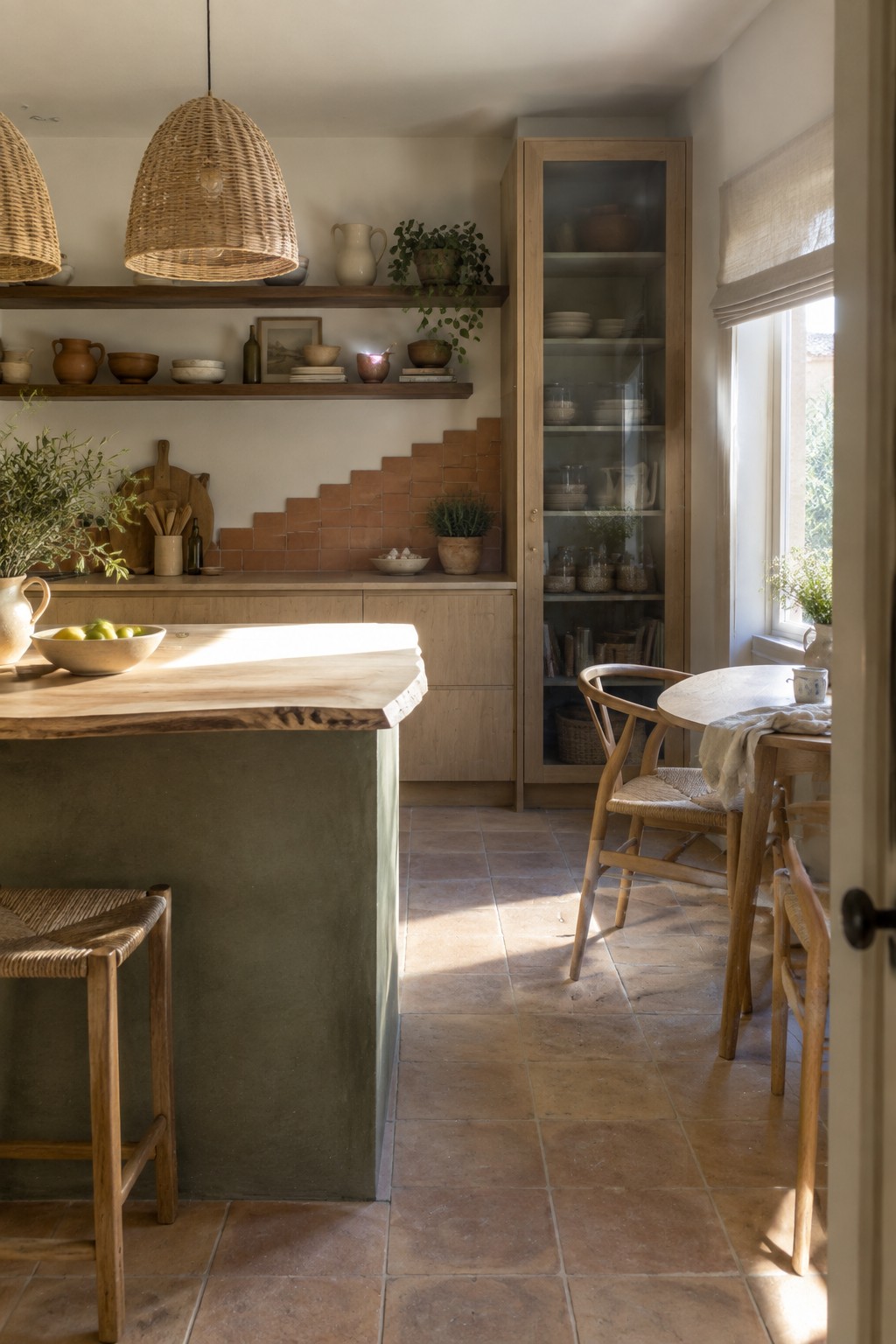
Terracotta tiles give a kitchen a warm, grounded feel that works especially well with olive tones and natural wood. Running the same tile from the floor up onto the wall helps tie everything together without needing extra color or pattern.
This works best in homes that already lean toward simple, natural materials. Keep the layout straightforward so the tile can do the work, and avoid overcrowding the space with too many other textures.
Terracotta Tiled Walls For Kitchen Herbs
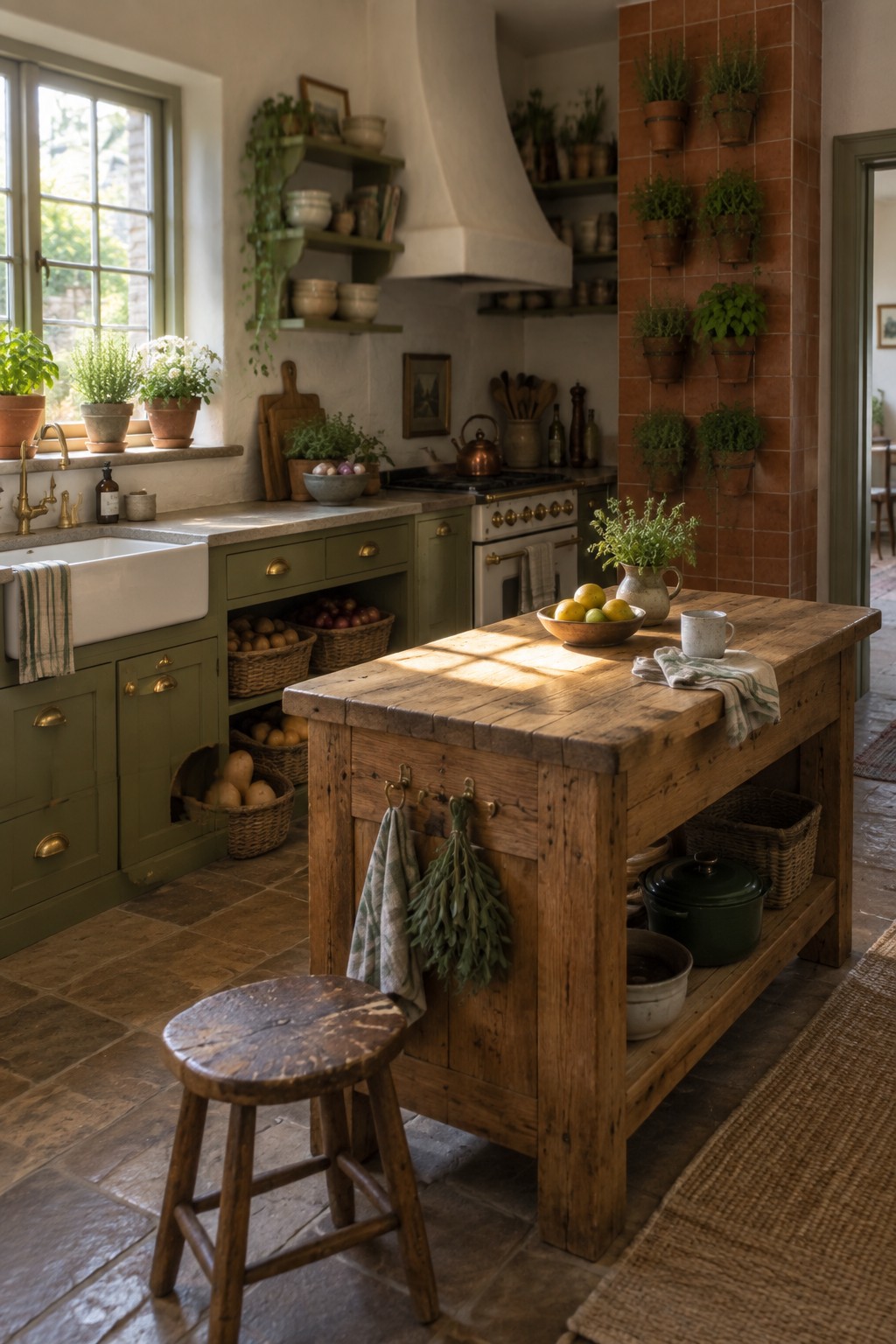
Terracotta tiles bring a natural warmth to a kitchen that paint alone cannot match. When used on a feature wall and paired with mounted pots of herbs, the surface adds both color and a practical spot for growing fresh ingredients right where you cook.
This approach works best in spaces with plenty of natural light and a simple material palette like olive cabinets and wood. Keep the rest of the room fairly plain so the wall can stand out without feeling busy.
Frequently Asked Questions
Q: How do I keep terracotta from looking out of place next to my existing wood cabinets?
A: Start by adding terracotta in smaller doses like open shelving or a backsplash section. This lets the wood stay the main feature while the clay adds warmth without competing.
Q: Will olive paint hold up around a stove where grease builds up fast?
A: Use a satin finish on the walls and wipe them down weekly with a mild soap mix. The color stays rich that way and still feels soft against the wood tones.
Q: Can I put natural wood near a sink without it warping over time?
A: Seal the wood well on all sides before installing it. Then keep a tray or mat right by the sink so water does not sit directly on the surface.
