


I have found that industrial kitchens gain their real character from how the materials interact with daily routines rather than from any single striking surface.
When metal frames meet concrete worktops and wood shelving the space tends to feel both durable and livable only if the layout keeps the main work triangle clear.
Small details decide whether the room stays practical.
I keep noticing that wood brings needed warmth near the stove where concrete can feel cold under constant use and metal can echo too loudly during busy mornings.
A couple of these combinations look worth trying at home to see how they hold up once meals are made every day.
Wood And Concrete On The Kitchen Island

A thick wood base topped with concrete gives an industrial kitchen real staying power. The wood adds warmth and a bit of texture while the concrete keeps things simple and tough enough for daily use. This mix works especially well when the rest of the room already has brick walls and metal details.
It suits larger kitchens where the island serves as the main workspace. Try it if your space leans heavy on hard surfaces, but keep the wood substantial so the concrete does not feel like it is floating. Avoid this look in small rooms where the mass of the island could crowd the floor.
Concrete Countertops With Dark Cabinets

Concrete works well in industrial kitchens because it feels solid and low maintenance while still looking raw. Here the counters and backsplash are the same material, which keeps the whole run simple and ties the workspace together without extra trim or edges.
This setup suits homes that already lean modern or slightly unfinished, since the weight of the concrete needs strong cabinet framing underneath. Dark cabinets help ground the look so the lighter concrete does not feel too stark against the wood shelves above.
Concrete And Wood Kitchen Islands
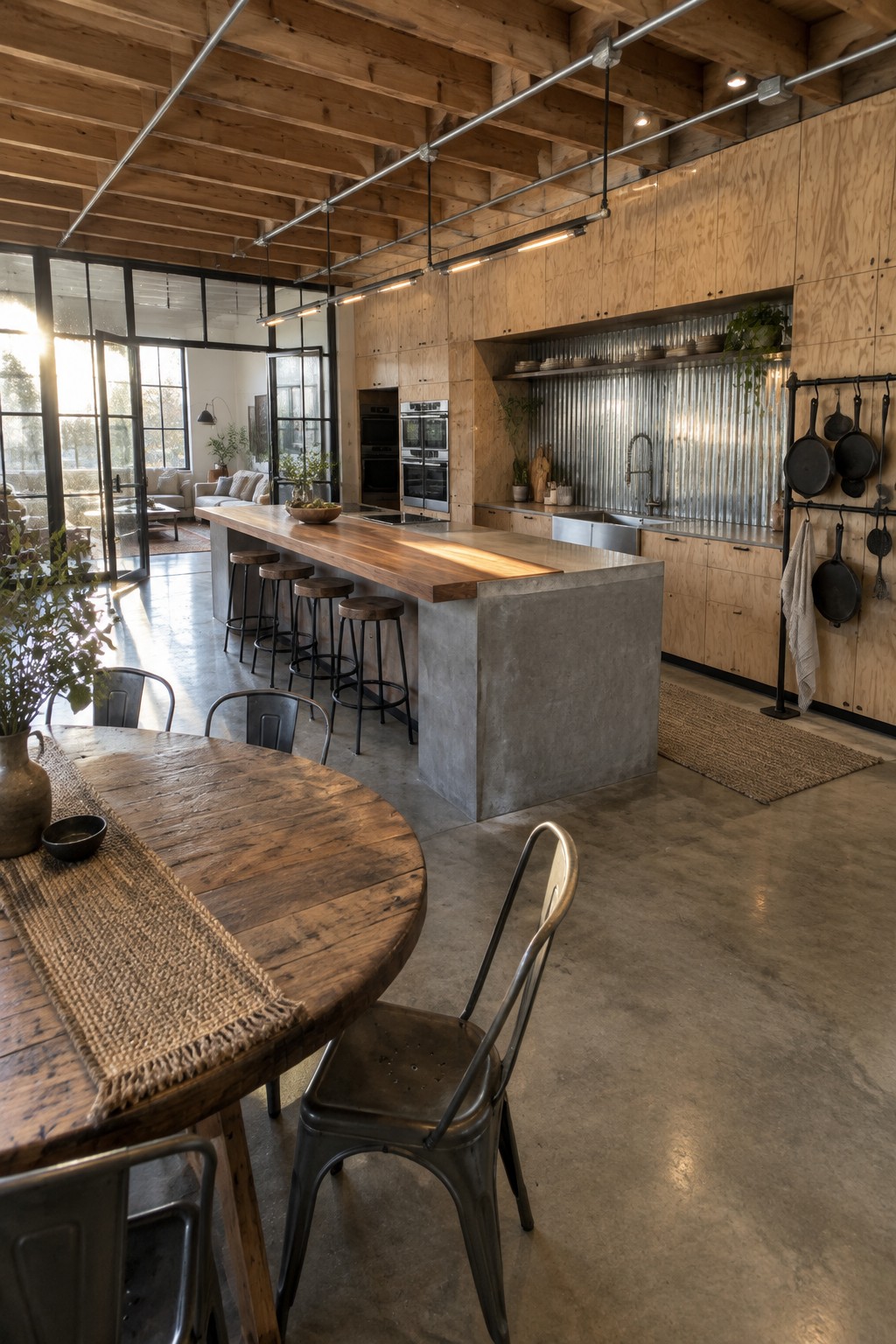
A concrete base with a thick wood top gives the island real presence without making the kitchen feel cold. The concrete handles heavy use and adds that industrial edge, while the wood brings warmth and a natural surface for prepping or eating.
This setup works well in open layouts where the island becomes the center of activity. It suits homes that already use metal accents and plywood walls, as long as the wood top stays substantial enough to balance the concrete below.
Stainless Steel Cabinetry
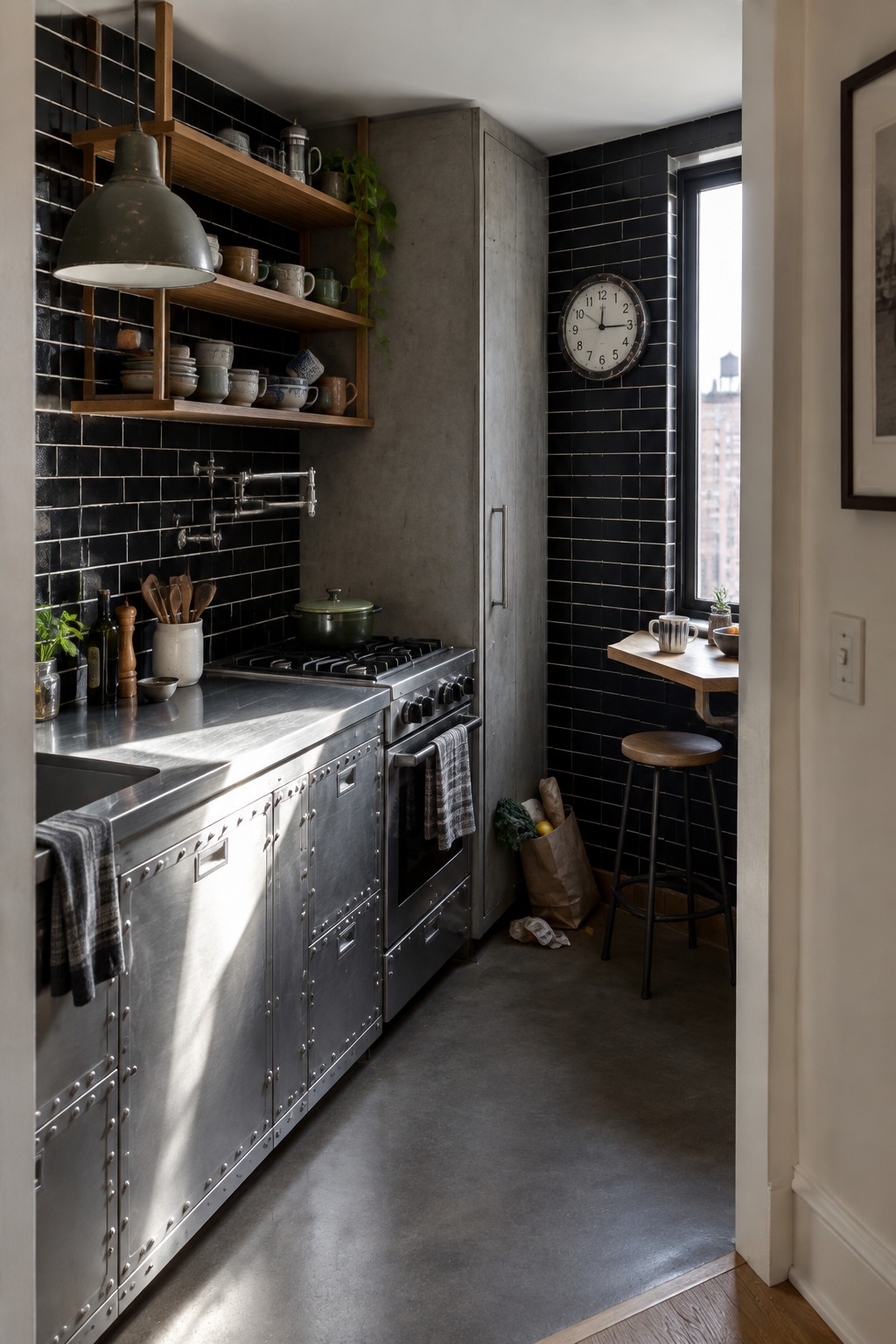
Stainless steel cabinets give an industrial kitchen a tough, practical base that handles heavy use without showing wear. The metal pairs naturally with concrete walls and dark tile to keep the whole space feeling grounded and simple.
This choice works best in smaller or urban kitchens where you need durability and easy cleaning. Use open wood shelves above to add a bit of warmth without crowding the look.
Concrete Islands Hold Industrial Kitchens Together
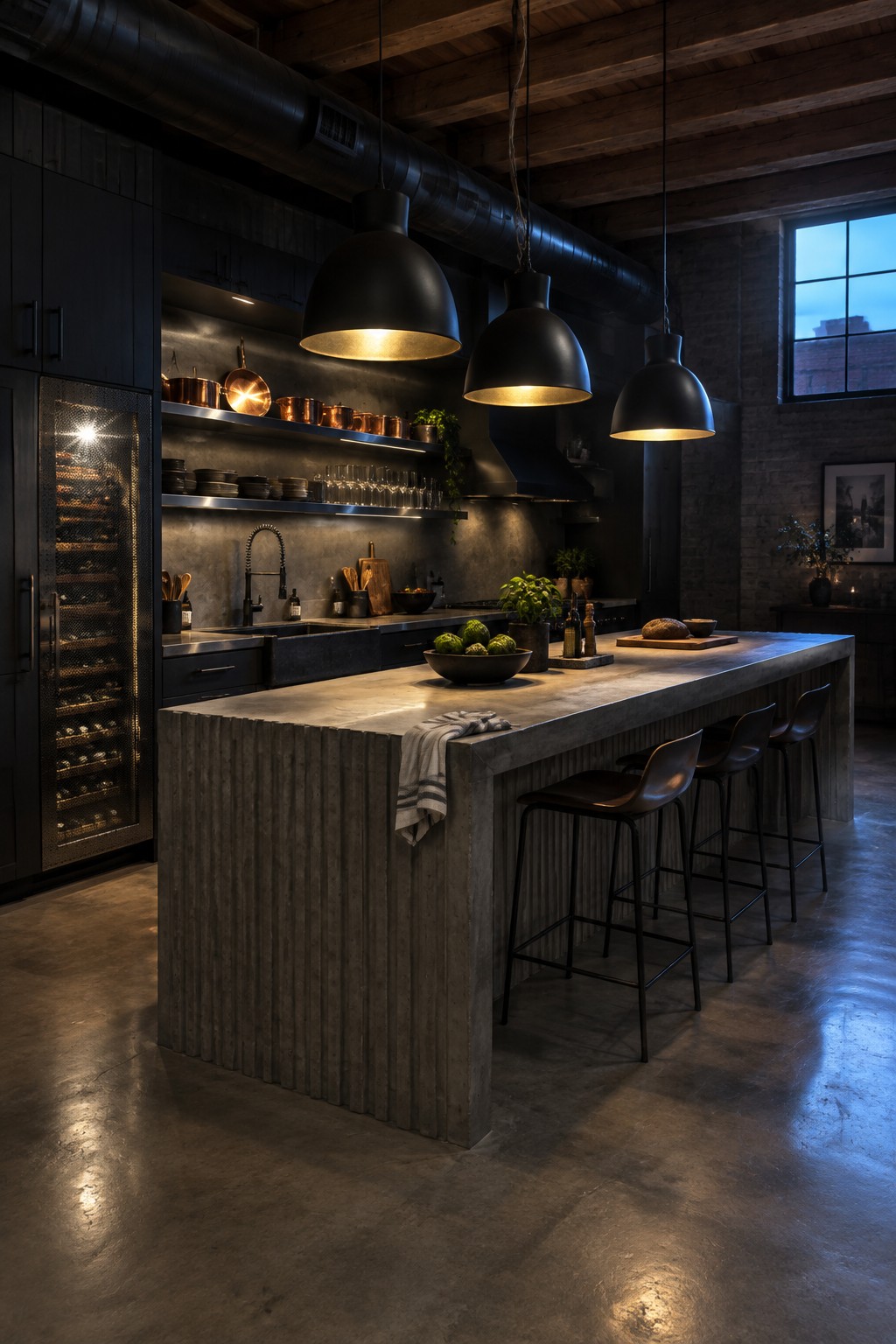
A concrete island gives an industrial kitchen real weight and presence. The material handles daily use without showing wear, and the textured sides add just enough detail without extra trim or finishes.
This layout works best in open spaces where the island can serve as both a work surface and a spot for stools. Pair it with metal shelving and simple wood tones so the concrete stays the main focus instead of fighting other surfaces.
Pair Concrete With Wood Cabinetry
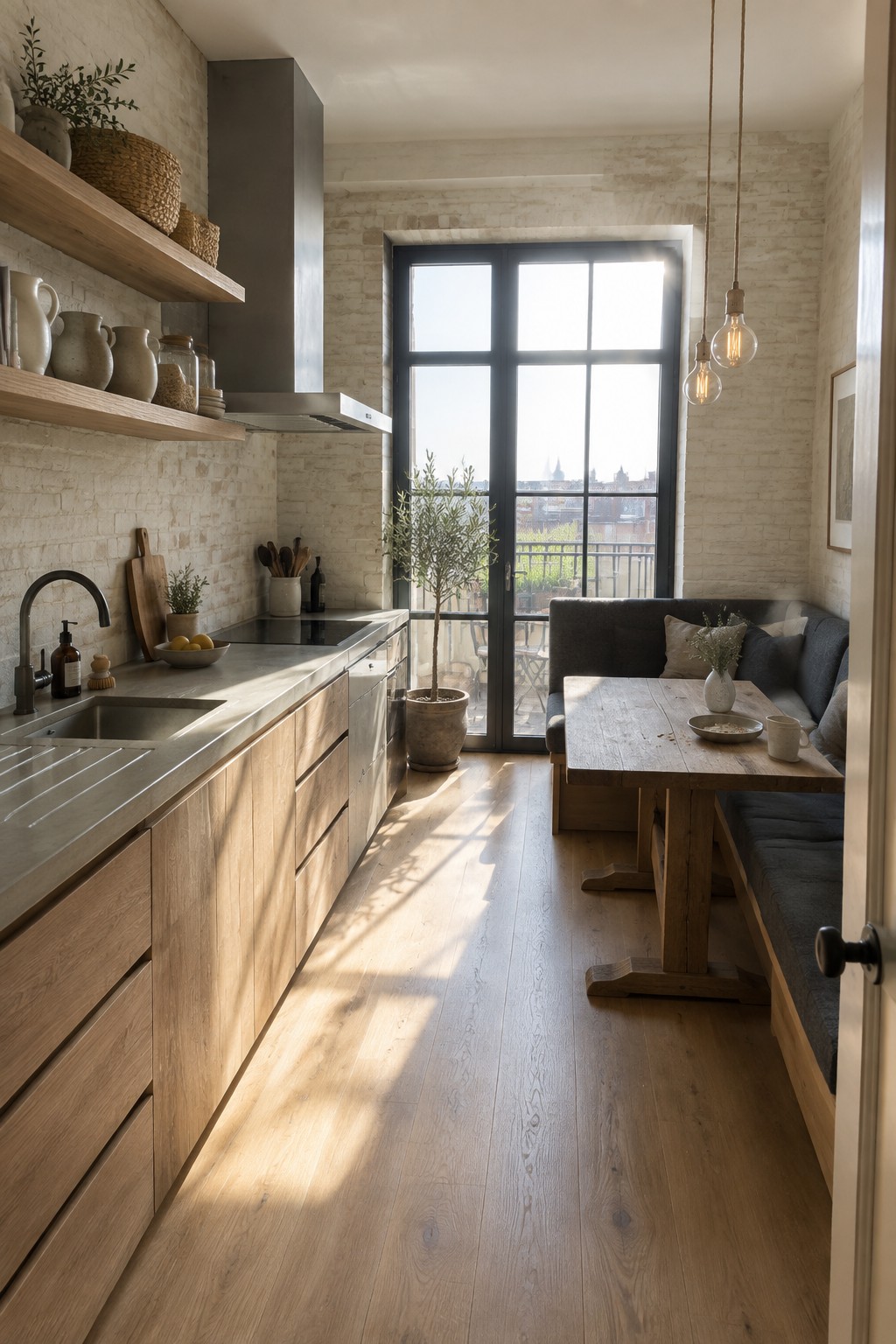
Many kitchens feel more welcoming when concrete counters sit alongside wood cabinetry. The wood adds natural warmth that keeps the metal and concrete from taking over, especially in a narrow layout where surfaces can start to feel heavy.
This mix works well in older homes or apartments that already have brick walls or similar textures. Stick to lighter wood tones and keep the metal accents simple so the space stays practical without turning too stark.
Mix Wood With Metal And Concrete

Many industrial kitchens lean too hard on metal and concrete and end up feeling cold. Wood cabinets cut through that chill and give the room a warmer, more settled look without losing the industrial edge.
This mix works best in homes that already have some natural light and open space. Keep the metal elements focused on the range hood, island top, and hardware, then let the wood handle the bulk of the cabinetry so the room stays practical and comfortable to use every day.
Wood Tables Balance Metal in Industrial Kitchens
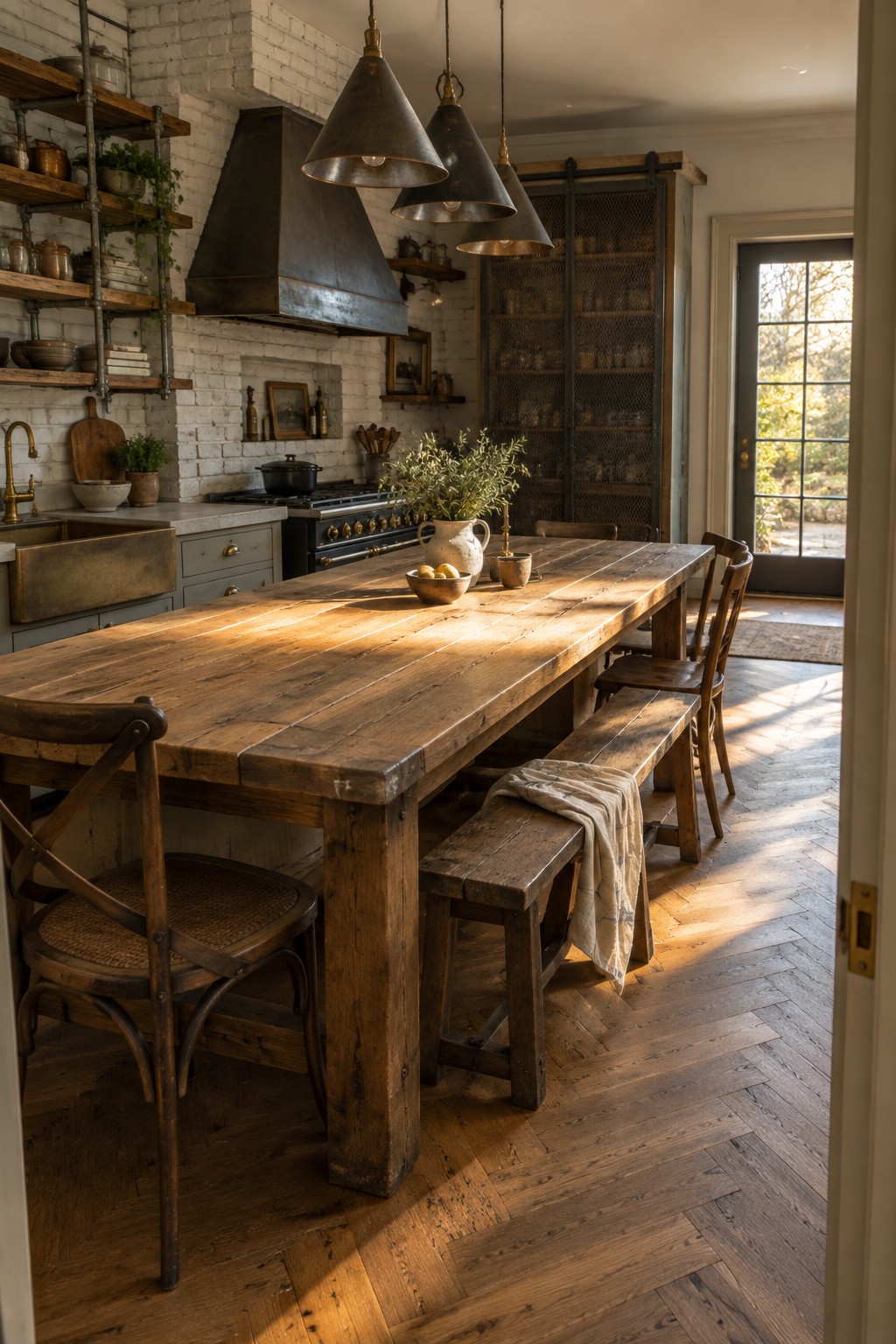
A long wooden table can soften the harder edges of an industrial kitchen without taking away from the metal and concrete. The warm grain stands out against dark pendants and open shelving, giving the room a place to gather that still feels tied to the overall style.
This works best in open layouts where the kitchen flows into dining space. Keep the table simple and sturdy so it holds up to daily use, and let the metal lights and shelves carry the bolder industrial details.
Balance Metal And Concrete With Wood

Many industrial kitchens lean heavy on metal and concrete, which can start to feel cold and flat after a while. Adding wood cabinets or shelves brings in warmth and texture that keeps the space from turning stark. The wood softens the harder surfaces without losing the industrial edge.
This approach works best in homes that already have exposed concrete or steel details. Keep the wood tones medium to dark so they stand out against the cooler materials. Too much light wood can dilute the look, while a few solid wood pieces are usually enough to make the room feel livable.
Mixing Concrete, Wood, And Metal

This kitchen makes a strong case for using all three materials in the same space. The concrete counters bring a cool, durable surface while the wood cabinets keep things from feeling too stark. Metal shows up on the range hood and open shelving, tying the whole look together without needing extra decoration.
It works especially well in narrow or galley kitchens where you want texture but not clutter. Keep the wood tones warm and let the concrete stay simple. The metal pieces should feel functional rather than flashy. This combination suits older homes getting updated or new builds that need some weight and character.
A Rolling Stainless Steel Table For Flexible Prep

A big metal table on wheels gives you a solid workspace that you can move when you need to. It works especially well in kitchens that already use concrete and wood, since the metal adds a clean, tough surface without feeling heavy or permanent.
This setup suits homes where the kitchen sees a lot of daily cooking and you want to rearrange things now and then. Just check that your floor can handle the weight and that the table height lines up with your other counters so you are not bending over all the time.
Pair Wood With Concrete And Metal
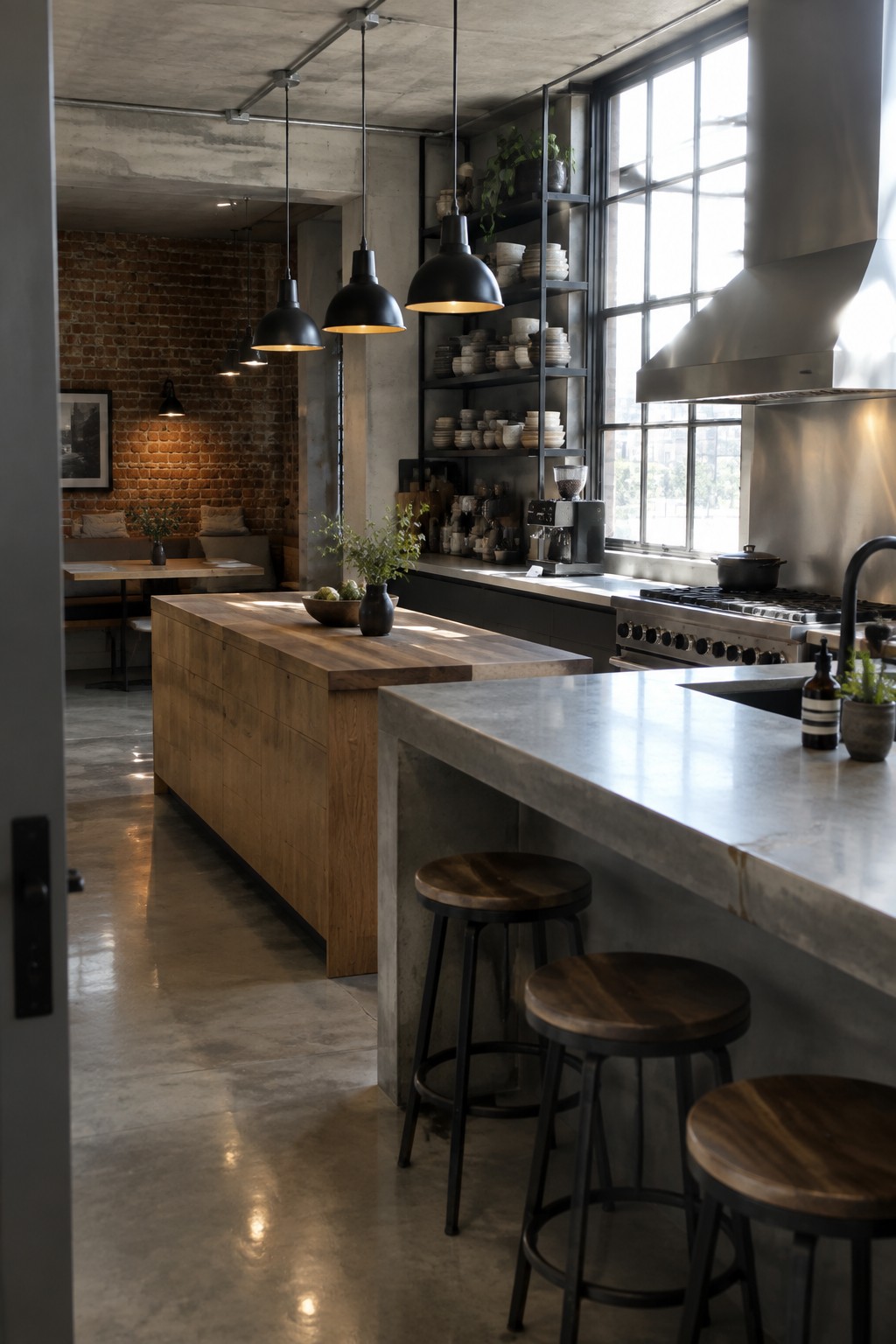
Many industrial kitchens lean hard on metal and concrete, which can make them feel a bit stark. Bringing in wood changes that without softening the overall look too much. The mix keeps the bold edge while adding just enough warmth to make the space feel usable day to day.
This approach works best in open kitchens where you can let the materials sit side by side without extra decoration. A wooden island against concrete counters is one simple way to try it. Just keep the wood tones natural so the contrast stays clear.
Build A Concrete Bench Into Your Kitchen
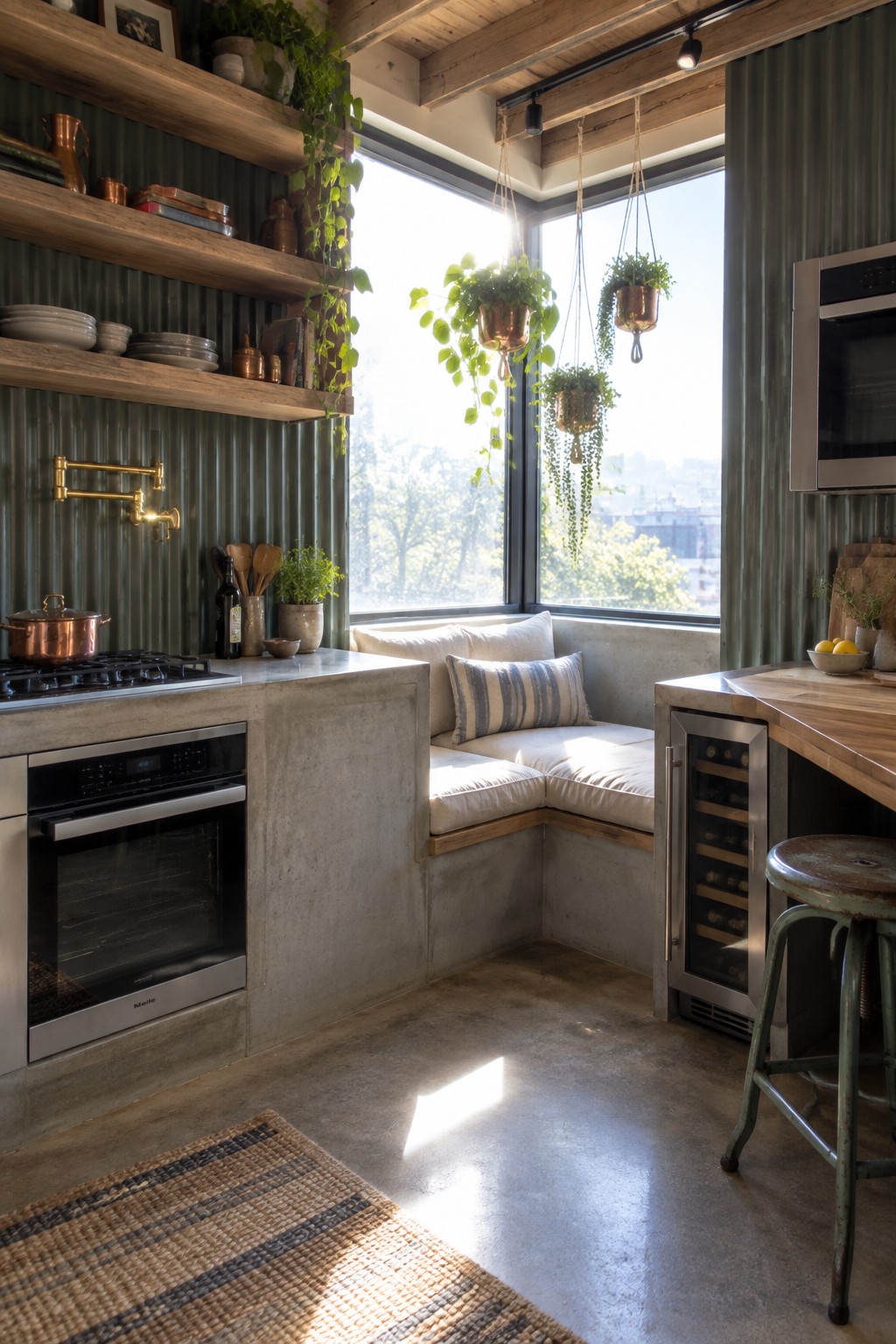
Concrete bench seating brings a solid, practical feel to an industrial kitchen without crowding the space. It turns a corner or window area into something useful, whether for quick meals or just sitting with a cup of coffee. The material holds up well to daily wear and keeps the room from feeling too finished or soft.
This works best in homes that already use raw materials like metal and wood. Keep the bench low and simple, then add cushions for comfort. It pairs easily with open shelving above and a nearby counter, so the whole area stays functional without extra furniture.
Concrete Islands For Everyday Kitchen Work
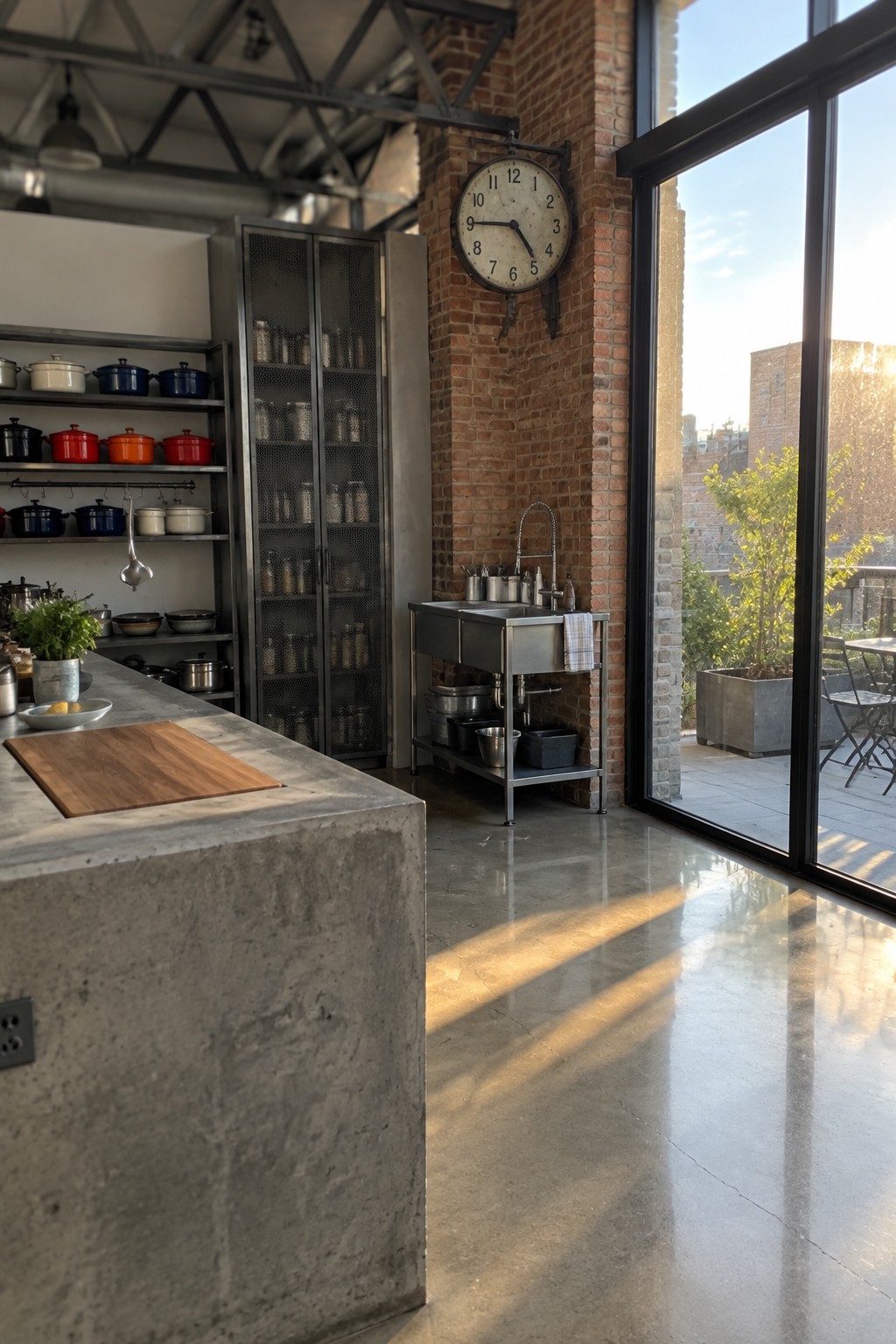
A thick concrete island gives an industrial kitchen the sturdy surface it needs for real cooking. It takes daily chopping, hot pans, and spills without fuss, and the material blends naturally with metal storage and brick walls around it.
This choice suits homes with open layouts and a preference for low-maintenance finishes. Keep surrounding elements simple so the island stays practical rather than decorative, and add a wood board for softer prep tasks when needed.
Mixing Metal Cabinets With Concrete And Wood
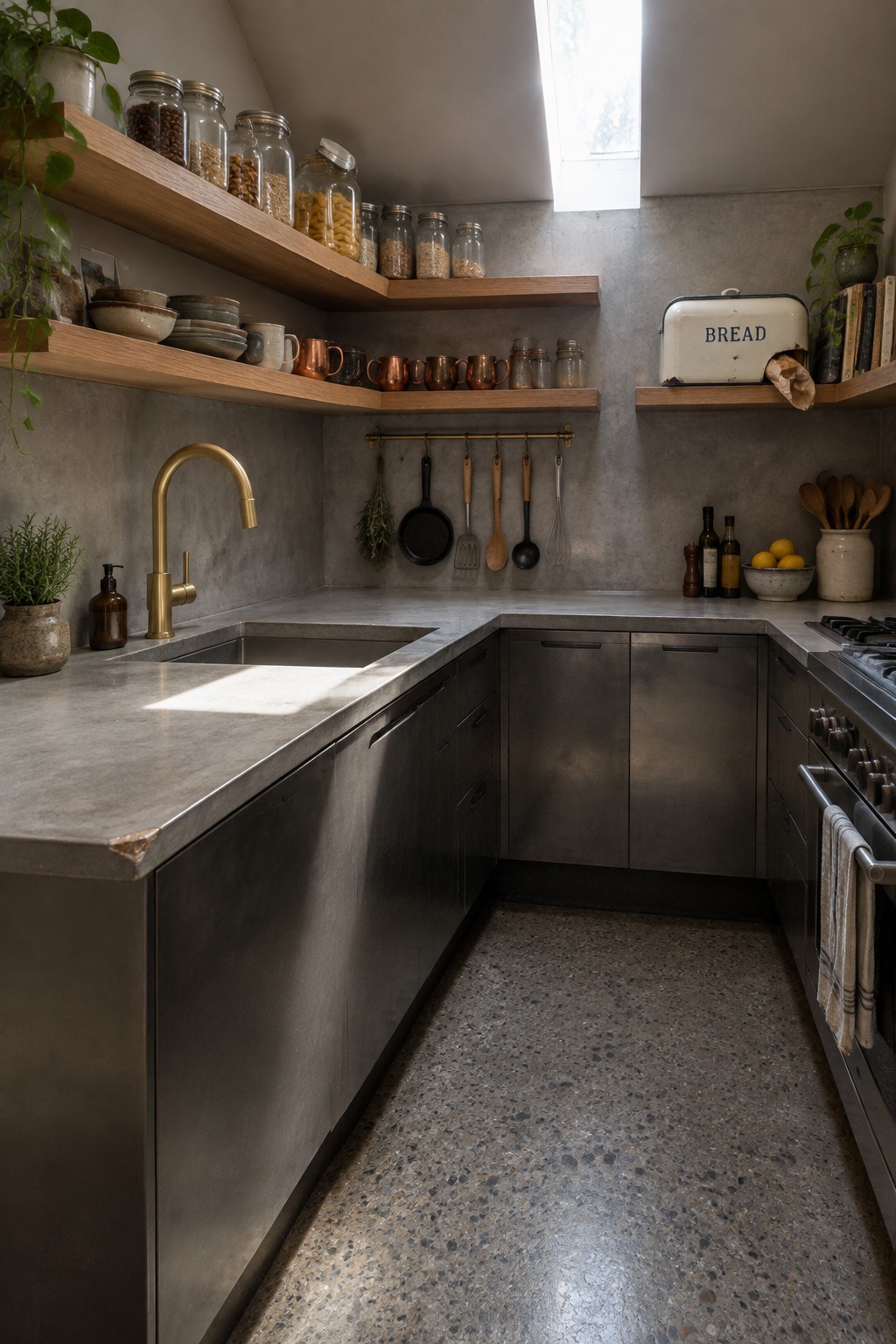
Many industrial kitchens gain their edge from stainless steel cabinetry paired with concrete counters and floors. The wood shelves add just enough warmth to keep the space from feeling too cold or stark while still letting the metal and concrete do the heavy work.
This approach suits homes with open layouts or raw architectural details where the materials can show off their textures. Stick to matte concrete finishes and simple wood tones so the metal remains the main focal point rather than competing with too many colors or patterns.
Concrete Islands With Wood Extensions
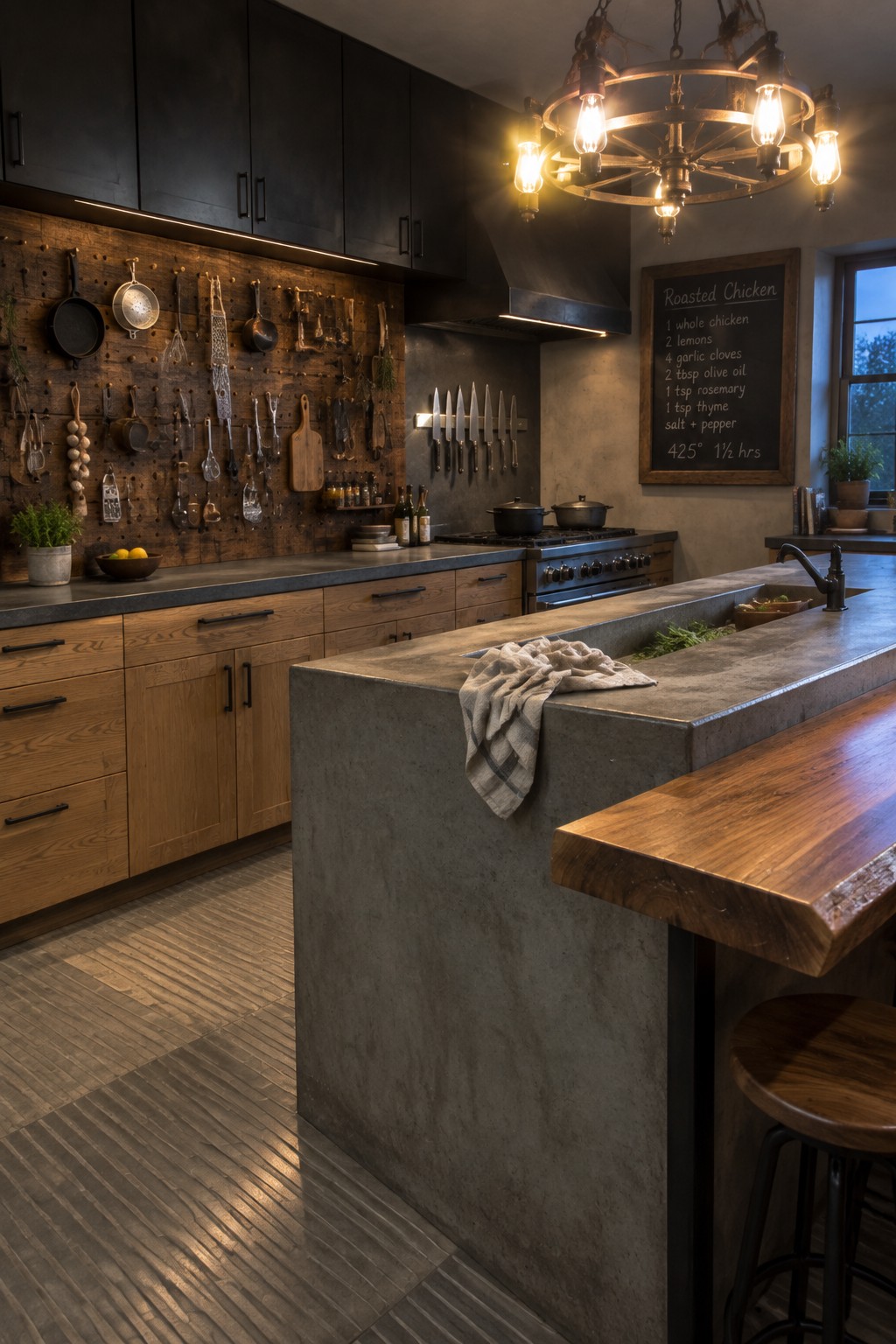
A concrete island gives an industrial kitchen real presence without needing a lot of extra detail. The heavy material holds its own against metal range hoods and dark cabinetry, yet it still feels workable for daily use.
Add a wood bar extension on one side and the island becomes a natural spot for seating or casual meals. This setup works especially well in open layouts where the kitchen needs to connect with living areas. Keep the wood tone warm so the concrete does not feel too cold on its own.
Mix Stainless Steel With Concrete And Wood
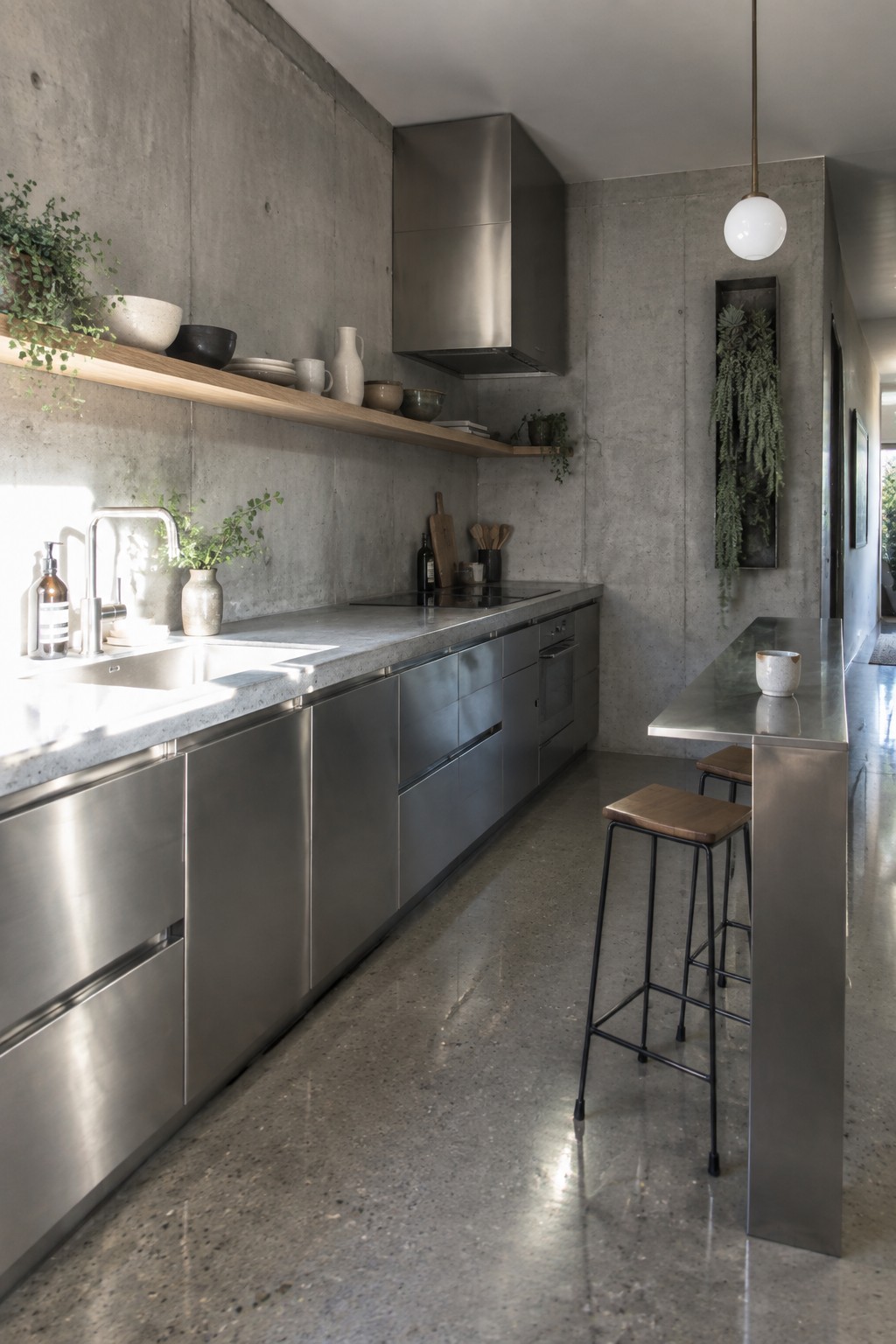
This mix gives an industrial kitchen real staying power. Stainless steel handles the heavy work and cleans up fast, while concrete adds weight and texture that wood alone could never carry. The wood shelf and stools keep the whole space from feeling too stark.
It suits homes with open layouts or existing concrete walls. Keep the wood tones simple and limit them to one or two spots so the steel and concrete stay in charge.
Extend Your Concrete Island With a Wood Table

One useful move in industrial kitchens is to attach a thick wood table directly to the end of a concrete island. It turns the island into a true work and gathering spot without adding extra furniture that might crowd the room.
This setup works well in open floor plans where cooking and dining overlap. Keep the wood surface a bit lower than the concrete so the two materials stay distinct but still feel connected.
Corrugated Metal Cabinets With Concrete Counters

Corrugated metal on base cabinets gives an industrial kitchen real texture and a practical edge. The material holds up well to daily use and adds that raw, slightly imperfect look many people want in this style.
It works best in spaces that already lean modern or utilitarian. Pair it with concrete counters for a clean contrast, then bring in wood on shelves or an island so the room does not feel too stark.
Add Corrugated Metal Walls To An Industrial Kitchen

Corrugated metal brings a raw texture that works well in kitchens where you want some edge without going too cold. Paired with concrete counters and wood cabinetry, it creates contrast that still feels grounded and practical rather than overly styled.
This approach suits older buildings or homes with open layouts where the kitchen is part of the main living space. Keep the metal to one wall or backsplash area so it does not overwhelm the room, and let the wood and concrete handle the rest of the surfaces.
Mixing Metal Concrete And Wood

Many kitchens pull off an industrial look by letting metal, concrete, and wood sit next to each other without fighting. The stainless steel open shelves and sink give a tough, practical surface, while the wood fronts and drawer fronts keep the concrete from feeling too stark or heavy.
This mix works best in homes that need durability but still want some warmth underfoot and on the hands. Use it where light can hit the different textures, and let the wood stay simple so the harder materials do not take over the whole room.
Blend Metal Cabinets with Concrete and Wood
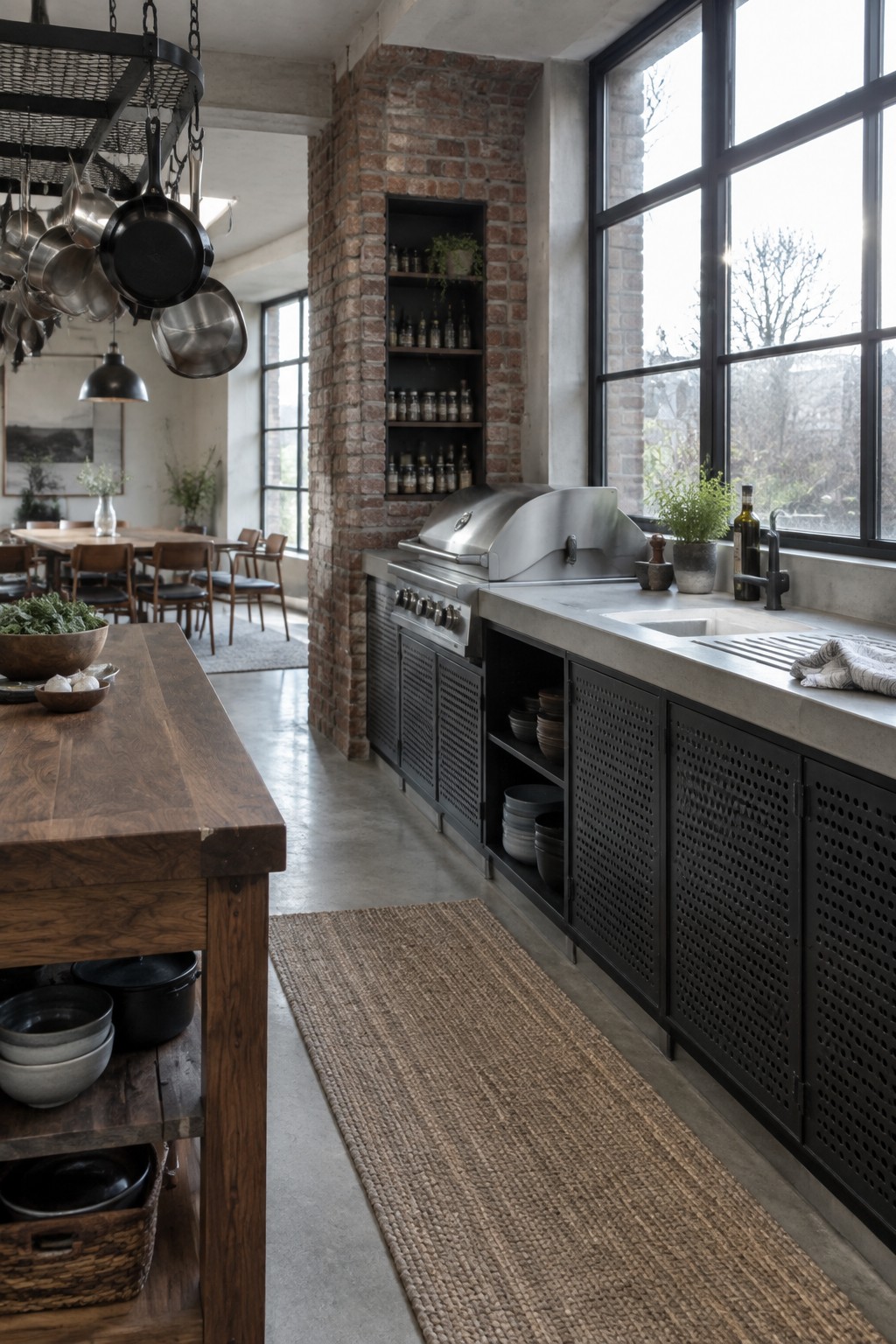
Many industrial kitchens feel more balanced when metal cabinetry sits next to concrete counters and wood elements. The metal gives structure and durability, the concrete keeps surfaces tough and easy to clean, and the wood brings just enough warmth so the room does not turn cold.
This mix works best in homes with open plans or older buildings where raw surfaces already exist. Keep the wood in larger pieces like an island or table so it stands out, and let the metal handle most of the cabinet doors for that industrial backbone.
Concrete Countertops Work Well With Wood Cabinets

Concrete countertops give an industrial kitchen a solid, grounded base that pairs easily with wood. The cool gray surface stands out against the warm wood grain of the cabinets and open shelves, while metal accents like the dishwasher and fixtures keep the whole look consistent. This mix feels balanced rather than cold.
It works best in homes that already lean modern or industrial and can handle a bit of weight on the counters. Keep the wood tones on the warmer side so the concrete does not make the space feel too stark.
Frequently Asked Questions
Q: How do I keep metal surfaces from showing every fingerprint in a busy kitchen? A: Wipe them down with a microfiber cloth and a bit of vinegar solution each week. This cuts through grease without stripping any protective coating. Focus on high-touch spots like handles and edges first.
Q: Will concrete counters stain if I cook messy meals often? A: Seal the concrete right after installation and reapply the sealer once a year. Blot spills fast instead of letting them sit. The sealer blocks most kitchen stains while keeping the raw look intact.
Q: How do I stop wood accents from feeling out of place next to concrete and metal? A: Choose reclaimed boards with some visible grain and knots to add warmth. Place them on open shelving or as a single accent wall rather than covering every surface. This balances the harder materials without extra effort.
