

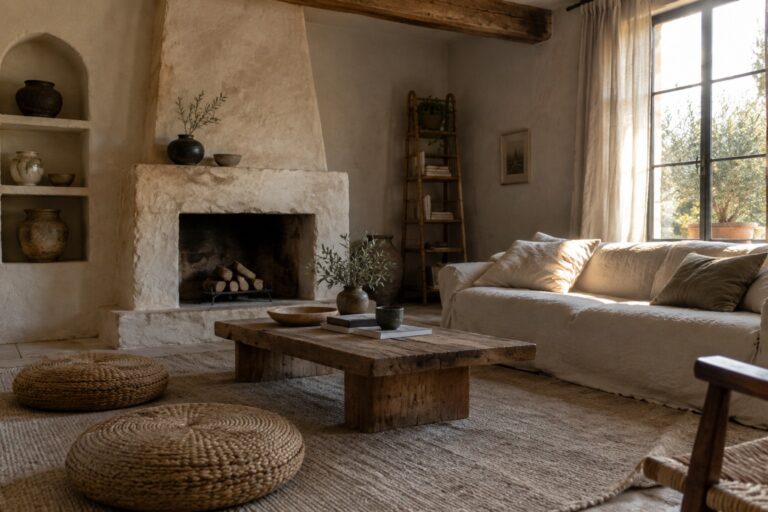
Living rooms tend to feel more lived in when the materials around you carry marks from real use instead of hiding them.
I have found that handmade textures often make a space feel warmer because they do not fight against the way light and shadow move through the day.
The first thing most people notice in a room is how comfortable it feels to actually sit down and stay awhile rather than how it looks in one glance.
Some finishes only show their value after a season or two of normal wear.
A few of these choices are the sort I would adapt first because they seem to match how daily life actually unfolds in the space.
Raw Wood Coffee Tables for Everyday Texture
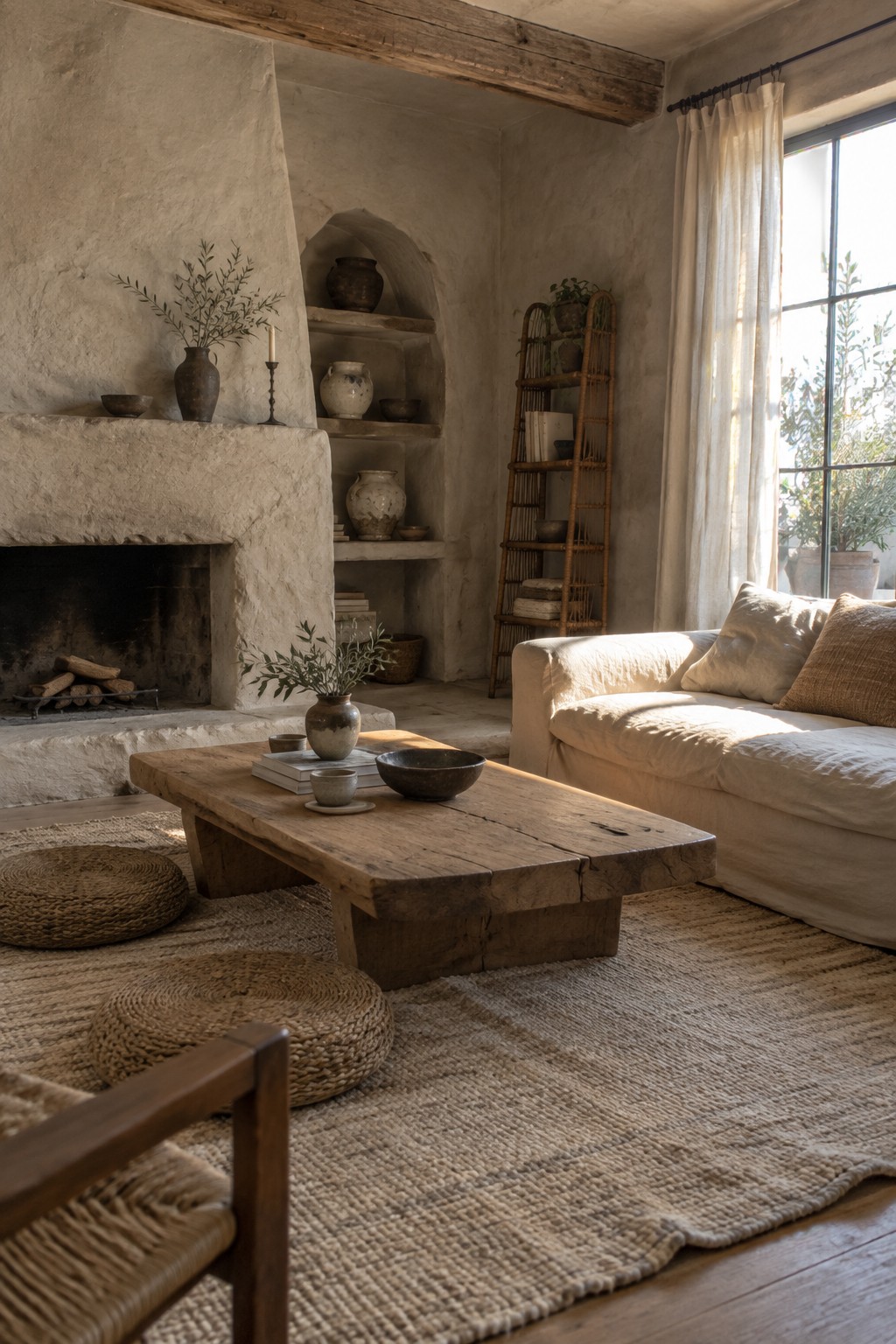
A thick slab of wood with visible grain, cracks, and uneven edges can do more than just hold books and bowls. It brings an honest, unfinished surface into the room that feels solid and easy to live with over time. This choice stands out because it lets the material itself carry the weight instead of relying on polish or shine.
Place one low table on a large natural fiber rug in front of a simple sofa. It works well in older homes or any space where you want surfaces that show wear without looking neglected. Keep other pieces quiet so the wood remains the main point of interest.
Use Handmade Pottery to Add Texture

Handmade pottery brings a quiet kind of texture that store-bought pieces rarely match. In this room the cluster of uneven vases beside the hearth feels collected over time rather than styled all at once. The slight variations in shape and finish keep the space from looking too polished.
Place a few pieces on the floor or a low bench where they can catch the light. This works especially well in rooms that already lean neutral, since the rough surfaces and soft edges add interest without extra color. Stick to two or three sizes so the group stays simple.
Reclaimed Wood Coffee Tables
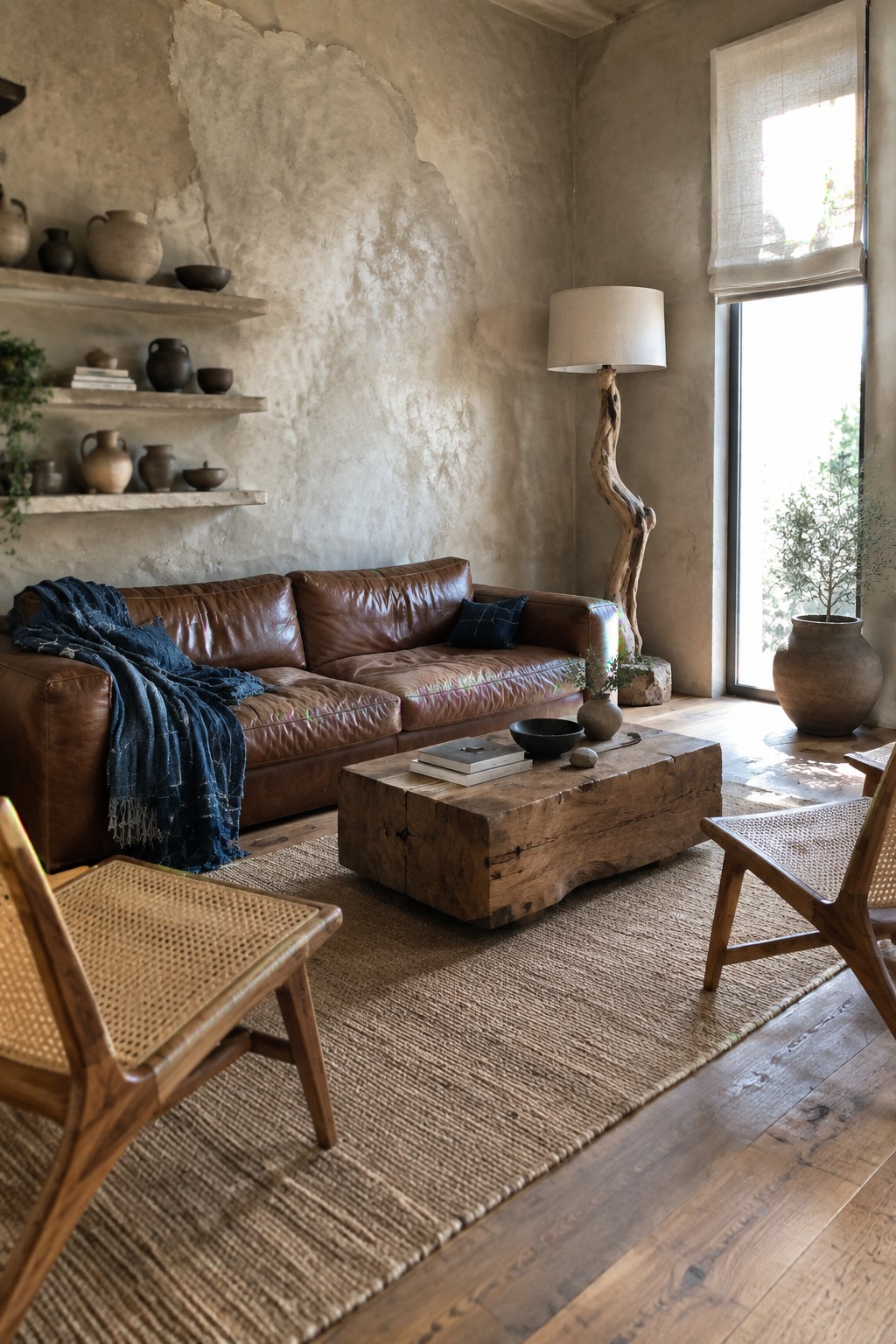
A solid block of old wood works well as a coffee table because it brings real texture and age into the room without any extra effort. The cracks, uneven grain, and worn edges give it character that factory-made pieces lack, and it pairs naturally with other handmade elements like woven seating and soft leather.
This approach fits best in rooms that already lean toward natural materials. Keep the rest of the space fairly simple so the wood stays the main focus, and avoid anything too shiny or new that would clash with its rough finish. It works especially well in homes that already have wood floors or plaster walls.
Rough Plaster Fireplaces Add Quiet Texture
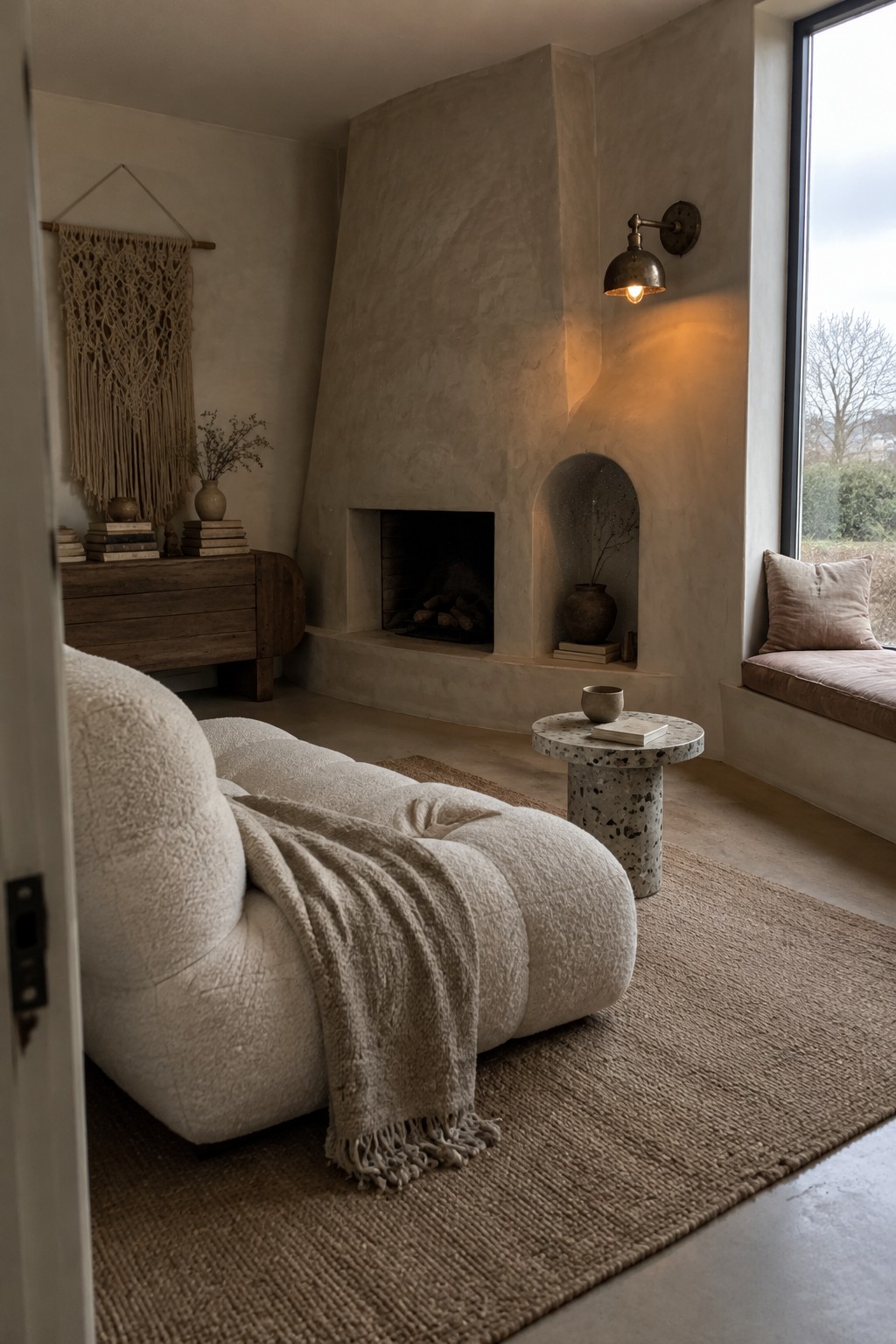
Rough plaster on a fireplace gives a room that soft, uneven surface people respond to right away. The material catches light differently throughout the day and shows small marks and color shifts that feel natural rather than finished. It pairs well with simple wood pieces and woven textiles because the contrast keeps the space from feeling too polished.
This approach suits homes that already lean toward natural materials and low-key styling. It works best when the rest of the room stays fairly calm so the plaster can read as the main textural element. Avoid adding too many shiny or perfectly smooth surfaces nearby, since they tend to fight the handmade quality.
Starting With A Woven Rug
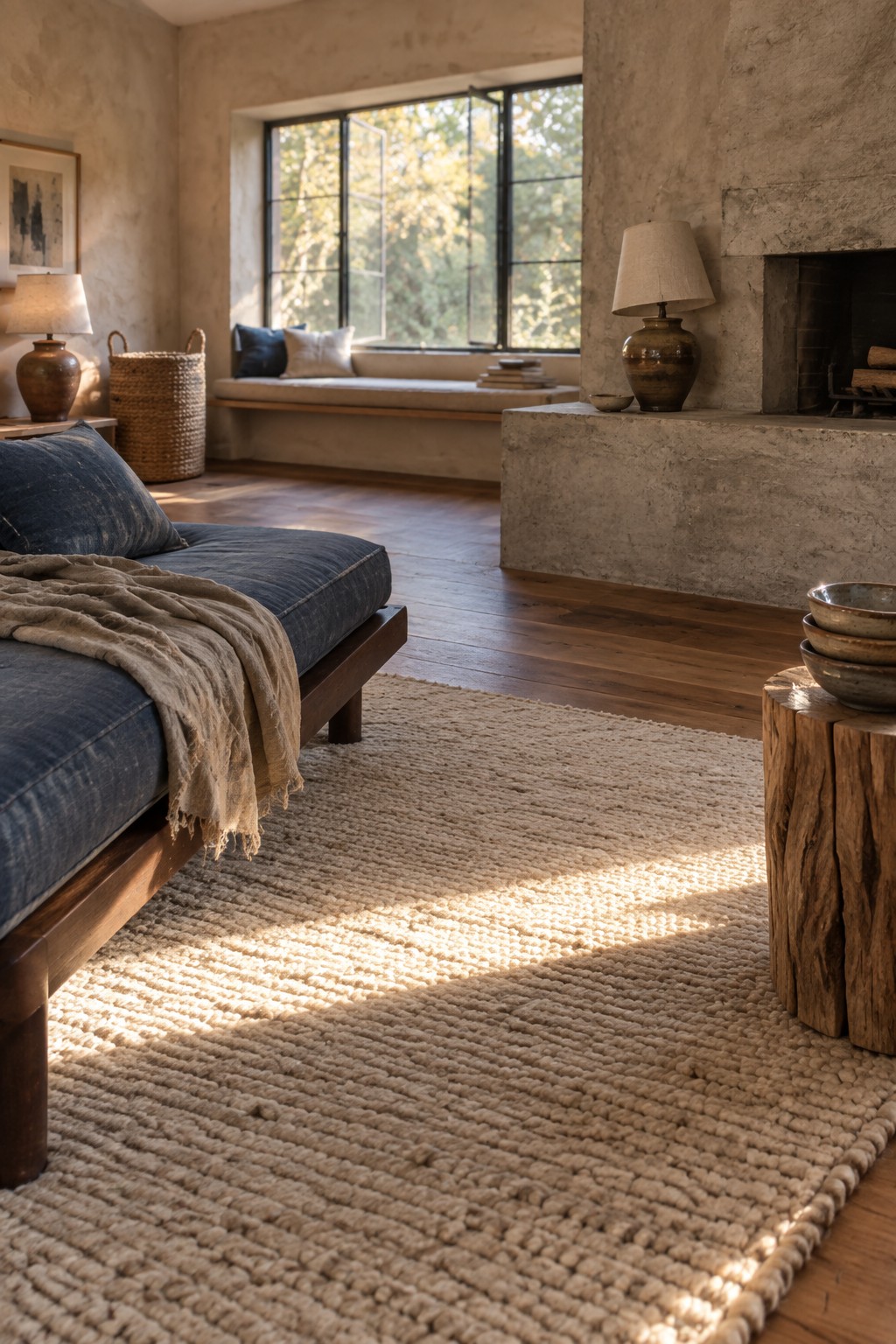
A big woven rug like the one here does a lot of the quiet work in a room. It adds that handmade texture underfoot and helps everything else feel a little softer and more lived in, especially when paired with wood and stone.
This approach suits rooms that already have natural materials and simple furniture. Keep the rest fairly plain so the rug can stand out, and do not worry about perfect edges or matching tones.
Use Simple Wooden Furniture with Woven Accents

Raw wood seating brings a quiet strength to a room when it is kept low and unadorned. The chairs here show how unfinished surfaces and visible grain add warmth without any extra polish, and the woven rug underneath softens the floor while keeping the same natural tone.
This mix works best in smaller living rooms that need to feel calm rather than busy. Place the chairs where light hits the wood, then add one or two woven or linen pieces so the textures do the work. It suits older homes or any space that already has wood floors and plain walls.
Mixing Natural Textures in a Living Room
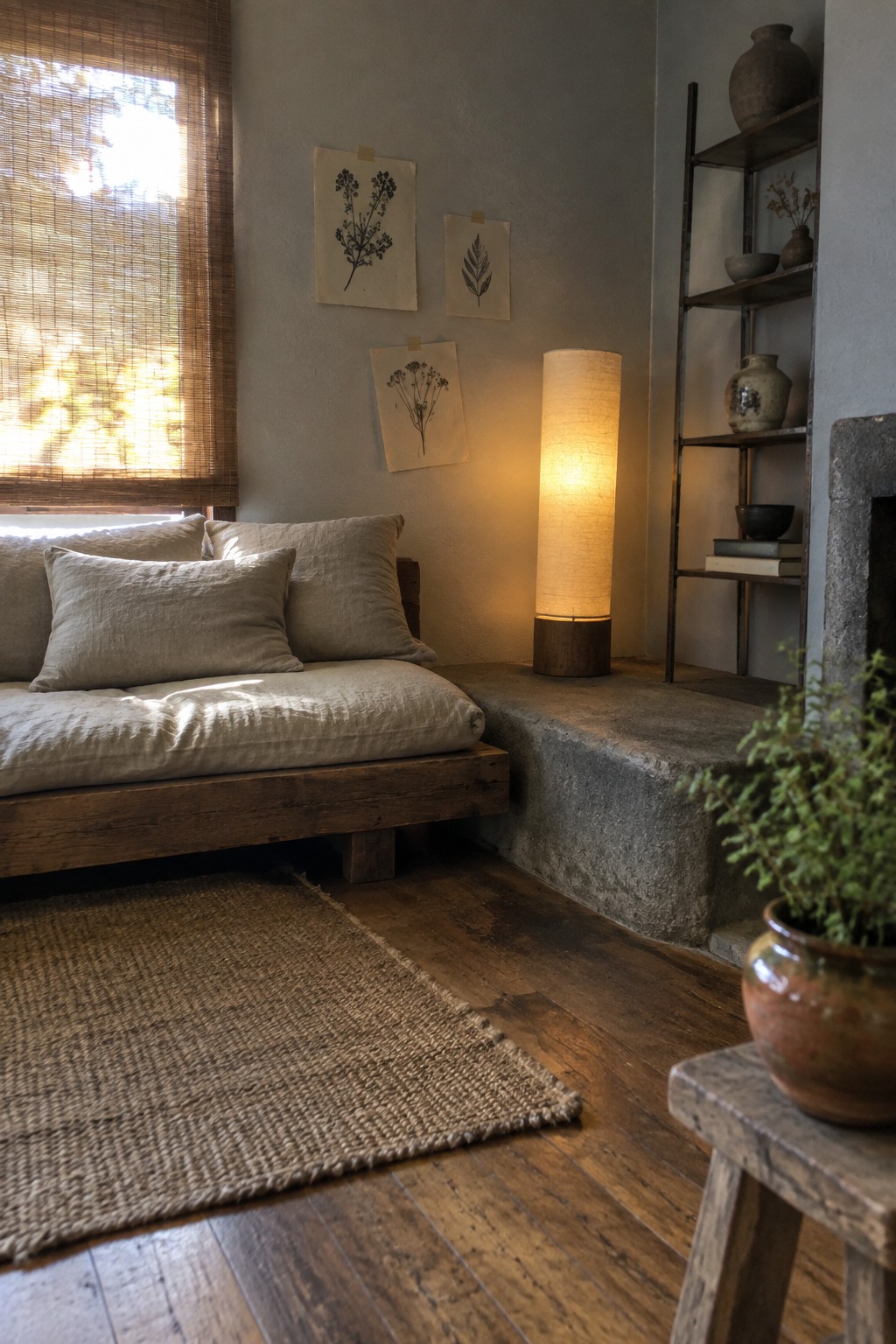
Rooms often feel more settled when they include wood with visible grain, linen that creases, and rugs made from rough plant fibers. These materials bring quiet variation that does not rely on matching or new finishes.
This works best in homes that already lean simple, where one or two wood pieces can anchor the space and a few linen layers can soften it. Keep other surfaces plain so the textures stand out without competing.
Rough Plaster Fireplaces

A rough plaster fireplace gives a room that settled, time-worn quality without any extra effort. The uneven surface catches light in a way smooth finishes never do, and it pairs naturally with wood and woven pieces that already carry their own marks and texture.
This works best in spaces where you want one strong focal point rather than lots of small details. Keep the walls plain around it and let the plaster do the work. It suits homes that already lean toward natural materials and feels especially right when the ceiling height can handle the scale.
Start with a Natural Fiber Rug
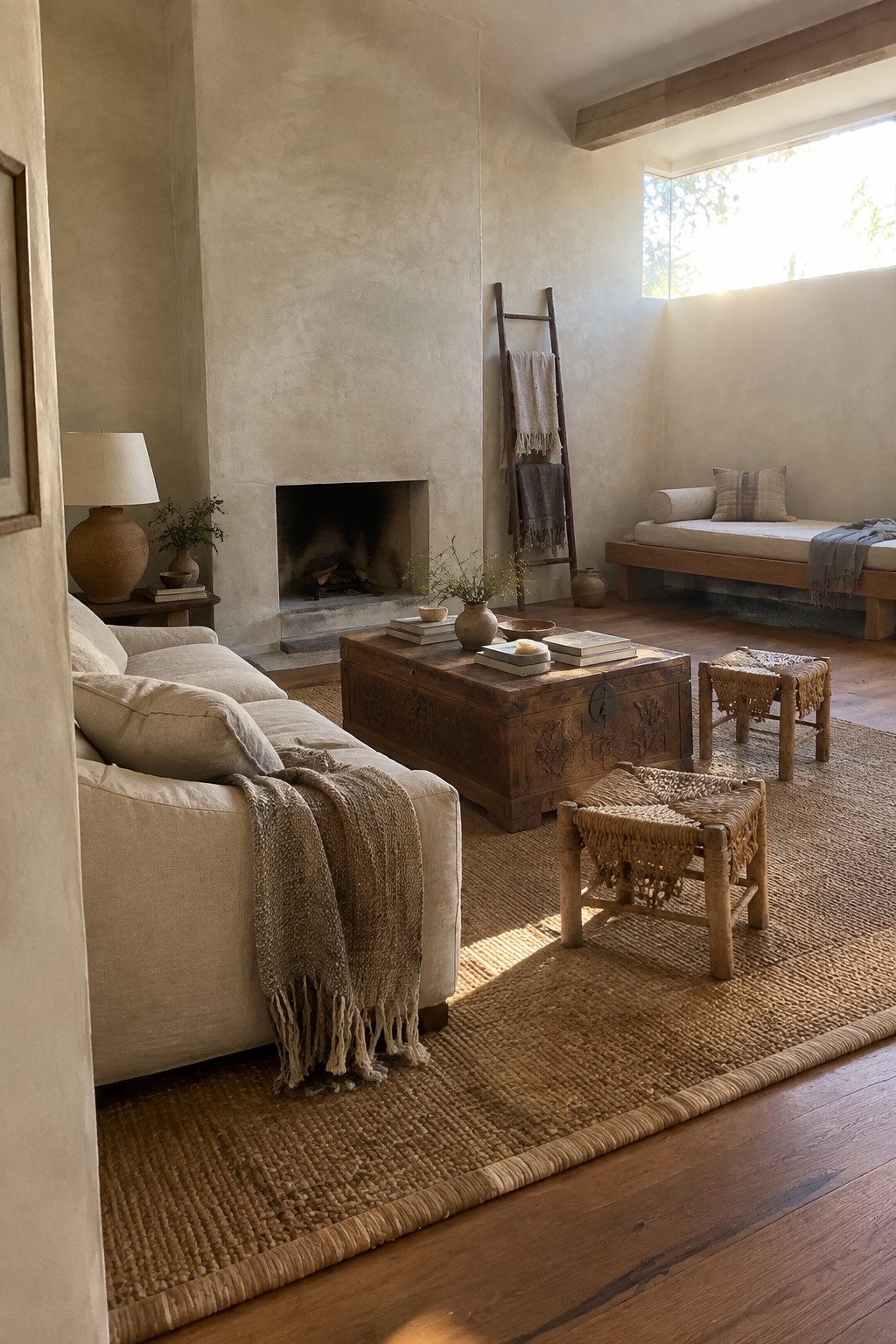
A large woven rug gives the room its main layer of texture right away. The rough natural fibers stand out against the smooth wood floors and keep the space from feeling too finished or flat.
This works well in rooms with linen, wood, and plaster already in place. Choose a rug big enough to sit under the front legs of the sofa and any nearby seating so the texture reads as intentional rather than scattered.
Layer an Aged Runner for Quiet Warmth
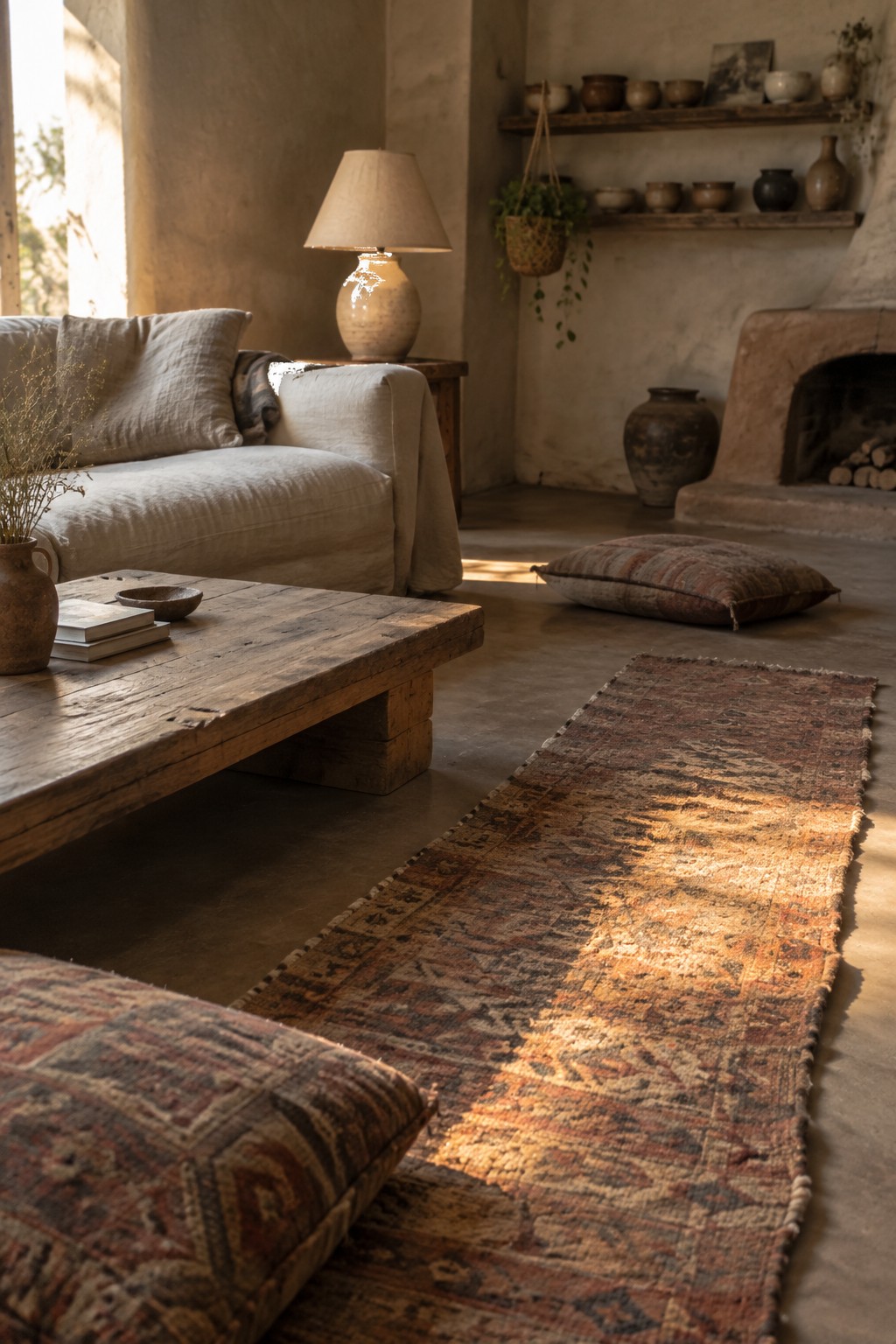
A single well-worn rug can do more for a room than most people expect. When floors are plain concrete or simple wood, a long faded runner brings pattern and softness that feels settled rather than new. The one shown here works because its age and slight unevenness give the space character without any extra effort.
This approach suits calm, low-key rooms that already use natural materials like linen and raw wood. Lay the runner where people walk or sit so the texture shows up in daily use. It works best when the rest of the room stays simple, and it helps if you choose a rug that already has some wear instead of trying to distress a new one.
Rough Plaster Walls Add Quiet Character
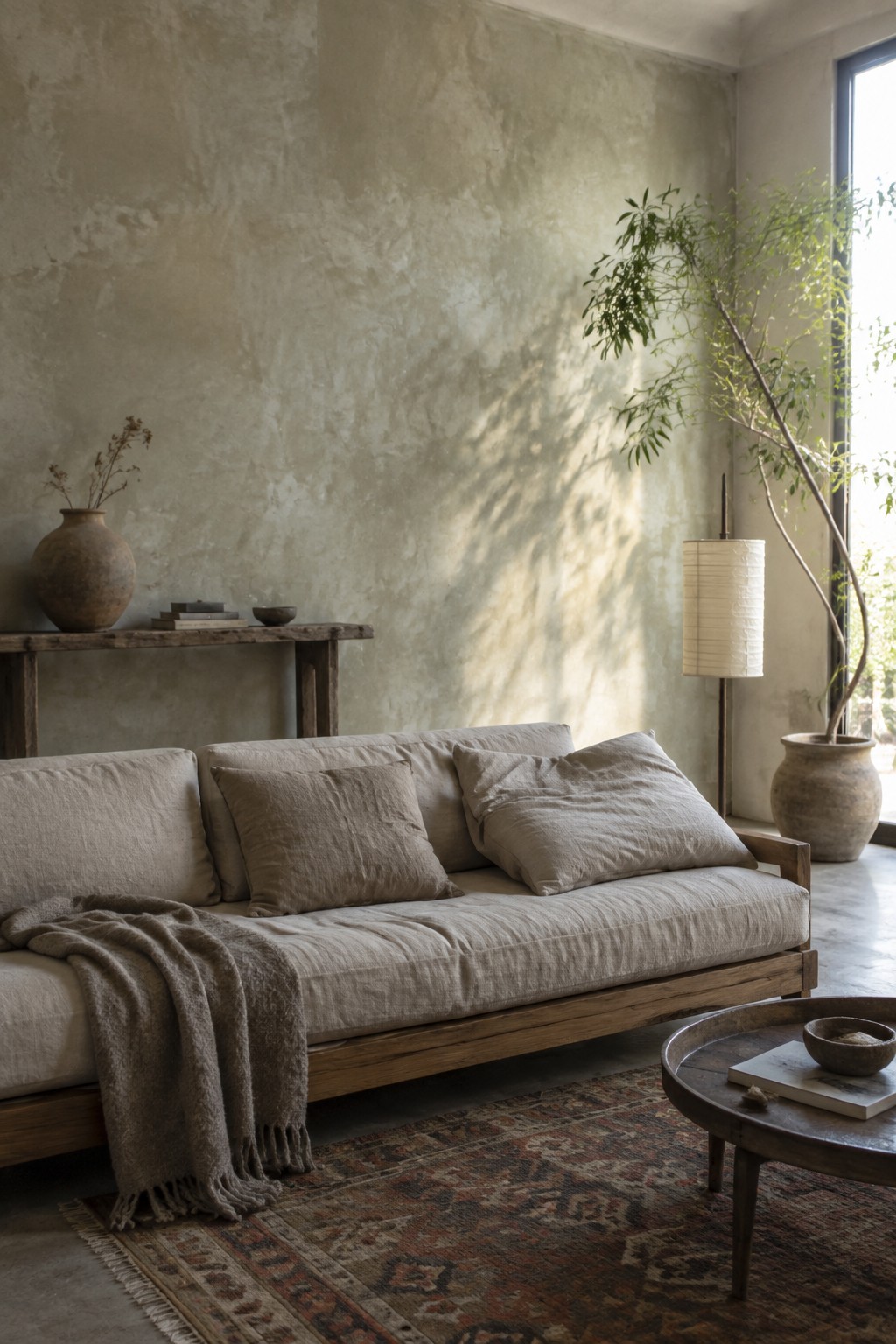
Rough plaster walls give a room an easy, settled look that works especially well with simple furniture. The uneven surface catches light softly and pairs naturally with linen upholstery and raw wood, so the whole space feels calm without needing much decoration.
This finish suits homes that already have some age or texture, and it helps newer rooms feel less stark. Keep the rest of the furnishings minimal so the wall can do the work, and avoid anything too polished that might fight the natural unevenness.
Raw Wood Furniture Brings Texture

A simple wooden table with visible grain and knots can anchor a living room in a way that feels grounded and real. It works especially well when paired with soft linen seating and rough plaster walls, since the contrast keeps the space from feeling too polished or new.
This approach suits homes that already have some natural materials to work with. Try one sturdy wood piece near seating areas and let the finish stay as is, without trying to match everything else around it.
An Exposed Stone Hearth Adds Texture

A stone hearth that is left rough and unfinished brings real weight and texture into a living room. It gives the space something solid to rest against, especially when the rest of the room stays simple and the furnishings stay soft.
This works best in homes that already have a fireplace or can add a low masonry surround. Keep the stone as it is, then add a few woven pieces nearby so the contrast feels natural instead of styled.
Embrace Imperfect Wood Finishes In Furniture

A big wooden coffee table with visible cracks and uneven grain can do more for a room than any polished piece ever will. It brings warmth and a sense of age that fits right into the rest of the space, especially when the rest of the room stays quiet and neutral.
This approach works best in living rooms that already lean simple. Pair the table with a couple of woven chairs and keep the sofa plain so the wood stays the main event. Just watch the scale. Too many heavy pieces and the room starts to feel crowded instead of calm.
Rough Plaster And Raw Wood Shape A Room
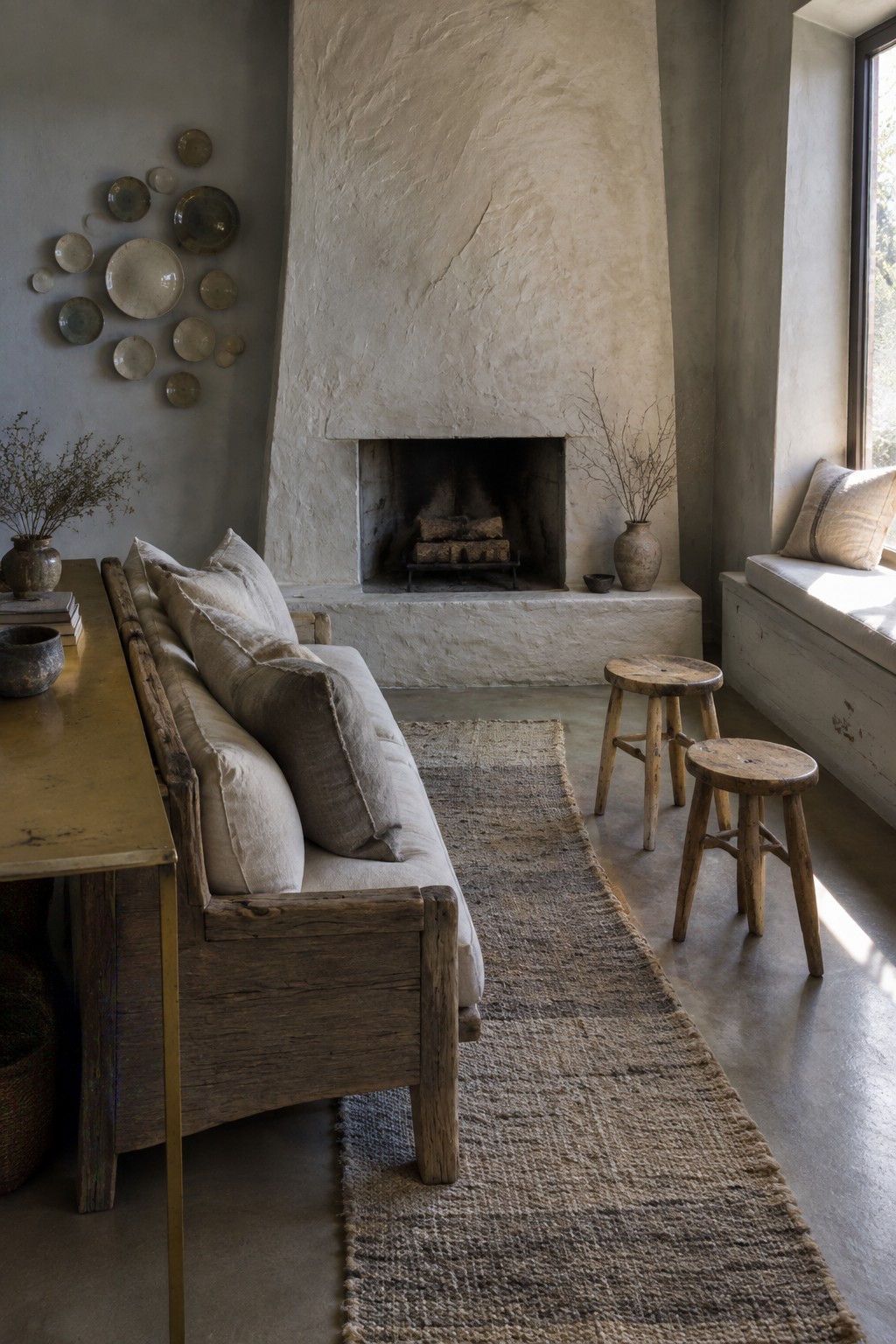
Rough plaster gives a living room an immediate sense of age and handwork that flat paint never quite reaches. The uneven surface holds light differently throughout the day and makes the whole space feel softer and more settled.
Raw wood furniture next to it keeps the look grounded because the grain and small dents add another layer of texture without competing. This works best in rooms that already have some age or in new spaces that need warmth, and it pairs easily with linen cushions and simple woven rugs.
Build a Bench Into the Corner

A built-in bench turns an awkward corner into something useful without crowding the room. It gives you a place to sit or stretch out while keeping the space open and simple.
Make the bench from the same plaster or concrete as the walls so it blends in naturally. Add a mattress and a couple of pillows in plain linen, then let the light and textures do the rest. This works well in smaller homes or rooms where you want seating that feels permanent rather than added on.
Mixing Natural Textures In The Living Room

Natural materials bring a quiet kind of variety to a living room. Rough wood next to stone and woven pieces keeps the space from feeling flat or overly finished.
This works especially well in older homes or rooms with existing character. Start with one large wood piece like a low table, then layer in woven seating or a thick rug to add softness without crowding the space.
Mix Raw Wood With Handmade Clay
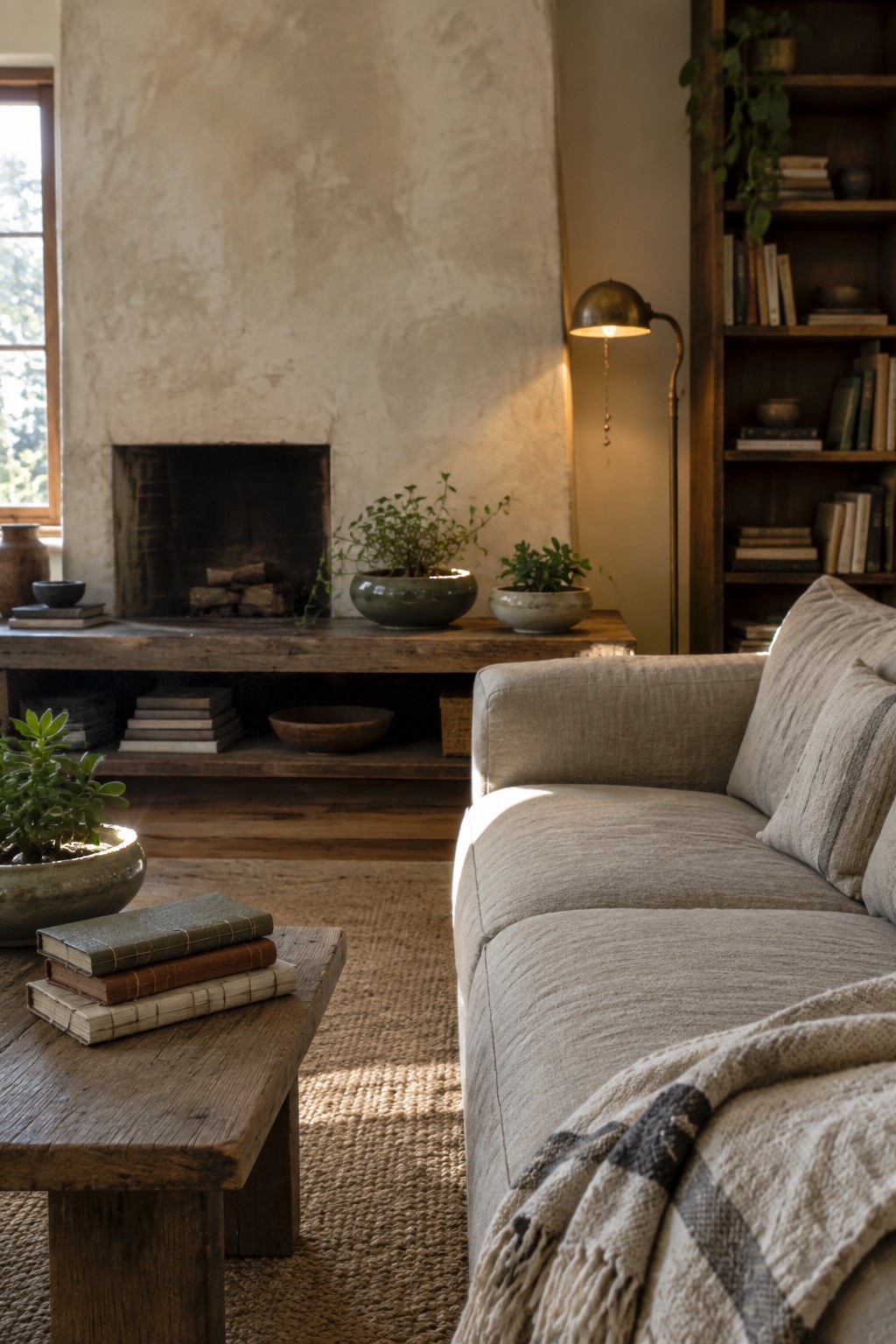
Raw wood tables and simple clay pots stand out here because they carry visible grain, wear, and hand marks. Those small imperfections keep the room from feeling styled or new, which is exactly what gives it that settled wabi sabi quality.
This works well in living rooms that already have neutral walls and soft fabrics. Start with one or two wood pieces and a few uneven ceramic vessels, then add other natural textures only as needed so the space stays calm rather than busy.
Let A Wooden Sofa Lead The Room

A large wooden sofa brings the kind of weight and texture that works well in a Wabi Sabi space. The solid form and visible grain give the room something real to rest on instead of relying on layers of upholstery or pattern.
This works best in rooms that already lean toward neutral tones and natural light. Keep the rest of the seating simple with linen or cotton, and let the wood carry the warmth. It suits homes that want fewer pieces but more substance in what they do keep.
Letting Rough Wood Furniture Set The Tone

A heavy wooden coffee table with visible grain, dents, and uneven finish brings real weight to a living room. It feels like something that has already lived a life, which is why it fits so well with the wabi sabi focus on imperfection and craft.
This works best when the rest of the room stays fairly quiet. Pair it with linen, clay, and simple woven pieces rather than adding more pattern or shine. The wood does the talking, so you do not need much else around it.
Choose Raw Wood Furniture

Raw wood furniture gives a living room an honest and grounded quality that feels easy to live with. Thick slabs and simple slatted tables show the wood grain and natural edges without any polished finish, which helps the space feel calmer and more real.
This works especially well in rooms with plain walls and concrete floors. Keep the rest of the furnishings light so the wood can stand out without crowding the room.
Letting Imperfect Materials Lead The Room

Rooms feel more settled when the main pieces carry visible grain, weave, and texture instead of smooth perfection. A heavy wooden table, a simple clay bowl, and a thick jute rug can carry most of the character without extra styling.
This works best in spaces that already have plain walls and older floors. Keep the larger furniture simple and add only a few objects that show their making. Skip anything lacquered or overly matched.
Letting Wood and Woven Pieces Set the Tone
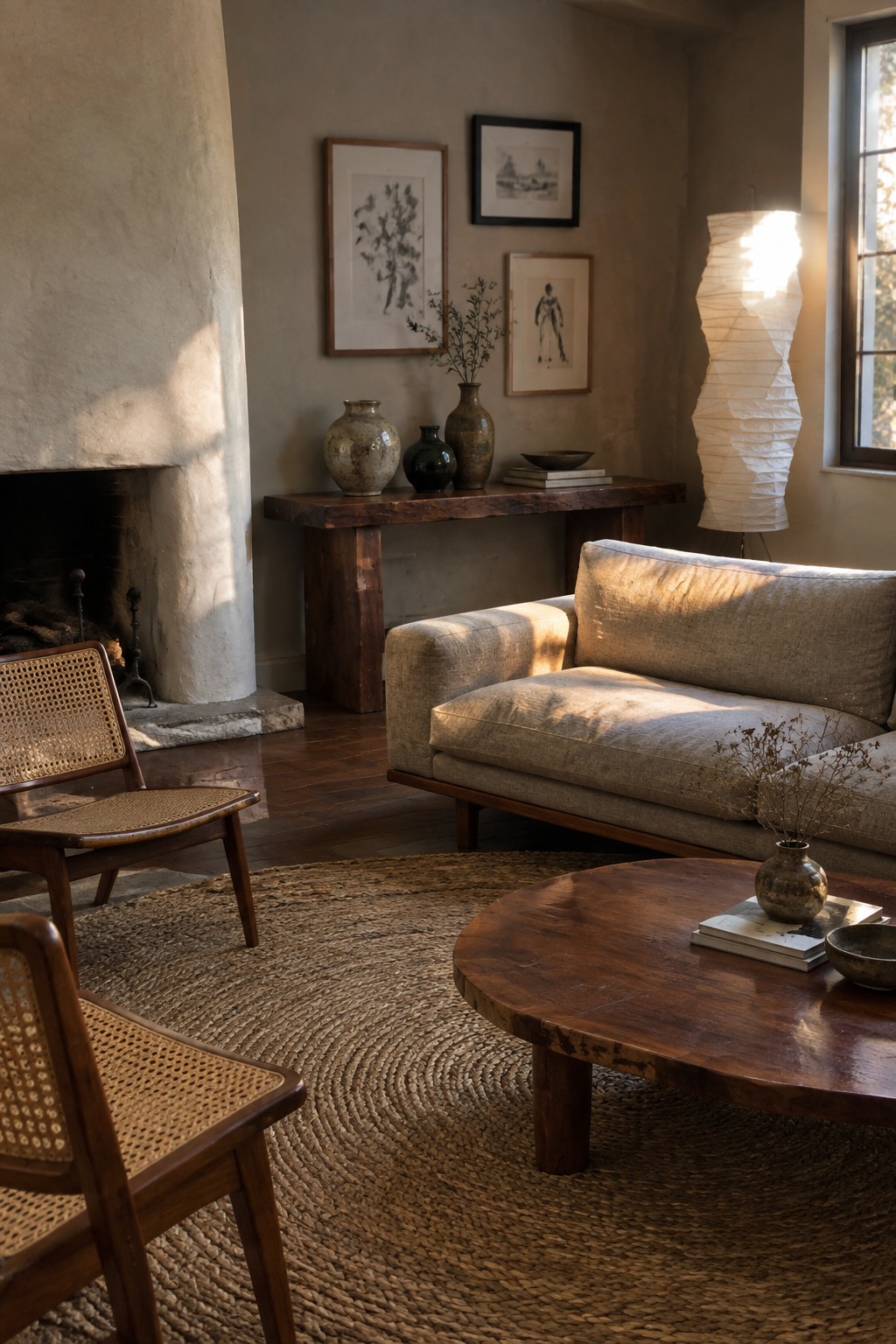
Natural materials with visible grain and handwork give a living room an easy, settled look. The rough wood tables and cane seating here show how those surfaces catch light and add quiet interest without any extra effort.
This approach works best in rooms that already have simple lines and some daylight. Start with one or two larger wood pieces, then add woven chairs or stools so the textures can play off each other without crowding the space.
Frequently Asked Questions
Q: Where can I find affordable handmade pieces with real texture? A: Check local craft markets or secondhand shops for pottery and woven goods that show tool marks or slight asymmetry. Bring home just one or two items at first, like a clay bowl or rough linen pillow, and set them where you already sit or eat. This keeps the change small and natural.
Q: How do I add imperfect finishes if my sofa and tables already look polished? A: Layer the new pieces directly onto what you own instead of replacing anything. Drape a handwoven throw over the couch arm or set a uneven wooden tray on the coffee table. The smooth surfaces underneath make the rough textures stand out more clearly.
Q: What happens if the textures start to feel messy together? A: Pull back by removing one or two items until the room feels calm again. Keep only the pieces that still let you see some empty wall or floor space. This way the handmade details stay noticeable without crowding the room.
