

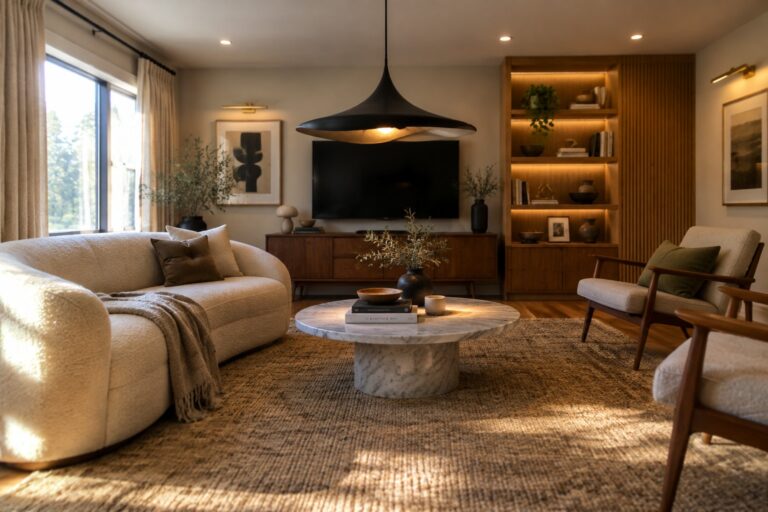
I have rearranged lamps and dimmers in my living room more times than I can count because the way light fills a space affects how it feels to sit and spend time there.
Layering ambient sources with targeted accents tends to solve the common problem of harsh overhead glare or dark corners that make a room seem smaller than it is.
It shifts the whole mood.
Over the years I have found that testing one new fixture at a time reveals which layers actually support reading, conversation, or quiet evenings without needing constant adjustments.
A few of the combinations described later match setups that have held up well in my own home through different seasons and furniture changes.
Layer A Pendant With Built-In Accent Lights
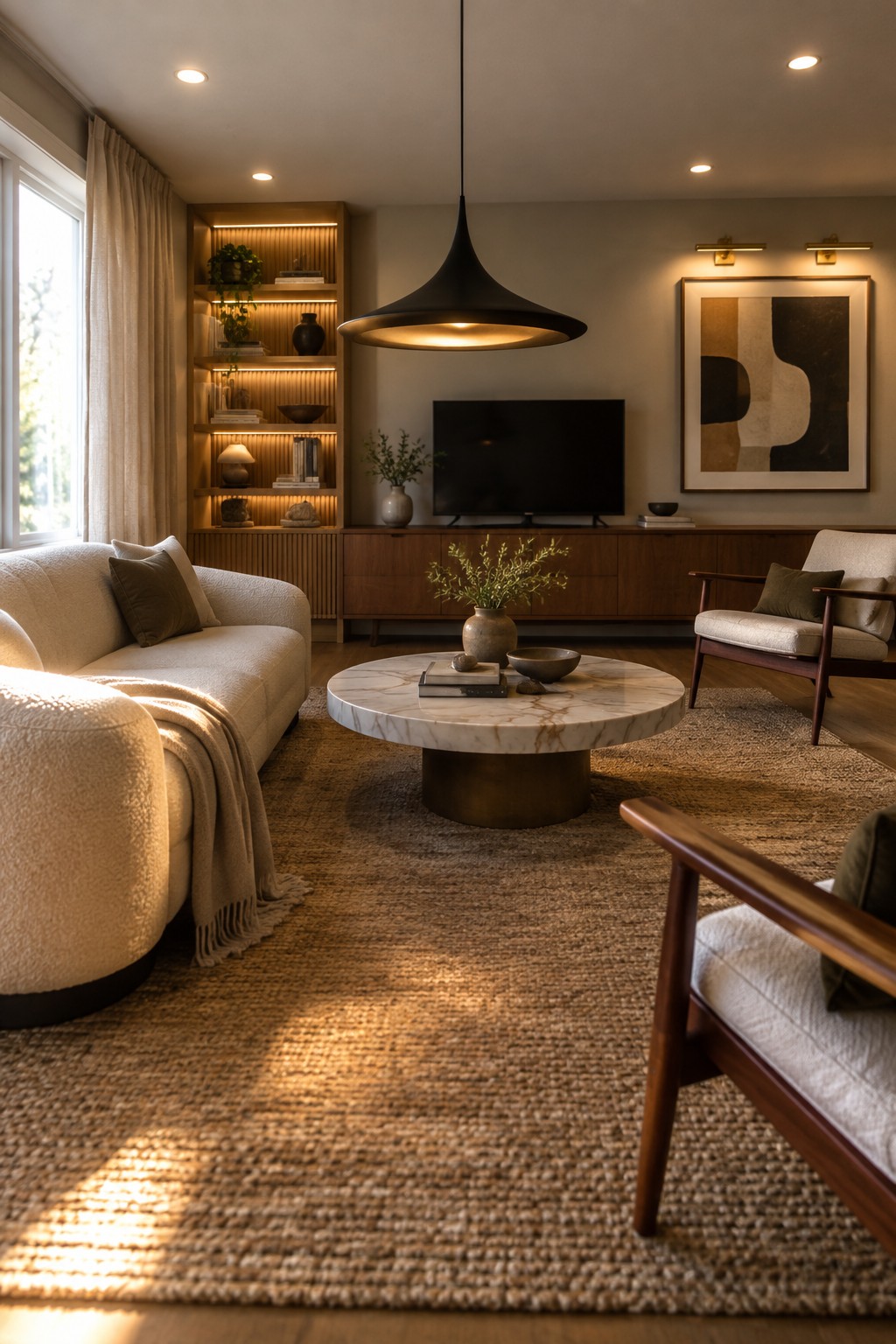
A large pendant can handle most of the ambient lighting in a living room while built-in shelf lights add the accents that make the space feel finished. This mix keeps the room from depending on one bright overhead source and gives you control over different zones at night. The pendant sets the main glow, and the shelves keep smaller details visible without extra lamps cluttering the floor.
This approach works best in rooms with open shelving or a media console that can hide low-voltage lighting. Keep the pendant centered over the main seating area and use warm LEDs inside the shelves so the light stays soft. It suits most standard living rooms and avoids the flat look that comes from relying only on recessed ceiling lights.
Wall Sconces On Built-In Bookshelves
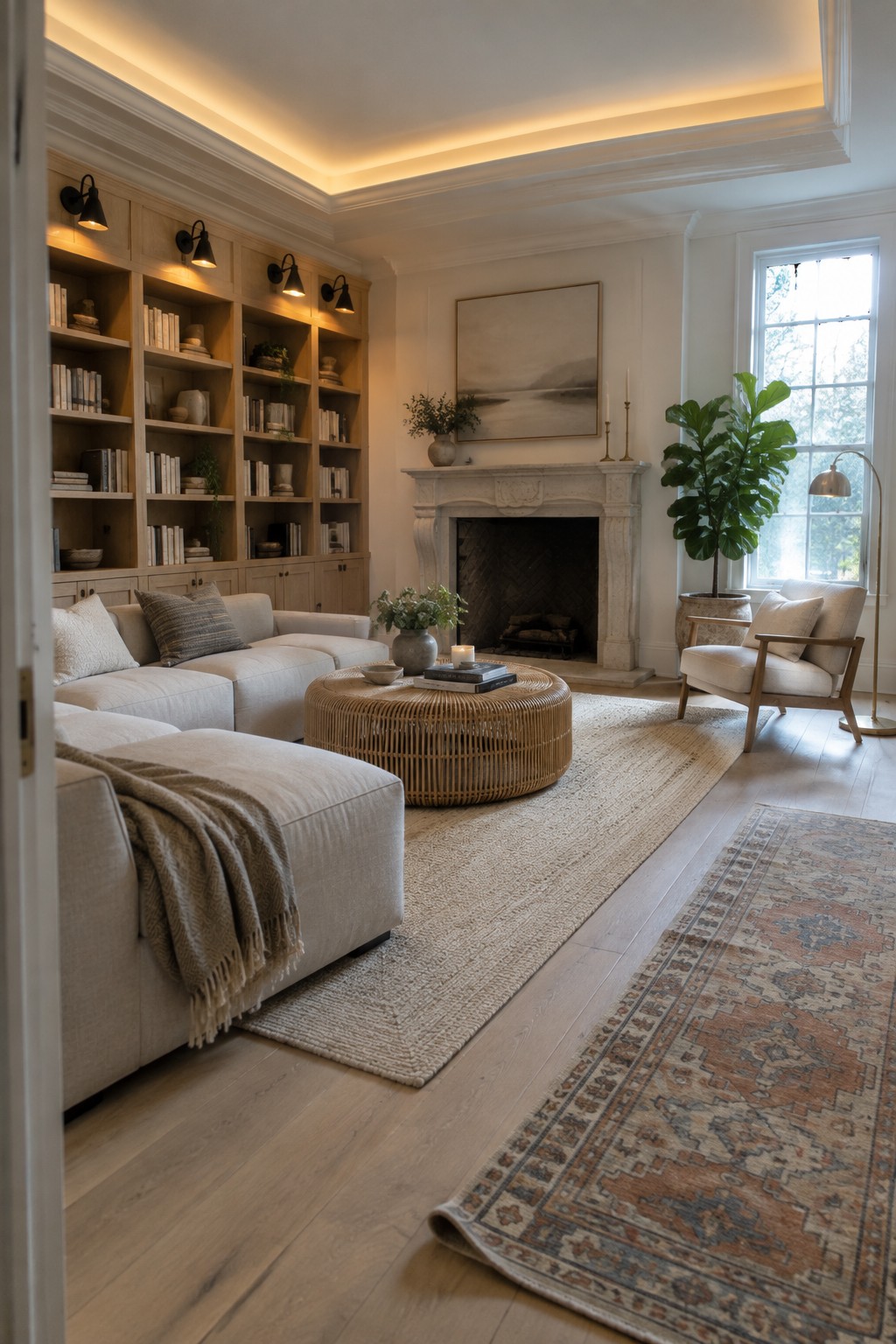
Placing small wall sconces along built-in shelves gives you a simple way to add accent light without crowding tabletops or adding more floor lamps. The light stays focused on books and objects, which helps the whole room feel warmer and more layered at night.
This approach works best in living rooms that already have or can add custom shelving. Keep the sconces small and simple so they do not compete with the books or decor, and make sure the bulbs are warm rather than cool.
Layer Pendant Lights With Track Lighting And Sconces
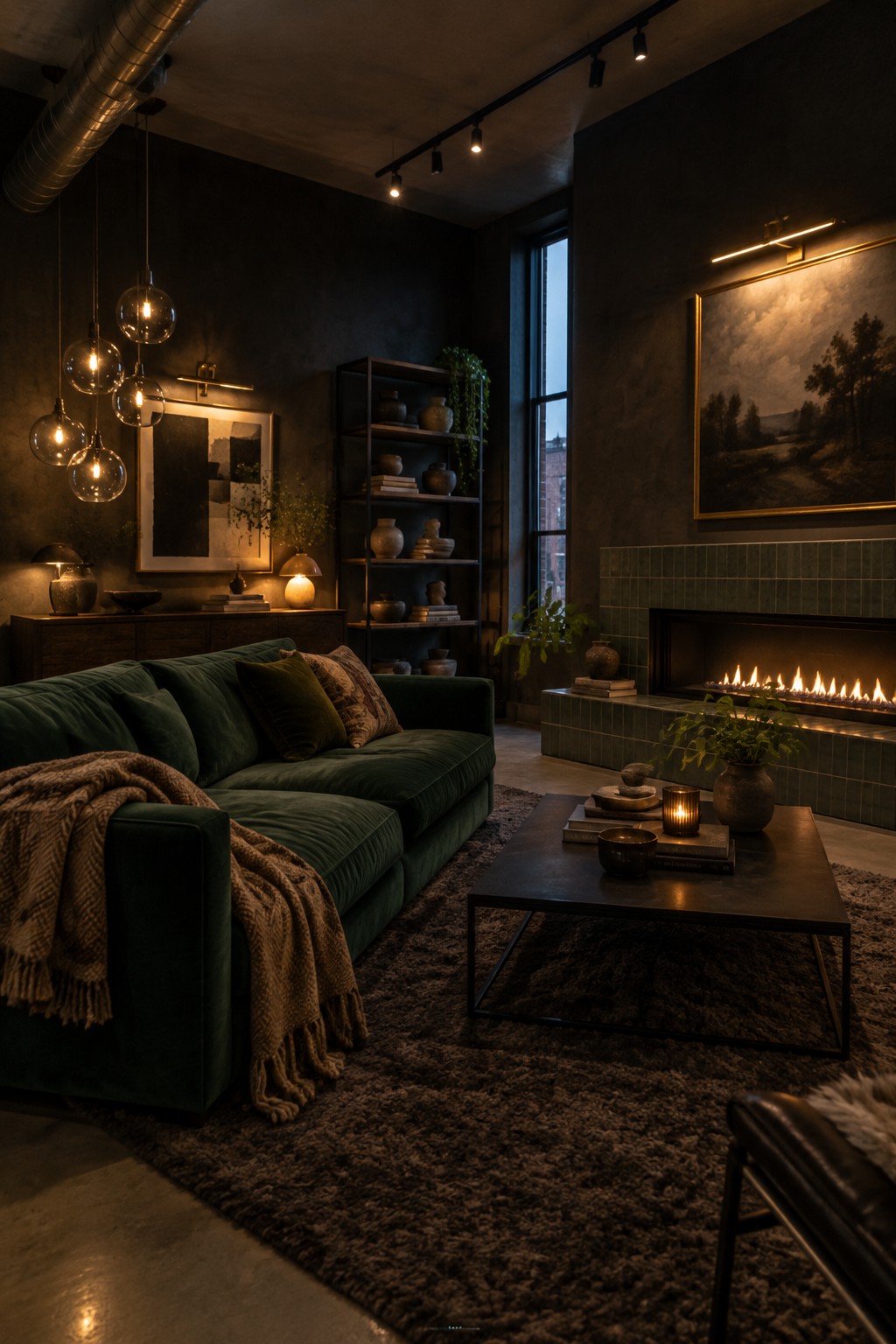
Many living rooms end up feeling one-note when everything comes from a single ceiling fixture. Adding pendants that hang at different heights, a few wall sconces, and some overhead track lights gives the space more depth and makes it easier to adjust the mood throughout the evening.
This works especially well in rooms with darker walls or taller ceilings where one light source can leave corners looking flat. Start with your main ambient lights, then layer in accents like the cluster of glass pendants or small lamps on side tables. Keep the finishes close so the fixtures read as a group rather than random additions.
Hanging A Large Woven Pendant For Ambient Light
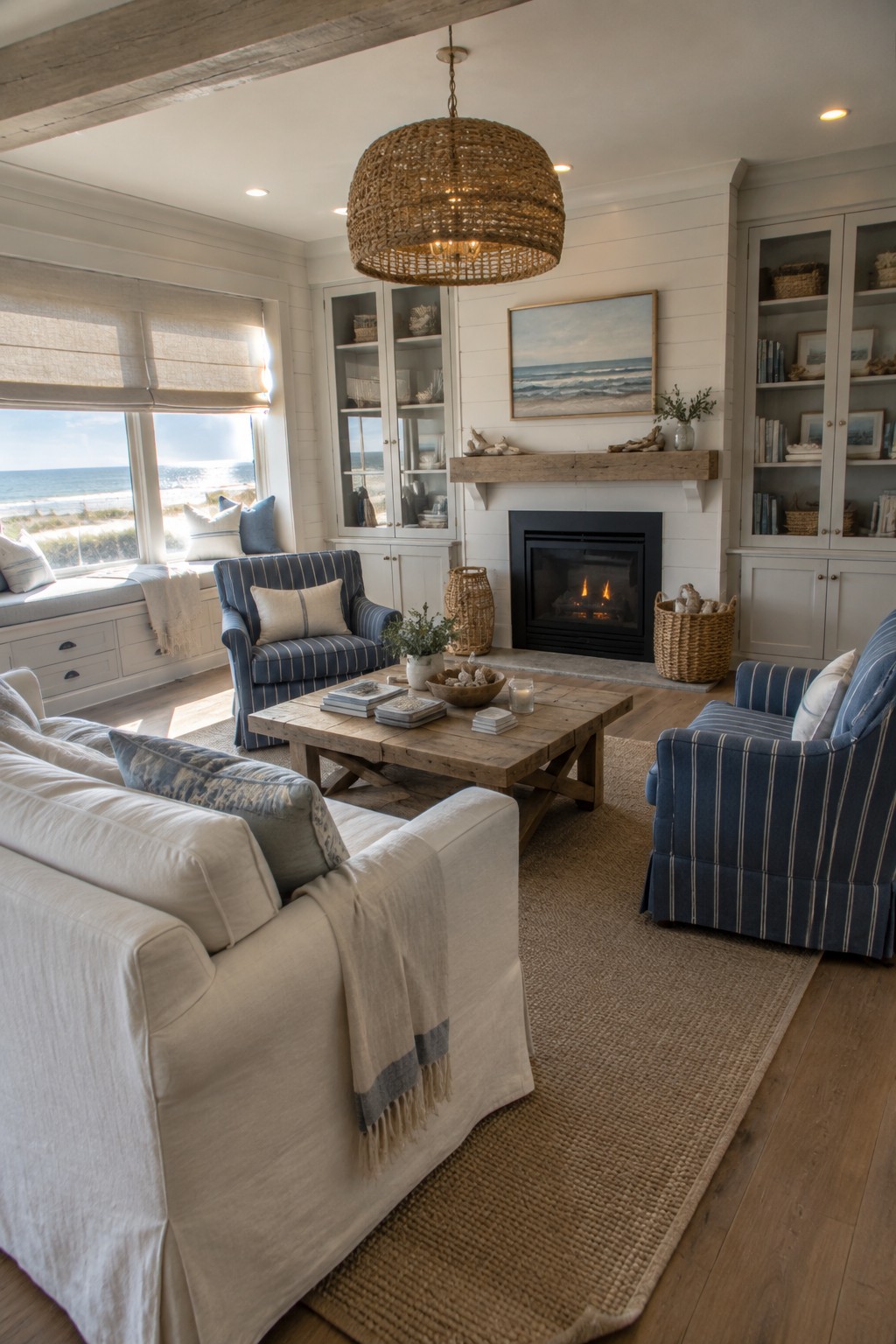
A big woven pendant can do a lot of the heavy lifting when you want soft ambient light across a living room. It spreads a gentle glow downward and outward without the sharp edges you often get from recessed cans alone. In rooms with decent ceiling height, this kind of fixture feels natural and keeps the space from looking flat once the sun goes down.
It works best in homes that already have some texture elsewhere, like wood beams or a stone hearth, so the light fixture does not have to carry the whole look. Keep the shade open at the bottom if you want more light on the floor, and add a couple of smaller sources near seating or on the mantel to finish the layers.
Mix Wall Sconces And Floor Lamps For Even Light
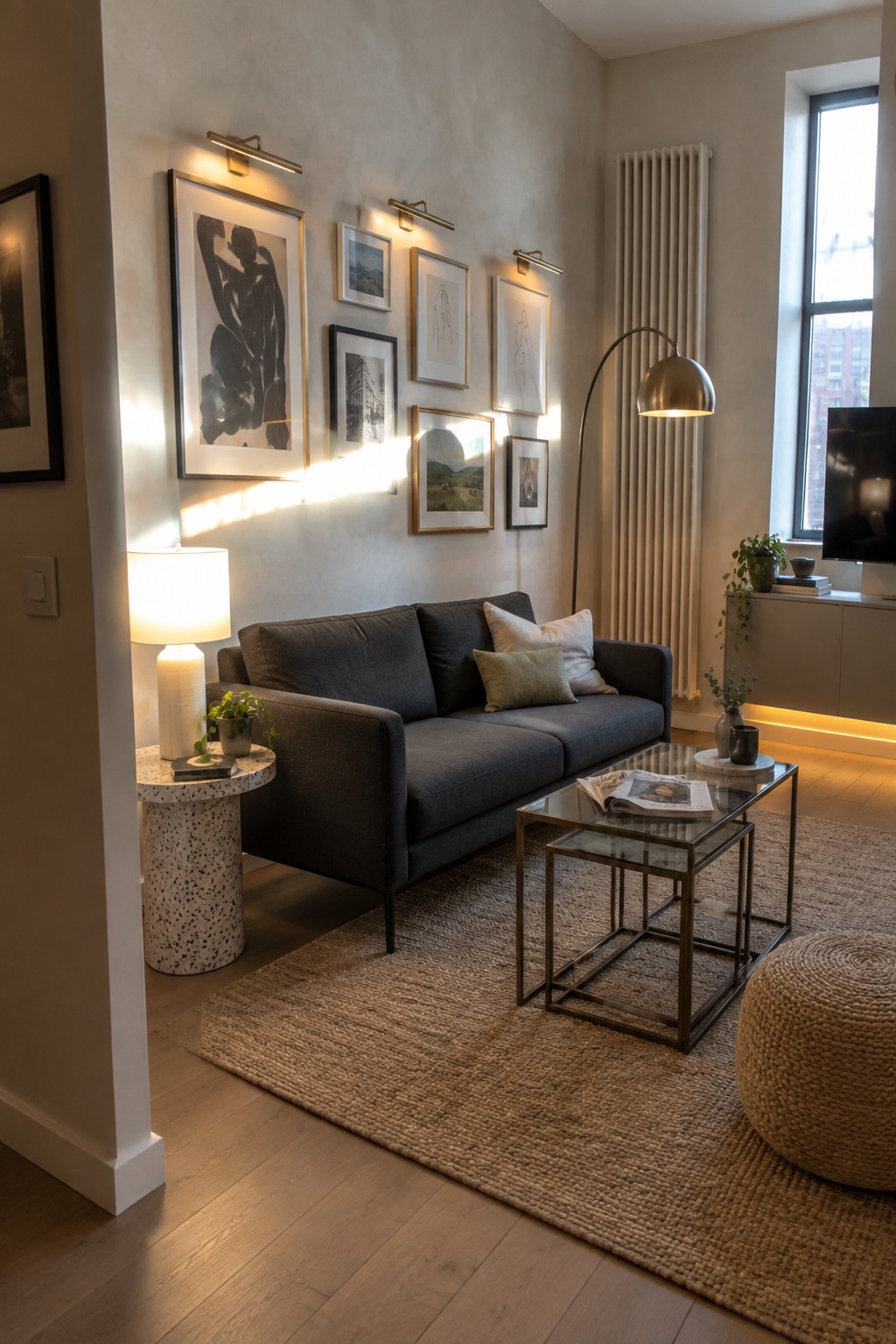
Wall sconces above a row of art and one tall floor lamp can change how a living room feels after dark. The sconces give soft light right where the eye lands on the wall, while the floor lamp fills the middle of the seating area without needing a table. Together they cut down on harsh shadows and keep the room from feeling dim in just one spot.
This setup works best in living rooms that already have a gallery wall or a longer sofa. Keep the sconces on a dimmer so the light stays gentle, and choose a floor lamp with an arc or adjustable head so it can reach over the seating without crowding the floor. It suits most neutral or mid-tone rooms where you want light that feels steady rather than dramatic.
Layering A Pendant With Hidden Accent Lighting
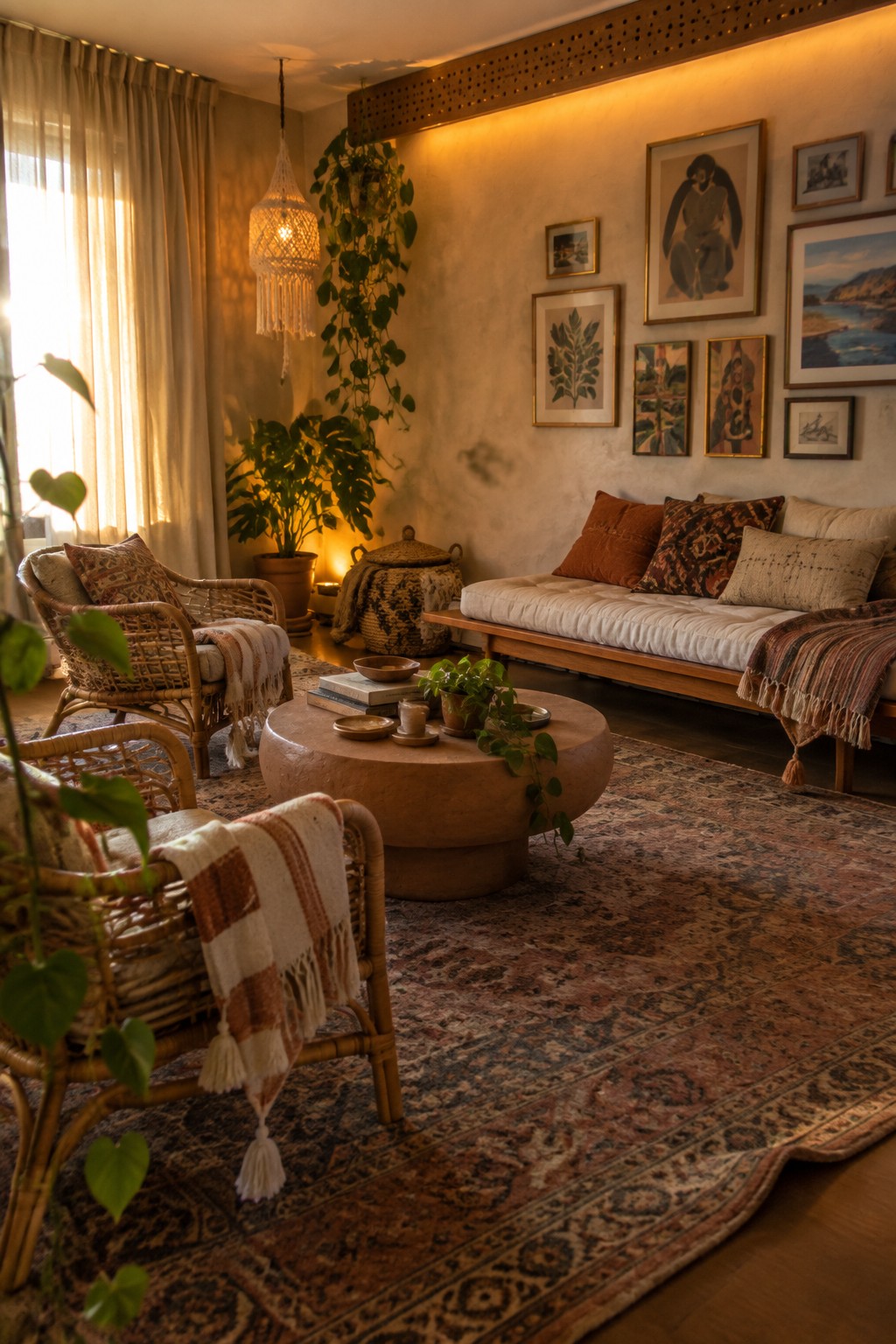
A hanging pendant gives the room its main source of light while a hidden accent source along the wall fills in the rest. The two together create a softer, more even feel than a single overhead fixture could manage on its own.
This approach works best in living rooms that see a lot of evening use. Place the pendant over the main seating area and add a low, concealed light behind the sofa or along a back wall so the room stays usable without feeling harsh.
Layered Lighting With High And Low Sources
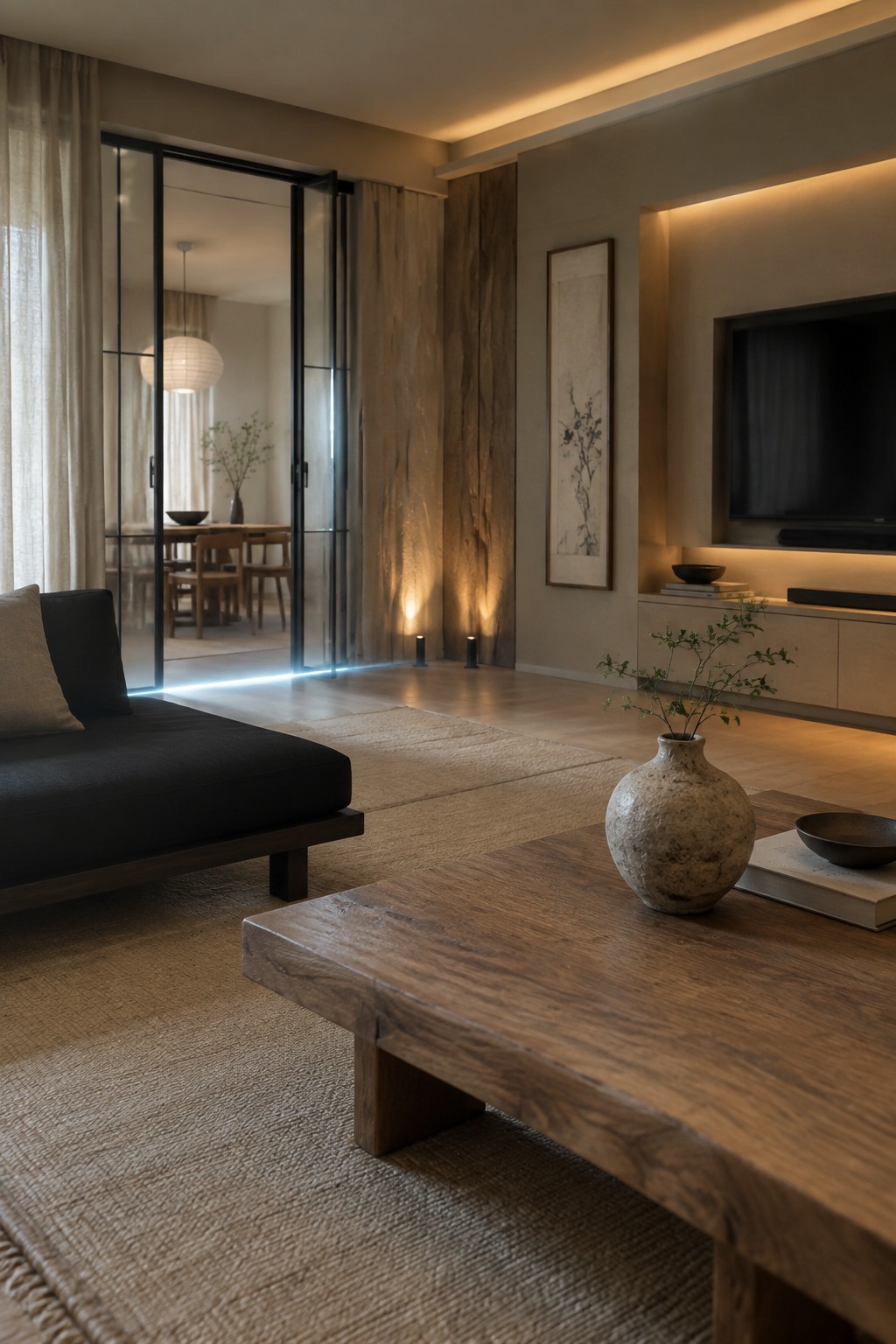
Many living rooms end up feeling harsh when everything comes from one overhead spot. This room shows how a soft ceiling glow combined with low floor uplights creates a steadier, calmer light that fills the space without glare.
It works especially well in open layouts where you move between sitting and dining areas. Keep the upper layer dimmable and add small uplights along a textured wall so the light grazes the surface and adds quiet depth in the evening.
Layer A Chandelier With Wall Sconces And Table Lamps
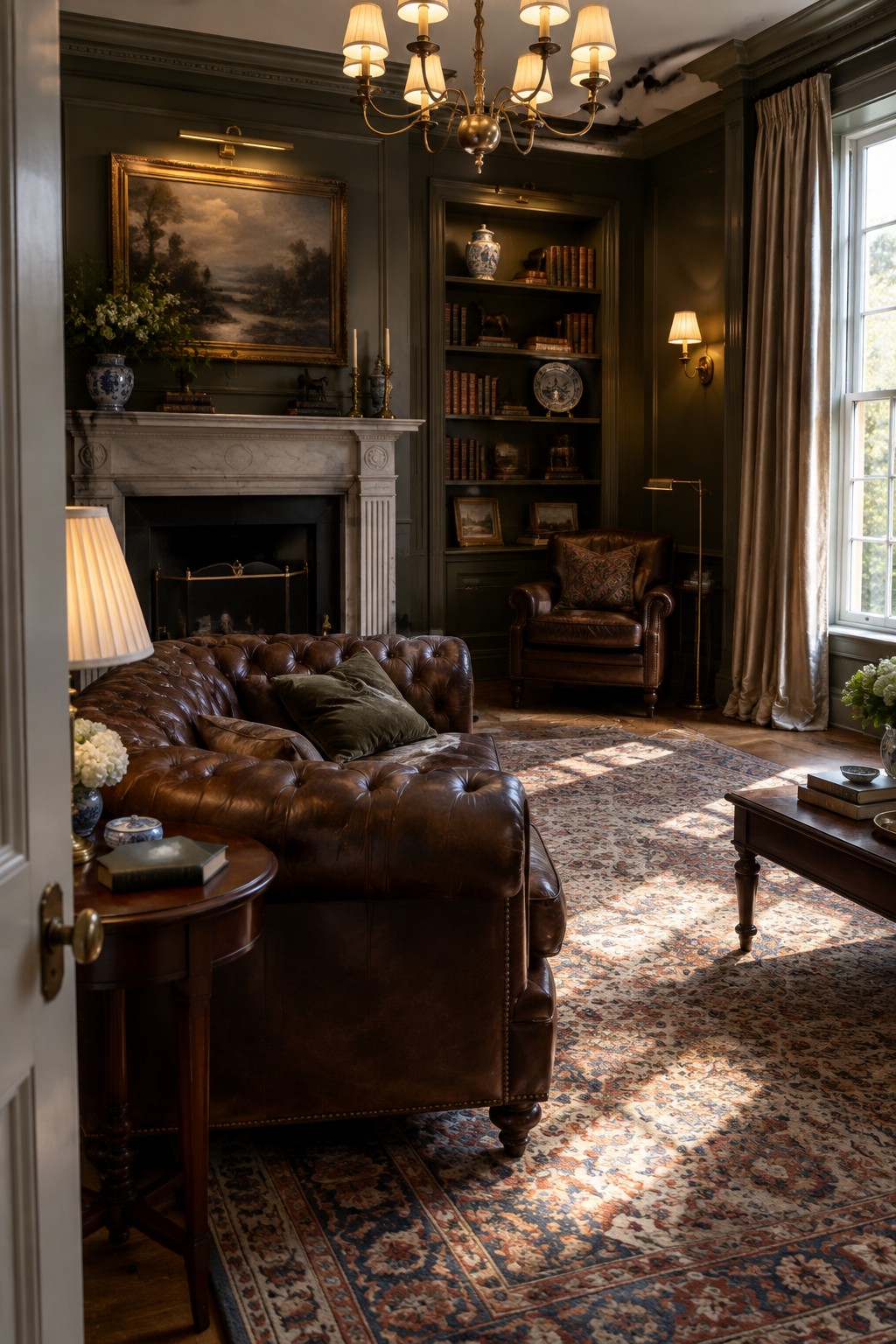
A single overhead light rarely feels enough in a living room, especially when the walls are dark. Adding sconces and smaller lamps creates softer pools of light that make the space feel more comfortable and usable at night.
This mix works best in rooms where you spend time reading or sitting for long periods. Keep the chandelier on a dimmer for general light, then use the sconces and lamps to highlight seating areas or bookshelves without needing everything on at once.
Layering a Large Pendant with Wall Sconces
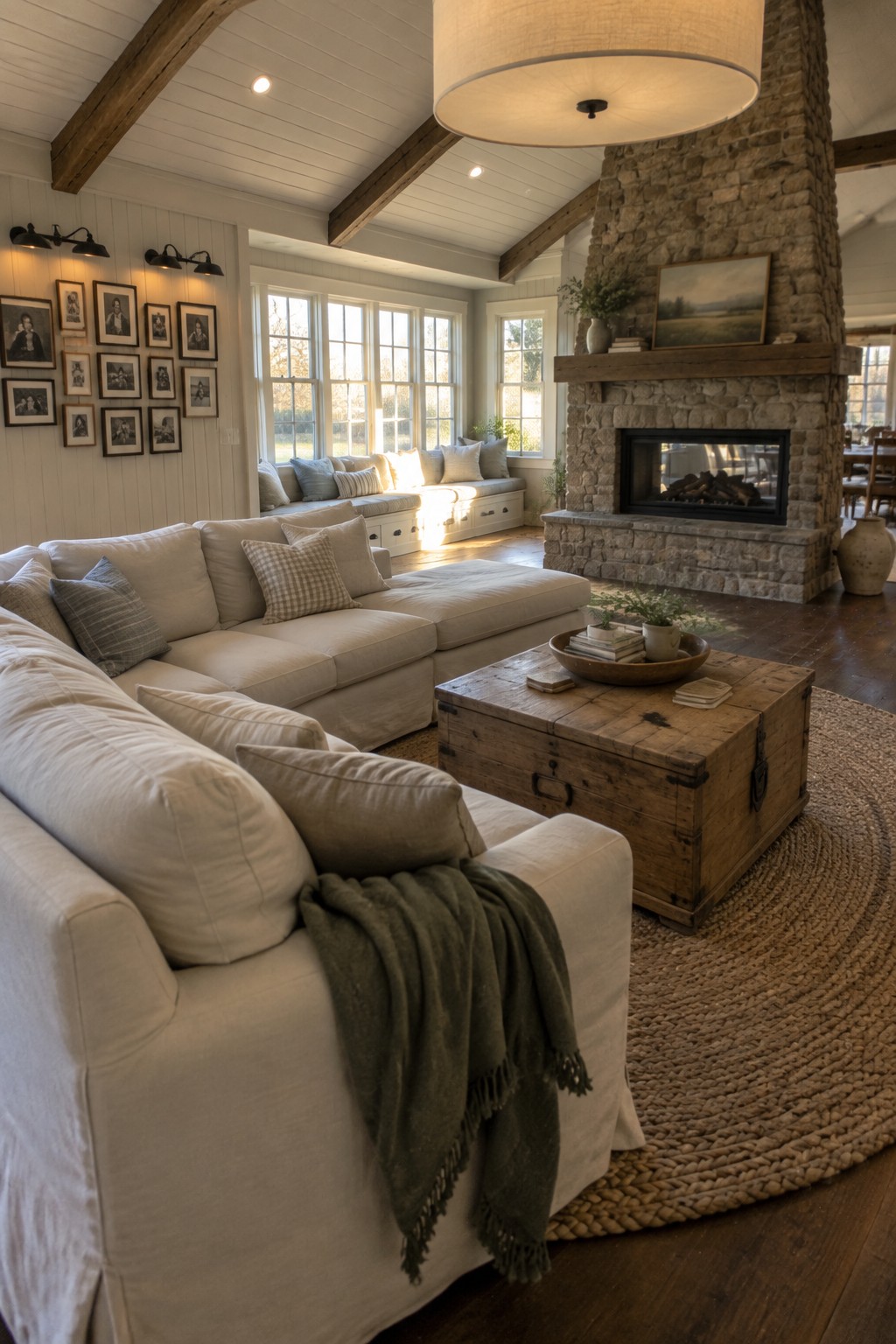
A big overhead pendant works well in rooms with high ceilings because it fills the space with soft ambient light without needing many fixtures. The wall sconces add a lower layer of light that keeps things balanced and helps the room feel warmer in the evening.
This setup suits older homes or open living areas where you want even light without a harsh overhead glare. Place the sconces at eye level near seating or windows and keep the pendant dimmable so you can adjust as the day changes.
Layer Linear Pendants With Track Lighting
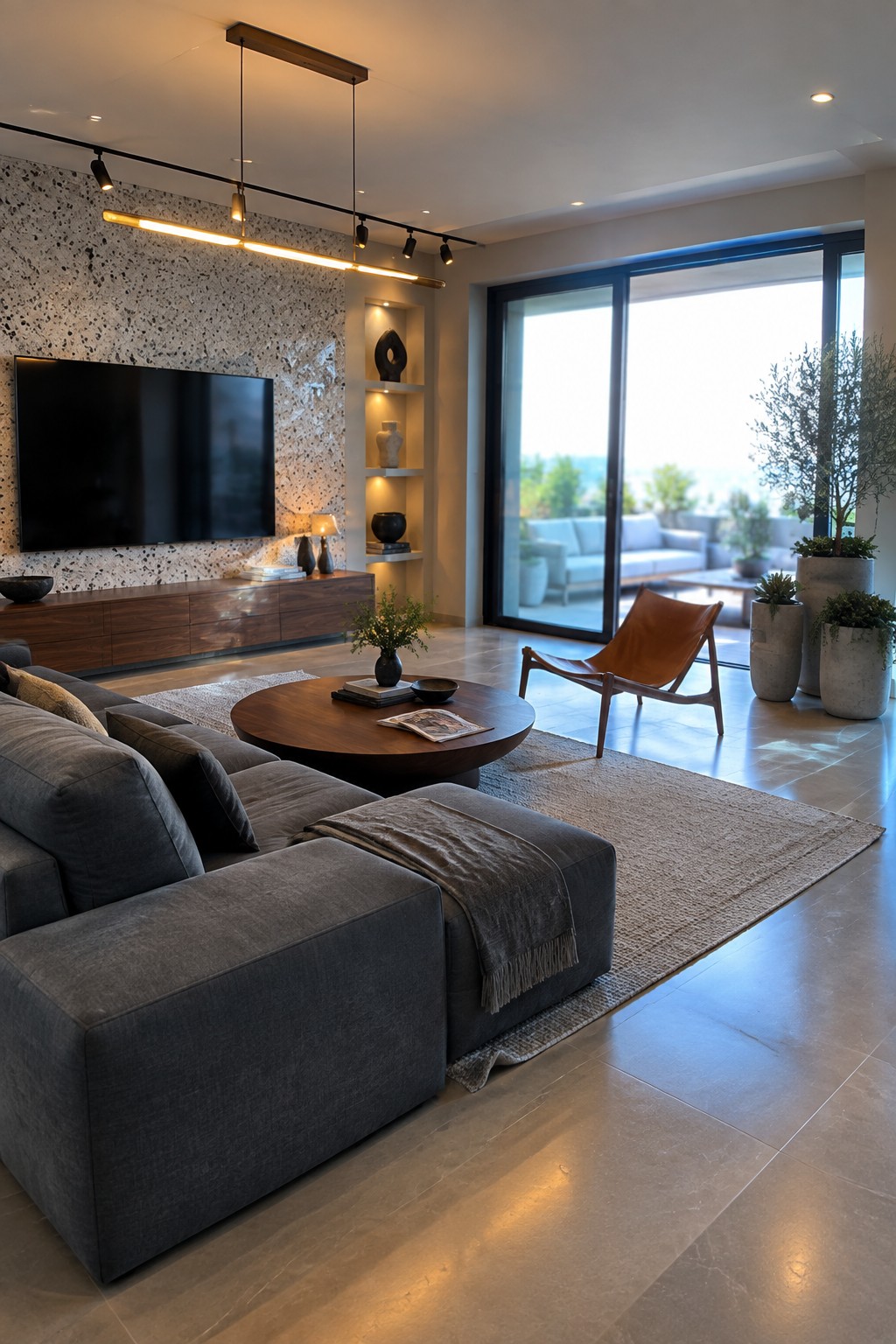
A single overhead fixture often leaves parts of a living room too dim or too harsh. Pairing a long linear pendant with a track system gives you steady ambient light across the seating area while letting you aim extra beams at art, shelves, or the television wall when needed.
This setup suits rooms with high ceilings and open floor plans. Run the track parallel to the main wall and hang the pendant low enough to feel connected to the furniture below, then add a few small lamps so the space never relies on just one source.
Layer Overhead Lighting With Smaller Lamps
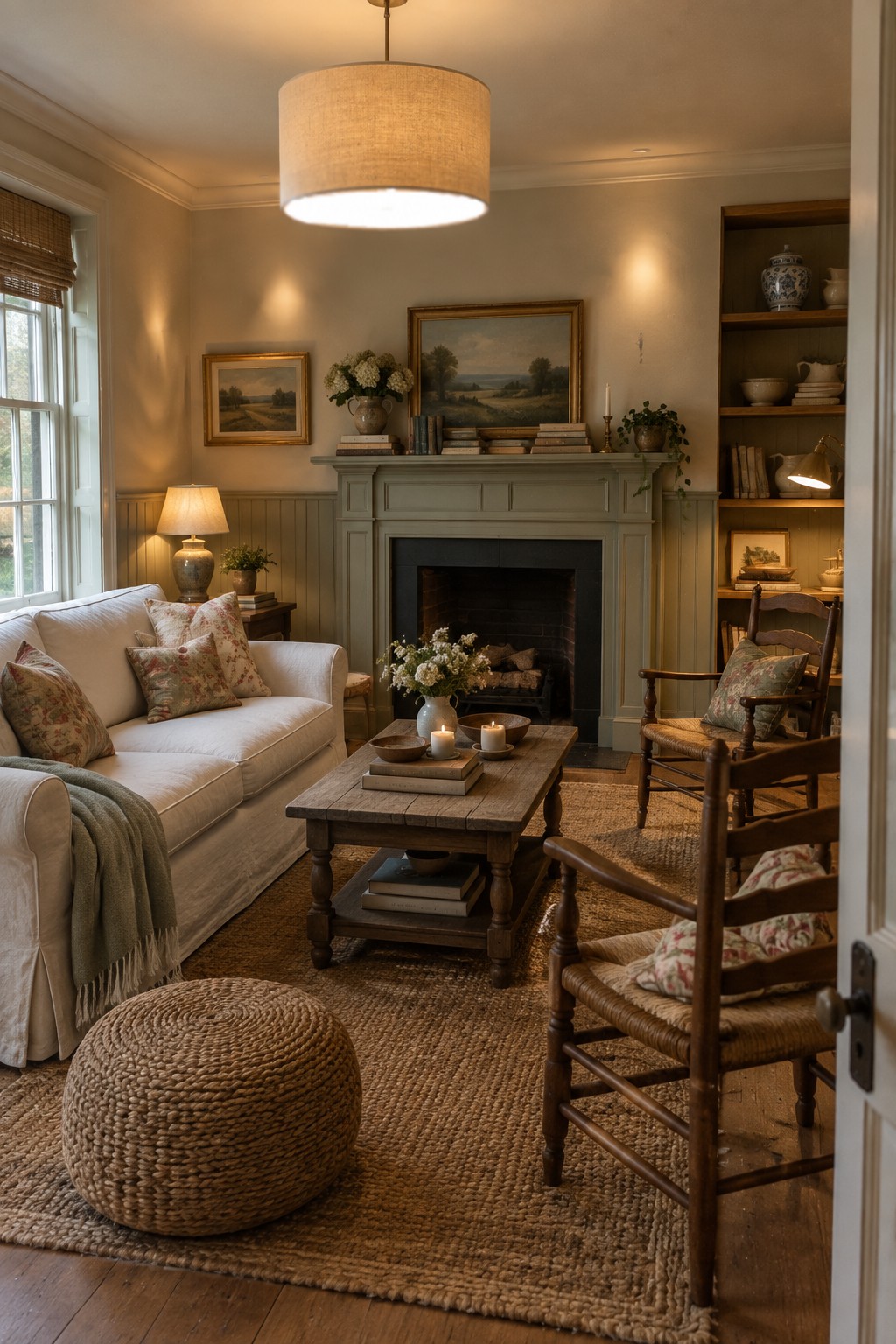
A large central pendant gives the room its main light, but the smaller lamps and candles keep it from feeling flat or harsh at night. This mix creates a softer, more comfortable space where you can read or just sit without everything feeling too bright at once.
It works especially well in older homes or rooms with lower ceilings, where one strong light source alone can feel too direct. Place one or two table lamps at different heights and add a few candles on the coffee table so the light spreads out naturally instead of coming from a single point.
Layer a Statement Chandelier with Accent Wall Lights
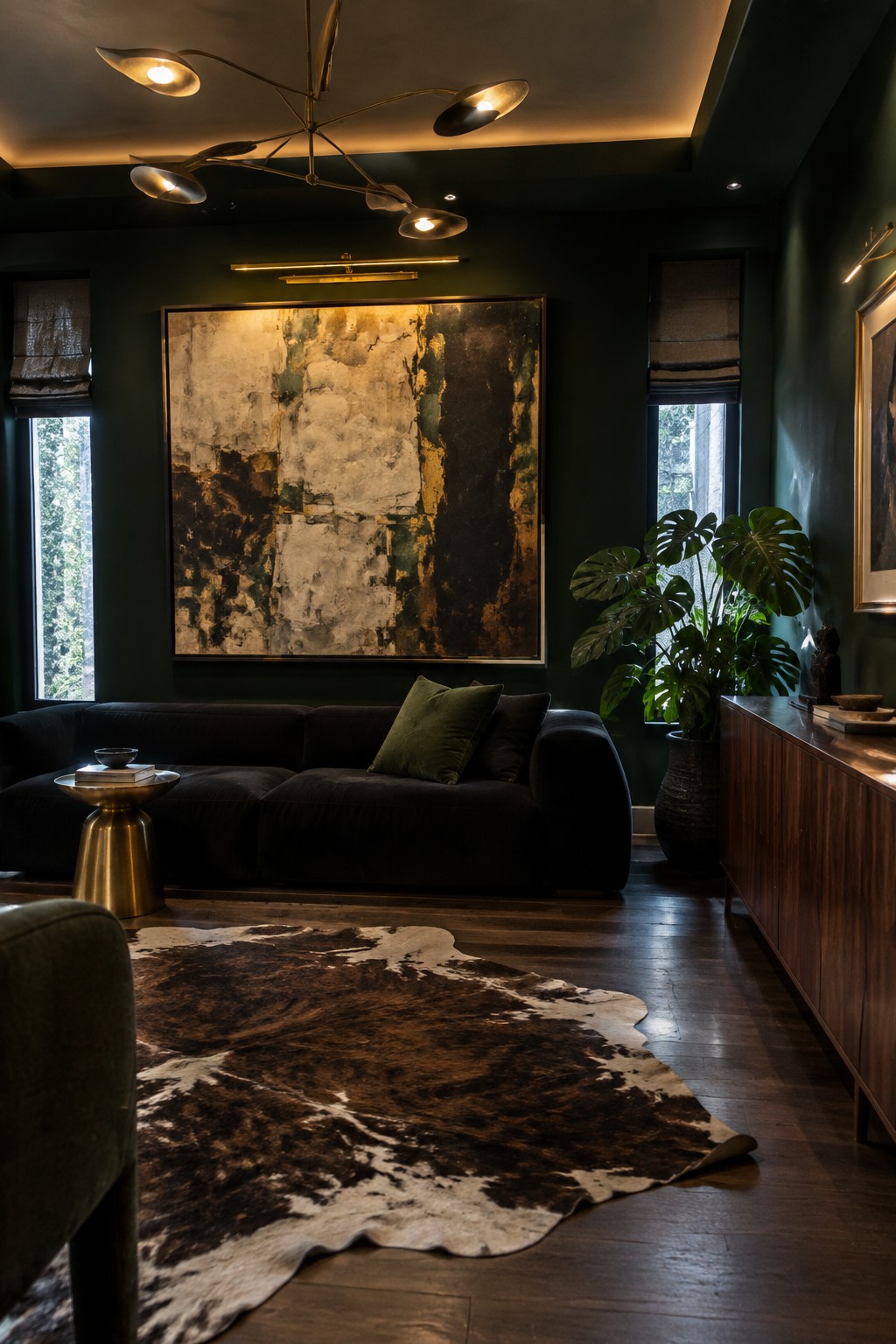
A big overhead fixture like the one in this room gives you the main layer of ambient light while smaller fixtures handle the rest. The result feels balanced instead of relying on one bright source that can wash everything out or leave corners too dark.
This approach works especially well in living rooms with darker walls or large artwork that needs its own light. Keep the chandelier on a dimmer and add a picture light or sconce to highlight one focal point. It suits spaces where you want flexibility for different times of day without overcomplicating the setup.
Layering Ambient Ceiling Lights With A Pendant
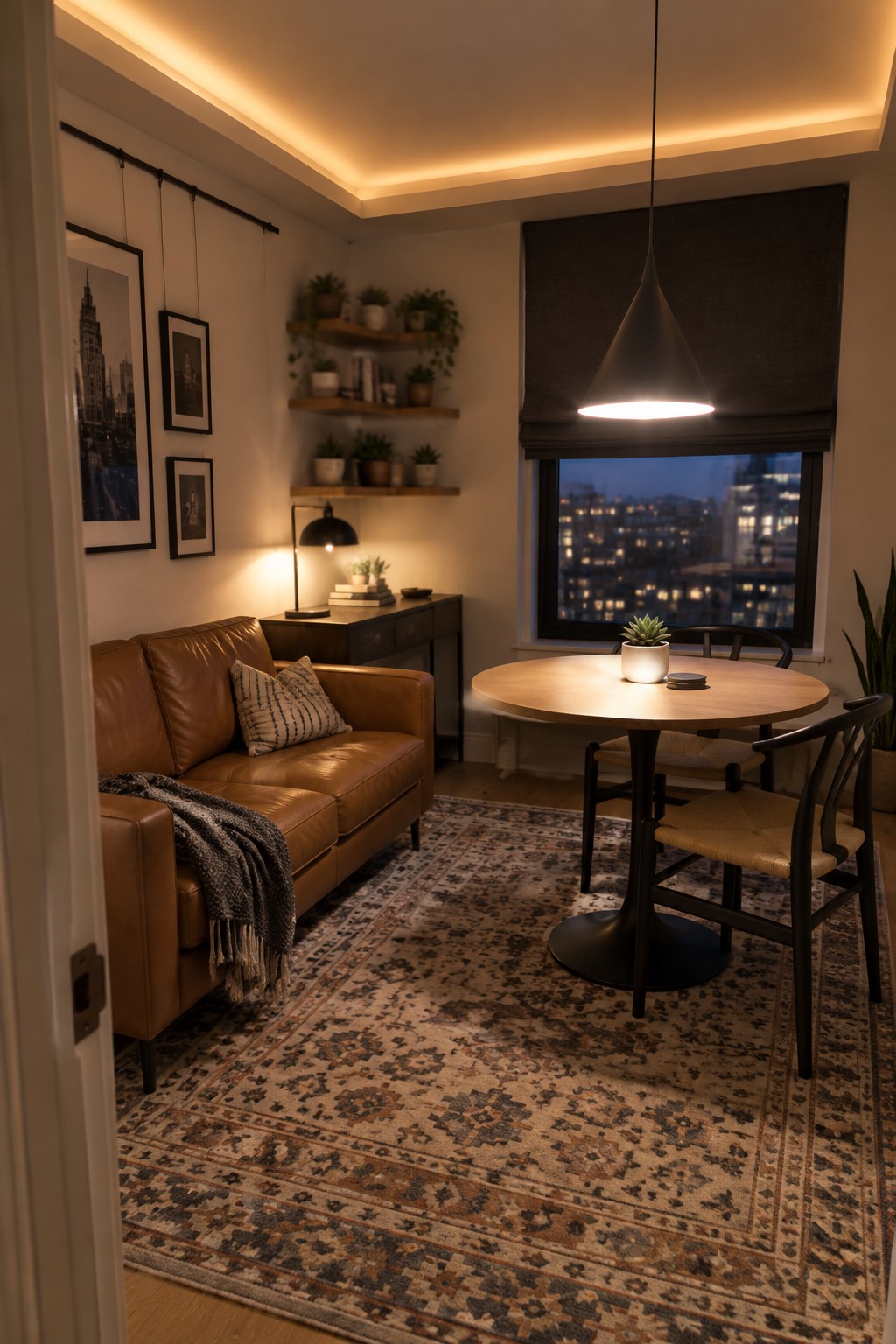
One simple way to improve lighting in a living room is to run a soft ambient source along the ceiling edges and add one focused pendant above a table. The cove detail spreads a gentle glow across the whole space while the pendant pulls attention to the seating area below it. This mix keeps the room from feeling either too dim or overly bright in one spot.
It suits smaller open layouts where you eat and relax in the same room. Keep the pendant low enough to define the table zone and let the ceiling light handle the rest of the space. Avoid adding too many extra lamps once these two layers are in place.
Layer a Chandelier with Accent Lighting on a Feature Wall
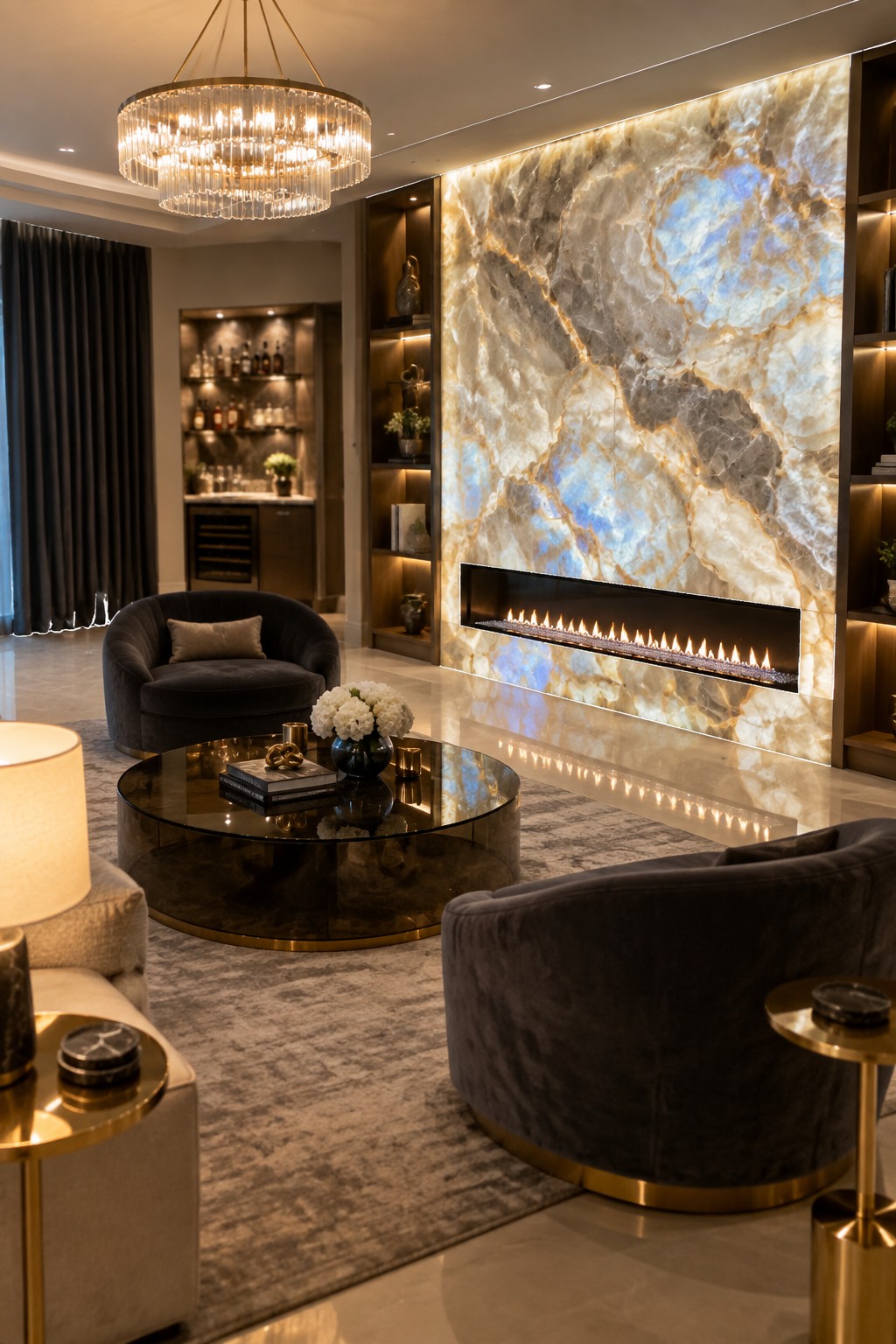
One simple way to get good lighting in a living room is to use a large chandelier for the main ambient light and then add accent lighting to a built-in feature like a fireplace wall. The two layers work together so the room feels bright when needed but still warm and calm at night.
This setup works best in bigger spaces where you have a natural focal point to highlight. Keep the accent light soft and tucked behind the material so it brings out the texture without overpowering the room. It suits homes that already have some built-in shelving or a strong architectural wall.
Layering Recessed Lights with Wall Sconces
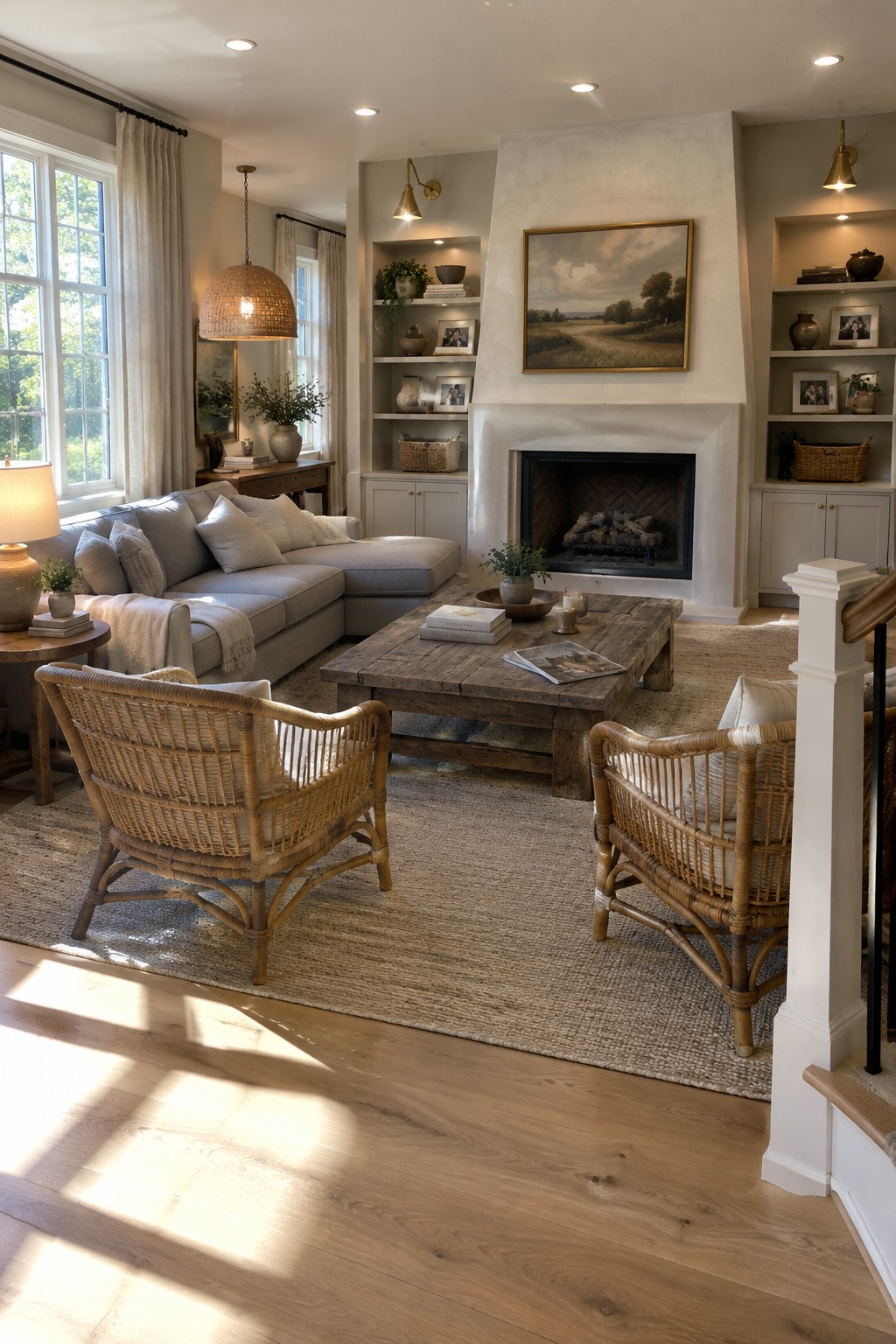
Wall scones placed on either side of a fireplace give a room steady background light without relying only on a single overhead source. In this setup the recessed ceiling fixtures handle the overall brightness while the sconces add a softer layer that highlights the shelves and mantel. The result feels balanced instead of flat, especially in the evening when you want the room to stay usable but not harsh.
This approach works best in rooms that already have built-ins or a strong focal wall. Place the sconces at eye level or slightly above the shelves so they wash the wall evenly. Keep the recessed lights on dimmers so you can shift from bright daytime light to a lower evening level without losing the accent glow from the sconces.
Cluster Pendants With Wall Sconces
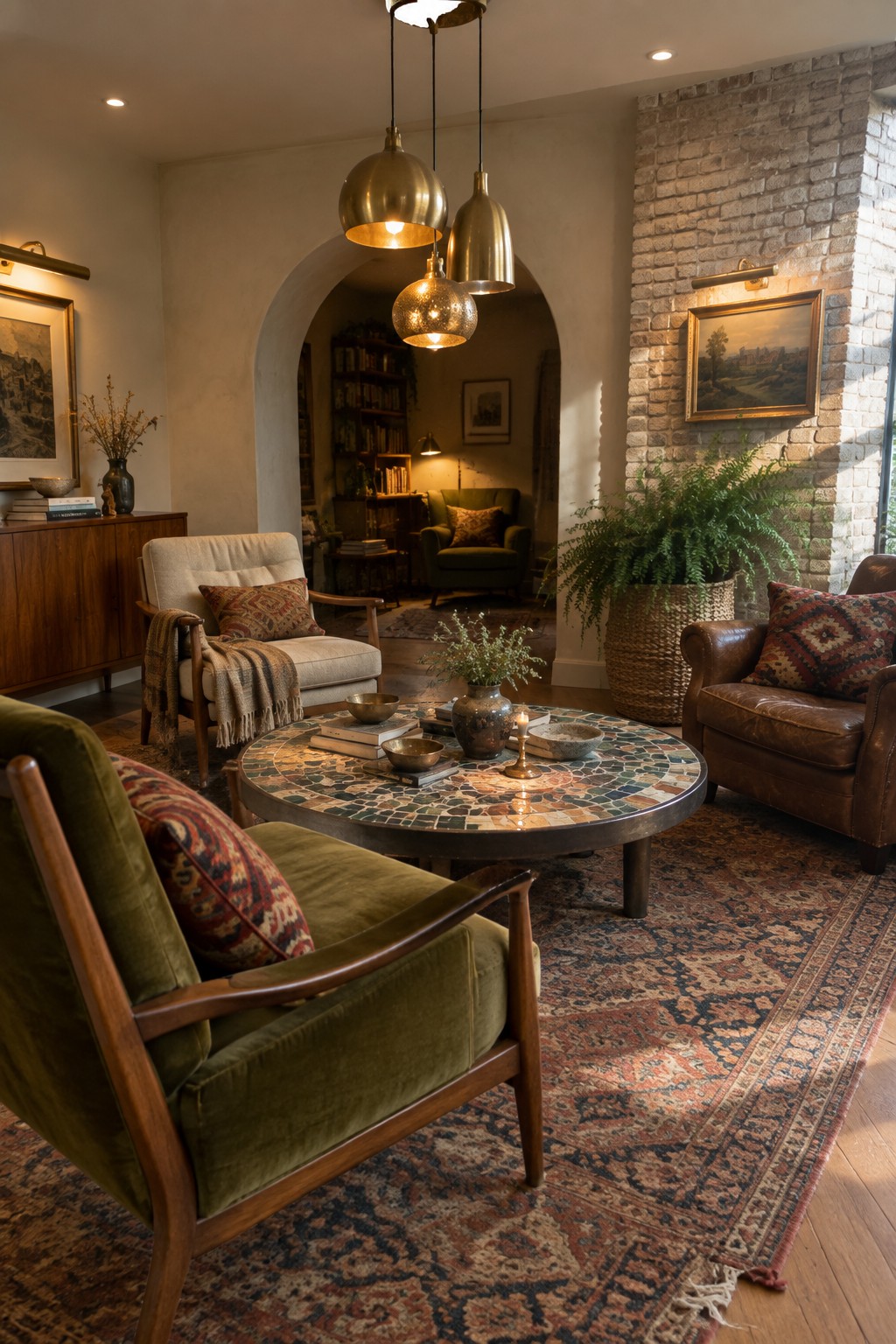
One simple way to get more depth in a living room is to hang a small group of pendants at slightly different heights over the main seating area. The varying levels keep the light from feeling flat while still giving enough overall brightness for the whole space.
This setup works best in rooms with higher ceilings or open layouts where a single fixture might look too small. Pair the pendants with a couple of wall sconces on the longest wall to add a second layer of light that feels softer in the evening. Keep the pendants fairly simple in shape so they do not compete with everything else going on in the room.
A Large Woven Pendant for Ambient Light
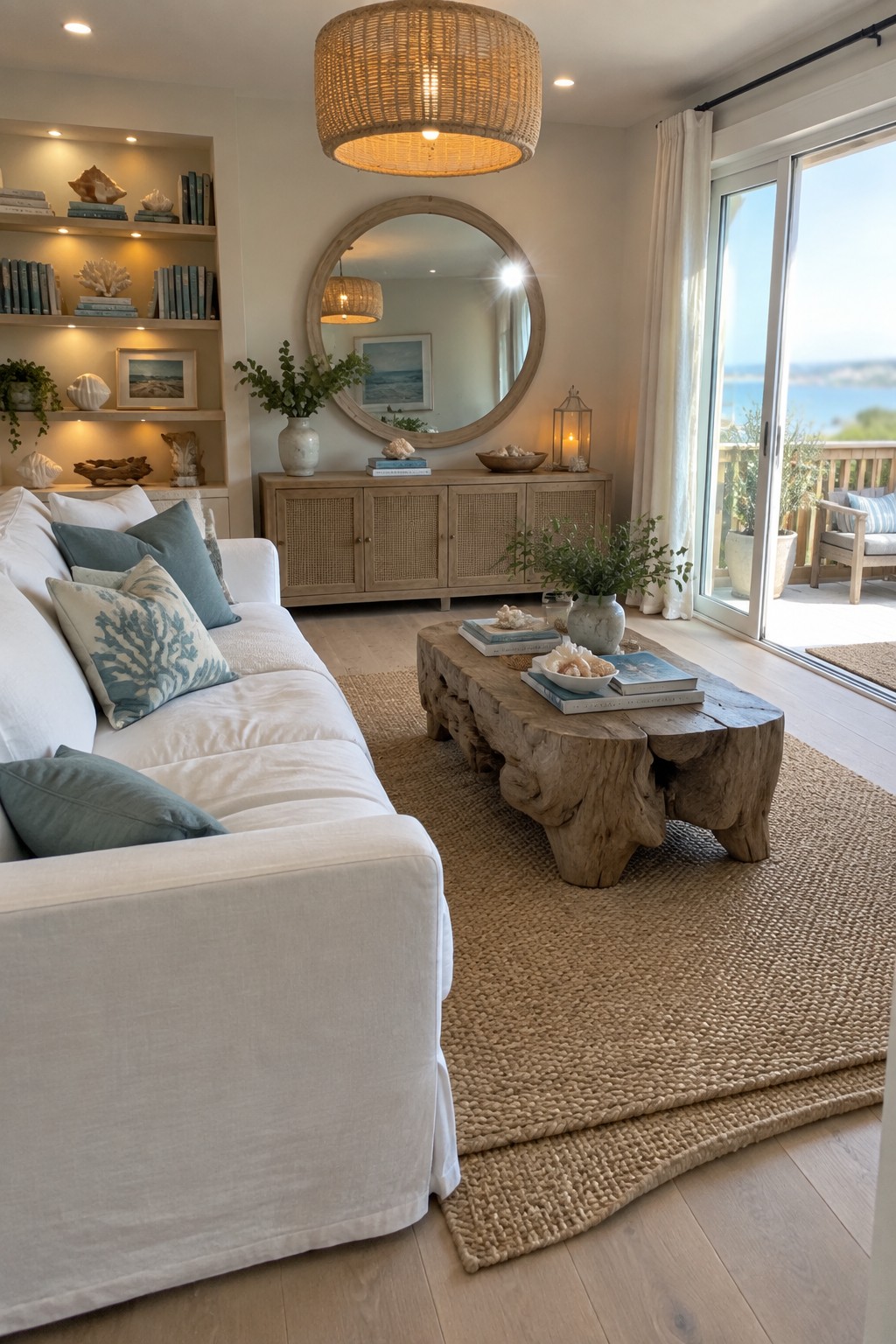
A big woven pendant like the one in this room does a good job of spreading soft ambient light across the whole space. The natural material diffuses the glow so it feels warm instead of bright and direct, which makes the room easier to relax in during the evening.
This approach works best in living rooms that already have some built-in or accent lighting on shelves or side tables. Keep the pendant on a dimmer so you can adjust it for different times of day, and let the smaller lights handle task areas. It suits homes with higher ceilings where a single overhead fixture needs to cover a wide area.
Layer Overhead Lights With Wall Sconces
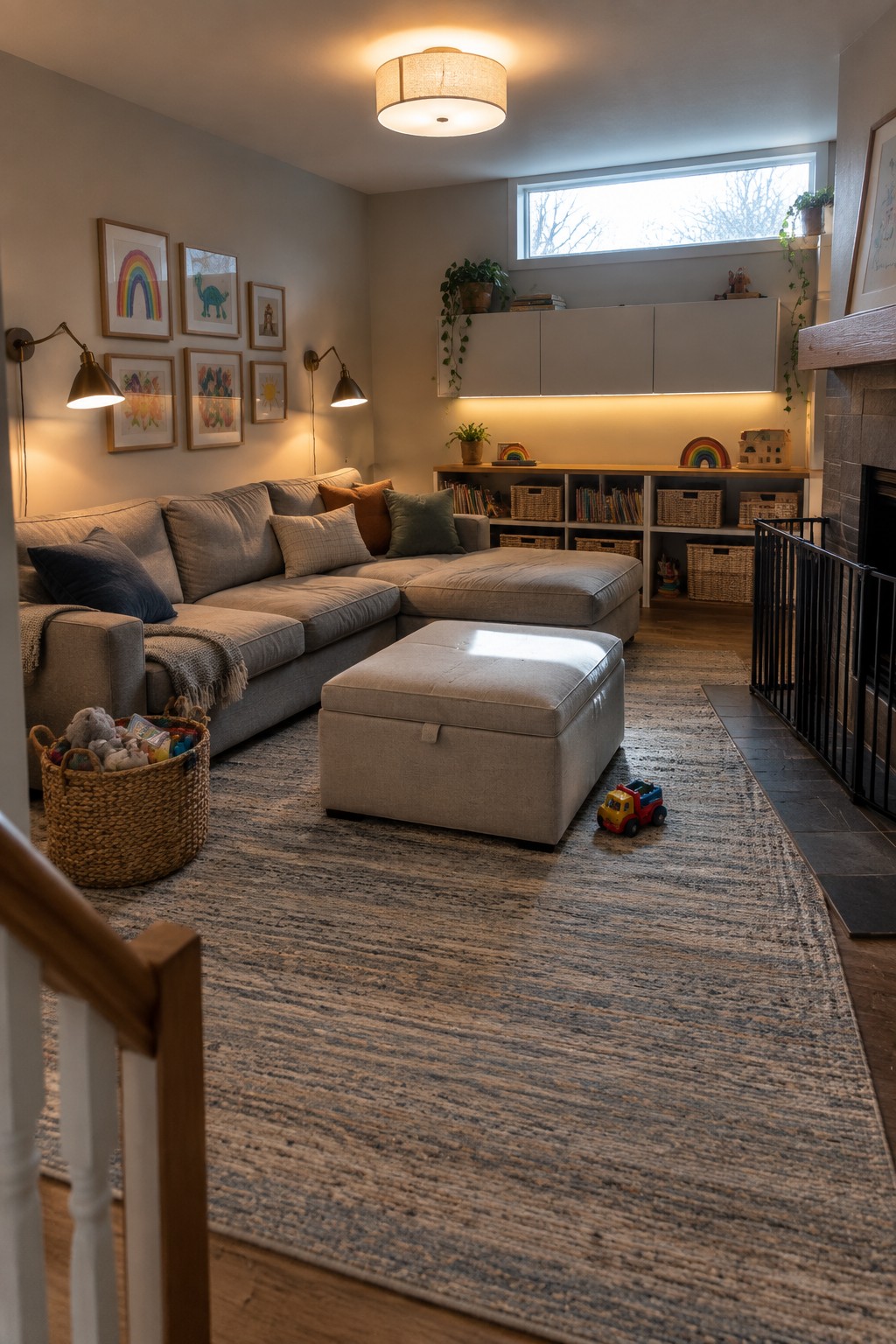
A ceiling fixture alone can leave the edges of a room feeling dim, especially once the sun goes down. Adding wall sconces on either side of the seating area fills in those gaps and keeps the light from feeling too centered in one spot.
This approach works best in family living rooms where you need flexible light levels throughout the day. Mount the sconces a bit above eye level so they spread light evenly across the sofa and nearby surfaces without glare.
Mix a Central Chandelier with Smaller Lamps
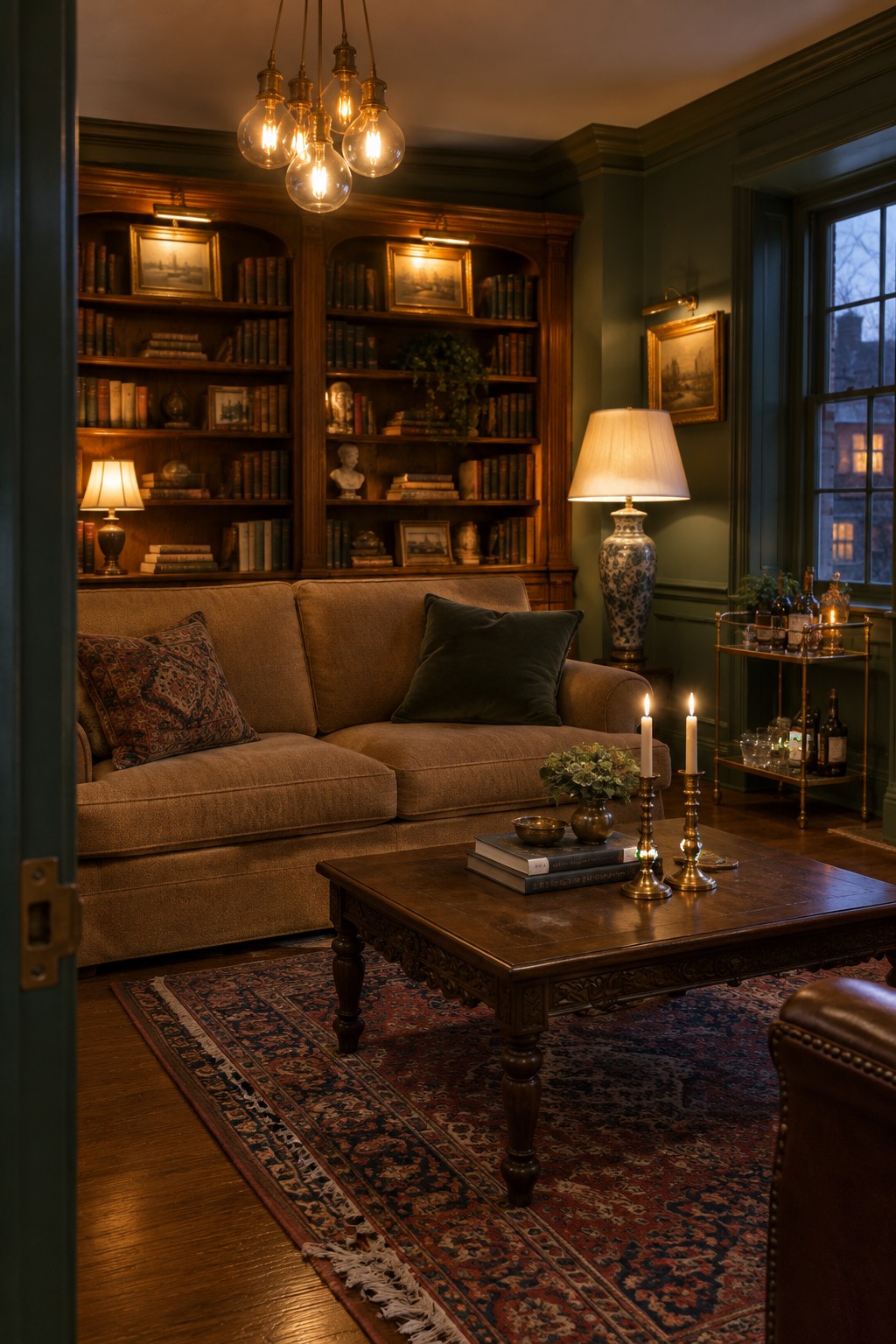
A big overhead fixture like a multi-bulb chandelier gives the room its main light, but it works better when you add smaller lamps around the edges. The table lamps on the shelves and the taller one near the window fill in the lower areas so nothing feels dark or flat. This mix keeps the space usable at night without relying on just one source.
This approach suits older homes with built-in shelves or traditional seating areas where you want light at different heights. Start with the ceiling piece for overall brightness, then add two or three lamps that you can turn on separately depending on the time of day. Watch the scale so the smaller lamps do not get lost next to larger furniture.
Layer a Chandelier With Wall Sconces and Lamps
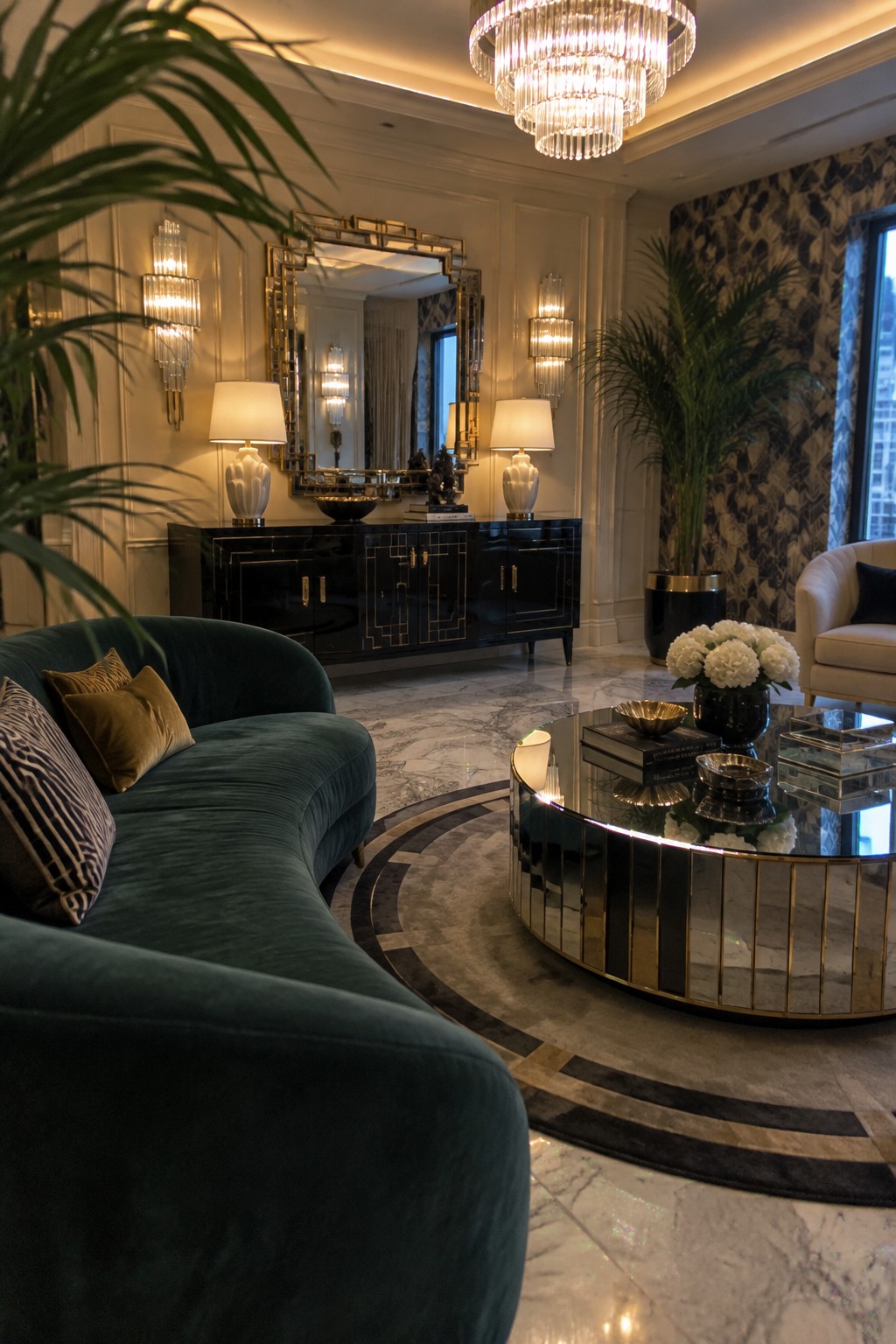
A single overhead light rarely feels enough in a living room. Adding sconces on the walls and lamps on side tables gives you more control over the mood and lets the room work for different times of day. The chandelier handles the general brightness while the smaller fixtures fill in the corners and create a softer feel once the sun goes down.
This approach works best in rooms that already have some height and wall space. Place the sconces at eye level on either side of a mirror or artwork, and keep the lamps lower so the light stays warm and even. It suits larger or formal living rooms where one light source would leave the space feeling flat or harsh.
Layer Track Lighting With Floor Lamps
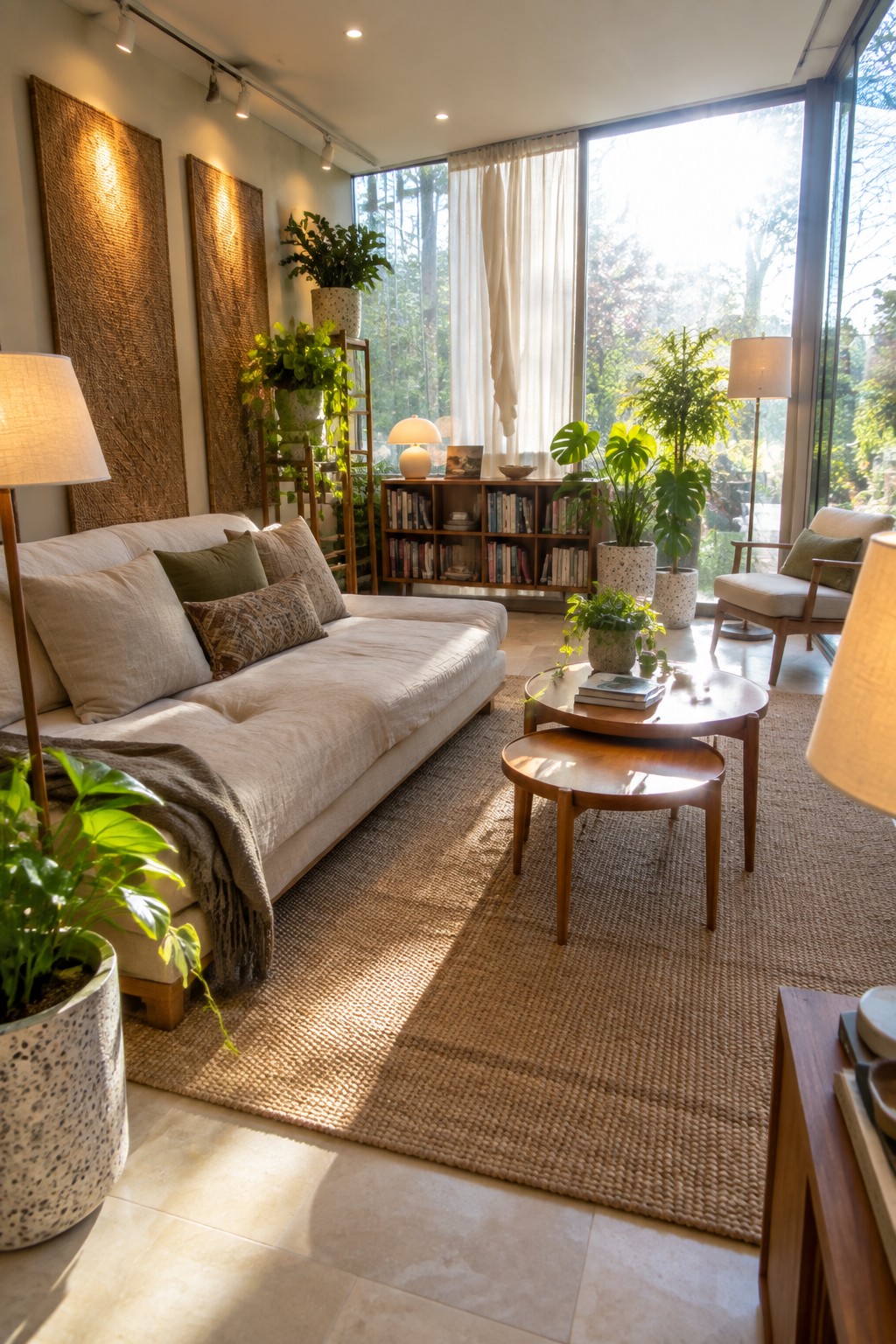
Track lights along the ceiling give a steady base of light across the whole room while floor lamps and table lamps fill in softer pools where people actually sit. This mix keeps the space from feeling either too dim or too flat once the sun goes down.
It works especially well in living rooms that get strong daylight through big windows. Place one or two taller lamps near seating and let the tracks handle the background so you can adjust each layer as the day changes.
Layer Pendant Lights With Built-In Shelf Lighting
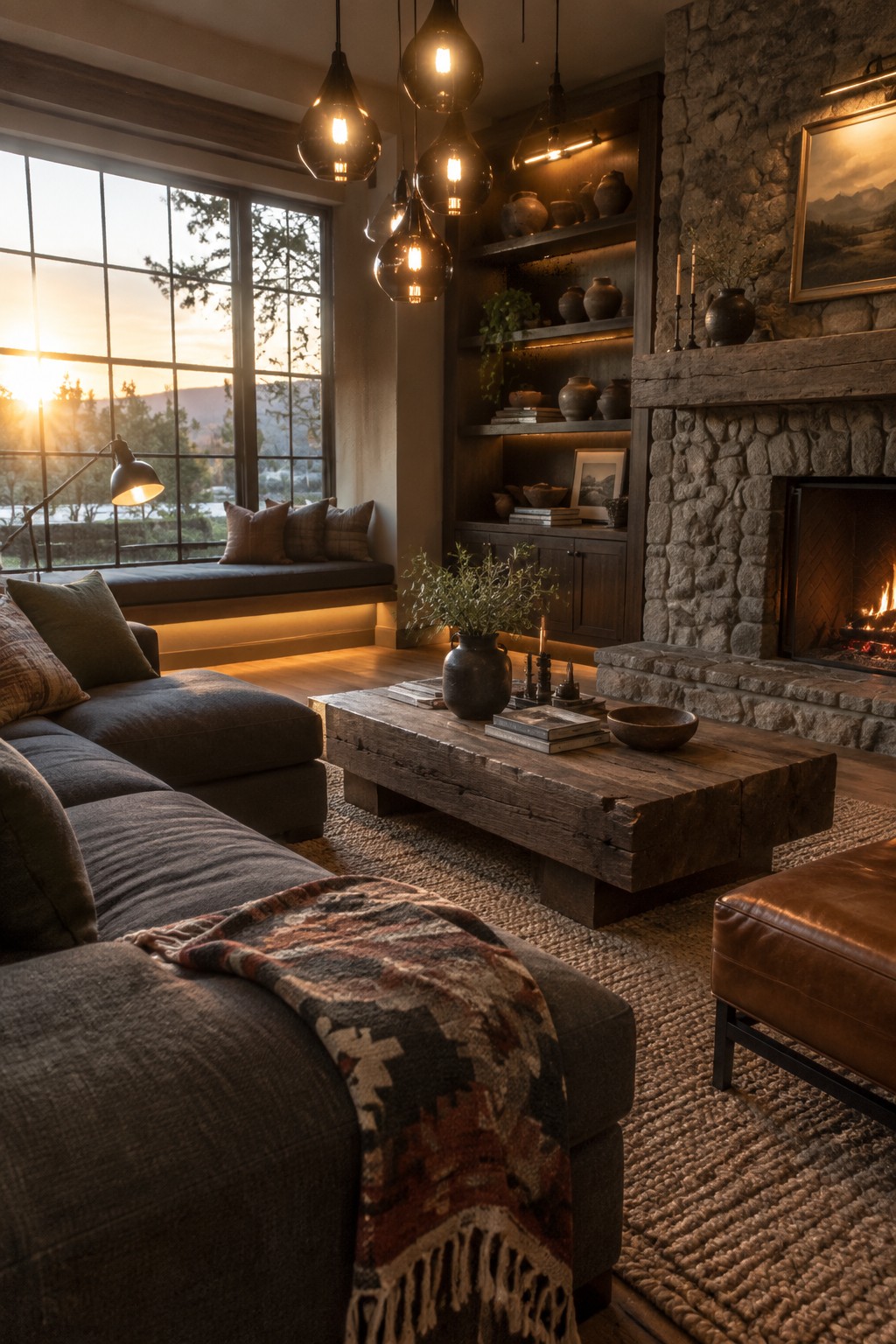
Many living rooms end up with flat lighting when everything comes from one source. Hanging a few pendants at different heights and adding small lights inside open shelves creates a warmer feel and gives you more control over the mood.
This approach works best in rooms with decent ceiling height and some built-in storage. Place the pendants over the main seating and keep the shelf lights on a separate switch so you can turn them down low in the evening without losing all the light in the space.
Layering Track Lights with Wall Sconces
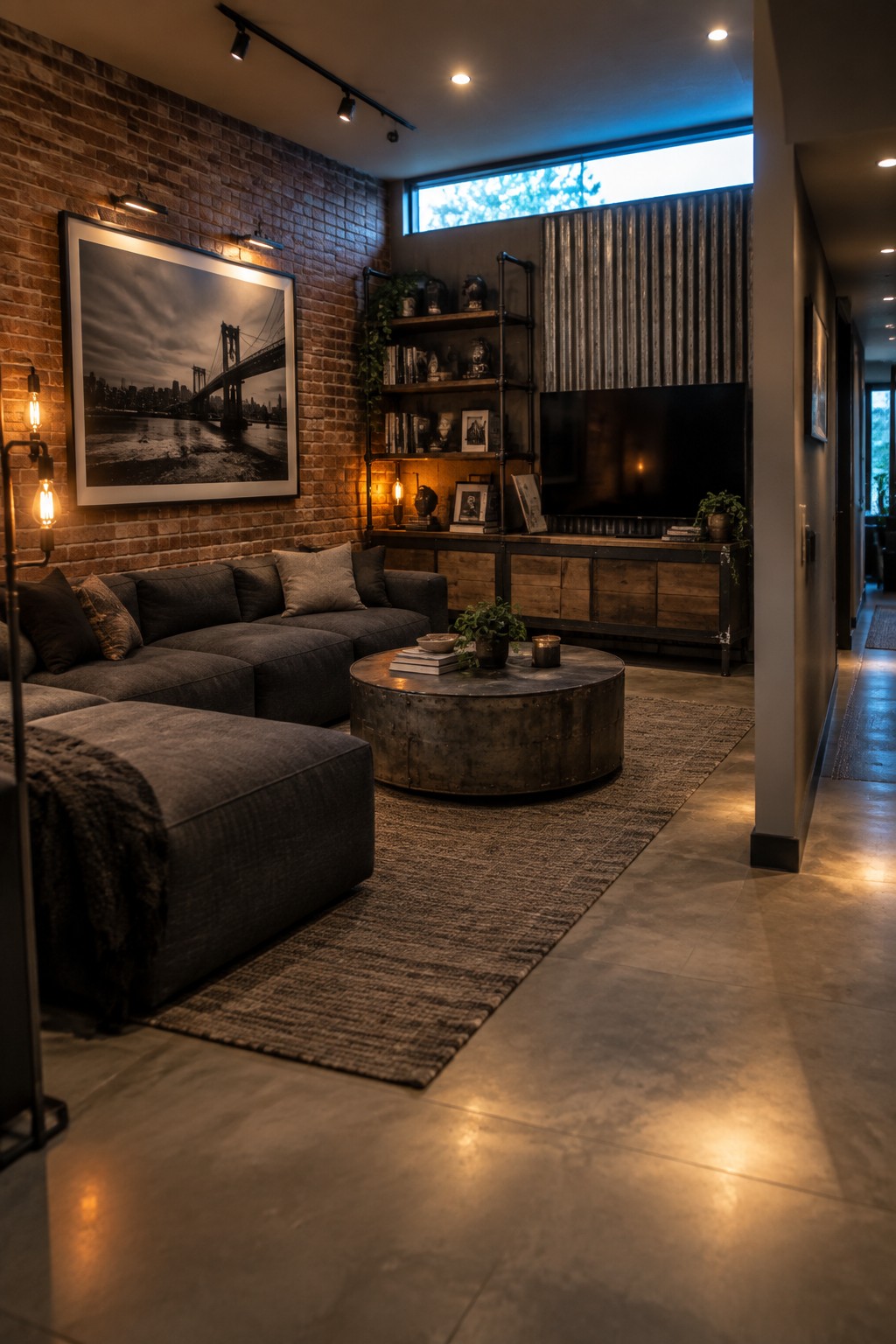
Track lighting handles the main ambient layer while wall sconces add focused light on the brick and artwork. This mix keeps the room from feeling flat at night and lets you adjust brightness depending on the time of day or what you are doing. The sconces also bring out the texture in the brick without needing extra lamps everywhere.
This setup works well in living rooms with exposed brick or similar textured walls. Place the track lights on a dimmer so you can soften them, then use the sconces to highlight one or two key spots. It suits spaces that already have some industrial character and gives you control without cluttering the floor with too many lamps.
Frequently Asked Questions
Q: How do I keep my floor lamp from washing out the softer glow from a nearby table lamp? A: Place the floor lamp behind a chair or sofa so its light hits the ceiling first. This bounces a gentle fill around the seating area while the table lamp stays low and focused. The two sources then build layers instead of fighting each other.
Q: What height works best for wall sconces if I want them to count as accent lighting? A: Hang them about five feet off the floor so the beam lands at eye level on artwork or a textured wall. That placement adds depth without shining straight into anyone’s eyes. Test the angle once after dark and shift them an inch or two if the light feels too high.
Q: Can I skip a ceiling fixture and still get enough ambient light from lamps alone? A: Yes, if you use three or four table and floor lamps spread across the room. Keep their shades open at the top so light reaches upward and fills the space evenly. The key is spreading them out rather than clustering everything in one corner.
