

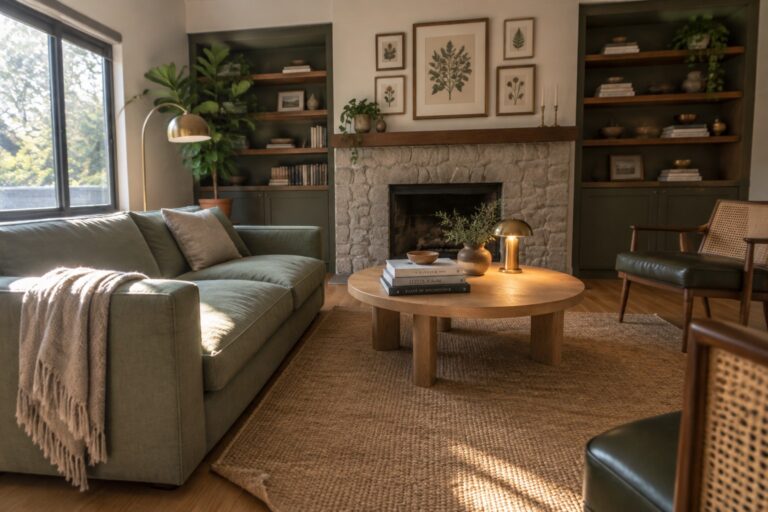
Living rooms end up feeling more settled when the main color has some depth instead of staying flat on the walls.
Sage and olive work especially well because they shift a bit depending on the light and what is next to them.
Forest tones need careful placement.
I usually start by seeing how a new shade pairs with the existing sofa and rug before committing to anything bigger.
That way the whole room comes together without needing a full overhaul.
Green Built-Ins For A Living Room
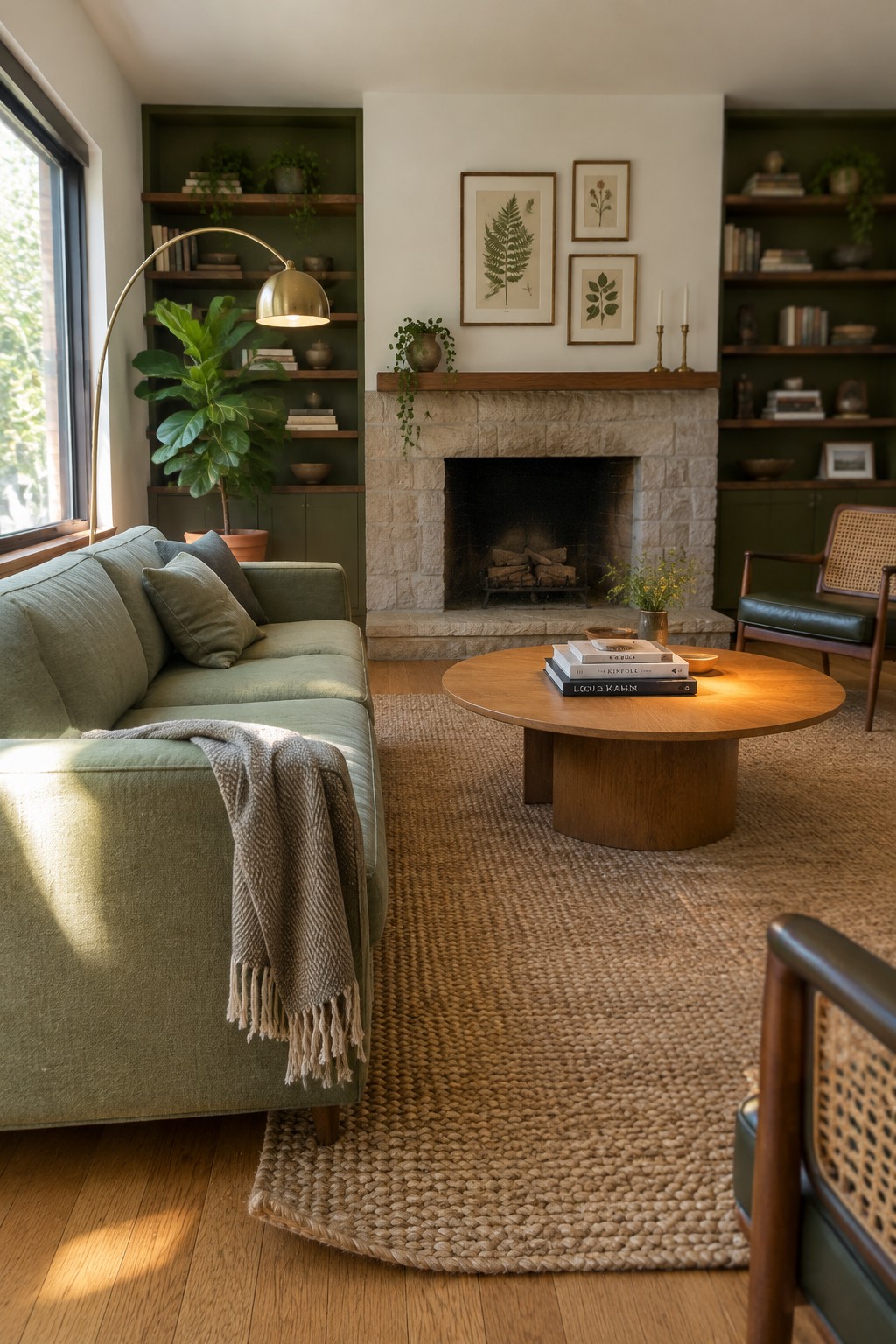
Painting built-ins in a deep olive or forest green gives the room a solid base that lets lighter sage tones on the sofa stand out without feeling scattered. The color on the shelves also pulls in the stone around the fireplace and keeps the whole space from looking too light or washed out.
This works best in rooms that already have some wood or stone, since the green adds warmth rather than competing with those materials. Try it on a smaller scale first if you are unsure, like one wall of shelves, and keep the rest of the room simple so the green does not overwhelm the space.
A Curved Sofa In Forest Green
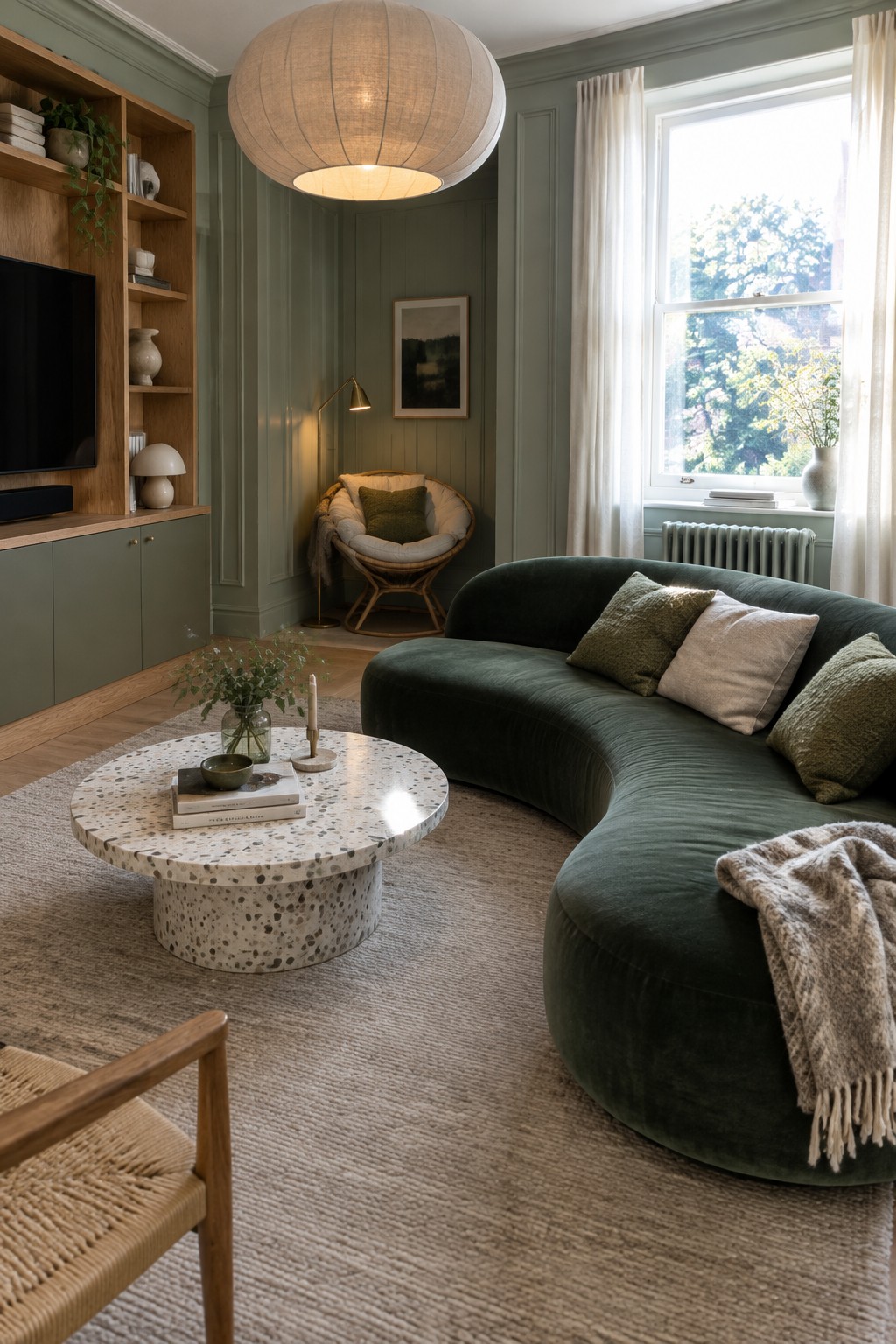
A curved sofa in forest green gives a living room real presence without feeling heavy. The rounded shape softens the layout and the deep tone adds weight that works nicely against lighter sage walls. It creates a natural gathering spot that still leaves the room feeling open.
This approach suits spaces that already have wood tones or simple built-ins. Keep the rest of the palette tonal so the sofa stays the focus, and make sure the curve has enough room to breathe rather than crowding a tight corner.
Paint Built-Ins the Same Color as the Walls
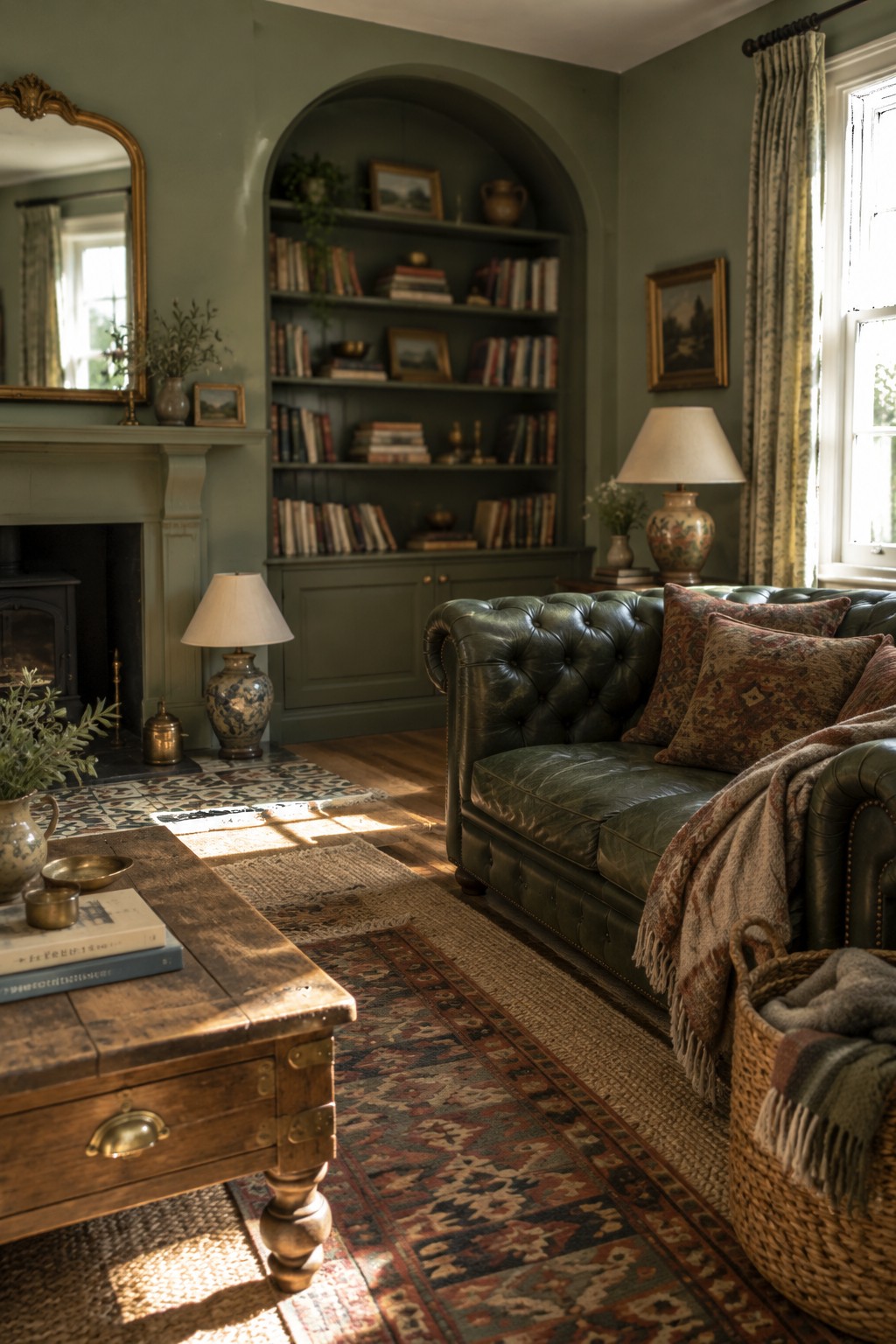
Matching the paint on built-in shelves and cabinets to the wall color creates a calm, pulled-together look that works especially well with green tones. The room feels more spacious because the eye moves smoothly across the surfaces instead of stopping at every edge. It also lets the darker sofa and wood furniture stand out without competing with the background.
This approach suits older homes or any space with existing alcoves and cabinetry. Keep the green consistent but vary the texture slightly with lamps, books, and textiles so the room does not feel flat. It works best in medium to large living rooms where you want a library feel without adding more contrast.
Let A Forest Green Sofa Anchor The Room
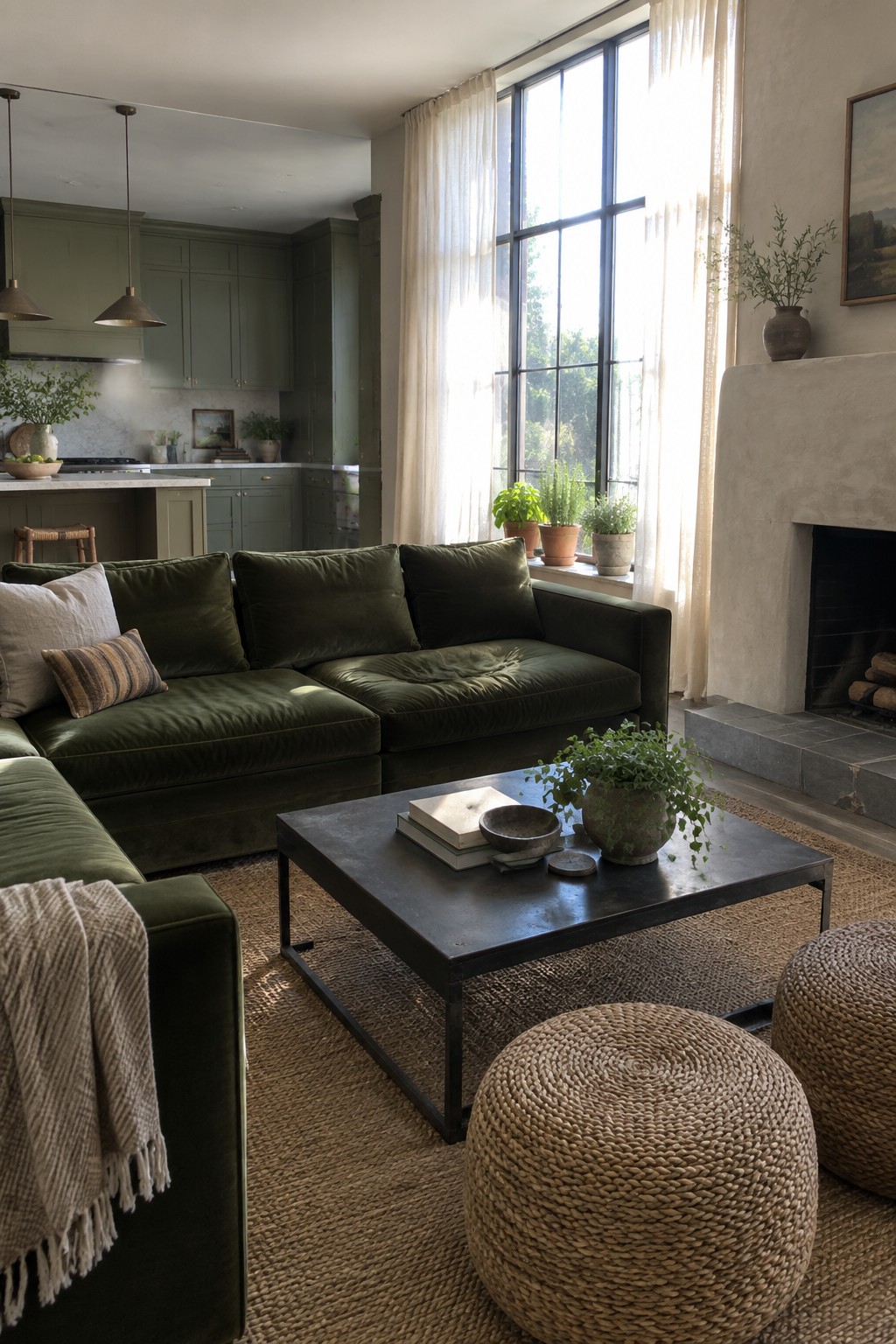
A deep forest green sofa gives a living room real weight without trying too hard. It stands out against lighter walls and natural textures, and it makes the whole space feel settled even when the rest of the furniture stays simple.
This approach works best in rooms that get steady daylight. Keep the floors and rugs in warm neutrals, add a few woven pieces for contrast, and let the green do the main job. Too many dark layers on top of it can close the space in, so hold back on extra heavy pieces.
Layering Sage And Forest Greens In One Room
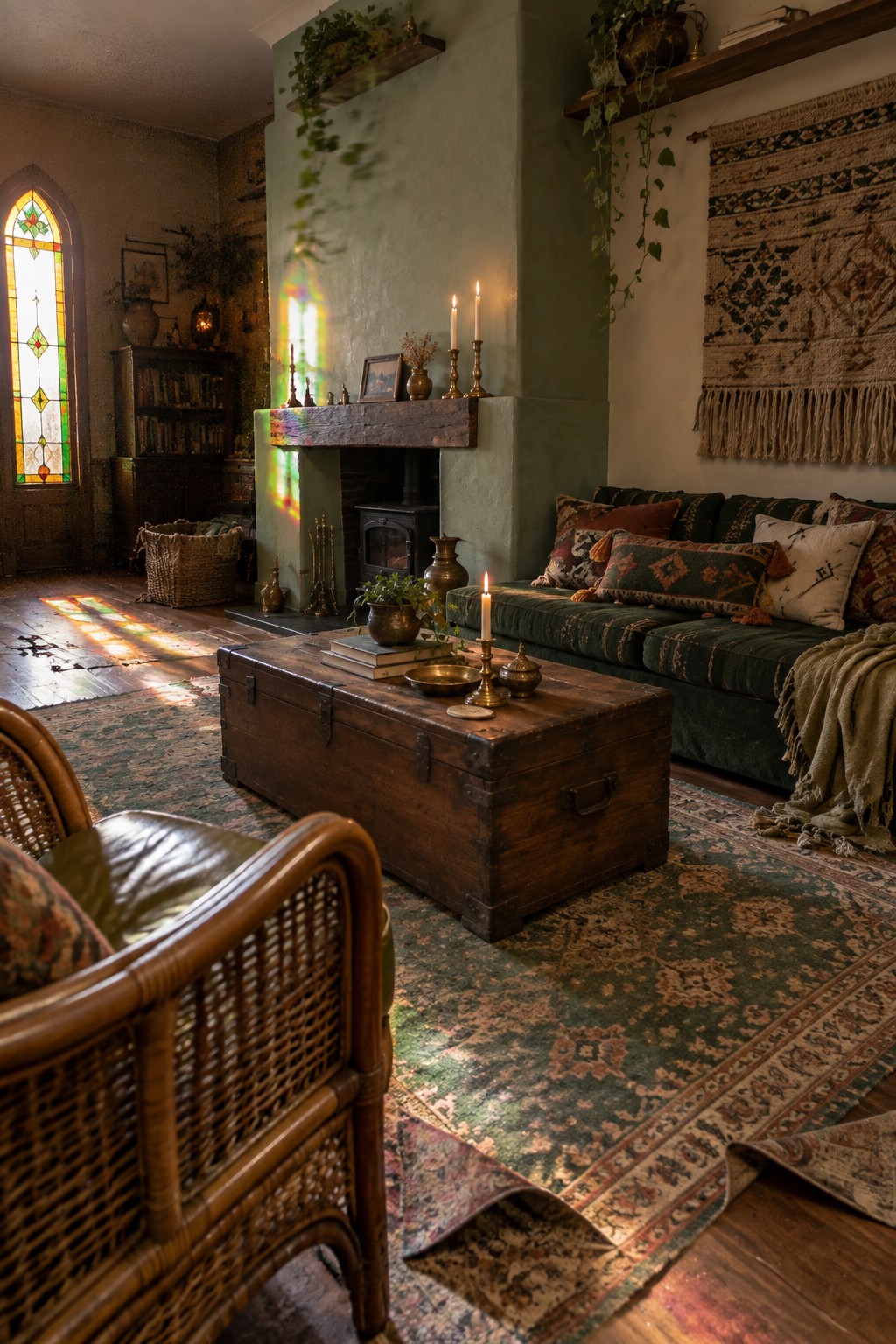
Mixing a soft sage on the walls with a deeper forest green on the sofa gives the room a calm, grounded feel without extra color. The wood tones in the floor and trunk help keep the greens from feeling too heavy or flat.
This approach works best in rooms that already have some natural wood or older details. Use the lighter green on the walls and save the richer shade for bigger pieces like seating. Too many patterns can start to compete, so keep the rest of the room simple.
Sage Green Walls For A Calm Living Room
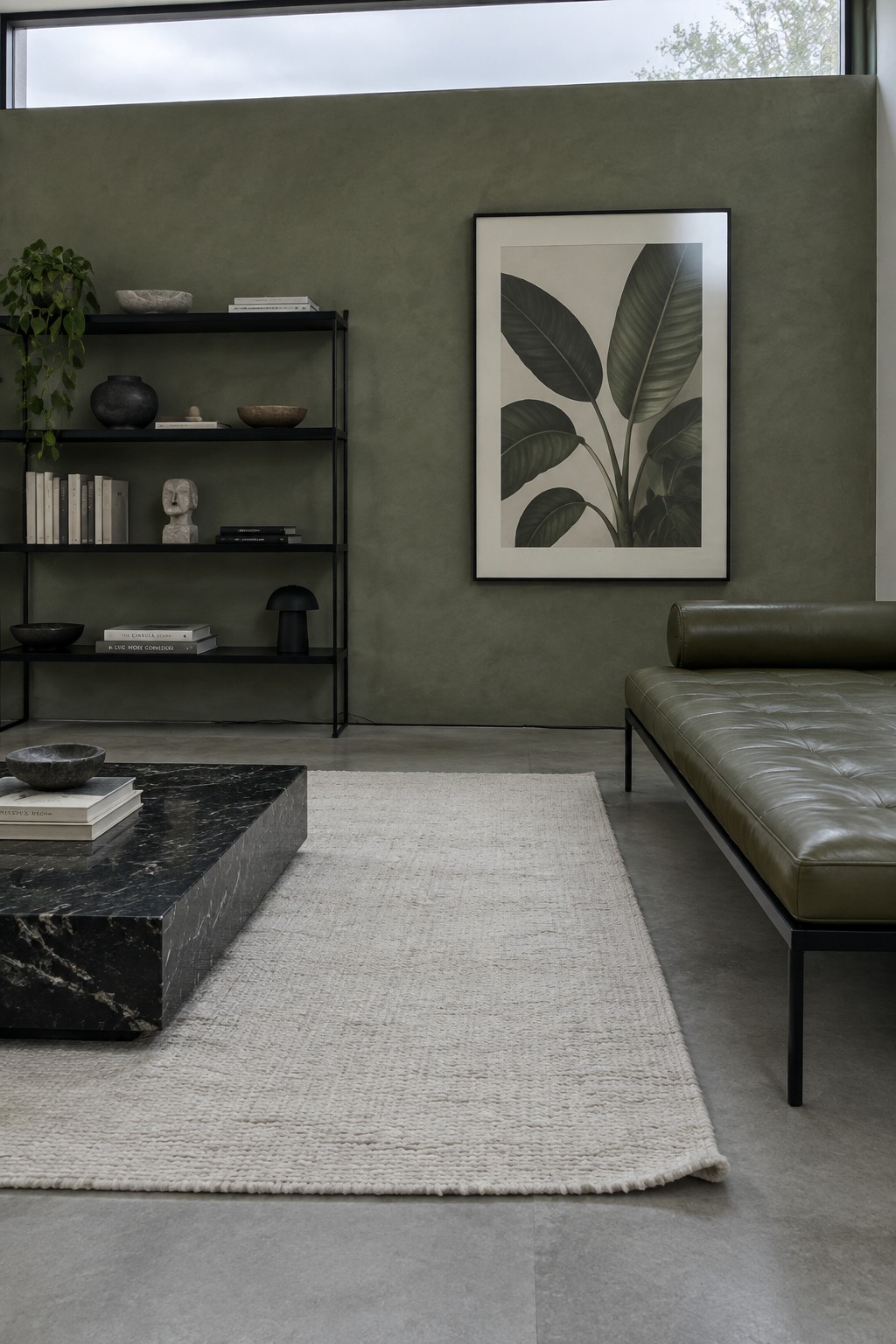
Painting living room walls a soft sage or olive green gives the space a steady, quiet feel that still reads as light. The color sits back nicely behind furniture and lets other materials like leather and stone come forward without competing.
This approach works best in rooms that get decent daylight and already have a few darker pieces. Keep the trim simple and let the green do the work. It suits homes that want a natural tone without going full forest or risking a heavy look.
Forest Green Walls in Living Rooms
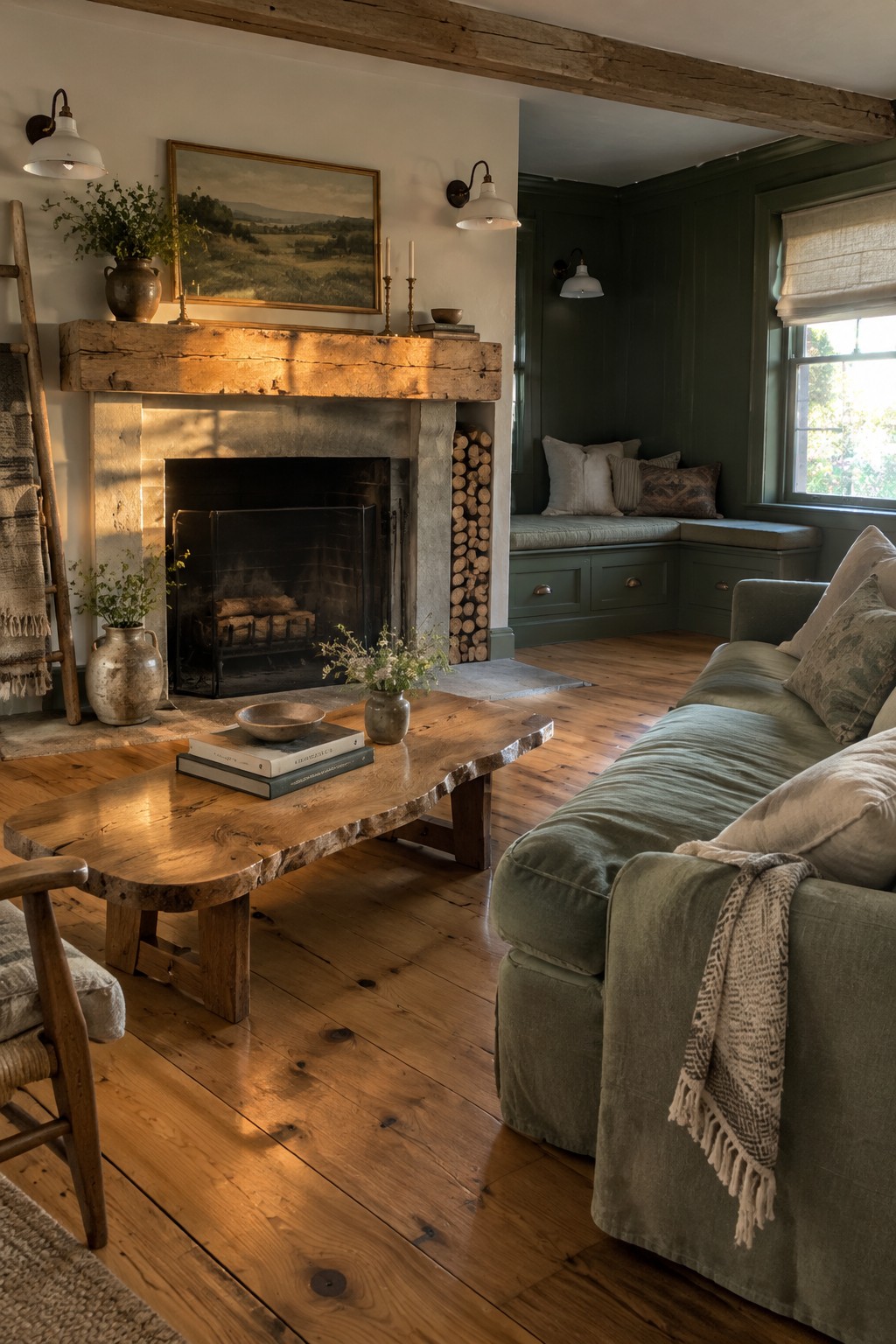
Forest green walls give a living room a settled, grounded feeling that works especially well with natural wood. The deep tone pairs nicely with lighter sage on seating and keeps the space from feeling stark even when the furniture stays simple.
This color choice suits older homes or rooms with wood trim and beams already in place. It works best with good natural light and a few lighter accents so the green does not close the room in too much.
Forest Green Walls And Ceiling
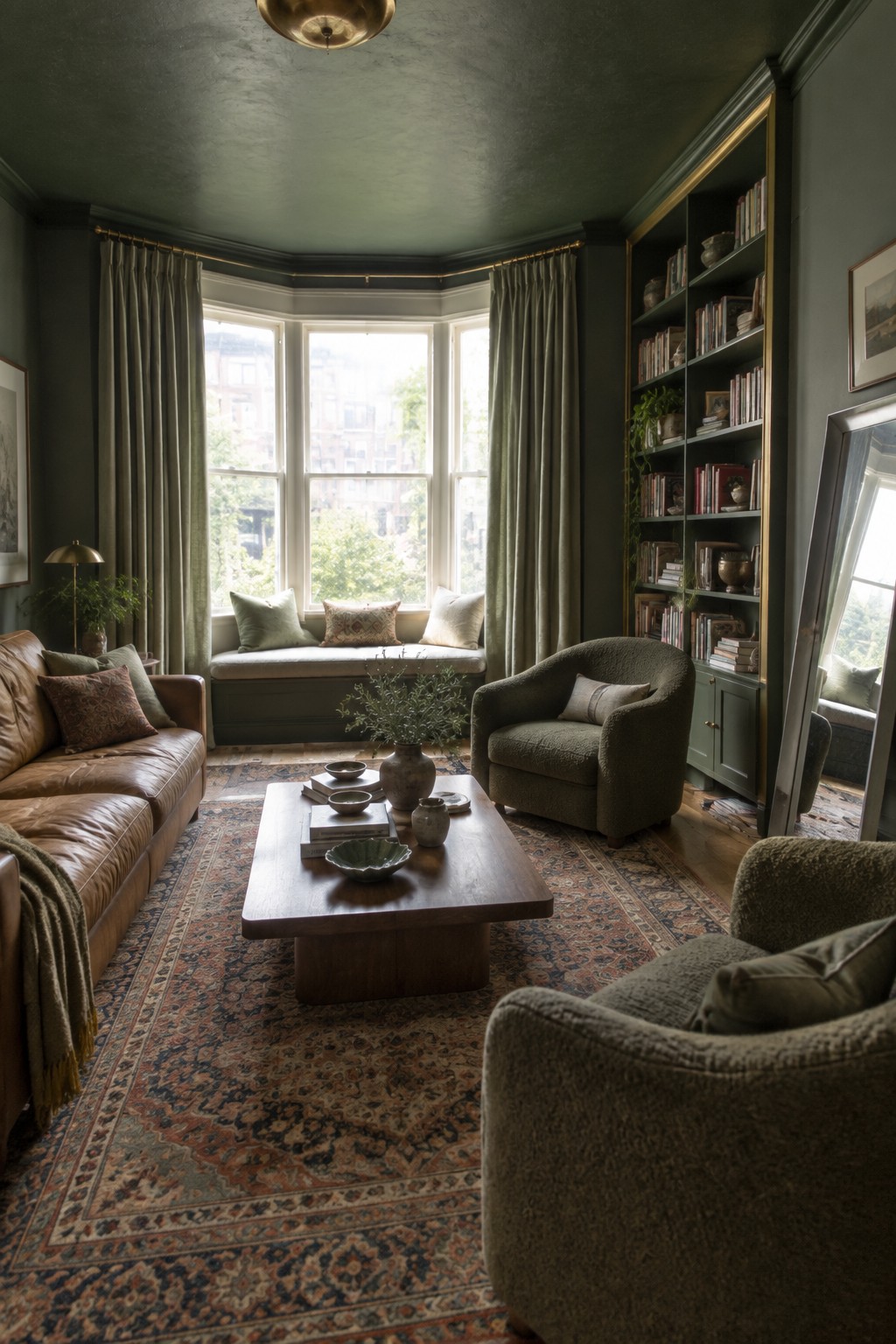
Painting the walls and ceiling the same deep forest green gives a living room a quiet, enclosed feeling. It turns the space into something more like a library or study, where the color wraps around everything instead of stopping at the corners.
This approach suits rooms that already have good natural light and wood floors. Keep the rest of the room simple with brown leather, warm wood, and textured fabrics so the green does the main work without feeling heavy.
Layering Different Green Tones
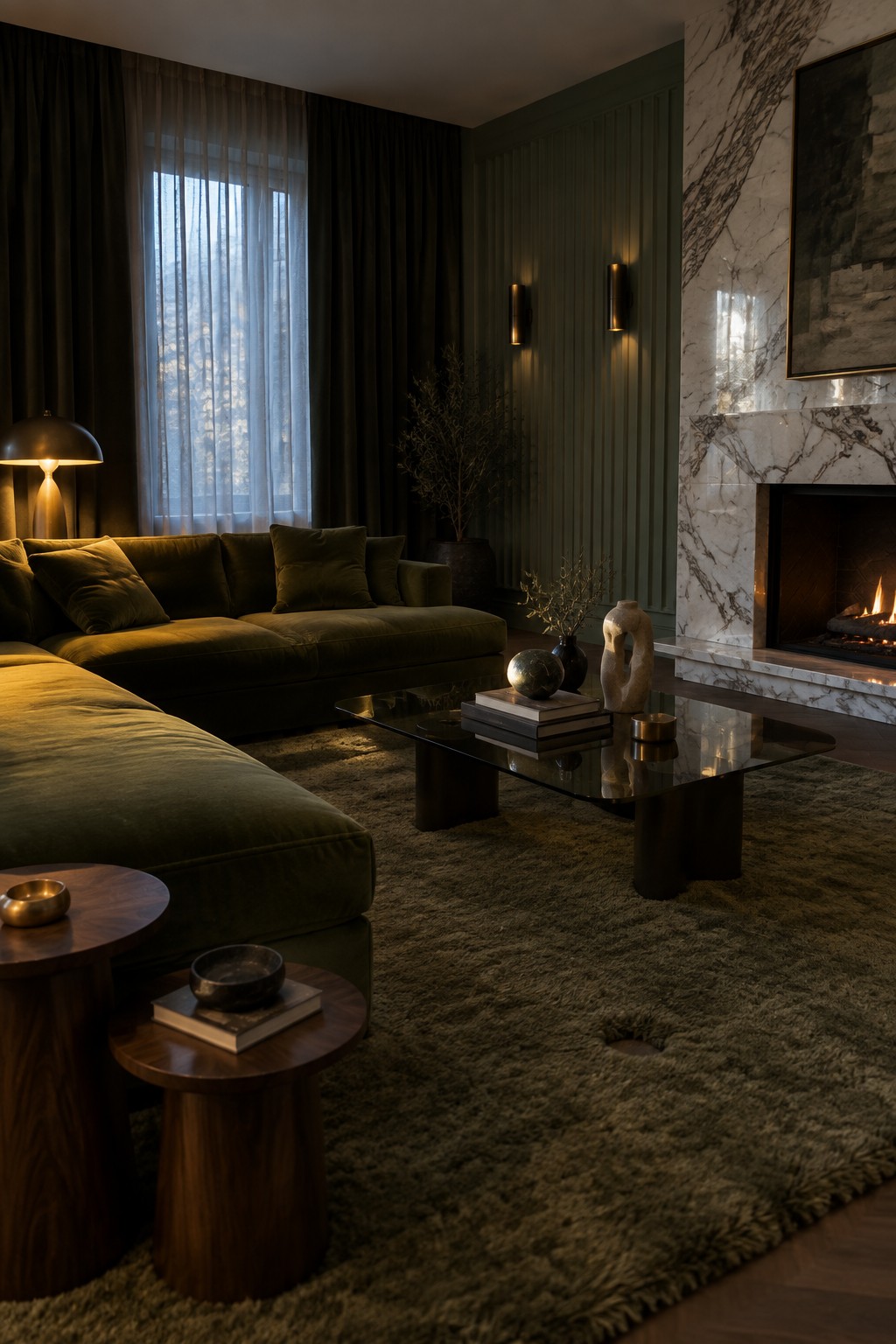
A tonal green approach works well when the walls and larger furniture pieces stay close in hue but vary slightly in depth. Sage on the walls keeps things light and calm while an olive sofa adds weight and warmth without breaking the flow. The result feels settled rather than busy.
This works best in rooms that already have some natural light or warm lamps to keep the greens from turning flat. It suits older homes with wood trim or newer spaces that need a bit of softness. Stick to one or two wood tones and avoid adding too many other colors if you want the greens to do the main work.
Layer Sage and Olive Greens in a Living Room
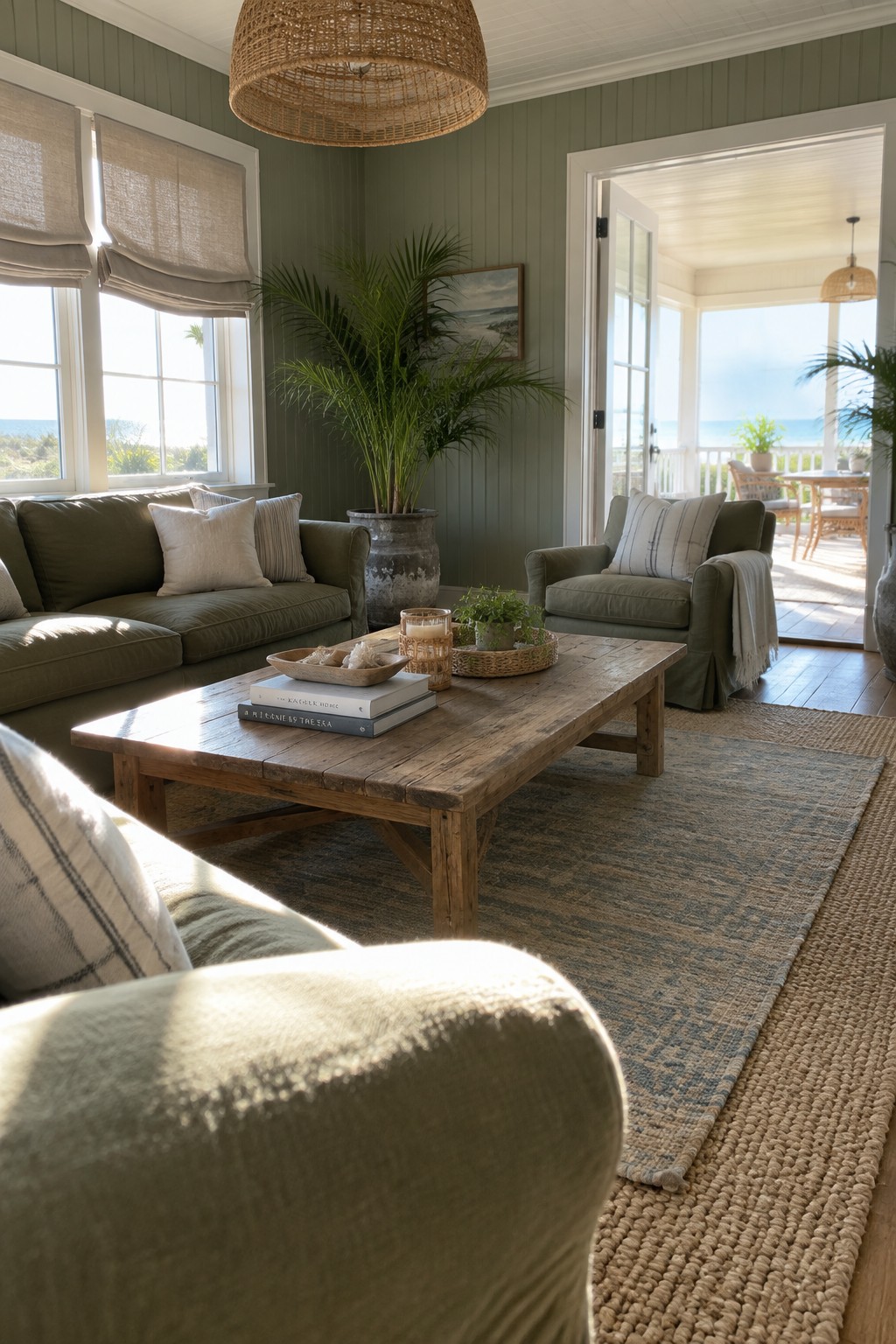
Sage green walls give a room an easy, settled feel without making it feel dark or heavy. Pairing them with olive green furniture keeps the space from looking flat and helps the colors work together instead of competing.
This approach suits older homes or any room that gets steady daylight. Stick to one or two wood tones on the floor and tables so the greens stay the main focus.
Mixing Greens Across Walls and Furniture
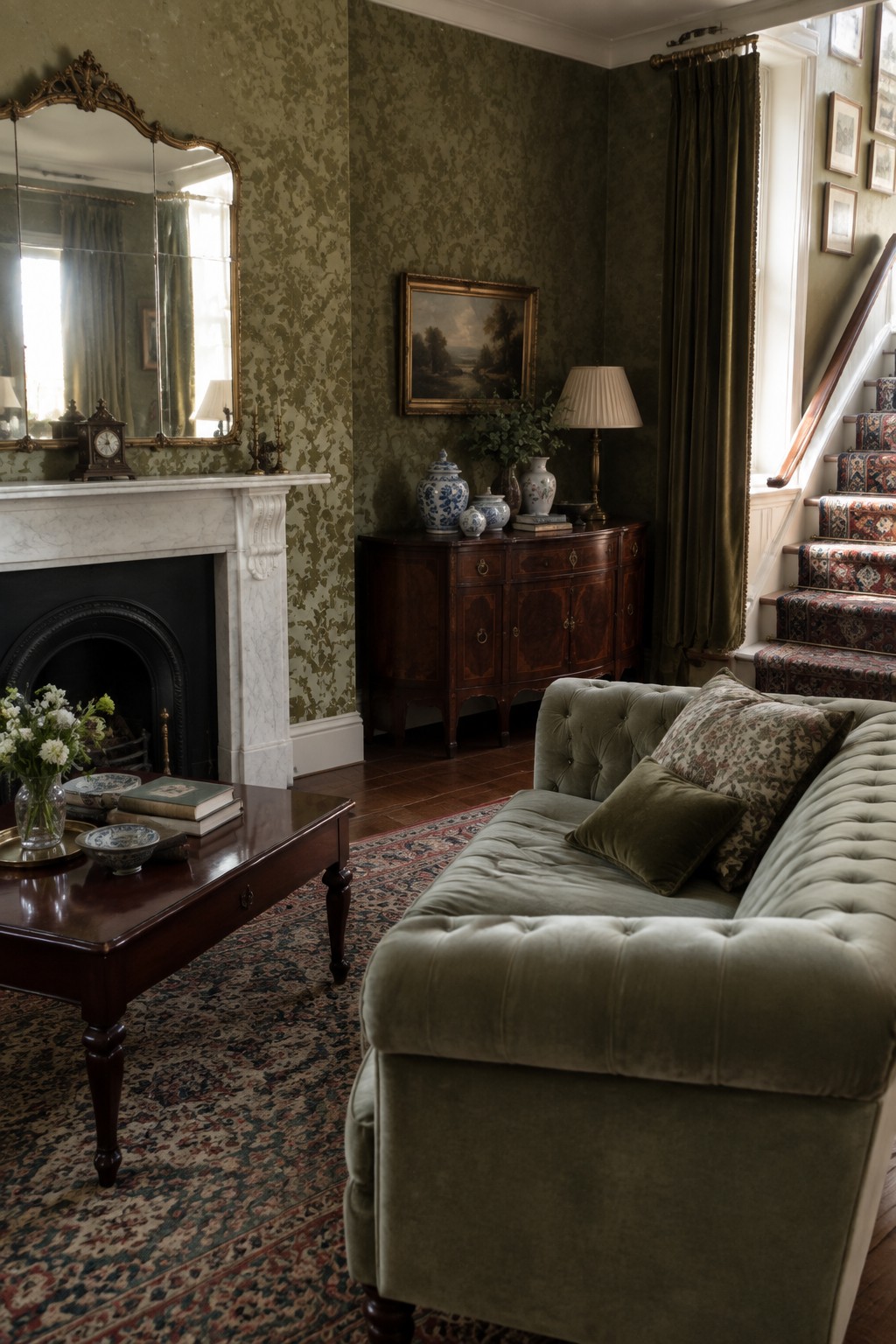
Using several shades of green in one room gives it a collected, lived-in feel instead of a flat single-color look. The walls can stay soft and patterned in sage while the sofa sits in a deeper olive tone and curtains pull in something darker still. This keeps the space calm but interesting without extra colors fighting for attention.
It works especially well in older homes where the architecture already has some weight to it. Start with the biggest pieces, like wall treatment and the main seating, then bring in smaller accents that sit close in tone rather than matching exactly. The key is keeping the greens in the same temperature range so nothing feels out of place.
Built-In Banquette Seating In Soft Green
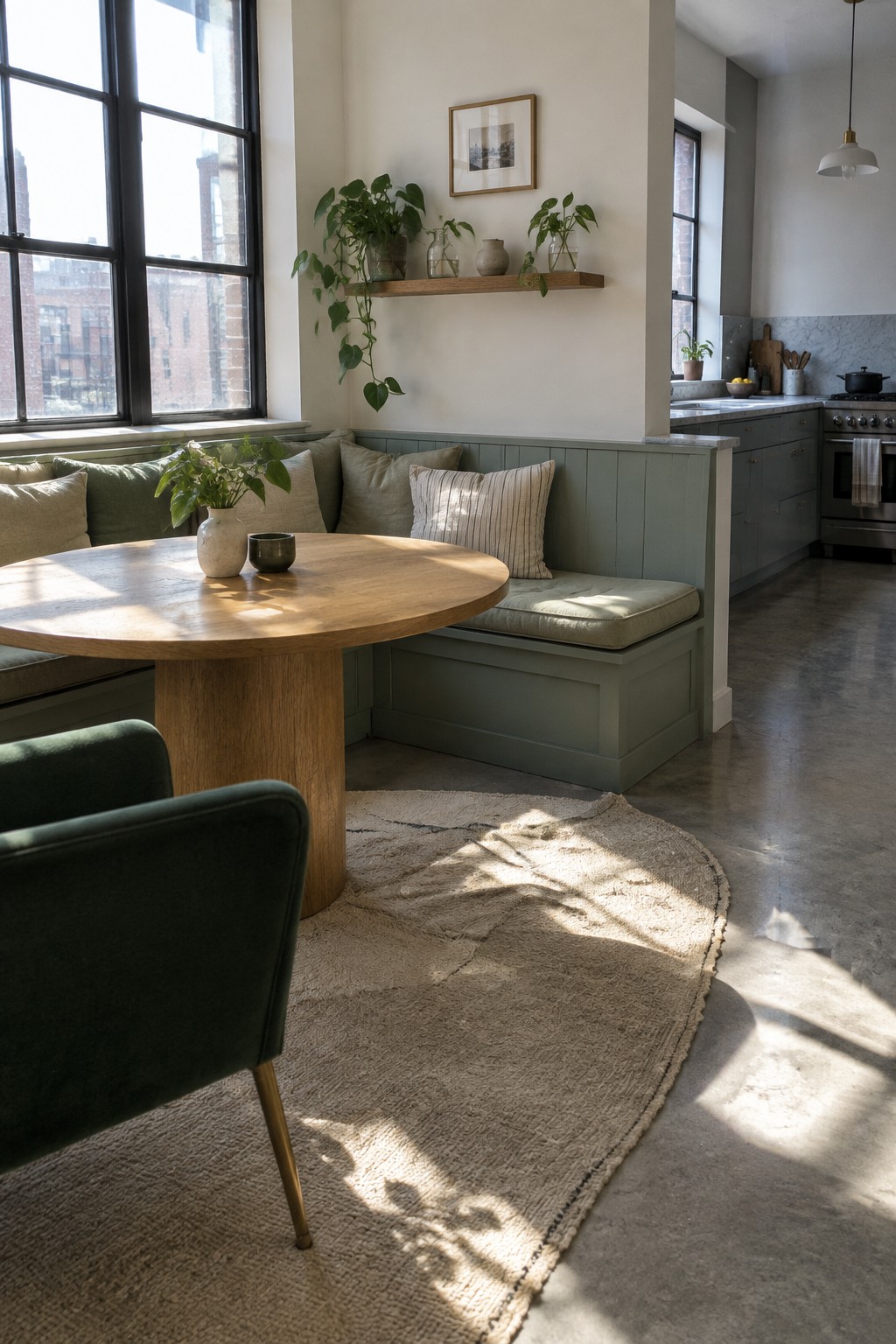
A built-in bench turns a plain corner into something actually useful. The sage green paint keeps the whole thing feeling calm and grounded, and it gives you a place to sit without adding another big piece of furniture that crowds the room.
This setup works best in open living areas where you want seating that doubles as storage. You can keep extra blankets or kids toys inside the bench, and the low profile leaves more floor space open for moving around.
Layer Plants at Different Heights in Green Living Rooms
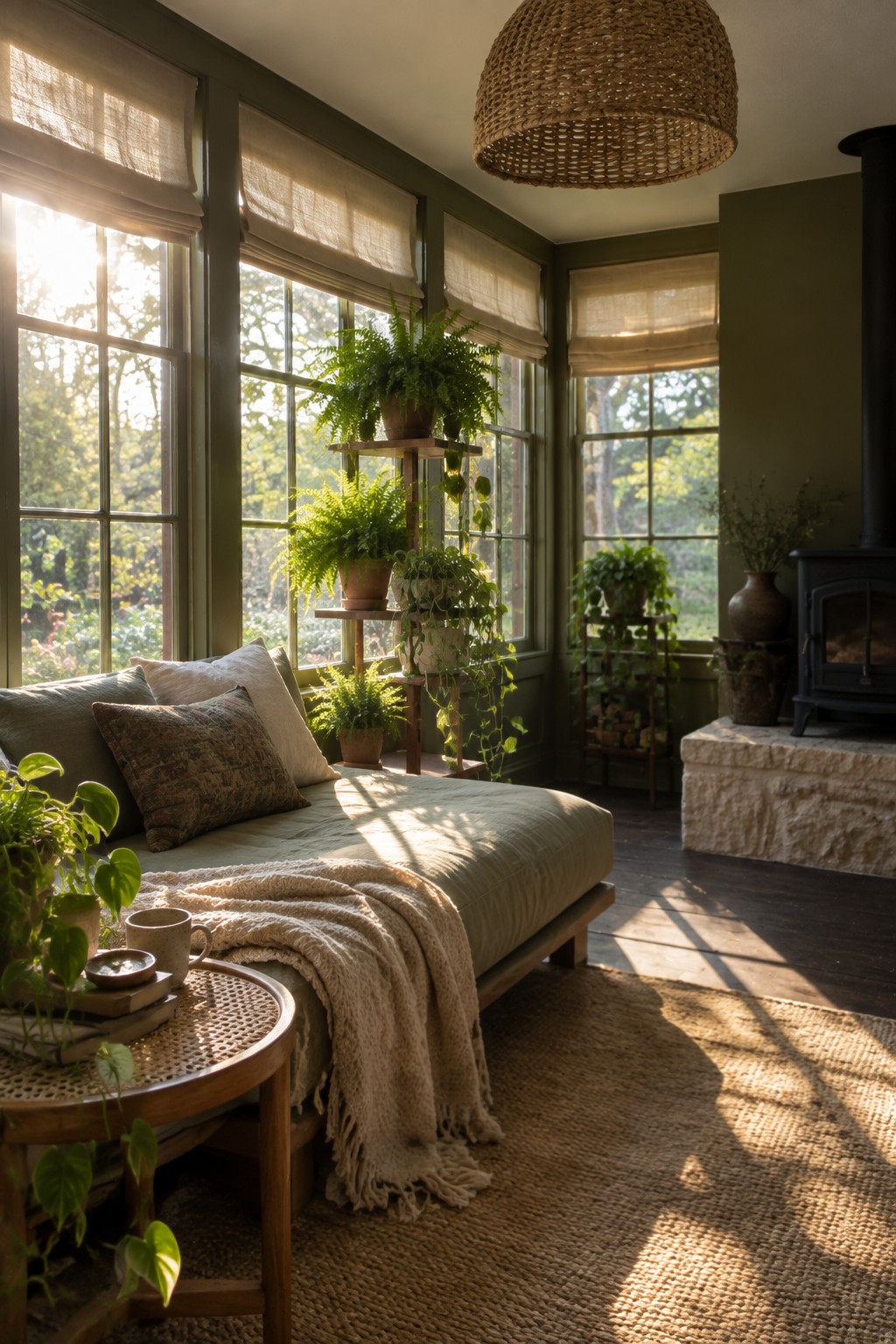
One simple way to make a forest green living room feel softer and more alive is to layer plants at different heights. Tall stands mixed with lower tables let the greenery catch the light and fill the space without crowding the furniture. The plants also help the wall color feel less flat by adding movement and texture.
This approach works best in rooms that already get steady natural light. Start with two or three plant stands near the windows and add smaller pots on side tables or the floor. It suits most older homes with big windows and pairs especially well with olive or sage tones that already lean toward nature.
Painting Built-Ins the Same Color as Your Walls
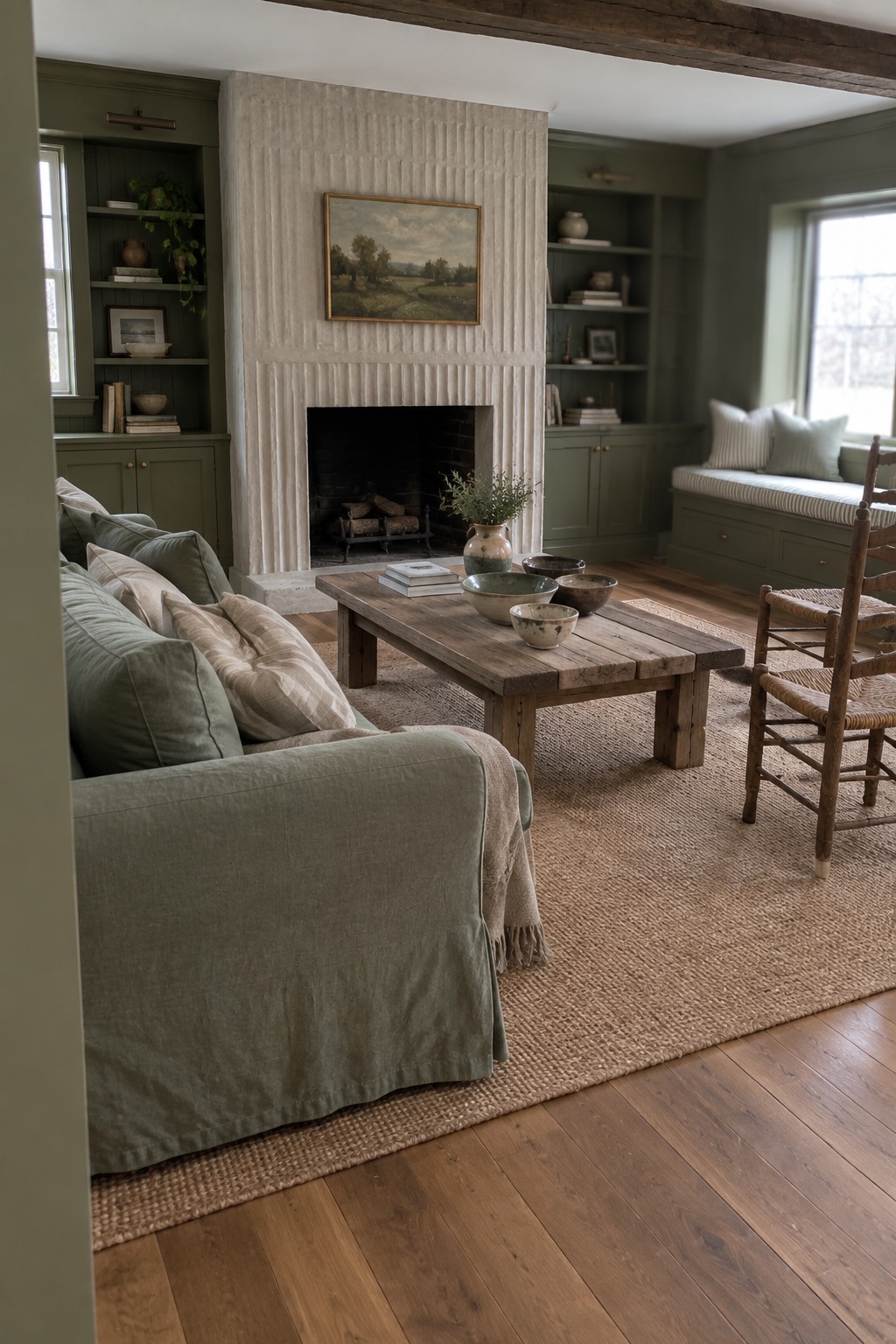
One simple way to make a green living room feel calm and connected is to paint the built-ins the same shade as the walls. When the shelves and cabinets blend right in, the room feels quieter and the furniture and textures get more attention.
This approach works best in spaces that already have a lot of woodwork or storage around the fireplace. Keep the ceiling and trim in a warm off-white so the green does not close the room in too much. It suits older homes and any room where you want the color to feel steady rather than busy.
A Painted Cabinet for Storage and Color
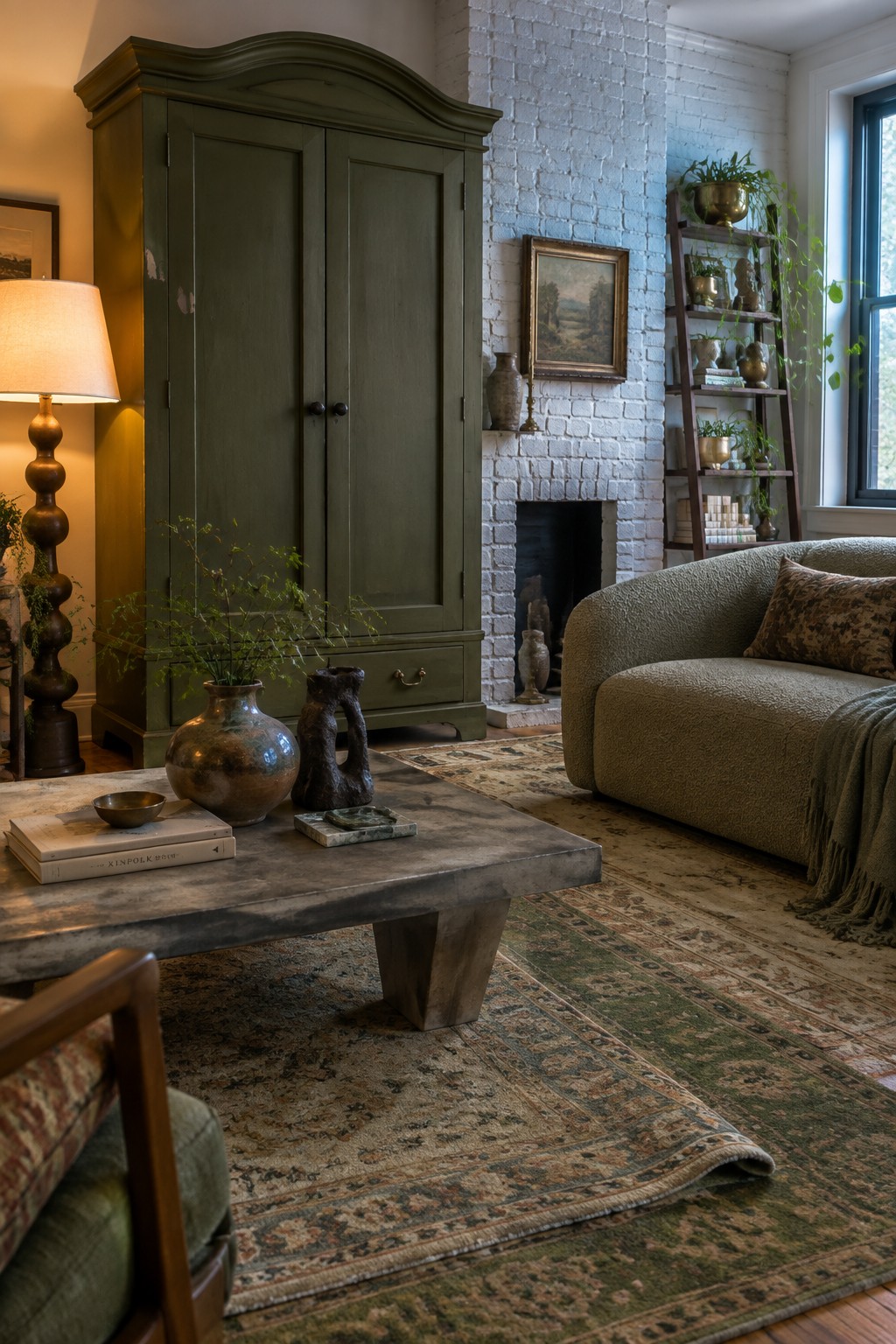
A tall cabinet painted in olive or forest green gives a living room both useful storage and a solid color anchor. It works well because the deep tone feels grounded and lets the rest of the space stay simple without losing interest.
This approach suits rooms that already lean into sage, olive, or similar shades. Keep other pieces lighter or textured so the cabinet stands out without making the room feel heavy. Pair it with a neutral rug or sofa to balance the look.
Deep Green Walls With Olive Leather Seating
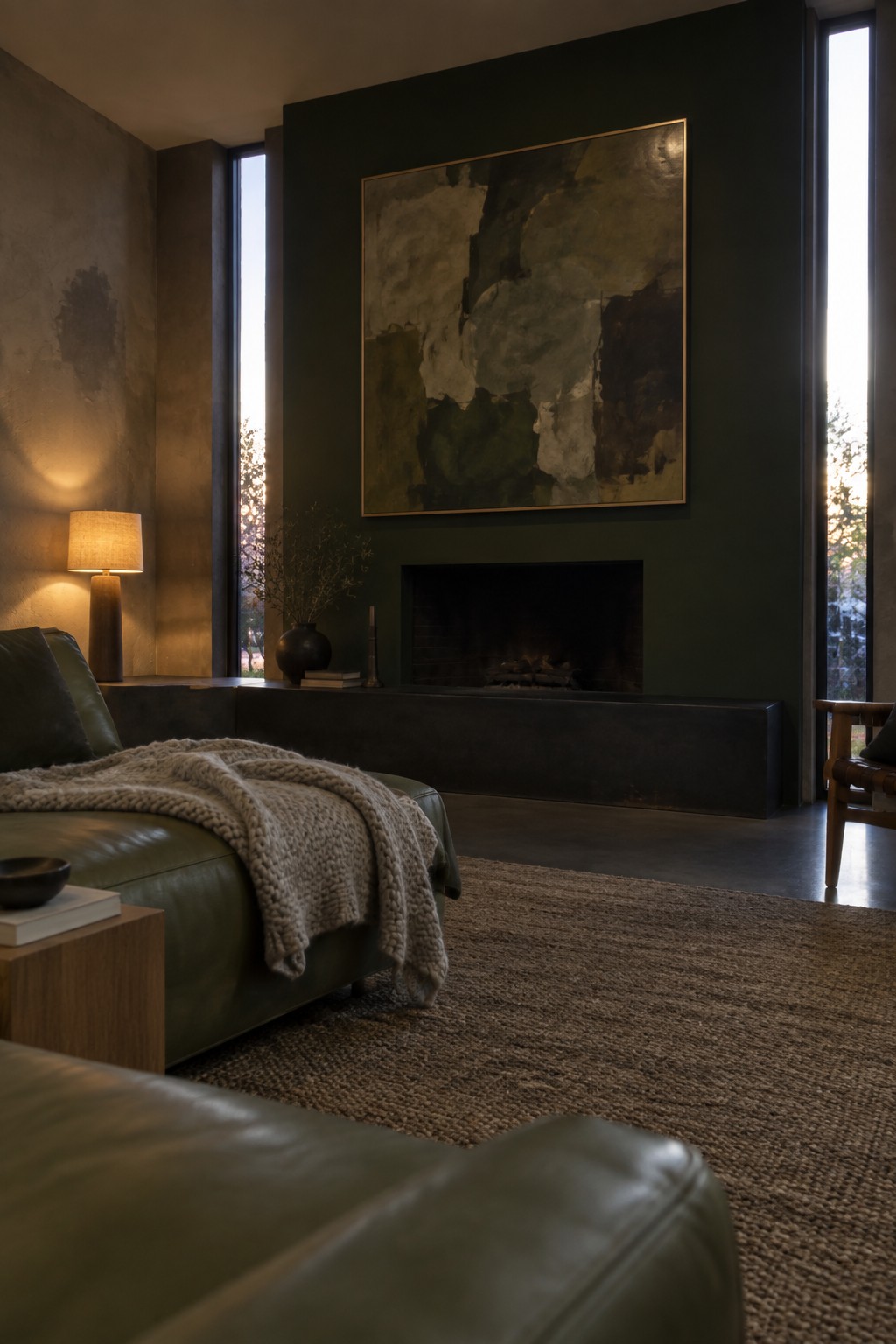
A deep forest green wall behind the seating area gives the room weight and makes the olive leather sofa feel like it belongs there. The two tones sit close enough on the color scale that they blend without competing, which keeps the whole space calm and grounded.
This works best in living rooms that already have some natural light or a strong focal point like a fireplace. Use it when you want the greens to feel intentional rather than scattered, and let wood tones and simple textures handle the rest of the room.
Low Furniture Suits Green Living Rooms
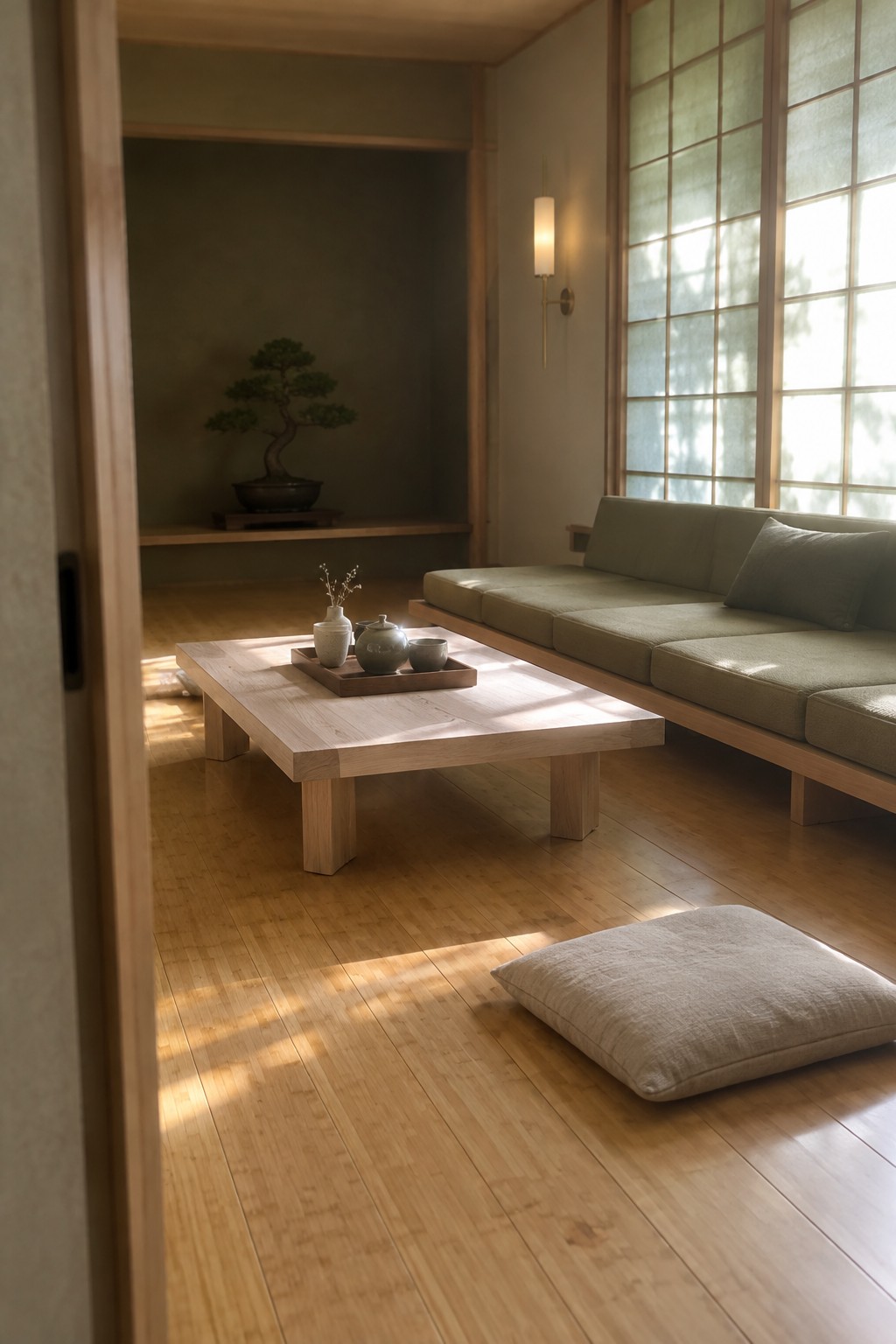
Low tables and seating keep the room feeling open and easy to move through. The sage green on the sofa blends with the wood tones and lets the natural light do most of the work.
This approach works best in smaller living rooms or homes that already lean toward simple, calm interiors. Stick to one or two soft green textiles and let the wood floor carry the rest.
Olive Green Chairs Add Depth to Neutral Rooms
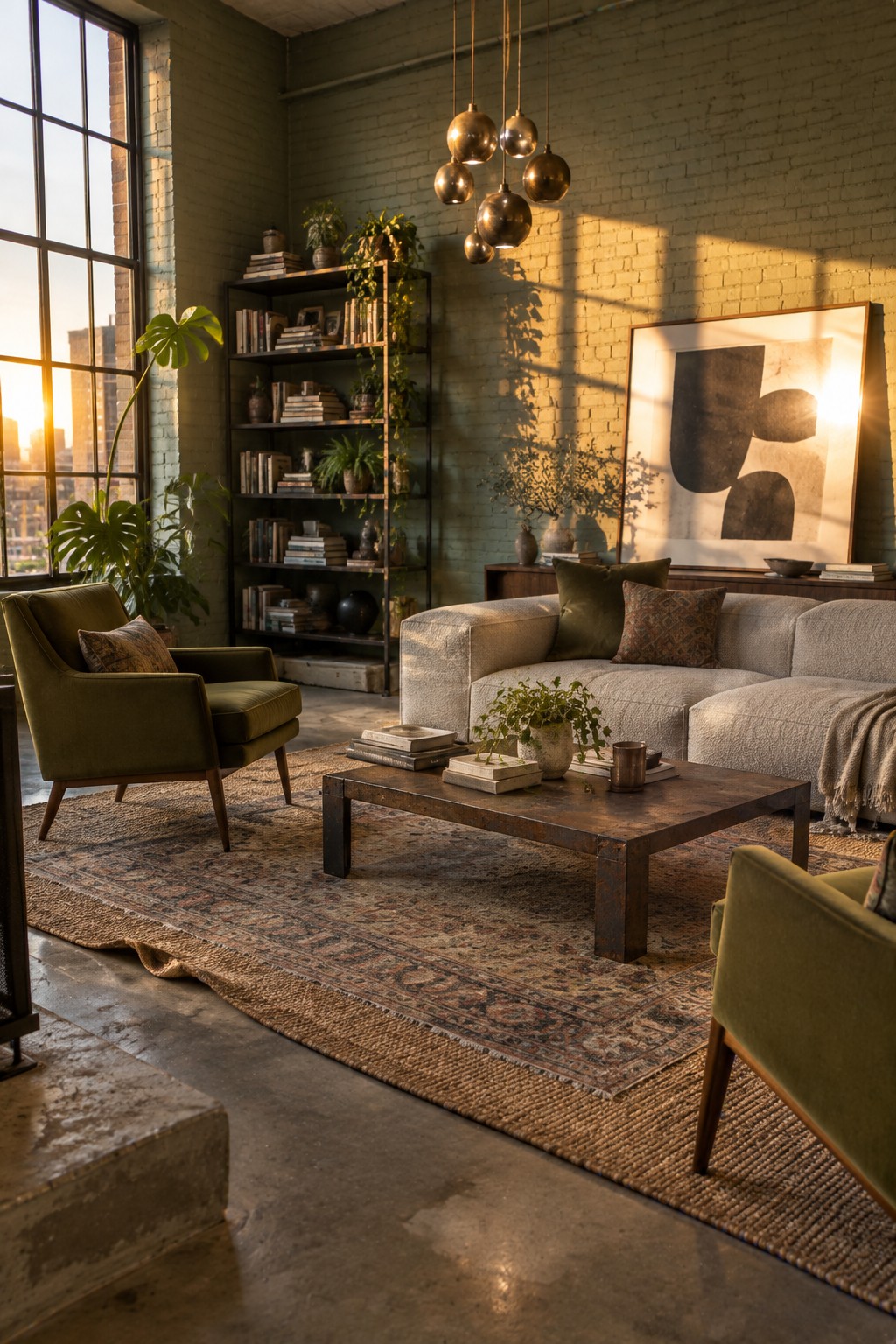
Olive green armchairs stand out in a living room because they bring color without taking over the whole space. They work especially well against lighter sofas and walls, giving the room a grounded feel while still letting other elements like wood and plants show through. The tone feels natural rather than bold, which makes it easier to live with over time.
This approach suits homes that already have some warmth in the finishes, like exposed brick or wood floors. Keep the rest of the seating neutral so the green chairs can do their job without competing. Too many green pieces at once can start to feel heavy, so one or two is usually enough.
Frequently Asked Questions
Q: My living room already has a lot of gray. Will sage green clash? A: Sage pairs nicely with gray because both feel calm. Add olive pillows to bridge the tones and keep the room balanced. Forest green in a small plant pot adds interest without competing.
Q: My space gets afternoon sun. Which green tone holds up best? A: Olive stays rich in bright light without fading fast. Use it on curtains that catch the sun. Sage walls will glow softly instead of looking washed out.
Q: Should I bring in real plants with these colors? A: Real plants fit right in. They pick up the forest tones and add life to the room.
