

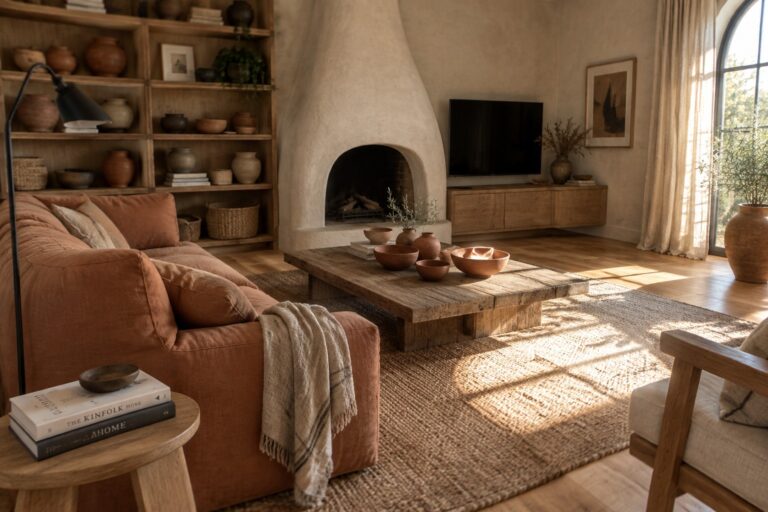
I have found that living rooms gain a steadier feel when clay and wood sit alongside each other in ways that match how people actually move through the space each day.
These materials change the temperature of a room more than any paint color ever does once the sun moves across the floor.
Balance matters most here.
I tend to try one new piece at a time so I can see how it settles with the furniture already in place before adding more.
Small shifts in texture and tone often end up shaping how long someone wants to stay in the room once everything is finished.
Terracotta Sofas And Natural Wood Furniture
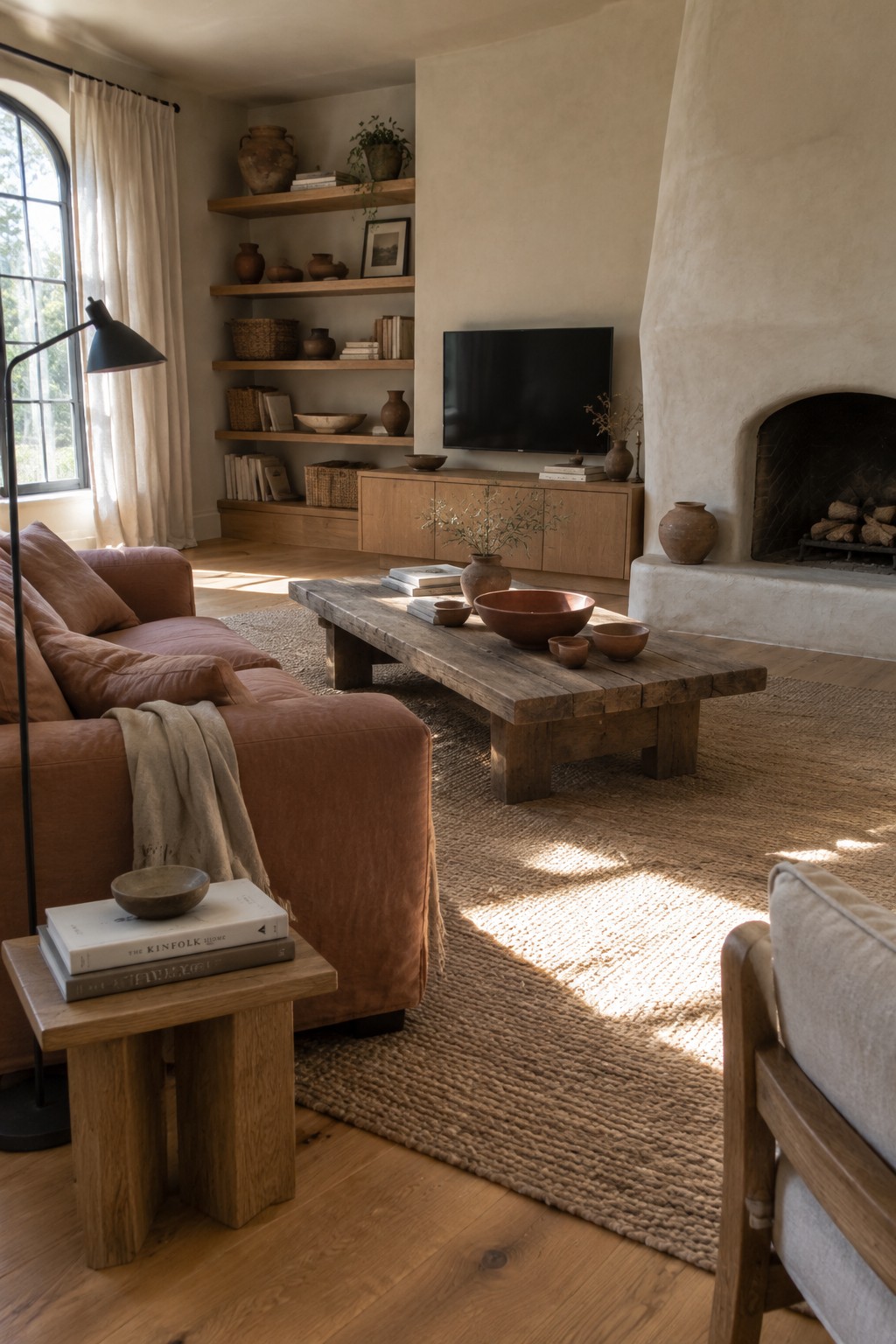
A terracotta sofa gives an earthy living room a solid starting point. The color feels warm on its own, and it sits well next to raw wood tables and shelves that add texture without extra effort.
This mix suits homes that already have wood floors or a fireplace. Keep other pieces simple so the sofa and wood stay the focus.
Terracotta Coffee Tables
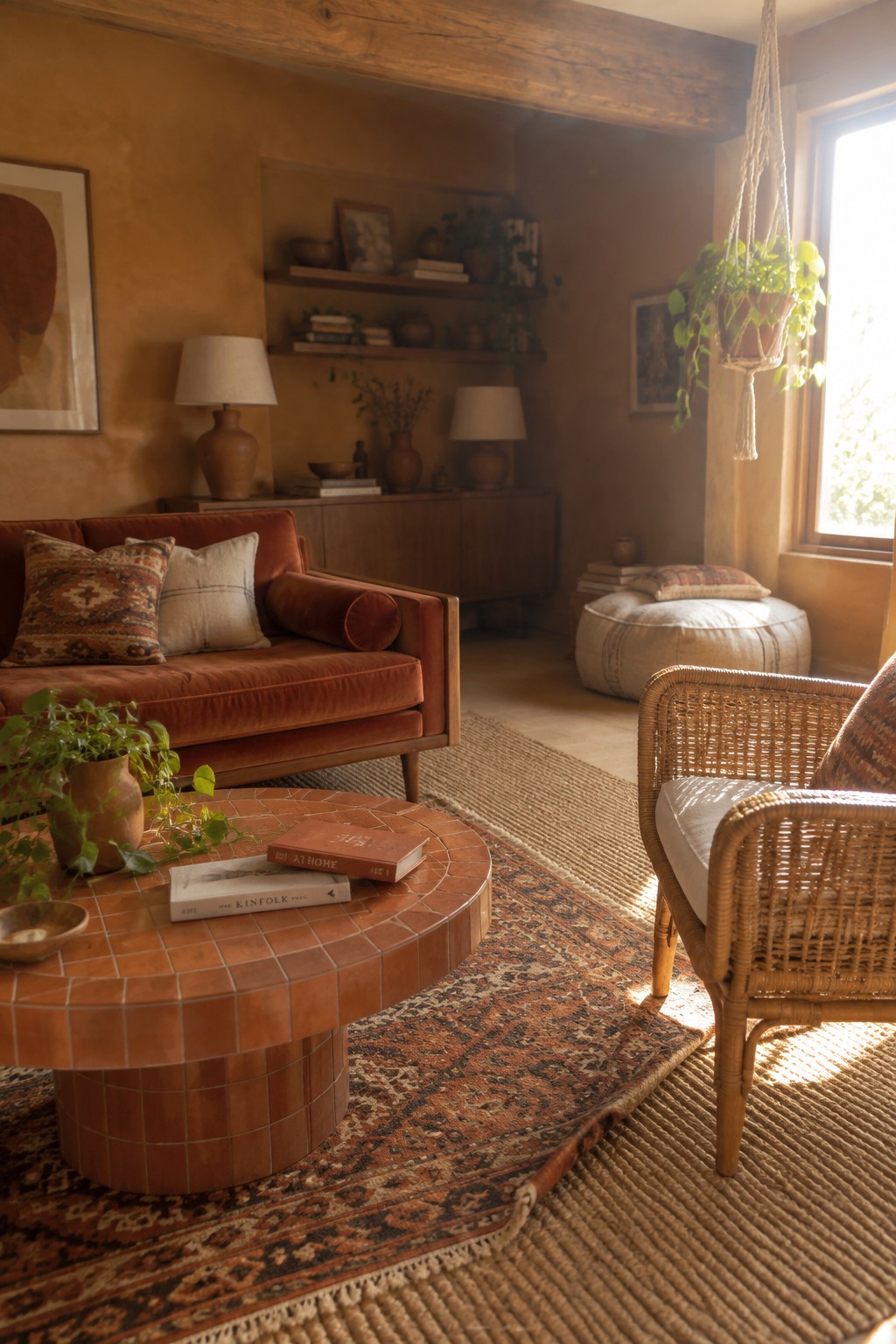
A terracotta tiled coffee table brings a solid dose of clay into the room without needing much else. The material feels sturdy and warm next to wood frames and woven pieces, and it helps tie the whole space together through color and texture alone.
This approach works best in living rooms that already use earthy tones on the walls and floors. Keep other surfaces simple so the table can carry the material weight, and make sure the scale fits the seating area so it does not feel oversized.
Natural Wood With Terracotta Pieces
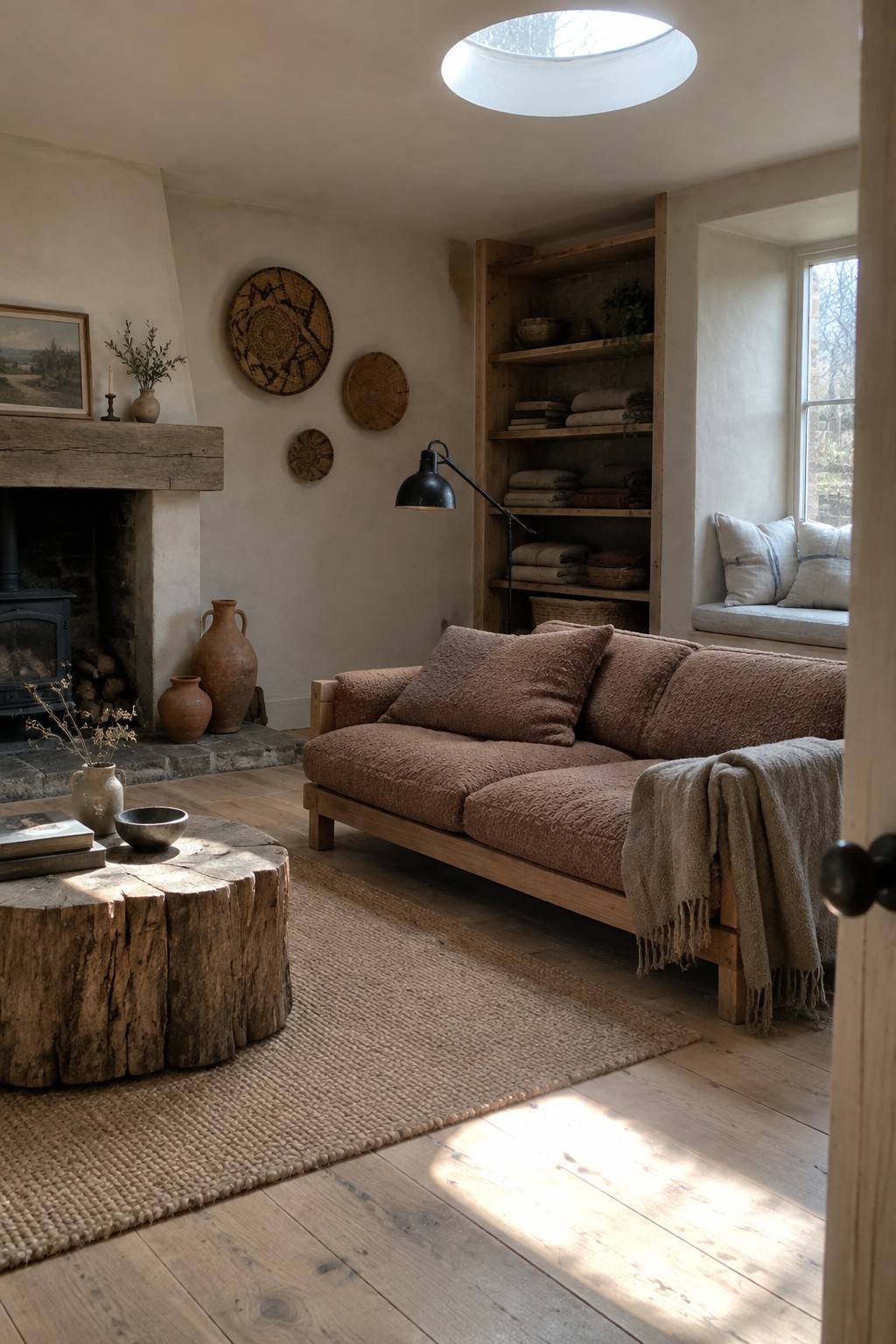
Mixing natural wood furniture and built-ins with clay and terracotta pottery gives an earthy living room a grounded feel without needing lots of extra color or pattern. The wood adds warmth through its grain and texture, while the pottery brings in that soft, handmade quality that works especially well with neutral walls and simple textiles.
This approach suits older homes or spaces that already have wood floors and some natural light. Keep the wood tones close and place the terracotta where it catches the light. Just leave some breathing room on shelves so the materials do not compete.
Terracotta Walls In Earthy Living Rooms
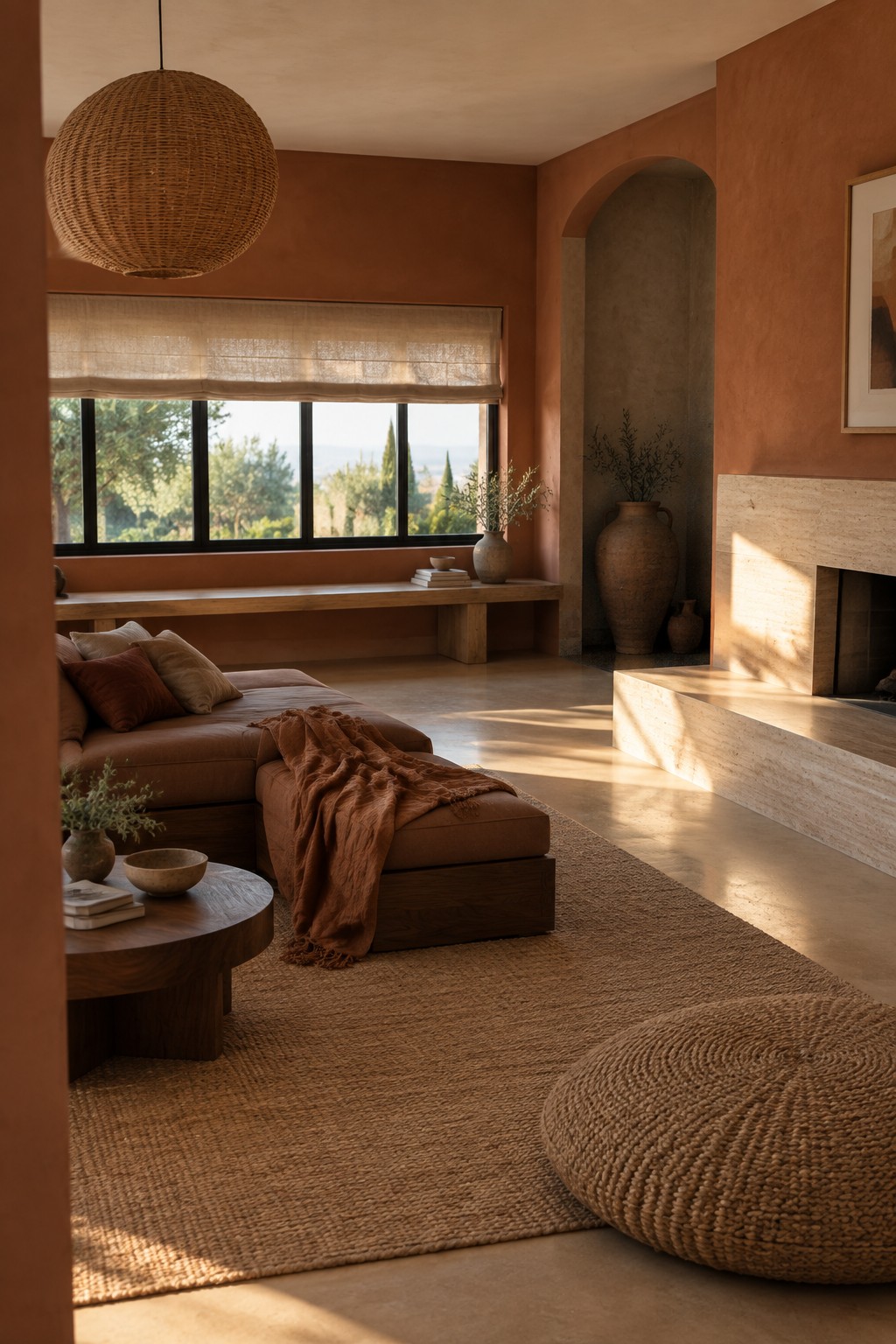
Terracotta walls give a living room a warm base that feels settled right away. The color holds its own against natural wood without needing a lot of extra pieces to make the space feel complete.
This works best in homes that already lean toward wood furniture and simple textiles. Stick to a few wood tones, add some linen or jute, and let the walls carry most of the color so the room stays calm instead of busy.
Built-In Wood Shelving For Clay Pieces
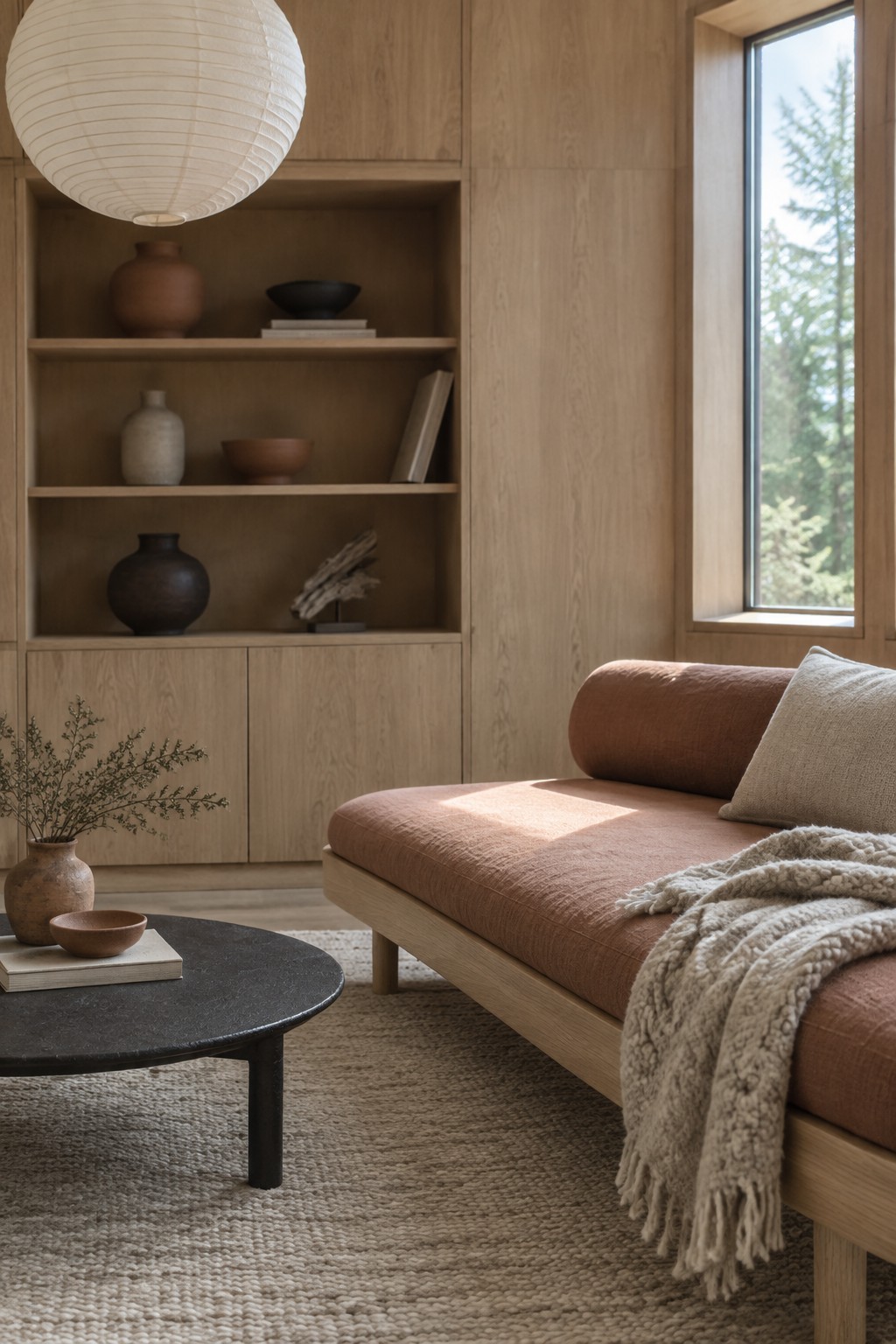
Built-in shelving in natural wood gives you a simple way to show off clay vases and bowls without cluttering the room. The light oak grain keeps everything feeling warm and grounded, especially when you mix in a few terracotta textiles nearby.
This setup works well in smaller living rooms that need storage but still want an earthy look. Leave some shelf space empty so the clay pieces stand out, and stick to one or two main tones so the wood stays the focus.
Terracotta Around The Fireplace
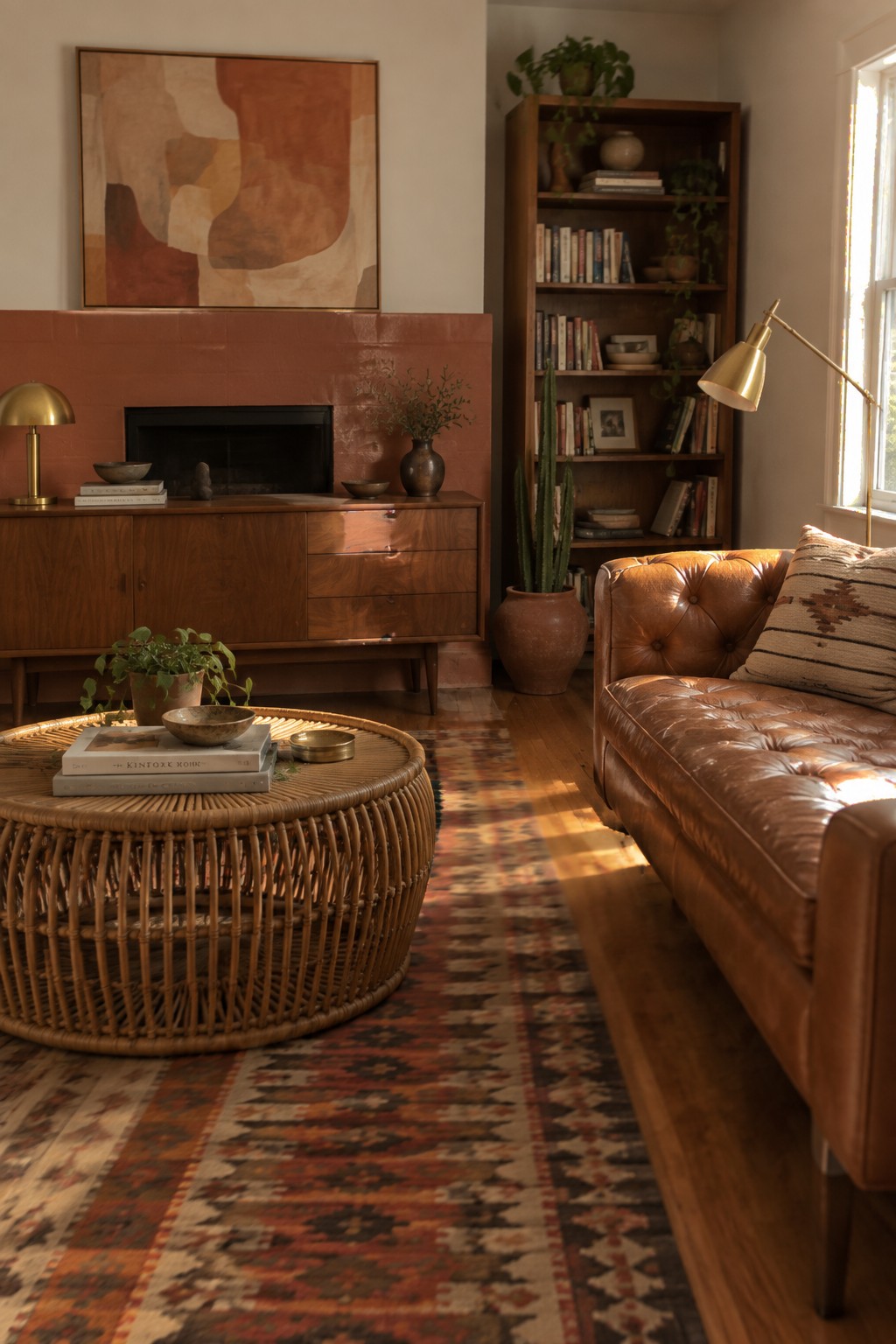
Terracotta tile makes a strong choice for a fireplace wall because it brings a natural clay warmth that pairs easily with wood furniture. The color sits between red and brown, so it feels grounded rather than bold, and it holds up well next to leather and woven pieces without looking staged.
This works best in rooms that already have wood tones on the floor or in larger furniture. Keep the rest of the palette simple so the terracotta stays the main material statement instead of getting lost among too many other finishes.
Blend Natural Wood With Terracotta Pieces

Natural wood furniture and terracotta pots work well together because both materials carry the same grounded, slightly rough quality. The mix keeps a room from feeling too styled while still giving it warmth and texture that holds up over time.
Place a few terracotta planters near a wooden coffee table or along the edge of a seating area. This approach suits homes with simple walls and older wood floors, and it works best when you keep the number of pieces modest so the materials stay visible.
Mixing Natural Wood With Terracotta Accents

Natural wood furniture gives a living room a solid, grounded base that pairs well with terracotta pieces. The wood brings warmth and texture while the clay elements add simple, earthy color without overwhelming the space.
This mix works best in rooms with light walls and good natural light. Use it in homes that already lean neutral, and keep the wood tones consistent so the terracotta stands out as the accent rather than competing with too many other materials.
Terracotta Pots As Living Room Accents
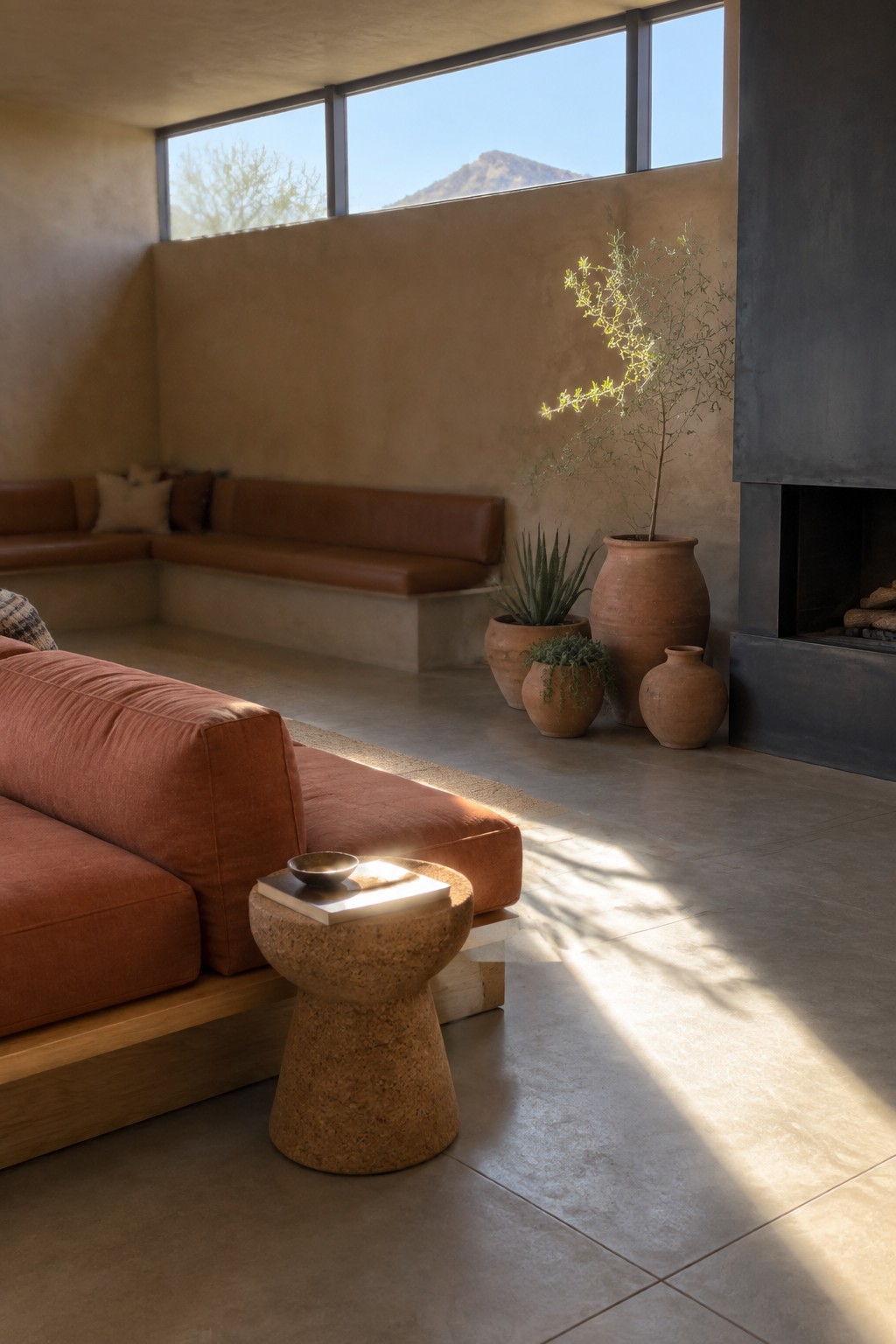
Large terracotta pots stand out in this kind of room because they add real weight and texture without needing much else. They bring an organic shape and a warm clay tone that works naturally with wood floors, leather seating, and simple walls.
Place them in small groups near a window or along a wall where they can catch light. This approach suits homes with an open layout and a preference for fewer but bolder accessories. Keep the rest of the room fairly open so the pots remain the main feature rather than competing with too many other items.
Terracotta And Natural Wood In Living Rooms

Terracotta pieces stand out when they sit next to natural wood furniture. The warm clay tone feels softer next to the grain and depth of the wood, and the two materials keep each other from looking too heavy or too plain. This mix works especially well in rooms that already have some age or character, like older fireplaces or built-in shelving.
Try a terracotta sofa or chair with a wood coffee table and shelves in the same space. Stick to one or two wood tones so the clay color stays the focus. It suits homes that lean traditional or simple, and it holds up better when you keep the rest of the palette quiet.
Terracotta Fireplaces In Earthy Rooms
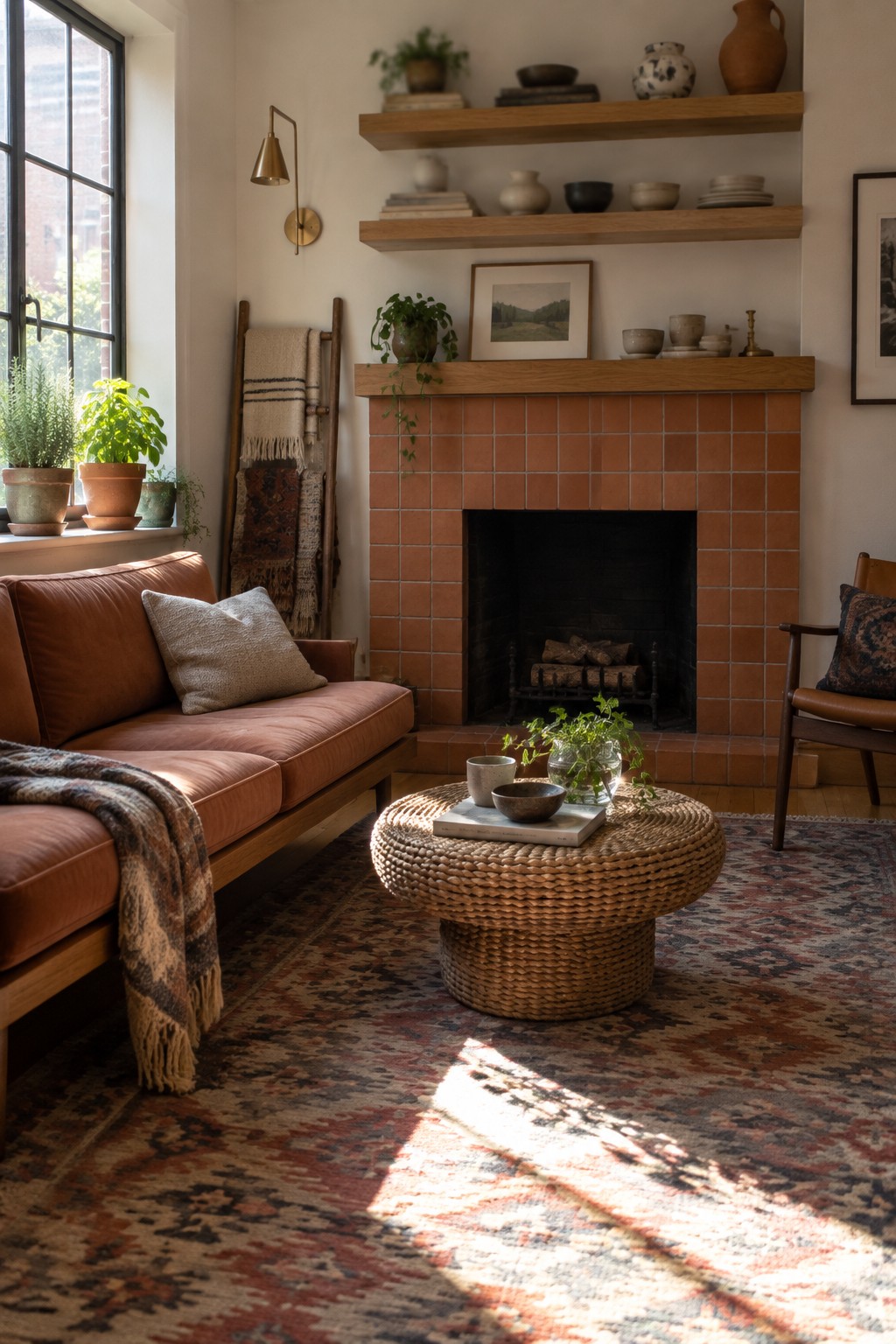
Terracotta tiles around a fireplace give the whole room a steady, grounded feel. The warm clay color pairs naturally with wood furniture and soft textiles, and it keeps the space from feeling too pale or flat even on cloudy days.
This approach works best in homes that already lean toward natural materials. Keep the rest of the room simple with one or two wood pieces, a woven rug, and a few plants so the fireplace stays the main focus without competing with too many other textures.
Terracotta Fireplaces As The Room Anchor
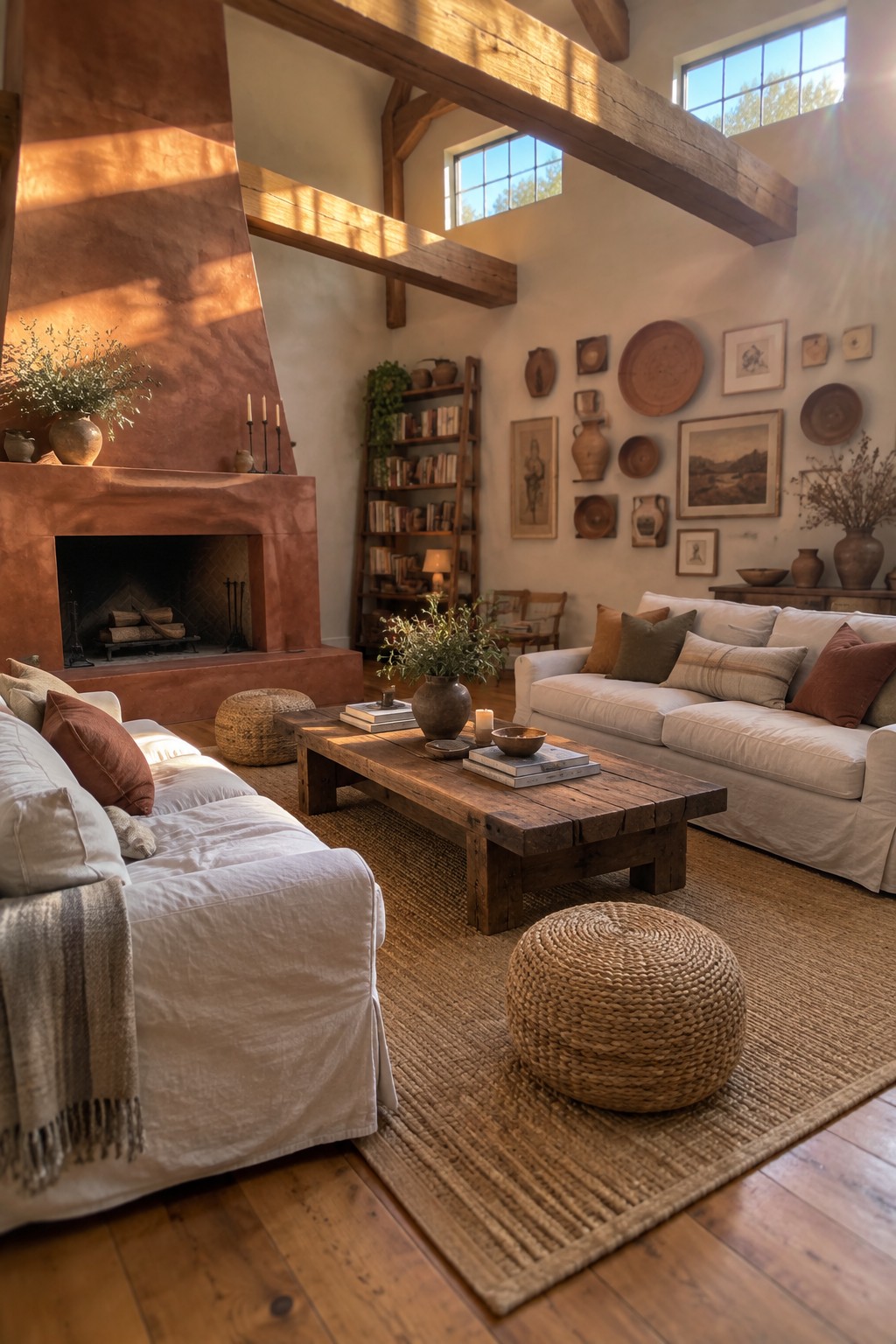
A large terracotta fireplace gives an earthy living room a clear center without much extra effort. The warm clay tone stands out against lighter walls and fabrics, and it pairs naturally with wood beams and simple furniture. Many people like this because it brings in color and texture while still keeping the space calm and grounded.
This works best in homes with higher ceilings or open layouts where one strong element can define the area. Stick with natural wood tones for the beams and tables, and keep the seating neutral so the fireplace stays the focus. Avoid overcrowding the mantel or surrounding walls.
Wood And Terracotta Work Well Together

Natural wood and terracotta pieces have a way of balancing each other in a living room. The wood gives structure and a quiet warmth while the terracotta softens the space with its muted color and simple texture. Together they keep things grounded without needing much else.
This mix works best in rooms with plain walls and minimal patterns. A wood sofa frame with terracotta cushions or a clay vessel placed near a wooden table can be enough. It suits homes that want an easy, natural feel rather than a styled or busy look.
Built-In Shelving For Clay And Terracotta Pieces
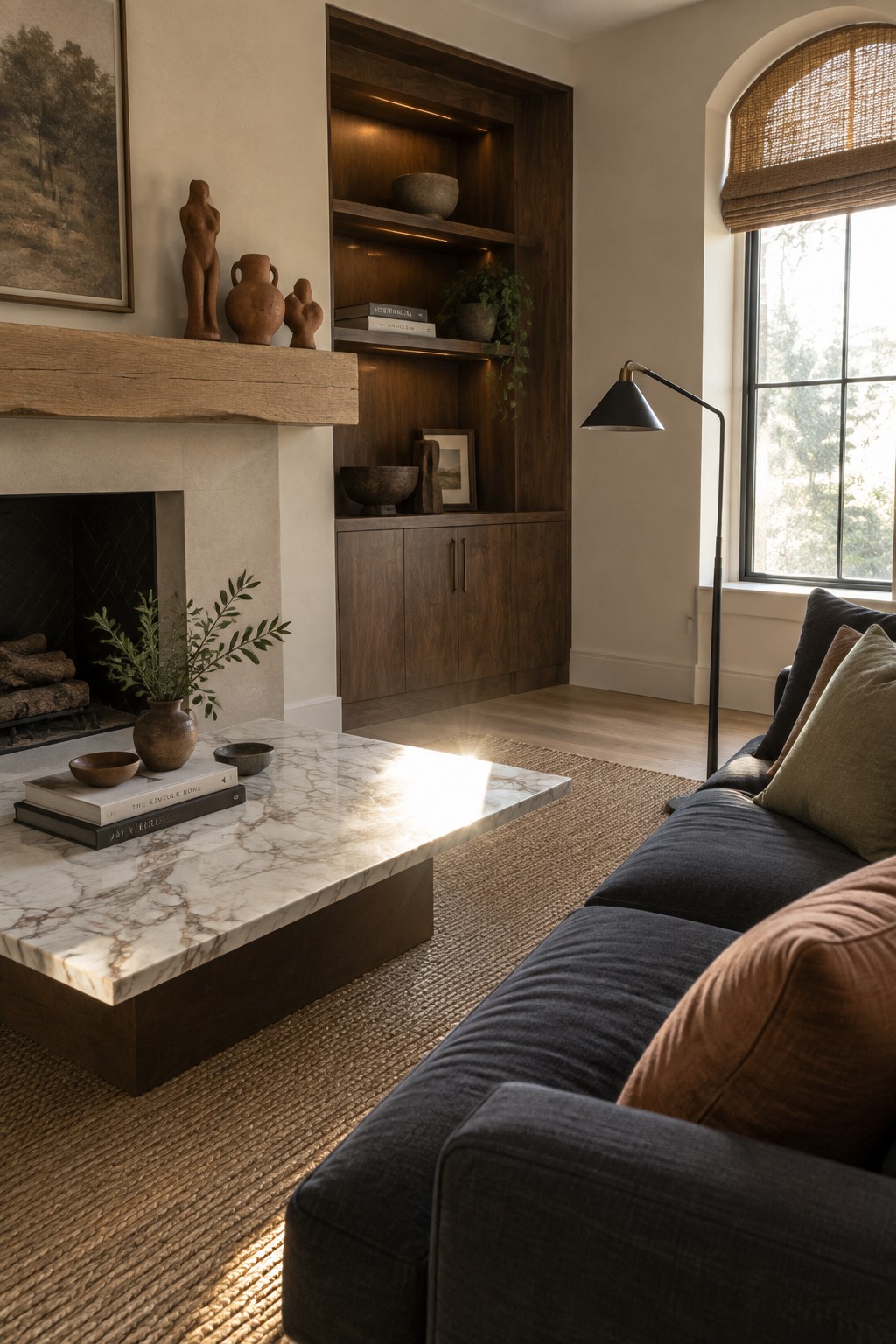
Built-in wood shelving gives you a dedicated spot to show off clay and terracotta without the room feeling messy. The dark wood tones sit well with the warm, earthy pieces and keep everything looking collected rather than scattered.
This setup works best in rooms that already have some wood or stone elements. Keep the shelves from getting too full so the individual bowls and figures can stand out, and use the lower cabinets for anything you want out of sight.
Large Clay Planters for Natural Height
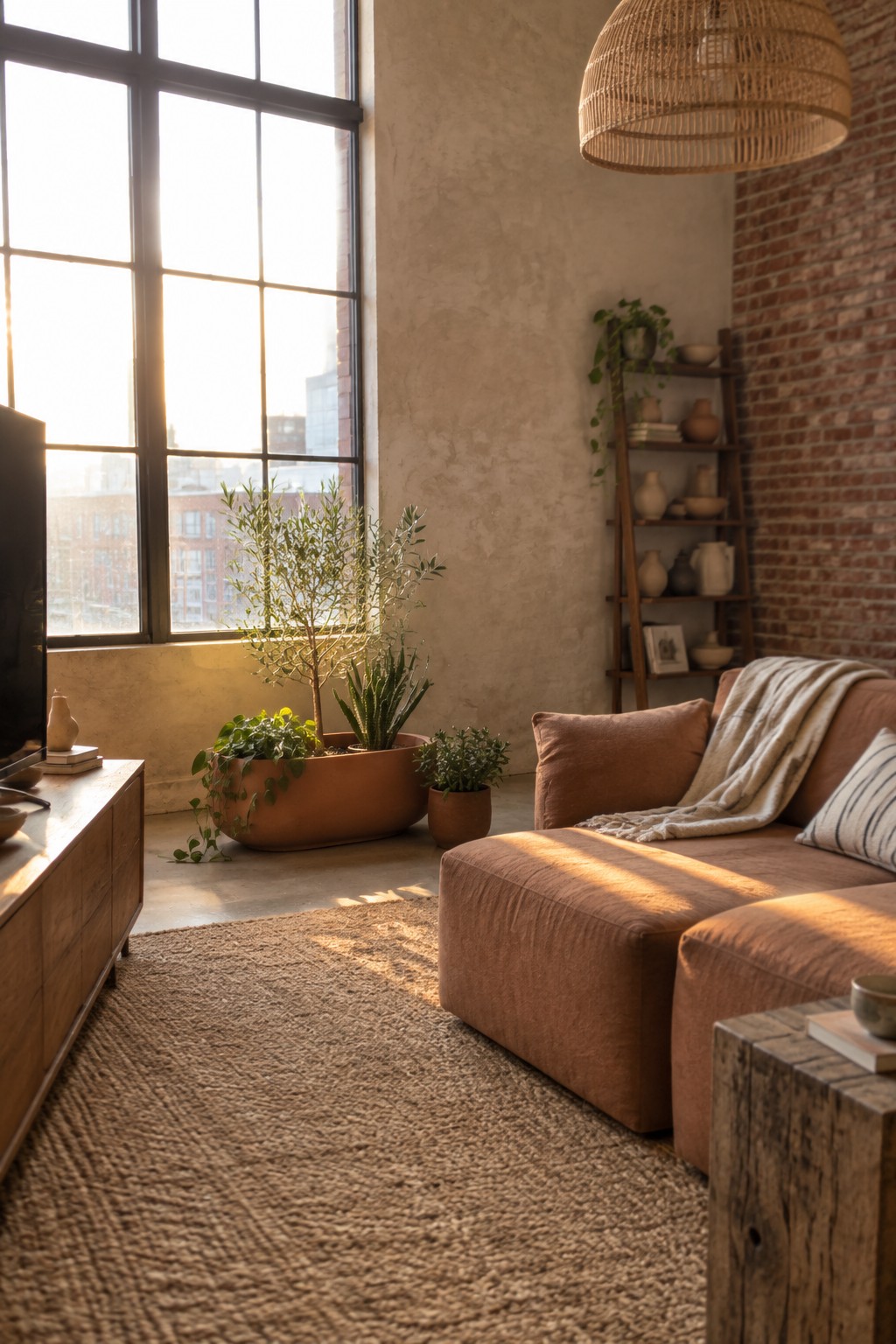
Large clay planters give an earthy living room real presence without adding another piece of furniture. They bring height, texture, and living greenery that feels grounded rather than decorative.
Place one or two oversized pots near a window so the plants get light and the terracotta warms up the space. This works best in rooms that already have wood tones and simple textiles, since the clay and foliage do most of the work tying everything together.
Pairing Natural Wood With Terracotta Textiles
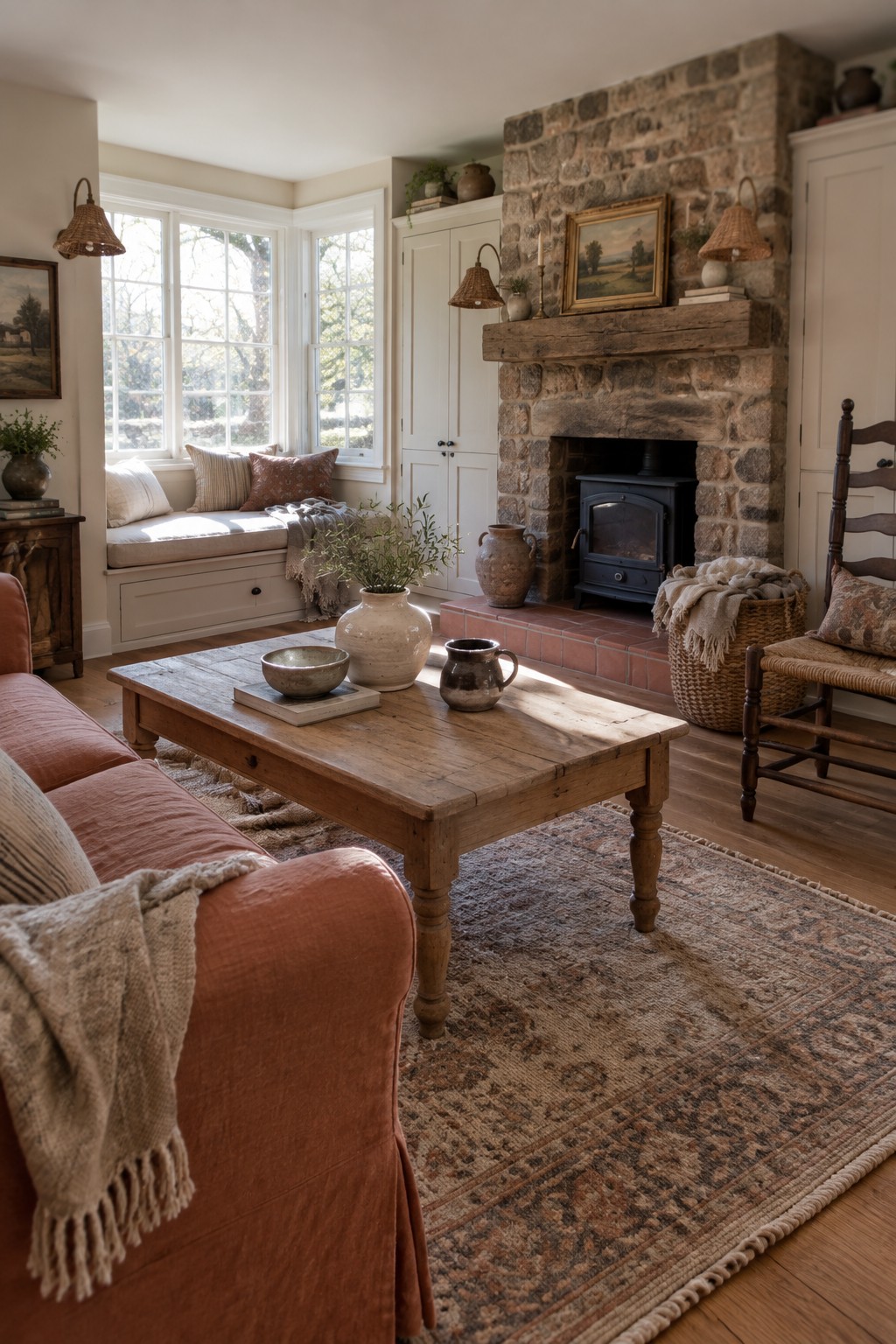
A heavy wooden coffee table can do a lot in a room that already leans earthy. It adds weight and texture that balances the softer look of terracotta upholstery and clay vessels without fighting them. The combination feels settled rather than styled, which is why it works so well in older homes or spaces that already have wood floors or stone details.
This approach suits rooms that get regular use. Keep the wood finish simple and a bit worn so it does not compete with the terracotta. Avoid anything too polished or new, since the goal is a quiet mix rather than a showcase piece.
Built-In Niches for Clay Pieces
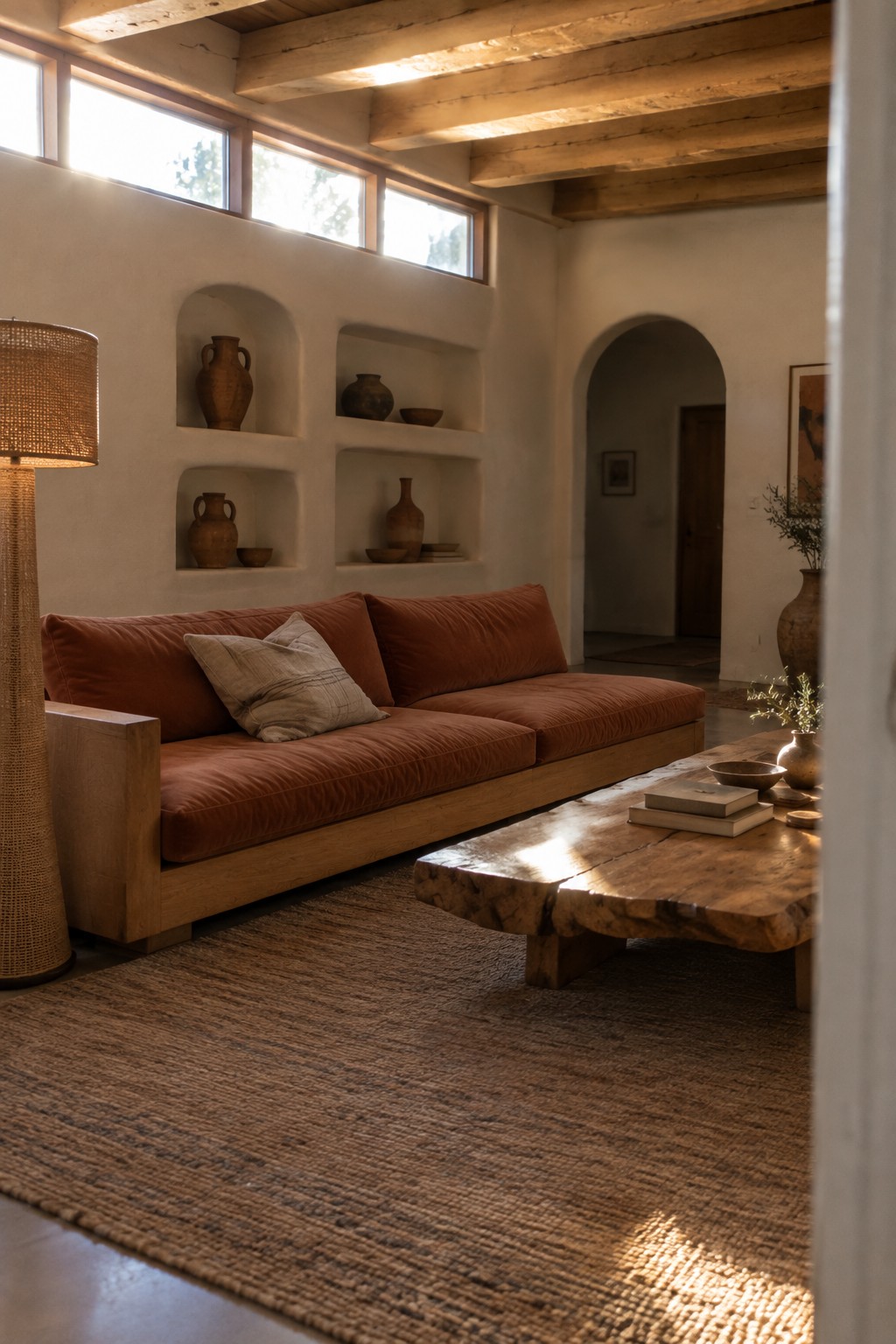
Built-in wall niches give you a clean way to display clay and terracotta without crowding tables or shelves. They turn an empty wall into a quiet focal point while keeping the room feeling open and calm. The arched shape softens the look and pairs naturally with wood furniture and simple textiles.
This works best in living rooms that already have some texture through wood or woven rugs. Keep the number of pieces modest so the niches stay restful rather than busy. If your walls are plain, this is an easy architectural move that adds interest without needing a full renovation.
Terracotta Built-Ins For Warm Storage
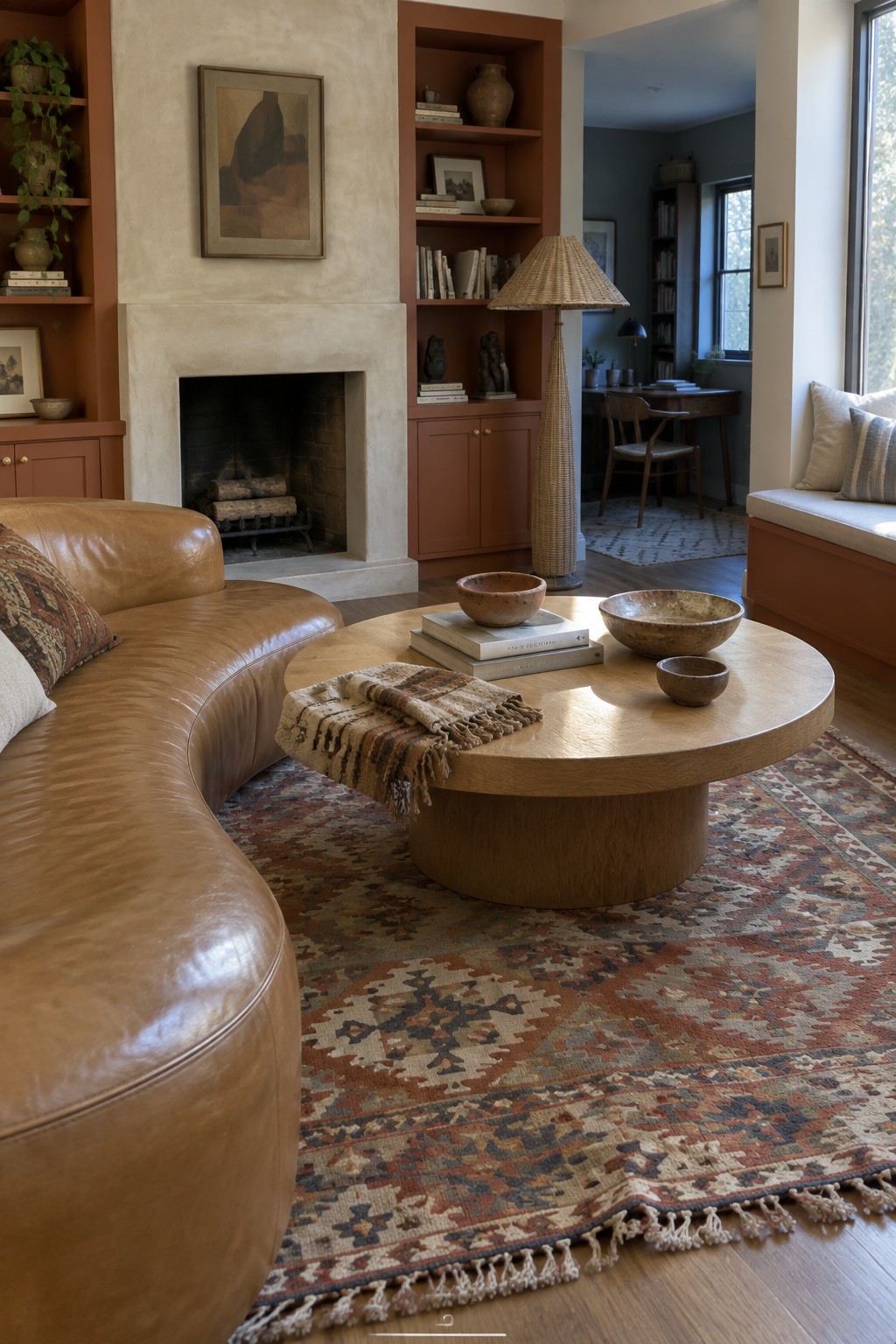
Terracotta built-ins give a living room a grounded feel without much effort. They turn what could be plain wall space into useful storage while keeping the whole room in the same earthy range as the wood furniture and clay accents. The color sits nicely against lighter walls and helps tie the seating area to the fireplace.
This works best in homes that already lean toward natural materials and soft, warm tones. Keep the shelves from getting too crowded so the terracotta stays visible, and pair it with wood tones that are close but not identical. It suits rooms that need extra storage without adding more freestanding pieces that can crowd the space.
Terracotta Upholstery On Natural Wood
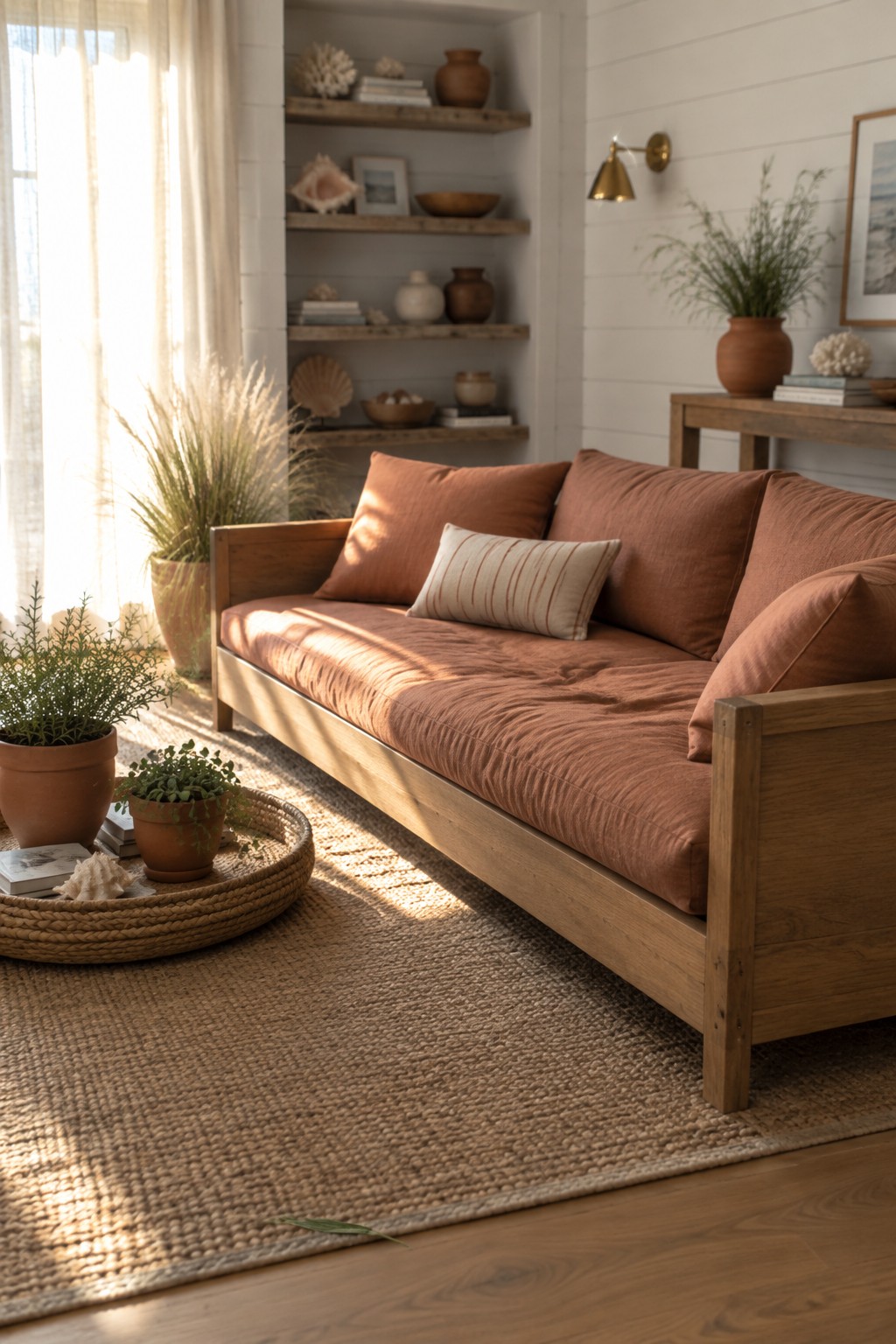
Terracotta fabric on a light wood frame gives a living room a warm, settled look that feels easy to live with. The color picks up the tone of the wood without overpowering it, and the whole combination stays grounded even when sunlight hits it.
This works best in rooms that already have wood floors or trim. Keep the rest of the space simple with a flat-weave rug and a few plants so the sofa remains the main element rather than competing with too many textures.
Terracotta Walls in Earthy Living Rooms
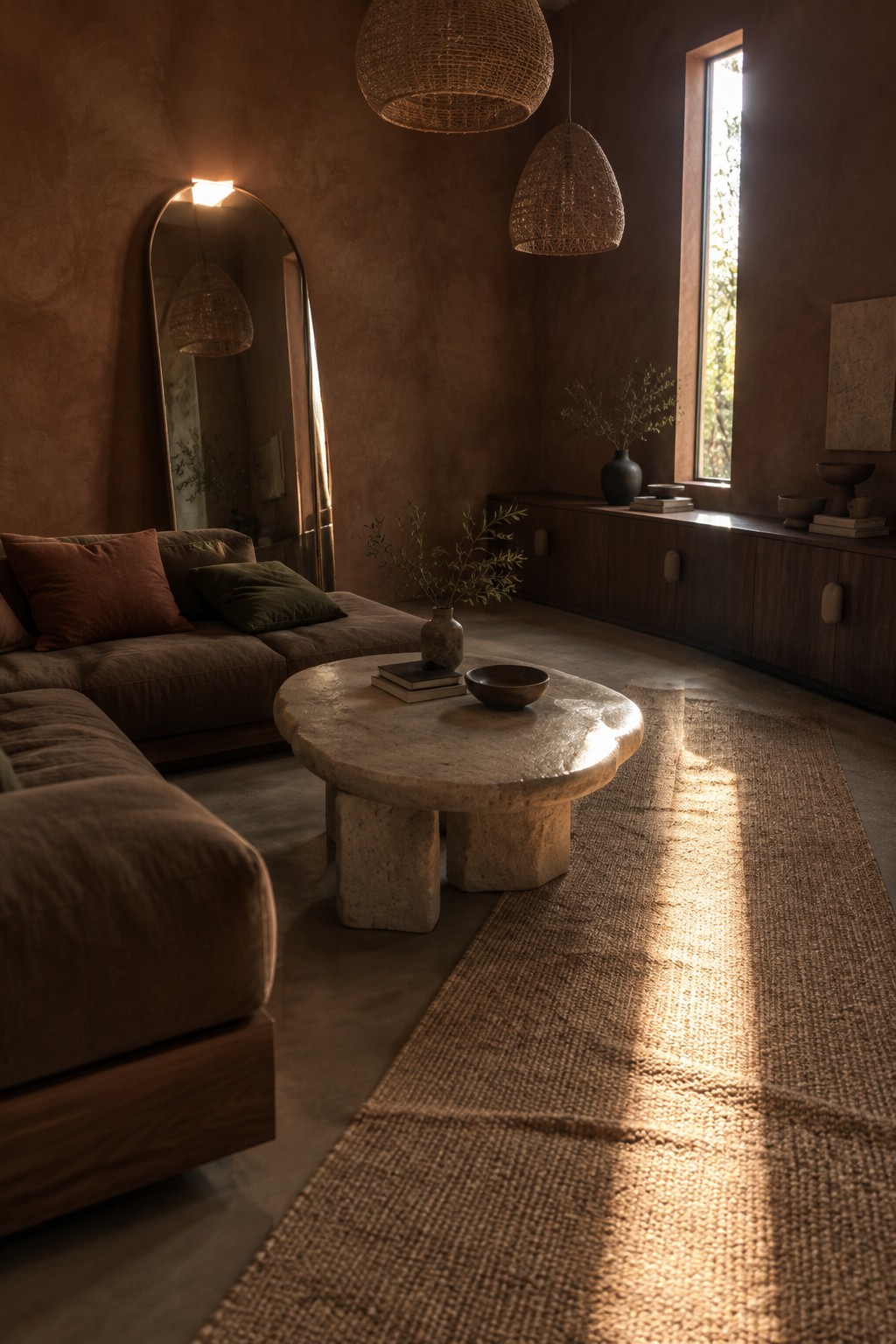
Terracotta walls bring a steady warmth to a living room without needing much else to make the space feel complete. The color works because it sits between brown and orange, so it pairs naturally with wood tones and stone surfaces that already appear in earthy homes.
This choice suits rooms where you want the walls to do most of the work. Keep the furniture low and the palette tight so the terracotta stays the main note rather than competing with brighter accents or heavy patterns.
Terracotta Sofas With Natural Wood Furniture

Terracotta upholstery gives a living room a solid earthy base that sits well with natural wood. The deep clay tone of the sectional grounds the space and lets the wood tones in the shelving and coffee table come forward without competing.
This mix works best in rooms that already have wood floors or trim. Keep the rest simple with a few books and clay pots on the shelves so the materials stay the focus. It suits homes that lean toward warm, low-key colors rather than bright or cool palettes.
Frequently Asked Questions
Q: What if my space already has a leather sofa? Will clay and terracotta still fit without feeling heavy?
A: Pair the leather with lighter wood tones like oak for balance. Add a few terracotta accents on open shelves instead of the floor. This keeps the room open while the materials play off each other.
Q: How often do I need to dust clay pieces so they do not look neglected?
A: Run a soft brush over them every couple of weeks. Skip water on unglazed clay since it can stain. The routine stays simple once it becomes part of your normal cleaning.
Q: Can I use just one wood tone throughout or does that limit the look?
A: Stick with one tone for the main furniture. Let clay and terracotta bring in the contrast. The single wood choice actually makes the other materials stand out more.
