


When I walk into a living room the first thing that stands out is whether the light can move freely across the floor and walls without running into tall pieces that cut the space in half.
In Scandinavian design the focus on pale tones and open layouts tends to help because it lets the room breathe even when family life fills it with everyday items.
I learned this after trying to squeeze in more storage and realizing the room started to feel heavier than before.
Placement decides everything.
Looking at different ways to arrange the basics often reveals small tweaks that improve how the space works from morning until night.
Keeping the Palette Soft and Neutral
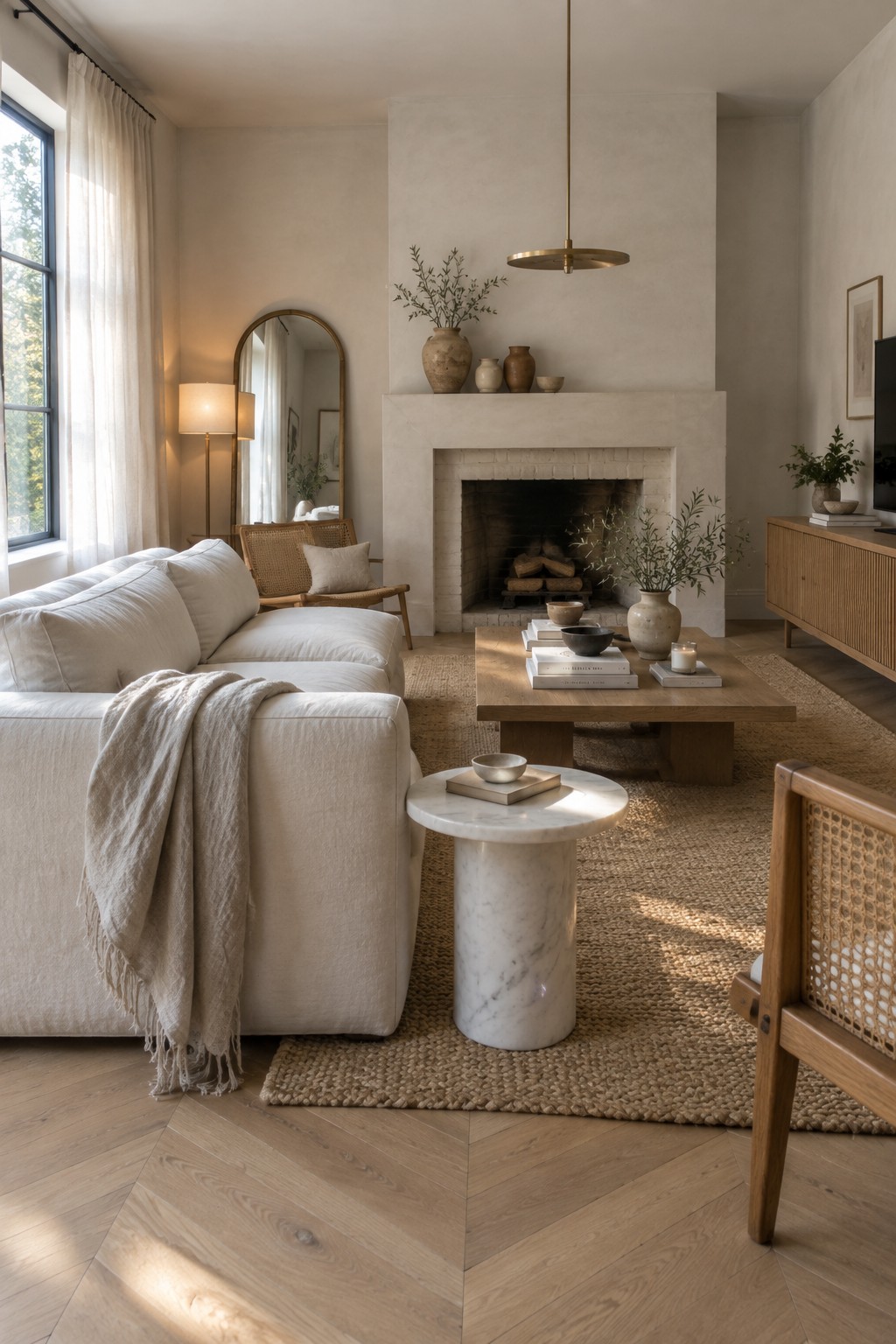
A limited range of soft whites, warm beiges, and natural wood tones does a lot to open up a living room. It reflects light instead of absorbing it, and the simple color story keeps the space from feeling busy or closed in.
This approach works best in rooms with decent natural light and suits smaller homes or apartments where you want things to feel calm rather than stark. Stick to one or two wood finishes, add texture through linen or wool, and let the furniture stay low so the eye can move freely across the room.
Built-In Shelving Keeps Storage Out Of The Way
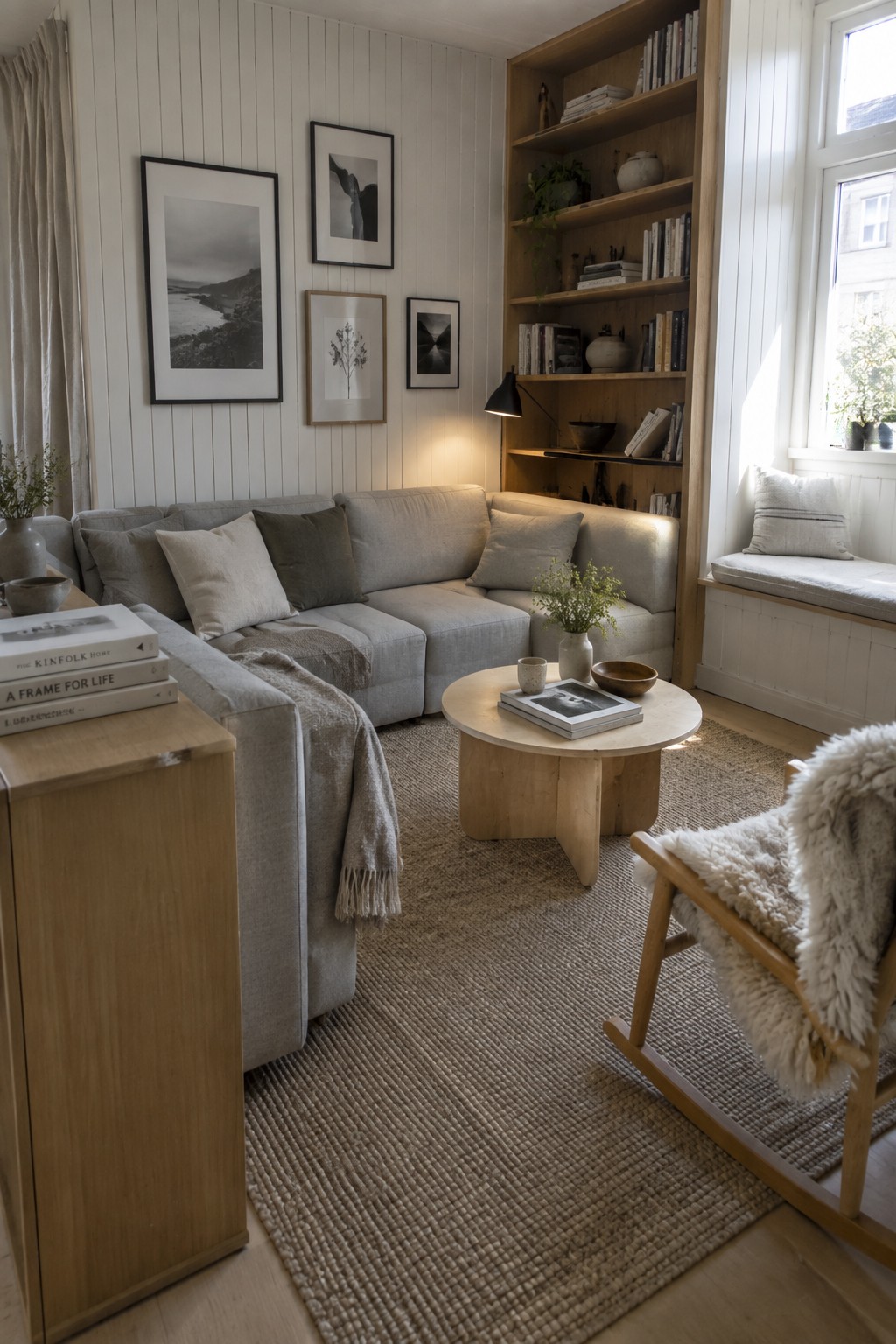
Built-in shelving works well in a Scandinavian living room because it adds useful storage without crowding the floor or blocking light. The shelves sit right into the wall space, so the room still feels open even when they hold quite a few books and objects.
This approach suits smaller or medium-sized rooms that need extra storage but cannot take another big piece of furniture. Match the wood tone to other natural elements in the room, and keep the shelves from getting too full if you want the space to stay bright and easy to move around in.
Anchor the Room with a Natural Fiber Rug

A large jute rug helps define the seating area in a bright room without adding weight. The natural weave brings texture and a bit of warmth while letting the light floors and walls stay dominant.
This approach suits Scandinavian interiors that need to feel open but still grounded. Keep the rug centered under the sofa and table so the edges stay visible, and choose a size that fits the furniture grouping without crowding the space.
Light Wood Furniture to Keep the Room Bright
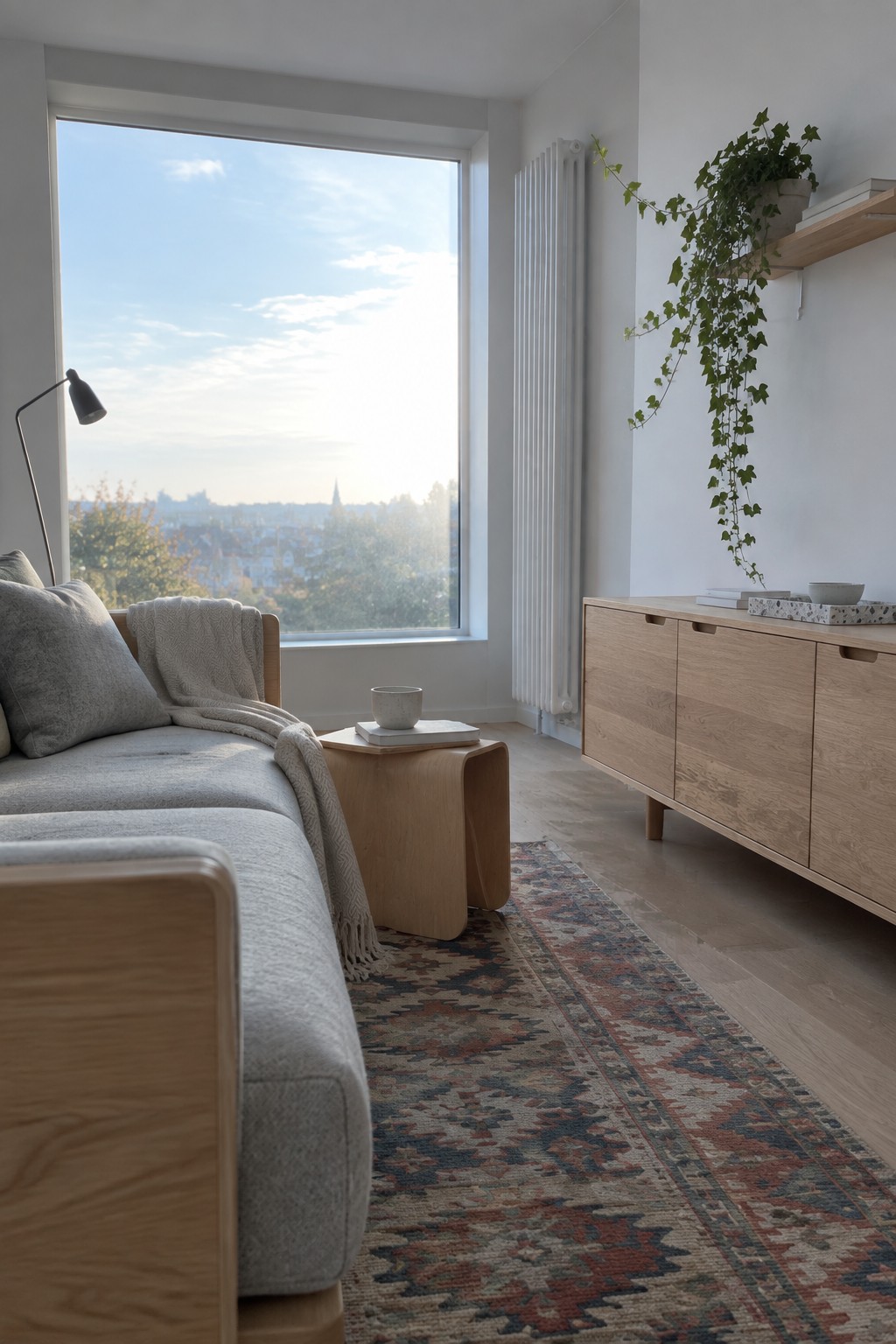
Light wood furniture helps a Scandinavian living room stay bright and open even on cloudy days. The pale oak tones reflect light around the space instead of soaking it up the way darker pieces would.
Try a low side table or a simple cabinet in the same light finish as your flooring. This works best in rooms with big windows and white or off-white walls where you want the furniture to blend in rather than stand out.
Curved Sofas Bring Softness to Bright Rooms
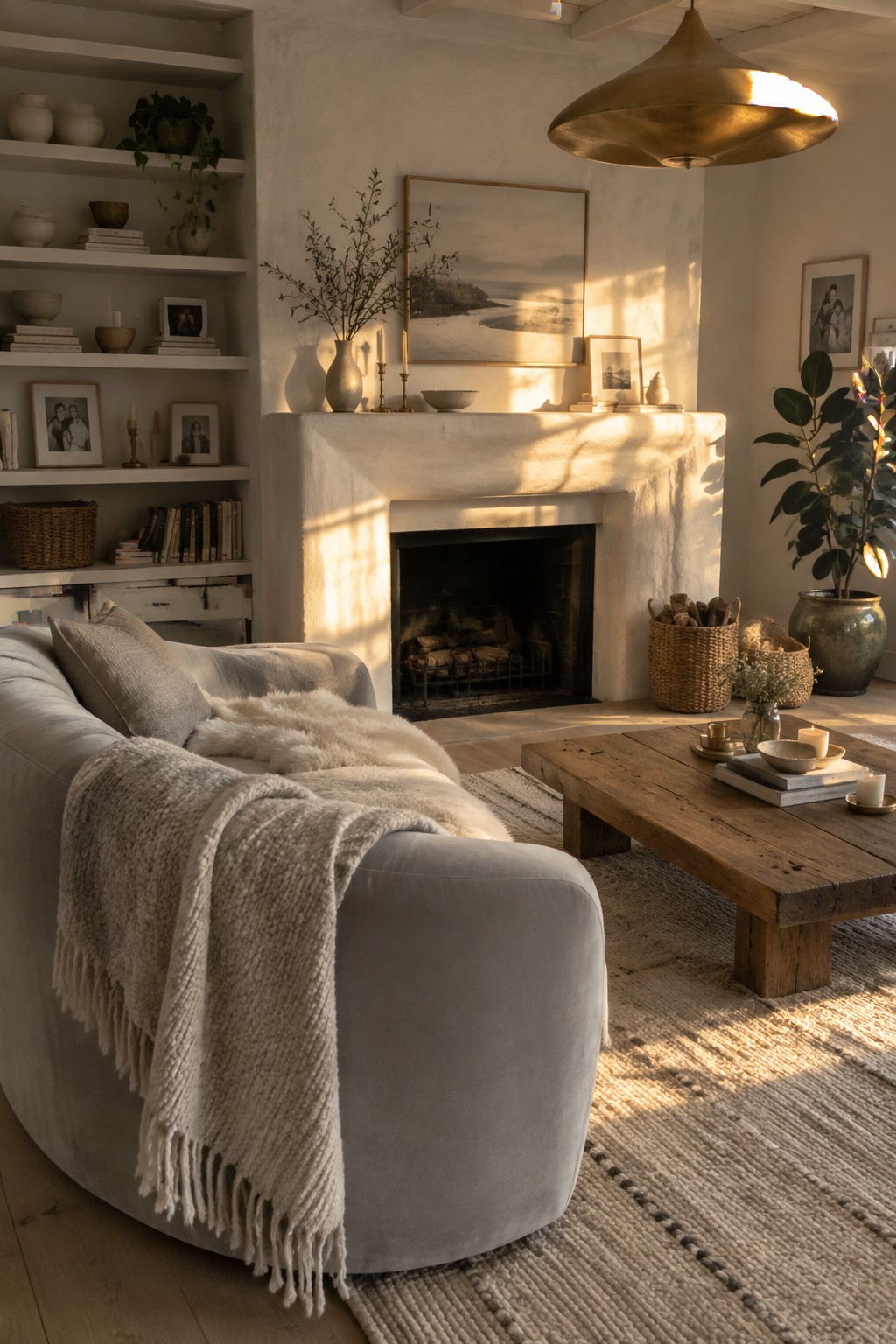
A curved sofa works well in Scandinavian rooms that get plenty of light because it avoids sharp lines and creates a natural place to gather. The rounded shape softens the overall look while still leaving the space feeling open and easy to move through.
Place one facing the main window or fireplace so the curve guides the eye around the room instead of cutting it in half. Keep the fabric light and add just one textured throw so the sofa stays cozy without crowding the airy feel.
Let a Large Window Flood the Room With Light

A big, uncovered window changes how a living room feels right away. It brings in steady daylight that keeps the space from feeling closed in, especially when the walls and furnishings stay pale and simple.
This approach works well in apartments or homes that get decent sun exposure. Skip heavy drapes, stick with light linens and natural woods, and let the window do most of the work.
Built-Ins That Add Storage Without Weighing Down the Room
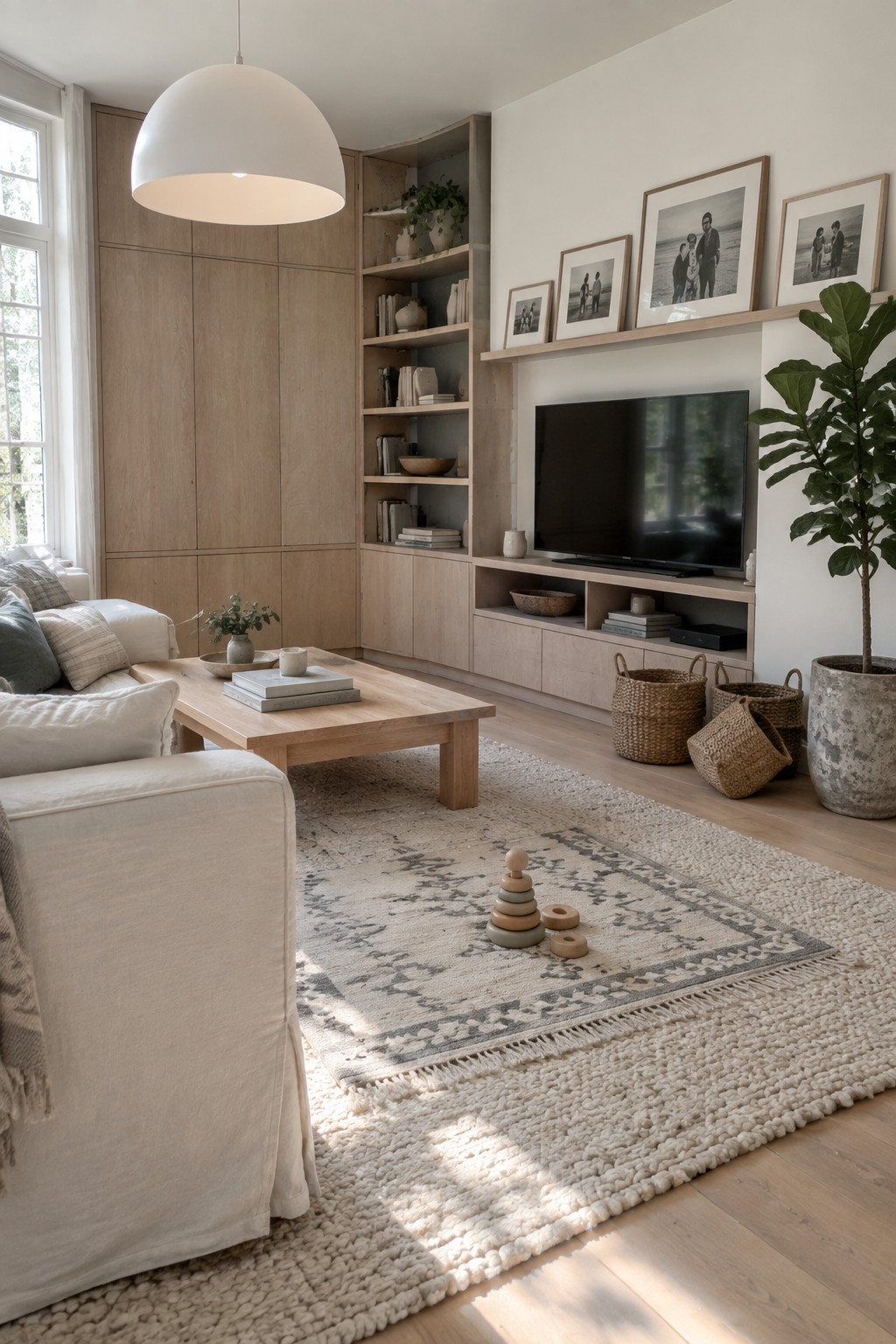
Built-in shelving and cabinets along one wall give you room for books, plants, and everyday items while leaving the floor clear. This keeps the space feeling open and easy to move around in, which matters more than it seems when you spend a lot of time in the room.
It works best in homes that already lean light and simple. Use the same wood tone for both the open shelves and the closed cabinets so the whole wall reads as one piece instead of a mix of separate units.
Soft Blue Walls For An Airy Room

A soft blue on the walls gives a Scandinavian living room a touch of color without closing it in. The pale shade reflects light nicely and pairs well with white upholstery and raw wood pieces to hold onto that open feeling.
This works best in smaller rooms or spaces that get steady daylight. Keep the rest of the palette light and bring in natural textures like linen and woven chairs so the blue stays calm rather than heavy.
Nest Seating in an Arched Alcove

An arched alcove gives a living room a clear spot for the sofa without making the space feel boxed in. It turns an open wall into a natural frame that holds the seating area in place while still letting light move freely around the room.
This works especially well in Scandinavian homes that need a bit of warmth without adding visual weight. Keep the alcove walls the same light tone as the rest of the room and use a simple sofa so the shape itself does the work of defining the spot.
Layer Rugs to Define the Seating Area
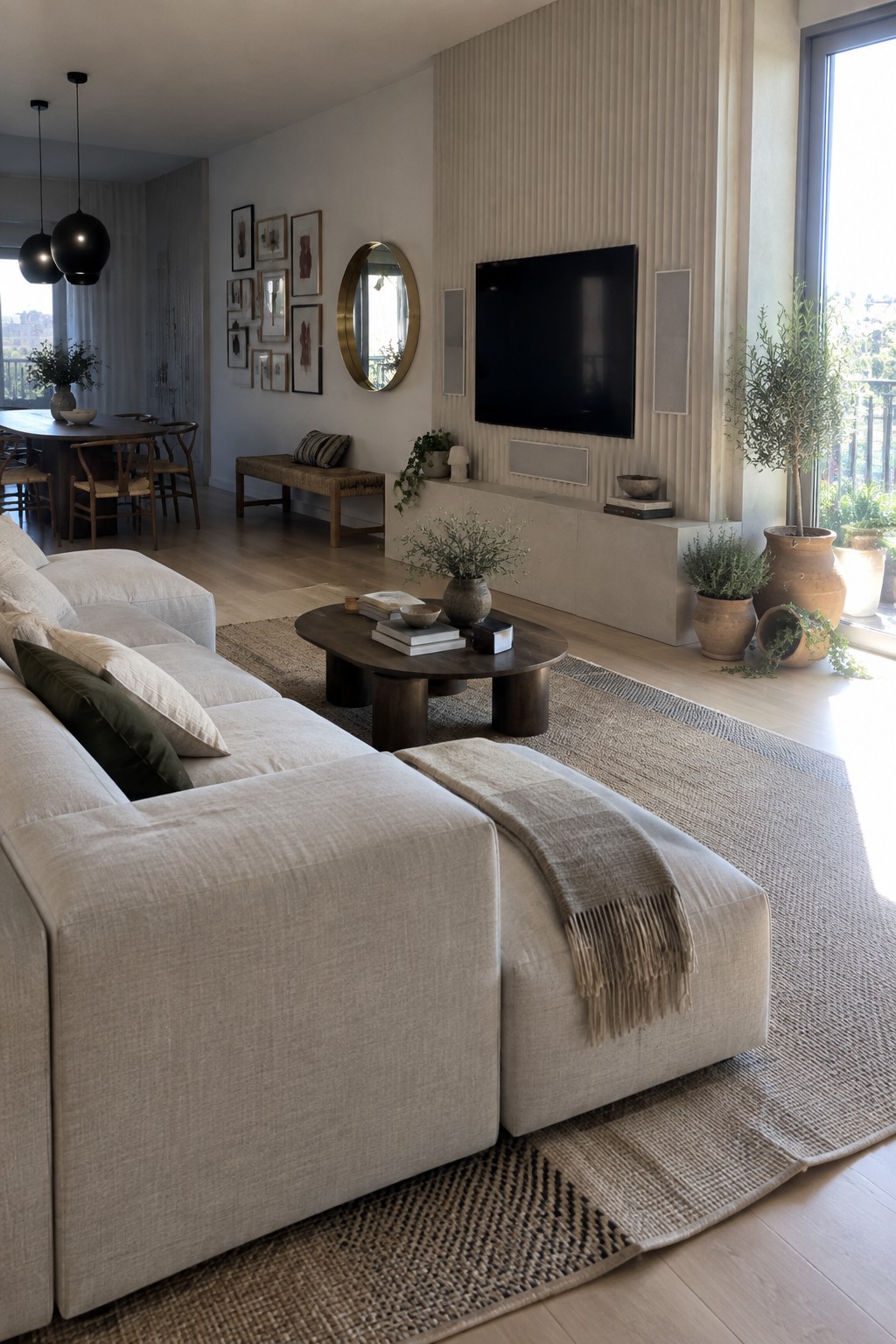
Layering rugs gives a living room a clear sense of place without adding walls or heavy furniture. In an open layout, it helps the seating area feel settled and separate from the rest of the space while still letting light move through.
This works best on light wood floors where a larger natural-fiber rug can sit underneath a smaller woven one. Keep the top layer just big enough to fit under the front legs of the sofa and coffee table so the whole arrangement stays simple and easy to walk around.
Anchor the Room with a Wood Stove

A wood stove gives a Scandinavian living room a clear center without filling it with bulk. It supplies real heat, draws the eye naturally, and keeps the overall look simple and grounded even when the rest of the space stays light and open.
Place the stove on an existing wall or in a corner where it will not block window light. Pair it with low seating and a few natural textures like wood and wool so the room still feels airy once the fire is out.
Built-In Seating With Open Shelving

Built-in seating with shelves above it turns a plain wall into a useful spot without crowding the room. The bench tucks right against the wall so the floor stays open and the space feels bigger than it is.
This setup works best in smaller homes or apartments where you need seating and storage in one place. Keep the shelves light with everyday items like linens and bowls so the area stays bright and easy to use.
Use Light Wood to Balance Dark Accents
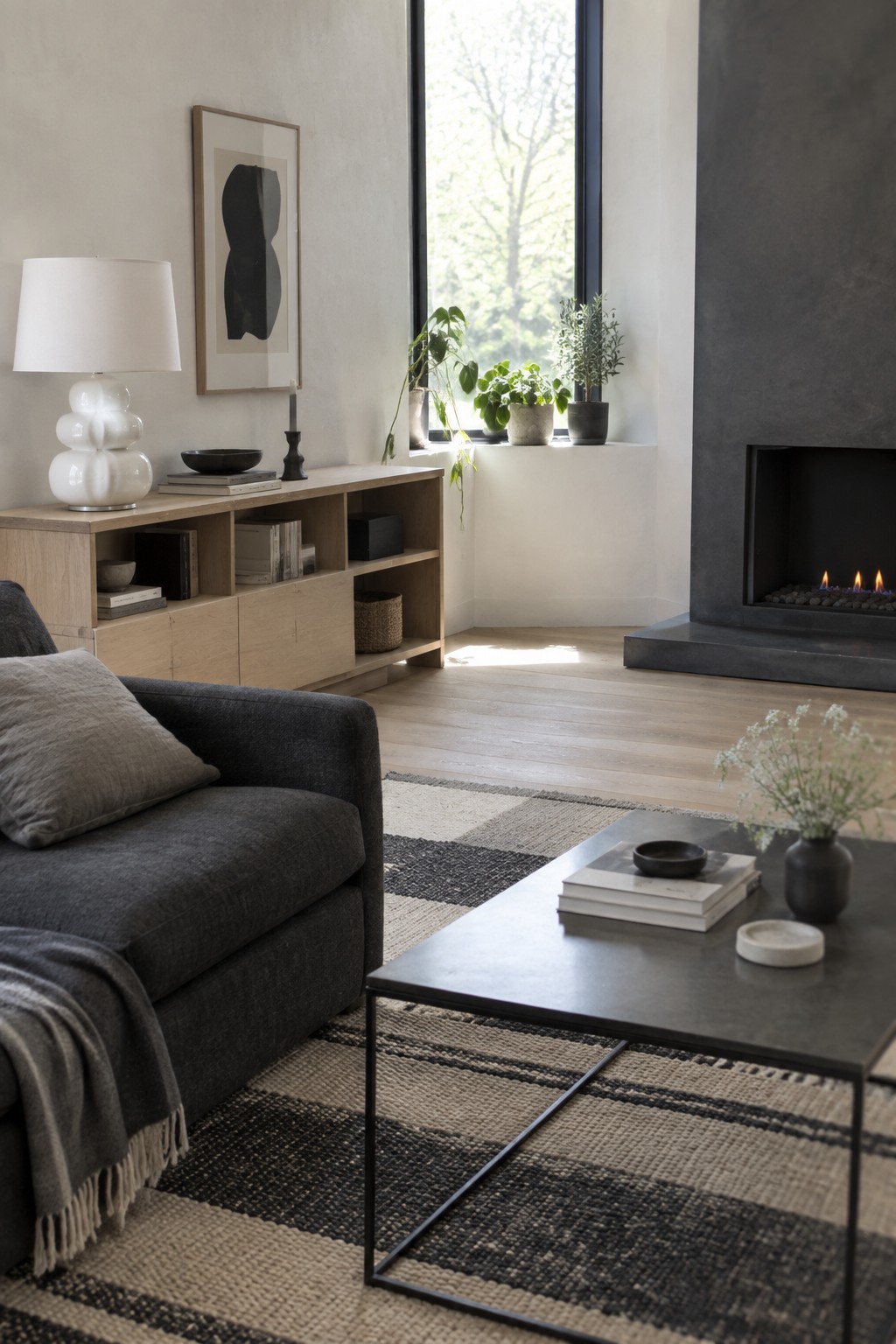
A dark sofa or fireplace can easily make a room feel heavy. Light wood furniture like a low console or open shelving helps offset that weight and keeps the space feeling open and calm. The natural tone reflects light instead of soaking it up, which matters a lot in Scandinavian rooms that rely on brightness.
This approach works best in spaces with decent natural light. Keep most of the larger surfaces light and let one or two darker pieces stand out. It suits smaller living rooms especially well since the contrast adds interest without adding clutter or visual bulk.
Natural Wood Pieces Warm Up Light Rooms

Natural wood brings an organic shape and texture that stops a bright neutral room from feeling too bare. A solid wood coffee table or a raw stump used as a side table gives the space weight and character while still letting the light move through.
This approach works best in homes that already have pale walls and simple furniture. Keep the wood tones varied but limited to two or three pieces so the room stays open and easy rather than heavy.
Add A Tall Bookshelf For Storage And Height
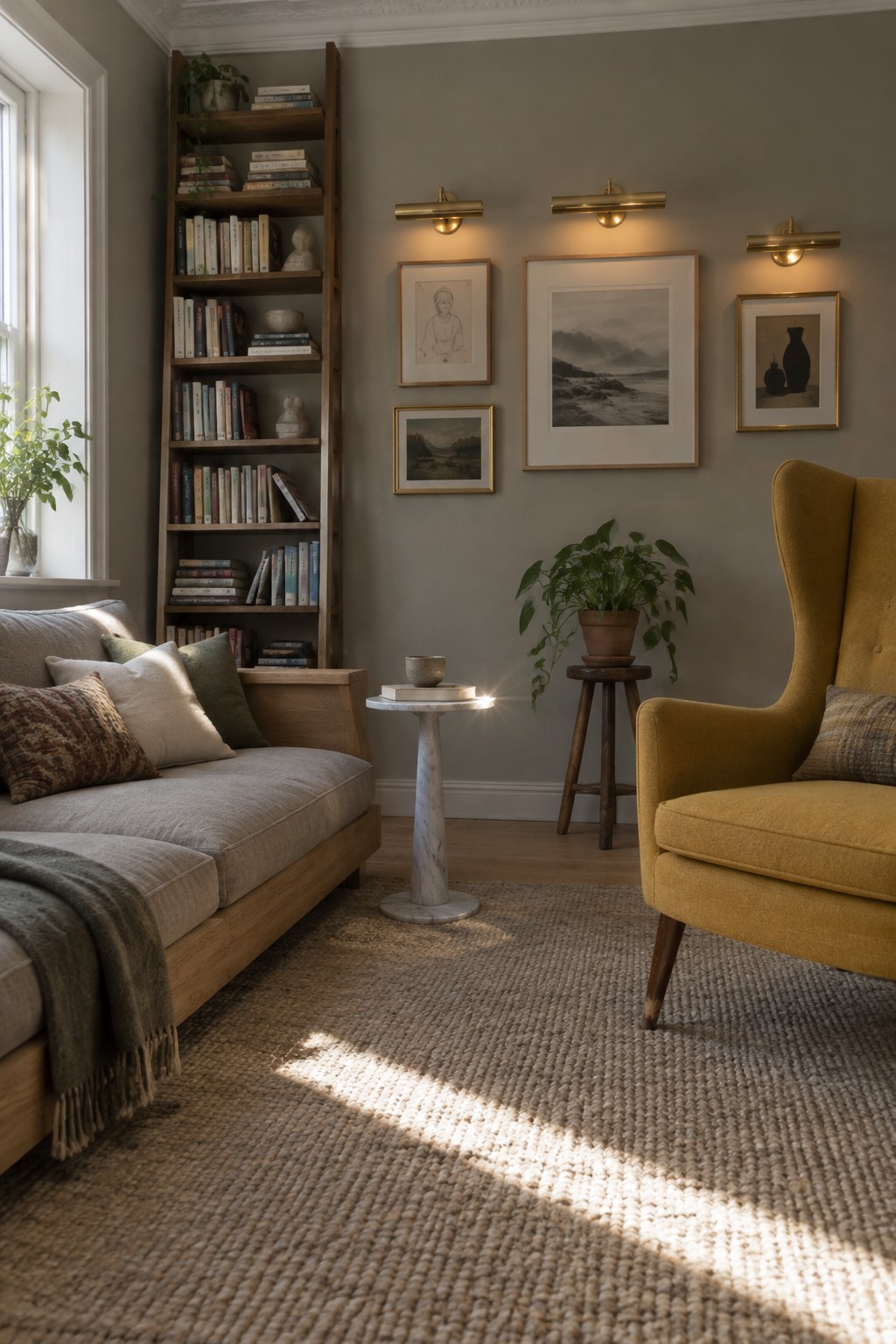
A tall open bookshelf works well in a Scandinavian living room because it gives you storage without eating up floor space. The vertical lines draw the eye up and keep the room feeling light even when the shelves are full.
Place it on a side wall where it won’t block windows. Mix books with a few plants and small objects so the shelves feel personal but still let air and light move through the room. This setup suits smaller homes that need practical storage without looking heavy.
Built-In Window Seating

A built-in window bench adds seating and storage without crowding the room. It keeps the floor open so light can move through the space more freely, which fits the calm, uncluttered feel most people want in a Scandinavian living room.
This works best in rooms with decent natural light and a wall that can take a simple bench. Keep the cushions light and add drawers or a lift-up seat if you need a place to tuck away throws and extra pillows.
Light Wood Furniture to Brighten a Living Room

Many Scandinavian living rooms lean on pale wood for the main pieces like tables, shelving, and sofa frames. This keeps the space from feeling heavy and helps light move through the room more easily, especially when the walls stay soft and neutral.
It suits smaller rooms or those with average windows, since the light tones prevent things from crowding up visually. Try to match the wood tones across a few key items rather than mixing too many finishes, and keep the rest of the palette quiet so the wood can do the work.
Pick One Large Rug to Define Your Living Area
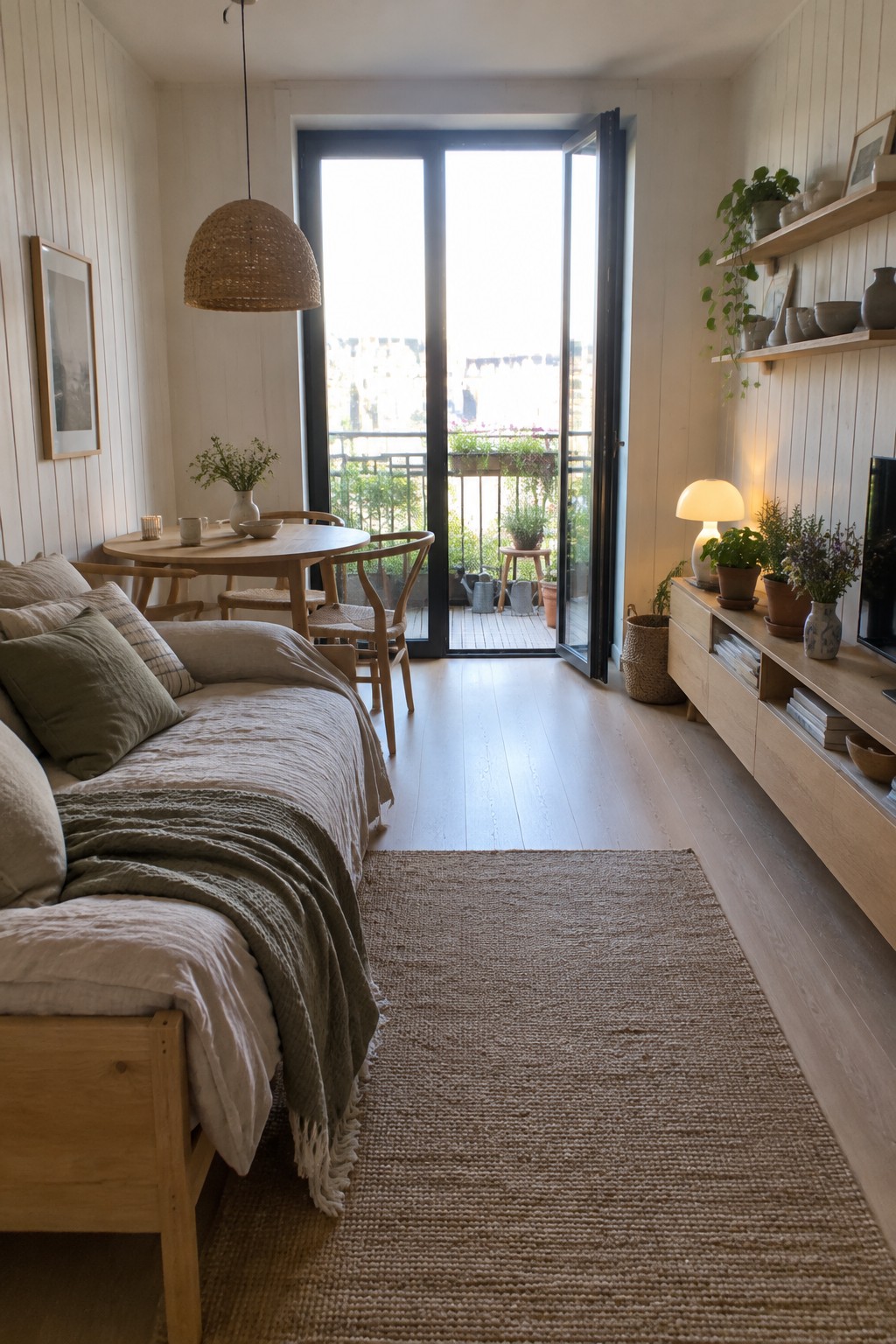
A single large woven rug can pull a seating area together without making the room feel smaller or darker. In bright Scandinavian rooms the floor stays mostly visible, so the rug adds just enough texture and warmth while still letting light bounce around the space.
This works best in open-plan rooms where the living area needs a gentle boundary but you want to keep the overall feel light and simple. Stick to natural fibers in soft beige or gray tones, and make sure the rug is big enough to sit under the front legs of the main seating pieces.
Frequently Asked Questions
Q: How do I make my living room feel bigger if it’s on the small side?
A: Start by clearing out extra furniture. Stick to pieces that sit low to the ground so the eye travels farther. Light floors help too.
Q: What if I already have colorful art on the walls?
A: But you can tone it down with neutral backdrops. Hang the pieces against white walls only. This keeps the focus on the light and air.
Q: My floors are dark wood. Does that ruin the Scandinavian look?
A: Not at all. Just balance them with plenty of white or pale textiles nearby. A few light rugs can pull things together nicely.
