


Living rooms settle into a real sense of calm only when the neutral layers actually support how the space gets used every day.
I have found that starting with the largest pieces and letting them sit for a while reveals whether the tones will hold up once the light changes and the clutter returns.
Texture choices show up first.
Building the room in stages also lets me see which fabrics and finishes earn their place instead of just filling a gap on a mood board.
Over time this method keeps the space from feeling like a finished display that no longer matches the way we actually live in it.
Layer Textures in a Neutral Palette
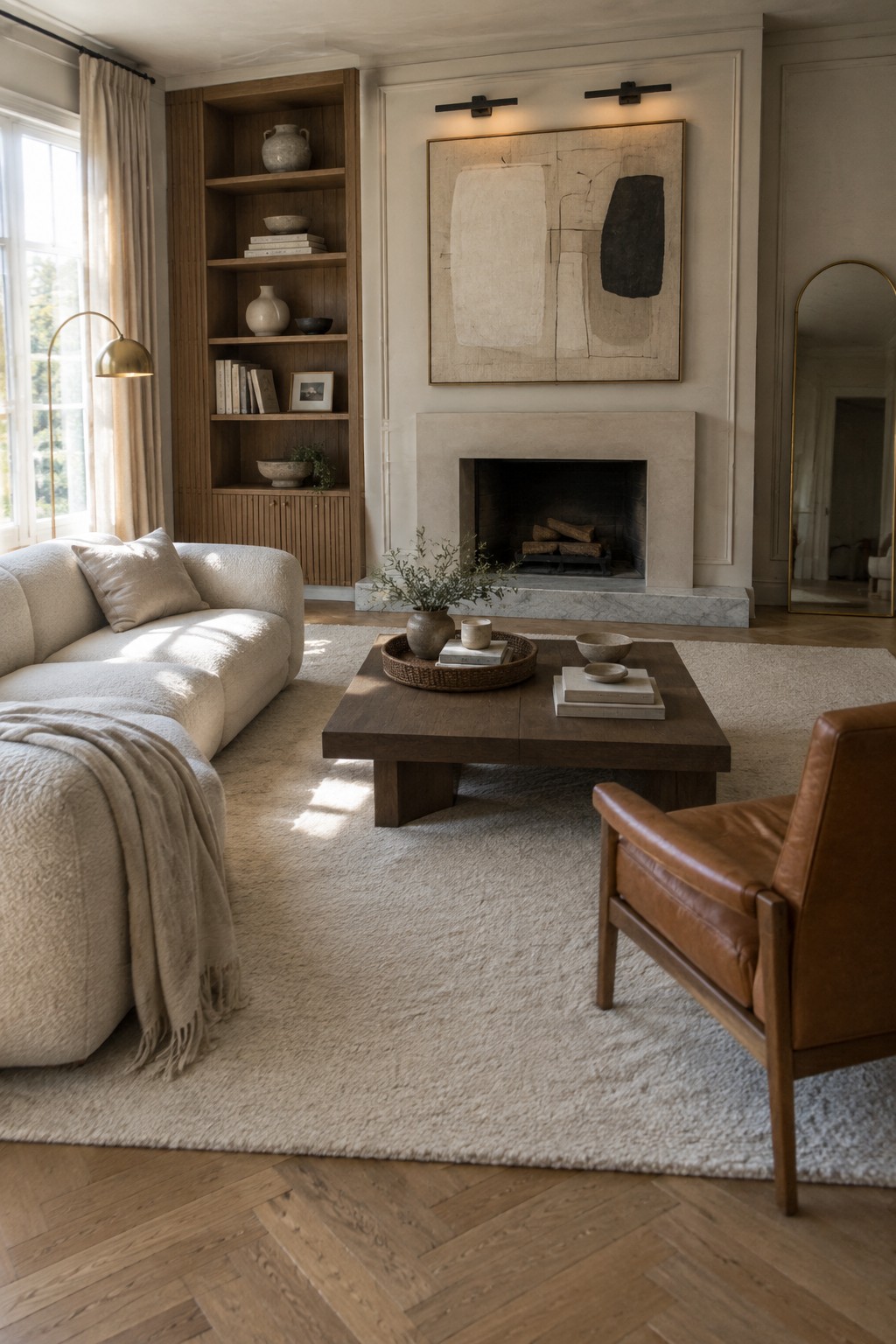
A neutral room stays interesting when you let different materials do the work. The soft boucle on the sofa, smooth leather on the chair, and rougher wood on the table all sit in the same color range, so nothing fights for attention.
This works best in rooms that get steady daylight, since light helps the textures read clearly. Keep the shapes fairly simple and limit strong patterns so the surfaces can carry the room without feeling busy.
Layering Neutral Textures
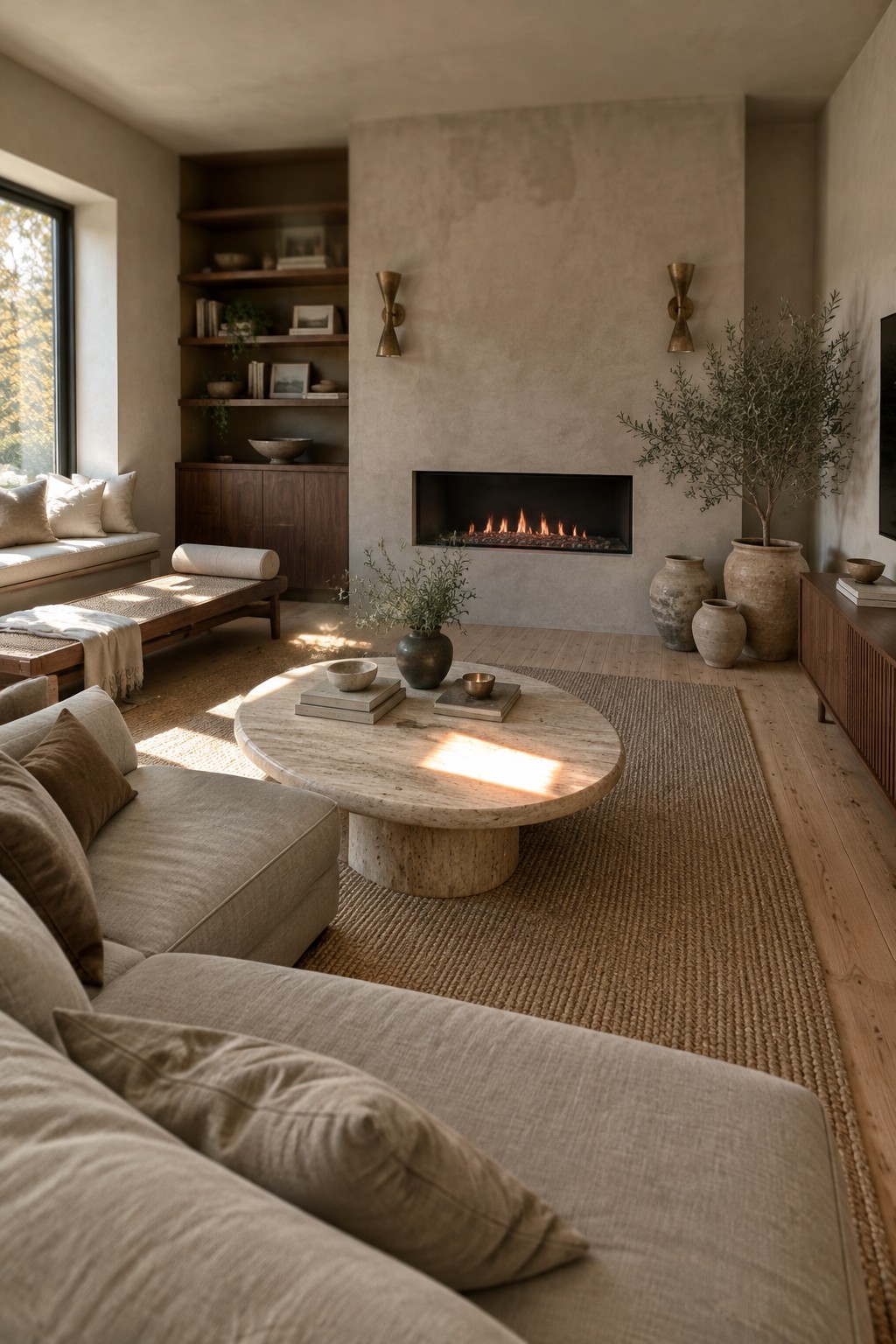
One of the simplest ways to make a neutral living room feel finished is to layer several textures in the same color family. The sofa fabric, the rough woven rug, the smooth stone table, and the wood tones all sit close together on the color scale, but the surfaces catch light differently and keep the space from feeling flat.
This approach works well in rooms that get steady daylight, since the textures show up more clearly then. It suits homes that already lean quiet and unfussy, and it holds up better if you keep the shapes fairly simple so the materials can do the work.
Layer Neutrals Through Different Textures
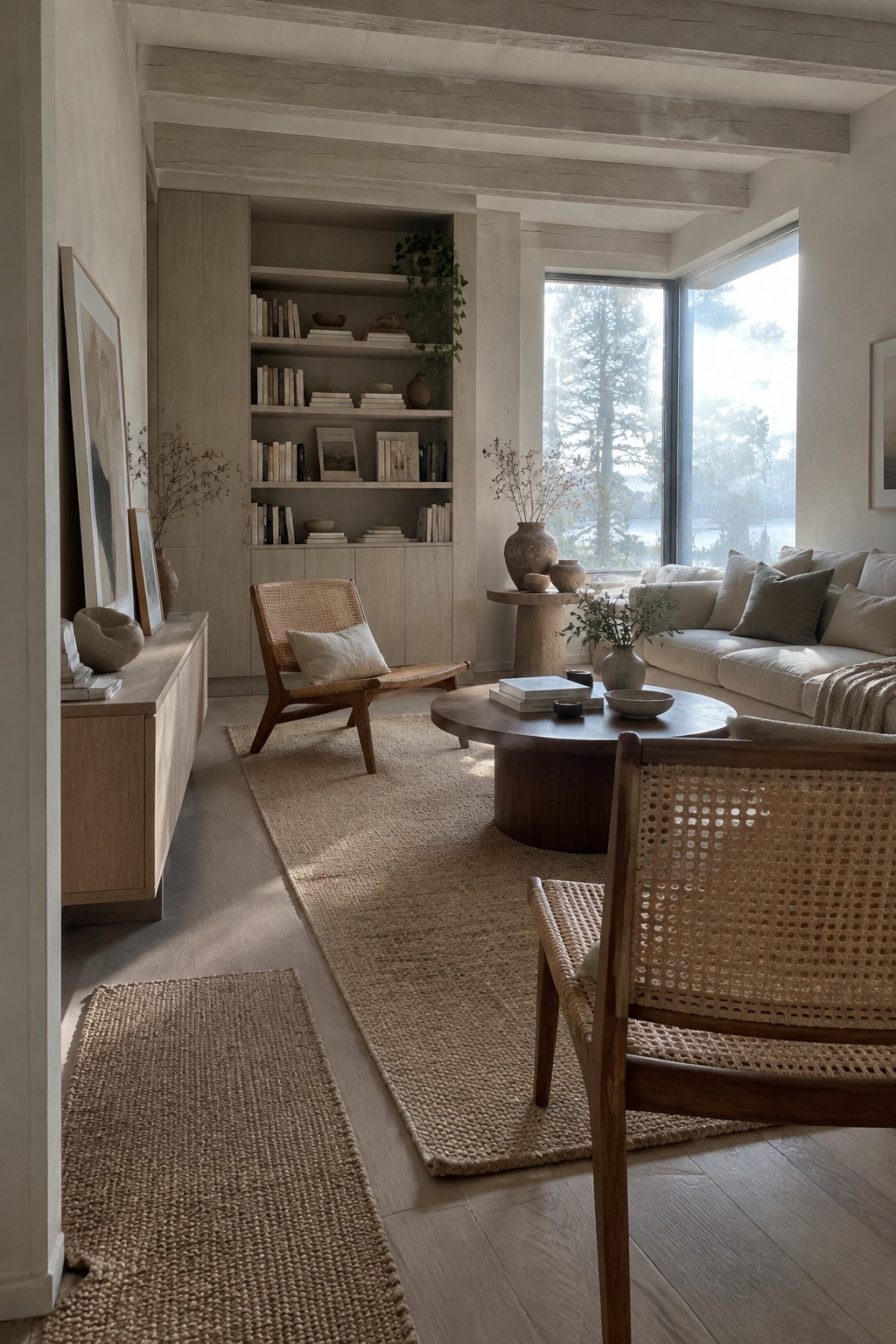
One way to keep a neutral living room from feeling flat is to use several materials that all sit in the same soft range. Wood tones, woven cane, linen, and jute each bring their own surface while staying close in color.
This works best in rooms that get steady daylight, where the textures can show up without extra contrast. Choose pieces that share the same undertone and let the materials handle the layering instead of adding new shades.
Built-In Shelving With Soft Lighting
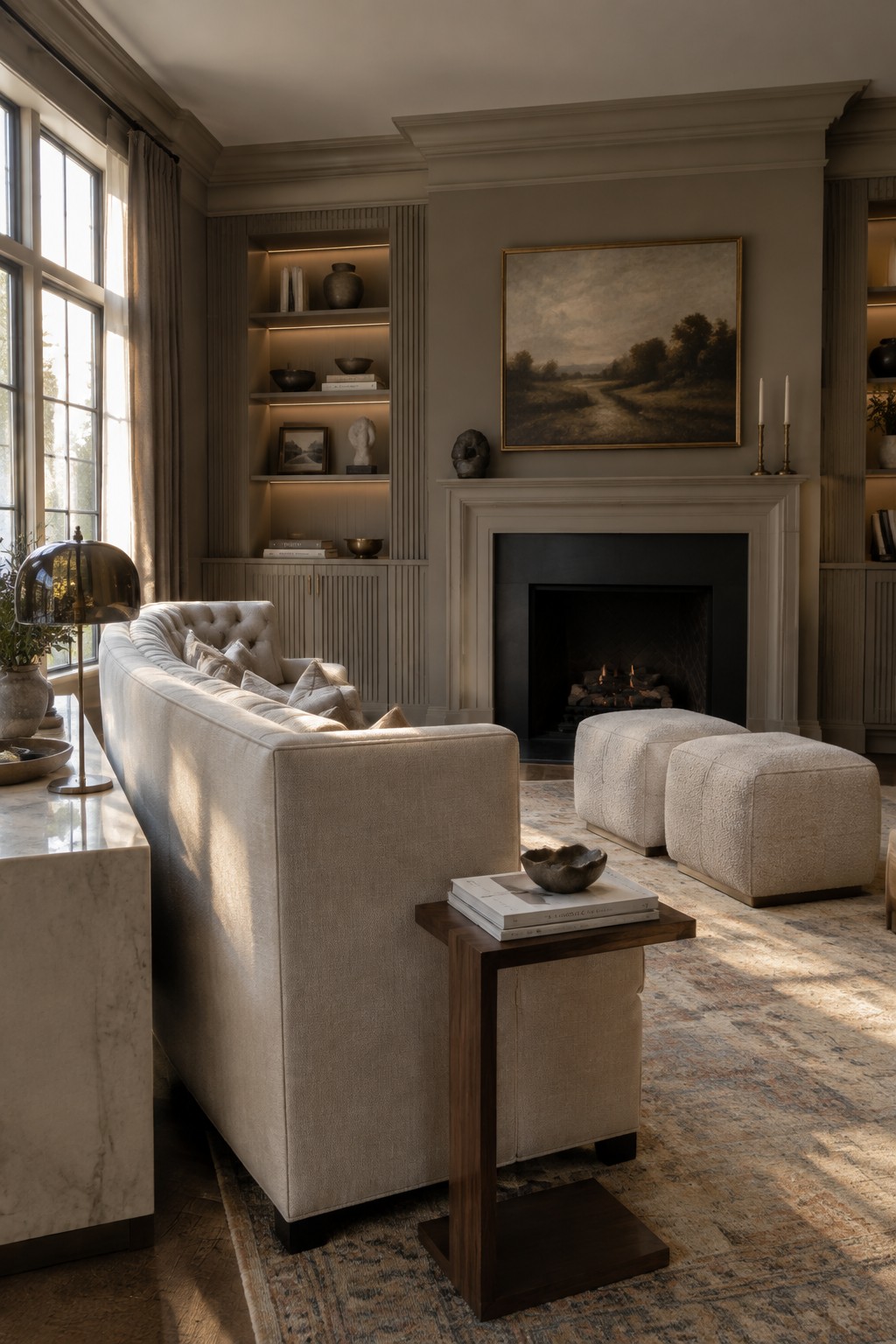
Built-in shelving on either side of a fireplace gives a living room quiet storage without crowding the space. The lights inside the shelves highlight a few objects at a time, so the wall feels useful rather than empty.
This setup works best in rooms that already have a strong focal point like a mantel. Keep the objects simple and change them out now and then so the shelves stay calm instead of busy.
Pairing Leather With Soft Upholstery

Leather chairs next to a fabric sofa give a room weight without making it feel heavy. The contrast between the smooth, worn leather and the softer cushions adds just enough difference to keep everything from blending together, while the shared neutral tones hold it all in place. This mix shows up often in rooms that aim for calm but still want some everyday character.
It works best in spaces that get steady natural light and already have wood floors or a simple rug underneath. Start with one or two leather pieces if the rest of the seating is fabric, and let the tones stay close rather than trying to match them exactly. The result feels gathered over time instead of styled all at once.
Adding Texture Layers to Neutral Living Rooms

One way to keep a neutral living room from feeling flat is to bring in different textures that all sit within the same soft color range. The sofa might be smooth leather while a nearby chair has a looped fabric, and the table top is something rough like concrete. These contrasts give the eye something to notice without any bold color.
This approach works especially well in open living areas where you want the space to feel calm but still lived in. Stick to two or three main tones and let the materials do the work. It suits homes that already have simple architecture and good natural light.
Layering Neutral Textures For Added Warmth

One of the easiest ways to make a neutral living room feel finished is to bring in several different textures that all stay within the same color range. The rough plaster walls, the soft curved sofa, and the smooth wood table all work together without any one material taking over. This approach keeps the room quiet while still giving it enough visual weight to feel comfortable rather than bare.
This works best in rooms that get steady natural light, since the textures show up more clearly when the light shifts during the day. Stick to two or three main materials at most, and let one of them, like the rug or the sofa fabric, cover the largest area so the mix does not feel scattered.
Layer Natural Textures in Neutral Living Rooms
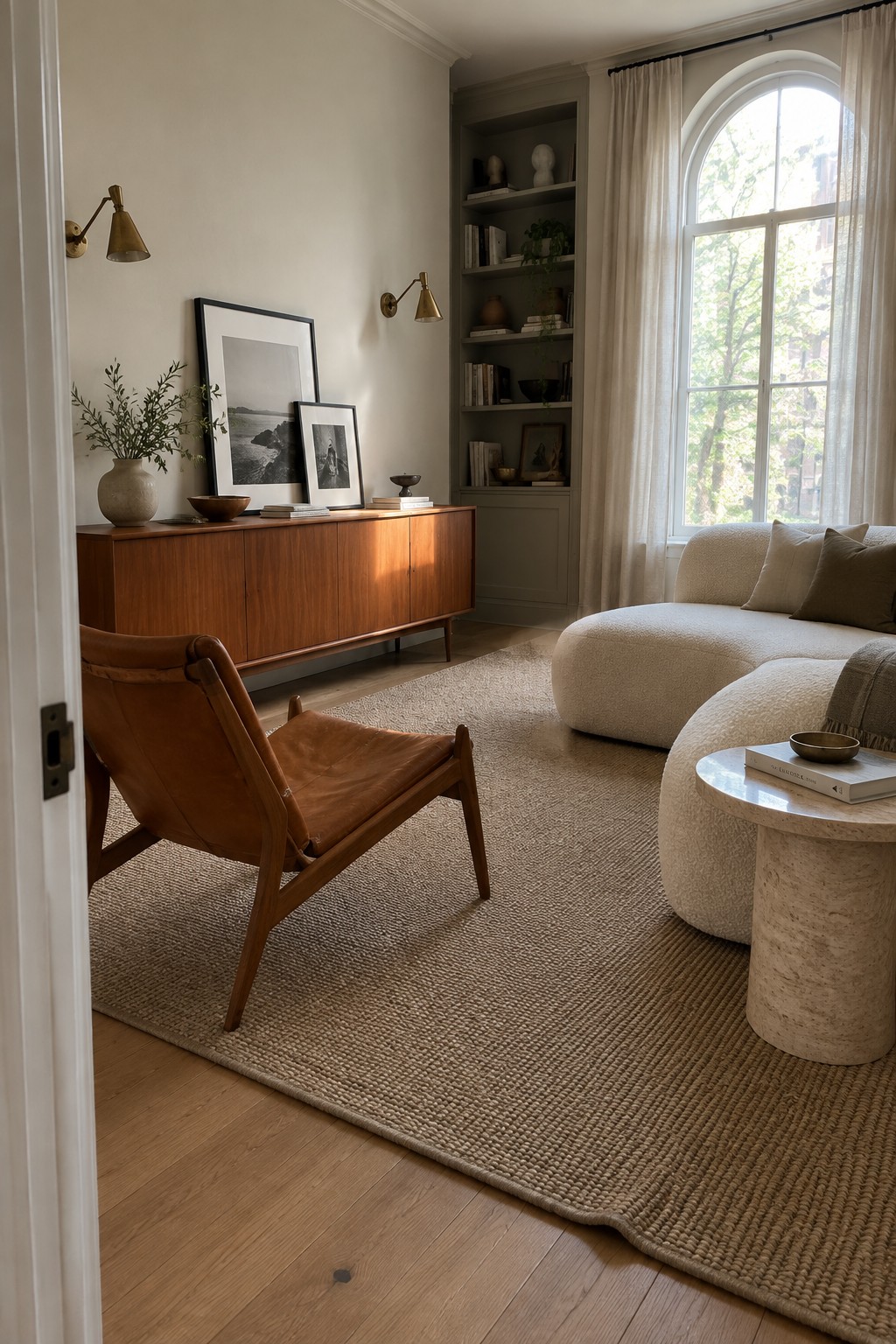
Many neutral living rooms end up feeling flat when every surface shares the same smooth finish. Mixing a coarse woven rug with leather seating and solid wood pieces adds just enough variation to keep the room interesting without bringing in color.
This works best in spaces that already have decent natural light. Start with the largest textured layer, such as a big jute rug, then add leather and wood around it so the materials play off each other rather than compete.
Layer Neutral Textures for a Calmer Room
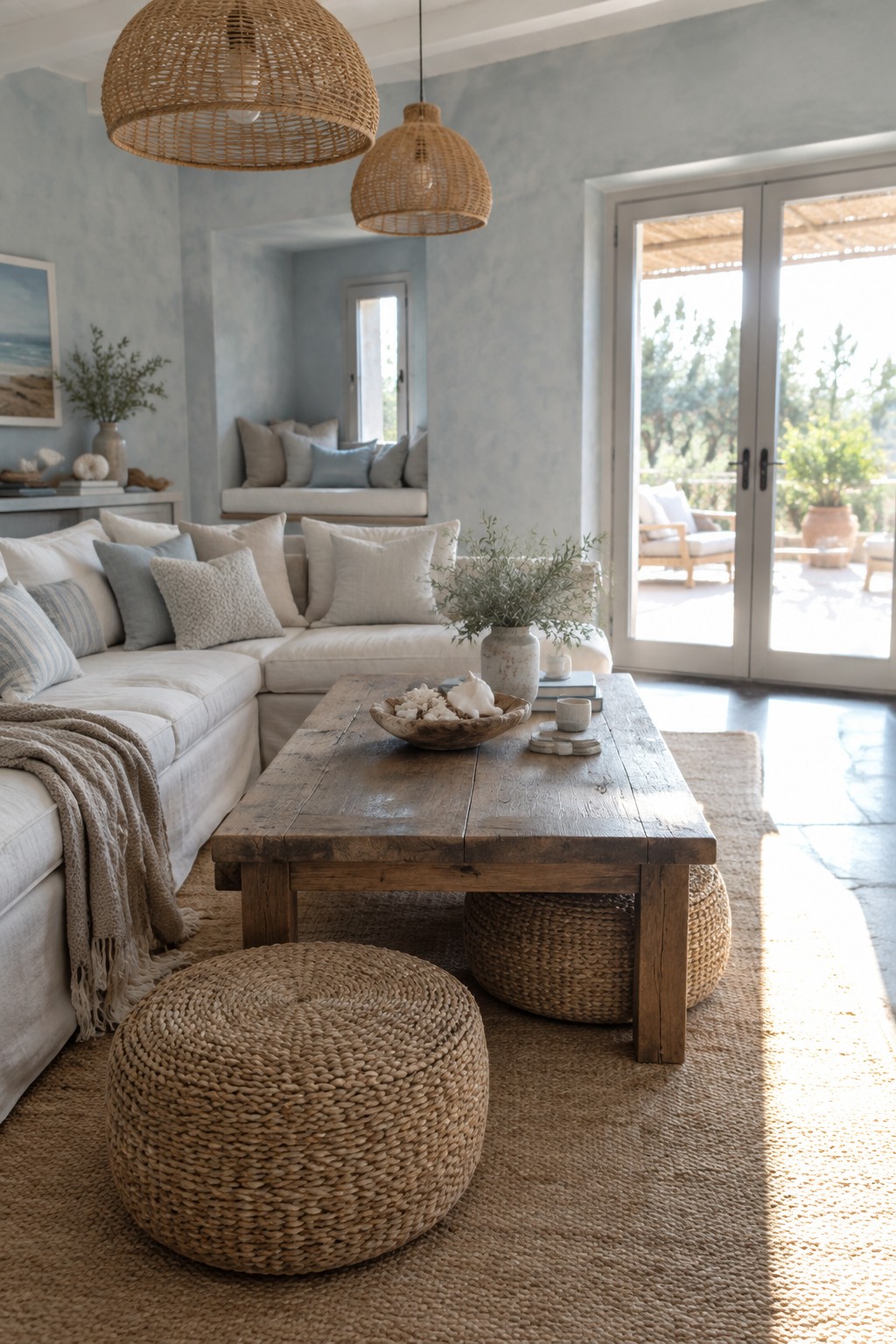
Many living rooms feel flat when everything stays smooth and the same. Adding woven pieces like jute rugs, rattan lights, and seagrass poufs brings quiet depth without needing more color. The mix of rough and soft surfaces keeps the space interesting while it stays relaxed.
This works best in rooms that already use a limited palette of creams, beiges, and soft grays. Start with one large textured item like a rug, then add two or three smaller woven accents so nothing feels too busy. It suits homes that want comfort without looking styled.
Layer Neutrals Through Texture
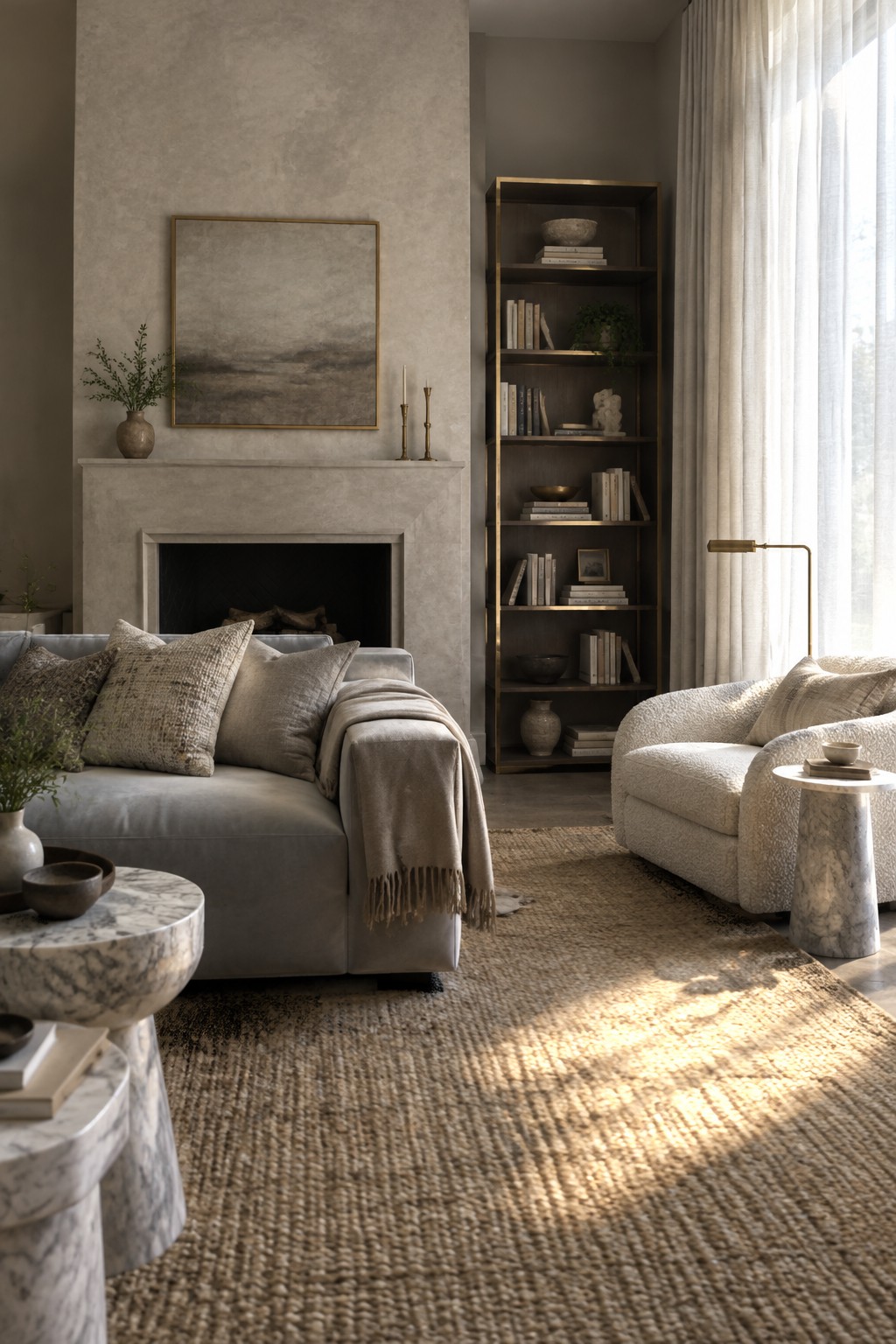
One of the easiest ways to get a quiet luxury feel is to stay within one narrow range of neutrals and let texture do the work. The room stays calm because nothing jumps out in a new color, yet the surfaces still have enough variation to keep it interesting. A soft gray sofa, a boucle chair, a rough woven rug, and smooth marble tables all sit together without fighting.
This approach works best in living rooms that get used every day. It suits homes that already have simple architecture since the layers of fabric and finish add warmth without needing extra trim or bold accents. Just watch that the textures do not all land at the same weight. Mix something soft with something harder so the room does not feel flat.
Built-In Shelving With A Bench Seat

Built-in shelving that includes a bench gives a living room steady storage and a place to sit without adding more furniture. The setup keeps the wall useful from floor to ceiling and helps the room feel ordered even when it holds quite a few books and small objects.
This works best in rooms that already have a fireplace or a long wall with good light. Keep the bench cushion in the same tone as the sofa so the whole area reads as one calm surface rather than separate pieces.
Layer Neutral Textures for Quiet Depth
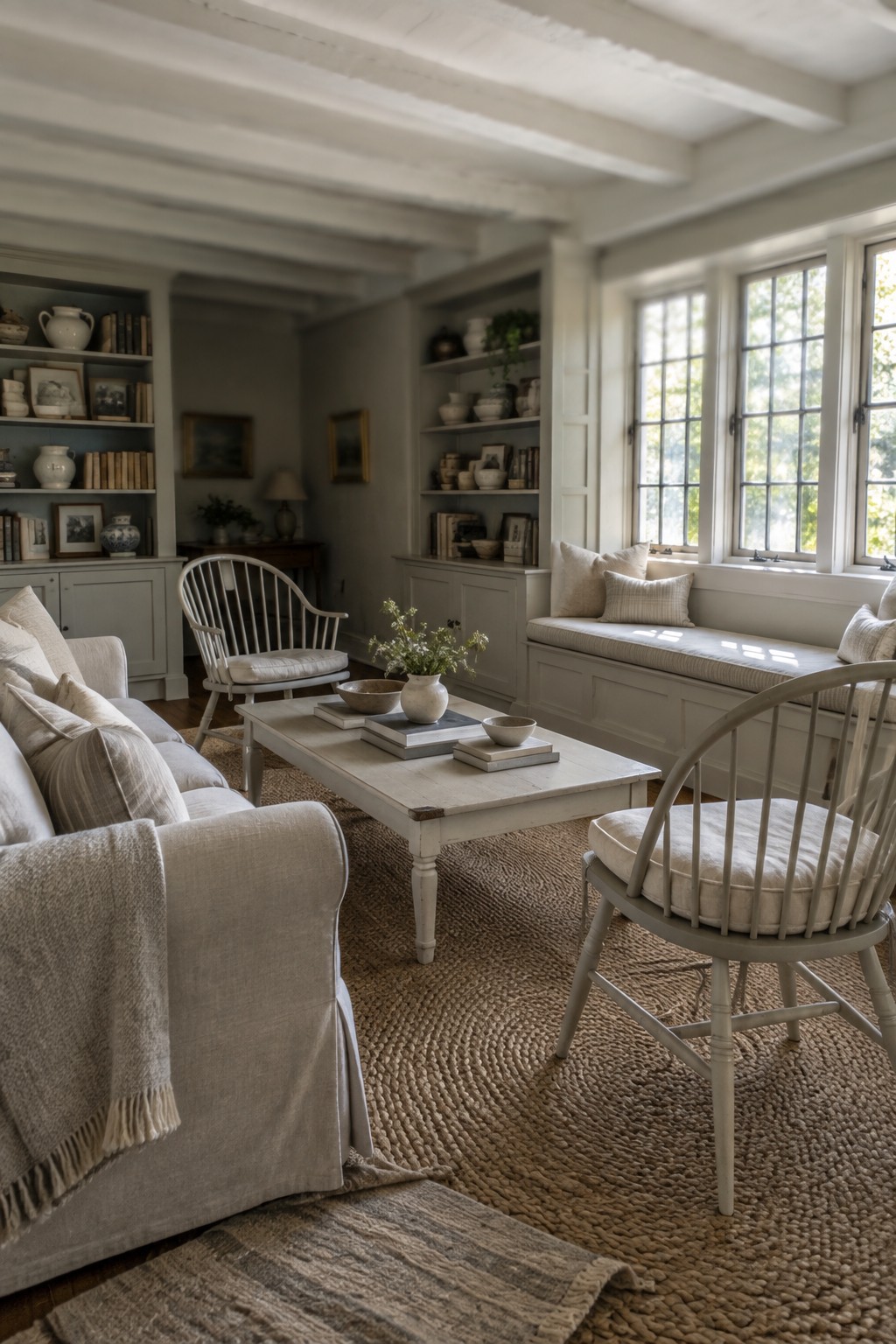
A room like this shows how a few close shades of beige and off white can feel rich when you mix different textures. The woven rug on the floor, the linen slipcovers on the sofa and chairs, and the painted wood all sit in the same color family but catch the light in their own way. That mix keeps the space from feeling flat even though nothing stands out in color.
This works best in rooms that already get good daylight. Start with one big textured piece like a natural fiber rug, then add linen or cotton on the seating and keep the wood tones soft and matte. It suits older homes or any space where you want things to feel calm rather than busy. Just watch that the textures stay related so nothing pulls away from the rest.
Layering Neutral Textures in Living Rooms

One of the easiest ways to get a quiet, expensive look is to layer several neutral textures in the same space. Stone, wood, leather, and woven fabrics all sit together without competing, and the variation in surfaces keeps the room from feeling flat even when the colors stay very close.
This approach works best in rooms that already have some built-in texture like a fireplace or wood floors. Start with the largest pieces in the softest tones, then add one or two rougher materials such as a heavy rug or raw wood table to break up the sameness. Keep the overall palette tight so the textures do the work instead of color changes.
Low Sofas Help Create a Calm Living Room
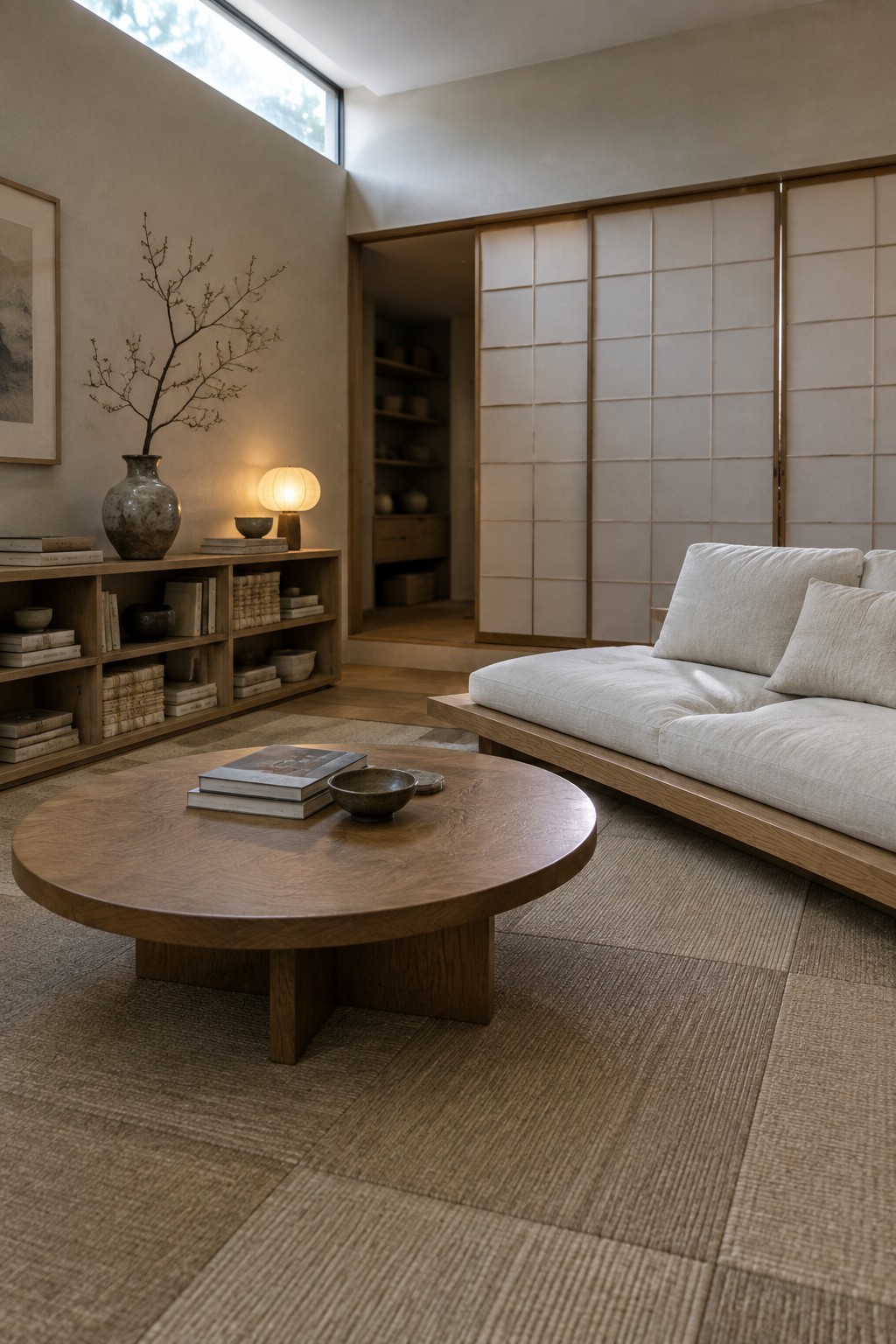
One idea worth trying in a neutral living room is keeping the main seating low to the floor. This layout opens up the space and gives it a settled, quiet feel without relying on tall furniture or heavy pieces.
It works especially well in rooms with simple walls and natural flooring. Pair the low sofa with a round coffee table and woven mats to keep the look balanced and easy to move around in.
Layer Textures Within Neutral Tones
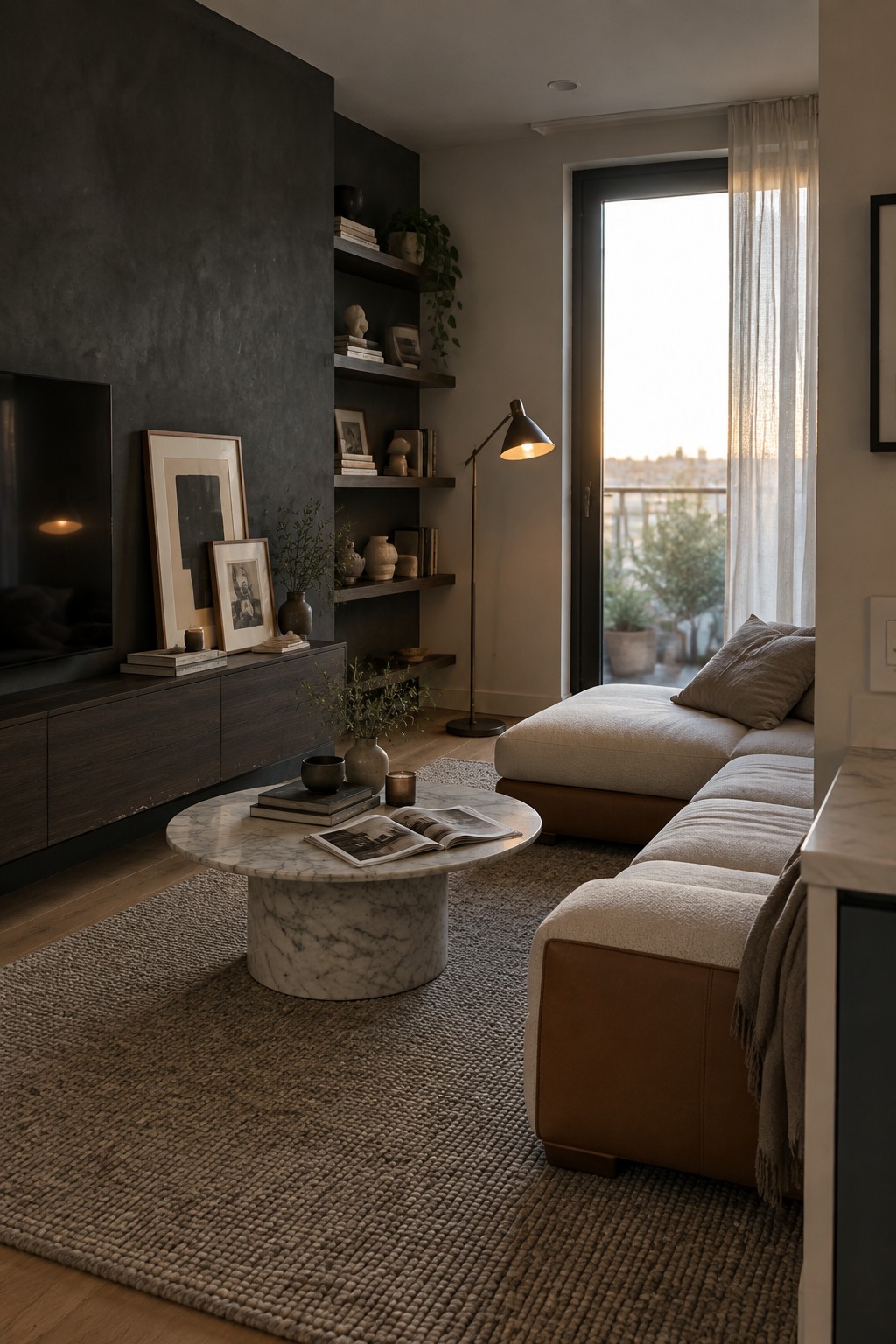
Many neutral rooms start to feel flat once the color stops changing. The fix is usually texture. A thick woven rug under a smooth marble table, next to leather and boucle seating, gives the space enough variation to stay interesting without bringing in new colors.
This works best in living rooms that already have a calm base. Keep the palette tight and let the materials do the work instead. A wood console, stone surface, and natural fiber rug are usually enough to add depth while still reading quiet and cohesive.
Use Wood To Anchor Neutral Living Rooms
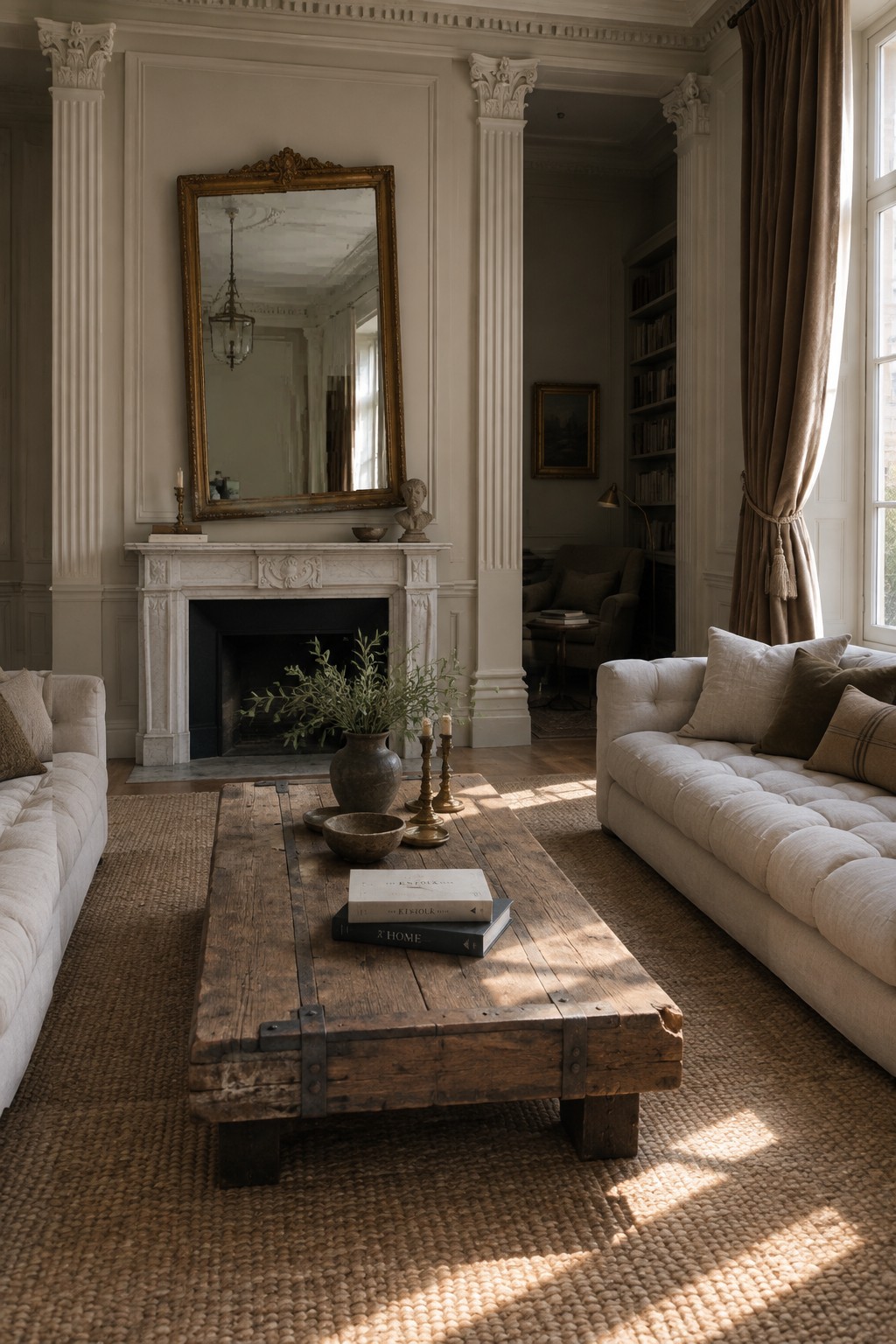
A solid wood coffee table can give a neutral room something to rest on without adding color or fuss. The grain and weight pull the softer pieces together and keep the whole space feeling calm rather than empty.
This approach works best in rooms that already have some age or height to them. Keep the wood simple and let everything else stay quiet in tone so the table becomes the one thing that feels rooted.
Mixing Fabric and Leather in Neutral Rooms
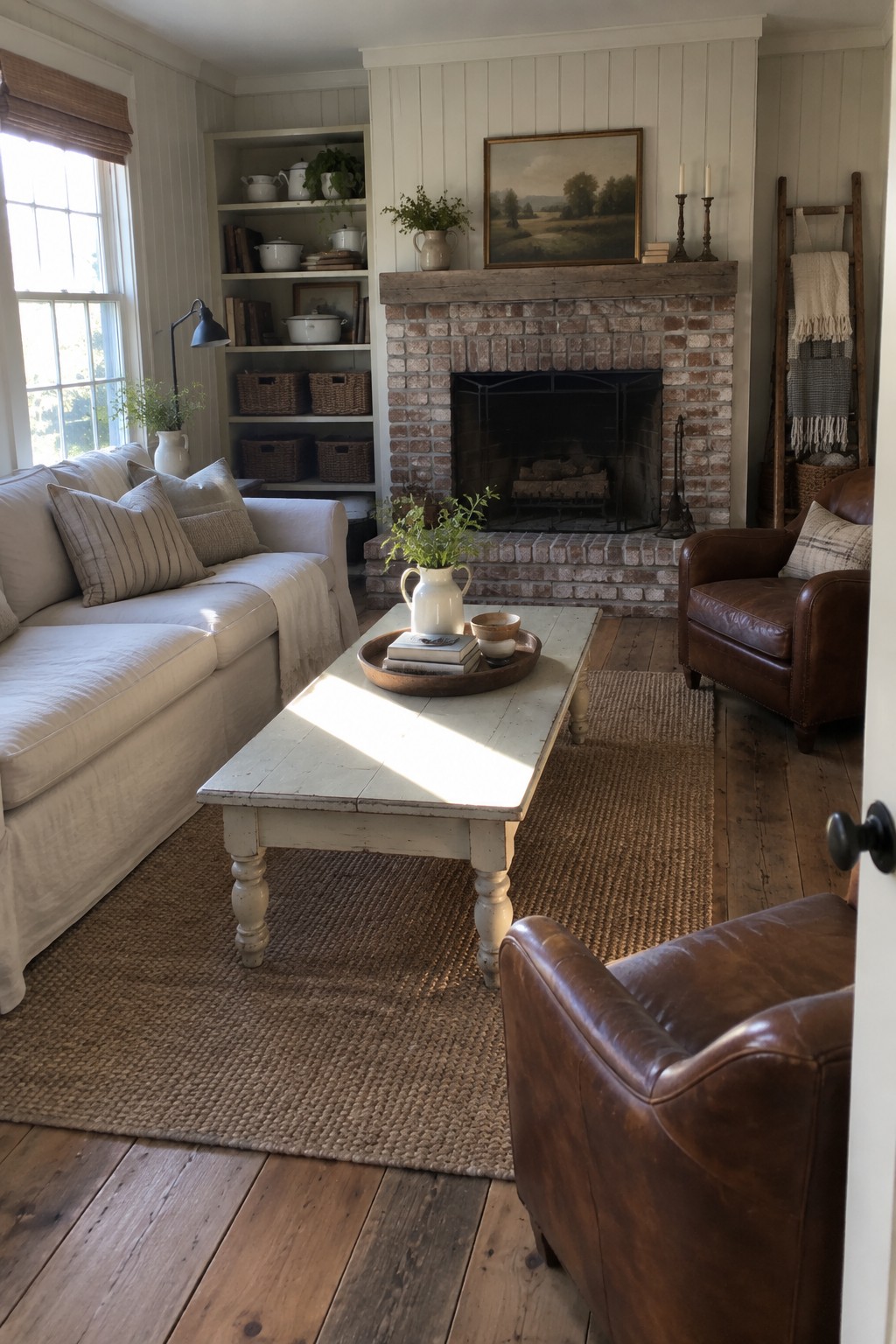
A living room often feels more settled when you combine a soft slipcovered sofa with a couple of leather chairs. The contrast between the two materials adds depth without needing extra color or pattern. It keeps the space calm while still giving it some weight and presence.
This approach works especially well in older homes or rooms with wood floors and brick fireplaces. Start with a large neutral sofa as the base, then add one or two leather pieces in a similar tone. Keep the rest of the room simple so the mix of textures can do the work.
Layering Neutral Textures

One of the easiest ways to add interest to a neutral living room is to let the textures do the work. When the colors stay close, the surfaces become what you notice first. A boucle sofa next to smooth wood and a linen wall hanging creates movement without pulling in any new shades.
This approach suits rooms that already have some scale. It works best when you keep the tones within the same family and vary only the feel of the materials. Too many shiny finishes can start to fight each other, so most people find it simpler to mix just two or three textures and repeat them.
Layering Neutral Tones Through Texture
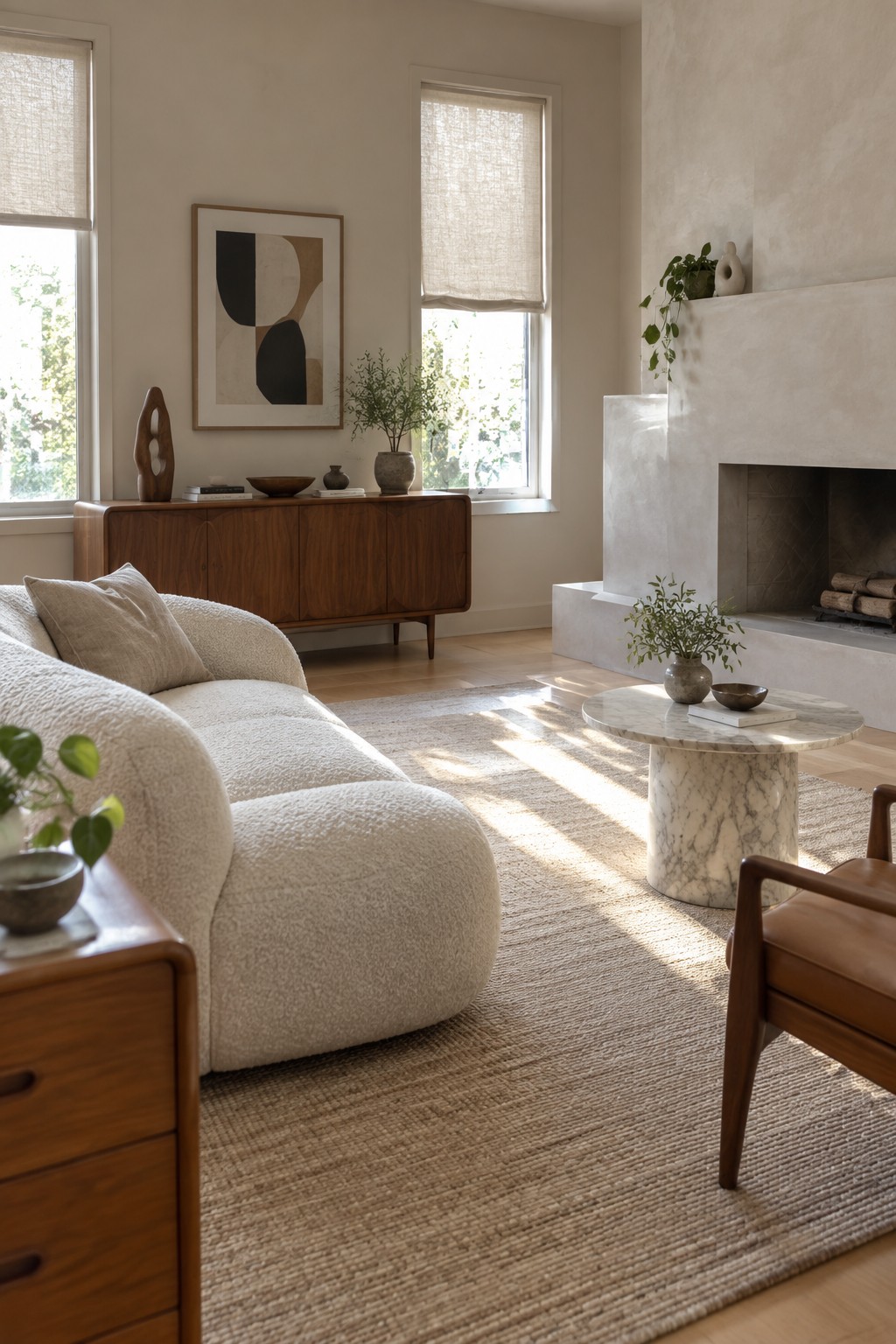
One of the simplest ways to build a quiet luxury living room is to layer several neutral tones and let texture carry the interest. A boucle sofa, wood cabinet, marble table, and woven rug all sit in the same soft palette but feel different to the touch, which keeps the space from looking flat.
This works especially well in rooms with steady daylight. It suits homes that already have wood floors or plaster walls and gives you room to add or swap pieces over time without starting over. Just keep the darkest tone to about a third of what you see so the whole room stays calm.
Layering Neutrals Through Texture
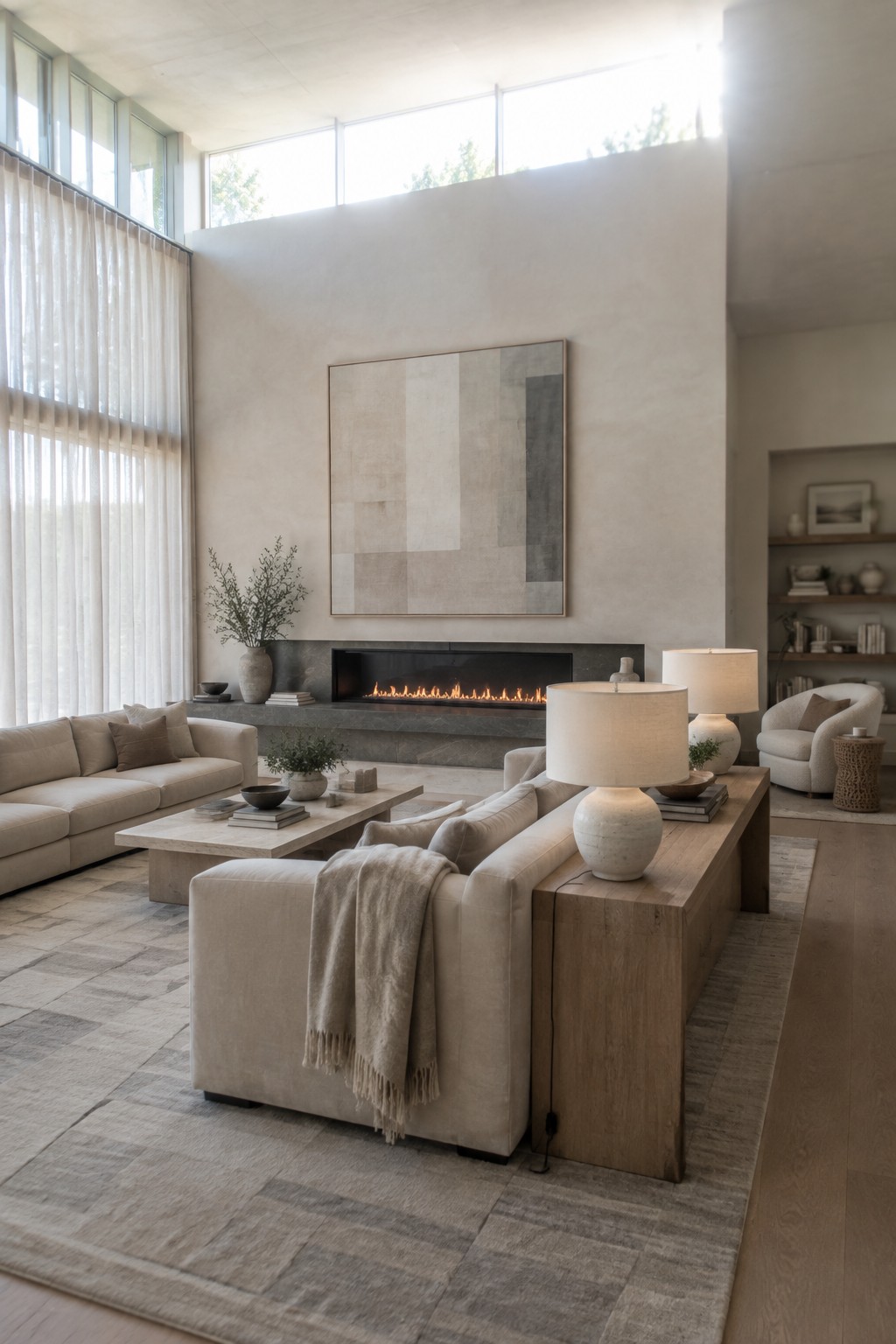
Many living rooms stay flat when every surface sits in the same tone. Bringing in wood, stone, and varied fabrics lets the neutrals shift slightly from one piece to the next so the room feels warmer and more settled without adding color.
This works best in open spaces where you want the whole room to read as one calm area. Keep the largest pieces in the lightest shade and let the darker or rougher materials show up on tables, the hearth, and smaller accents so nothing competes.
Frequently Asked Questions
Q: How do I pick neutrals that actually feel layered instead of flat? A: Start with a warm base like soft greige on the walls and build from there. Add a cooler tone in the rug and a hint of taupe in the curtains. The contrast between matte and textured surfaces does most of the work.
Q: What if my sofa is already a solid neutral but the room still feels empty? A: Layer two different fabrics over it, such as a linen throw and a wool blanket. Place them so one drapes lower than the other. This creates depth without adding new furniture.
Q: Can I bring in wood pieces without breaking the quiet luxury feel? A: Yes, pick oak or walnut with a matte finish and keep the scale simple. Set a low table in the center to anchor the seating area. The natural grain adds interest while staying within the neutral palette.
