

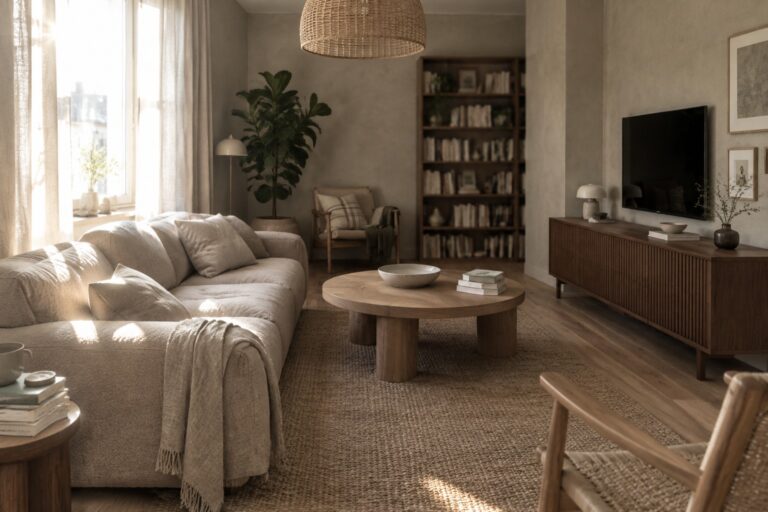
Living rooms tend to carry the weight of daily life, from quiet evenings to hosting others, which means the palette needs to feel steady rather than stark.
I keep noticing how beige and greige shift with changing light and how that affects whether the space feels calm or simply empty.
Warm wood helps anchor the look in practice.
Choosing one wood piece to start with usually shows whether the rest of the room will hold together before committing to bigger changes.
The real test comes when the furniture and everyday items are back in place and the colors still work without extra effort.
Warm Wood Furniture Keeps Neutral Rooms Cozy
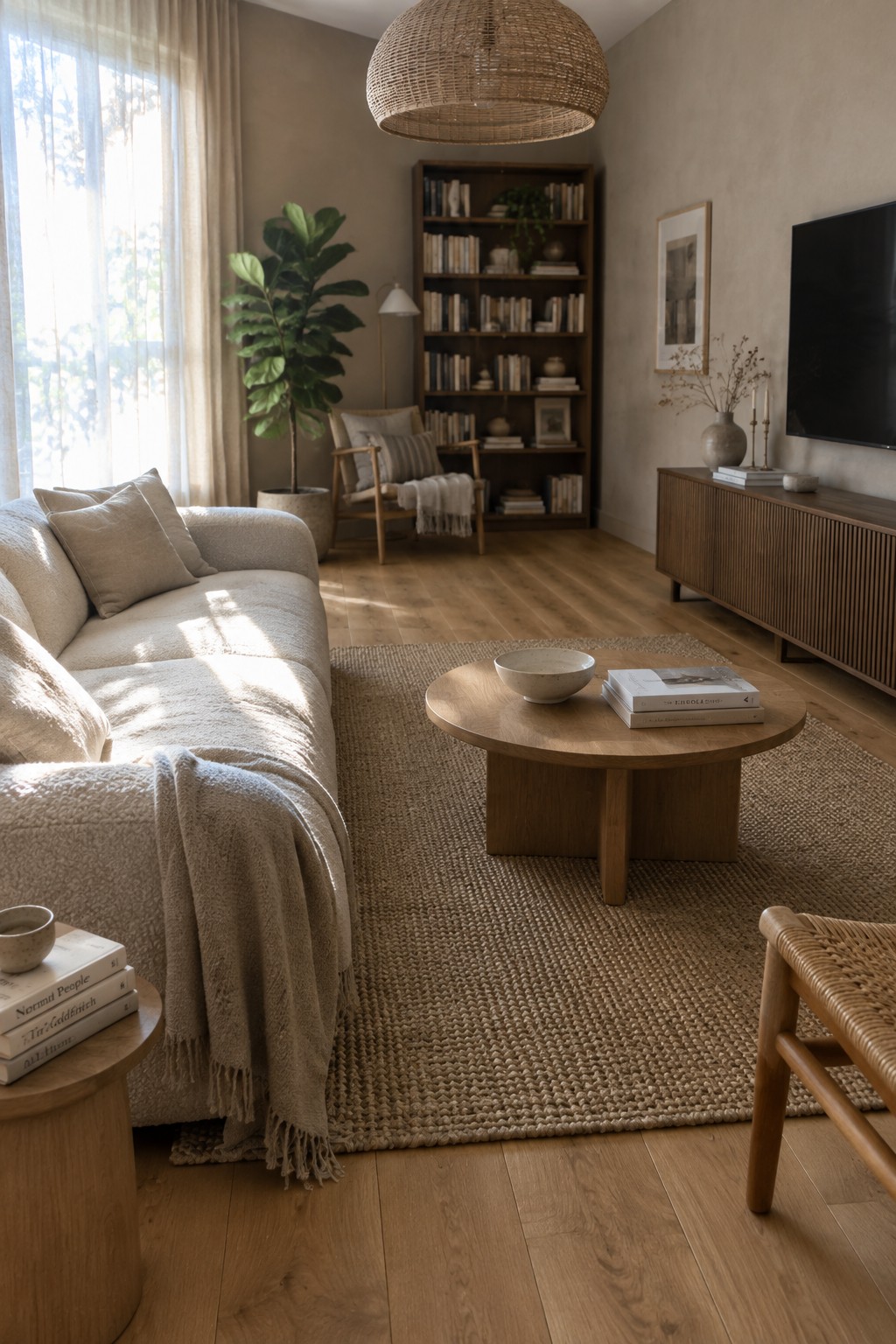
Many neutral living rooms risk feeling a little flat when everything stays in the same soft beige range. Bringing in warm wood pieces gives the space something solid to rest on and stops the palette from drifting into something too pale or cold.
This approach works best in rooms that already have decent natural light. Start with one or two larger wood items like a low coffee table or a simple console and let them sit against the softer textiles. The contrast does most of the work without needing extra color.
Built-In Shelves Around the Fireplace
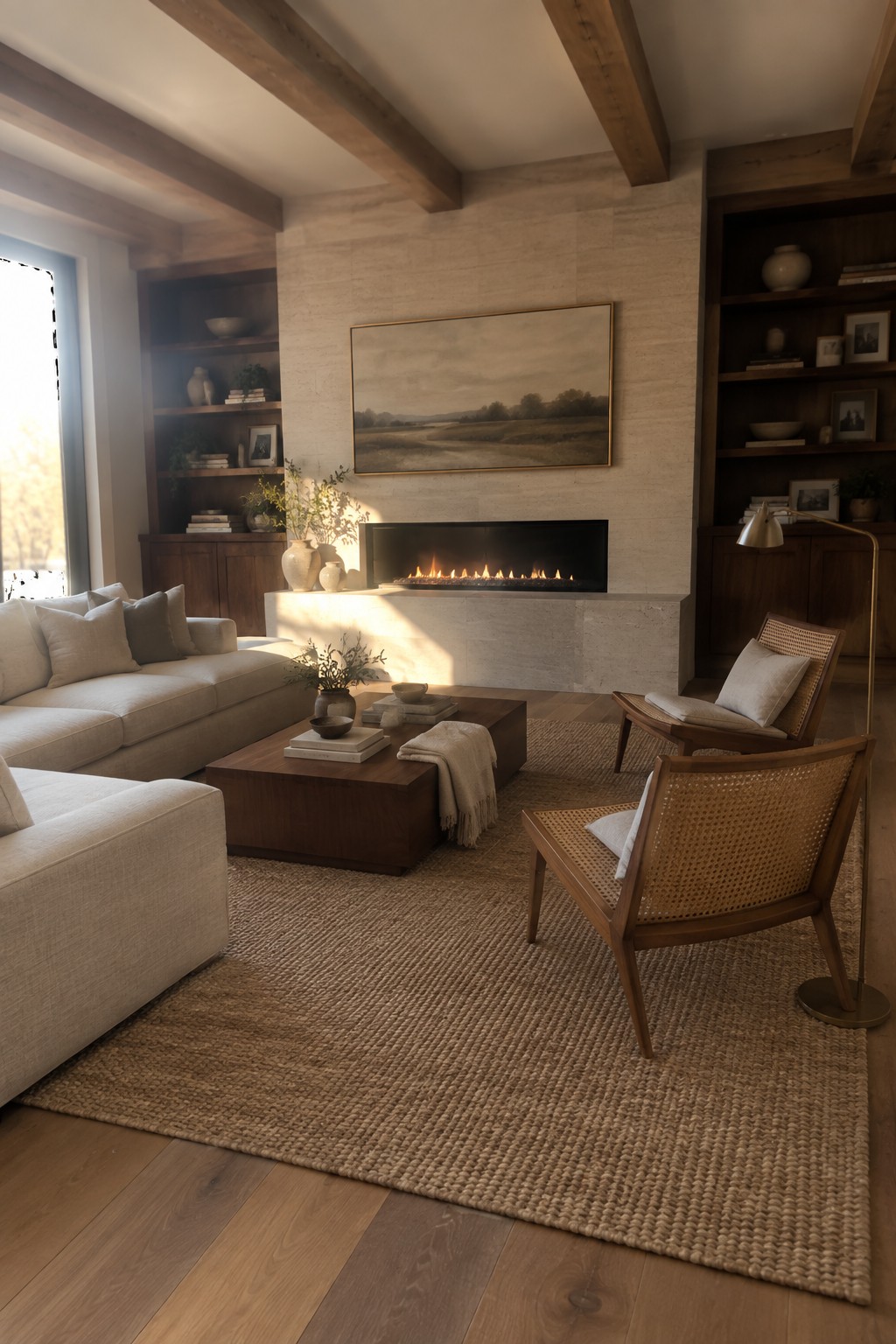
Built-in shelving on either side of a fireplace gives a neutral living room extra storage without adding clutter. The wood tones bring warmth that pairs well with beige upholstery and a stone surround, so the whole wall feels grounded rather than flat. Many people like this setup because it turns the fireplace into a true focal point while keeping the rest of the palette calm.
This approach works best in rooms that already have some wall depth and a centered fireplace. It suits homes that want a quiet, lived-in look rather than a stark modern one. Keep the shelves lightly styled with a few books and simple pottery so the wood itself stays visible.
Warm Wood Details in Neutral Living Rooms
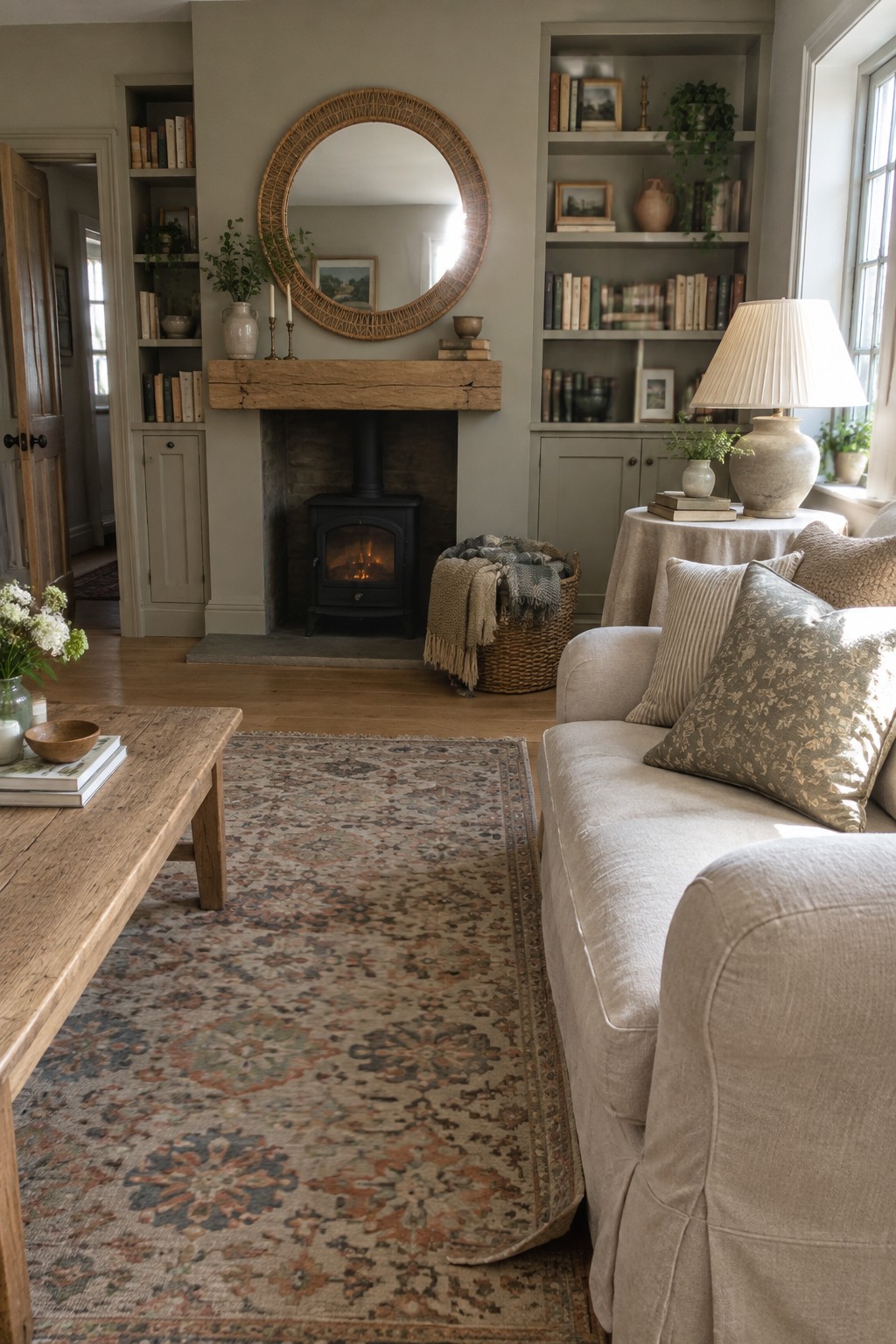
One of the easiest ways to add life to a neutral living room is by mixing in warm wood tones. The wood brings natural texture that keeps beige and greige from feeling too flat or cold. It works especially well when the wood shows some grain and age, like on a coffee table or mantel, rather than trying to match everything perfectly.
This idea suits older homes or any room where you want a settled, comfortable feel. Keep the larger pieces like sofas and walls in soft neutrals, then let the wood show up in a few key spots so it stands out without taking over.
Warm Wood Furniture for Neutral Living Rooms
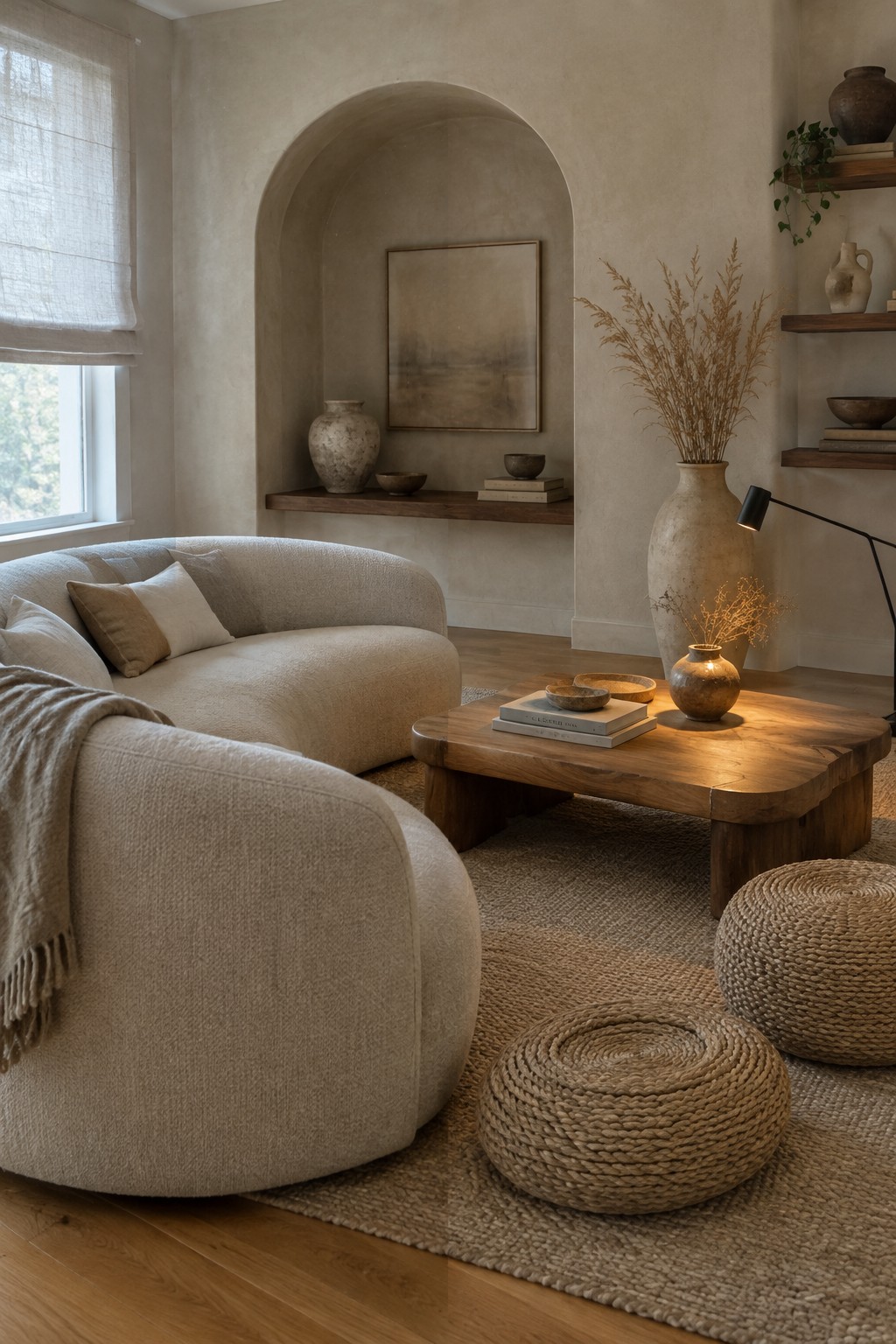
A solid wood coffee table gives a neutral room something firm to rest on. In spaces done mostly in beige and greige, the wood brings a natural weight that stops everything from feeling too soft or washed out.
This approach works best in living rooms that get steady daylight. Keep the wood tone warm rather than gray, and pair it with at least one woven piece like a jute rug or low stools so the materials do not compete.
Warm Wood Tones in Neutral Living Rooms
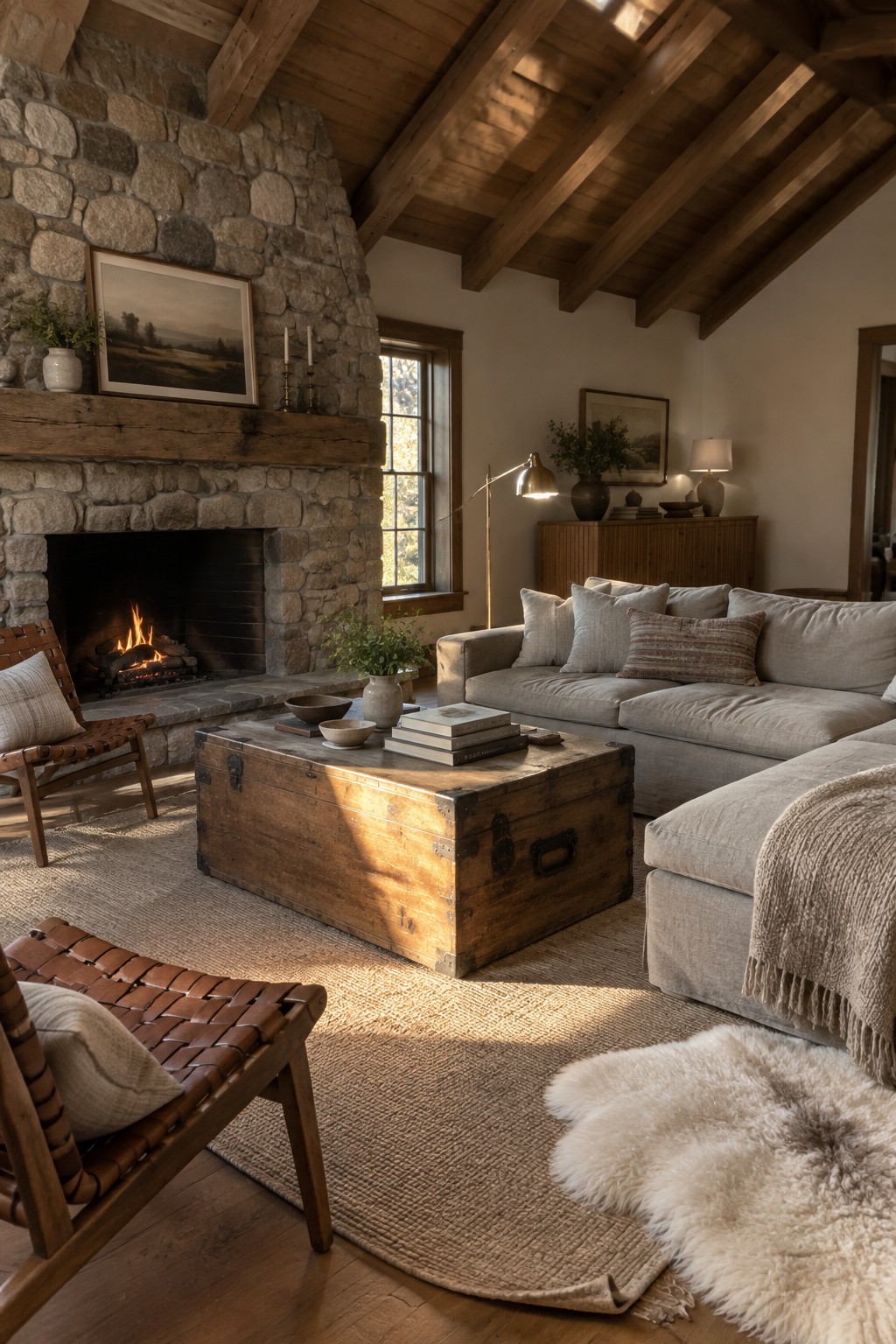
Warm wood brings a natural layer to beige and greige rooms that can otherwise feel flat. The ceiling beams and floor here show how wood can tie the whole space together without adding extra color.
This approach works best in homes that already have wood floors or exposed structure. Keep the rest of the furnishings simple and textured so the wood stays the main source of warmth.
Warm Wood Furniture Grounds Neutral Rooms
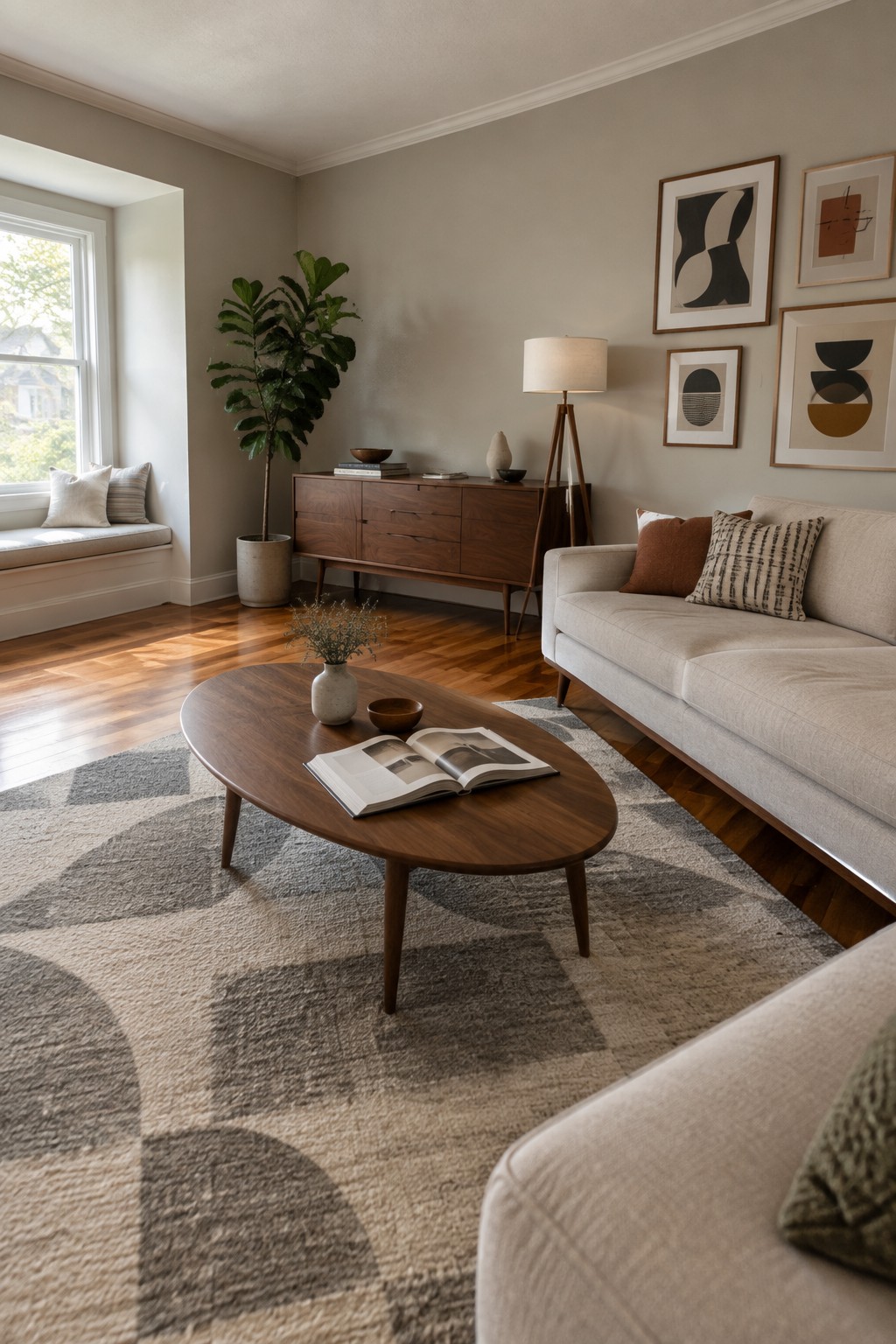
Neutral rooms often need something solid to keep them from drifting into bland territory. Warm wood pieces like a low coffee table and matching sideboard bring natural depth and a quiet sense of weight that works well with beige and greige tones.
This mix suits homes that already have wood floors or trim. Stick with one or two wood finishes rather than mixing too many, and let the furniture sit low so the space still feels open and calm.
Adding Natural Texture to Neutral Living Rooms
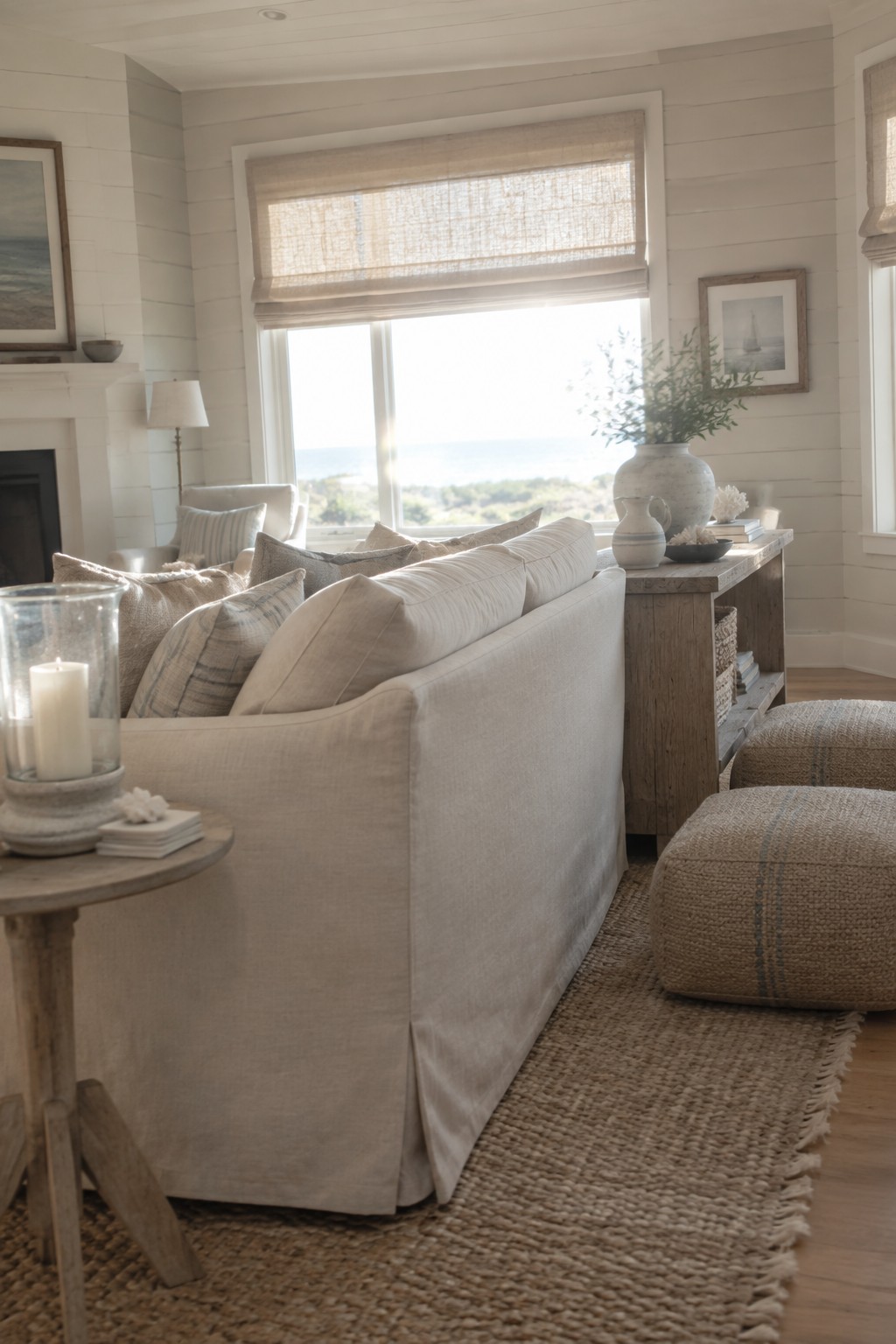
A slipcovered sofa in a soft beige linen works well as the base for a neutral room because it feels relaxed and easy to live with. Pairing it with a jute rug and a few pieces of warm wood furniture keeps the space from looking too plain while still staying within the same color family. The mix of rough and smooth surfaces gives the room some depth without needing extra color.
This approach suits older homes or any space where you want things to feel comfortable rather than styled. Stick with one or two wood tones and let the woven textures do most of the work. Too many shiny surfaces can start to fight with the softness of the linen and rug.
Grounding A Neutral Room With Warm Wood
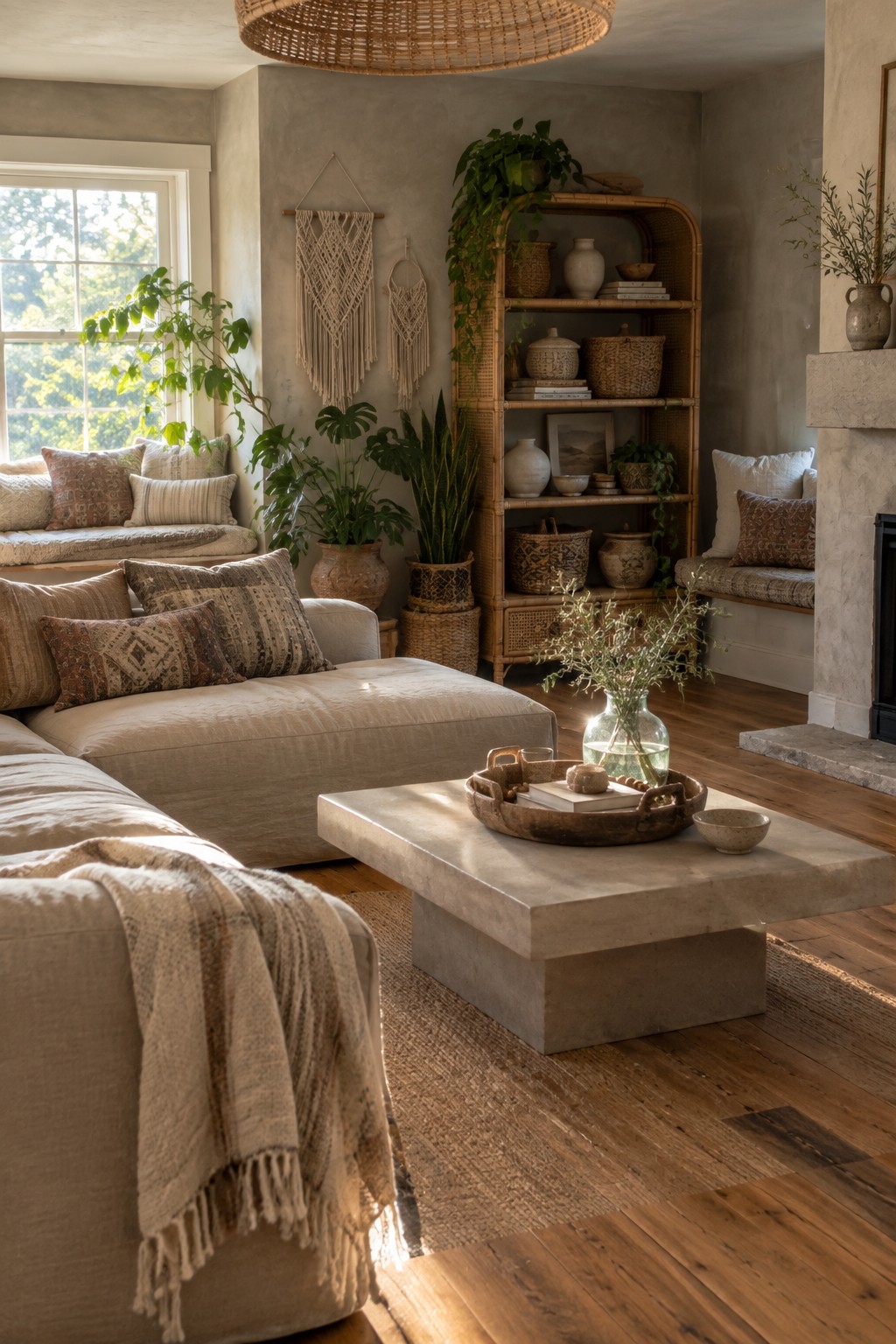
Many neutral rooms start to feel a little flat once the paint goes up. Bringing in wood tones through the floor, shelving, and smaller pieces like trays helps the space feel settled without adding any strong color.
This approach suits most homes that get decent daylight. It works best when the wood stays in the medium to light range so it blends with the beige and greige textiles rather than competing with them.
Built-In Wood Shelving Around a Fireplace
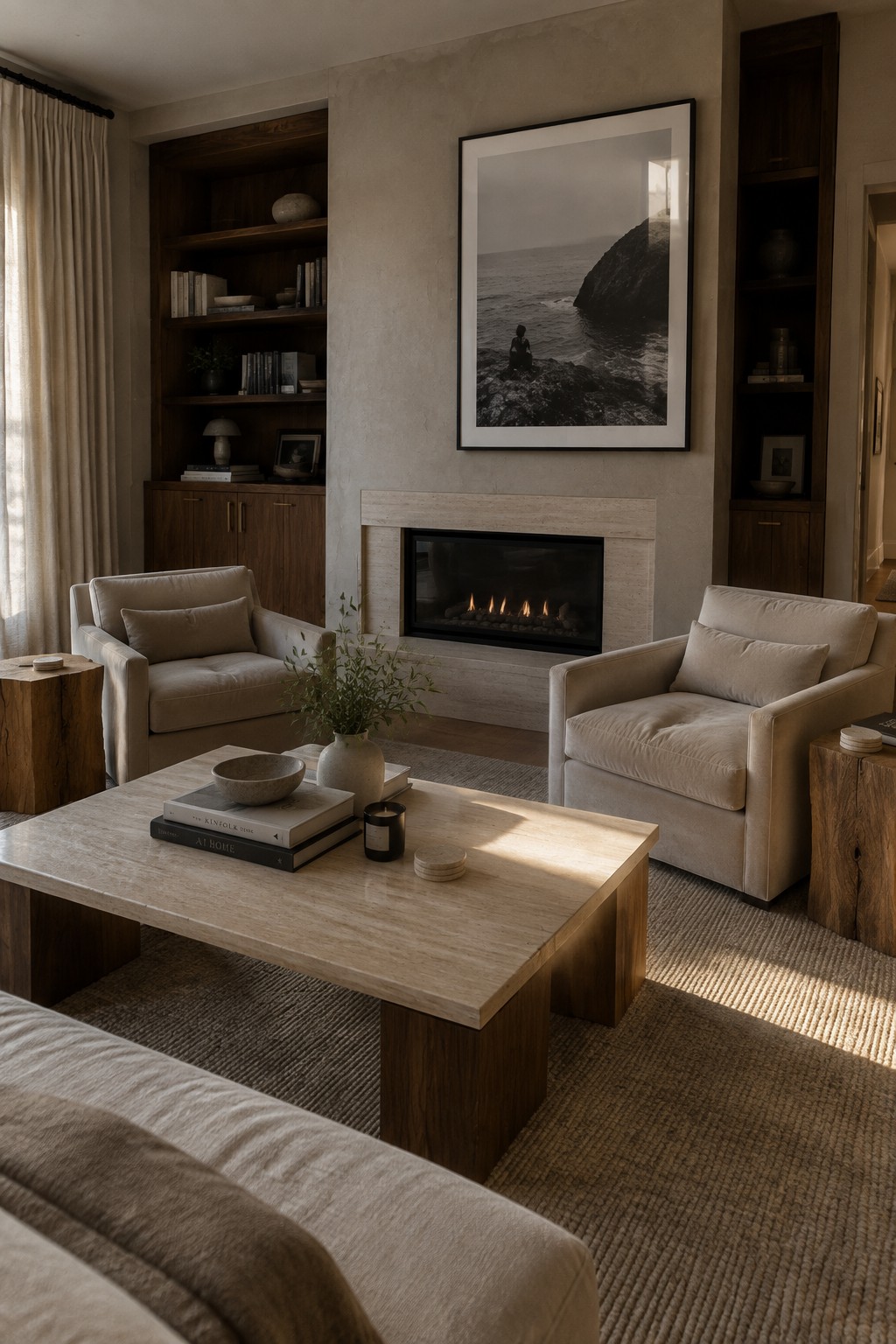
Built-in shelving on either side of a fireplace gives a living room extra storage and a place to show a few favorite things without crowding the space. The wood tones add warmth that keeps beige and greige upholstery from feeling flat or cold.
This approach works best in rooms where the fireplace is already the main focal point. Keep the shelves fairly open and limit the number of items so the look stays calm rather than busy. It suits homes that want a simple neutral palette with just enough texture from the wood.
Placing a Console Table Behind the Sofa
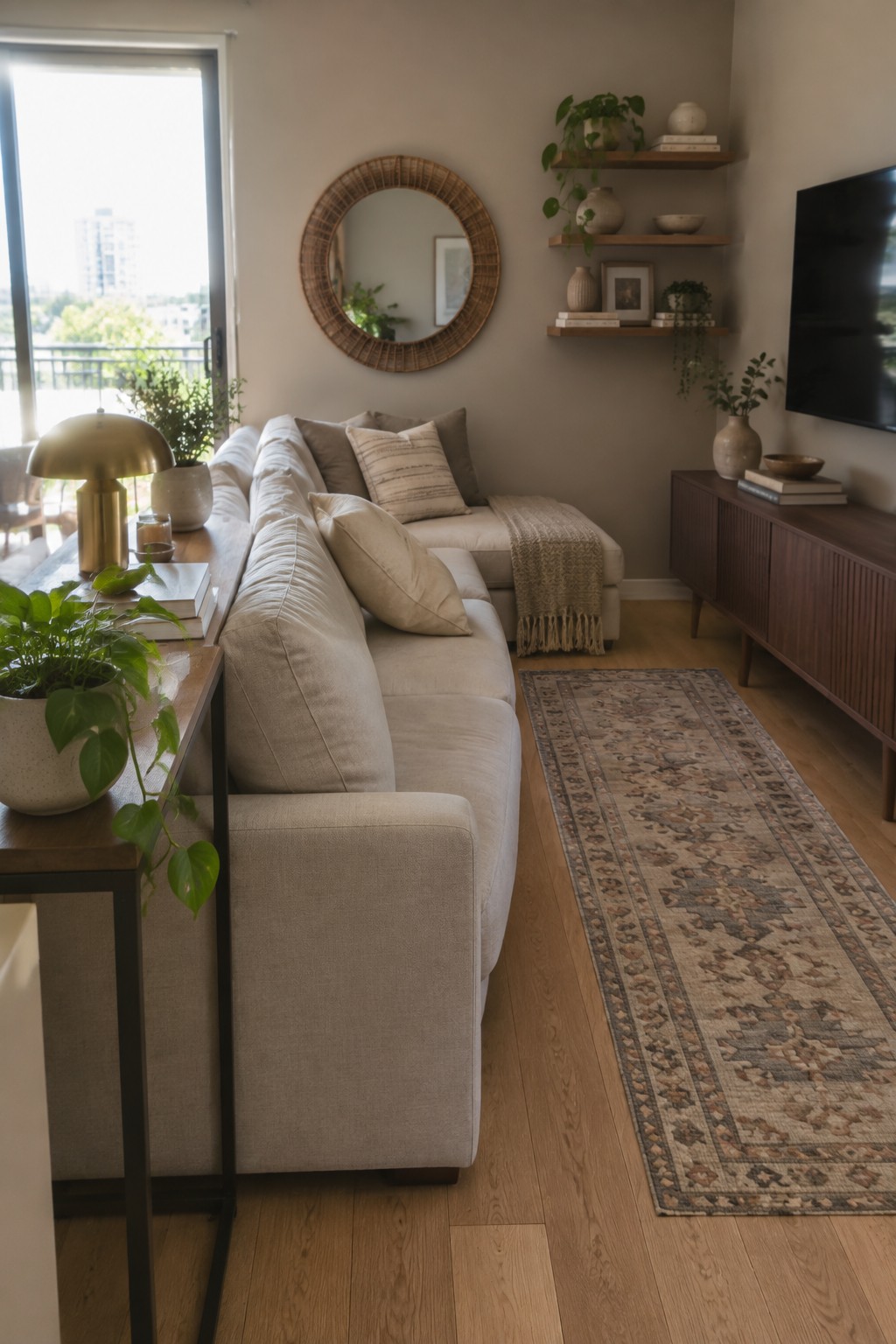
A console table tucked behind the sofa gives you extra surface space without crowding the room. In a neutral scheme it also lets you stretch the wood tones across the layout so the beige and greige fabrics do not feel too soft on their own.
This setup works best in longer living rooms where the back of the sofa faces an open walkway. Keep the table narrow, match the wood to your other pieces, and use it for lamps and a few plants rather than filling every inch.
Warm Wood Mantels in Neutral Living Rooms
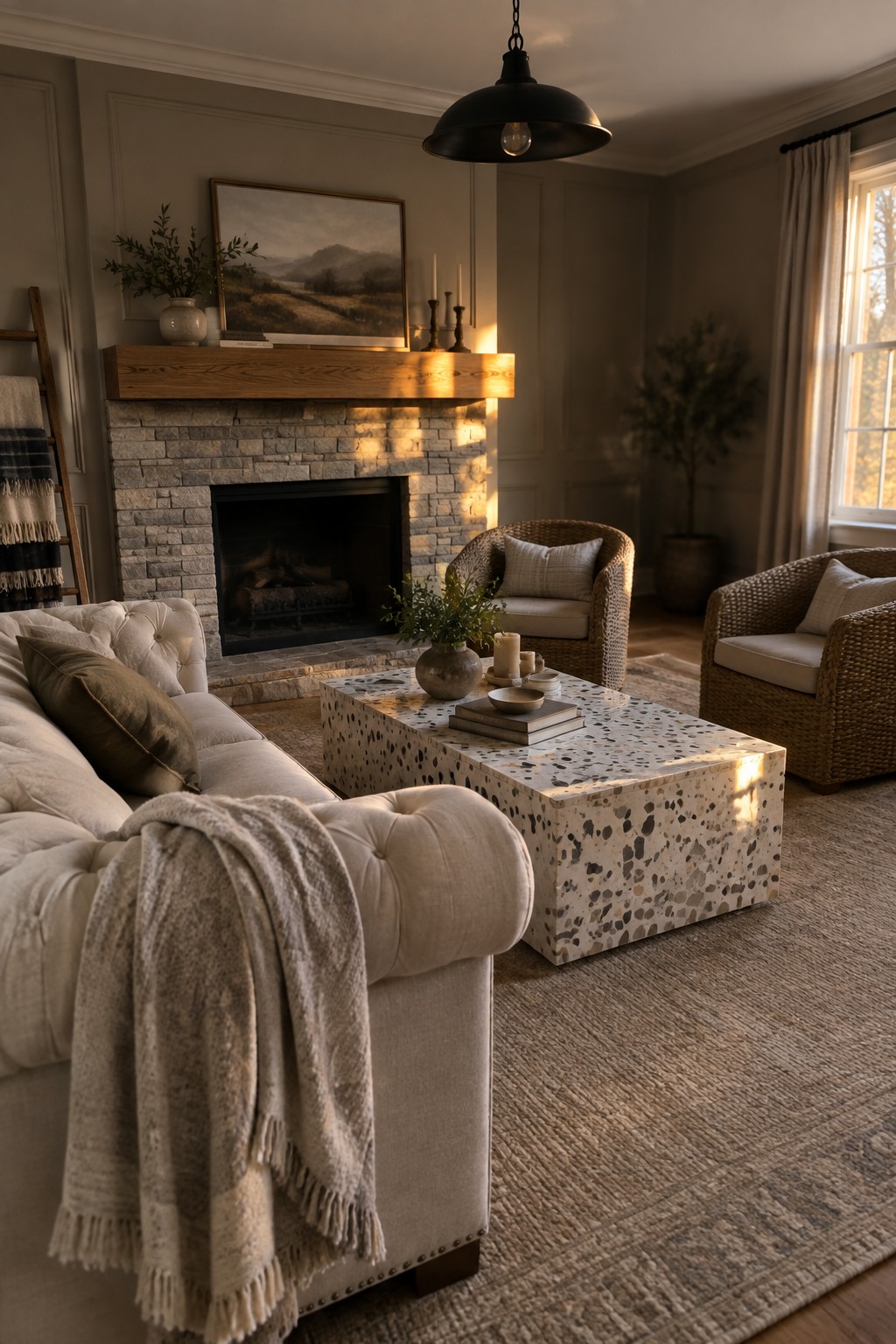
A wooden mantel adds an easy layer of warmth when the rest of the room stays in soft beige and greige tones. It breaks up the cooler stone and keeps the space from feeling too flat or one-note. The wood also picks up the same natural tones found in the flooring and smaller accents around the room.
This works best in homes that already have some wood trim or older architectural details. Keep the mantel simple in shape and let the wood grain do the work. Avoid matching it exactly to other furniture so it stands out as a quiet focal point rather than blending away.
Built-In Window Seating For Everyday Use
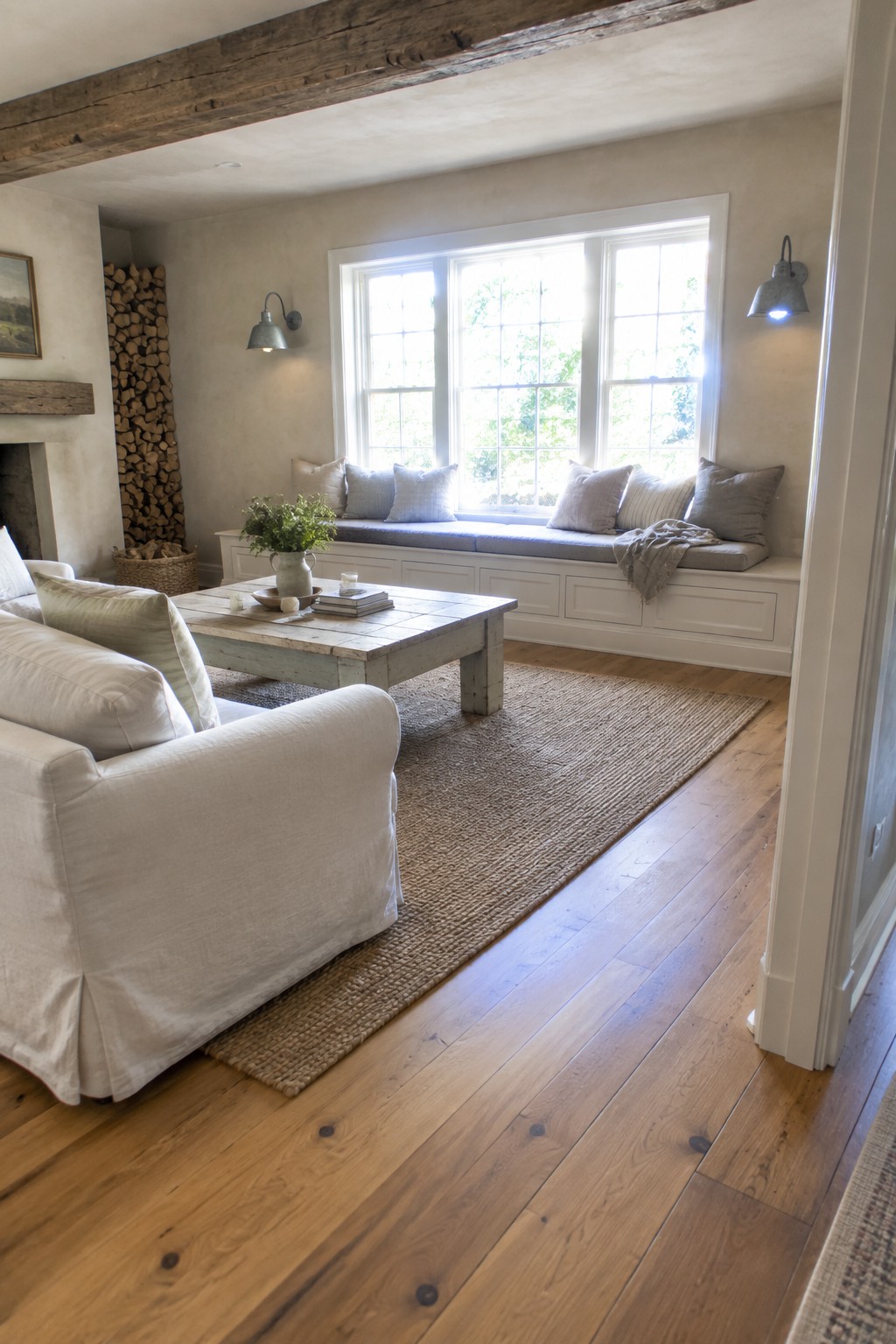
Built-in window seating adds a practical spot to sit without taking up extra floor space. It works especially well in neutral living rooms where you want to keep things open and calm while still having room for people to gather or relax by the light.
This approach suits homes that get good natural light and need flexible seating. Keep the cushions in soft beige or greige tones and let the warm wood floor tie everything together without adding more furniture.
Mixing Warm Wood With Beige Upholstery
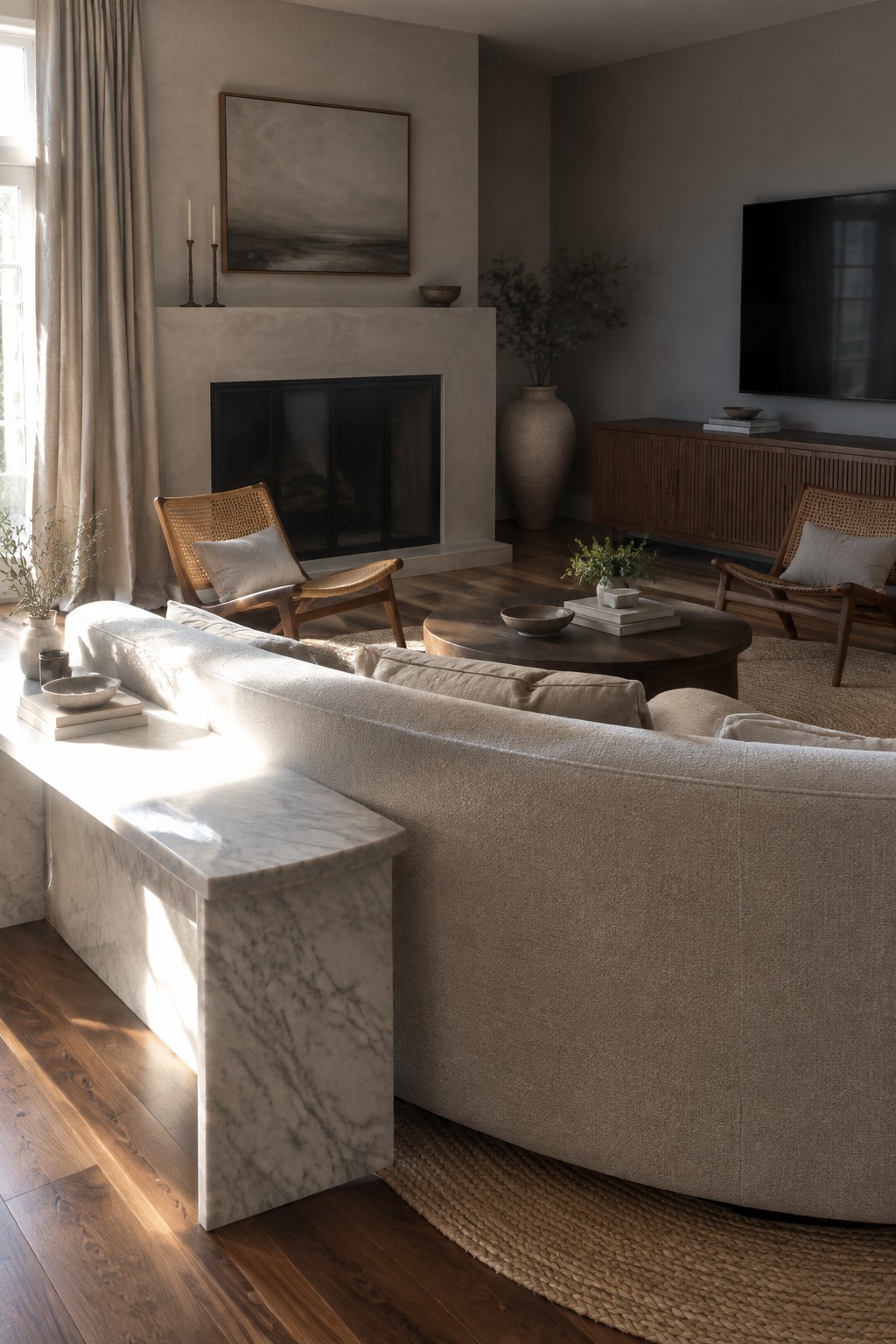
A large beige sofa can feel a bit flat on its own. Adding wood furniture in different tones gives the room weight and keeps the neutral palette from looking washed out. The wood brings in natural variation that works better than trying to add more fabric or accessories.
This approach suits homes that already have wood floors or want a relaxed, lived-in feel. Start with one or two wood pieces like a coffee table or chairs, then add a third if the space still feels too soft. Keep the wood finishes close in tone so nothing stands out too much.
Warm Wood Built-Ins In Neutral Rooms
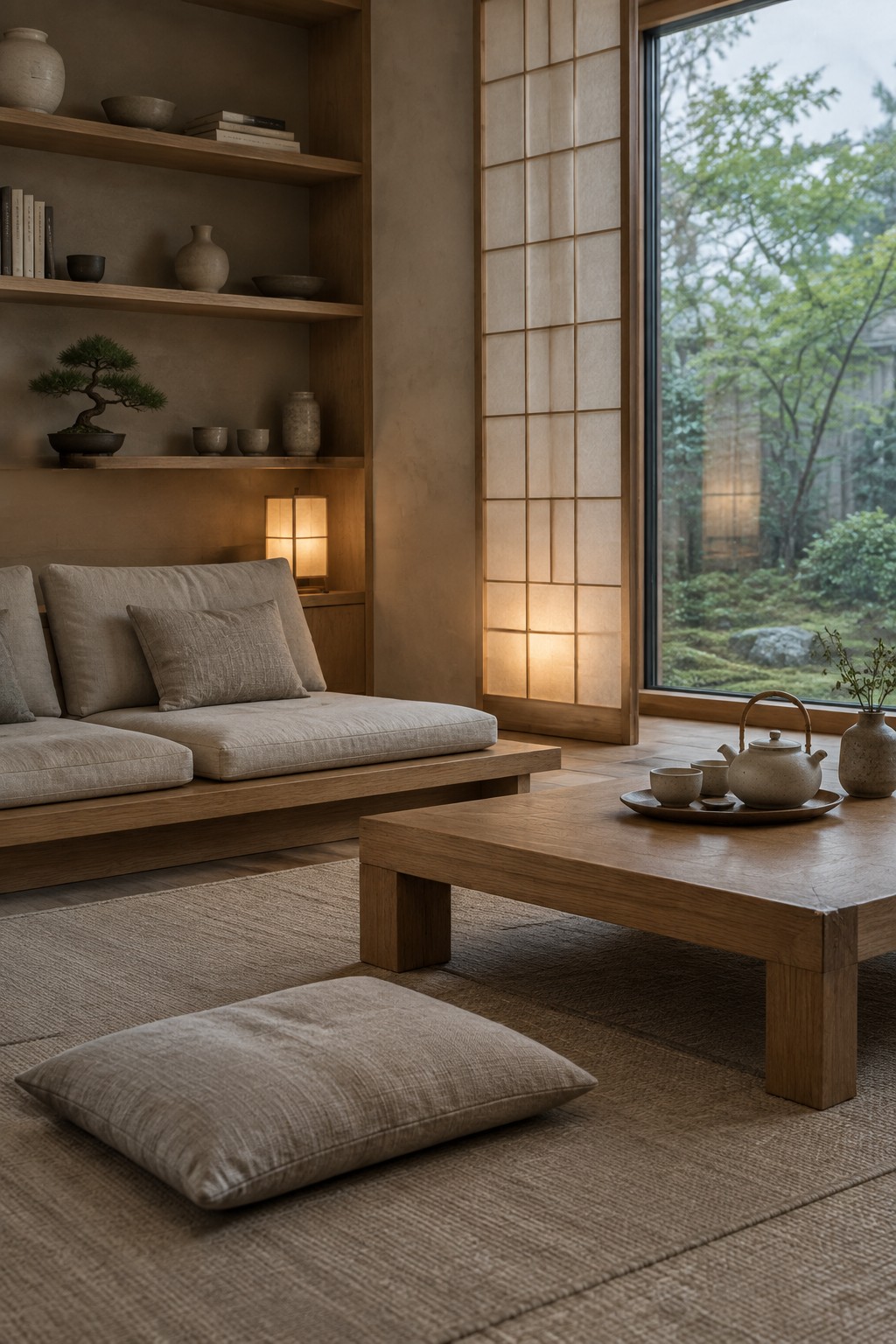
Built-in shelving in warm wood tones gives a neutral living room a sense of order without making it feel stiff. The wood adds depth while the open shelves keep the space from closing in, and the beige cushions and walls let everything stay soft and quiet.
This setup works best in homes that already lean simple or minimalist. Stick to a few materials, avoid overcrowding the shelves, and let the wood carry most of the warmth so the room stays calm rather than busy.
Built-In Shelving For Neutral Living Rooms
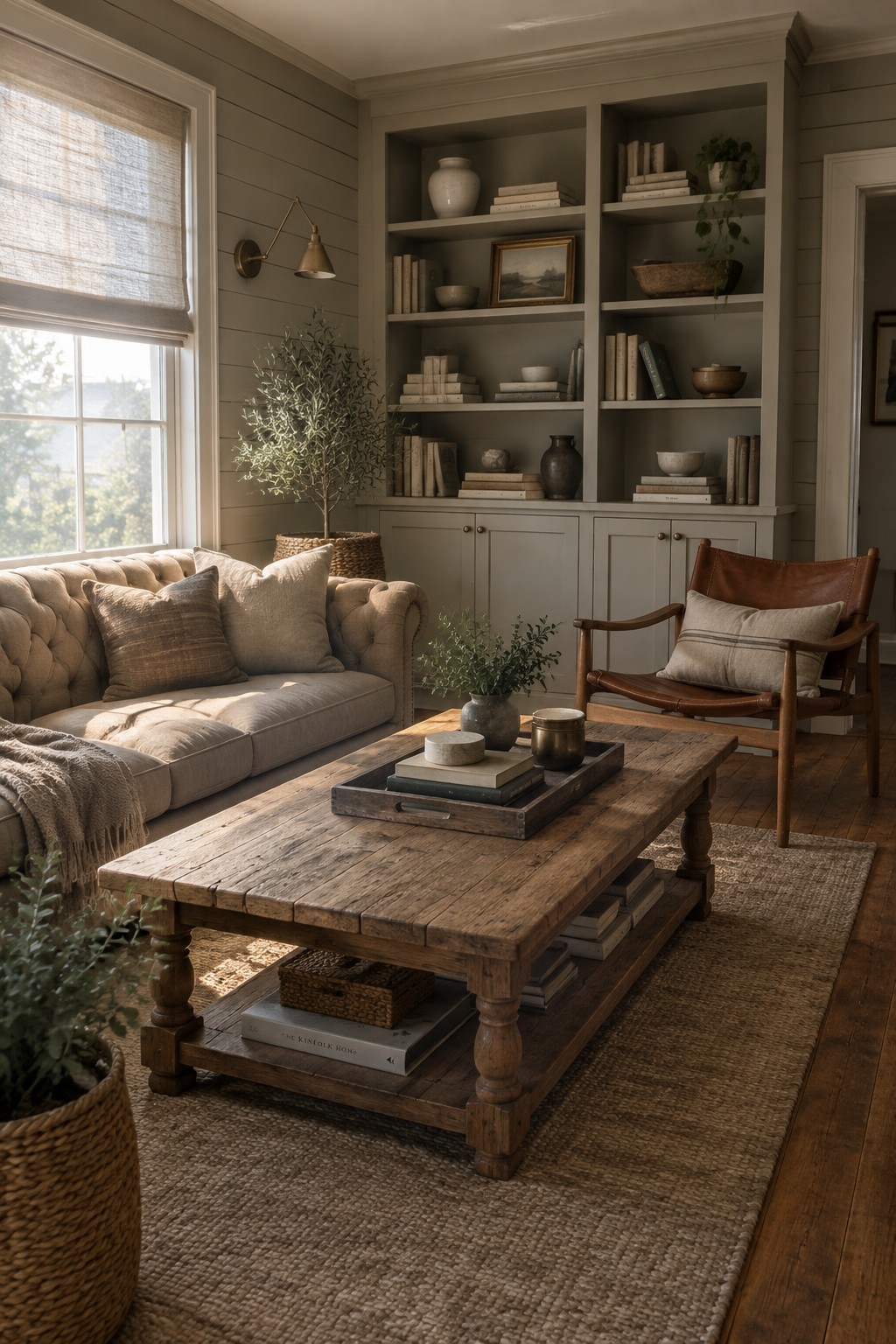
Built-in shelving painted the same color as the walls gives a neutral living room extra storage without breaking up the calm. It keeps the focus on the warm wood furniture and soft layers instead of making the space feel busy or chopped up.
This works best in rooms that already have some wood tones and textured fabrics. Keep the shelves fairly open with just a few books and objects so the overall look stays quiet. Too many small items can start to feel cluttered even when the colors stay soft.
Warm Wood Furniture Adds Quiet Depth To Neutral Living Rooms
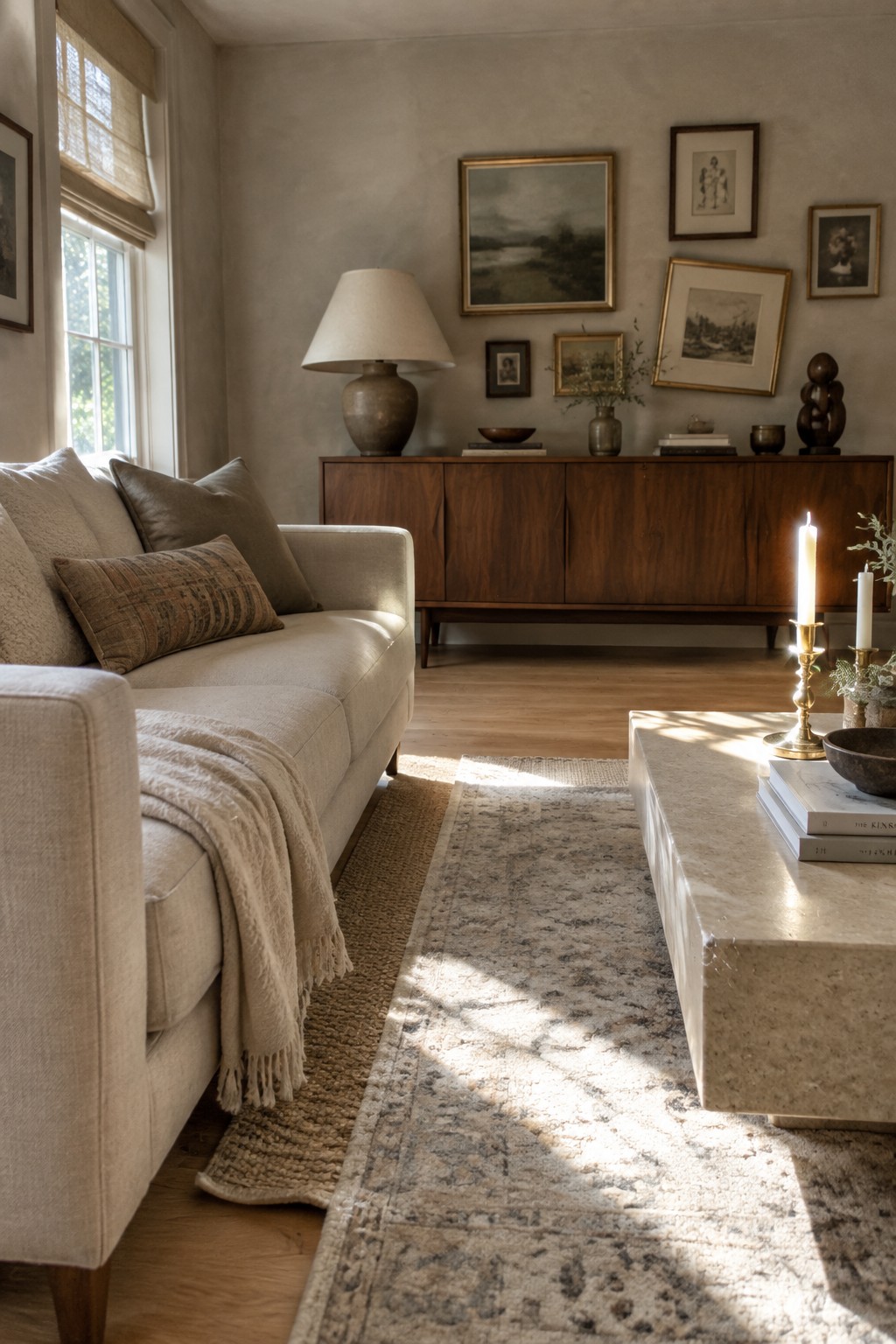
A long wooden sideboard against the back wall gives this room a solid base that soft fabrics and pale walls alone cannot provide. The warm tone of the wood keeps the space from feeling too light or flat while still staying within a neutral palette.
This approach works best in rooms that already have wood floors or trim. Keep the wood finish simple and let one or two other natural materials, like a stone table or woven rug, handle the rest of the texture. Avoid overcrowding the wood piece with too many small objects on top.
Large Area Rugs in Neutral Living Rooms
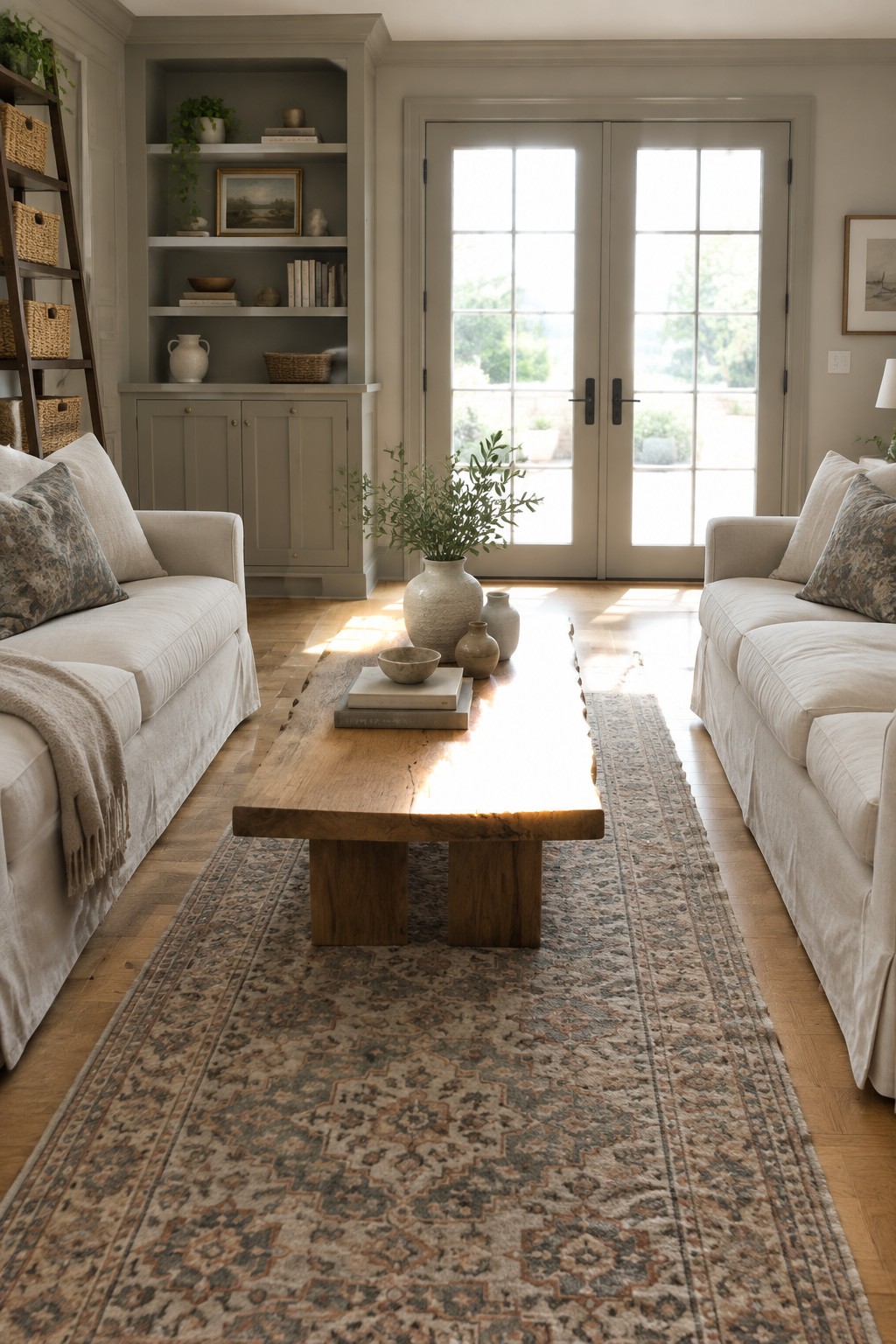
A large patterned rug can pull together a neutral living room without adding extra color. It gives the space a clear center and keeps the beige tones and wood elements from feeling scattered or flat.
This works best in rooms with wood floors and simple seating arrangements. Place the rug so all main furniture sits on it, and choose a pattern that stays within the same warm, muted range as the rest of the room.
Warm Wood Tones For Neutral Rooms
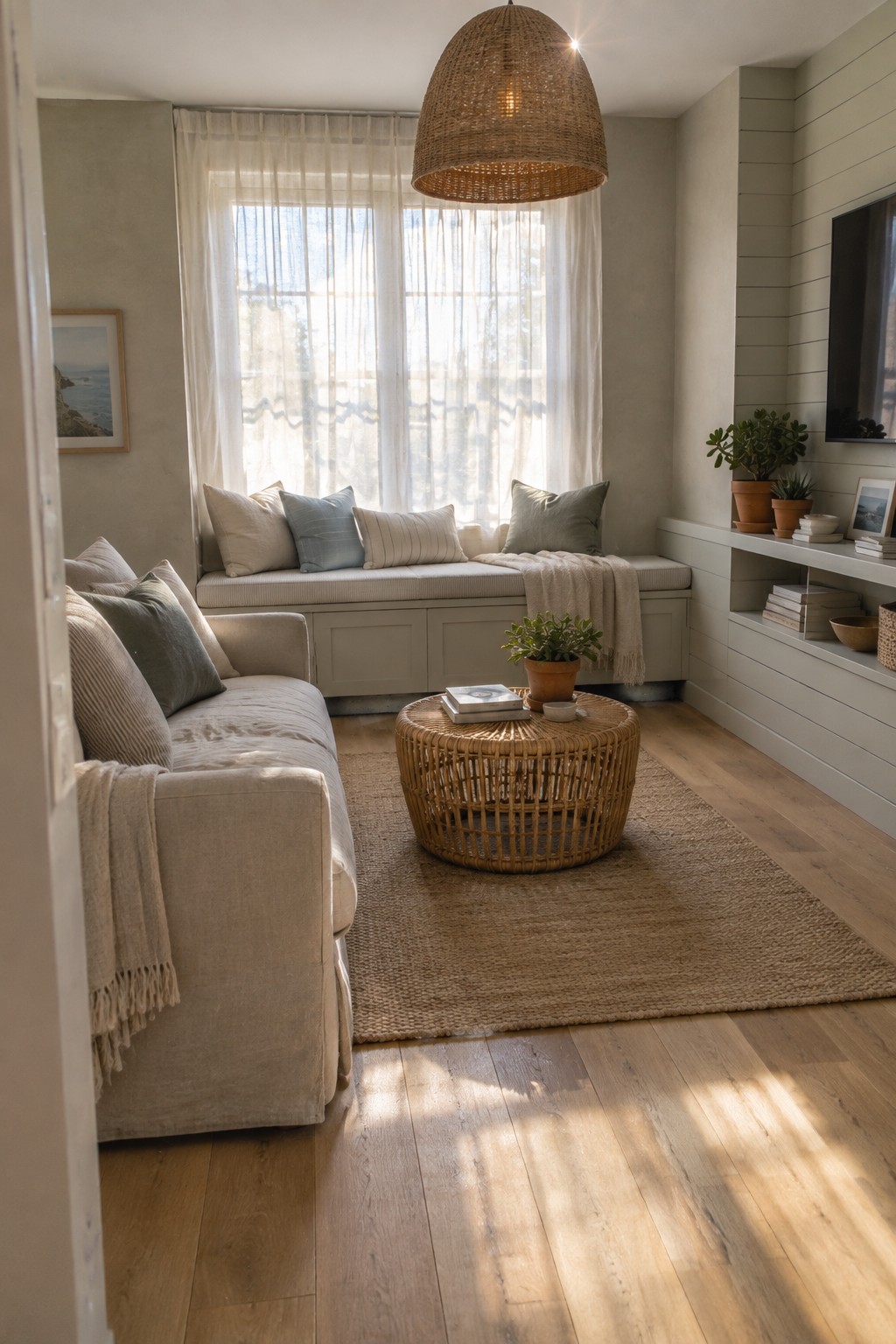
Many people stick to beige and greige in a living room because the colors feel calm and easy to live with. The risk is that everything starts to blend together and the space can feel a bit dull. Warm wood floors and a few natural woven pieces stop that from happening by adding quiet contrast and a sense of depth.
This works best in rooms that get steady daylight so the wood can show its grain and pick up soft golden tones. Keep the upholstery simple in linen or cotton, then let one or two wood elements like flooring or a low table carry the warmth without adding extra color.
Warm Wood Beams in Neutral Rooms
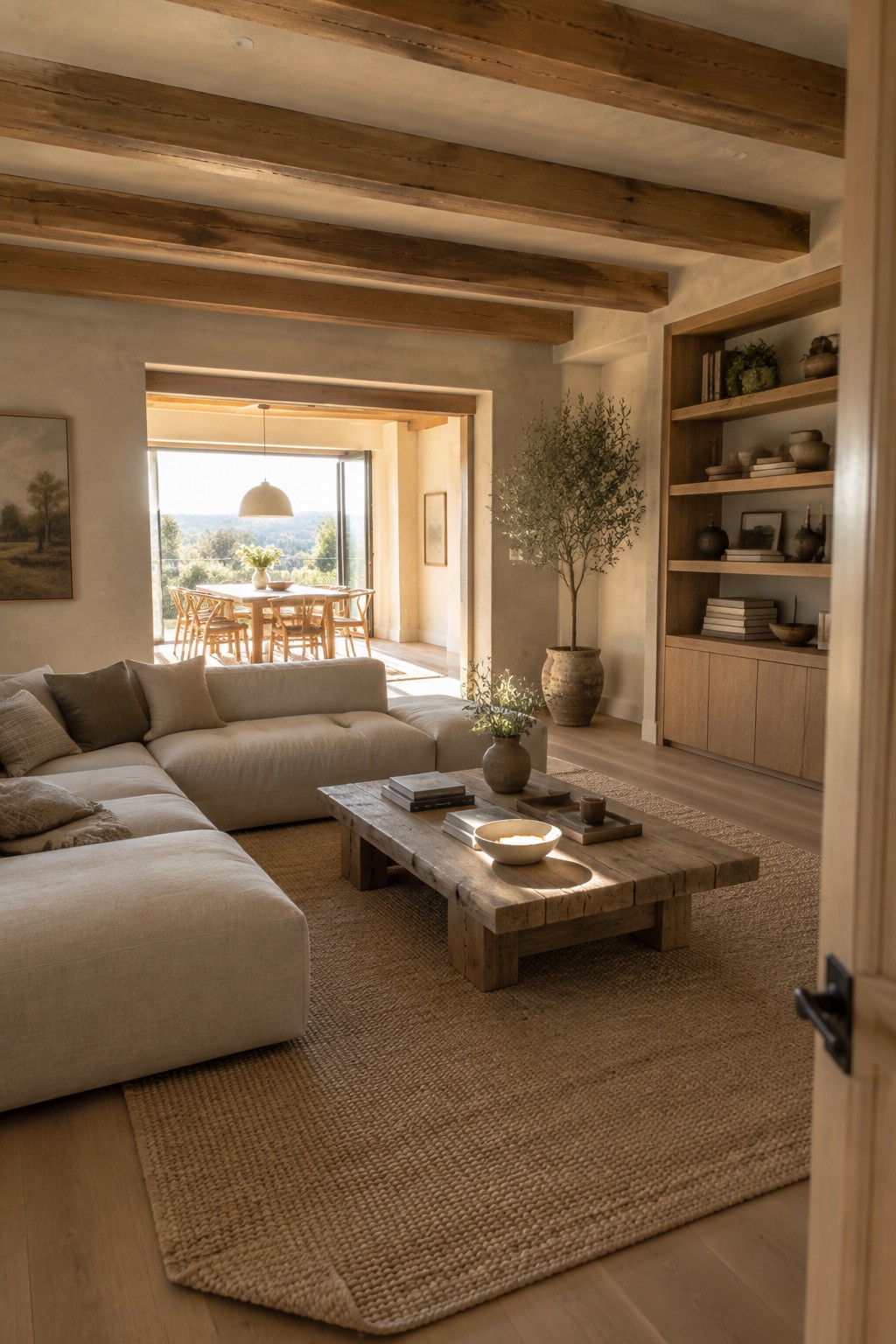
Exposed wood beams bring a natural structure to neutral living rooms without adding clutter or color. They help tie together the soft beige tones in the seating and walls while keeping the space from feeling too flat or plain. The wood also connects nicely to the flooring and any other wood pieces like a simple coffee table.
This works best in homes with higher ceilings or open layouts where the beams can be seen from multiple angles. Stick to similar wood tones throughout rather than mixing too many shades, and let the beams stand out against lighter walls and textiles.
Built-In Shelving In Warm Wood Tones
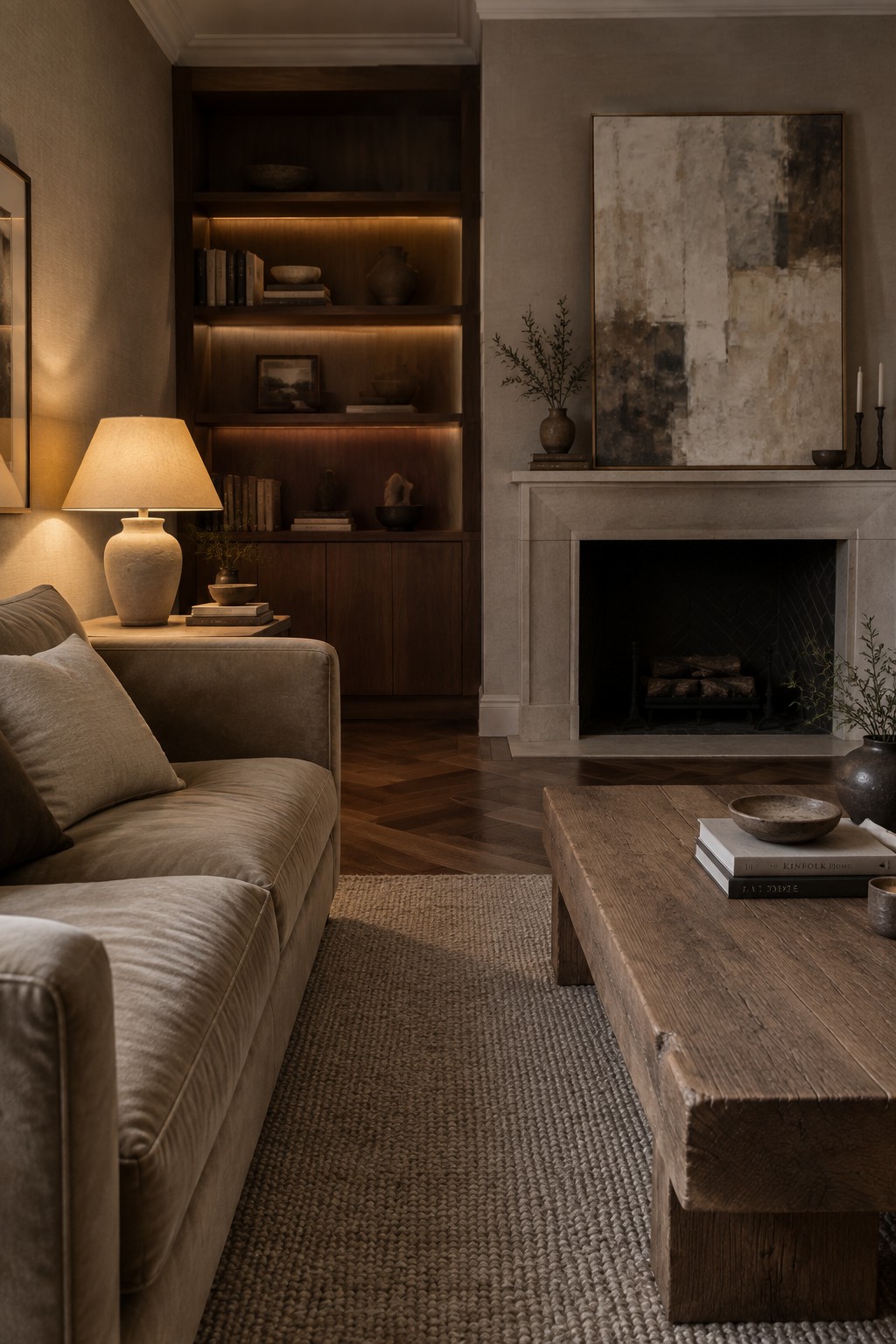
Built-in shelving in warm wood gives a neutral living room something solid to hold onto. The wood adds depth that paint alone cannot provide, and the soft lighting inside the shelves keeps everything from feeling too flat. It works because the tones stay within the same family as the floors and furniture, so the room still reads calm.
This approach suits homes that already lean into beige, greige, or natural wood finishes. Keep the objects on the shelves fairly simple and repeat similar tones so the storage feels like part of the room instead of a separate display. Avoid overcrowding the shelves if you want the space to stay relaxed.
Warm Wood Furniture For Neutral Living Rooms
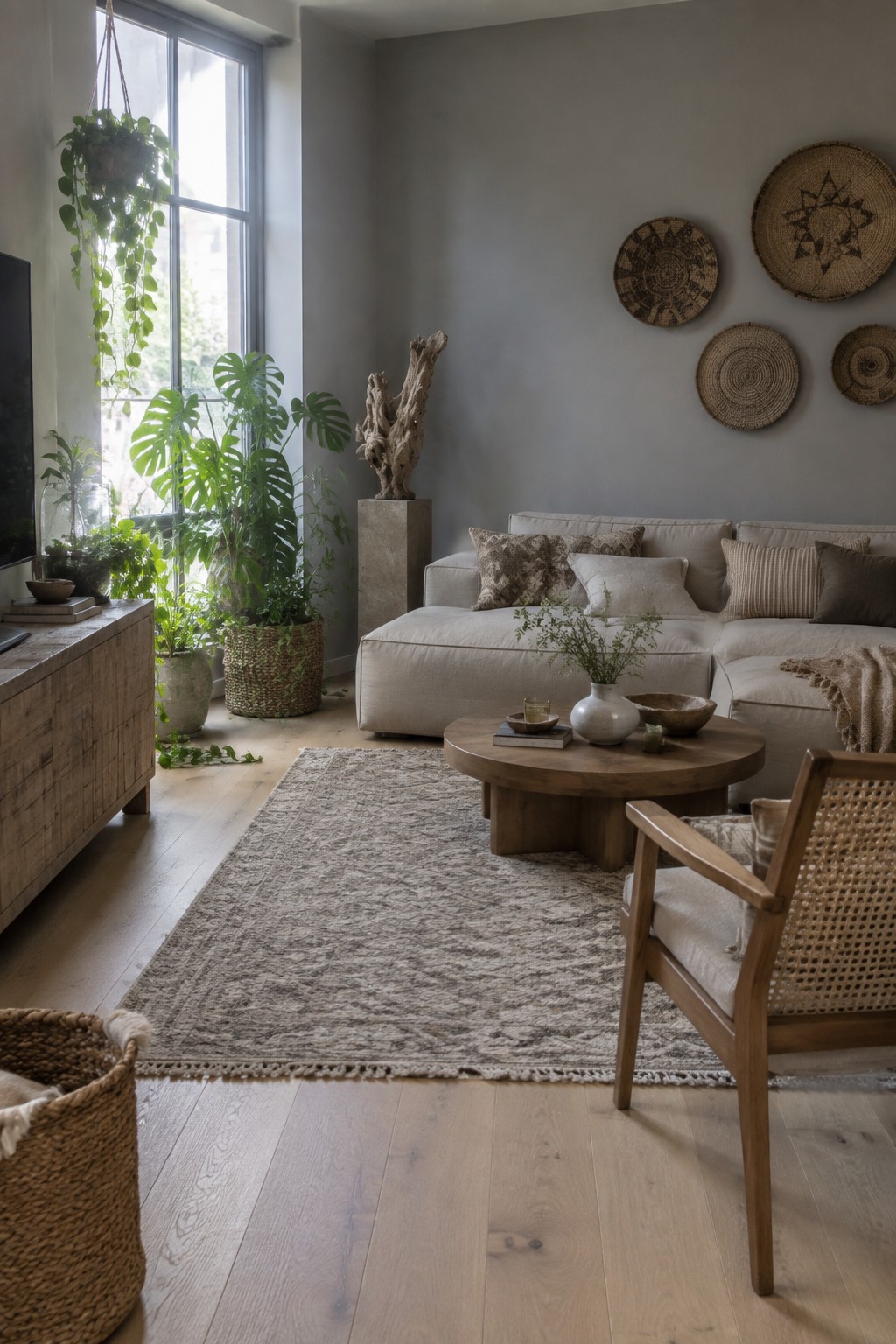
Many neutral living rooms can start to feel a bit flat without something to add weight and texture. Warm wood pieces like a round coffee table or a wooden frame chair help bring in natural depth that works well with beige and greige tones.
This approach works best in homes that want a calm but lived-in look. Keep the rest of the palette soft and let the wood stand out through simple shapes and a few woven accents.
Greige Built-Ins for Everyday Storage
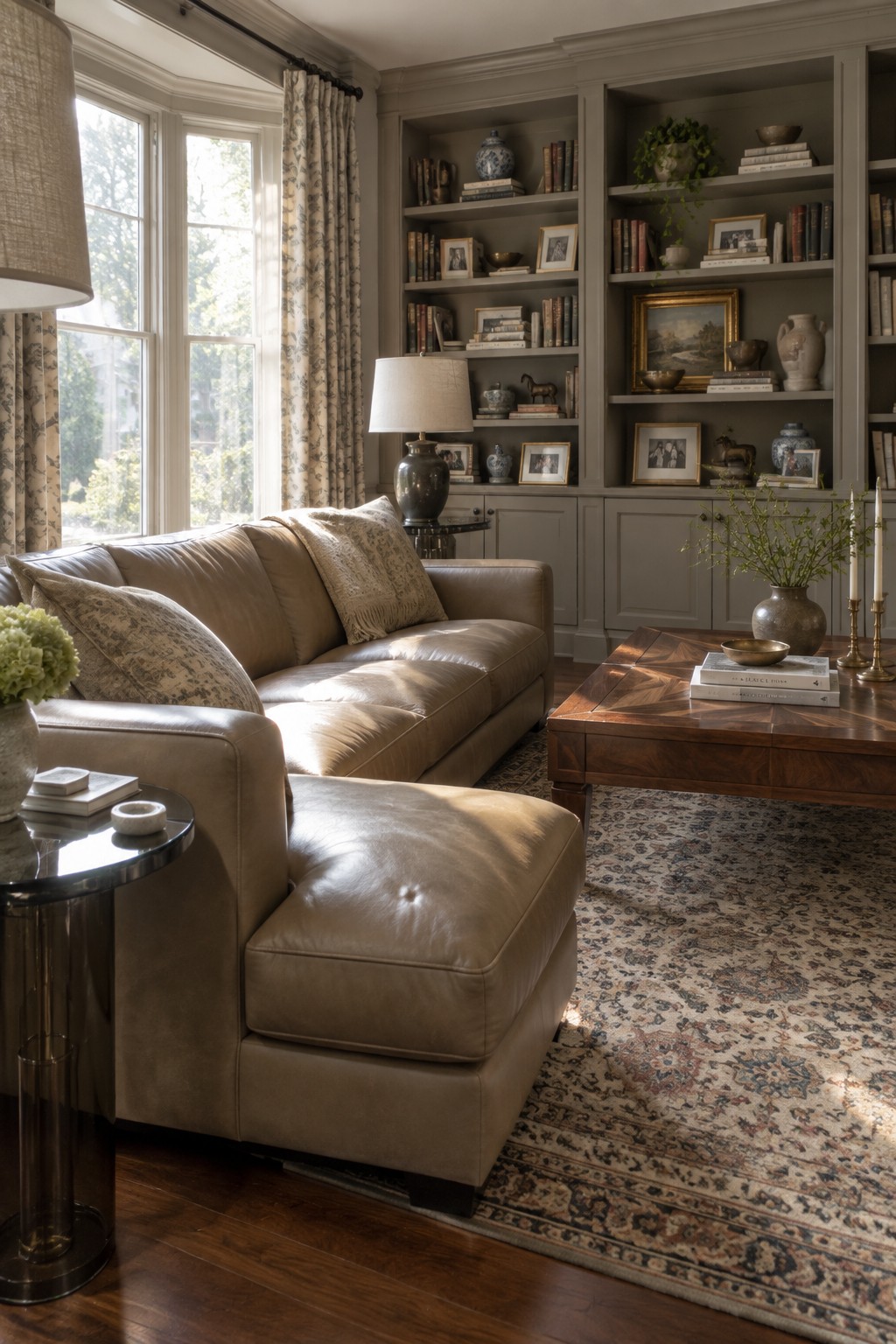
Built-in shelving painted to match the walls in a soft greige tone gives a neutral living room useful storage without adding visual noise. The shelves blend right into the background, so books, framed photos, and a few collected pieces can sit out without making the space feel crowded or busy.
This approach works best in rooms where you already have the wall space and want a calm, layered look that still feels practical. It suits homes with neutral furniture in beige or warm wood tones, since the matching paint keeps everything connected. Just watch the scale. Too many small items can start to look messy if the shelves are not edited now and then.
Using Warm Wood Cabinetry in Neutral Rooms
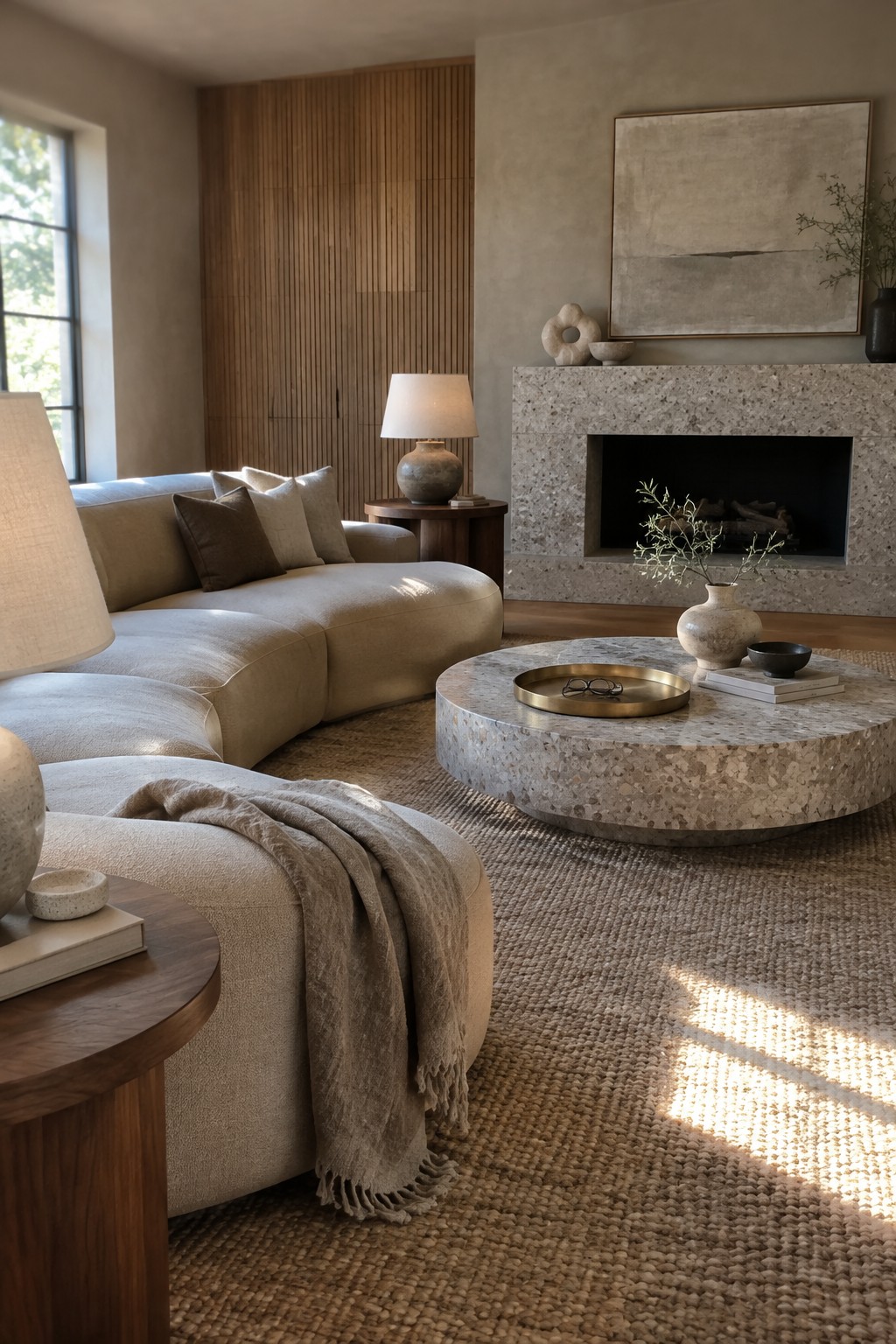
A tall wood cabinet with vertical slats can quietly anchor a room full of beige and stone. It adds height and a natural tone that keeps the space from feeling flat while still staying within a calm palette. The cabinet here sits behind the sofa and gives the eye something solid to rest on without competing with the softer seating.
This works best in living rooms that already have a few wood pieces like side tables or a coffee table base. Keep the cabinet finish in a mid-tone oak or similar so it blends with existing wood rather than standing out. Avoid filling the whole wall with it if the room is small, since the vertical lines can make the space feel taller but also more enclosed.
Warm Wood Tones in Neutral Living Rooms
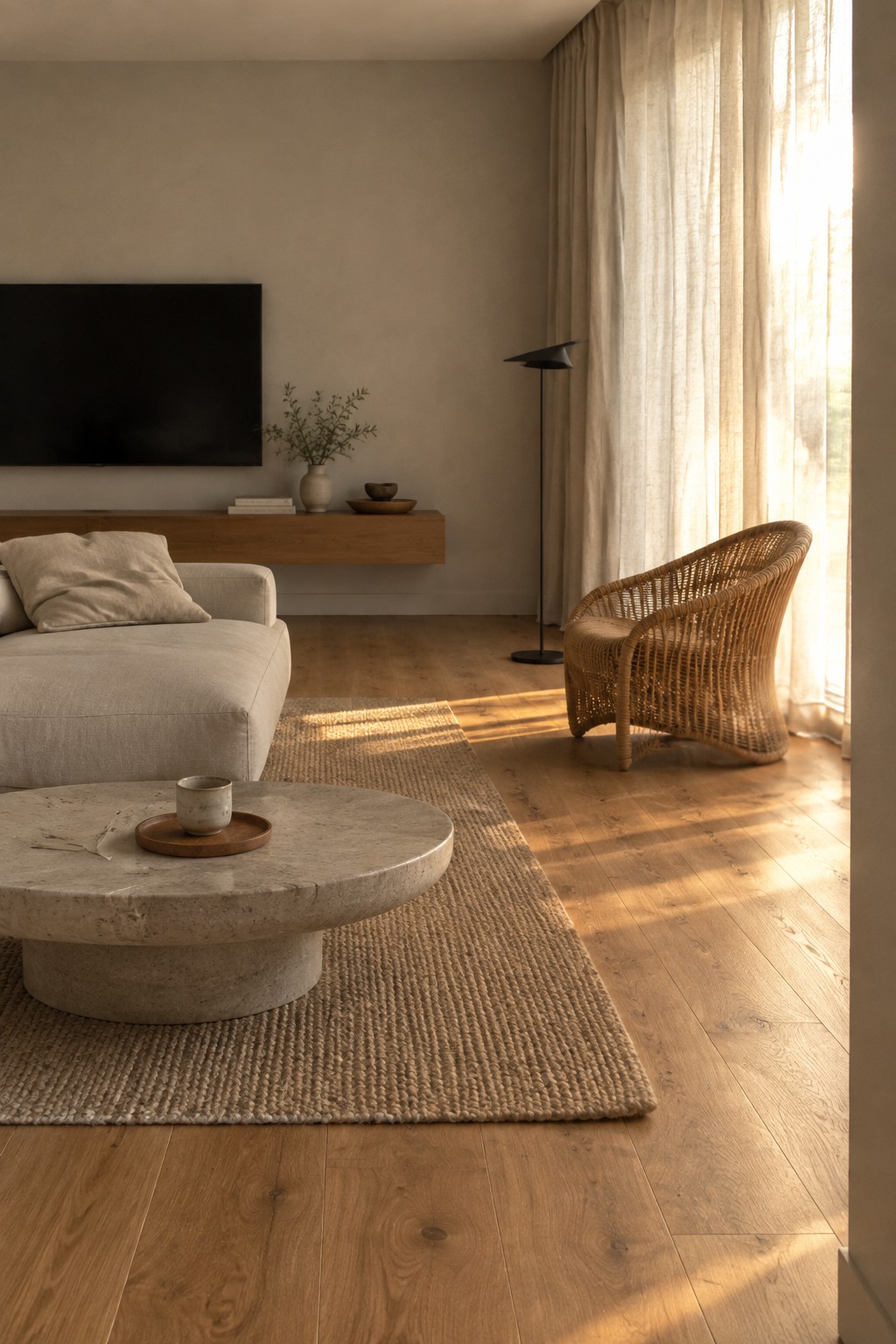
Warm wood brings a quiet structure to rooms that stay mostly beige and greige. The floor and a few wood pieces set a steady base that keeps the softer fabrics from feeling too light or flat. It works because the wood adds just enough contrast without pulling attention away from the calm overall feel.
This approach suits homes that want a relaxed, lived-in look rather than a stark one. Keep the wood tones on the warmer side and limit the number of wood pieces so the room stays balanced. Too many heavy wood items can start to feel dark, especially in smaller spaces.
Frequently Asked Questions
Q: How do I choose the right shade of greige? A: Test samples on your walls at different times of day. Greige shifts a lot depending on the light. Pick one that leans warm if you have wood floors.
Q: Can these ideas work if I rent and cannot paint? A: Focus on warm wood furniture and beige textiles instead. A big rug in a soft greige pulls the room together fast. Add wooden shelves for instant character.
Q: How do I stop all the neutrals from looking flat? A: Layer different textures like linen curtains and a chunky knit throw (start with the floors). The warm wood adds natural variation too.
