


When I rearrange my living room the wood tones of a few key pieces always end up setting the mood more than I expect.
The way a low walnut coffee table pulls the seating together can change how the whole space feels during everyday use.
I check the scale against my windows before committing to any new chair.
Over time I have learned that mid century designs hold up best when the room has enough breathing room around each item.
Trying one or two of these approaches has helped me avoid the cluttered look that creeps in with too many matching sets.
Let Wood Furniture Set the Foundation

One simple way to get a mid-century modern living room right is to let the wood pieces lead. A solid wood sofa frame paired with a low coffee table gives the room its shape and warmth before anything else gets added.
This works best in spaces that already have wood floors or a brick feature like a fireplace. Keep the upholstery in one or two calm colors so the wood grain stays visible. Too many patterns on top of it can start to feel busy.
Mixing Wood Furniture Pieces in One Room

Many living rooms gain a lot from bringing in more than one or two wood pieces at a time. The different grains and finishes add depth without needing extra color or pattern, and the look stays true to mid-century modern rooms that feel gathered over time rather than bought all at once.
This works best when the pieces share a similar era or tone but vary slightly in finish. Start with a wood-framed sofa and a low console, then add one round table if the space allows. Keep an eye on scale so nothing feels crowded.
A Long Wooden Credenza for Storage and Display
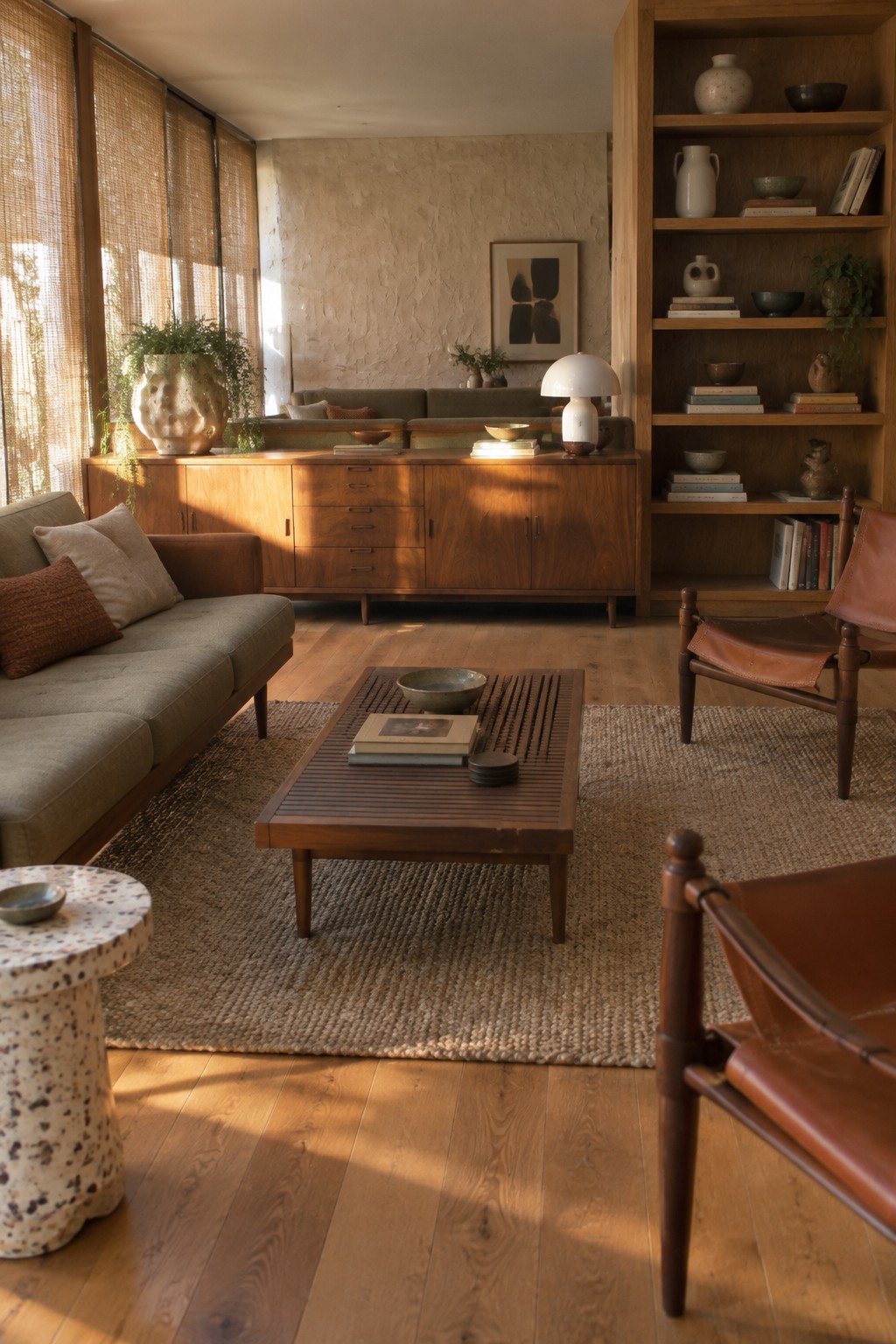
A long wooden credenza works well in mid-century living rooms because it adds useful storage without taking up much visual space. It keeps books, bowls, and smaller items organized while leaving the floor area open for seating and movement.
This piece suits homes with wood floors and warm tones. Set it against the back wall behind a sofa or along an open stretch of wall so it can hold everyday items and a few decorative pieces without crowding the room.
Choose Wood Framed Chairs For Balance
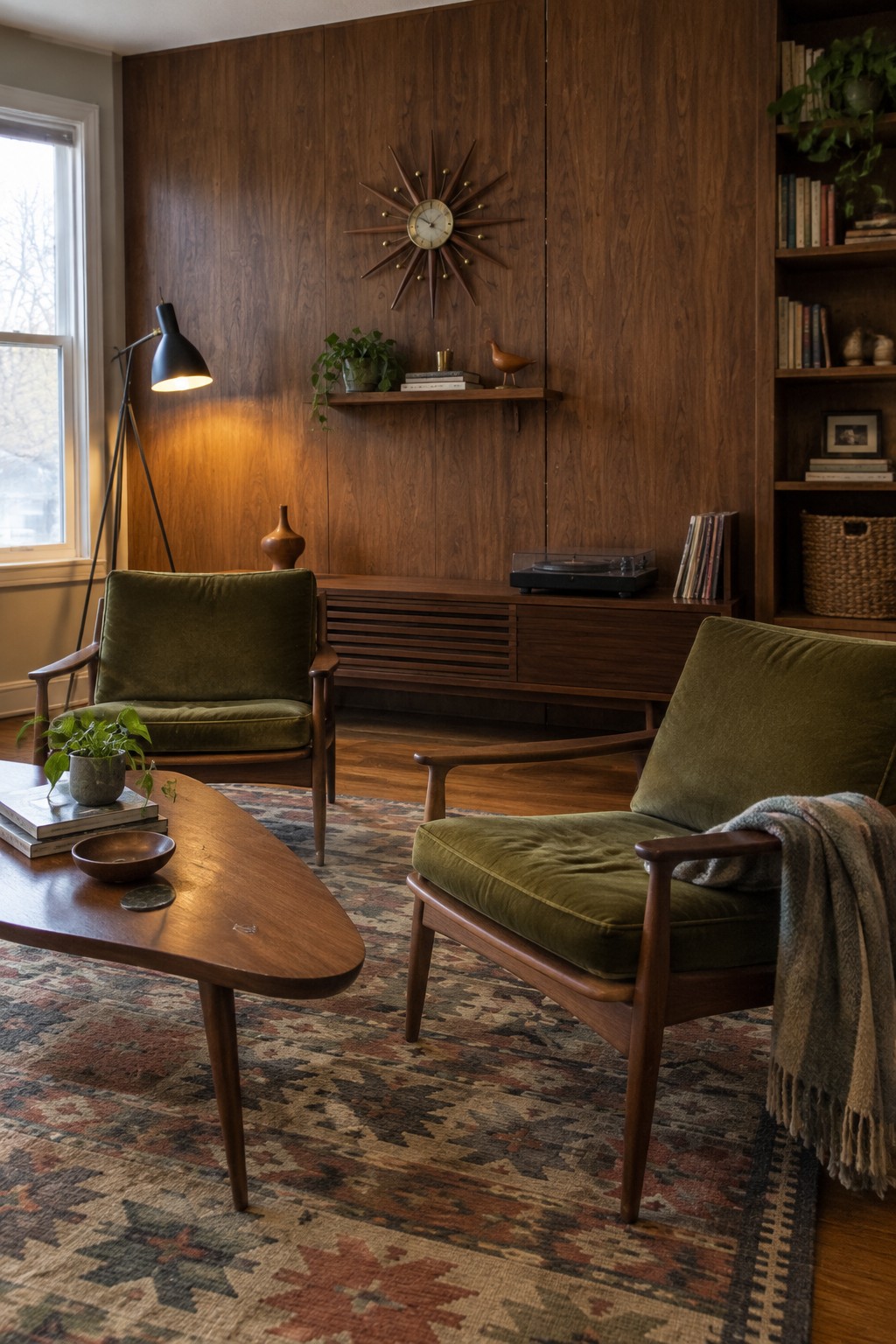
Wood framed armchairs bring a clean structure to a living room without making it feel stiff. The exposed frames keep the seating from looking bulky, and they work especially well when the wood tone matches other pieces in the room like a coffee table or built in cabinet.
Place a pair across from a low wood table and keep the rest of the seating simple. This setup works best in homes with wood floors or paneling already in place, and it leaves space for a few softer textiles without crowding the room.
Use a Wooden Daybed for Relaxed Seating

A wooden daybed brings a low, easy presence to a mid-century living room. It works as both a place to sit and a quiet spot to stretch out, and the wood frame keeps the look grounded without adding bulk.
Place it along a wall with one or two pillows, then keep the rest of the furniture light. This setup suits smaller rooms or open layouts where you want seating that does not feel heavy or formal.
Match Wood Tones Across Your Furniture

Using the same wood tone on the sofa frame, coffee tables, and built-in shelves keeps a mid-century room feeling settled and intentional. The warm walnut color runs through everything, so the pieces relate to each other instead of competing.
This works especially well in rooms with a fireplace or big windows where you want the furniture to feel grounded. Pick one wood species or finish and repeat it on the main seating and tables. Skip mixing oak with walnut or adding too many painted pieces if you want the same calm result.
Build Around Iconic Wood Furniture
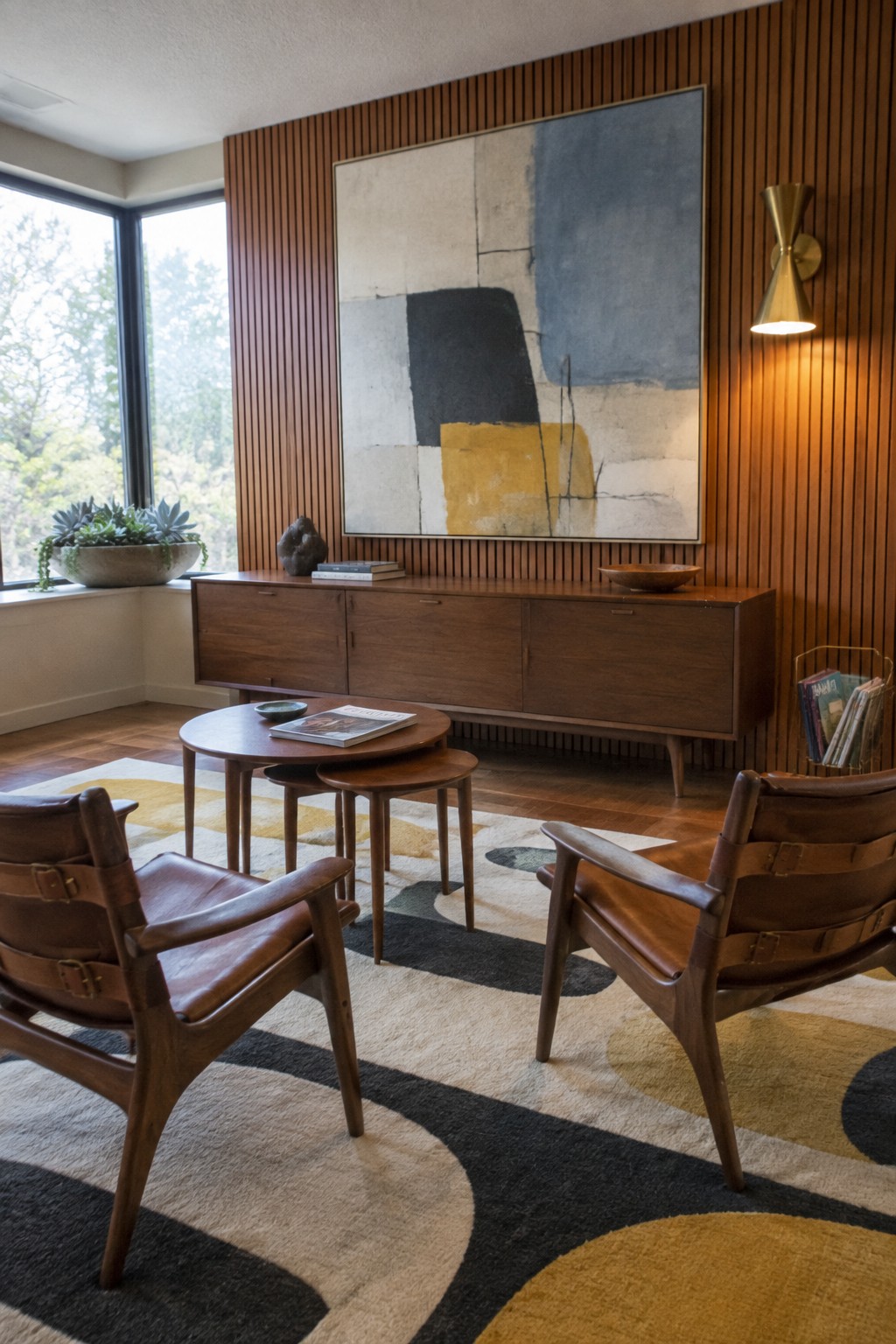
Many mid-century living rooms feel settled when the main furniture pieces are made of wood. A pair of wood-framed armchairs and a long credenza can carry the whole room because the material itself brings warmth and structure.
This works best in spaces that already have wood floors or walls. Keep other pieces low and simple so the wood furniture stays the focus instead of competing with too many extras.
Let a Low Wood Credenza Anchor the Wall

A long, low wood credenza can quietly pull a mid-century living room together. It adds useful storage while giving you a clean surface for a few favorite objects, and the warm tone of the wood helps connect the rest of the furniture without extra effort.
This setup works best in rooms that already have hardwood floors and a strong rug pattern. Keep the top fairly open so the piece keeps its shape, and let the wood tone play off the other wood furniture rather than matching it exactly.
Tall Wooden Shelving Adds Storage Without Closing Off the Space

A tall wooden shelving unit tucked into the corner gives you a place to keep books, plants, and small objects without adding another cabinet that eats up floor space. The open shelves let light move through and keep the room from feeling heavy even when the wood tones are dark.
This works best in rooms where the seating stays low and simple. Place it near a sofa or chair so the lower section can hold larger items while the upper shelves stay lighter with trailing plants or a few favorite pieces. It suits mid century rooms that already lean on wood but need one vertical element to balance the layout.
Wood Coffee Tables in Mid-Century Living Rooms

A solid wood coffee table often does more than hold books and trays. In rooms like this one, the low oval shape and thick pedestal base give the seating area a clear center without blocking movement or sight lines across the rug.
This approach works best in spaces where the other pieces stay fairly low and simple. It suits homes that already have mid-century leanings or want to add warmth to neutral upholstery. Keep the surrounding chairs and sofa in similar wood tones so the table feels like part of the group rather than an outlier.
Use Iconic Wooden Lounge Chairs

Many people reach for a pair of classic wooden chairs when they want that mid-century modern feeling without filling the whole room with new pieces. The low profile and simple curves add shape and warmth that blends easily with a sofa and a few built-ins.
Place them across from the main seating so they create a natural spot for conversation. They suit rooms that already have wood tones or neutral rugs, and they keep the space from feeling too heavy as long as you leave some open floor around them.
Mixing Wood Tones In One Room

Many people reach for one wood tone and stick with it, but mixing a few close shades can make a living room feel more relaxed and lived in. The low credenza and round coffee table here show how different grains and depths can sit side by side without clashing.
This approach works best in mid century rooms that already have clean lines. Keep the tones within the same warm family and let one piece, like the credenza, set the scale so nothing feels too heavy or scattered.
Built-In Bookshelves Made From Matching Wood

Built-in wood bookshelves work especially well in mid-century living rooms because they extend the same material language across the whole space. When the shelves share the same tone and grain as the furniture, the room feels more settled and intentional instead of like separate pieces were just placed together.
This approach suits homes that already have wood trim or flooring and gives you plenty of storage without adding more freestanding pieces. Keep the shelves fairly full so the wood reads as a solid wall rather than scattered open space, and let one or two standout furniture pieces sit in front of them.
Anchor The Room With A Wood Framed Sofa

A wood framed sofa gives a mid century living room real presence. It adds warmth through the grain and structure while still keeping the lines clean and simple. In this setup the sofa becomes the main piece everything else works around.
Place it where the wood can catch natural light and pair it with lower tables and a sideboard in matching tones. This approach suits homes that already have wood floors or want to bring in more texture without adding clutter. Just keep the other pieces lighter so the sofa stays the focus.
Open Wooden Shelving Adds Practical Storage And Display Space

A tall wooden bookcase gives you a simple way to handle books, plants, and small objects without needing extra cabinets. The open shelves keep things visible and easy to reach, while the wood itself adds warmth that works well with mid-century pieces.
This setup works best in living rooms that need vertical storage but still want an open feel. Place it along a main wall, fill it gradually with what you actually use, and leave a little breathing room between items so it does not feel crowded.
Round Wood Coffee Tables

A round wood coffee table keeps the middle of a seating group open and easy to move around. In this setup the table sits low and centered, letting the sofa and chairs form a loose circle without anything sharp or bulky cutting across the space.
It works best in mid-century modern rooms where you already have wood frames on the seating. Keep the top mostly clear except for a few everyday items so the wood grain stays visible and the shape can do its job.
Wood Media Consoles Hold Their Own In Mid Century Rooms
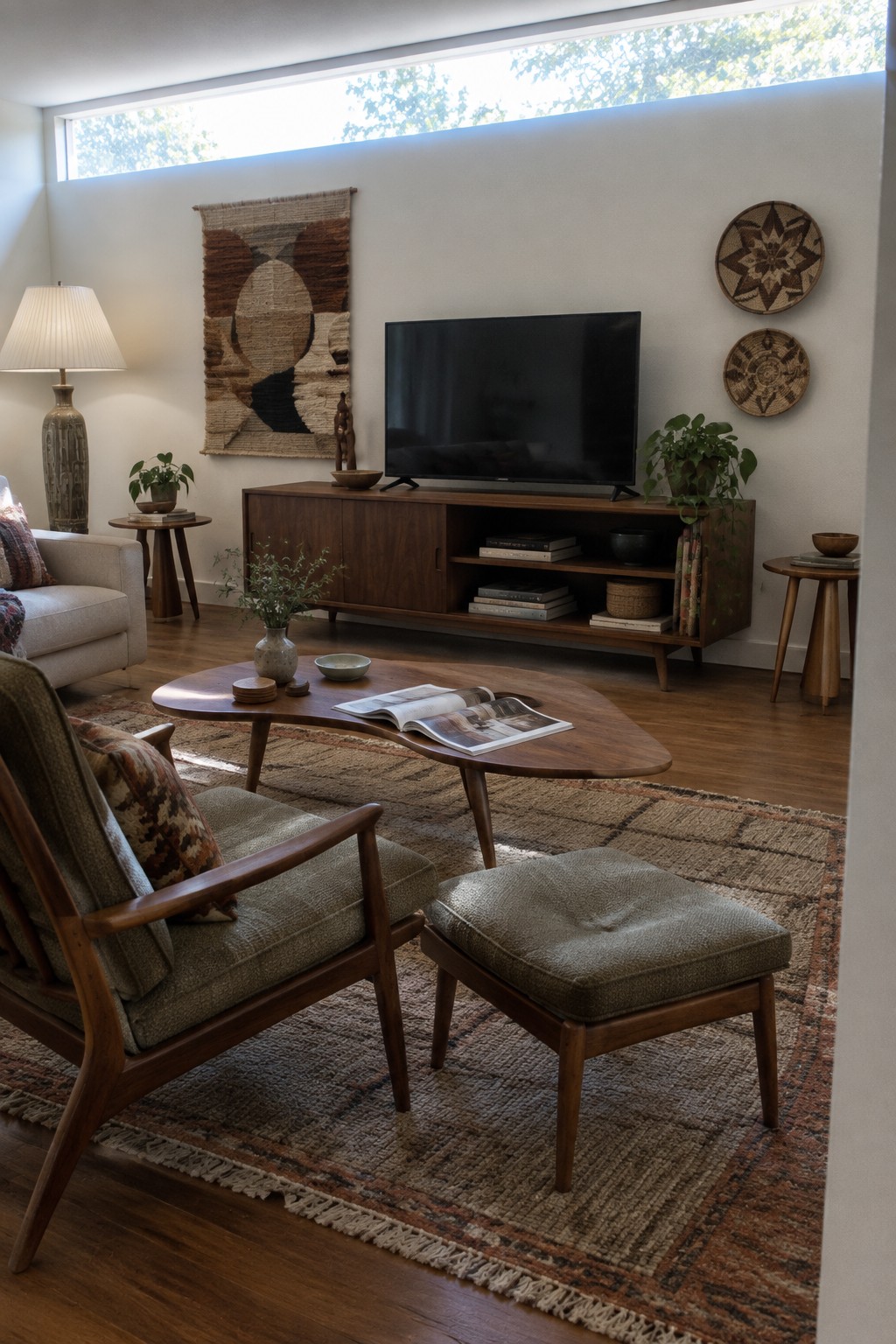
A low wood console under the television gives the room a solid base without crowding the space. The warm tone of the wood connects the other pieces and keeps storage tucked away on open shelves and behind doors.
This setup works well in rooms that need both display and hidden storage. Keep the top fairly clear and use the lower sections for books and smaller items so the console stays functional without looking overloaded.
Layering Wood Furniture with a Large Area Rug
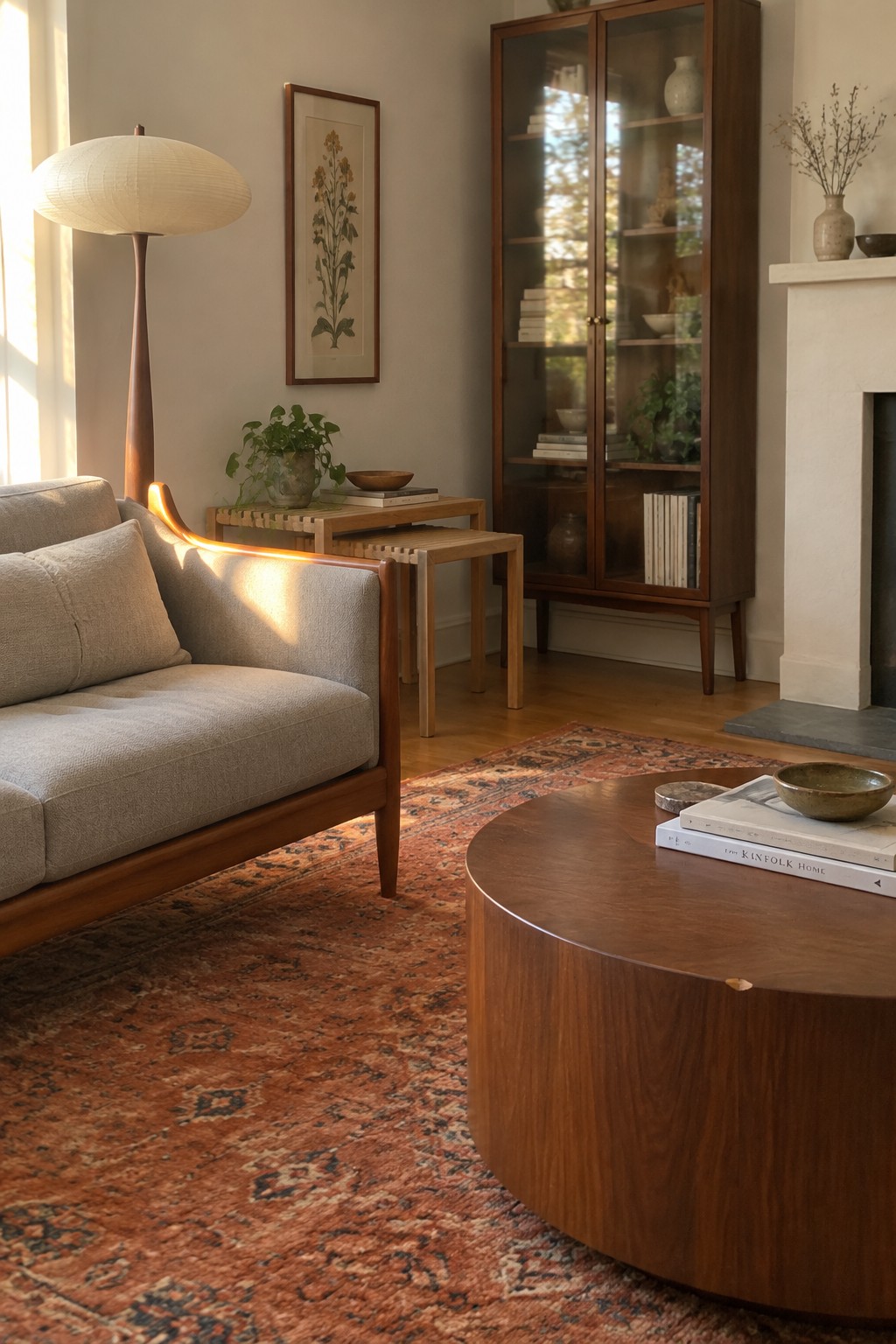
Many mid-century rooms feel a bit stark when the wood pieces stand alone. Adding a large patterned rug underneath helps tie everything together and makes the space feel more settled. The rug also softens the look of all that wood while still letting the furniture shapes show through.
This approach works especially well in rooms that already have several wood tones or different furniture silhouettes. Keep the rug big enough to sit under the front legs of the main seating and at least one or two side tables. It is an easy way to add color and texture without crowding the room with too many small accessories.
Letting Wood Furniture Set the Tone

One approach that works well in mid-century rooms is letting the wood furniture carry the main look. A low sofa on a simple wood frame pairs with a round table in the same tone, which keeps everything connected without extra layers or patterns.
This setup suits homes with plenty of natural light and open floor space. It feels balanced when the wood tones stay close and the pieces stay low to the ground. Avoid mixing in too many dark or ornate woods if the goal is a calm, uncluttered room.
Wood And Leather Swivel Chairs Add Versatility
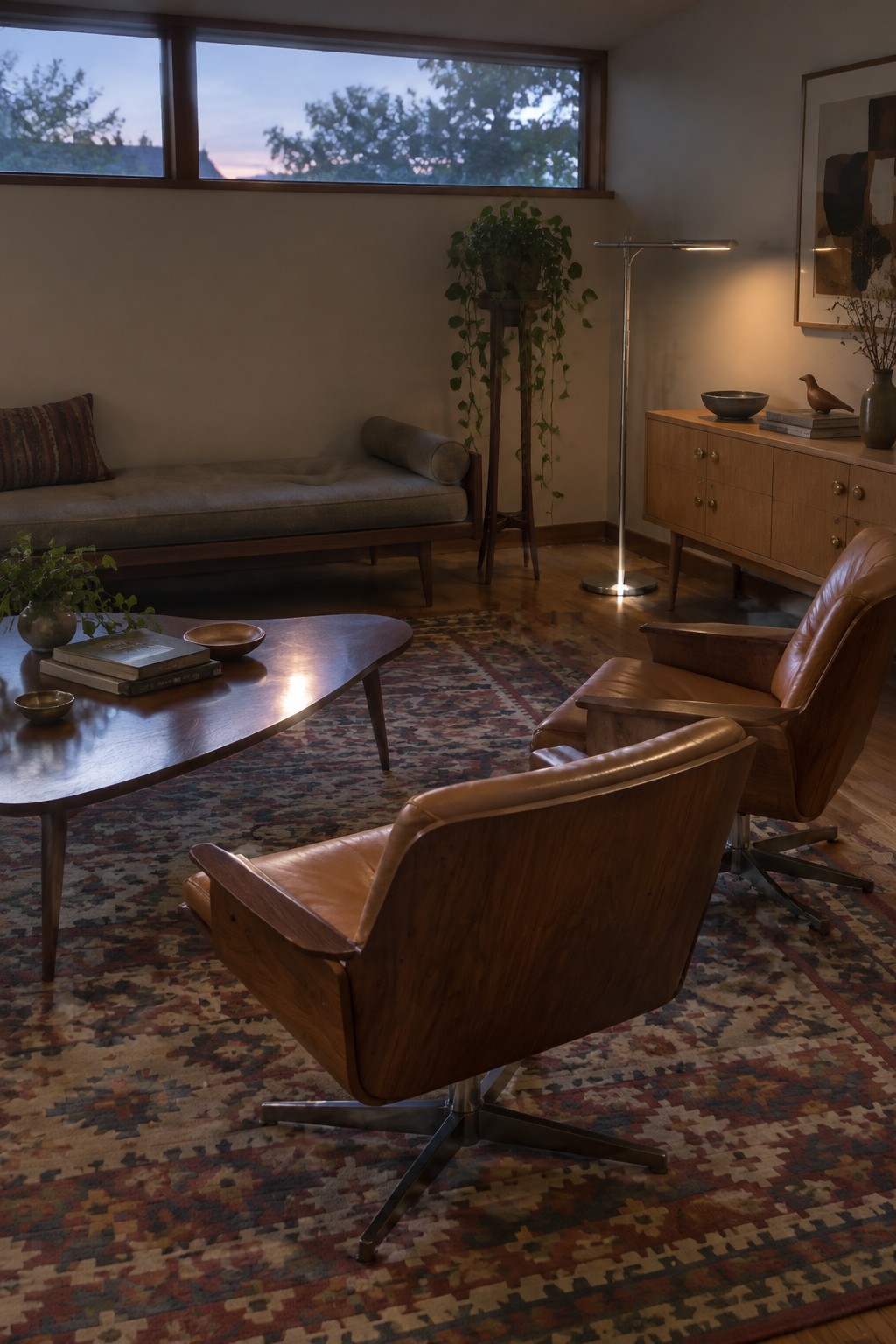
These chairs stand out because the combination of wood frame and leather seat feels both solid and comfortable at the same time. The swivel base lets people turn toward the coffee table or the sofa without shifting the whole piece, which makes the seating area feel more usable during everyday conversations.
They suit mid century rooms that already have other wood furniture, since the warm tones tie everything together without extra effort. Place a pair on a large rug so the chairs can move freely, and keep the rest of the seating lower to match their scale. Avoid crowding them into tight corners where the swivel loses its purpose.
Wood Coffee Tables Stay Simple and Useful

A low wood coffee table often works best in mid century living rooms because it keeps the focus on the seating while adding a natural material that feels warm. The table in this room shows how a straightforward rectangular top and tapered legs can hold a few books and a bowl without crowding the space or competing with the sofa.
This approach suits rooms where you want the furniture to feel balanced rather than busy. Place the table at a comfortable distance from the sofa so people can reach it easily, and keep the surface mostly clear. It works especially well in homes with wood floors or other wood pieces already in place.
Let Iconic Wood Furniture Set the Tone

Many living rooms feel more settled when the main furniture pieces come from the same material. In this case the wood tones on the chair, coffee table, console, and shelving unit all work together and give the room a steady, uncomplicated look.
This works best in spaces that get steady daylight. Keep the walls and larger surfaces light so the wood grain shows up clearly. Use a simple rug underneath and leave a little breathing room between the pieces so none of them get lost.
Frequently Asked Questions
Q: Can I mix oak and walnut pieces together? A: Pick one wood as the main tone and let the second one appear in smaller doses like a side table or frame. Repeat a similar leg shape or curve across both to tie them together naturally.
Q: How do I stop the room from feeling too brown with so much wood around? A: Layer in light fabrics on the sofa and chairs. A few green plants or a painted side table break up the tones without fighting the furniture.
Q: How do I protect the wood tabletops from daily use? A: Set out coasters and trays from the start. A yearly coat of paste wax adds a quick layer of defense.
