

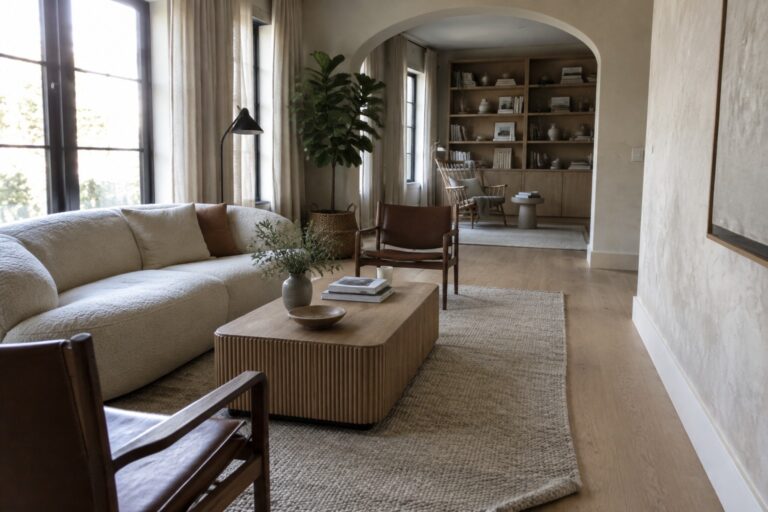
In longer living rooms the first thing that stands out is whether the seating actually draws people together or leaves them stranded at opposite ends.
Creating separate zones lets each part of the room serve a clear purpose while still letting conversation and movement happen without effort.
Empty middles never feel right.
Over time I have noticed that the layouts which last are the ones that leave enough open floor for daily paths while still anchoring each seating group with a rug or table.
A few of these zoned approaches line up with issues I have faced and seem worth testing in my own space.
Zone A Long Living Room With Multiple Seating Groups

One useful way to handle a long living room is to split it into smaller seating zones instead of forcing everything into one big arrangement. A large rug can anchor the main sofa and coffee table while a pair of armchairs sits just outside that zone to create a second spot for conversation.
This layout works best in rectangular rooms that feel too stretched out with a single setup. Keep the main seating on the rug and leave enough space for the extra chairs to feel like their own area rather than an afterthought. It suits homes where people want options for both larger gatherings and smaller quiet talks without adding walls.
Zone Seating Areas Along the Length

One simple way to handle a long living room is to spread seating into separate zones instead of clustering everything together. This layout keeps the room from feeling like a tunnel and gives each part a clear purpose, whether that is a main lounge spot or a smaller area for music or quiet time.
It suits narrow rooms with one long wall to work against. Place a big sectional at one end, then use a long runner to connect it to another seating group or storage piece further down. Keep the zones linked with matching colors or wood tones so the space still feels like one room rather than two separate ones.
Layer Rugs To Define Seating Zones

Many long living rooms end up feeling scattered when all the furniture sits in one big open stretch. Layering rugs gives each seating spot its own clear spot on the floor while still keeping the room connected.
This approach works especially well in older homes or spaces with lots of windows. Keep the rugs in the same color family so the eye moves easily from one area to the next, and let them overlap just enough to mark the change without creating a hard line.
Zone A Long Living Room With Separate Seating Clusters

One way to make a long living room feel more usable is to break it into smaller seating zones instead of lining everything along the walls. Each cluster gets its own purpose, so the space feels organized rather than stretched out.
Place a dining table at one end, a main seating group in the middle, and a small desk or reading spot further down. This approach works best in open lofts or rooms with few dividing walls, where you can let rugs and furniture placement do the work of marking each area.
Zoning A Long Living Room With Two Seating Areas

A long living room often feels awkward when everything gets pushed into one big group. Breaking it into two zones keeps the space from looking empty while giving people actual places to sit and talk without shouting across the room. The large rug here pulls the main sofa and coffee table into one clear area, while the smaller wicker chairs form a second spot that feels separate but still connected.
This approach works best in rooms that are at least twice as long as they are wide. Keep the second zone smaller and simpler so it does not compete with the main seating. It also helps if each zone has its own reason to exist, like being near the fireplace or facing the view.
Zone Seating Around a Fireplace

A fireplace gives you a natural spot to build separate seating areas instead of lining everything up along one long wall. Placing a pair of chairs on either side of the hearth and a sofa facing it turns the middle of the room into two workable zones without needing extra walls or dividers.
This layout suits older homes where the fireplace already sits toward the center. Keep the flow open between the zones so people can move through easily, and add a simple bench or window seat at the far end if the room stretches even longer.
Long Sectionals That Create Natural Seating Zones

A long sectional gives you a simple way to mark off one clear seating area inside a stretched living room. It fills the length without breaking into smaller pieces, so the space feels organized even when the room runs long.
This works best in open or rectangular layouts where you need to separate conversation from traffic paths. Place the sofa along the main wall, add a slim table behind it for lamps or storage, and keep the rest of the room lighter so the zoned area stays the focus.
Split a Long Living Room With Zoned Seating

One of the simplest ways to handle a long living room is to divide it into separate seating areas instead of trying to make one big conversation pit. The room here shows this clearly with a raised platform holding its own sofa and cushions, while a large sectional and coffee table sit at a lower level nearby. This keeps the space from feeling like one endless stretch of furniture.
This approach works best in older homes or any room with an awkward length to it. You can use a built-in bench, a change in flooring, or even just a rug and low table to mark each zone. The key is letting each area feel like its own spot rather than pushing everything into one central group.
Use Rugs To Zone A Long Living Room

Rugs do a good job of breaking up a long living room into smaller, usable parts. Instead of one big open stretch, you get two or three distinct spots where people can actually sit and talk without the whole room feeling empty or scattered.
This works especially well in lofts or older homes with long rectangular rooms. Keep the main seating on one rug and use a second rug a few feet away for a more casual lounge area with low seating or ottomans. Just make sure the rugs overlap slightly or share a color so the zones still feel connected.
Create Zoned Seating Areas In A Long Living Room

One way to make a long living room feel more comfortable is to split it into smaller seating zones instead of trying to furnish it as one big open space. The room works because each zone has its own furniture grouping and purpose, so the length does not feel like a long corridor.
Place one pair of chairs near the fireplace, center a sofa and side chairs around a low table in the middle, and leave the far end open for another chair or two. A large rug under the main seating group helps mark that zone while the other areas stay separate.
Zone A Long Living Room With One Large Oval Rug

A single oversized oval rug can tie together several seating groups in a long room without splitting it into separate zones that feel too chopped up. The shape softens the straight lines of the space and lets furniture sit at different angles while still feeling connected.
This layout suits narrow older homes where a long rectangle makes furniture placement tricky. Keep most of the seating along the edges of the rug so each spot still has its own feel, but everything stays grounded on the same surface.
Divide A Long Living Room Into Separate Seating Zones

One way to handle a long living room is to split it into different seating areas instead of forcing everything into one big group. This keeps the space feeling balanced and gives people places to sit without crowding around a single spot.
Place the main sofa and coffee table near a focal point like the fireplace, then add a smaller pair of chairs on their own rug at the other end. It works well in older homes with long rectangular rooms where one large seating arrangement would leave too much empty floor.
Using Flooring Changes To Create Seating Zones

One simple way to break up a long living room is to let the floor itself mark where one seating area ends and another begins. Here the tatami section sits at a different level and texture than the wood floor with its runner and rug, so the low cushions and the sofa group each feel like their own place even though the room stays open.
This approach works well in homes that already lean toward calm, uncluttered layouts. Keep the zones connected by a clear walkway and choose seating that matches the floor height in each area so people can move easily between them without the space feeling chopped up.
Define Zones With Multiple Rugs

A long living room often needs help feeling like more than one stretched-out space. Placing several rugs down the length of the room breaks it into smaller areas that each feel purposeful on their own.
This approach suits homes where the same room has to handle both quiet seating and active use. Keep the rugs varied in pattern but similar in tone so the divisions read as intentional rather than busy.
Cluster Furniture to Create Distinct Seating Zones

In a long living room, breaking the space into smaller seating clusters keeps the room from feeling like a hallway. Grouping a sofa and chairs together in one area, then placing another set further down, gives each part its own purpose without needing extra walls.
This approach works well in older homes with extended rooms or open plans where you need to define areas for different uses. Try placing the main seating groups on separate rugs and leave clear walking space between them so the room stays practical for daily movement.
Use Rugs to Mark Separate Seating Zones

A long living room often feels scattered when all the furniture sits in one big group. Laying down two or three rugs breaks the space into clear zones without adding walls. One rug can hold the main seating near the fireplace while another sits under a smaller lounge spot farther down the room. The change in texture and color underfoot does most of the work.
This setup works best in narrow or extended rooms where one central arrangement leaves empty corners. Keep the rugs similar in tone so the room still feels connected. Avoid crowding each zone with too many pieces, or the space starts to feel chopped up instead of calm.
Break Up Length With Multiple Seating Zones
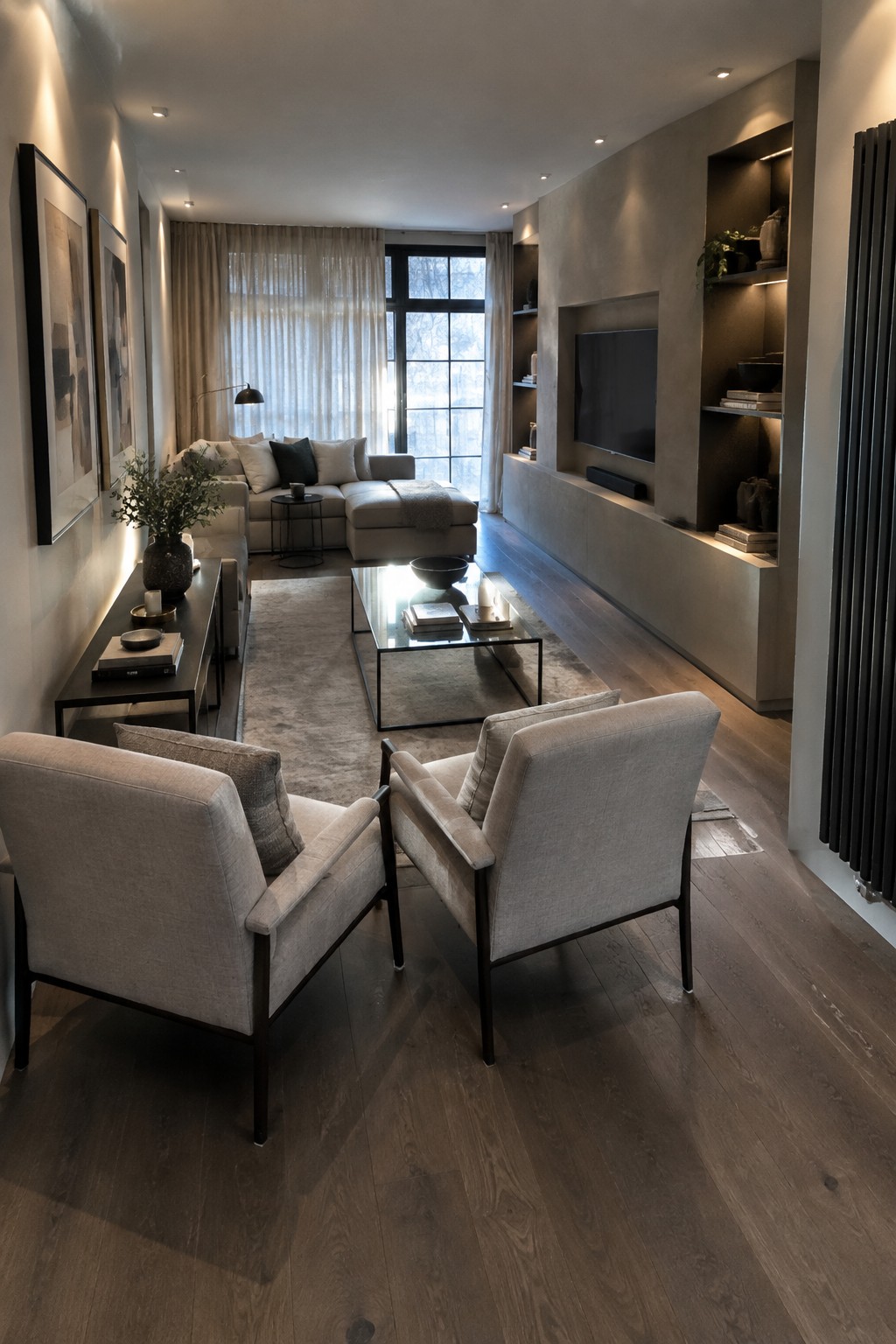
One of the simplest ways to make a long living room feel balanced is to split it into two smaller seating areas instead of one stretched-out arrangement. The two armchairs in the foreground create their own zone while the sofa sits farther back as a second spot. This stops the room from feeling like a corridor and gives people places to sit without shouting across the space.
This approach works best in narrow or open-plan rooms where you want flexibility. Keep the zones connected with a shared rug or similar wood tones so the room still reads as one space. Just avoid lining everything up along the walls, which can make the length feel even more obvious.
Zoning a Long Living Room With One Large Rug

A large area rug does a good job of pulling one part of a long room together so it feels like its own spot. In this layout the rug runs under the main sofa and coffee table, which keeps that seating area from drifting into the rest of the space.
This approach works best in open rooms that need some separation without walls. Keep the rug big enough to hold the front legs of the main furniture, then let the floor beyond it mark the shift to the next zone.
Frequently Asked Questions
Q: How do I keep two seating zones from cutting off the flow down a long room? A: Float a slim console or low bench between them so people can still move through easily. Angle one chair in the second zone toward the first to invite conversation across the gap. Test the path by walking it a few times before you settle on the final spots.
Q: Can I use just one big rug or do I need separate ones for each area? A: One large rug works if it covers the main walking path and both zones sit partly on it. This keeps the eye moving instead of stopping at edges. Add a small accent rug only under the farther seating group if it starts to feel too plain.
Q: What if the TV ends up in the middle of the room instead of tucked in one zone? A: Mount it on the long wall and pull the nearest seating group closer to it. Leave the other zone open for reading or chatting without the screen. Stand in each spot to check whether the glare hits anyone during the day.
