

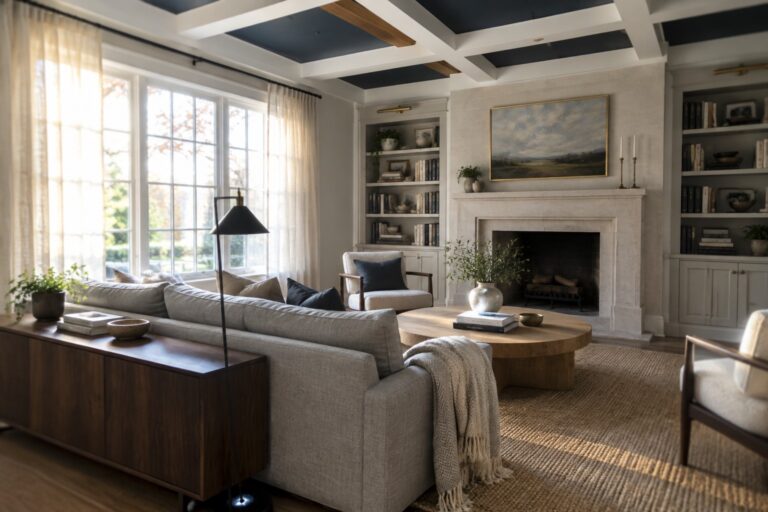
I have noticed that the ceiling often decides how balanced a living room feels once the furniture is in place and people start using the space.
When I sketch out changes for my own home I usually start with the ceiling lines because they affect light and sound more than I first expected.
Coffered and beamed details can give a room structure without crowding the floor plan if they match the actual proportions.
Scale matters here.
A few of these approaches seem worth trying in person to see how they hold up once the room is lived in.
Coffered Ceilings in Deep Paint
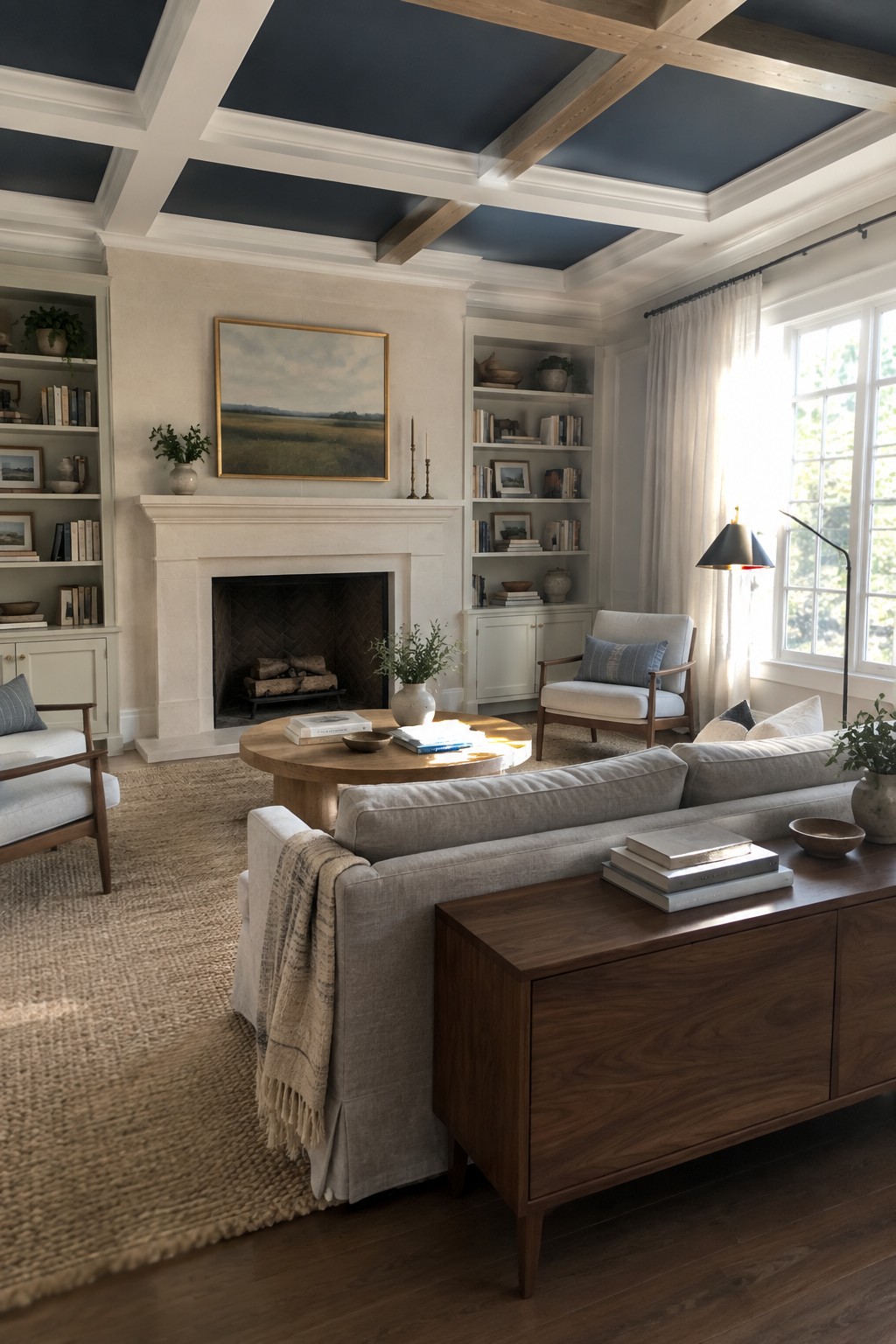
Painting the panels of a coffered ceiling a dark color while leaving the beams in natural wood gives the room weight without making it feel closed in. The contrast draws the eye upward and works well when the rest of the space stays light and simple.
This approach suits homes with higher ceilings and pairs best with neutral walls and wood furniture. It can feel heavy in smaller rooms, so test the paint color on a sample board first and check how it looks at different times of day.
Exposed Wooden Beams on a Vaulted Ceiling
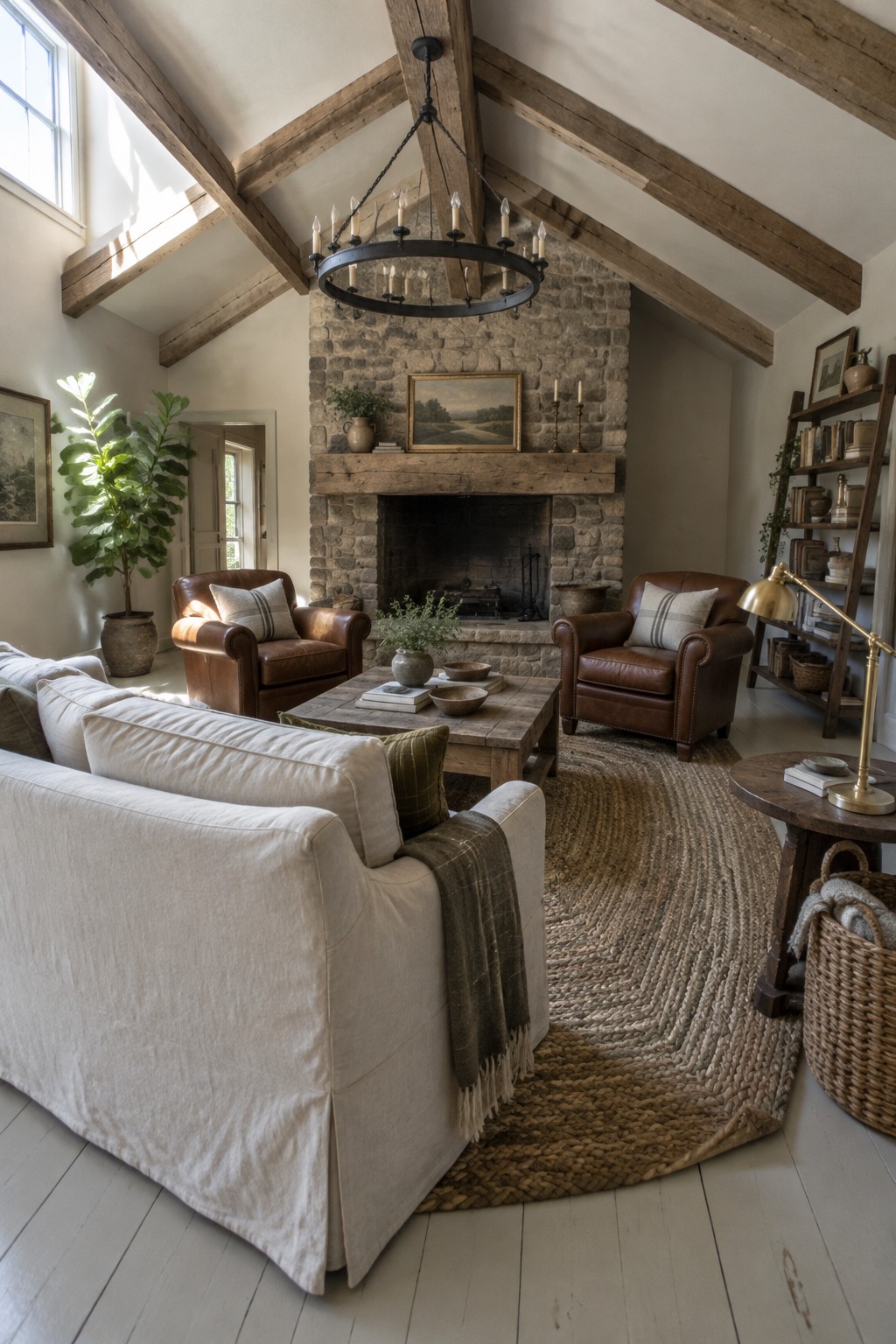
Exposed wooden beams work well in living rooms with tall or open ceilings because they add structure without making the space feel heavy. The beams break up the height and bring in a natural texture that pairs easily with stone and wood furniture. Many people like how they make a room feel more grounded while still keeping the light and open feel.
This approach suits older homes or new builds that want a bit of character without adding trim or panels. It works best when the beams are kept simple and the rest of the room stays fairly neutral. Just make sure the scale matches the room size so they do not overpower the space.
Coffered Ceilings With Wooden Beams

Coffered ceilings with exposed beams give a living room structure that feels intentional rather than flat. The grid pattern breaks up a tall ceiling and adds quiet character that works even when the rest of the room stays simple.
This detail suits homes with higher ceilings or open living areas where you want some architecture without adding walls. Keep the beams light so the room stays bright, and let the ceiling carry the interest instead of loading up the walls or furniture.
Coffered Ceilings With Warm Recessed Lighting

Coffered ceilings stand out when the lighting sits inside the beams instead of hanging below them. The grid gives the room a clear shape overhead while the warm glow stays soft and even across the whole surface.
This approach works best in living rooms that already have some height to the ceiling. Match the wood tone to nearby cabinetry or flooring so the beams feel like a natural extension of the room rather than a separate layer.
Exposed Wooden Beams In Light Living Rooms
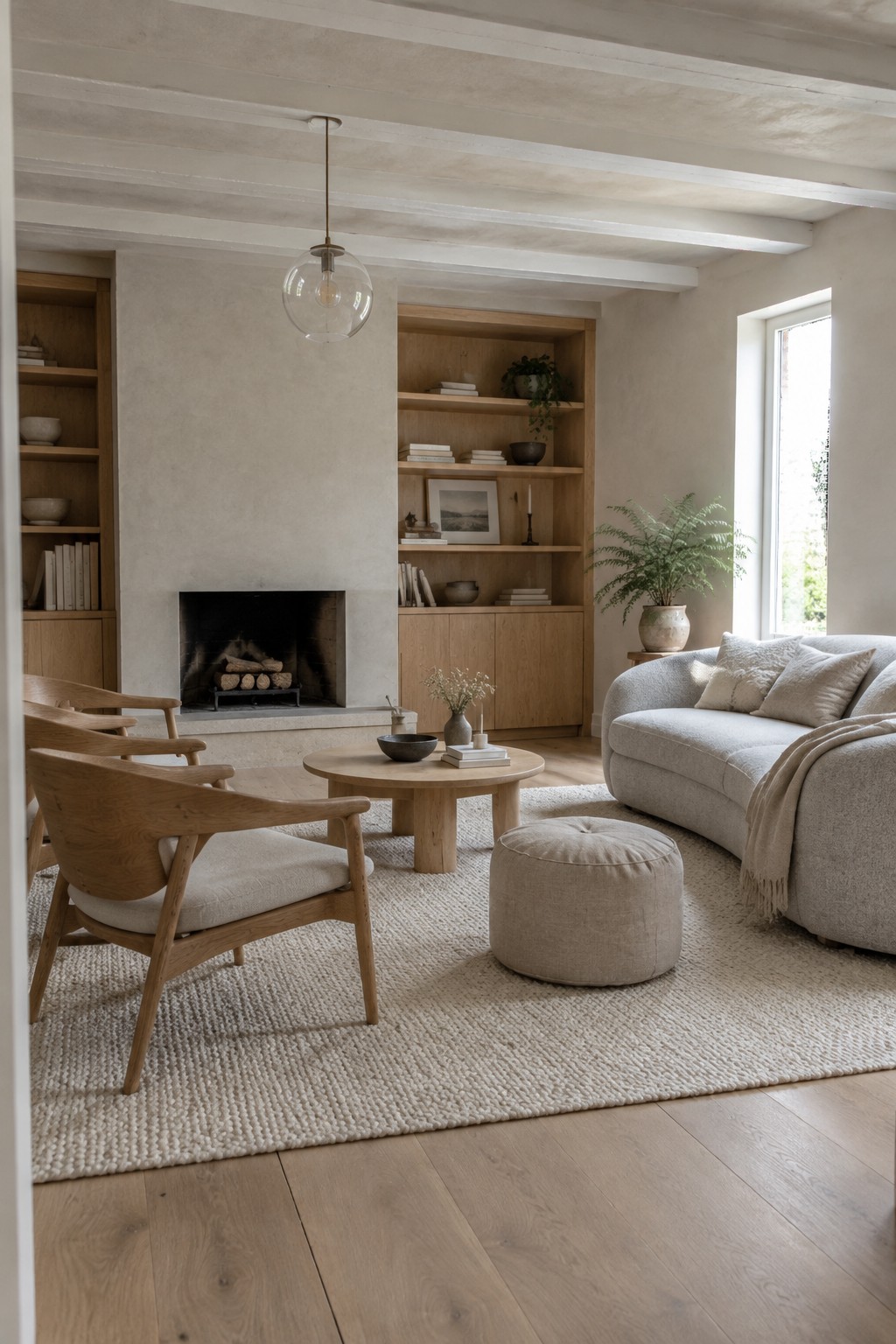
Exposed wooden beams give a living room a bit of structure that feels steady without closing the space in. When the walls and floors stay light, the beams add contrast that keeps the room from feeling too plain or flat.
They suit homes with decent ceiling height and work best when the rest of the room stays simple. Stick to a few wood tones and soft textiles so the beams remain the main detail instead of getting lost among too many other pieces.
Traditional Coffered Ceilings With Natural Wood Beams
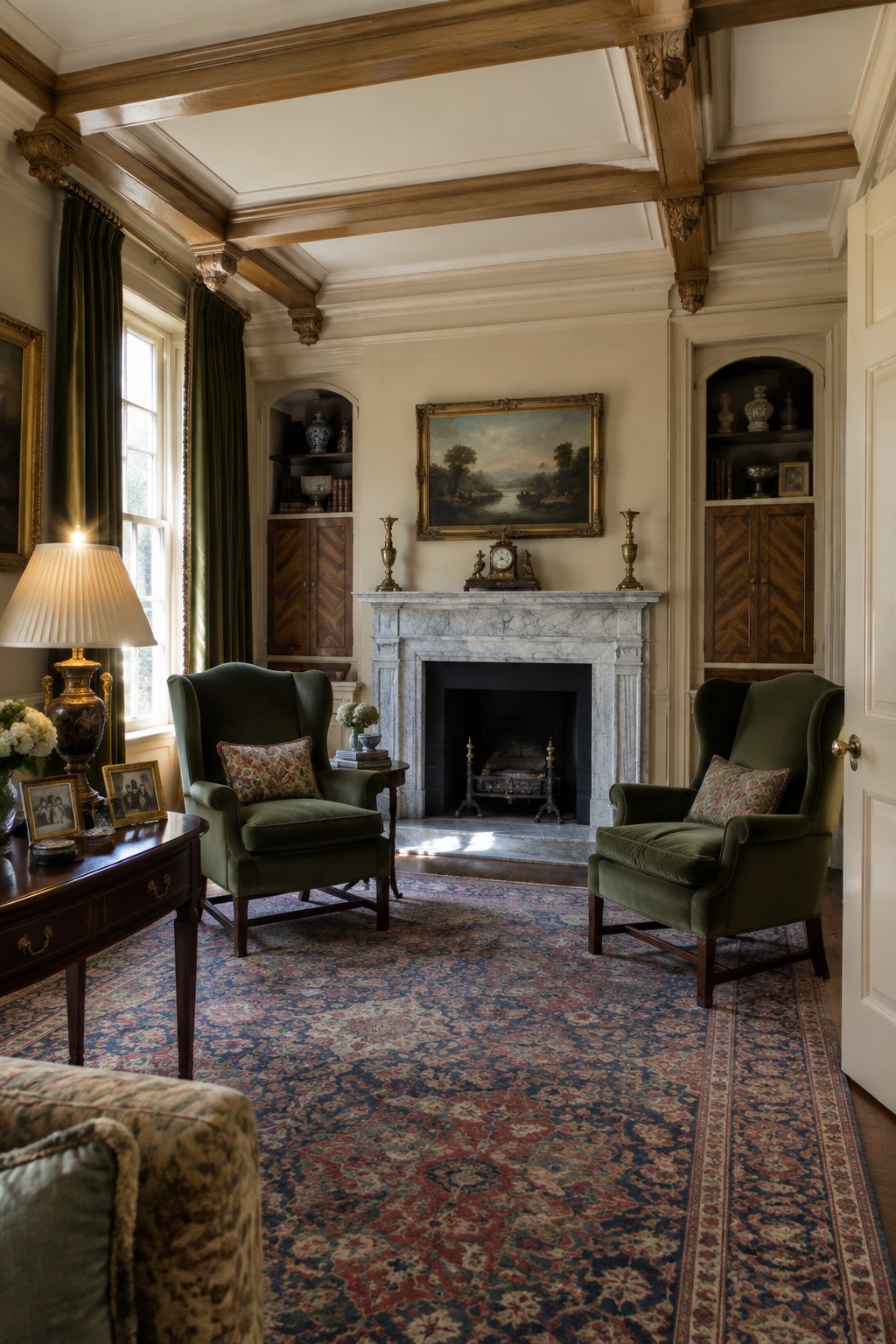
Coffered ceilings with exposed wood beams give a room structure without making it feel heavy. The beams break up the height and add a layer of warmth that painted ceilings alone often miss. In spaces with tall ceilings, this detail keeps the room from feeling too open or empty.
This approach works best in traditional homes or older houses where the ceiling height can support it. Keep the beams in a natural wood tone and let the rest of the room stay fairly simple so the ceiling stays the focus. Avoid adding too many competing patterns or dark colors below, or the whole space can start to feel closed in.
Dark Beams With Light Wood Ceiling Panels

Dark beams paired with lighter wood panels give a ceiling real structure while still feeling warm. The contrast keeps the room from looking flat and adds a sense of weight overhead that grounds the whole space.
This approach works best in larger living rooms that already have some height. It suits homes that mix modern lines with traditional materials, but it helps to keep the beams fairly deep in tone so they do not get lost against the lighter wood.
White Ceilings With Exposed Wood Beams

A white ceiling with exposed wood beams keeps a room feeling open while still adding structure. The beams break up the flat surface and give the space a bit of age and character that painted drywall alone cannot provide.
This approach works best in homes that already have some traditional or cottage leanings. Paint the ceiling planks white and leave the beams in a natural or lightly weathered tone so they read as a deliberate detail rather than an afterthought.
Exposed Wood Beams In Industrial Lofts

Exposed wood beams bring a layer of warmth to rooms that otherwise lean hard and cool. The thick timber against black steel and raw concrete keeps the industrial feel but stops it from feeling too stark or cold.
This works best in open spaces with decent ceiling height where the beams can stand out without crowding the room. It suits lofts and converted spaces that already have some structure showing, though it can feel heavy in smaller rooms with lower ceilings.
Exposed Wooden Beams for Living Room Ceilings
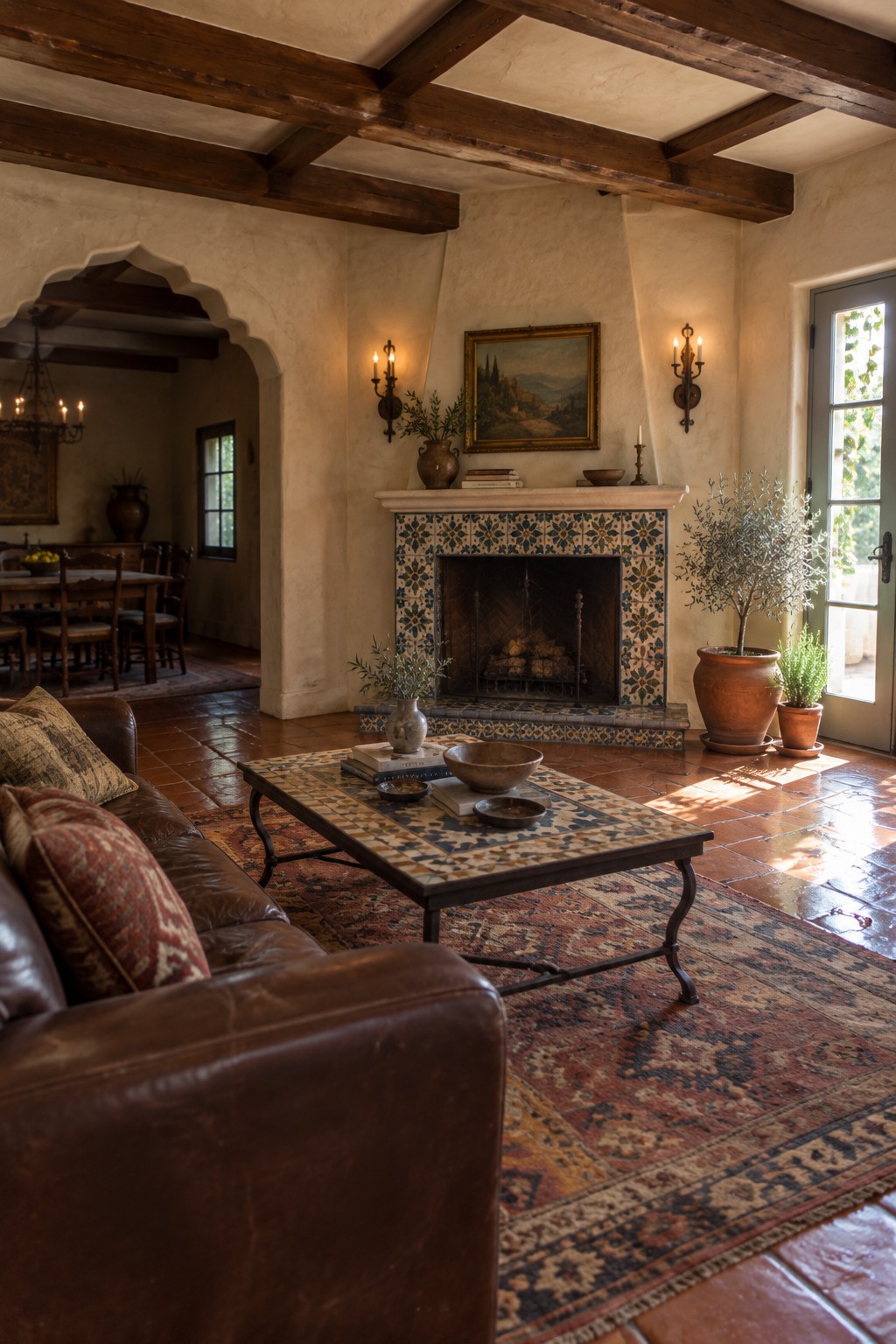
Exposed wooden beams give a living room ceiling real presence without needing much else to make the space feel finished. In this room the dark beams sit against a light plaster ceiling and pair with the warm tile and terracotta floor to create a settled, grounded look that still feels open.
This approach works best in homes with higher ceilings and a bit of architectural character already in place. It suits Mediterranean or Spanish-style rooms especially well, though the same idea can work in more modern homes if the wood tone stays simple and the beams are kept fairly straightforward.
Exposed Wooden Beams for a Cozy Ceiling
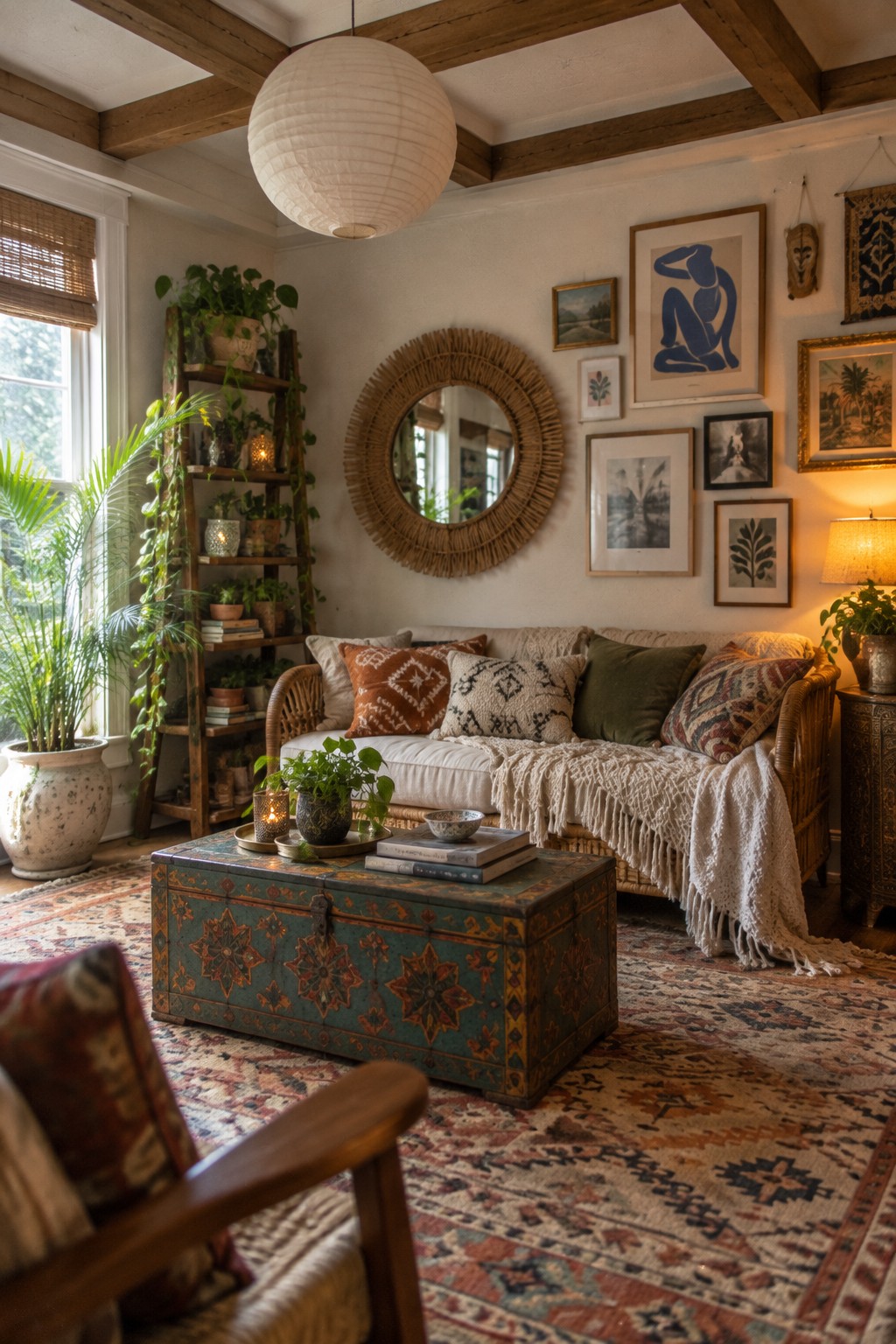
Exposed wooden beams give a living room ceiling an immediate sense of structure and warmth. They work especially well when the rest of the room stays fairly simple, letting the beams stand out without competing with too many other details.
This look suits homes with taller ceilings or older construction where the beams are already in place. If your space has a flat ceiling, consider adding beams that match the scale of the room so they feel like part of the architecture rather than an afterthought.
Exposed Wooden Beams With A Skylight
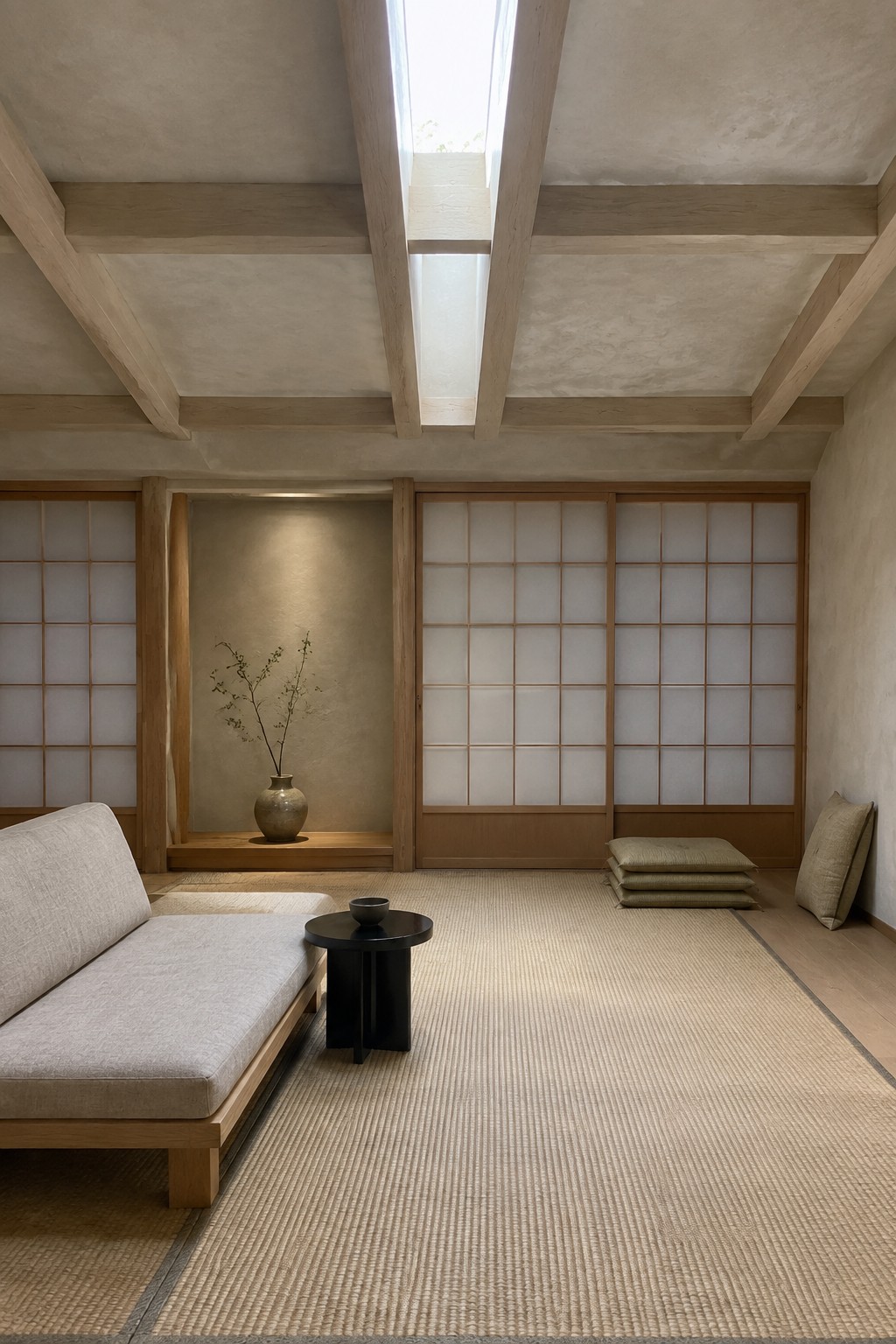
Exposed wooden beams can give a living room ceiling real presence without needing extra trim or panels. When they run alongside a long skylight like this, the room stays bright and the wood feels lighter instead of heavy.
This works well in homes that already lean toward simple materials and low furniture. It suits spaces where you want the ceiling to feel open but still structured, and it pairs best with neutral walls and natural flooring so the beams stay the main feature.
Dark Wood Coffered Ceilings in Traditional Rooms

A dark wood coffered ceiling adds structure and warmth to a living room without needing a lot of extra decoration. The beams create a grid that makes the space feel more enclosed and settled, especially when the rest of the room stays fairly light.
This approach works best in homes with higher ceilings and classic details like a marble fireplace. Pair it with softer seating and neutral walls so the ceiling reads as a quiet architectural choice rather than a heavy one.
Exposed Wood Beams That Add Structure Overhead

Many living rooms benefit from a ceiling that feels as finished as the walls. Heavy timber beams running in both directions create a grid that gives the room a clear sense of order and weight. The dark wood tone also helps bring the tall space down to a more comfortable scale.
This detail works best in homes that already use wood trim or have a stone fireplace as a focal point. It pairs well with simple furniture and avoids the need for extra ceiling fixtures or ornament. Just keep the beams in proportion to the room size so they do not overpower the space.
Dark Wood Beams On A White Ceiling
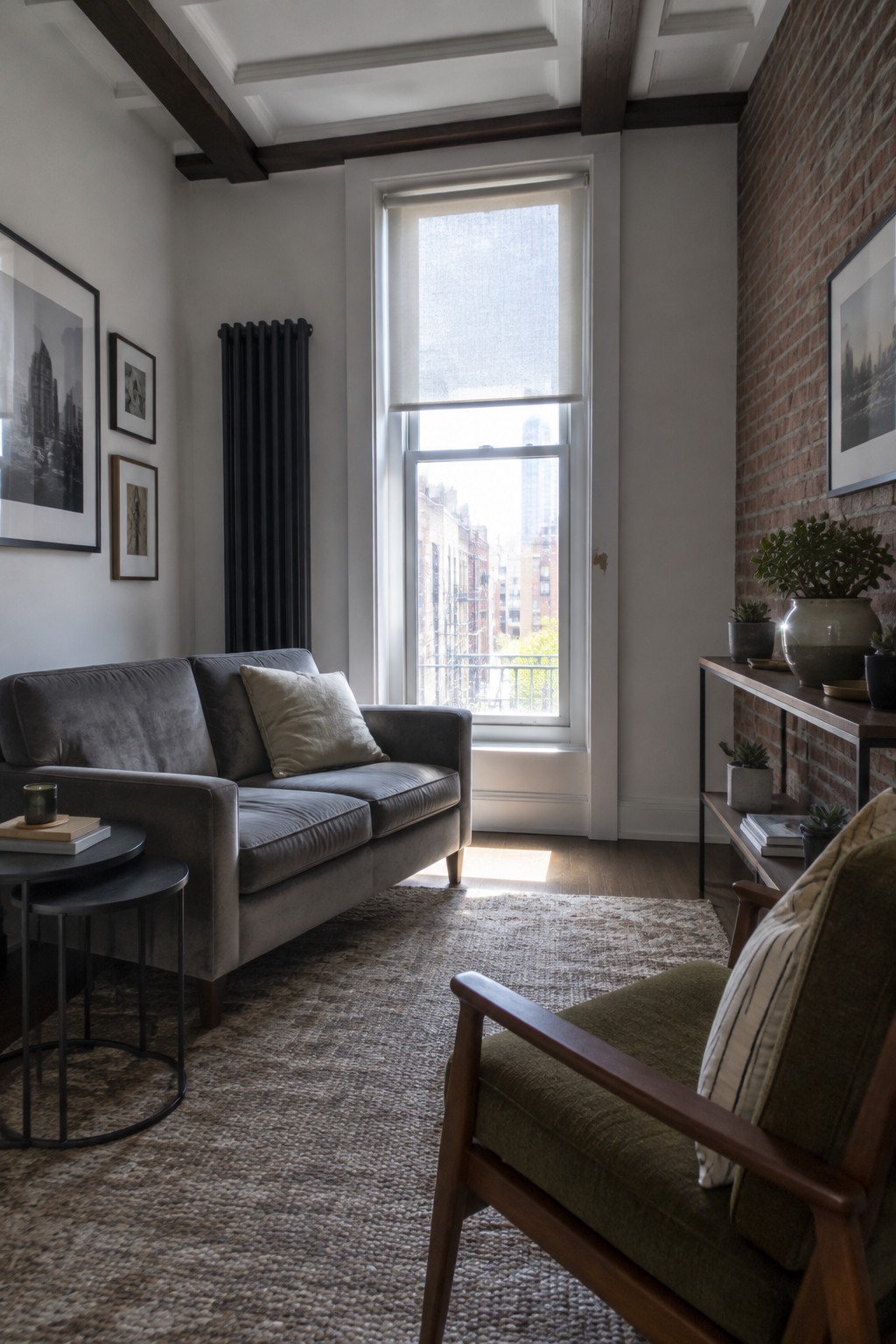
Dark wood beams stand out most when they sit against a plain white ceiling. The contrast gives the room shape and a bit of age without needing extra trim or color on the walls.
This approach works best in spaces that already have height, since the beams can feel heavy if the ceiling sits too low. Keep the walls and larger furniture light so the beams read as a quiet detail rather than the main event.
Rustic Timber Beams With Metal Brackets
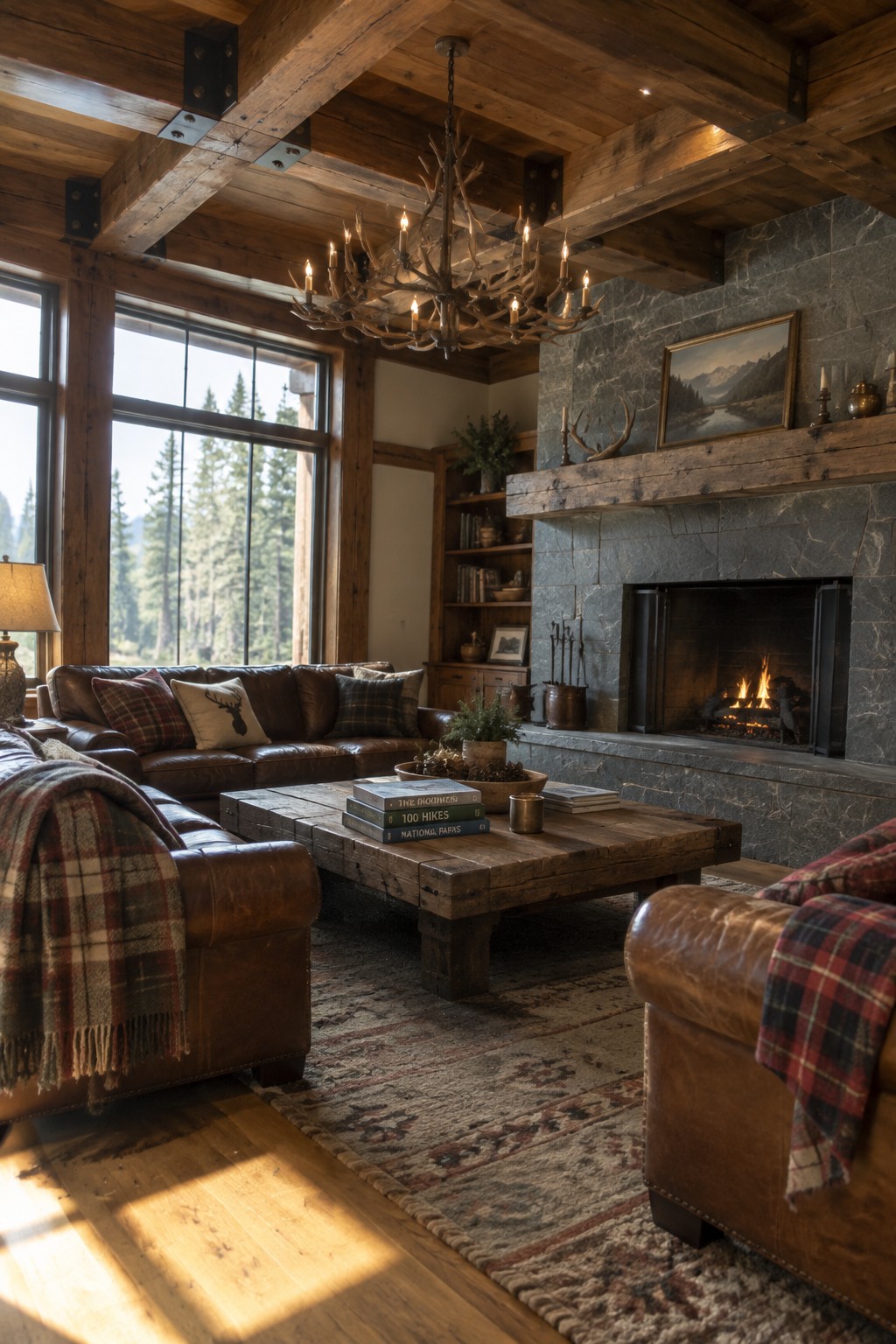
Thick wooden beams with metal brackets give a ceiling real presence and help break up the height in a big room. They bring in texture and a sense of age that feels natural rather than added on later.
This works best in homes with tall ceilings or open layouts where the beams can span the space without crowding it. Keep the rest of the room simple so the wood stays the focus, and match the beam size to the scale of the room.
Dark Coffered Ceilings Add Depth
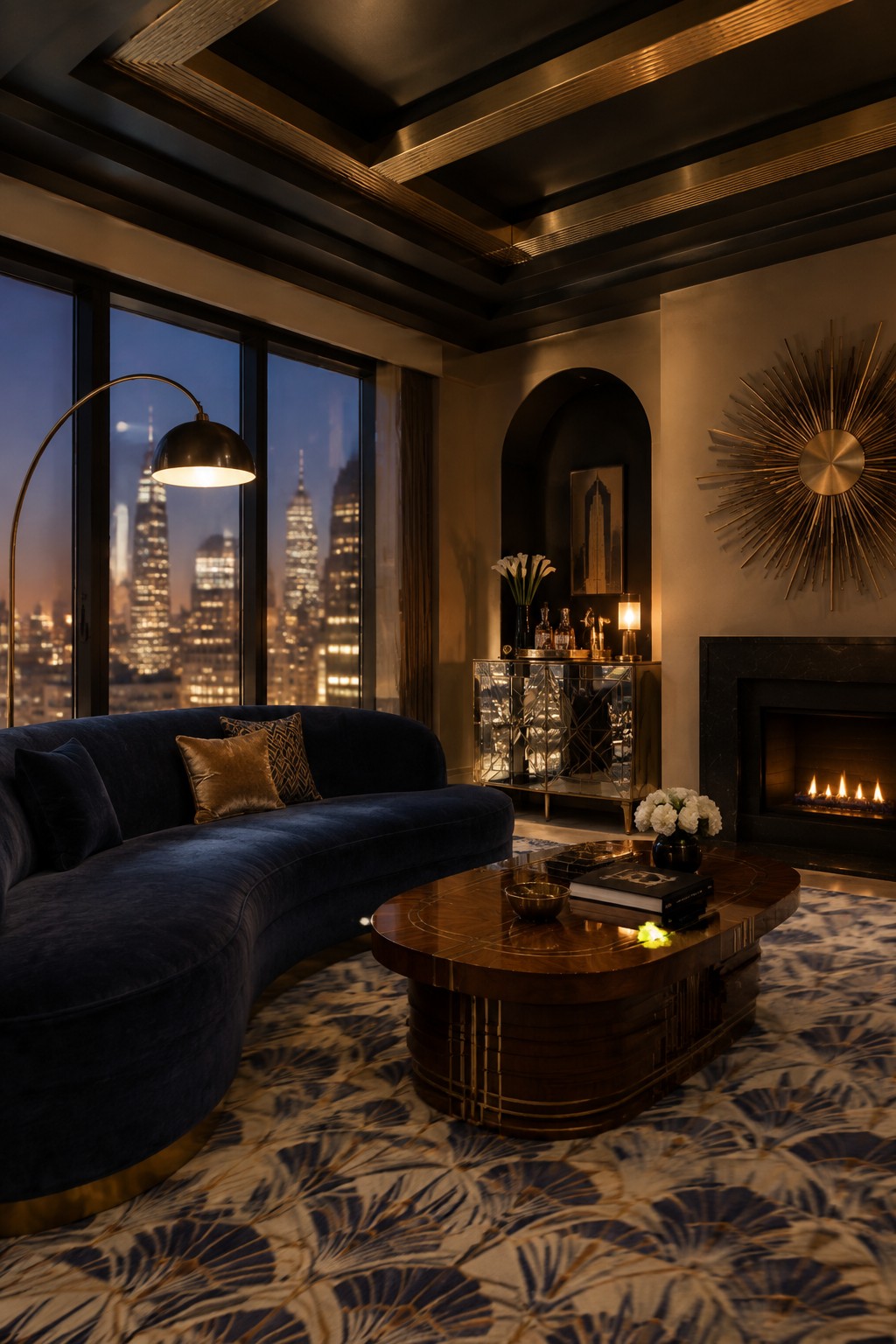
A dark coffered ceiling gives a living room structure without making it feel closed in. The layered beams catch light and shadow in a way that flat ceilings never do, and the deep tone keeps the whole space from looking too open or empty.
This approach works best in rooms with decent height and some evening use, where the ceiling can help pull things together. Keep the walls and larger furniture in similar deep tones so the ceiling feels like part of the room instead of an afterthought.
Painting The Ceiling Between Exposed Beams

Painting the ceiling a warm color between exposed beams brings a quiet warmth to a living room that might otherwise feel a bit plain. The contrast between the dark wood and the soft terracotta tone above it helps the ceiling feel more intentional and tied to the rest of the space.
This works well in rooms with decent height and neutral walls, where the color can add depth without competing with other elements. Stick with matte or low-sheen paint so the finish feels soft rather than shiny, and test the shade on a small section first since ceiling color often reads differently than it does on a sample board.
Transitional Coffered Ceilings With Natural Wood Beams
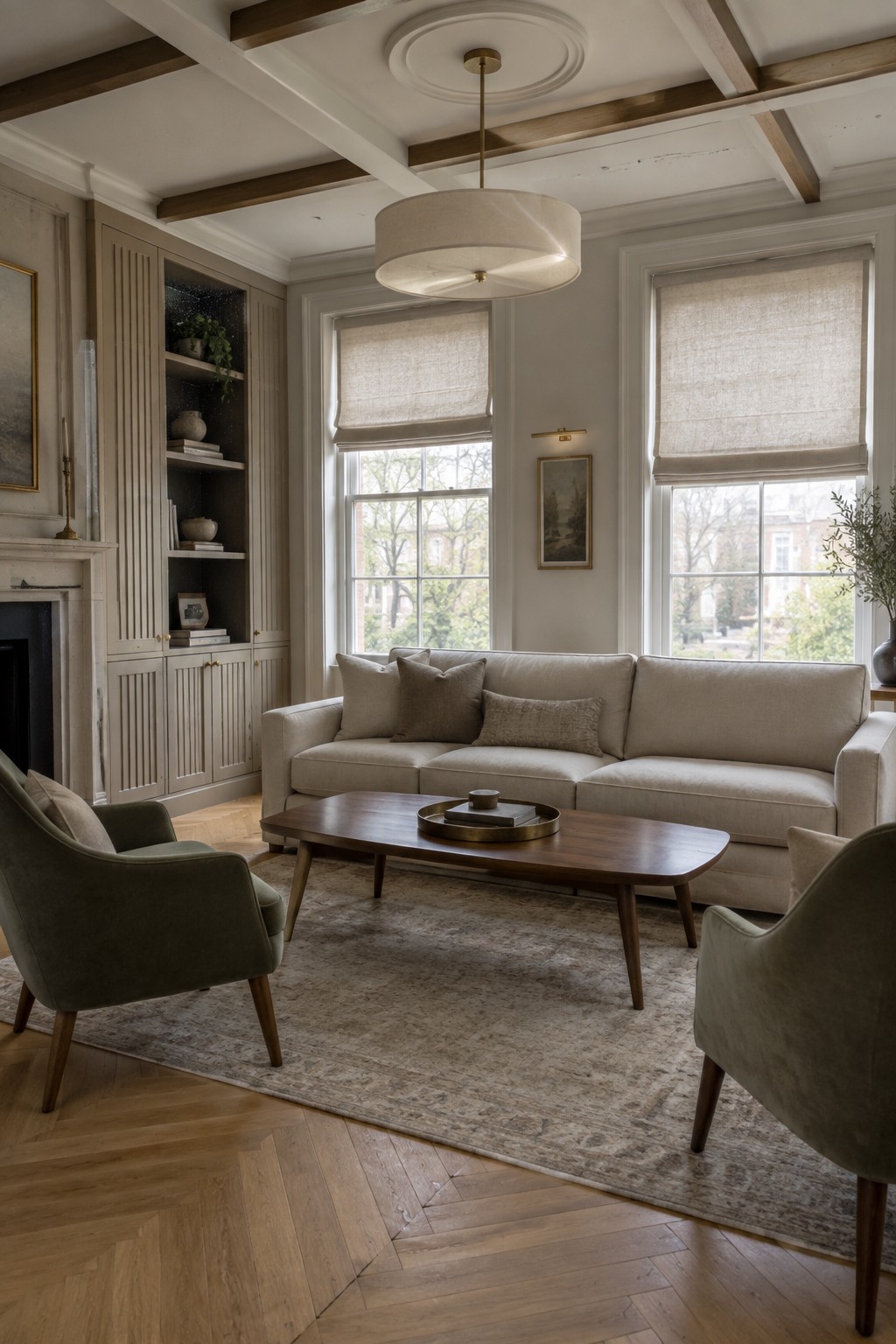
Coffered ceilings with wooden beams give a living room a clear sense of structure. The beams add warmth and break up what might otherwise feel like a flat, empty space overhead. In rooms with decent height, this detail feels balanced rather than overwhelming.
This works best in homes that already lean traditional or transitional. Keep the beams in a natural wood tone and let the rest of the room stay fairly simple. Too many competing patterns or dark colors below can make the ceiling look busy instead of calm.
Coffered Ceilings With Woven Panels

A coffered ceiling stands out more when the recessed panels are filled with something other than flat paint or wood. The woven material here adds texture and a bit of warmth while the white beams keep the whole thing feeling open and bright.
This treatment works best in rooms with decent ceiling height and a relaxed style. It pairs well with simple furniture and natural textures so the ceiling pattern does not compete with too many other details. Avoid it in very small or low rooms where the grid can start to feel busy.
Coffered Ceilings With Textured Woven Panels

Filling the recessed panels of a coffered ceiling with woven material gives the whole room a softer, warmer feel than the usual painted or wood versions. The texture breaks up the geometry just enough to keep the ceiling from feeling too rigid or heavy.
This approach works best in rooms that already lean natural, with wood tones and simple fabrics. It suits homes that want a bit of interest overhead without adding more color or pattern elsewhere.
Coffered Ceilings With Painted Beams
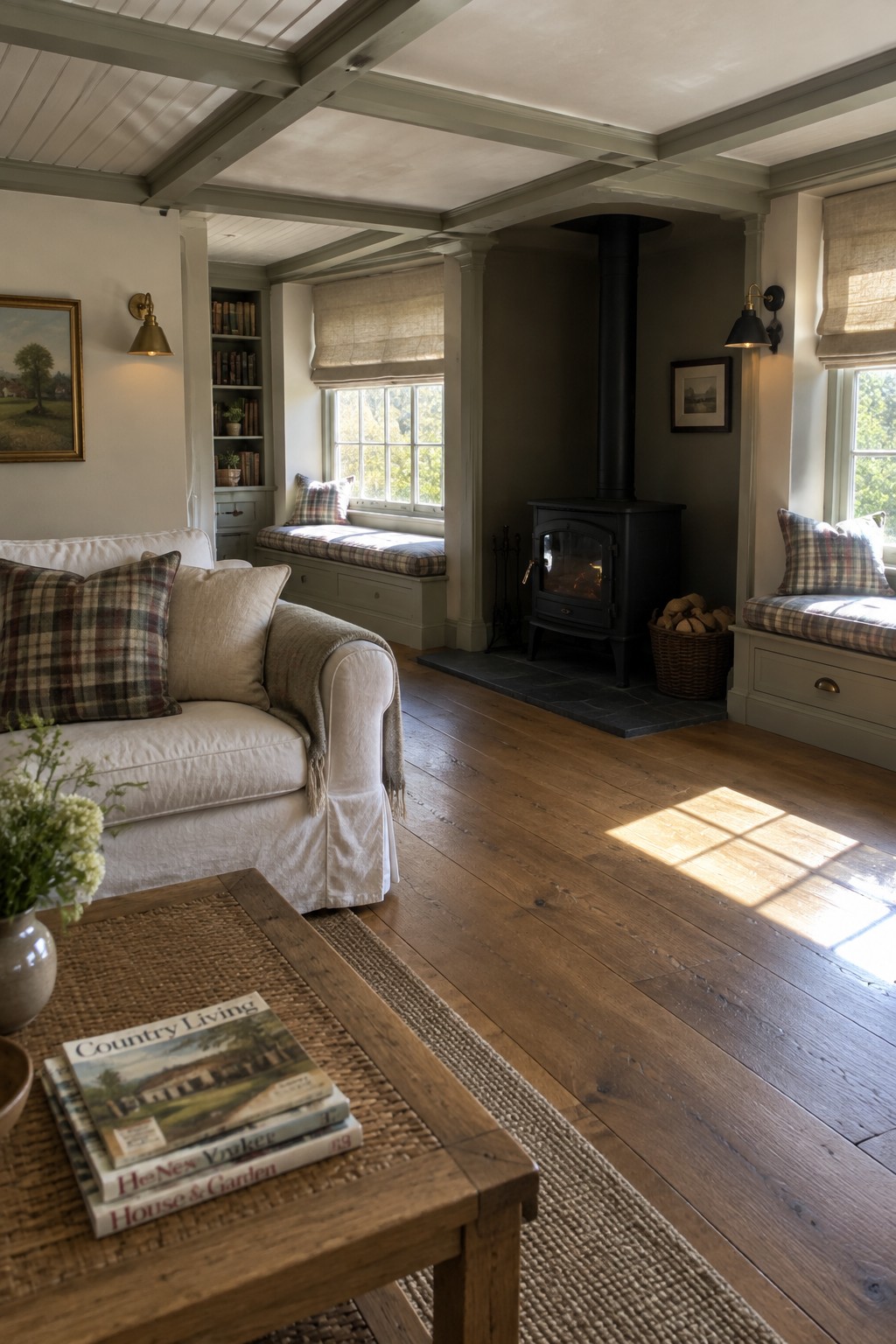
Coffered ceilings with painted beams give a living room structure while still keeping things relaxed. The soft green on the beams here ties right into the trim and walls, so the ceiling feels like part of the room instead of something added later.
This look suits homes with a bit of age or any space where you want the ceiling to do some quiet heavy lifting. Keep the beam color close to your trim so the whole thing reads as one calm layer rather than a separate feature.
Frequently Asked Questions
Q: Will beams make my living room feel shorter if the ceilings are only eight feet high?
A: Skip deep beams in that case and go for shallower ones that sit closer to the surface. Paint them the same color as the ceiling so they blend in instead of dropping the visual line. This keeps the room feeling open while still adding the detail you want.
Q: How do I handle light fixtures once the coffers are in place?
A: Place recessed lights inside the recessed panels so they sit flush and avoid casting odd shadows. Run the wiring before the wood goes up to keep everything clean. A single pendant can then hang from the center if you want a focal point without cluttering the grid.
Q: Do these ceilings collect dust fast in everyday use?
A: The flat surfaces inside coffers do catch some dust over time but a quick pass with a vacuum brush every few months handles it. Beams need even less attention since they have fewer grooves. Skip ornate trim if you want to keep upkeep simple.
