


I keep coming back to the idea that a living room settles into daily life more easily when the main surfaces stay light and the textures remain uncomplicated.
Light wood and natural textiles tend to create a background that does not compete with the way people actually move through the space.
The balance matters more than it first appears.
Over time I have seen how these choices affect whether the room feels open enough for conversation or just empty during quieter hours.
Testing a few of these material swaps in my own space has shown me which ones adapt well to real routines rather than staying purely visual.
Light Wood With Natural Textiles

Light wood pairs well with natural textiles because it keeps the room feeling open and easy. The sofa fabric and the woven rug both have that soft, matte look that works against the pale oak tones. Together they create a quiet background that does not compete with anything else in the room.
This approach suits homes that already have wood floors or want a simple refresh without new paint. Stick to one or two wood finishes and let the textiles add the only pattern. Too many different weaves can start to feel busy, so limit yourself to linen, cotton, and jute.
Low Seating With Natural Textiles

Low seating keeps a Japandi living room feeling open and calm. Round cushions placed right on a woven rug let people sit close to the floor, which makes the space feel more grounded without adding bulk or height.
This setup works best in smaller rooms or homes that already use light wood furniture and simple built-ins. It lets the natural textures of the fabrics do the work while keeping the overall look uncluttered and easy to move around in.
Light Wood and Natural Textiles

This approach keeps a living room feeling open and restful without looking bare. Light wood on the mantel and low table gives the space structure and warmth, while the linen sofa and woven rug add softness that prevents the room from feeling too hard or cold.
It works well in smaller homes or any space that needs a calm Japandi tone. Use the same pale wood tone for a few key pieces, then layer simple natural fabrics on seating and the floor. Stick to one or two wood finishes so the textiles can do the rest of the work.
Mix Light Wood With Woven Textiles
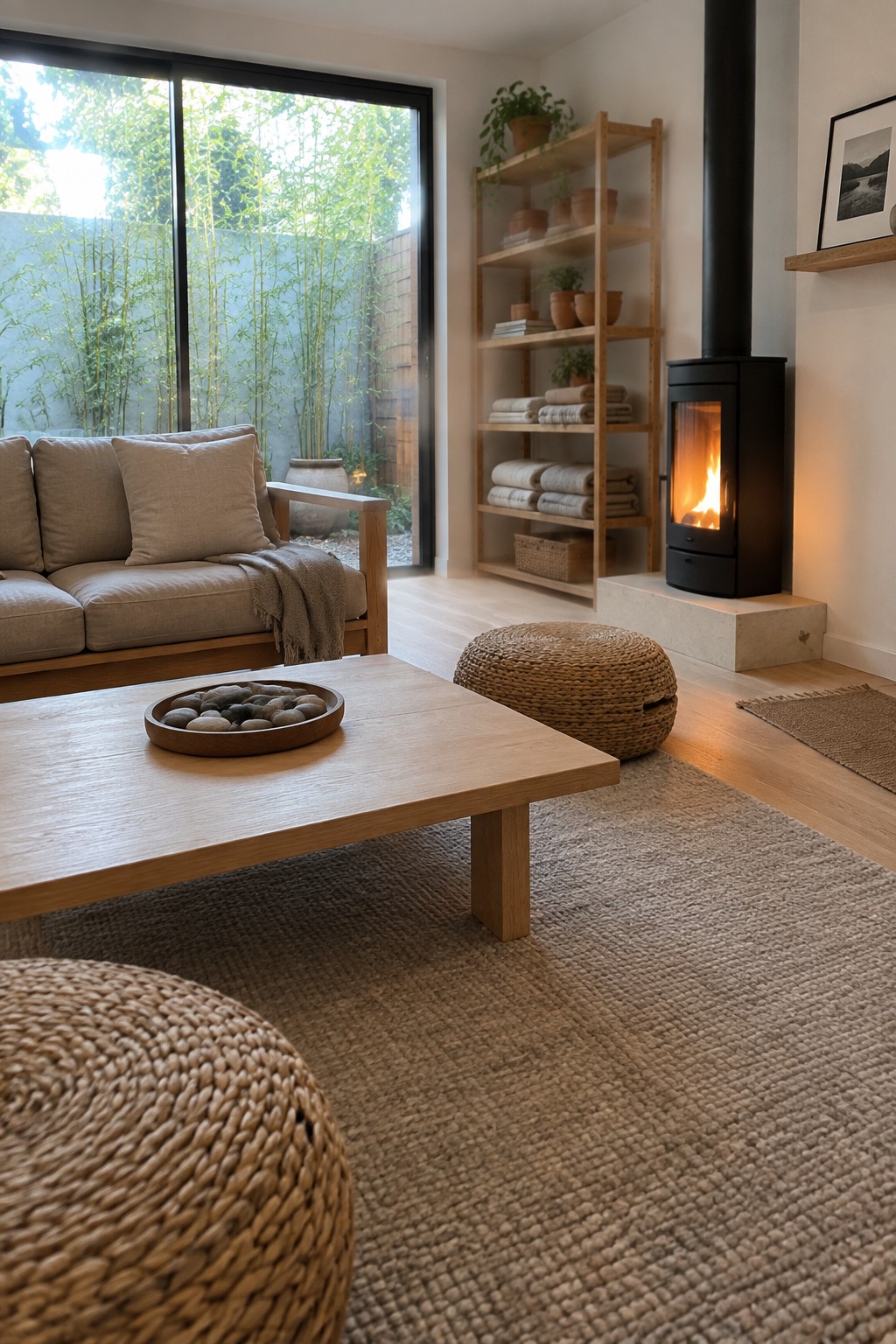
Light wood furniture pairs naturally with woven textiles because the two materials share a similar warmth and simplicity. This combination keeps a room feeling open while still adding enough texture to make it comfortable. The result works especially well when you want a calm space that does not feel empty or overly styled.
This idea suits smaller living rooms or open plans where you already have wood floors or pale walls. Start with one light timber table or bench and add a woven rug or a couple of natural fiber poufs. Keep other pieces minimal so the materials can stand out without competing.
Low Light Wood Daybeds With Natural Textiles
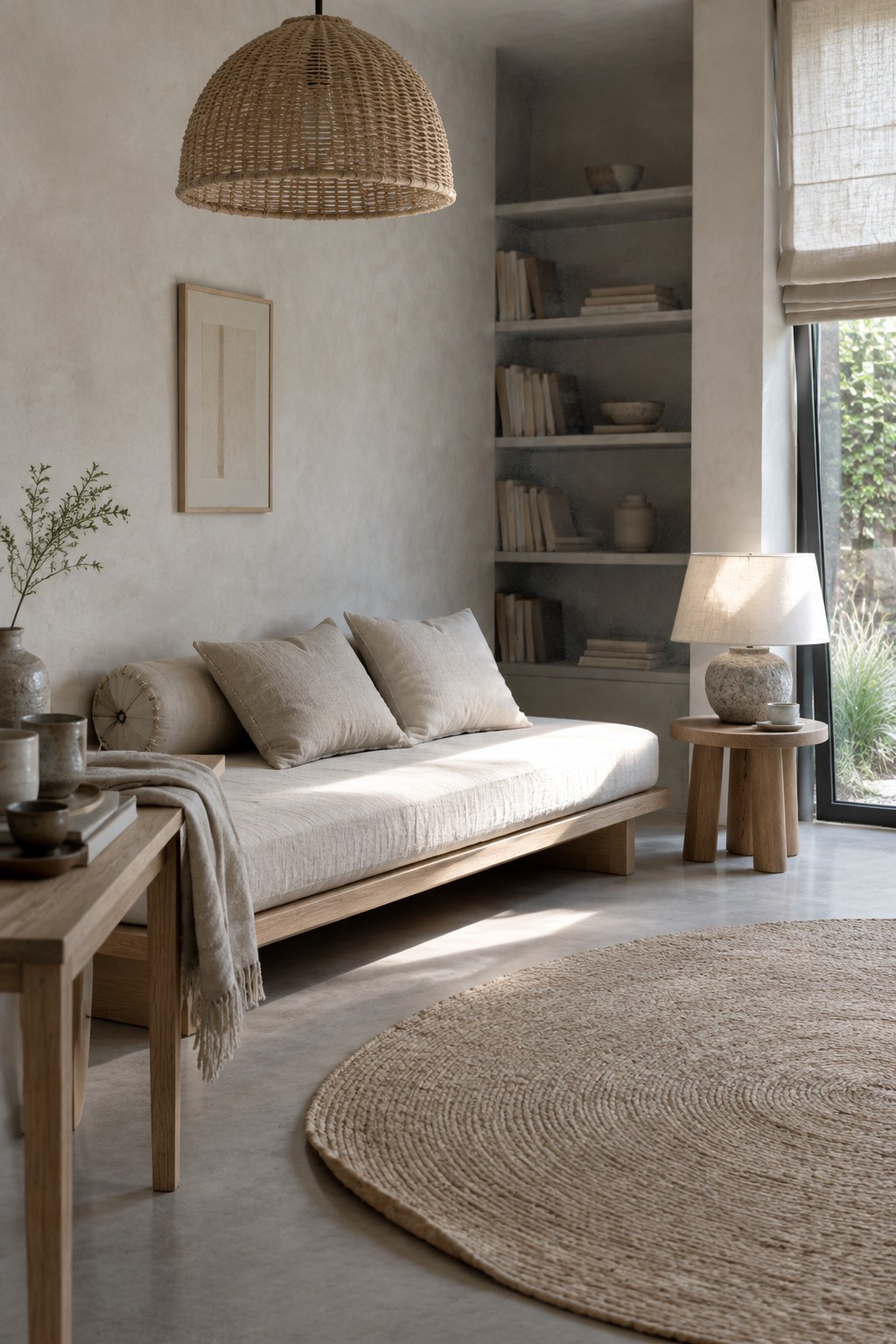
A low daybed in light wood gives a room an easy, relaxed base without taking up much visual weight. The simple frame works well with loose linen cushions and a few woven pieces, which keeps the whole setup feeling calm and practical rather than styled for show. It suits smaller spaces especially, since the low height leaves more room above and makes the area feel open.
This kind of seating works best in homes that already lean toward minimal furniture and neutral tones. Pair it with a jute rug and a few wooden side tables, and keep extra pieces to a minimum so the daybed stays the main focus. Avoid overloading it with too many pillows or throws, since the clean lines are what make the look hold together.
Ground the Room With a Large Woven Rug
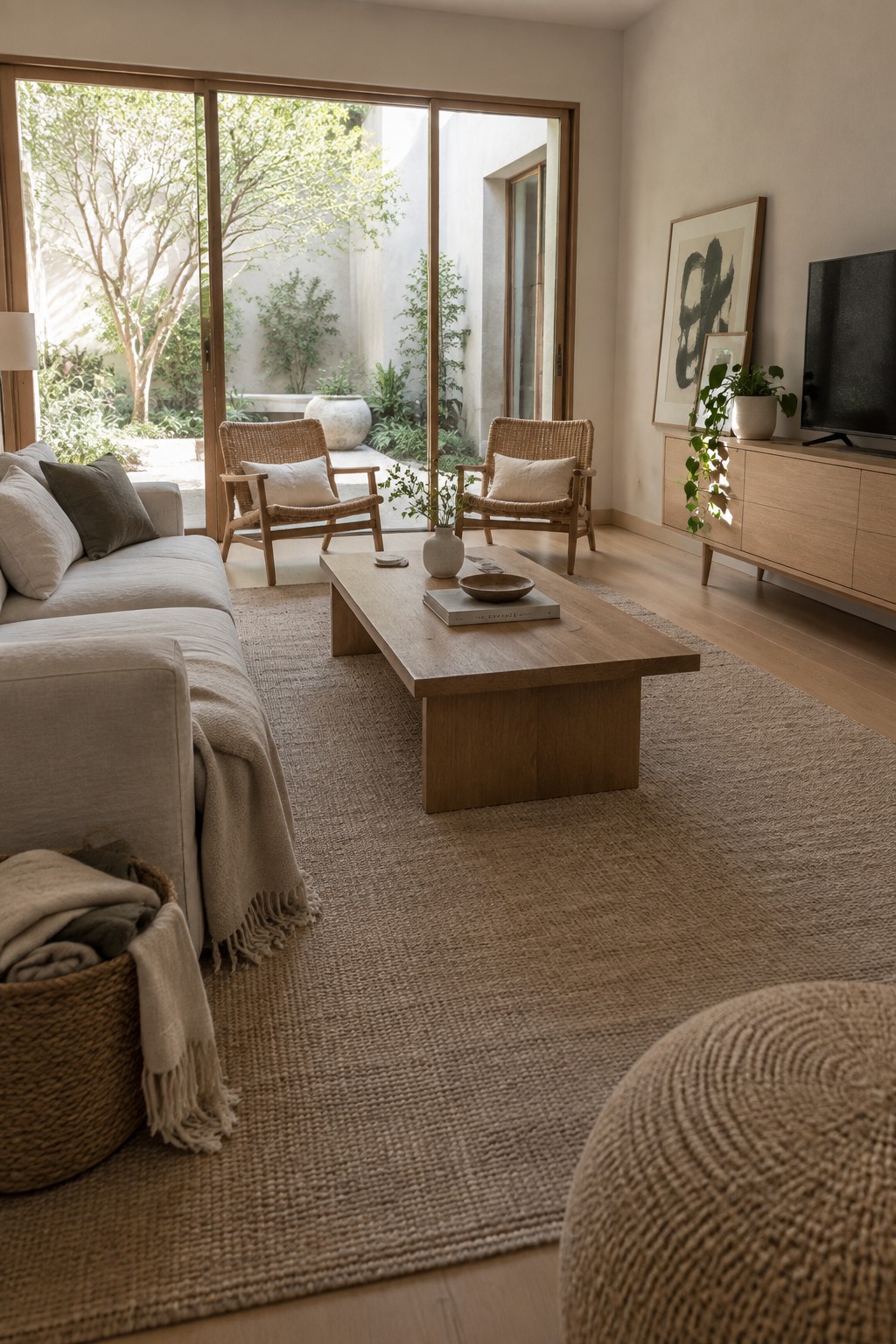
A large woven rug gives the seating area a clear foundation and keeps everything feeling connected. The natural texture works well with light wood furniture because it adds warmth without making the space feel heavy or crowded.
This works best in open living rooms where you want a calm, pulled-together look. Choose a rug big enough to fit under the front legs of the sofa and chairs, then keep the rest of the materials simple so the wood and textiles can breathe.
Curved Sofas on Woven Rugs
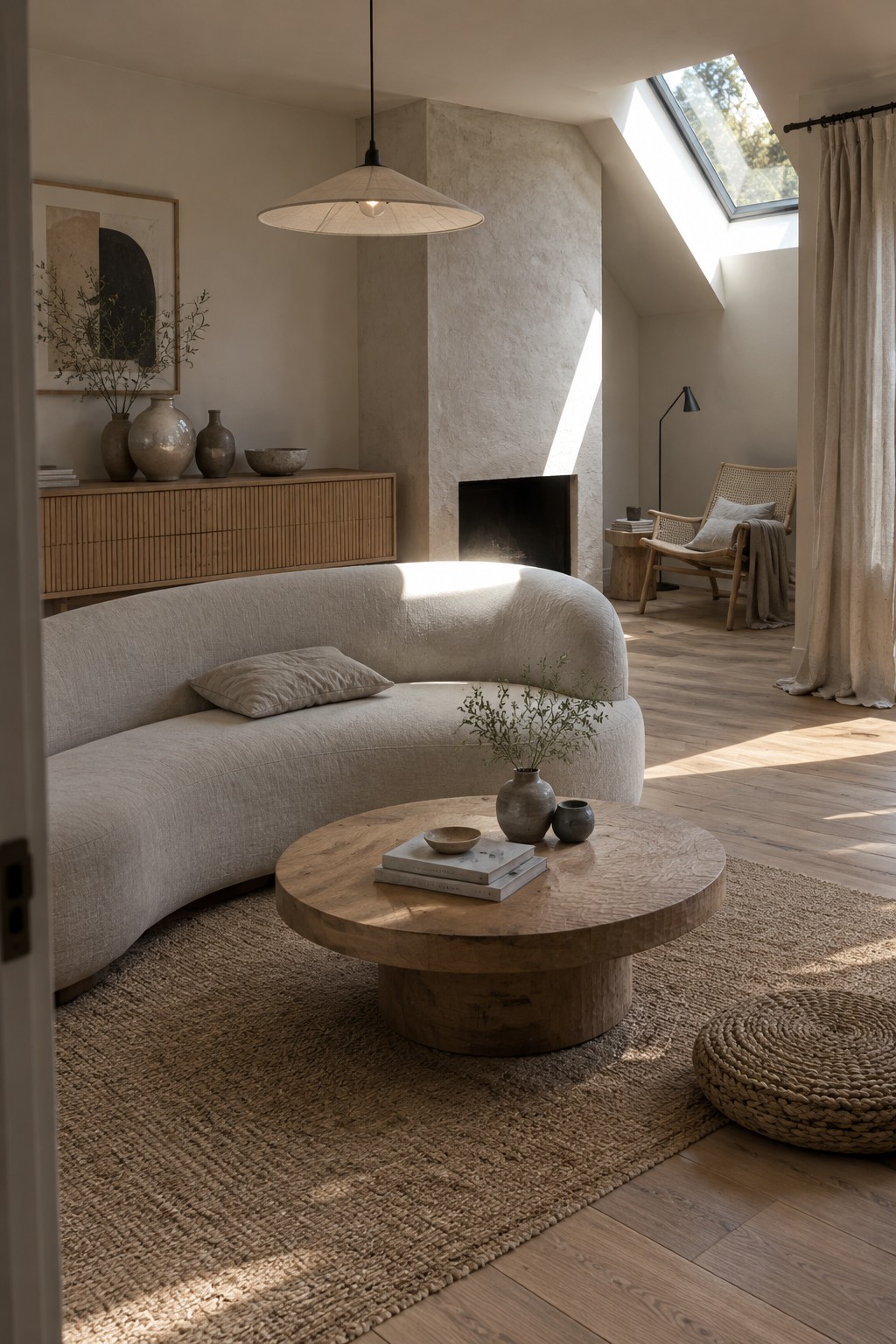
A curved sofa in a natural fabric brings a softer shape into a living room that might otherwise feel too boxy. The rounded back and arms create an easy flow that works well with the straight lines of most homes, and the neutral tone keeps it calm.
Try placing it on a large jute or sisal rug so the texture shows clearly around the base. Keep other pieces in light wood and avoid adding too many extra seats. This setup suits open-plan spaces or rooms where you want the seating area to feel grounded without looking heavy.
Blend Light Wood With Woven Textiles
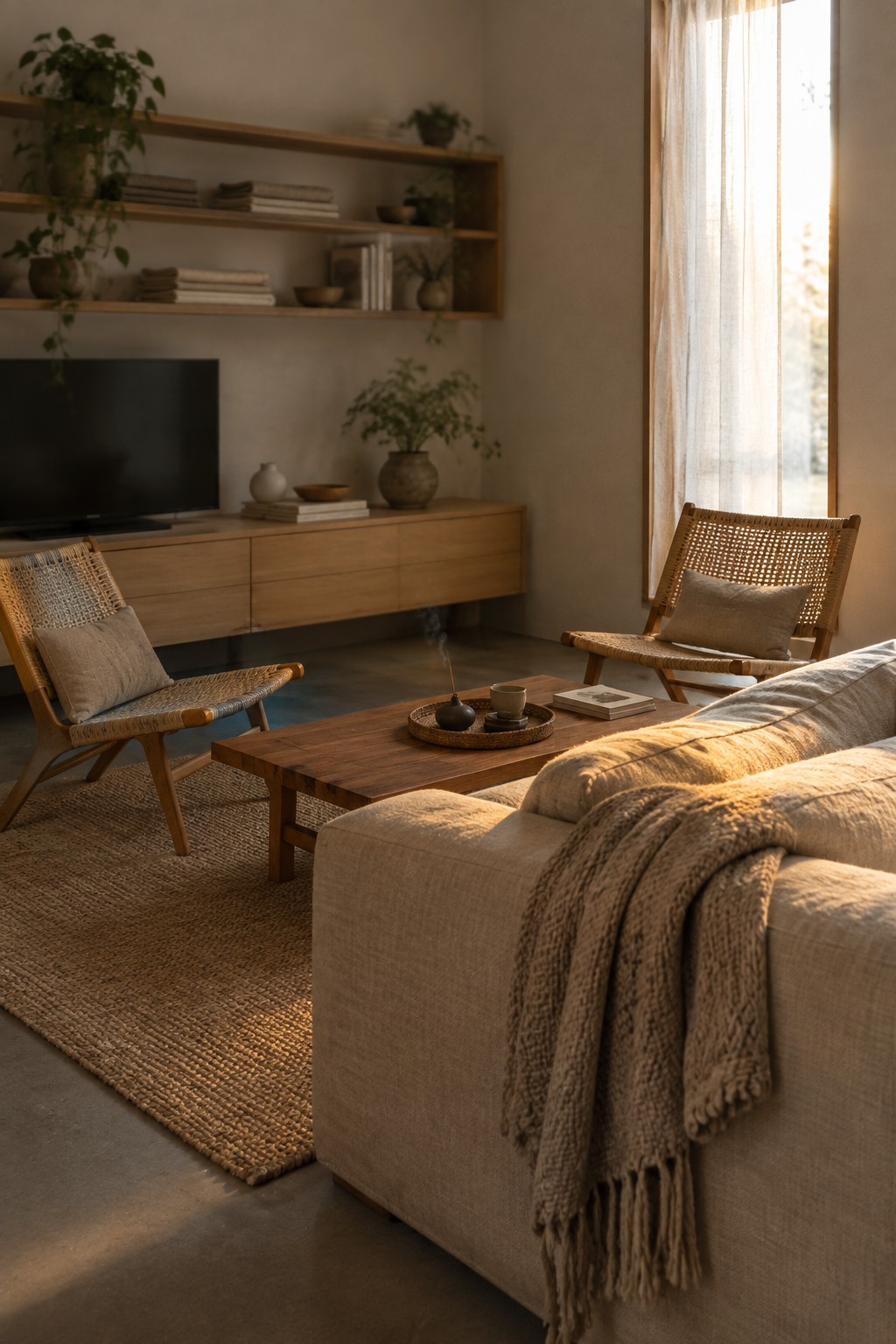
Light wood furniture paired with woven pieces creates a living room that feels calm and lived in. The natural textures add just enough softness without crowding the space or making it feel heavy.
This approach works best in homes that already have wood floors or simple walls. Start with a light wood table or console, then bring in two woven chairs and a linen sofa. A jute rug underneath helps pull everything together without extra layers.
Light Wood With Natural Textiles

Many people choose light wood furniture paired with simple linen and jute because it keeps a living room feeling open and calm. The pale tones and rough textures work together without competing, which suits the Japandi goal of quiet, unfussy spaces.
This approach works well in smaller homes or rooms with lots of natural light. Stick to one wood tone throughout and choose undyed fabrics that show their weave. Skip anything dark or overly polished that could make the room feel heavier than intended.
Light Wood Furniture And Natural Textiles

Light wood pieces keep a living room feeling open even when you add layers of texture. The chair here shows how oak can stay bright while a linen throw and woven rug add softness without crowding the space.
This approach works in smaller homes or any room that needs to feel calm rather than busy. Stick to one or two natural textiles like a throw or a jute rug, and let the wood do most of the work.
Pair Light Wood With Natural Textiles

Light wood furniture paired with simple woven textiles gives a living room that calm, open feel without much effort. The wood keeps the space bright while the linen and jute add just enough texture to make it feel lived in.
This works best in rooms that get good natural light. Keep the wood tones consistent and limit the textiles to two or three materials so the overall look stays quiet and easy to maintain.
Woven Stools Add Natural Texture
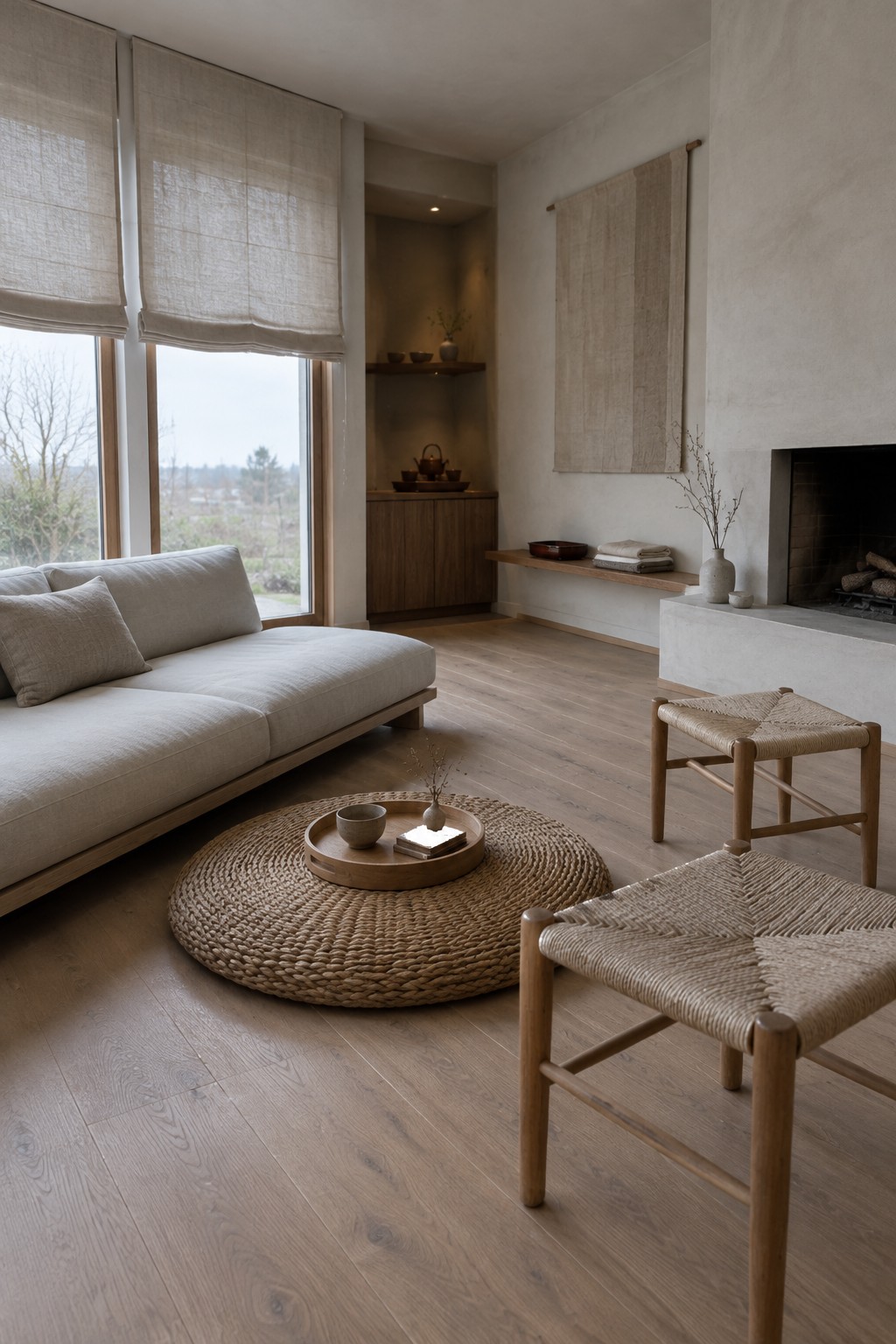
Light wood rooms can start to feel a little flat without some texture to break things up. Woven stools do that job well because the natural fiber seats bring in warmth and pattern while the wood frames stay simple and light.
This approach works best in smaller living rooms or Japandi spaces where you want extra seating without adding bulk. Keep the fibers natural and the frames in the same light tone as your floor or main furniture pieces so everything stays cohesive.
Built-In Low Shelving For Simple Storage

Low built-in shelving under seating gives you storage without crowding the room. The light wood platform keeps everything at one level and lets the sofa sit low, which fits the calm Japandi feel.
This setup works best in smaller living rooms or homes that want less visual clutter. Use the same wood tone for the shelves and floor, then add a natural fiber rug to soften the lines and tie the materials together.
Mix Light Wood Frames with Natural Textiles
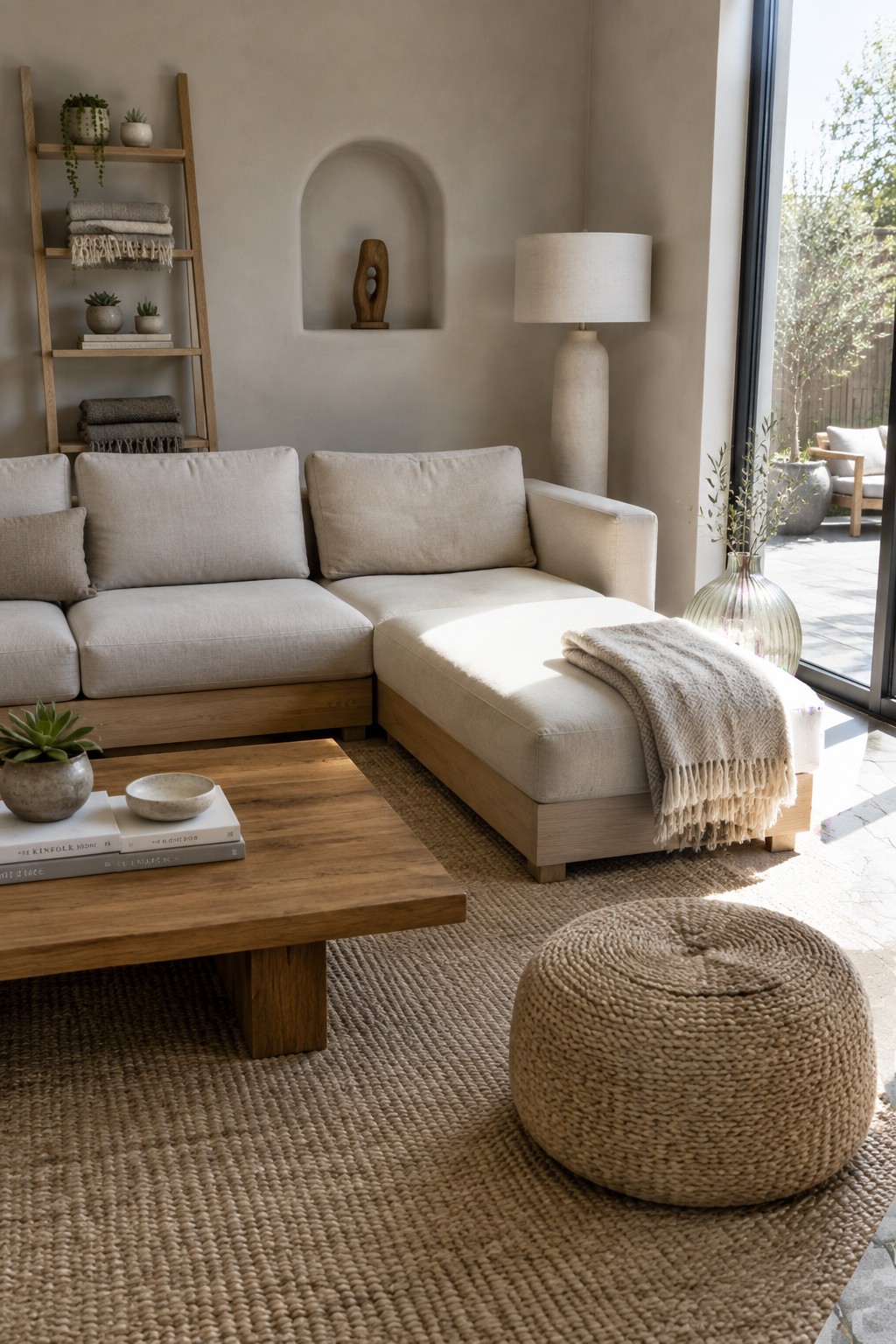
Light wood frames on seating give a room a grounded feel while keeping everything open and easy to move around. The natural grain pairs well with linen or cotton upholstery and a simple woven rug, so the space stays calm instead of feeling heavy.
This works best in living rooms that get steady daylight. Keep the textiles in soft neutrals and let the wood show through on the base and legs. Avoid adding too many dark accents or the balance tips quickly.
Light Wood And Natural Textiles
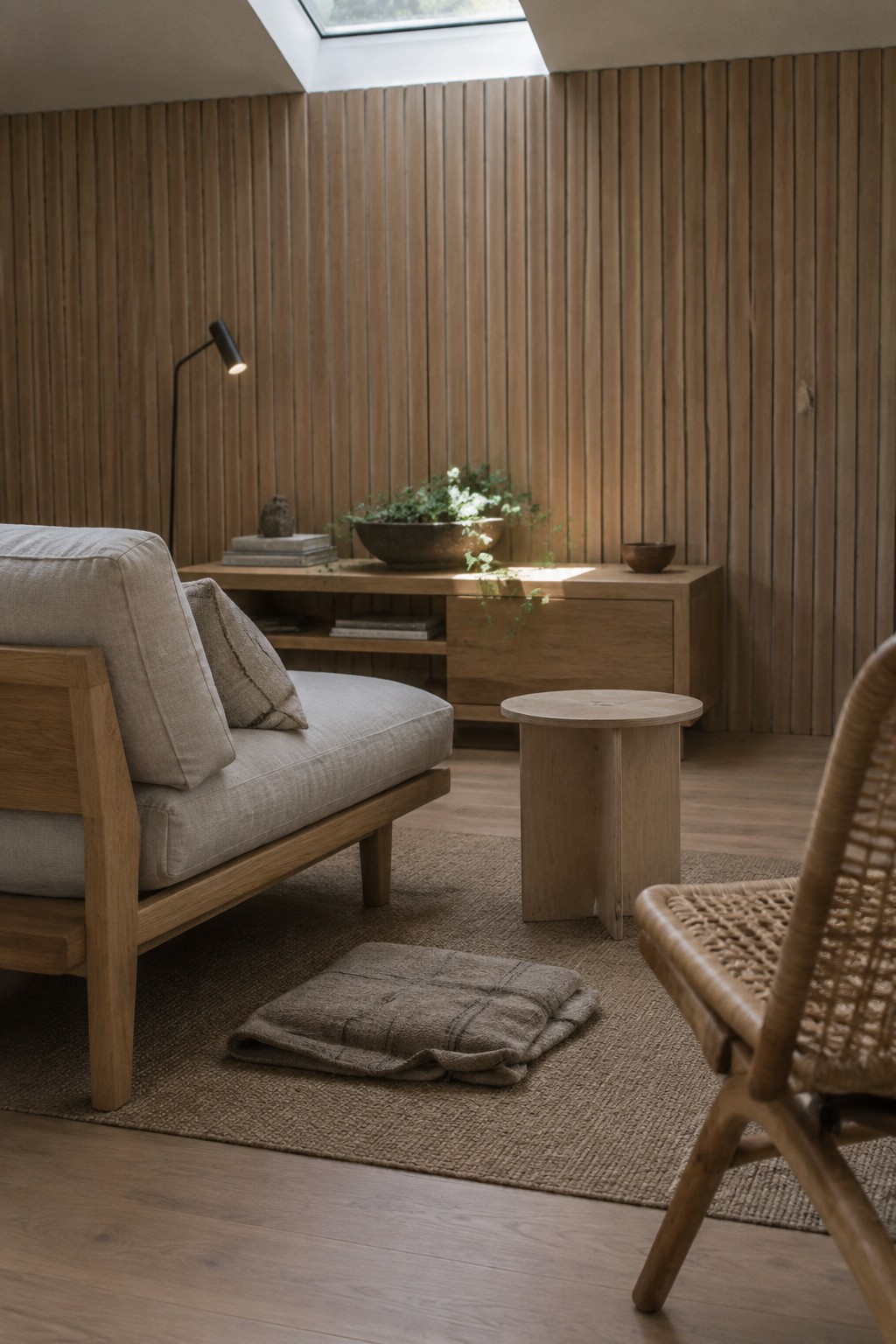
Light wood paired with natural textiles creates a calm base that feels easy to live with every day. The vertical paneling and simple wooden furniture keep the room feeling open, while the linen sofa and woven pieces add just enough softness without clutter.
This approach works best in smaller living rooms or spaces that need to feel brighter. Start with a few light wood pieces like a console or side table, then add a jute rug and linen cushions to bring in texture that holds up over time.
Light Wood Furniture With Natural Textiles
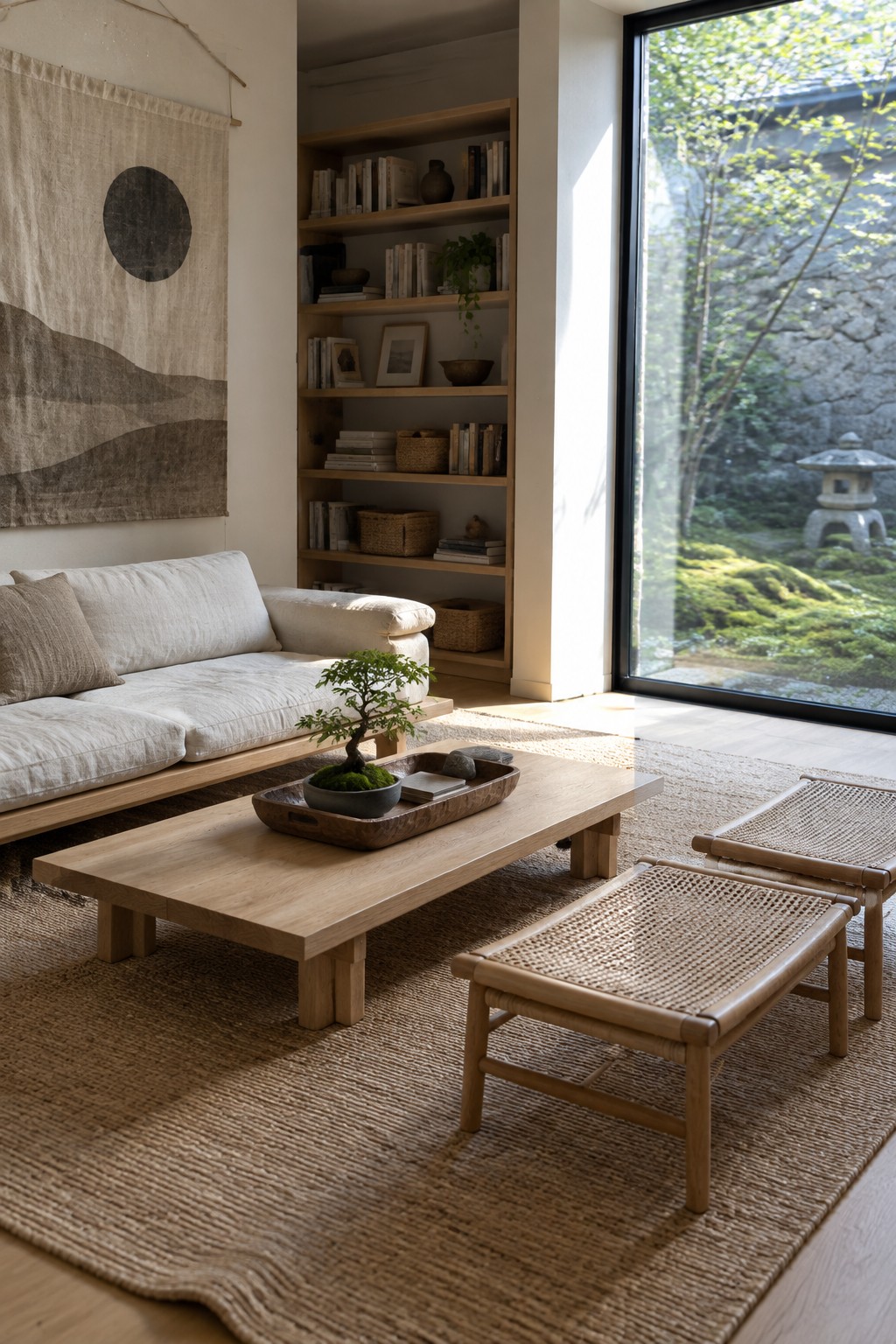
Light wood pieces give a room a quiet base that works especially well with natural textiles. The low coffee table and simple sofa frame sit easily against the woven rug and rush seating without competing for attention.
This mix suits smaller living rooms or homes that want a calm, uncluttered feel. Keep the wood tones consistent and let the textiles add the texture through a jute rug and a couple of woven stools rather than adding many extra layers.
Use Light Wood Furniture With Natural Textiles
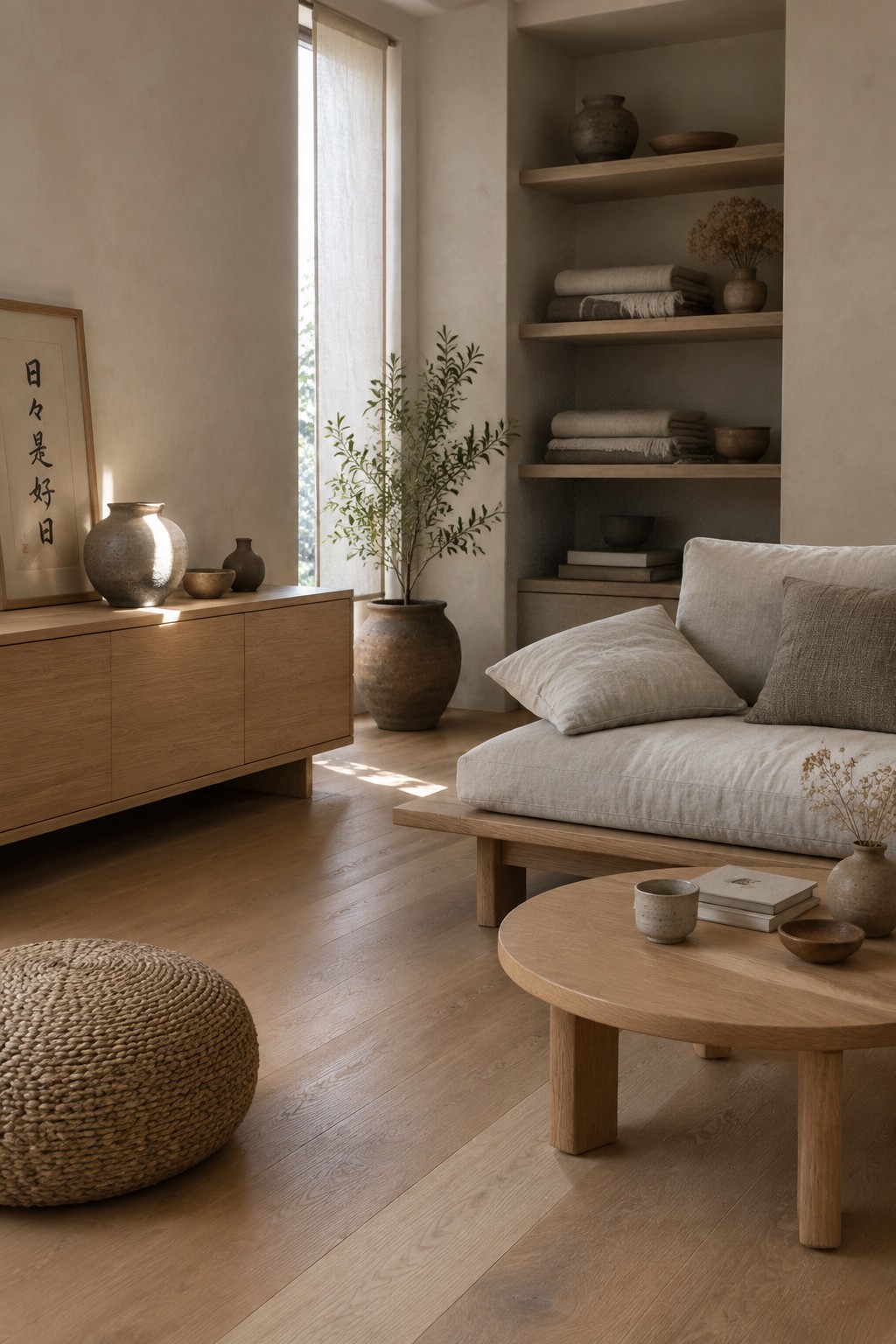
Light wood works especially well when you keep the rest of the room soft and simple. The pale oak tones on the floor, low sofa frame, and coffee table give the space an open feel, while the linen cushions, folded textiles on the shelves, and woven pouf add just enough texture without crowding anything.
This approach suits smaller living rooms or homes that already lean minimalist. Choose unfinished or lightly oiled oak, then layer in undyed linens, cotton, and a few woven pieces. Avoid overloading the shelves so the wood stays the main material you notice.
Woven Baskets Add Texture Without Clutter
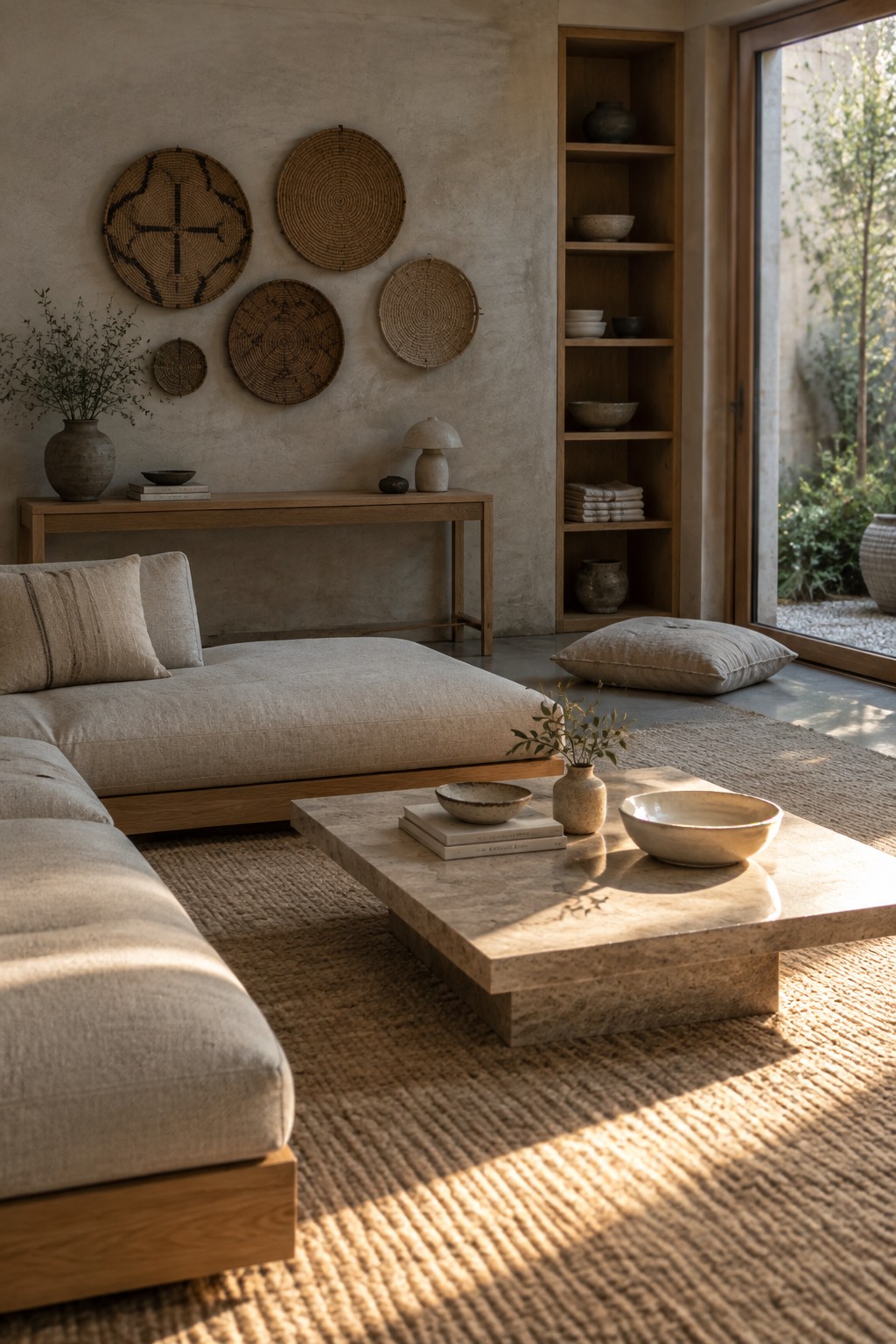
Woven wall pieces work well in Japandi living rooms because they bring natural material and pattern while keeping the overall look simple. They sit nicely against plain walls and pair with light wood furniture without competing for attention.
Place them above a low console or behind seating in rooms that already use oak tones and neutral fabrics. Keep the grouping loose rather than perfectly balanced, and stick to similar sizes so the wall stays calm.
Anchor The Space With A Curved Plaster Fireplace

A large, softly rounded fireplace like this one gives the whole room a steady center without any extra effort. The textured plaster surface and simple arch keep the focus low and calm, which fits right into Japandi rooms that rely on quiet shapes and natural tones.
This works best in spaces where you want one built-in element to do most of the work. Keep the surrounding pieces light, such as low wooden stools and a flat woven rug, so nothing fights for attention. Just make sure the fireplace size matches the room scale or it can start to feel heavy.
Pairing Light Wood With Woven Rugs
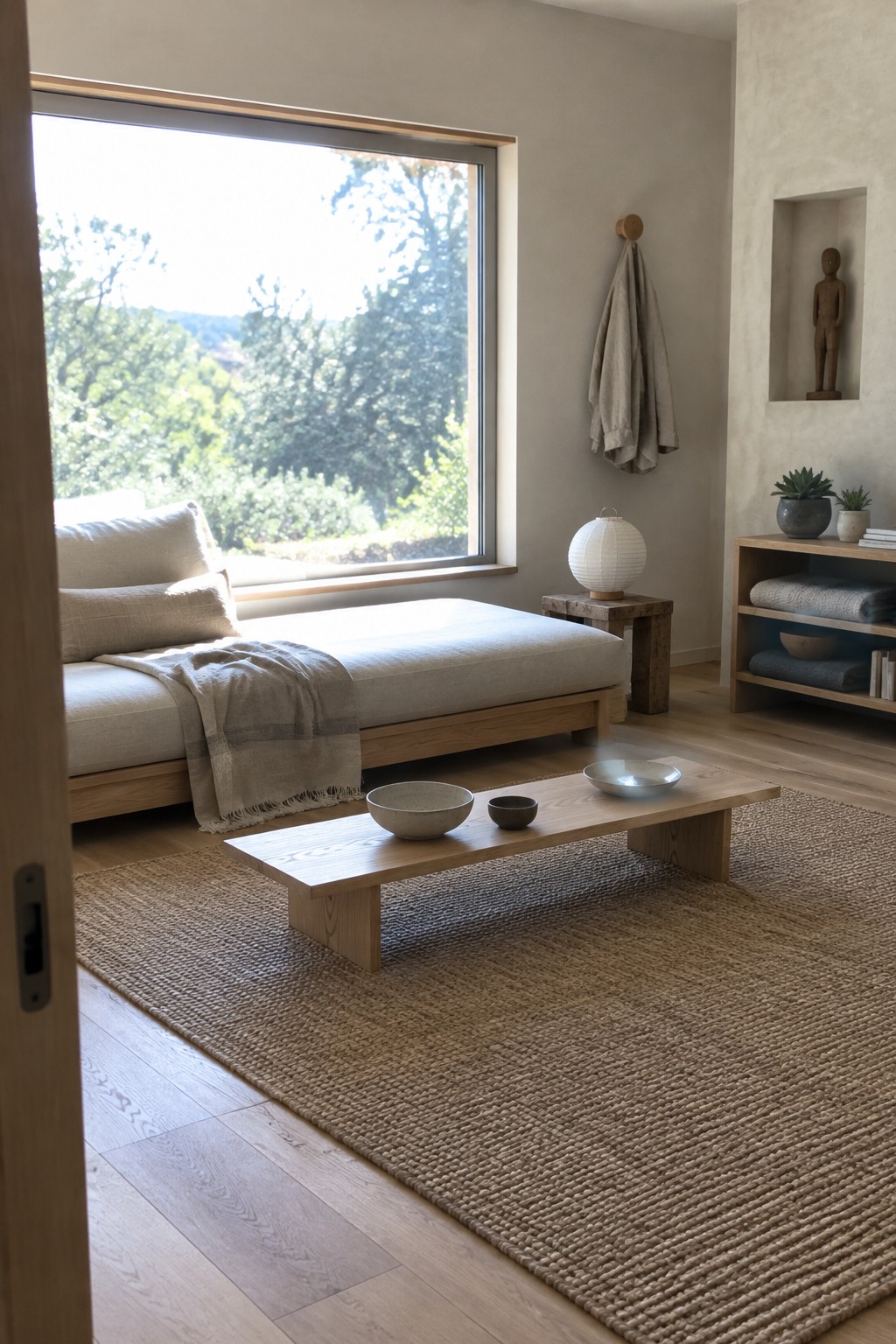
Light wood furniture feels more settled when it sits on a large woven rug. The natural texture underfoot adds warmth and keeps the pale tones from looking too stark or cold in a simple room.
This works best in smaller living spaces where you want an open feel without clutter. Keep the wood tones consistent and let the rug carry most of the texture so the whole setup stays calm and easy to live with.
Pair Light Wood With Woven Natural Textiles

Light wood furniture looks more grounded when you add textiles that bring some texture. The chunky woven rug and the simple woven seats on the low stools show how these materials add warmth without crowding the space or competing with the wood tones.
This approach works best in living rooms that already feel calm and uncluttered. Use one or two woven pieces at most so the light wood remains the main material and the room stays easy to keep tidy.
Frequently Asked Questions
Q: What kind of rug works best with light wood floors in this style?
A: Go for a jute or wool rug in a neutral shade. It adds softness underfoot while letting the wood grain show through. Layer it with a smaller linen throw if you want extra texture.
Q: My walls are painted dark. Will that clash with the light wood pieces?
A: Paint one accent wall in a soft off-white to bounce light around. Then bring in the light wood furniture against it. The contrast actually highlights the natural tones nicely.
Q: How can I keep linen curtains from looking wrinkled all the time?
A: Hang them slightly damp after washing. The fabric settles into soft folds as it dries. Steam them lightly once a month to keep things tidy.
