


I’ve found that industrial living rooms tend to feel more settled when the brick, metal, and leather are arranged so they support how people actually move through the space each day.
The first thing that usually stands out is how the textures interact with the light coming in from the windows, which can shift the mood more than any single piece of furniture.
Balance is what keeps the look from turning cold.
I often sketch a few layout options on paper before moving anything heavy because the way these materials sit next to each other changes once they are in the room.
Over time I have noticed that the setups which work best are the ones where each material has enough room to breathe without competing for attention.
Leather Sofas With Exposed Brick
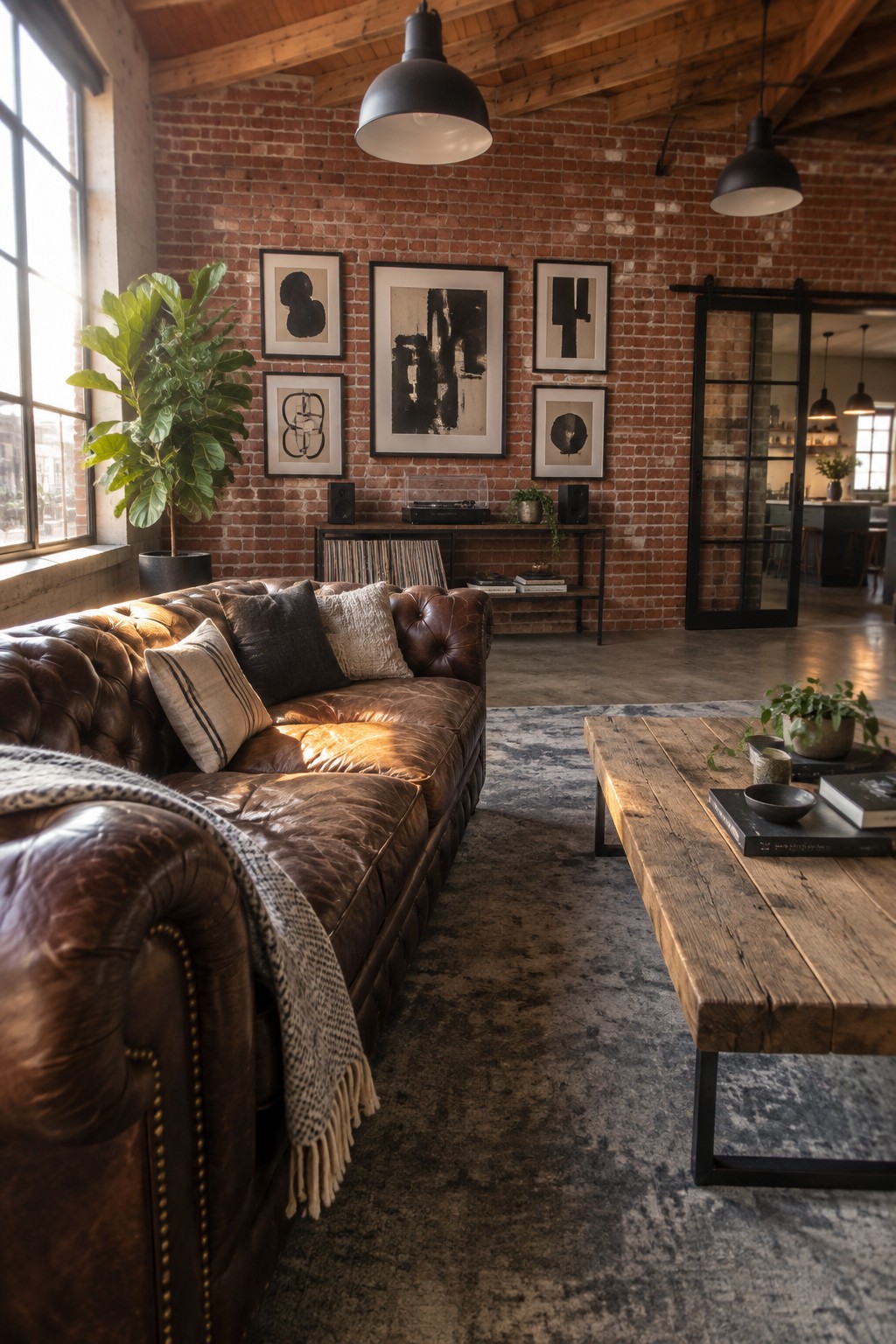
A large leather sofa gives an exposed brick wall something solid to push against. The smooth surface of the leather softens the rough texture of the brick while still letting the industrial character come through. It keeps the room from feeling too cold or unfinished.
This setup works best in lofts or older homes where the brick is already a main feature. Keep other furnishings simple and stick to wood or metal accents so the sofa and wall remain the main pairing.
Leather Sectionals Work Well Against Exposed Brick

A leather sectional brings some needed softness to a room built around brick and metal. The brown leather here picks up the warm tones in the brick while the dark metal lamp and table hold onto the industrial edge.
This approach suits lofts or older homes where the brick stays exposed. Keep the metal pieces simple and dark so the sofa stays the main seating spot without clashing with the harder surfaces around it.
Leather Furniture With Exposed Brick And Metal

A leather chair can soften an industrial room without taking away from the brick and metal. The smooth surface of the leather plays off the rough texture of the brick and the hard lines of metal storage, which keeps the space from feeling too cold or stark.
This works best in homes that already have exposed brick or want to add metal pieces like lockers or shelves. Stick to one or two leather items and leave the rest simple so the materials stay balanced.
Leather Sofas Balance Exposed Brick and Metal
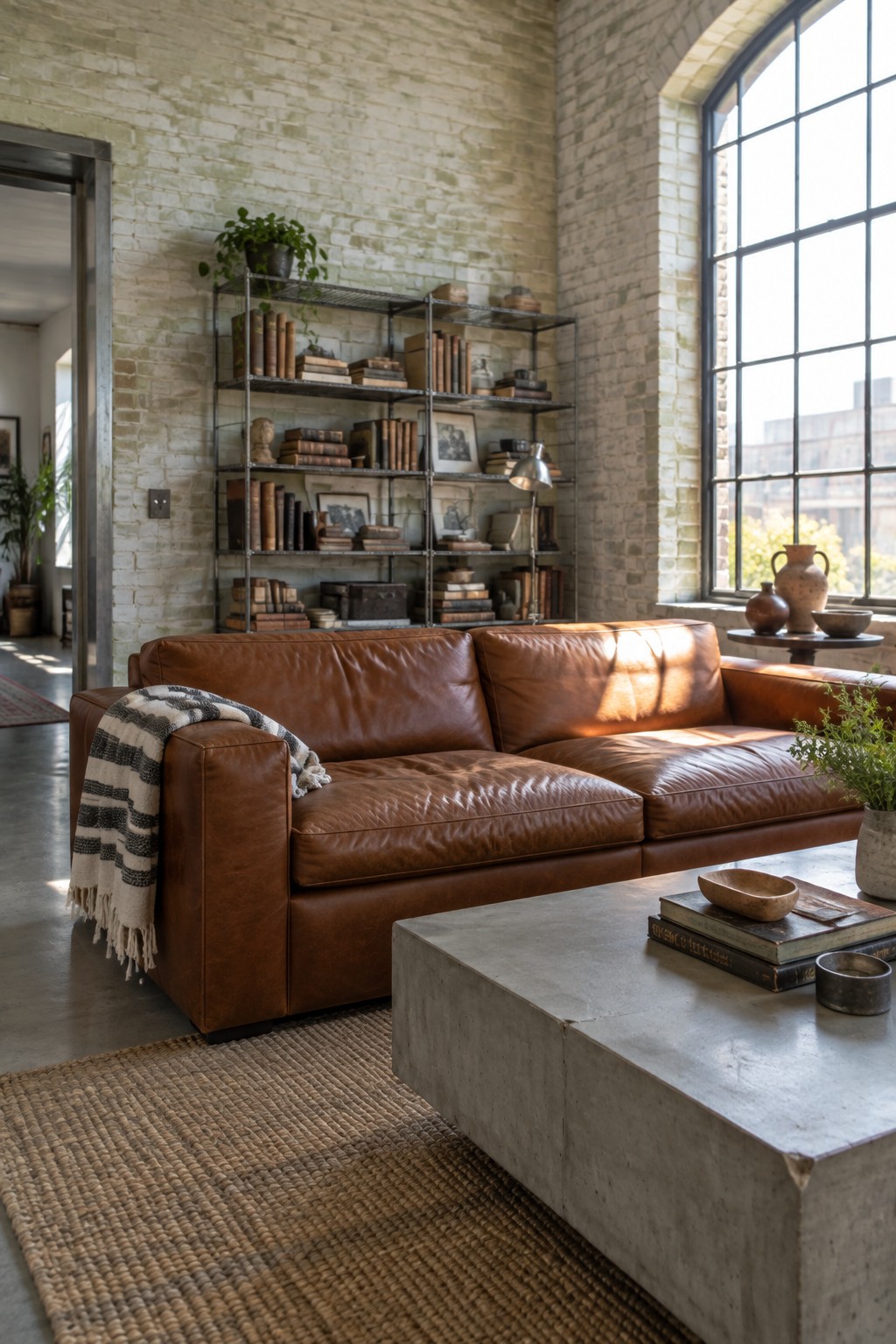
Leather seating holds its own against brick walls and metal shelving in a way that fabric often cannot. The smooth surface catches light differently than the rough brick, and the weight of a full sofa keeps the industrial elements from feeling too stark or cold.
This combination works best in spaces that already have the brick and metal in place, like converted lofts or older homes. Stick to one or two larger leather pieces and let the shelving stay lightly styled so the room does not feel crowded.
Leather Seating Against Exposed Brick

Leather sofas hold up well next to raw brick because the material adds some softness without losing the industrial edge. The worn texture of the leather plays off the rough surface of the brick and keeps the room from feeling too cold or stark. Many people like this mix because it feels sturdy and lived in at the same time.
This approach works best in lofts or older homes where brick is already exposed. Choose a large sectional in a medium or dark brown leather, then add a few metal tables or lighting fixtures to tie the look together. Avoid overcrowding the space with too many small pieces since the brick and leather already give it plenty of weight.
Leather Seating Works Well With Exposed Brick

A leather chair gives an industrial room a place to land that feels a bit more comfortable. The smooth surface of the leather sits nicely against the rough brick, and the two materials play off each other without needing much else to tie them together.
This approach works best in rooms that already have some metal or wood in the mix. Keep the rest of the furniture simple so the leather and brick stay the main focus. It suits homes that want the industrial style but do not want the space to feel too hard or cold.
Leather Daybeds Against Exposed Brick
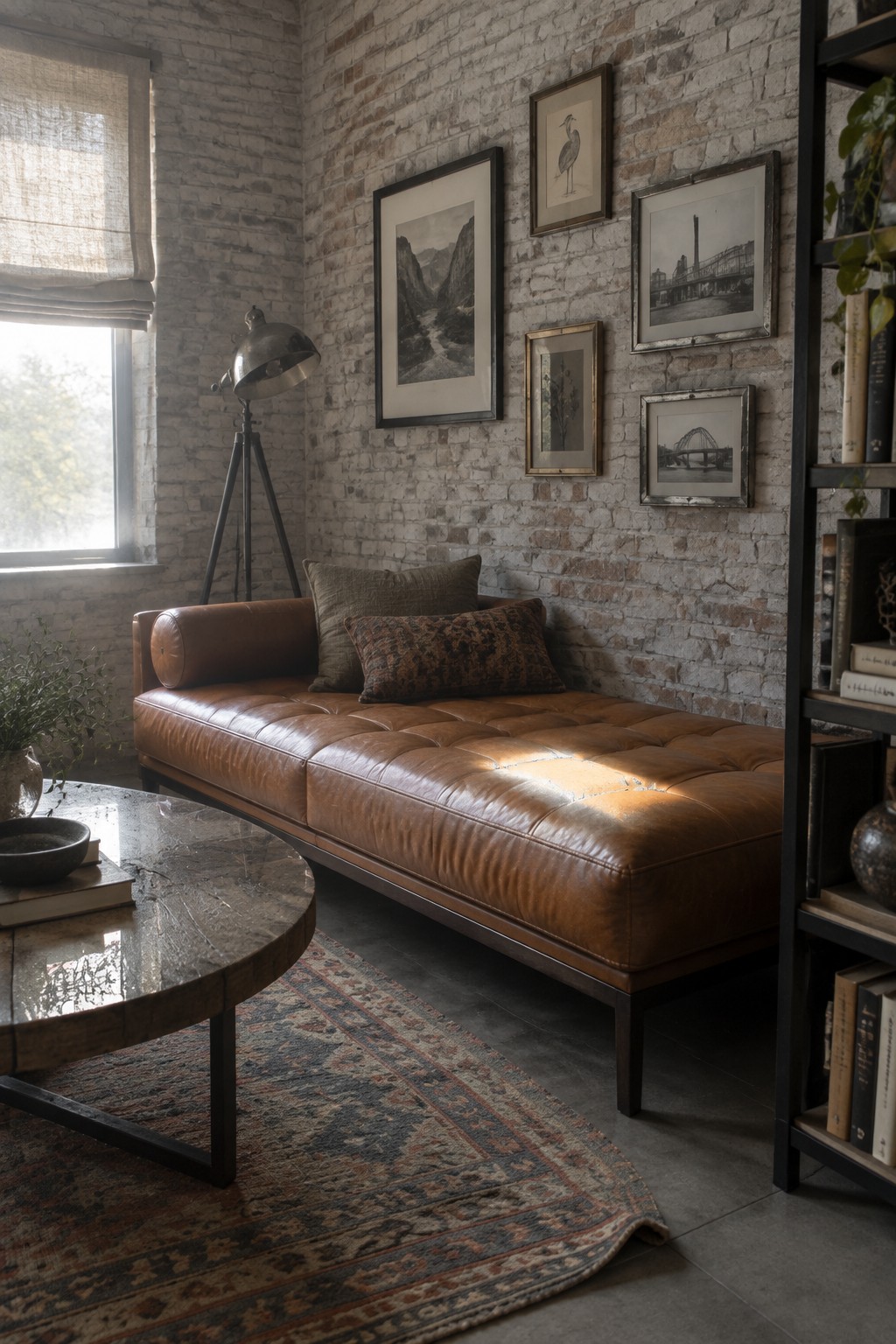
Placing a leather daybed against an exposed brick wall gives an industrial living room a clear focal point without extra effort. The leather softens the roughness of the brick while the brick keeps the leather from feeling too formal or heavy.
This works best in lofts or older homes where the brick is already present. Add a simple metal lamp or a few framed prints above the daybed, and leave the rest of the room fairly open so the materials do the work.
Repurposed Metal Barrels as Coffee Tables
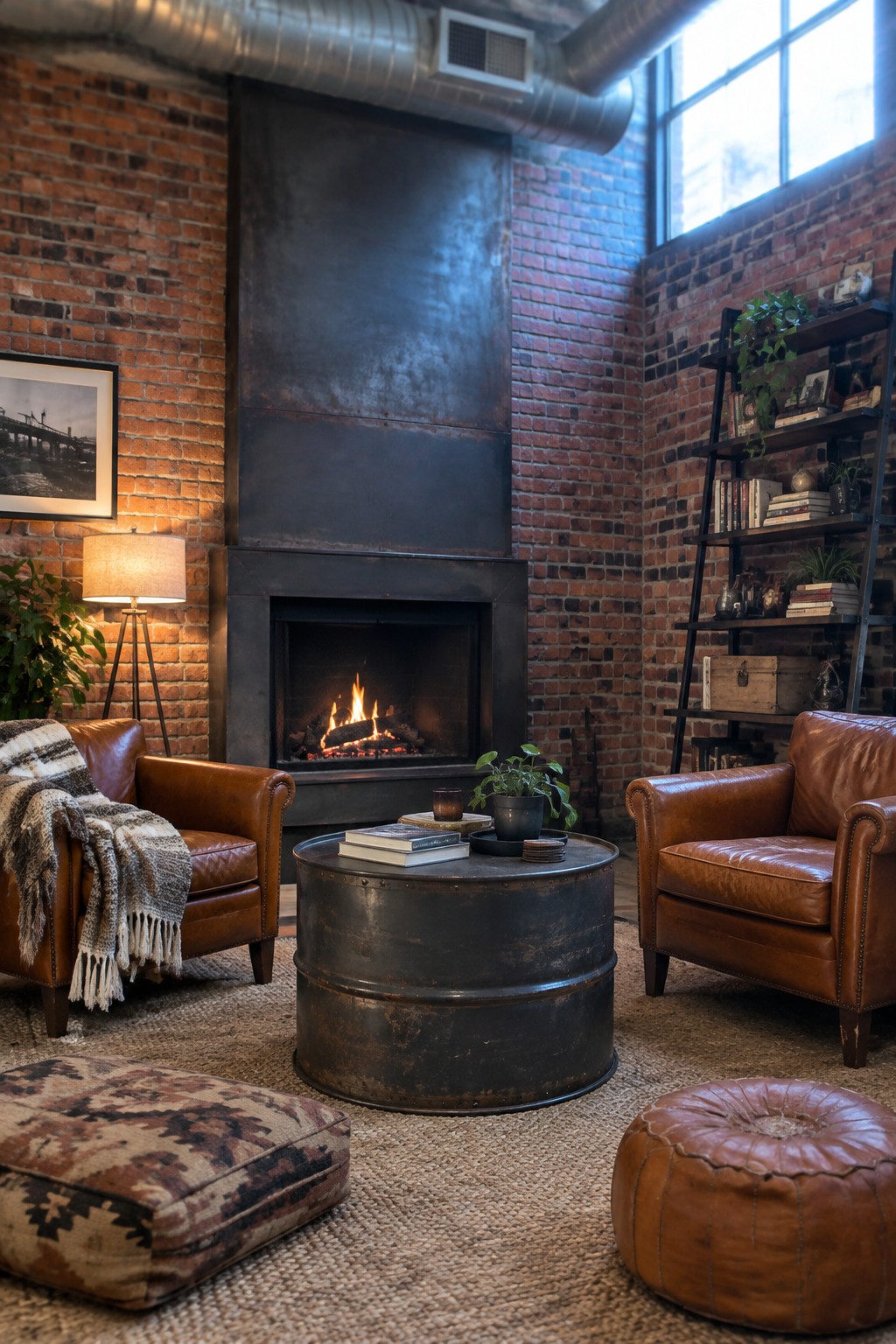
Many industrial living rooms gain a lot from turning an old metal barrel into the coffee table. The raw finish and simple round shape fit right in with brick walls and leather chairs, and it avoids the need for something store-bought that might feel too new.
This works especially well in lofts or homes that already have metal and brick details. Leave the barrel mostly untouched so the worn surface stays visible, then keep the top fairly clear except for a few everyday items.
Exposed Brick Works Well Behind Leather Seating
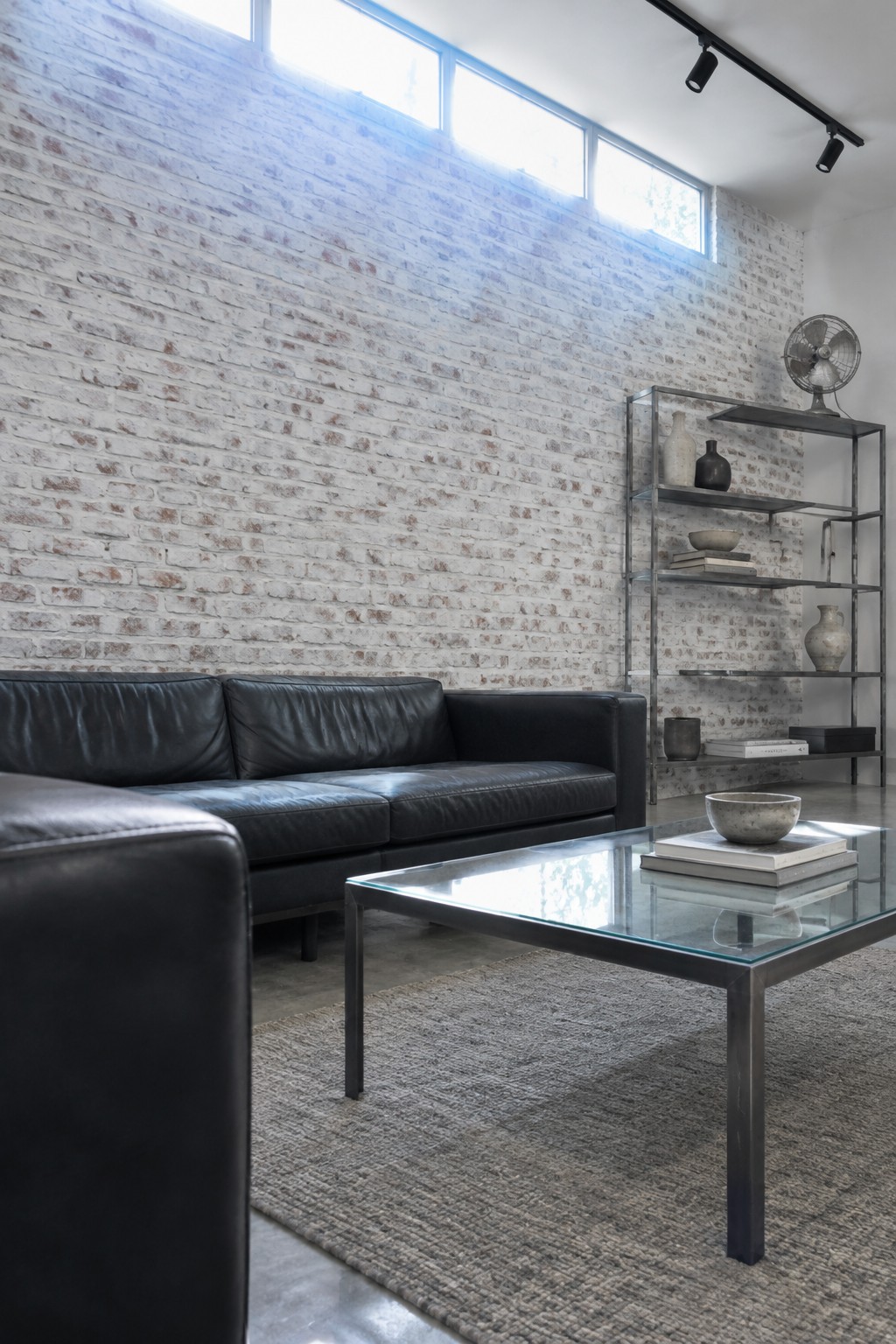
An exposed brick wall gives a living room instant character and texture that feels grounded without trying too hard. It stands out especially when paired with black leather seating, since the smooth leather surface contrasts nicely with the uneven brick and keeps the space from looking too heavy.
This setup works best in homes that already have brick or want a simple industrial direction. Keep the rest of the room fairly open and use metal pieces sparingly so the brick and leather remain the main focus.
Leather Recliners Against Brick Walls
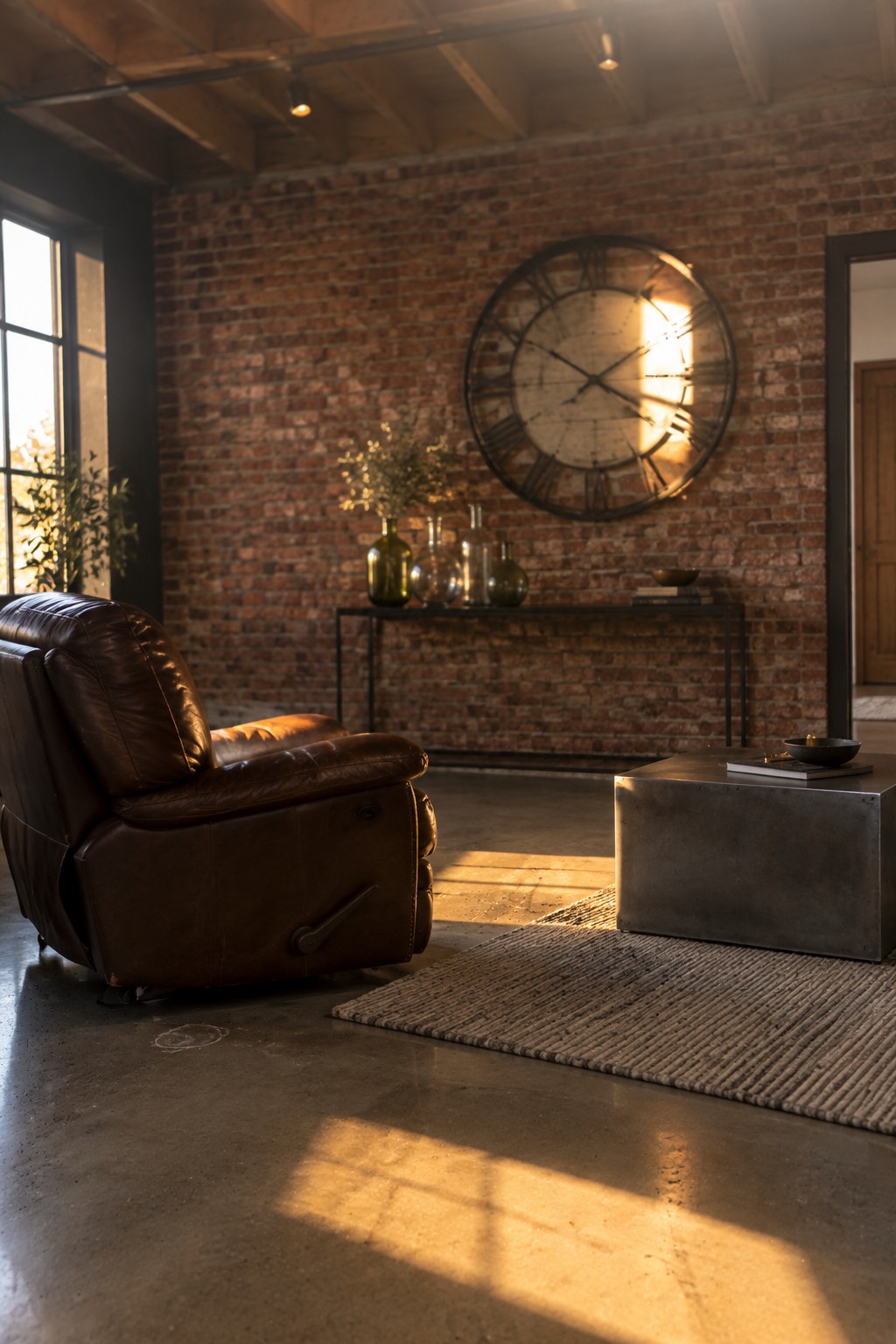
A leather recliner next to exposed brick gives an industrial room a grounded feel without much extra work. The chair adds softness and a bit of weight, while the brick keeps everything from looking too polished or new. This mix shows up often because it balances the rough texture of the wall with something that feels lived in.
Try placing the recliner where light hits the leather during the day so the surface shows its natural wear. It suits older buildings or any space where the brick is already the main feature. Just keep the rest of the furniture simple so the two materials stay the focus.
Metal Filing Cabinets Work as Side Tables

Many industrial living rooms benefit from bringing in pieces that already have some history and function. Metal filing cabinets fit that role well because they add storage while keeping the look grounded next to leather seating and brick walls.
They suit homes that already lean into utilitarian details rather than polished finishes. Set one or two beside chairs to hold a lamp or a few books, but watch the height so they do not block sight lines or feel too heavy in the room.
Leather Sofas Add Warmth to Industrial Rooms

A leather sofa brings a needed softness to rooms built around brick and metal. The natural texture and warm tone help keep the space from feeling too cold or stark, especially when the walls and shelving stay dark and industrial.
This approach works well in living rooms that already have strong features like a fireplace or built-in storage. Stick to simple rugs and a few neutral pieces so the sofa stays the main seating without competing with everything else.
Leather Furniture In Industrial Rooms

Leather seating helps balance the hard surfaces that define most industrial spaces. The smooth texture of the leather softens the look of brick walls and metal fixtures while still fitting the overall style.
This approach works best in lofts or older homes where the architecture already has some edge. Brown or black leather tends to blend in without fighting the other materials.
Leather Furniture Against Exposed Brick

Leather seating pairs well with exposed brick because the smooth surface of the leather softens the rough texture without hiding it. This keeps the industrial feel intact while making the room more comfortable to sit in for long periods.
It works best in older buildings or any space where the brick is already in good shape. Place one or two leather pieces near the wall and keep the rest of the furnishings simple so the brick stays visible.
Dark Exposed Brick Walls in Living Rooms
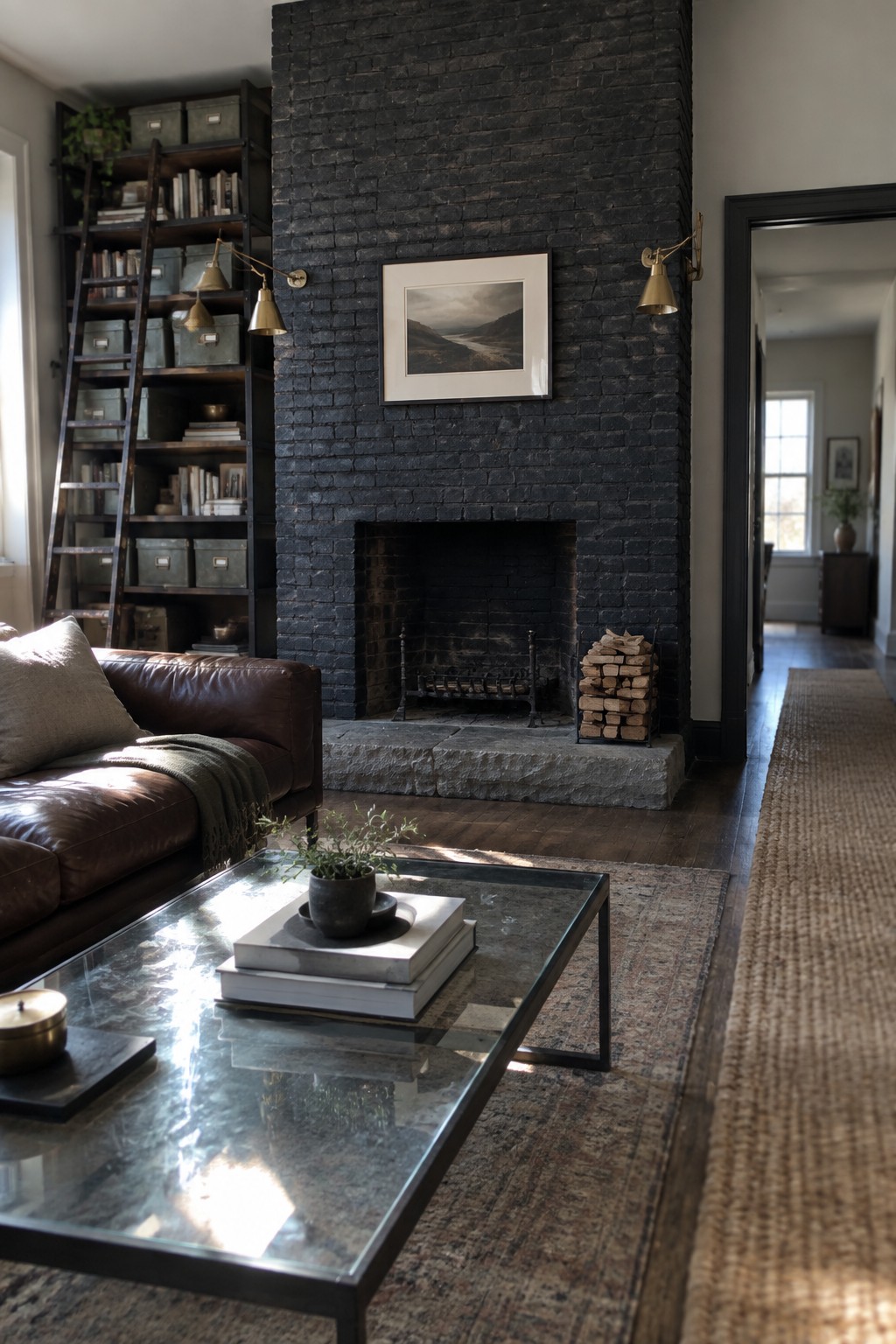
A dark brick wall can anchor an industrial living room without much extra effort. It gives the space weight and texture right away, especially when the brick runs floor to ceiling around a fireplace. The leather sofa and metal coffee table in this room show how the brick holds its own next to those materials.
This approach works best in rooms that already have some height and open floor space. Keep other wall decorations minimal so the brick stays the main event. Too many small pieces nearby can break up the strong line the brick creates.
Leather Sofas With Exposed Brick
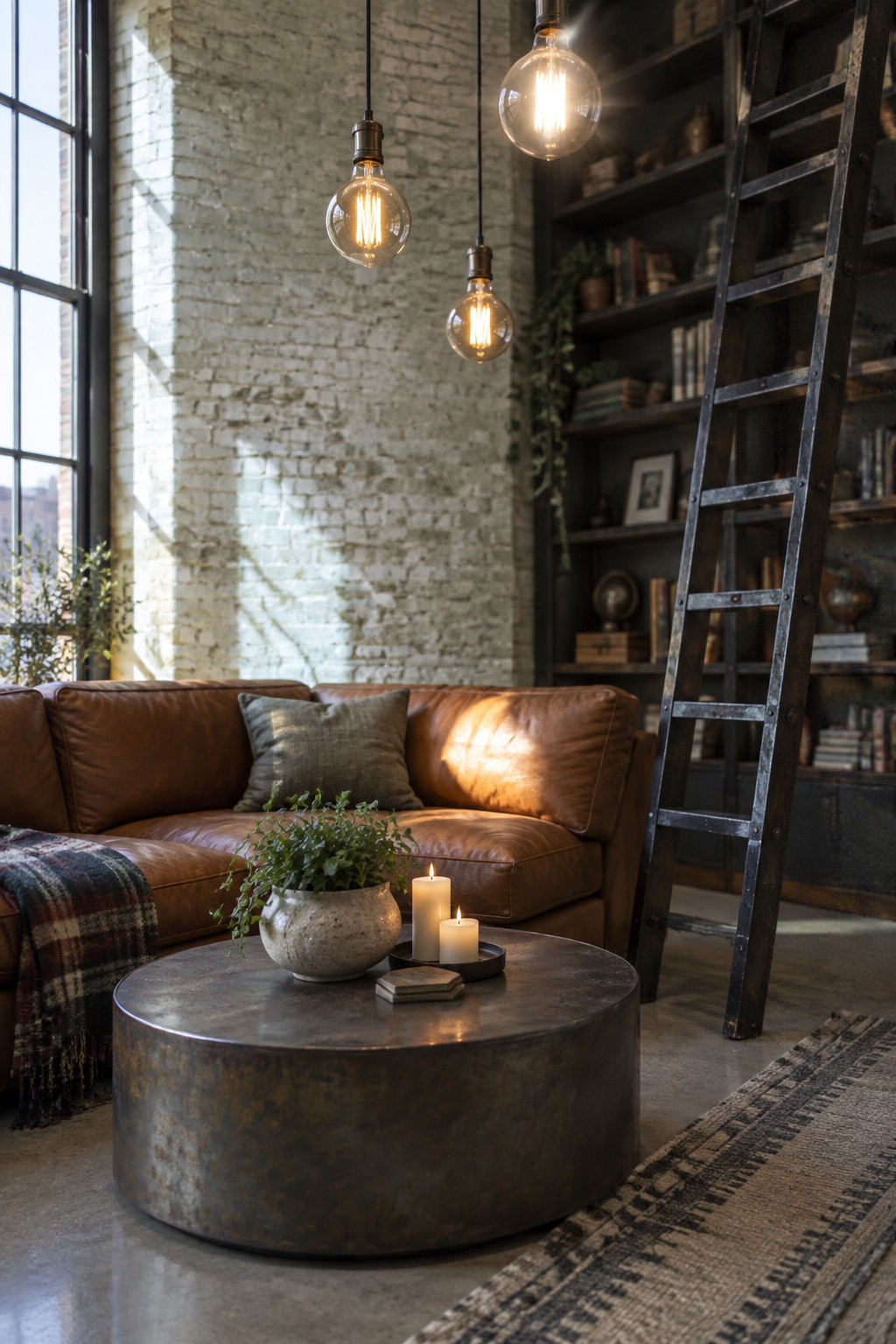
Leather seating gives an industrial room a place to settle. The sofa here sits right against the brick and takes the edge off the harder surfaces without covering them up.
This works best in converted spaces or rooms where the brick is already a main wall. Keep the metal elements few and functional so the leather can do its job as the main seating without competing for attention.
Repurpose Old Military Crates as a TV Console
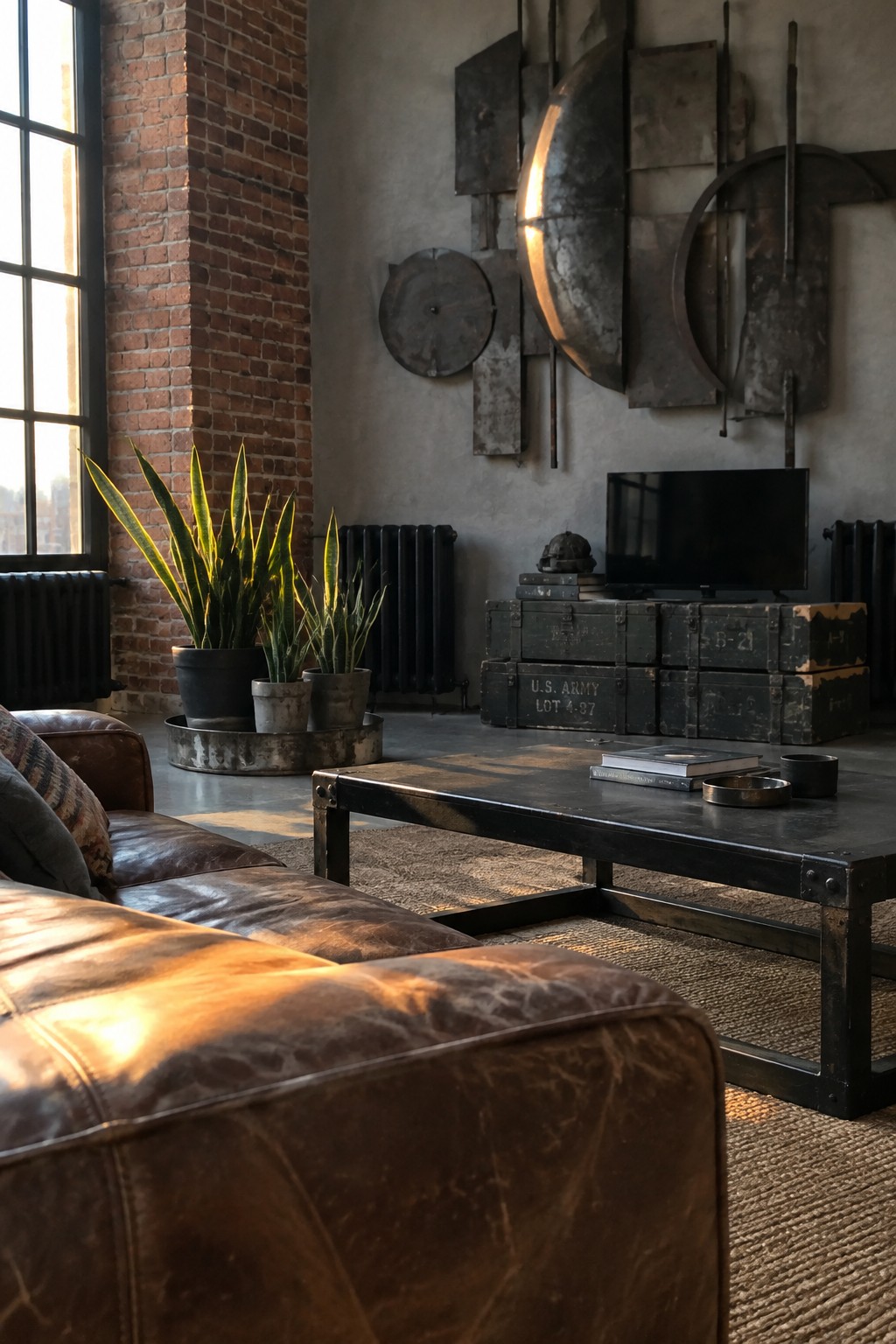
Many industrial rooms feel more authentic when the furniture carries some history. Stacked metal army crates work well here because they add storage space below the television while reinforcing the metal and brick look already present in the room.
They suit lofts or homes with tall ceilings and plenty of wall space. Place them on a level surface, check that they can hold the weight, and keep the arrangement simple so the crates remain the main feature rather than getting lost among other pieces.
Exposed Brick Works Well With Leather And Metal

Exposed brick gives an industrial living room a solid starting point that feels real and grounded. The rough texture balances the smooth leather on the sofa and keeps the space from looking overly styled or new.
This mix suits older buildings or lofts where the brick is already part of the structure. Stick to simple metal tables and a few warm textiles so the room stays comfortable instead of feeling stark.
Leather Sofas Work Well in Industrial Rooms
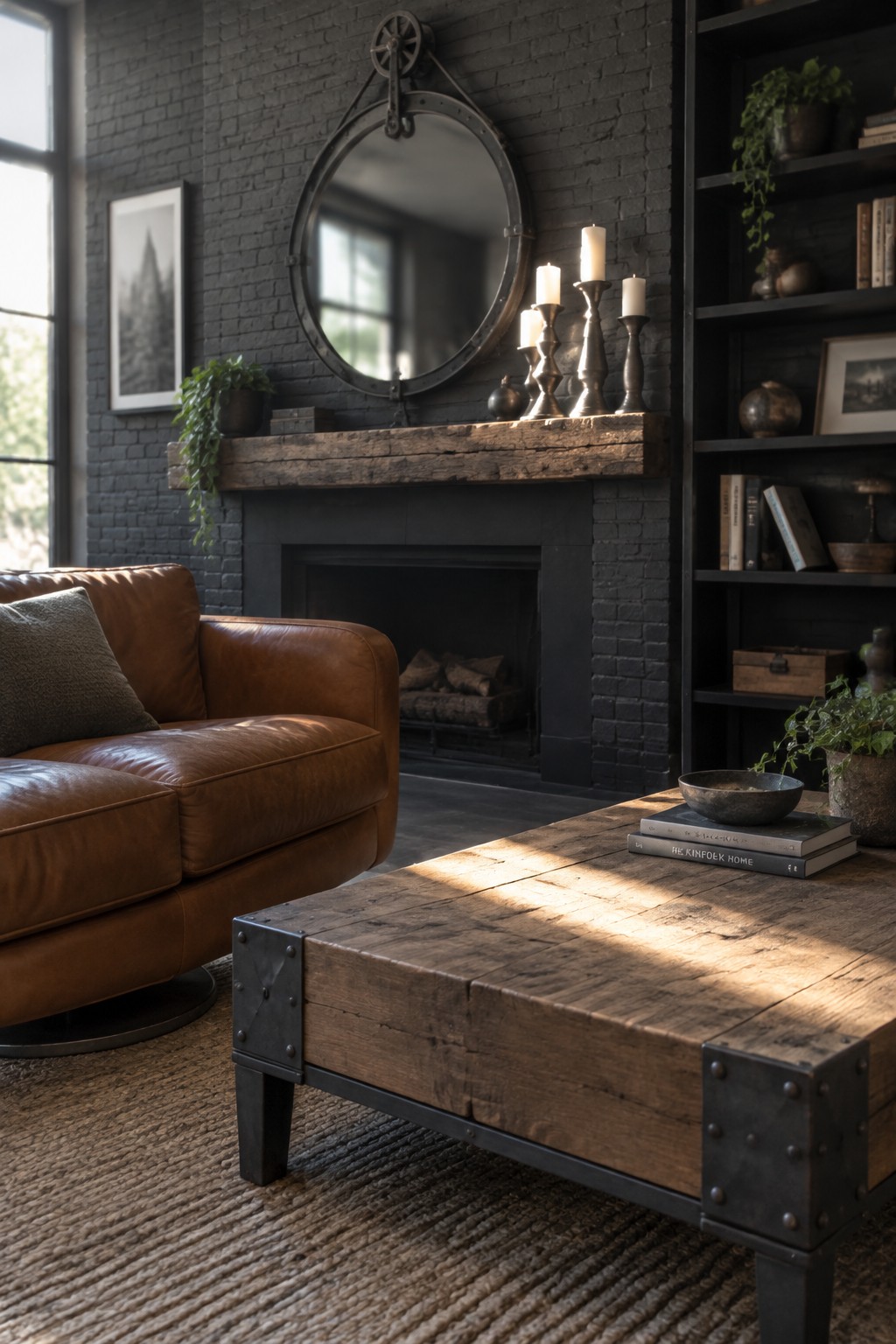
A leather sofa brings some much needed softness to a room full of brick and metal. The worn texture of the leather keeps things from feeling too cold or stark while still matching the industrial mood.
It works best in spaces with darker brick walls and simple metal accents. Keep the rest of the furniture straightforward so the leather stays the main source of warmth.
Exposed Brick Columns with Leather Seating

Exposed brick columns give an industrial living room real presence without taking over the whole space. The rough texture stands out nicely against smooth leather, and the column helps break up an open layout while still keeping things connected.
This approach works best in lofts or homes with high ceilings where you want some structure but not full walls. Keep the leather dark and simple so the brick stays the focus, and add just one or two metal pieces like a door or light fixture to tie the materials together.
Leather Sofas Balance Exposed Brick Walls
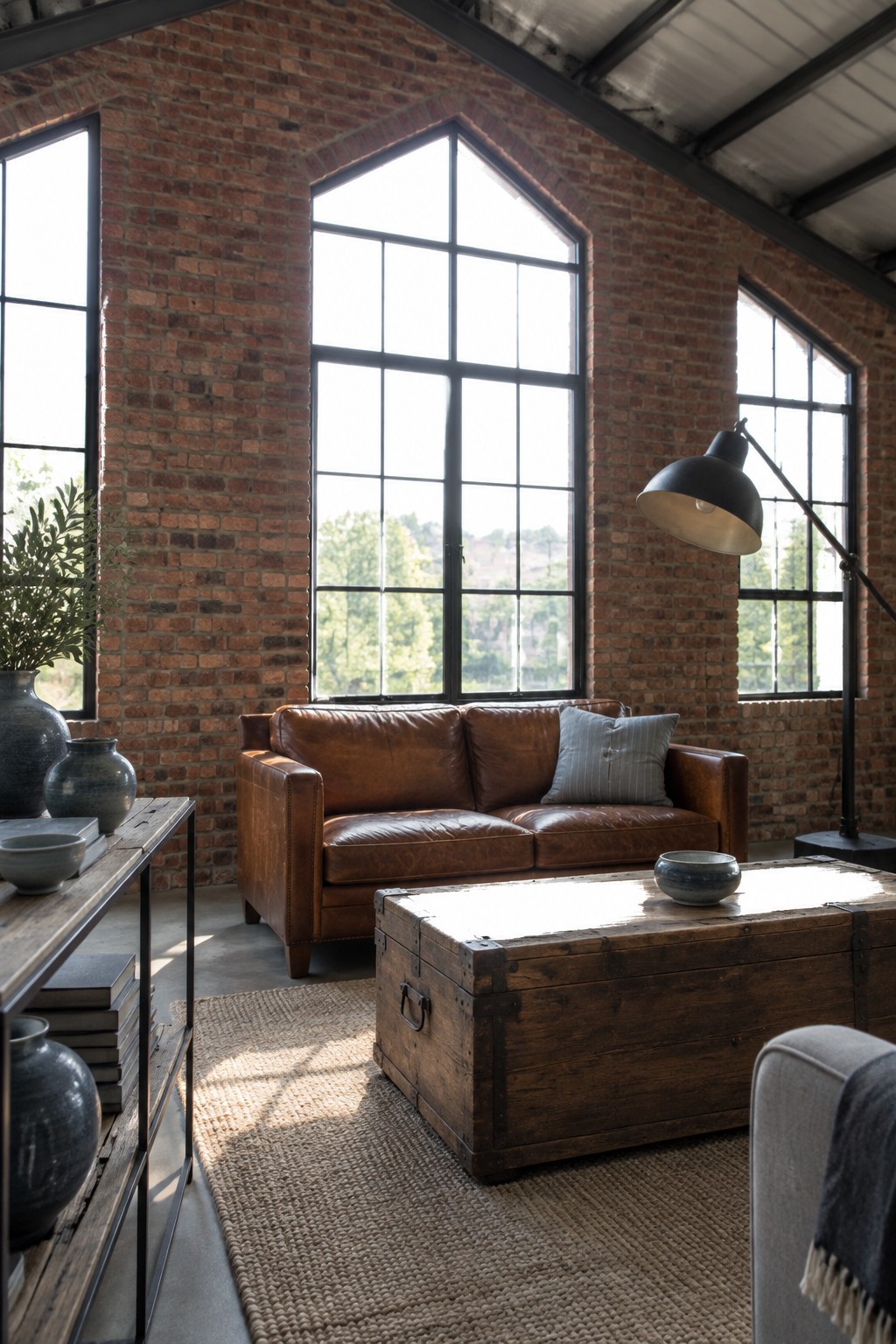
A leather sofa adds real warmth to a room with exposed brick. The smooth surface of the leather plays against the rough texture of the brick and keeps the space from feeling too cold or industrial. Placing the sofa directly against the wall makes the contrast work even better.
This approach suits older homes or converted spaces where the brick is already a main feature. Keep other pieces simple and let the sofa and wall carry the look. A few metal accents can tie everything together without crowding the room.
Leather Chaise with Exposed Brick and Metal

A leather chaise works well in an industrial living room because it brings in a softer seating option without losing the edge that brick and metal already provide. The material holds up over time and develops its own character next to the rough brick, so the room feels lived in rather than styled for show.
This approach suits homes that already have a brick wall or fireplace. Keep the rest of the furniture simple and let the chaise take the main spot, with metal shelving or a small side table nearby for balance. Too many extra pieces can crowd the look and take away from the material mix.
Metal Shelves on Exposed Brick

One simple way to add storage without hiding the brick is to mount metal shelves directly on the wall. The shelves give you room for books and a few objects while letting the texture of the brick stay visible. In this room the shelves sit on either side of the fireplace and keep the space from feeling bare.
This approach works best in rooms where you already have a strong brick wall and want to keep the industrial feel. Use shelves that are fairly shallow so they do not stick out too far, and leave a little open space between items so the wall still reads as the main feature.
Frequently Asked Questions
Q: How do I keep a leather sofa from clashing with all that exposed brick? A: Place the sofa against a different wall so the brick stays the main show. Stick to brown or black leather that echoes the brick tones instead of fighting them.
Q: Will metal accents make the room feel too chilly at night? A: Layer in a couple of wool throws over the leather seats. The fabric warms up the space while the metal still catches the light during the day.
Q: What if my brick wall has old wiring holes I do not want to see? A: Hang a large metal-framed mirror over the worst spots. It covers the flaws and bounces light around without hiding the industrial texture.
