

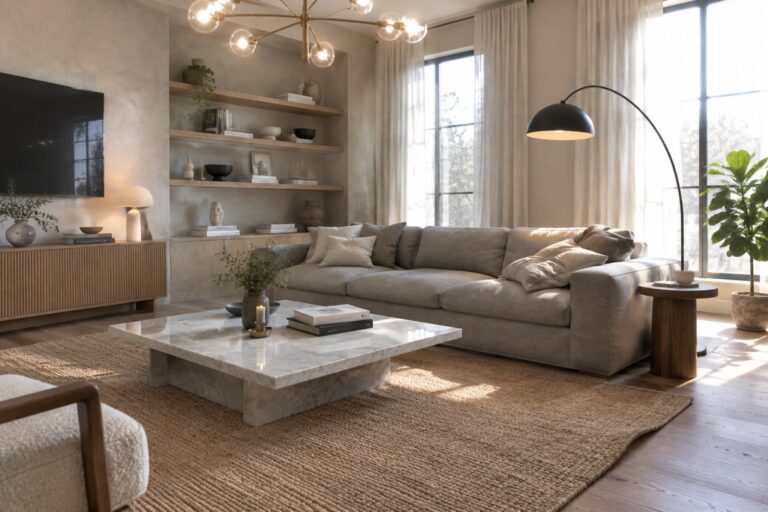
When I walk into a living room the first thing that stands out is how the light fixtures shape the way the space feels after dark.
Statement pieces can pull a room together but only if they sit at the right height and work with the seating areas already in place.
Placement matters more than size.
I have tried a few different options in my own home and noticed that some lights create glare on screens while others make the whole area feel warmer.
A couple of the ideas here seem worth trying out to see how they change the daily routine in the room.
A Sculptural Chandelier To Define The Space
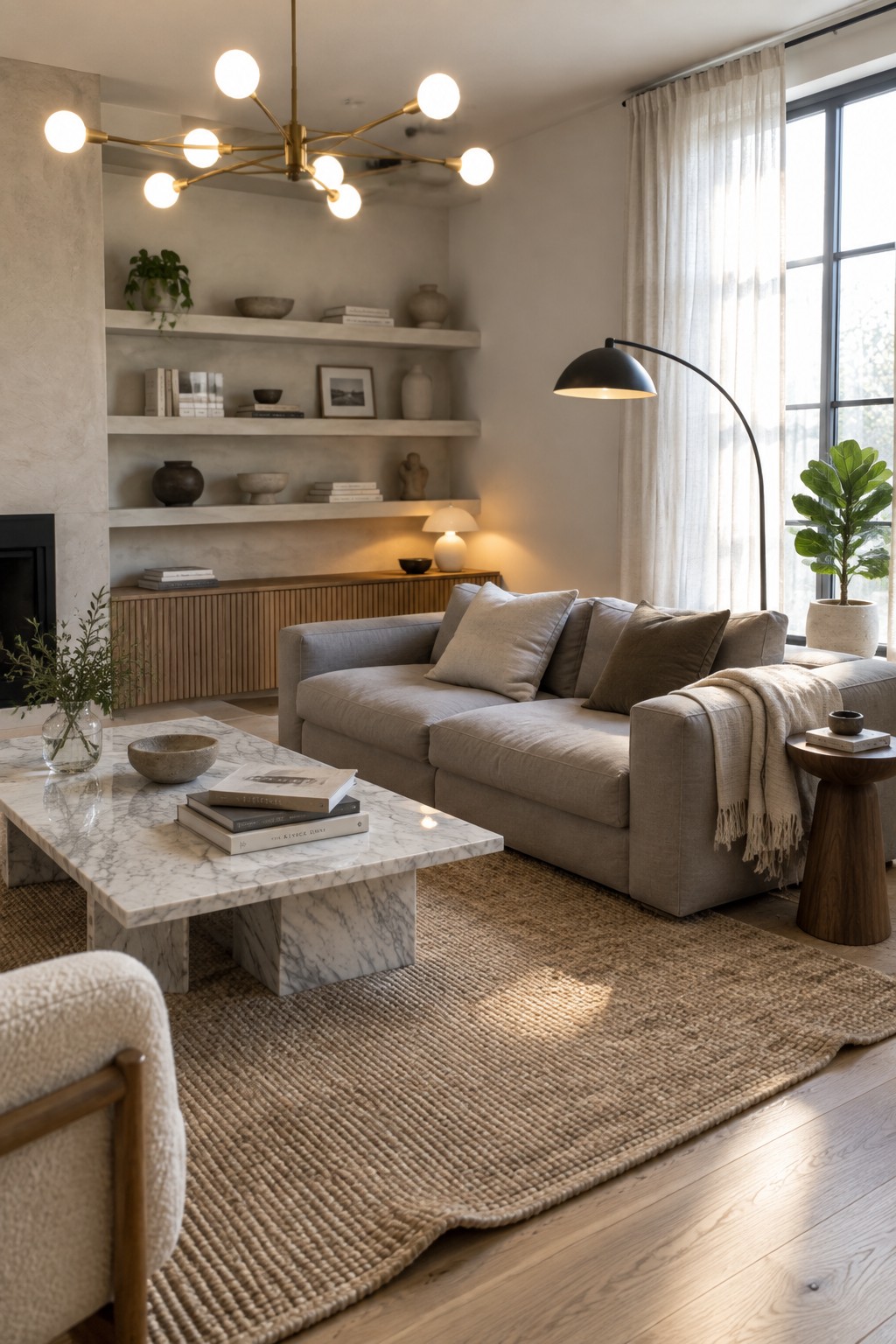
A big overhead light can do a lot in a room that otherwise stays quiet and neutral. It pulls attention upward and gives the space a clear center point, especially when the walls, sofa, and other pieces stay simple and low key.
This approach works best in living rooms with decent ceiling height and an open layout. Keep the rest of the furnishings in soft colors and natural textures so the fixture can stand out without competing with too many other things.
Grouping Pendant Lights For Impact
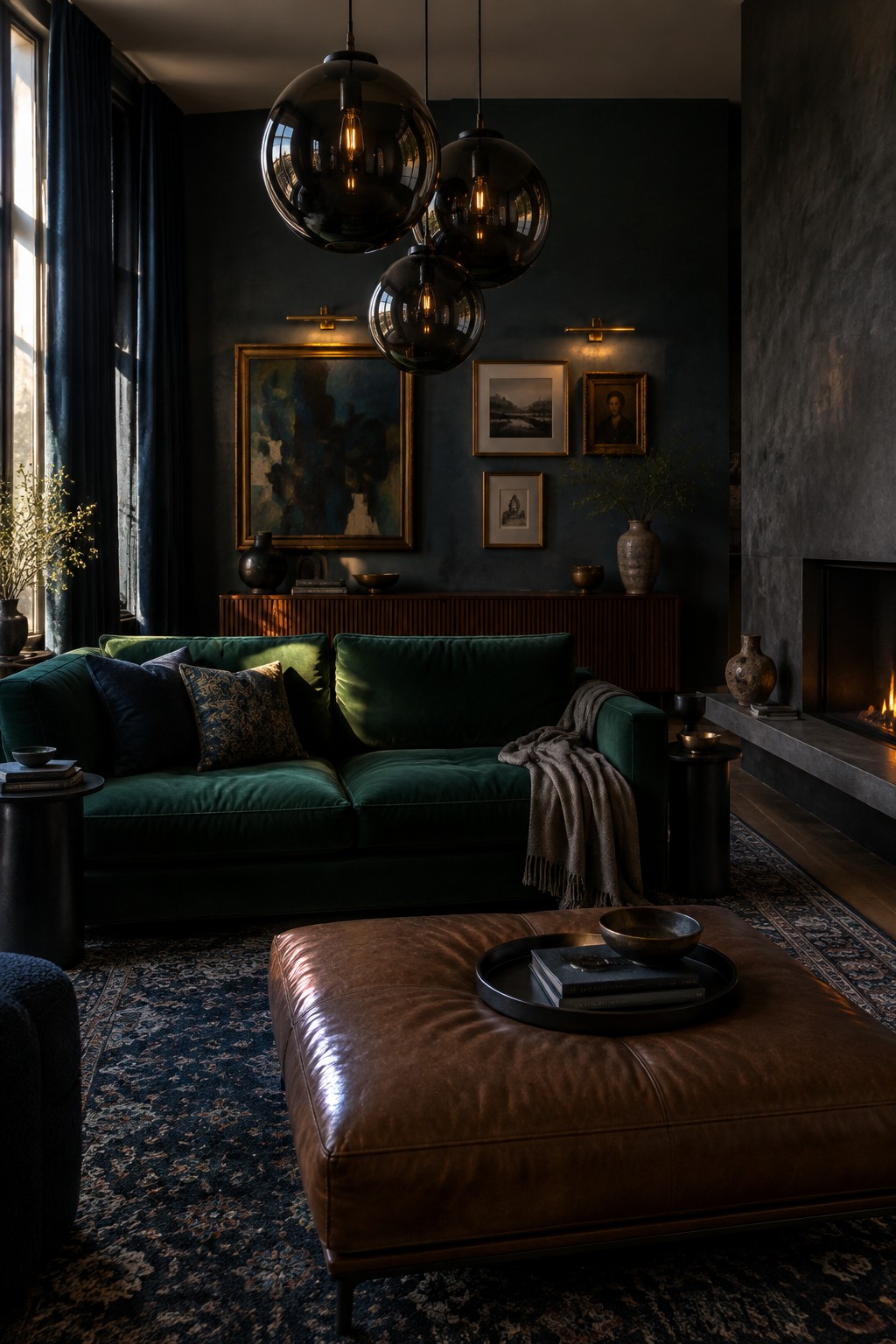
One simple way to make a living room feel more finished is to hang several large pendant lights together over the main seating area. The cluster creates a single strong focal point that works especially well when the walls are dark and the furniture is deep in color.
This setup suits rooms where you want the lighting to do most of the visual work. Keep the pendants in the same material and finish, hang them at slightly different heights, and make sure they sit low enough to be noticed but high enough to clear the space below.
Statement Lighting That Keeps The Room Calm
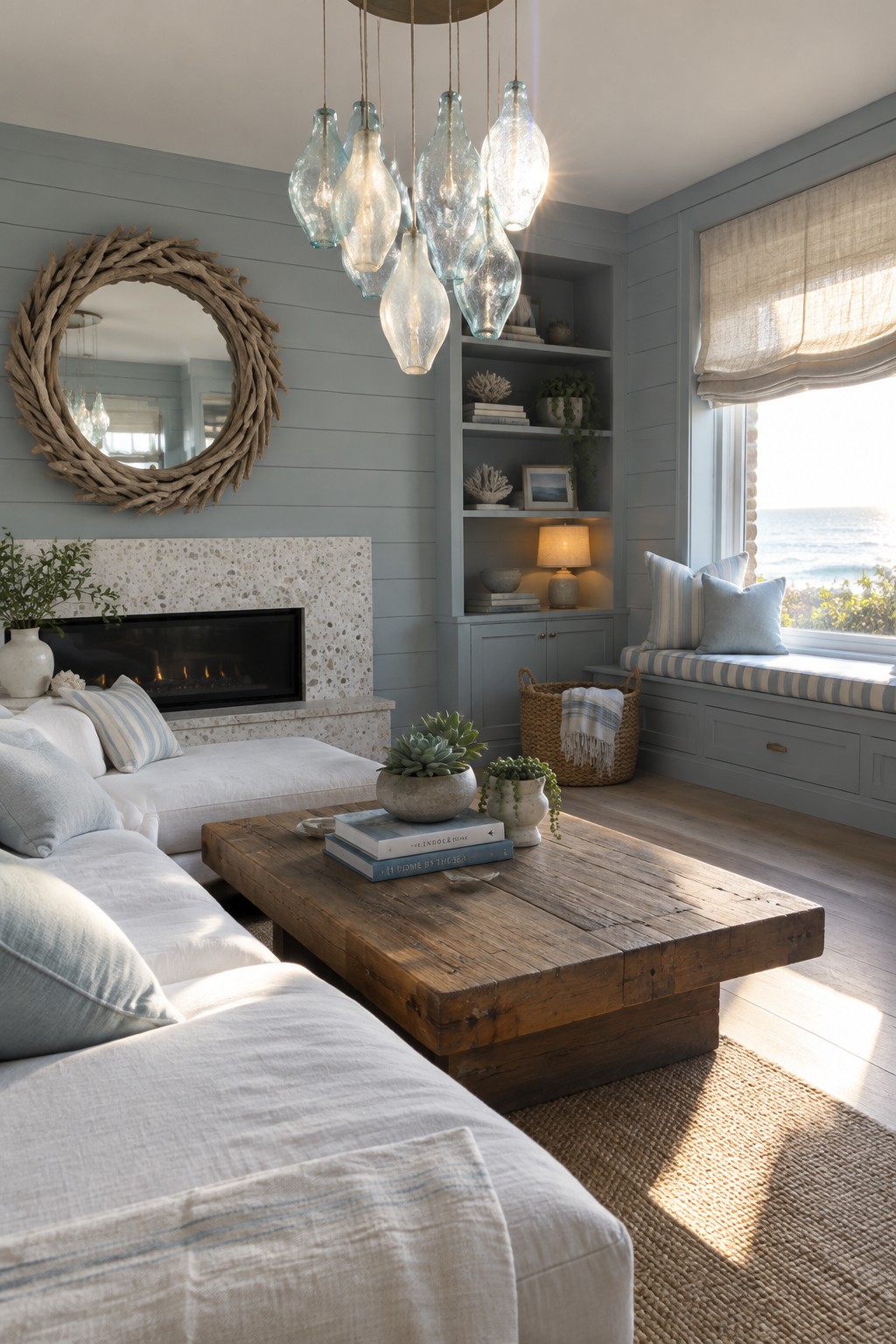
A large sculptural chandelier can give a living room its focus without any extra fuss. In this space the cluster of glass pendants hangs low over the coffee table and pulls the eye upward while the pale walls and simple white sofa stay quiet underneath it.
This works best in rooms that already have good natural light and fairly plain furniture. Keep the rest of the palette soft so the fixture can do its job without competing with busy patterns or dark colors.
Letting a Statement Chandelier Set the Tone
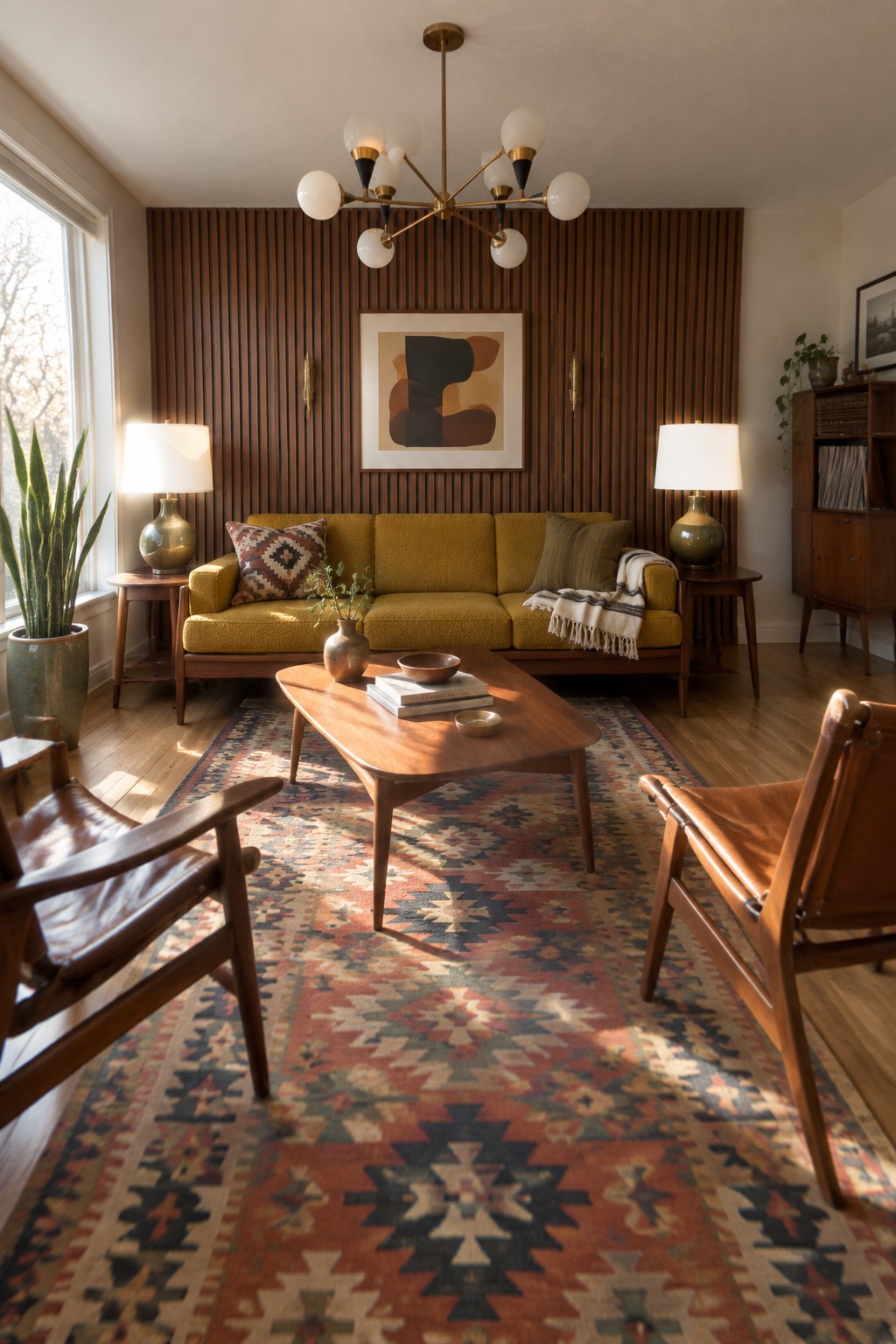
A big chandelier like this one can pull a whole living room together without much extra effort. The fixture adds height and a bit of shape overhead, which helps balance the low sofa and wide wood wall behind it. Many people like this approach because it gives the space a finished look even when the rest of the room stays fairly simple.
This works best in rooms that already have some warmth from wood or textiles. Keep the other lights lower and softer so the chandelier stays the main point of interest. It suits homes with mid-century pieces or just a mix of older furniture that needs one clear focal point.
A Statement Chandelier in a Dark Living Room
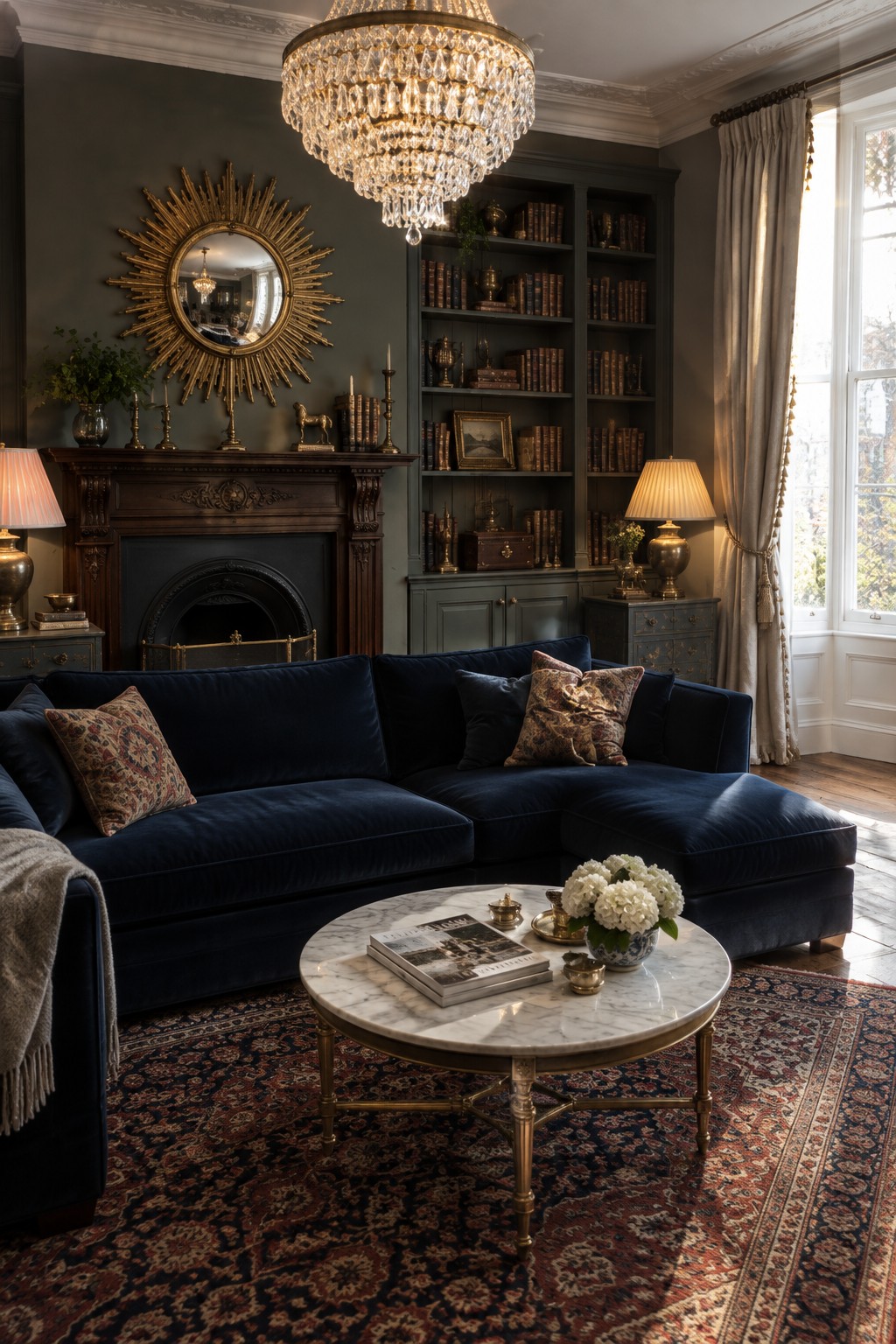
A large crystal chandelier can pull a whole room together when the walls and furniture are deep and rich. In spaces with dark paint and heavy fabrics, the light fixture becomes the main source of brightness and the thing that keeps the room from feeling closed in. It works because it sits high and catches the eye right away.
This approach suits older homes or rooms with tall ceilings where you want some formality without going too stiff. Keep the rest of the lighting low and warm so the chandelier stays the focus. Just make sure the scale feels right for the space.
Woven Pendant Lights for Natural Texture
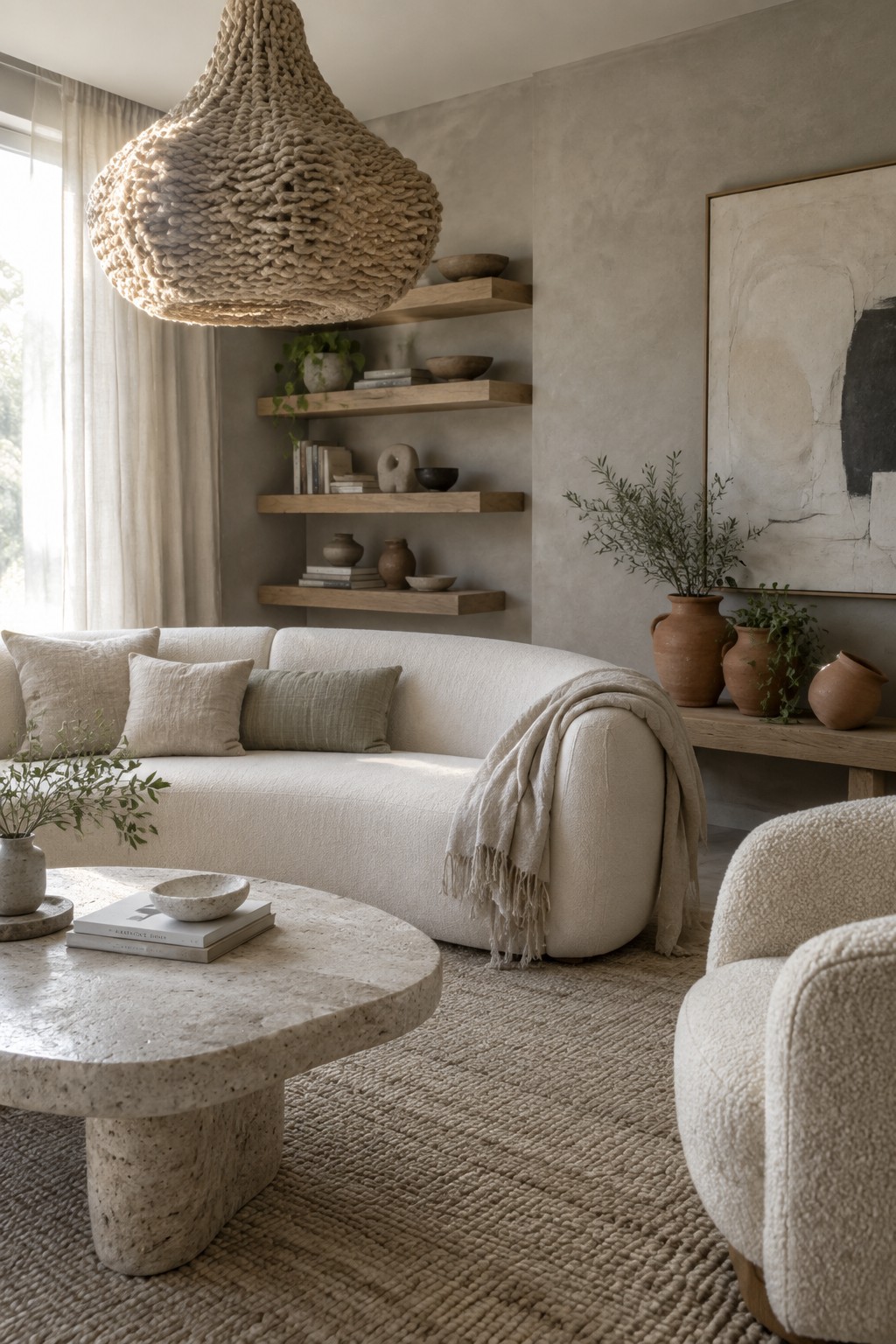
A large woven pendant works well in neutral rooms because it adds texture and shape without needing extra color or pattern. The material catches the light softly and gives the ceiling something interesting to hold.
This approach suits calm living spaces where furniture stays low and simple. Place it over a seating area and keep nearby surfaces fairly plain so the light remains the main focus.
An Oversized Chandelier As The Main Feature
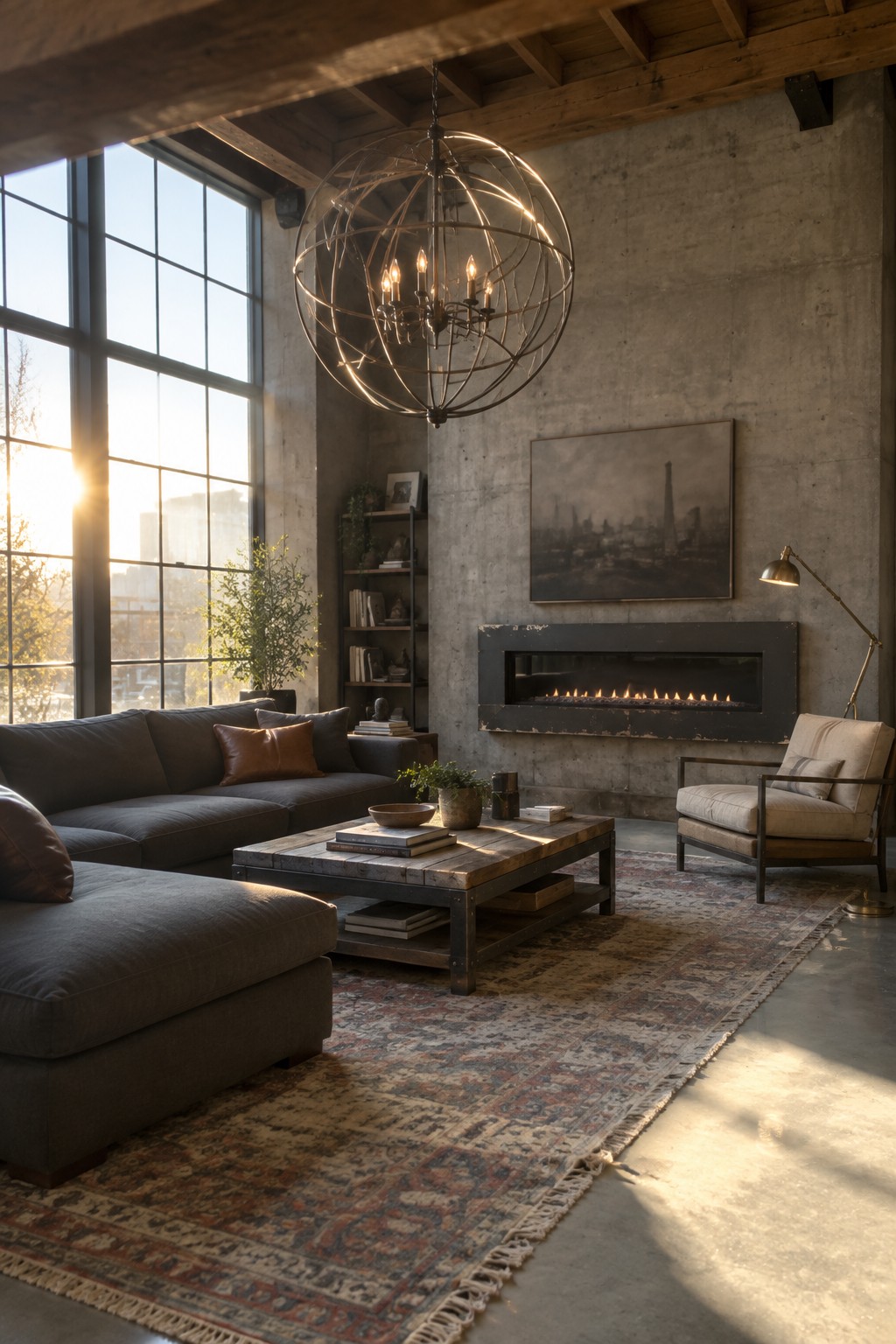
A large spherical chandelier can pull a whole living room together when the rest of the space stays fairly simple. In rooms with concrete walls and big industrial windows, the light fixture becomes the one thing that feels finished and intentional without needing a lot of extra decoration.
This approach works best in open layouts where the ceiling has some height and the seating area sits below the fixture. Keep the rest of the furnishings low and neutral so the light does not compete with too many other strong pieces.
A Bold Chandelier For A Relaxed Living Room
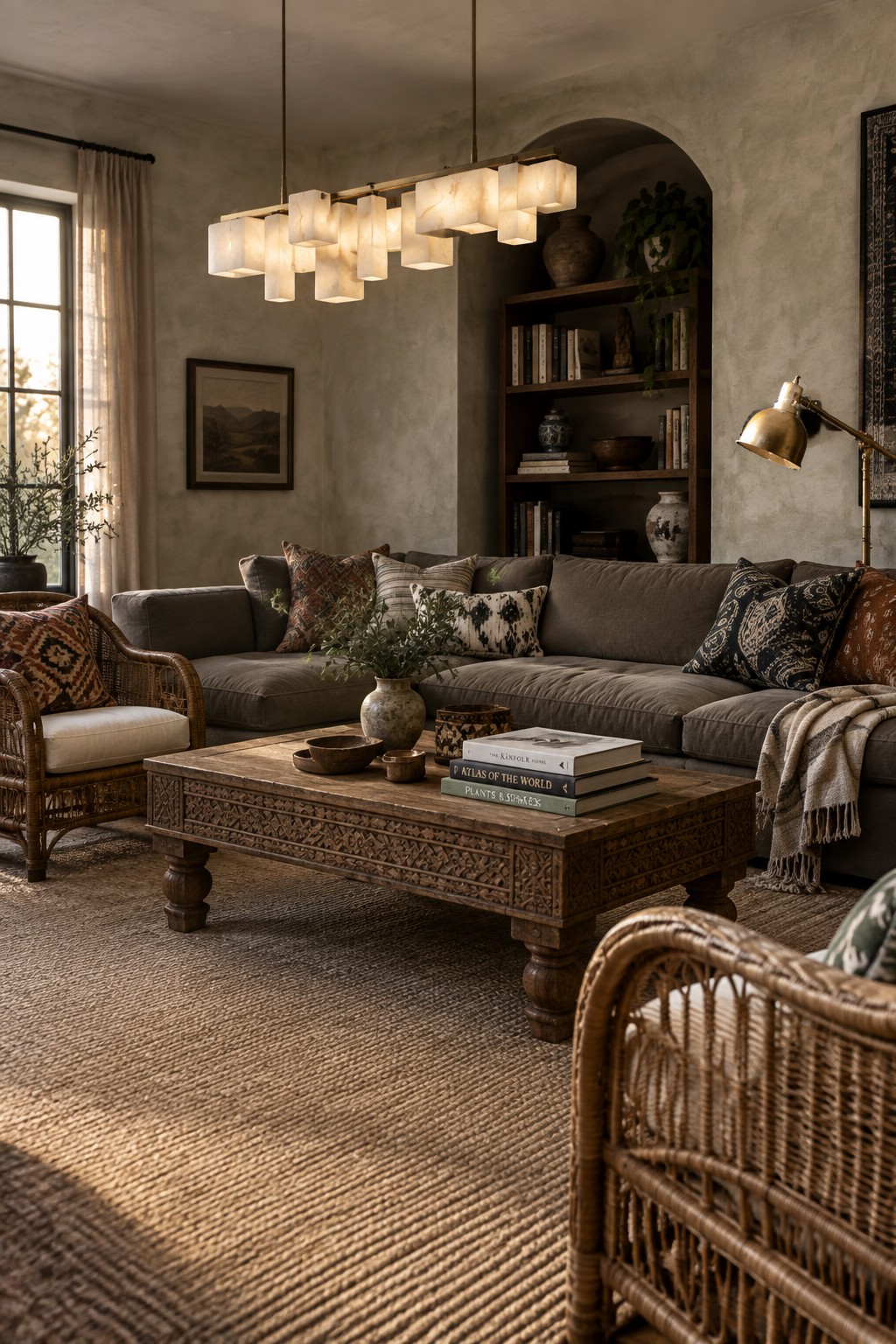
A strong overhead light can pull a whole room together when the rest of the furnishings stay simple and textured. In this space the long rectangular chandelier hangs low enough to mark the seating area without crowding it, and the neutral sofa and woven rug keep the look grounded.
This approach works well in living rooms that need one clear focal point rather than lots of small accents. Hang the fixture over the main seating group, keep the palette earthy, and let the light do the work of adding shape and interest.
An Oversized Woven Pendant Suits A Calm Living Room
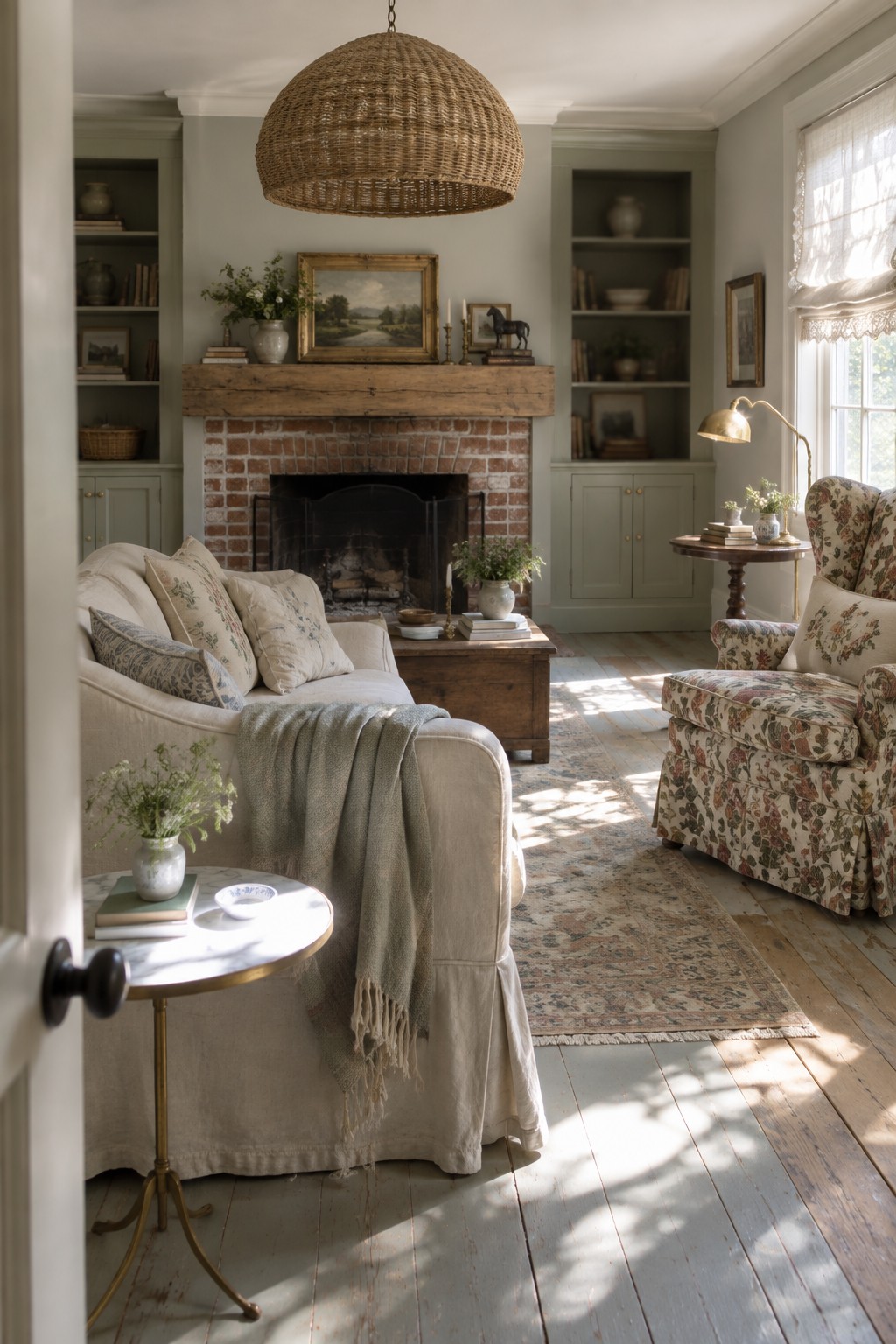
A large woven pendant light can really change how a living room feels. It adds texture and a bit of scale that smaller fixtures often miss, especially when the walls and furniture stay soft and neutral.
This works best in spaces with decent ceiling height and a central seating area. Keep the rest of the room simple so the light stands out without competing with too many patterns or colors.
A Bold Chandelier Can Anchor the Room
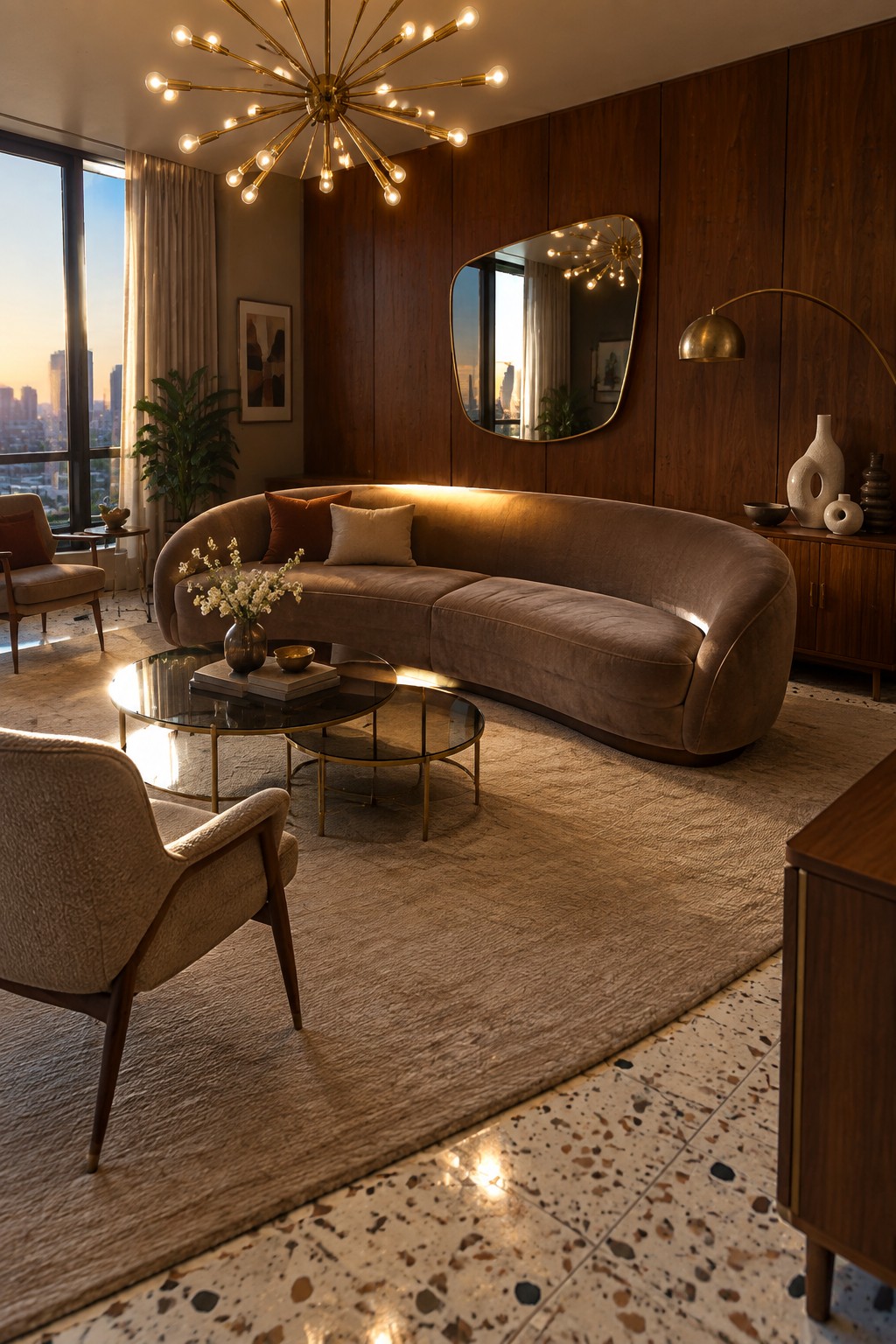
One strong ceiling light can do a lot of work in a living room. It gives the space a clear center point without needing bold walls or lots of extra pieces. When the rest of the room stays quiet in tone and texture, the fixture stands out naturally and keeps things from feeling scattered.
This approach works best in larger rooms where the ceiling has room to show off. Keep the furniture lower and simpler so the light stays the main event. It suits homes that already lean modern or mid-century, since those styles tend to handle one big sculptural piece without clashing.
Woven Pendants For Natural Texture
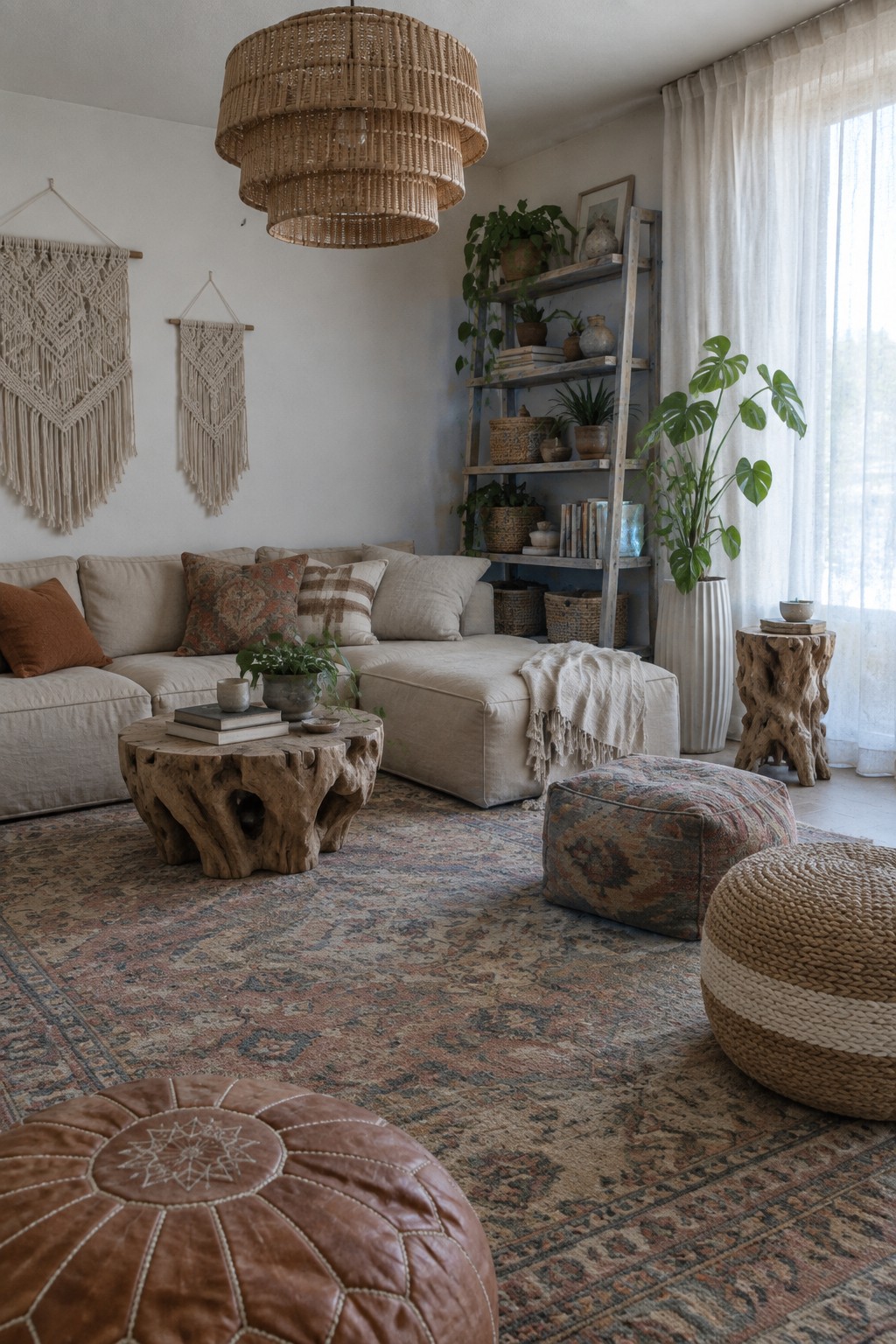
A big woven pendant can quietly pull a living room together without needing lots of extra pieces. The natural fibers bring warmth and texture that work well with neutral furniture and soft rugs, and the size makes it the clear focal point even in a fairly simple space.
This approach suits rooms that already lean calm and understated. Keep the rest of the lighting low and simple so the pendant does the work, and make sure the scale fits the ceiling height before you commit.
Let a Chandelier Set the Scale
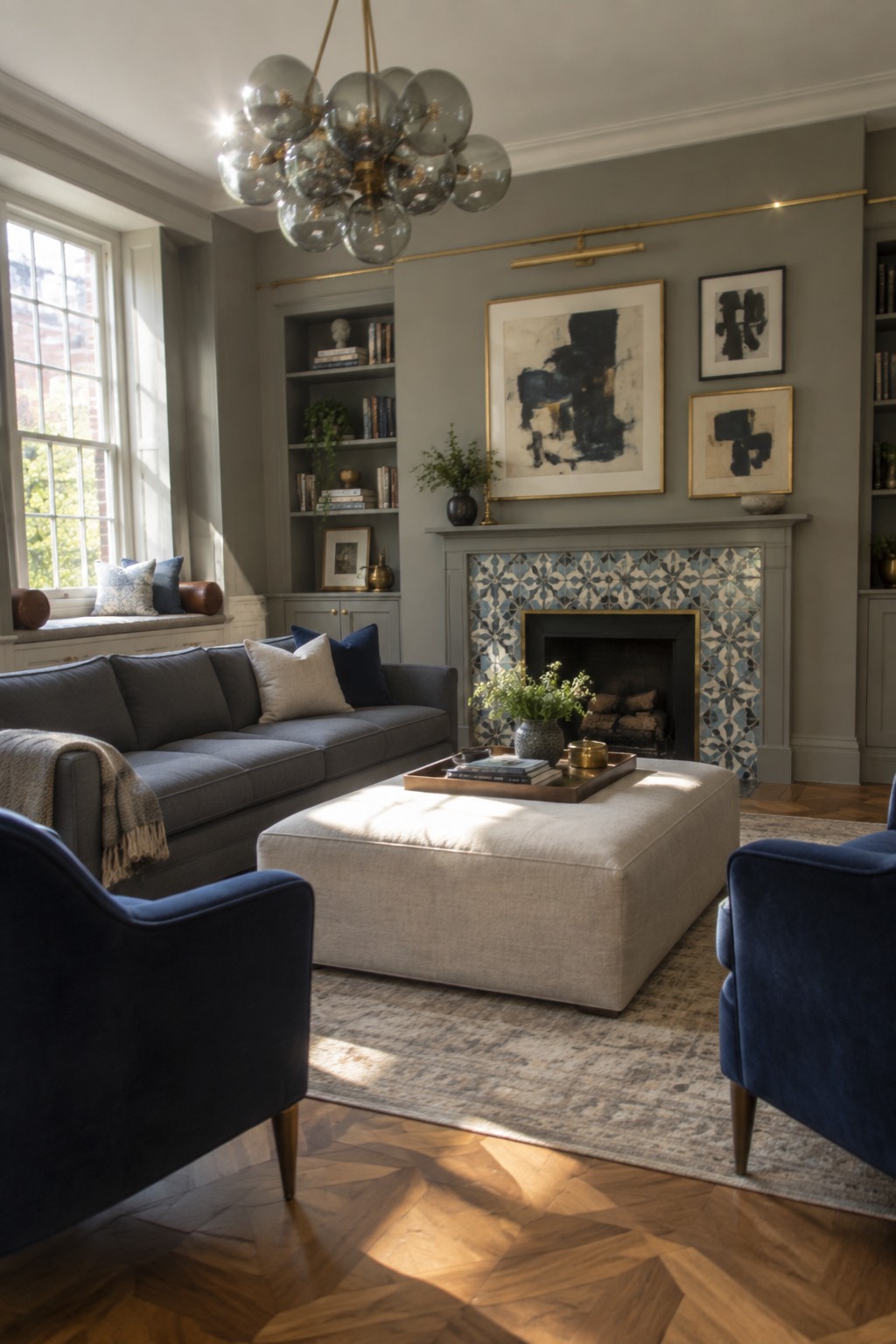
A large chandelier can give a living room a clear center point without needing much else to make the space feel finished. The glass orbs catch light during the day and add shape at night, which helps the room feel balanced even when the furniture stays fairly simple.
This works well in rooms that already have some height and a fairly open floor plan. Pair it with neutral walls and lower pieces like sofas and ottomans so the fixture stays the main event rather than fighting with other details.
Letting a Statement Chandelier Set the Tone
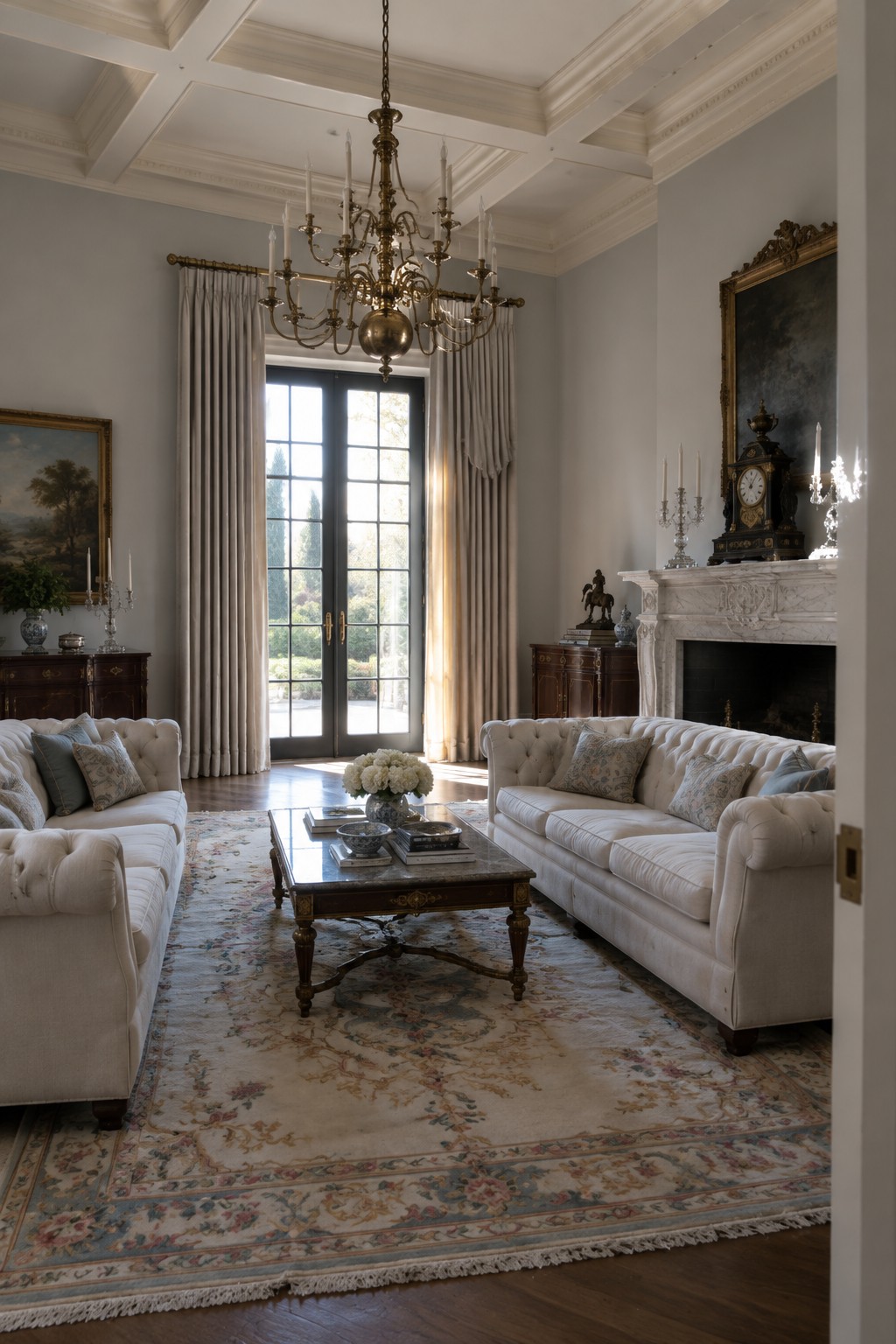
A large central chandelier can do more than light a room. It gives the whole space a clear focal point and pulls the furniture and architecture together without needing much else. In rooms with high ceilings and traditional details, this kind of lighting feels natural rather than added on.
This approach works best in formal or classic living rooms where you want one strong element to carry the design. Keep the rest of the furnishings fairly simple so the chandelier stays the main event, and make sure the scale matches the room size.
Letting a Large Pendant Light Anchor the Seating
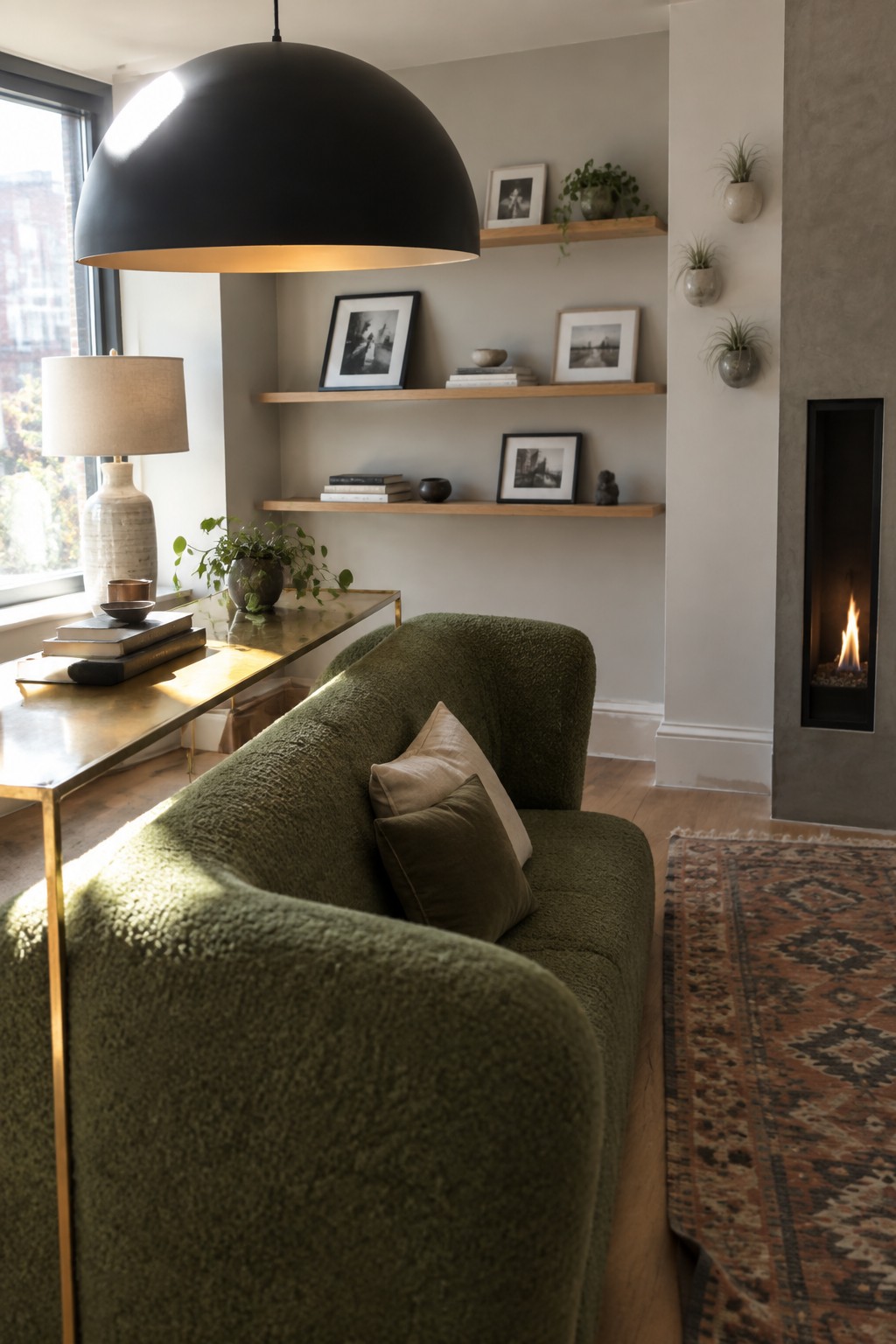
A big pendant light hung right over the sofa gives the whole room a clear center without much extra effort. It pulls attention upward and makes the seating area feel like the main spot in the space, even when the rest of the room stays fairly simple.
This idea suits rooms with average or higher ceilings where the light can hang at a comfortable level above the furniture. Keep the shade shape straightforward if the sofa or rug already has texture, and check the scale so the light does not overpower the seating below it.
Long Linear Pendant Lights in Living Rooms
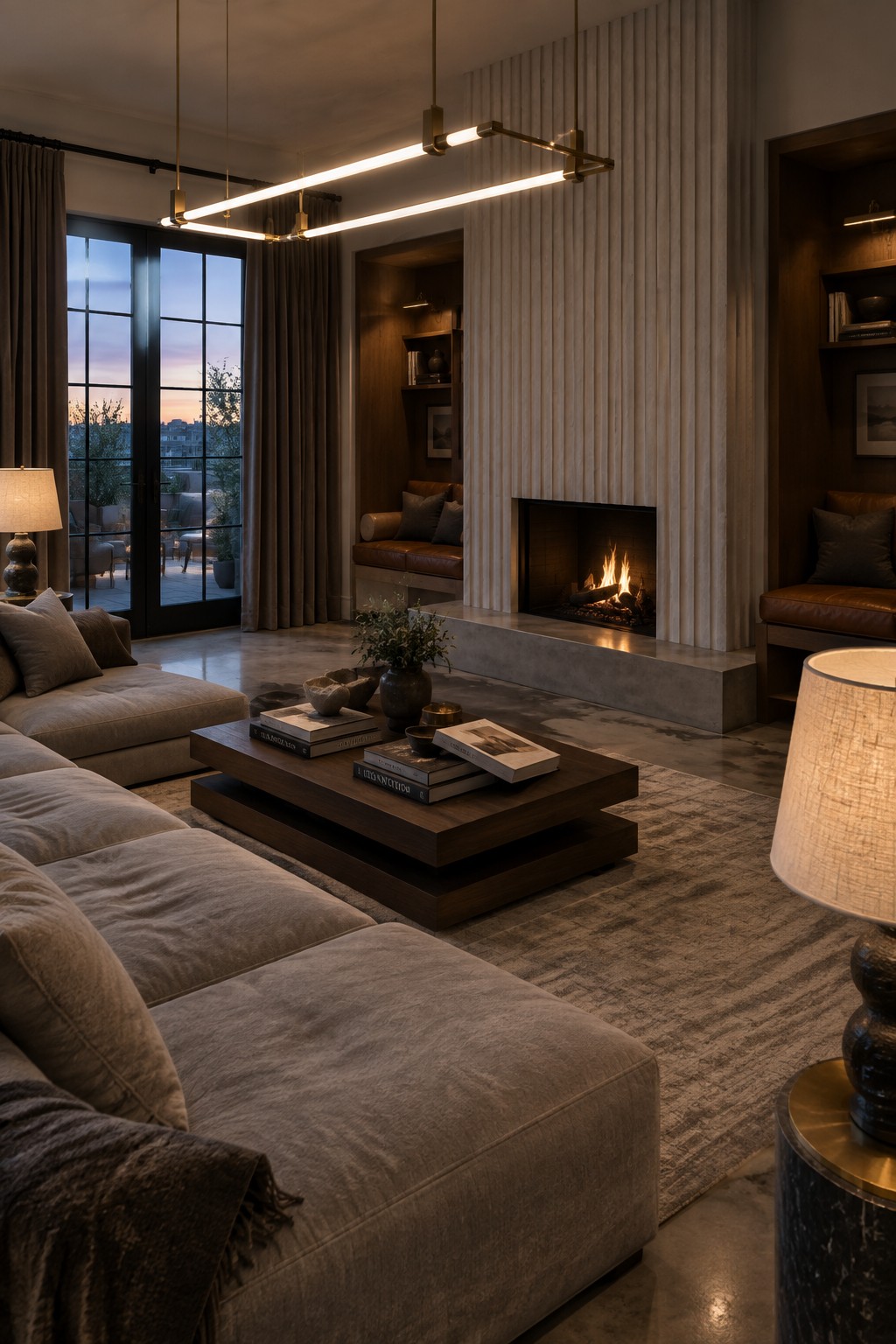
Long linear pendant lights can give a living room a calm, modern structure without adding clutter on the floor. They stretch across the seating area and provide steady light from above, which works especially well when the room also has other sources like table lamps and a fireplace to keep things warm and balanced.
This approach fits best in open or slightly taller spaces where the ceiling can handle the length. Keep the fixtures high enough so they do not interfere with movement, and choose a finish that blends with the rest of the room rather than fighting it.
A Large Chandelier Can Warm Up a Neutral Room
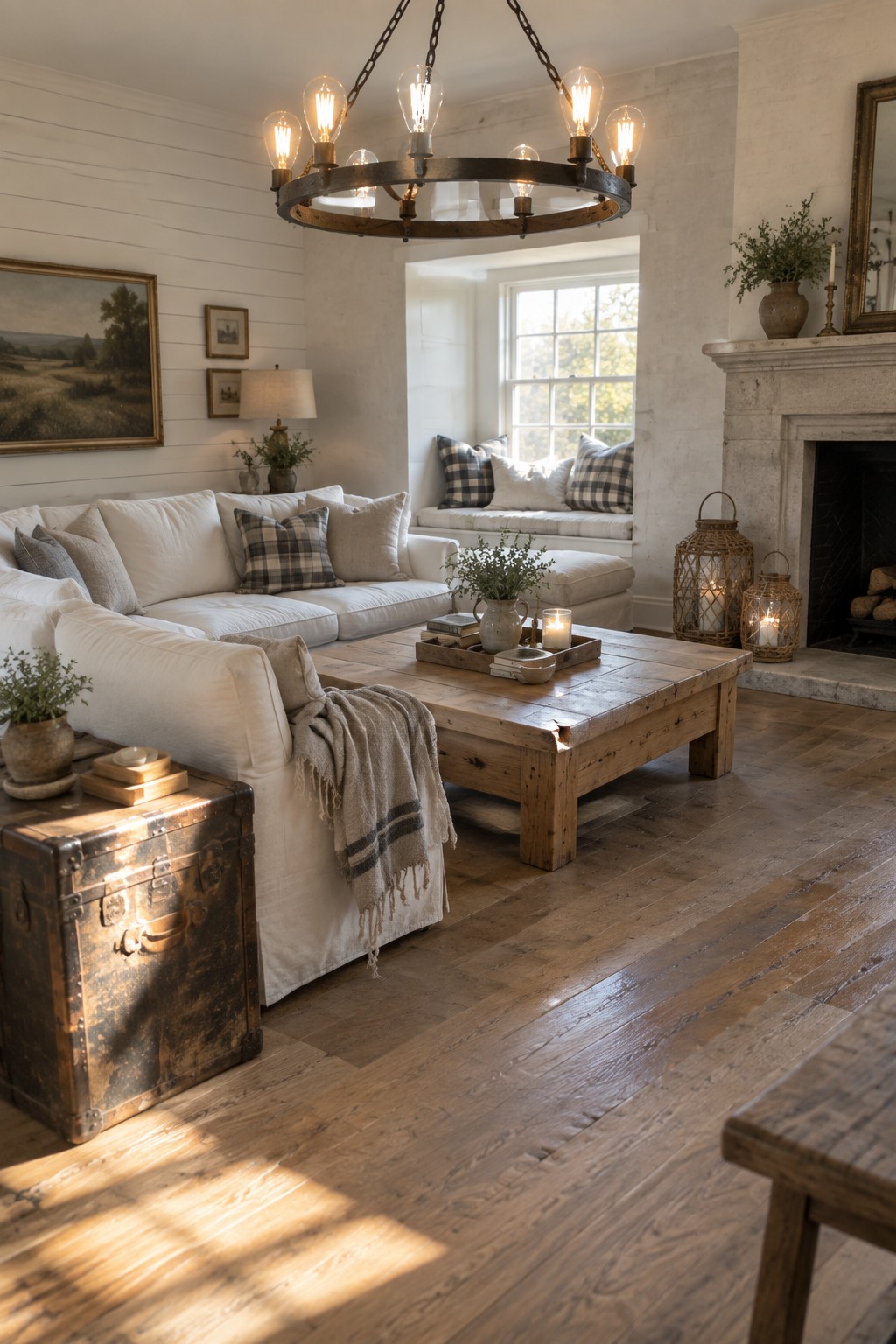
A big chandelier with exposed bulbs gives a room instant character without needing lots of extra pieces. It draws the eye upward and fills the space above the seating area in a way that feels balanced and intentional. The wooden frame and simple bulbs keep it from feeling too formal.
This works especially well in rooms with white or light walls and wood floors, where the light fixture becomes the main point of interest. It suits homes that lean toward simple, unfussy furniture but still want one standout element. Just make sure the scale matches the ceiling height so it does not feel too heavy.
Let a Large Pendant Anchor the Room
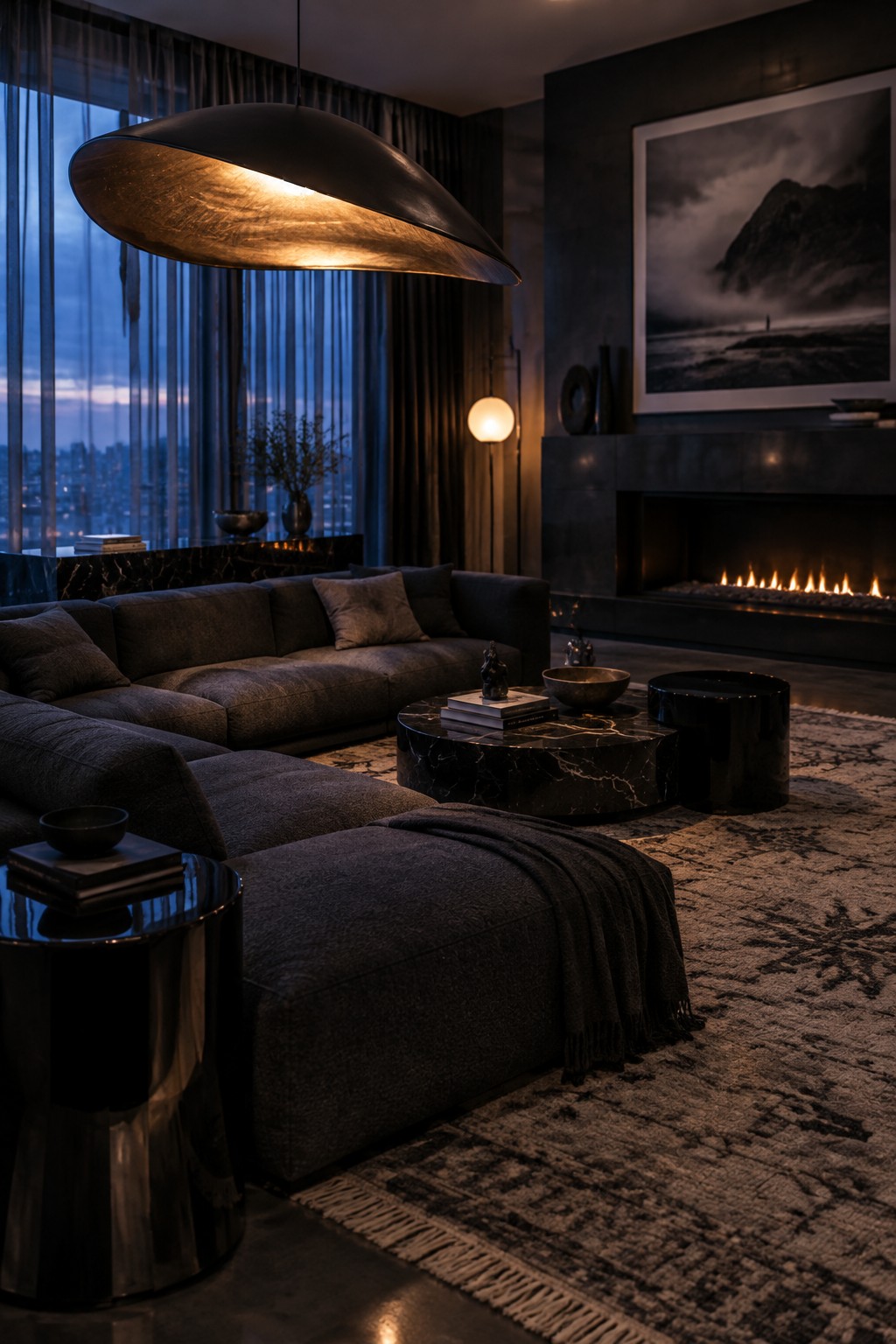
A big pendant light can pull a living room together when everything else stays low and dark. It gives the space one clear focal point and keeps the rest of the furniture from feeling scattered.
This approach works well in rooms with decent ceiling height and an open seating layout. Keep other lights softer and lower so the pendant stays the main thing people notice.
A Sculptural Chandelier in a Neutral Living Room
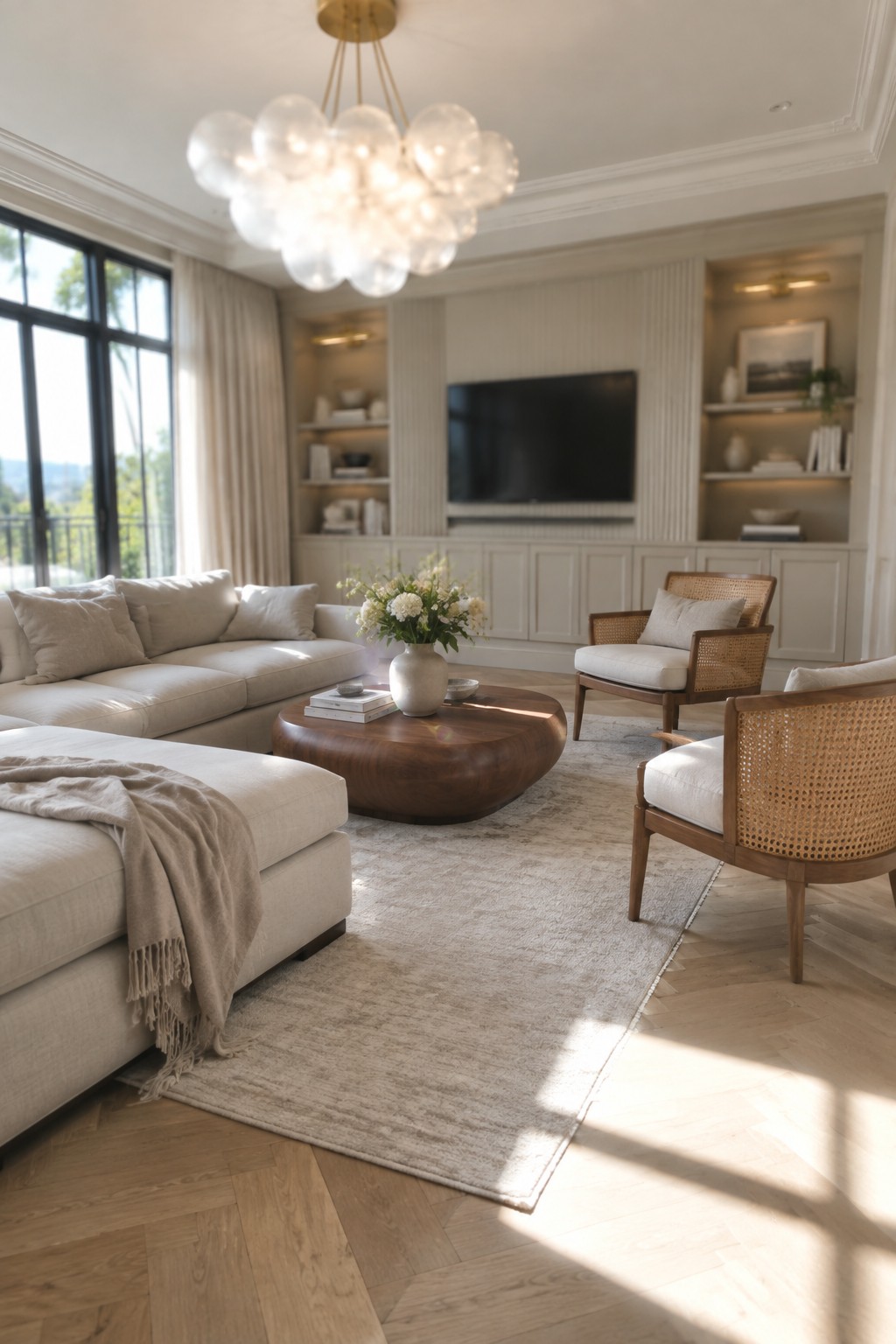
A big sculptural chandelier works well in a room that stays mostly quiet in color and pattern. It gives the space a clear focal point while the soft sofa, pale rug, and simple wood tones keep everything grounded and easy to live with.
This setup suits homes that get good natural light and have decent ceiling height. Place the fixture over the main seating area and let the rest of the room stay low and unfussy so the light does the talking.
Frequently Asked Questions
Q: What size statement light works best in a medium living room? A: Start with measuring your space first. A light that is about one half to two thirds the width of your main seating area usually feels right. Hang it high enough so no one bumps their head walking under it.
Q: Can I use a bold light if my sofa is already pretty eye catching? A: Pick a light in a simple shape or neutral tone to balance things out. The goal is to let each piece stand on its own without fighting for attention. Try placing the light above a quieter corner instead.
Q: How do I light the rest of the room around one big fixture? A: Add a couple of table lamps on side tables for reading. Floor lamps in darker spots help fill gaps too.
Q: Is it okay to mix metals in my lighting and furniture? A: Stick to two metal finishes at most. Brass with black often works well together in elegant setups.
