

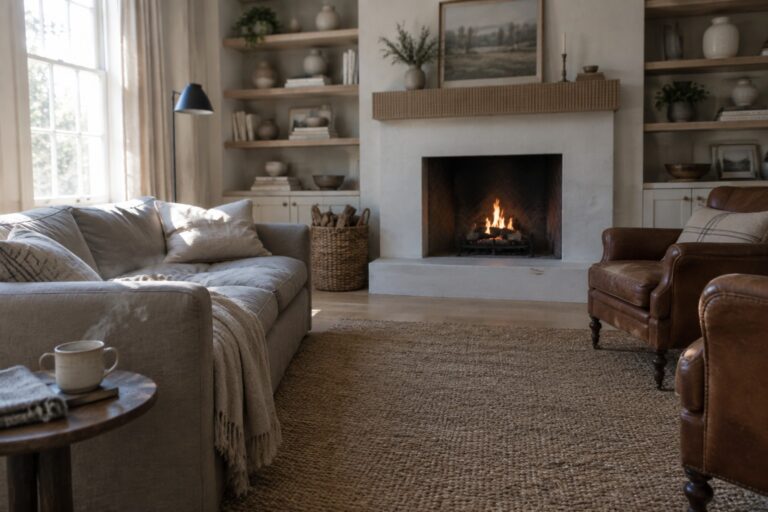
The way a living room comes together around a fireplace depends on how the furniture supports both conversation and daily movement.
I have found that starting with the actual walking paths saves a lot of rearranging later on.
Layout comes first.
From there the materials and lighting choices can build on that base without fighting the room’s natural flow.
These ideas often highlight small adjustments that make the space feel more balanced in real use.
Anchor Fireplace Seating With a Large Area Rug
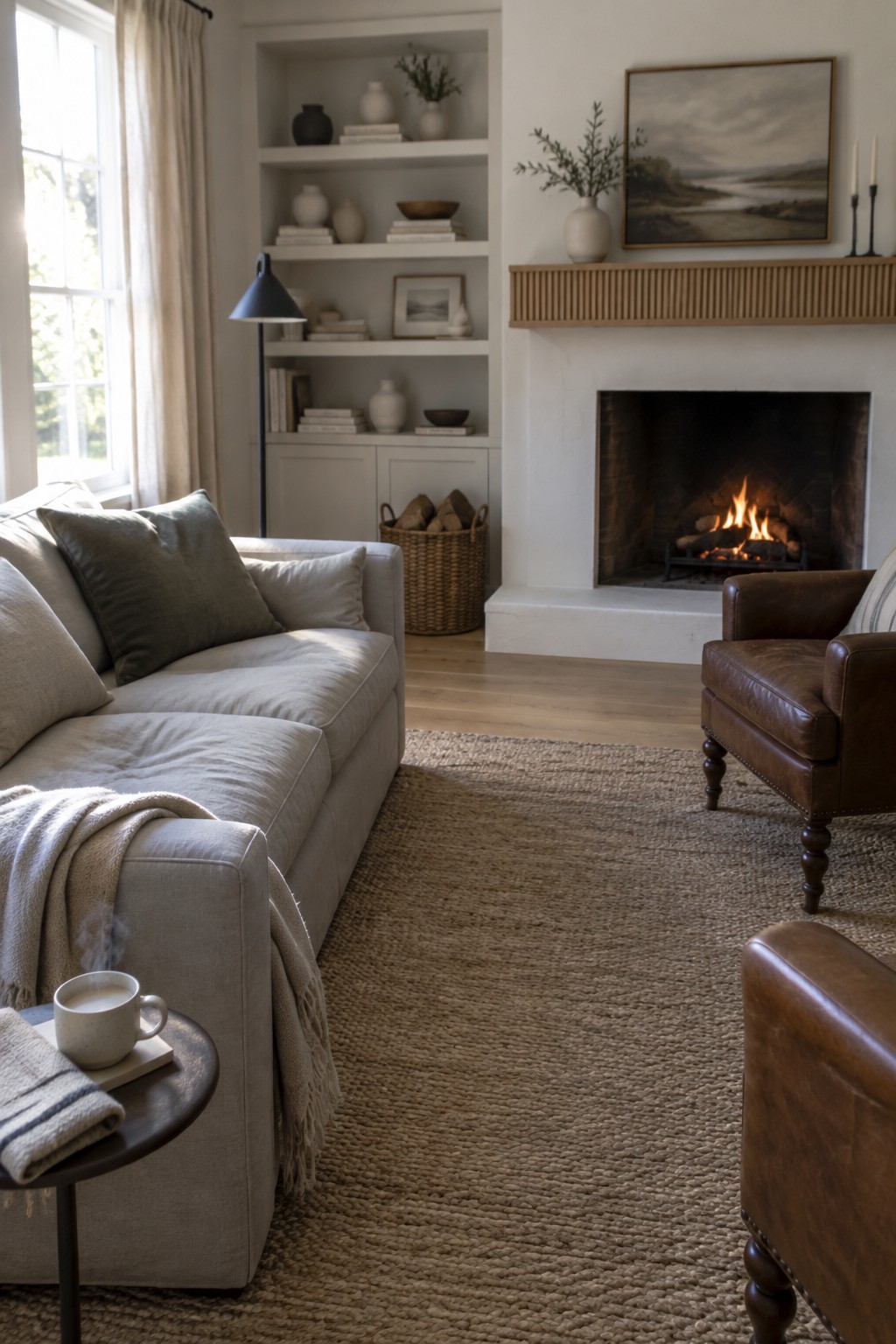
A big woven rug does more than cover the floor. It pulls the sofa and chairs into one clear spot right in front of the fireplace, so the whole room feels like it has a center instead of just floating furniture.
This works best in rooms where the fireplace sits on a long wall. Keep the rug large enough that every seat leg rests on it, and stick with a neutral tone so it does not fight the flames or the wood tones around them.
Anchor the Living Room With a Stone Fireplace
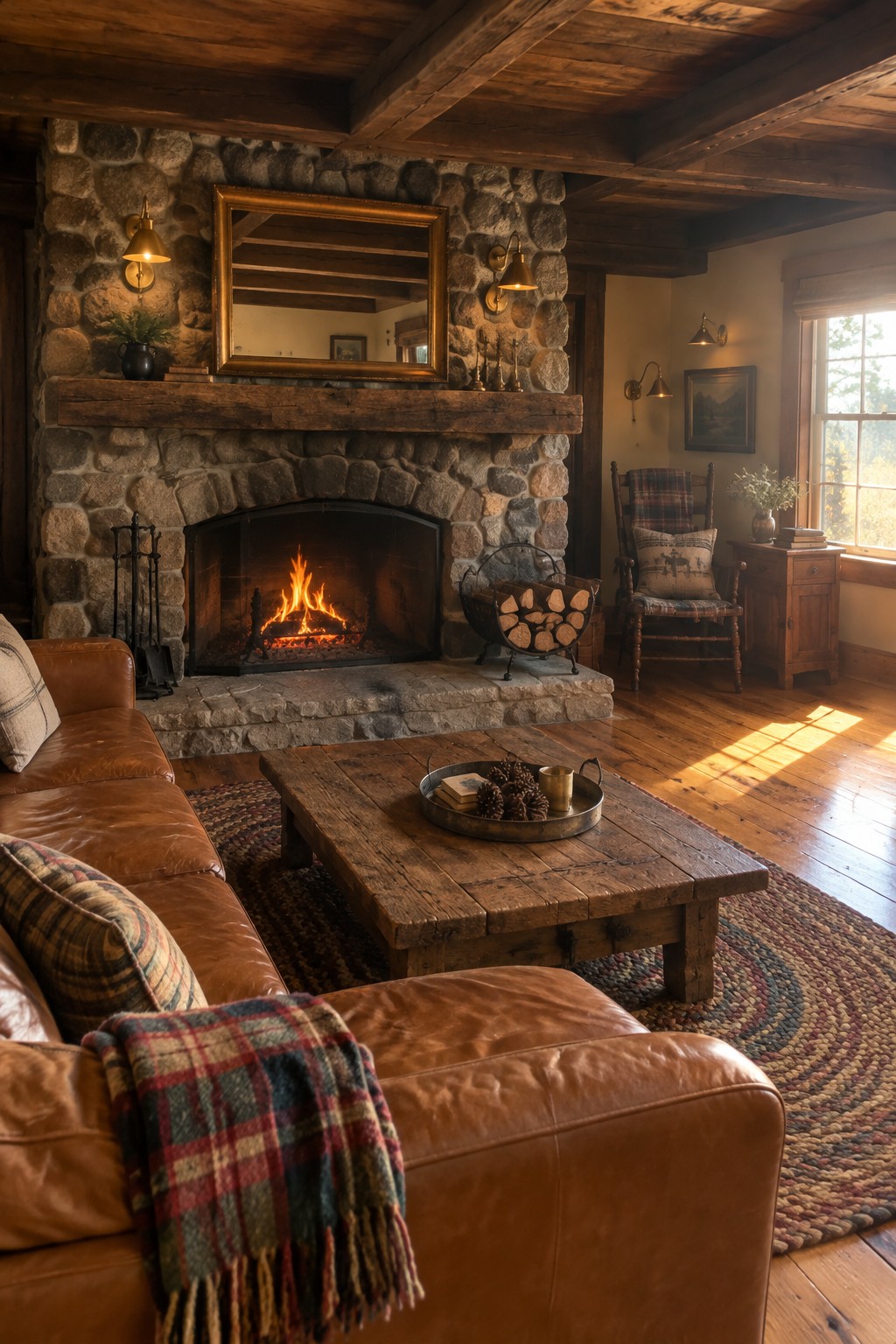
A large stone fireplace gives the room an instant center that everything else can work around. The rough texture and solid mass of the stone keep the space from feeling scattered, even when you add softer pieces like leather seating and plaid throws.
This setup works best in homes that already have some wood and natural materials. Keep the seating low and angled toward the fire, and resist the urge to load up the mantel. A few simple objects are enough.
Arrange Seating to Face the Fireplace

Many living rooms feel more comfortable when the main sofa sits directly across from the fireplace. It turns the fire into the natural center of the room and makes the space feel warmer without extra effort.
This layout works well in rooms with a standard fireplace and a bit of open floor space. Place the sofa on a rug, keep a low table in the middle, and leave enough room to walk around the sides. It suits most homes and helps the room feel balanced even when the rest of the furniture stays simple.
Built-In Shelving Around the Fireplace

Adding open shelving right next to the fireplace gives the room a place to hold books, baskets, and a few plants without taking up floor space. It turns the area around the fire into a spot that feels lived in and useful at the same time.
This works best in smaller living rooms or homes with a relaxed style. Keep the shelves a little loose with a mix of upright books and a few low baskets so the whole thing stays easy rather than overly styled.
Balance a Fireplace with Matching Armchairs

Placing a pair of matching armchairs on either side of the fireplace gives the room a steady, settled feel. The symmetry draws people in without making the space feel stiff, and it creates natural spots for conversation near the heat.
This setup works best in rooms where the fireplace is the main focal point. Keep the chairs the same in scale and fabric so they read as a pair, and add a rug underneath to hold the arrangement together. It suits older homes especially well, where the mantel already carries some weight.
Style Built-In Shelves Around a Stone Fireplace

Built-in shelves on both sides of a fireplace give the whole wall a finished, collected look without needing a lot of extra furniture. The shelves add storage for books and small pieces while keeping everything centered on the fire itself.
This setup works best in rooms where you already have a solid fireplace wall and want to add character without crowding the floor. Match the cabinet color to the walls or the stone for a calmer effect, and leave some open space on the shelves so the arrangement does not feel too heavy.
Define the Fireplace Seating Area with a Patterned Rug

A big patterned rug can tie the seating together and make the area around the fireplace feel like one complete spot instead of separate pieces. It adds softness underfoot and helps the room feel warmer without needing a lot of extra layers.
This idea works best in living rooms where the fireplace sits on an open wall and you want the furniture to feel gathered. Pick a rug that is large enough for the front legs of your chairs and sofa to sit on it, and keep the colors simple so they blend with the brick and wood tones already in the room.
Extend the Hearth as a Low Platform
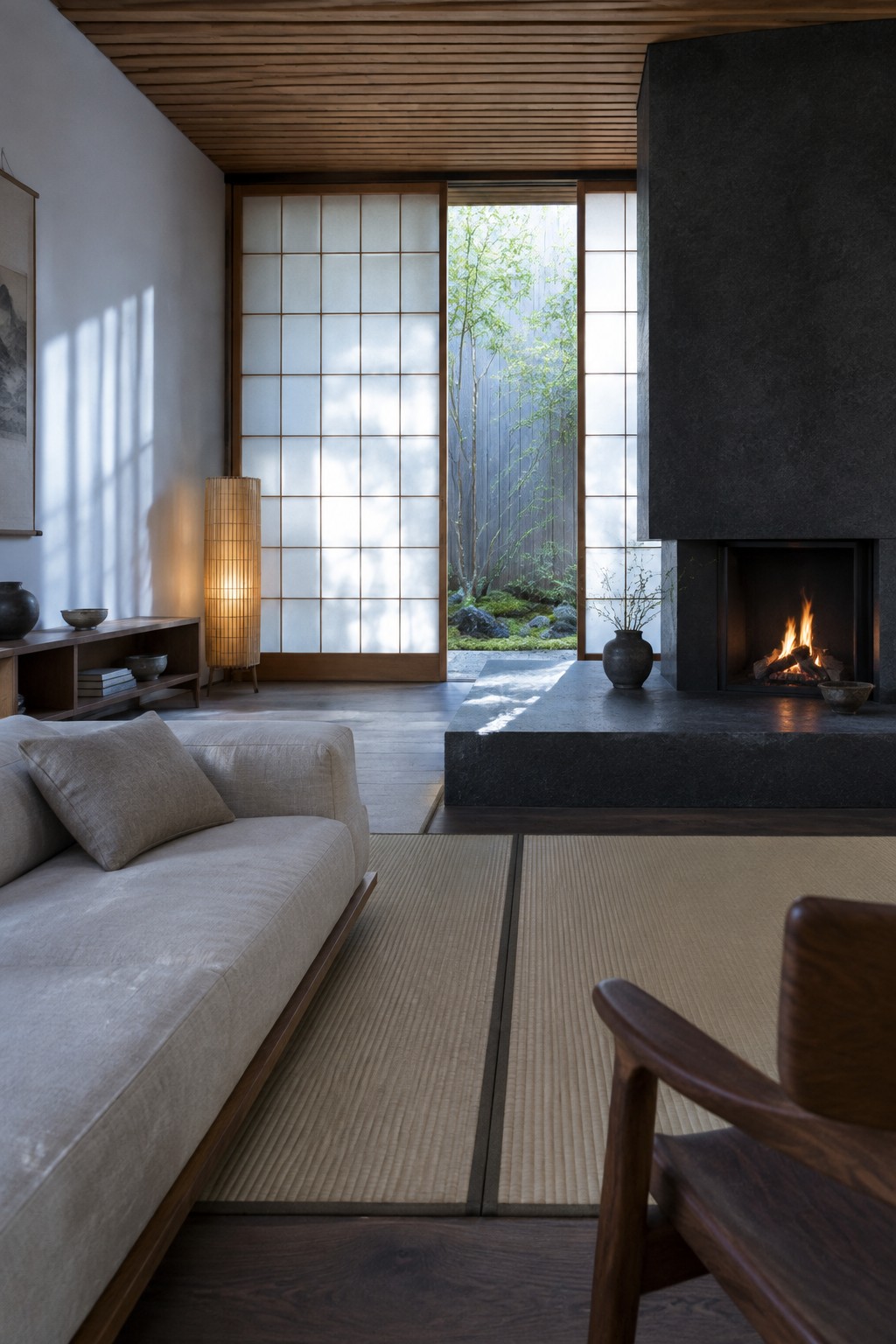
A low stone hearth that extends into the room can make the fireplace feel more grounded and easier to gather around. Instead of a tall boxed-in firebox, the stone sits close to the floor and creates a natural edge for the seating area without needing extra furniture or walls.
This approach works well in rooms with floor seating or simple layouts. The platform gives you a place to set a few objects while keeping the overall space open and calm. Just make sure the stone stays in proportion to the room so it does not dominate the floor.
Mix Natural Materials Around the Fireplace

Many living rooms feel warmer when the fireplace sits among different natural textures instead of standing alone against plain walls. Wood, stone, and woven fibers each bring their own weight and feel, so the area ends up looking settled rather than styled.
This approach works best in homes with wood floors or exposed beams already in place. Keep the mix simple by letting one material lead, such as a thick wood table in front of the hearth, while the stone and rug play supporting roles. Too many competing patterns can pull attention away from the fire itself.
Arrange Seating Around the Fireplace

Furniture placement makes a big difference when you have a strong fireplace to work with. Setting the main seats so they face the hearth turns the fire into the center of the room instead of just a wall feature. The layout feels natural because everyone ends up oriented toward the same spot, which helps the space feel warmer and easier to use for conversation.
This works well in living rooms that have enough floor space for a full seating group. Keep the coffee table low and centered on a large rug so the arrangement stays grounded. It suits older homes with big stone fireplaces but also works in newer builds if you keep the rest of the furniture simple and let the hearth do most of the work.
Center a Sofa and Rug Opposite the Fireplace

One of the easiest ways to make a fireplace the real heart of a living room is to turn the main seating toward it. When the sofa sits opposite the fire, the room feels more pulled together and ready for quiet evenings without much extra effort.
This layout works well in rooms where the fireplace takes up a good section of wall. Keep the rug large enough to hold the coffee table and a couple of chairs so the whole area feels connected rather than scattered.
Hang a Large Mirror Above the Fireplace
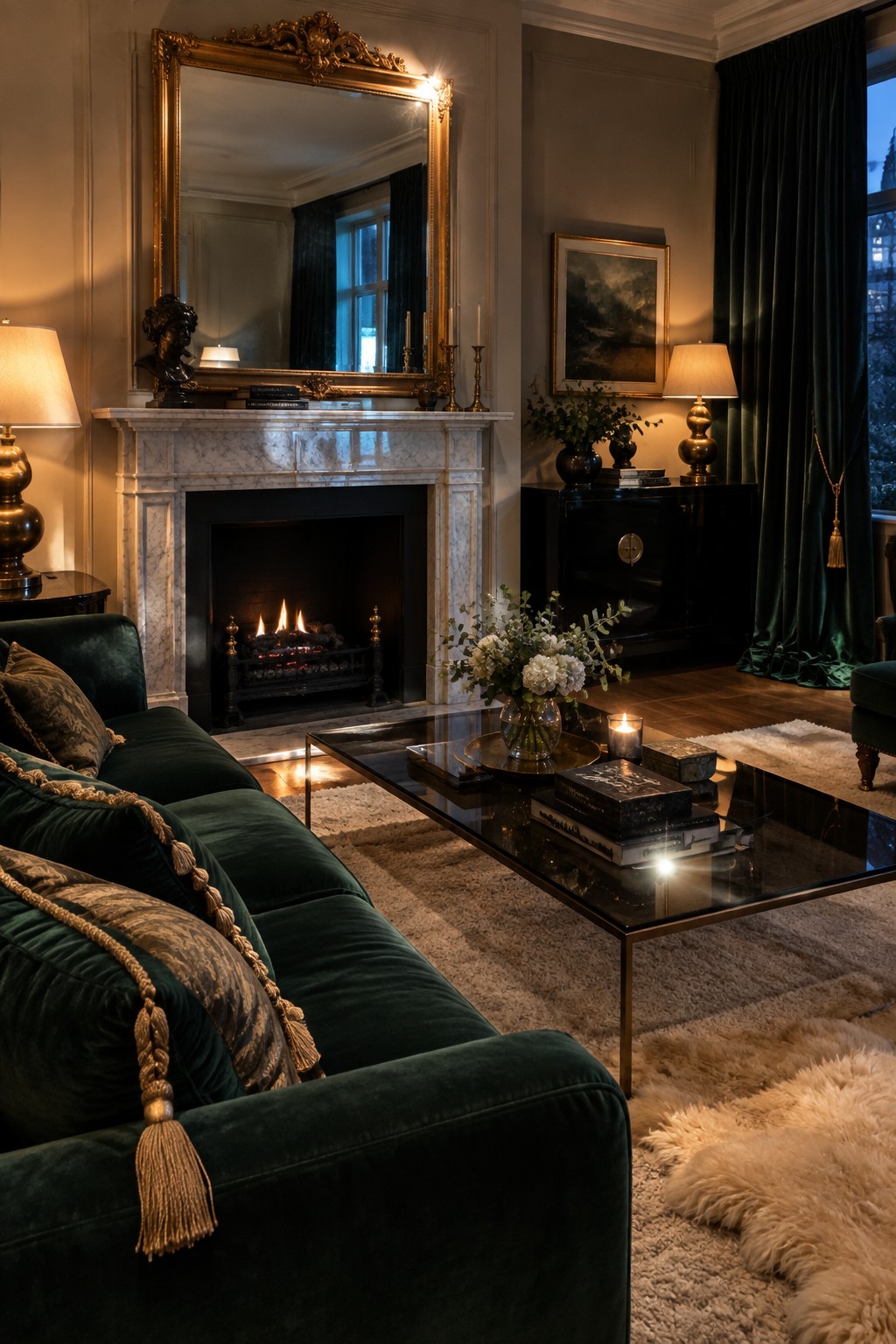
A big mirror over the mantel does more than look nice. It pulls light from the fire and nearby lamps and sends it back into the room, which helps the space feel warmer without adding more fixtures.
This works best in rooms that get limited daylight or have deeper wall colors. Keep the mantel surface fairly clear so the mirror stays the main feature, and choose a frame that echoes the mantel style rather than competing with it.
Built-Ins on Either Side of the Fireplace
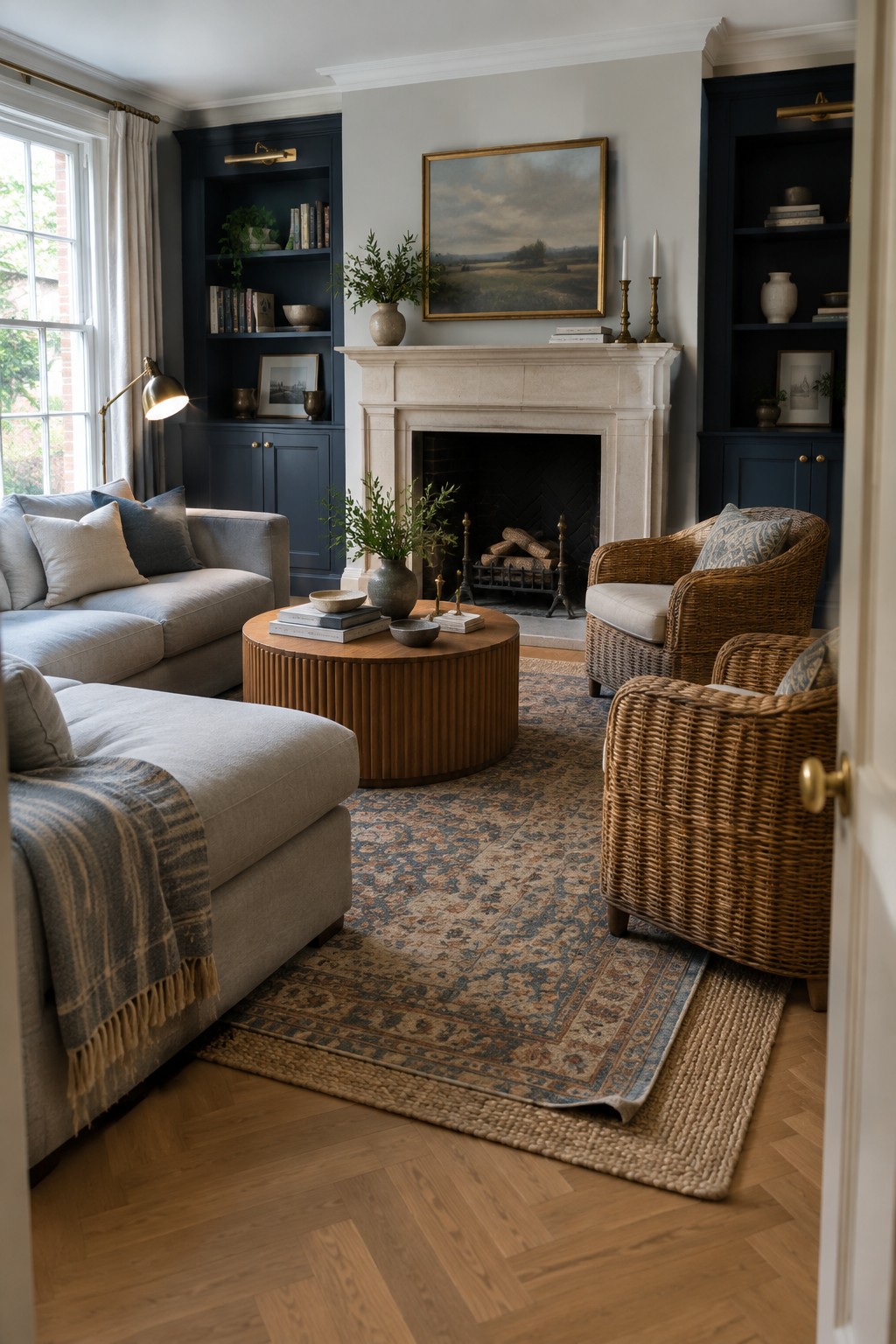
Built-in shelving and cabinets on both sides of the fireplace give the whole room a balanced, finished look. The shelves add storage for books and a few simple objects while keeping the focus right where it belongs, on the fire itself.
This setup works especially well in older homes or any living room that feels a bit empty around the fireplace. Just leave some open space on the shelves so the arrangement stays calm rather than crowded.
Sheepskin Chairs Add Warmth Near the Fire
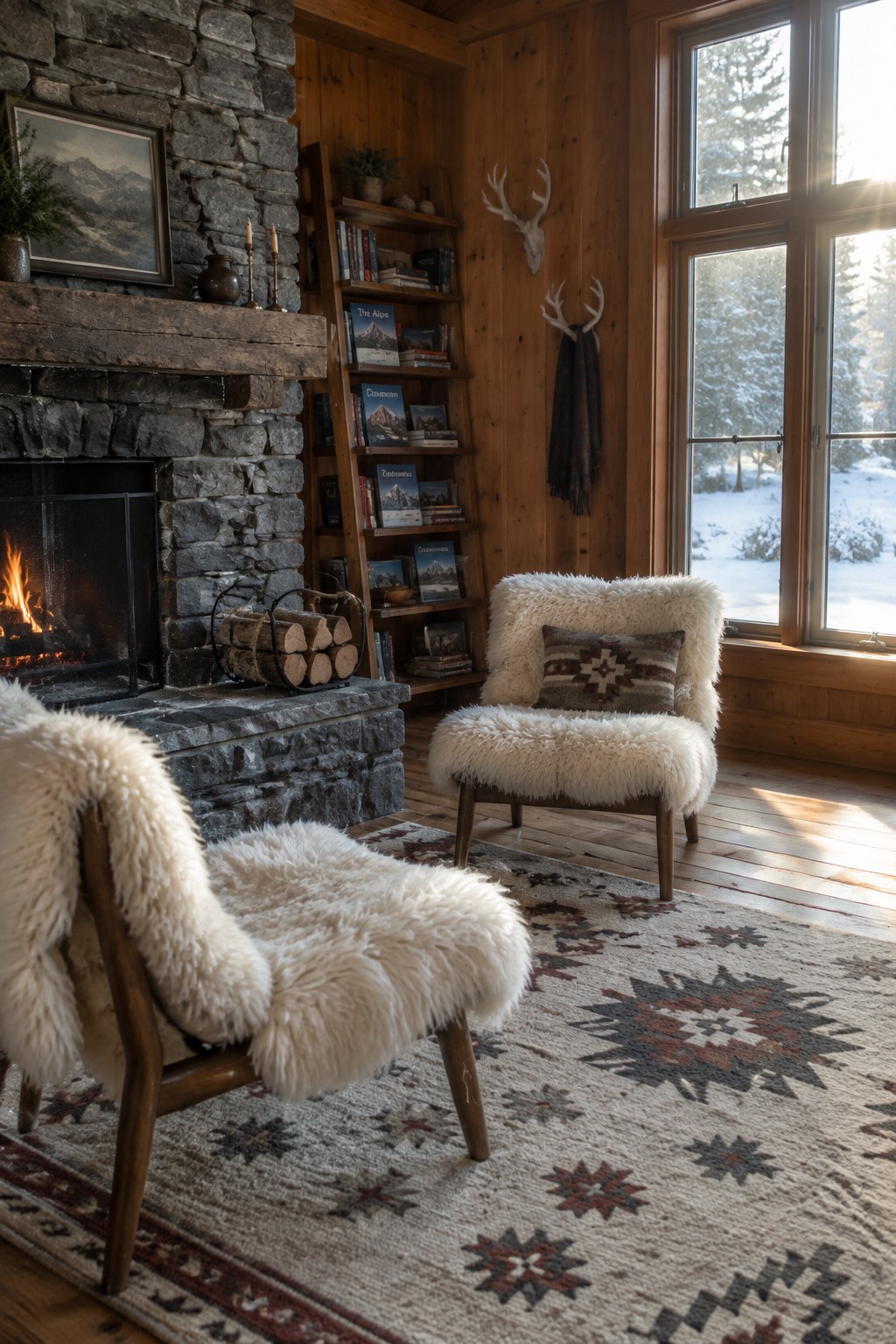
Sheepskin chairs bring a soft layer to rooms built around a stone fireplace. The thick texture balances the hard surfaces and makes the seating feel more comfortable during colder months.
They suit cabins or homes with wood walls and simple layouts. Keep the chairs a few feet from the hearth so the fur stays clean and you still have room to move around the fire.
Pair a Brick Fireplace with Wooden Shelving
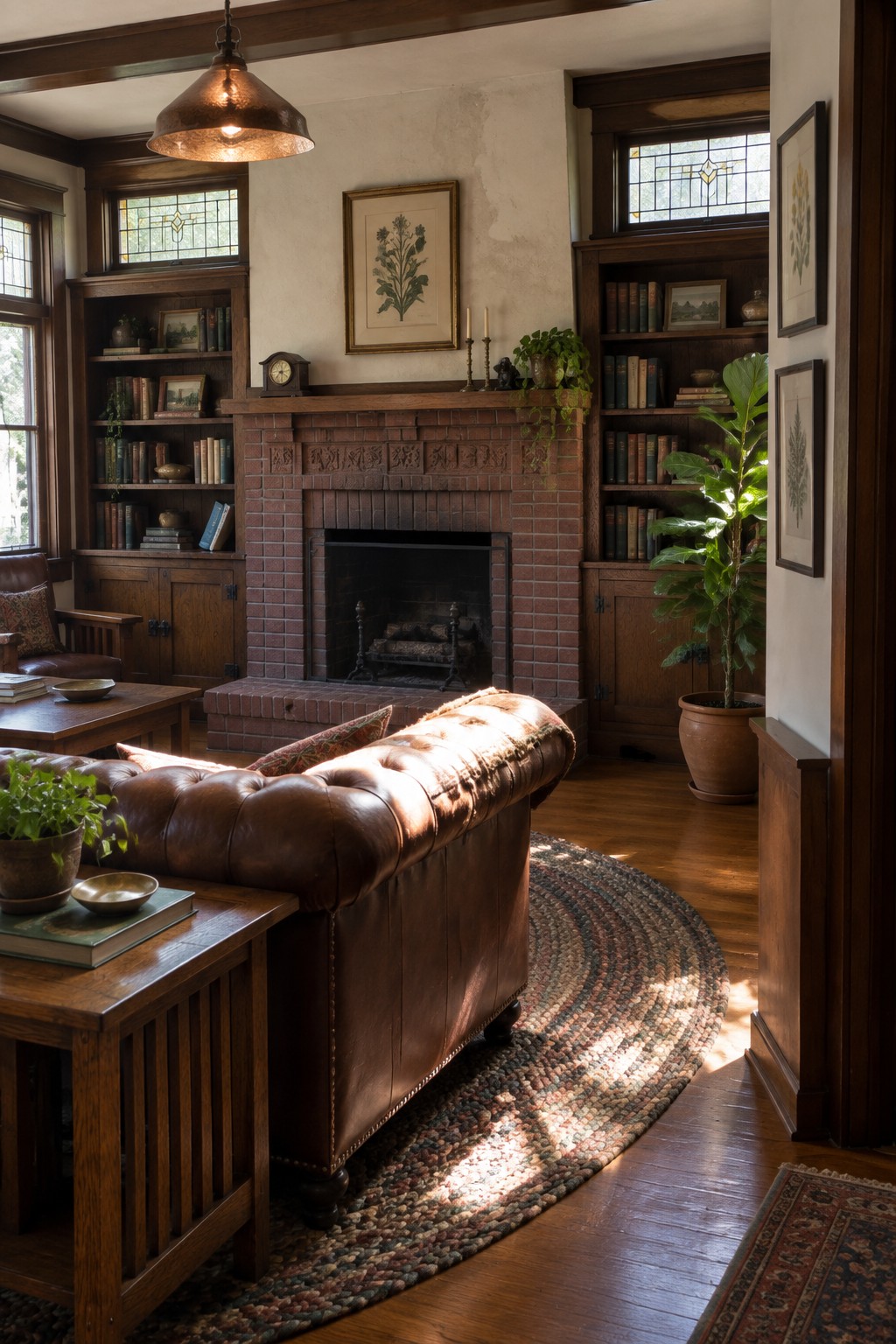
Placing built-in shelves on both sides of the fireplace gives the whole room a settled, collected look. The shelves hold books and a few small objects without crowding the mantel, and the wood tones tie in with the rest of the trim and furniture.
This setup works best in rooms that already have some wall space beside the firebox. Match the wood to existing trim or flooring so the shelves feel like they belong rather than like an add-on. Keep the styling light so the fireplace stays the main focus.
Arrange Your Sofa to Face the Fireplace
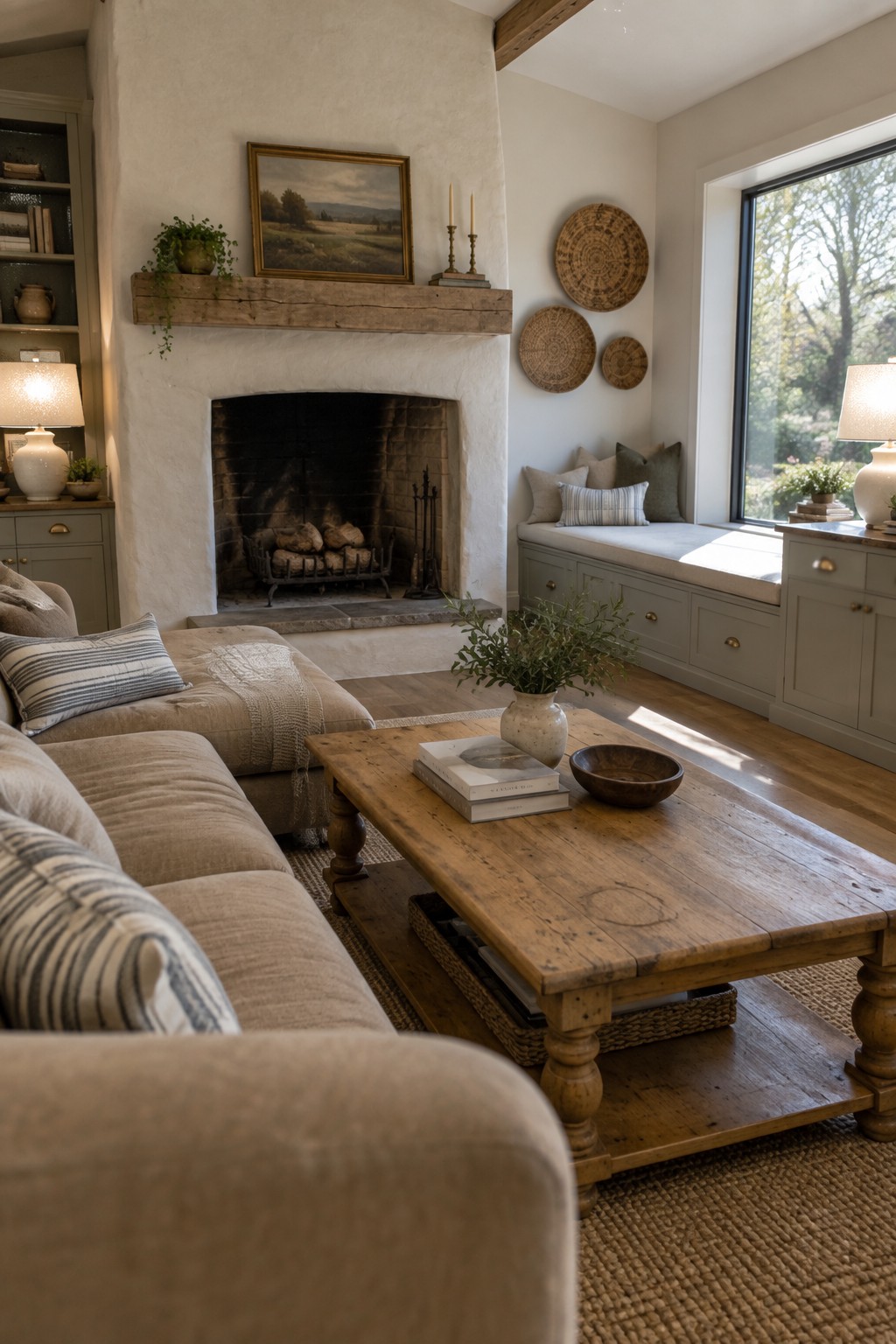
Placing the sofa directly across from the fireplace keeps the room feeling centered and easy to use. The fire becomes the natural spot everyone looks toward, and the layout makes the space feel warmer without any extra effort.
This works best in rooms where the fireplace already has some presence through its size or material. Keep the path between the sofa and hearth clear, and choose a low table so the view stays open. A few neutral textiles on the seating help soften the harder surfaces around the fire without competing with it.
Ground a Fireplace with Terracotta Flooring

Terracotta tiles give a fireplace room a solid base that feels warm and lived in. The color and texture help the hearth blend into the rest of the space instead of standing apart, which makes the whole room feel more pulled together and comfortable.
This approach works especially well in homes with a traditional or Mediterranean feel. Keep the tiles matte and pair them with a simple rug and a few low seats so the floor stays visible and the fireplace remains the clear center.
Anchor the Fireplace Area with a Large Circular Rug
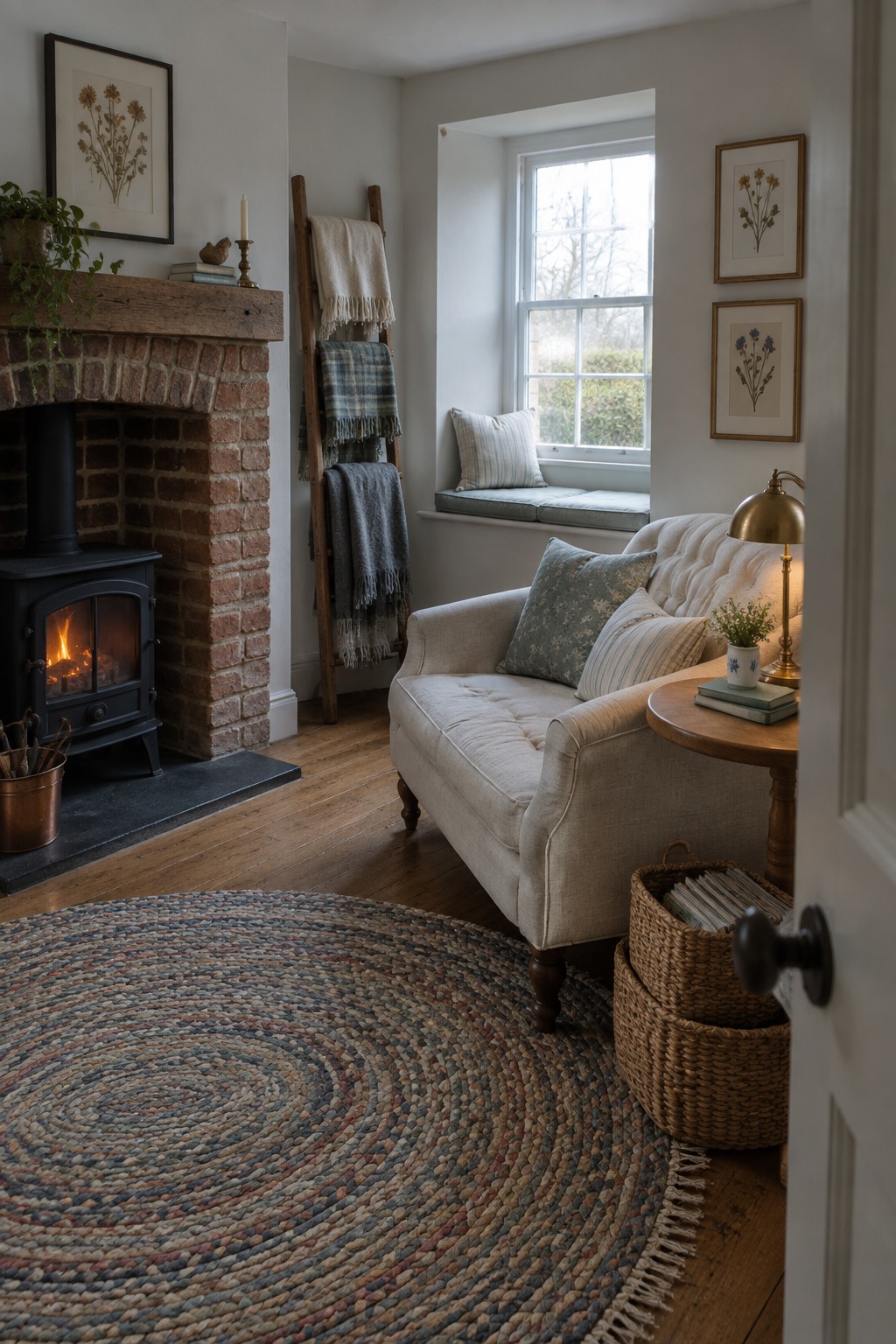
A large round rug placed right in front of the fireplace helps pull the seating together and makes the whole spot feel more settled. The braided texture adds some softness against wood floors and keeps the focus on the fire without needing extra furniture or layers.
This idea works well in rooms that already have a strong fireplace as the main feature. Keep the rug big enough to reach under the front legs of the sofa and any side chairs so the arrangement feels connected rather than scattered.
Built-In Fireplaces That Stay Low And Clean

A long, narrow fireplace set right into the wall gives you the warmth and focus without eating up visual space. It sits low enough that the sofa can face it directly, and the room still feels open above it.
This works best in modern layouts where you want the fire to be present but not dominant. Pair it with simple seating and a few natural textures so the flame becomes the main point of interest.
Anchor the Living Room with a Textured Fireplace

A fireplace with a bold, speckled surround gives the whole room an easy center point. It adds weight and character without extra decoration, and the texture keeps the space from feeling flat even when the fire is not lit.
This approach works best in rooms where you want a clear focal point but still need flexibility for seating. Place a low table and a couple of curved chairs in front so the area feels pulled together without blocking the view of the fire.
Frame the Fireplace with Built-In Bookshelves
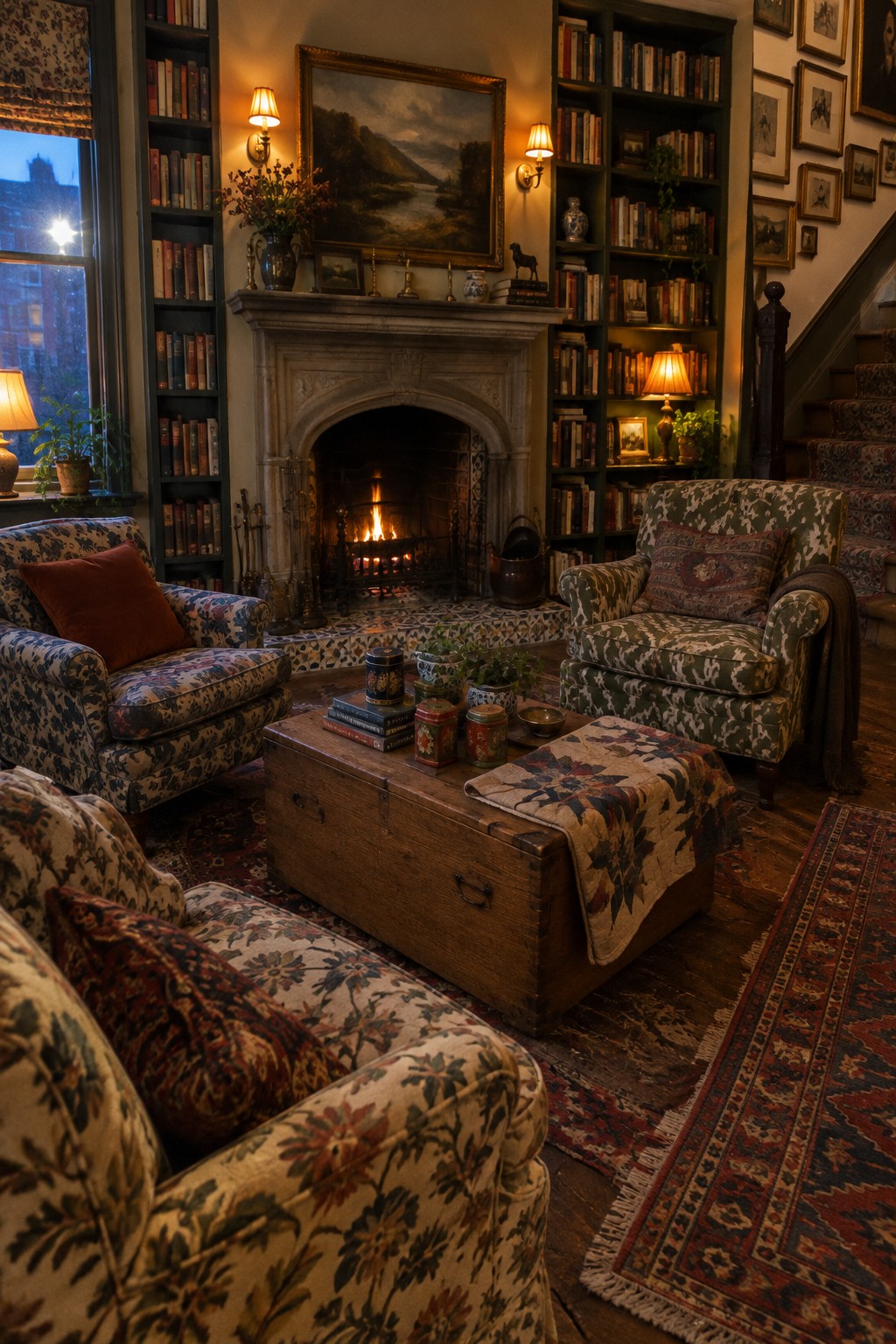
One simple way to make a living room feel warmer is to run built-in bookshelves up both sides of the fireplace. The shelves give the fire a clear place to sit as the center of the room and add plenty of room for books without needing extra furniture.
This setup works well in homes with a bit of wall space on either side of the fireplace. It suits older houses especially, where the goal is to keep the room feeling full but not crowded. Just make sure the shelves are not too deep or they can start to close the space in.
Frequently Asked Questions
Q: How do I stop my furniture from blocking the fire’s heat? A: Angle two chairs toward the fireplace but leave a clear path in front. Tuck a low ottoman nearby for feet without crowding the space. This keeps the warmth moving through the room.
Q: What if I want to hang art above the mantel without it looking stiff? A: Lean a large piece against the wall instead of nailing it up. Pair it with a couple of shorter candlesticks on the mantel. The casual tilt feels more lived in.
Q: Can I still layer rugs when the fireplace sits on hardwood? A: Pick a fire resistant rug and place it a few inches from the hearth. It pulls the chairs together without any risk.
