

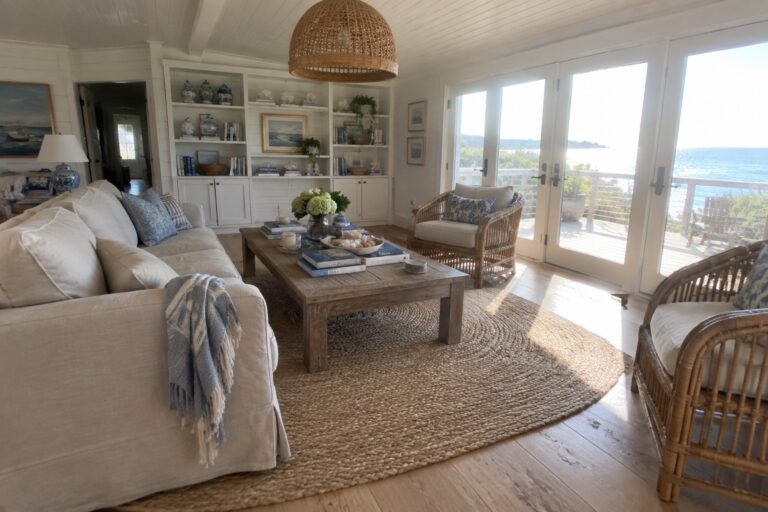
I have noticed that living rooms tend to feel more settled when the seating and floor coverings actually match how the space gets used day to day.
Rattan brings in a lighter structure that works well near windows or along a wall where people pause during the evening.
Natural fiber rugs help tie the seating area together without creating sharp contrasts that stand out once the lights are on.
The coastal look works best when it stays simple.
I would test one of these rug and rattan pairings in my own living room first to see whether the materials hold up once the furniture shifts around.
Rattan Furniture With Natural Fiber Rugs
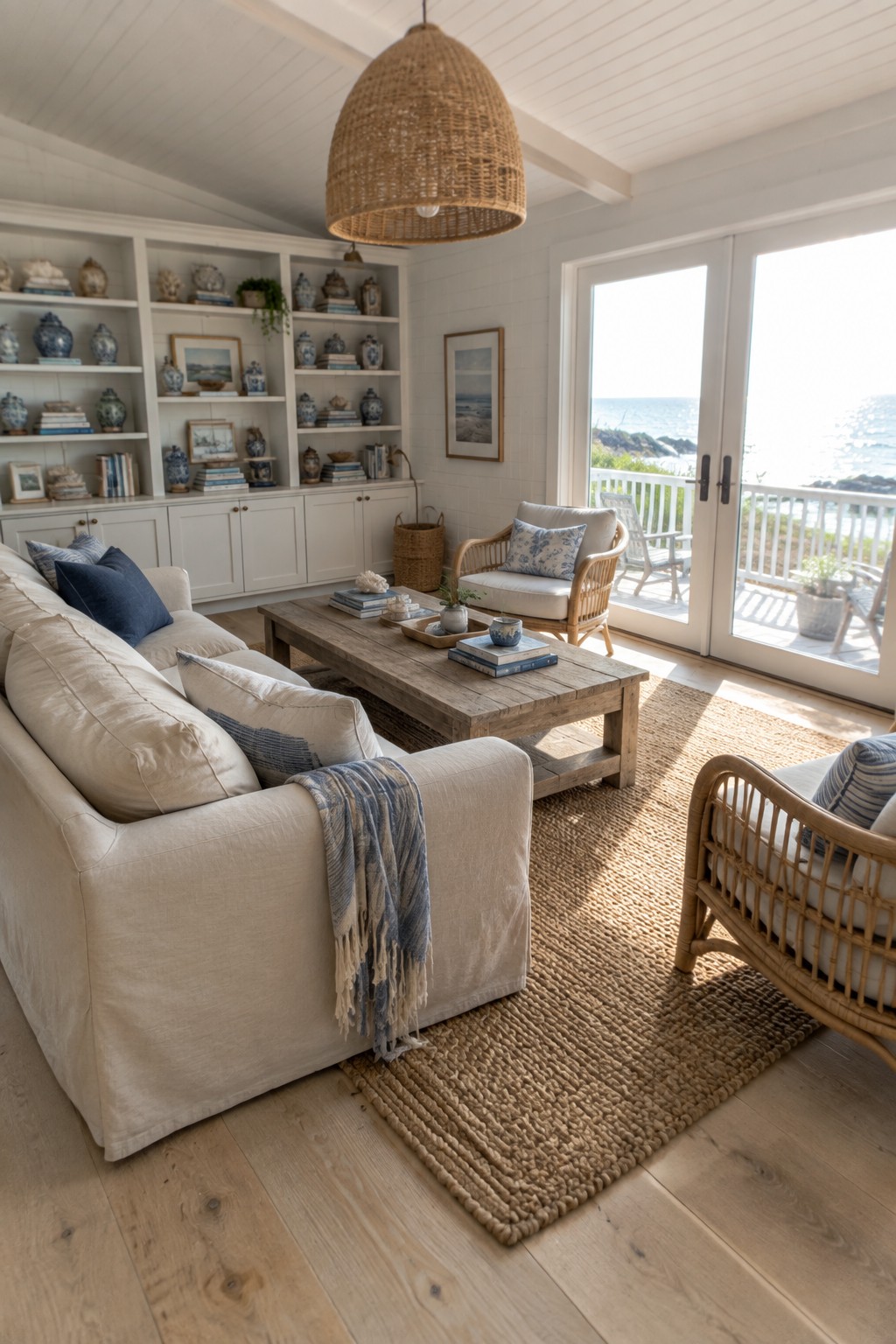
Rattan furniture and a natural fiber rug make a simple combination that fits coastal living rooms well. The rattan stays light and open while the rug adds texture and a bit of softness underfoot. Together they keep the space from feeling too bare or too heavy.
This approach works in rooms that get good light and already have a calm color scheme. It suits homes near the water or anyone trying to create that same easy feel. Keep the rest of the furnishings fairly simple so the rattan and rug can do the work.
Rattan Sofas on Natural Fiber Rugs
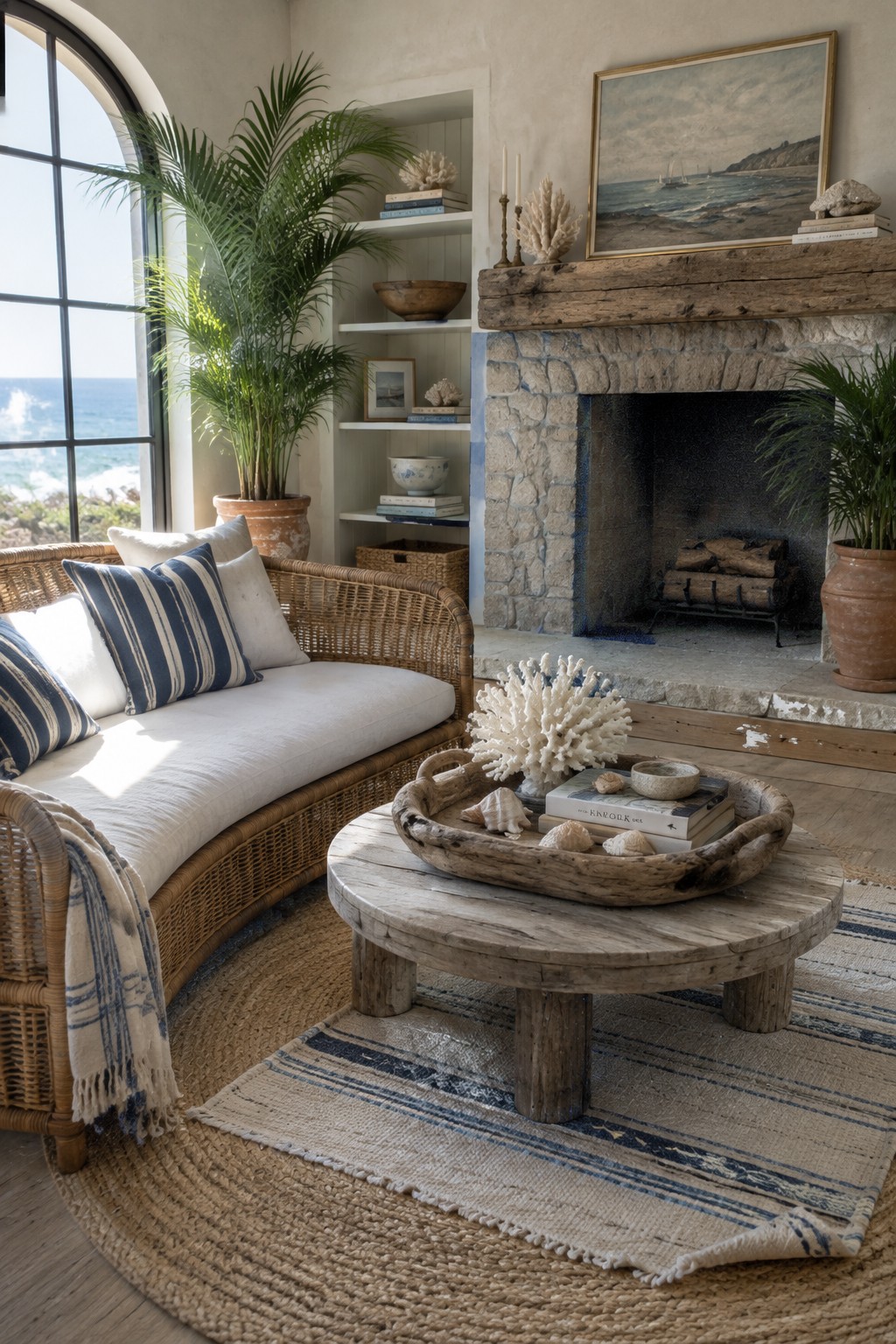
Rattan holds up well in coastal rooms because it stays light and does not fight the view outside. Pairing it with a big woven jute rug underneath gives the seating area a clear spot to rest without making the space feel heavy or closed in.
This setup works best in rooms that already get plenty of daylight and have simple walls. Keep the rug large enough to fit under the front legs of the sofa and any side tables so the whole arrangement feels settled rather than floating.
Layered Rattan Furniture and Natural Fiber Rugs
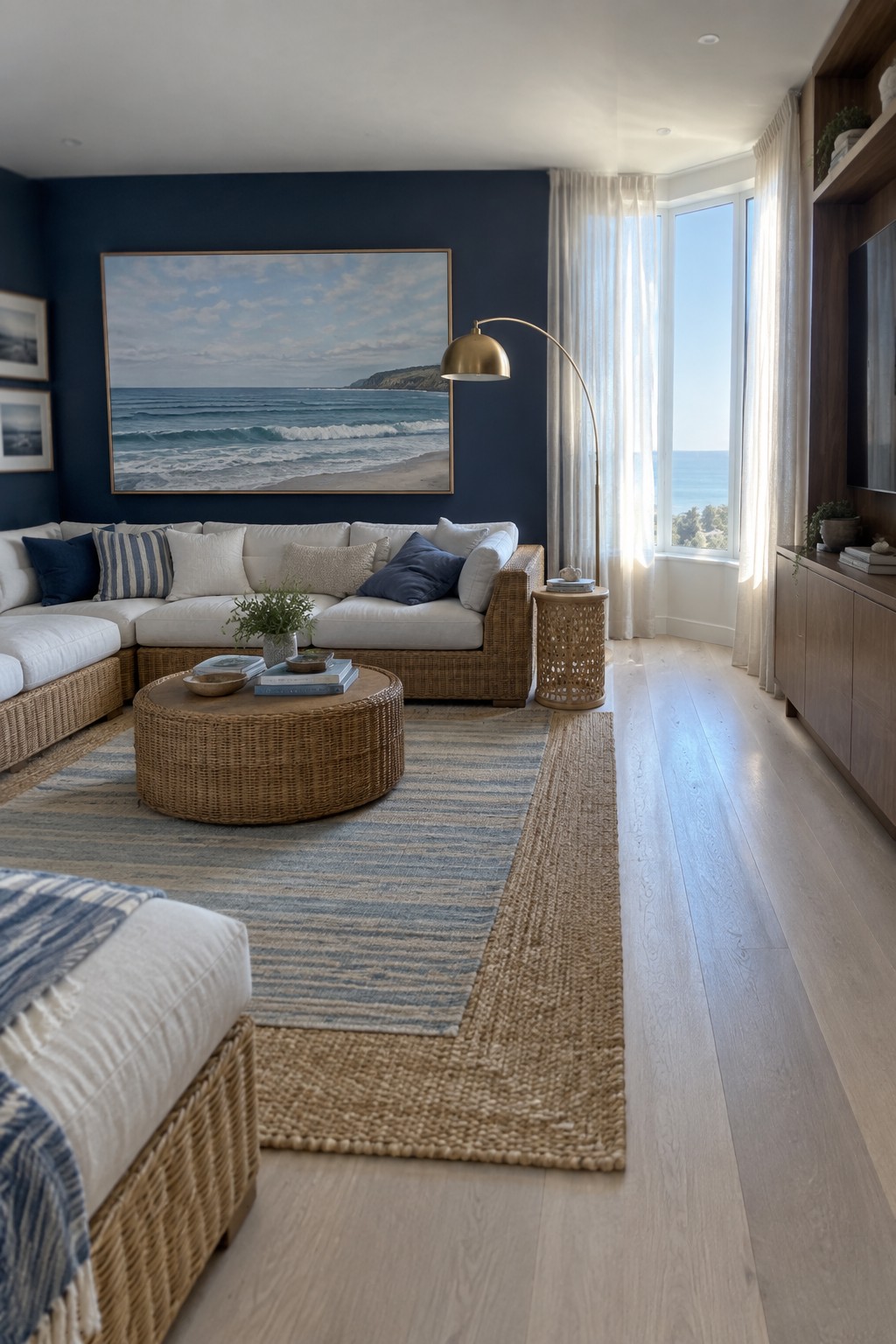
Rattan pieces and natural fiber rugs pair up nicely in coastal living rooms because they keep things light and simple. The woven textures add some interest without making the space feel heavy or closed in. Many people like this mix when they want a relaxed beach feel that still works for everyday use.
Try placing a rattan sofa over a large jute rug with a smaller striped one on top for extra softness underfoot. This approach suits homes near the coast or any room where you want natural materials to do most of the work. Just watch the scale so the rugs do not overwhelm the floor space.
Round Natural Fiber Rugs With Rattan Furniture
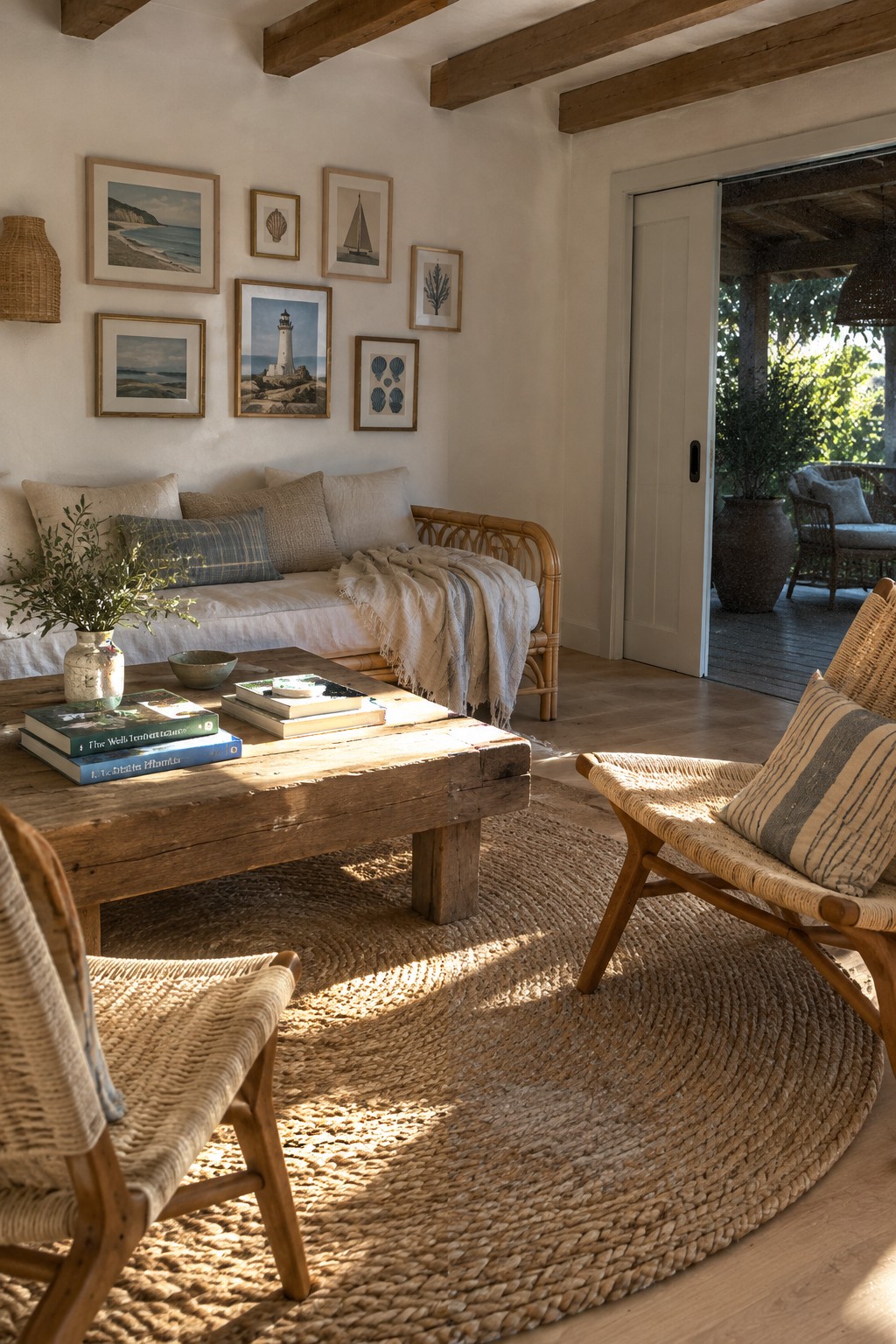
A large round woven rug gives rattan seating a clear place to land. It adds texture underfoot without making the room feel busy, and the natural fibers keep everything feeling light and easy the way coastal rooms should.
This works best in living areas that need a soft boundary but not a hard wall. Keep the rug big enough that the front legs of the sofa and chairs sit on it, and let the rest of the floor stay simple so the weave stays the focus.
Natural Fiber Rugs Anchor Coastal Seating Areas
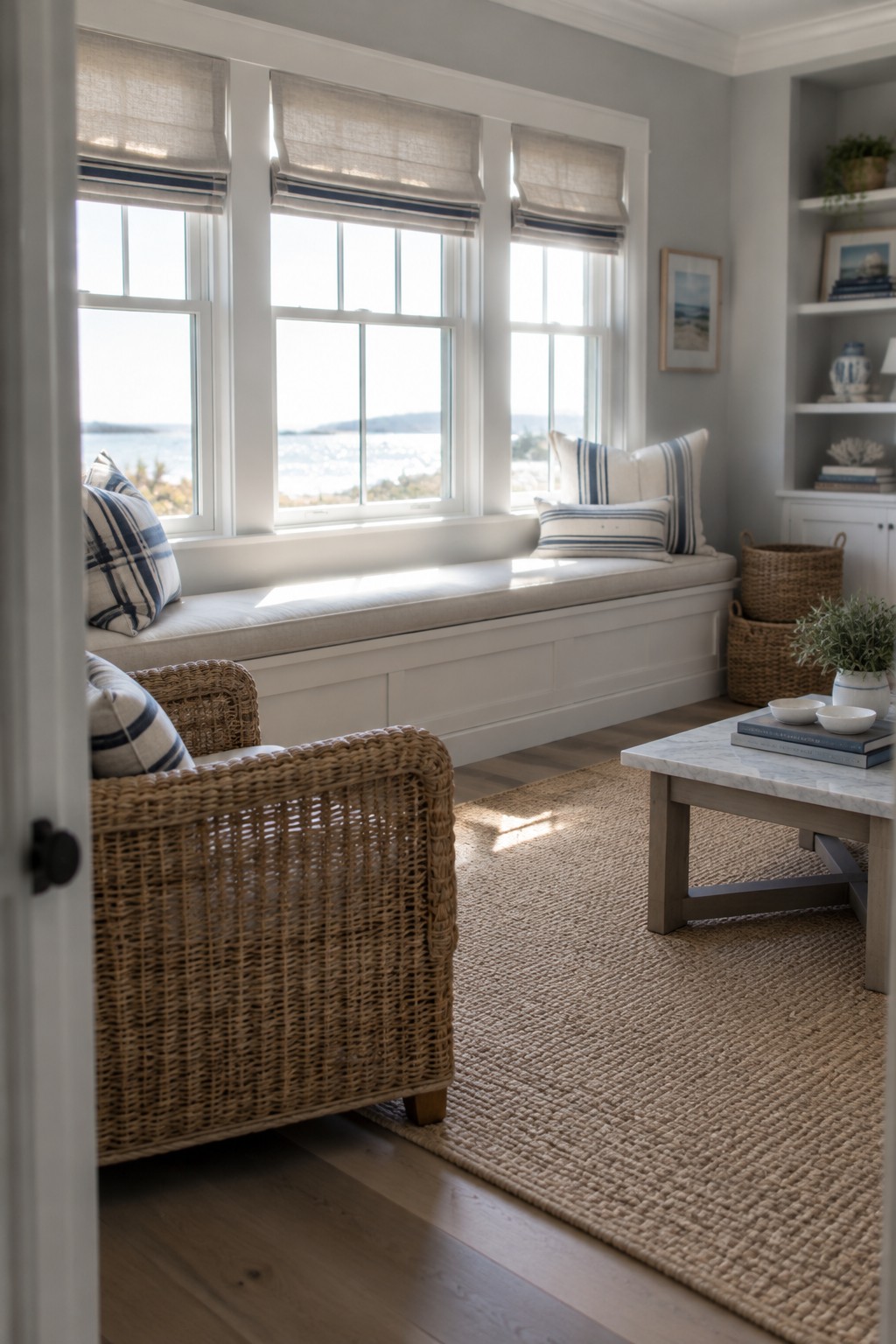
A large woven rug on a wood floor gives the room a soft base without crowding the space. It adds texture that feels right for a coastal room while letting the light from the windows stay the main feature.
This works best in rooms that already have simple furniture. Place the rug under a rattan chair and a low table so the seating area feels pulled together without looking busy. Keep the rug a few inches from the walls so the floor still shows around the edges.
Natural Fiber Rugs Under Rattan Furniture
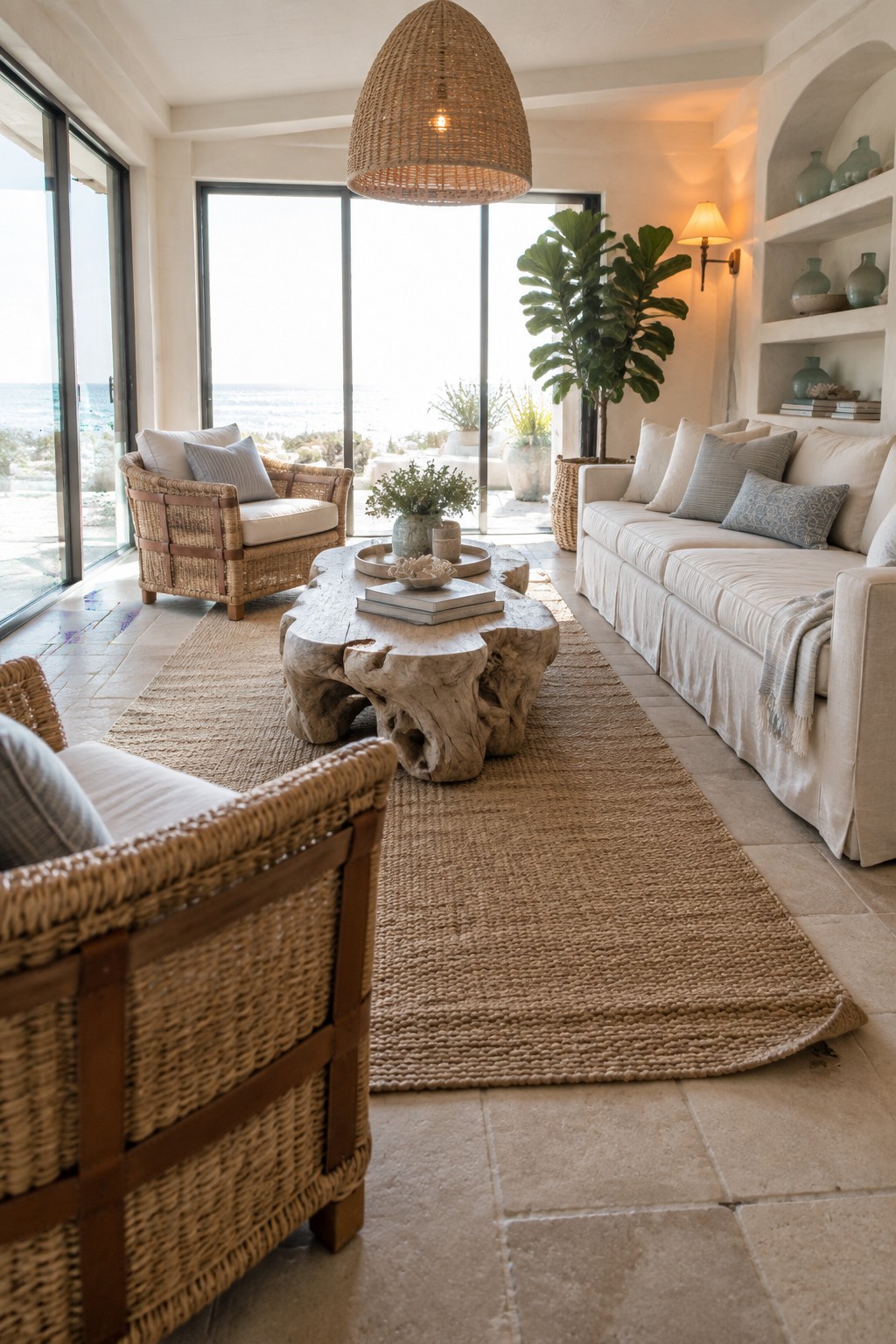
A large natural fiber rug works well as the base layer in a coastal living room because it adds texture without competing with the view or the furniture. Rattan pieces sit comfortably on top of it, and the whole setup stays casual while still feeling complete.
This works best in rooms that open to the outdoors and get plenty of light. Choose a rug big enough for the sofa and chairs to rest on it, and keep the colors simple so the rattan and wood tones stand out against the pale floor.
Natural Fiber Rugs Ground Coastal Seating Areas
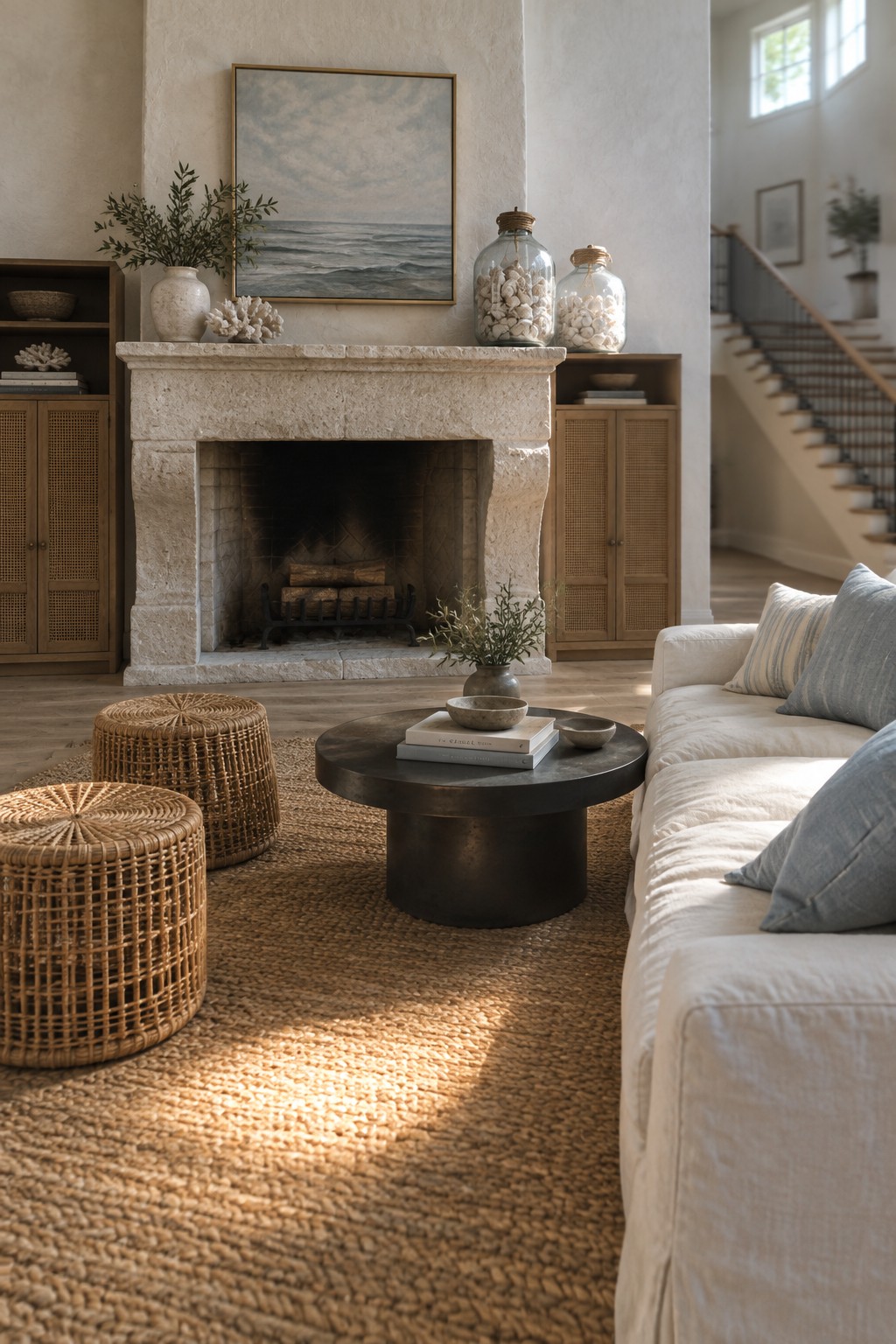
A big woven rug like this one helps pull the whole seating area together in a simple way. It adds texture without crowding the space and lets the rattan stools and linen sofa feel more relaxed.
This works best in rooms that get plenty of light and need a soft layer underfoot. Stick to neutral tones so the rug blends with wood tones and stone rather than competing with them.
Round Jute Rugs Define Seating Zones
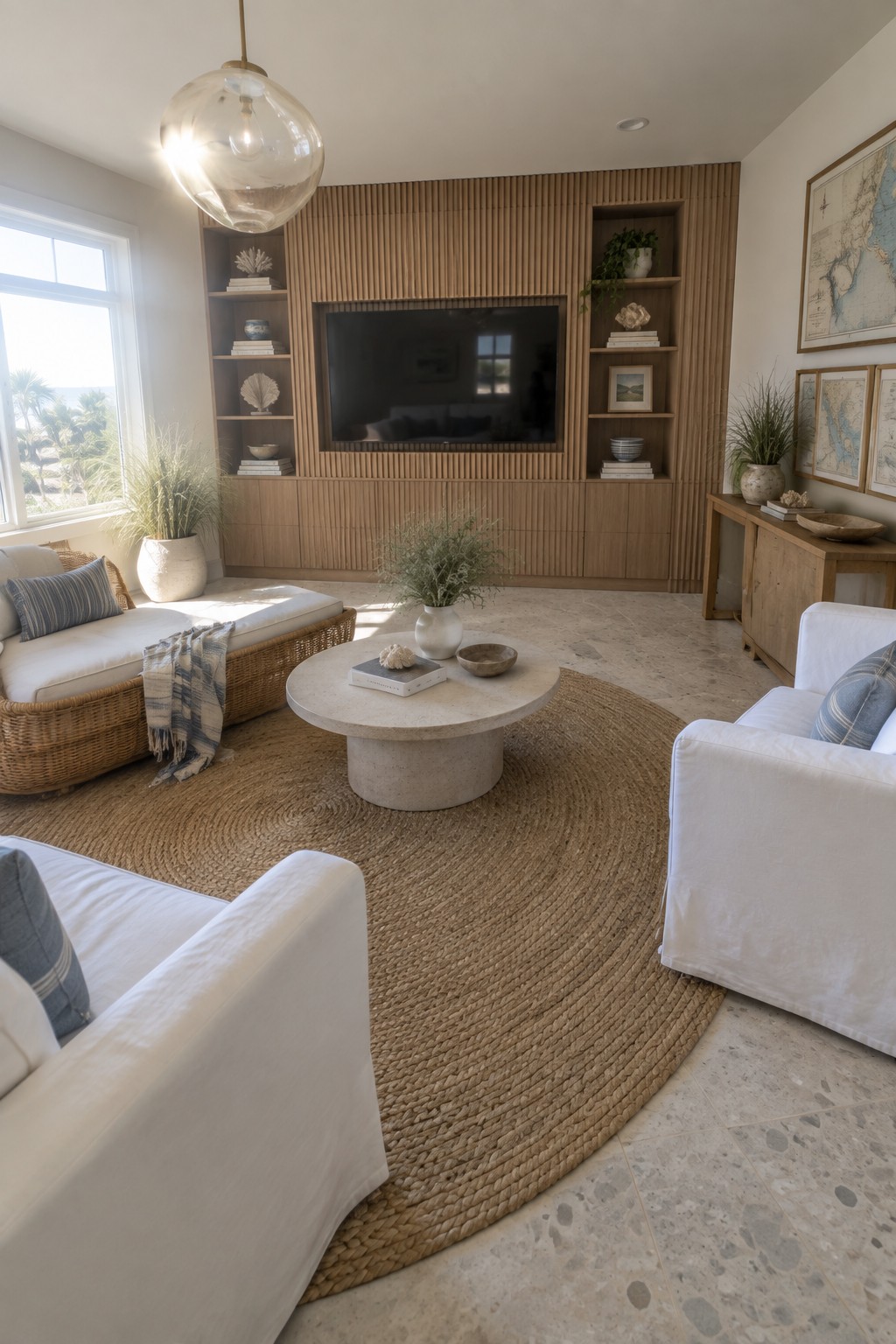
A large round natural fiber rug can pull a whole seating area together, especially when the floor is hard like stone or tile. In coastal rooms it adds just enough texture and warmth without making the space feel heavy or closed in.
This works best in open layouts where you want to mark off the living area from the rest of the room. Keep the rug big enough that the front legs of the main chairs and sofa sit on it, and pair it with rattan or light wood furniture for that easy coastal mix.
Choosing Natural Fiber Rugs for Coastal Living
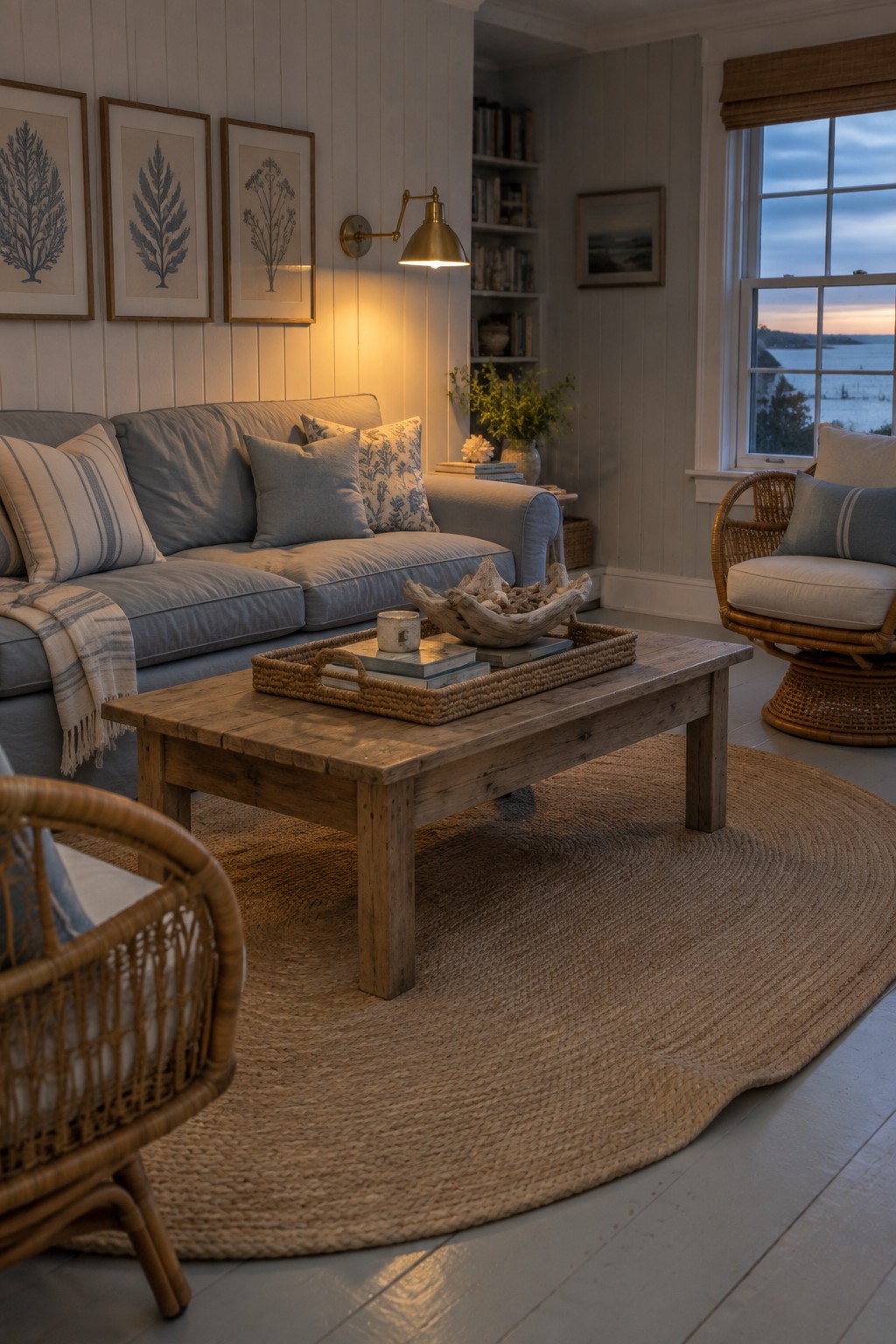
A large natural fiber rug gives a coastal living room the kind of easy foundation that actually holds up. It keeps the space from feeling too polished while still tying the seating together, especially when you mix in rattan chairs and a simple wood table. The texture adds just enough warmth without competing with the view or the softer colors on the walls.
This works best in homes that get steady use and a bit of sand tracked in. Stick with a sturdy weave like jute or sisal in a neutral tone, and let it extend well beyond the main chairs so the whole grouping feels settled. Avoid anything too delicate if the room opens straight to the outdoors.
Rattan Seating With Layered Natural Rugs
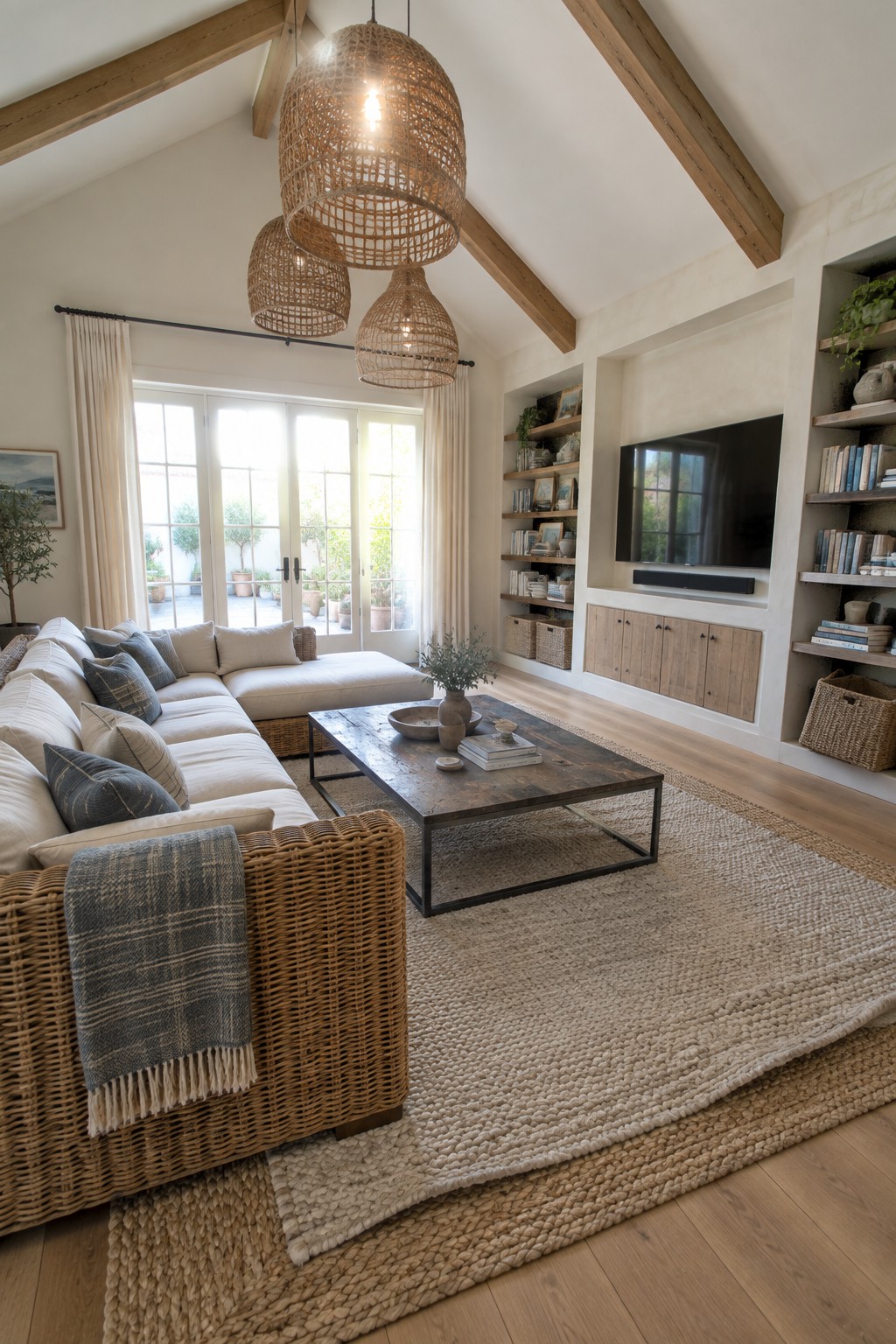
Rattan works especially well in coastal rooms because it brings in that light woven texture without feeling heavy. When you set it on top of layered natural fiber rugs, the whole space feels softer and more grounded while still keeping an easy, relaxed look. The rugs add warmth underfoot and help define the seating area even in bigger open rooms.
This approach suits homes with wood floors or lots of light coming through large windows. Keep the palette mostly neutral so the textures stand out, and make sure the rugs overlap enough to feel intentional rather than scattered. It works best when you avoid too many patterns that might compete with the woven details.
Mix Rattan Seating With a Natural Rug
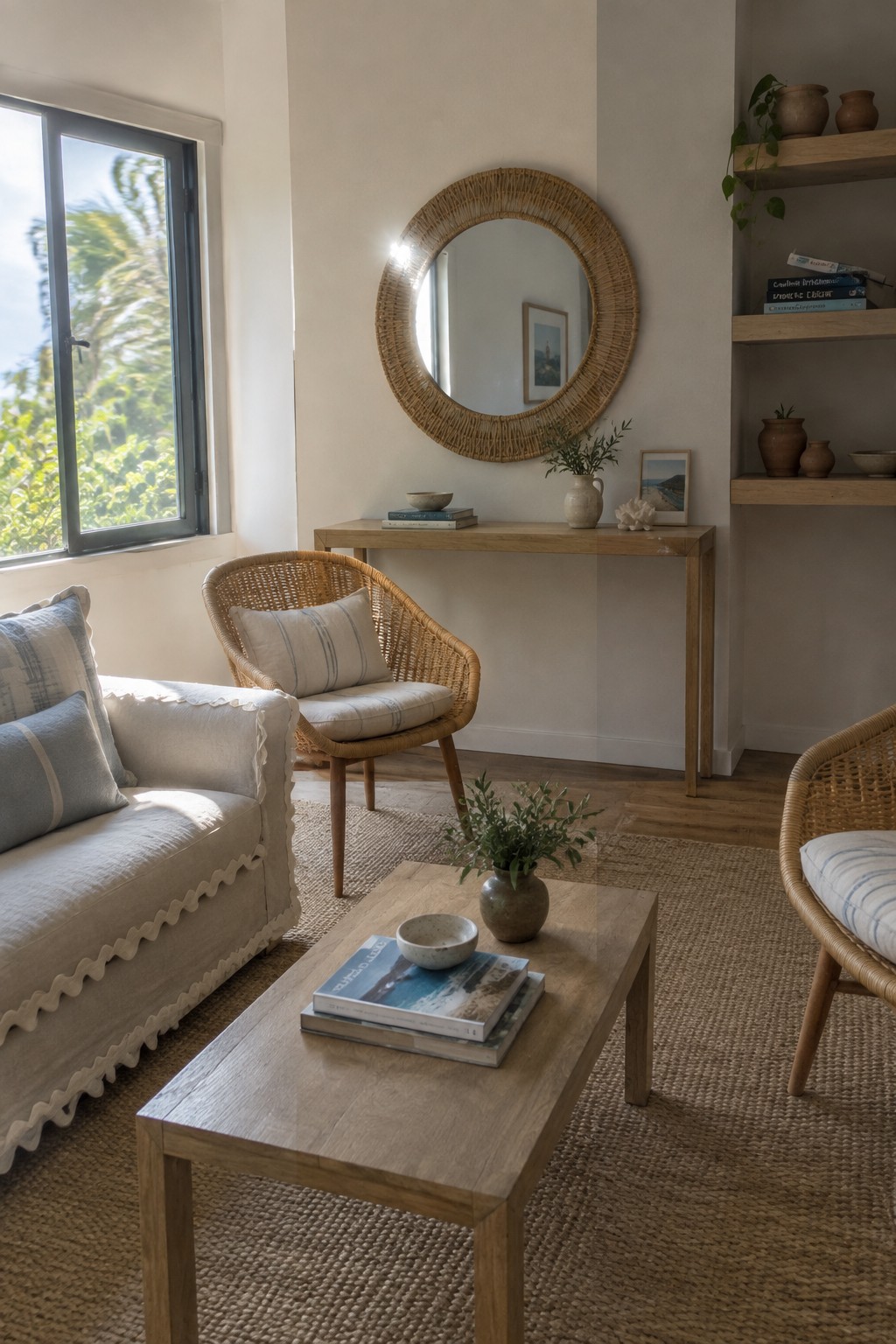
Rattan chairs bring an easy texture that suits coastal rooms without making them feel heavy. When you place them on a natural fiber rug, the two materials work together to keep the space light and relaxed rather than styled too carefully.
This approach works well in rooms that already have wood floors or simple walls. Stick with a few solid cushions and avoid adding too many extra patterns so the rattan and rug can set the tone.
Rattan Sofa and Rug Pairing for Coastal Rooms
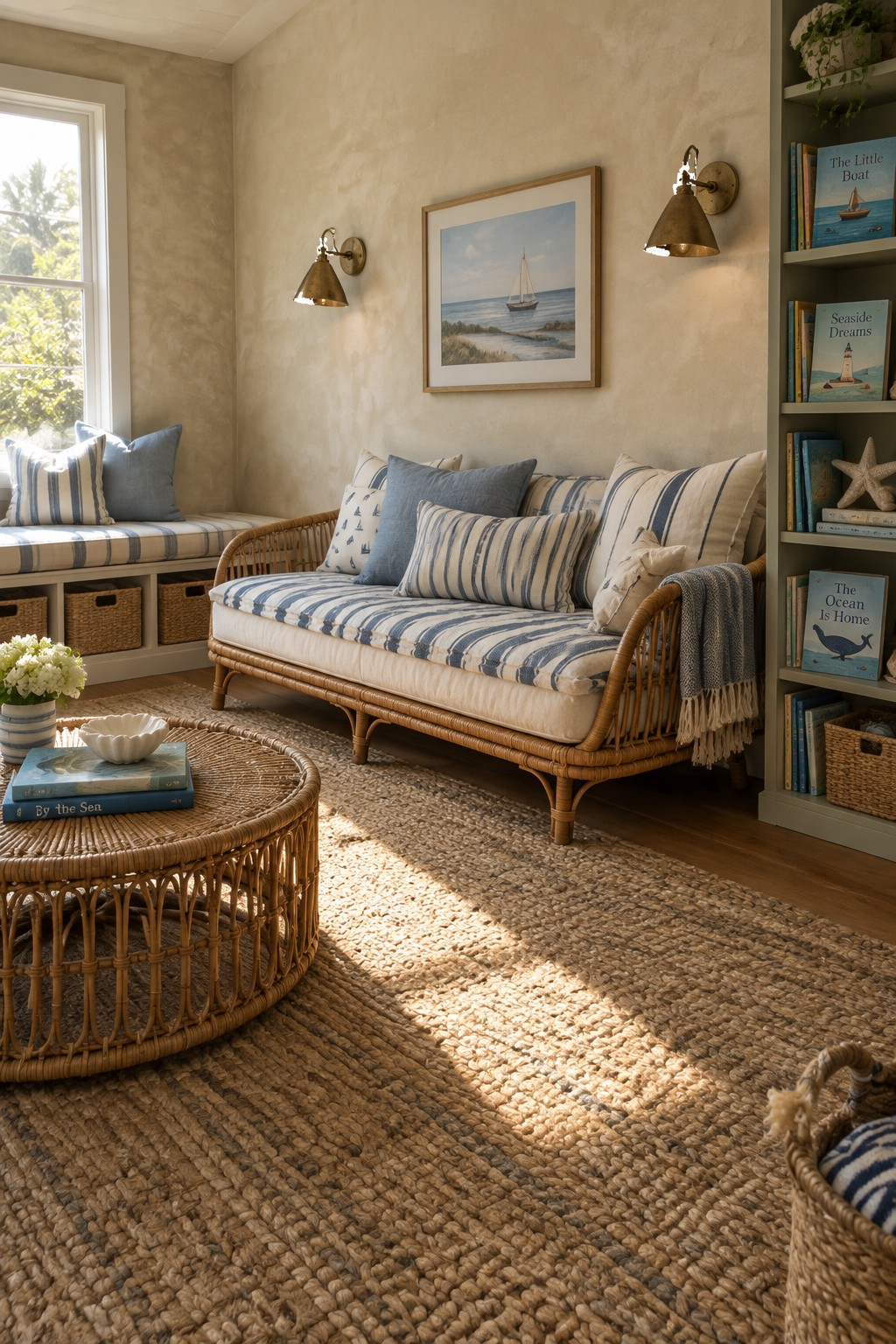
Rattan seating placed on a natural fiber rug gives a coastal living room an easy texture that feels light rather than heavy. The woven surface underfoot balances the smooth lines of the rattan and helps the whole space read as relaxed and breezy.
This combination works best in rooms that already have some wood or neutral tones. Keep the rug large enough to sit under the front legs of the sofa so the seating feels anchored, and choose rattan with simple shapes if the room is on the smaller side.
Creating a Natural Base for Rattan Seating
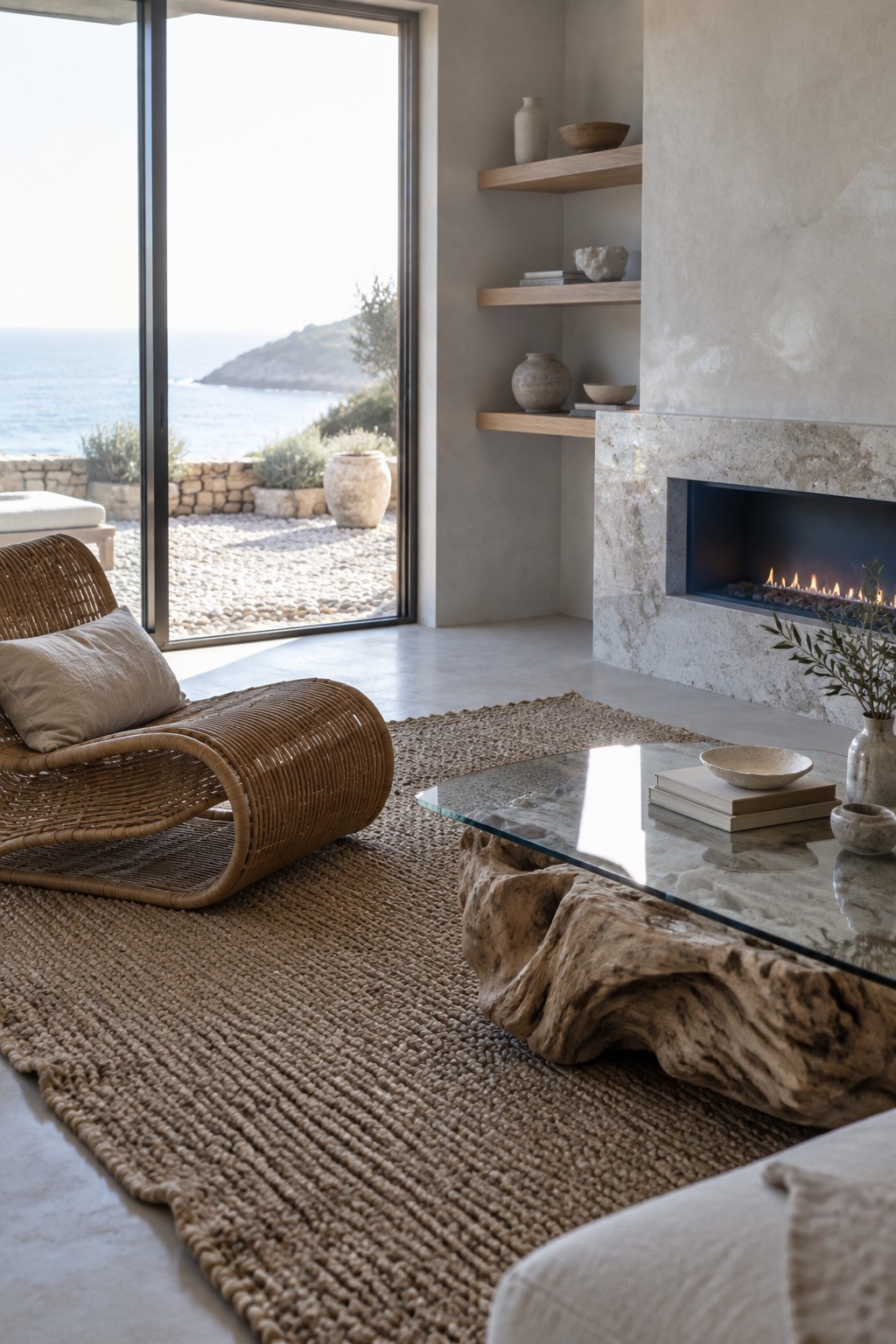
A large woven rug made from natural fibers gives rattan furniture the right kind of base in a coastal room. The texture keeps the rattan from feeling too light or scattered, and it helps the seating area read as one settled spot instead of separate pieces. In this space the rug sits right under the curved rattan chair and runs toward the fireplace, which makes the whole corner feel pulled together without any extra layers.
This approach works best in rooms that already have strong natural light and a view outside. The rug can handle sand and salt air better than most other floor coverings, and it stays simple enough that you can add or remove pillows and throws without the look falling apart. Just keep the rug size generous so the rattan does not sit half on and half off the edge.
Rattan and Jute Rug Combination for Coastal Rooms
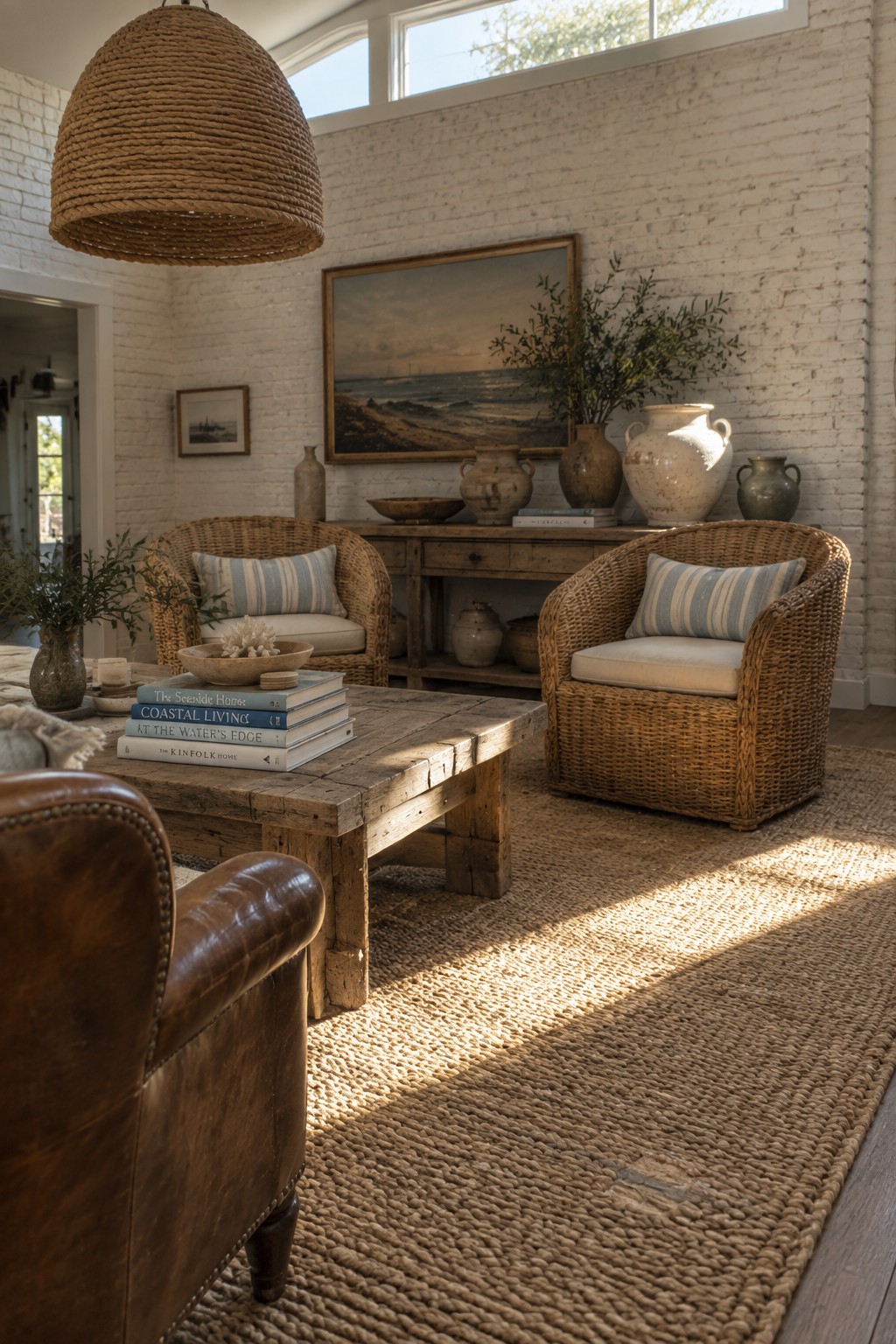
Rattan chairs and a natural fiber rug make a simple pair that fits coastal rooms well. The woven textures keep things light and casual while still feeling grounded. This mix works because neither material fights for attention.
It suits homes that already lean relaxed or beachy. Keep the rest of the room simple so the rug and chairs can set the tone. Too many patterns on top can crowd the look.
Coordinating Rattan Furniture With Jute Rugs

Rattan brings a light, open feel that works especially well in coastal rooms. When you pair it with a natural fiber rug like jute, the textures play off each other and keep the space from feeling too polished or formal.
This setup suits homes that want a relaxed look without a lot of pattern or color. It works best when you keep the rest of the room simple so the materials can stand out on their own.
Natural Fiber Rugs That Hold a Room Together
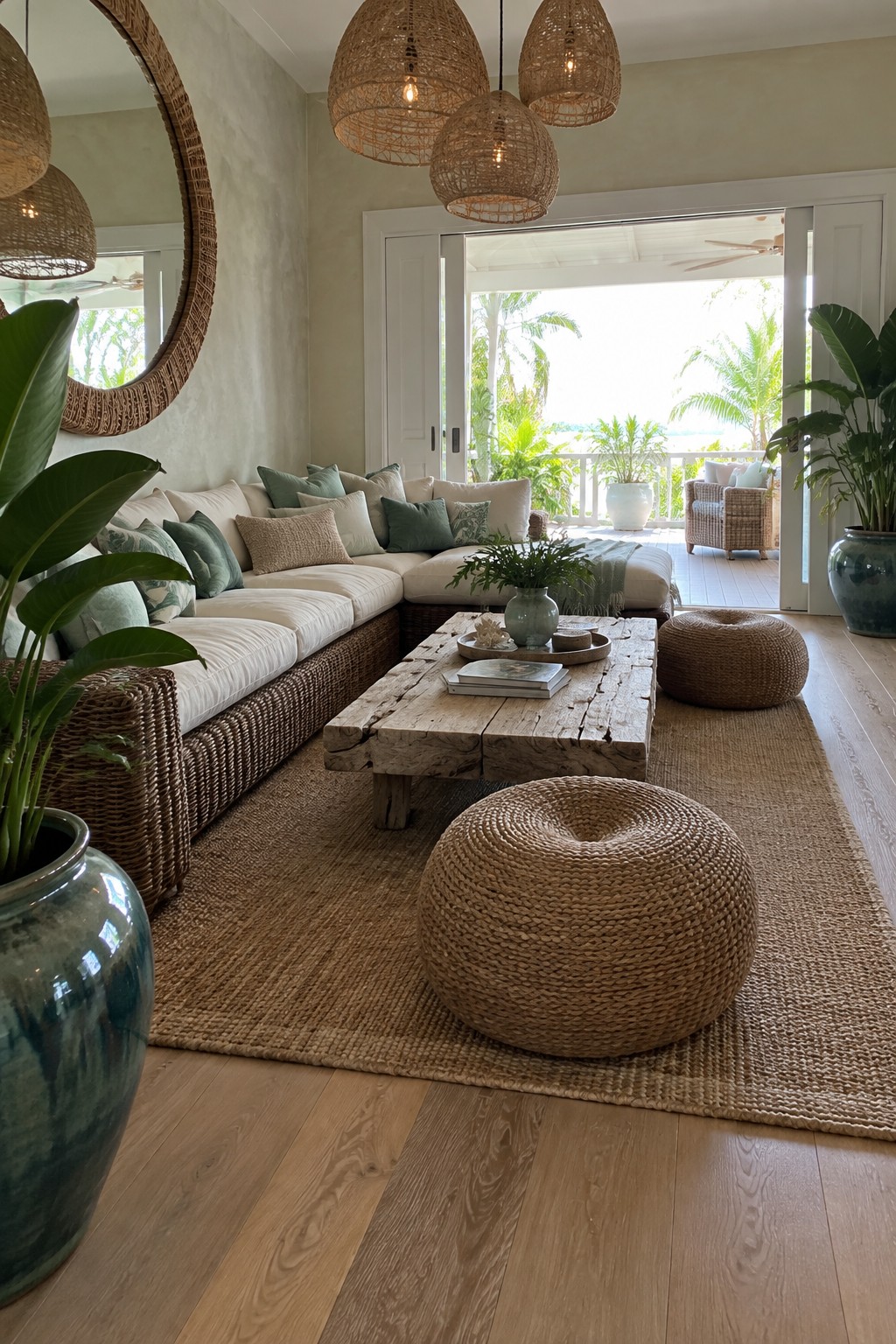
A big natural fiber rug changes how a living room feels when you have a large sectional and multiple seating pieces. It gives everything a place to sit without the space looking scattered or overly planned. The texture also keeps the room from feeling too polished, which fits the easygoing side of coastal style.
This works best in rooms with wood floors and plenty of light. Try one that extends well past the furniture edges so the seating area reads as one zone rather than separate chairs and sofas floating on their own. Watch the scale though. Too small and it will make the room feel chopped up instead of calm.
Anchor Rattan With a Natural Fiber Rug
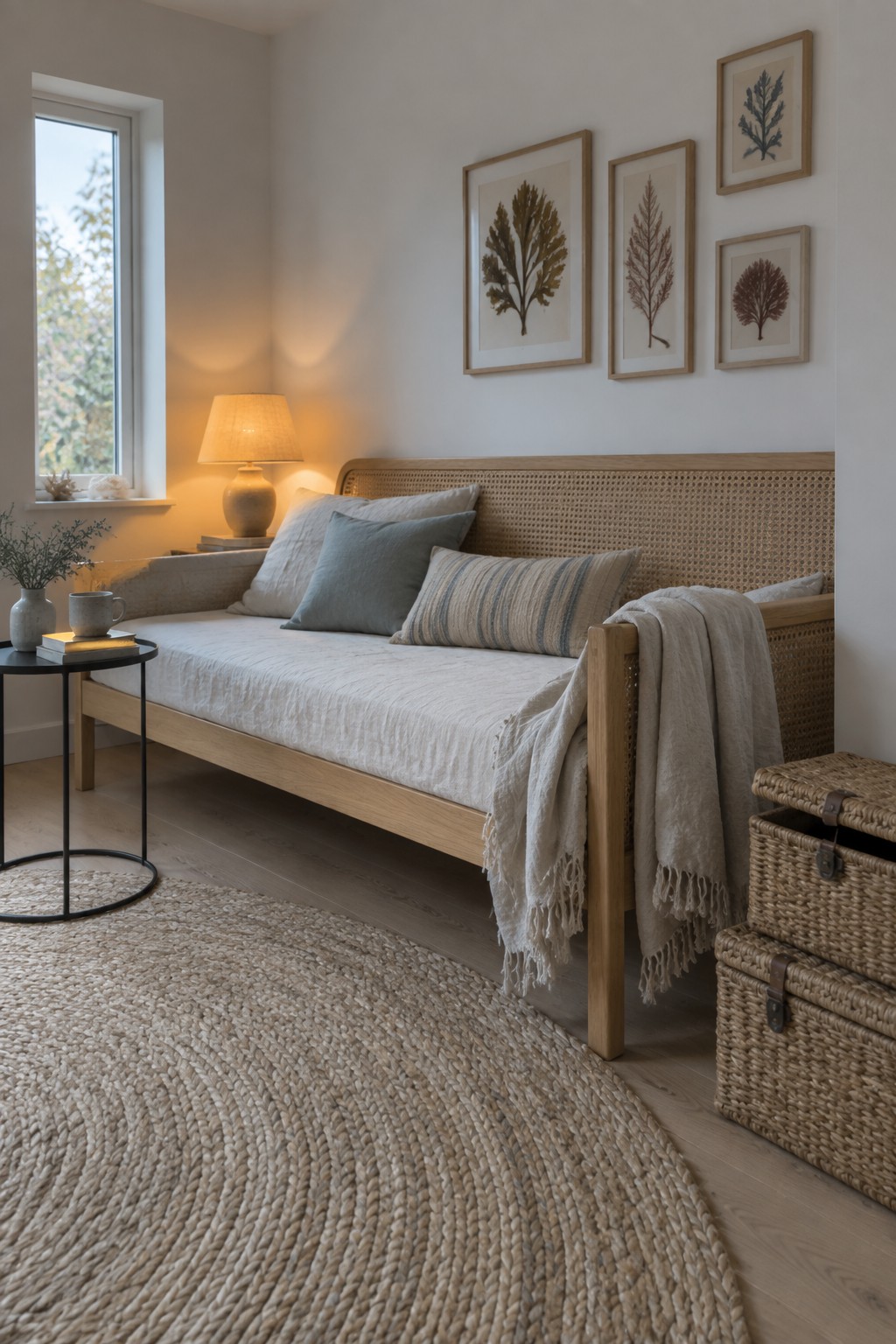
A natural fiber rug gives rattan furniture a solid base and keeps the whole room from feeling too light. The woven texture underfoot balances the open cane work and helps the seating area read as one calm spot rather than a collection of pieces.
This works best in coastal living rooms that already lean simple. Keep the rug round or slightly oversized so it fits under the front legs of the daybed or sofa, then let the rattan and linen do the rest.
Pair Rattan Furniture with a Natural Fiber Rug
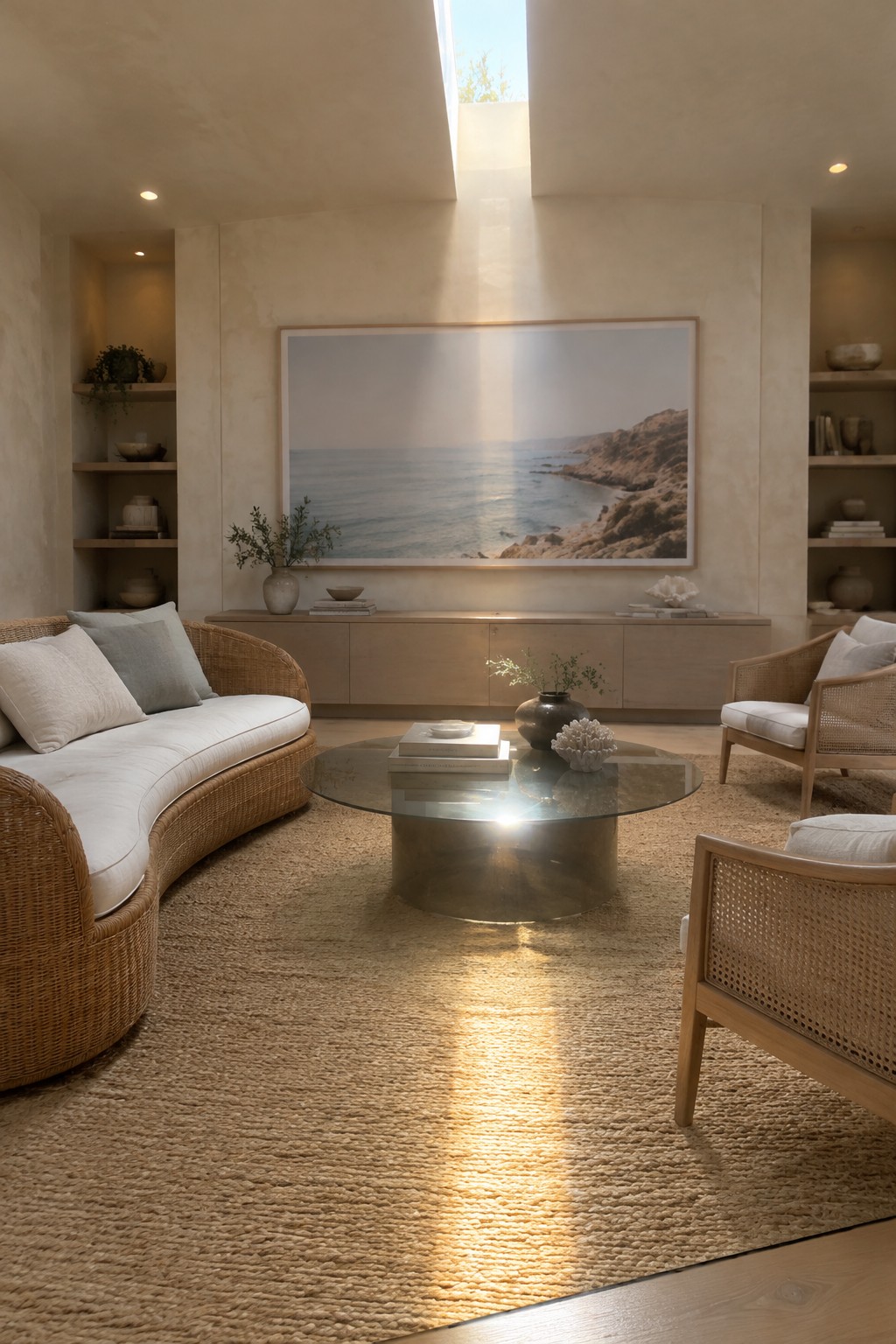
A large woven rug gives rattan pieces something solid to sit on and keeps the seating area from feeling scattered. The natural texture works especially well in coastal rooms because it adds warmth and a bit of weight without competing with the lighter rattan frames.
This approach suits open living spaces where you want the furniture to feel relaxed but still grounded. Make sure the rug is big enough for every leg to rest on it, and keep other patterns to a minimum so the rattan and rug stay the main focus.
Grounding a Rattan Seating Arrangement With a Rug
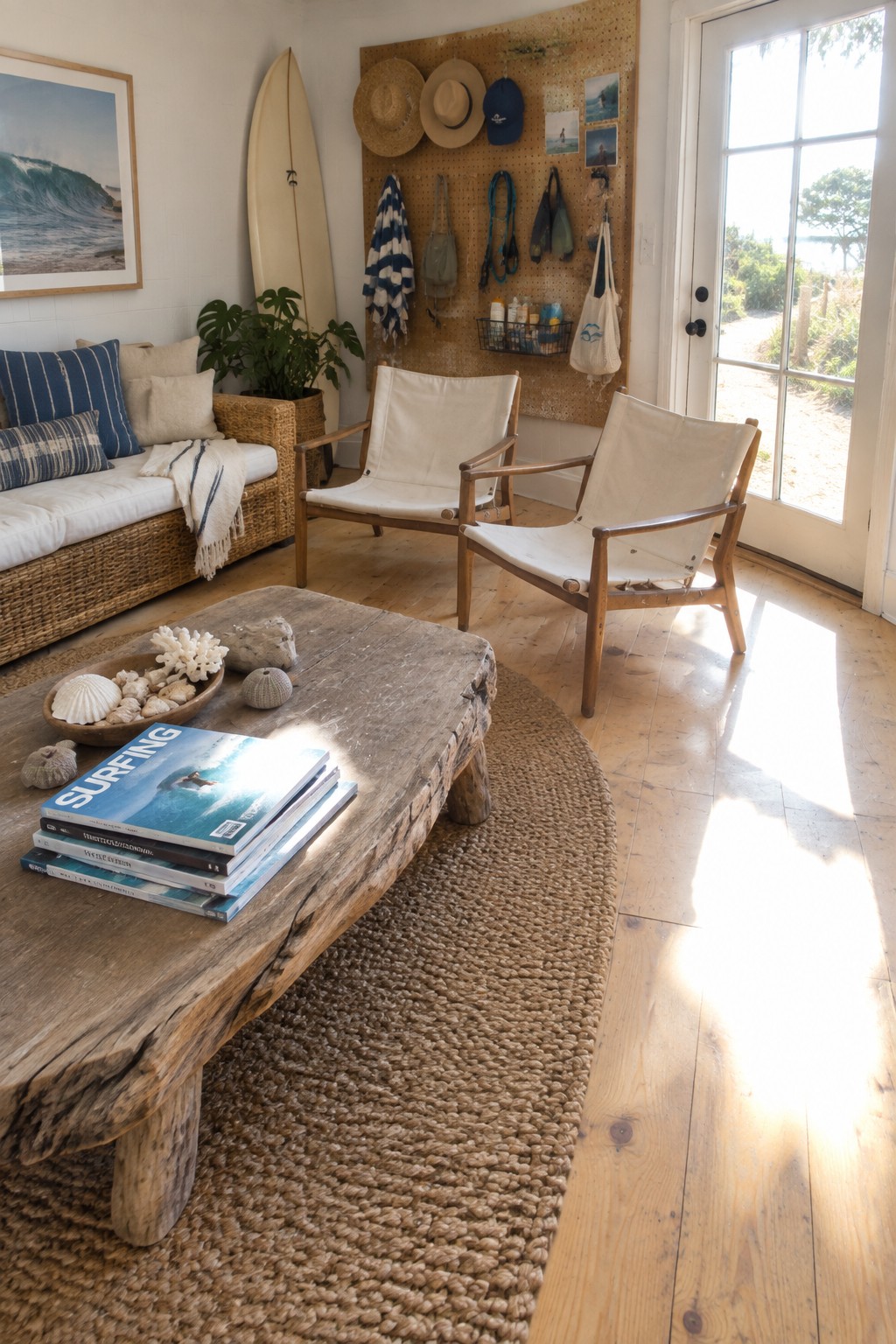
A natural fiber rug gives a coastal living room the right amount of texture without adding extra color or pattern. It works especially well when the rest of the room already has rattan or wicker furniture, because the woven material echoes the casual feel of those pieces while keeping the floor from looking too bare.
This setup suits homes near the water or any space that leans simple and relaxed. Lay the rug so the main seating sits partly on it, and keep the rest of the floor visible around the edges. That way the rattan stays the focus and the room still feels open.
Natural Fiber Rugs Shape Coastal Seating
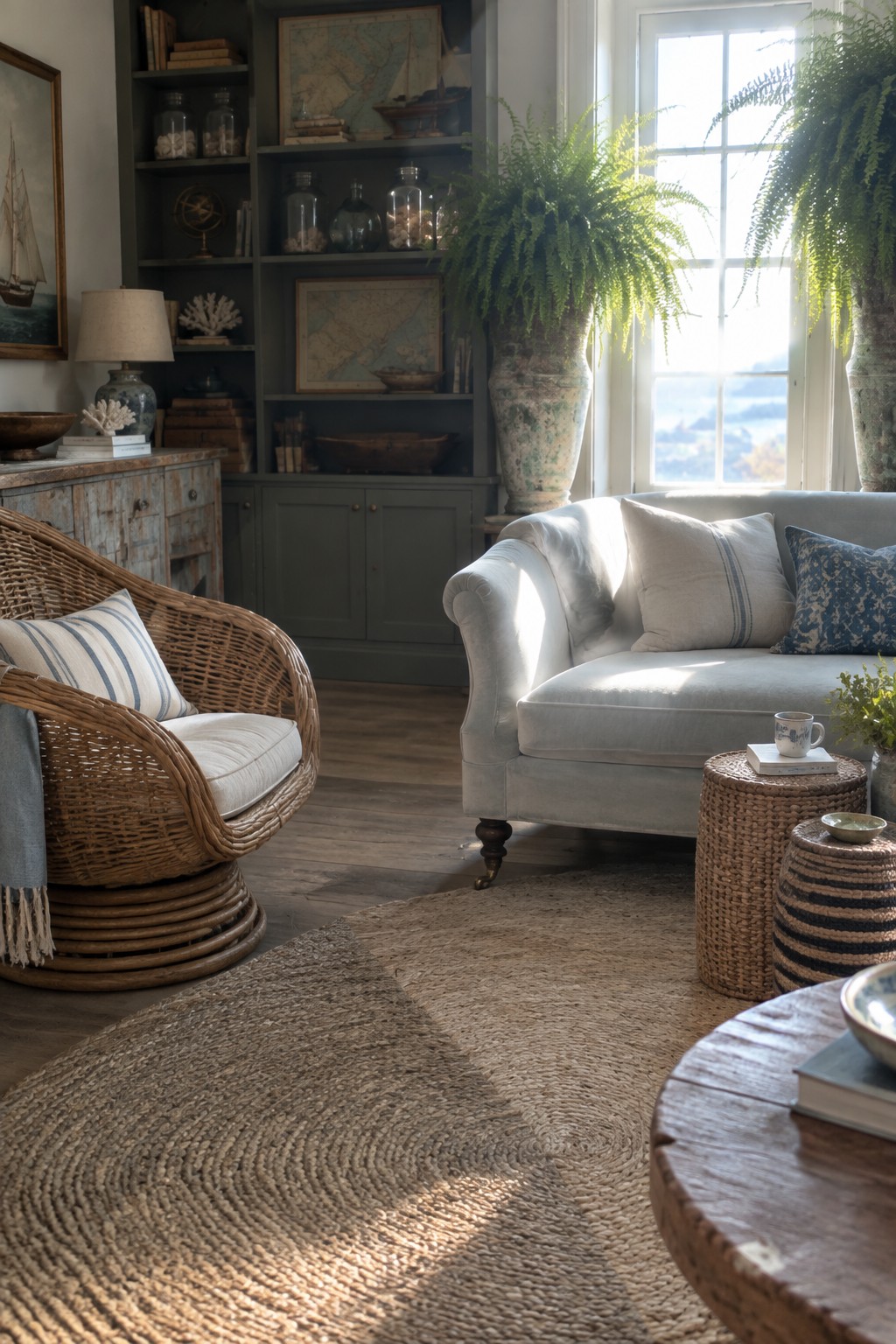
A large round natural fiber rug helps pull a coastal living room together. It adds texture that feels right with rattan furniture and keeps the space from looking too flat on hardwood floors.
This works best in rooms that get good light and already have some wood tones. Make sure the rug is big enough for the front legs of the sofa and chairs to sit on it so the whole arrangement feels connected rather than scattered.
Frequently Asked Questions
Q: How do I keep a natural fiber rug from trapping sand in a beach house?
A: Shake it out on the porch every few days and vacuum with a brush attachment on low power. Spot clean spills right away with a damp cloth and mild soap. This keeps the rug fresh without much effort.
Q: Can rattan pieces work if my living room already has a leather couch?
A: Place the rattan chairs or side tables near the couch to add texture without clashing. The natural tones in both materials blend easily in coastal settings. Stick to one or two rattan items at first so the room stays balanced.
Q: Will rattan hold up near windows that get direct sun most afternoons?
A: Rotate the pieces every few months to even out the exposure. Add simple linen curtains to soften the light while keeping the breezy feel. Most rattan lasts years this way with basic care.
