


I have noticed that living rooms feel more settled when natural wood shows up in the flooring or built ins rather than just as accents.
Woven textures help soften the edges so the space does not read as too rigid once the furniture is in place.
Some rooms only settle once the materials match the actual light patterns through the day.
I usually try a single woven piece first before adding more because it shows whether the balance holds once people start using the room.
Small choices like grain direction or weave density end up shaping how comfortable the whole layout feels over time.
Combining Natural Wood And Woven Textures

Many living rooms gain a calm, grounded feel when solid wood furniture is paired with woven pieces. A chunky wood coffee table next to a thick jute rug and cane chairs creates contrast that feels natural rather than styled.
This mix suits homes that want warmth without heavy patterns or dark colors. It works especially well in family rooms where the furniture sees regular use, and the woven items should be sturdy enough to hold up over time.
Woven Textures With Natural Wood

One simple way to warm up a living room is to layer woven pieces over wood furniture and floors. The rattan chair and thick jute rug sit comfortably next to the wood coffee table and mantel, and the macrame wall hanging adds another soft layer without crowding the space.
This mix works well in homes that already have wood tones and want a little extra texture. Start with one or two woven items like a throw or a simple chair, then add a natural fiber rug if the room still feels too hard. It keeps things relaxed and easy to live with.
Woven Baskets Add Texture To Wood Shelving

Woven baskets fit right into wooden built-in shelves because they bring a softer texture that plays against the straight lines of the wood. They also give you a place to tuck away items that would otherwise clutter the shelves, while still keeping everything easy to reach.
This works best in rooms that already lean on natural wood for the floors, tables, and cabinetry. Place a few baskets on the lower shelves for throws or magazines, and leave some open areas for books and plants so the whole wall does not feel too heavy.
Pairing Natural Wood With Woven Textures

Natural wood furniture gains a softer edge when woven pieces are added alongside it. The rattan chair and jute rug here show how those textures bring warmth and slight contrast without breaking the calm, grounded feel of the room.
This mix works best in spaces that already have wood floors or cabinetry. Start with one woven item like a chair or rug, then choose wood pieces in similar tones so nothing feels too heavy or mismatched. It suits most homes that lean toward simple, unfussy layouts.
Pairing Woven Textures With Solid Wood Furniture

Many people find that woven pieces help balance out the weight of solid wood furniture. The texture adds softness without needing extra color or pattern, and it keeps the room feeling calm rather than heavy.
This approach works best in spaces with plenty of natural light and simple color schemes. Use it in living rooms where you want warmth but still need the furniture to feel practical and easy to live with.
Layering Woven Textures With Wood Furniture
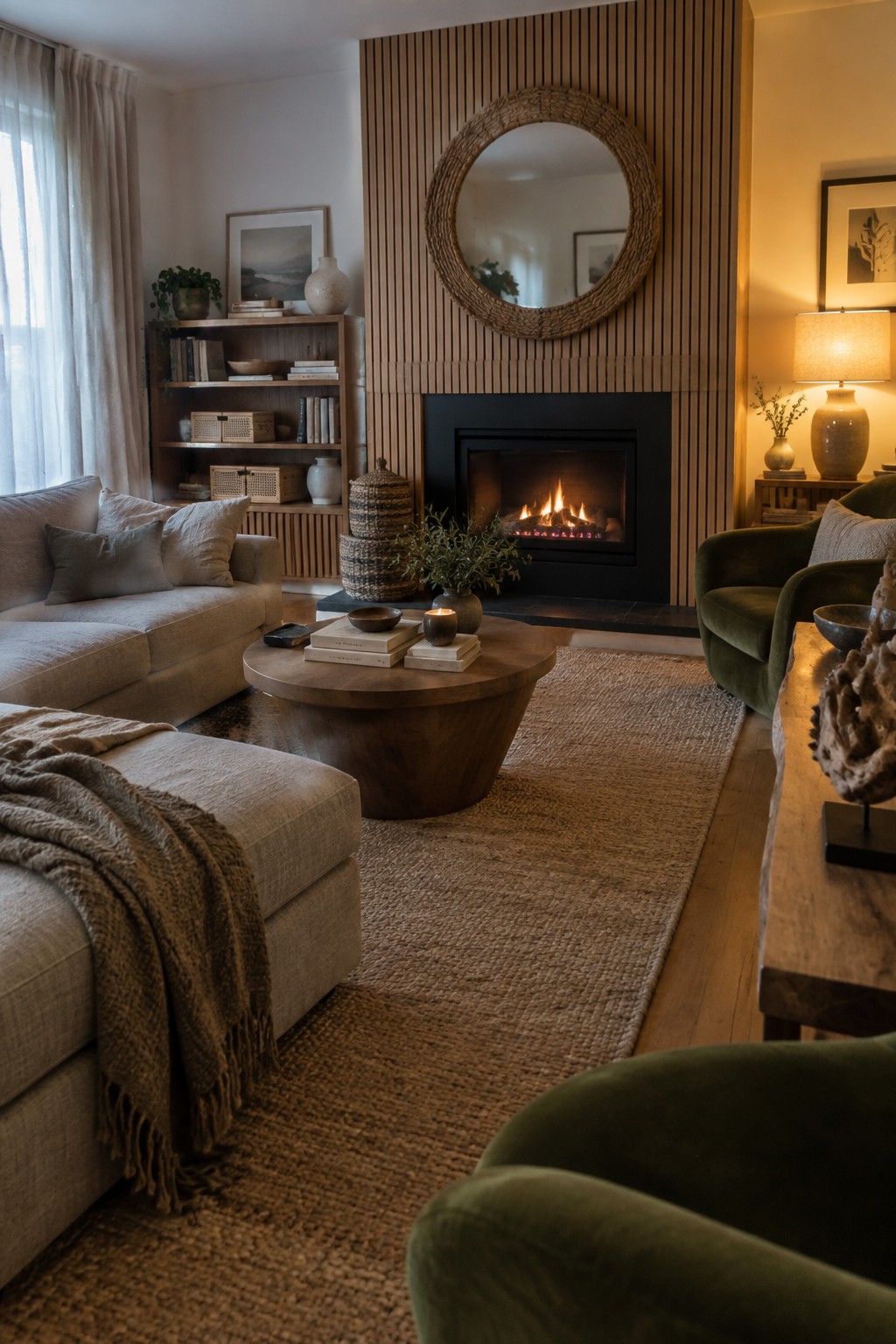
One simple way to warm up a living room is to let woven pieces sit alongside wood furniture instead of trying to match everything. A big jute rug under a solid wood coffee table gives the room a soft base that still feels sturdy and natural. The textures play off each other without needing a lot of extra color or pattern.
This works best in homes that already have wood tones from floors or built-ins. Start with the rug, then add one or two woven accents like a mirror frame or storage baskets. Keep the rest fairly simple so the materials stay the focus rather than turning into clutter.
Mixing Natural Wood With Woven Textures
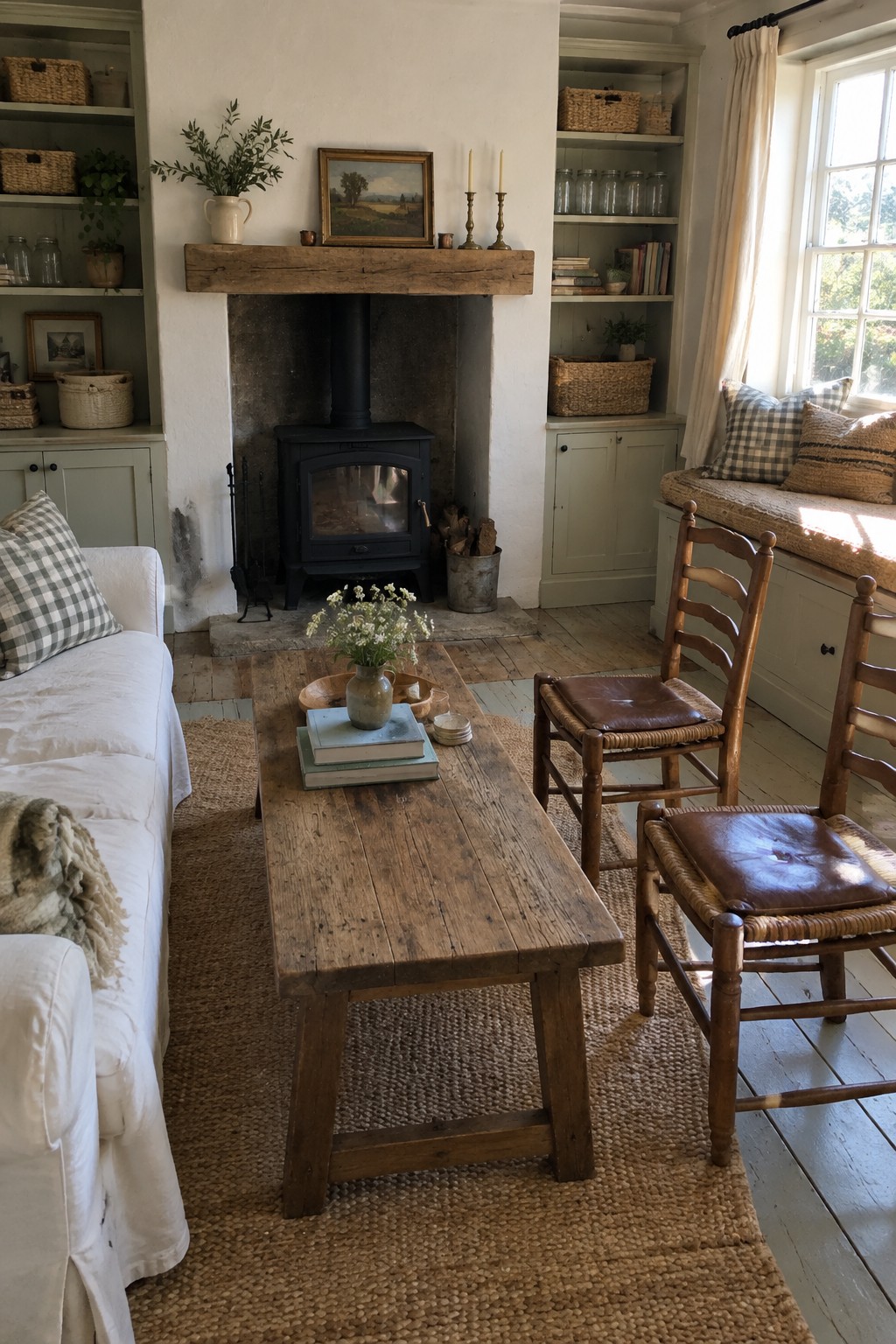
Many living rooms gain a quiet warmth when solid wood furniture sits alongside woven pieces. A heavy table with visible grain next to chairs that have open woven seats keeps the space from feeling too heavy or too light.
This mix suits older homes or any room with wood floors already in place. Stick to similar wood tones throughout and let the woven items stay plain so the textures carry the look without extra pattern or color.
Wood Walls with Woven Furniture

A light wood accent wall sets a calm base in this living room, and the woven rattan chairs add texture without fighting it. The mix keeps the space from feeling too heavy or too polished, which is why it works so well for everyday living.
Try this in homes that already have wood floors or trim. Start with one or two woven pieces like chairs or a jute rug, then let the wood do the rest. It suits casual coastal or relaxed modern rooms best.
Blend Natural Wood With Woven Textures

Many living rooms feel more settled when you mix solid wood furniture with woven pieces. The wood brings weight and structure, while the woven items keep the space from feeling too heavy or flat.
This works best in rooms that already have wood floors or built-ins. Start with one or two wood pieces like a coffee table or shelf, then add a textured rug, a few baskets, and one woven wall hanging. Stick to warm neutral tones so the layers feel calm rather than busy.
Mixing Wood with Woven Textures

Natural wood can feel a bit heavy on its own, especially in smaller living rooms. Adding woven textures like cane panels and a jute rug helps break up the surfaces and keeps the space from looking too solid or formal. The contrast between smooth wood and the open weave of the cane gives the room a lighter, more relaxed feel without needing a lot of extra pieces.
This approach works best in homes that already have wood floors or trim. Keep the woven elements simple, like a cane-backed bench or a flat-weave rug, and let them sit against the wood rather than trying to match every tone. Too many different weaves can start to feel busy, so one or two strong textures are usually enough.
Mixing Wood Trunks with Woven Pieces

A wooden trunk makes a strong base for a living room because it brings weight and history without needing much else. Pairing it with rattan or wicker chairs keeps the space from feeling closed in. The two materials balance each other, and the woven pieces let light and air move through the room.
This works well in older homes or any space that already has wood floors or trim. Keep the woven items simple in shape and limit them to two or three spots so the wood stays the main feature. Too many baskets or chairs can start to feel busy.
Mixing Natural Wood With Woven Textures
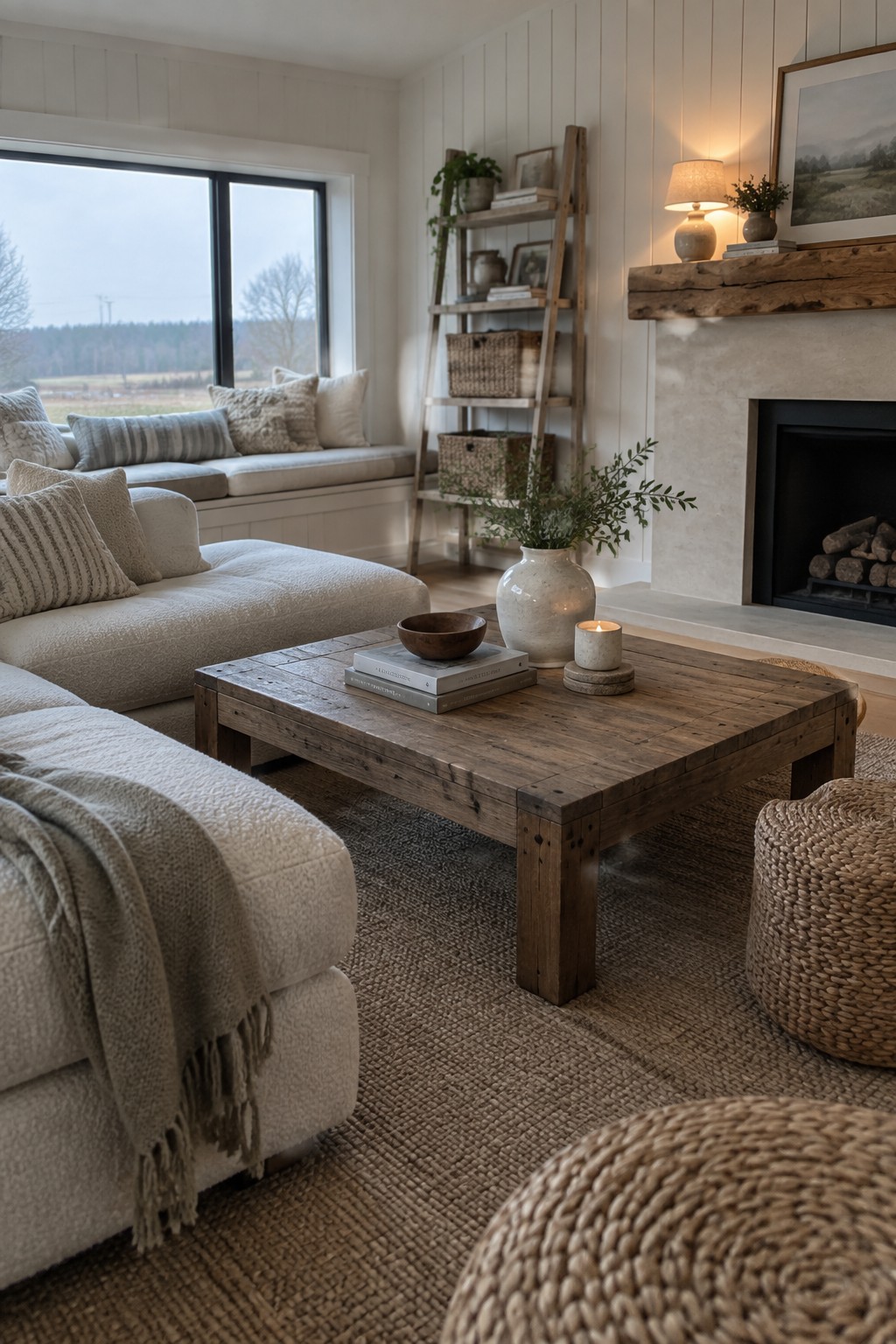
One simple way to add warmth to a living room is by pairing solid wood furniture with woven pieces. A chunky wood coffee table next to woven poufs and a jute rug gives the space texture without feeling busy or overdone.
This mix works best in rooms with a neutral base and plenty of natural light. It suits homes that already lean casual, though it helps to limit the number of patterns so the wood grain and woven surfaces remain the main focus.
Wood Furniture with Woven Accents

Natural wood pieces like a thick slab coffee table or exposed ceiling beams already bring a lot of character to a room. Adding woven rugs, baskets, and throws keeps the look from feeling too heavy or one note. The mix gives the space more depth without needing lots of color or pattern.
This approach works especially well in homes with open ceilings or mountain views where you want the materials to feel connected to the outdoors. Start with one or two larger wood items and layer in the woven pieces gradually so the room stays balanced. Too many textures at once can start to feel busy.
Wood Slat Walls Add Quiet Texture

A vertical wood slat wall behind a media console gives a living room a natural material focus without much extra effort. The slats bring warmth and subtle movement to the space while keeping the overall look calm and grounded.
This works best in rooms with a neutral palette where you want texture but not clutter. Pair it with woven storage on nearby shelves so the wood and woven elements support each other instead of competing.
Mixing Natural Wood With Woven Textures

One simple way to warm up a living room is to let natural wood sit next to woven textures. The wood gives the space weight and structure while the woven pieces keep things from feeling stiff or too finished. A solid wood table next to rattan seating creates that balance without extra effort.
This mix works best in rooms with some natural light and a relaxed layout. Use it in casual homes where you want comfort over perfection. Keep the wood tones similar and let the woven pieces vary in scale so nothing feels forced.
Add Woven Textures To Natural Wood Rooms
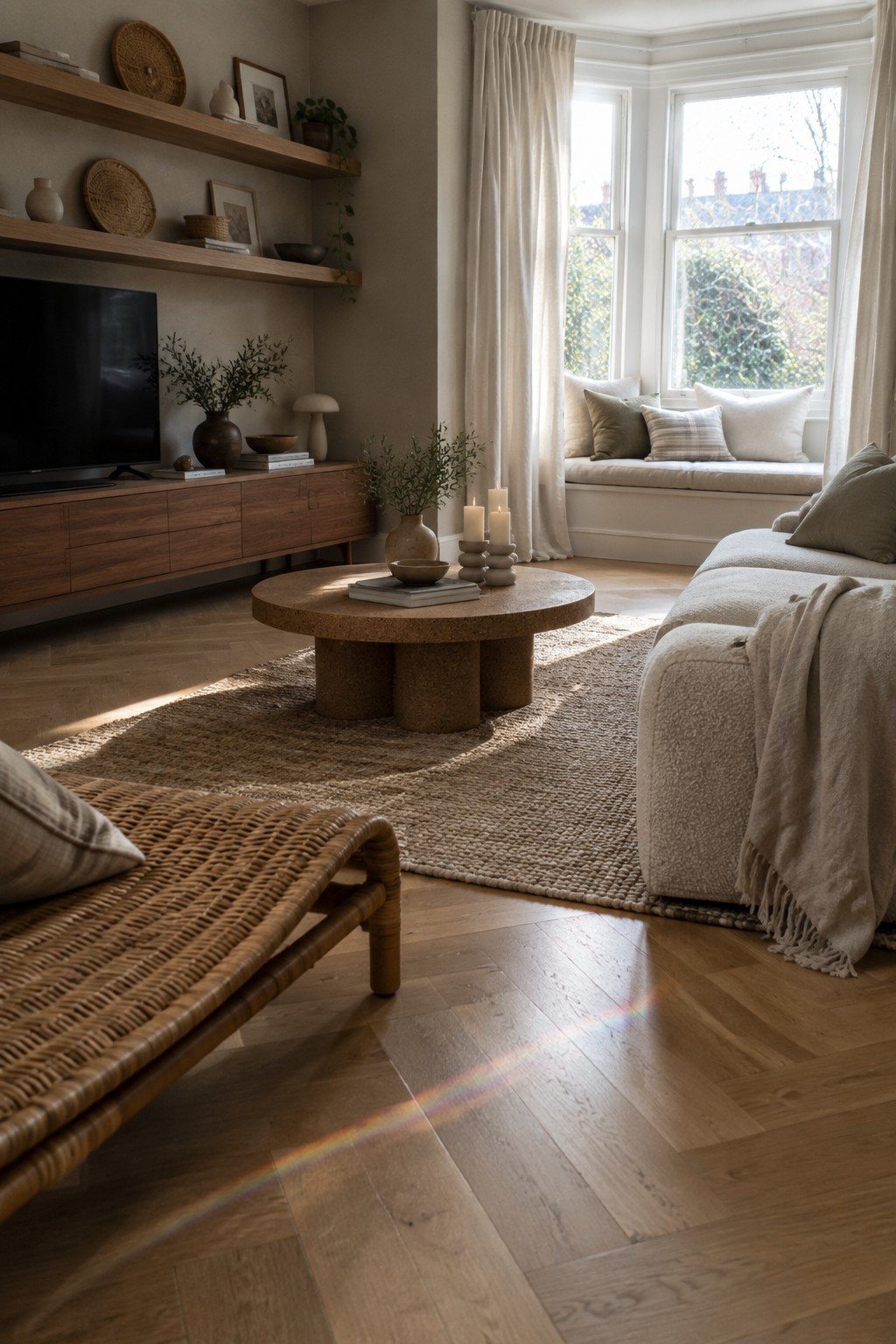
Woven pieces bring a needed softness when wood dominates a room. The rough texture of a rug or chair next to smooth wood surfaces keeps the space from feeling flat or overly heavy. It is a simple way to add warmth while still letting the wood grain show through.
This works best in rooms that already have wood floors or furniture. Start with one larger woven item like a jute rug or a wicker seat, then add smaller woven baskets or wall pieces. Stick to similar tones so the mix stays calm rather than busy.
Woven Baskets for Everyday Storage

Woven baskets add useful storage without breaking up the natural wood and texture already in a living room. They hold toys, books, or throws in one spot and keep the space from feeling scattered while still showing off the same materials used in the rug and lighting.
They suit family rooms or any space where things get moved around often. Set them along a wall or near seating so they stay easy to reach and feel like part of the furniture arrangement rather than added bins.
Woven Pendants Add Texture Over Wood
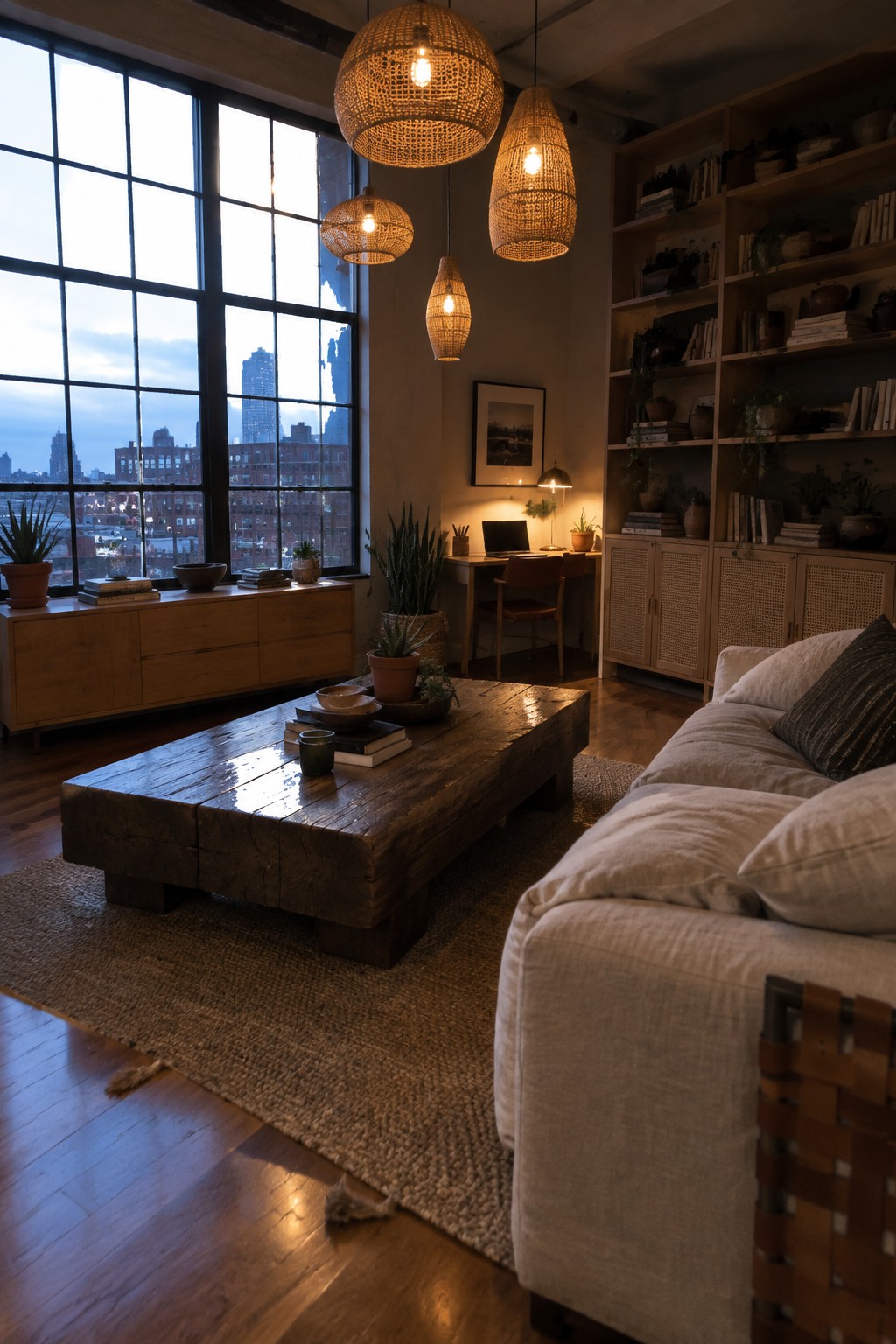
A few woven pendant lights hung at different heights can soften a room that leans heavily on wood. They bring in a lighter material that contrasts with solid tables and floors, and the warm glow they cast makes the space feel more lived in. This works especially well when the wood pieces are large and low, like a chunky coffee table that already takes up visual weight.
Try this in rooms with decent ceiling height where the lights can hang freely without getting in the way. Keep the rest of the palette simple so the woven texture and wood tones stay the focus. One thing to watch is scale. Too many small pendants can feel busy, while two or three in varying sizes usually strike the right balance.
Mixing Natural Wood With Woven Textures
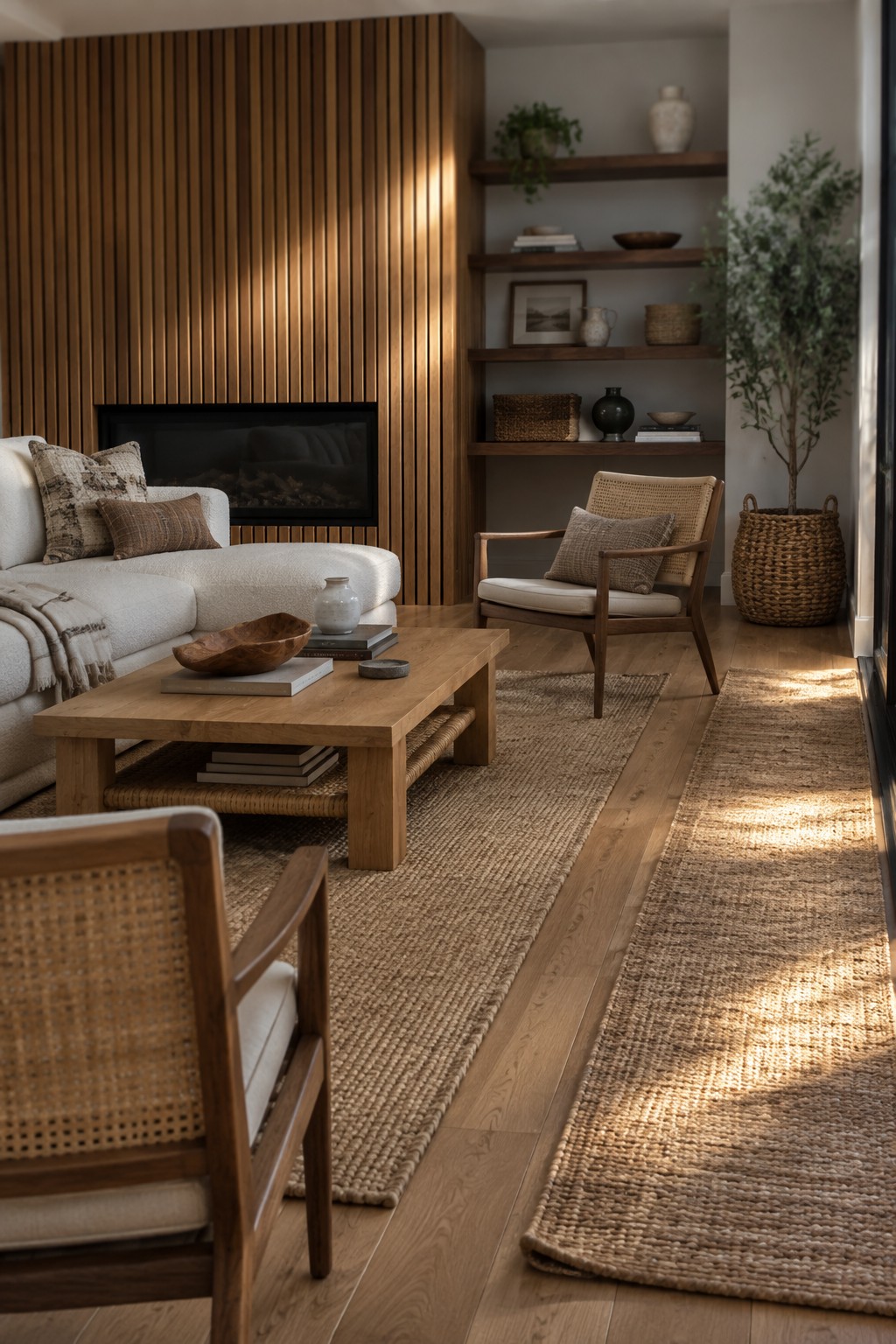
Many living rooms feel more comfortable when wood is paired with woven pieces rather than trying to match everything. The wood gives the space structure and a bit of weight while the woven items soften the overall look and keep it from feeling too formal.
This works especially well in homes with wood floors or wall paneling already in place. Start with one or two wood furniture pieces like a coffee table and then layer in rattan chairs or jute rugs to add texture without crowding the room.
Frequently Asked Questions
Q: How do I pick wood tones that play well with woven rugs without clashing? A: Start with one main wood shade that echoes the natural fibers in your rugs. Then layer in a second tone only on smaller pieces like side tables. This keeps the mix balanced and easy to live with.
Q: What woven items hold up best if the room sees a lot of use? A: Choose tight weaves such as seagrass or hemp for baskets and ottomans. They resist fraying and clean up fast with a quick vacuum. Skip anything too open or delicate in busy spots.
Q: Do I need to treat the wood to match the woven textures? A: Leave most pieces with their natural finish so the grains stand out against the weaves. A light oil now and then keeps the wood looking fresh without adding shine.
