

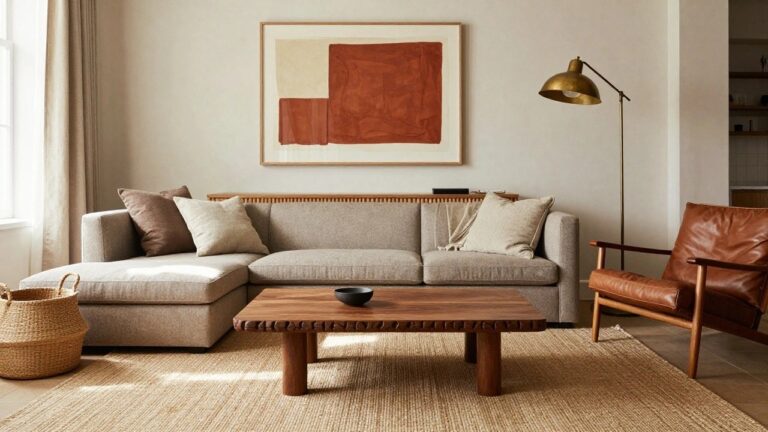
Over time I’ve learned that understated elegance starts with how a room actually functions once people are in it rather than how it looks in a single photo.
Soft layers of texture and light can make even a simple space feel settled in a way that lasts through daily use.
Scale is easy to get wrong.
I usually try one change at a time in my own home so I can tell whether the new balance holds up once the room is lived in.
The ideas worth keeping are the ones that let comfort and quiet detail work together without forcing a formal look.
Mix Leather Chairs With A Fabric Sofa
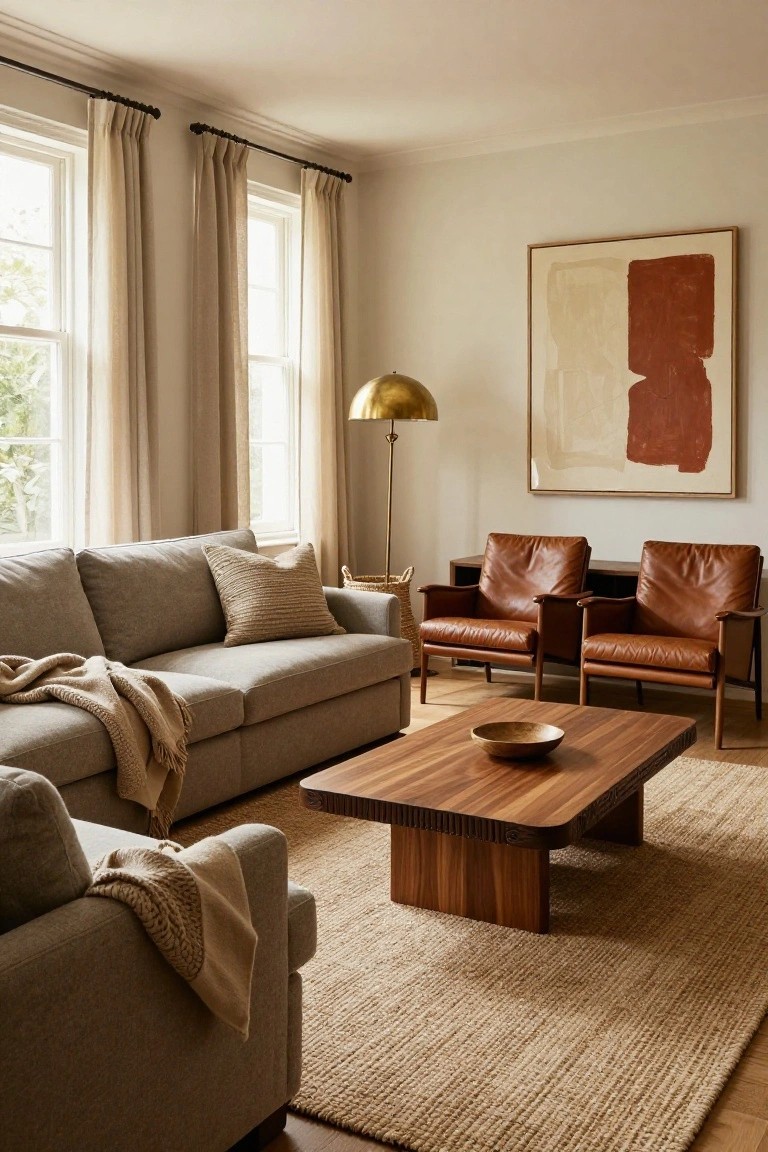
Many people like this combination because it keeps the room feeling relaxed without looking too plain. The leather adds a bit of structure while the fabric sofa brings softness, so the space feels balanced for daily use rather than staged.
This works well in living rooms that get regular use. Try it in homes with neutral walls and wood floors, and keep the rest of the palette simple so the two materials can stand out without competing.
Natural Wood Tables for Casual Dining
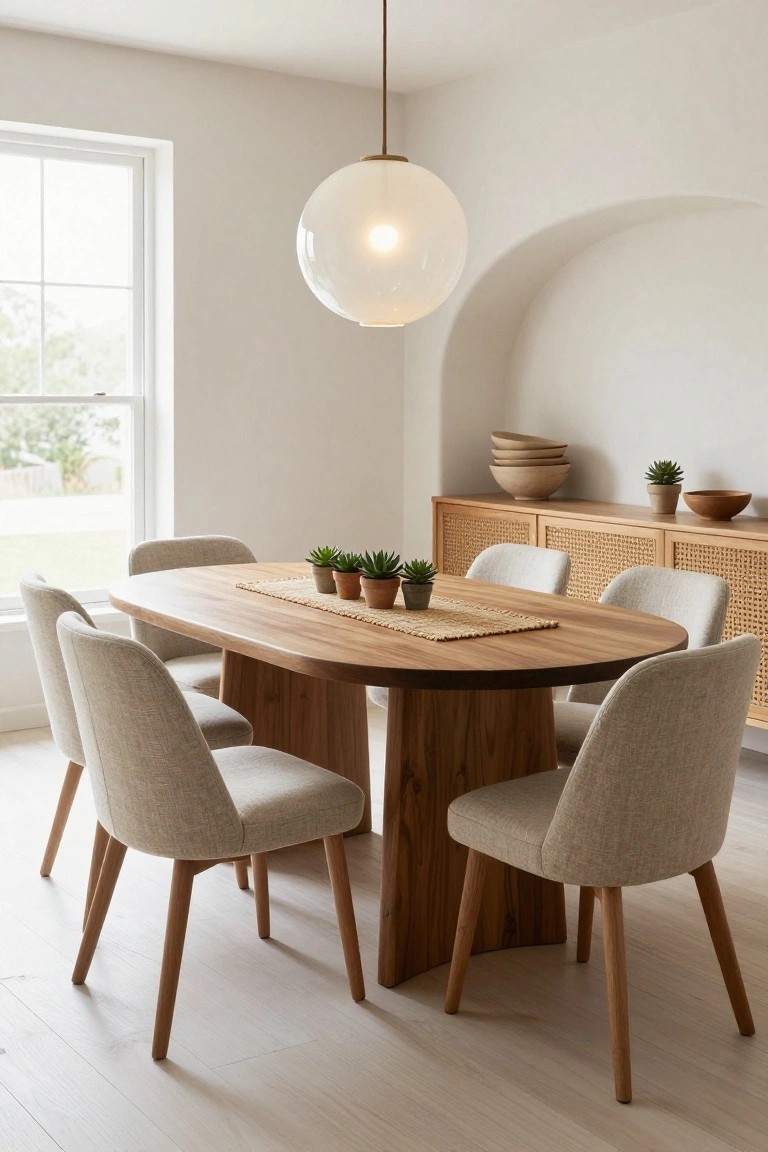
A solid wood dining table brings a grounded feel to a room without much effort. The warm tone and simple shape work well in spaces that need to feel lived in rather than styled.
This approach suits homes that already have light walls and wood floors. Keep the top mostly clear and let the wood do the work, adding only a narrow runner or a few small plants if needed.
Open Shelving in the Kitchen
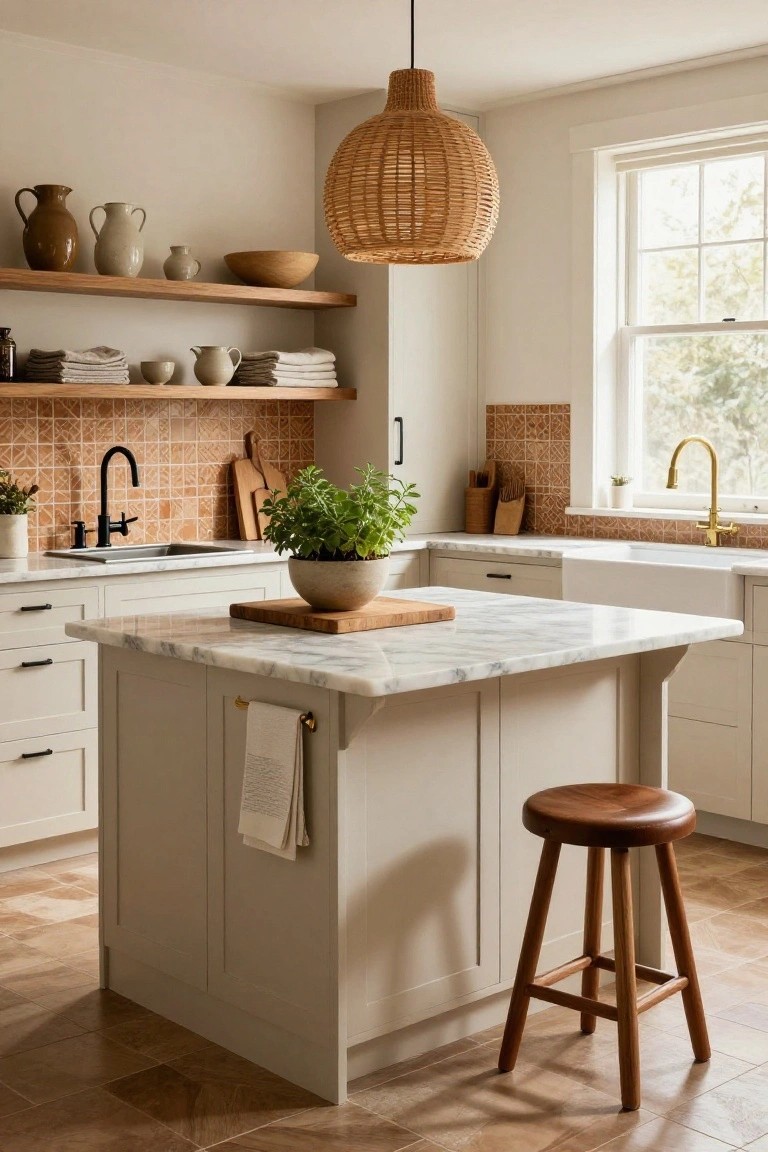
Open shelving works well when you want a kitchen to feel relaxed instead of too finished. It gives you a place to keep the things you actually use, like pottery, bowls, and folded linens, so the room looks lived in without extra effort.
This approach suits homes with simple cabinetry and warm backsplash tiles. Keep the shelves at a comfortable height and limit what goes on them so they stay useful rather than crowded.
Mixing Wood And Woven Textures In The Bedroom
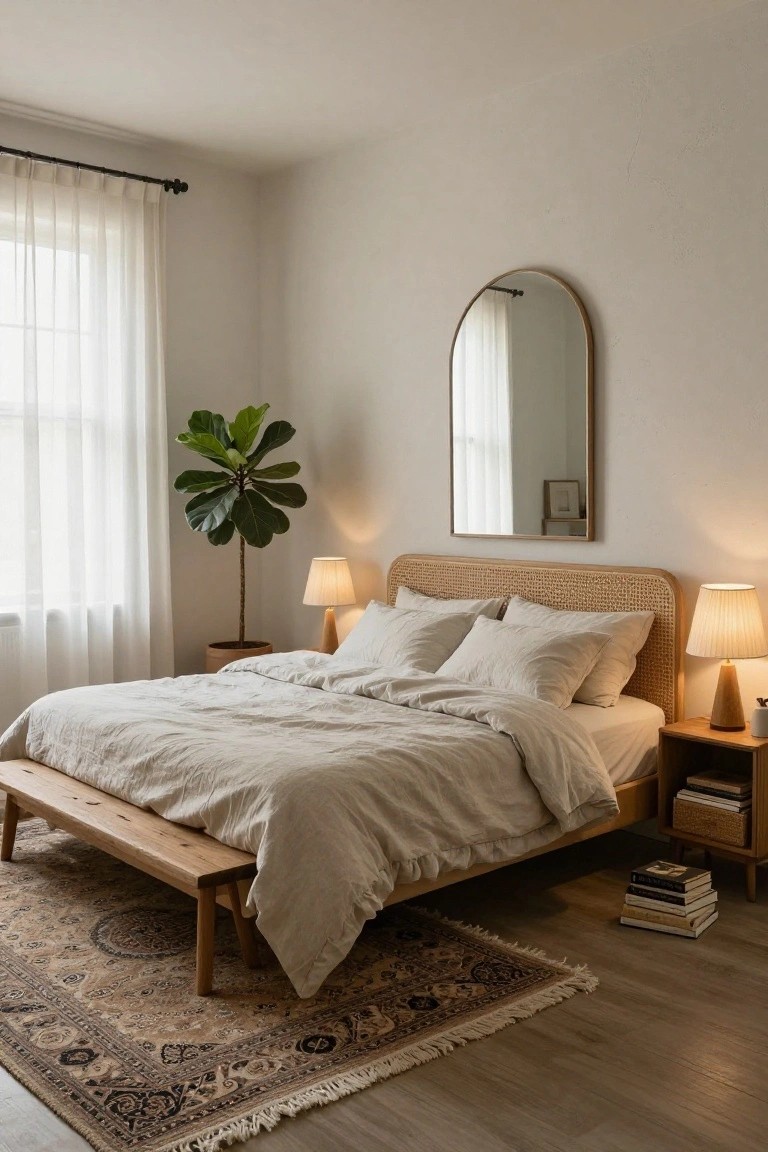
Many bedrooms feel more comfortable when they combine raw wood with woven pieces rather than sticking to one material. The contrast keeps things interesting without adding much color or pattern. It works because both materials feel natural and age well over time.
This approach suits rooms that already have decent natural light and simple layouts. Keep the rest of the furnishings light so the textures can stand out on their own. Limit the mix to two or three elements so the space stays calm instead of busy.
Anchor The Bed With A Large Area Rug
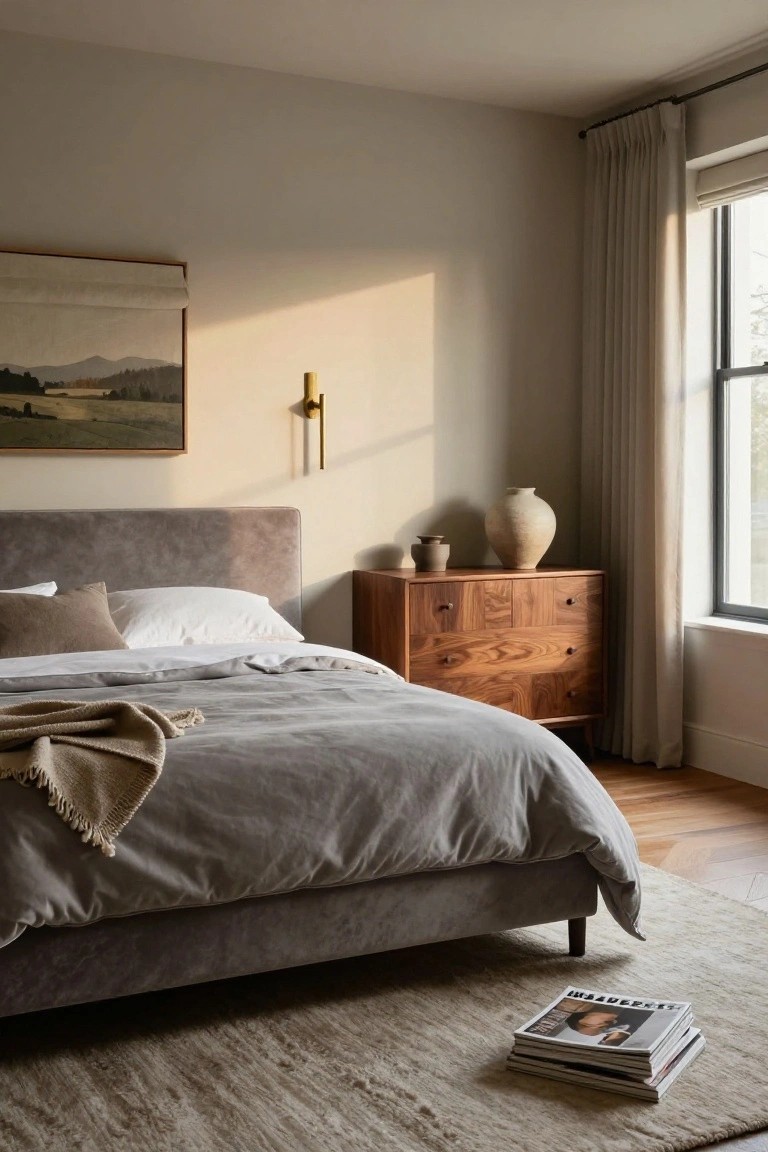
A large rug under the bed gives the room a softer base and helps the whole setup feel more settled. It adds some warmth underfoot and keeps the bed from sitting directly on hard floors, which often makes the space feel unfinished.
This works best in bedrooms that already have simple furniture and neutral colors. Keep the rug tone close to the bedding so it blends in rather than standing out on its own.
Subtle Botanical Wallpaper For Nurseries
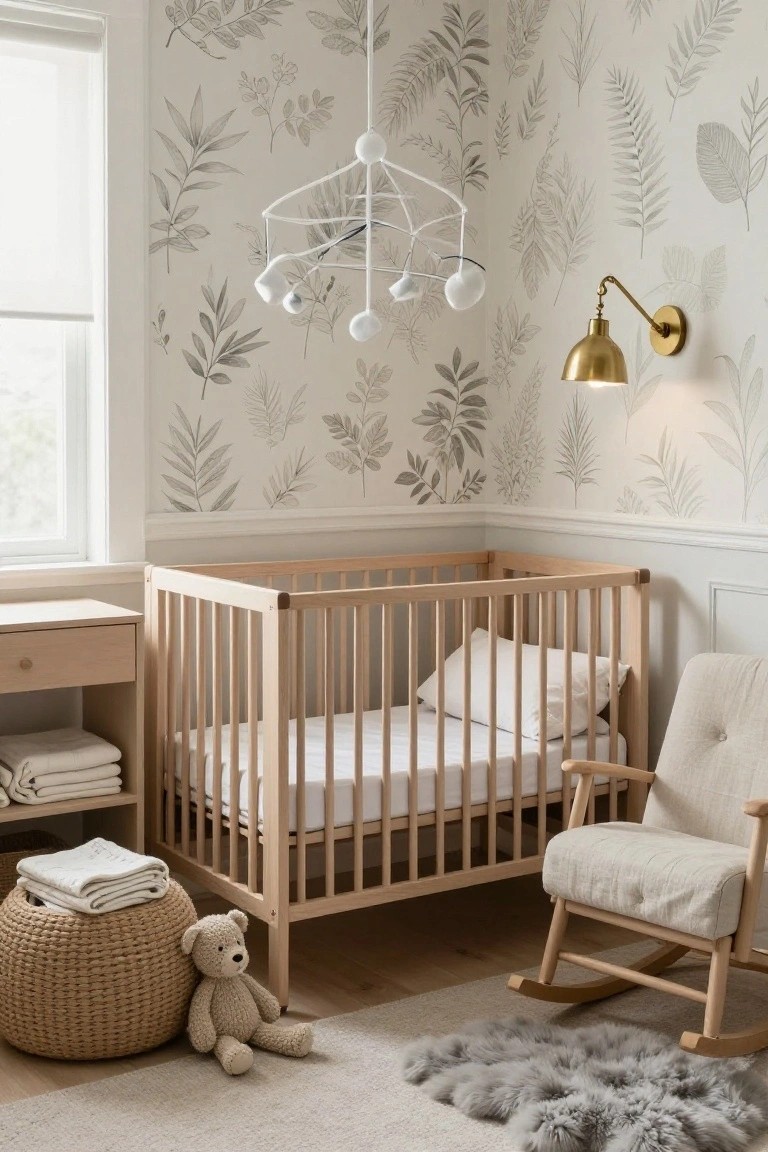
A light botanical wallpaper can give a nursery just enough pattern to feel finished without crowding the space. The soft gray leaves on a pale background keep the room feeling open and calm even when the rest of the furniture stays simple.
This approach works best in smaller rooms where you want some interest on the walls but still need the space to feel restful. Pair it with light wood pieces and avoid adding too many extra prints so the wallpaper stays the main quiet detail.
Built-In Shelving For A Home Office
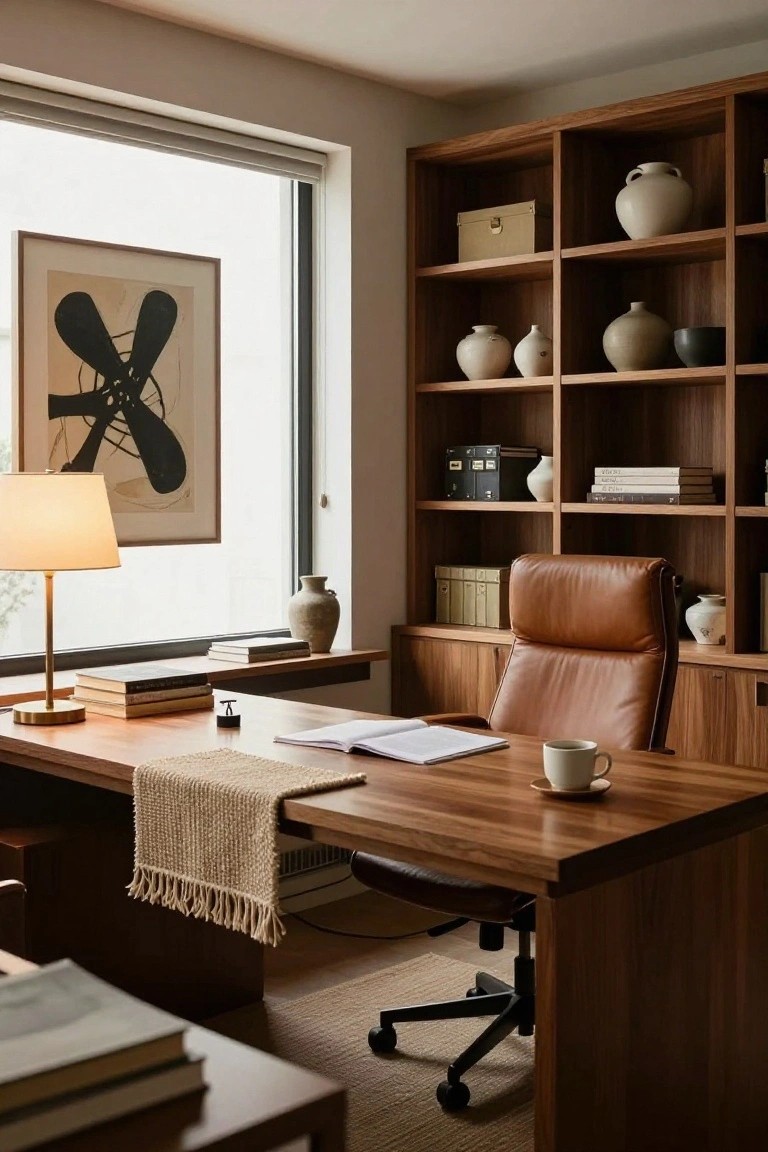
Built-in shelving gives a home office a settled, useful look without making the room feel stiff. The wood ties the desk and storage together so everything reads as one calm space rather than a collection of separate pieces.
This approach works best in rooms that need to hold books, files, and a few personal items without looking busy. Leave some open space on the shelves and keep the overall palette simple so the office stays easy to work in every day.
Built-In Benches For Small Entries
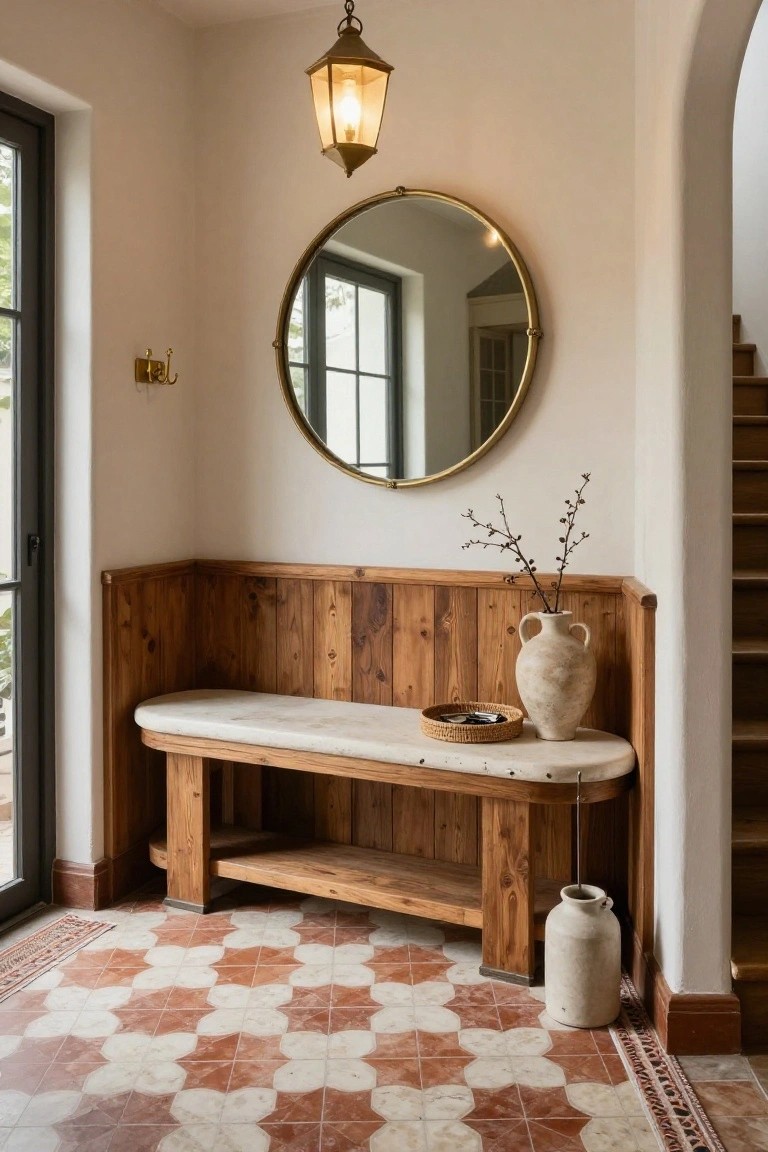
A built-in bench gives an entry a place to sit without taking up much room. The wood base and stone top keep it simple while adding a bit of weight that feels solid rather than temporary.
This works best in homes where the entry is narrow or shares space with a hallway. Keep the bench low and line it with the wall so it does not block movement, and match the wood to any trim already in the room.
Open Shelving Under the Vanity
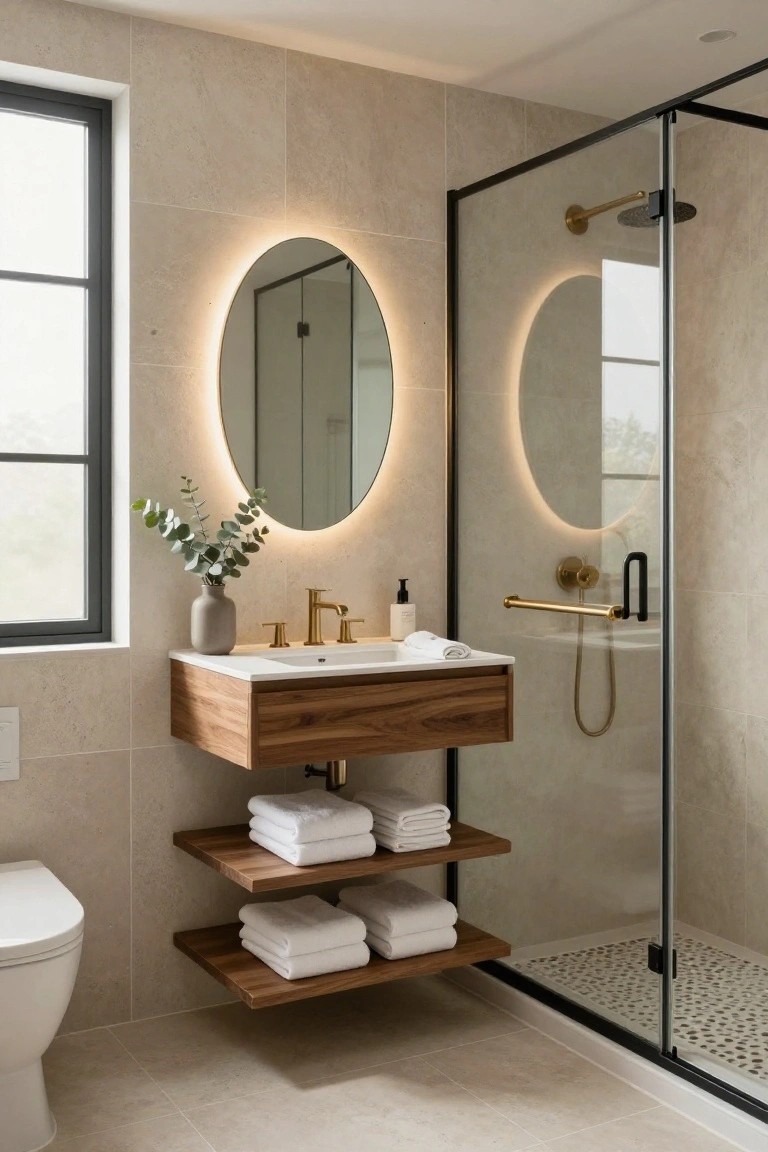
Bathrooms often feel tighter when everything stays tucked away behind cabinet doors. Open shelves under a floating vanity give you quick access to towels and keep the space from looking closed in.
This setup works well in smaller baths or guest rooms where you want storage without adding visual weight. Keep the shelves to a few neat stacks so the look stays simple rather than busy.
Floating Vanity With Open Shelf Storage
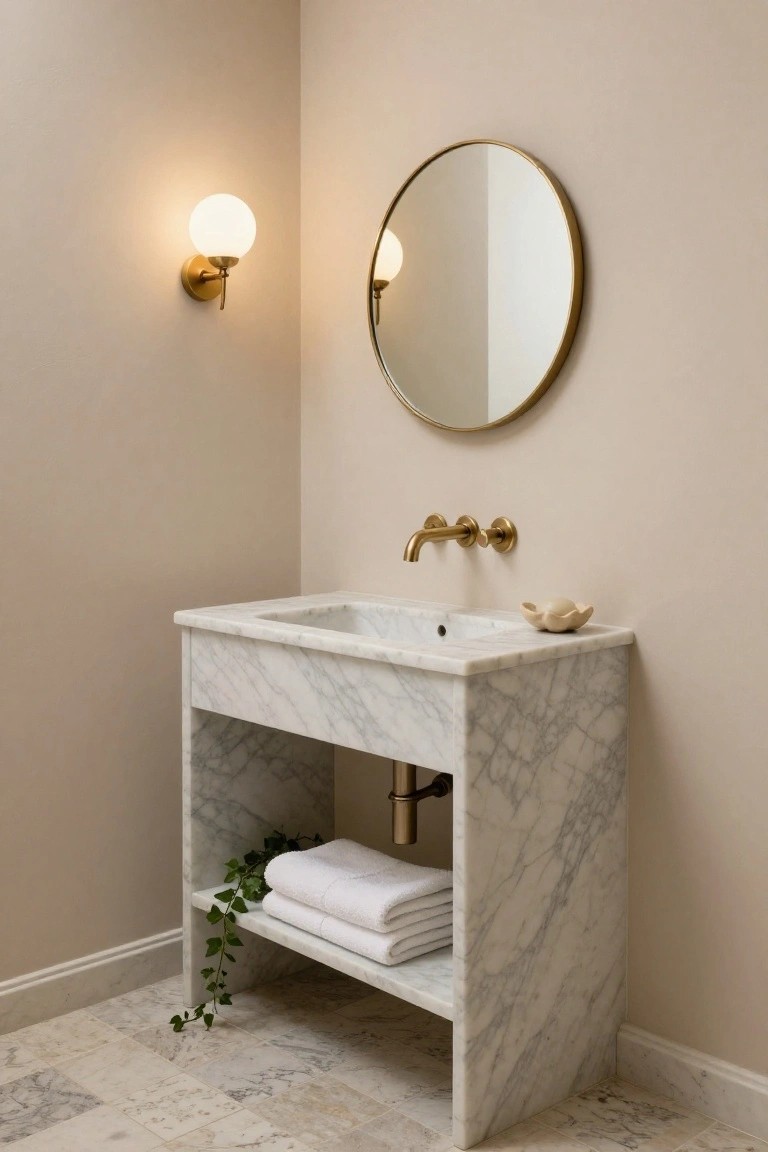
An open shelf below a vanity keeps daily items within reach without adding extra doors or drawers. It also prevents the area from feeling closed in, which helps smaller bathrooms stay lighter and easier to clean around.
This setup works well in homes that already use natural stone or simple fixtures. Just make sure the shelf height leaves enough room for folded towels and a few plants without crowding the floor space.
Built-In Storage For Laundry Rooms
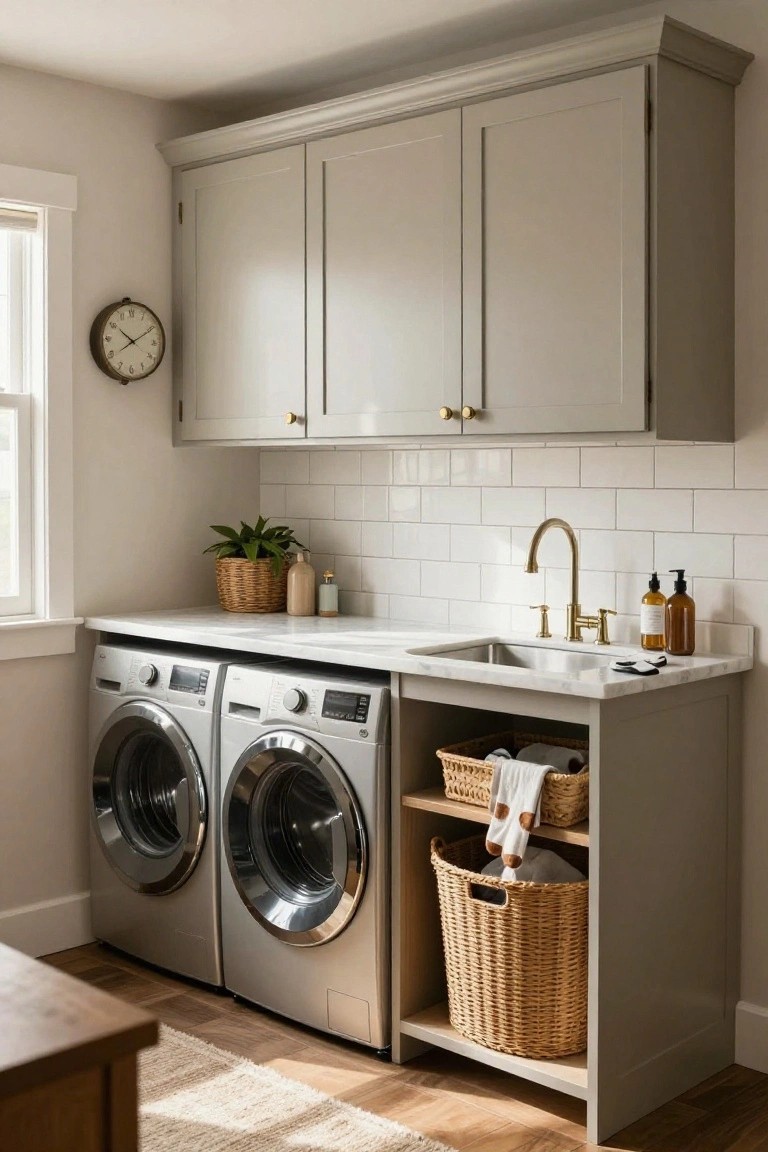
Built-in cabinets above the machines and open shelving below give a laundry room a much cleaner look while still keeping everyday items within reach. The closed upper storage hides supplies and keeps the space from feeling messy, while the lower shelves make it easy to grab baskets without digging through doors.
This approach works best in homes where the laundry area sits in a hallway or near living spaces. It suits anyone who wants the room to feel like part of the house rather than a purely functional corner, though it does require enough wall space for the cabinetry to be added.
Open Shelves Above The Kitchen Sink
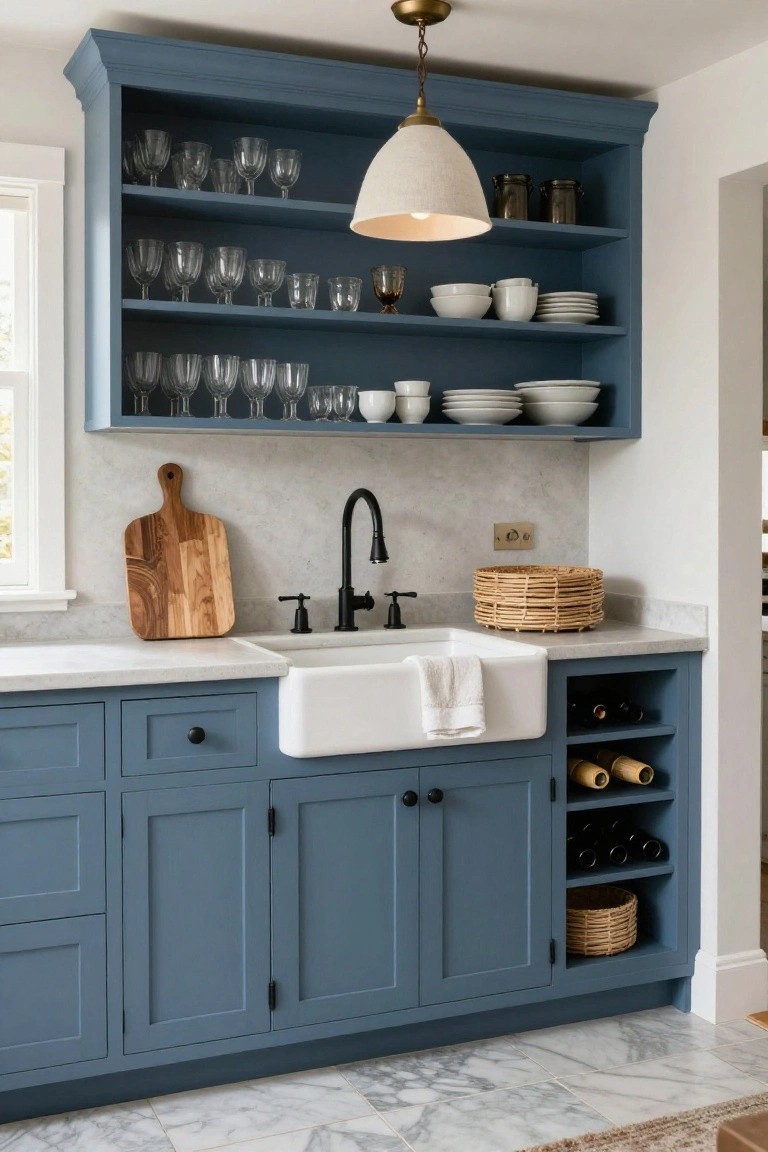
Open shelving above a sink area gives you quick access to plates and glasses you use every day. It keeps the space feeling lighter than a full wall of upper cabinets and lets you show the things you actually reach for often.
This setup works best in kitchens that see regular use rather than formal entertaining. Pair the open shelves with closed storage below for the items you want out of sight, and leave a little breathing room on the shelves so they do not look cluttered.
Built-In Shelving Around The Fireplace
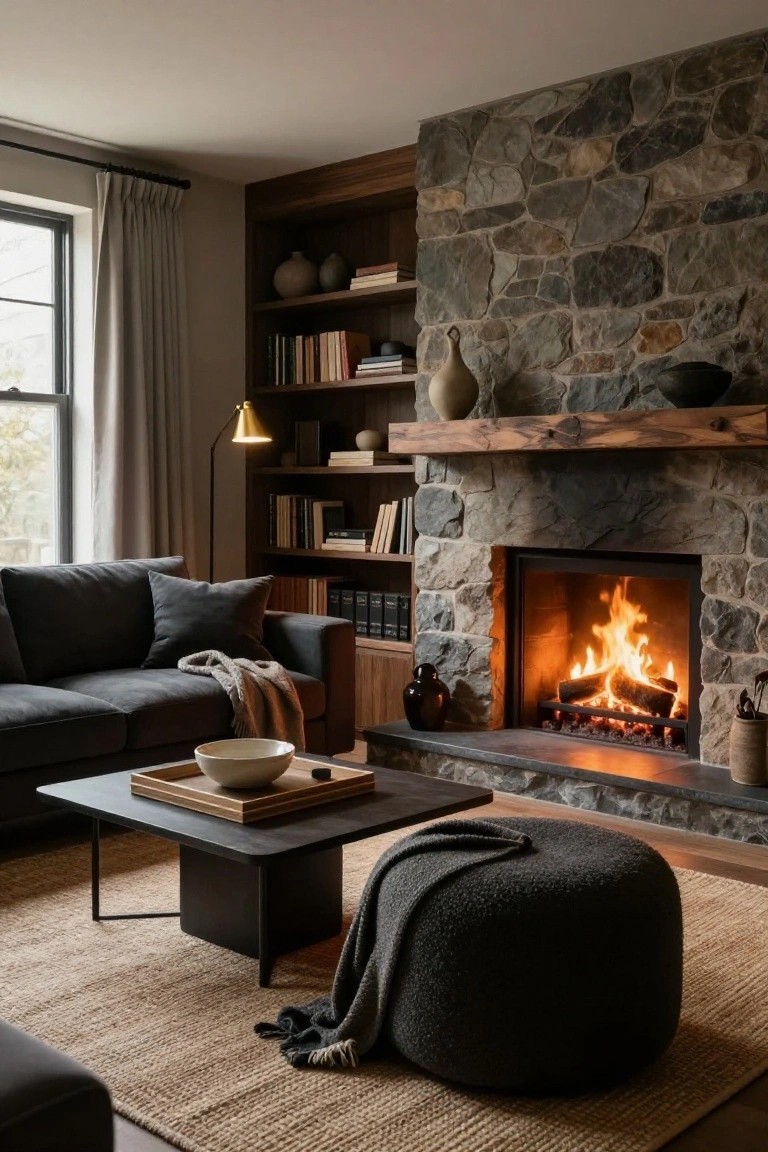
One simple way to make a living room feel warmer is to run built-in shelves right up to the fireplace. The shelves give the stone a softer frame and turn the whole wall into a place for books and a few quiet objects instead of leaving it bare.
This setup works best in rooms where you already spend time sitting near the fire. Keep the shelves from getting too crowded so the space stays easy to live in rather than styled for show.
Corner Sofas That Fit a Window Nook
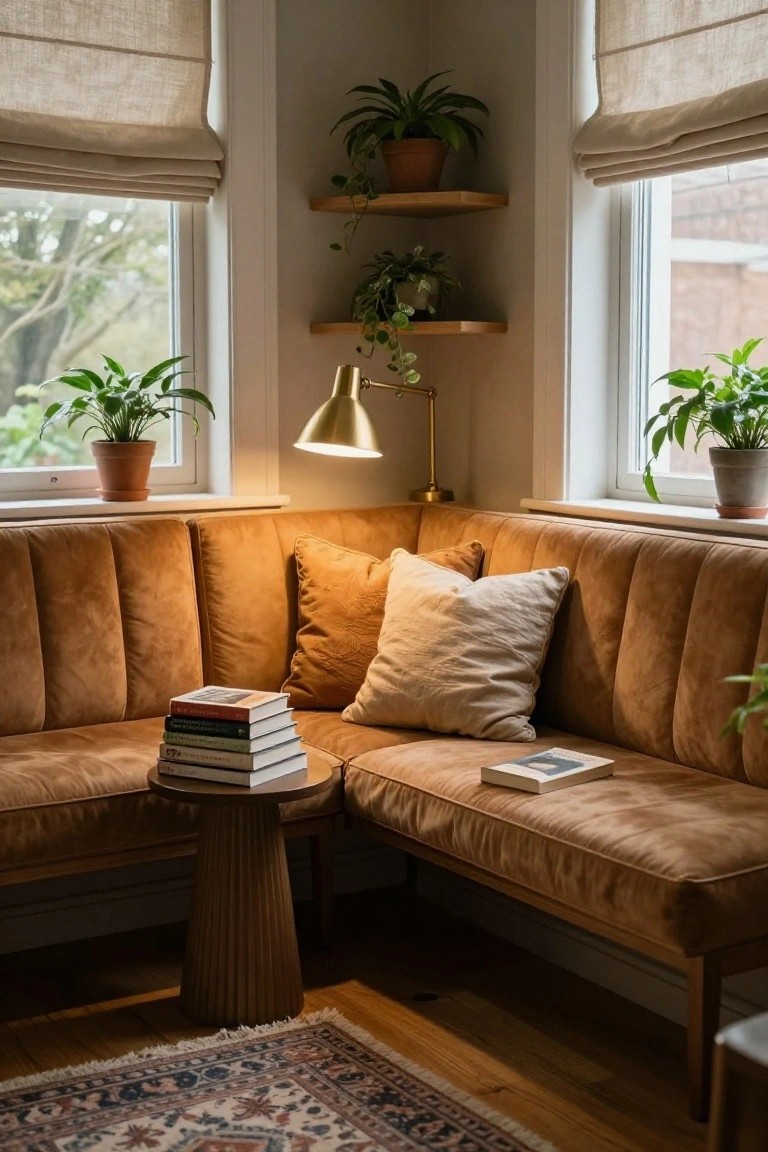
An L-shaped sofa tucked into a corner between two windows turns an empty spot into the main seating area. The shape follows the walls, so the room stays open in the middle while the sofa still feels generous and comfortable.
This works best in homes that already get steady daylight. Keep the fabric soft and warm, add a low side table for books or a lamp, and let plants fill the sills. Avoid crowding the space with extra chairs.
Central Islands Add Practical Storage To Walk In Closets
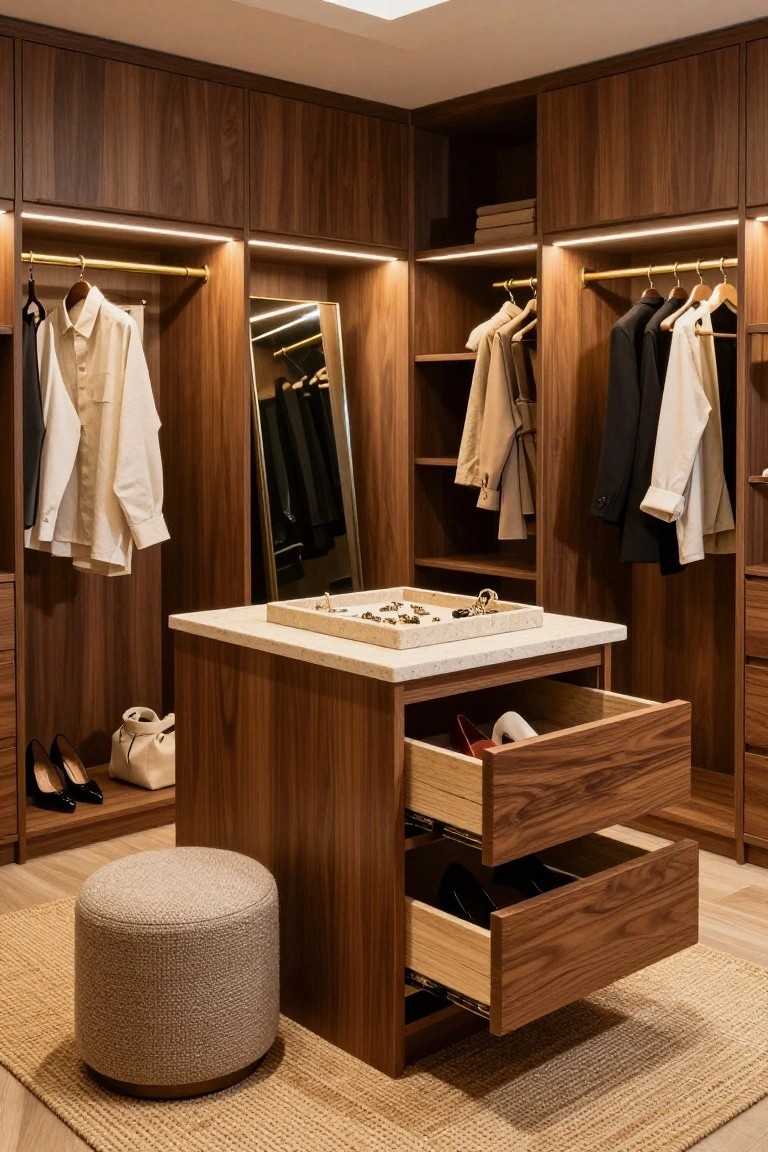
A central island gives you a place to lay out accessories and keeps everyday items within easy reach. The open drawers make it simple to see what you have without pulling everything out first.
This setup works best in larger closets where you can move around the island comfortably. Use deeper drawers for shoes or folded clothes and pick a sturdy top that can handle daily use without showing wear.
Group Family Photos On One Wall
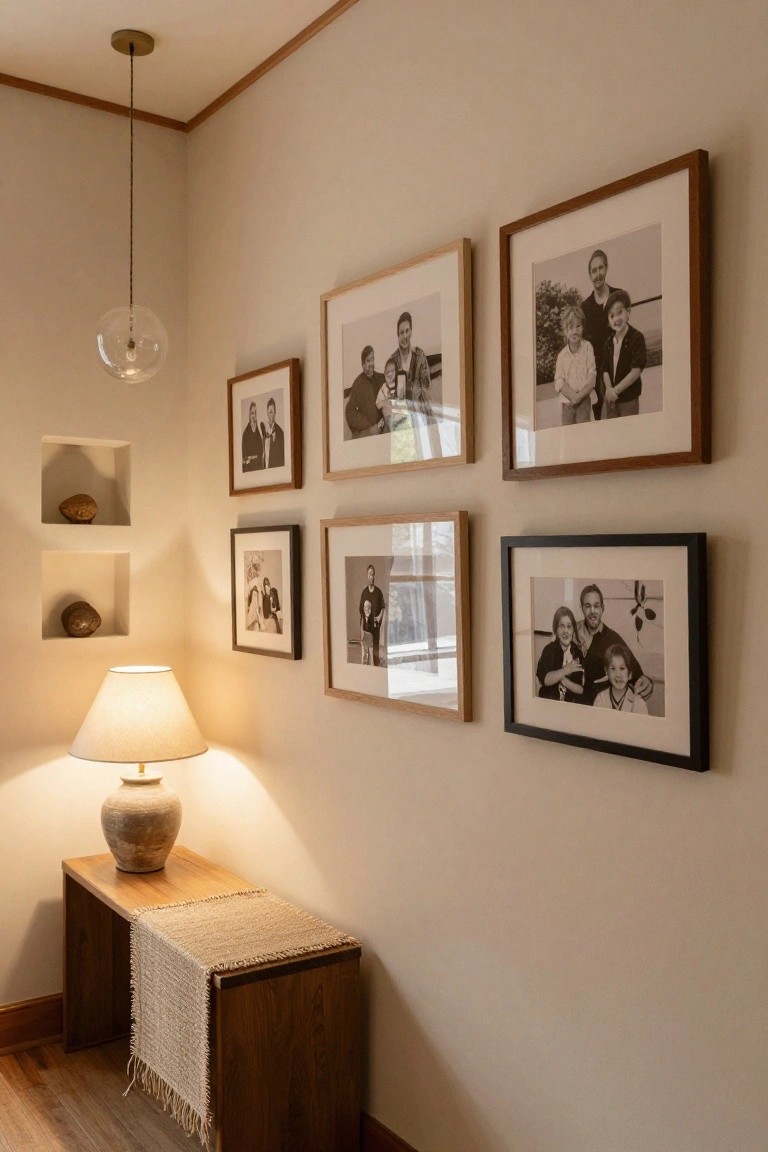
A wall covered in family photos brings an easy sense of warmth into a space. It feels personal without trying too hard, and it works especially well in hallways or corners that otherwise stay plain.
Mix frame finishes and sizes so the grouping looks gathered over time rather than matched. This idea suits homes that already have wood tones and simple furniture, and it keeps the focus on the photos themselves instead of perfect symmetry.
Warm Wall Colors For Bathrooms
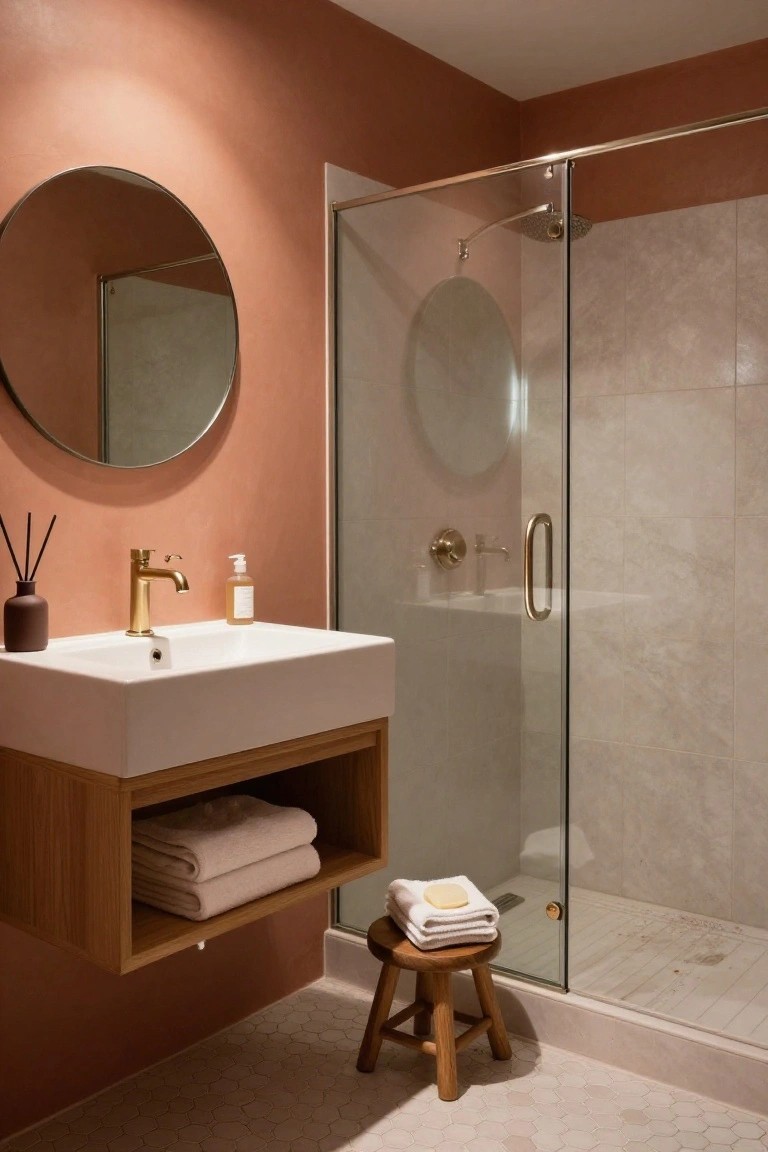
A soft terracotta wall color can turn a basic bathroom into a space that feels relaxed instead of stark. It adds a gentle warmth that works especially well with white fixtures and natural wood, giving the room a lived-in quality without extra effort.
This approach suits smaller bathrooms or homes that want a casual feel rather than a crisp all-white look. Keep the rest of the palette simple so the wall color stays the main feature, and test the paint on a large sample first since lighting can shift how it reads throughout the day.
Built-In Bench Seating For Everyday Dining
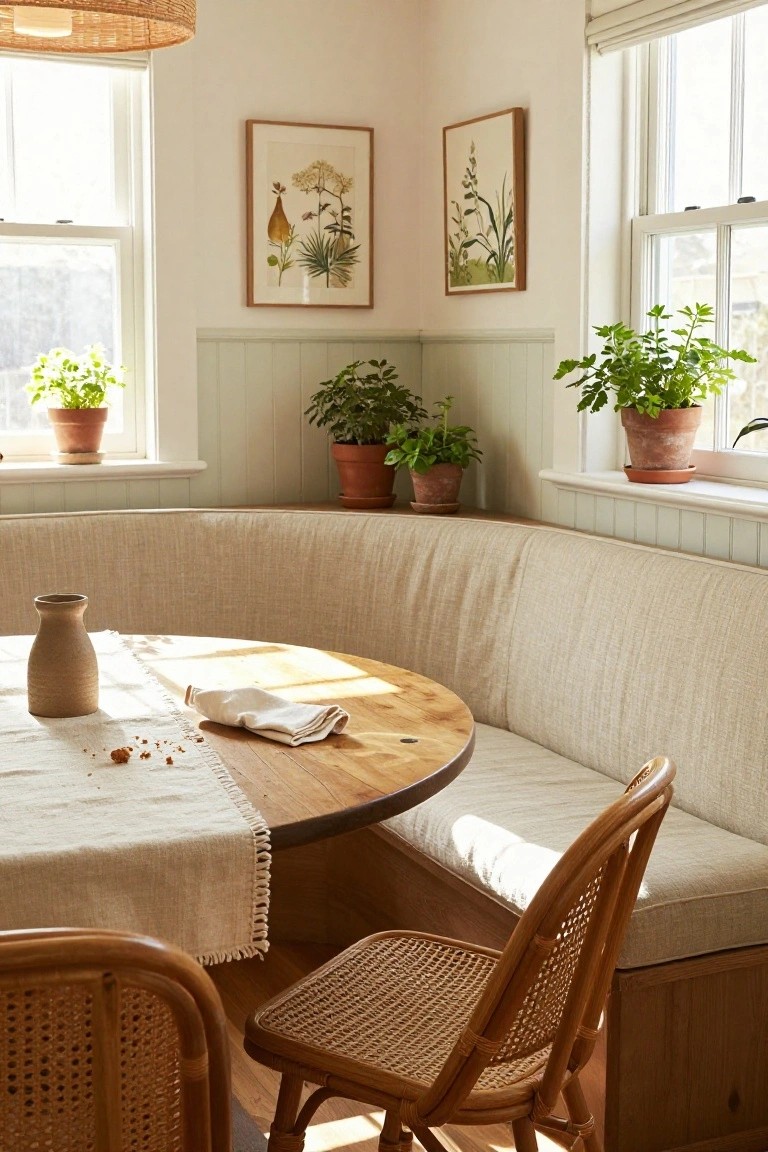
A built-in bench along the walls turns a corner into a practical dining spot without taking up extra floor space. It creates a relaxed setting that still feels considered, especially when the bench follows the shape of the room and pairs with a simple round table.
This approach works best in smaller homes or open kitchens where you want seating that stays out of the way. Keep the cushions in a light neutral fabric and let natural light from nearby windows do the rest.
Wood Cabinets Add Warmth To Neutral Rooms
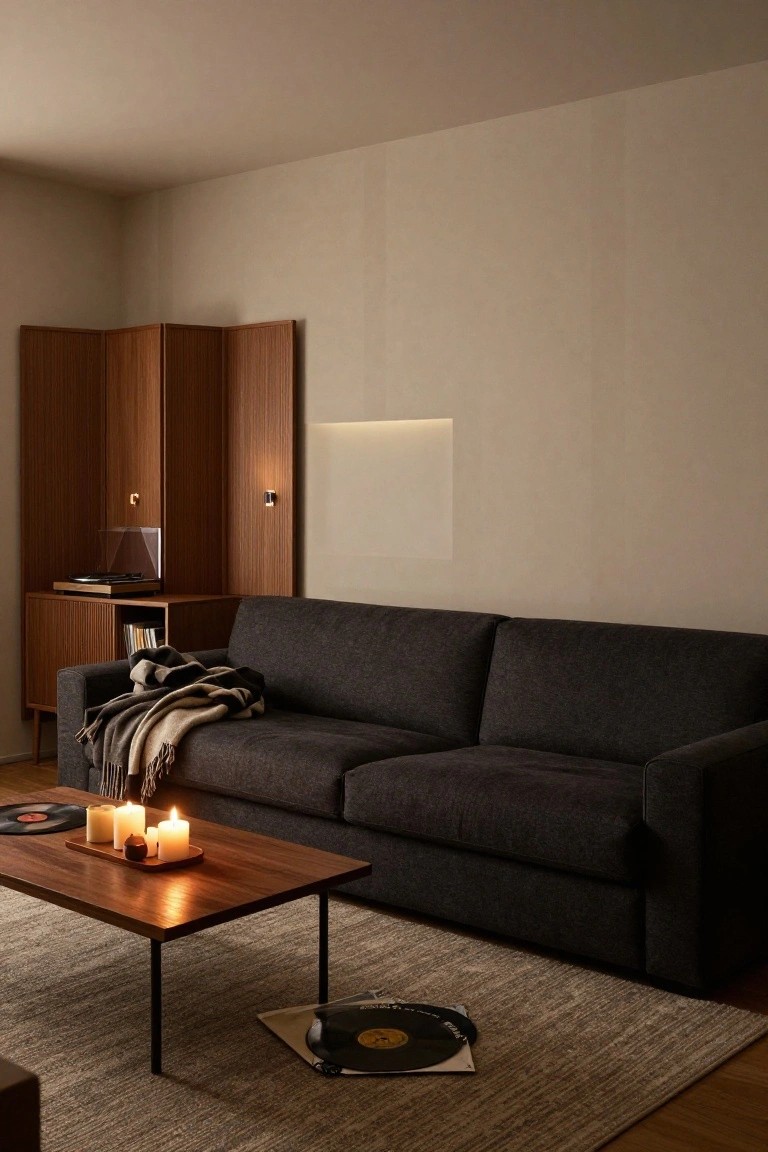
A simple wood cabinet can change how a whole room feels. In spaces with mostly neutral walls and darker seating, the natural grain brings in just enough color and texture to keep things from feeling flat or cold. It also gives you a place to tuck away electronics or records without adding extra clutter.
This works especially well in smaller living areas where you want storage that does not look heavy. Keep the cabinet low and simple, then let one or two wood pieces on the floor do the rest. It suits homes that already lean casual and do not need much pattern or ornament.
Add A Small Bar Cabinet With A Sink
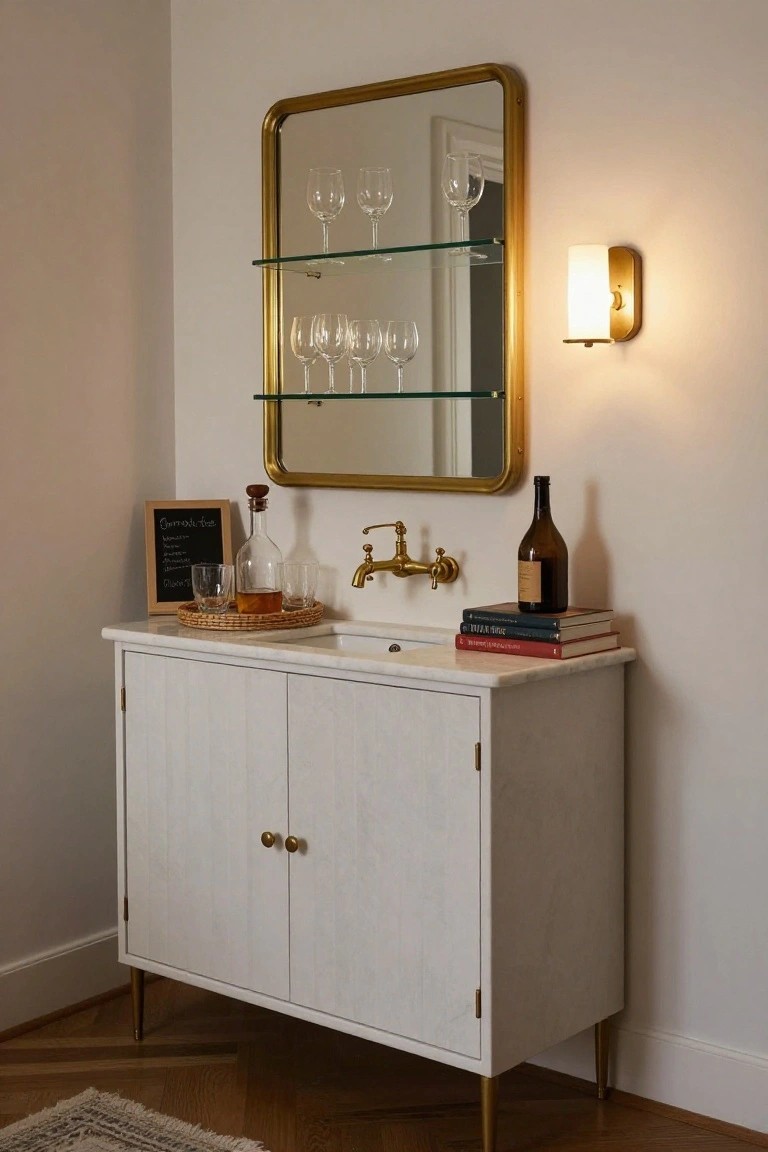
A bar cabinet with its own sink keeps drinks and glassware in one spot so you do not have to run back and forth to the kitchen. It turns a corner of the main room into a useful serving area without taking up much space or looking like a full bar.
This setup works best in living rooms or open dining areas where casual entertaining happens often. Choose one with solid storage below and a top that can handle daily use, and keep the overall look simple so it blends with the rest of the room.
Built-In Storage Benches For Busy Entries
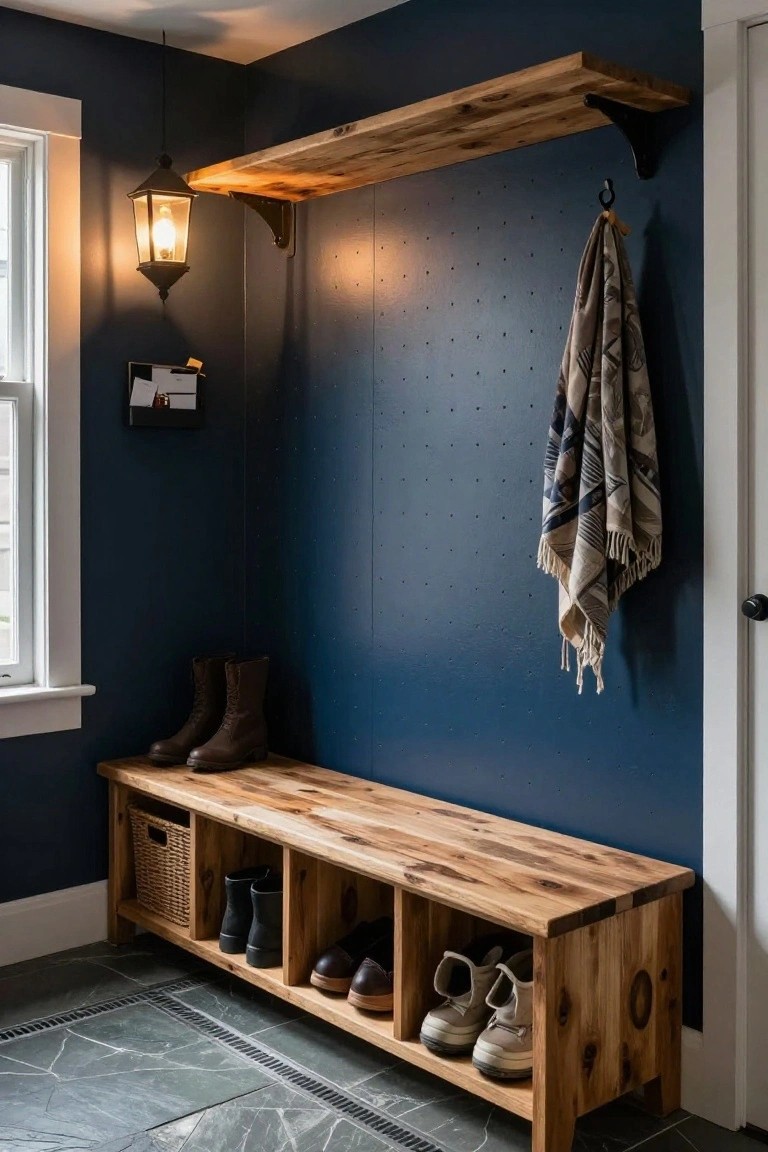
A bench with open cubbies underneath gives an entry a place to sit and a spot to tuck away shoes at the same time. It keeps the floor clear without adding another piece of furniture that might get in the way.
This setup works best near a back door or in a mudroom where boots and everyday shoes come and go often. It suits homes with kids or anyone who wants simple storage that does not require extra effort to keep tidy.
Mix Wood Furniture With Textured Seating
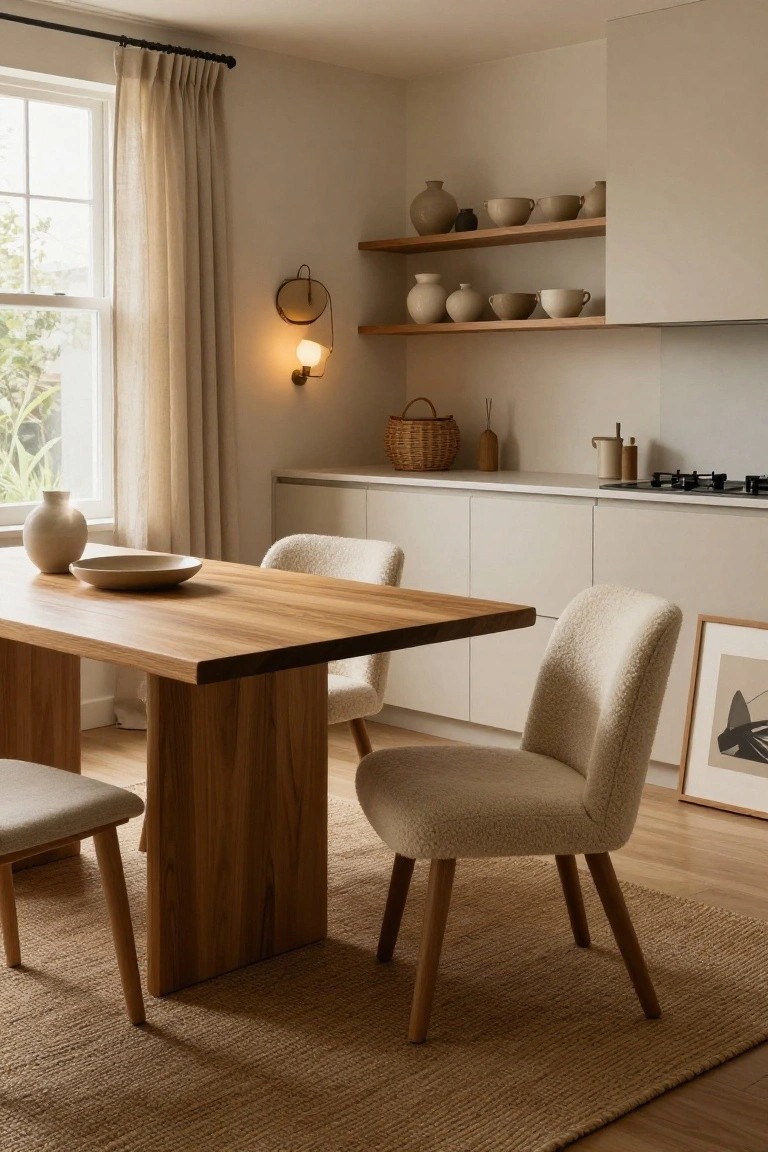
A solid wood table can feel a bit heavy on its own. Adding chairs with a soft, nubby texture helps balance that weight and makes the whole setup feel more comfortable for daily use.
This approach works best in open kitchen and dining spaces where you want warmth without clutter. Keep the surrounding finishes simple so the chair texture can stand out on its own.
Frequently Asked Questions
Q: How do I choose throw pillows that add warmth without making the space feel cluttered? A: Pick two or three in textured fabrics like soft wool or washed cotton. Place them on a sofa or chair in similar tones to your walls. This keeps the look relaxed while giving that subtle luxury touch.
Q: What works best for flooring if I want understated elegance on a budget? A: Go for wide plank wood in a warm oak shade and layer a simple jute rug on top. The natural materials ground the room and let other elements stand out. Skip anything too polished or shiny.
Q: Can I bring in black accents without cooling down the overall feel? A: Use them sparingly on something like a lamp base or picture frame. Stick to matte finishes and pair them right away with plenty of soft lighting and beige textiles. One or two pieces add depth without shifting the mood.
