

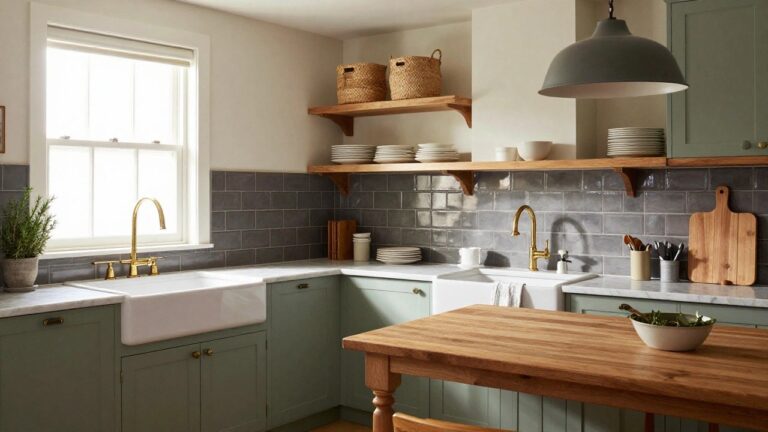
Kitchens show their real personality once daily routines settle in and the surfaces start to carry the marks of actual use.
I have found that the layouts which feel most natural are usually the ones where storage and work zones line up without forcing extra steps.
Some choices only make sense after living with them for a while.
Thinking about how a backsplash holds up to splashes or whether a countertop stays comfortable to lean against helps separate ideas that photograph well from ones that belong in a working home.
A handful of the approaches here are the sort I would measure against my own counters before committing to any changes.
Mixing Open Shelves With Lower Cabinets
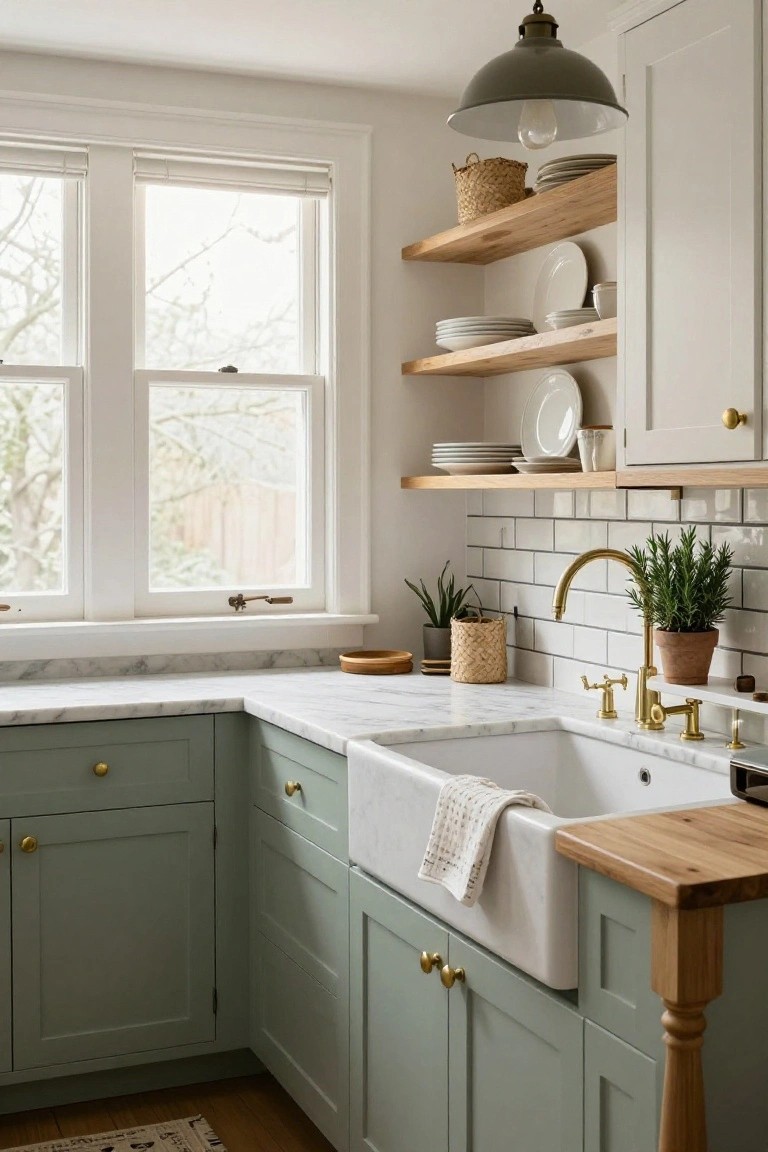
Many kitchens feel lighter and more usable when upper cabinets are left out and open shelves take their place. The lower cabinets still give plenty of closed storage while the shelves keep everyday items within easy reach and add a bit of warmth through the wood.
This setup works best in kitchens that already have good wall space and do not need every inch hidden away. It suits older homes or simpler layouts where you want the room to feel less boxed in without losing function.
A Large Wood Island At The Center
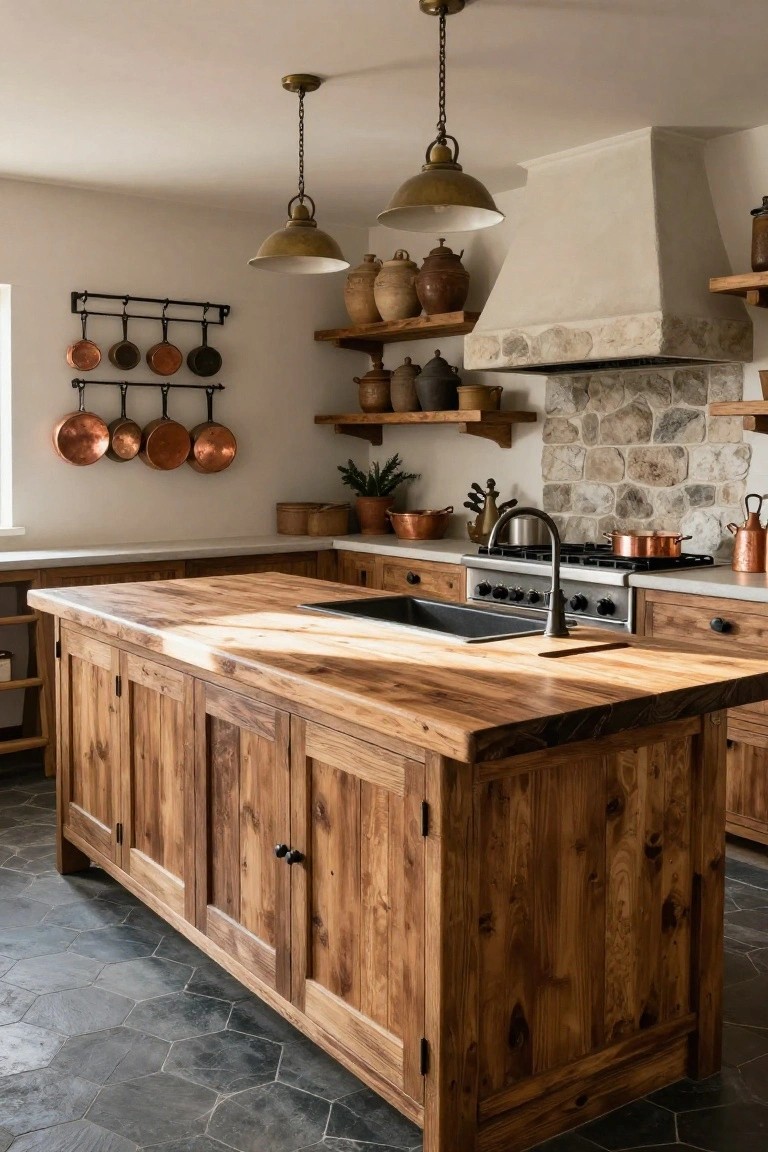
A big wood island often becomes the most useful part of a kitchen because it adds both workspace and storage in one piece. The natural grain and thickness of the wood also bring a warmth that painted cabinets alone cannot match.
This setup suits homes that get a lot of daily use since the island can handle chopping, baking, and casual meals without feeling fragile. Keep the surrounding cabinets simple so the island stays the main focus rather than competing with too many other materials.
Blend Wood Cabinets With A Light Island
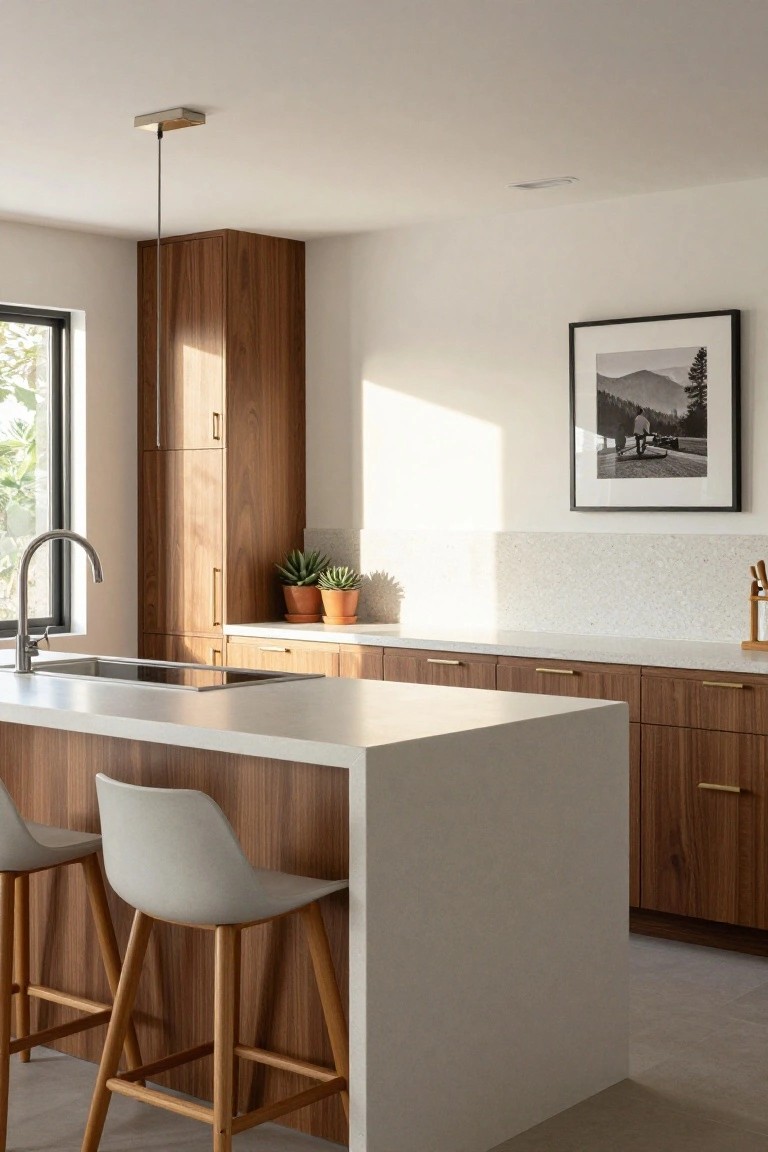
Wood cabinetry paired with a pale island top gives a kitchen both warmth and a clean look. The natural grain adds depth while the lighter surface keeps the whole space from feeling heavy or closed in.
This approach suits homes that need storage and a place to gather at the same time. It works best when the wood tone stays consistent across the cabinets and island base so the room feels pulled together rather than busy.
Open Shelving For Everyday Kitchen Storage
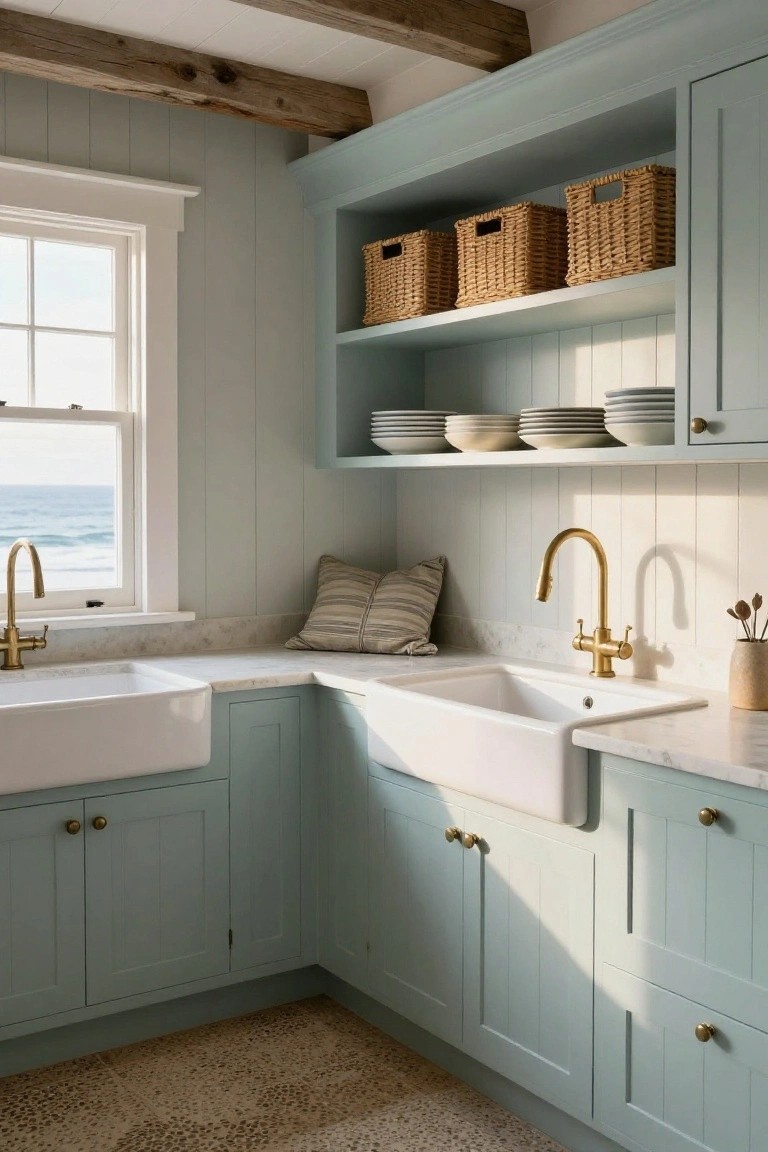
Open shelving keeps plates and bowls within easy reach without needing to open a cabinet every time. It also leaves room for a few baskets that can hold smaller items like cloths or utensils, which helps the space feel more practical day to day.
This idea works best in kitchens that see regular use and do not require everything to stay hidden. Place the shelves above the main sink or counter area so the items stay handy while the lower cabinets handle the less frequently used pieces.
Deep Green Cabinets
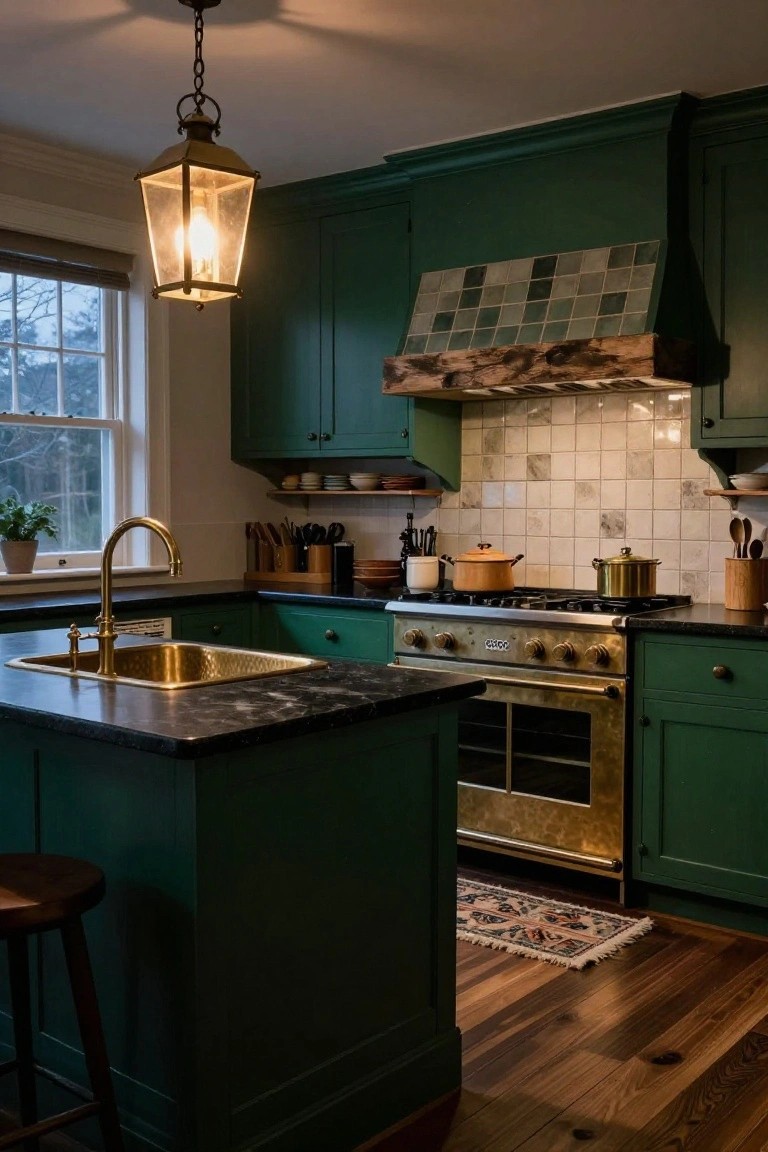
Deep green cabinetry gives a kitchen a settled, comfortable look that still feels current. The color holds its own against wood tones and metal finishes without needing extra layers of decoration.
It works especially well in homes that already have some age or character. Keep counters light and add just one or two warm metal pieces, like a brass faucet, so the space stays bright and easy to use every day.
Mix Wood Tones into White Kitchens
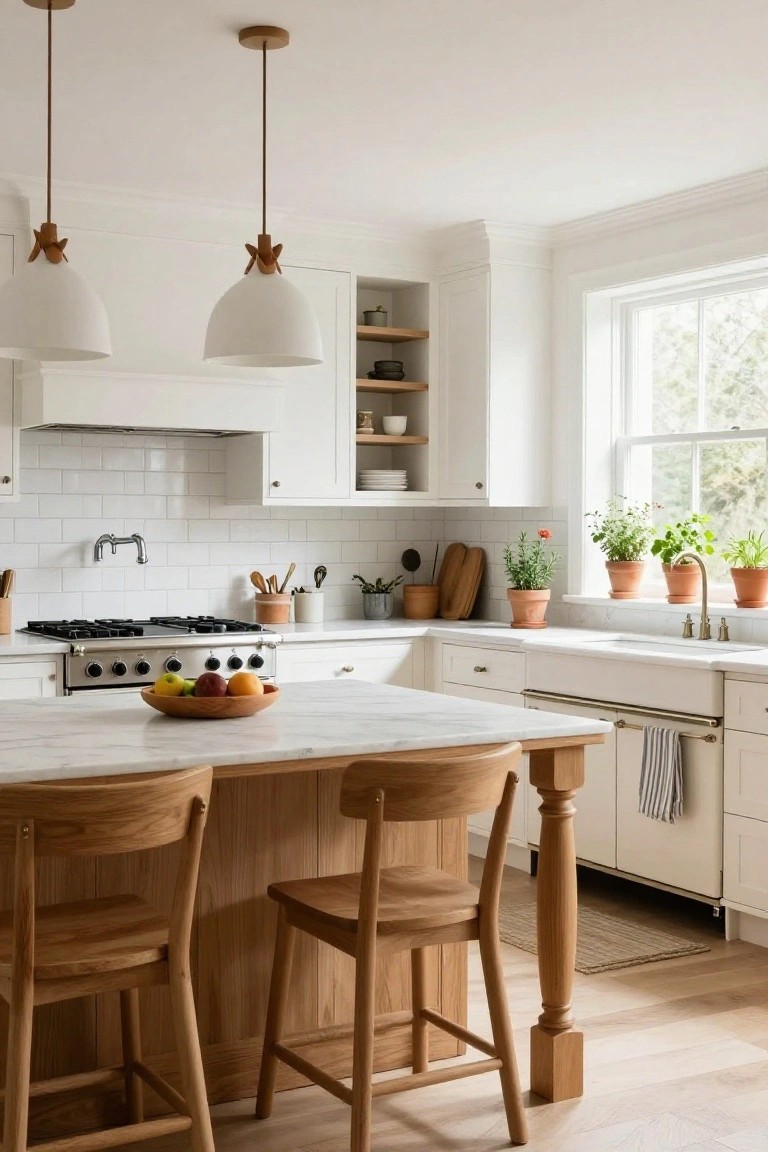
A white kitchen can feel a little stark on its own. Adding a wood island and matching stools brings in some natural color and makes the space feel more lived in without changing the overall clean look.
This approach works well in homes that want to stay bright but still feel welcoming. Keep the wood simple and let the grain show through. It pairs easily with open shelves and basic hardware, and it holds up well to daily use.
Natural Wood Kitchen Islands
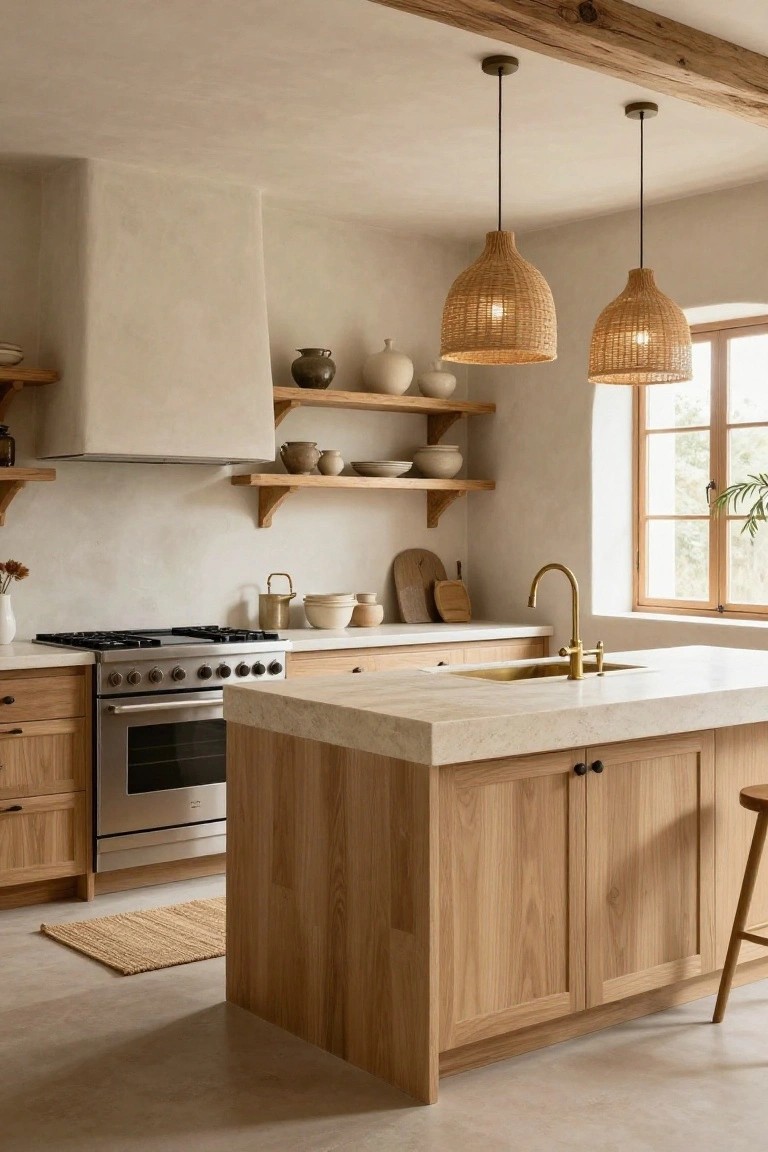
Many kitchens gain a steady warmth when the island and cabinets are built from the same light wood. The material softens the room without extra decoration and still handles daily use.
This choice works best in homes that want a simple, lasting layout. Match the island to nearby cabinetry, keep hardware minimal, and let the wood grain do the rest.
Open Shelving That Holds Books In The Kitchen
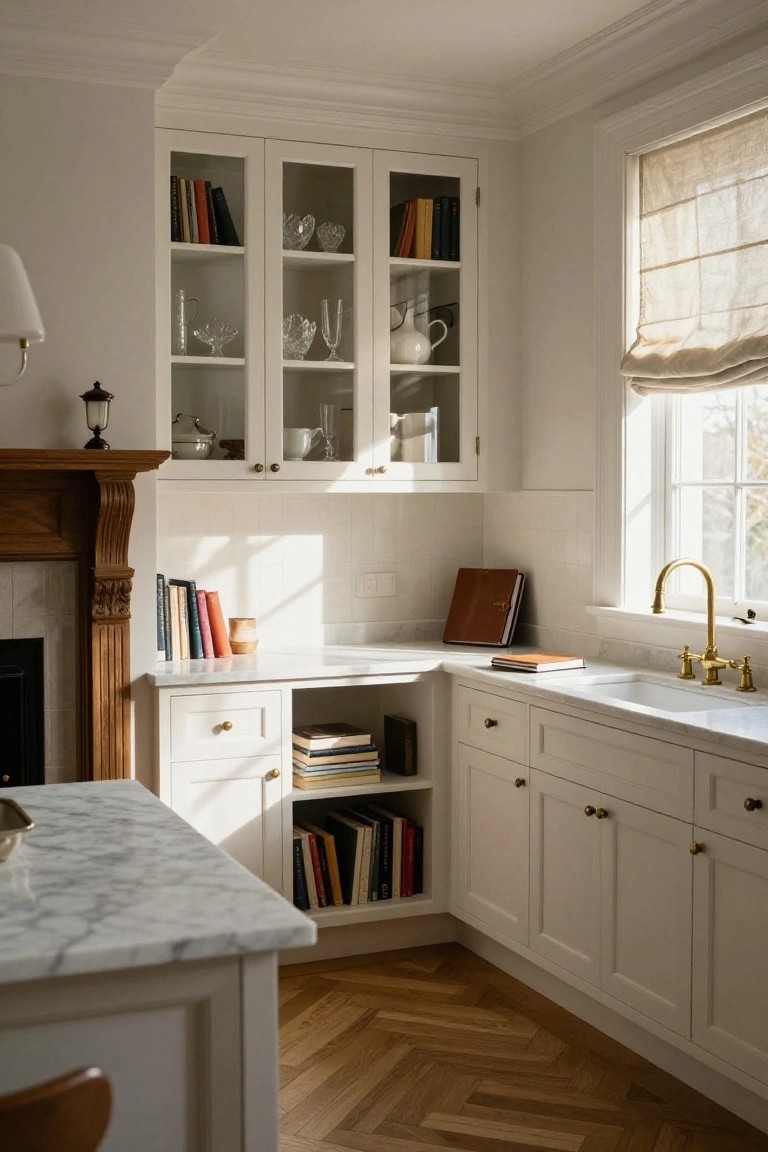
Many kitchens stick to closed cabinets and nothing else. Adding a few open spots for books gives the room a softer, more used feel without much extra work. It turns storage into something that feels personal instead of purely practical.
This idea suits older homes or any kitchen that connects to living areas. Use the open space for cookbooks and a handful of regular titles, then keep the rest of the cabinets closed for items you want out of sight. Just watch the depth so the shelves do not stick out too far into the walkway.
Open Shelving For Everyday Access
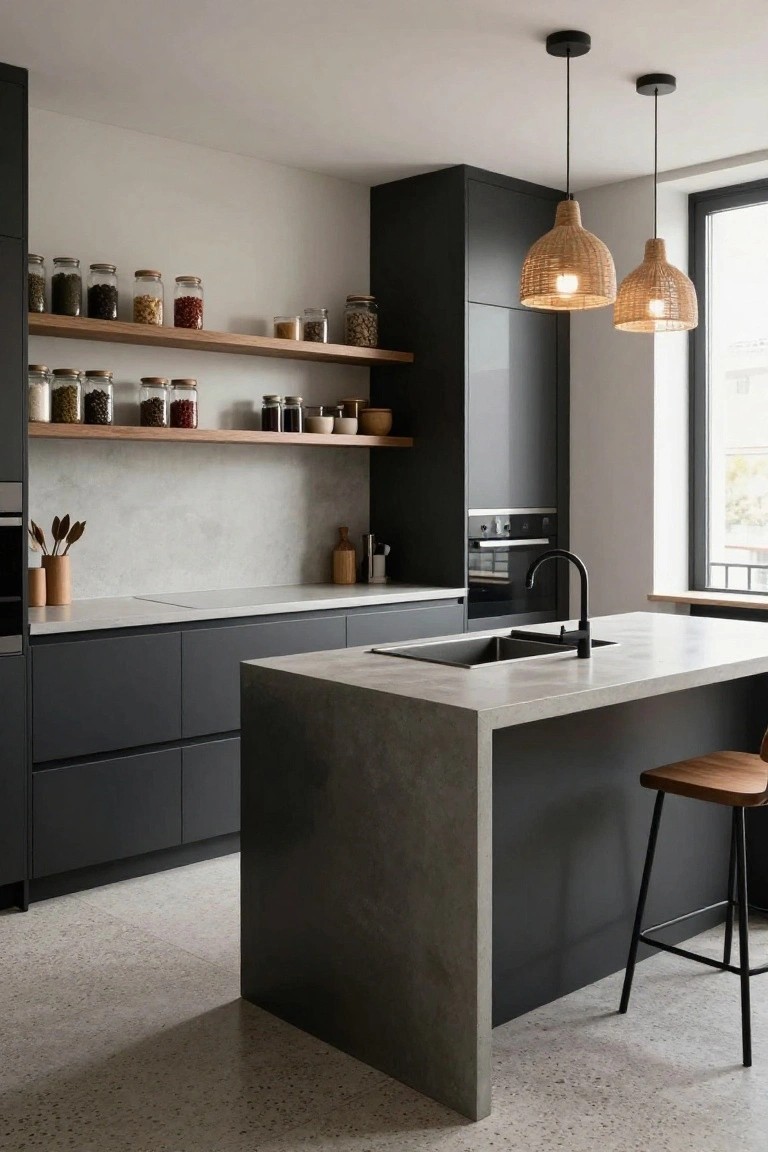
Open shelves work well when you want to reach things quickly without opening doors all the time. They also keep the kitchen from feeling too closed off while still giving you a place to keep jars and smaller items in view.
This approach suits homes that already have plenty of closed storage below the counters. Just make sure the shelves stay organized so they do not turn into extra clutter.
Wood Islands Warm Up Gray Cabinets
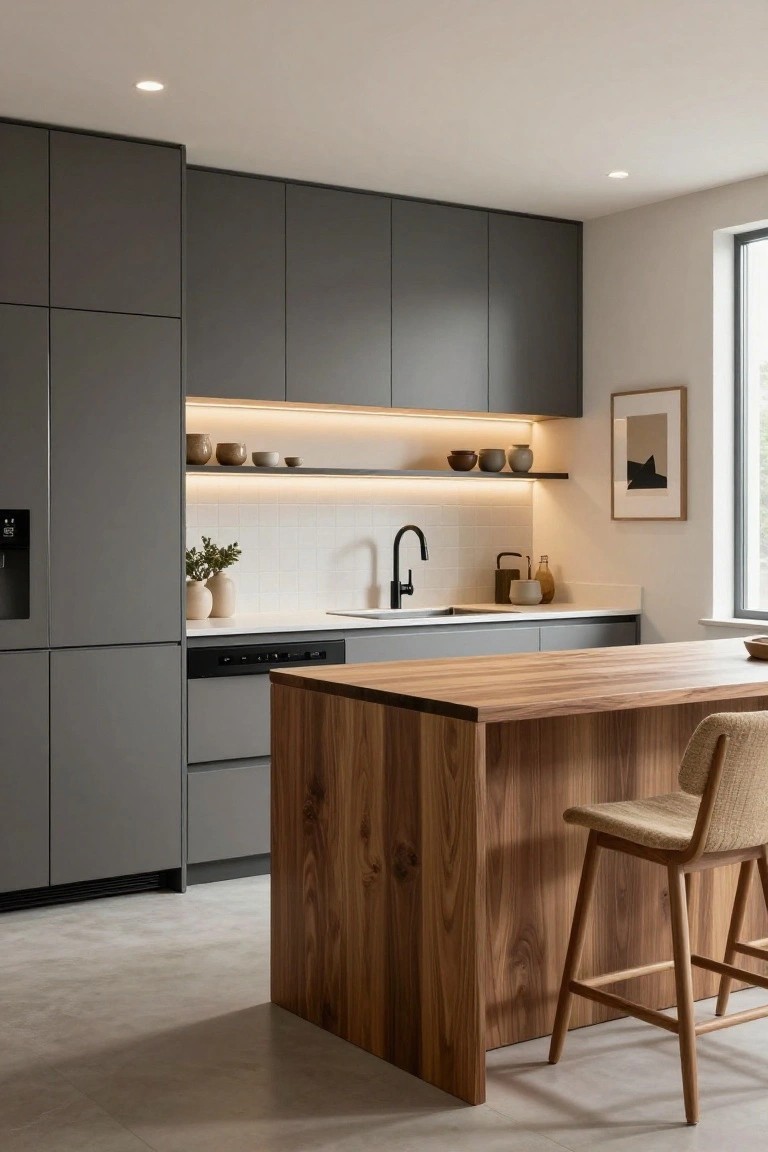
Many kitchens with gray cabinets lean cool and flat. A wood island changes that by bringing in natural grain and a softer tone that makes the whole space feel more lived in.
This works best in open kitchens where the island gets daily use. Keep the rest of the cabinetry simple so the wood stands out without competing, and choose a finish that matches other wood tones already in the room.
Open Shelving For Everyday Items
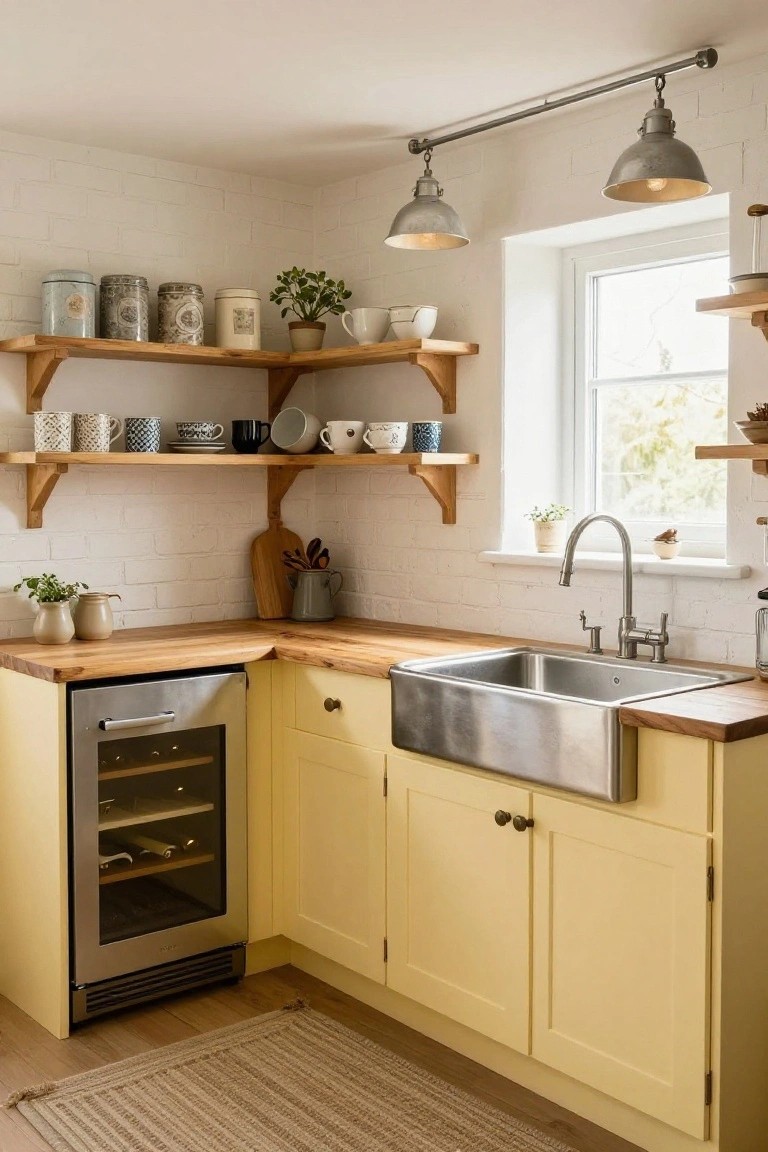
Open shelving works well in kitchens because it keeps plates, mugs, and bowls right where you need them. The wood tones bring a bit of warmth against the white brick, and the lower cabinets still give you plenty of hidden storage.
This approach suits smaller kitchens or anyone who likes a relaxed, lived-in feel. Just watch that the shelves do not get overcrowded, or the space can start to feel messy.
Wood On The Island Brings Warmth
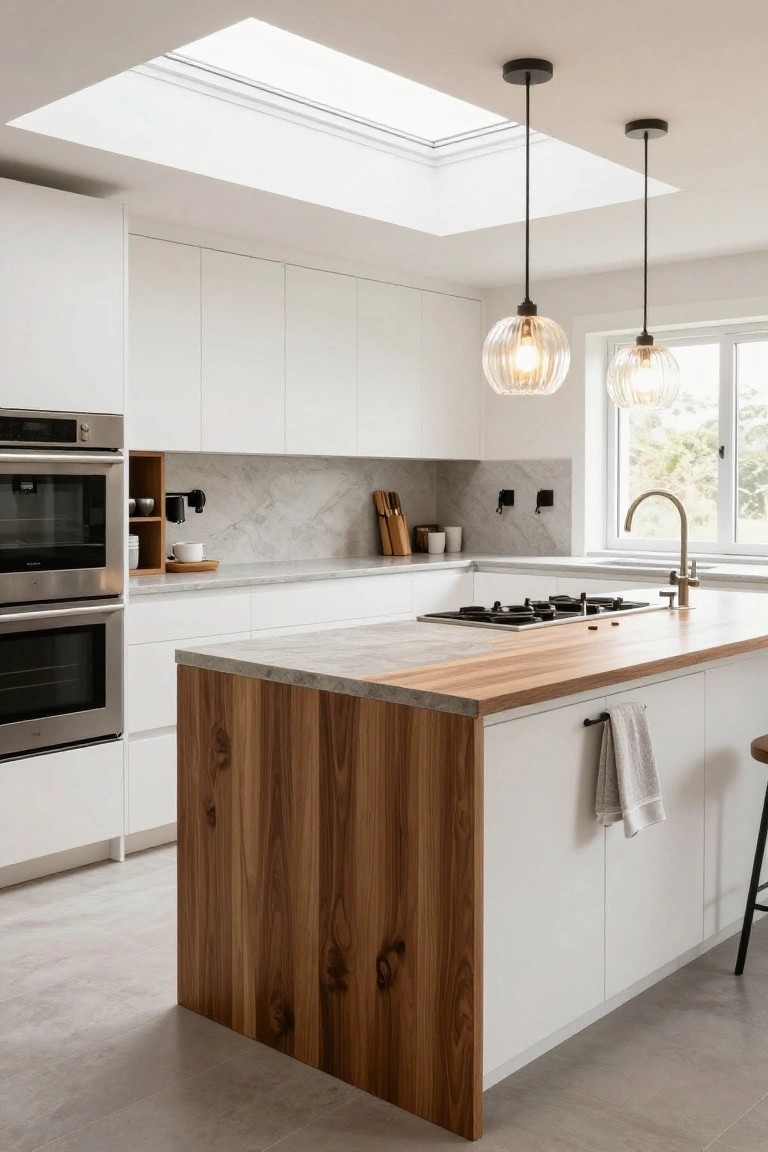
A wood-front island stands out in a mostly white kitchen because it adds natural texture without breaking the clean lines. The wood softens the bright space and gives the room a grounded center that feels lived in rather than stark.
This works well in open layouts where the island gets used every day. Keep the surrounding cabinets light so the wood reads as a deliberate accent instead of an overload. It suits homes that want a timeless look without going fully modern or fully traditional.
Open Shelving By The Window
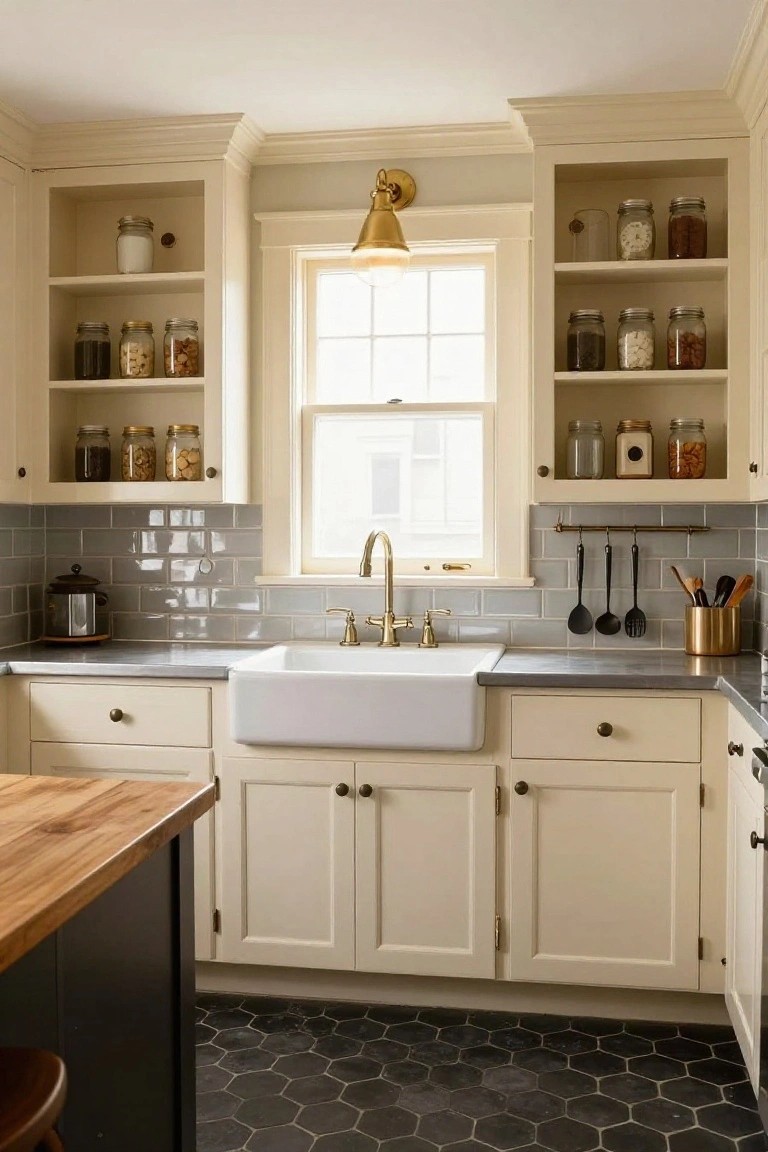
Open shelving placed on either side of a window gives you quick access to what you use often. It also keeps the kitchen from feeling too closed in, since the items on display add some life without taking up extra floor space. Many people like this setup because it mixes storage with a bit of everyday warmth.
This works best in kitchens that get steady light, so the shelves do not end up in shadow. Keep the number of items modest and choose containers that match the rest of your cabinets. Too much clutter can make the look feel busy instead of calm.
Woven Leather Bar Stools At The Island
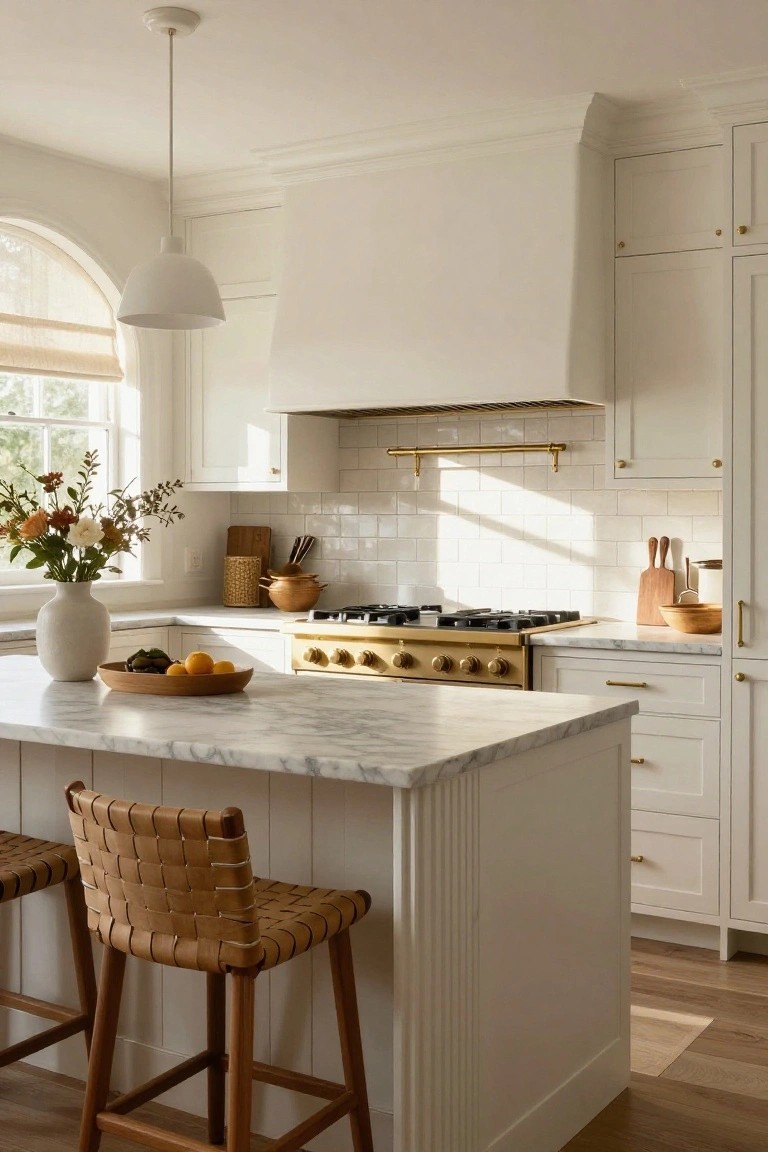
Woven leather bar stools add a natural layer that keeps a white kitchen from feeling too stark. The texture works especially well against marble and painted cabinetry, giving the space a warmer, more lived-in look without extra color or pattern.
These stools suit kitchens that already have a simple layout and clean lines. They hold up well in homes where the island gets daily use, and they pair easily with wood tones or brass details if you want a bit more contrast.
Mix Materials on the Kitchen Island
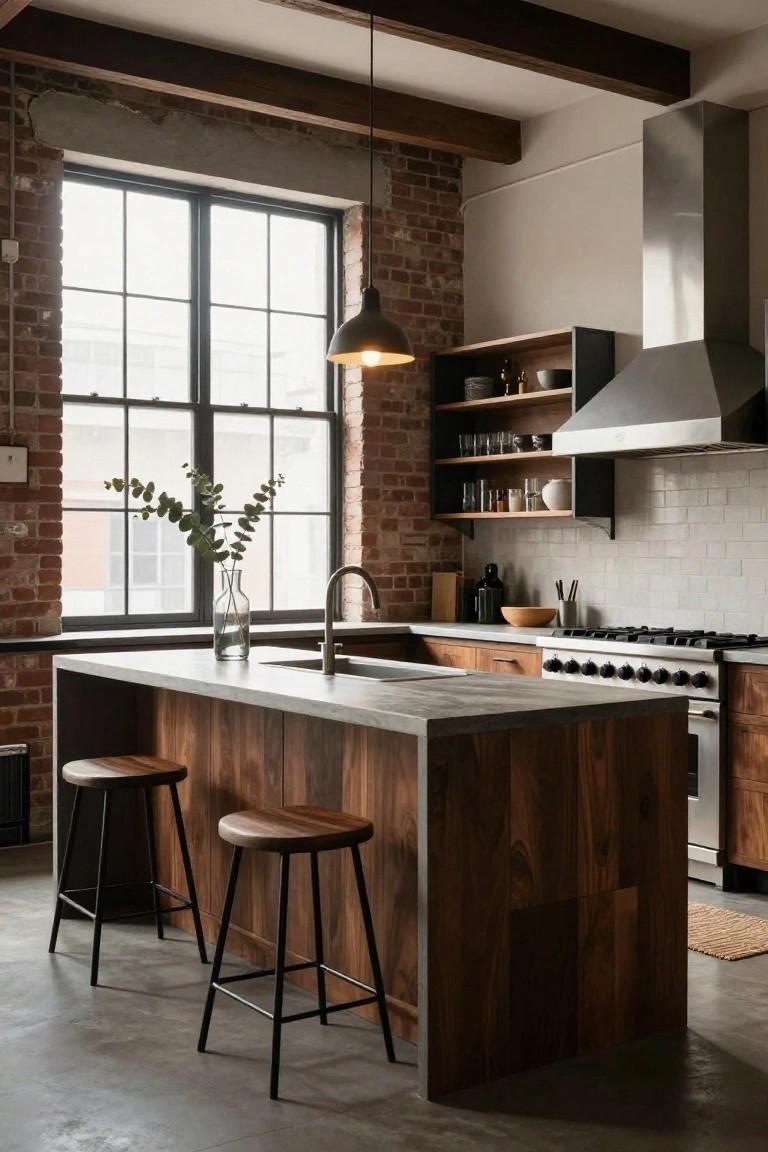
A kitchen island with a wood base and concrete top brings real warmth without losing its practical side. The wood softens the harder surfaces around it, while the concrete handles daily use and keeps things grounded. This combination works especially well in spaces that already have brick or other textured walls.
It suits homes that want a timeless look rather than something too polished or too rustic. Keep the wood tone fairly dark and let the concrete stay simple so the island feels like a natural centerpiece instead of a design statement.
Add a Bench to the Kitchen Island
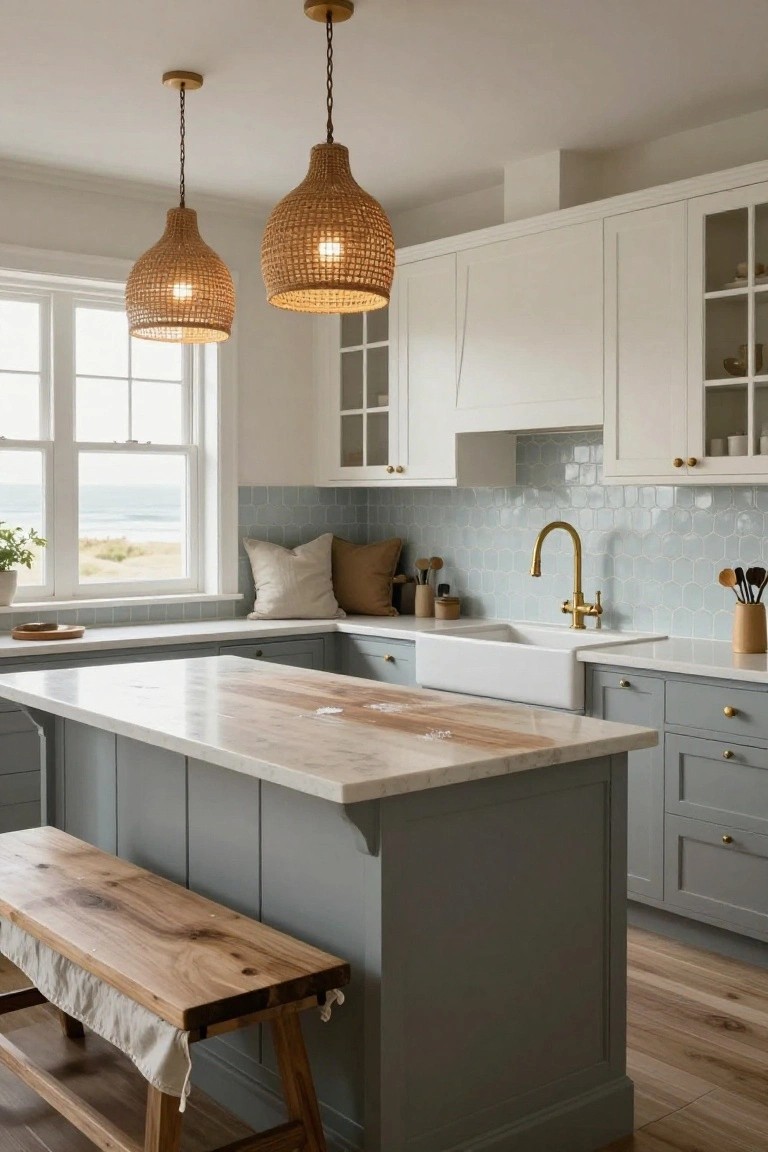
A bench along the island creates casual seating that feels more relaxed than a row of stools. It works well when you want the kitchen to handle everyday meals or extra guests without crowding the space.
This approach suits homes with a larger island and open floor plans. Keep the bench simple in wood so it blends with the rest of the room and does not block movement around the ends.
Open Shelving With Copper Pots
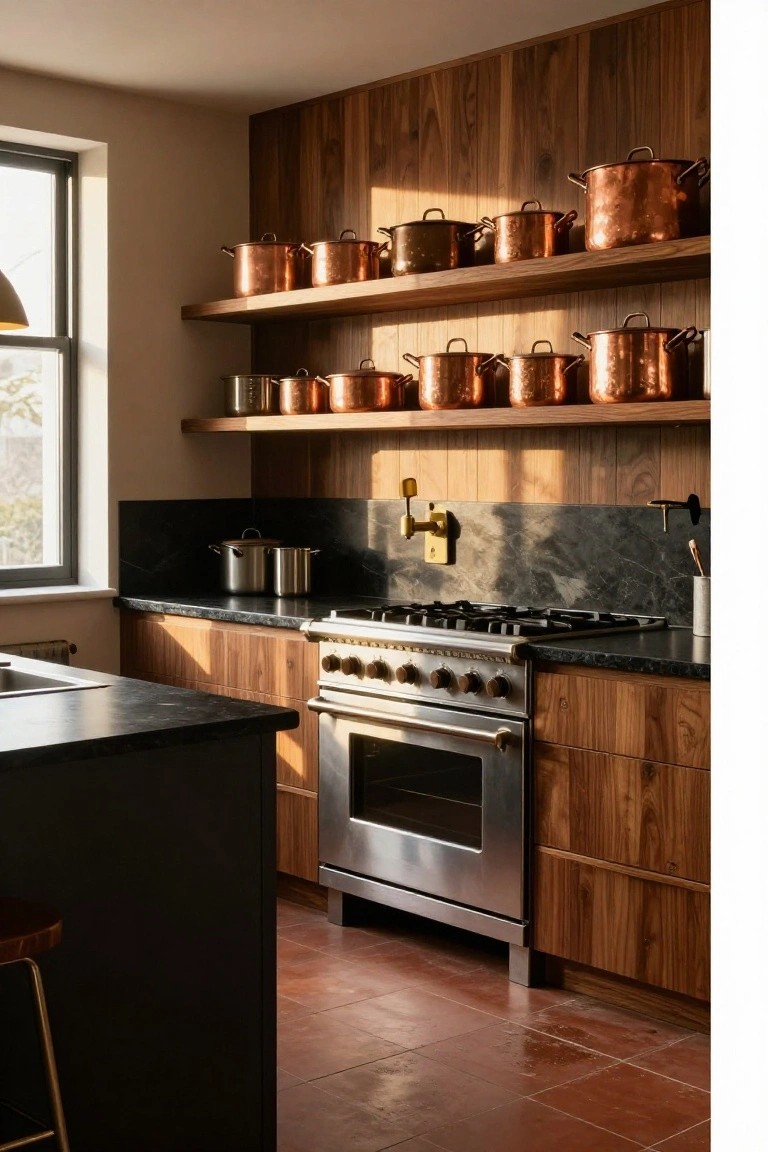
Open shelves give you a place to keep copper pots within easy reach while letting the metal add its own color and warmth to the room. The copper stands out nicely against wood and keeps the kitchen from feeling too closed in.
This approach suits homes that already lean on natural materials and simple finishes. Make sure the shelves sit at a comfortable height and hold only the pieces you actually use so the look stays useful instead of cluttered.
Wood Islands With Painted Cabinets
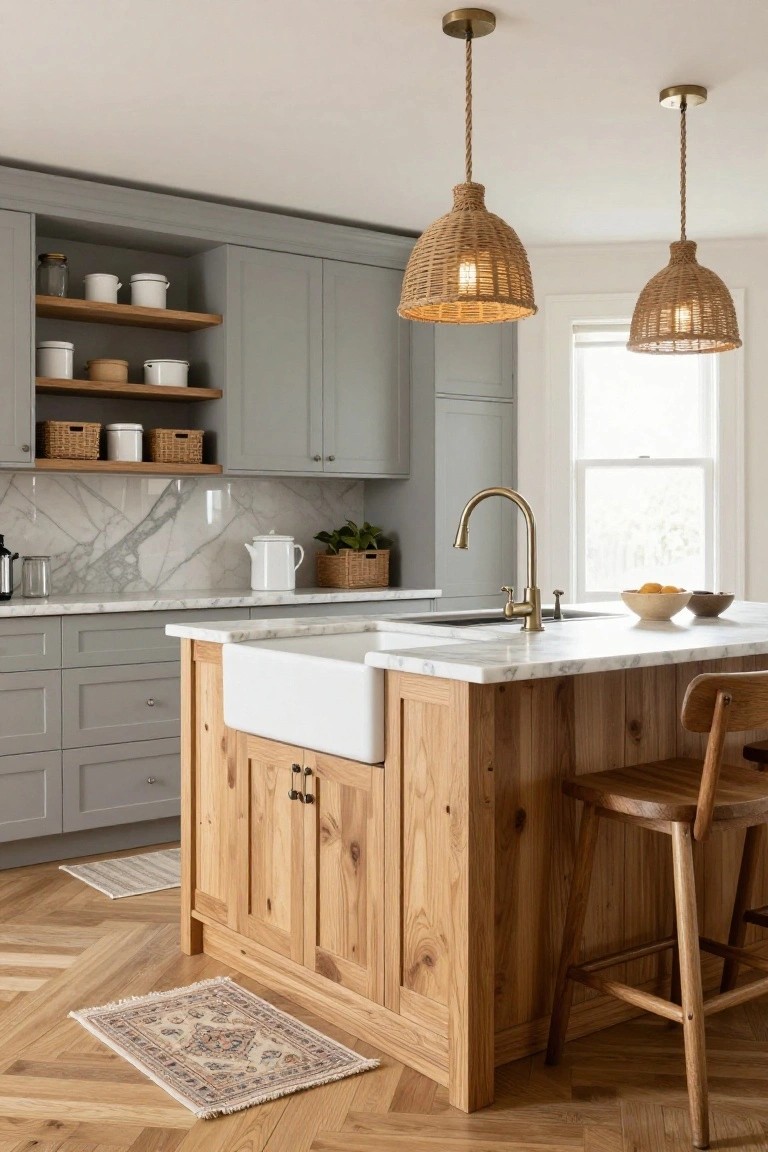
Many kitchens with gray or painted cabinetry end up feeling a little flat or cool. A wood island base changes that without much effort. It adds natural texture and a bit of age that painted surfaces alone rarely provide.
This approach suits homes that want a timeless kitchen rather than something too modern or too country. Keep the wood finish simple and let the countertop handle daily wear. The contrast between the two materials keeps the whole room from looking too matched.
Frequently Asked Questions
Q: How do I add warmth to a kitchen with mostly white cabinets?
A: Bring in a few open wood shelves above the counter. They break up the brightness and give you a spot for everyday dishes or a small plant. Keep the rest of the surfaces clear so the space still feels open.
Q: What lighting works best for a cozy yet practical kitchen?
A: Add a couple of wall sconces on either side of the sink or stove. They cast a softer glow than overhead lights alone and make evening cooking feel less harsh. Pair them with a simple pendant over the island if you have room.
Q: How can I keep a timeless kitchen feeling functional day to day?
A: Choose one durable countertop material that handles spills and heat without fuss. Then place a small bench or stool near the main work area so someone can sit and chat while dinner gets made.
