

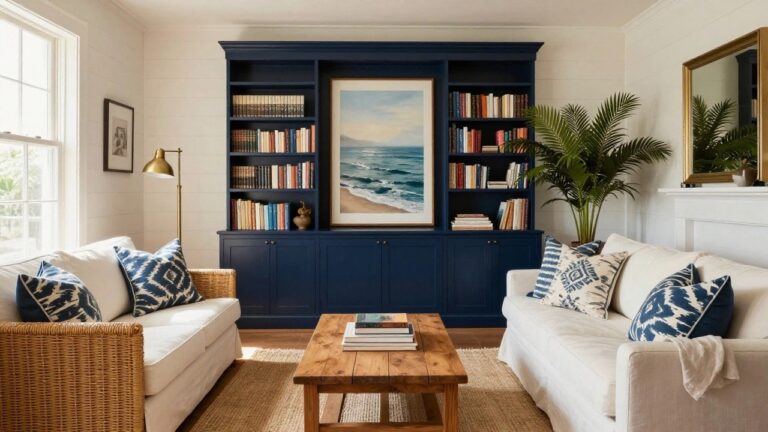
I have always found that blue and white schemes work best when they support how a room gets used every day rather than just matching a view through the window.
When I test paint samples on actual walls I notice the light changes everything and some shades shift from calm to stark by afternoon.
Some schemes look crisp on paper but feel cold once you live with them.
Trying a few of these combinations in my own spaces has shown me which ones keep the rooms feeling open without making them hard to warm up in winter.
Small choices like the finish on wood trim or the weight of the fabrics end up shaping how comfortable the whole house feels over time.
Built-In Bookshelves Around The Fireplace
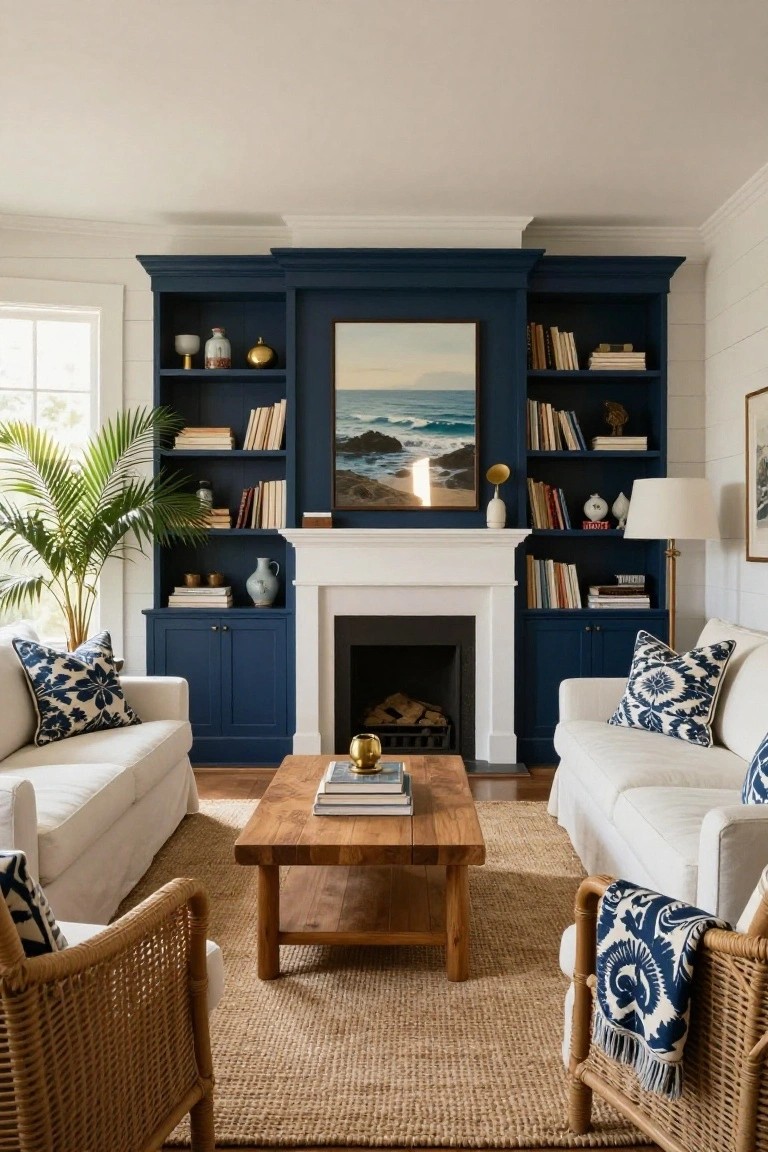
Built-in shelving painted in a deep blue gives the fireplace a strong presence without needing extra trim or decoration. It turns the whole wall into useful storage and display space while keeping the room feeling open and organized. The color choice also ties the seating area together and adds a bit of coastal character without going overboard.
This setup works best in living rooms where you want the fireplace to stay central but still need room for books and a few simple objects. It suits homes with moderate ceiling height and pairs well with white walls and light furniture. Just keep the shelves from getting too crowded so the blue still reads as a calm backdrop rather than a busy wall of stuff.
Blue And White Bedding Layers
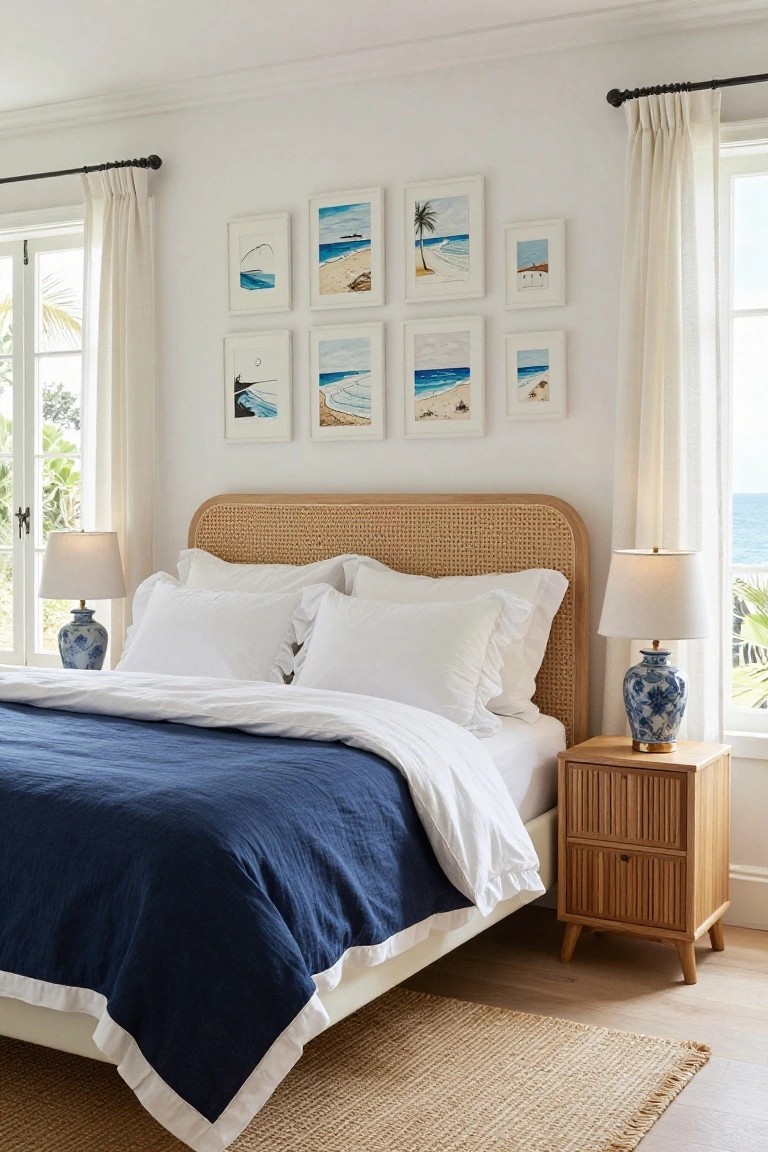
Blue and white bedding gives a bedroom that easy coastal feel without needing a lot of extra pieces. The deep blue coverlet over white sheets keeps the look crisp and tied to the water, while the simple rattan headboard adds just enough texture to stop it from feeling flat.
This approach works best in rooms with plenty of natural light. Keep the rest of the palette light and add only a few blue accents elsewhere so the bedding stays the main focus.
Built-In Benches Add Seating And Storage At Once
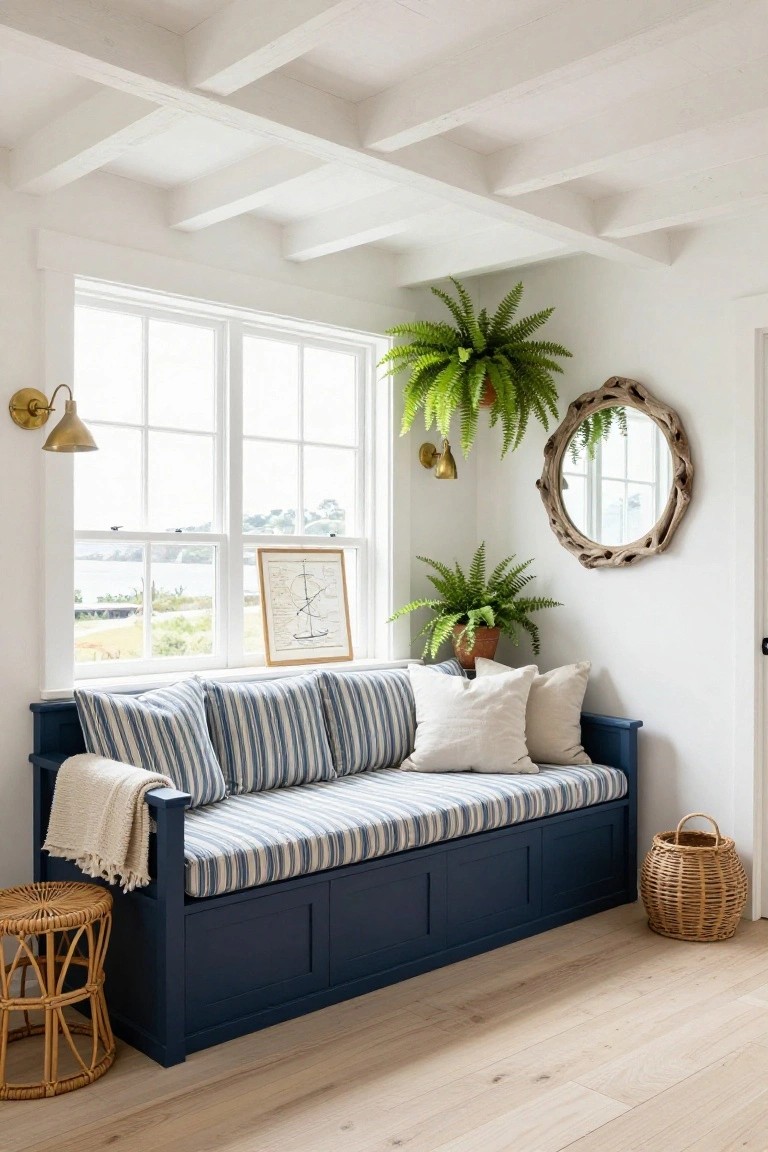
A built-in bench gives you a place to sit while keeping the room from feeling crowded. The deep blue color stands out nicely against white walls and works well in a coastal setting.
It suits homes that need extra seating near a window without adding more furniture. You can store blankets or cushions inside and keep the top cushions simple so the bench stays useful day to day.
A Painted Blue Island In A White Kitchen
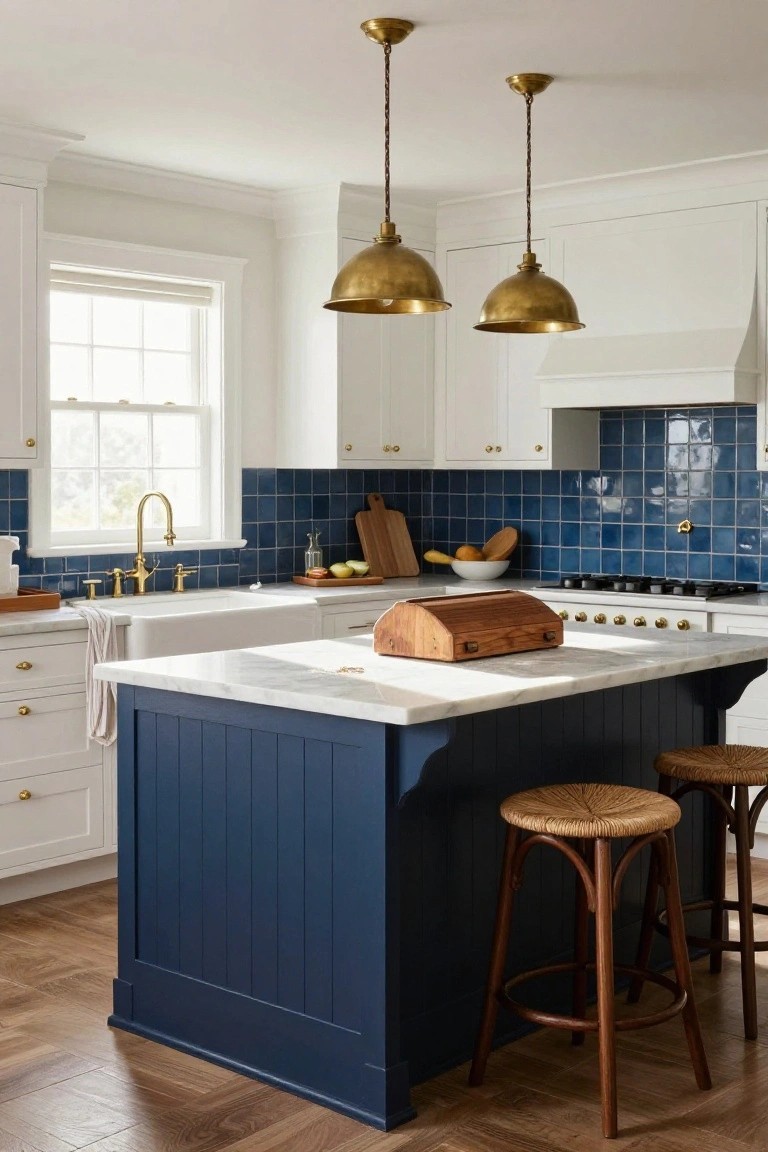
Many kitchens feel brighter and more pulled together when the island gets painted a deep blue while everything else stays white. The contrast gives the room a clear center without needing a lot of extra decoration or bold patterns.
This approach works especially well in coastal homes or any space that already leans light and simple. Choose a blue that matches your tile or hardware so the island feels like part of the room rather than an afterthought.
Built-In Benches For Everyday Dining Nooks
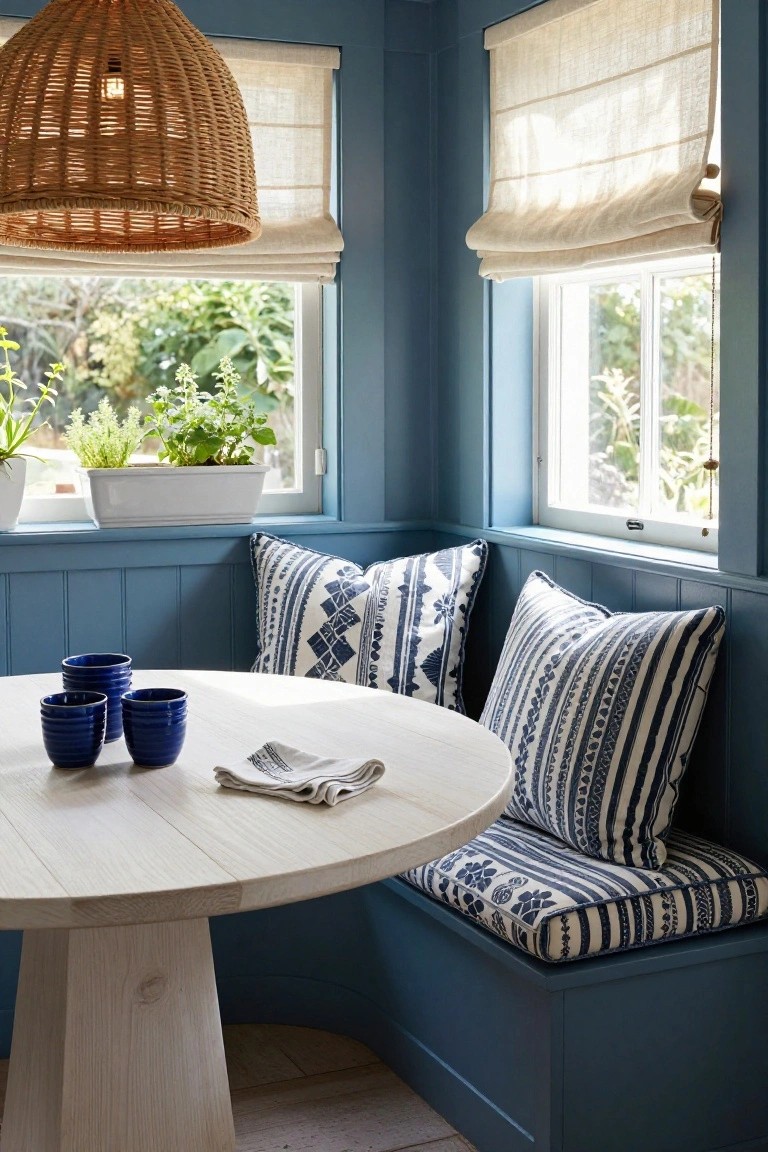
Built-in bench seating turns a corner into a useful dining spot without crowding the room. The blue and white cushions bring in the coastal colors while keeping the look simple and comfortable.
This works best in smaller homes or in areas where you want seating that stays in place. A round table pairs well with the bench because it leaves more room to move around the ends.
Blue Tile With Painted Wainscoting
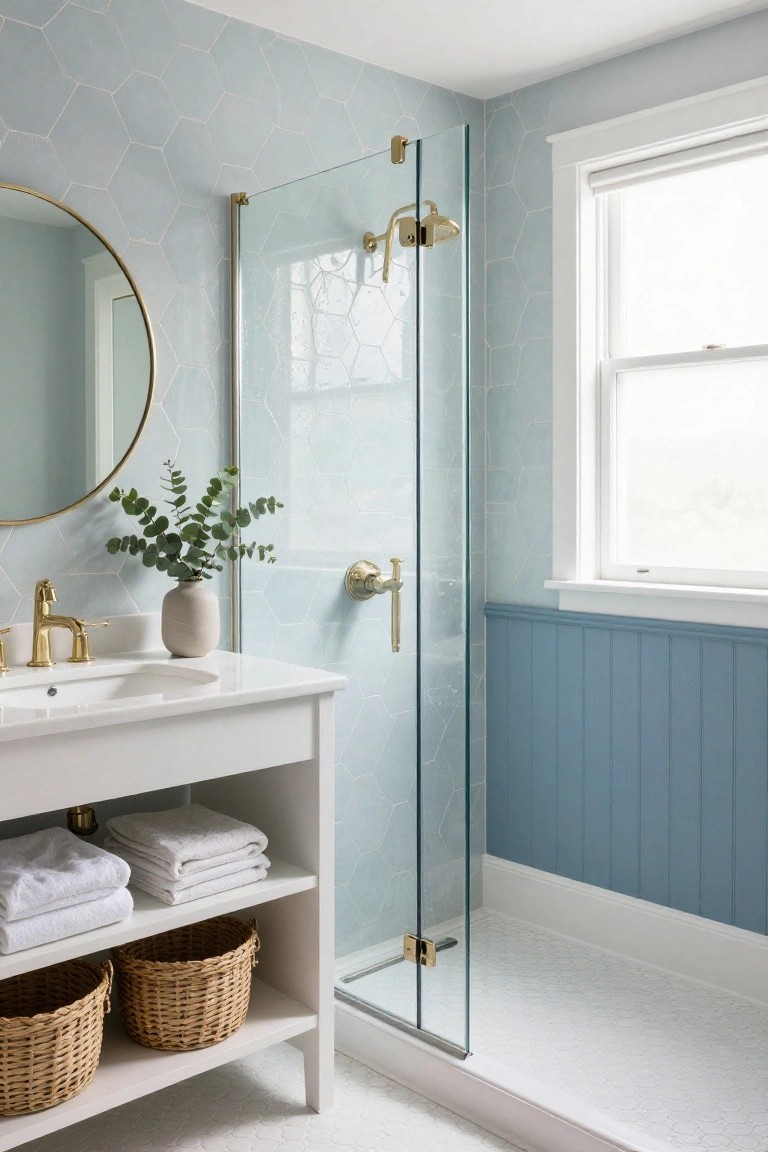
Many bathrooms feel fresher when soft blue tile covers the upper walls and painted wainscoting runs along the lower part of the shower. The two surfaces work together to add color without making the room feel heavy or closed in.
This approach suits smaller bathrooms and coastal homes that already lean on white cabinetry and simple trim. Keep the tile light and the wainscoting in a slightly deeper shade so the blue stays calm rather than overwhelming the space.
Blue Painted Furniture in Coastal Dining Rooms
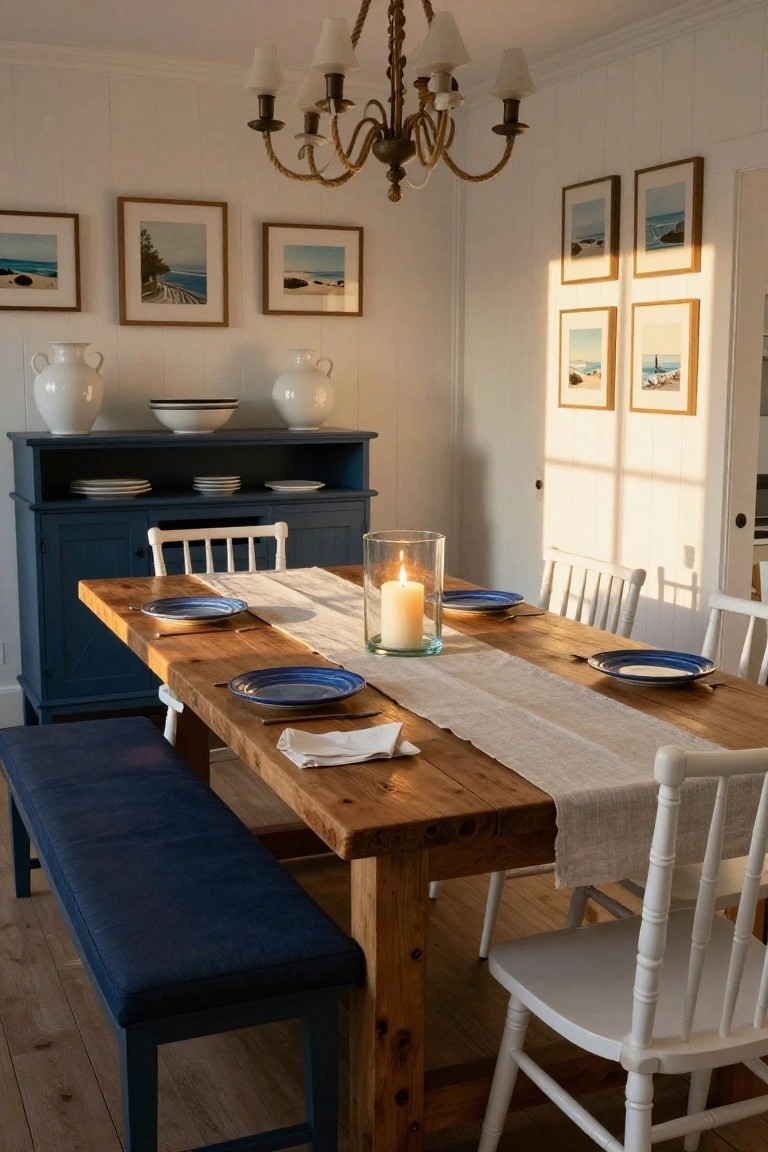
A deep blue sideboard or buffet against white walls gives a dining room that easy coastal feel without much effort. The color anchors the space while the wood table and simple white chairs keep everything light and relaxed. It works especially well when you want the room to feel fresh but still grounded.
This approach suits older homes or beach cottages where you already have white trim and wood floors. Keep the rest of the palette simple with linen runners and a few blue dishes so the painted piece stays the main focus. Avoid overcrowding the walls if the furniture is already bold.
Blue Painted Dressers For Coastal Entry Storage
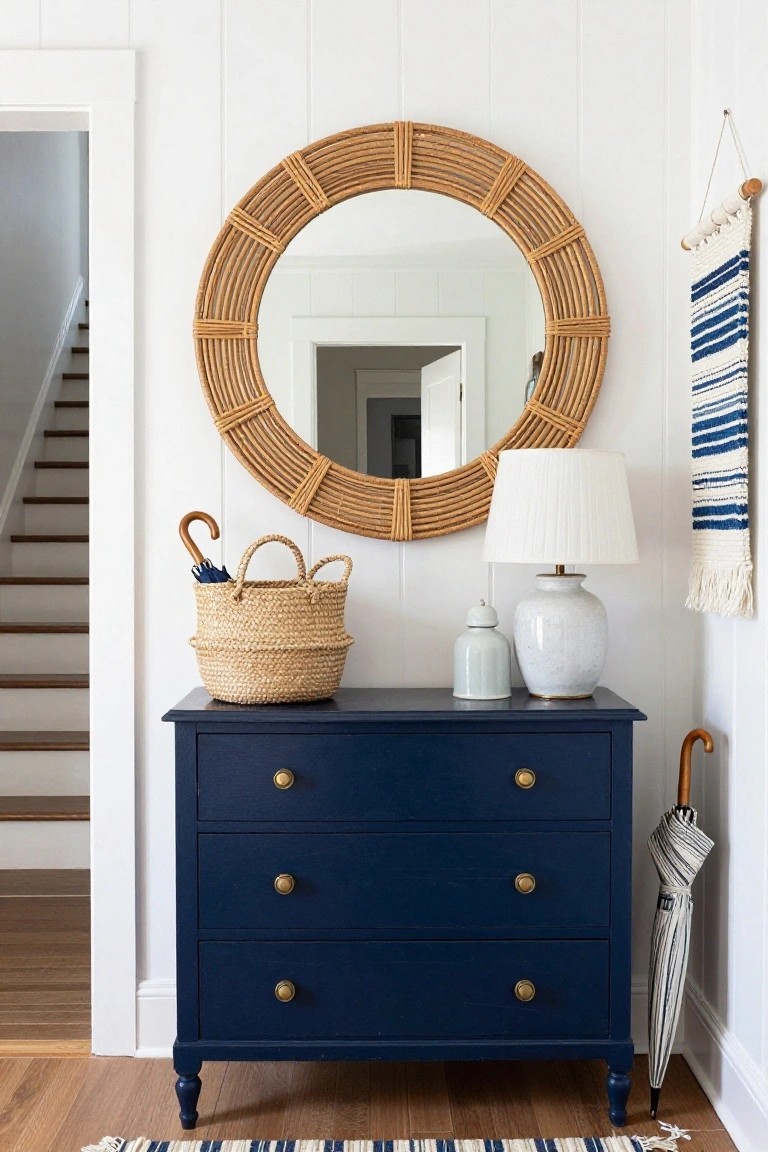
A painted blue dresser brings color and useful storage to an entry without needing a lot of extra pieces. It works well when you want something solid that still feels simple and coastal.
Place it against a white wall and keep the top fairly clear except for a lamp or two. This setup works best in smaller hallways or near the front door where you need a spot for keys, mail, and umbrellas.
White Furniture With Blue Accents
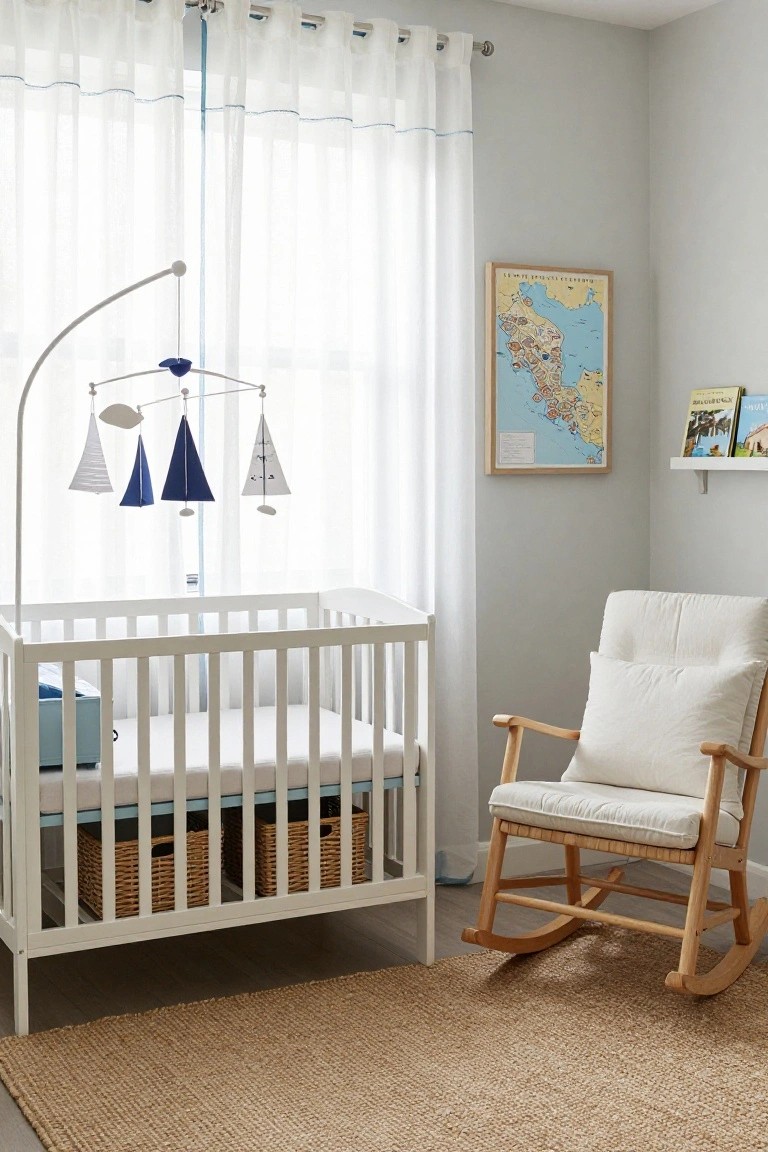
White furniture gives a nursery a clean starting point that feels open and easy to live with. Adding just a few blue accents keeps the room from looking flat while still nodding to that coastal look without going overboard on themes.
This approach works best in smaller bedrooms or when you want the space to last past the baby years. Limit the blue to things like trim on the crib, a simple mobile, or one wall piece so the room stays calm rather than busy.
Built-In Desks in Deep Blue
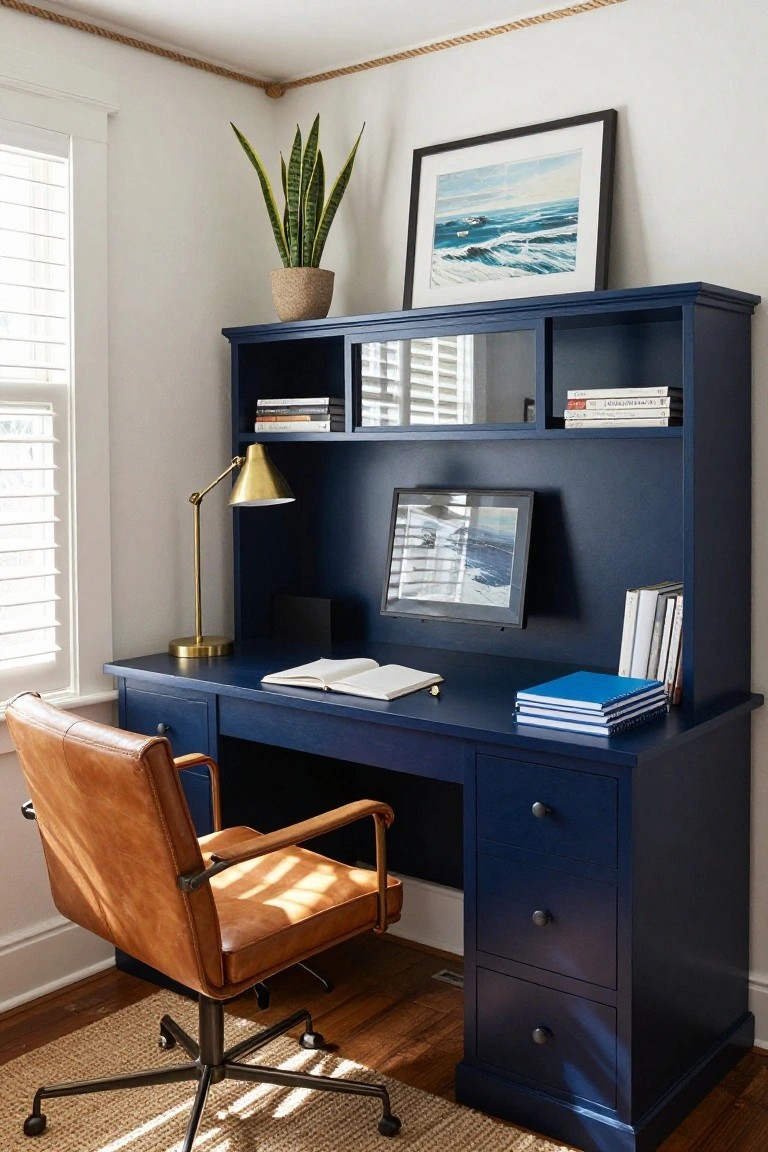
A built-in desk with a matching hutch adds storage and workspace in one piece. The deep navy color brings a strong coastal note without needing lots of extra decor.
This works best in smaller rooms or quiet corners where you want function without crowding the space. Keep the walls light and add simple open shelves above for books and a few plants.
A Narrow Shelf Above the Bed
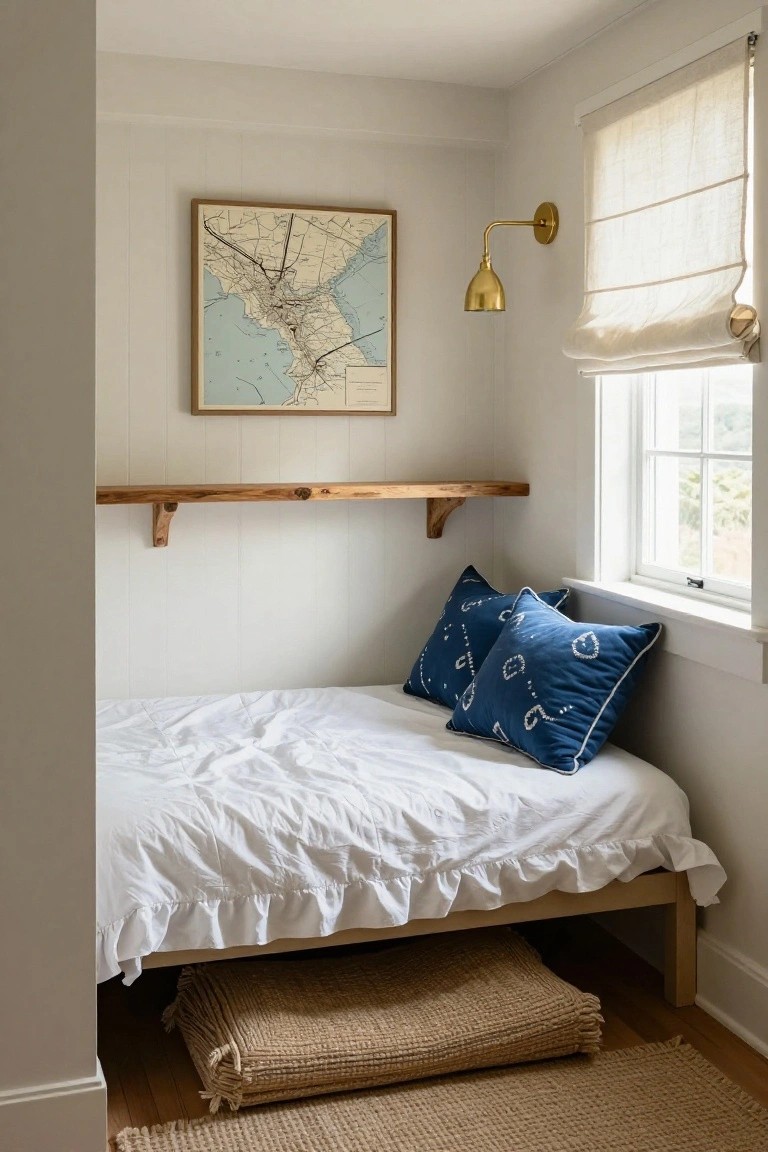
A narrow wooden shelf works well over a bed in coastal rooms because it gives you a place to hang art or set a lamp without adding bulk. It keeps the wall light and lets the bed feel like the main feature rather than competing with a full headboard.
This setup fits small bedrooms or guest rooms where floor space matters. Use simple brackets and keep the shelf fairly thin so it does not feel heavy against white walls.
Blue And White Floor Tiles
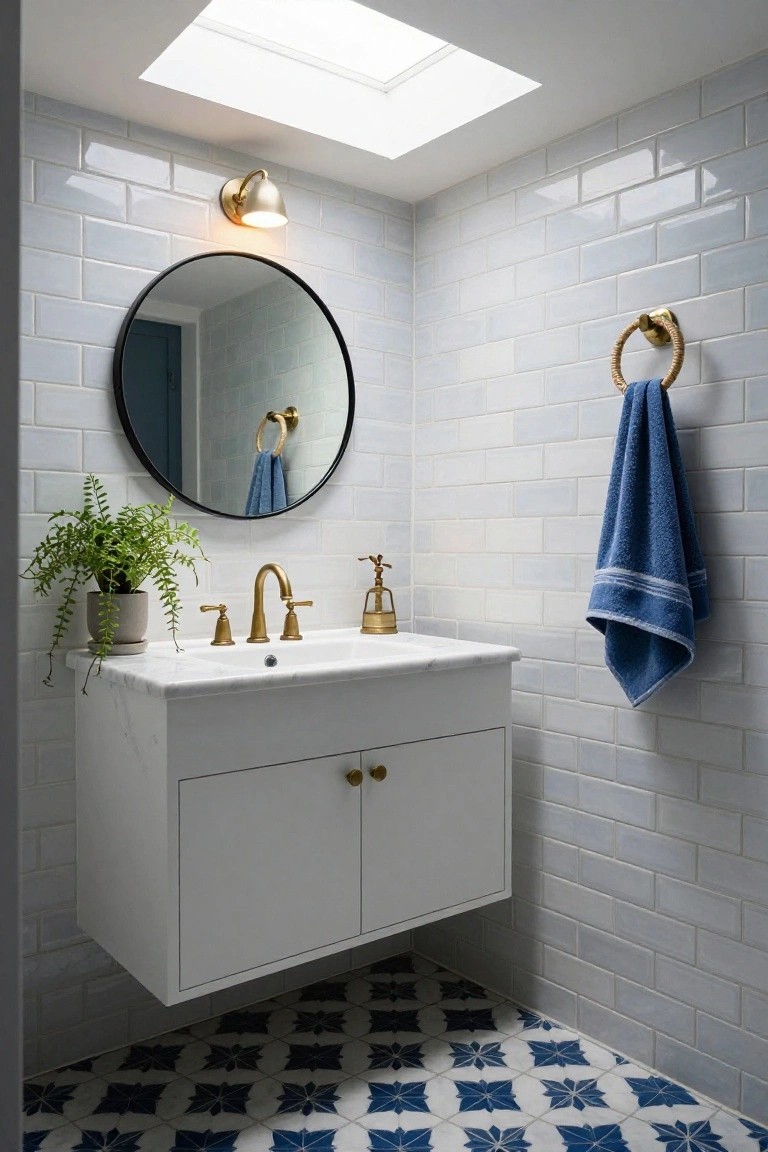
A patterned blue and white floor adds a clear coastal touch to a bathroom while the rest of the space stays simple. The contrast with light walls keeps the room from feeling too busy or dark.
This approach works best in smaller baths where you want some interest underfoot. Keep the walls in plain white or pale blue tile and choose basic fixtures so the floor stays the main feature.
Hanging A Chair For Easy Seating
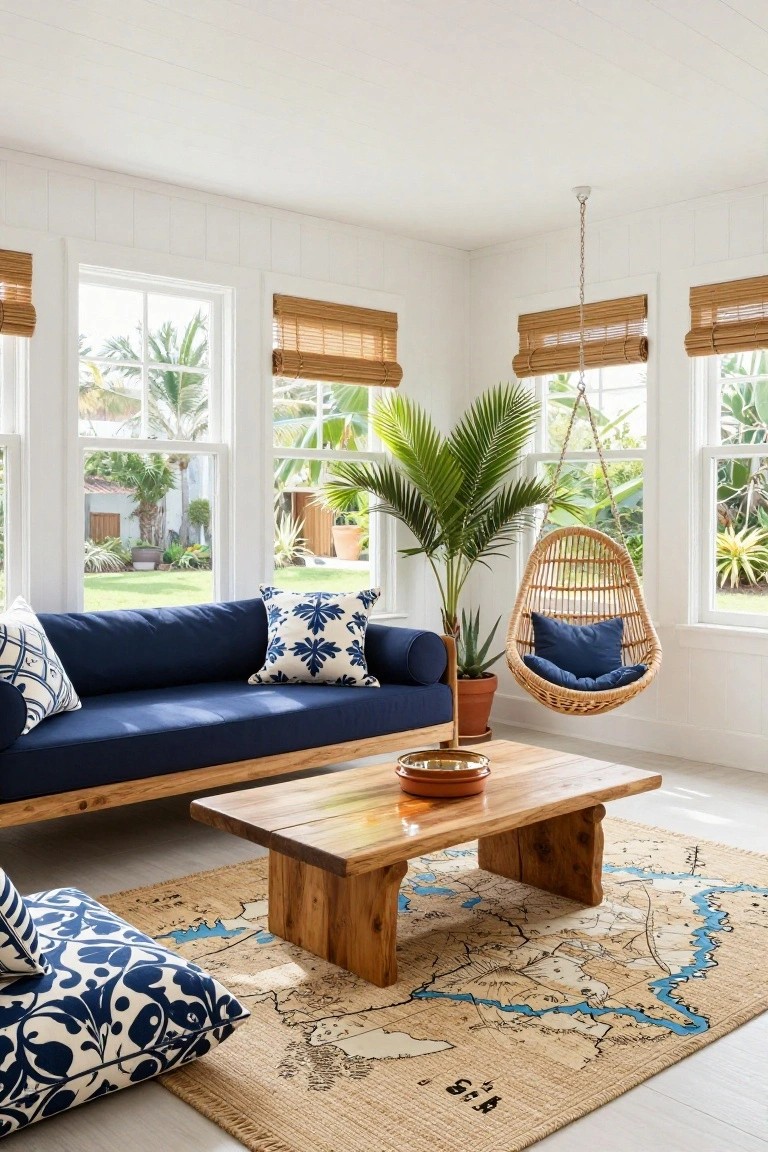
A hanging chair brings a relaxed feeling to a blue and white coastal room without much effort. It adds a bit of movement and a light, breezy look that fits the style well, especially when the rest of the space stays simple with solid fabrics and natural wood pieces.
This works best in rooms that get plenty of light and have enough ceiling height to let the chair hang freely. Keep the cushion in the same blue tones as the sofa so everything stays connected.
Built-In Benches With Basket Storage
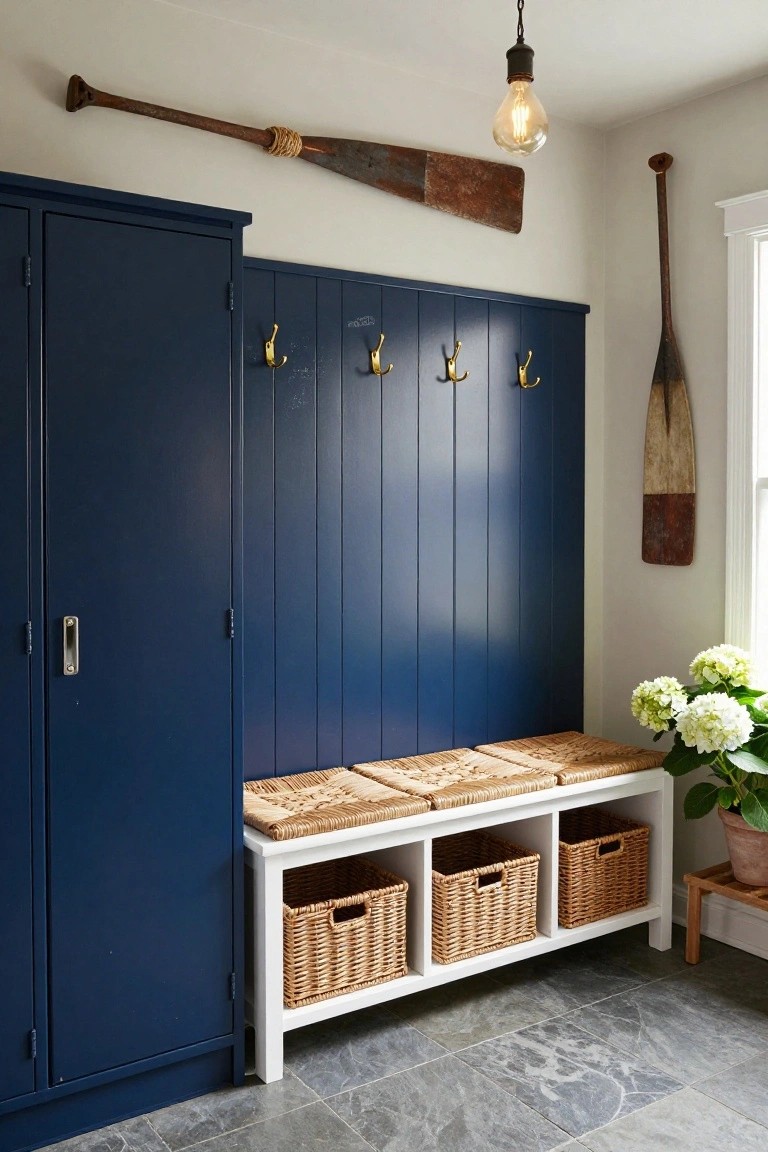
A built-in bench with open baskets below adds useful storage right where you need it most. It keeps shoes and bags off the floor while giving you a spot to sit and pull things on or off. The simple white frame and woven baskets work especially well in smaller entry areas.
This approach fits homes that need everyday function without looking too heavy. It works best in mudrooms or hallways where people come and go often. Keep the color light and the hardware minimal so the space stays open and easy to maintain.
Built-In Niches With Simple Lighting
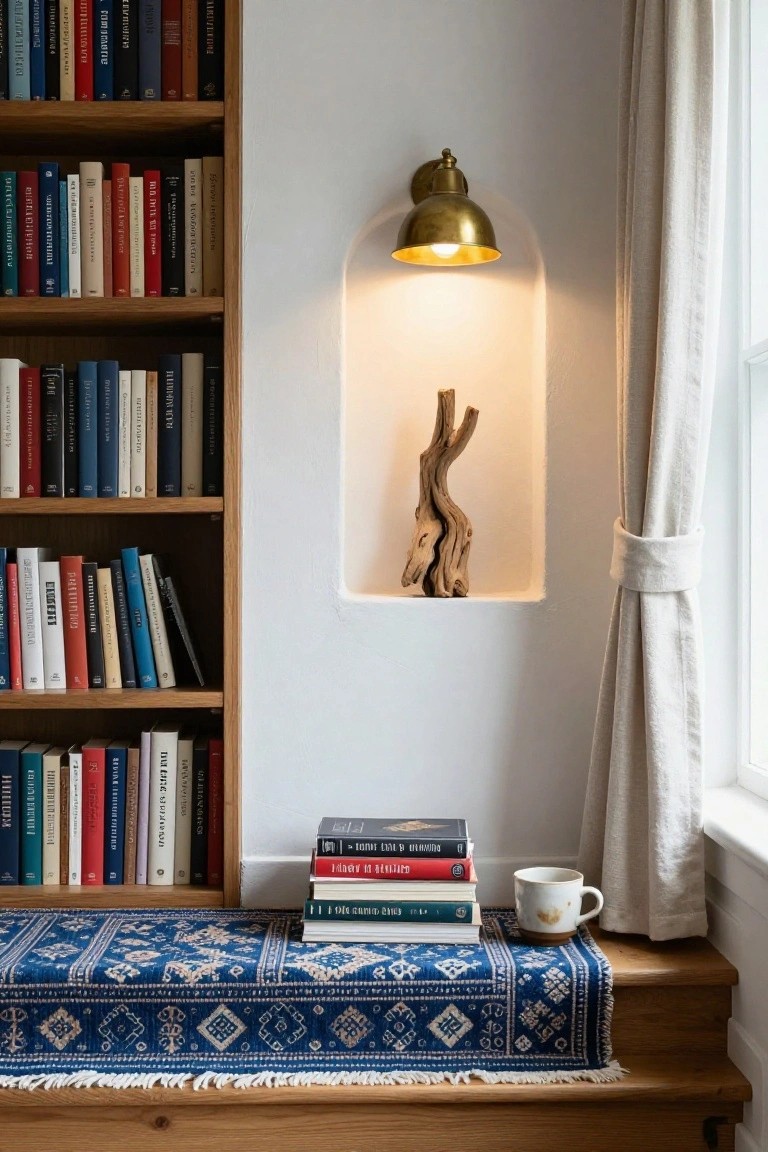
A recessed niche tucked into a wall of bookshelves gives the whole area a quiet focal point. The light inside draws attention to one small object without adding more shelves or clutter, and it keeps the space feeling open rather than crowded.
This works well in any room that already has built-in storage. Keep the finish simple, use a warm bulb, and let the niche hold just one or two items so it stays calm. It suits homes that want a coastal feel without relying on heavy patterns or lots of accessories.
White Mantels With Navy Seating
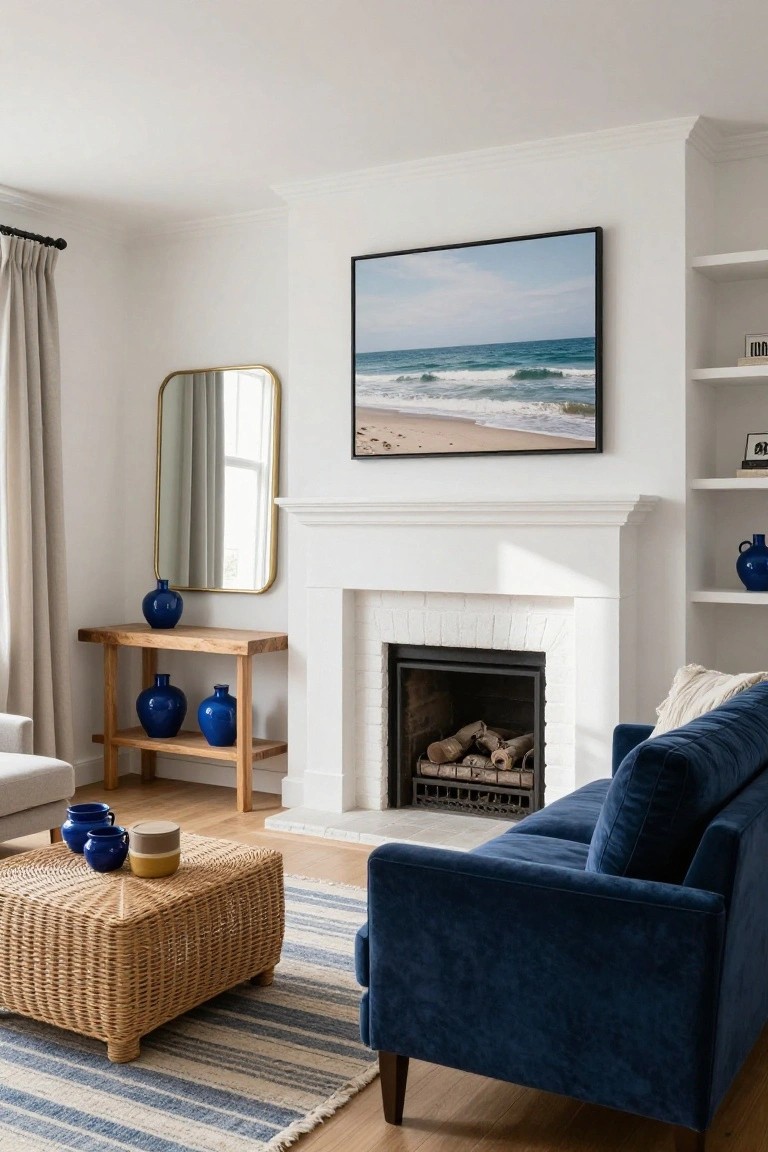
A white fireplace mantel paired with navy blue seating gives a coastal room its classic backbone. The contrast keeps things light and open while still adding enough color to feel like a beach house.
This works best in living rooms that already have white trim or built-ins. Keep the rest of the palette simple with wood tones and a few blue accents so the mantel stays the main focus.
Blue Cabinets With White Tile In Coastal Kitchens
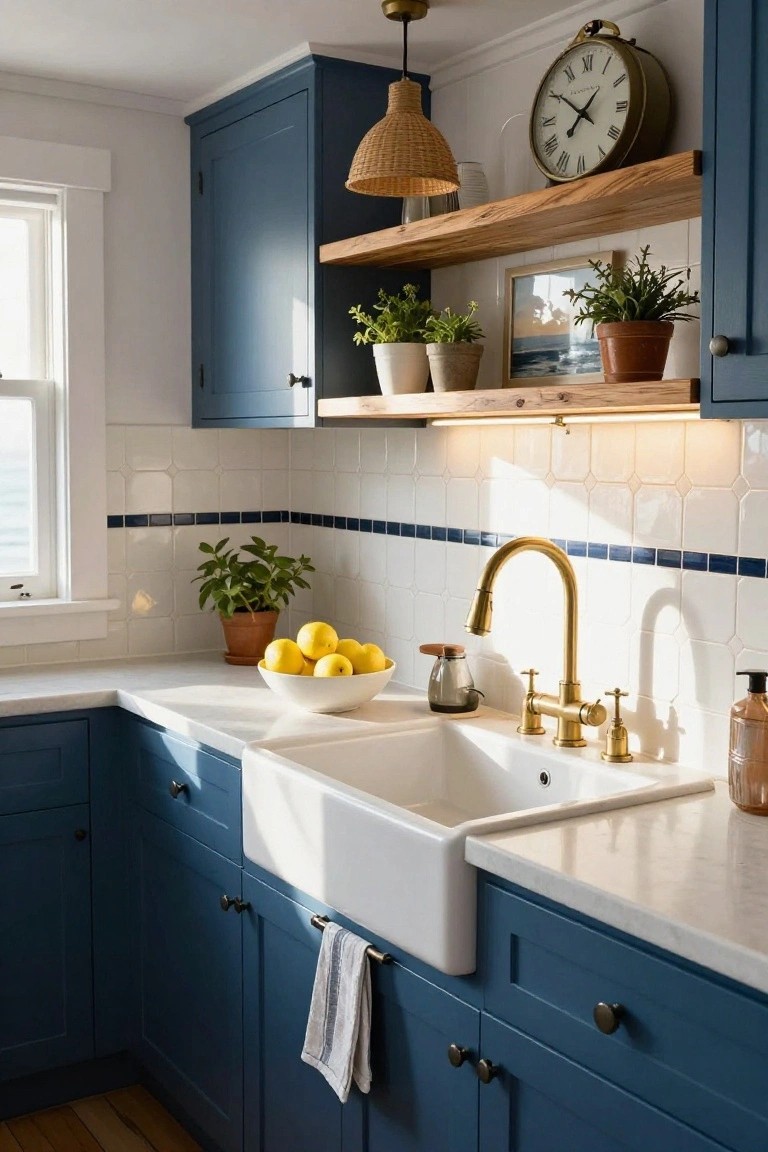
Blue cabinets give a kitchen that steady coastal look people keep coming back to. They feel fresh next to white surfaces and still hold up over time without looking dated.
This setup works best in homes that already lean simple. Keep the hardware minimal and let the color do the work rather than adding lots of extra patterns or decor.
Display Coastal Photos On A Corkboard
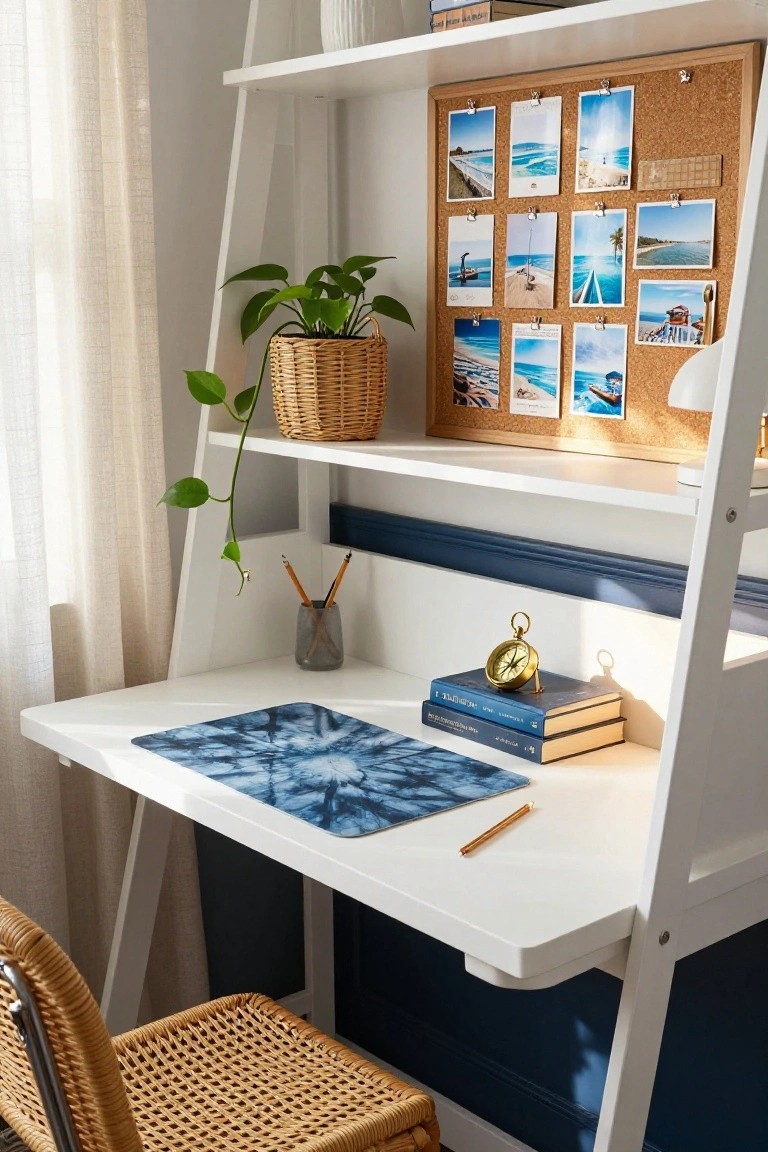
A corkboard makes it easy to bring a few favorite beach photos into a workspace. The simple frame and clips keep the look casual, and the blue tones in the images add just enough color without needing a lot of extra pieces.
This setup works best in a small home office or study corner where you want a light coastal feel. Keep the desk surface mostly white and add one or two blue accents like a mat or a stack of books so the photos stay the main focus.
Paint Built-Ins in a Softer Blue Against Dark Walls
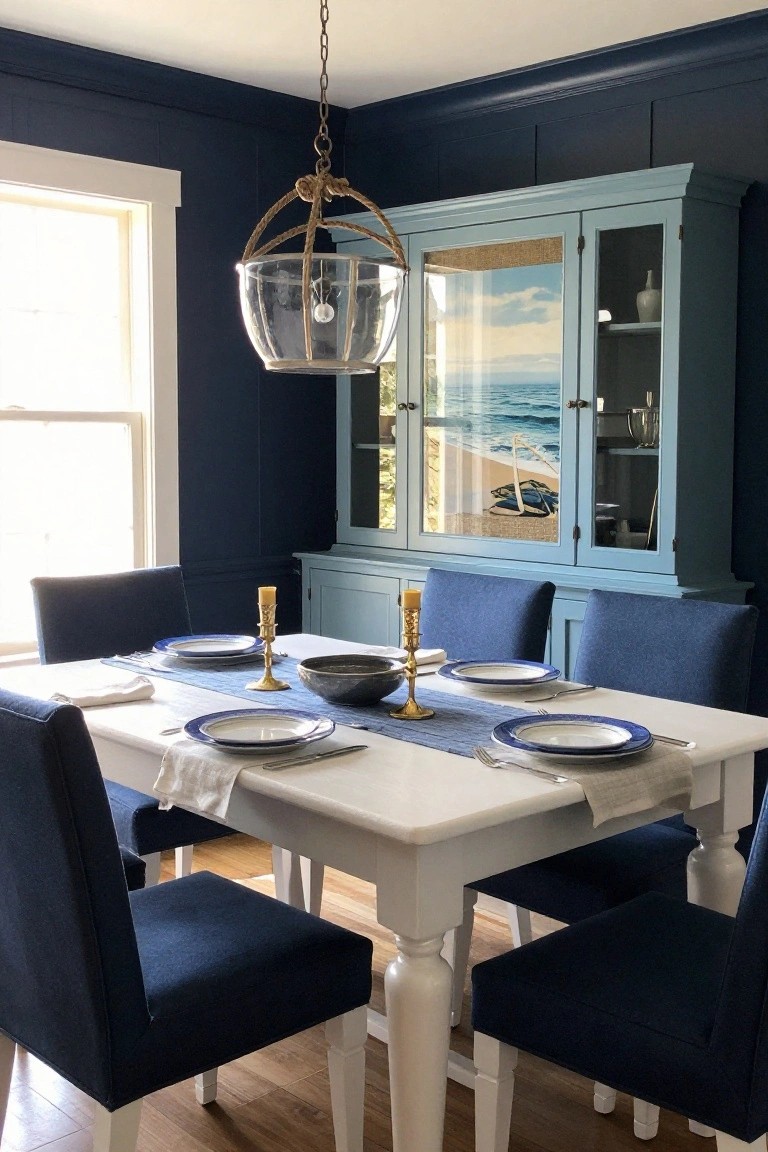
A dining room feels more layered when the walls go deep navy but the cabinetry stays in a lighter blue. The contrast keeps the space from feeling heavy while still holding onto that strong coastal color story. It works especially well in rooms that already have trim or paneling, since the two blues play off each other without needing extra pattern.
This approach suits older homes or any dining space where you want storage to stand out rather than disappear. Keep the table and chairs lighter so the blues stay the main focus. Just watch the lighting. Dark walls can make the room feel smaller if the windows are limited.
Frequently Asked Questions
Q: How do I pick the right blue without making a small room feel closed in? A: Start with lighter blues like soft sky or sea foam on bigger surfaces such as walls or curtains. Test samples on different walls during the day to see how the light shifts them. Pair them with crisp whites right away so the space stays open and airy.
Q: Can I mix these blue and white ideas with my existing wood furniture? A: Yes, the contrast between warm wood tones and cool blues actually adds depth without clashing. Place a few white accessories like lamps or pillows near the wood pieces to tie everything together. This keeps the coastal feel while letting your current furniture stay in place.
Q: What’s an easy first step if I want to try the look on a tight budget? A: Swap out throw pillows and a rug for simple blue and white patterns that catch the eye. Add one or two coastal elements like a woven basket or shell accents on a shelf. These small changes refresh the room fast without big spending.
Q: How do I stop white fabrics from showing dirt too quickly in a busy household? A: Choose performance fabrics or washable slipcovers in white so cleanup stays simple. Rotate and clean them every couple of weeks to keep them fresh. This approach holds up better than you might expect in real life.
