

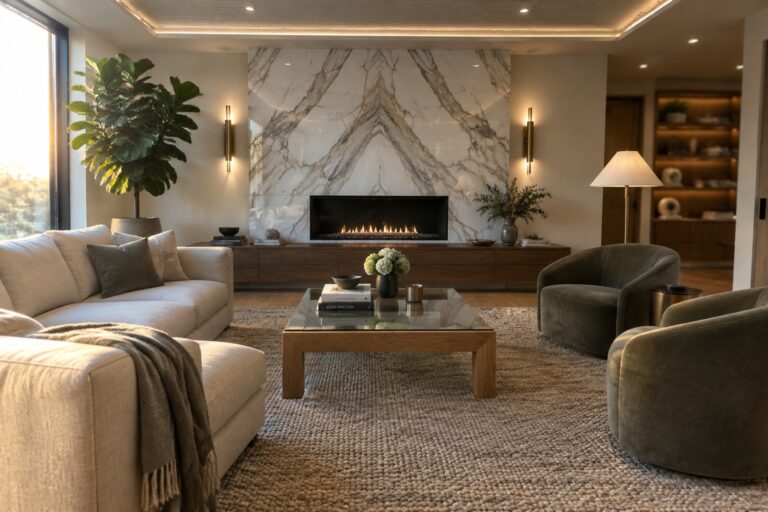
I have always noticed that marble surfaces change how a room feels once the lights come on at night.
When I think about updating my own living space, the way layers of light interact with stone makes me want to test a few small changes first.
Some rooms end up feeling flat because the lighting stays too even across every surface.
The right balance changes everything.
Trying these ideas at home starts with looking at where the light actually lands during the day.
Marble Walls With Layered Lighting
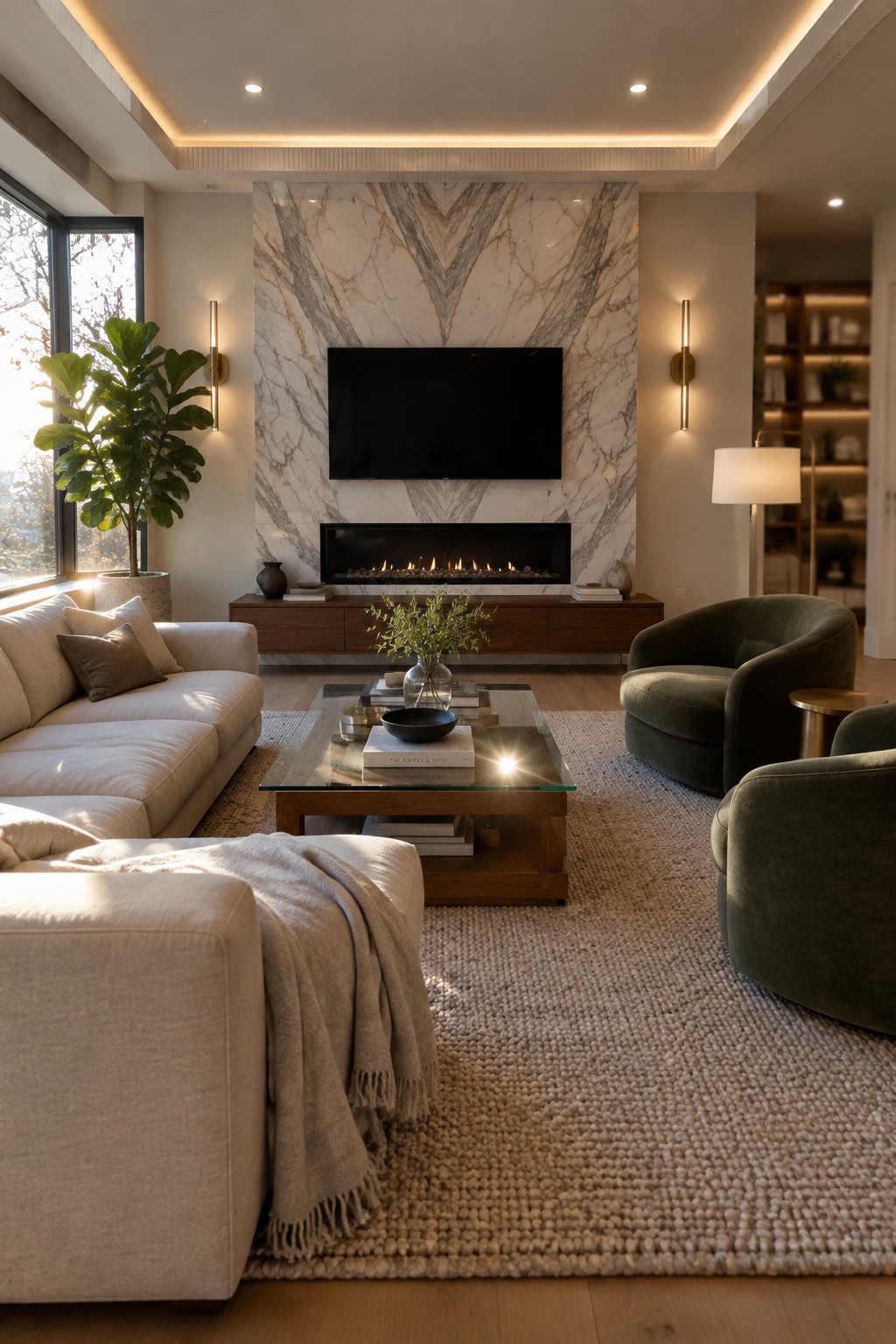
A marble wall can feel cold on its own, but layered lighting changes that fast. Ceiling cove lights, wall sconces, and a few floor lamps work together to bring out the stone’s natural patterns while keeping the room from feeling flat or stark. The mix makes the surface look softer in the evening and still bright enough during the day.
This approach works best in living rooms where you want one strong focal point without adding lots of color or pattern elsewhere. Keep the rest of the room in neutral tones and let the lighting do the work of highlighting the marble. Just avoid placing all lights at the same height, since that tends to flatten the effect.
Marble Islands With Layered Lighting

A large marble island already draws attention on its own, but adding several pendant lights at different heights turns it into the real heart of the kitchen. The mix of cool stone and warm woven shades keeps the space from feeling too stark while still looking clean and open.
This works especially well in kitchens that open to living areas, since the island serves as both a work surface and a gathering spot. Stick with two or three similar fixtures rather than matching ones, and keep the cords long enough so the lights hang at varied levels. It suits homes that want a bit of texture without adding clutter.
Marble Accent Walls In The Bedroom

Many people turn to marble for a bedroom accent wall because it gives the space a quiet sense of richness without extra decoration. The large panels behind the bed create a focal point that feels solid and calm at the same time.
This works best when you add a few warm light sources to soften the stone. Bedside lamps and a single overhead pendant keep the marble from feeling cold. It suits homes that already lean toward neutral colors and natural wood tones.
Layered Lighting Over Marble In Bathrooms

Marble looks crisp on its own, but it can feel flat without the right light. A skylight brings in steady daylight that keeps the stone from going cold, while simple vertical sconces add a warmer layer for evenings and early mornings.
This setup works best in bathrooms with decent ceiling height and a clear spot for an overhead opening. Keep the wall lights modest in size and place them beside mirrors so the marble stays the main feature rather than the fixtures themselves.
Layered Lighting Over a Marble Dining Table
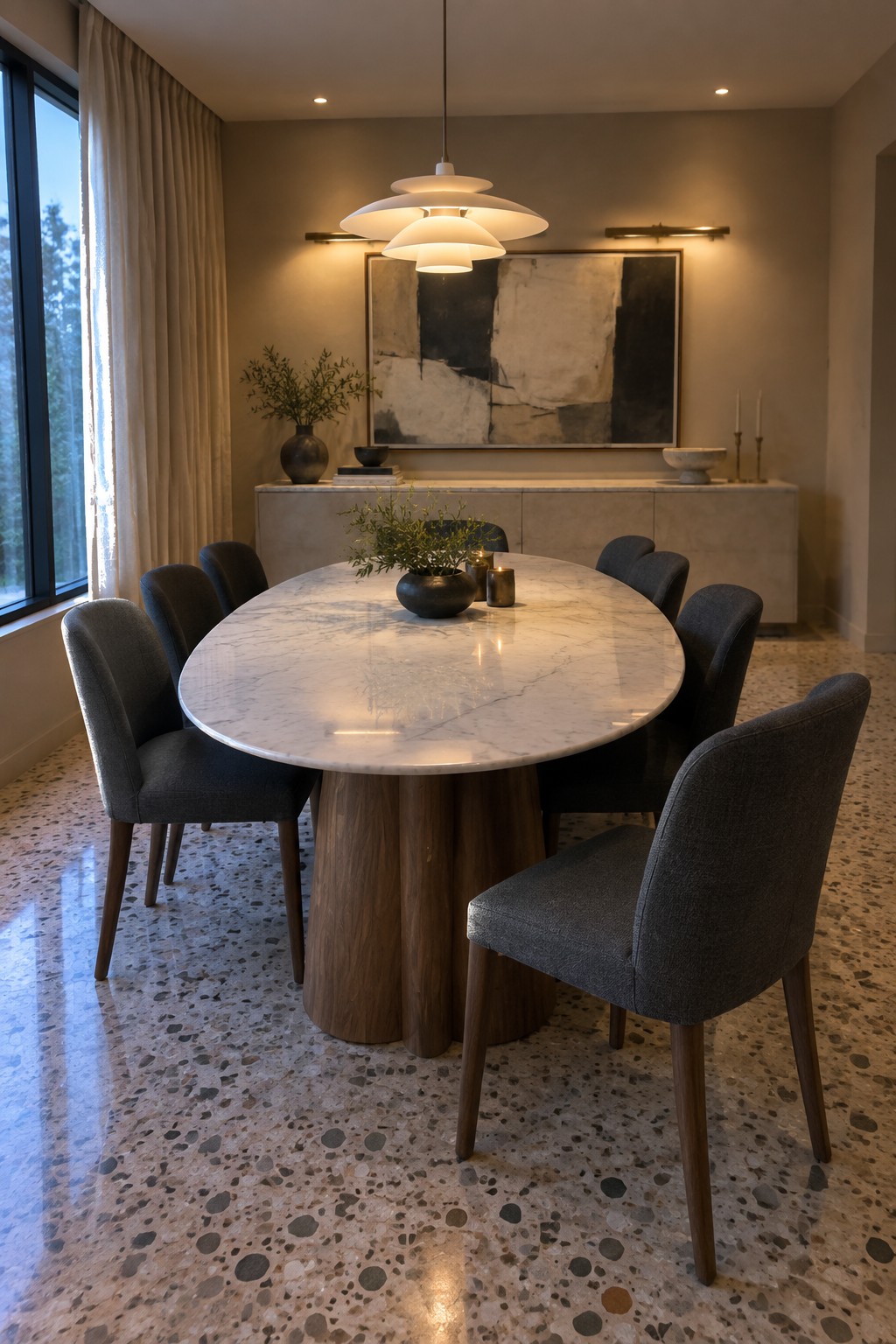
A round marble table can feel cold on its own, but layered lighting changes that. A central pendant gives the main glow, while wall sconces and a few candles on the table add warmth and depth without much effort. The mix keeps the surface interesting at different times of day.
This works best in dining rooms that get used in the evening. Keep the pendant simple and let the sconces handle the sides so the table stays the focus. Too many fixtures can crowd the look, so start with three layers and adjust from there.
Pendant Lights Over Marble Floors

Marble floors can feel cold on their own, especially in an entry where people come and go. A single pendant light hung low enough to cast a warm circle on the stone helps balance that chill without adding clutter.
This setup works well in long or narrow hallways where you need one strong light source rather than many small ones. Choose a simple metal shade so the floor pattern stays visible and the light does not fight with the marble for attention.
Marble Desks With Layered Lighting

A marble desk surface holds up well to daily use while still giving the room a clean, solid look. Layered lighting makes the biggest difference here, with a desk lamp for focused work, a wall sconce for softer background light, and overhead fixtures to keep the whole space from feeling dim.
This approach works best in a home office or study that gets regular use. It suits homes that already lean on wood tones and natural materials, and it avoids the need for too many extra decorative pieces since the lighting and surface do most of the work.
Marble Vanities With Backlit Mirrors

A floating marble vanity topped with a backlit mirror gives a bathroom a clean look while making the space feel brighter. The marble surface handles daily use well and pairs easily with simple black fixtures that keep the focus on the stone itself.
This approach works best in smaller bathrooms or powder rooms where you want some luxury without crowding the walls. Try it with darker paint on the surrounding walls so the light from the mirror stands out more, and keep the rest of the room simple to avoid competing with the main pieces.
Central Marble Islands For Walk In Closets

A marble topped island gives a walk in closet a solid work surface while adding storage underneath. The mix of open shelving around it and the island in the middle keeps everything easy to reach without the room feeling too crowded.
This setup works best in larger closets where you need a place to sort clothes or accessories. Keep the lighting in layers so the surface stays useful at any time of day, and choose a bench or stool that tucks in when not in use.
Marble Consoles With Wall Sconces

Placing a marble console between two wall sconces gives a narrow stair landing or entry a soft, even glow. The light reflects off the stone and keeps the space from feeling dim or flat, especially when natural light from above is limited. It is a simple way to add warmth without crowding the area with more furniture.
This works best in homes that already use wood floors and clean lines. Keep the surface fairly clear so the marble and the sconces remain the main features. Avoid heavy overhead lighting in the same spot, since the sconces do most of the work on their own.
Marble With Layered Lighting In Home Bars

Marble looks richer when you light it from multiple angles instead of relying on one overhead source. Under-cabinet strips and backlit shelves bring out the veining and keep the surface from going flat at night.
This setup works best in a bar or serving area where people stand and talk. Use warm LEDs on dimmers so the glow stays soft and you can change the mood without adding more lamps.
Marble Tops On Nursery Dressers

One way to bring a bit of luxury into a nursery is by topping a dresser with marble for the changing area. It gives the room a polished look while staying practical for daily use.
This works especially well when you layer the lighting too. A ceiling fixture, a table lamp, and natural light from the window keep the space feeling soft instead of stark.
Marble Countertops In Laundry Rooms
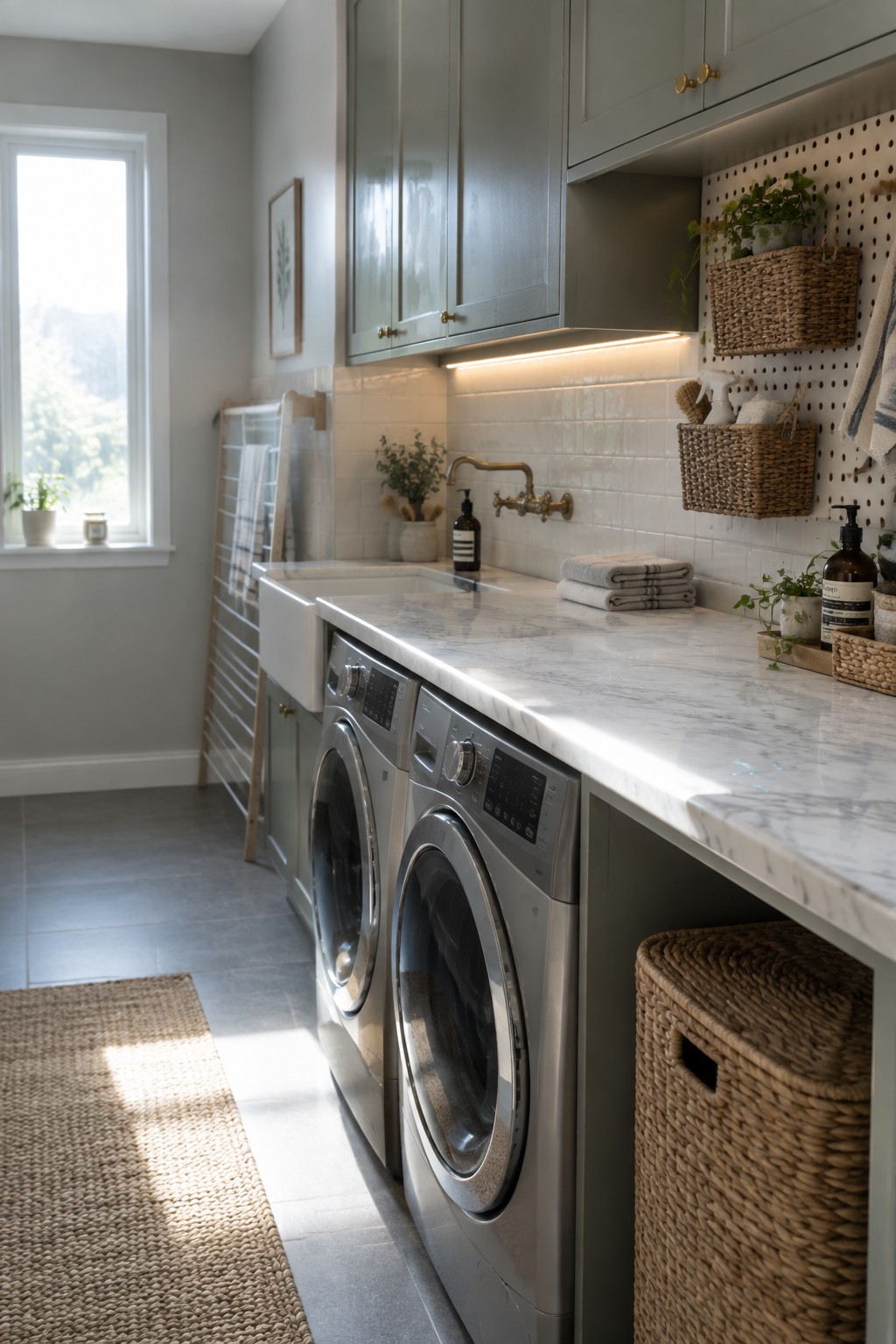
Many homes now carry marble into laundry rooms instead of stopping at the kitchen or bath. The material gives the space a finished surface that feels more like the rest of the house and less like a purely functional zone.
The approach works best when the marble sits above the machines and pairs with simple under-cabinet lighting. This keeps the stone from looking stark while making the room easier to use day to day. It suits homes that already use marble elsewhere and want the laundry area to match without extra fuss.
Marble Vanities With Layered Lighting

A marble vanity top paired with layered lighting gives you a clean surface that still feels warm and usable. The backlit mirror provides even overall light while the smaller lamps add a softer glow right where you need it for makeup or jewelry.
This works best in a bedroom or dressing area that gets some natural light during the day. Keep the lamps low and simple so they do not compete with the marble, and choose a warm bulb tone that flatters rather than washes everything out.
Marble Vanities With Layered Wall Lighting

A long marble vanity works well when you add several wall sconces instead of relying on one overhead light. The extra layers of light keep the surface bright for daily use while still feeling soft in the evening. Wood cabinets underneath help balance the cool stone so the whole setup does not feel too stark.
This approach suits bathrooms that have enough wall space for multiple fixtures. It works best in homes where people want a calm, functional room rather than a dramatic showpiece. Keep the sconces at eye level and choose warm bulbs so the marble reflects light gently instead of creating harsh glare.
Marble Nightstands With Wall Sconces

A marble nightstand next to the bed gives you a solid surface that feels a little more finished while still staying simple. Pairing it with a wall sconce keeps the tabletop clear and lets the light sit at the right height for reading or winding down.
This works best in smaller bedrooms or guest rooms where you want to avoid extra floor lamps. Stick to a single small sconce and a modest marble top so the setup stays balanced rather than crowded.
Marble Floors With Layered Lighting

Marble floors stand out when they have several light sources working together. The reflective surface picks up daylight from the windows, softens it through sheer curtains, and then bounces it around with help from a floor lamp and ceiling spots. This keeps the room bright without feeling harsh, and it works especially well in spaces that get good natural light for part of the day.
This approach suits living areas or sunrooms where you want a calm, open feel. Use a mix of overhead lights, one or two floor lamps, and window treatments that filter rather than block the sun. Keep the rest of the materials simple so the light and floor stay the main focus.
Layered Lighting Over Marble

Layered lighting makes a big difference in a kitchen that relies on marble. The combination of a hanging pendant and lights tucked under the open shelves keeps the counters bright for cooking while still giving the room a softer evening feel. Marble picks up the light and spreads it around, so the space does not feel flat even when the room is long and narrow.
This approach works best in smaller or galley kitchens where one light source is never enough. Add under-shelf LEDs first, then bring in one or two pendants over the main work area. Keep the fixtures simple so the marble and the cabinet color stay the focus.
Marble Fireplaces With Layered Lighting

A marble fireplace surround stands out more when the lighting around it comes from more than one source. The wall sconce above the art, the floor lamp off to the side, and even a small candle help the stone pick up different tones instead of looking flat.
This setup works best in living rooms that get used after dark. Keep the overhead lights low and let the mix of warmer sources do the work. It suits homes that already have built-in shelving or a simple fireplace opening, since the marble and lights become the main features without needing much else.
Dark Marble With Integrated Lighting

Dark marble can feel heavy in a small room, but the right lighting changes that. A backlit mirror against the stone adds a soft glow that brings out the veining and keeps the space from closing in. The effect works because the light comes from within the design rather than just from above.
This approach suits powder rooms and guest baths where you want impact without clutter. Keep the fixtures minimal so the marble and the light do the main work. Avoid over-lighting the ceiling, since too many bright spots can wash out the depth you are trying to create.
Marble Showers With Layered Lighting
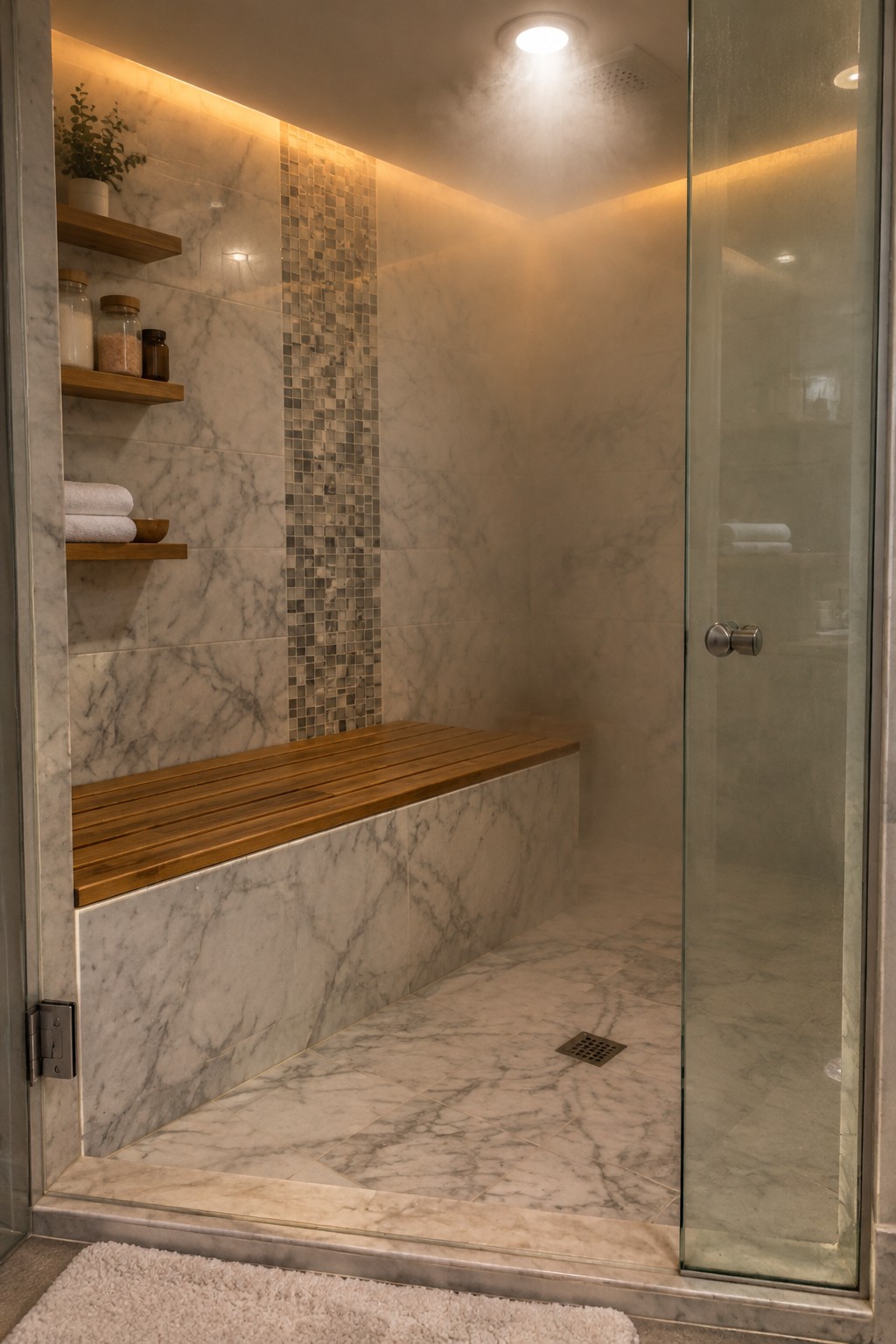
Marble can feel cold on its own, but adding layers of warm light changes that fast. Recessed ceiling fixtures combined with softer strips behind the tiles create a gentle glow that makes the stone look softer and the whole space more relaxing, especially once steam builds up.
This works best in showers that already have room for a bench or built-in seat. It suits larger bathrooms where you want a simple spa feel without adding much extra stuff. Just keep the lighting warm rather than bright white so the marble stays inviting instead of stark.
Frequently Asked Questions
Q: Which marble tones work best if I want the layered lighting to feel warm rather than cold? A: Cream or soft beige marble picks up the glow from your lamps and sconces without turning stark. Add a few dimmable bulbs in the mid layer so the stone never looks flat at night.
Q: How do I keep marble counters from showing every fingerprint once the lights hit them? A: Choose honed finishes instead of polished ones in busy areas. Wipe daily with a damp cloth and skip the fancy sprays that leave streaks under overhead lights.
Q: What if my room feels too bright with marble everywhere? A: Pull back on the top lighting layer and lean on lower lamps near the stone. The marble will still bounce light but the space stays calmer after sunset.
Q: Can I add marble accents without redoing the whole floor? A: Yes. A single marble side table or shelf catches light from nearby lamps and gives the same luxury feel. Keep the rest of the surfaces matte so the stone stands out.
