


I notice that neutral tones work best when they account for how people actually use each room rather than just how the space looks in photos.
The way colors interact with natural light and existing finishes often decides whether the whole home feels pulled together or still a bit scattered.
I usually check the undertones against my current furniture before making any final calls.
Small adjustments in the middle of the process can prevent bigger regrets later.
One palette might suit an open living area but need tweaks for bedrooms that stay darker most of the day.
Repeating Warm Neutrals Across Furniture and Built-Ins

One of the easiest ways to make a living room feel calm is to keep the colors very close across the big pieces. When the sofa, rug, walls, and wood tones all sit in the same warm neutral range, the room stops feeling busy even if there are quite a few items in it. The built-in shelves and coffee table here show how matching the wood finish to the overall palette helps everything read as one quiet layer instead of separate objects.
This approach works best in rooms that get used every day, since it keeps the space from feeling like it needs constant tidying or rearranging. It suits most homes that already have decent natural light and simple architecture. Just watch that you do not let too many cool gray tones sneak in, or the warmth that makes the palette relaxing will start to fade.
Staying With One Neutral Palette in the Bedroom

Many people find that keeping a bedroom in one narrow range of warm neutrals makes the space feel noticeably calmer. The bedding, walls, rug, and wood tones all sit close together, so the eye rests instead of jumping around.
This works best in rooms used mainly for sleep. Choose linen or cotton bedding, a natural fiber rug, and wood furniture in similar beige and light wood tones. It suits smaller homes or anyone who wants the room to feel simple and easy to maintain.
Mixing Gray Cabinets with Warm Wood for a Calmer Kitchen

Many kitchens lean too cool when the cabinets stay all one gray tone. Bringing in wood on the island base and bar stools adds a bit of warmth that makes the whole space feel more relaxed while still keeping the neutral palette intact.
This approach works best in homes where the kitchen opens into living areas. Stick with natural wood finishes and simple textures like woven seating so the room stays cohesive without feeling heavy or overly styled.
Floating Vanities Keep Neutral Bathrooms Feeling Spacious

A floating vanity works well when you want the room to feel open instead of boxed in. By lifting the cabinet off the floor, you keep sight lines clear and let the tile run through, which makes even a modest bathroom feel bigger and lighter. The wood tone adds just enough warmth against the stone surfaces without crowding the space.
This approach suits smaller bathrooms or any layout where you want the floor to stay visible. It works best with simple hardware and minimal clutter on the counter so the lines stay clean. Just make sure the wall behind can handle the weight and that you have storage elsewhere if the vanity itself is on the smaller side.
Deep Neutral Walls With Light Wood Furniture

A deep neutral wall color like this muted green gives a dining room real weight without making it feel closed in. The light wood table and chairs balance it out, so the space stays open and easy to be in for long meals or quiet mornings.
This works best in rooms with decent natural light and simple architecture. Keep the rest of the palette soft and natural, and avoid crowding the walls with too much art or shelving if you want that same calm result.
Built-In Storage For Calm Neutral Entries

Built-ins painted in a soft gray keep the entry feeling open instead of crowded. The bench and lower baskets give shoes and bags a place to land so the floor stays clear and the space stays restful.
This setup works best in homes that need daily storage without adding extra furniture. Keep the finish close to the wall color and choose simple hooks and woven baskets so the storage blends in rather than stands out.
Using Warm Wood Tones in Neutral Rooms

A long wooden desk and matching floating shelves stand out against the soft walls and light flooring. The wood adds just enough warmth and texture to keep the space from feeling flat while the rest of the room stays quiet and simple.
This setup works best in home offices or studies that get steady daylight. Stick to one or two wood pieces, keep the rest of the palette light, and avoid crowding the surfaces if you want the same calm effect in your own home.
Warm Neutrals That Hold a Room Together

A limited palette of warm beiges, soft browns, and natural wood tones can make a big living room feel calmer and more pulled together. The key is letting the same few colors repeat across the sofa, rugs, leather pieces, and built-ins so nothing fights for attention.
This approach works especially well in open living areas where you want the space to feel relaxed rather than busy. Keep the walls and larger furniture in the lighter neutrals, then bring in darker wood and leather for contrast. It suits most family homes and ages well as trends shift.
Using the Same Neutral Palette in the Nursery

Carrying the neutral colors from the rest of the house into the nursery helps the room feel connected instead of set apart. The walls use a quiet pattern above simple paneling, and the wood furniture stays in the same warm tone seen elsewhere.
This works best in homes where the main palette already leans soft and warm. Keep the same wood finishes and avoid adding strong colors that would break the flow from one room to the next.
Open Shelving Keeps Laundry Rooms Organized

Open shelving above the main workspace turns a laundry room into a place where everything stays visible and easy to reach. The neutral wall color and light cabinet finish help the shelves blend in rather than feel heavy, so the room stays calm even when baskets and supplies sit out in the open.
This approach suits homes where the laundry area is used often and needs to feel practical without looking messy. Labeled baskets make it simple for everyone in the house to put things back in the right spot, and the wood tones add just enough warmth to keep the neutral palette from feeling flat.
Using One Neutral Palette in the Bedroom

A bedroom feels more restful when everything stays within the same narrow range of warm neutrals. The walls, bedding, rug, and even the wood tones all sit close together here, so nothing jumps out and the eye can settle easily.
This works best in rooms meant mainly for sleep. Start with the biggest surfaces in the lightest shade, then bring in slightly deeper tones only through softer layers like a throw or the headboard fabric. Keep wood finishes and metal details to one or two types so the palette stays quiet.
Mixing Wood With Stone In Neutral Bathrooms
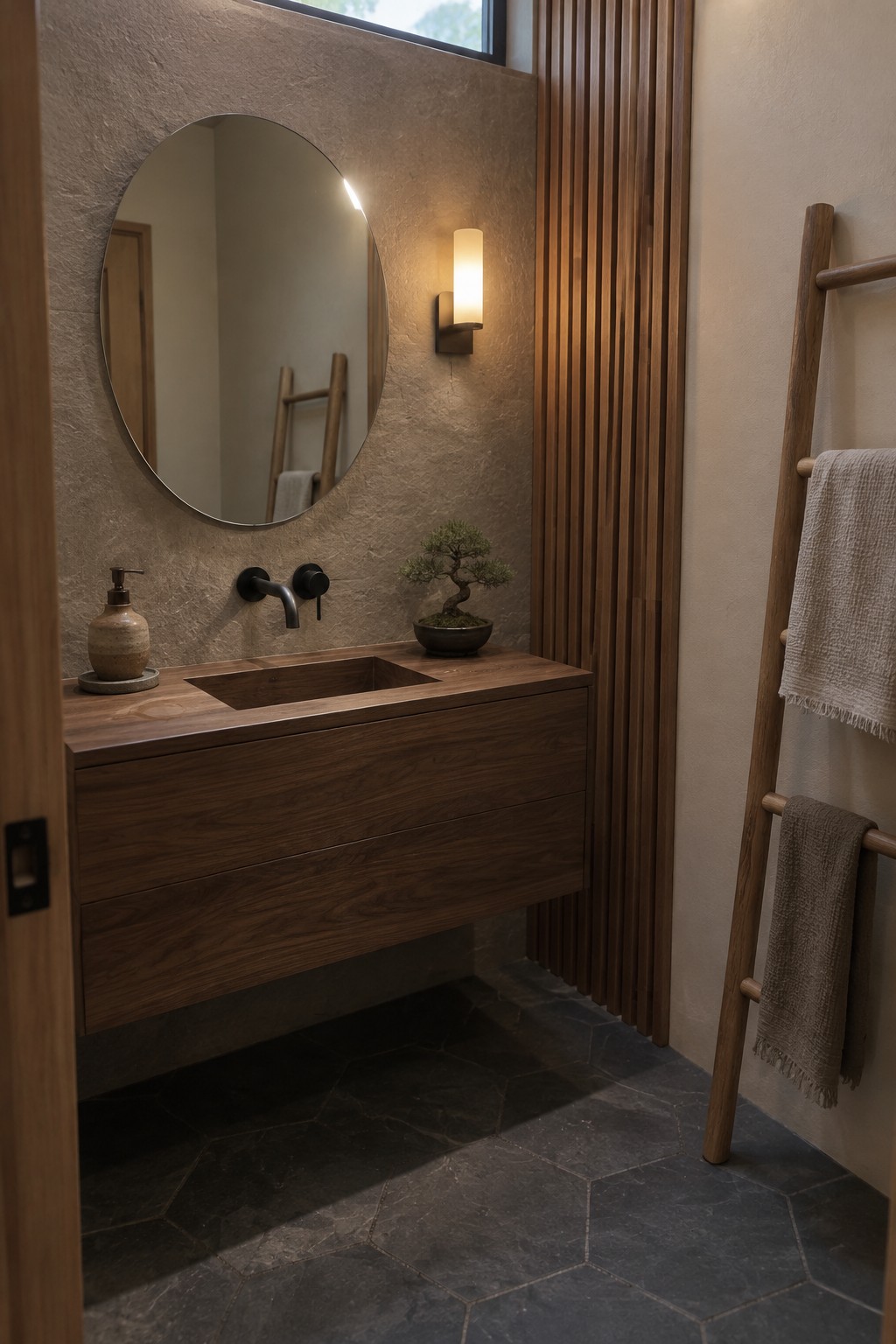
A lot of neutral bathrooms end up feeling flat when everything stays smooth and light. Bringing in a wood vanity against textured stone walls adds just enough contrast to keep the space interesting while staying firmly in the same calm palette.
This approach works best in smaller baths or powder rooms where you need warmth without adding color. Stick to one wood tone, keep the stone matte, and let the floor stay darker so the vanity does not feel like it floats too much.
Banquette Seating in Soft Neutrals

A built-in banquette makes good use of a corner while keeping the whole space feeling open and easy. The light neutral fabric on the seating blends with the wood tones around it, so the area stays calm rather than busy. This setup works especially well when you want extra seating without crowding the room with more chairs.
It suits homes that already lean toward simple, low-contrast colors and natural materials. Keep the palette to two or three soft shades and let the wood grain and woven textures do the rest. Avoid adding too many patterns or dark pieces that could break the quiet feeling.
Extend One Neutral Palette Through Connected Rooms

A simple way to make a whole home feel calm is to use the same neutral colors from the entry area straight into the kitchen. This keeps the spaces from feeling separate or jarring when you move between them.
It works best in homes with open sight lines where both areas are visible at once. Keep the cabinets, wood tones, and floor coverings in the same soft range so the eye travels easily without stops.
Central Islands Add Useful Storage in Walk-In Closets

A central island gives a walk-in closet a practical spot to work without crowding the shelves or hanging space. The flat top works for folding or sorting, while the drawers below keep jewelry, belts, and small accessories tucked away but still easy to reach.
This setup suits homes with larger closets and a neutral palette, since the wood tones and light stone surface blend quietly with the rest of the room. Keep the island proportions modest so there is still room to move around it on all sides.
Terracotta Flooring With Light Wood in Neutral Bathrooms

Terracotta tile gives a neutral bathroom just enough warmth to feel lived in without pulling away from the calm palette. The earthy tone grounds the space and works especially well when the rest of the room stays soft and light.
This approach suits bathrooms that get steady daylight. Keep the walls and vanity in pale wood tones, then let the floor carry the warmth. It stays practical for daily use while still feeling cohesive with the rest of a neutral home.
Layering Textures in a Neutral Palette

A neutral room can still feel flat if everything has the same smooth finish. The real interest comes from mixing materials that catch the light differently, like linen on the bed, a woven seat on the chair, and the textured surface of the rug.
This works especially well in smaller rooms that need to handle more than one use. Keep the colors close together and let the materials do the work instead. Wood, linen, and natural fiber all read as warm even when they stay within the same soft range.
Extend the Same Neutral Palette Into Utility Spaces
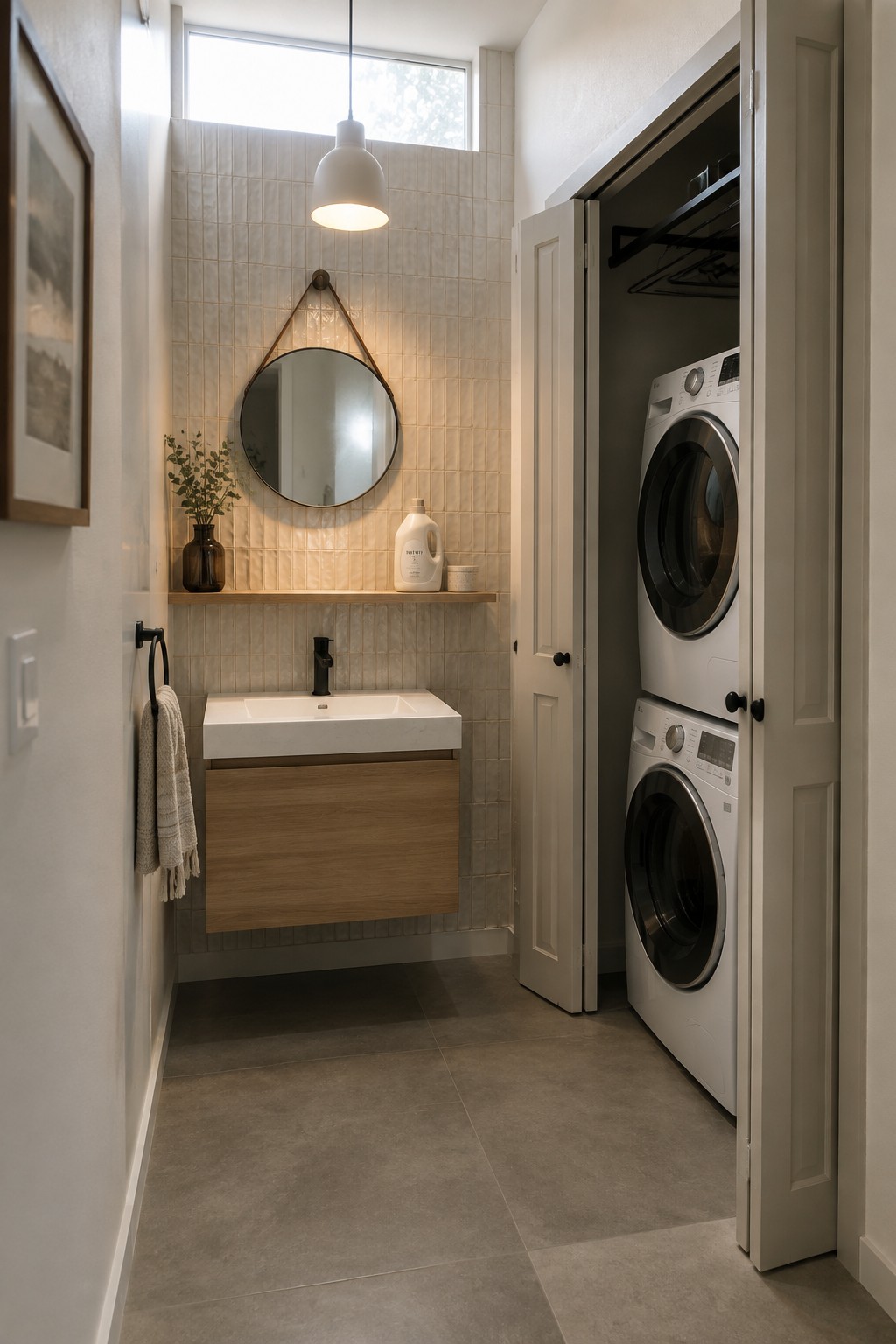
One of the simplest ways to keep a whole home feeling cohesive is to use the same neutral colors in the laundry area instead of switching to something more practical or stark. In this bathroom, the soft beige tile, warm wood tones, and gray floor carry through without a break, so the stacked machines do not stand out as a separate zone.
This works especially well in smaller homes or guest baths where the laundry shares space with daily routines. Match the cabinet finish, wall tile, and flooring to the rest of the house, and keep the doors closed when the machines are not in use. The result stays calm rather than turning into a visual interruption.
Painting Built-Ins to Match the Walls

This choice keeps the whole room feeling calmer and more connected. When shelves and walls share the same soft neutral, the space reads as one quiet surface instead of a mix of separate pieces.
It works especially well in a home office or library where you need storage but do not want the room to feel crowded. A muted gray-green like the one shown here pairs nicely with warm wood furniture and natural textures without adding extra contrast.
Built-In Vanities Inside Recessed Alcoves

A recessed niche with a built-in vanity keeps the dressing area contained and calm. The light wood tones and floating shelf above make the whole spot feel intentional without crowding the room. It works especially well when you want a quiet corner that still feels part of the larger bedroom.
This setup suits homes where you have a bit of wall depth to spare. Keep the palette soft and the materials simple so the space stays relaxing rather than busy. A single round mirror and a few everyday items on the shelf are usually enough.
Neutral Colors Help Pantries Feel Connected to the Rest of the House

A neutral palette works especially well in a pantry because it keeps all the jars, baskets, and containers from feeling busy or overwhelming. Light wood tones on the shelves and cabinets blend easily with the rest of a home’s color scheme, so the space feels like a natural extension rather than a separate work zone.
This approach suits homes that already use soft beiges, creams, and warm woods throughout. Stick to matching finishes on open shelves and closed storage, and choose simple woven baskets or clear jars so the eye rests instead of jumping from one bright label or color to the next.
Warm Wood Vanities in Neutral Bedrooms

A small vanity made from warm wood can fit easily into a neutral bedroom without breaking up the calm. The natural grain adds just enough warmth to the soft beige walls and floors, so the space still feels restful rather than busy.
This approach works well in homes that already lean on wood tones and layered neutrals. Keep the top clear except for a few simple items and pair it with a soft upholstered seat so the corner stays quiet and easy to use every day.
Warm Wood Tones in Neutral Living Rooms

A limited neutral palette feels more relaxed when warm wood tones run through the main pieces. The wood brings a natural softness that prevents the room from looking flat or cold while still keeping everything connected.
This works best in living rooms that need to feel calm at the end of the day. Stick to one or two wood finishes that match the undertones in your walls and textiles, and let the rest of the room stay quiet so the wood does the work of adding warmth.
Using One Neutral Palette in an Open Space

A tight range of neutrals can make a big room feel settled instead of scattered. In this layout the same soft gray shows up on the sofa, pillows, and rug while warm wood tones on the table and shelves keep everything connected without extra color.
This approach works best in homes with open plans or mixed materials like brick and concrete. Pick two or three base neutrals and repeat them across furniture, textiles, and wood finishes, then let texture carry the interest instead of adding more hues.
Natural Textures in a Neutral Palette

Wicker furniture and linen fabrics give a neutral room real warmth without adding color. The sofa and rug in this space show how those materials keep things simple while still feeling layered and comfortable.
This approach works well in rooms with good natural light. Keep the palette limited to soft whites and beiges, then let the weave of the furniture and the softness of the fabrics carry the interest.
Frequently Asked Questions
Q: How do I pick neutrals that flow from the living room into the kitchen without feeling boring?
A: Choose one main wall color and repeat it in both spaces. Then vary the wood tones and fabrics to add subtle differences that still connect.
Q: Can these palettes work in rooms with lots of windows?
A: They do. The light will make the neutrals feel even softer and more relaxing throughout the day.
Q: What if I want to include some bold art or rugs later on?
A: Keep the base colors quiet so those pieces stand out. A simple neutral background lets your favorite items shine without clashing.
