

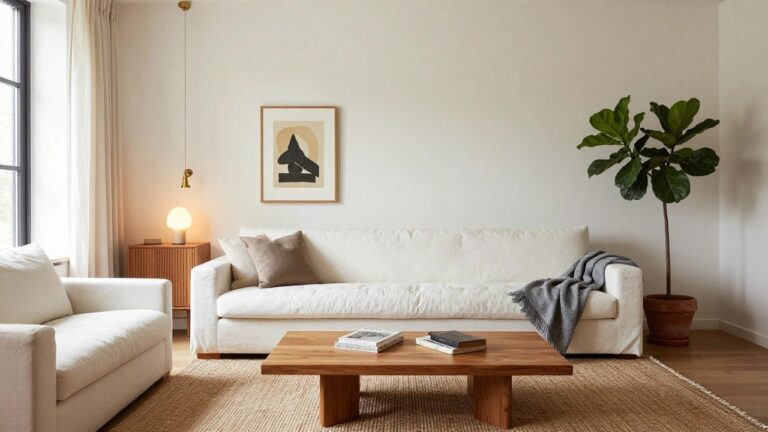
Living rooms tend to feel more settled when the walls have some thought behind them rather than being left as an afterthought.
Over time I have noticed that treatments which age well tend to rely on texture or proportion more than on trends that shift quickly.
Scale matters more than color.
When I test ideas at home I usually start by taping up samples to see how the light moves across them throughout the day.
That step alone has saved me from choices that looked promising in photos but would have made the room feel smaller once everything was in place.
Simple Abstract Prints on a Plain Wall
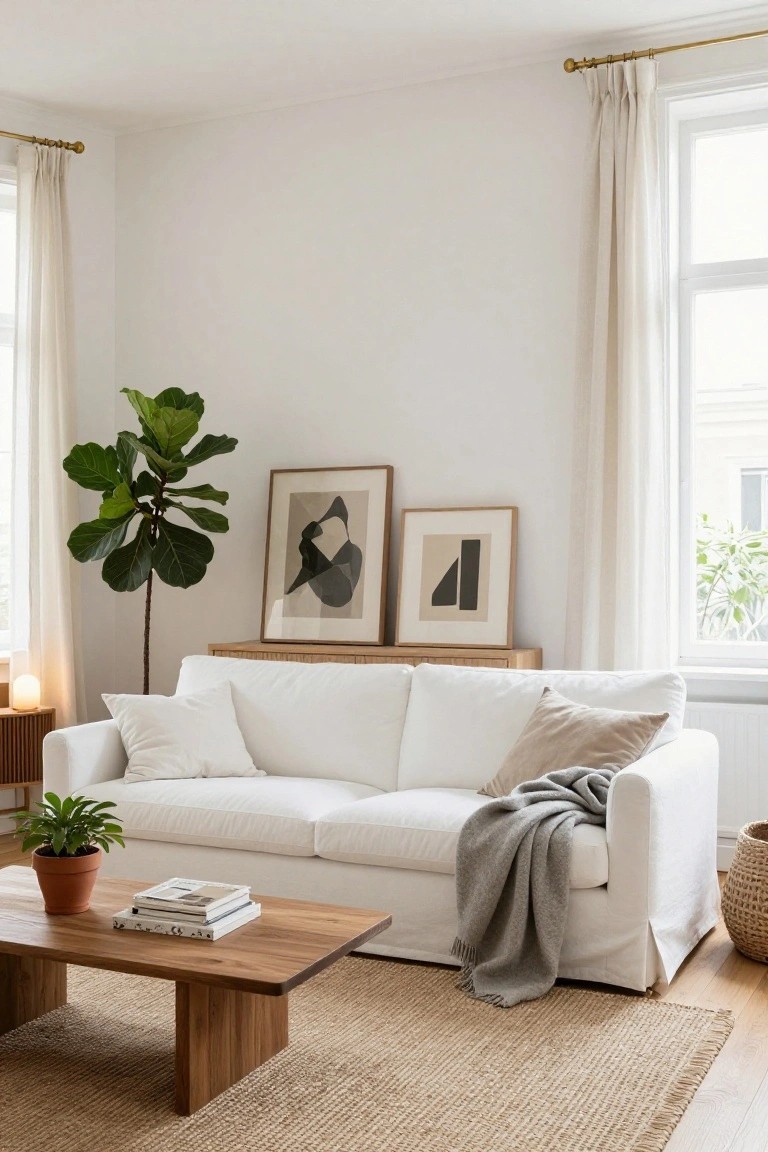
Two small abstract prints can give a large white wall just enough shape without making the room feel crowded. The limited black and white tones keep the focus on the sofa and plants instead of turning the wall into the main event.
This works best in light, neutral rooms where you want the space to feel calm over many years. Stick to modest frame sizes and simple mats so the prints can stay in place even if the furniture changes later.
Deep Blue Accent Walls
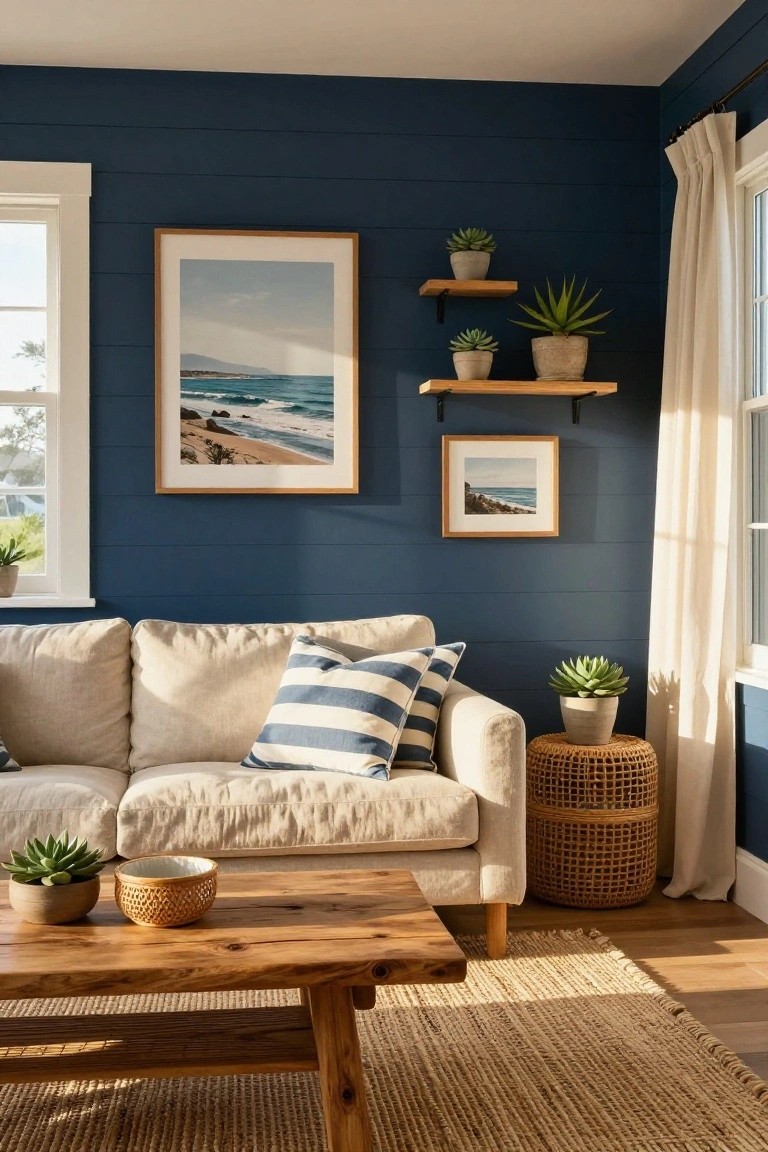
Many living rooms feel more settled with one wall painted a deep blue. The color adds weight and calm without taking over the whole space.
It works best in rooms with good natural light and pairs easily with lighter furniture and wood tones. Keep the other walls neutral so the blue stays as a clear focal point rather than feeling heavy.
Exposed Brick Walls
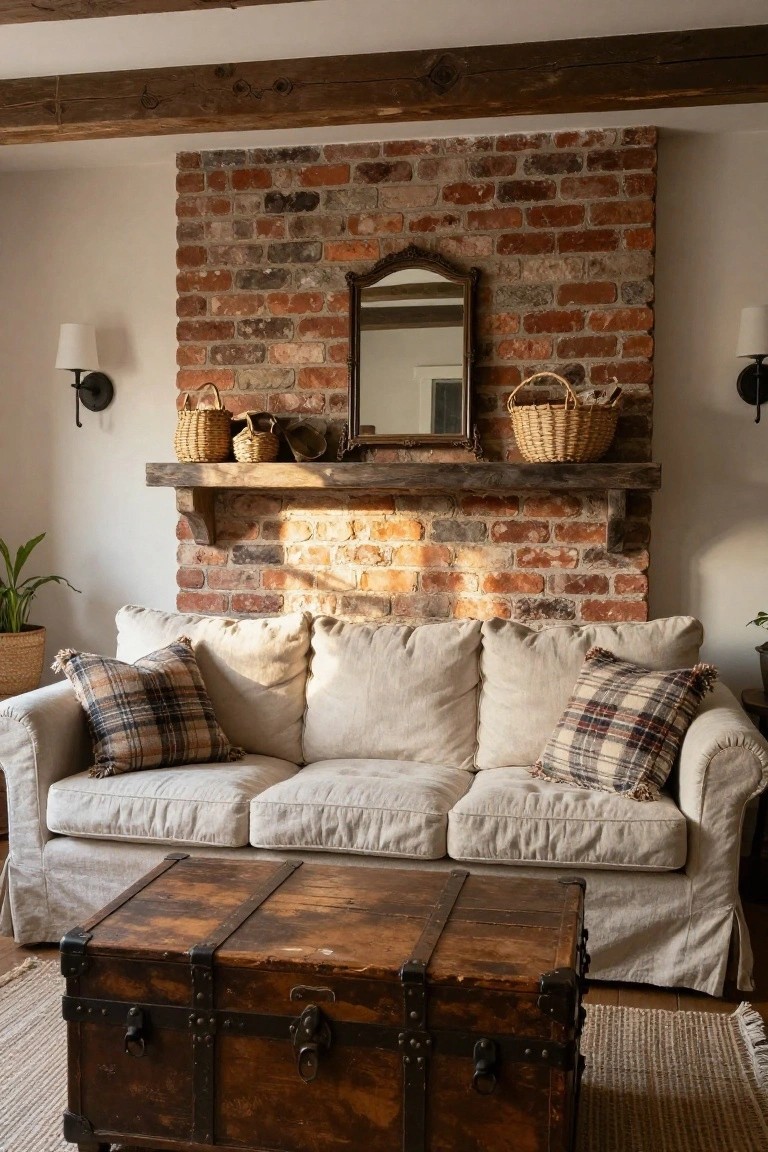
An exposed brick wall brings natural texture and warmth into a living room without extra layers or patterns. It holds up over time and gives the space a solid base that works with many styles of furniture.
This approach fits older homes or rooms with decent height where the wall can stand as the main feature. Keep surrounding pieces simple and neutral so the brick stays the focus instead of competing with too many other elements.
Deep Green Walls With Gold Trim
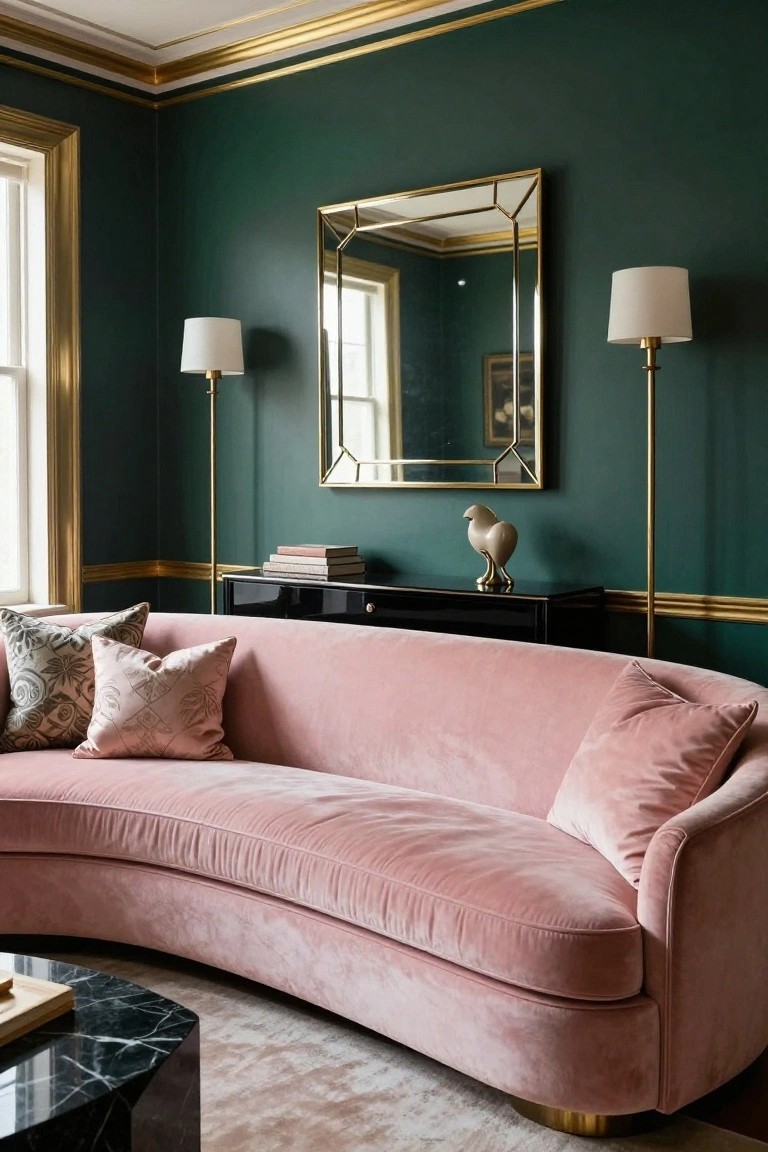
A deep green wall color brings a strong sense of calm and depth to a living room. Gold trim along the ceiling and baseboards adds just enough contrast to keep the space from feeling heavy or closed in.
This combination works best in rooms with decent natural light and some architectural detail to highlight. It pairs well with softer furniture tones and keeps the overall look grounded even when the rest of the room stays fairly simple.
Built-In Shelving Across One Wall
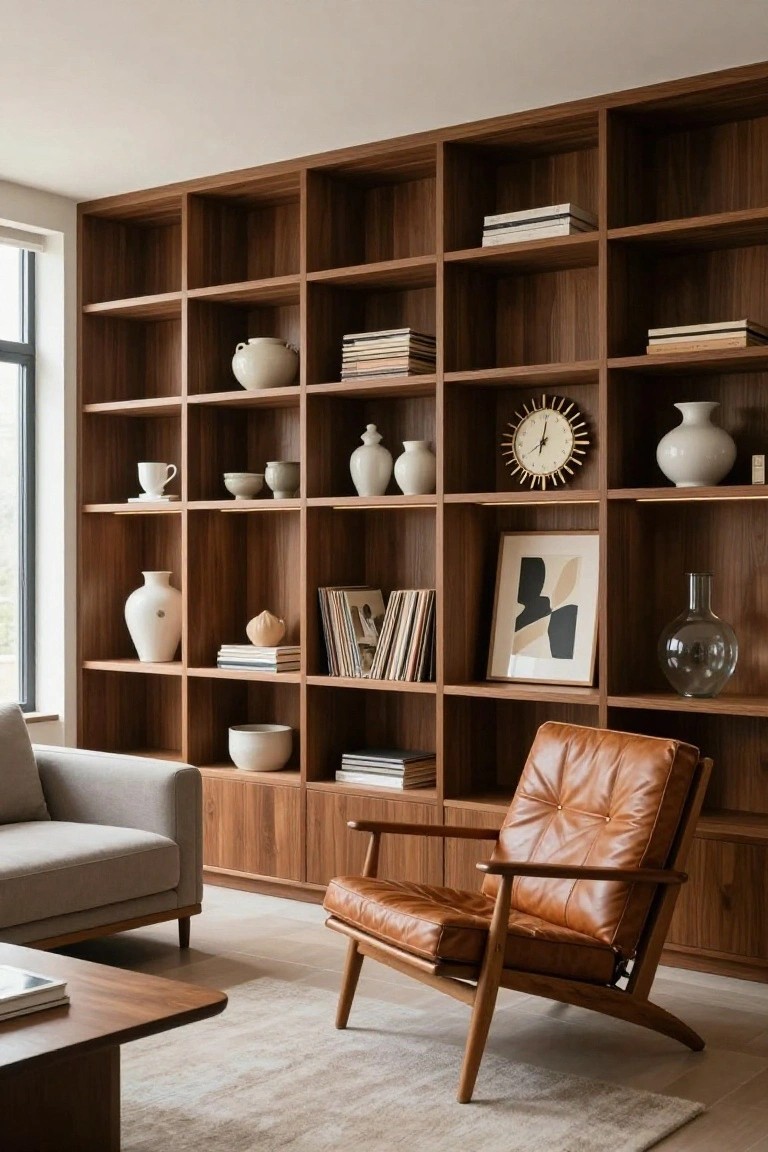
Built-in shelving that runs from floor to ceiling gives a living room extra storage without adding separate pieces that take up floor space. It keeps books, vases, and smaller items in one spot and leaves the rest of the room open for seating.
This setup works best in rooms with at least one long wall and a bit of height. It suits homes that need more places to store everyday items while still keeping the space looking calm and put together.
Botanical Wall Murals in the Living Room
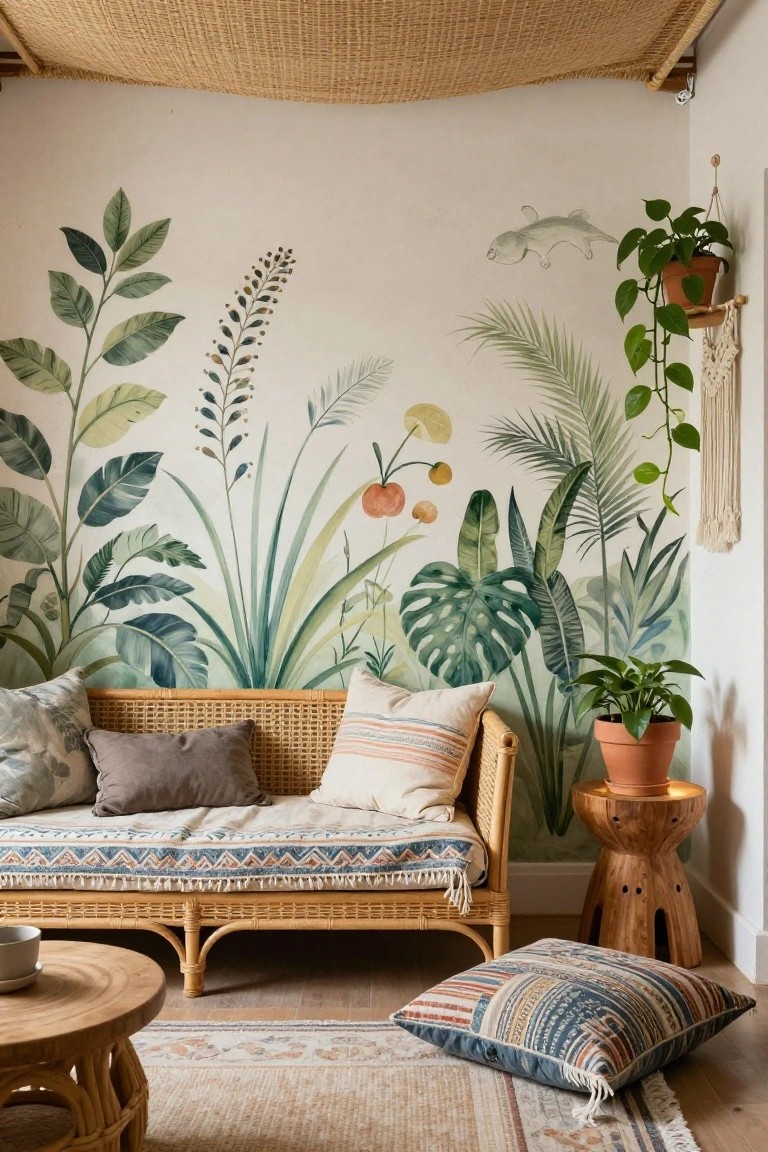
A botanical mural gives a living room an easy focal point without adding more furniture or clutter. The painted leaves and stems create a soft backdrop that feels calm and connected to nature, especially when the rest of the room stays fairly simple.
This approach works best in spaces that already have some natural light and neutral furniture. Keep other wall decor minimal so the mural does not compete, and it suits homes that want a relaxed feel without constant plant care.
A Floating Ledge on an Accent Wall
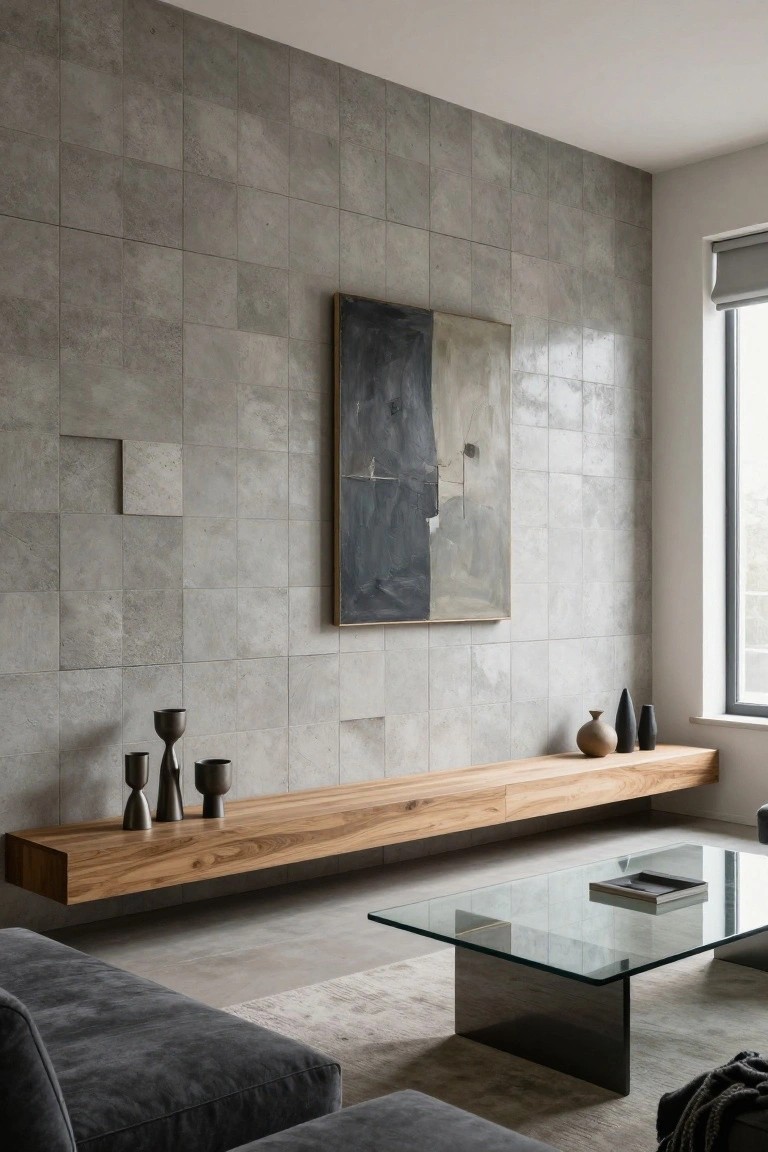
A long floating ledge gives you display space without the weight of a full console or cabinet. It keeps the floor open and lets the wall surface read more clearly, especially when the wall has texture or large tiles like this one.
This works best in living rooms where you want a few objects on view but do not need storage. Keep the items spaced out and fairly simple so the ledge stays secondary to the wall itself.
Deep Blue Walls With Panel Molding
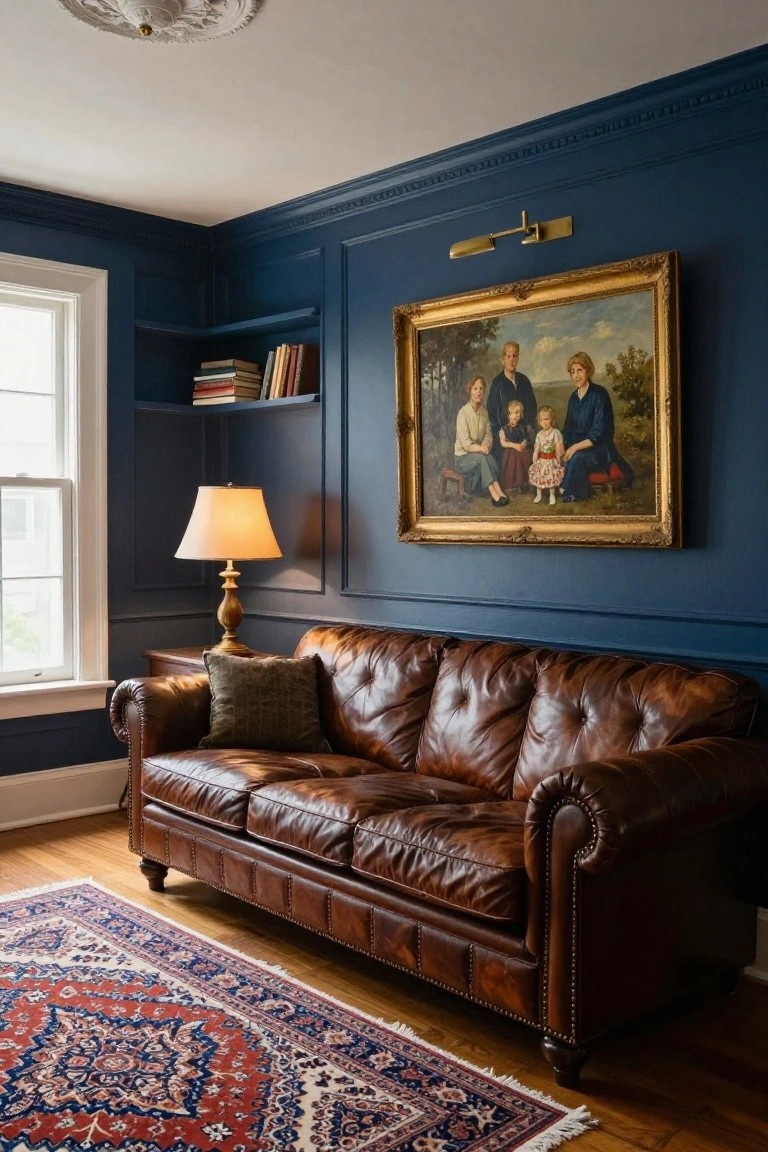
A deep navy wall color paired with raised panel molding gives a living room real presence. The color feels rich and settled, and the trim adds structure so the space does not look flat or plain.
This approach suits homes with traditional details and decent natural light. Keep the rest of the room simple so the walls carry the look, and test the paint on a large sample first because the shade can shift a lot between day and evening light.
Keep the Wall Plain and Textured
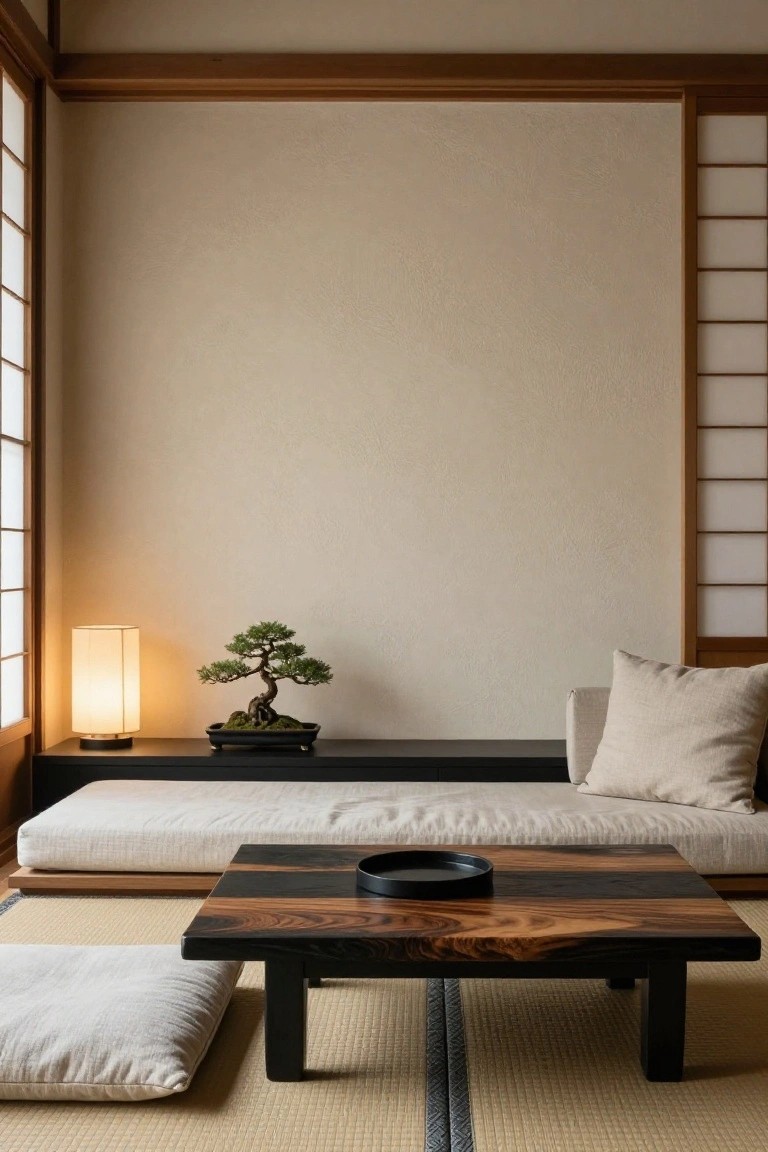
A plain textured wall gives a living room a quiet base that lasts. It avoids busy patterns or strong colors, so the space feels open even when furniture stays low and simple.
This works best in homes that favor natural materials and fewer pieces overall. It suits smaller rooms or those with floor seating, since the wall does not fight for attention.
A Gallery Wall Of Prints
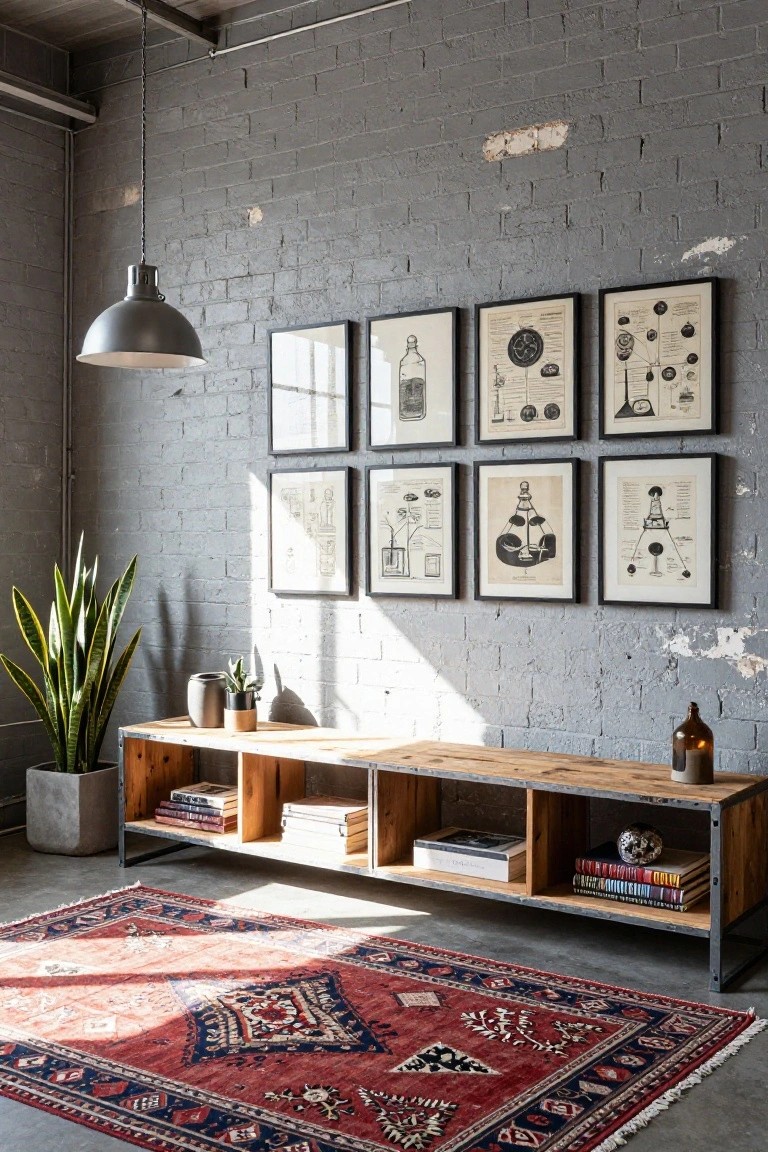
A gallery wall of matching framed prints gives a large wall something to say without needing much else around it. The even grid keeps things orderly, and the similar frames help the whole arrangement feel settled rather than scattered.
This approach works best on textured walls where the frames can stand out clearly. Keep the prints in one style and hang them at a consistent height so the grouping reads as one solid piece rather than a random collection.
Recessed Wall Niches For Simple Display Space
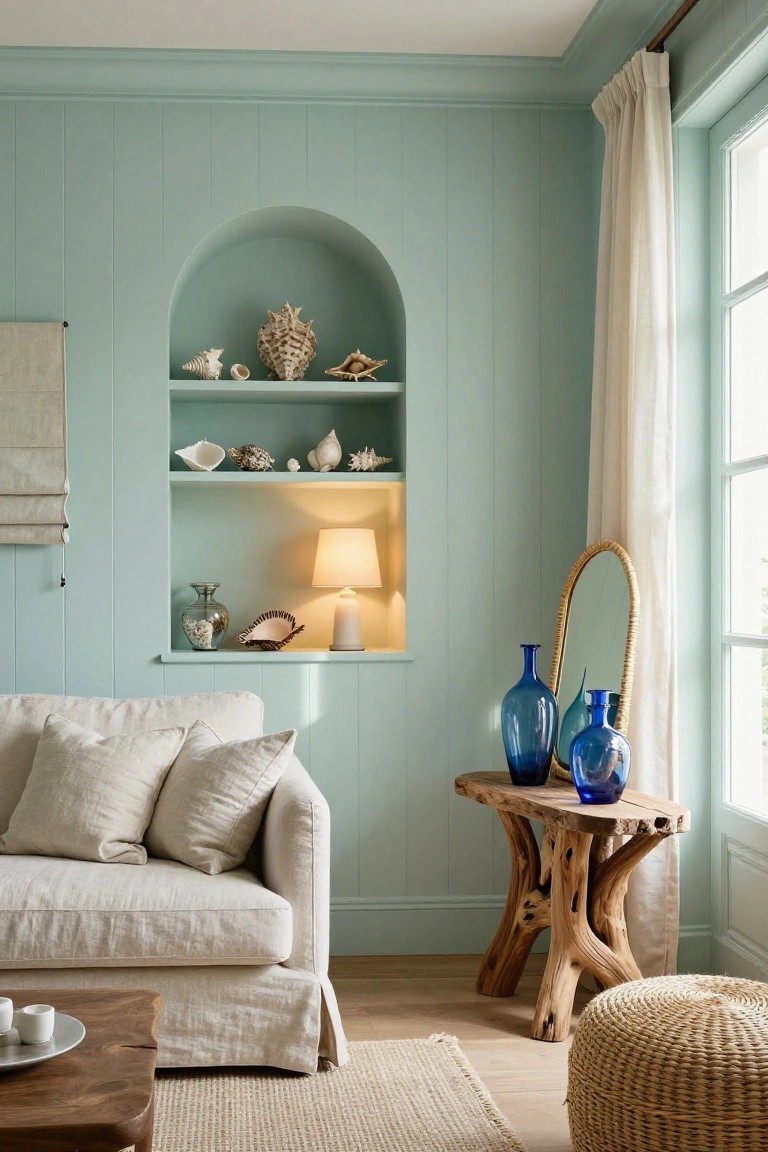
Built-in niches give you a clean way to show off small collections without adding extra furniture or cluttering the floor. They work especially well when the room already has some wall paneling, since the recessed area keeps things feeling balanced instead of busy.
This idea suits homes that lean traditional or coastal, where you want a bit of personality on the walls. Keep the items fairly light and spaced out, and avoid filling every shelf if you want the niche to still feel open rather than crowded.
Rich Green Walls With Stenciled Details
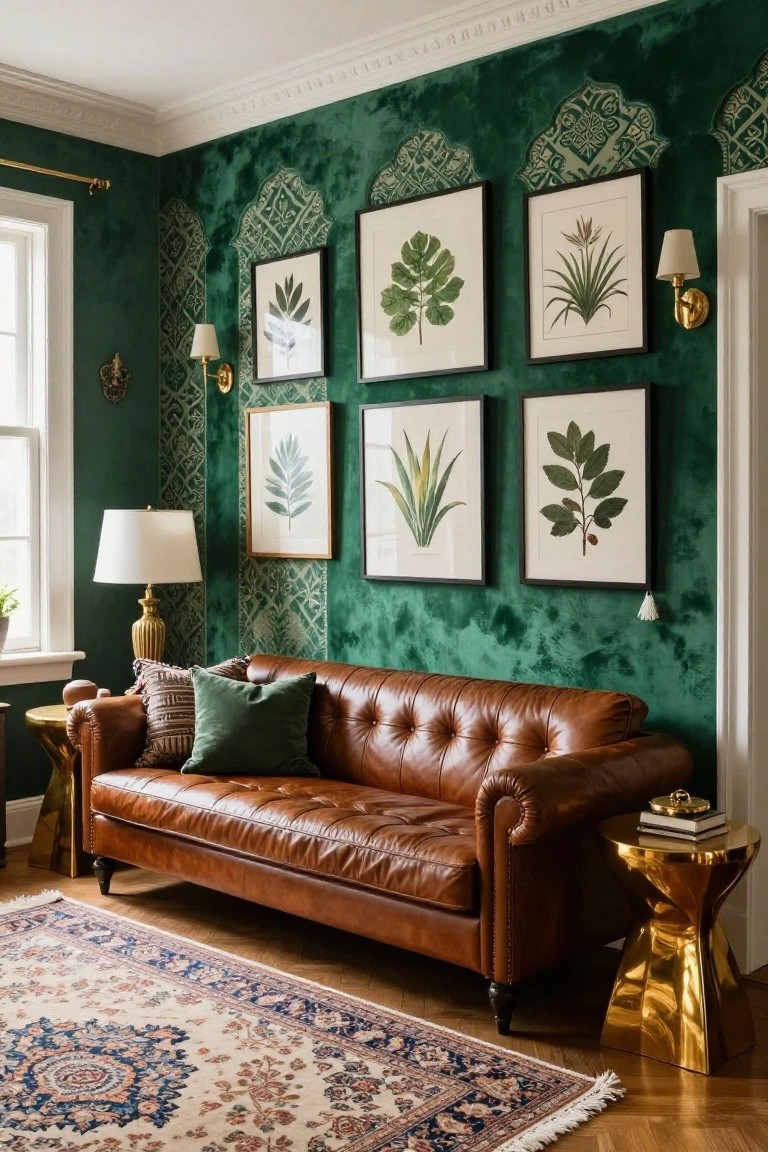
Deep green walls can make a living room feel grounded and a bit more formal without a lot of effort. The velvet texture catches the light in a soft way, and the stenciled arches add just enough pattern to keep the surface from looking flat.
This approach works well in older homes or rooms that already have some trim detail. Keep the rest of the furnishings simple so the wall stays the main feature, and test the green in different lights first since it can shift quite a bit from morning to evening.
Terracotta Fireplaces As A Living Room Feature
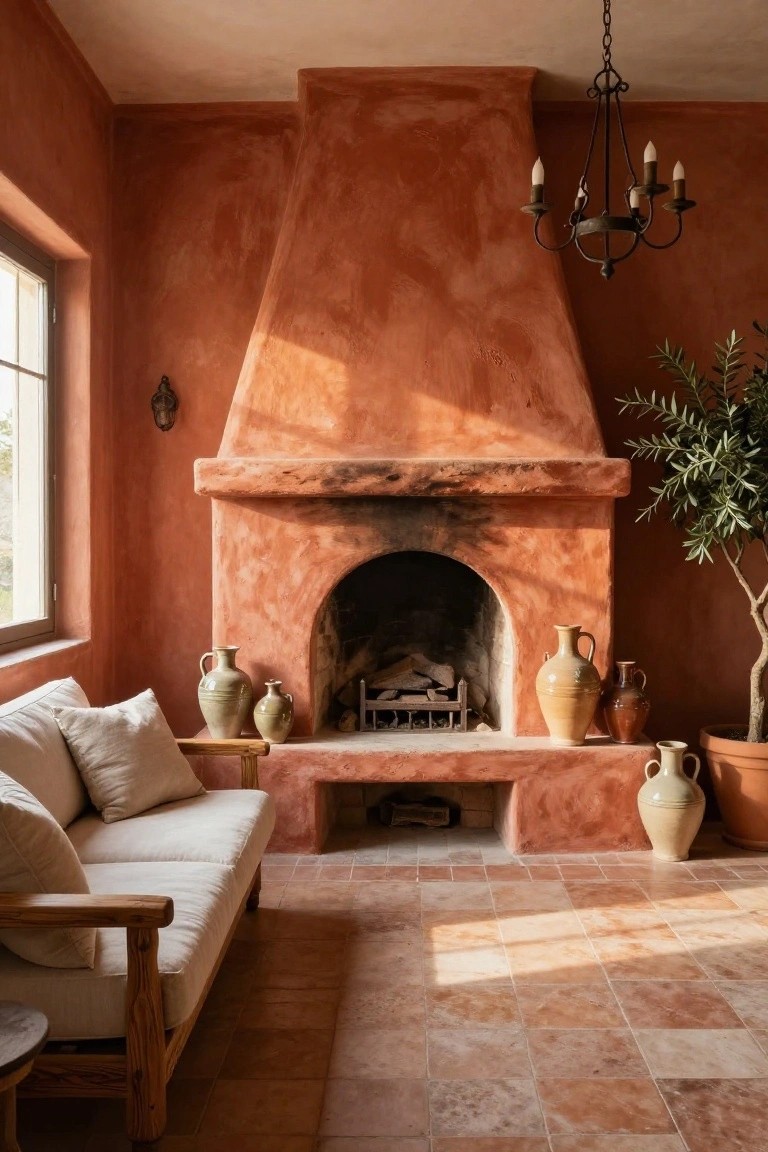
A large built-in fireplace finished in the same warm terracotta as the surrounding walls creates a strong focal point without needing extra decoration. The single material choice keeps the room feeling calm and grounded, especially in spaces that already have wood beams or stone floors.
This approach works best in homes with a Mediterranean or rustic feel, where the fireplace can stay open and simple. Just make sure the scale fits the room so it does not overwhelm smaller seating areas.
Geometric Wood Accent Walls
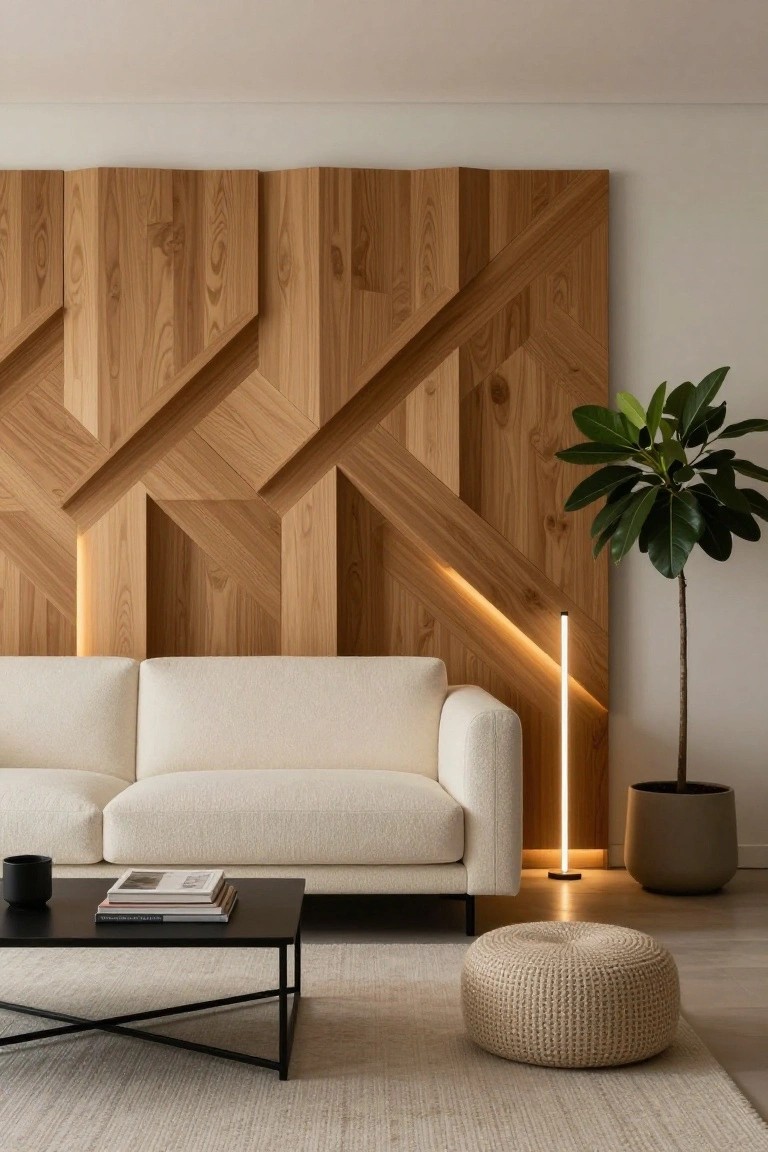
Many living rooms benefit from a single strong wood wall that brings texture and a bit of pattern without extra clutter. The geometric layout keeps the surface interesting while the wood itself adds warmth that pairs easily with neutral seating and simple furniture.
This works best in spaces that already feel a little plain or where you want one wall to carry the room. It suits homes with open layouts or higher ceilings, and the pattern can be scaled up or down depending on the size of the wall you have available.
Gallery Walls with Botanical Prints
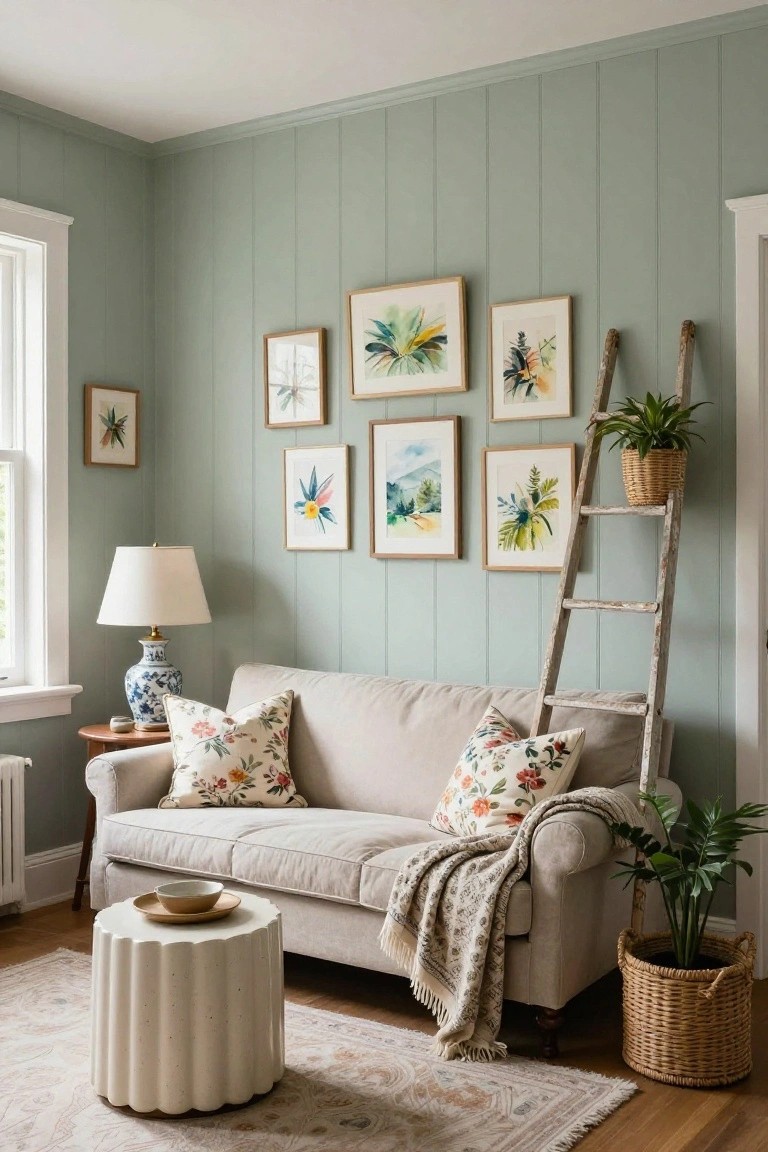
A gallery wall of botanical prints gives a living room wall some quiet interest without much effort. The soft green paint behind the frames makes the whole arrangement feel calm and connected, and it works especially well over a sofa where the eye naturally lands.
This approach suits homes that already have some traditional trim or paneling, since the art adds a lighter layer on top. Keep the frames simple and similar in style, and stick to one color family in the prints so the wall stays balanced rather than busy.
Bold Geometric Wall Patterns
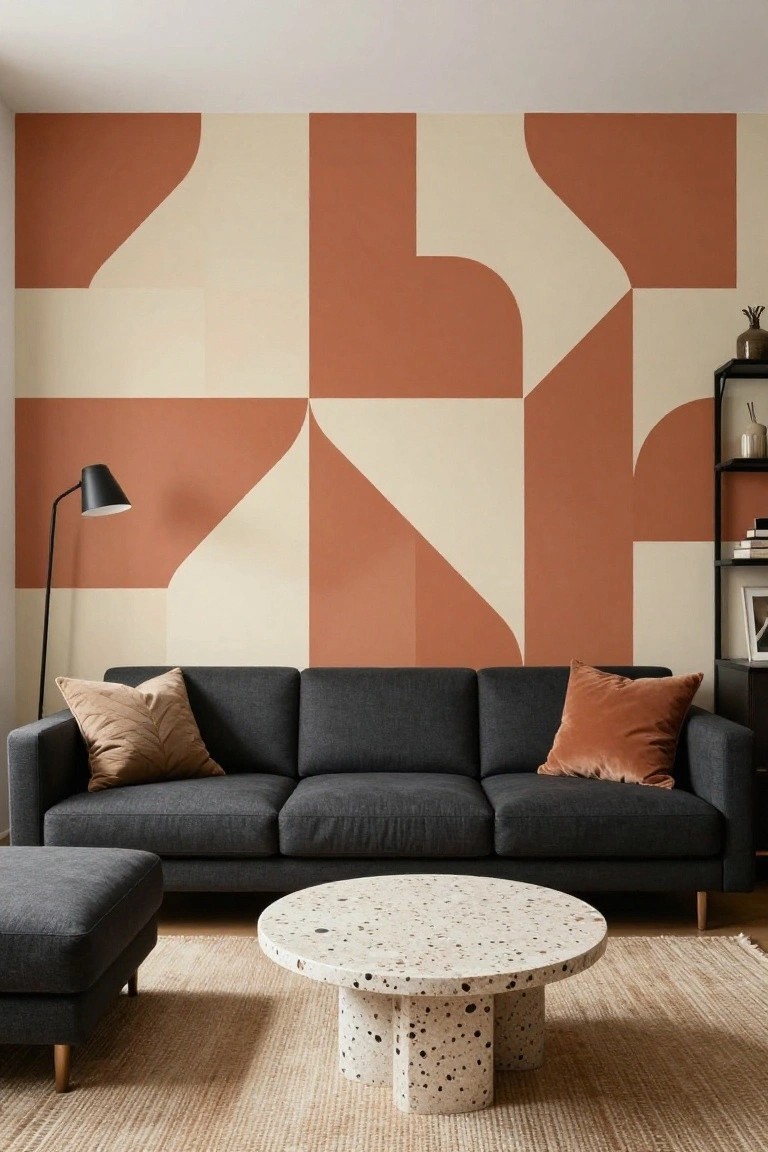
A large painted geometric pattern gives a living room wall real presence without adding extra furniture or art. The simple shapes and two-tone color scheme create interest while keeping the overall feel calm and balanced.
This kind of wall treatment works best in rooms with straightforward furniture and neutral flooring. It suits homes that already lean modern or mid-century, where the pattern can act as the main visual feature without competing with too many other elements.
Wood Paneling for Living Room Walls
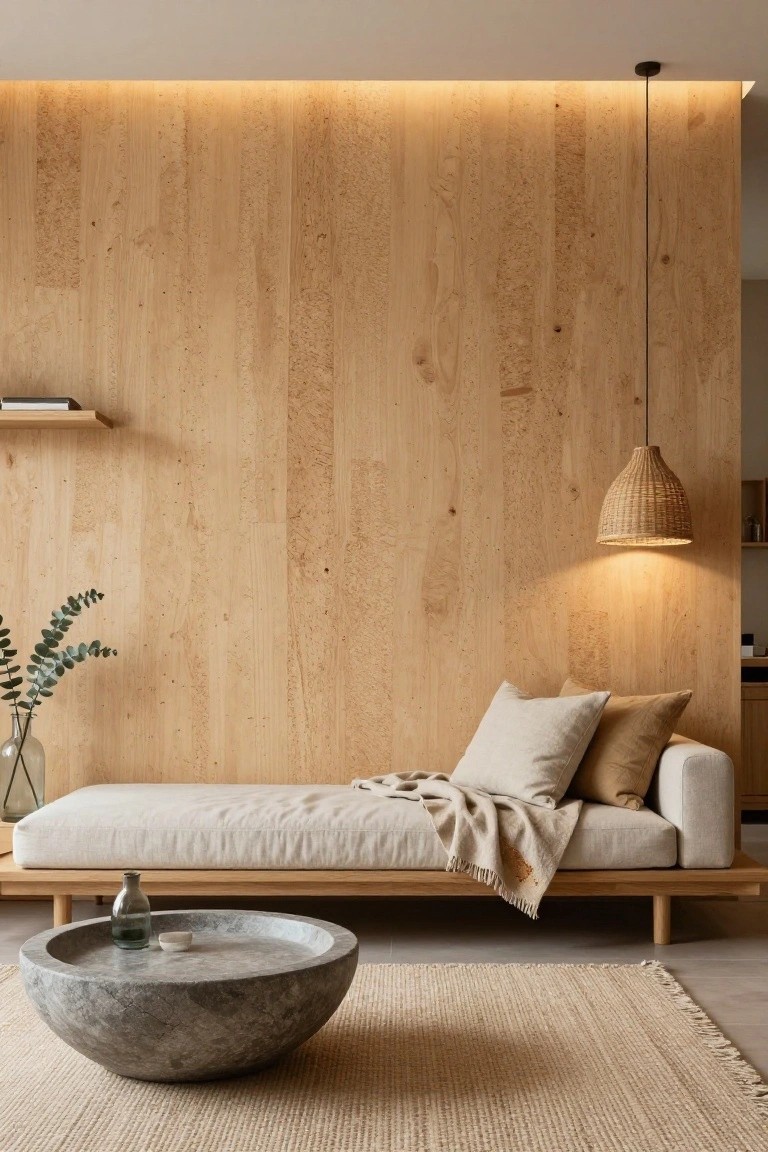
A full wall of vertical wood paneling gives a room an easy sense of warmth and texture. It works especially well when the rest of the space stays simple, letting the natural grain become the main feature without needing extra color or pattern.
This approach suits homes that already lean toward neutral tones and clean lines. It can feel too heavy in small rooms, so it works best when there is enough space for the wood to breathe and when the furniture stays low and understated.
Gray Shiplap on Living Room Walls
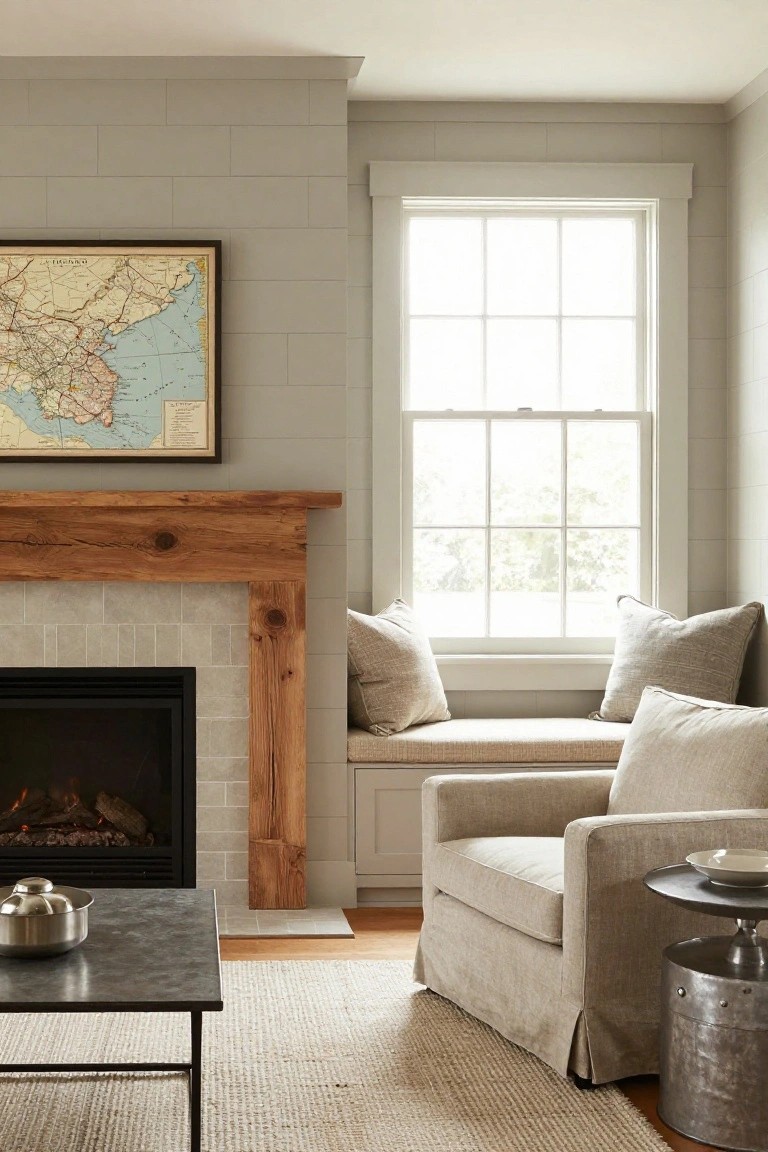
Gray shiplap gives walls a quiet texture that feels finished without trying too hard. It works especially well in rooms that already have a fireplace or built-in seating because the lines add interest while the color keeps everything calm and connected.
This approach suits older homes or any space where you want the walls to feel a bit softer than flat paint. Keep the tone light and stick to simple trim so the paneling stays in the background rather than taking over.
Metallic Wallpaper for Living Room Walls
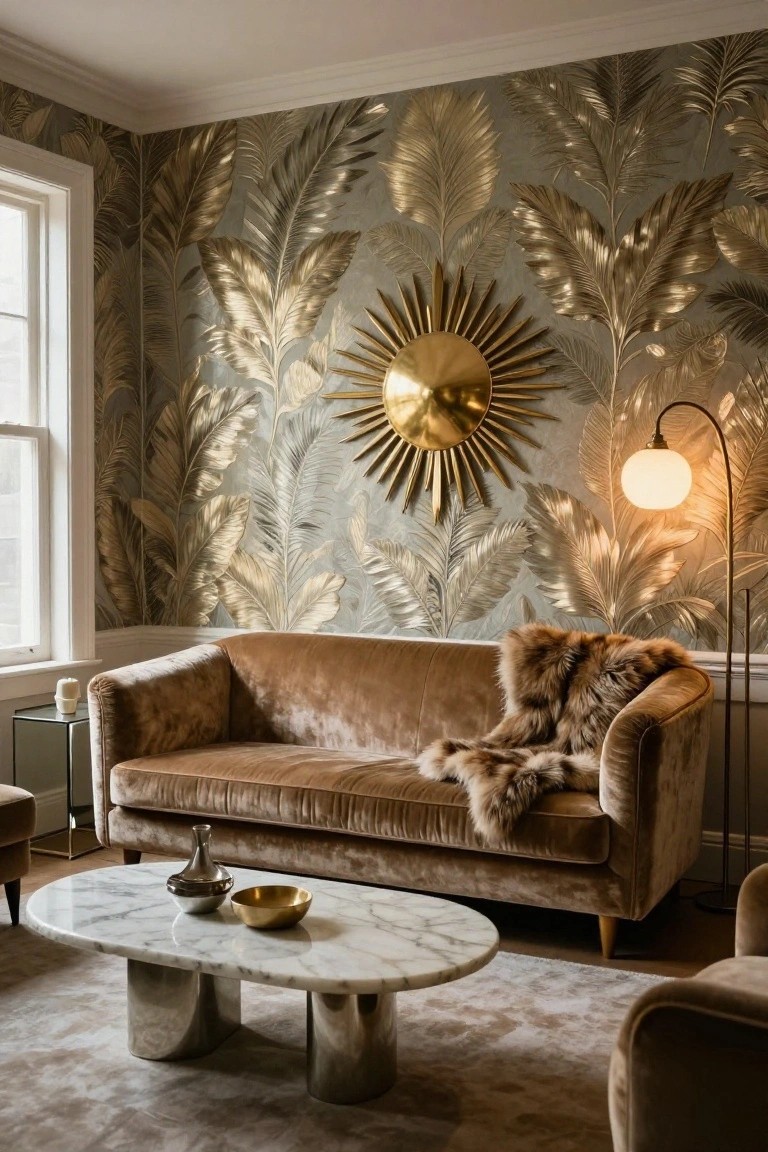
Metallic wallpaper gives a living room wall a quiet richness that holds up over time. The gold leaf pattern here reflects light gently and adds texture without making the room feel busy or trendy.
This approach works best in spaces with steady daylight where the finish can catch a soft glow. Pair it with simple furniture and one strong accent piece so the wall stays the main focus without overwhelming the room.
Bold Green Walls In A Living Room
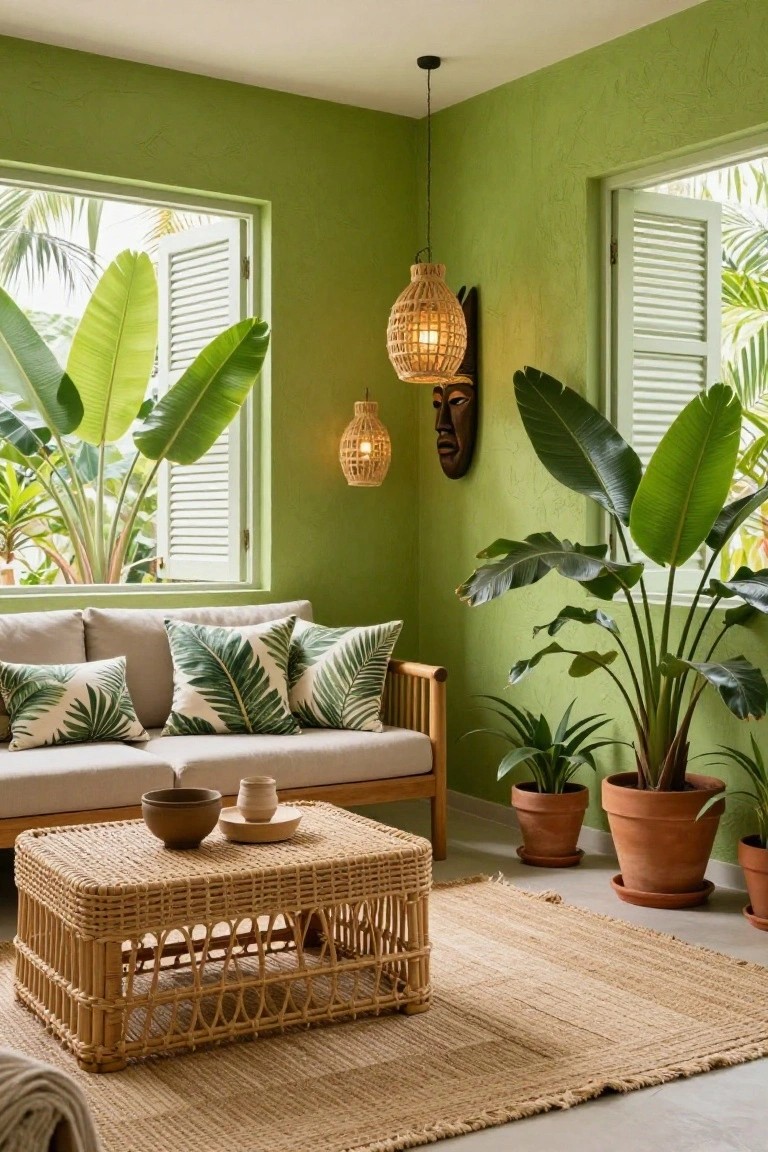
A strong wall color like this green gives a living room an immediate lift. It sets a clear tone without relying on lots of extra pieces or constant changes.
This approach suits homes that already get good light and have simple furniture. Keep other surfaces fairly light so the color can hold its own over the years.
Shelves And Art On The Same Wall
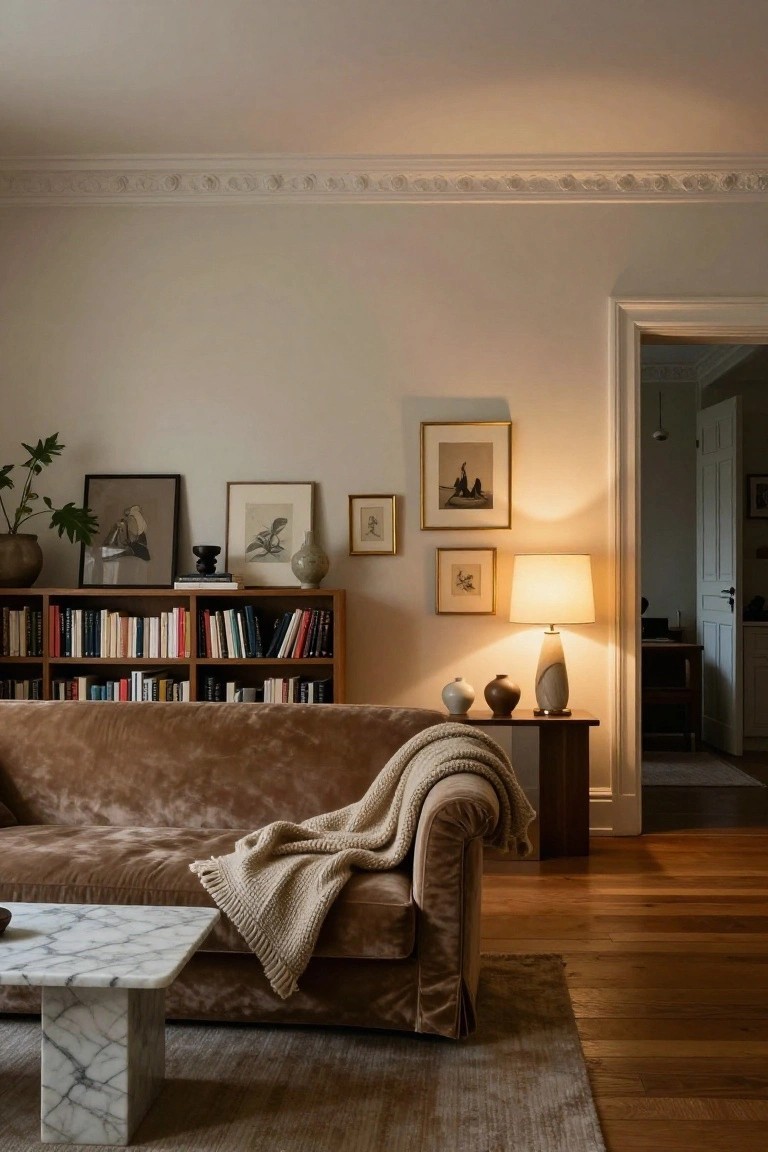
Many living rooms feel more finished when the wall holds both books and pictures instead of one or the other. The mix adds depth without needing a strict layout, and it works especially well on large blank walls that otherwise look empty.
This approach suits older homes or any room that already has a sofa or seating along one side. Keep the shelves low or mid height so the art above can stay visible, and leave a little breathing room between frames so the whole wall does not feel crowded.
Frequently Asked Questions
Q: Which of these ideas can I try without damaging my walls if I rent?
A: Focus on removable wallpaper or large art pieces that hang from hooks. These let you refresh the look anytime without repairs. Paint is another easy swap when you move out.
Q: How do I make sure my wall design ages well over time?
A: Stick with simple textures like wood panels or classic gallery walls. They avoid trends that fade fast. Update accessories instead of the whole wall when you want change.
Q: What if my walls are already textured?
A: Layer paint or lightweight panels over it. Test a small spot first to see how it takes.
