

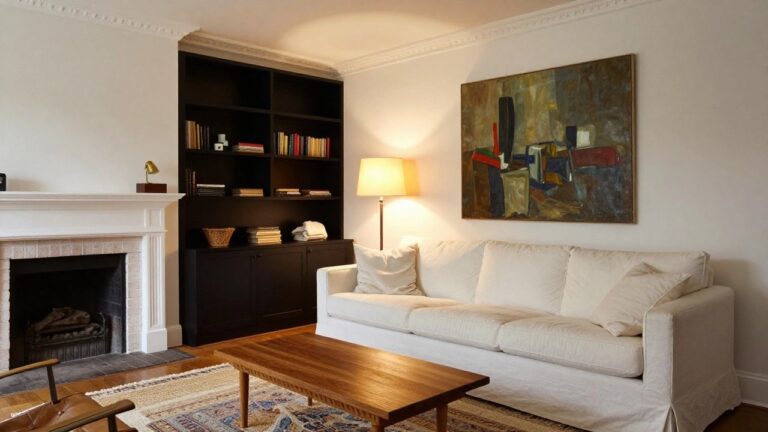
I’ve always noticed that blending older furniture with newer pieces works best when the room already has a clear layout to hold everything together.
In practice the spaces that feel right are the ones where wood tones or metal finishes echo each other without forcing a perfect match.
It usually takes living in the room for a few weeks before you can tell whether the mix feels natural or simply crowded.
Scale matters more than most people expect.
Trying a couple of these combinations in my own living room showed me which pairings actually hold up once daily use begins.
Hang Modern Art Over a Classic Fireplace
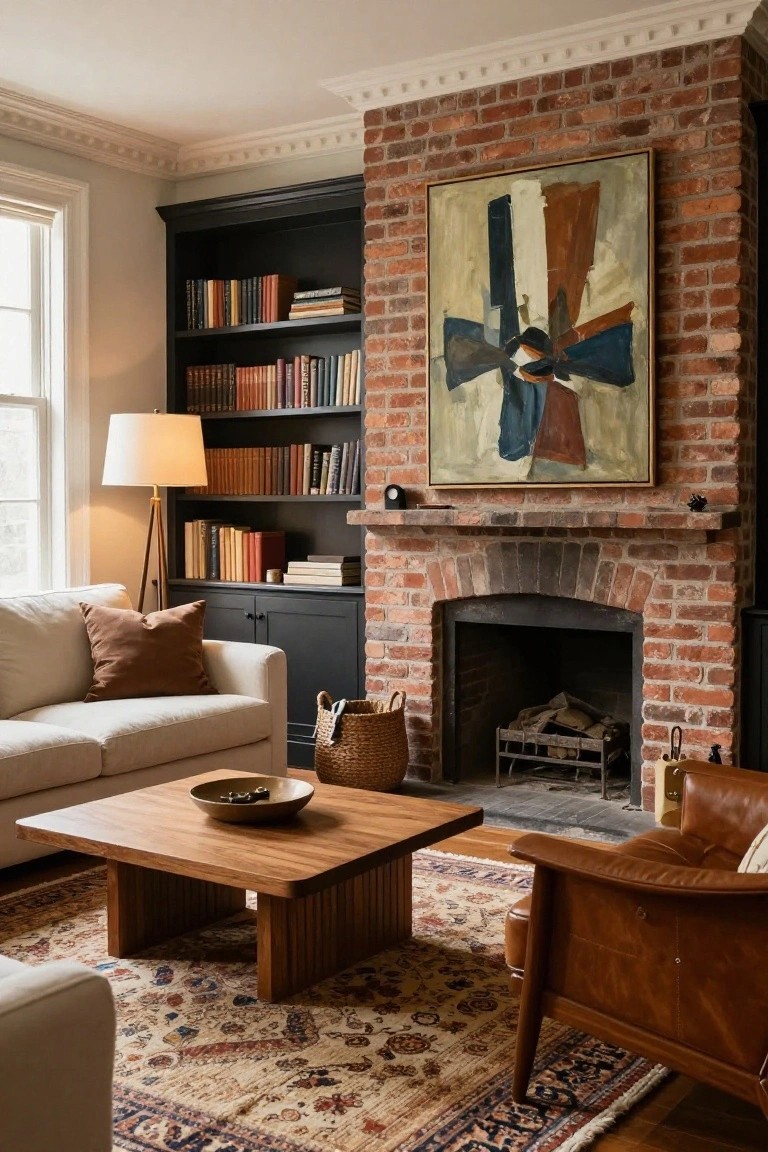
A traditional brick fireplace already brings a lot of character to a room. Adding a large abstract painting above it keeps that warmth while giving the space a more current feel. The contrast between the rough brick and the loose brushstrokes makes both elements stand out without fighting each other.
This approach works well in older homes where you want to keep the original fireplace but avoid a purely traditional look. Choose a piece with simple shapes and a limited color palette so it does not overwhelm the brick. It suits living rooms that get regular use, since the art adds interest without making the space feel too formal.
Mixing Natural Wood With Painted Cabinetry
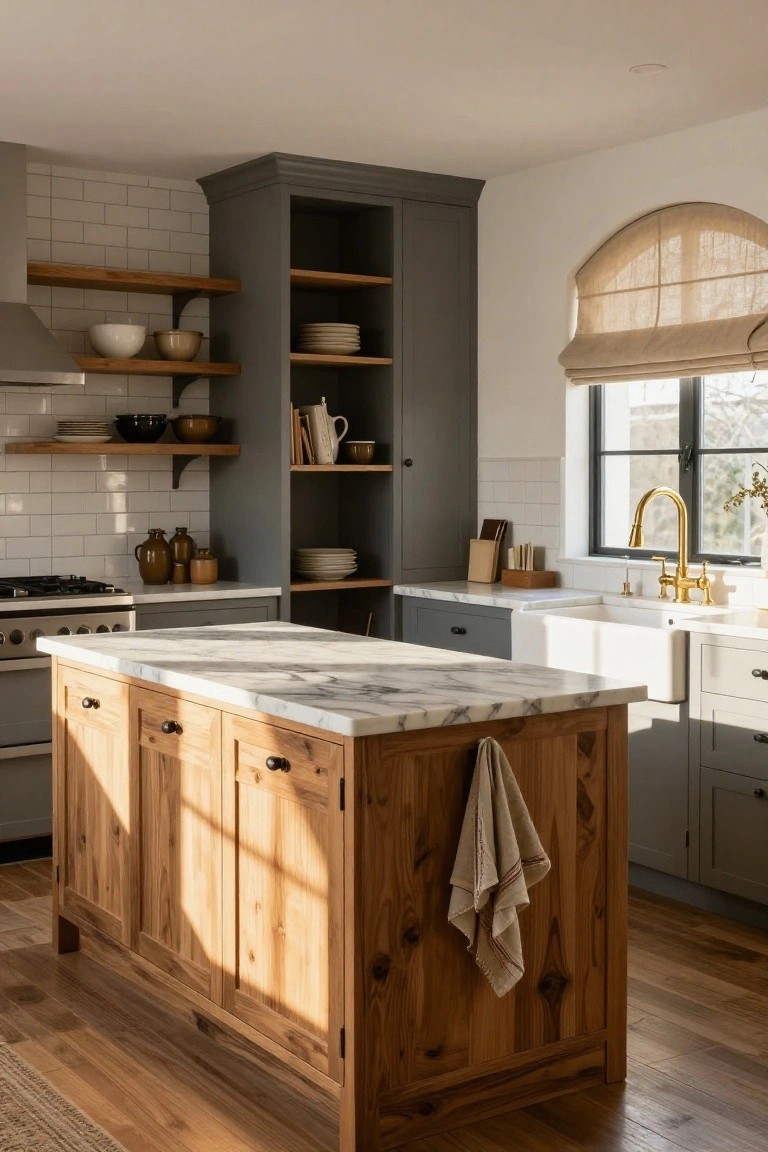
A wood island base next to painted cabinets gives a kitchen that steady blend of old and new without extra effort. The natural grain warms up the space while the gray finish keeps things simple and current.
This approach suits homes that already mix older details with newer updates. Stick to one wood tone and let it contrast just enough against the painted surfaces.
Using Traditional Prints With Simple Furniture
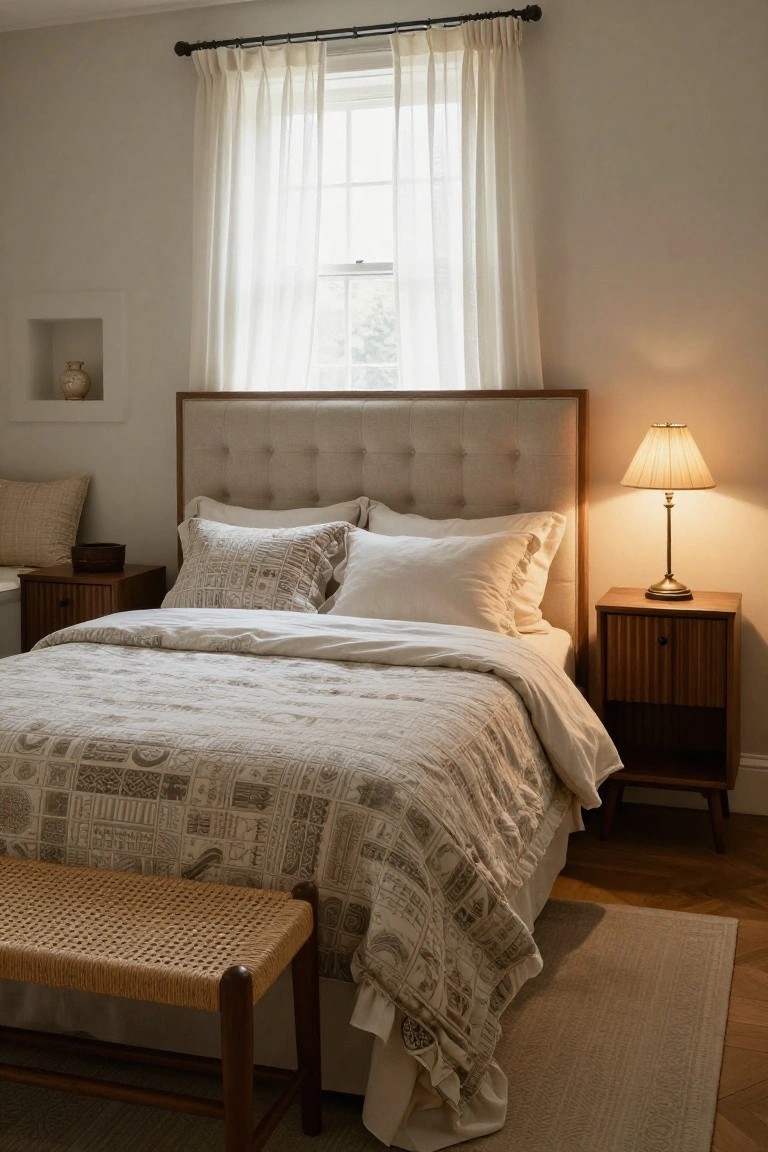
A patterned coverlet like the one on this bed brings in history without needing lots of extra pieces. The print adds character and a sense of age, while the plain headboard and straightforward nightstands keep the room from feeling busy. This mix works because the pattern carries the weight of the older style, leaving the furniture to handle the cleaner side of the look.
Try this approach in any bedroom where you want a bit of warmth but still like a calm layout. It suits homes that already have some wood tones or neutral walls. Just keep the rest of the bedding simple so the print stays the focus instead of competing with too many other details.
A Substantial Wood Table As Your Starting Point
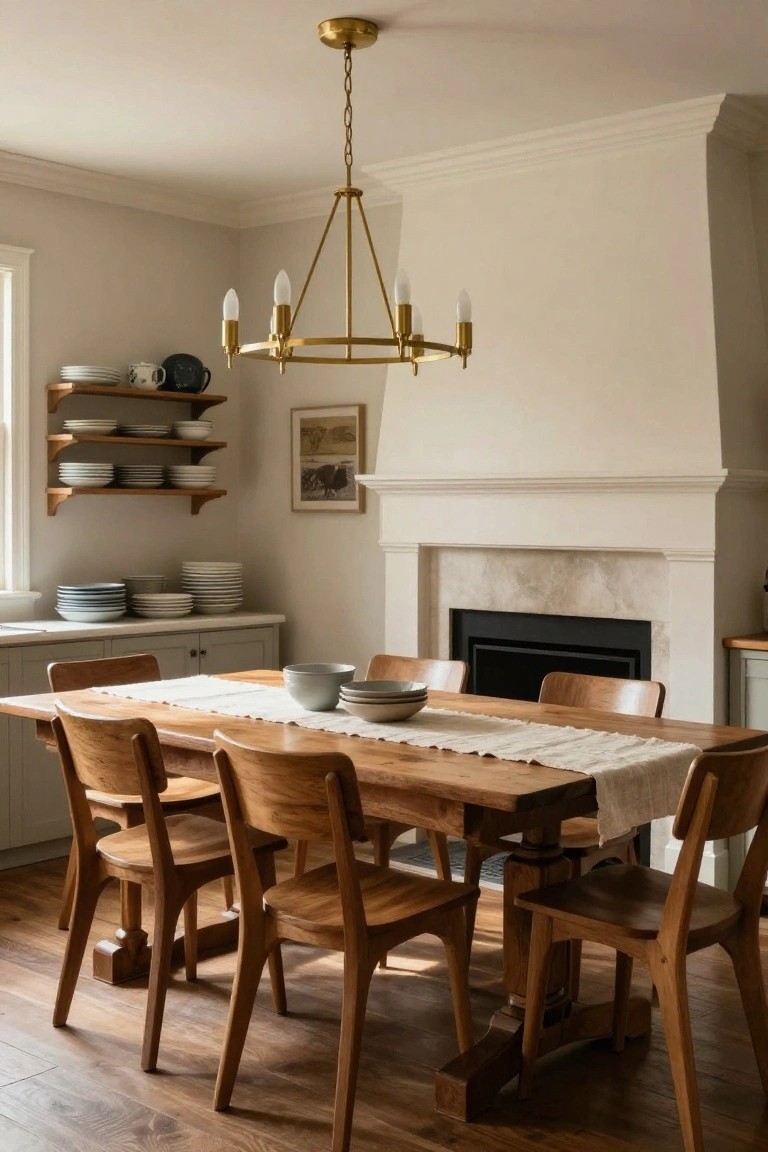
A big wood dining table often makes the easiest bridge between old architecture and newer pieces. It feels grounded next to a fireplace and mantel yet leaves space for a simple modern light fixture overhead.
This works best in older homes where you want to keep the original trim and details but still add current touches. Choose a table with clean lines and a warm finish so it does not fight the existing character of the room.
Floating Consoles In Small Entries
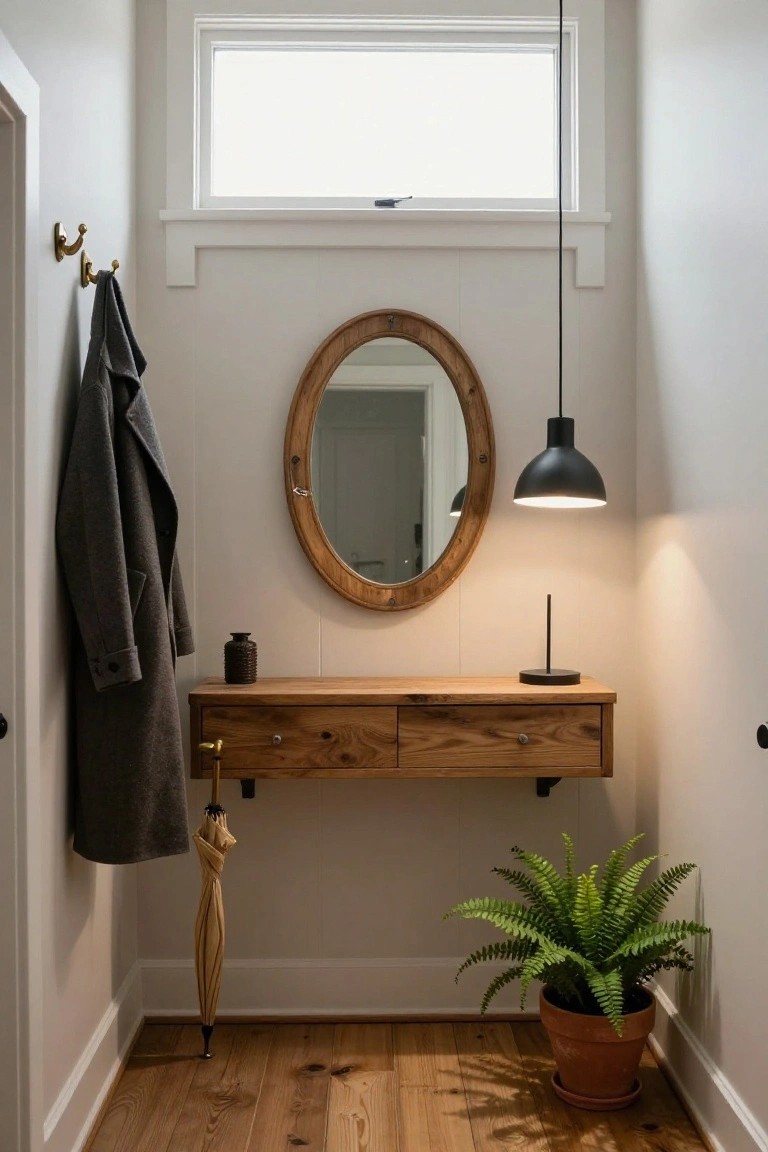
A wall-mounted console gives you a place to drop keys or mail without eating up floor space. In a transitional home it also lets the wood grain stand out against plain walls, which keeps the look simple but still warm.
This works best in narrow hallways or just inside the front door. Keep the top fairly clear and use the drawers for gloves or leashes so the surface stays useful but not cluttered.
Built-Ins That Add Storage Without Losing Warmth
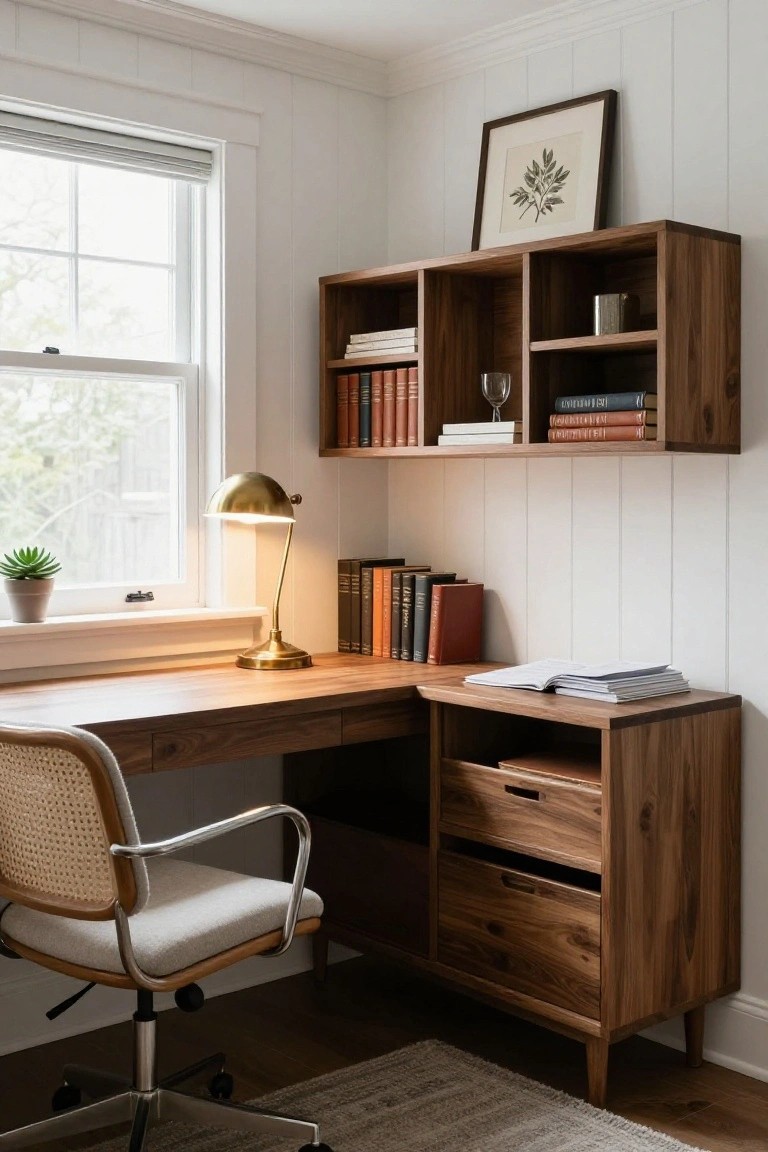
Many older homes benefit from built-in wood cabinetry because it gives you room to store books and supplies while keeping the space from feeling too plain or temporary. The continuous wood surfaces help tie everything together and make the room feel more finished than freestanding furniture alone.
This approach works especially well in smaller studies or guest rooms that double as offices. It suits homes that already have wood trim or classic details but need modern function. Keep the upper shelves open for lighter items and use the lower cabinets for anything you want out of sight.
Blend Wood Vanities With Glass Showers
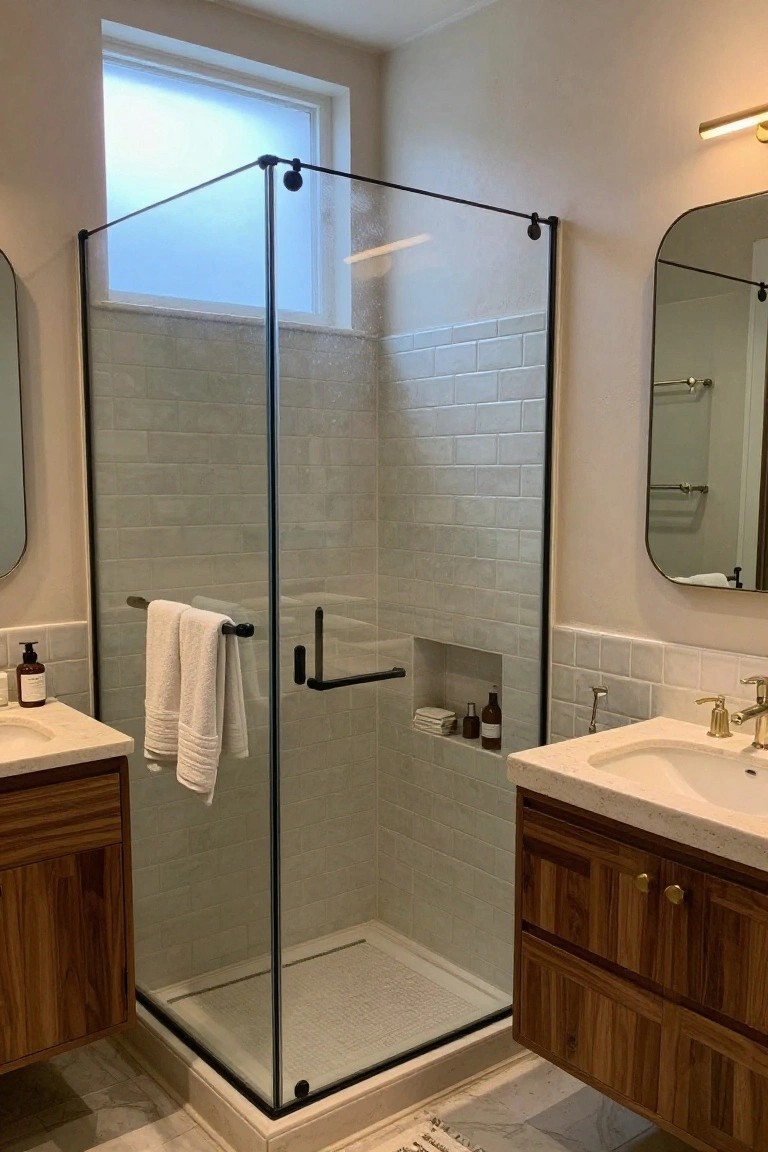
One simple way to get a transitional bathroom is to put warm wood vanities next to a frameless glass shower. The wood keeps some traditional weight in the room while the glass keeps the space feeling open and current.
This works best in average sized baths where you want the room to feel calm rather than busy. Keep the tile light and the hardware simple so the wood and glass can do the mixing without extra layers.
Blending Old And New Furniture In A Nursery
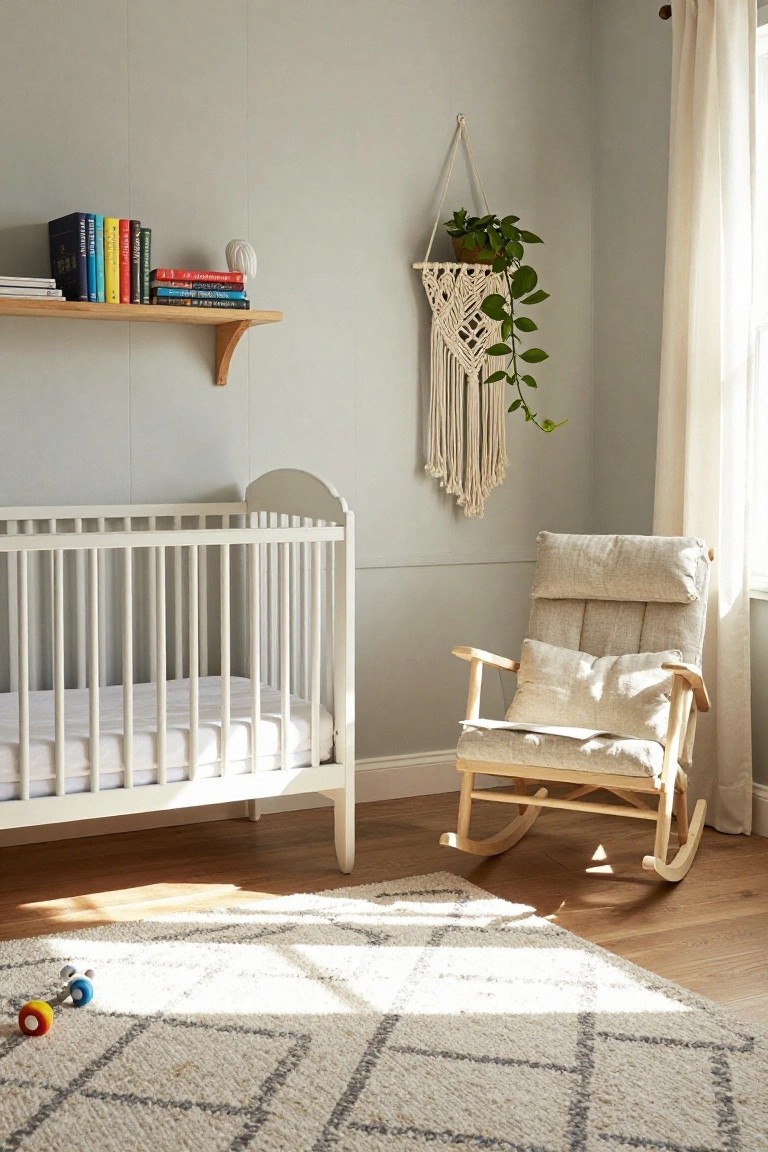
A white crib next to a wooden rocking chair gives the room a quiet mix of clean lines and familiar comfort. The neutral walls and simple fabrics let both pieces feel at home without one overpowering the other.
This approach works best in smaller homes or when you want the nursery to last beyond the baby years. Keep the colors soft and the wood tones similar so the older and newer pieces read as one calm space.
Built-In Cabinetry Around Modern Appliances
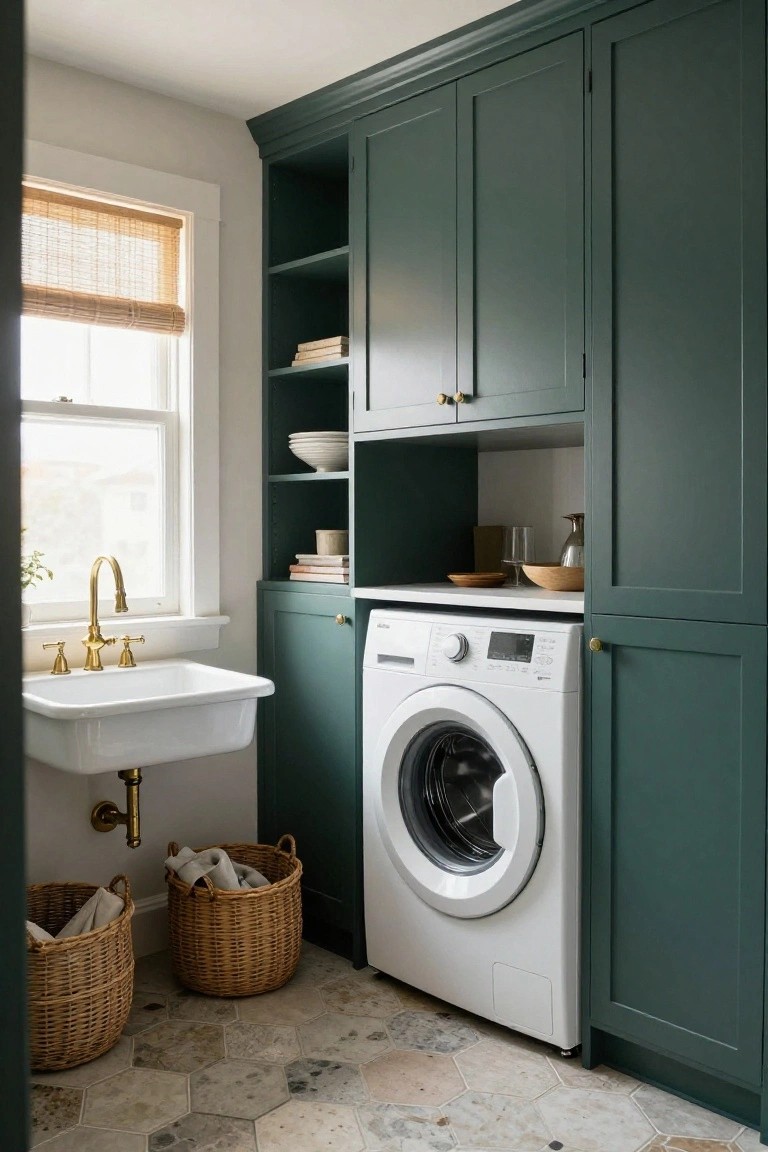
Hiding a washing machine inside cabinetry helps a utility space feel more like the rest of the house. The doors keep the room looking orderly while still giving easy access when needed.
This approach works best in homes that already mix older details with newer finishes. Just leave room for vents and service access so the setup stays practical over time.
Built-In Window Seating With Storage Below
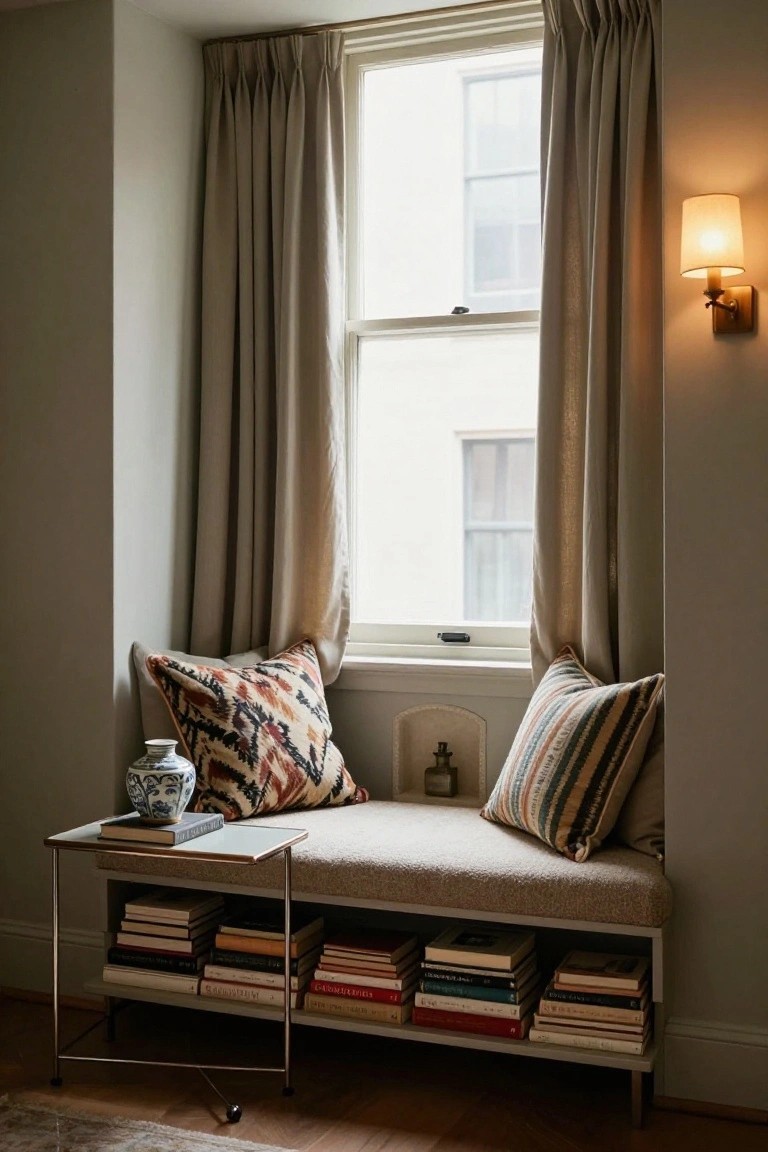
A window seat with open storage underneath adds a practical spot to sit while keeping books and small items within reach. It works especially well in rooms that already have deep window sills, since the bench can be built right into the existing trim.
This approach suits older homes that need extra function without losing their original character. Keep the cushions simple and let the books provide most of the color so the whole area stays light and easy to use.
Pair Vintage Storage With Bold Wall Colors
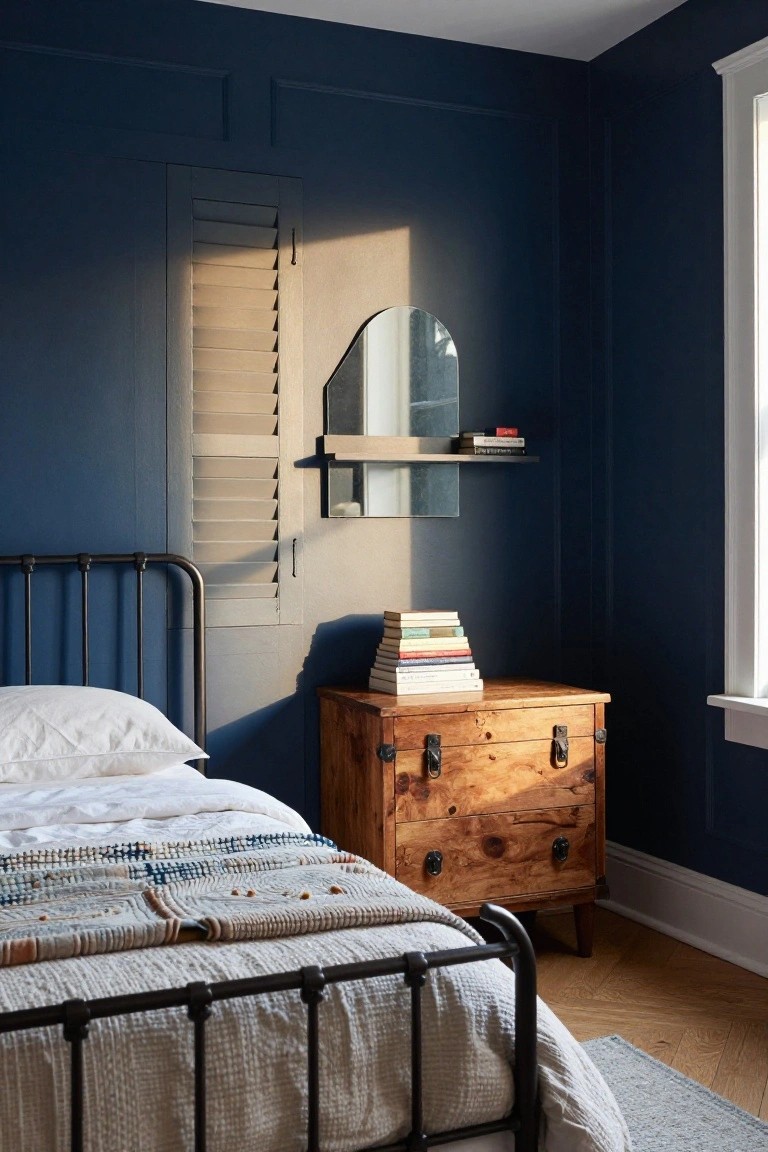
A wooden chest like this one brings instant age and texture into a room that might otherwise feel too crisp. The contrast with the deep navy walls keeps the space from looking flat while still letting the modern color choice lead.
It works especially well in bedrooms where you want storage without adding another nightstand. Look for a chest with simple hardware and a low profile so it does not fight the bed. This approach suits older homes getting updated paint or newer builds that need a little warmth.
Traditional Molding With Modern Vanities
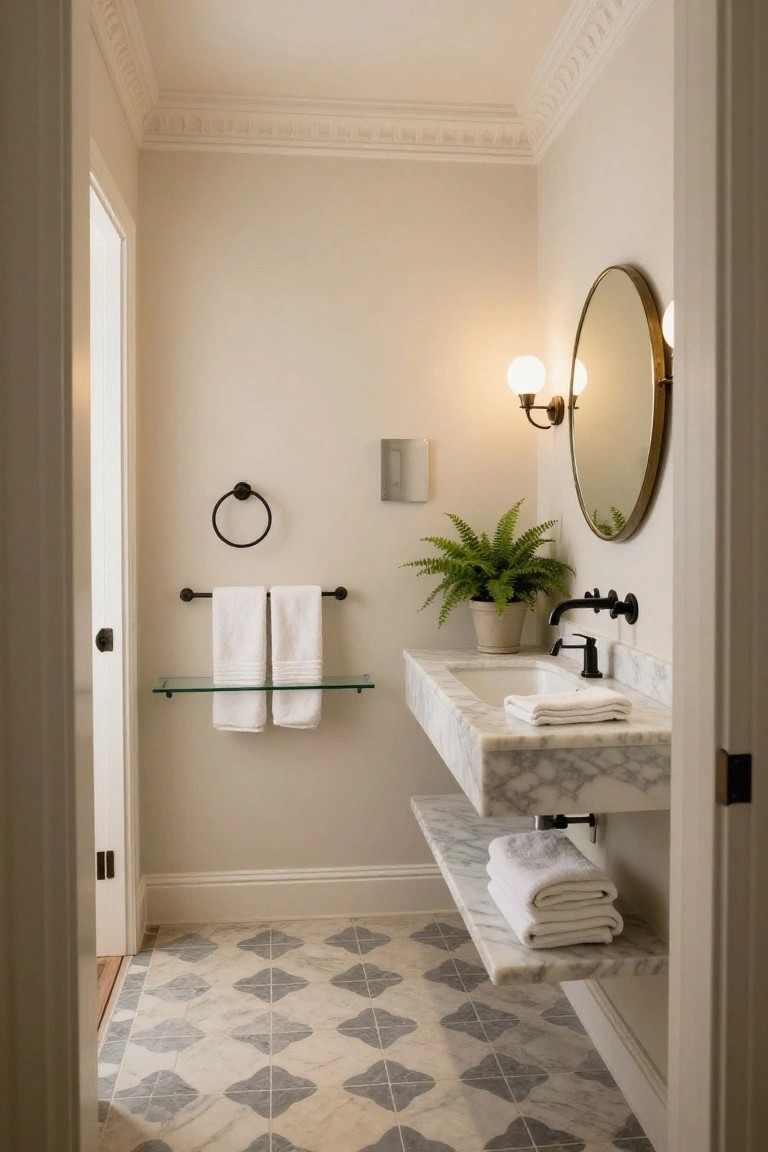
Many older homes already have nice crown molding and baseboards. Keeping those details while updating the fixtures and vanity gives the space character without making it feel stuck in the past. The contrast between the classic trim and a clean floating sink works well because it lets both styles support each other.
This approach suits narrow bathrooms or powder rooms where you want to keep some original architecture. Try matching the molding to the wall color so it blends in, then let the vanity and hardware carry the newer look. Just make sure the scale of the new pieces does not fight the trim.
Built-In Banquettes For Everyday Dining
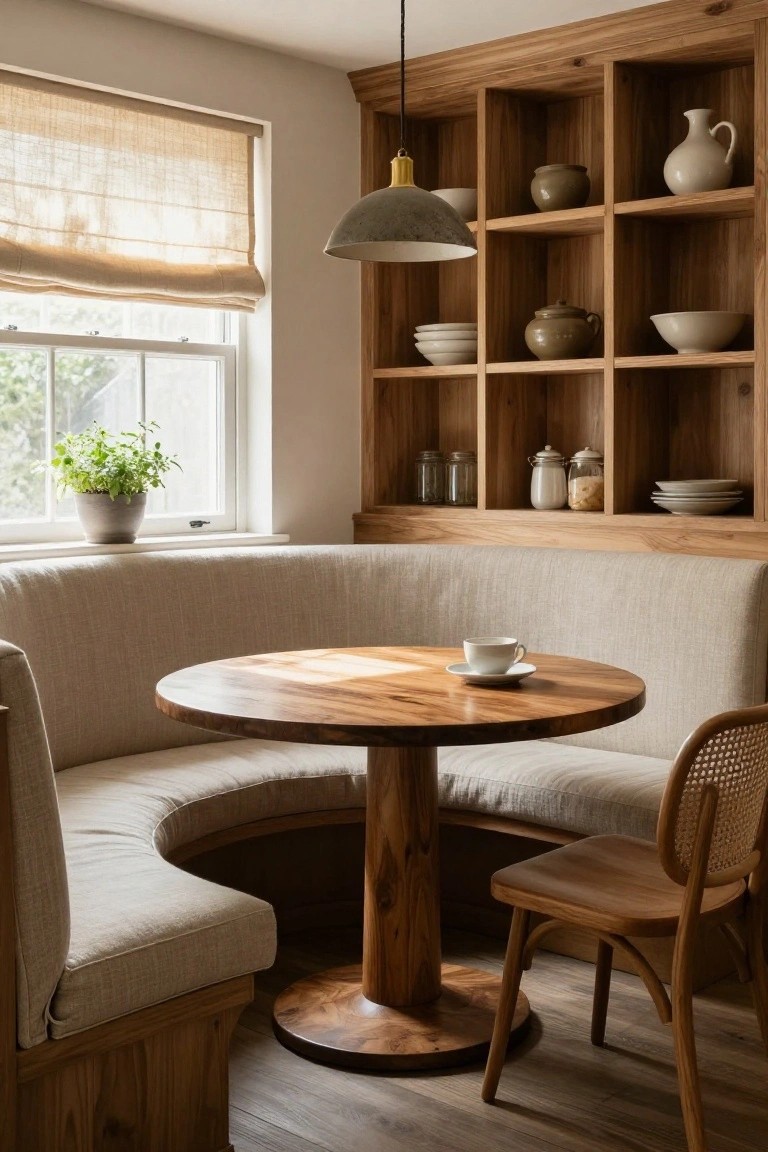
A built-in banquette can turn a corner into a real dining spot without taking up extra floor space. The curved shape here fits neatly around a round table, and the open shelves above keep dishes and serving pieces close at hand while adding warmth through wood and simple ceramics.
This setup works well in homes that want a mix of old and new without feeling overly styled. It suits smaller kitchens or breakfast areas where you need seating that stays practical day to day. Just keep the shelves lightly filled so the look stays calm.
Built-In Benches With Cubbies For Entry Storage
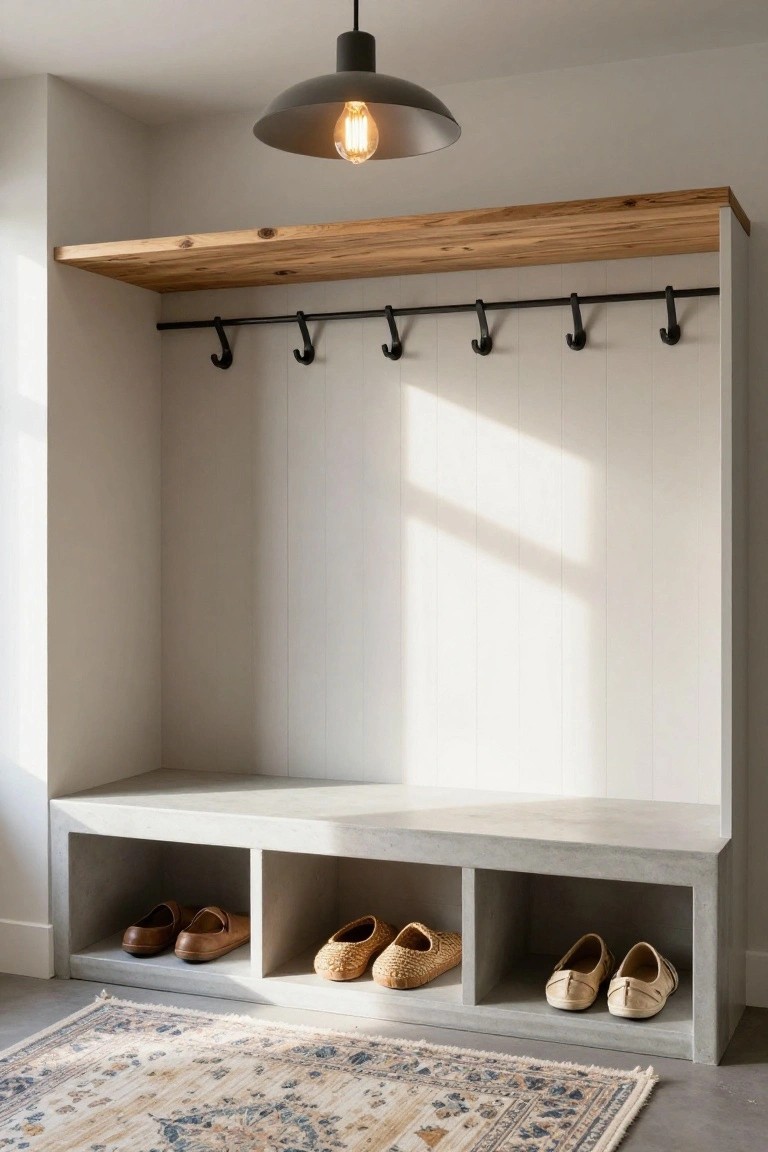
A built-in bench with open cubbies below gives an entryway a place to handle daily clutter without extra furniture. The concrete surface stays simple and durable while the compartments keep shoes and bags off the floor.
This works best in homes that need both function and a clean look. It suits transitional styles because the straight lines pair easily with wood accents or painted walls. Keep the hooks and shelf above at a height that feels natural for coats and bags.
Pair Wood With Stone In The Bath
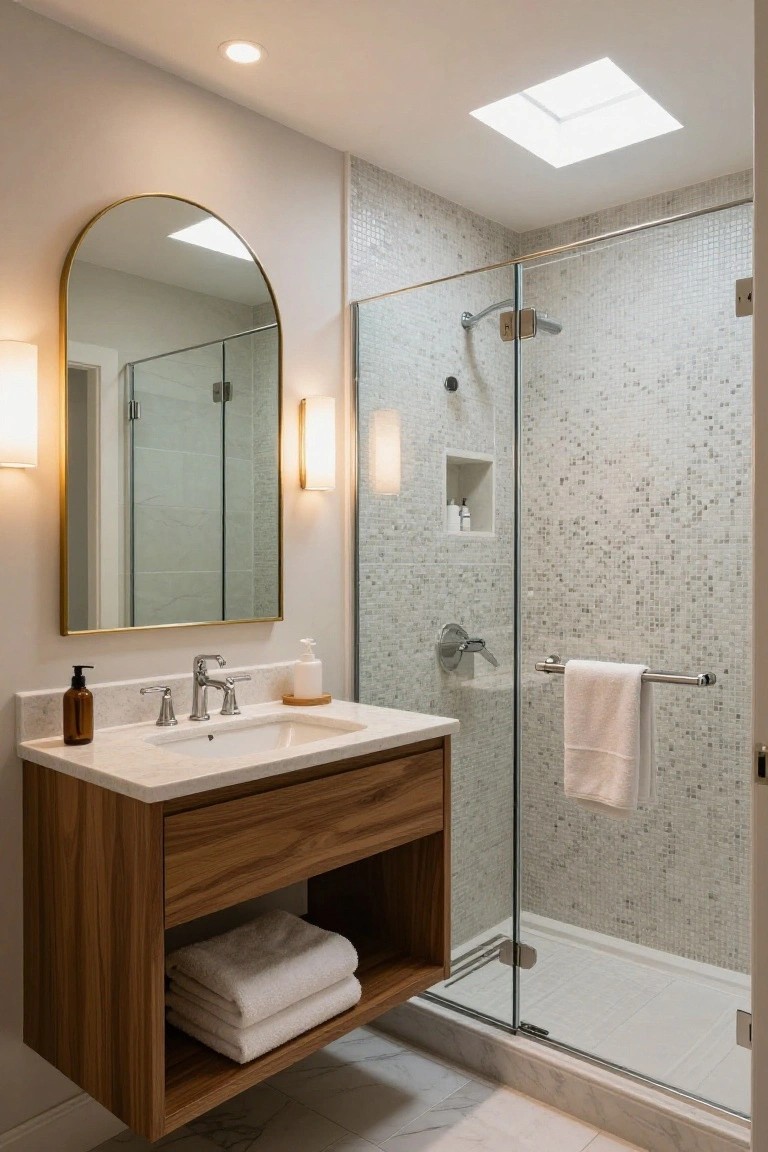
Many bathrooms feel more settled when wood cabinetry is paired with stone surfaces. The wood adds warmth and a bit of traditional weight while the stone keeps the look clean and current. This mix helps the space sit comfortably between old and new without leaning too far either way.
The approach works best in rooms that already have some classic lines, like an arched mirror or simple trim. Keep the stone light and the wood tone medium so the materials balance each other. Avoid overcrowding the surfaces so the contrast stays easy to read.
Work Around the Original Fireplace Mantel
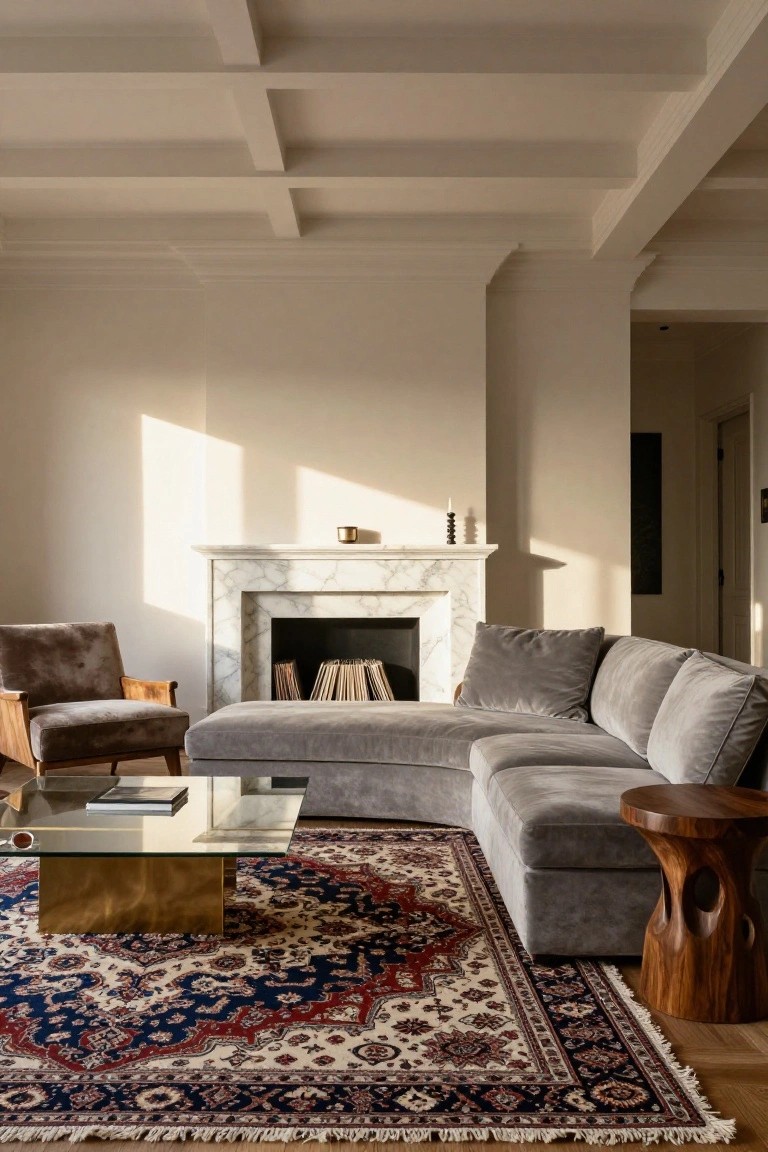
Many older homes already have a strong fireplace that can set the tone for the whole room. Keeping the marble mantel and surround gives you a solid traditional base without needing to add much else for character.
From there it is easier to bring in newer pieces like a low sectional and simple tables. The contrast between the old stone and the softer modern seating keeps the space from feeling too formal or too stark. Just make sure the new furniture stays low so the mantel remains the main focus.
Use A Slim Console In Hallways
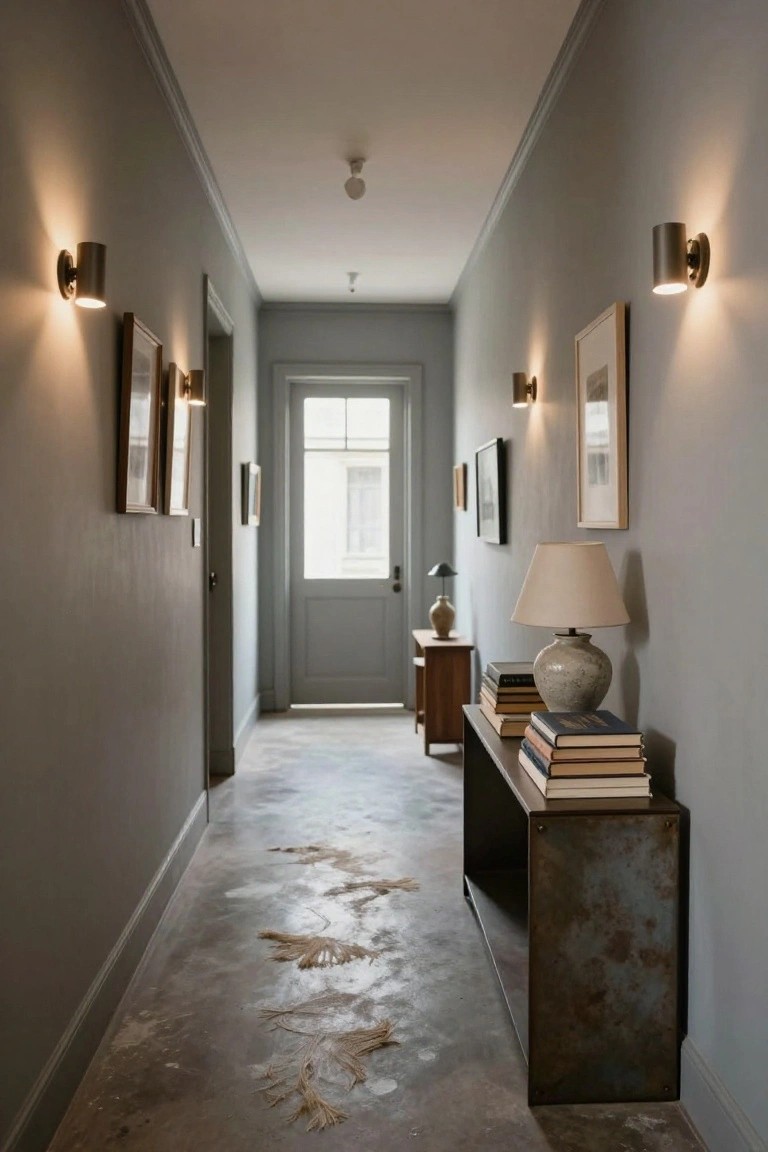
A narrow console gives a long hallway a spot to hold a few books or a lamp without crowding the walkway. It turns empty wall space into something practical while keeping the path clear for daily movement.
This setup suits older homes that need extra function without major changes. Choose a table with clean lines and keep the surface simple so the hallway still feels open and easy to pass through.
Built-In Shelves With A Rolling Ladder
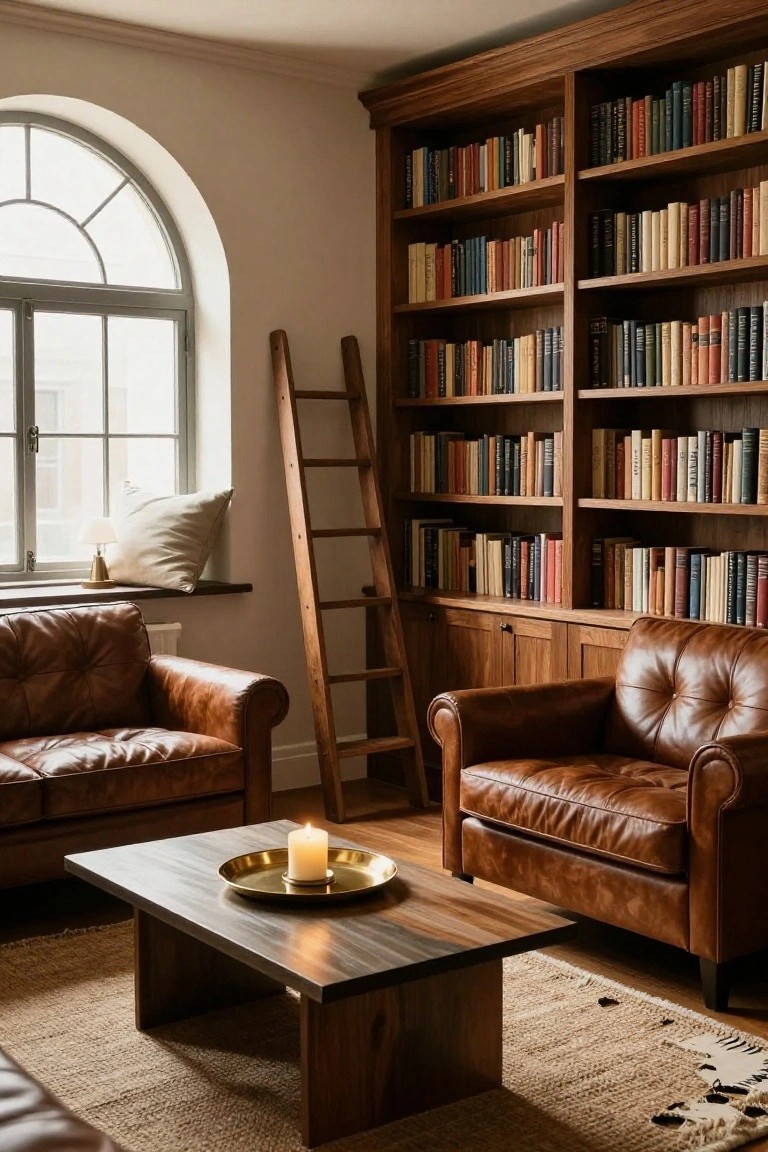
A rolling ladder on built-in shelves is a simple way to make tall storage feel useful instead of just decorative. It brings in that old library feel without making the room look heavy or overly formal.
This works best in living rooms or studies where you already have the wall space for full-height shelves. Keep the ladder wood tone close to the shelves so the whole setup reads as one piece rather than an added-on detail.
Built-Ins That Blend Wood And Painted Finishes
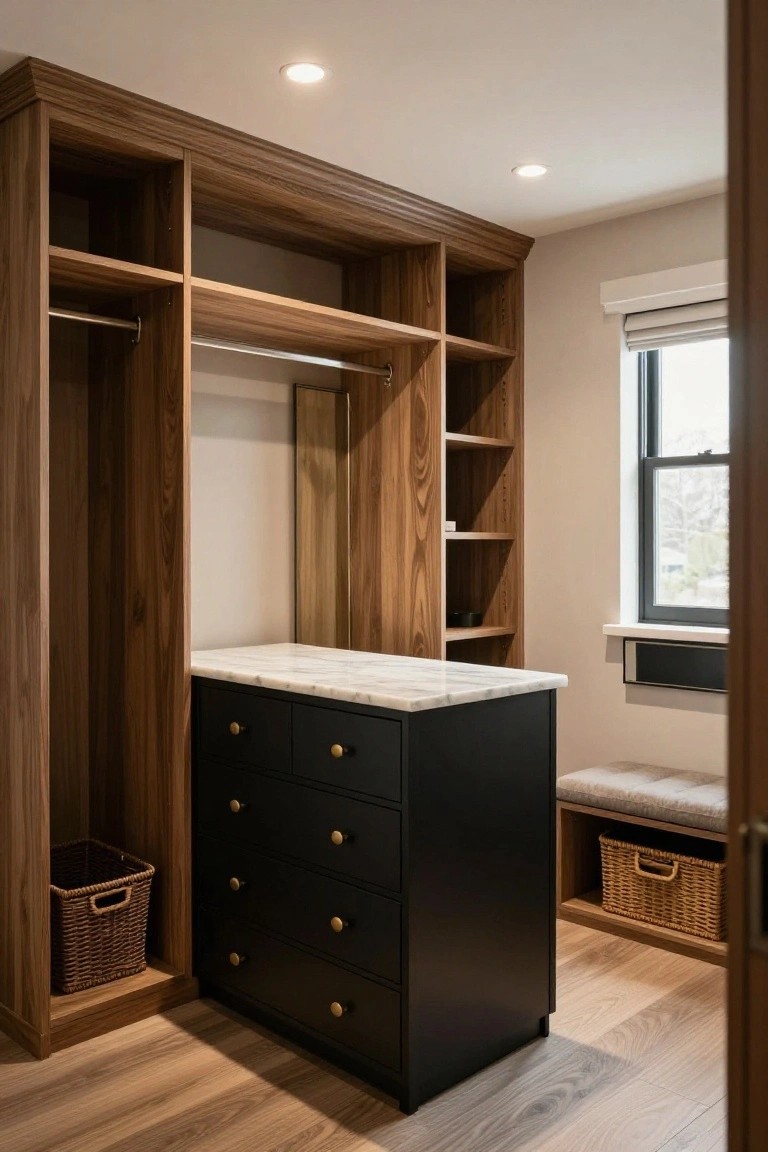
Built-in closet systems work well when they combine different finishes instead of sticking to one look. The wood open shelving keeps things warm while the black lower cabinets add a cleaner, more updated feel that fits transitional spaces.
This setup works best in larger bedrooms where you want plenty of storage without making the room feel heavy. Use the wood for upper and open areas, then bring in the painted sections lower down so the room stays balanced and easy to live with.
Blend Classic Seating With a Modern Table Base
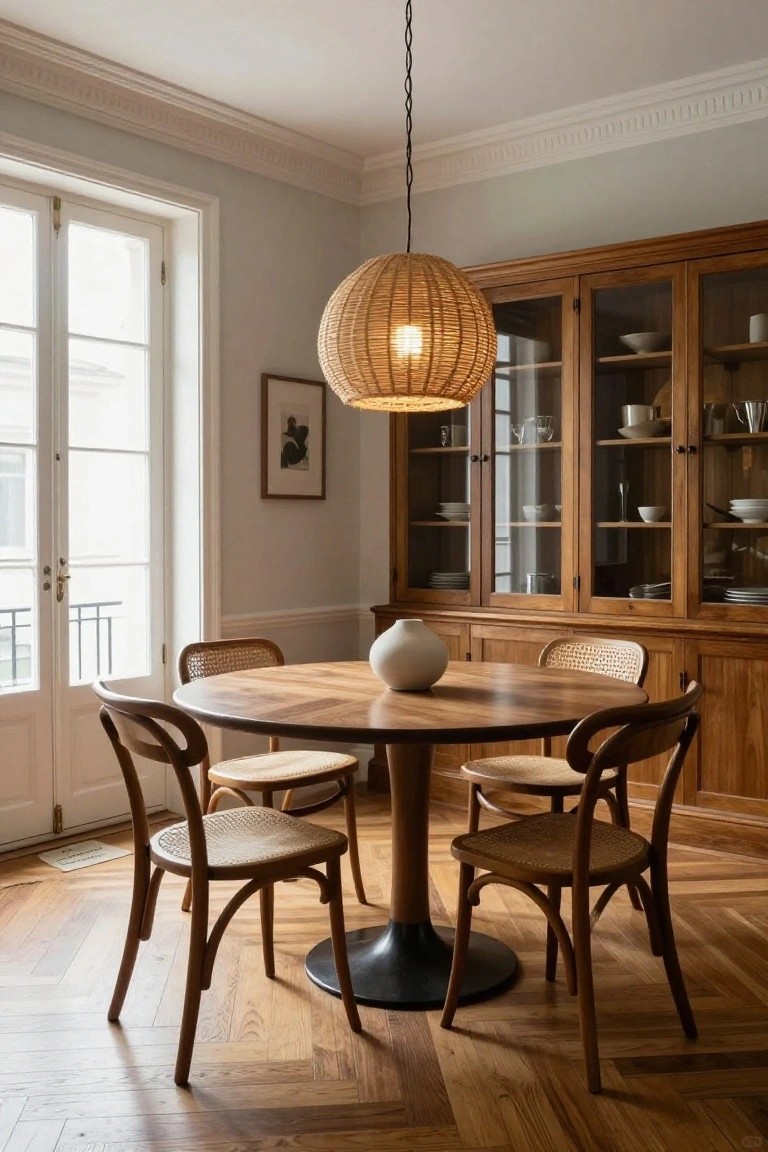
This mix keeps a dining room from feeling stuck in one era. The older chairs and wood storage bring warmth and history, while the simple pedestal base on the table adds a clean, current shape that stops the space from looking too heavy or traditional.
It works best in homes that already have some wood trim or older built-ins. Stick with just a few modern pieces so the classic elements still read as the main story.
Floating Vanities Add Storage Without Weighing Down A Room
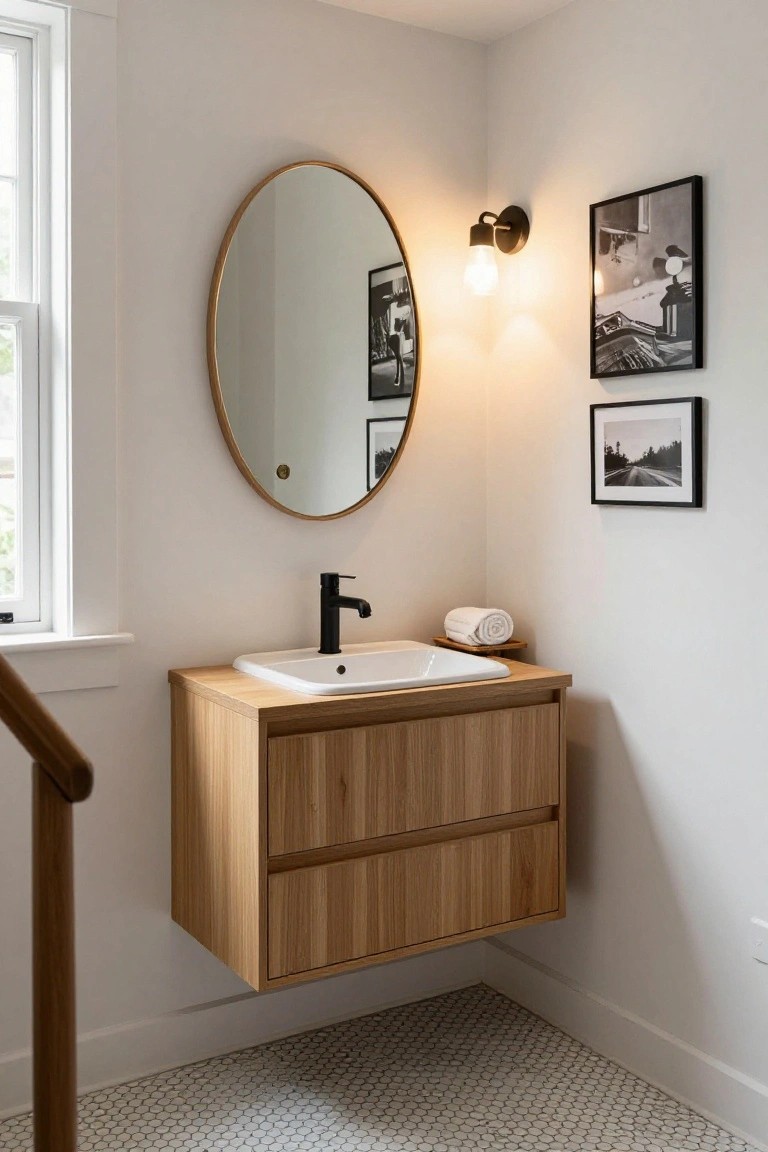
A floating vanity gives you real storage while keeping the floor clear underneath. That simple change makes the room feel larger and easier to clean, especially in smaller bathrooms where every inch matters.
This works best in spaces that already mix clean lines with warmer materials. Pair the vanity with a straightforward sink and basic hardware so the wood stays the focus rather than competing with too many details.
Arched Built-Ins For Storage And Style
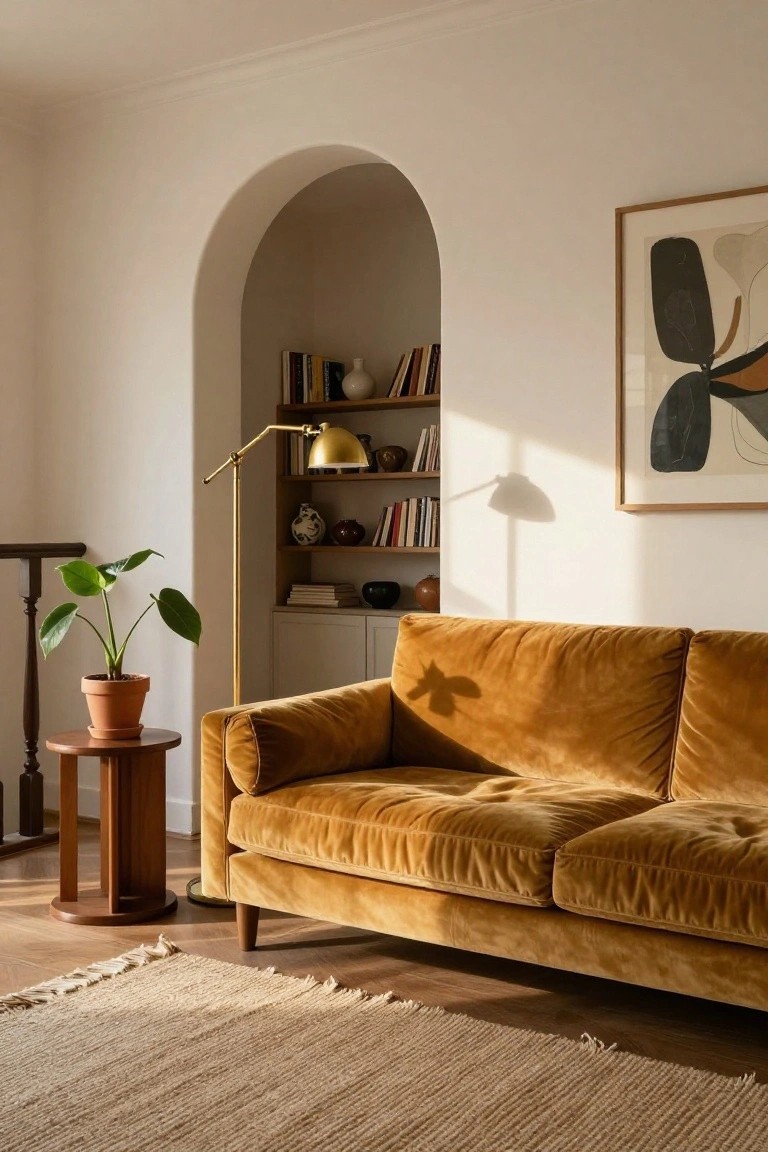
An arched alcove with shelves gives you a simple way to add storage while keeping the room from feeling too flat. The curve softens the look of the wall and creates a natural spot for books and a few smaller pieces without needing extra furniture.
This works best in living rooms that already have some older architectural details but need a place for newer pieces to sit comfortably. Keep the shelving light and avoid overfilling it so the arch stays the main feature.
Frequently Asked Questions
Q: How do I pick one old piece to anchor a mostly new room?
A: Choose the item with the strongest shape or wood tone first. Set it in the main seating area and build everything else around its scale. This keeps the mix from feeling scattered.
Q: My vintage rug looks out of place with a new sofa in a neutral color. What should I try?
A: Pull a single hue from the rug into a throw or two pillows on the sofa. The shared color ties them together fast. Skip extra patterns so the rug stays the star.
Q: Where do I begin if I want to blend eras without buying everything at once?
A: Swap just the lighting and one accent table first. These changes shift the feel of the room quicker than bigger furniture moves. Live with those updates before adding more.
