


Dark walls in a bedroom can shift the whole sense of scale once you add layers of light that actually reach the corners and surfaces.
I learned this after painting one room too dark and then realizing the single overhead fixture was not enough to keep it from feeling flat.
The right mix of sources makes the space feel grounded rather than heavy.
Small choices like where to place a floor lamp or how to angle a sconce often matter more than the color itself.
I keep a few of these ideas in mind whenever I think about changing a bedroom because they help the room feel finished instead of just painted.
Layered Lighting With Dark Walls

Dark walls give a bedroom real depth, but they need several light sources to keep the room from feeling heavy. A mix of overhead, wall, and bedside lighting lets you adjust the mood throughout the evening while keeping the space usable.
Place a pendant or ceiling light for general brightness, then add wall sconces and small lamps near the bed for softer evening light. This setup works best in rooms where you want a calm, enclosed feeling without losing practicality at night.
Layered Lighting for Brick and Concrete Bedrooms

Dark walls give a bedroom real depth, but they need more than one light source to keep the room comfortable. A single overhead light often falls short, so adding pendants, bedside lamps, and any natural light from windows helps the space feel balanced instead of closed in.
This setup works especially well in lofts or homes with brick or concrete walls. Start with a couple of hanging lights over the bed and add smaller lamps on nightstands so you can adjust the mood throughout the evening. Too many dark surfaces without enough light layers can make the room feel heavy, so test the placement before committing to the final fixtures.
Deep Green Walls With Multi-Level Lighting

Dark walls give a bedroom real weight and calm, but they need several light sources to keep the space from feeling closed in. The deep green here works because the lighting comes from different heights and angles, so the room stays usable at any time of day.
This idea suits bedrooms that already feel a bit small or get limited daylight. Place one light near the bed, another on a desk or dresser, and something overhead so you can shift the mood without turning everything on at once.
Bedside and Accent Lighting for Dark Walls

Dark walls give a bedroom real depth, but they need more than one light source to feel inviting instead of heavy. Adding lights at different heights and angles helps the space stay cozy while keeping the rich color in focus.
A bedside lamp handles reading and creates a soft pool of light, while a small accent light in a niche or on a shelf adds another layer without brightening the whole room. This approach works best in bedrooms that already have some architectural interest, like built-in shelves or alcoves, and it suits homes where you want the walls to feel enveloping rather than overwhelming.
Cove Lighting for a Soft Moody Glow

Dark walls can make a bedroom feel calm and enclosed, but they need the right lighting to avoid looking flat or too heavy. The cove lighting tucked along the top edge of the wall adds a soft glow that keeps the space from closing in while still holding onto that moody tone.
This approach works best in rooms where you already have some natural light during the day. Add one or two smaller sources like a bedside lamp so you can adjust the mood at night without turning on anything harsh overhead. It suits simple bedrooms with plain walls and minimal furniture.
Dark Paneling With Warm Floor Lighting
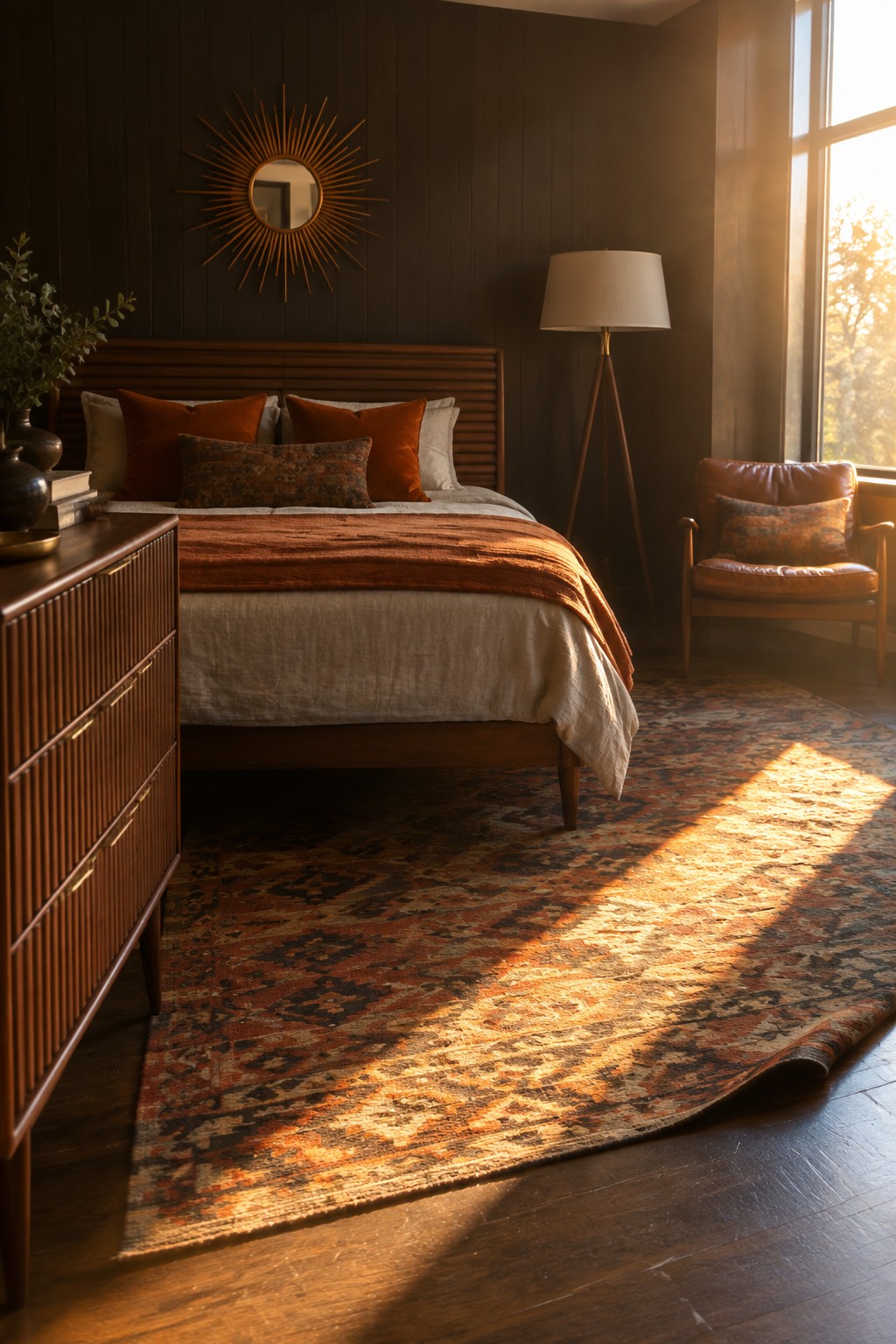
Dark walls give a bedroom a grounded, enclosed feeling that works well when paired with warm lighting from more than one source. The deep paneling here holds the light in a way that creates soft contrast instead of flat darkness, especially when sunlight hits the floor and a floor lamp fills the corners later in the day.
This setup suits bedrooms that already have decent natural light during the day. Keep the lamp simple and place it where it can bounce light back onto the walls without competing with the window. It helps the room feel calm at night while still showing texture on the dark surfaces.
Layered Lighting Over Dark Walls

Dark walls give a bedroom real depth, but they only work when the lighting is planned in layers. One overhead source is rarely enough. Adding sconces at eye level and a softer ceiling fixture keeps the room from feeling closed in while still holding onto that moody tone.
This approach suits older homes or any bedroom with limited natural light. Place the sconces where you actually read or get dressed, and let the window handle daytime brightness. The key is having at least three light sources so the dark paint never turns the space gloomy.
Eye-Level Lighting for Dark Bedrooms

Dark walls give a bedroom that enclosed, restful feeling many people want at night. Layering the lighting keeps the space from going flat or gloomy, and it lets you adjust the mood as the evening goes on.
This works especially well in bedrooms that already get decent daylight during the day. Place one light source at eye level on each side of the bed and add a softer glow from a bedside lamp so the room feels balanced rather than dim.
Dark Walls Need Layered Lighting

Dark walls turn a bedroom into a quieter space, but they also swallow light fast. Layering a few light sources at different heights and angles keeps the room from feeling closed in while still holding onto that moody feel. Warm bulbs help a lot here since they bounce off the darker surfaces without making everything look harsh.
This works best in rooms that already get some daylight. Add a taller lamp beside the bed, a smaller one on a low table, and maybe a string of small bulbs or a sconce on the opposite wall. Skip anything too bright or cool toned, and let the mix of shadows and glow do the rest of the work.
Simple Floor Lighting for Naturally Bright Rooms

Dark walls can make a bedroom feel more restful when the light sources stay simple. A high window lets daylight cut across the room during the day, while one floor lamp handles the evening without filling every corner. The contrast keeps the space from feeling flat even though the walls are deep in tone.
This works best in bedrooms that already get some natural light through a well placed window. Use just a couple of light sources and let the shadows stay. Too many lamps or bright overhead fixtures can undo the calm the dark walls are meant to create.
Woven Fixtures and Window Light

Dark walls give a bedroom a quiet, enclosed feeling that works well for rest. The color absorbs light and softens the edges of the room, so the space feels calmer at night and still comfortable during the day.
Layering helps keep the mood from turning heavy. A woven overhead fixture, a low table lamp, and light from the window each add a different level of brightness. This mix works in most bedrooms that already have simple furniture and neutral bedding.
Pendant Lighting for Small Moody Bedrooms

Dark walls can make a bedroom feel calm and enclosed, but they need the right lighting to keep the space from turning gloomy. Hanging several pendant lights at different heights gives you that soft, overlapping glow that feels warm without filling the whole room with bright light.
This setup works best in smaller bedrooms or attic rooms where you already want the walls to wrap around you. Place the lights over the bed area and keep one or two other sources nearby for reading or getting dressed.
Navy Wallpaper With Desk and Window Lighting

Dark walls can make a bedroom feel more restful and enclosed, especially when you add light from more than one source. The layered approach keeps the space from going flat or too heavy at night.
A small lamp on the desk and the light coming in from the window work together to warm up the navy wallpaper and keep the room usable after dark. This setup works well in smaller bedrooms or for anyone who wants a calm space without relying on a single overhead light.
Hang Sheer Drapes on a Canopy Bed

One simple way to handle dark walls in a bedroom is to add sheer drapes to a canopy bed. The fabric catches light from lamps on either side and softens it, so the room stays moody without turning completely black at night.
This works best in smaller spaces where you want some separation around the bed without blocking every bit of glow. Keep the curtains light enough to filter the light rather than stop it, and use two or three lamps at different heights so the layers build gradually.
Sconces and Natural Light Against Dark Walls

Dark walls can make a bedroom feel smaller if the lighting is not handled right. Here the sconces on either side of the bed and the light coming through the tall window keep the room from going flat. The warm glow from the fixtures plays against the deep wall color and stops it from feeling heavy.
This approach works best in rooms that already get some natural light during the day. Add a couple of wall sconces or a low table lamp and keep the fixtures simple so the dark paint stays the main feature. It suits older homes or any bedroom where you want a quiet, closed-in feel without making the space hard to use.
Layered Lighting Balances Dark Bedroom Walls

Dark walls give a bedroom real depth, but they can start to feel heavy without enough light layered in. Placing lamps at different heights alongside a fireplace lets the glow move around the room instead of sitting flat in one spot.
This works especially well in spaces used mostly at night. Keep the main light sources low and warm, and let the fire add a bit of flicker. It suits homes where the bedroom already has a solid focal point like a hearth, and it helps the dark paint feel more inviting than stark.
Woven Ceiling Fixture With Skylight

Dark walls give a bedroom a settled, quiet feel that lighter colors rarely match. The trick is adding light from more than one direction so the space stays usable and does not close in.
A woven ceiling fixture and a simple wall sconce handle most of the work here, while the skylight brings in a changing wash of daylight. This mix works especially well in smaller rooms or those with few windows, since it keeps the dark color from feeling flat at night.
Woven Pendants Over Navy Bedroom Walls

Dark walls can make a bedroom feel grounded and restful, but they need several light sources to keep the space from closing in. The woven pendants here hang at different heights and cast a warm glow across the navy paint, while the window brings in daylight that shifts through the day.
This works best in rooms with at least one large window and wood furniture that reflects a bit of light back into the space. Keep the fixtures simple and vary their placement so the room stays usable at night without extra lamps cluttering the floor.
Floor Lamp for Filling Lighting Gaps

Dark walls can make a bedroom feel grounded and restful when the lighting is handled with care. A single overhead fixture often falls short in these spaces, so adding a tall floor lamp near the bed helps fill in the gaps and keeps the room from going flat at night.
This setup works best in bedrooms that already get some natural light during the day. Keep the lamp simple and adjustable so you can shift the mood without adding clutter.
Low Sconces and Candlelight for a Private Bedroom

Dark walls can make a bedroom feel more private and restful, but only if the lighting is handled right. Layering a few different sources keeps the room from feeling flat or too heavy while still holding the mood.
Wall scones placed low and a few candles on surfaces nearby tend to work better than one overhead light. This setup suits older homes or any bedroom where you want the space to feel separate from the rest of the house at night.
Built-In Window Seats For Moody Bedrooms

A built-in window seat makes good use of an otherwise awkward spot under a window. With dark walls, the whole area feels more enclosed and restful, turning what could be dead space into a place to sit or read without adding extra furniture.
This idea works best in smaller bedrooms or rooms with sloped ceilings where floor space is limited. Add a simple mattress or cushion, then layer a few pillows and a throw. Side lamps help with evening use and keep the lighting soft and low. It suits older homes or attic rooms that already have interesting window placements.
String Lights and Table Lamps for Dark Bedrooms

Dark walls can make a bedroom feel more enclosed and restful, especially when paired with several light sources at different heights. The combination keeps the room from going flat while still holding onto that deeper mood.
String lights run along the upper wall and a few table lamps placed around the room give enough glow for reading or winding down. This works best in smaller bedrooms or older homes where you want intimacy over brightness.
Dark Walls Make Bedrooms Feel More Private

Dark walls change how a bedroom feels right away. Instead of trying to make the room bright and open, they pull everything in and create a quiet, closed-off space that suits sleeping. The color absorbs most of the light, so the room stays calmer even during the day.
This approach works best in rooms that already feel a little small or that you want to keep separate from the rest of the house. Pair the dark paint with a few low sources of light like wall sconces rather than one bright overhead fixture, and use heavier curtains if the room gets strong daylight. It suits older homes or any bedroom where you want less visual noise.
Frequently Asked Questions
Q: Should I paint all four walls dark or just the one behind the bed? A: Paint all four if your room gets decent light during the day. This creates a true cocoon effect without patchy contrast. Stick to one wall only if the space feels tiny already.
Q: What if my layered lights still leave corners looking gloomy? A: Add a small uplight behind a plant or chair. It fills shadows without killing the mood. One extra source often does the trick.
Q: How do I choose curtains that match dark walls without making everything matchy? A: Go for textured fabrics in similar tones like charcoal or deep green. They add depth while letting you play with patterns on pillows instead.
