

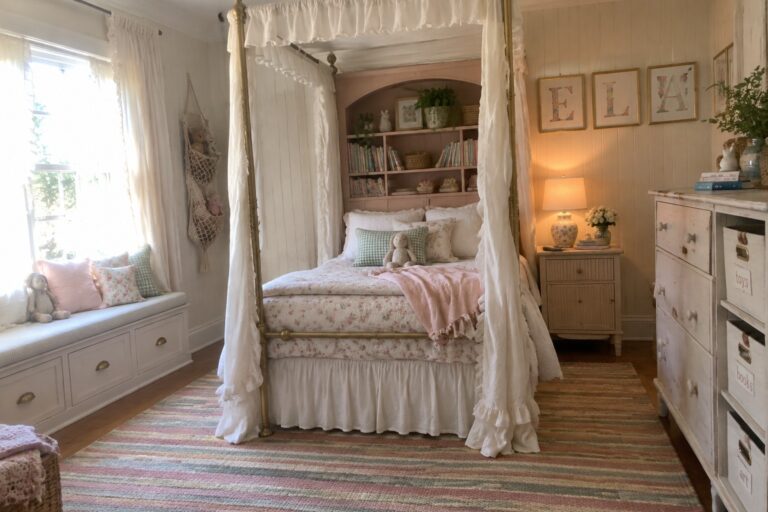
When I walk into a bedroom that is meant for a child, the first thing I notice is whether the bed and storage actually leave room to move around without bumping into things.
Canopy beds can soften the corners and create a quiet spot for reading, yet they only feel right when the frame does not block light from the window or make the ceiling seem lower.
Storage that is built to match the bed often keeps toys and clothes from piling up on the floor, which matters more on busy mornings than any pretty detail.
I usually test one storage idea in our own room before deciding if it will hold up to daily use.
The setups that combine both elements without crowding the space are the ones that end up staying once the initial excitement fades.
Built In Shelving Above a Canopy Bed
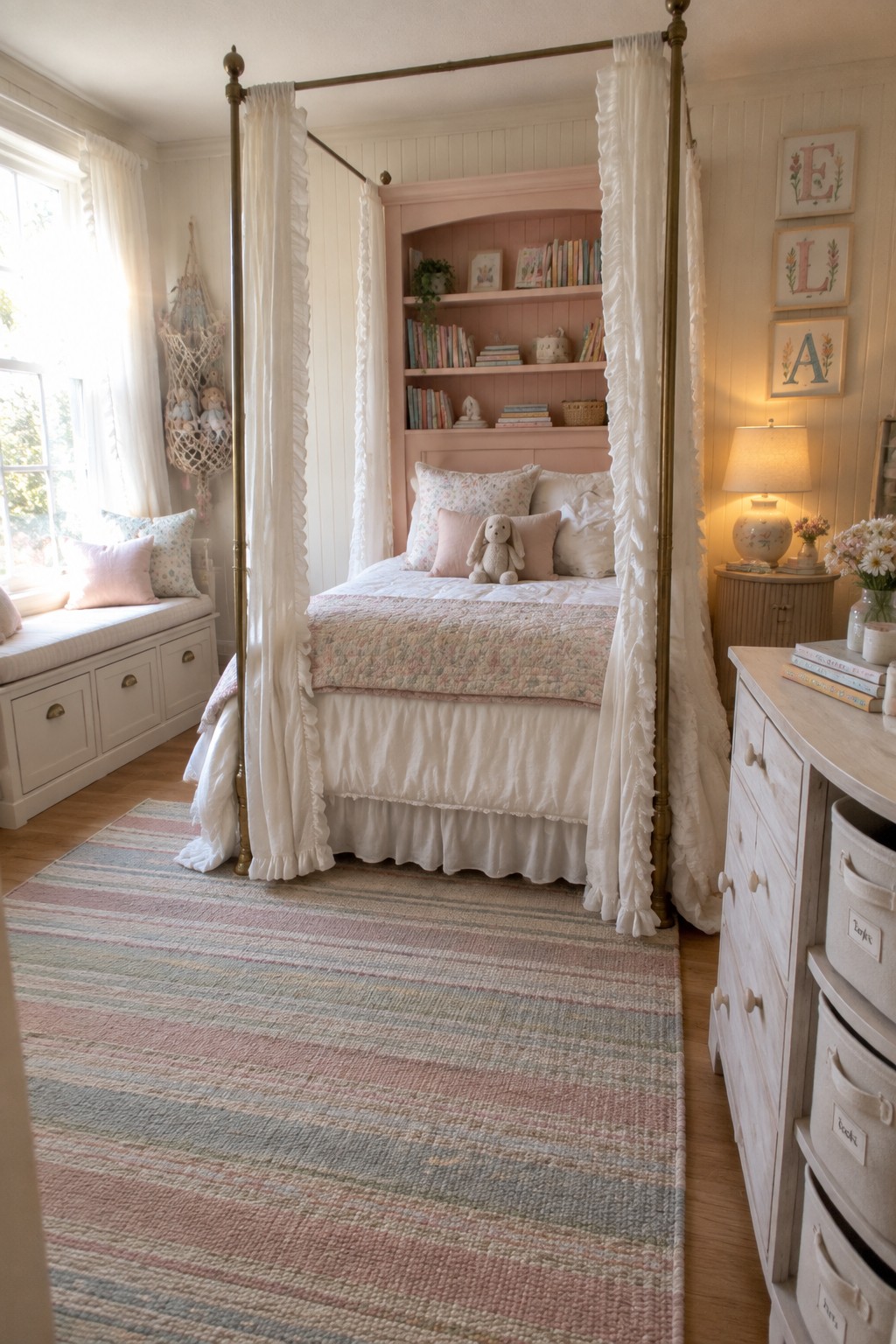
Placing built in shelves right behind a canopy bed gives you display space without eating into floor room. The bed frame helps define the area and keeps the look soft rather than busy. It works especially well when the shelves are painted to match or contrast gently with the bedding.
This approach suits smaller bedrooms where storage needs to stay out of the way. Keep the shelves shallow and within easy reach so kids can actually use them. It also pairs nicely with simple personalized touches like name art or labeled bins elsewhere in the room.
Labeled Baskets Make Storage Feel Personal
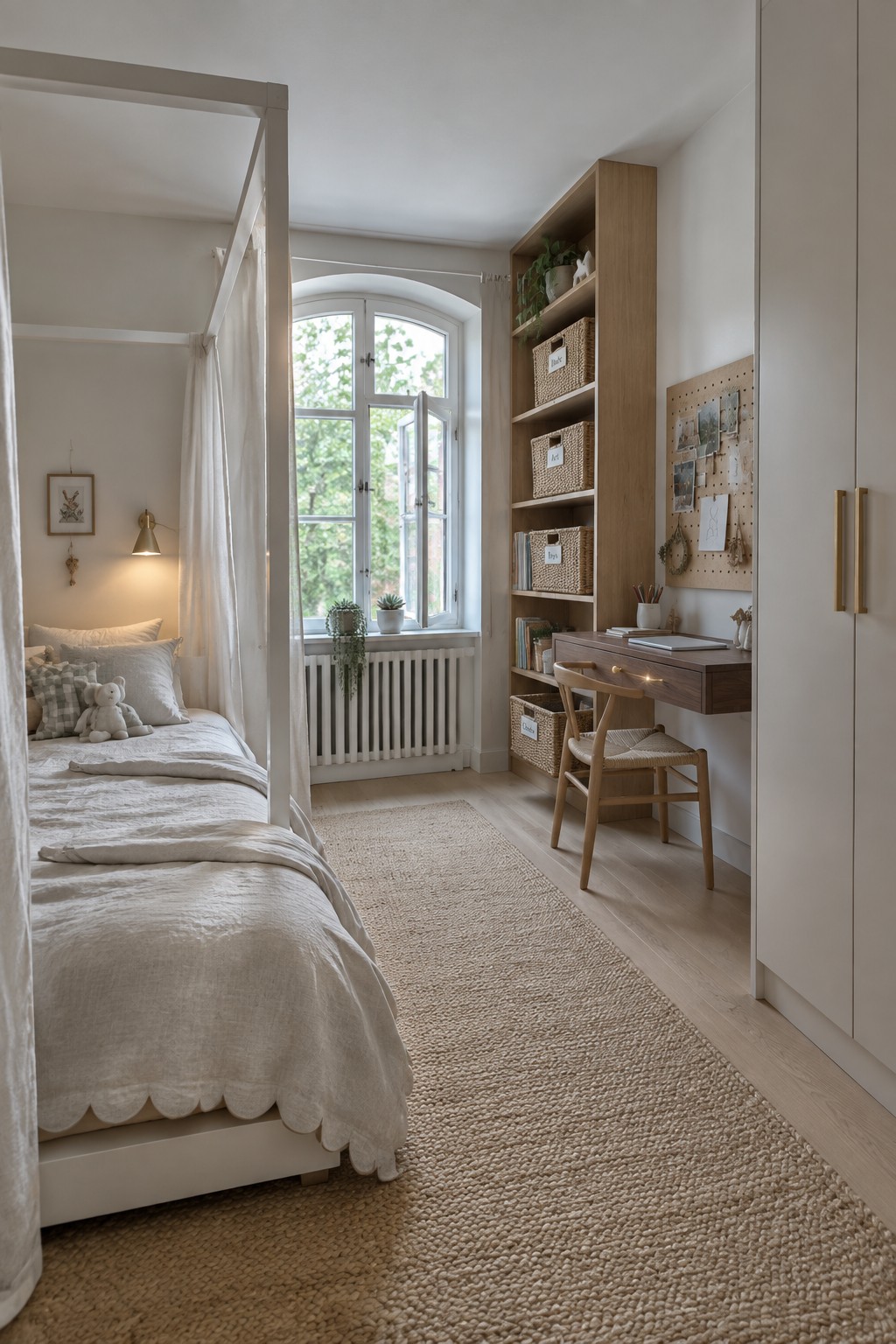
A canopy bed already brings softness to a room, so the storage around it needs to stay light and easy to use. Open shelves with a few labeled baskets let kids see where things belong and reach them without help, which keeps the space from feeling cluttered.
This works best in smaller bedrooms where closed cabinets can make the room feel tight. Keep the shelves at child height and choose simple woven baskets so the labels stay visible and the whole setup can change as interests shift.
Labeled Wooden Crates For Personalized Storage

Labeled crates give a bedroom storage that feels useful and personal at the same time. Instead of hiding everything behind doors, the simple labels let a child see exactly where books, art supplies, or games belong, which keeps the room tidier without much effort.
These crates work best tucked under a window seat or along a low wall in smaller rooms. They suit homes that already lean toward cottage or collected styles, and they can be swapped or repainted when interests change.
Monogrammed Storage Adds a Personal Touch

Many girls bedrooms feel more finished when storage pieces carry a small custom detail like monograms on the drawers. It turns an everyday dresser into something that belongs only to that room and that child.
This works best in spaces that already use soft colors and layered textures. A floating unit with initials keeps the look neat while giving the room a sense of ownership without extra decoration.
Built-In Shelves With Labeled Baskets

Built-in shelves work well in a girl’s bedroom because they turn storage into part of the room instead of something added later. Labeled baskets make it simple for kids to sort their own things and keep the space from feeling messy. The labels also add a personal touch that grows with them.
This setup fits best in rooms that already have some built-in character like a canopy bed or window seat. Place the shelves along one wall and pick baskets in a few sizes so books, toys, and keepsakes all have a spot. Swap the labels when interests change rather than replacing the whole system.
Personalized Names On Storage Pieces
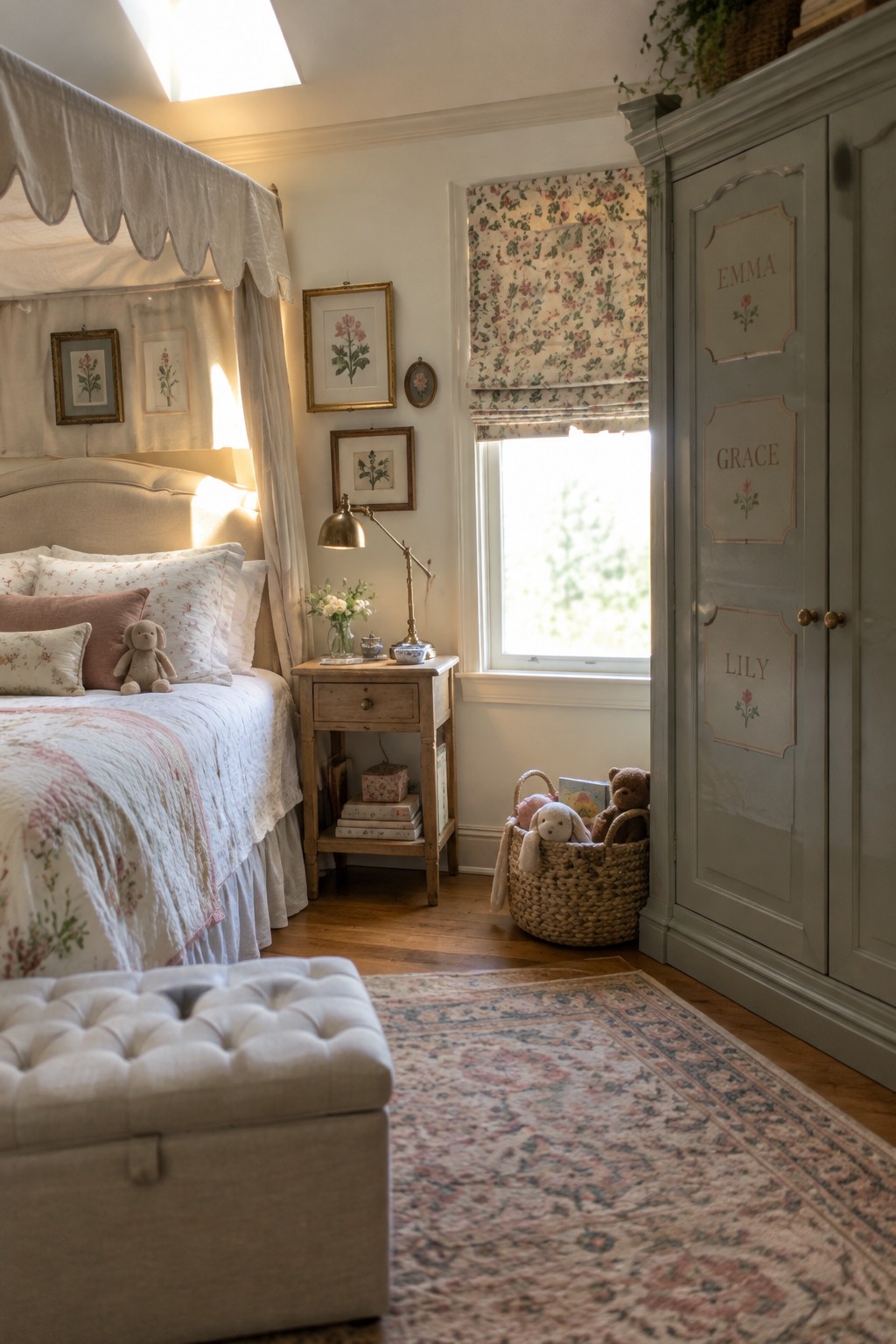
One simple way to make storage feel special in a girls bedroom is to add names right onto the furniture. The wardrobe in this room shows how three separate panels can each carry a different name, giving each child her own spot without needing extra pieces.
This works best in shared rooms or when furniture needs to last through different ages. A local painter or furniture maker can add the lettering in a style that matches the piece, and it keeps things organized while still feeling personal.
Storage Benches at the Foot of Canopy Beds
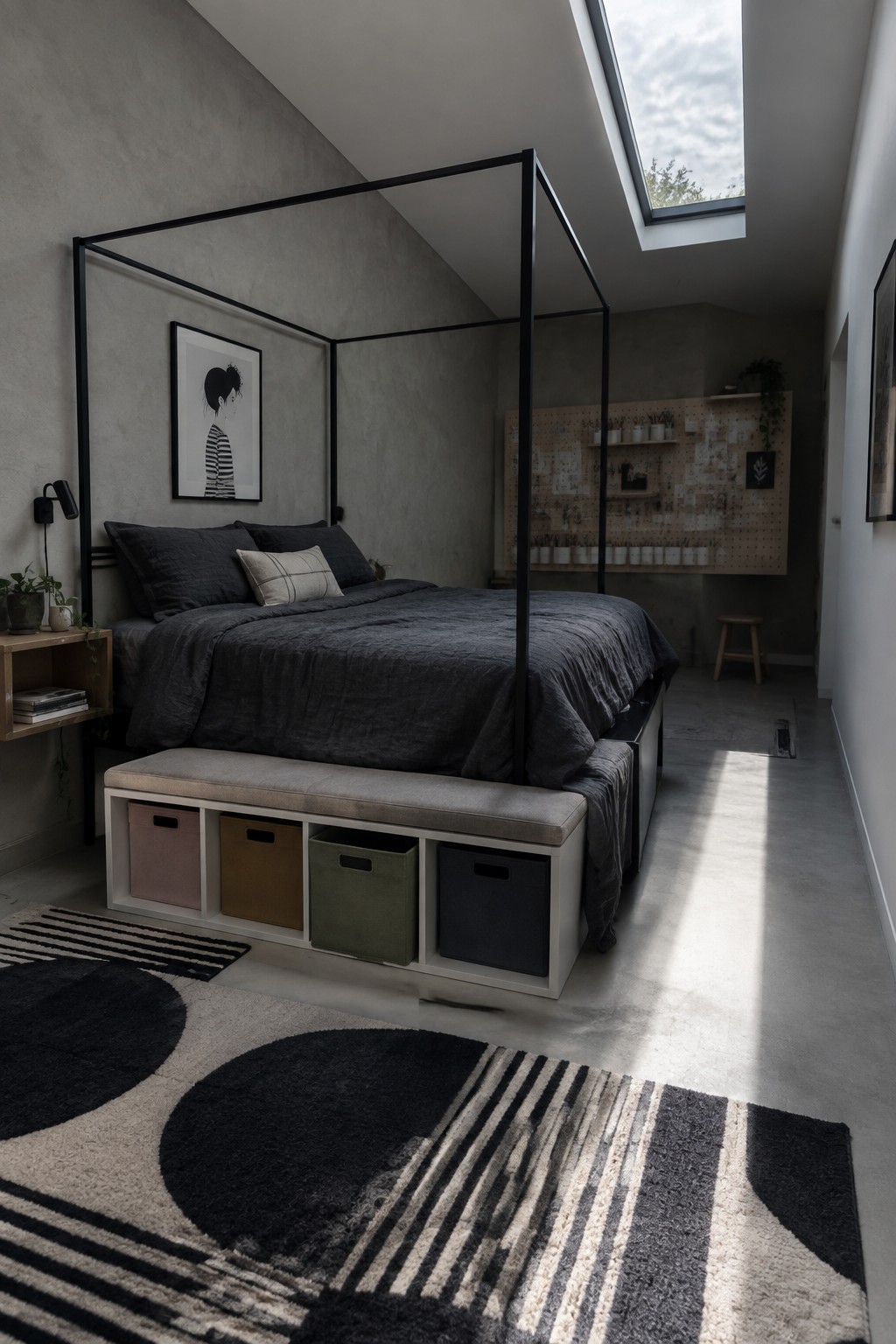
A storage bench at the end of a canopy bed gives the room a clear spot for everyday items without adding extra furniture. The bins slide out easily, so kids can grab what they need and put things back without help.
This works best in smaller bedrooms where floor space stays tight. Swap the bin colors or contents as tastes change, and the whole setup stays useful for years instead of feeling fixed in one style.
Trunk Storage at the Foot of the Bed

Placing a large wooden trunk at the end of a canopy bed gives a girls room a practical spot for blankets, clothes, or toys that need to stay close at hand. It keeps things tidy without adding another dresser or bin that might crowd the space.
This works best in rooms that already have a few wood tones, since the trunk can match the bed frame or floor. Keep the lid open during the day if kids need to reach inside often, and choose one with simple hardware so it does not feel too heavy for the rest of the room.
Labeled Cubbies Keep Storage Organized
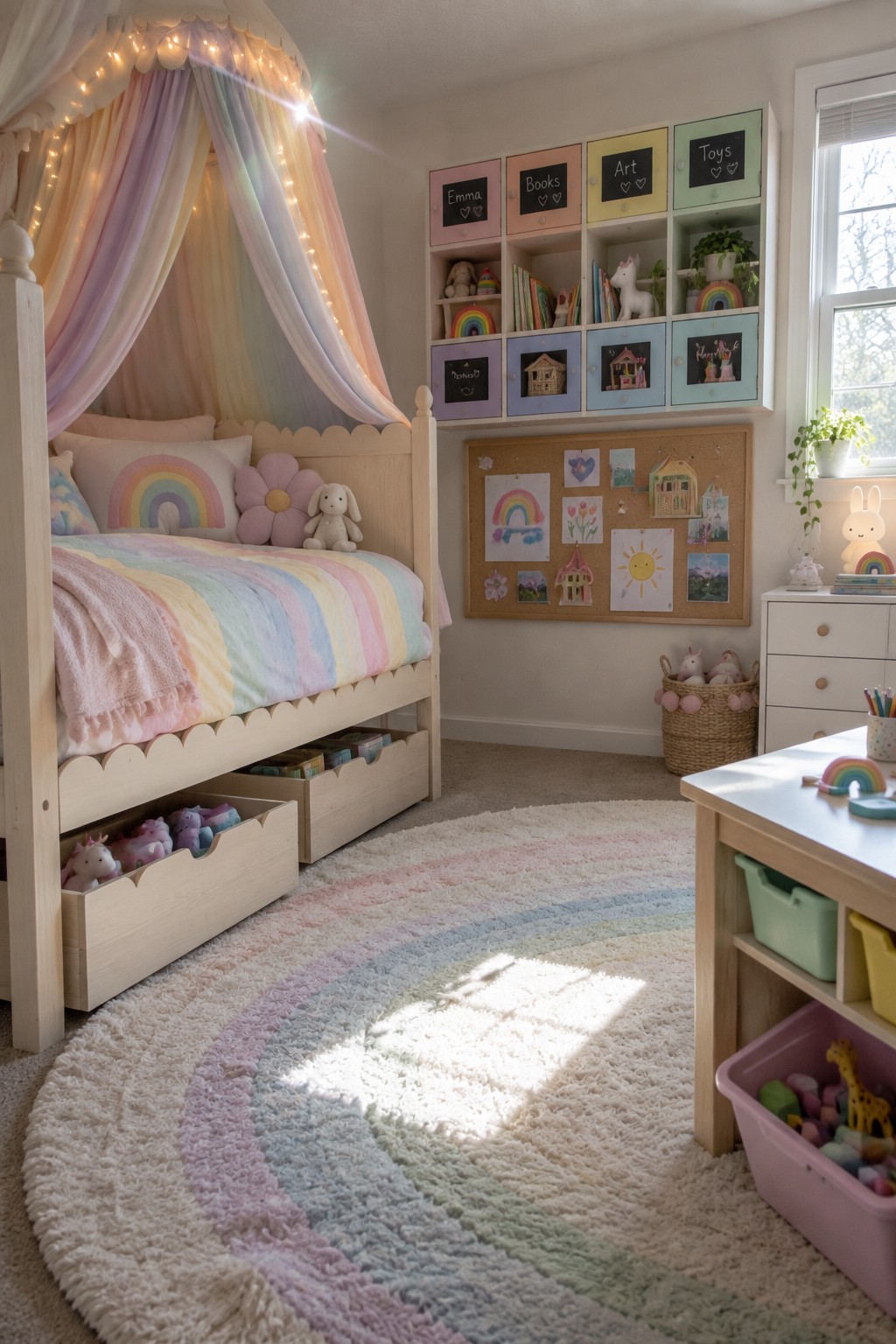
Chalkboard labels on open cubbies give kids a clear place for everything while letting parents change the categories as interests shift. The labels turn plain storage into something that feels made for the child using the room. Under-bed drawers add even more hidden space without crowding the floor.
This setup works best in smaller bedrooms where every inch counts. It suits homes with young kids who like to help put things away. Keep the labels simple so they stay useful as the child grows.
Personalized Storage With A Carved Chest
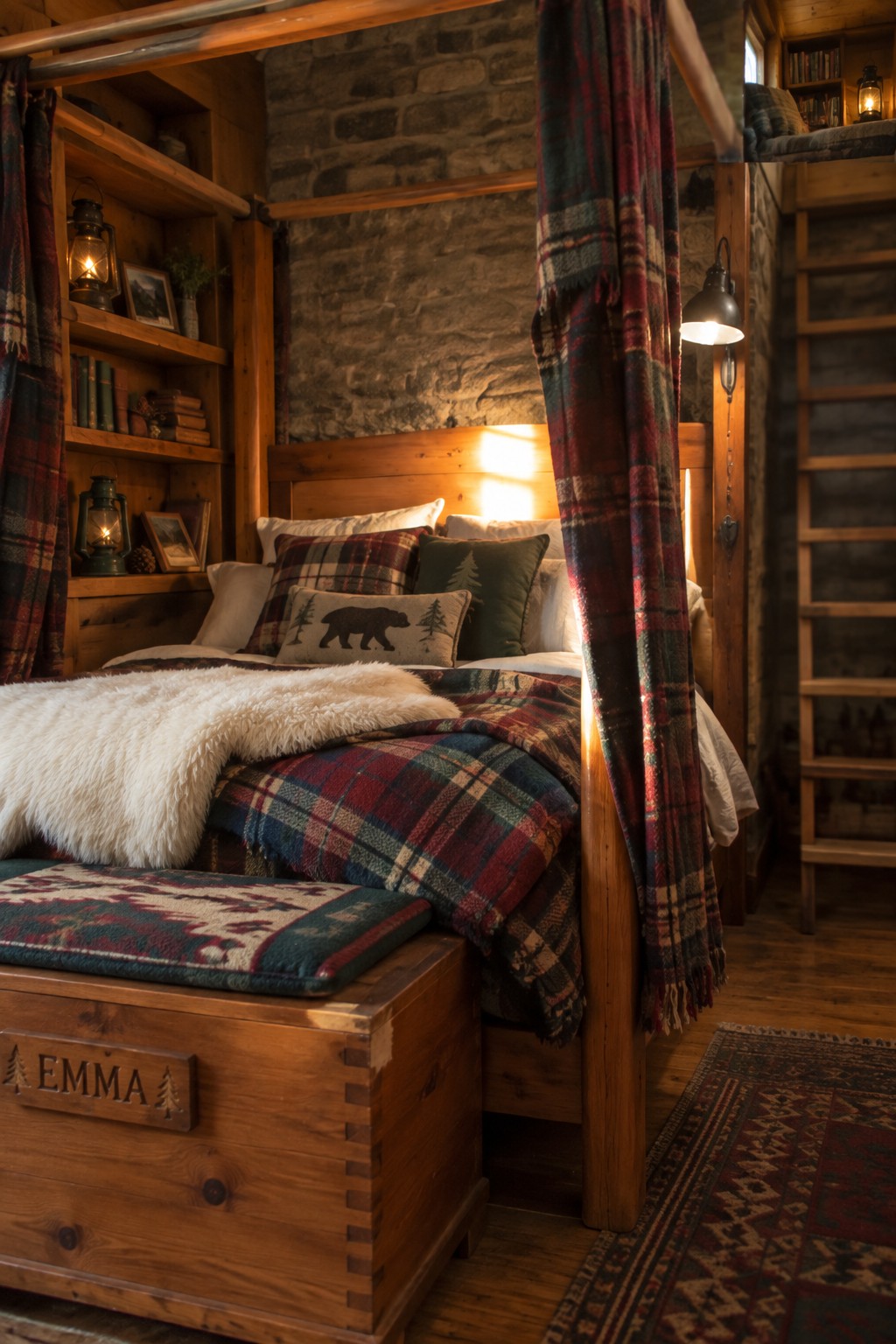
A carved wooden chest at the foot of the bed turns storage into something that feels personal. It gives a place to tuck away blankets or clothes while making the room feel like it was made for one girl in particular.
This works best in smaller bedrooms where furniture needs to earn its space. Keep the carving simple, like a name or a small motif, and let the wood itself do the rest so the piece does not compete with the bed or shelves nearby.
Built-In Storage That Helps Kids Stay Organized

Many parents find that adding labeled baskets under the bed turns empty space into something actually useful. The labels let kids see where everything goes, which makes cleanup faster and cuts down on arguments about where toys belong.
This setup works best in smaller bedrooms that need to hold a lot without feeling crowded. Rope baskets in open cubbies keep things simple, and the same idea works with any bed frame that has room underneath for a few bins.
Labeled Storage Bins Keep Things Organized
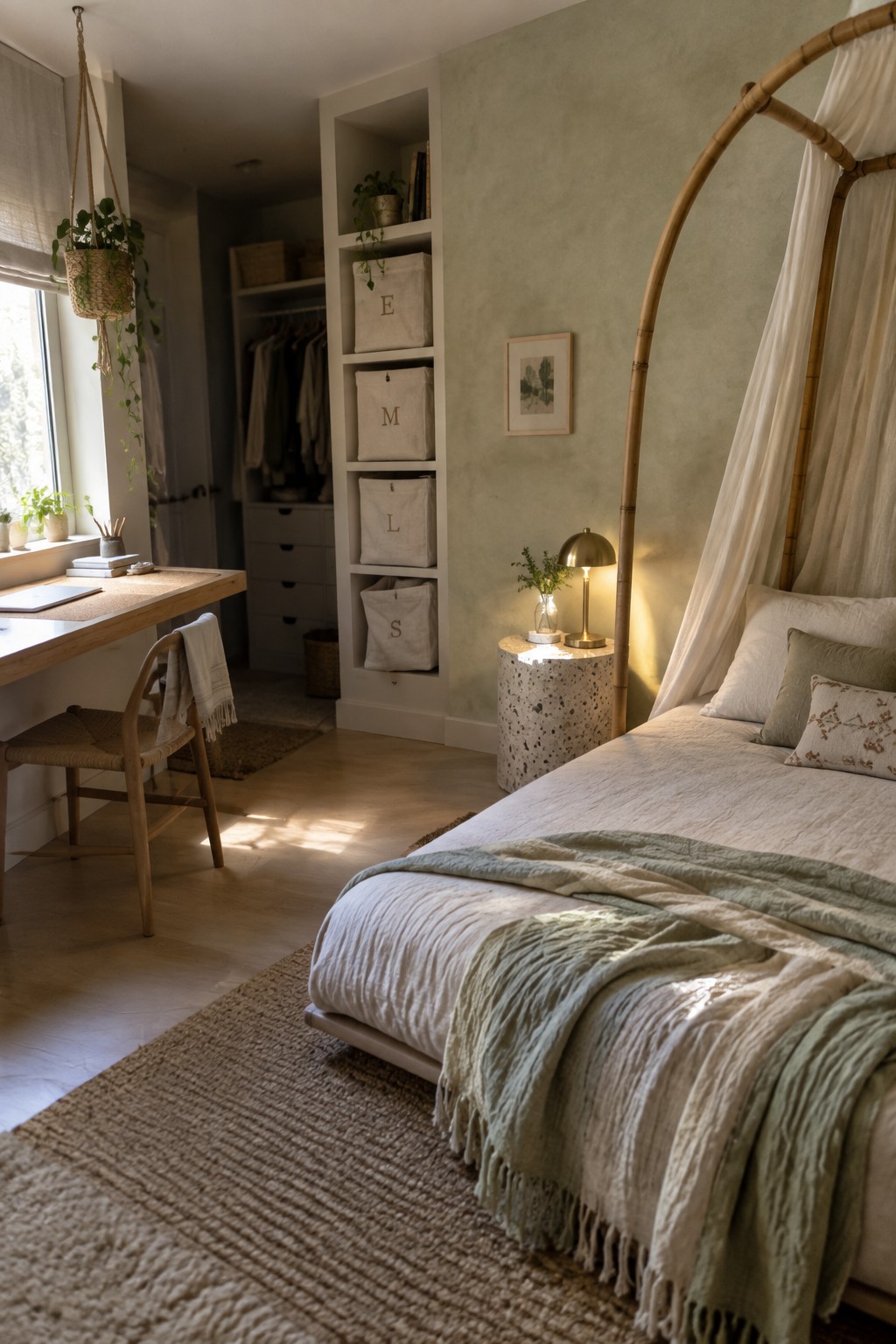
Open shelving in a bedroom can quickly turn messy without a plan. Labeled bins solve that by giving every item a clear spot while still letting you see what is inside. The simple tags make daily use easier and help the whole setup feel more personal instead of purely functional.
This approach works well in a girl’s room where storage needs shift often. It fits best along one wall so the bed area stays open, and the bins can be swapped or relabeled as the child grows. Keep the labels plain so the system stays useful for years instead of feeling like a temporary fix.
Creating Personalized Storage With Painted Drawers
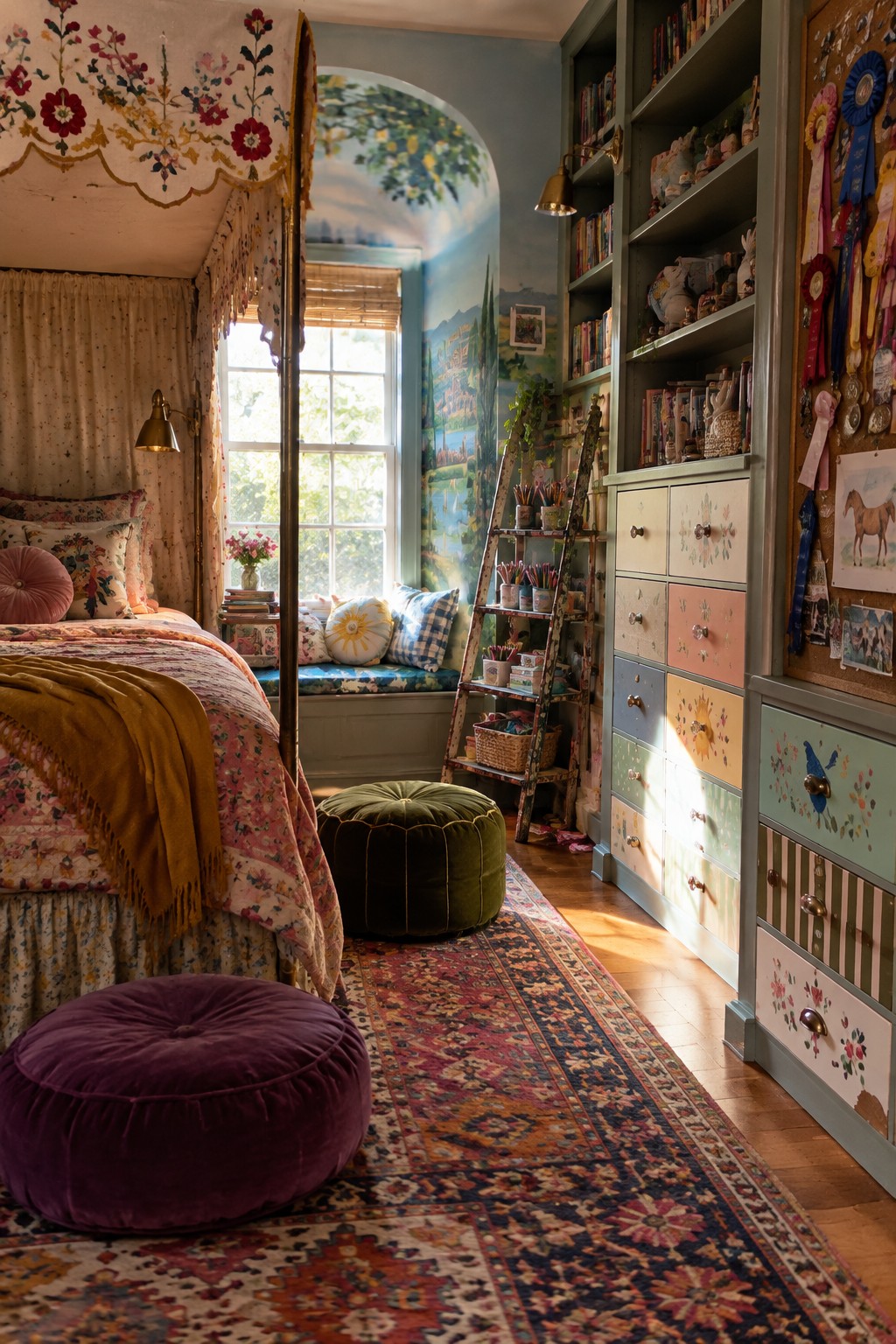
One simple way to make storage feel special in a girls bedroom is to paint the drawers in soft colors and add small patterns or motifs. The unit in this room uses gentle shades of blue, peach, and mint along with a few hand painted details that match the overall style without trying too hard.
This works best when you keep most of the room calm and let the storage unit carry the personality. It suits homes where kids want their things on display but still need drawers to hide clutter. Just avoid covering every surface with pattern or the look can start to feel crowded.
Open Storage Keeps a Girls Bedroom Functional

Labeled bins and open shoe cubbies make it easy for kids to manage their own things without constant reminders. This kind of storage wall turns the bedroom into a place where clothes, toys, and school supplies all have a set spot, which helps the room stay usable even when the canopy bed takes up a lot of visual space.
It works best in rooms that have one long wall available for built-ins. The setup suits families who want the bedroom to handle daily routines without needing extra furniture later on. Just keep the lower shelves at a height kids can reach on their own.
Built-In Niches Add Personalized Storage
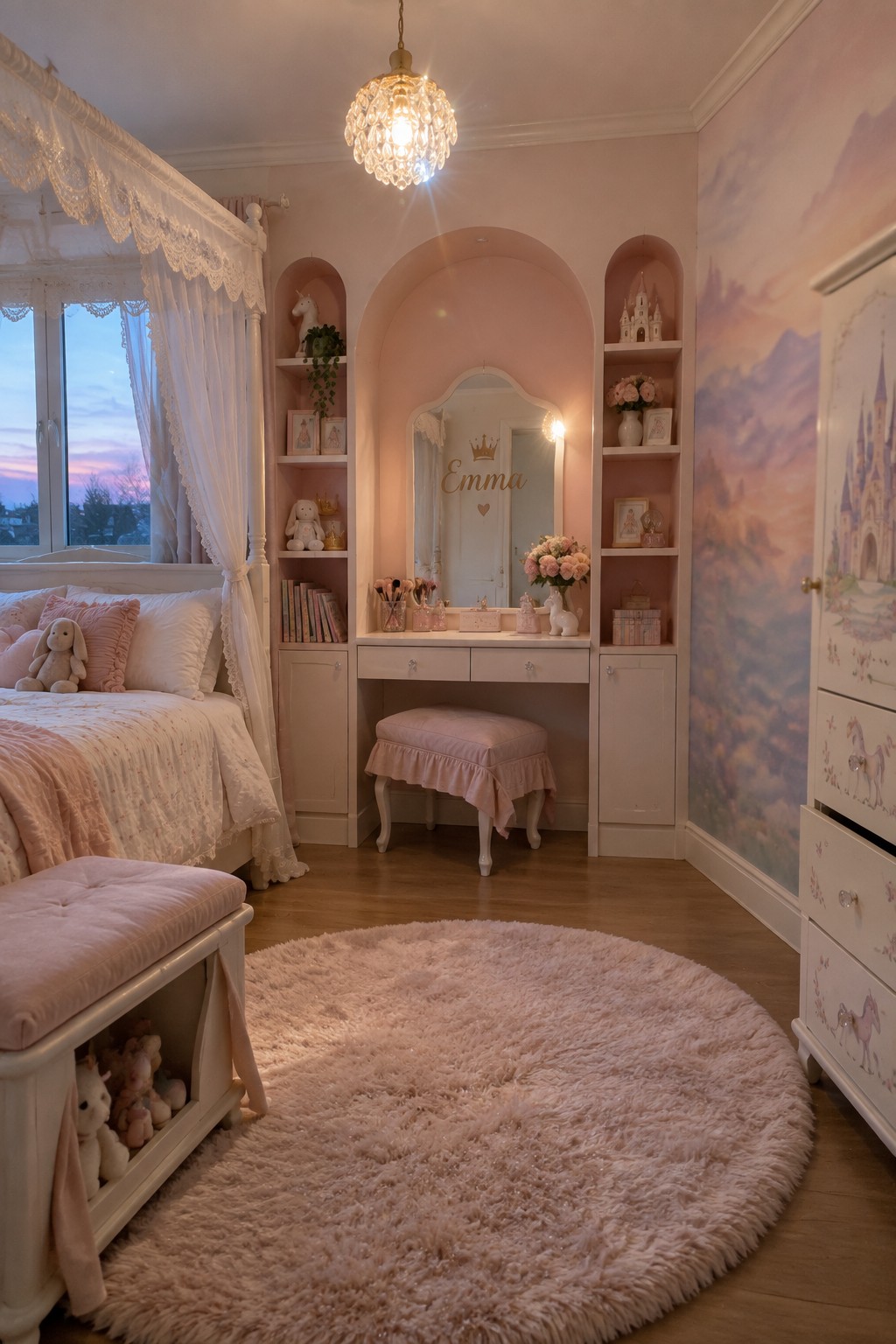
Built-in shelving on both sides of the vanity gives a girl’s room a place to keep small treasures without adding extra furniture. The arched niches turn everyday items like books, photos, and little figures into part of the room’s look, and the center spot for the name on the mirror makes the whole area feel made for one child.
This approach works best in rooms that already have some built-in character or where you want storage to stay low and tidy. It suits homes that like soft colors and simple updates, since the shelves can be restyled whenever interests change without needing to repaint or rearrange larger pieces.
Labeled Bins And A Rolling Cart For Daily Use

Built-in storage works well when bins are labeled clearly and kept at reachable heights. This setup lets kids put things away without help and find what they need quickly during the day.
A rolling cart adds flexibility in narrow rooms since it can move from the wall to the desk. It suits homes where storage needs to stay simple and change with different activities over time.
Arched Alcoves for Personalized Storage

An arched storage alcove gives a bedroom the kind of built-in organization that feels custom without needing a full walk-in closet. It keeps everyday items visible and easy to reach while adding a gentle architectural shape that works especially well beside a canopy bed.
This setup suits smaller rooms or spaces where a standard closet would take up too much floor area. Mix a few open shelves for labeled boxes with a short hanging rod below, and the whole area stays tidy but still personal.
Personalized Built-In Storage For Shared Bedrooms
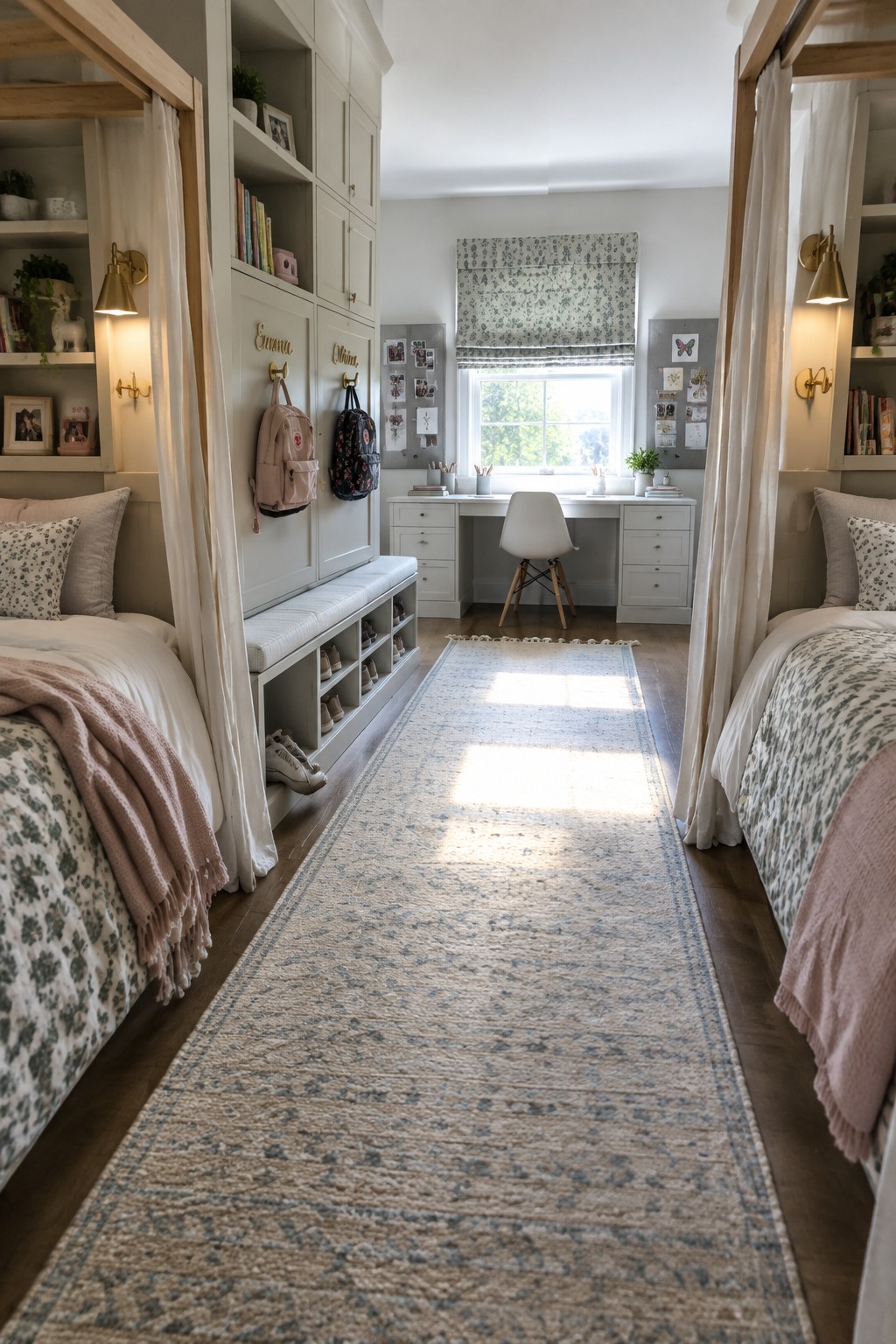
Built-in storage with names and hooks gives each girl her own spot without crowding the room with extra pieces. The wall unit combines seating, shoe cubbies, and bag hooks in one clean line, so backpacks and shoes stay off the floor and the space feels calmer.
This approach suits smaller or shared rooms best because it uses vertical wall space and keeps the middle of the floor open. Place the unit between the beds so both sides feel equally claimed, and keep the hooks and cubbies low enough for kids to reach without help.
Personalized Labels On Built-In Drawers
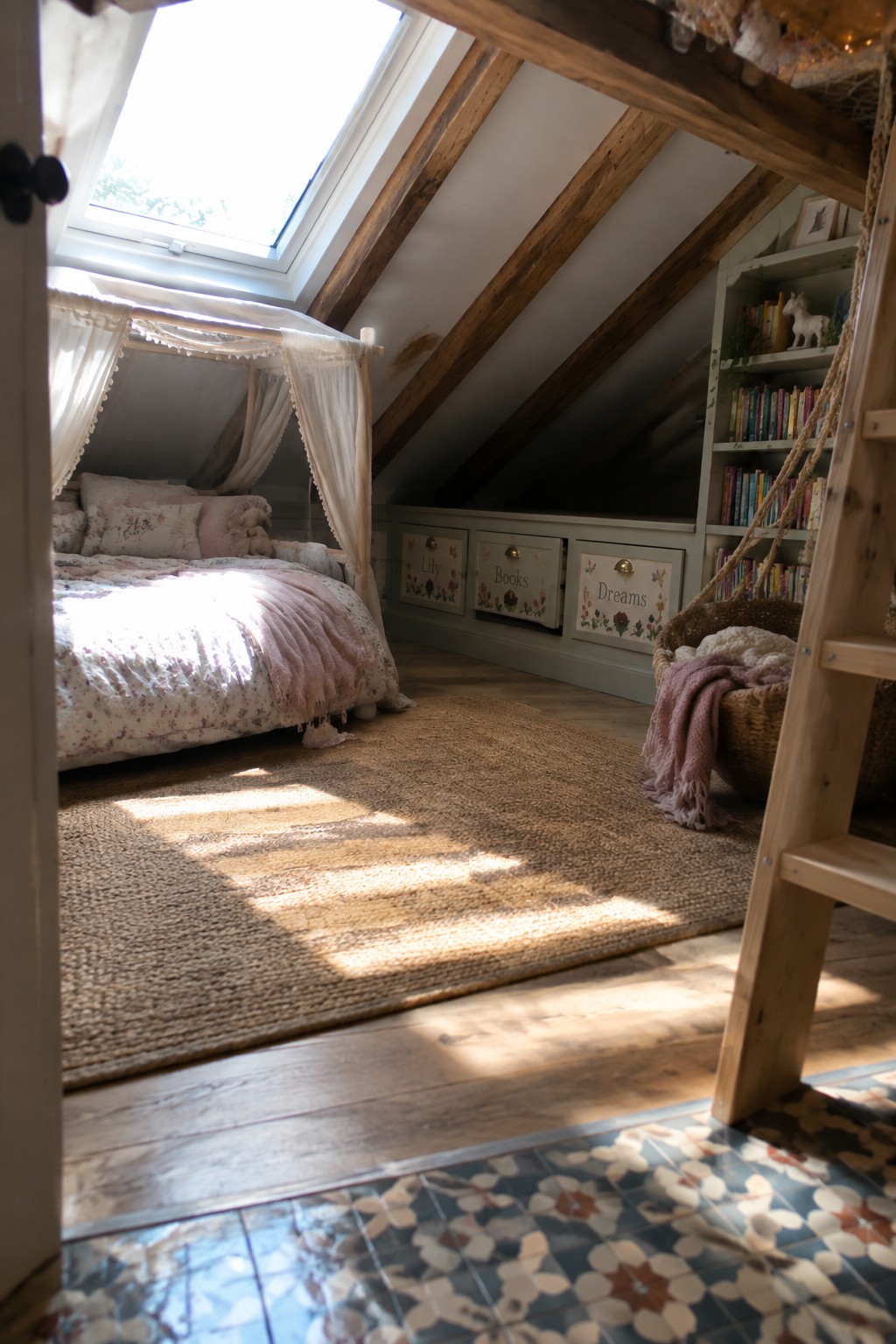
Many people add names or simple words to storage drawers in a child’s room because it makes the space feel more their own. The labels turn ordinary built-ins into something useful and easy to keep organized, especially when the room has odd angles or low walls that limit other furniture options.
This works best in smaller bedrooms or attic spaces where you can run drawers along the base of the wall. Keep the labels short and clear, and match them to what actually goes inside so the system stays practical over time.
Frequently Asked Questions
Q: What size canopy works best if the room feels tight already?
A: Go for a slim frame with sheer fabric that hangs light. This keeps the space open while still giving that dreamy look. Tuck storage bins under the bed to save floor room.
Q: How can I add personal touches to the storage without making shelves look messy?
A: Paint small crates in her favorite shade and slide them into a low cubby beside the bed. She can swap in new drawings or photos whenever she wants. It keeps things neat but still feels like her space.
Q: Do I need special bedding for a canopy or will regular sheets do?
A: Regular sheets work fine. Pick soft ones in colors that match the canopy fabric so everything feels pulled together. Change them every week or two to keep the whole setup fresh.
