

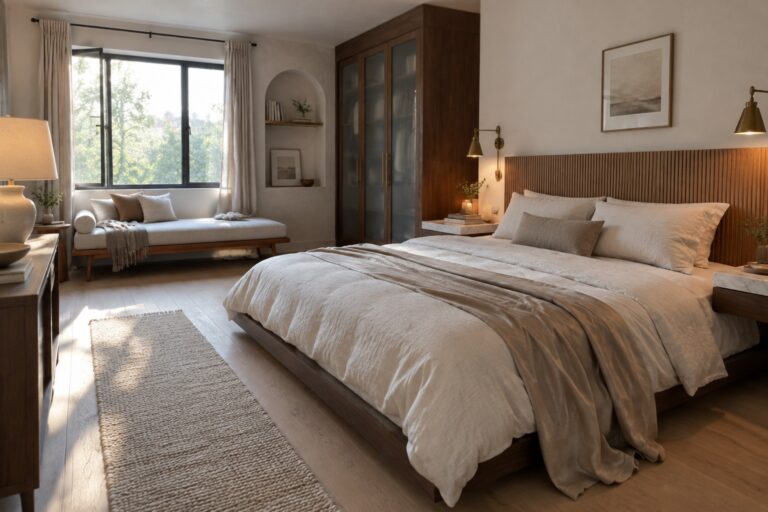
I have always found that boutique hotel rooms manage to feel calm even when they pack in quite a few details.
Translating that balance into a primary bedroom at home takes some trial and error because the space has to handle everything from morning routines to late night reading.
Layout matters more than most people expect.
I once added a small bench at the foot of the bed thinking it would help with seating but it ended up blocking the flow until I moved it to the side.
Testing a few of these approaches in my own room showed me which ones actually hold up once the door closes and daily life begins.
Try Adding a Window Seat for Extra Comfort
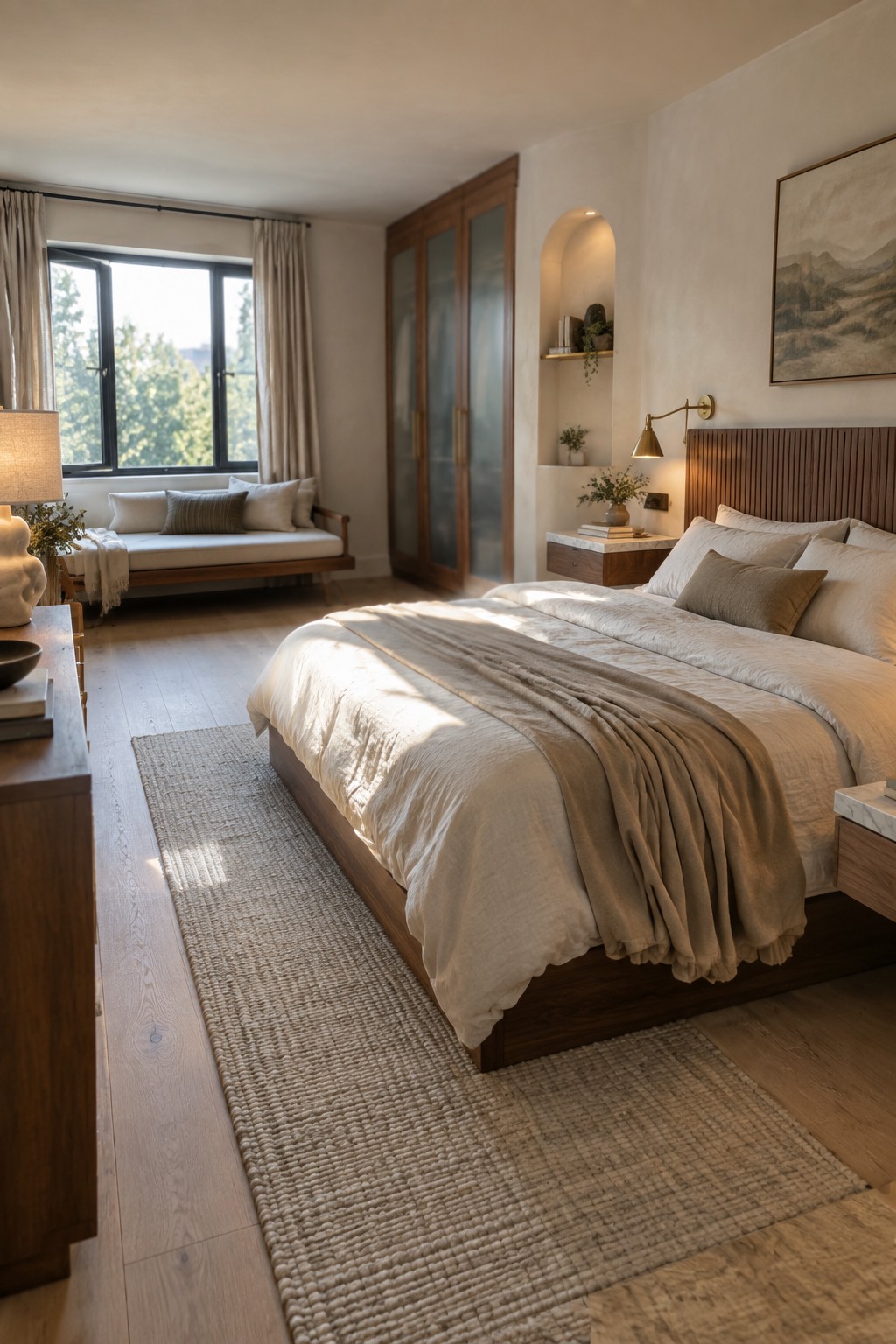
A window seat turns an empty stretch of wall into a useful spot without crowding the room. It gives you a place to sit with a book or just take in the light, and it works especially well in bedrooms that already have tall windows and good natural light.
This idea suits homes where you want more function from the same floor space. Keep the seat low and simple, with a few cushions that match the bedding, so it feels like part of the room instead of an afterthought.
Built-In Shelves Beside the Fireplace

Open shelves next to a bedroom fireplace give you a simple way to add storage and a few personal things without bringing in more furniture. The setup keeps the room feeling open while still giving the eye somewhere to rest.
This works best in darker bedrooms where you want a bit of warmth and texture. Keep what you display fairly low and stick to a narrow color range so the shelves do not compete with the bed or the fire itself.
Wood Slat Walls Behind The Bed

Vertical wood slats on the wall behind the bed give the room a clean focal point without adding bulk. The narrow planks add texture and warmth while keeping the space feeling open and simple. Many people choose this over a traditional headboard because it works with almost any bedding style.
This approach suits smaller bedrooms or spaces with high ceilings where you want some depth on the wall. It pairs best with light floors and plain linens so the wood does not feel heavy. Just make sure the slats are spaced evenly and sealed well if the room gets much moisture.
Add a Canopy Over the Bed

A canopy with light fabric gives the bed a softer shape and makes the whole room feel a little more finished. The white drapes here hang loose and simple, so they add height without closing the space in or making it feel heavy.
This works well in rooms that already have clean lines and pale colors. Keep the fabric sheer or very light, and make sure it clears the ceiling so the room still feels open. It suits most bedroom sizes as long as the bed sits away from windows that need full light.
Low Platform Beds Keep a Bedroom Feeling Calm

A low wooden platform bed set directly on a tatami mat gives the room a settled, grounded feeling. The height stays close to the floor, so the space feels more open and the materials like wood and linen get more attention without anything towering over them.
This setup works best in smaller bedrooms or homes that already lean toward simple, natural finishes. Keep the bedding in soft neutrals and limit tall furniture so the low line stays consistent throughout the room.
Concrete Walls In Primary Bedrooms

An exposed concrete wall behind the bed gives a bedroom real presence without extra layers of decoration. The raw surface adds texture and a slightly industrial feel that pairs naturally with warmer materials like leather and wood. It keeps the room from feeling too polished while still looking intentional.
This works best in lofts or homes with an open layout where the bedroom can handle a bolder wall treatment. Keep the rest of the furnishings simple so the concrete stays the focus, and add a few softer textiles to balance the cool surface.
Textured Walls Behind The Bed
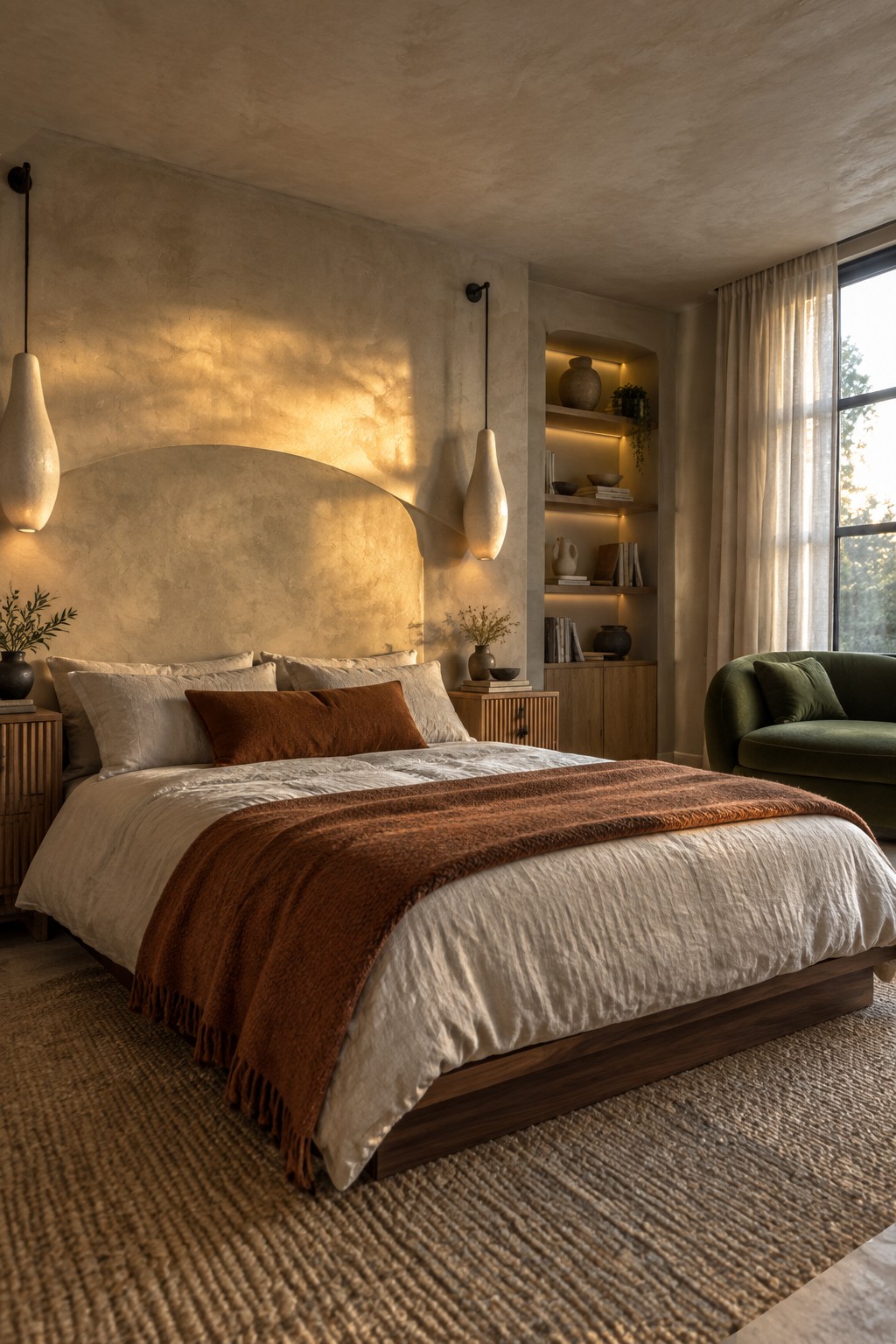
A plain wall behind the bed often leaves the room feeling unfinished. Adding texture and a gentle curve gives the space a quiet center point that feels more finished without adding extra furniture.
This works best in rooms where you want a calm, hotel-like mood. Use a simple bed and bedding so the wall stays the focus, and pick warm lighting that brings out the texture instead of flattening it.
A Tall Tufted Headboard Anchors The Room

A tall upholstered headboard in a deep color gives the bed real presence without needing much else around it. The tufting adds texture and the height pulls the eye upward, which helps the whole space feel more finished and intentional. Many people like this look because it mimics the quiet drama of a good hotel room while still working in a regular home.
This approach suits bedrooms with decent ceiling height and works especially well when you want the bed to feel like the main event. Keep the surrounding pieces simple so the headboard stays in charge. Darker shades like navy read richer than light ones, but test the fabric in your actual light first since it can shift how the color lands on the wall.
Add Storage at the Foot of the Bed

Many bedrooms feel more complete once you place a long low cabinet at the end of the bed. It gives you a place to store extra linens or out-of-season clothes without crowding the nightstands, and it helps balance the scale of a large bed in the room.
This works best in primary bedrooms that have enough floor space to walk around the piece. Keep the cabinet low so it does not block light or make the room feel smaller, and choose a finish that matches other wood tones already in the space.
Floating Shelves as Nightstands
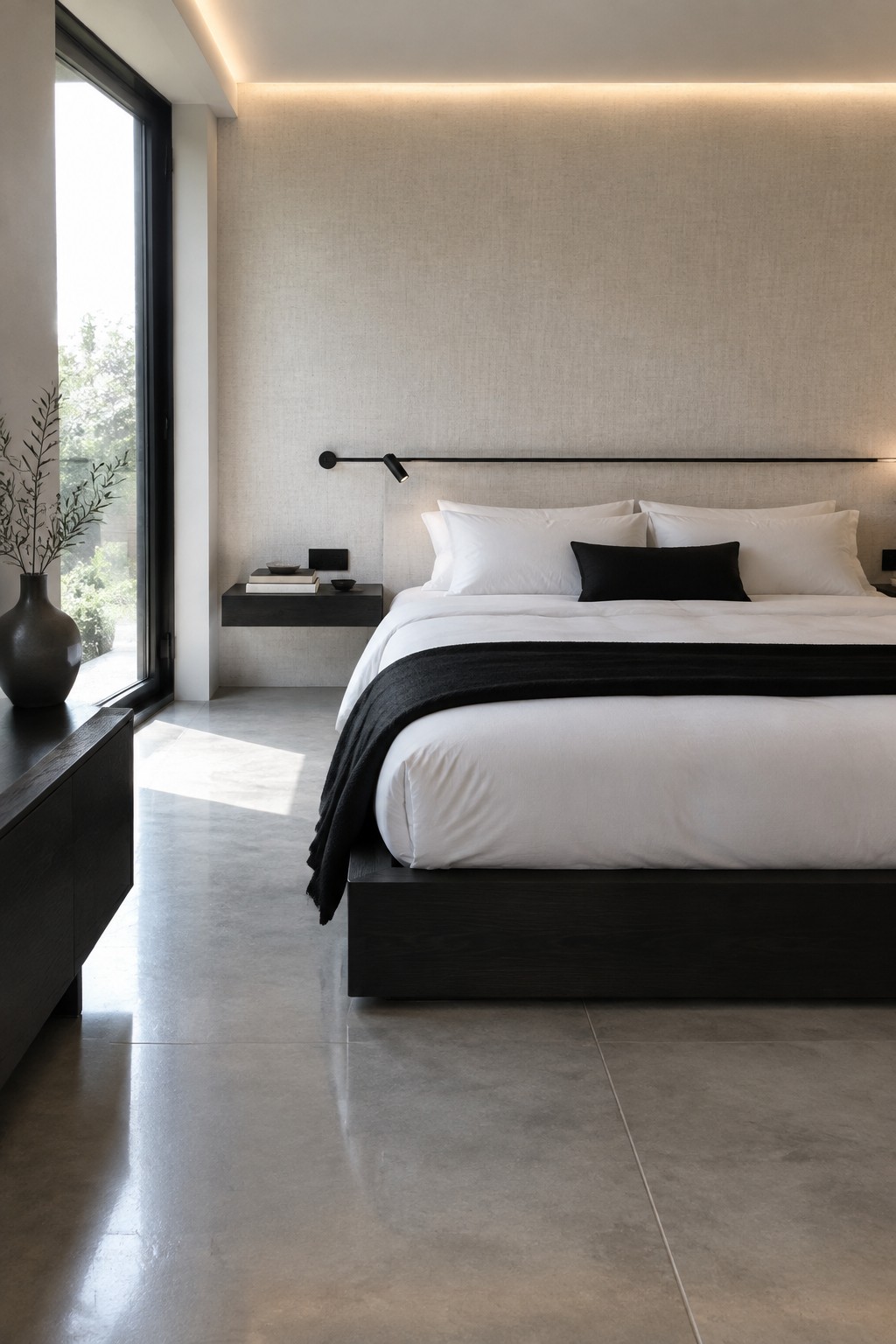
Many people like floating shelves next to the bed because they cut down on visual clutter and make the room feel more open. The shelf here holds only a few books and a small bowl, which keeps the bedside area simple while still giving you a place for the basics.
This setup works best in modern bedrooms that aim for a calm, hotel-like feel. It suits smaller rooms or any space where you want easy movement around the bed and a lighter look overall. Just make sure the shelf sits at a comfortable height for reaching from the bed.
Deep Green Walls in the Bedroom

A deep green wall color like this one gives a bedroom real presence without needing a lot of extra decoration. The color feels calm and a little enclosed, which works nicely in a primary bedroom where you want the space to feel settled at the end of the day.
It pairs best with lighter bedding and natural wood tones so the room does not go too heavy. Rooms with decent natural light handle this shade well, and adding a few plants helps keep the green from feeling flat.
Adding A Window Seat To Your Primary Bedroom

A window seat gives the bedroom an extra place to sit without taking up floor space. It turns the area under a large window or glass door into something useful, especially when the view outside is worth looking at for more than a minute or two.
This works best in rooms that get good natural light and have a bit of wall length to spare. Add a cushion that matches the bedding, and consider drawers or a lift-up top underneath for extra storage.
Layered Neutrals for a Calm Bedroom
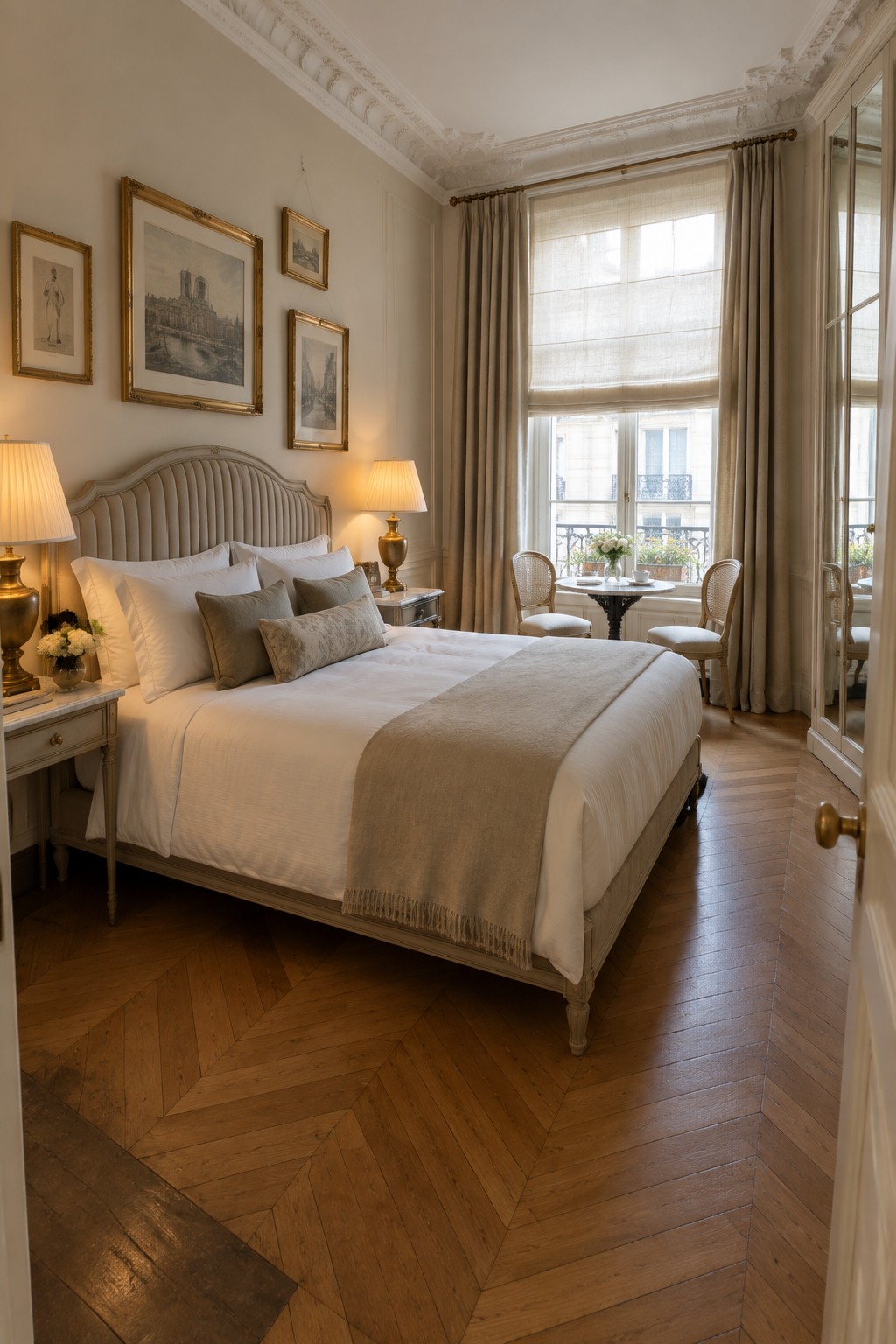
Many people like the way boutique hotels keep bedrooms restful by sticking to layers of close neutral tones instead of chasing contrast. The bed here shows how a crisp white base with a soft throw and pillows in beige and gray can feel finished and quiet at the same time.
This works best in primary bedrooms where you want the space to stay soothing year after year. Keep the shades within a narrow range and vary the textures slightly so nothing feels flat. It suits most homes and does not require repainting or new furniture when you want a small refresh.
Hang a Gallery Wall Above the Bed

A gallery wall works well in a bedroom because it turns an empty space into something personal without needing another piece of furniture. The mix of framed drawings, paintings, and textiles adds layers of color and texture that feel gathered over time rather than bought all at once.
This approach suits rooms with simple furniture and neutral bedding, since the wall carries the visual interest. Keep the arrangement a little uneven so it feels relaxed, and leave room to add new pieces later instead of filling every gap at the start.
Extend Stone Walls Into The Bath

One simple way to give a primary bedroom that boutique hotel feel is to run the same stone wall treatment from the bedroom straight into the bathroom. The material carries through without a break, so the two spaces read as one calm, continuous room rather than two separate ones.
This approach works best in homes where the bath is already visible from the bed. Keep the rest of the room simple with linen bedding and a few wood pieces so the stone stays the main feature instead of competing with too many other textures.
Dark Wood Paneling for Bedroom Walls

Dark wood paneling on the wall behind the bed gives a primary bedroom a settled, boutique feel without much extra effort. The vertical grain adds quiet texture and makes the space feel more enclosed and restful, especially when the rest of the room stays light.
This works best in rooms that get some daylight, since the contrast keeps the dark surface from closing in. Pair it with simple bedding and a few wood accents so the paneling reads as a backdrop rather than the main event.
Layer a Large Rug to Soften Modern Bedrooms

A big textured rug changes how a bedroom feels when everything else runs sleek and hard. It pulls the bed into its own zone, cuts down on echo, and gives bare feet something soft first thing in the morning. In rooms with wide windows and stone or wood details, the rug keeps the space from feeling cold or showroom-like.
This works best in primary bedrooms that already have strong lines and big glass. Keep the rug neutral so it does not fight the view, and let it run wall to wall or nearly so. Skip anything too small or too bright if the goal is that quiet, hotel calm.
Exposed Ceiling Beams
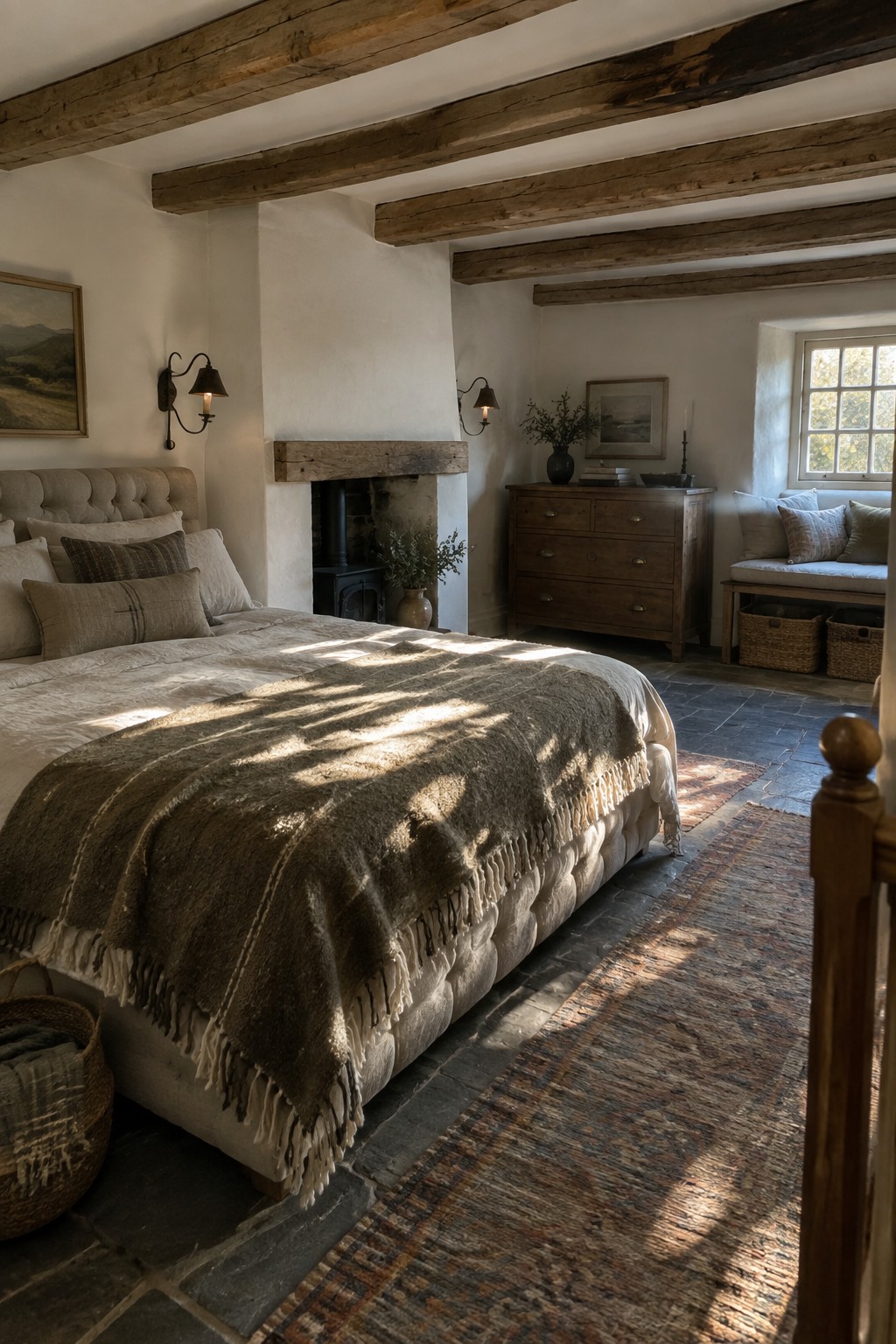
Exposed ceiling beams give a bedroom instant character and a sense of structure that feels both grounded and elevated. They bring natural texture overhead without crowding the space, which helps the room feel larger while still staying warm and intimate.
This approach works best in homes with decent ceiling height where the beams can be left visible rather than boxed in. Keep the rest of the room simple with neutral bedding and minimal wall color so the wood does the work without competing elements.
Adding Houseplants To The Bedroom

Many bedrooms feel more restful when they include a good number of houseplants. The mix of greenery softens the space and brings in a bit of outdoor calm without needing a full renovation.
This works best in rooms that get steady light, where plants can actually thrive. Use simple wooden shelves at different heights to hold the pots and leave enough floor space so the room does not feel crowded.
Layering Textures In A Neutral Bedroom

Natural textures can make a modern bedroom feel much more inviting without adding a lot of color or pattern. The woven bench at the foot of the bed paired with a chunky knit throw shows how simple materials can bring depth and softness to a calm space. This approach keeps things feeling relaxed rather than styled.
It works especially well in rooms with light wood floors and neutral bedding, where the textures have room to stand out. Try starting with one or two strong pieces like a woven bench or a heavy throw, then let the rest of the room stay simple so the textures do the work.
Built-In Shelving Next To The Bed

Built-in shelving next to the bed adds storage and display space without bringing in extra furniture that crowds the floor. It keeps the room feeling open while giving you a spot for books, bowls, and a few small objects that make the space feel personal.
This approach works best in primary bedrooms that need to stay calm and uncluttered. Stick to a limited color range on the shelves and leave some empty space so the area does not start to feel heavy or overfilled.
Use One Deep Color Across The Room
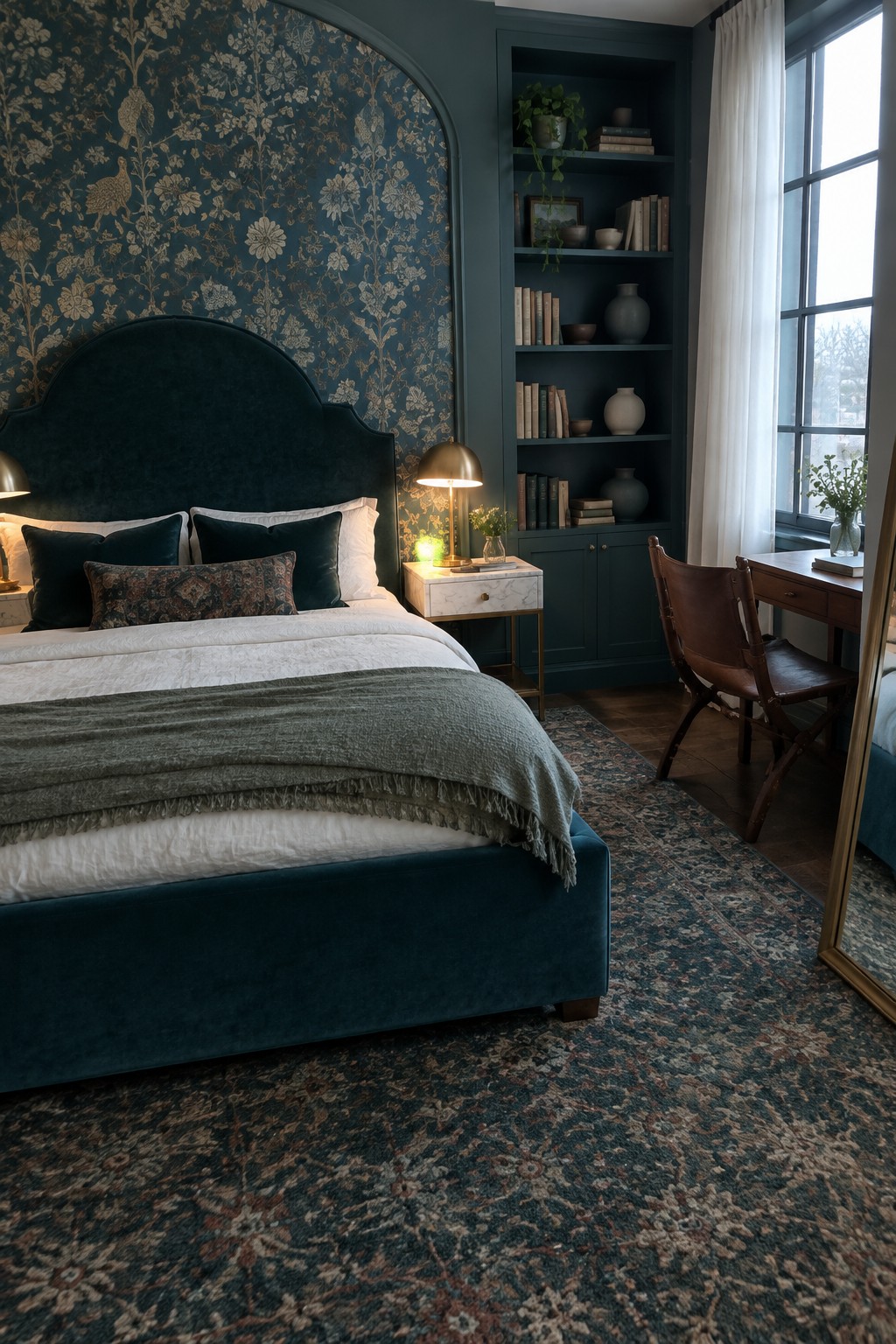
A deep teal works through the whole space here, covering the walls, the built-in shelves, and the bed frame. This single color choice pulls everything together and gives the room that quiet, enclosed feeling you often notice in boutique hotels.
It suits bedrooms that already have some architectural interest or where you want the space to feel restful rather than busy. Keep the rest of the palette simple so the color can do the work without turning the room too dark.
Built-In Niches Beside The Bed

One simple way to cut down on clutter in a bedroom is to replace nightstands with built-in niches. These recessed spots sit right in the wall next to the headboard and hold a few books, a bowl, or whatever you reach for at night. The wall light above keeps the surface clear and the whole setup feels more permanent than a separate table.
This approach works best in rooms where floor space is limited or you want a calmer, built-in look. It suits homes with thicker walls or when you are already planning some millwork around the bed. Just make sure the niche is deep enough to be useful and the light is positioned so it does not shine straight into your eyes when you are reading.
Open The En Suite Doorway
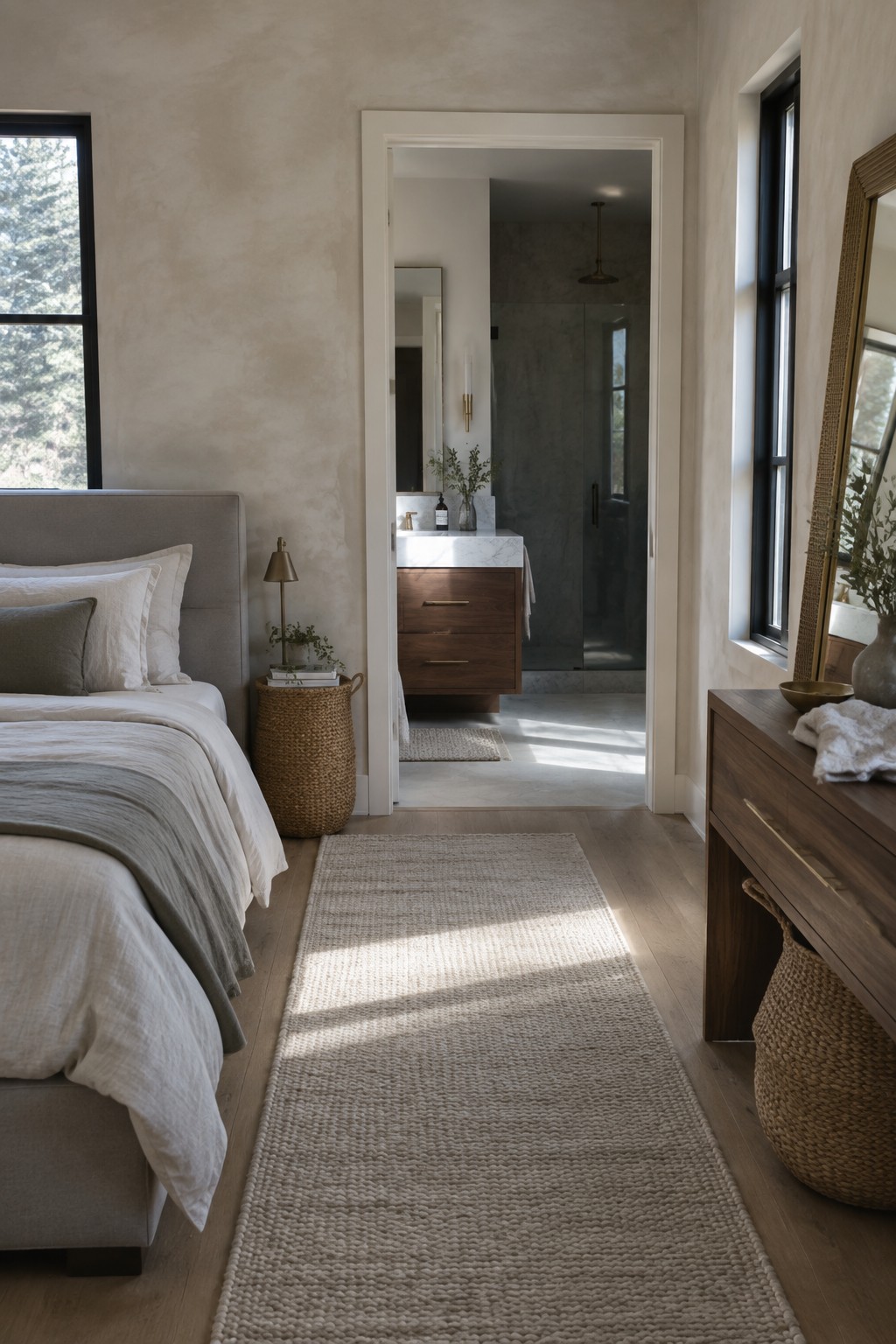
One simple way to make a primary bedroom feel more like a boutique hotel suite is to leave the doorway to the bathroom open. The connection turns two rooms into one flowing space and makes the whole area feel larger without adding square footage. Sunlight from the bathroom windows can reach further into the bedroom too.
This works best in homes where the bathroom stays tidy and the layout lines up nicely from the bed. Keep the color palette consistent between the two rooms so the eye moves easily from one to the other. If privacy is a concern, a wide opening with no door still gives the sense of connection while letting you close off the space when needed.
Frequently Asked Questions
Q: Can I still pull this off if my bedroom is on the smaller side? A: Focus on fewer larger pieces instead of cluttering the space. A sleek platform bed and one bold lamp can make the room feel intentional. Keep pathways clear so it stays inviting.
Q: How do I choose bedding that looks expensive but holds up to real life? A: Go for natural fabrics like linen or cotton in neutral tones. Skip anything too delicate and test the thread count by feel. Wash it a few times to soften before using.
Q: Should the lighting match exactly what hotels use? A: Pick warm bulbs around 2700K to mimic that soft glow. Place lamps at different heights for layers instead of one overhead light. Dimmers help you adjust the mood throughout the day.
