


I have noticed that living rooms often feel unfinished until the flooring layers create a sense of balance underfoot.
When furniture sits directly on hard surfaces the whole space can read colder than intended even with warm colors on the walls.
I usually try a second rug first when rearranging a room because it quickly shows whether the layout holds together.
Layering also helps define where people actually sit and move which matters more than matching patterns perfectly on paper.
These choices tend to make daily use feel more natural once the initial setup is tested in place.
Layer Rugs for Added Warmth

Layering two rugs is a simple way to make a living room feel finished and comfortable. The bottom layer adds texture and a bit of softness across the floor, while the top rug brings in pattern and helps pull the seating area together.
This approach works especially well in spaces with hard floors that can feel chilly. Keep the base rug larger and neutral, then center a smaller patterned one underneath the main seating and table so the layers show without looking crowded.
Layering Rugs For Extra Texture

One rug often feels flat in a living room. Adding a second layer on top gives the space more depth and makes the seating area feel separate from the rest of the room.
This works best on wood floors where you want warmth without covering everything. Stick to rugs in similar tones so the layers read as one calm surface rather than a busy mix. It suits modern rooms that still need a bit of softness underfoot.
Layer Rugs for Added Texture and Warmth

Many living rooms feel more finished when you layer a patterned rug over a larger neutral base. The mix of textures adds depth and makes the seating area feel pulled together without needing extra furniture or bold paint.
This approach works best in spaces with hard floors where you want softness underfoot. Keep the bottom layer simple and a little larger so the top rug can show its pattern clearly. It suits rooms that already have wood tones or leather pieces since the neutral base keeps things from feeling busy.
Layer Rugs to Add Texture and Warmth

Layering two rugs works well when you want a living room to feel softer without losing its modern edge. The bottom rug sets a solid base that defines the whole seating area, while the top layer brings in a different texture that breaks up all the dark tones.
This approach suits rooms with large sectionals and low tables. Use a bigger, low-pile rug underneath and place a smaller, higher-pile one where people actually walk and sit. It keeps the floor interesting without needing extra furniture or bold color changes.
Layer Rugs to Add Texture and Warmth
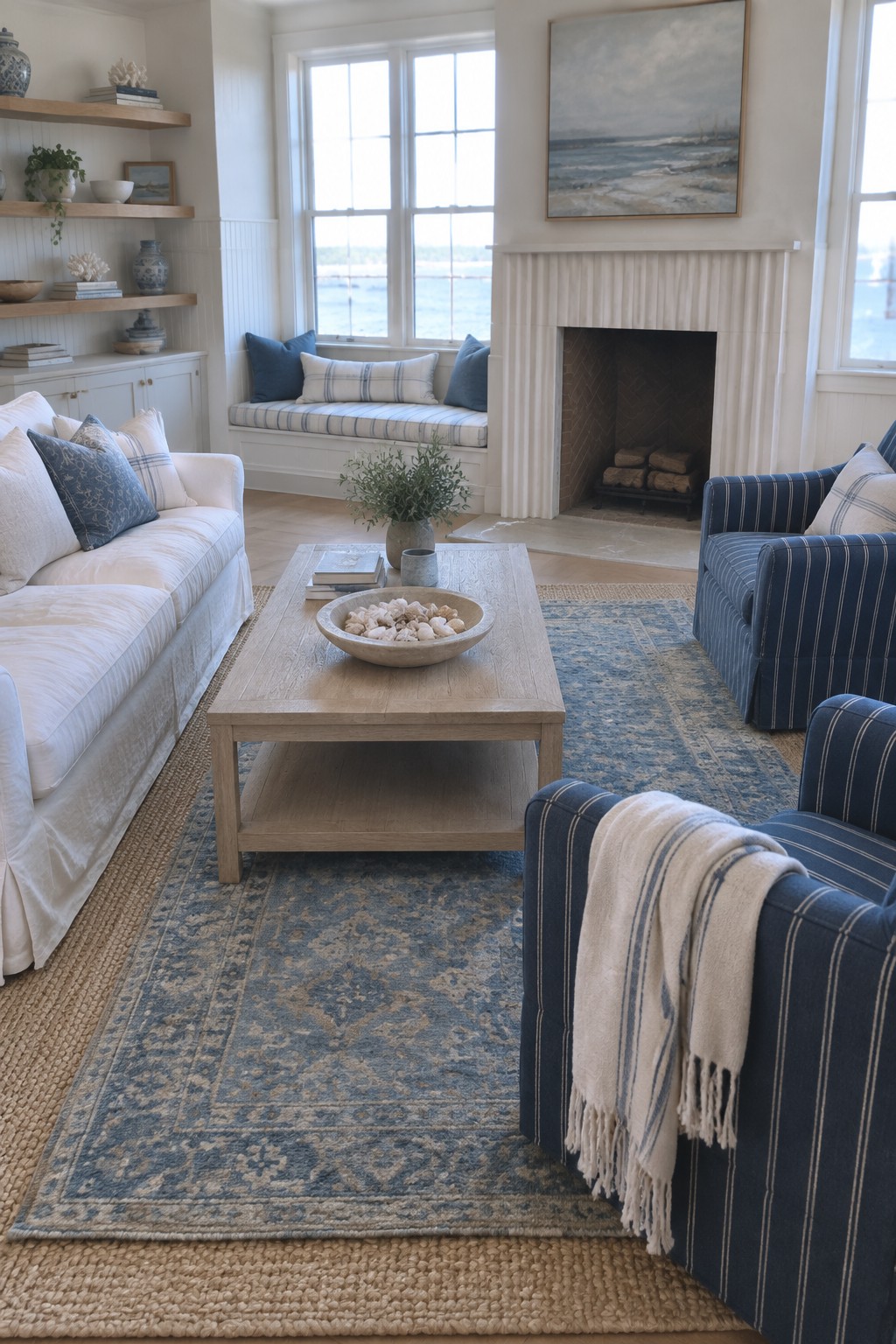
Layering a patterned rug over a larger natural fiber one gives the room more depth and a softer feel underfoot. It works especially well in spaces that already have clean lines and neutral furniture, since the two rugs together add interest without cluttering the look.
This setup works best in living rooms that see daily use. Start with the bigger rug to anchor the seating area, then place the smaller patterned one on top so it sits mostly under the coffee table. Keep the edges visible so both layers show.
Layer Rugs To Add Warmth And Texture

Layering two rugs works well when you want a living room to feel softer without adding much furniture. A large natural fiber rug on the bottom gives a quiet base, while a smaller patterned rug on top brings in color and defines the seating area.
This setup suits rooms with wood floors that can feel a bit bare on their own. Keep the bottom rug a little bigger so the edges show, and choose a top rug that fits under the coffee table and front legs of the sofa.
Layer Rugs For Added Warmth And Texture

Layering rugs gives a living room more depth and makes the seating area feel pulled together. A durable base layer under a softer patterned rug adds cushion and keeps the space from feeling too hard underfoot, especially in rooms with wood or stone floors.
This approach works best in spaces that already have some texture like leather seating or heavy wood furniture. Let the bottom rug extend a bit beyond the top one so both layers show, and keep the sizes in proportion to the seating area rather than trying to cover the whole floor.
Layer Rugs for Extra Texture
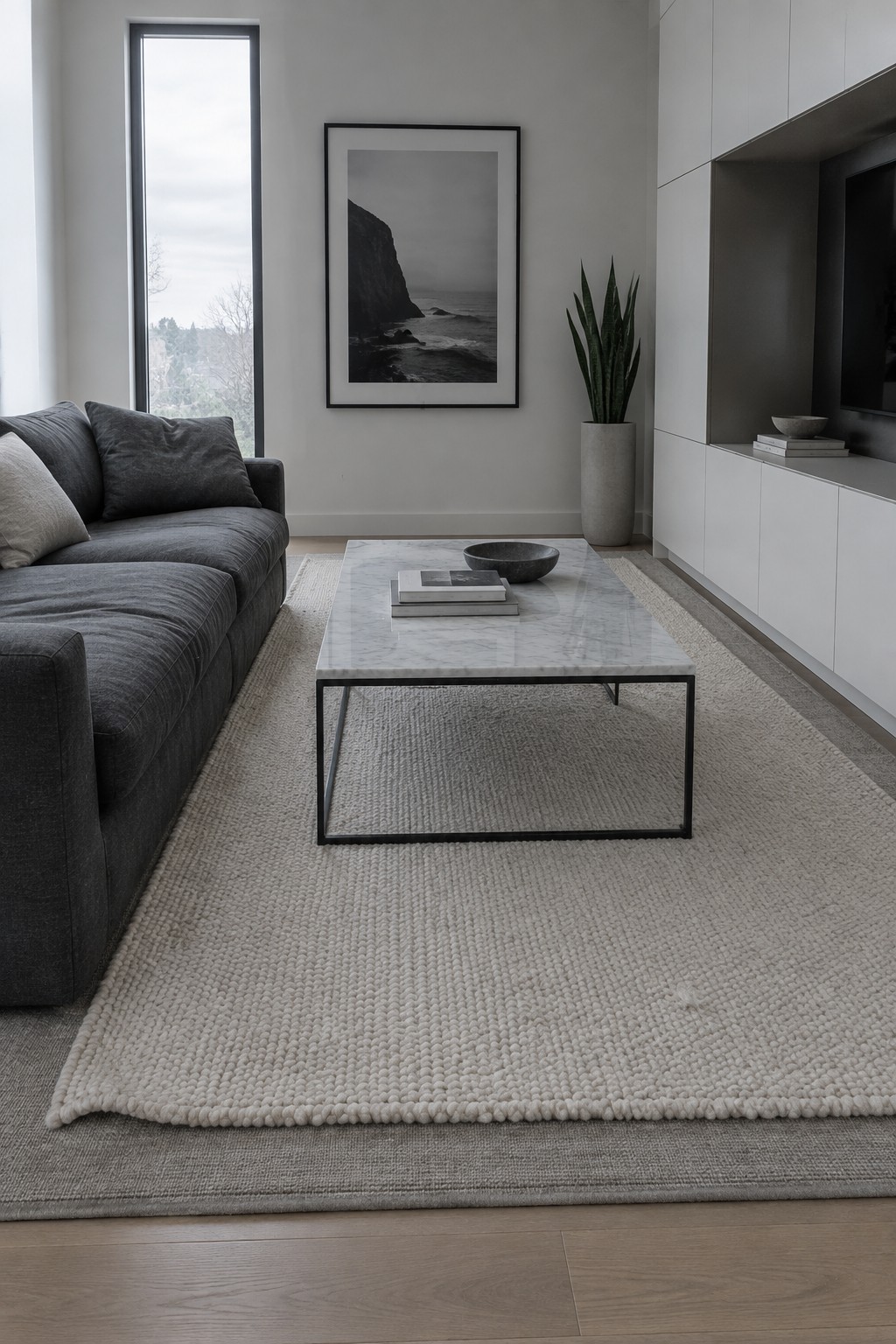
Layering two rugs gives a living room more depth and a softer feel underfoot. The large textured rug on top breaks up the flat surface of the base carpet and makes the seating area feel more defined without adding much furniture.
This approach works well in modern rooms that already have wall to wall carpet or hard floors. Keep the top rug large enough to sit under the main seating and coffee table, and let the lower layer show around the edges for a simple layered look.
Layer Rugs for Added Texture and Warmth

Layering two rugs works well when you want more softness underfoot without covering the whole floor. A simple base rug paired with a patterned one on top gives the seating area a clear boundary and makes the room feel finished even when the floors are hard.
This approach suits open living rooms or spaces with concrete or wood floors. Keep the bottom rug neutral and a bit larger so the top one can sit centered under the main seating without looking too busy.
Layer Rugs to Warm Up a Modern Space

Layering two rugs is a simple way to add softness underfoot without changing the rest of the room. A flat neutral rug on the bottom anchors everything, while a lighter patterned one on top brings in color and texture right where people sit and play.
This approach works best in living rooms with hard floors that need a little extra comfort. Keep the bottom rug a size or two larger so the edges show, and make sure both rugs have a similar thickness so nothing shifts underfoot.
Layer Rugs for Extra Softness Underfoot

Layering rugs gives a living room more warmth without adding heavy furniture or dark colors. In a space with clean lines and harder materials like stone or wood, the extra layer underfoot makes the room feel finished and comfortable rather than bare.
Start with a larger, low-texture rug as the base and place a softer one on top so the edges overlap by at least a foot or two. This works best in open living areas where people sit or walk often, and it helps keep the overall look light while still giving that cushioned feel.
Layering Rugs for Extra Warmth

Layering a patterned rug over a natural fiber base adds softness and depth to a living room without needing a lot of new furniture. The mix of textures makes the space feel more settled and comfortable, especially in rooms with wood floors that can feel a bit bare.
This works best in homes that already have a simple foundation rug in place. Keep the top layer smaller so it sits mainly under the coffee table and seating, and choose patterns that share a few colors with the room so the layers blend rather than compete.
Layer Rugs to Add Warmth and Texture
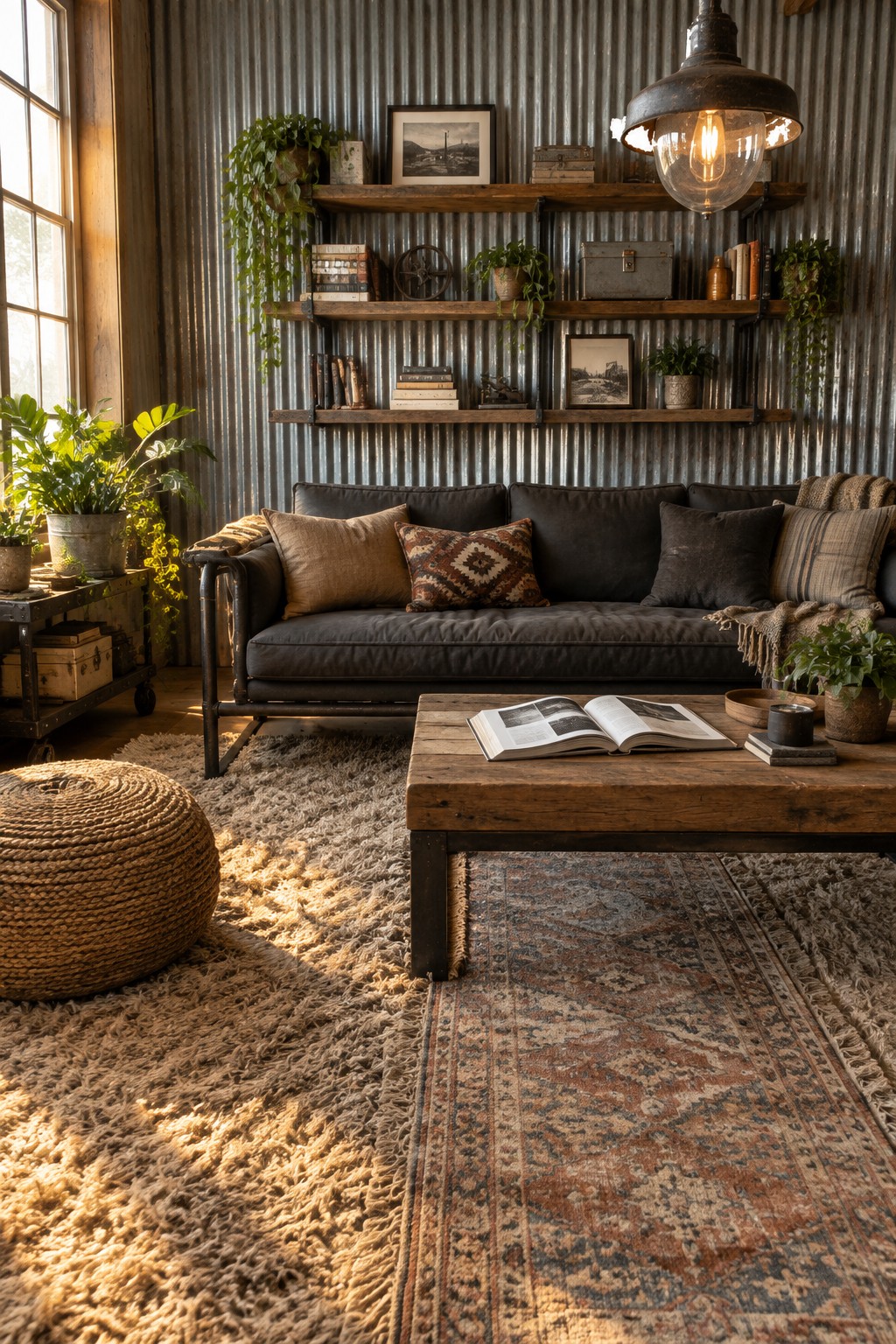
Layering two rugs works well when you want a living room to feel softer without changing the furniture. A thick neutral base rug paired with a patterned one on top adds depth underfoot and helps tie together different materials like wood and metal in the same space.
This approach suits modern rooms that still need some warmth, especially where floors run cool or the layout is fairly open. Keep the bottom rug larger so it peeks out on most sides, then place the top rug at a slight angle under the coffee table so the pattern shows without covering everything.
Layer Rugs for Extra Warmth and Texture
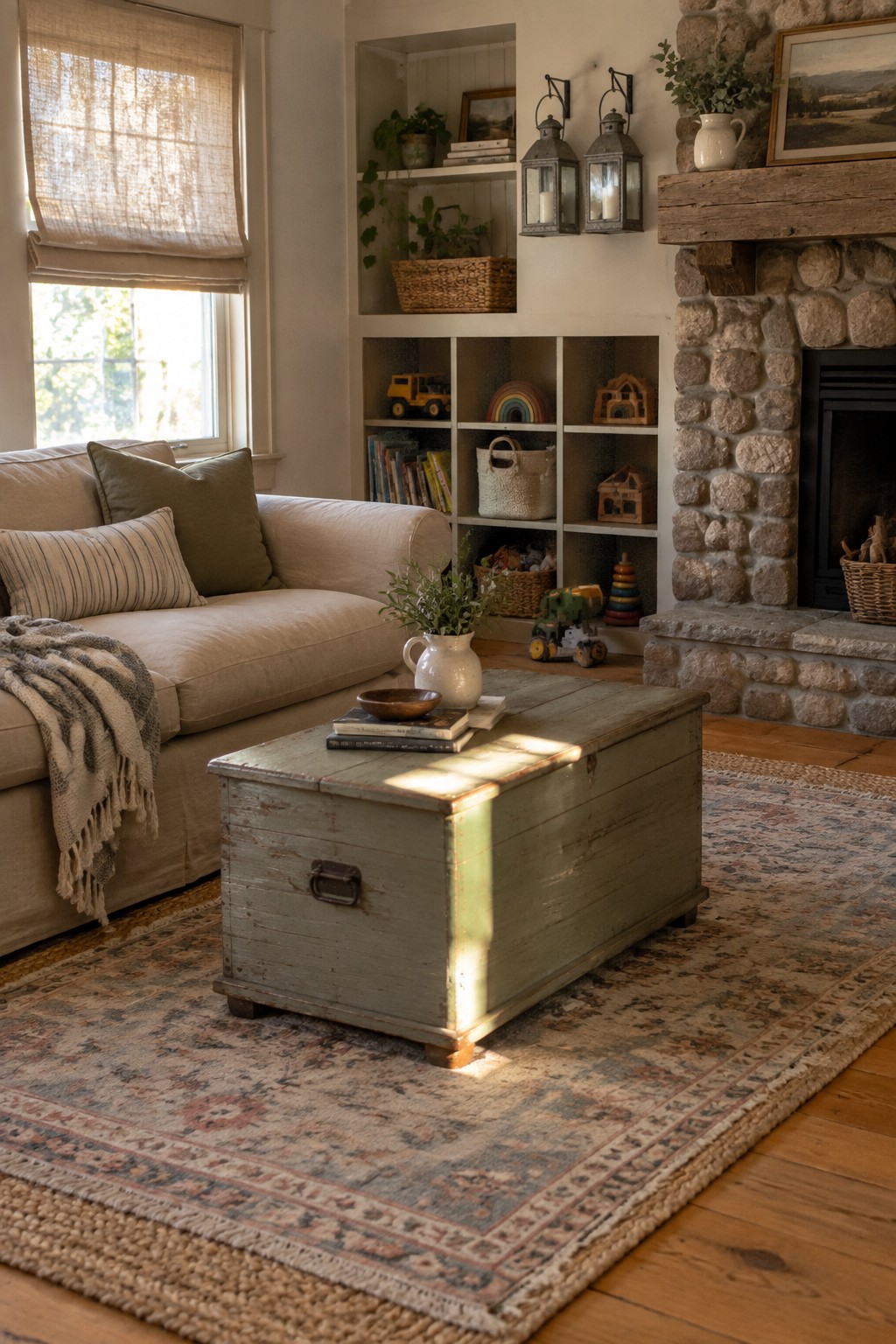
Layering two rugs is one of the easiest ways to make a living room feel softer and more finished. A larger natural fiber rug on the bottom gives a quiet base, while a patterned rug on top adds interest and helps define the seating area. This works especially well on wood floors that can feel cold or bare on their own.
It suits most homes that already have a main seating arrangement in place. Keep the bottom rug a few inches larger on all sides so the layers show clearly, and make sure the top rug sits flat under the coffee table and front legs of the sofa.
Layering Rugs For Extra Texture And Warmth
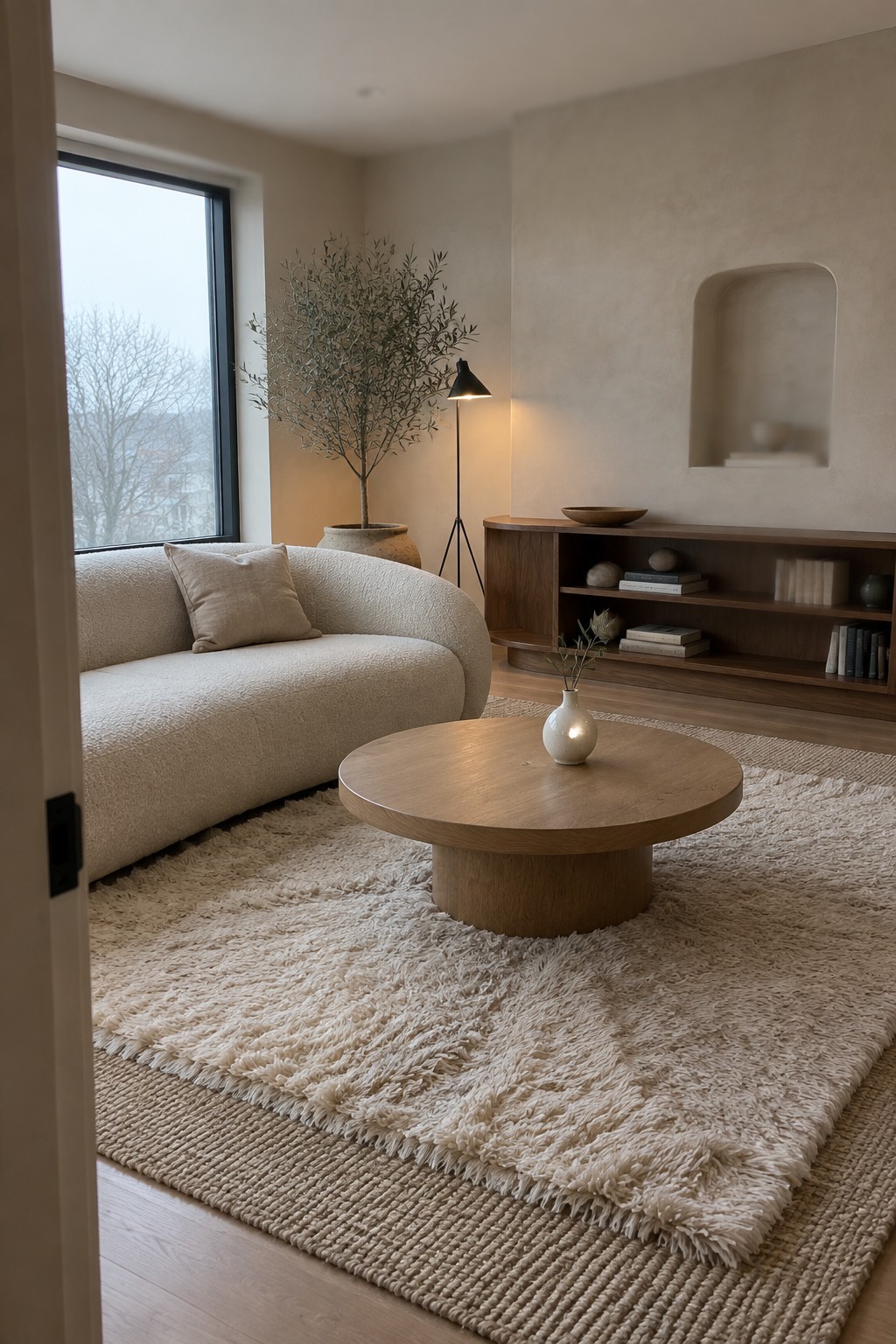
Many modern living rooms can feel a bit flat when everything sits on one flat surface. Putting a second rug on top adds softness underfoot and helps the seating area feel more settled without adding much clutter.
This approach works best in rooms with wood floors or large open spaces where you want the main seating zone to read as its own spot. Keep the colors close so the layers blend, and let the top rug carry more texture than the one below it.
Layer Two Rugs to Define the Seating Area

Layering rugs gives a living room more texture without adding clutter. The smaller patterned rug sits right on top of a larger neutral one, which helps mark off the coffee table and sofa zone while keeping the rest of the floor open and simple.
This approach works well in modern rooms with hard flooring, where one rug alone can feel too flat. It suits spaces that already have strong furniture lines, since the rugs soften the look without competing with the rest of the pieces. Keep the bottom rug large and plain so the top one can carry the pattern.
Layering Rugs for Extra Warmth
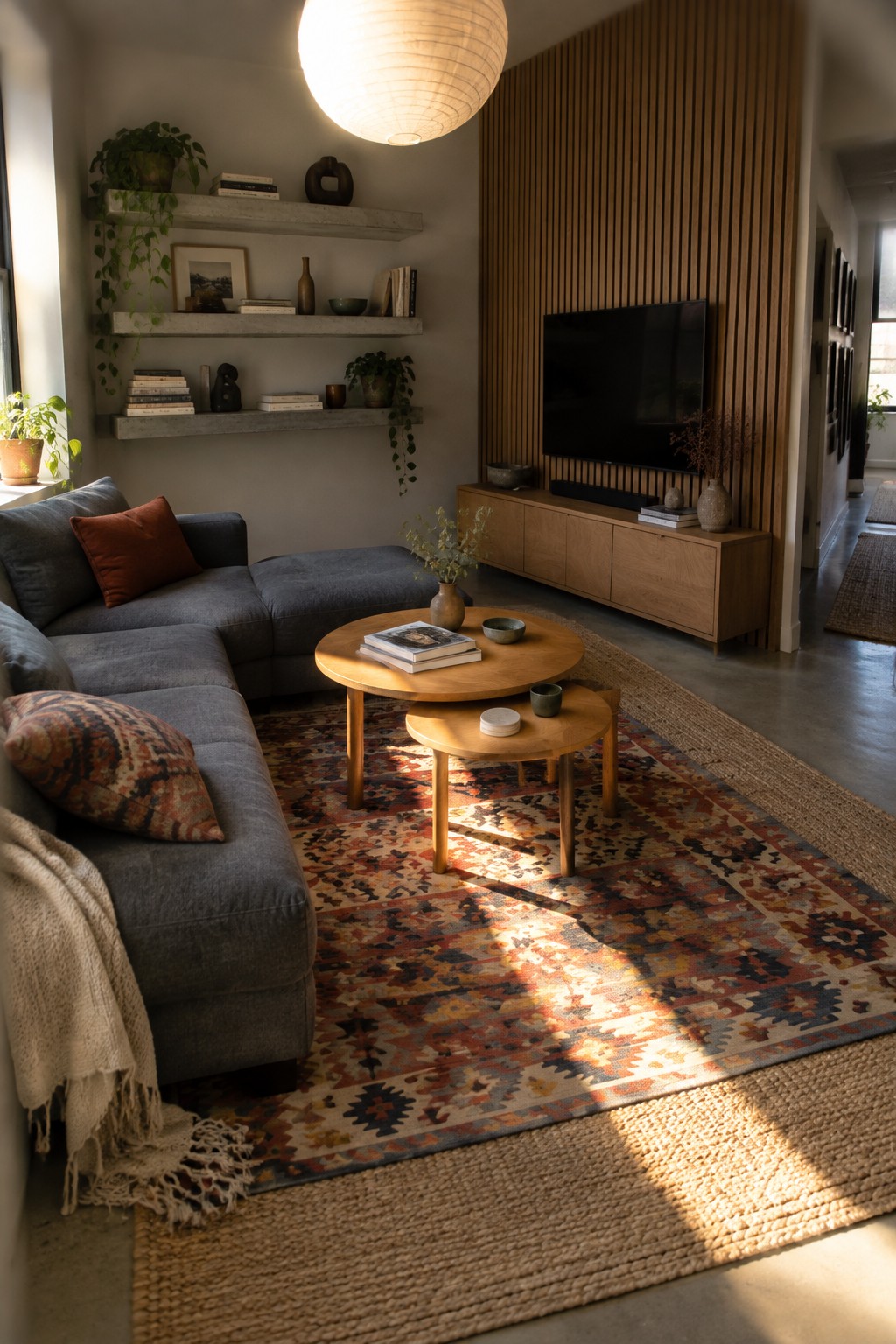
One simple way to soften a modern living room is by layering two area rugs. The base layer gives the room a grounded feel, while the top rug adds pattern and a softer surface right where people sit and walk.
This works best in spaces with hard floors. Use a larger natural weave underneath and center a smaller patterned rug beneath the main seating area. It keeps the room from feeling too stark while still letting the furniture and architecture show through.
Layer Rugs To Add Warmth And Texture
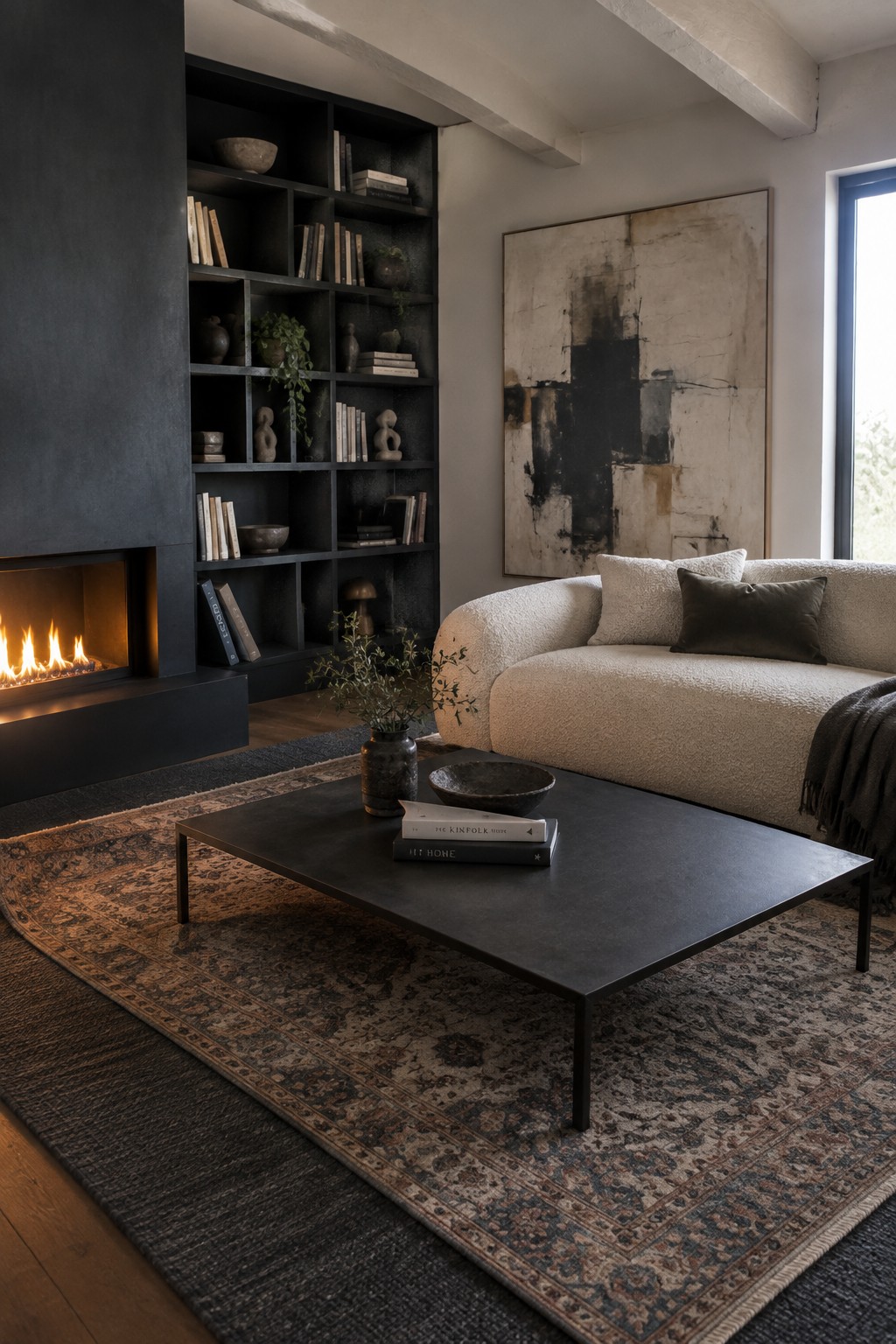
Layering rugs works well in modern living rooms because it adds softness and depth without cluttering the space. A larger base rug grounds the seating area while a smaller one on top brings in pattern and extra cushion underfoot. This approach keeps the room feeling open yet comfortable, especially when floors are hard or the furniture is simple.
It suits homes that need a bit more warmth without adding heavy textiles everywhere. Start with a bigger neutral rug that extends under the main seating, then place a smaller patterned one slightly off-center so the layers show. Keep the top rug smaller so it does not overwhelm the room or hide too much of the base layer.
Layering Two Rugs For More Texture

One simple way to make a living room feel finished is to layer two rugs instead of stopping at one. A larger neutral rug on the bottom gives the room a soft base, while a smaller patterned rug on top adds color and breaks up the floor. This approach works especially well when the furniture sits mostly on the top layer.
It suits rooms with hard floors or open layouts where you want to mark the seating area without adding more furniture. Keep the bottom rug a couple feet larger on all sides so the layers read clearly. Avoid matching the rugs too closely or the effect can feel flat.
Layering Rugs To Add Warmth

Layering a patterned rug over a natural fiber base works well when you want a room to feel softer without adding heavy furniture or lots of decor. The mix of textures keeps things interesting while still letting the space feel open and simple.
This setup works best in modern living rooms with wood or tile floors. Start with the larger natural rug, then place the smaller patterned one on top so it sits under the main seating area. Keep the top rug a size or two smaller so the layers show clearly.
Layering Area Rugs For Extra Warmth
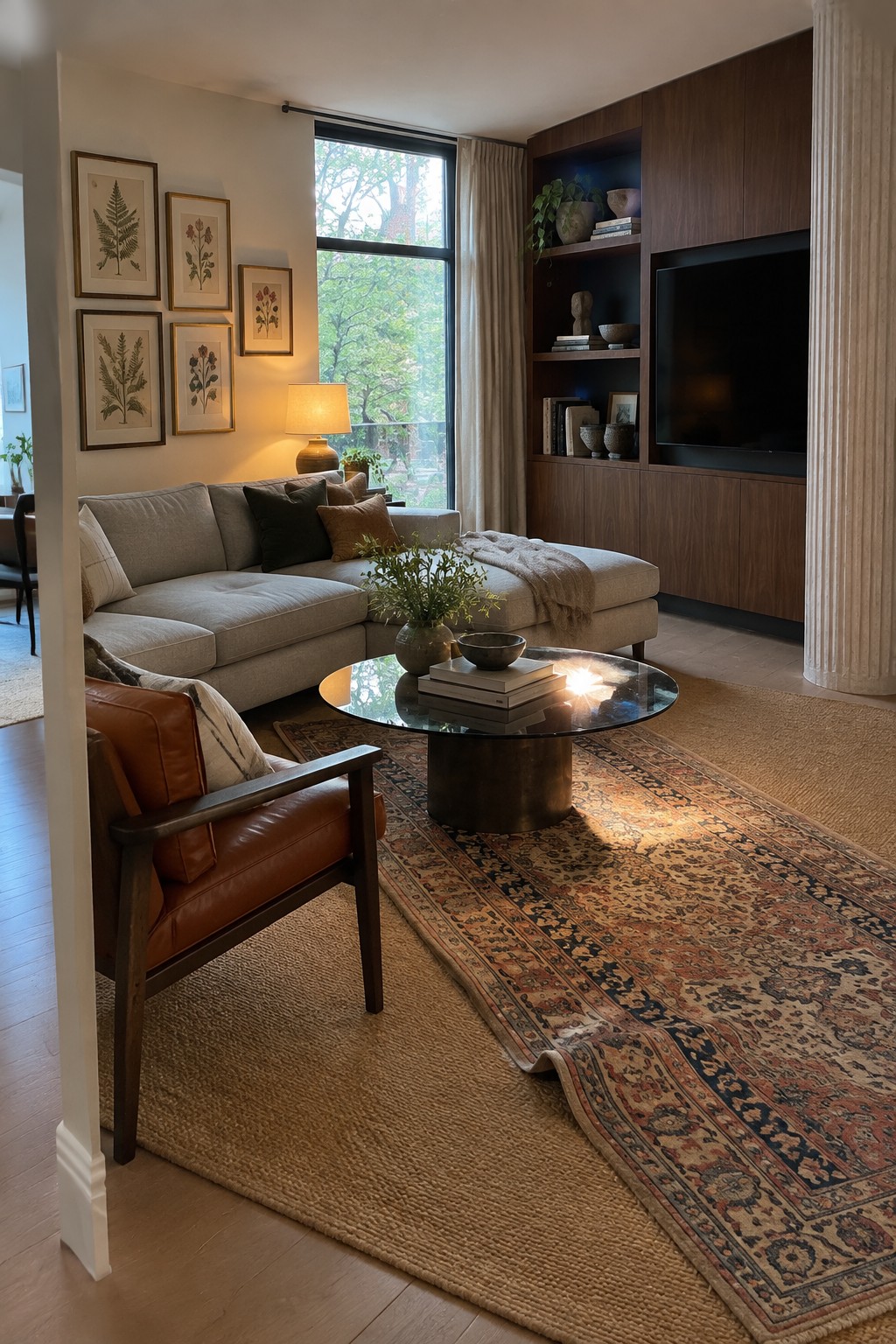
Layering two rugs gives a living room more texture and makes the seating area feel settled. A big neutral rug on the bottom creates a soft base across the floor, while a smaller patterned rug on top adds interest right where people sit and walk.
This approach works best in open living spaces that need a bit of softness without looking busy. Keep the bottom rug simple and let the top one carry the pattern so the layers stay balanced rather than competing.
Frequently Asked Questions
Q: How do I keep layered rugs from sliding around?
A: Anchor the bottom rug with furniture legs so it stays put. Add a rug pad underneath the top layer for extra grip. Walk through the space a few times to test if anything shifts.
Q: What if the patterns on my two rugs clash?
A: Pull one color from the top rug and match it to a solid base layer. Keep the top rug smaller so the base shows more around the edges. This lets each pattern breathe without fighting for attention.
Q: Can I layer rugs over carpet in a modern room?
A: Yes, but choose a thin base rug so the height stays low. The top layer should contrast with the carpet texture to add interest. Check the pile height by sitting on the sofa to see how it feels underfoot.
