

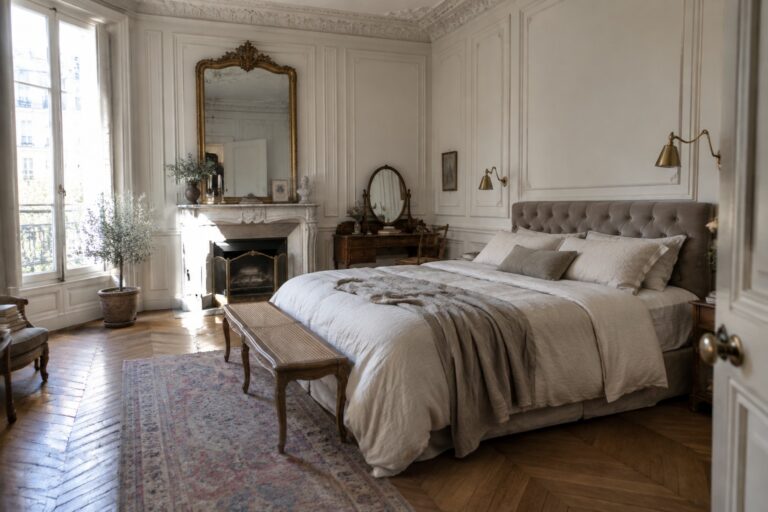
I have always found that mouldings add a quiet structure to a bedroom that makes the space feel more settled over time.
Vintage furniture brings in layers that modern pieces often miss, especially when the scale works with the room’s proportions.
In my own place I once added simple trim around the ceiling and it changed how the light moved across the walls in the evenings.
Some combinations just click better than others.
Trying out a few of these pairings in a real bedroom shows which ones hold up once the novelty wears off.
Mouldings Guide Furniture Placement
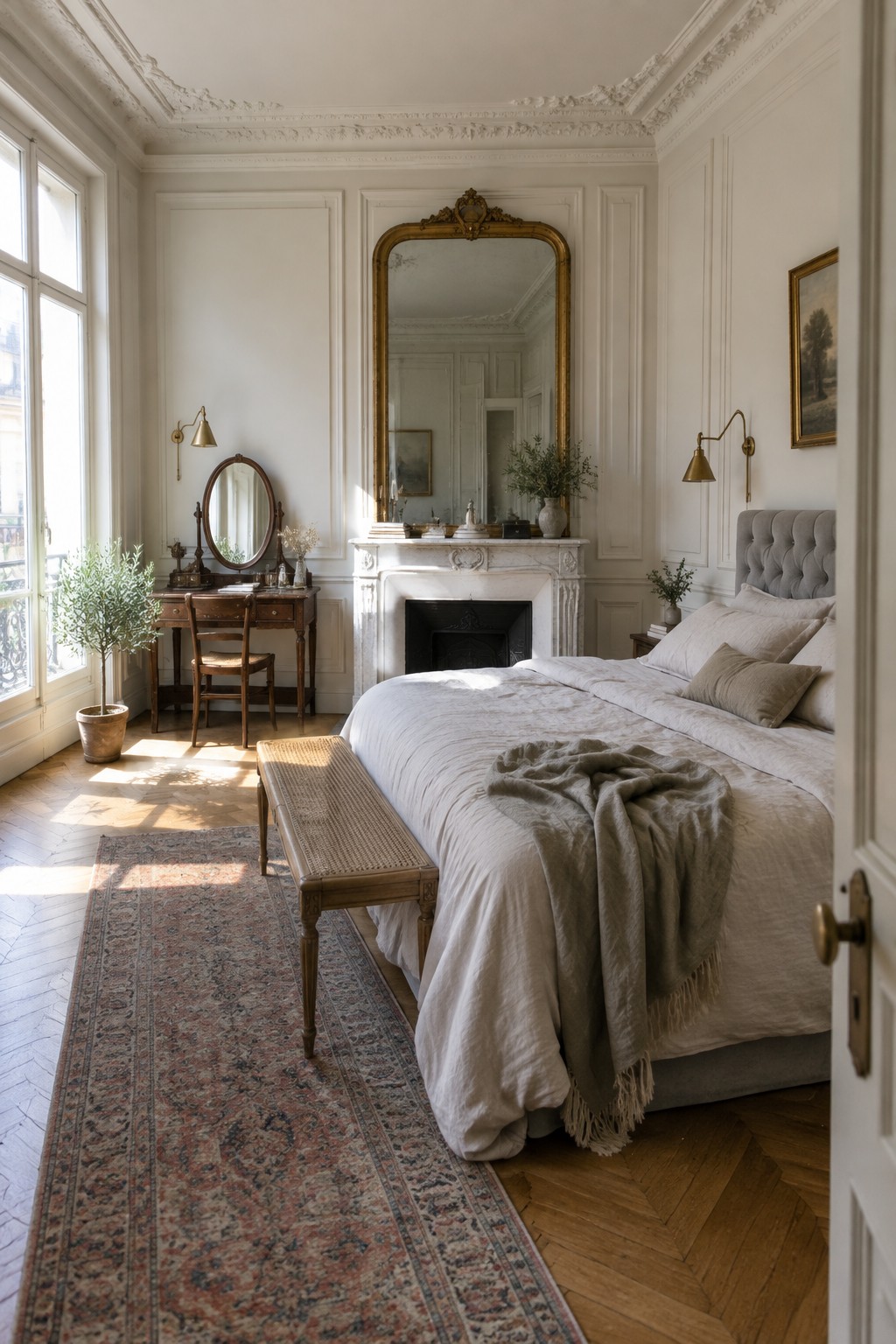
Mouldings give a room built-in structure that makes it easier to decide where furniture should go. In older homes the panels on the walls and the lines on the ceiling already suggest natural spots for larger pieces, so you do not have to guess at balance.
Place a vanity or desk where a lower panel meets the floor, and slide a bench or low seat into the open space in front of it. This keeps the room calm and lets the vintage pieces sit comfortably inside the architecture instead of fighting it. It works best in bedrooms that already have strong trim details.
Pair Mouldings with Vintage Furniture
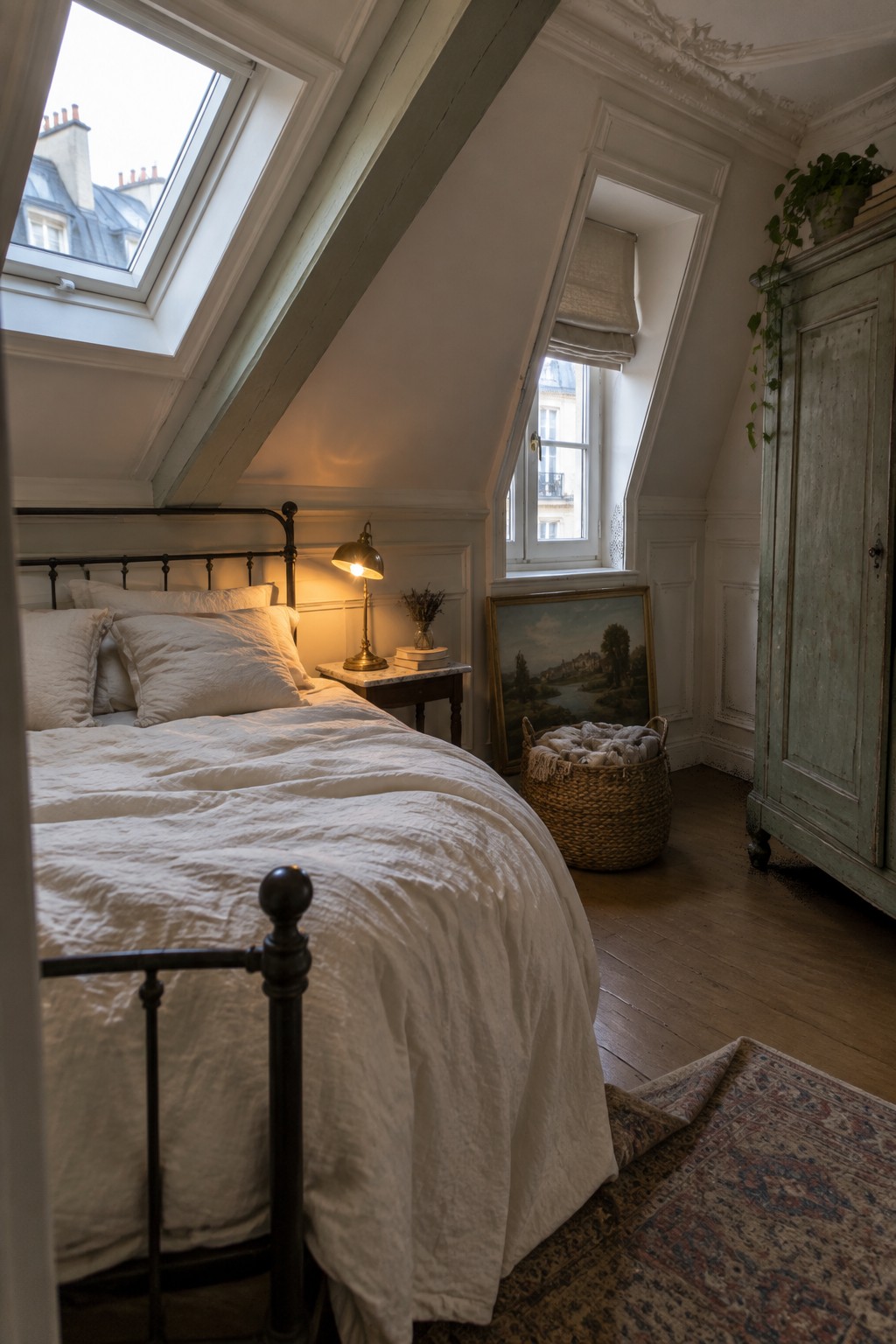
Mouldings give an attic bedroom structure when the ceilings slope in different directions. They break up the walls and create a finished look that works well with older furniture rather than something new and plain.
Look for pieces like a dark metal bed or a painted armoire that sit comfortably against the trim without competing with it. This approach suits smaller Parisian-style rooms where the architecture already provides most of the interest.
Deep Wall Color With White Mouldings
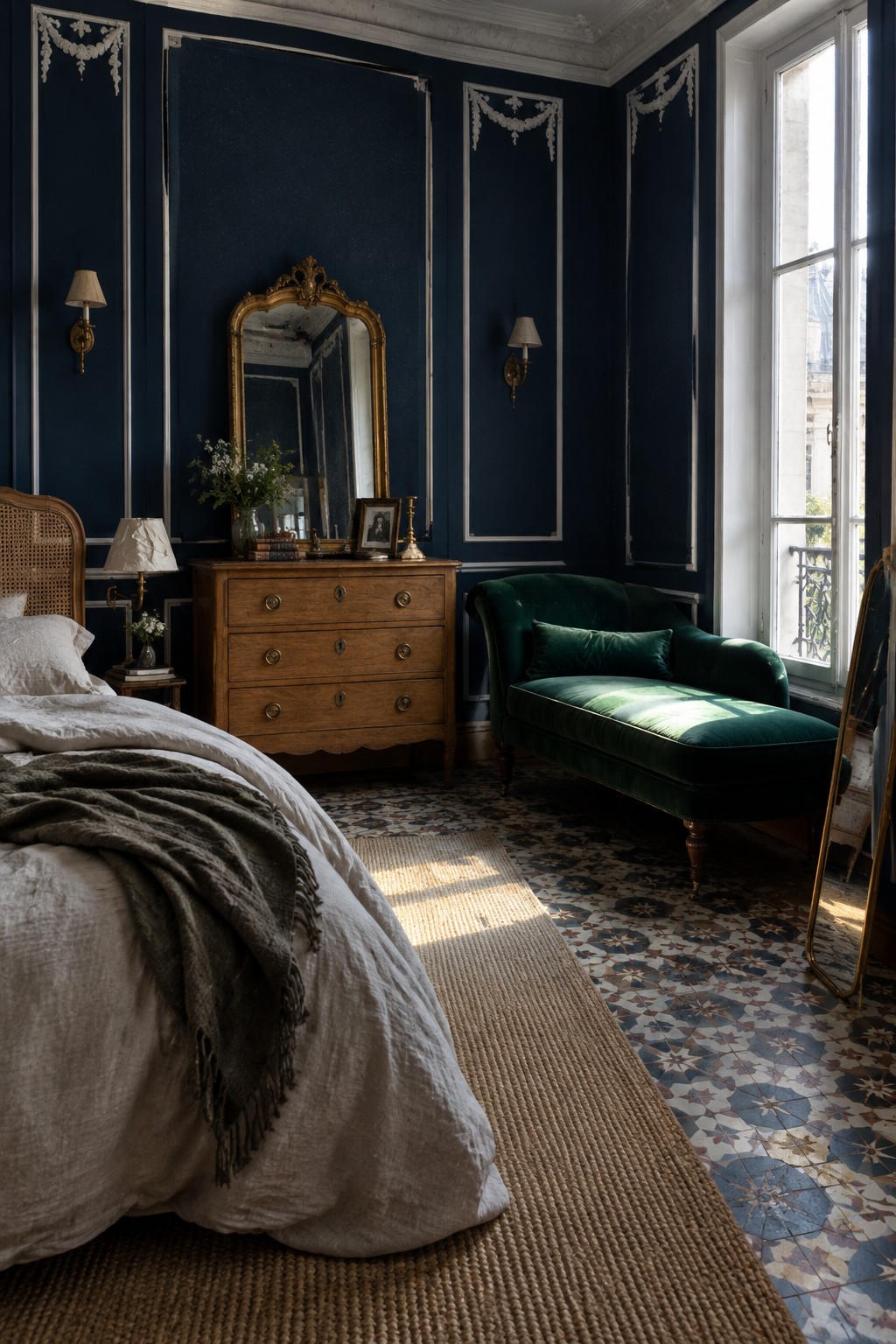
Painting the walls a deep shade while keeping the mouldings bright white gives vintage furniture a strong, steady backdrop. The contrast makes the trim work stand out without any extra effort, and it helps older pieces feel grounded rather than lost against pale walls.
This approach works best in rooms that already have good architectural detail. Stick with warm wood tones and simple fabrics so the space stays balanced instead of turning too heavy or formal.
Blend Vintage Furniture with Classic Mouldings
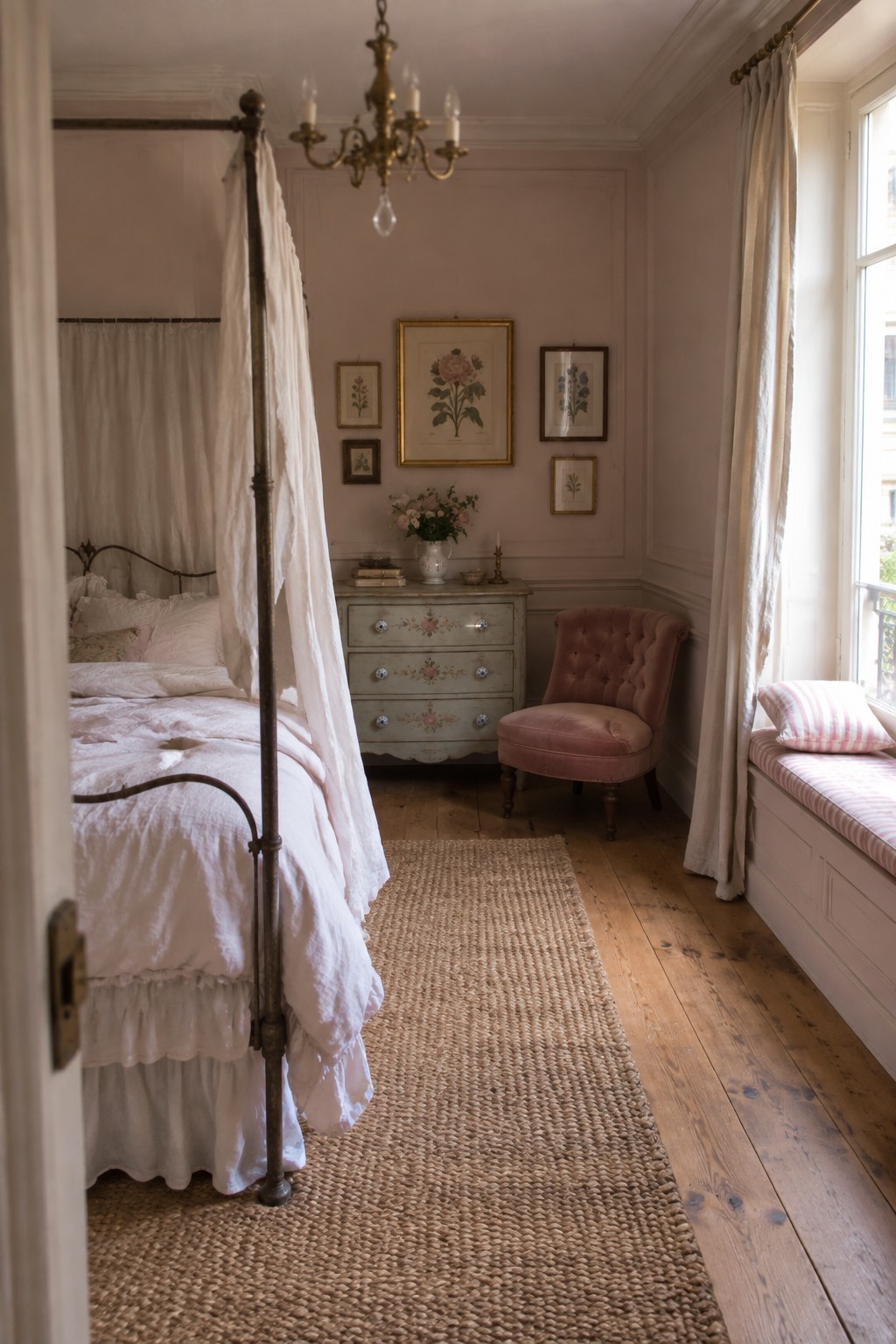
Vintage furniture often looks best when it has something to sit against. In this bedroom the painted dresser and velvet chair work nicely with the wall mouldings, giving the room shape without making it feel heavy.
Try the same approach in any bedroom that already has trim or panelling. Stick to softer colors and lighter textiles so the mouldings remain the main feature rather than competing with darker or busier pieces.
Let Mouldings Anchor Vintage Furniture
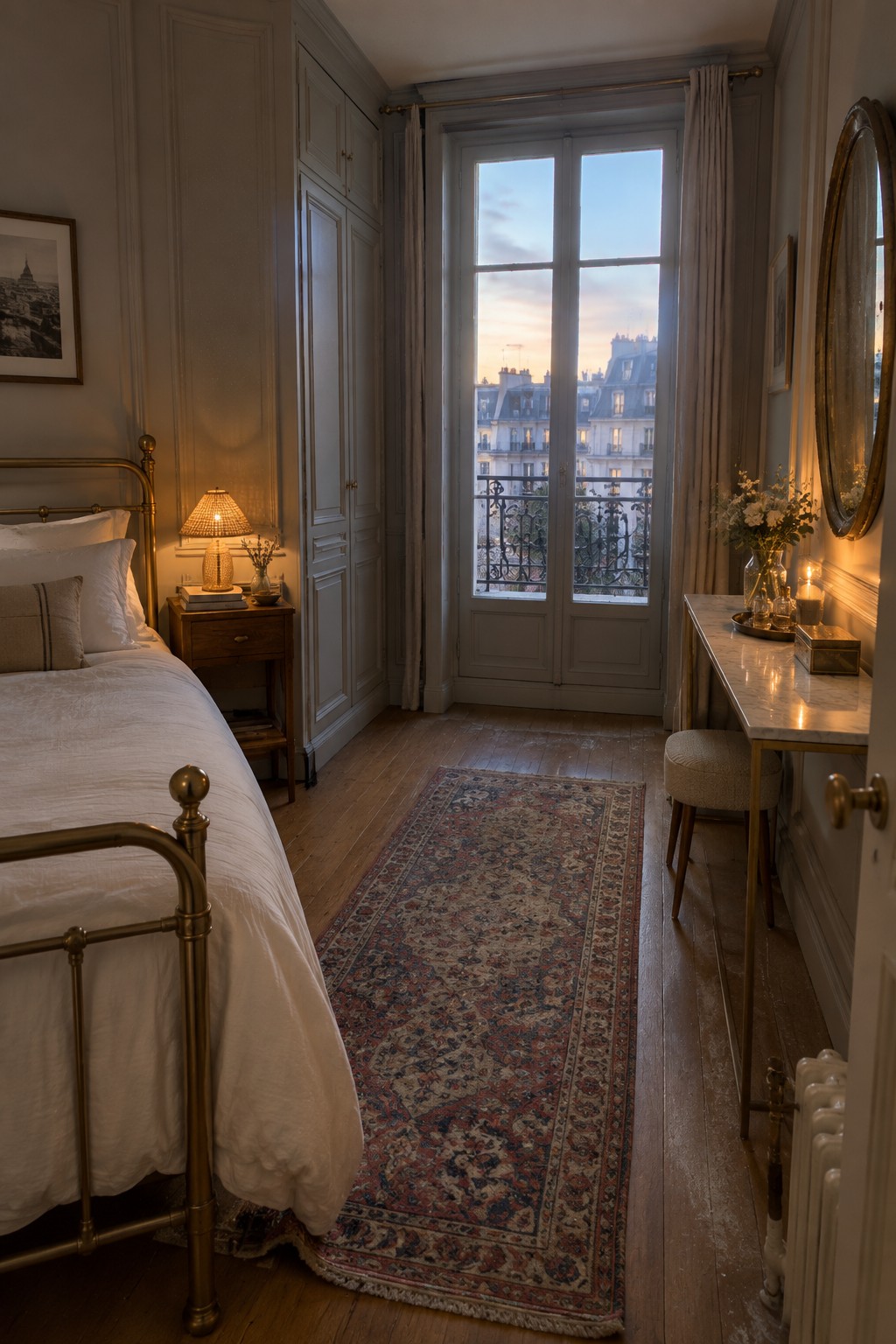
Mouldings give a bedroom a quiet structure that makes vintage pieces feel settled rather than added on. In this room the paneling and tall doors set a clear backdrop, so the brass bed and simple wooden nightstand read as part of the architecture instead of separate objects.
This works best in older apartments or homes where the trim is already in place. Keep the colors soft, limit the number of pieces, and let the mouldings do the organizing so the room stays calm and collected.
Mouldings That Complement Vintage Furniture
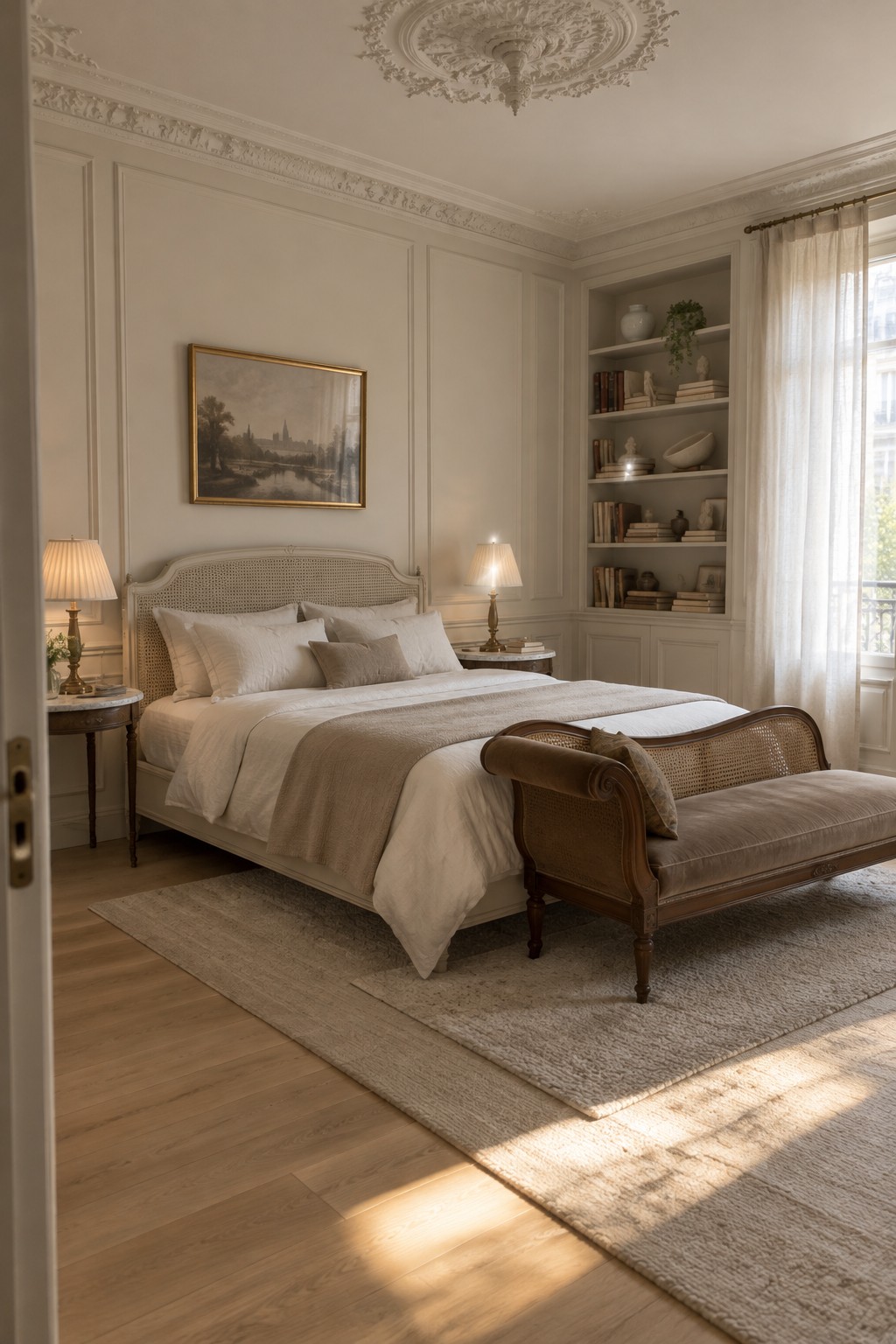
Mouldings give a bedroom a quiet structure that helps older furniture feel settled rather than placed. The panelled walls create a soft frame that lets the cane headboard and wooden chaise read as the main features without extra effort.
This works well in apartments or older homes where you can add simple wall panelling. Keep the paint light, choose one or two vintage pieces with interesting shapes, and let the mouldings do the rest. It suits anyone who wants a calm room that still feels gathered over time.
Dark Painted Mouldings with Vintage Furniture
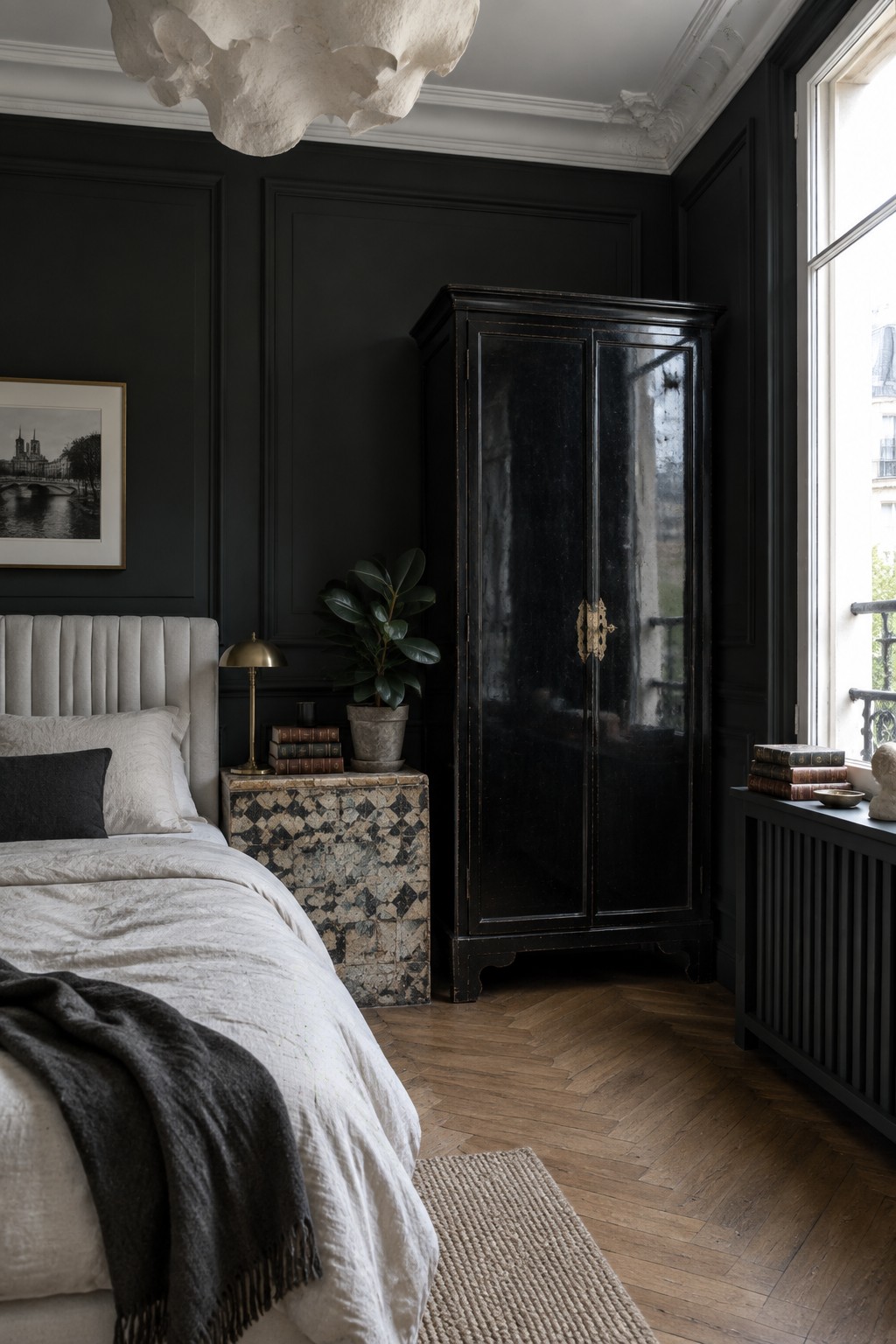
Painting the mouldings and paneling a deep black color gives the whole room a richer, more grounded feel. It turns the walls into a quiet backdrop that lets older pieces stand out without competing for attention. The effect feels especially right in bedrooms where you want some weight and calm at the same time.
This approach works best in homes that already have traditional trim or older architecture. Keep the rest of the room lighter with bedding and rugs so the dark walls do not close in too much. One large vintage piece, like a tall wardrobe, is usually enough to carry the look.
Vintage Wardrobes for Moulded Bedrooms
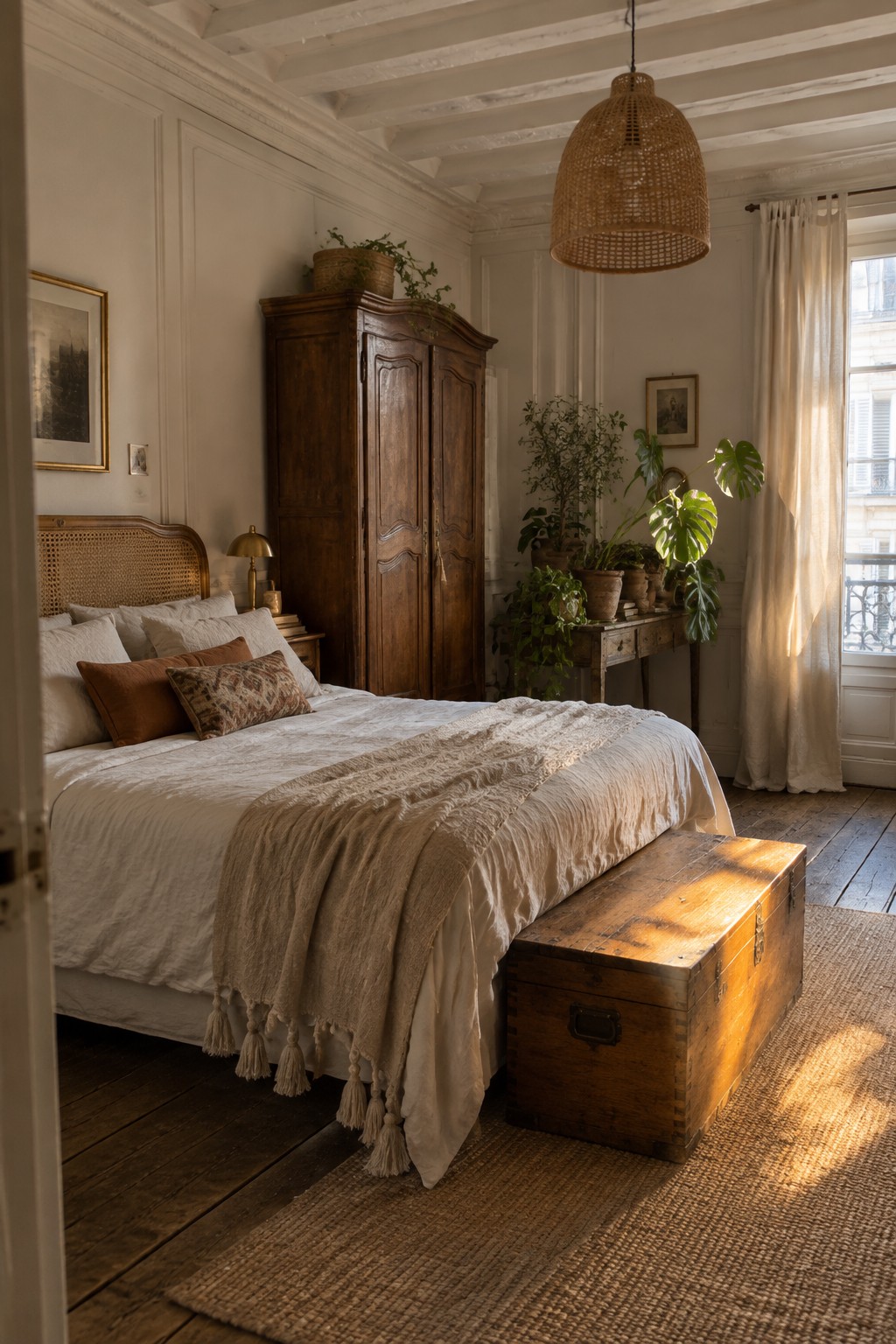
A tall vintage wardrobe gives a bedroom both useful storage and a sense of history that works well with existing mouldings. The dark wood stands out against white walls and trim, adding warmth without needing much else to feel complete.
Place one against a long wall where it can hold everyday clothes and extra linens. It suits older apartments or homes that already have classic trim and ceiling details, and it keeps the room from feeling too light or empty.
Vintage Trunks as Bedside Storage
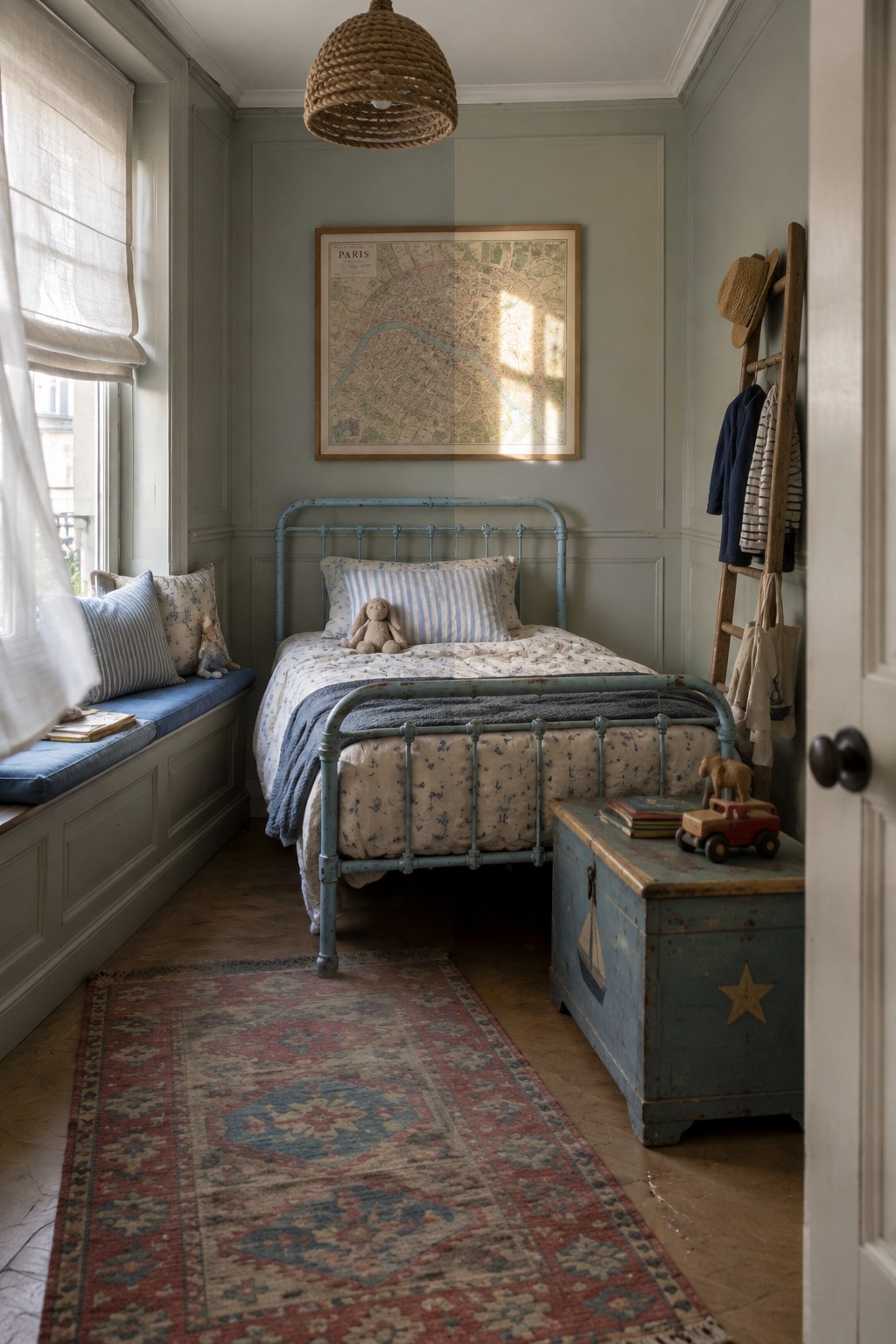
One simple way to add vintage furniture to a bedroom is to use an old trunk instead of a standard nightstand. It gives you built-in storage for extra bedding or books, and the worn paint brings some age to the room. The wall mouldings help keep the look structured so the trunk does not feel out of place.
This works best in rooms that already have some trim or panelling because the clean lines balance the rougher finish on the trunk. It suits smaller bedrooms where a regular nightstand might crowd the space. Keep whatever you set on top of the trunk fairly minimal.
Deep Wall Colors with Ornate Mouldings
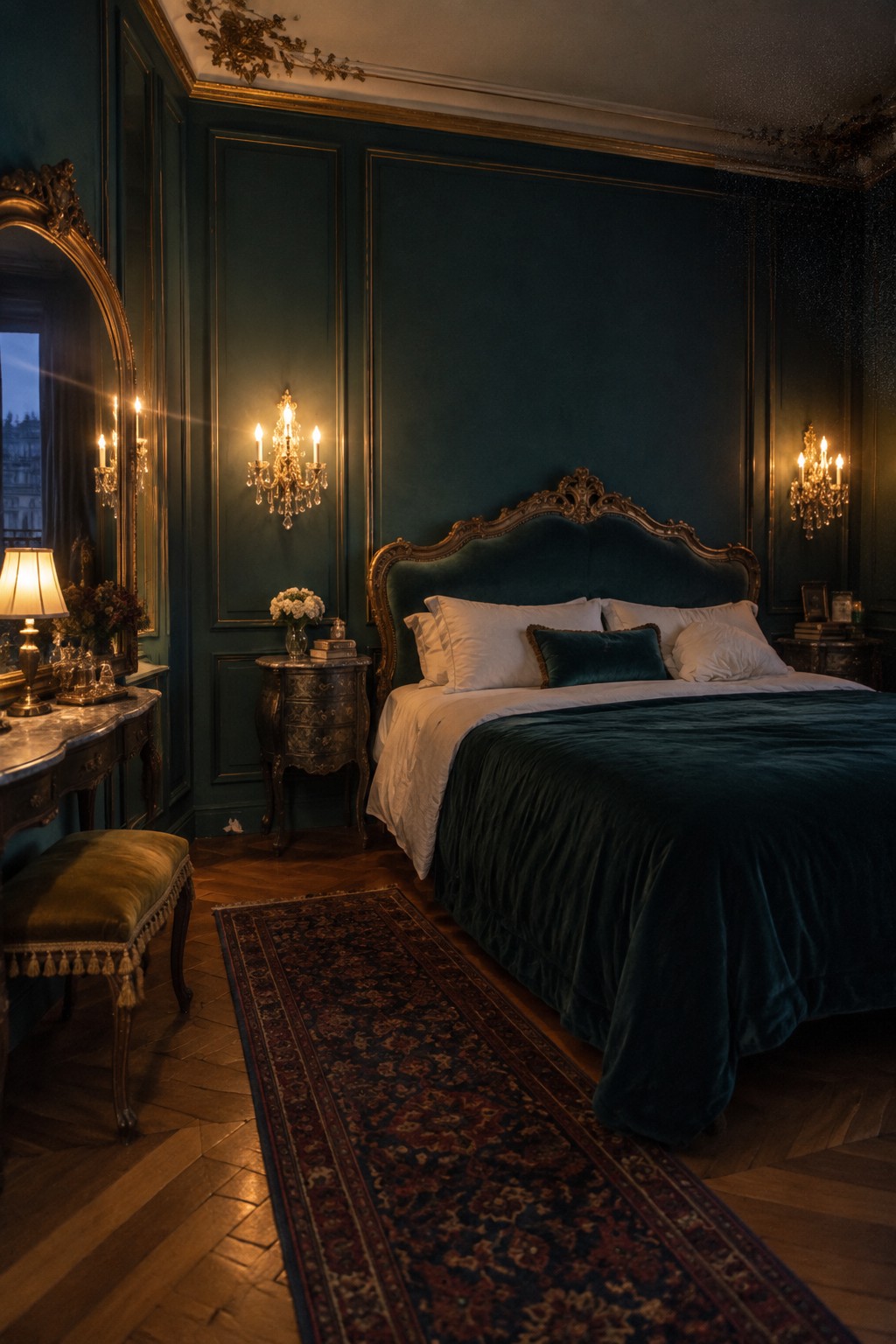
Painting walls a deep shade makes ornate mouldings stand out in a way lighter colors rarely do. The contrast gives vintage furniture more presence and helps the room feel finished without adding too many extra pieces.
This works best in bedrooms where you already have good trim or plan to add it. Keep the rest of the palette simple so the wall color and furniture can carry the look.
Using One Soft Color Across the Textiles
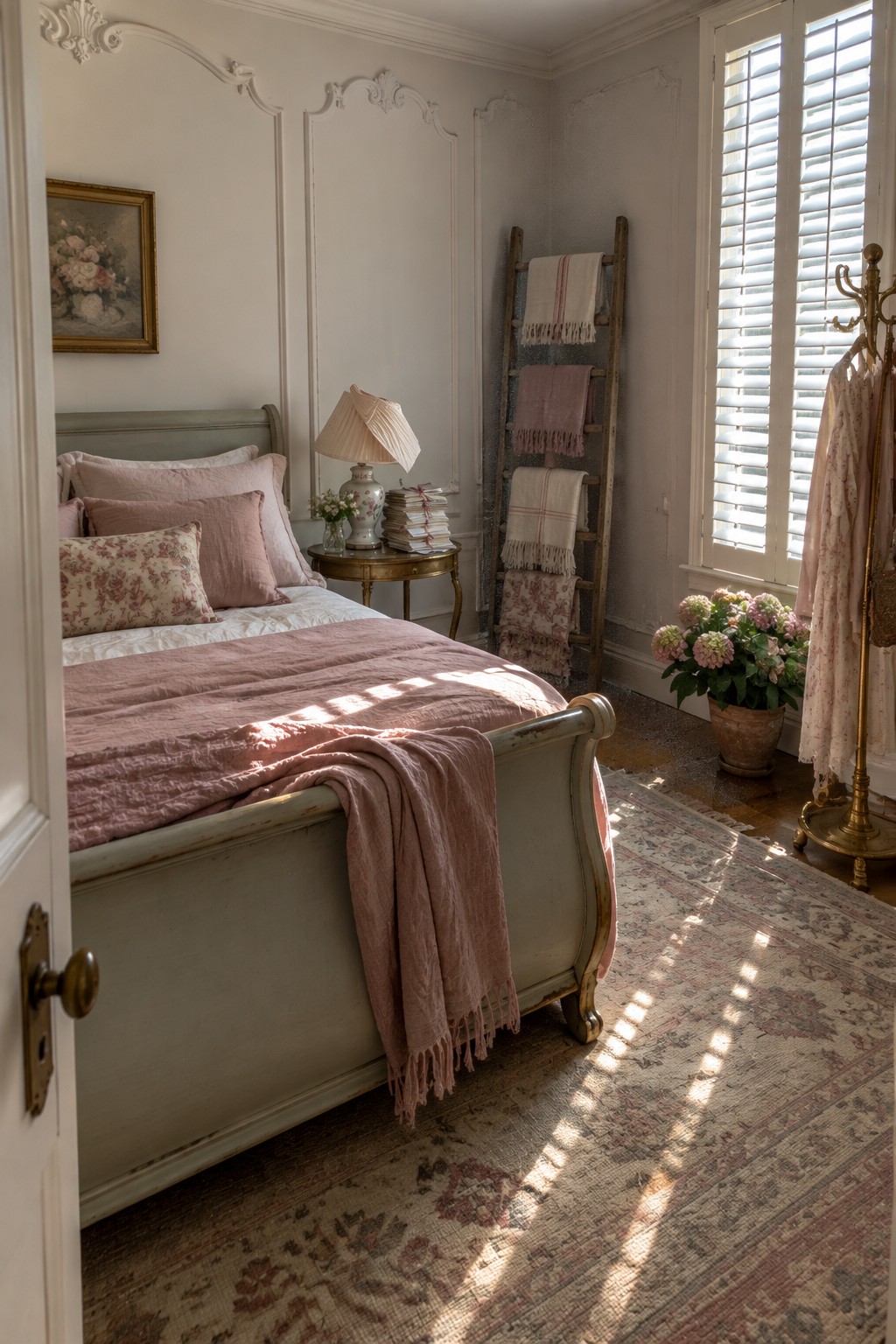
A single color family in the bedding and throws keeps the room feeling calm and pulled together. It lets the wall mouldings and the shape of the old bed frame stand out without extra pattern or contrast getting in the way.
This approach works best in bedrooms where you already have strong architectural details or a few good vintage pieces. Pick two or three shades within the same range for your linens and blankets, and skip anything that pulls too far from that tone.
Painted Motifs Within Wall Mouldings
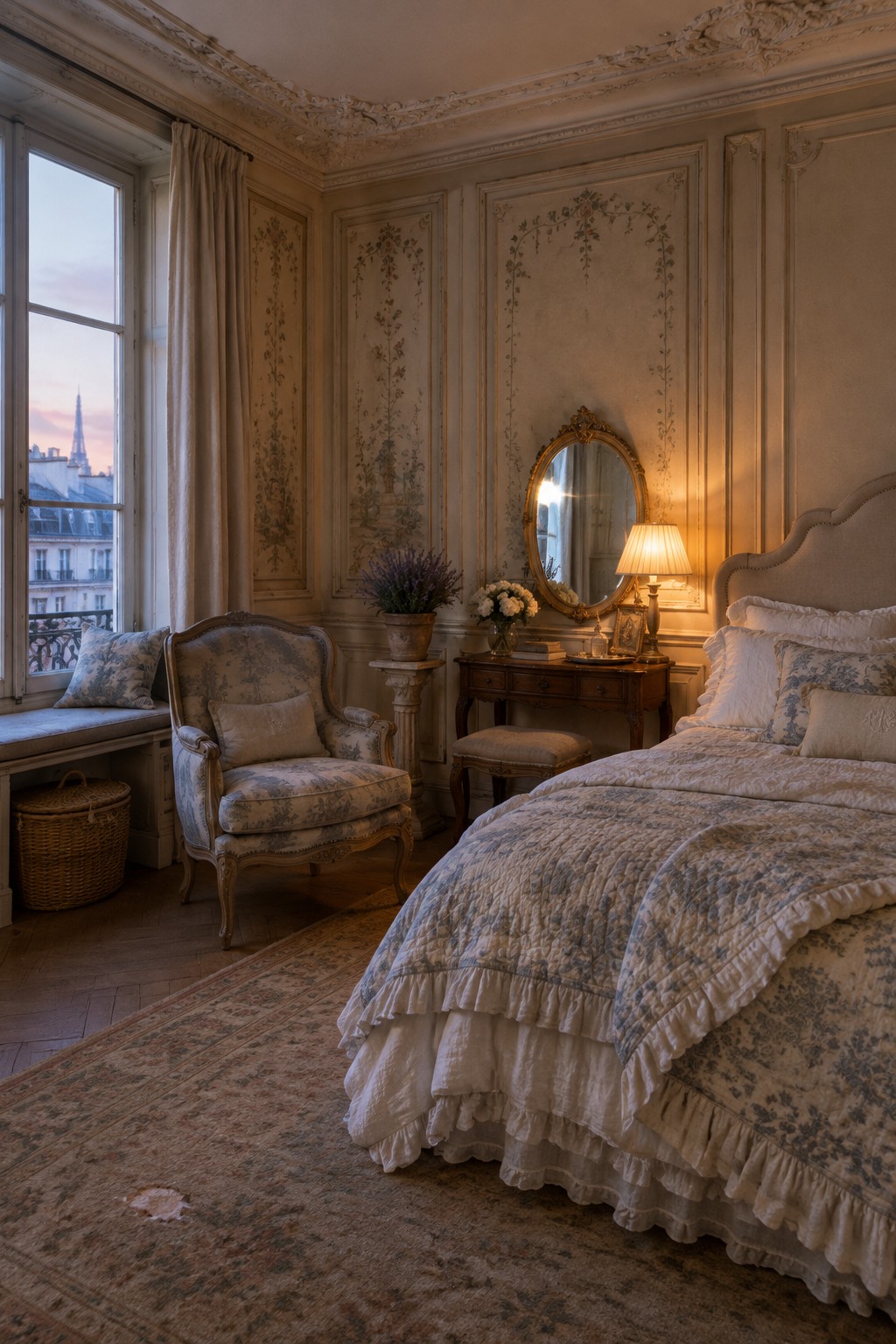
One of the simplest ways to add character to a bedroom with vintage furniture is to bring painted details into the wall mouldings themselves. Instead of leaving the panels plain or using wallpaper, a few soft floral garlands painted directly onto the plaster give the room a quiet layer of pattern that feels personal and settled. It works especially well when the furniture already carries its own print, like the faded toile on the bed and chair.
This approach suits older apartments or homes where the mouldings are already in place. Keep the colors muted so the painting reads as part of the architecture rather than decoration added later. The key is restraint. A few repeating motifs are enough to connect the walls to the vintage pieces without crowding the space.
Add a Vintage Armoire to a Moulded Room
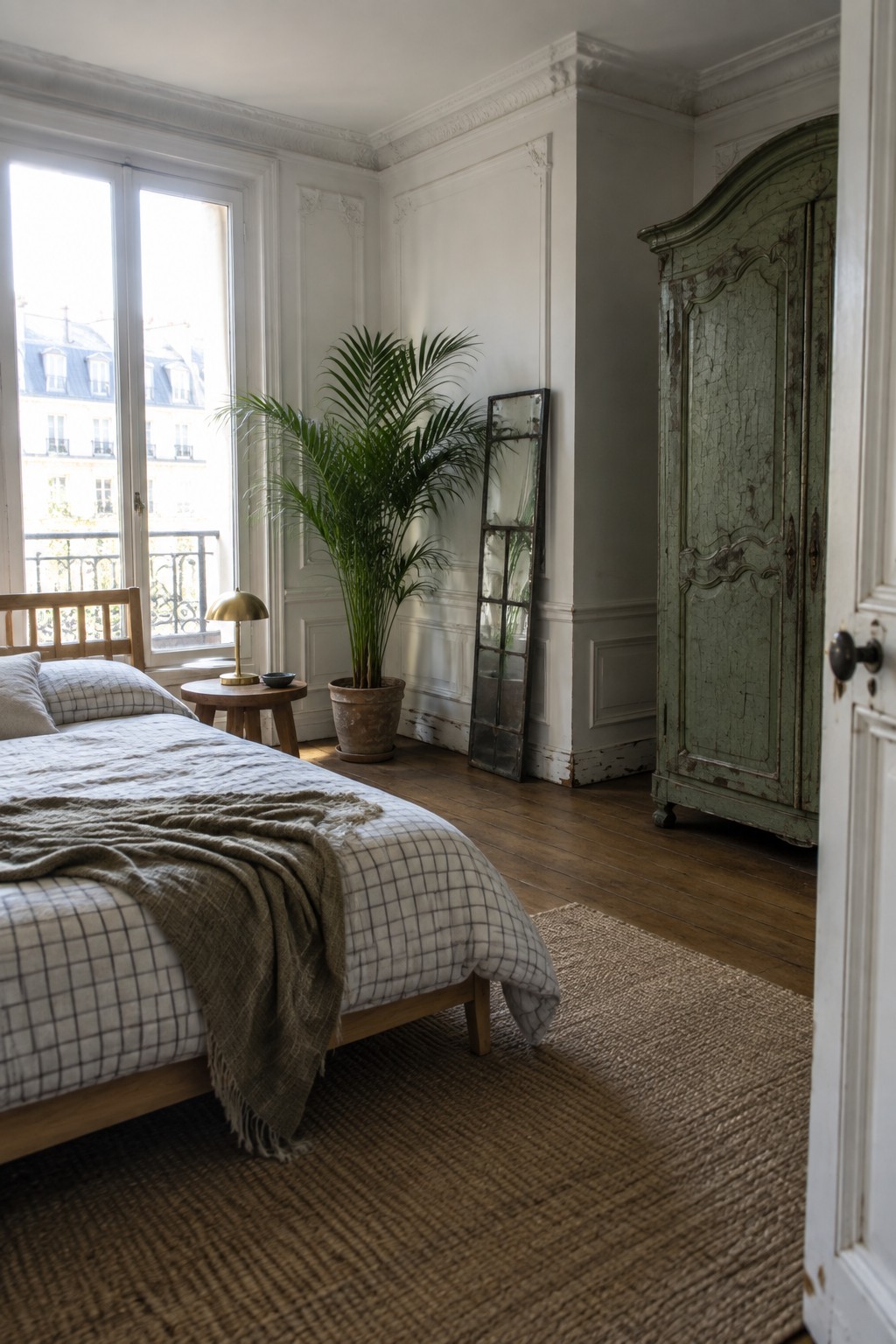
A big vintage armoire gives a bedroom weight and history without much effort. The chipped green paint on this one stands out against the white mouldings and keeps the space from feeling too neat or flat. People often like this mix because it adds storage while still letting the architecture show through.
This approach suits older apartments or homes that already have trim on the walls. Place the armoire where it can be the main focal point, then keep other furniture low and simple. Too many competing pieces will take away from the effect.
Adding a Vintage Chaise Lounge
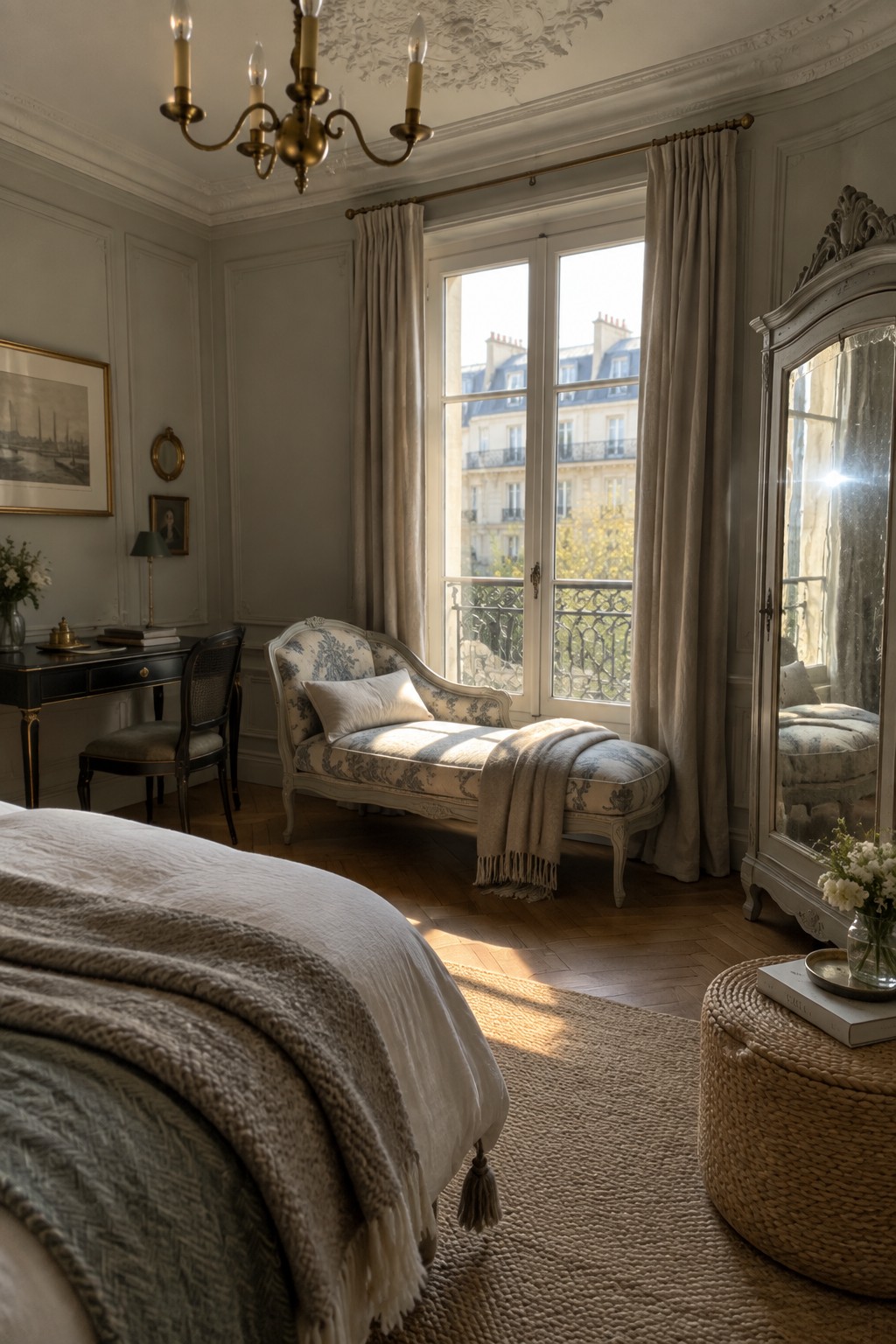
A vintage chaise lounge gives a bedroom that easy Parisian feel without crowding the space. The curved shape and soft upholstery stand out nicely against the straight lines of wall mouldings and help the room feel finished rather than styled too hard.
This works well in rooms that already have classic trim and tall windows. Keep the fabric simple, like a toile or faded stripe, and place the chaise where morning light can hit it. Avoid filling the rest of the room with too many other vintage pieces or the look can start to feel heavy.
Wall Mouldings Highlight Vintage Beds
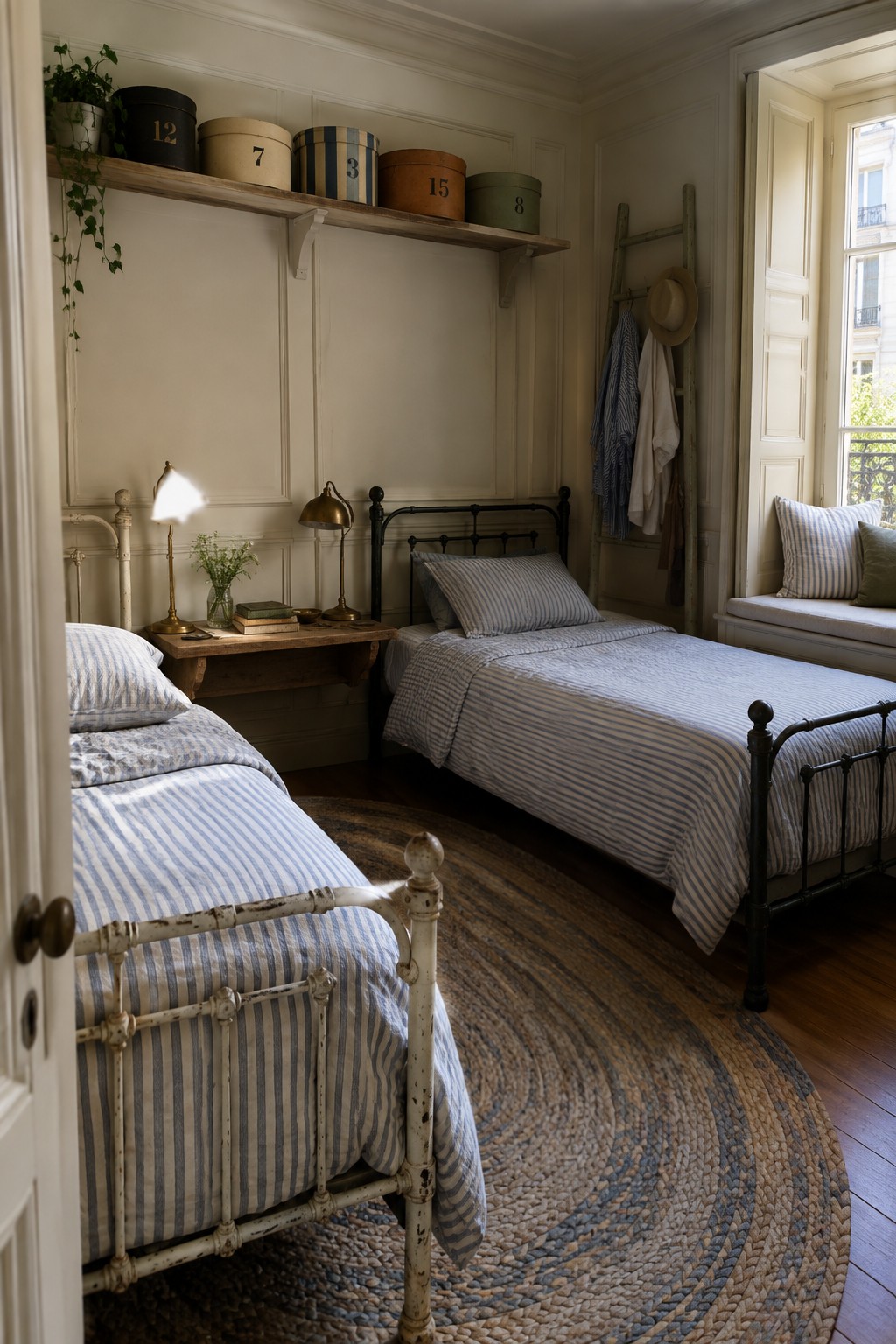
Wall mouldings give a bedroom that clean, structured backdrop that lets vintage pieces feel more intentional. The panelling here keeps the room from looking cluttered even though there are two iron beds, striped bedding, and a mix of old furniture.
This works best in smaller rooms or homes with existing trim. Keep the walls light and let the beds and simple textiles carry the character.
Pair A Low Wooden Sideboard With Moulded Walls
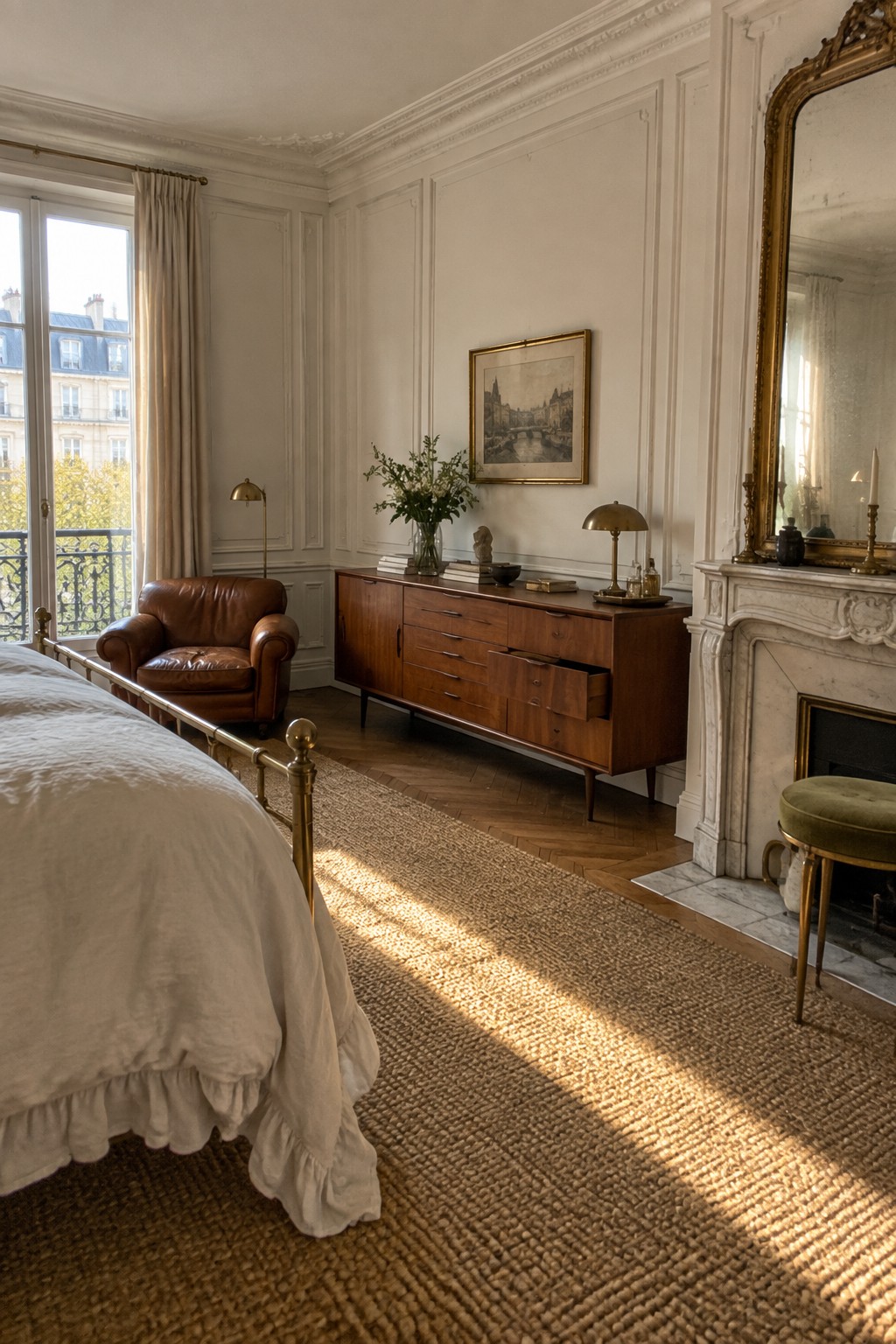
A low wooden sideboard works nicely in a bedroom with classic mouldings because it adds storage without breaking up the wall detail. The warm wood also softens all the white plaster and trim, which keeps the room from feeling too formal.
This setup suits older apartments or homes where you already have strong architectural lines. Place the piece along a long wall, keep the surface mostly clear, and let the wood tone do the work rather than adding too many extra layers on top.
Vintage Painted Furniture with Wall Mouldings
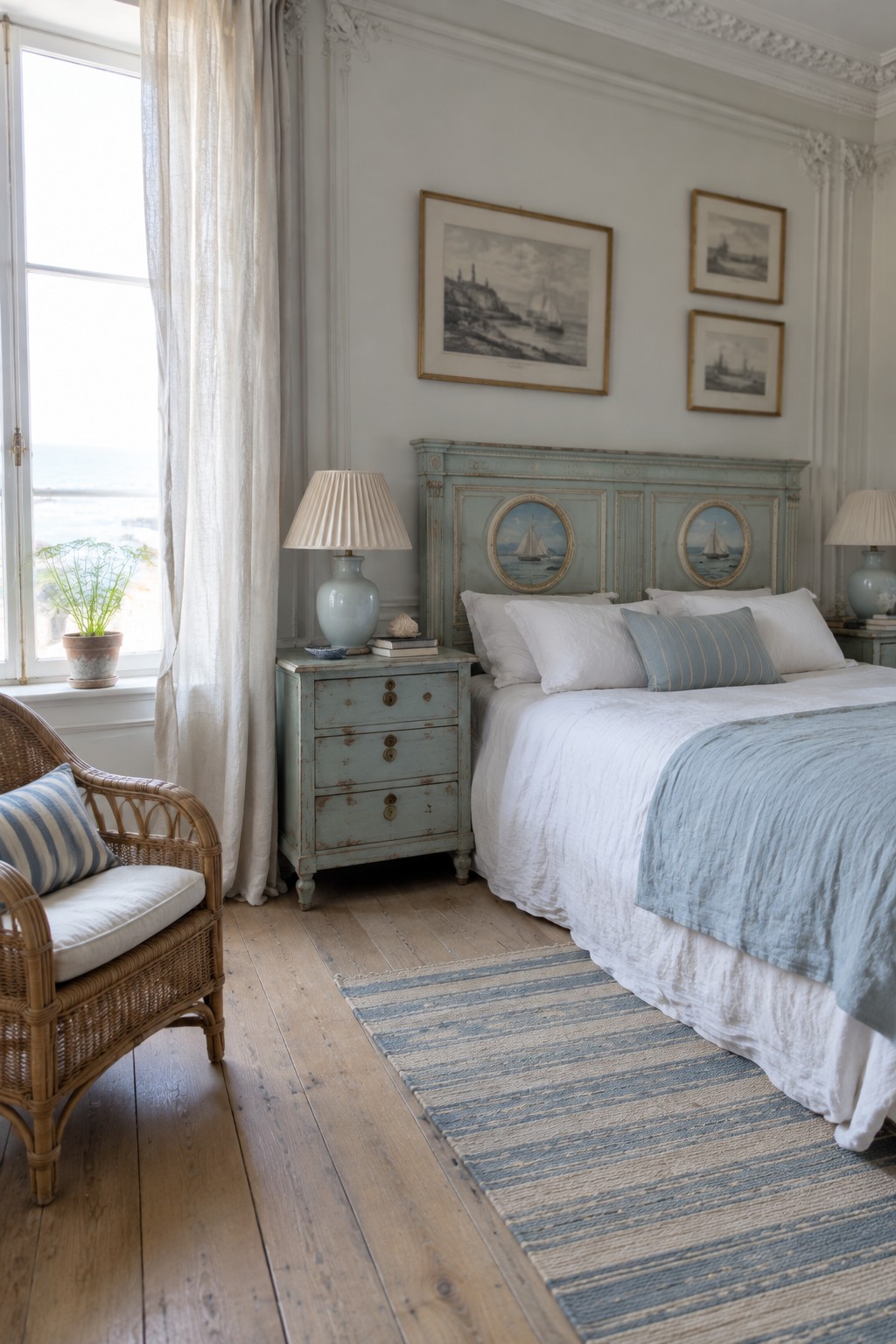
A painted vintage bed and chest can sit comfortably next to traditional mouldings without fighting them. The soft color and worn finish on the wood keep the room feeling relaxed rather than formal, which is often what makes these bedrooms feel lived in.
This works best in rooms that already have some trim or paneling. Keep the furniture to one or two gentle colors and let the white bedding and simple textiles balance the look so the mouldings stay visible.
Painting Mouldings Dark

Painting mouldings and paneling a deep shade turns them into the main feature of a bedroom. The dark color makes the trim stand out instead of fading into the background, and it gives vintage furniture a richer setting without needing lots of extra pieces.
This works especially well in rooms that already have some architectural detail. Keep the rest of the space simple with soft fabrics and a few larger items like an old wardrobe so the walls and furniture balance each other.
Pair A Vintage Armoire With Classic Mouldings
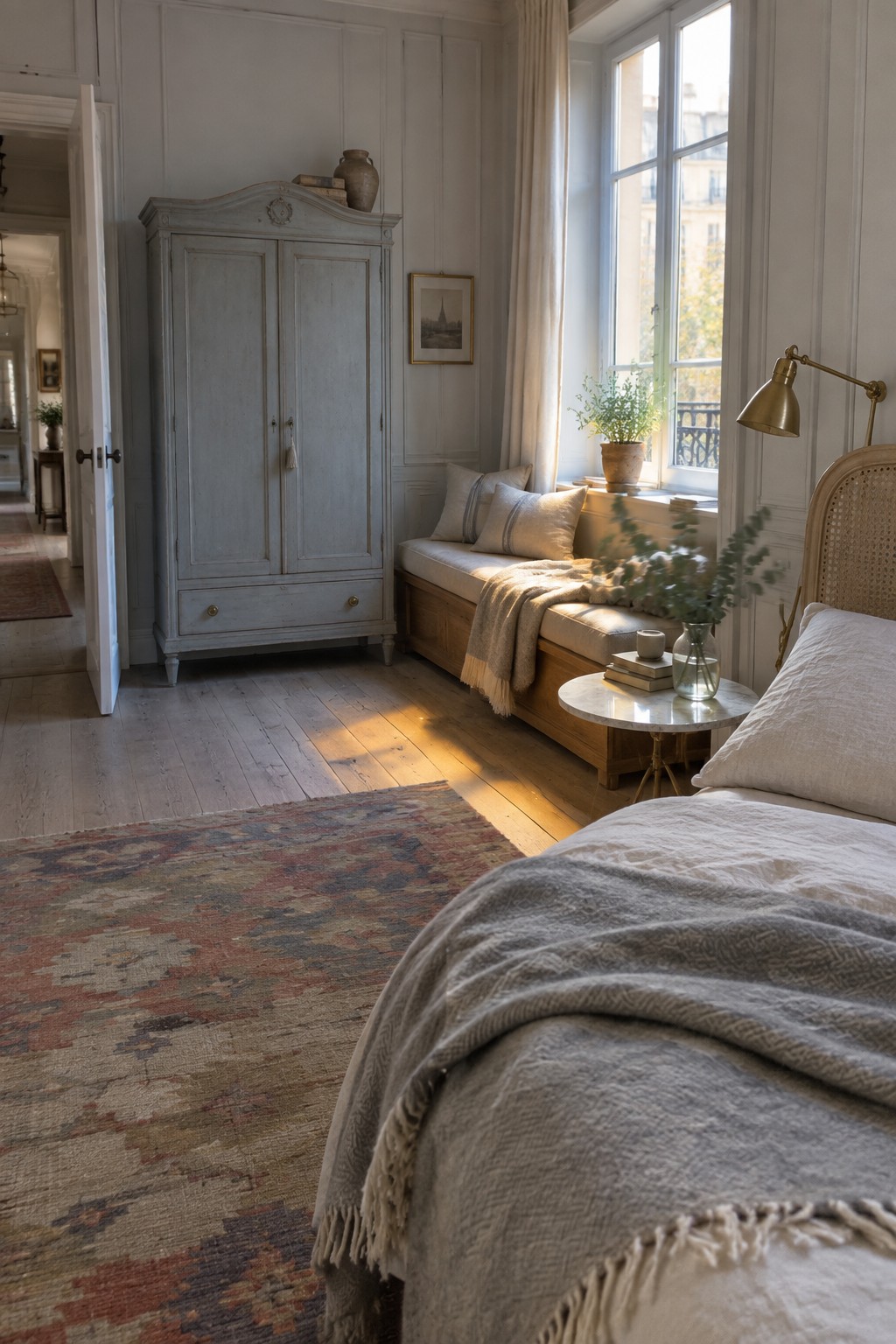
A painted vintage armoire gives a bedroom with wall mouldings both storage and a focal point. The soft color keeps it from competing with the trim, while the shape adds height and a collected feel that new pieces often lack.
Set it against a long wall so the panels show on either side. This works best in older apartments where you already have the architecture and just need one solid piece to hold clothes or linens without adding more built-ins.
Vintage Wardrobes With Wall Mouldings

A vintage armoire with peeling paint brings real texture next to crisp white mouldings. The contrast keeps the room from feeling too polished while still respecting the architecture that is already there.
This approach works best in bedrooms that already have decent trim and decent ceiling height. Keep other furniture low and simple so the armoire can hold its own without competing for attention.
Frequently Asked Questions
Q: What if my room has no mouldings at all? A: Add basic crown moulding along the ceiling and a simple chair rail halfway up the walls. Paint them to match the wall color so they blend in yet still frame your space. This draws attention to the vintage furniture without extra fuss.
Q: How do I pick vintage pieces that actually fit together? A: Start with one larger item like a bed or dresser that has curved details. Then choose smaller pieces in similar wood tones or with matching hardware. Limit yourself to three or four total so the room stays open.
Q: Can I use color beyond soft neutrals? A: Yes. Try a muted sage green or warm gray on the walls to make white mouldings stand out. Keep bedding and curtains in cream or linen shades. This adds depth while the furniture remains the main focus.
