


I’ve noticed that wood and stone change how a room holds light and sound once you actually live in it day after day.
When the grain and texture are balanced with the way people move through the space the whole room feels steadier and less like a showroom.
Small samples help more than I expected.
The best results seem to come from letting the materials guide the layout instead of forcing a plan onto them first.
I keep coming back to the same point that these choices only settle in after you see how they handle real use over a few seasons.
Pairing Stone With Wood In The Living Room

A big stone fireplace can anchor a room when it is surrounded by wood rather than trying to compete with it. The built-in shelves and low cabinetry in the same warm tone keep the whole wall feeling calm instead of busy, and the wood floor and furniture carry that same material through the rest of the space.
This works best in rooms that already have decent natural light and simple architecture. Keep the wood tones close in value so nothing jumps out, and let the stone do the heavy work on the main wall. It suits newer homes that need a bit more warmth and older homes that already have wood trim or floors.
Mixing Wood And Stone On The Kitchen Island

A kitchen island built with a stone base and a wood top gives the room a solid, natural feel without trying too hard. The contrast between the pale stone and the darker wood grain keeps things interesting while still looking calm and put together. It works especially well when the rest of the kitchen stays light and simple.
This approach suits open layouts where the island gets used every day. It holds up to wear and still feels warm under hand. Just make sure the wood tone and stone color actually relate to each other so the mix reads as one choice rather than two separate ones.
Pebble Flooring in the Bathroom

A pebble floor brings a simple kind of texture that works well with wood and stone in a bathroom. It keeps the space feeling grounded and natural without needing a lot of extra decoration or pattern.
This approach suits bathrooms that already have wood cabinetry and stone surfaces. It works best when the pebbles are smooth and the room gets decent light so the texture shows up without looking dark or uneven.
Letting a Wooden Bed Frame Soften Stone Walls
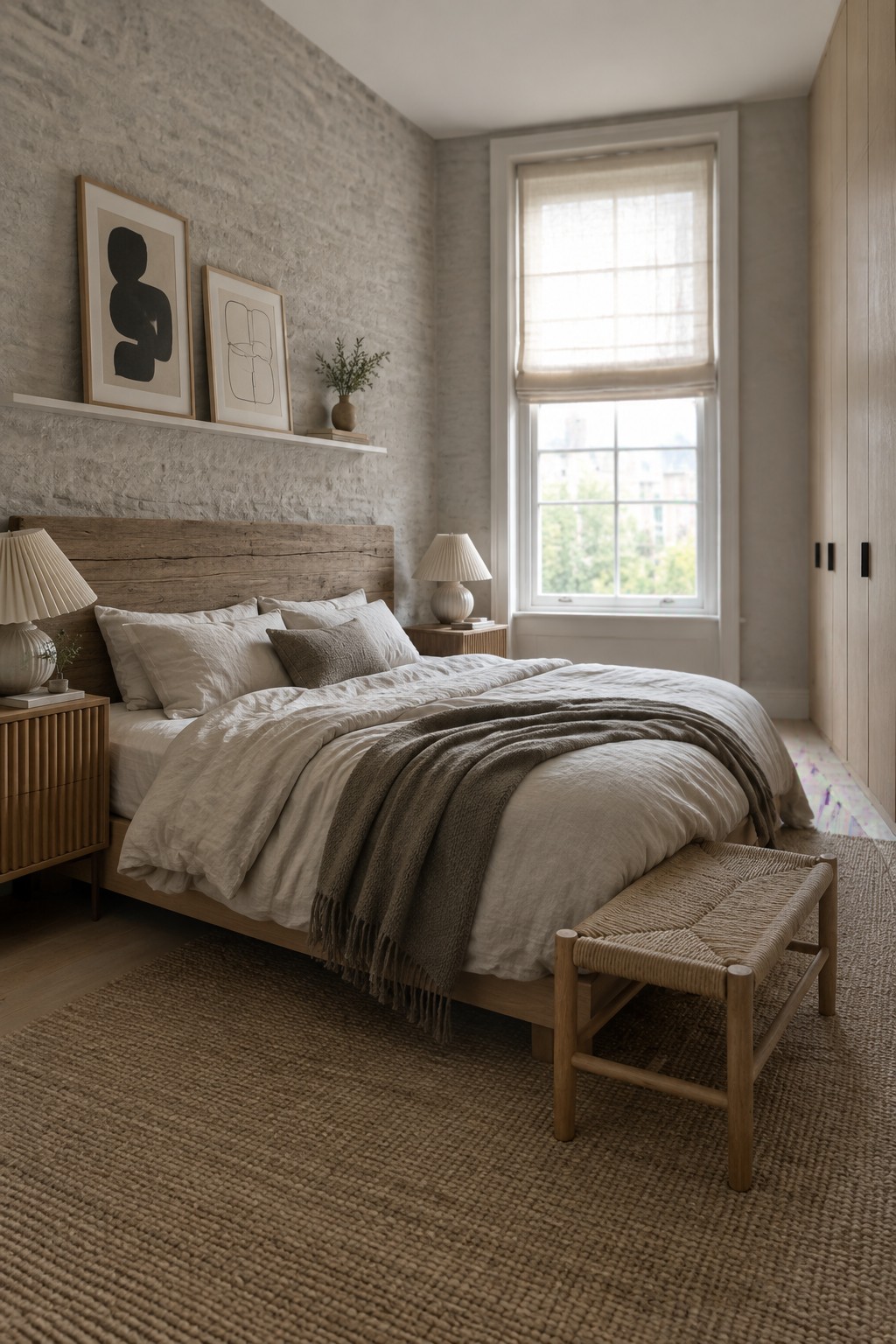
A heavy wood bed frame brings real warmth to a room with stone walls. The grain and color of the wood contrast nicely with the rough texture, and it gives the space a grounded feel without needing much else.
This idea works well in modern homes that already have exposed stone or similar surfaces. Keep the bedding light and simple, and let the wood carry the room. One or two matching wood pieces nearby are usually enough to hold it together.
Solid Wood Dining Tables Balance Stone Rooms

A big wood dining table brings real presence to a space that mixes stone and timber. The natural grain and weight of the wood soften the harder lines of a stone fireplace or wall and make the room feel more grounded without adding clutter.
This approach suits open-plan homes where the dining area sits near living spaces or a hearth. Choose a table with some width and visible texture so it holds its own against stone, then keep other furniture lighter so the wood stays the main draw.
Wood Bench Against a Stone Wall in the Entry
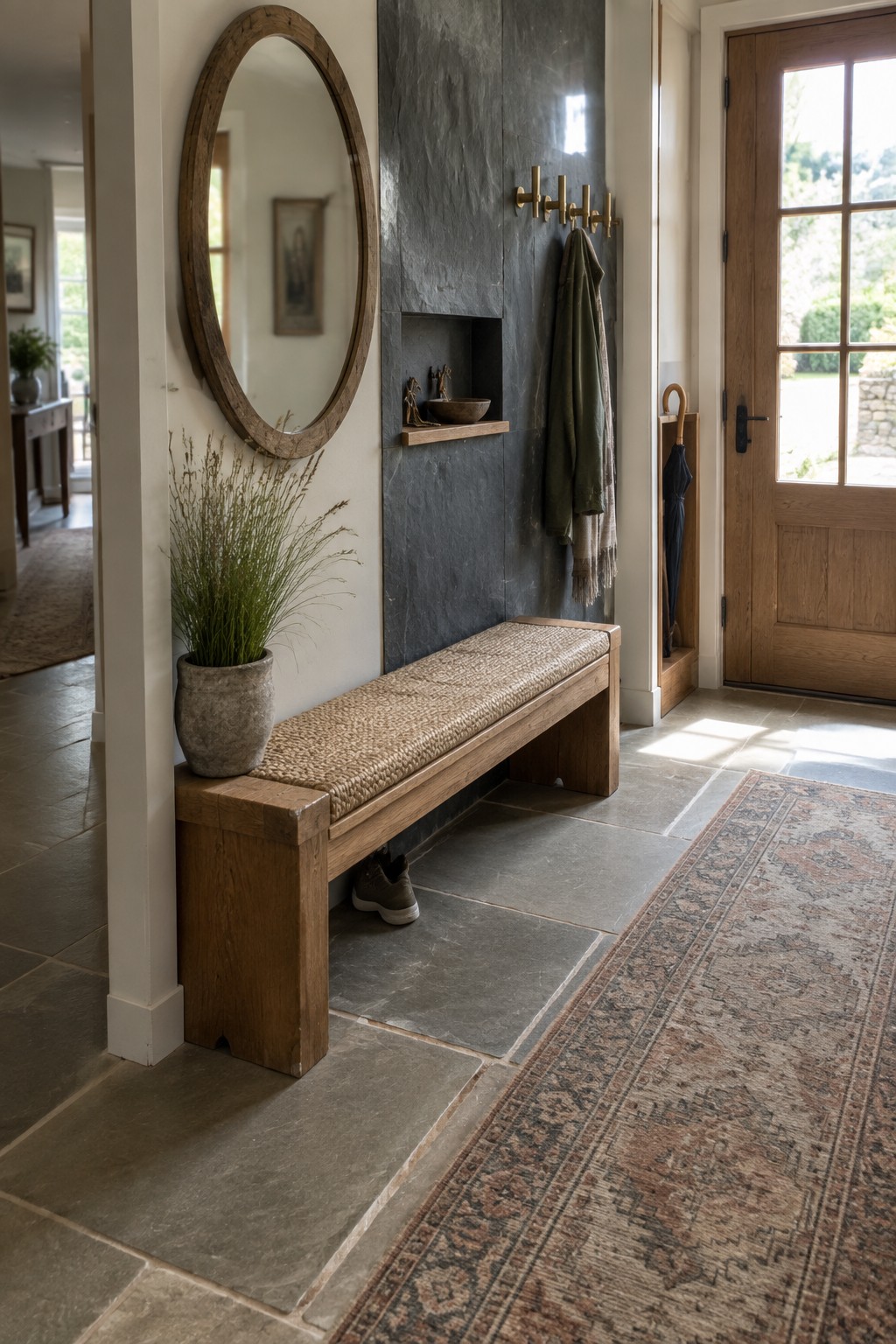
A wooden bench set against a stone wall gives an entry a practical spot to sit without making the space feel crowded. The natural materials handle wear from daily use and keep the area from looking too plain or purely functional. It works because the bench stays low and simple while the stone adds enough texture to hold interest on its own.
This approach suits homes that need a small mudroom or a front entry that gets regular traffic. Keep the bench length to match the wall section and leave room for shoes underneath. Avoid adding too many hooks or shelves above it or the wall can start to feel busy.
Built-In Shelving With a Window Daybed

A simple daybed tucked under built-in wood shelves turns an ordinary window corner into a useful spot for reading or resting. The shelves give the wall purpose while the low seat keeps everything grounded and easy to reach.
This setup works best in homes that already have some wood or stone showing, since the natural materials do most of the work. Keep the bedding light and add only what you actually use so the nook stays calm instead of crowded.
Pairing Natural Stone With Wood In A Workspace
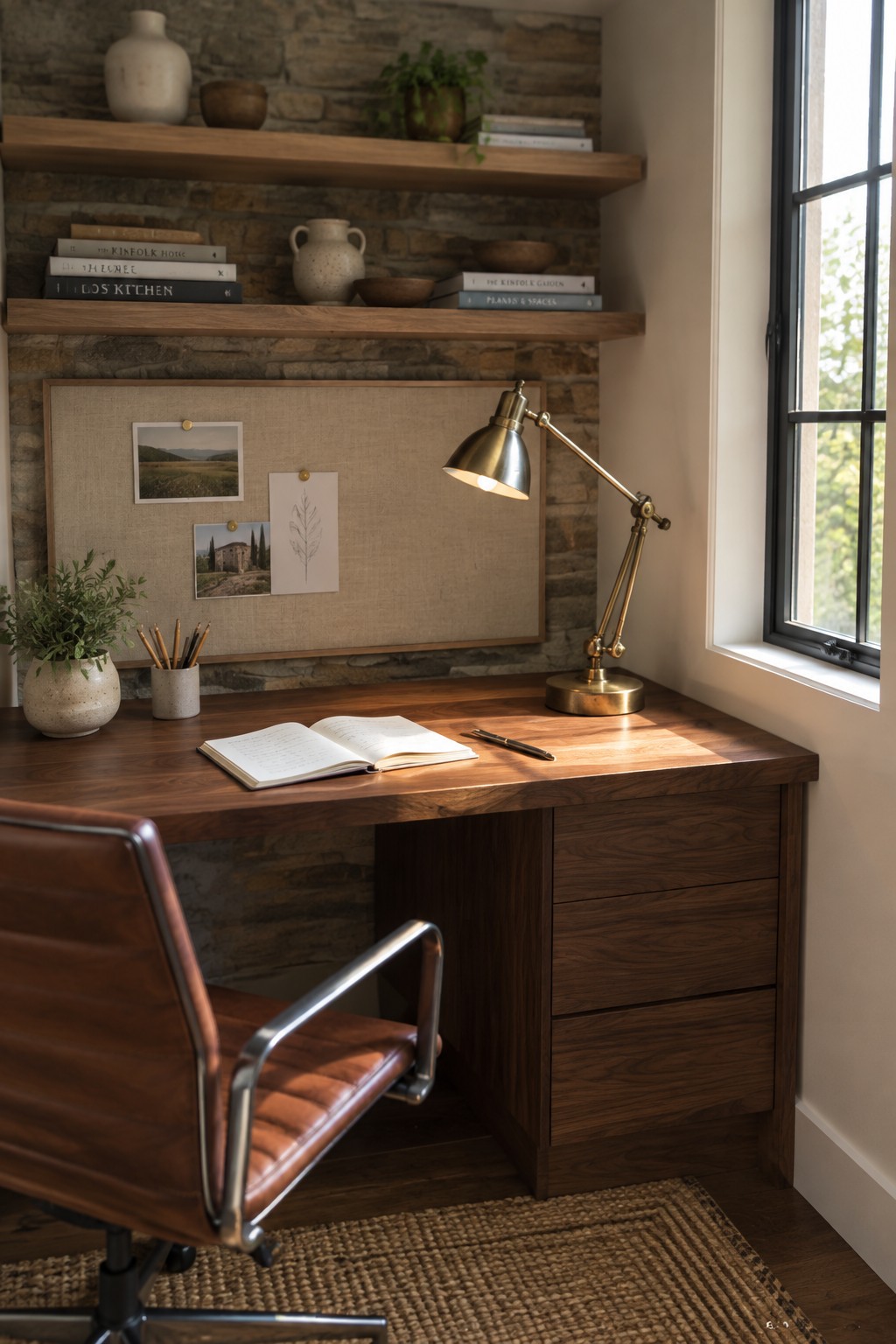
A wood desk set against a stone wall gives a workspace a steady, grounded feel that works without extra effort. The two materials balance each other, with the wood adding warmth and the stone bringing texture that keeps the area from feeling flat.
This setup suits homes that already lean on natural finishes and works best when the rest of the room stays simple. Avoid crowding the surface so the desk and wall can do the main job.
Stone Accent Walls in Nurseries

A stone accent wall gives a nursery a grounded feel that many parents find calming. It adds texture without needing bold colors or busy patterns, especially when the rest of the room stays soft with wood furniture and simple textiles.
This works well in smaller rooms where you want one strong surface to hold the space together. Keep the stone low, around chair rail height, and pair it with light walls above so the room still feels bright and easy to change as the child grows.
Open Wood Shelving For Laundry Storage

Many laundry rooms get treated as purely functional spaces, but adding open wood shelving changes that. The natural tone of the wood brings warmth to rooms that often feel cold, and woven baskets keep things organized without hiding them behind doors.
This setup works best in homes that already use wood and stone in other areas. It suits anyone who wants quick access to towels and supplies without digging through cabinets. Just keep the shelves at a comfortable height and choose baskets that are sturdy enough for heavier items.
Floating Wood Vanities With Stone Tops

Mounting a wood vanity to the wall and finishing it with a stone countertop gives a bathroom clean lines and real material weight at the same time. The wood keeps things warm while the stone handles daily use without fuss.
This setup works best in rooms that already have stone on the walls or floor. It adds useful storage without crowding the floor, and it pairs easily with simple fixtures and built-in niches for a calm, uncluttered look.
Low Platform Beds in Natural Wood

A low platform bed in dark wood gives a bedroom a steady, grounded feel without adding extra height or bulk. The simple frame sits close to the floor, which helps the room feel more open and connected to the wood tones around it.
This works best in smaller rooms or spaces that already lean minimalist. Pair it with a natural woven rug underneath and keep other furniture low and minimal so the wood and stone can stay the main materials in view.
Wood And Stone In A Narrow Kitchen
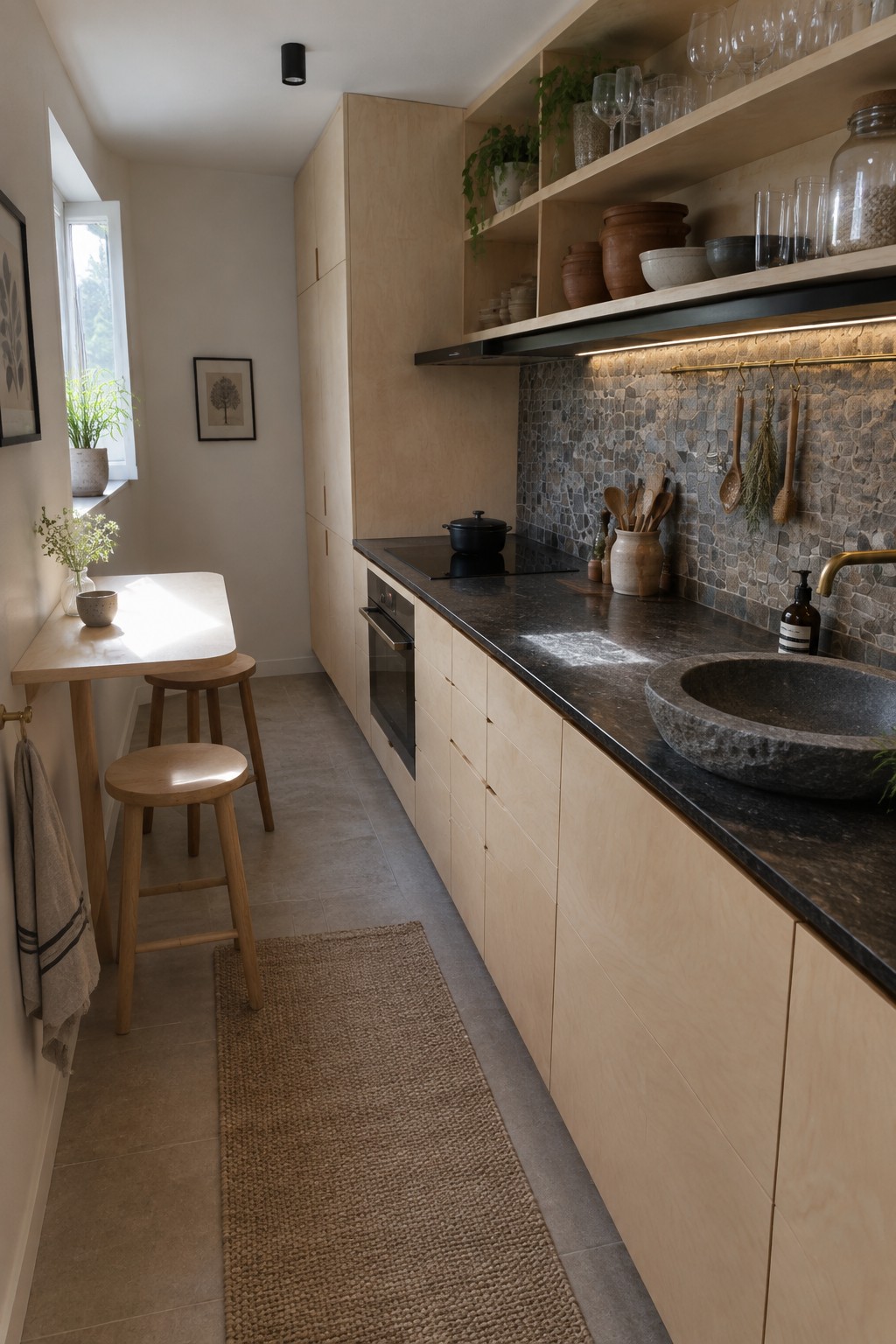
Light wood cabinets paired with dark stone surfaces give this kitchen a simple, grounded feel. The wood keeps the long space from feeling cold or closed in, while the stone counters, sink, and backsplash add texture that holds up to daily use. It is an easy way to bring natural materials into a tight layout without making the room feel busy.
This works best in smaller homes or galley kitchens where you want warmth but still need durability. Choose a lighter wood tone if your stone is dark, and let both materials show their natural grain and texture rather than covering them with heavy finishes.
Mixing Wood and Stone on a Fireplace Wall

Many living rooms feel more settled when the fireplace wall combines wood paneling with stone. The wood brings warmth and a sense of age while the stone adds texture and weight, and the two materials keep each other from feeling too heavy or too polished.
This works best in homes with wood floors or simple trim. Use built-in shelves on either side to hold books and a few objects, but leave enough empty space so the materials stay the focus. It suits rooms that need a strong central point without a lot of extra decoration.
Built-In Banquettes Along Stone Walls
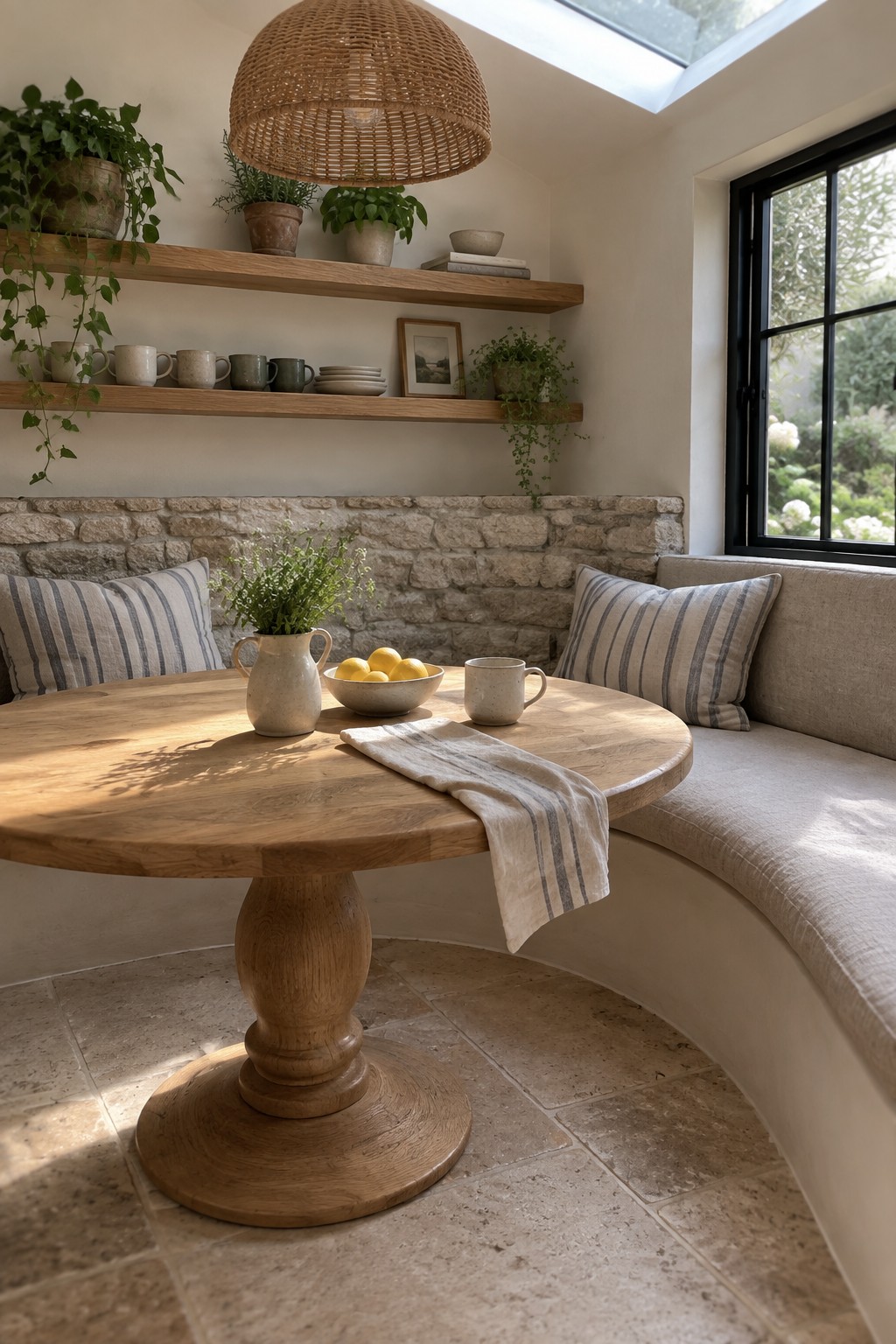
A built-in banquette against a stone wall gives a room a settled, practical feel that works especially well in smaller or awkward corners. The stone adds texture and durability while the bench keeps the space from feeling cluttered with extra chairs. Wood elements like the table and shelves tie everything together without needing much else.
This approach suits older homes or new builds that already lean on natural materials. It works best in kitchens or breakfast areas where people gather daily. Keep the cushions simple so the stone and wood stay the focus.
Natural Wood And Stone For Gym Storage

One simple way to make a home gym feel less stark is to use wood paneling and a stone bench together for storage. The wood brings warmth to the walls while the stone ledge gives a solid spot for weights without needing extra furniture.
This works best in homes where the gym shares space with living areas or stays visible from other rooms. Keep the wood tones natural and let the stone stay rough so the materials do the work of making the space feel finished and practical.
Stone And Wood Ledges Along Stairs

A simple way to add natural texture to a stairwell is with a low stone wall capped in wood. The ledge gives you a built-in spot for plants or books without taking up floor space, and the mix of materials keeps the area from feeling too plain or vertical.
This works best in homes where the stairs are visible from the main living areas. Keep the ledge fairly narrow so it does not crowd the steps, and match the wood tone to your flooring or handrail for a quiet, cohesive look.
A Central Island In A Wood Closet
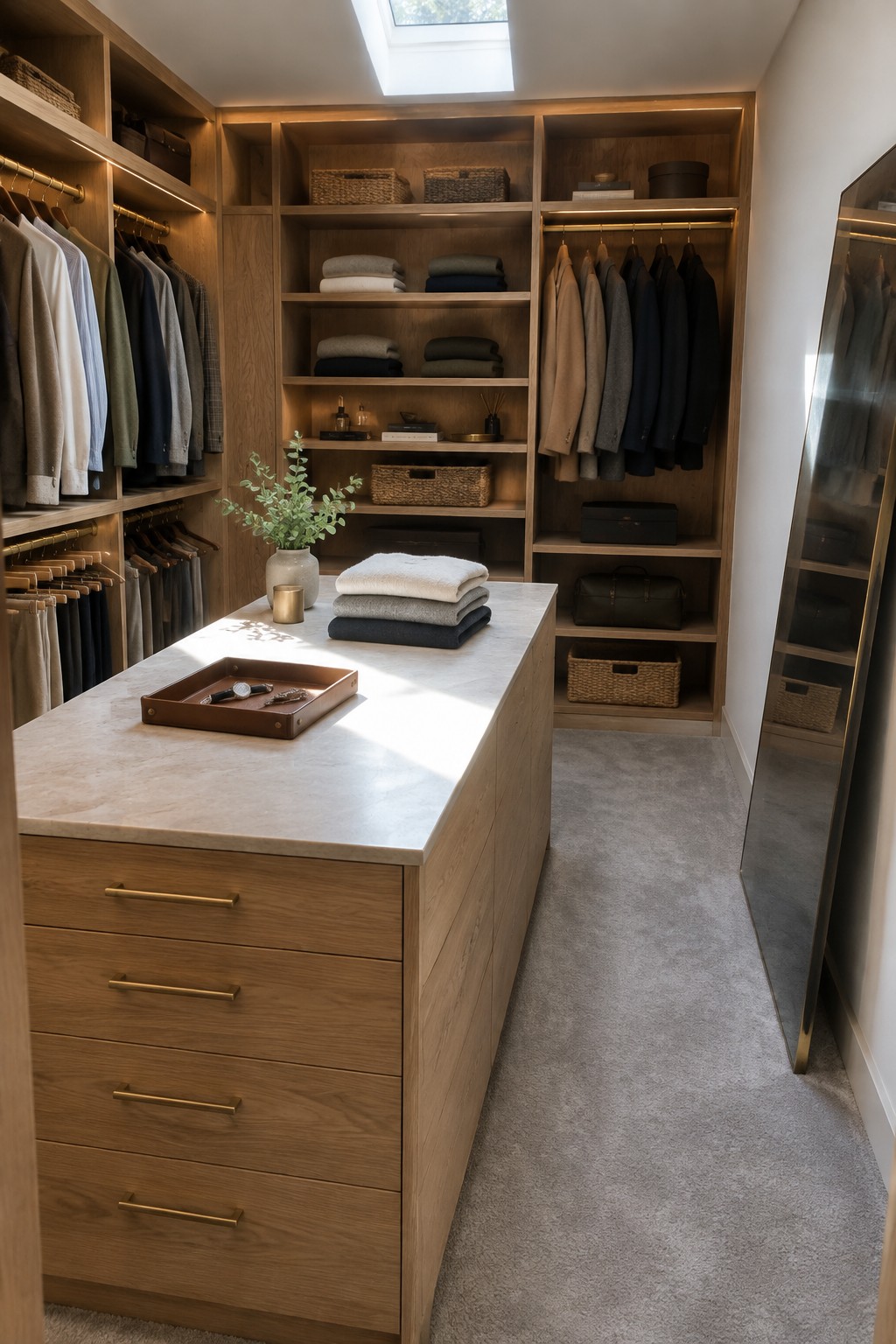
A central island gives a wood closet more everyday function. The stone top creates a solid surface for folding or sorting, while the wood base keeps the whole thing feeling warm and built in rather than added on later.
This setup works best in larger walk-in spaces where you need extra work area without crowding the walls. It suits homes that already use wood cabinetry and want one clean contrast material to break up the storage. Keep the island proportions modest so the room still feels open.
Combining Stone And Wood In A Dining Room
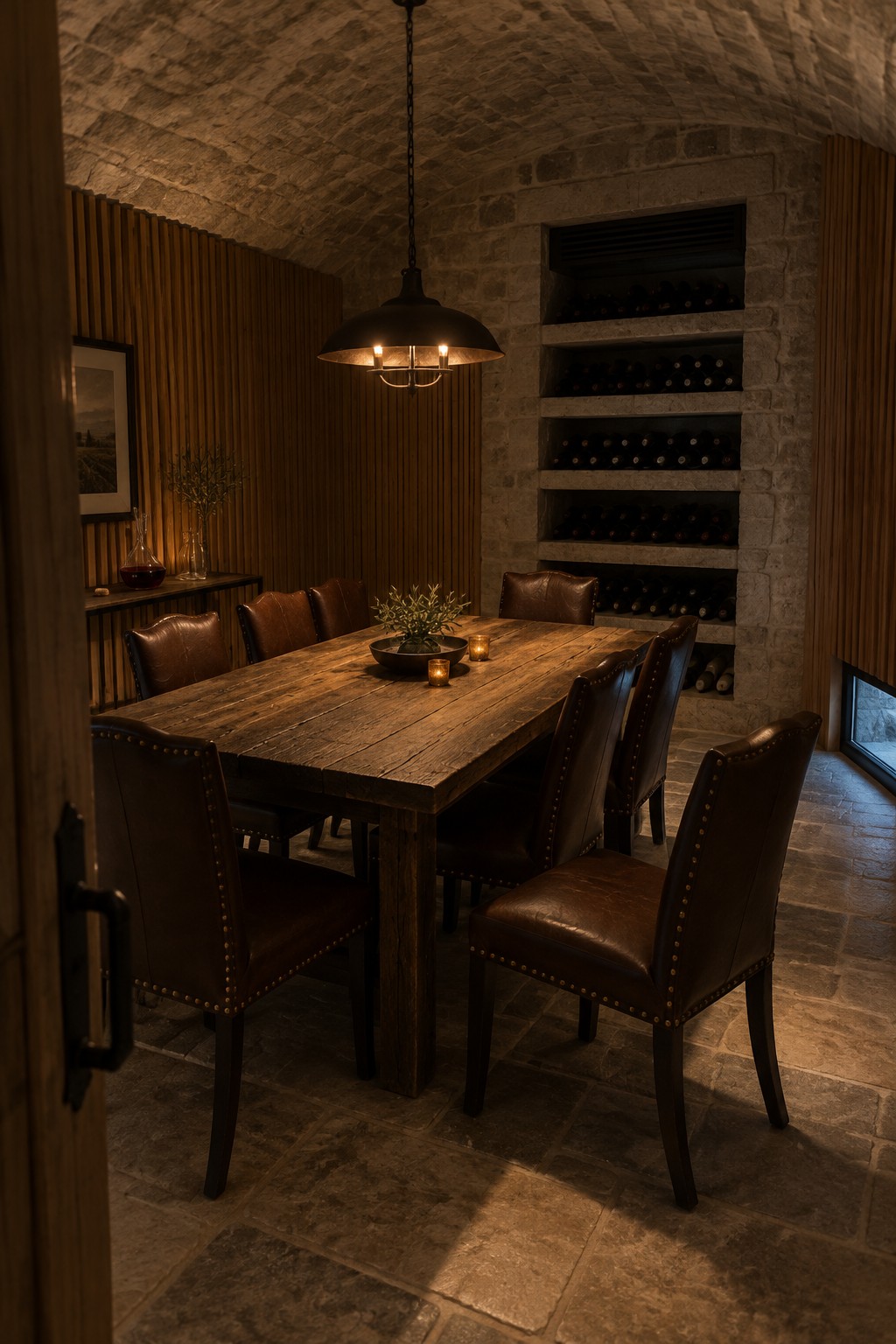
Stone walls and a solid wood table create a dining space that feels grounded without trying too hard. The mix works because the rough texture of the stone balances the warmth of the wood, and neither material overpowers the other. It gives the room weight while still keeping it comfortable for everyday meals.
This approach suits homes with existing stone features or spaces that need a bit of structure, like basements or rooms with limited natural light. Keep the wood tones warm and the seating simple so the materials stay the focus. Avoid adding too many dark finishes or the room can start to feel heavy.
Built-In Wood Storage That Stays Simple

Built-in cabinetry in natural wood works well because it gives you storage and display space without adding extra furniture that can crowd a room. The open shelves hold books and a few objects while the cabinets below keep everyday items out of sight, and the wood grain brings warmth that pairs nicely with stone surfaces nearby.
This setup suits smaller living rooms or homes that want a modern feel without looking stark. It works best when the wood tone matches other natural materials in the space, and it helps the room stay organized without needing many separate pieces.
Wood Platforms With Stone Showing Through
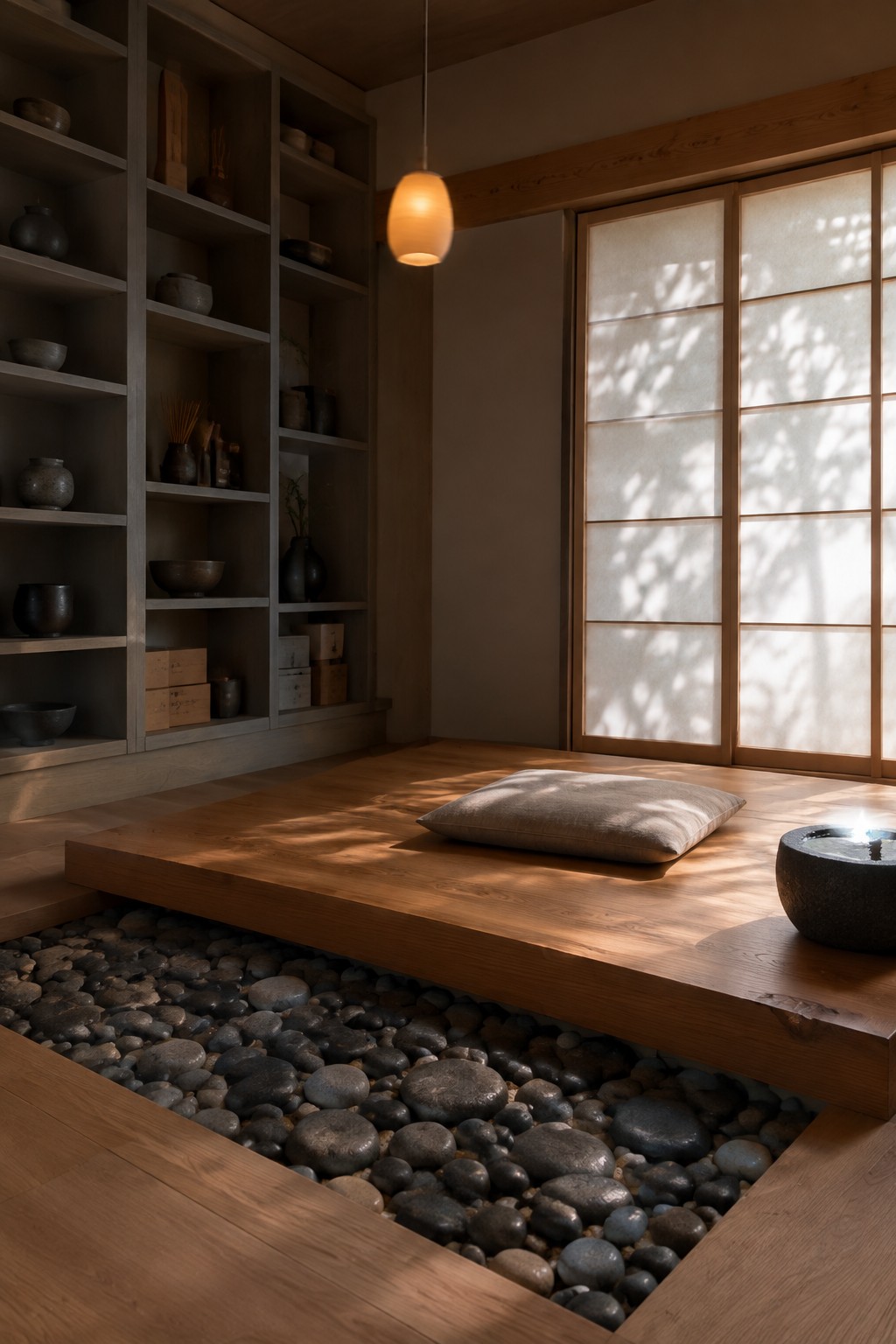
A raised wooden platform that stops short to reveal a layer of smooth stones underneath adds quiet texture without extra furniture or rugs. The contrast between the warm wood grain and the cool, rounded stones keeps the floor plane interesting while still feeling calm and simple. It works especially well in smaller rooms where you want natural materials to do the heavy lifting.
This idea suits homes that already lean toward minimal layouts or Japanese-inspired details. Keep the stones large enough to stay in place and choose a platform height that feels comfortable for sitting or stepping. Avoid this in high-traffic areas where the stones could shift or collect dust.
A Wood Island With Stone Top
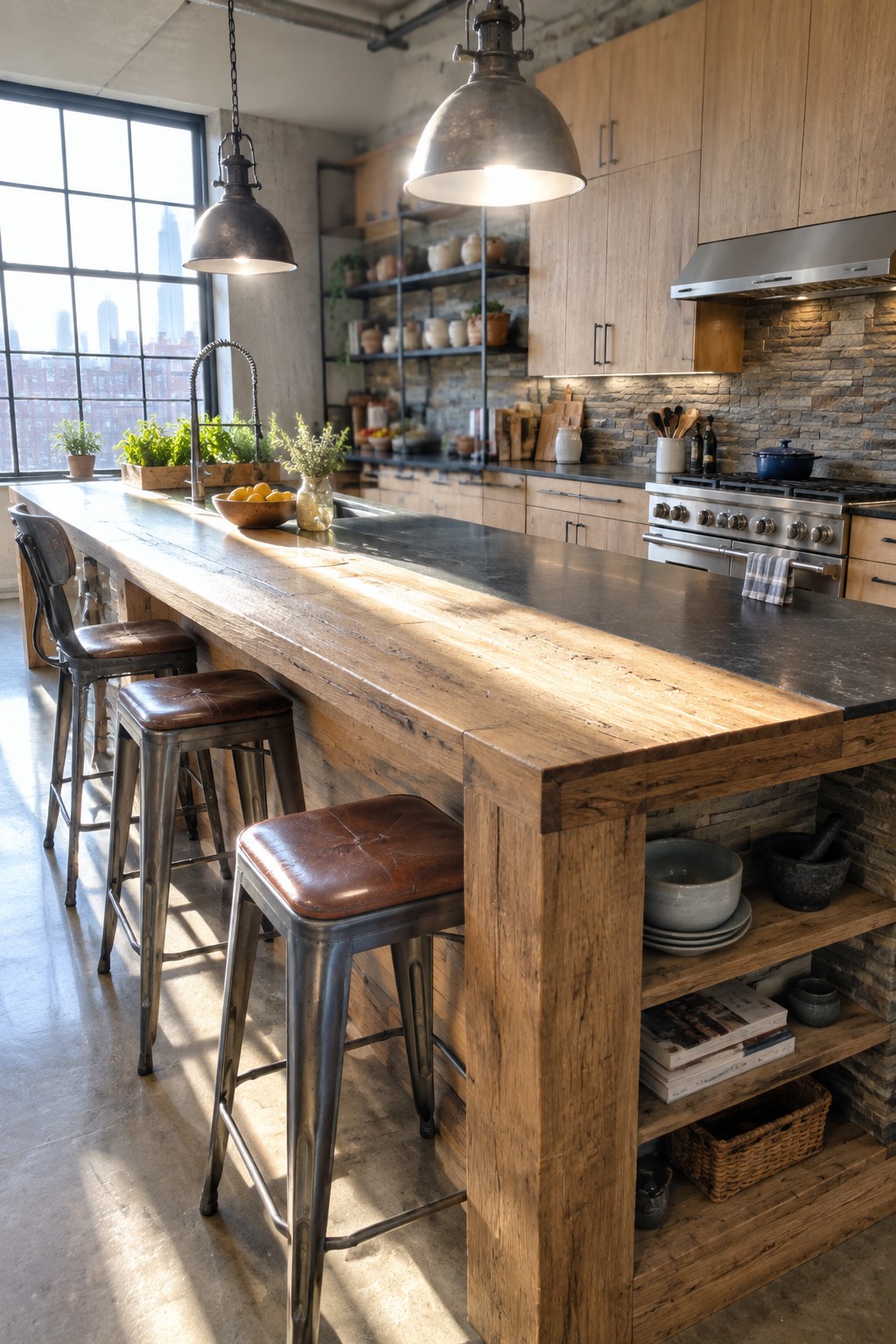
Many kitchens gain a lot from a big central island built with thick wood and finished with a dark stone surface. The wood brings warmth and texture while the stone gives a durable place for cooking and serving, and the combination feels grounded without trying too hard.
This setup works best in open spaces where the island can serve as both a work surface and a spot for casual seating. It suits homes that already use natural materials elsewhere, and it helps keep the rest of the kitchen from feeling too stark or overly modern.
Stone And Wood In The Bedroom

A stone wall paired with wood furniture gives a bedroom a grounded feeling that still feels warm. The rough texture of the stone keeps the wood from looking too polished, and the wood softens the overall space so it does not feel cold. This mix works especially well when both materials stay in their natural tones.
It suits homes that already have some stone or want to add character without extra color. Keep the rest of the room simple with neutral bedding and minimal pieces so the materials can stand out. Watch the scale though, since too much stone can make a small room feel heavy.
Stone Tops on Work Tables

A stone or pebble surface on a big work table brings real durability to a wood studio without breaking the natural look. The hard top handles heavy use while the surrounding oak shelves and pegboard keep everything else warm and simple.
This works best in craft rooms or home workspaces where projects need a tough surface. Keep the wood elements straightforward so the stone top becomes the practical focal point instead of competing with too many other textures.
Frequently Asked Questions
Q: How do I protect wood from scratches in busy areas? A: Place rugs in high traffic spots. Move furniture carefully when rearranging. This keeps the surface looking fresh for years.
Q: Which stone holds up best around water? A: Pick slate or granite for bathrooms. They resist moisture far better than limestone. Seal them anyway to be safe.
Q: Can wood and stone work in a rental? A: Yes if you use peel and stick panels or portable pieces. Focus on accents like a stone lamp base or wooden shelves.
Q: What lighting brings out the natural textures? A: Use warm LED bulbs overhead and on the sides. They highlight grain and stone variations without harsh shadows.
