

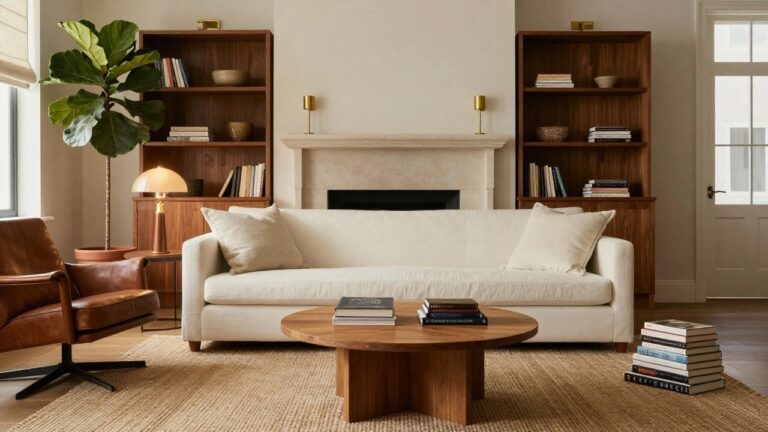
I often notice that homes feel most cohesive when the style choices support how people actually move through the rooms rather than just filling empty walls.
Transitional decorating works well for this because it mixes softer traditional elements with simpler modern ones without forcing either to dominate.
The challenge comes when the mix leans too far in one direction and the space stops feeling comfortable for daily life.
Testing a few layout adjustments first usually shows whether an idea will hold up over time.
Details like scale and texture end up mattering more than any single piece of furniture.
Built-In Shelving That Keeps Storage Simple
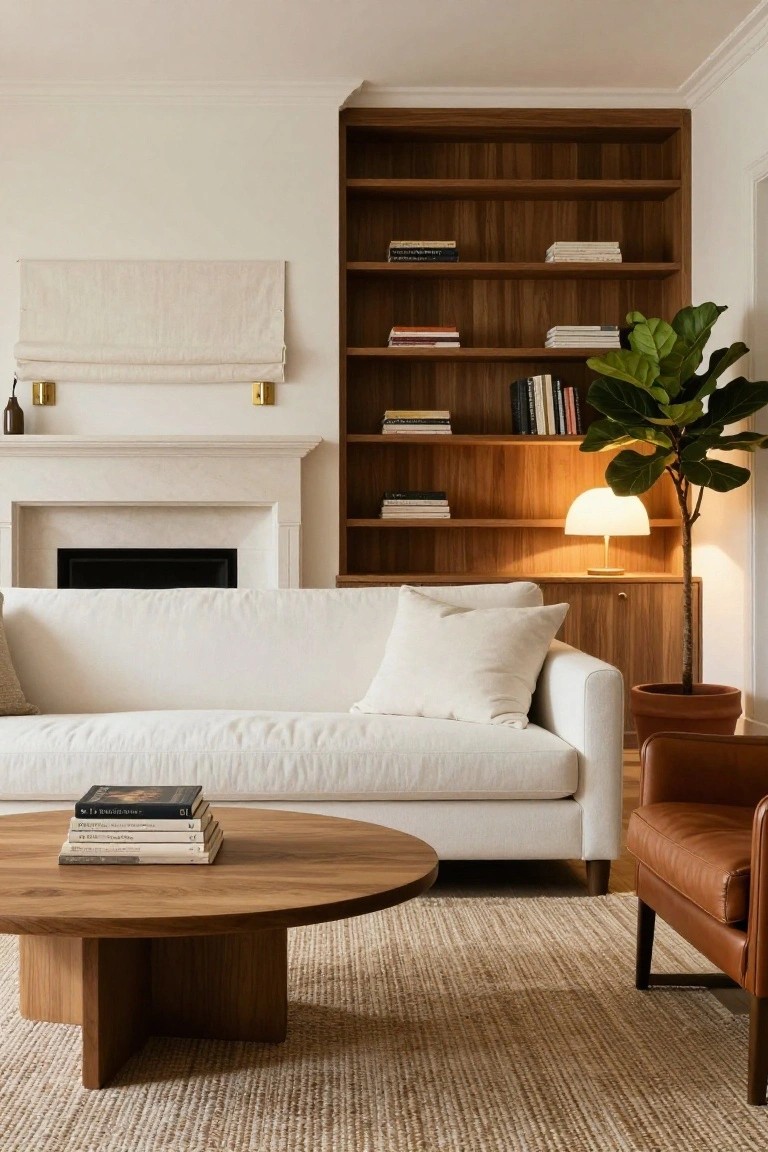
Built-in shelves give you a place to keep books and a few favorite items without adding more furniture that crowds the floor. They sit flush with the wall and help the room feel organized even when you have quite a few things on display.
This approach works well in living rooms that need extra storage but still want an open layout. Match the wood tone to nearby pieces like a coffee table so the shelves feel like part of the room rather than an afterthought.
One Cabinet Color Across The Whole Kitchen
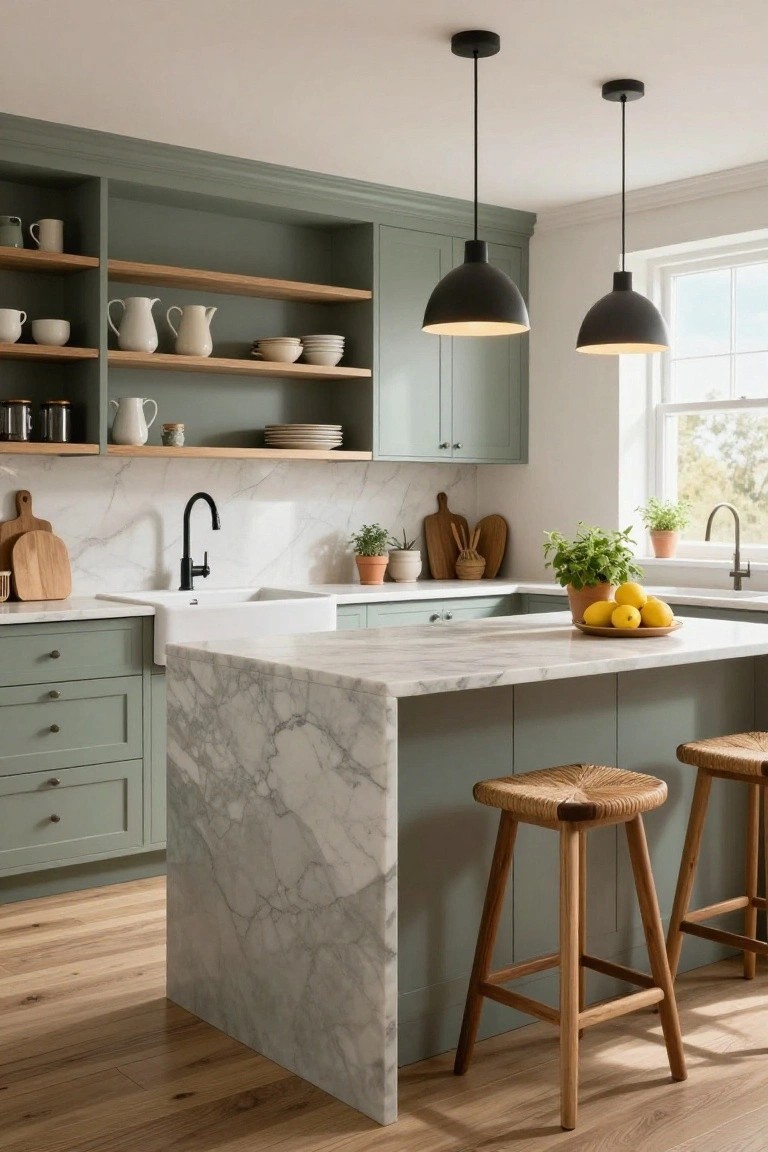
Using the same paint color on every cabinet and the island base gives the kitchen a steady, connected look. The soft green here keeps things calm while the marble surfaces add contrast without breaking the flow. It is an easy way to make a space feel finished even when you mix open shelves with closed doors.
This approach works best in transitional homes where you want color without going too bold. Stick with a muted shade that plays well with stone or wood tones, and keep the hardware simple so the single color does the main work. It suits most kitchen sizes and avoids the chopped-up look that comes from too many finishes.
Round Tables for Everyday Flow
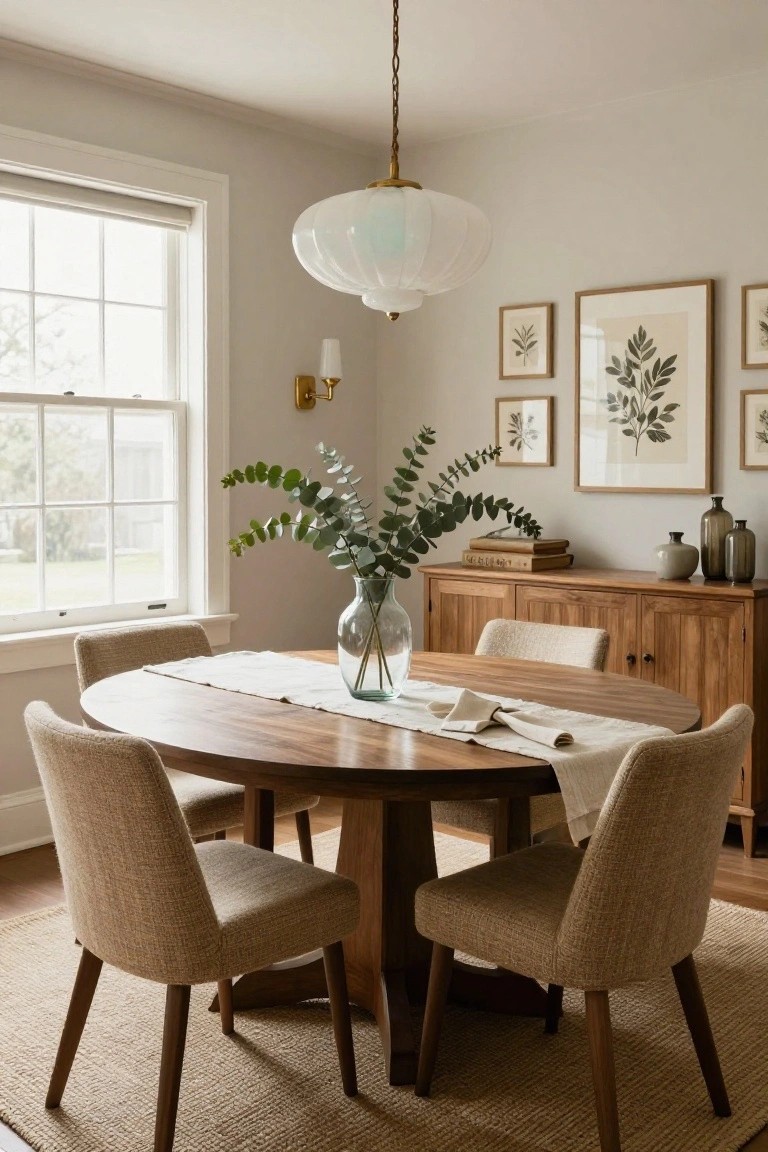
A round dining table makes the space feel more open and connected. Everyone can see each other without the stiffness of a long rectangle, and it works well even in smaller rooms where you still want room to move around the chairs.
This setup suits transitional homes that lean toward simple and practical. Pair the table with a sideboard for extra storage, keep the chairs in soft neutral fabric, and add a few botanical prints on the wall to hold the look together without clutter.
Adding Texture with a Woven Headboard
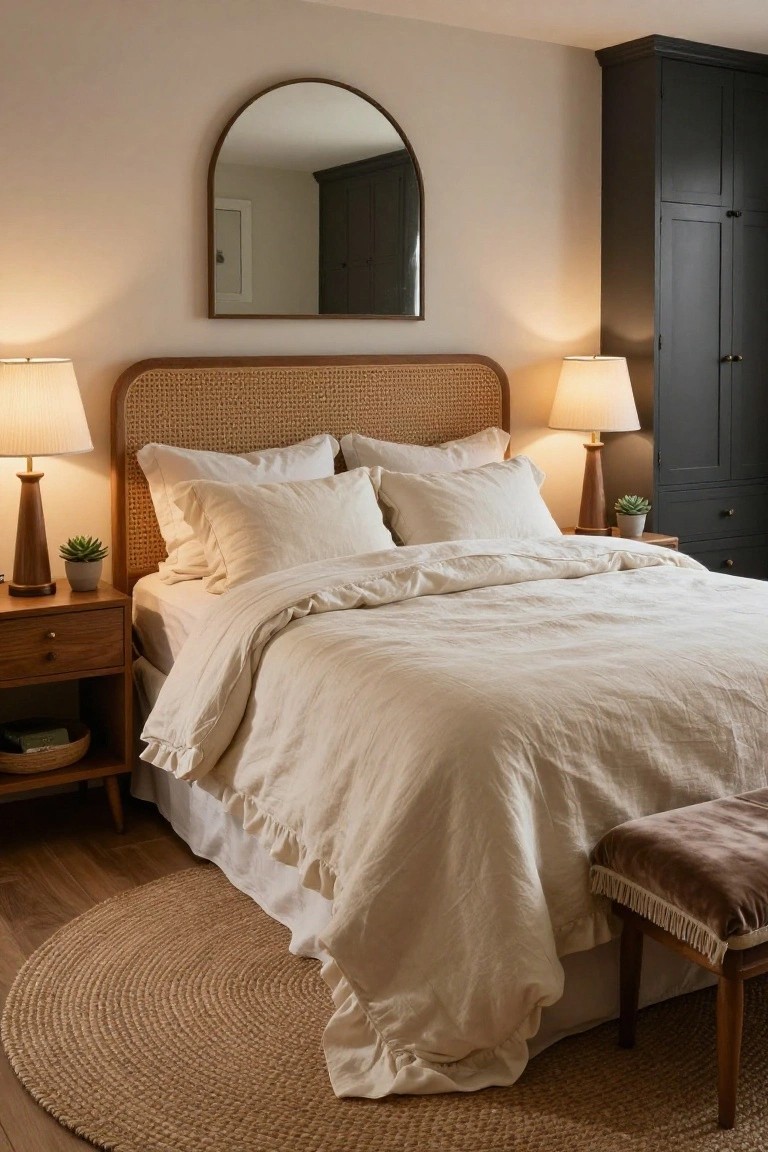
A woven headboard gives a bedroom quiet texture that feels natural without taking over the space. It works especially well when the rest of the room stays simple and neutral, so the weave becomes the one element that adds interest.
Try it in a room with linen bedding and wood furniture to keep the balance. This choice suits homes that want a transitional style rather than something stark or overly decorated.
Use a Trunk as a Bench
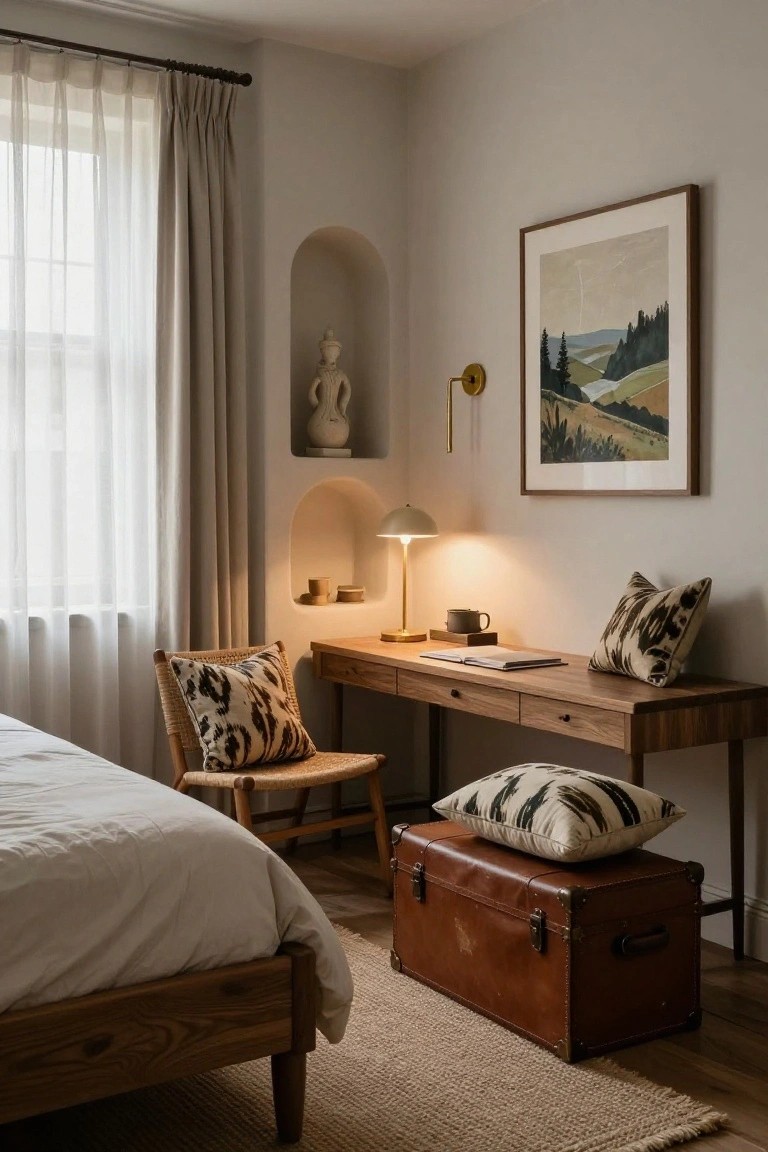
A trunk works well as a bench because it gives you seating and hidden storage in one piece. In a bedroom it keeps the floor clear while still letting you pull up a spot for reading or extra guests without adding another chair.
Place it in front of a desk or along a wall where you need flexible seating. It suits smaller rooms especially well since it doubles up on function and works with both wood tones and softer textiles.
Floating Vanities With Open Storage
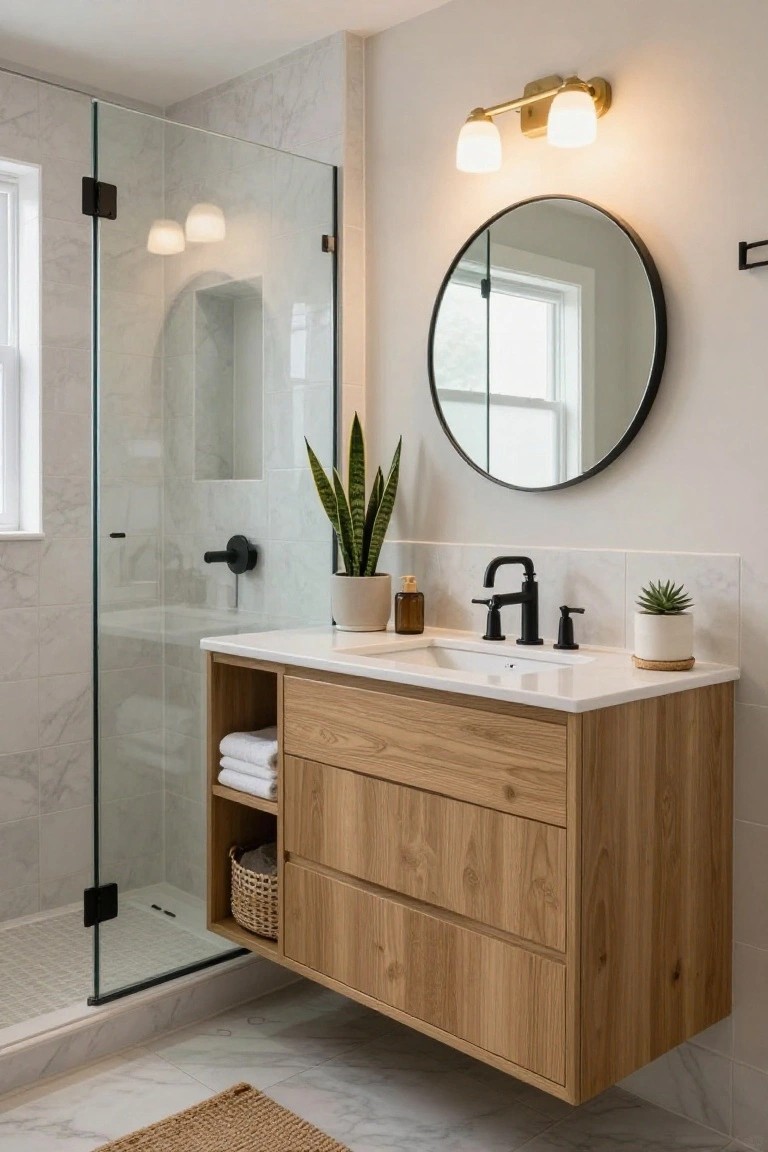
A floating vanity keeps the floor clear so the bathroom feels more open and easier to clean. The wood tone adds a bit of warmth next to the marble, which helps the space feel balanced instead of too cold or stark.
Use the open cubbies for towels and a basket while the drawers hide the rest. This works best in bathrooms that need everyday storage without looking cluttered.
Using Baskets Beneath a Console Table
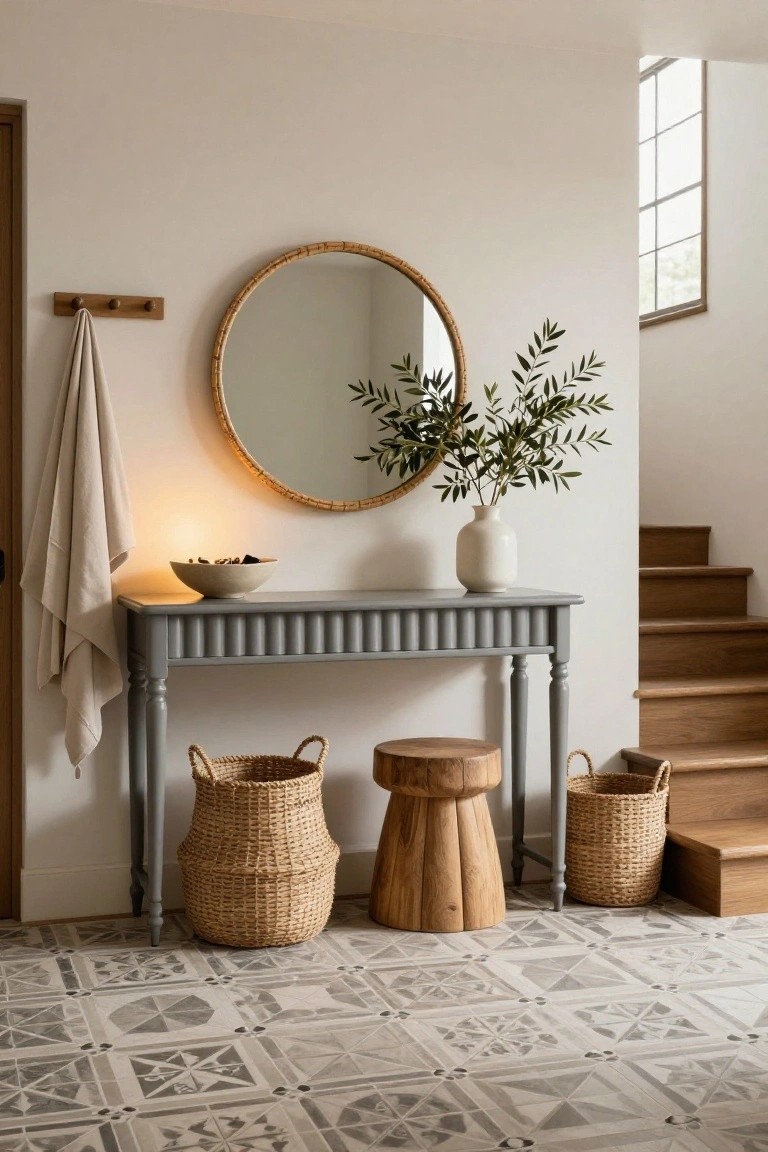
A console table works well in hallways or entry spots because it stays narrow yet still gives you a surface for keys or mail. Adding baskets on the floor underneath turns that empty space into useful storage without making the area feel crowded or messy.
This approach suits homes with open staircases or long passages where clutter tends to build up. Choose baskets in a natural tone so they blend with wood floors and simple wall colors. Keep the top of the table light with just one or two small items so the whole setup stays balanced.
Floating Shelves Above a Desk
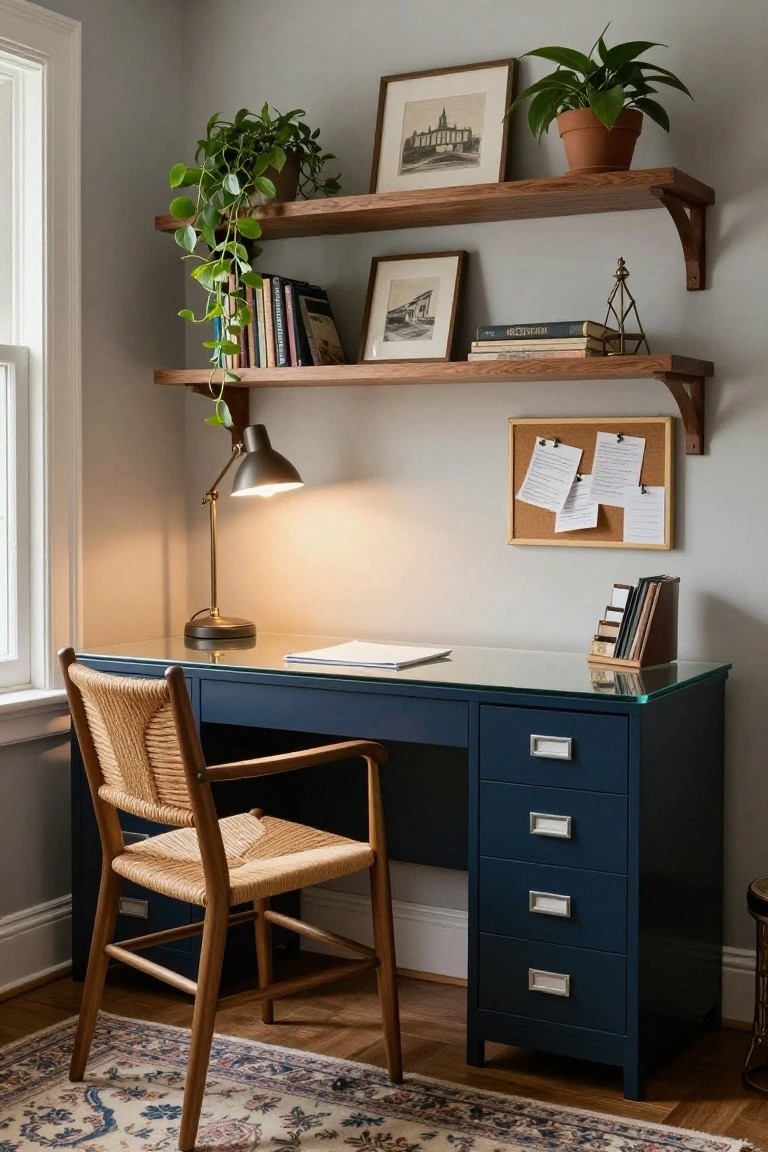
Floating shelves give you useful storage without taking up floor space. In a workspace they keep books and supplies close at hand while leaving room for the desk itself to stay open and functional.
This idea works best in smaller rooms or any area where you want the desk to feel lighter. Pair the shelves with a simple painted desk so the wood tones add a bit of warmth without overwhelming the space.
Natural Textures in a Calm Nursery
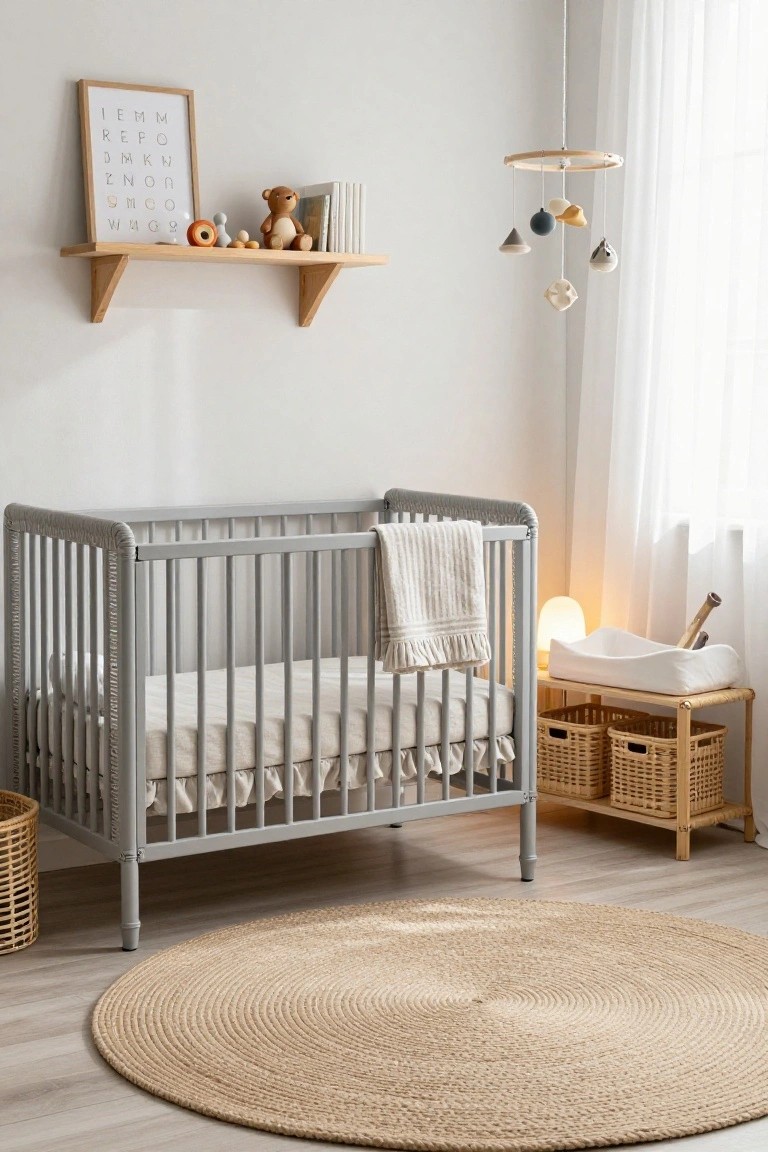
A soft gray crib can feel too stark on its own, but adding woven pieces like a jute rug and simple baskets brings in just enough warmth without cluttering the room. The round rug under the crib helps ground the space while keeping the overall look light and easy to clean.
This approach works well in smaller rooms or homes that already lean neutral. Stick to one or two natural materials at most so the space stays restful rather than busy.
Open Shelving For Laundry Storage
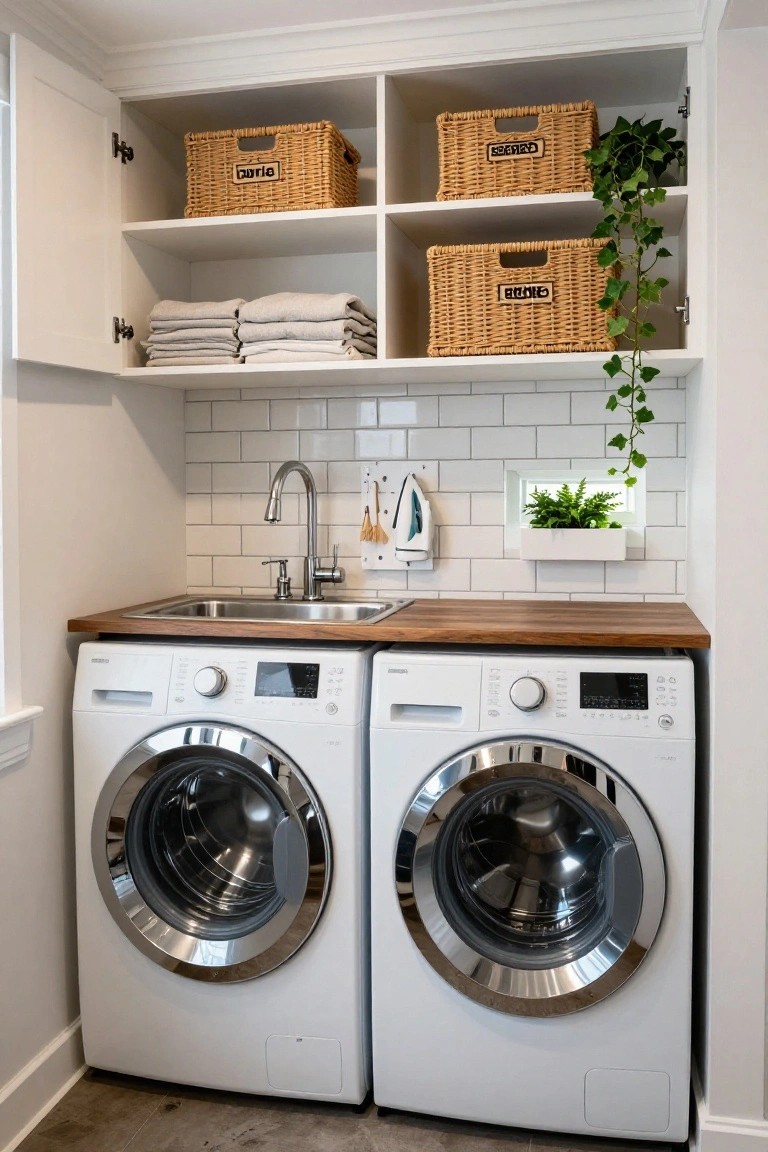
Many laundry rooms end up cluttered because there is no good place to keep everyday items. Open shelves above the machines give you quick access to baskets and supplies while keeping the floor clear.
This works best in smaller homes where the laundry area needs to stay neat and functional at the same time. Use matching baskets so everything stays contained and the space does not feel messy even on busy days.
Add an Open Shelf Under the Vanity for Extra Storage
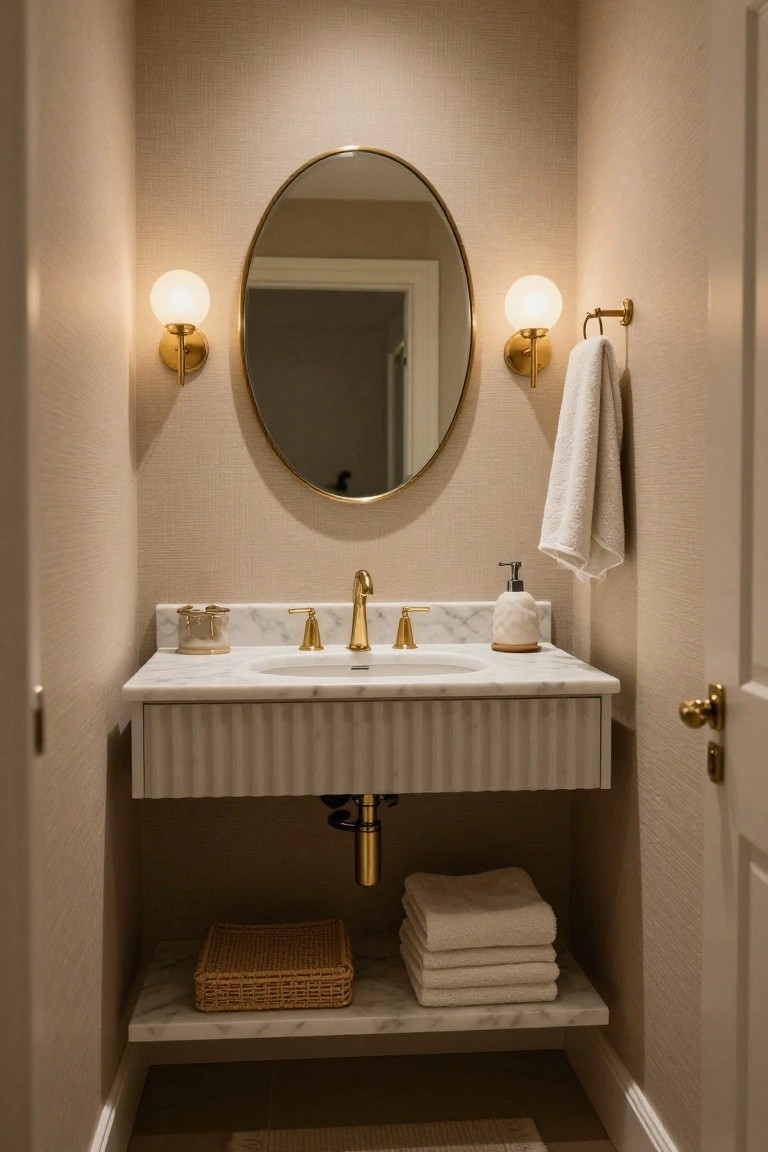
Small bathrooms often run out of places to keep daily items without crowding the counter. An open lower shelf under a floating vanity gives you room for towels or a simple basket while keeping the floor clear and the space feeling open.
This setup works best in narrow powder rooms or guest baths where built-in cabinets would feel too heavy. Match the shelf material to the counter so it reads as part of the vanity rather than an afterthought.
Built-In Benches Add Practical Storage To Entryways
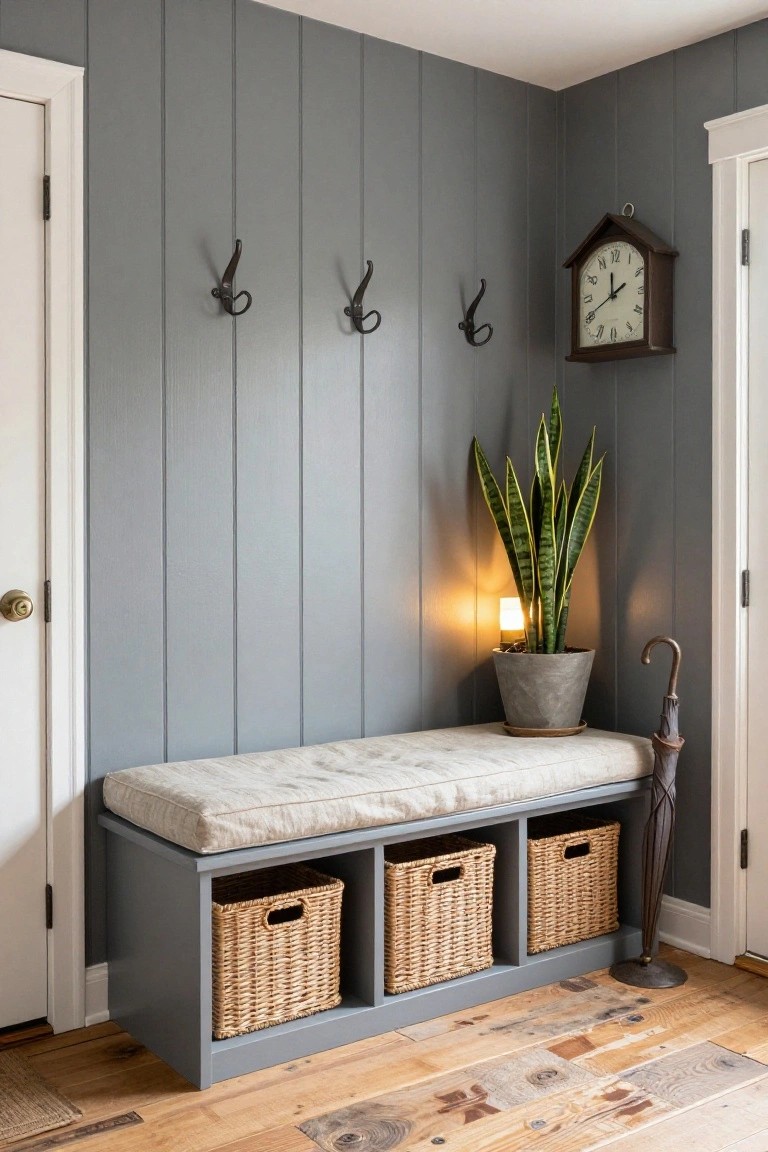
A built-in bench with open storage below gives an entryway a simple way to stay organized. The cubbies hold baskets that keep shoes or bags out of sight, while hooks above handle coats and leashes without needing extra pieces.
This works best in transitional homes where you want function without clutter. Keep the bench low and the wall color calm so the storage feels like part of the room rather than an add-on.
Low Daybeds For Everyday Flexibility
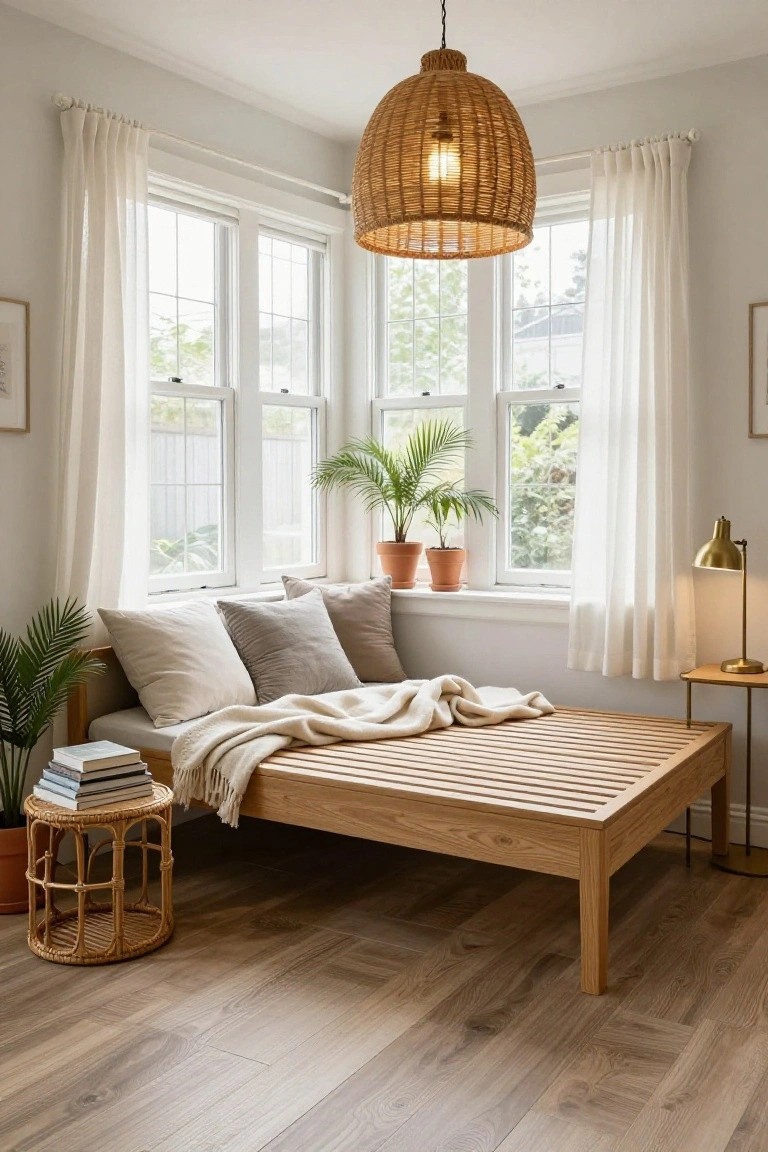
A low wooden daybed works well in spaces that need to serve more than one purpose. It gives you a place to sit during the day and a spot for guests to sleep at night without taking up much visual weight. The clean lines and natural finish keep the room feeling open even when the bed is made up with layers of pillows and a throw.
This setup works best in rooms with good natural light and simple wall colors. Place it under a window or along a blank wall where it can blend into the background. Stick to neutral fabrics and a few woven accents so the piece does not dominate the rest of the room.
Built-In Shelving Around The Fireplace
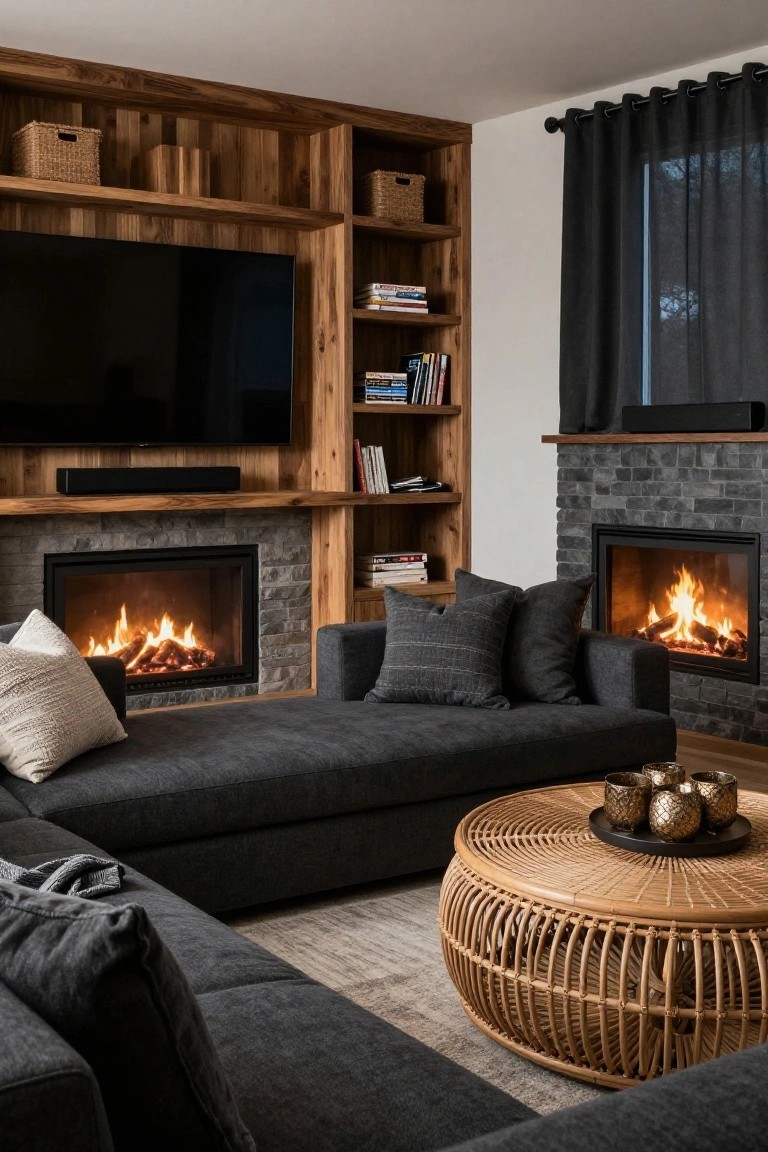
Built-in shelves on either side of a fireplace keep the whole wall organized without needing extra cabinets or bookcases. The wood ties the TV area and the fire together so the room feels more finished and less like separate pieces pushed against the wall.
This setup works best in living rooms where you want storage and display space but still need the seating to stay open. Stick to a few baskets and books rather than filling every shelf, and let the stone or brick around the fire stay as the main focal point.
Central Islands Add Practical Storage In Walk-In Closets
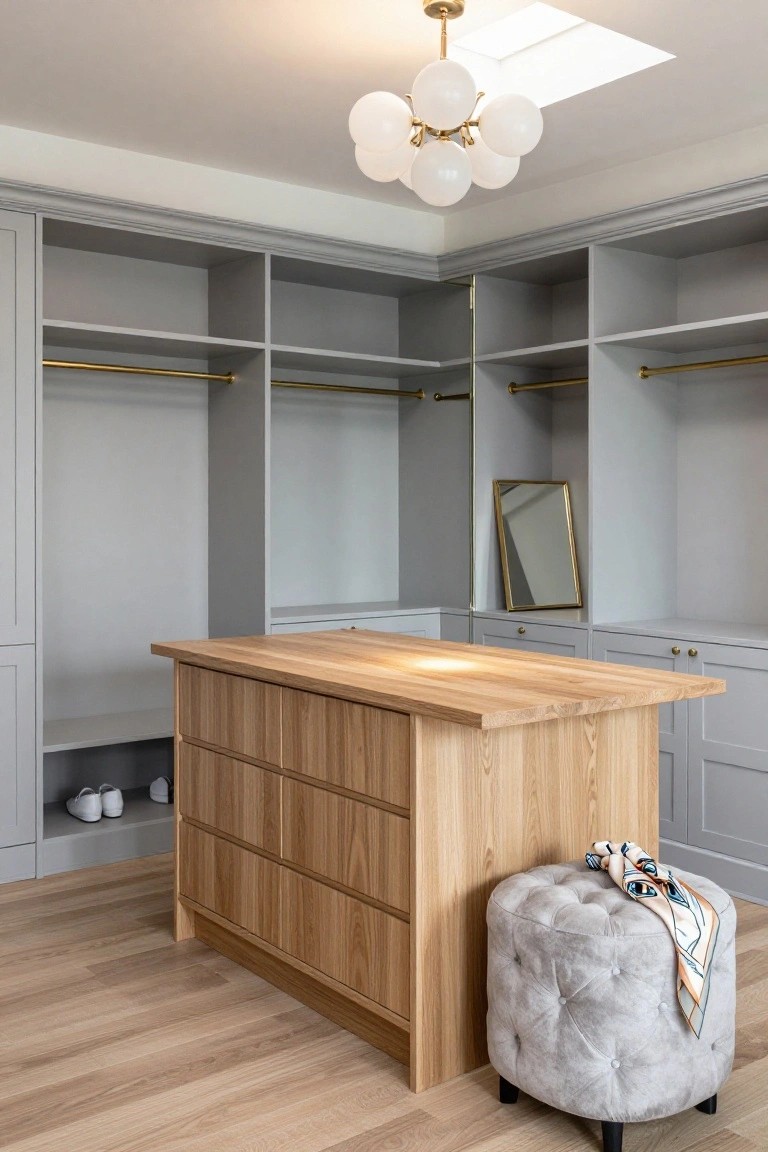
A central island gives you a flat surface for folding and sorting while also hiding extra storage underneath. In transitional spaces it helps balance open shelving with something more solid and useful.
This layout works well in medium to large closets where you can walk around all sides. Keep the island material simple so it adds warmth without competing with the surrounding built-ins.
Built-In Storage For Craft Rooms
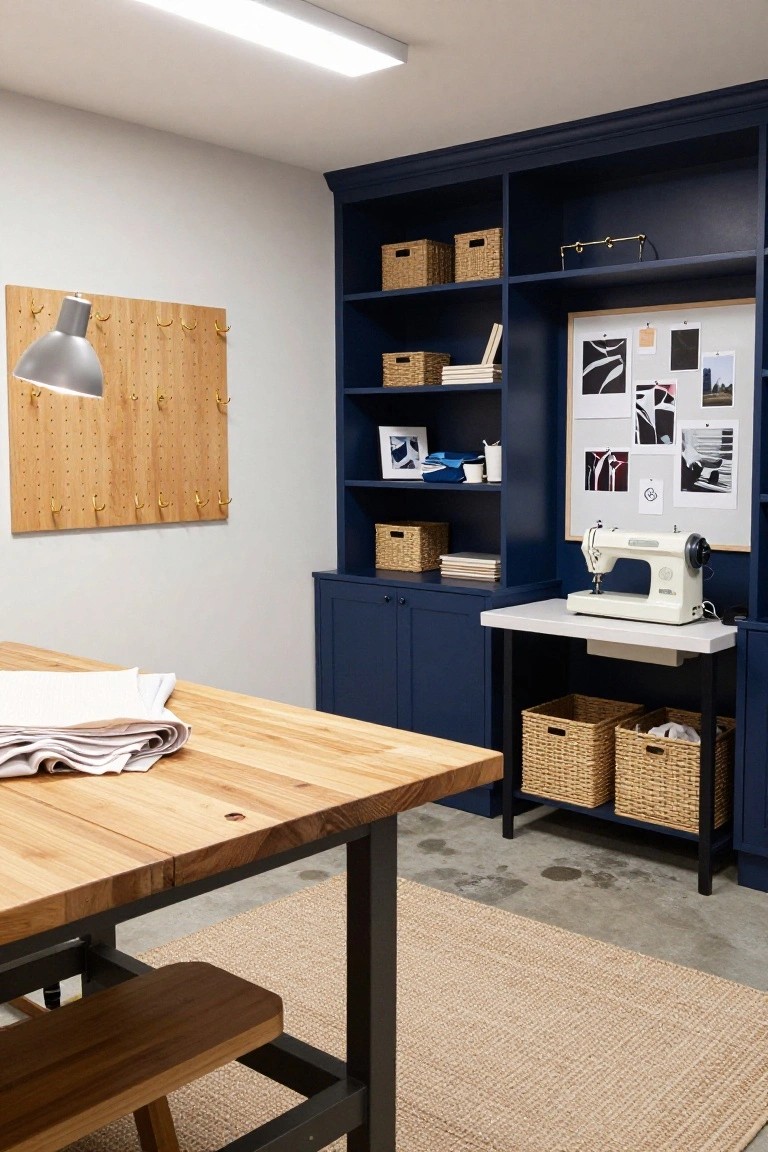
Built-ins like these make it easy to keep a creative space tidy while still having everything within reach. The combination of open shelves and closed cabinets holds supplies in plain sight without letting the room feel cluttered or messy.
This setup works especially well in rooms that double as both work areas and storage zones. It suits homes where you want functional spaces to still feel pulled together rather than purely utilitarian.
Match the Bunk Bed to the Wall Color
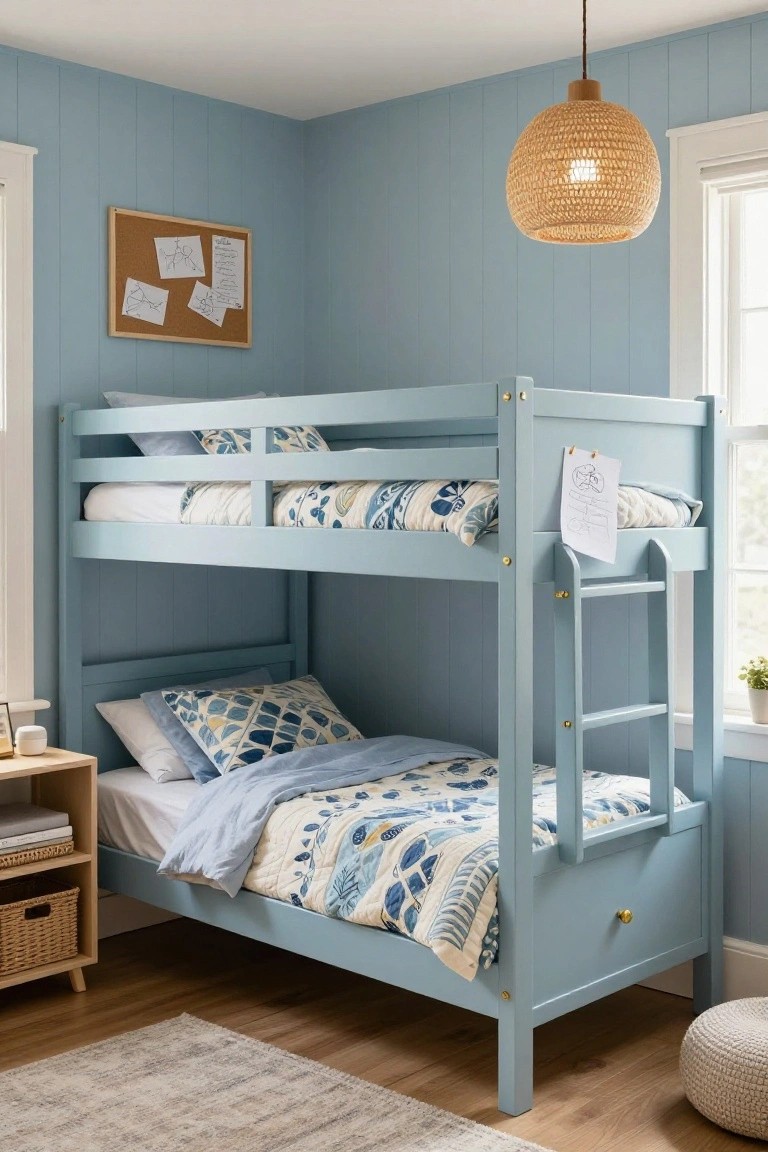
Painting the bunk bed the same color as the walls helps the whole room feel calmer and more connected. The furniture stops competing for attention and instead becomes part of the background.
This works well in smaller bedrooms or rooms shared by kids. Pick a soft color you can keep for a while, then layer in simple bedding so the space stays easy to live with.
Gallery Walls In Hallways
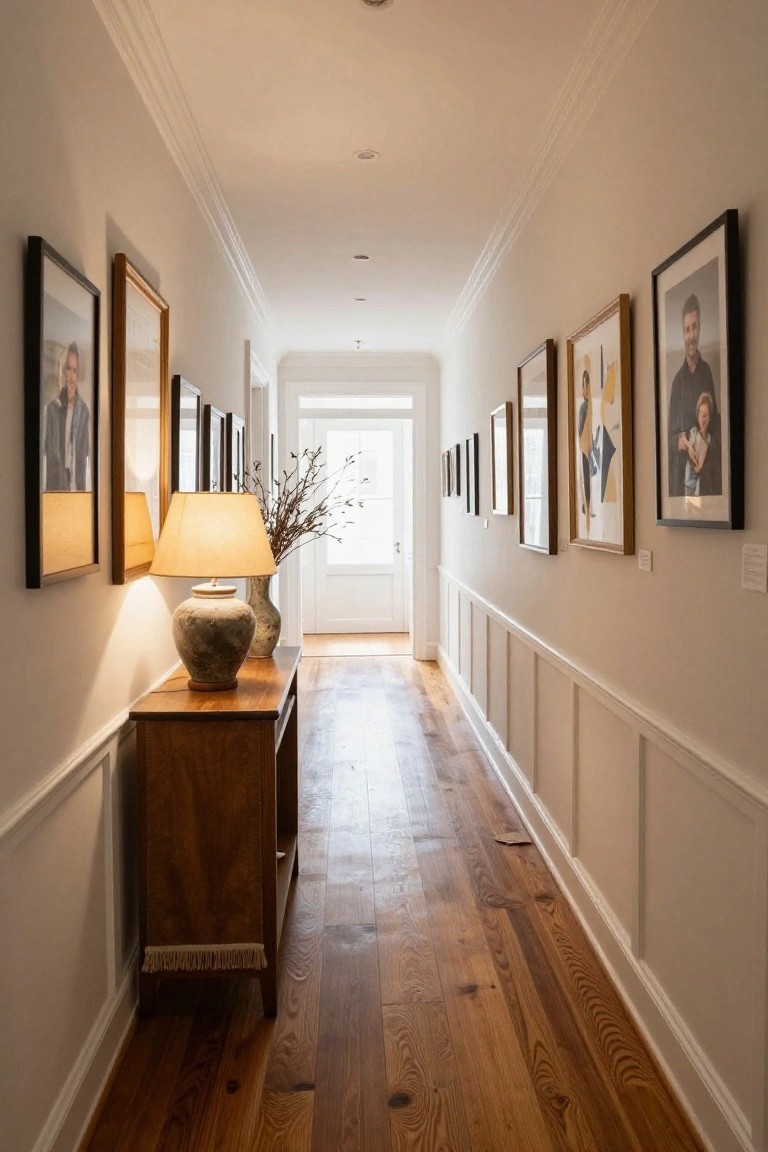
A gallery wall can turn a plain hallway into something more personal without needing extra furniture or color. Running photos down both sides gives the space a collected feel while keeping the floor clear for walking through.
This works best in longer, narrow passages where there is little room for bigger pieces. Stick to a loose mix of frame sizes and keep the spacing fairly even so the arrangement feels balanced rather than crowded.
Built-In Shelving With Bench Seating
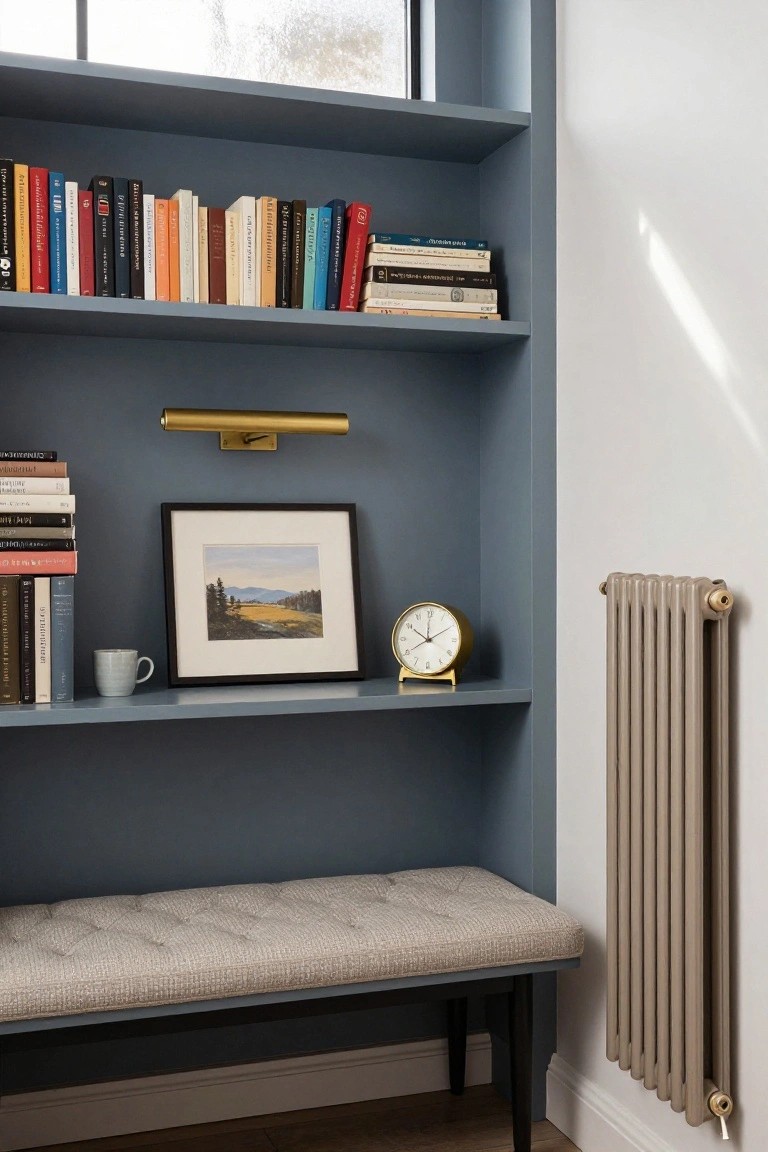
Built-in shelving paired with a bench turns leftover wall space into a spot that holds books and gives you a place to sit. This setup keeps everything in one tidy area instead of adding separate pieces that can crowd a room.
It suits smaller bedrooms, hallways, or living areas that need extra storage without taking up floor space. Match the paint on the shelves to the wall so the whole thing blends in and feels like part of the original architecture.
Pegboard Walls For Art Storage And Display
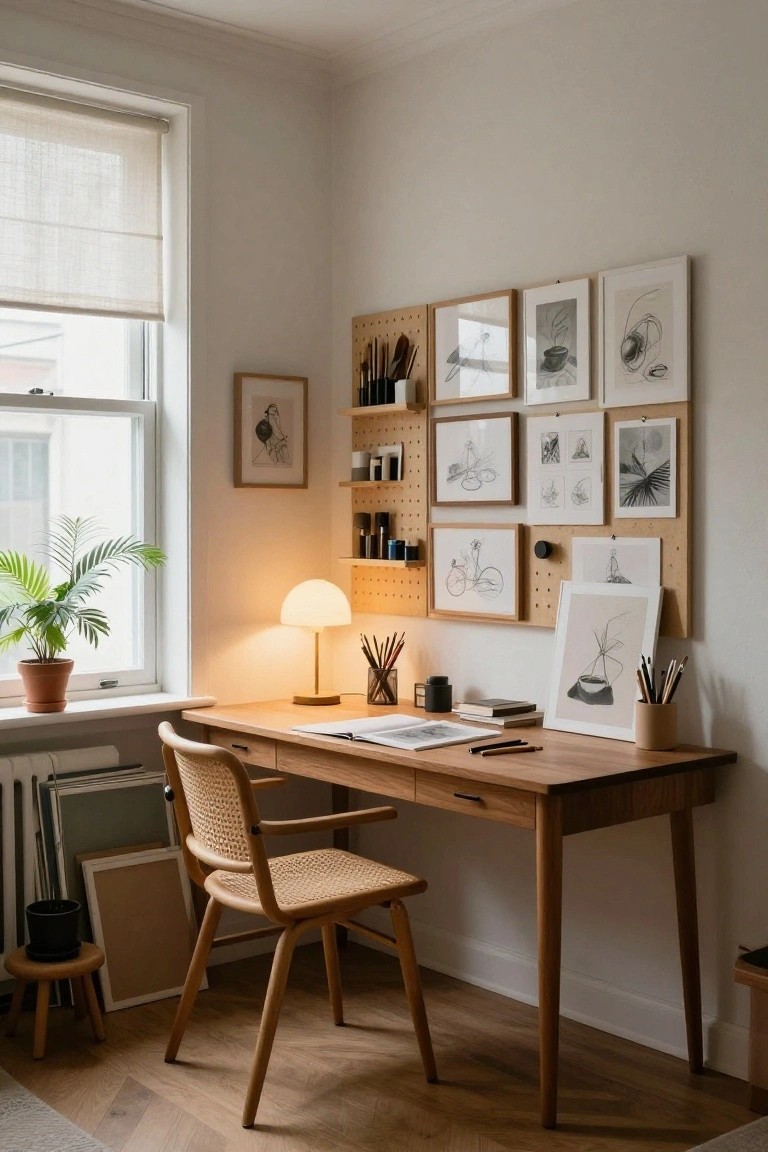
A pegboard wall gives you a flexible way to show art and keep supplies handy at the same time. It turns an open wall into useful space without adding bulky shelves or cabinets that can crowd a smaller room.
This idea works best in a home office or craft area where you change things around now and then. Hang only the frames and tools you reach for often, and leave a little breathing room between items so the wall stays calm.
Frequently Asked Questions
Q: Where should I begin if I want to try transitional decorating in just one room first?
A: Pick a space you use every day like the living room. Add one new modern lamp next to an older sofa. See how the mix feels before changing more.
Q: Can I mix metals and woods from different eras in the same space?
A: Yes go ahead and combine them. Just limit the variety to two or three types total. This stops the room from feeling scattered.
Q: How do I keep the look from going too formal or too stark?
A: Soften hard lines with textured pillows or a chunky knit throw. Balance sleek furniture by adding one curved traditional chair. Test the arrangement by living in it for a week.
