

I’ve noticed that English Colonial interiors really come together in homes where the wood paneling and furniture scale match the room’s natural proportions, avoiding that cramped feel some replicas get.
In my last project, swapping heavy drapes for lighter sheers opened up a similar living area and made it far more livable without losing the style.
What catches most people’s eye right away is the play of natural light on those crisp moldings and soft-hued walls.
The ideas in this piece show how to adapt those elements practically, like layering rugs to ground oversized fireplaces.
They make you want to sketch a few for your own space.
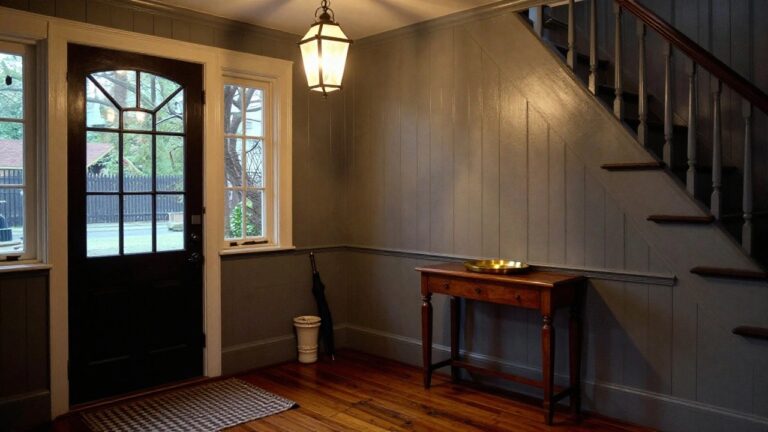
Graceful Foyer Staircase

A curved staircase like this one turns a plain entry into something with real character. White risers keep it light while the wood treads add warmth that pulls everything together. That hanging lantern overhead gives just enough light without overwhelming the space.
You see this kind of setup in older colonial homes, and it fits right into a hallway off the front door. Add a small console table nearby for keys or mail, maybe an umbrella stand. It stays practical for daily coming and going… no fuss.
Bookshelves Built Around the Fireplace

Tall bookcases flanking a brick fireplace make a strong focal point in any sitting room. The dark wood mantel and green-painted shelves here pull the eye right in, while stacks of old books and blue porcelain vases give it that lived-in English feel. It’s a practical way to display collections without taking up floor space.
This works best in a formal living area or library nook, especially in older homes with high ceilings. Paint the shelves a shade deeper than your walls for contrast, add a fern plant nearby for green, and settle into leather chairs out front. Keep heavier items low to avoid tipping, though.
Dining Room Flanked by Matching Cabinets

Tall wooden china cabinets placed on either side of the dining table create a sense of perfect balance in this space. The cabinets show off blue and white porcelain pieces that catch the light just right. That symmetry makes the room feel put-together without trying too hard.
You can pull this off in any formal dining area, especially in homes with traditional woodwork. Pick cabinets that match your table’s scale and finish. They work best where you want display storage that doubles as room anchors… just avoid overcrowding the shelves.
Sage Green Cabinets for Country Kitchens
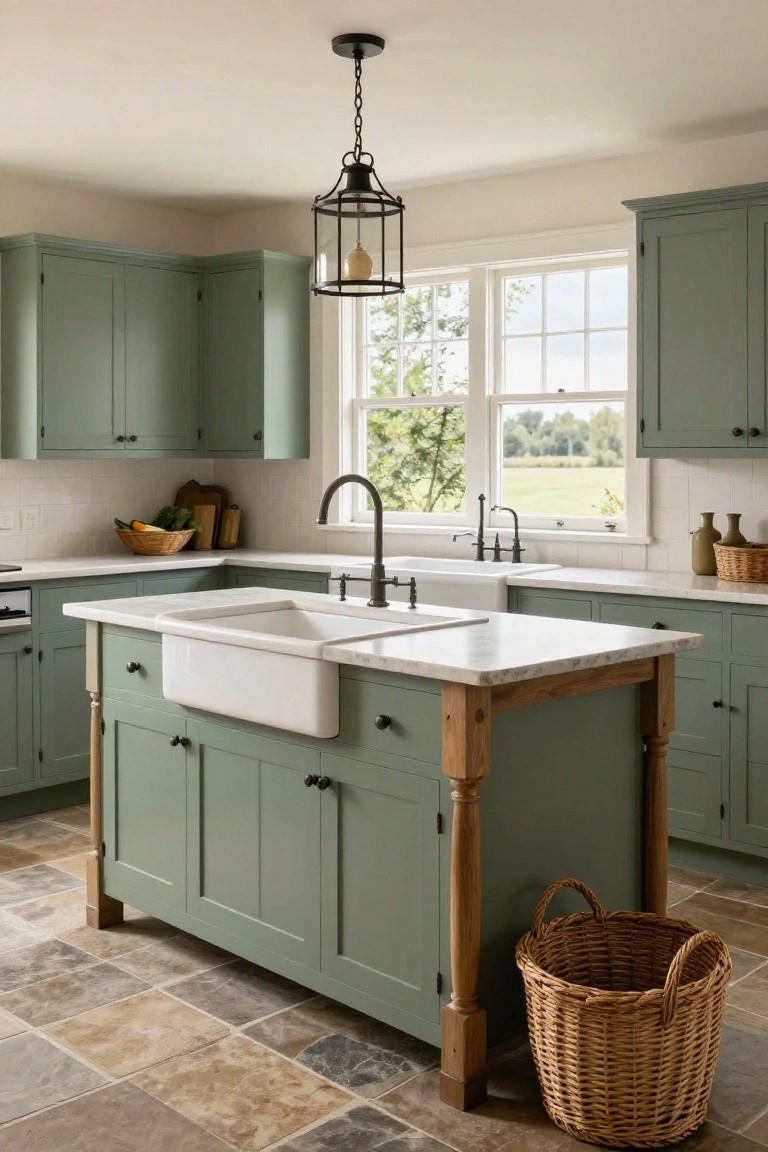
Sage green cabinets give this farmhouse kitchen a gentle, outdoorsy feel that fits right into English colonial style. The color softens the shaker-style doors and drawers without overpowering the space. Paired with a white apron sink and marble tops, it keeps things fresh and practical for everyday cooking.
You can pull this off in older farmhouses or even updated homes by painting just the base cabinets green and leaving uppers white. It works best in rooms with good natural light from big windows. Skip glossy finishes, though. Go matte to keep that calm, worn-in look.
Classic Four-Poster Canopy Bed
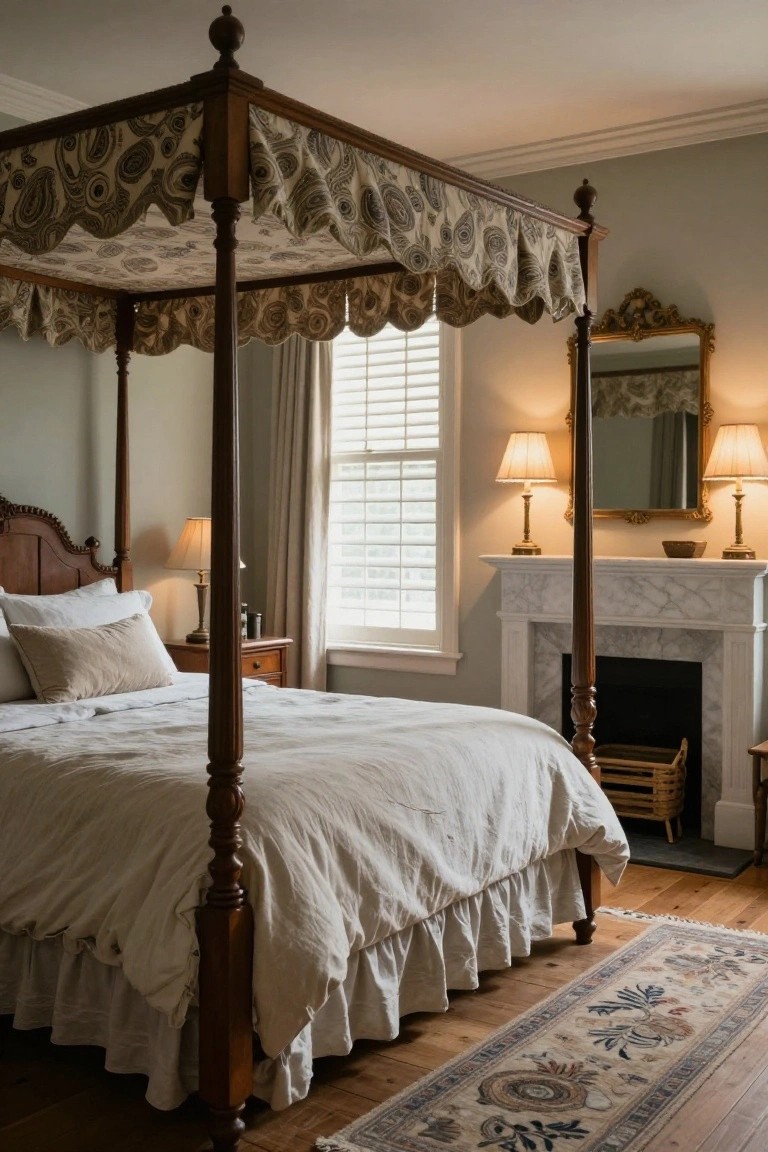
A four-poster bed like this one anchors the room without taking over. The wooden frame and soft canopy fabric add height and a bit of enclosure, but light linens and pale walls keep everything airy. It’s that old English feel that makes the space restful right away.
Try this in a bedroom with tall ceilings and windows for light. It suits older homes or ones with neutral tones. Just stick to simple bedding so the bed stays the focus, and add a side table or lamp nearby for practicality.
Sage Green Vanity in a Classic Bathroom

A sage green vanity like this one stands out in a mostly white bathroom. It brings gentle color to the subway tile shower and shiplap walls without clashing. The shaker style keeps things traditional, and pairing it with a marble top and brass faucet feels right for colonial homes. That soft green just warms the room a bit.
Try this in smaller bathrooms where you want some personality but not too much. Paint an existing wood vanity or hunt for a vintage one to refinish. It suits spaces with lots of white tile and neutral walls. Keep fixtures in gold tones to tie it together, and skip bold colors elsewhere.
Navy-Painted Bookshelf Walls
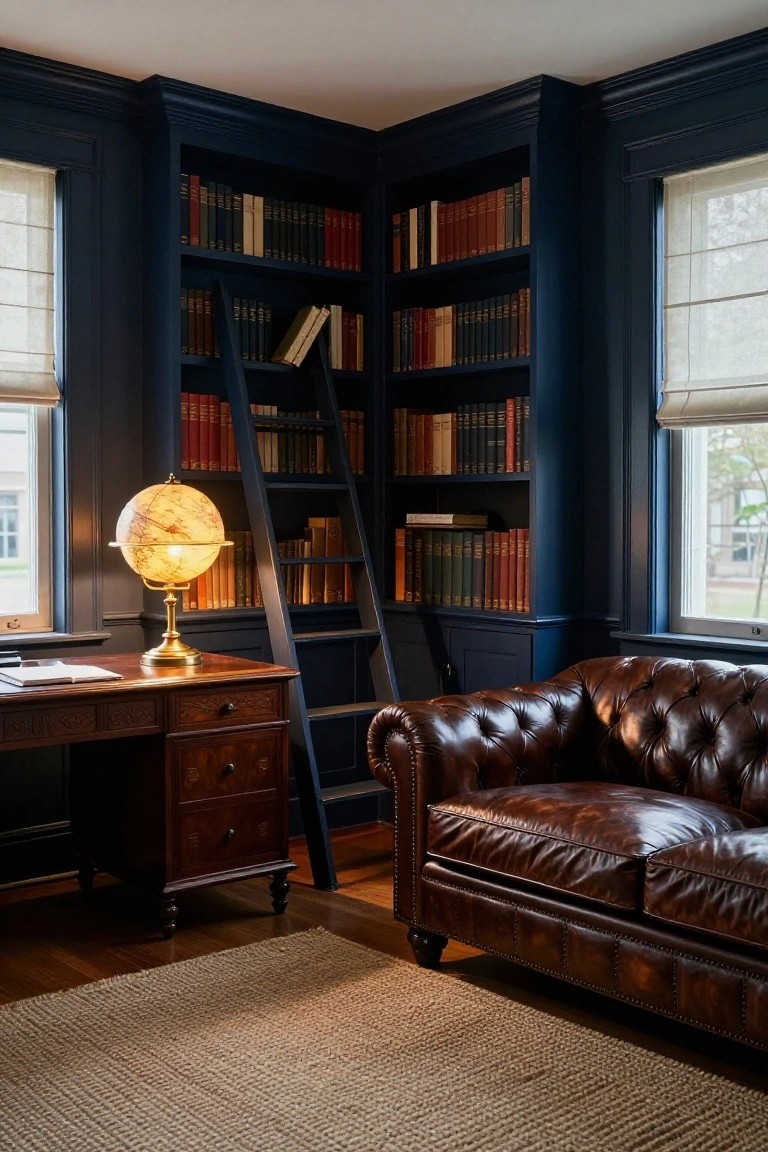
Floor-to-ceiling bookshelves painted in deep navy create an instant library vibe in this corner room. The color wraps the built-ins smoothly, and that rolling ladder makes high shelves practical without feeling fussy. It pulls everything together for a quiet spot to read or work, with wood tones keeping it warm.
This works well in studies or home offices with tall ceilings and a couple windows for light. Line the shelves with colorful book spines and add simple wood furniture like a desk or leather sofa. Skip it in super small spaces, though. The dark shade can shrink things if light is low.
Blue Striped Walls for a Nursery

Soft blue striped wallpaper covers the walls in this nursery, setting a calm tone from the moment you step in. It pairs nicely with white wood pieces like the crib and rocker, keeping the space light and easy on the eyes. The pattern adds gentle interest without overwhelming a small room.
Try this in any baby’s room where you need quiet vibes. It works best in spaces with good natural light, so the stripes don’t feel heavy. Stick to pale tones and simple furniture to let the walls do their job.
Mudroom Built-Ins for Everyday Use
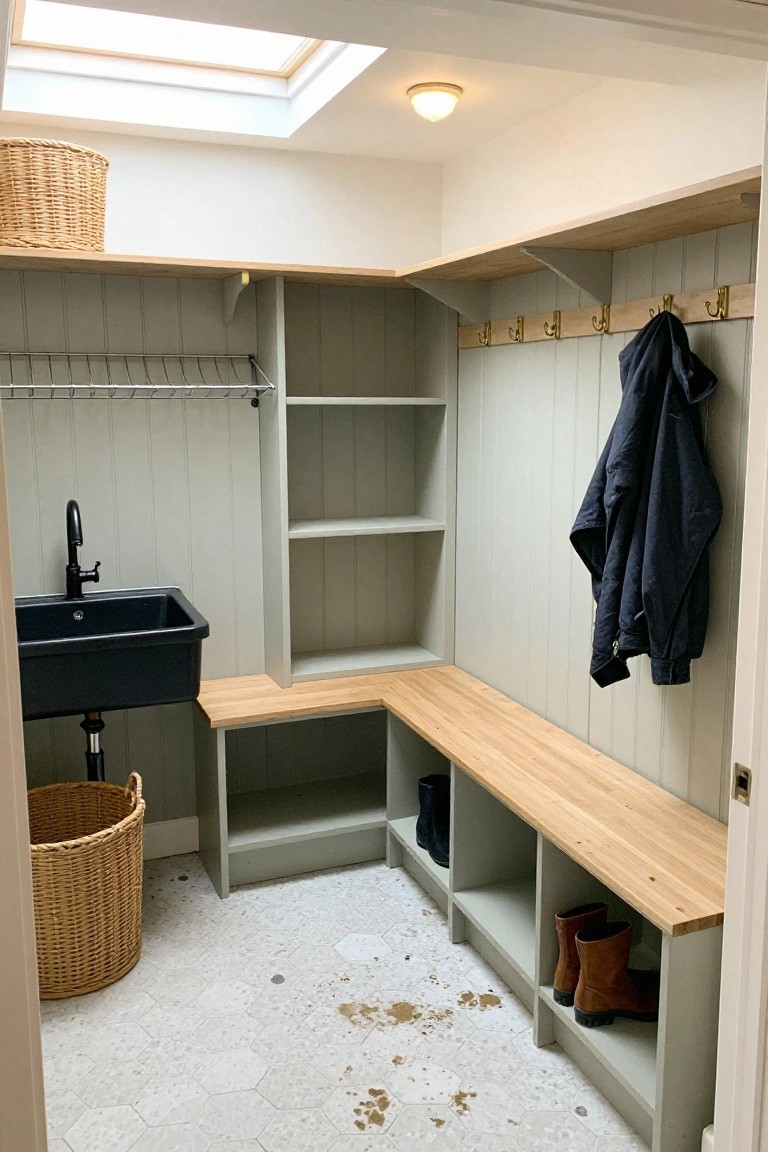
This kind of built-in setup turns a small entry space into a real workhorse. You get open shelves for wicker baskets, hooks for coats and bags, a deep sink for rinsing off muddy gear, and a bench to sit while pulling off boots. The light gray paneling keeps it calm and not too busy. It handles the dirt and clutter from outside without taking much room.
Try this in older homes near a back door or garage entry. Pair the cabinets with hex tile flooring that wipes clean. Stick to natural wood accents on the sink edges and bench. Just make sure the plumbing lines up easy if you’re adding the sink yourself.
Oak Hutch with Built-In Sink

A tall oak hutch like this stores dishes and pottery behind glass-fronted doors up top. The lower base holds a deep white farmhouse sink with brass taps. It turns one piece of furniture into both display space and a work station. That mix keeps things handy in a busy kitchen.
Put this in a butler’s pantry or along a kitchen wall. It fits English-style homes best, especially with dark floors underneath. Watch the scale though. Too big and it crowds the room.
Hallway Botanical Gallery Walls

Hallways often feel like blank passages, but lining them with botanical prints turns them into a quiet showcase. These framed drawings of leaves, stems, and flowers run along both white walls here, spaced just right to draw your eye down the length. They nod to old English collections without overwhelming the simple space.
You can pull this off in any long corridor or entry path. Hang the prints in matching wood frames at eye level, keeping gaps even. It suits traditional homes with wood floors and works in tight spots since it uses wall real estate only. Add a narrow console table nearby… simple candlesticks on top keep it practical.
Classic Daybed Nook
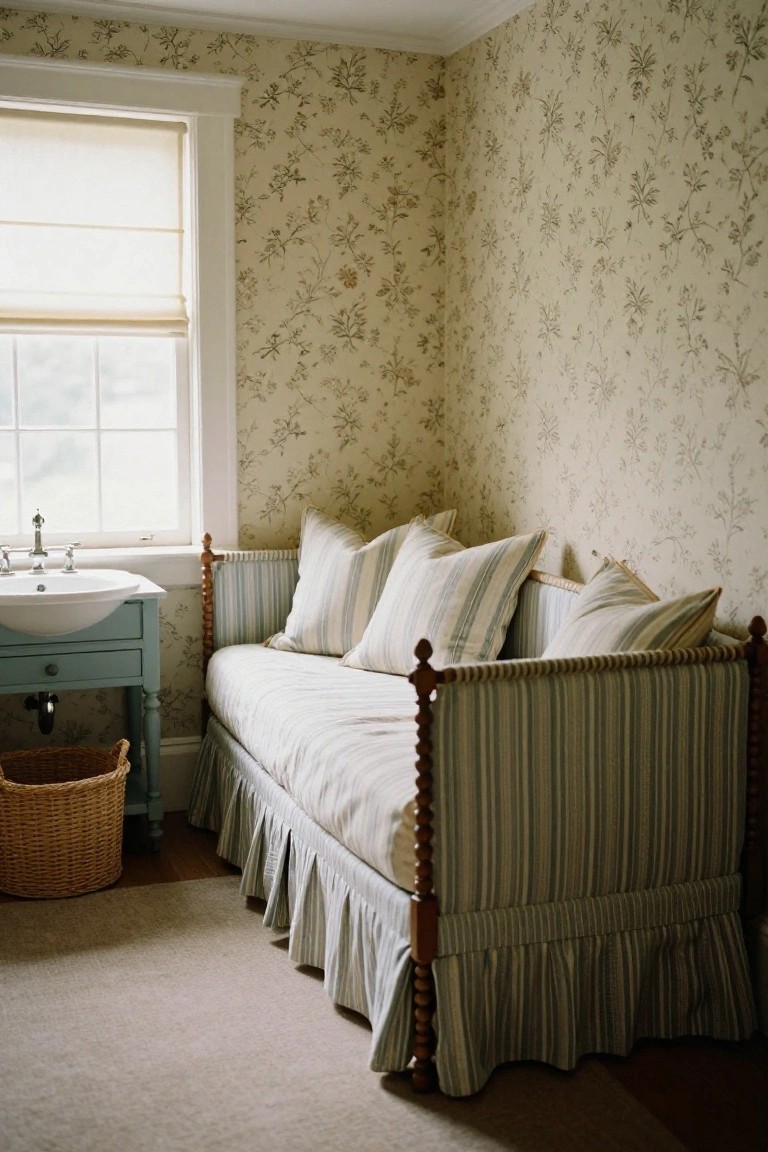
A daybed like this one fits right into a tight corner and turns it into a real sleeping spot. The striped ticking on the mattress and frame gives it that crisp English look, while the gathered skirt softens everything up. Paired with floral wallpaper, the whole setup feels calm and lived-in.
Try this in a small guest room or dressing area off a bedroom. Pick a frame with simple turned posts, then layer on pillows and a skirt that matches your linens. It saves floor space but still invites you to stretch out… just right for occasional visitors.
Brass Sconces Light the Vanity

Brass sconces like these, with their pleated fabric shades, give a bathroom that soft, even light right where you need it. Placed on either side of a simple round mirror, they highlight the white pedestal sink below without overwhelming the space. In an English colonial style setup, this kind of hardware pulls everything together nicely against gray tiles and wood trim.
Try this in a small bath or guest powder room. Go for warm bulbs to keep the glow cozy, and stick to matte brass if you want less shine. It suits older homes best, or any spot aiming for that lived-in traditional feel. Just wipe the shades now and then to avoid dust buildup.
Relaxed Porch Seating with Wicker Chairs
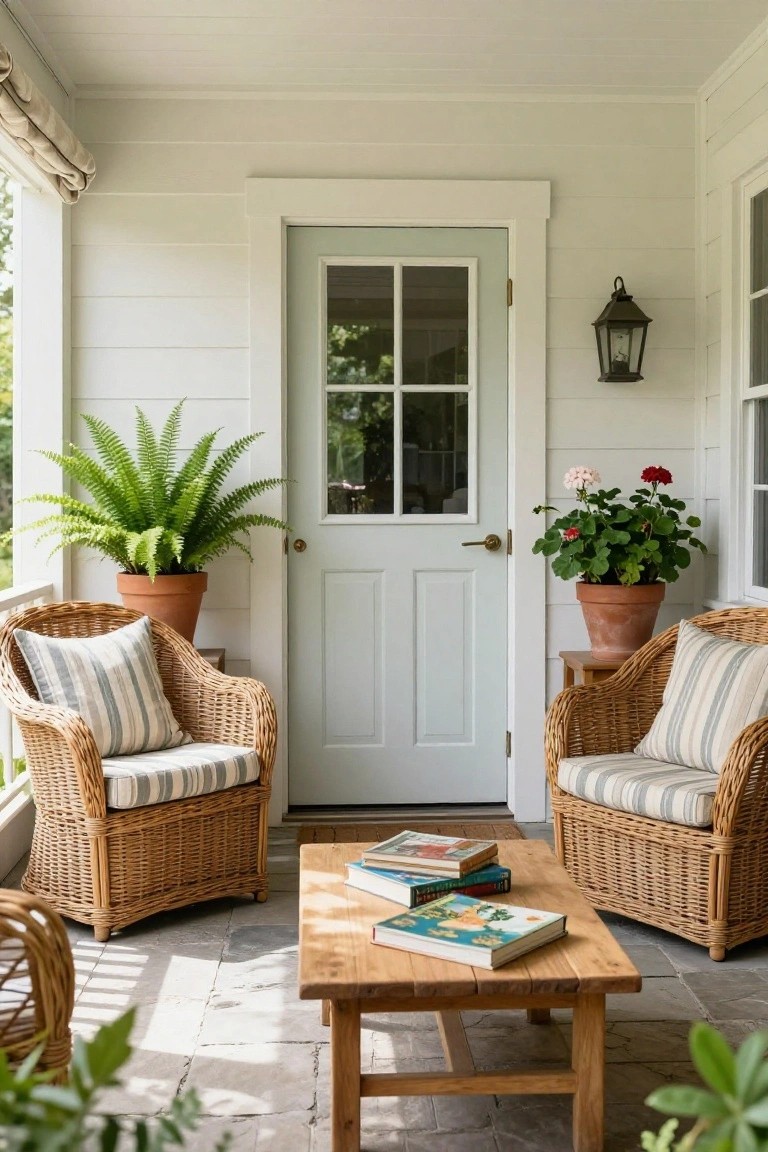
A pair of wicker armchairs pulled up to a low wooden table makes a porch feel like an easy spot to settle in. Stacked books on the table hint at quiet reading time, and the setup keeps things open yet cozy.
This kind of arrangement suits screened porches on older homes, especially where you want a bridge between inside and out. Go for cushioned seats that hold up to weather, add a plant or two nearby, and it fits right into a colonial vibe without much effort.
Breakfast Nook Booth Seating

A built-in booth like this turns a kitchen corner into a real dining spot. The plaid fabric on the seats gives it a casual, lived-in feel that fits right into an English colonial kitchen. With a round wood table tucked in, it seats four comfortably without taking up much floor space. Sunlight pours in from the big windows, making meals there feel easy and bright.
Try this in smaller kitchens or eat-in areas where you want a dedicated spot for breakfast or coffee. Pick sturdy upholstery that hides spills, and add a pedestal table so legs don’t bump. It suits traditional homes best, but watch the scale, keep it proportional to the room.
Cozy Fireside Armchair

A deep leather armchair pulled right up to a stone fireplace makes for one of the best spots in any home. The fire’s glow warms the whole area, and that single chair invites you to sit and stay a while. In this English colonial room, the worn leather and rugged stone keep things feeling real and lived-in, not fussy.
Try this in a living room corner or study where you have a fireplace. It suits older houses with beams or heavy woodwork best. Go for a chair with some character, maybe tufted or rolled arms, and keep the floor simple with a rug underneath. Watch the scale though. Too small a chair gets lost next to the hearth.
Cozy Window Seat Reading Nook
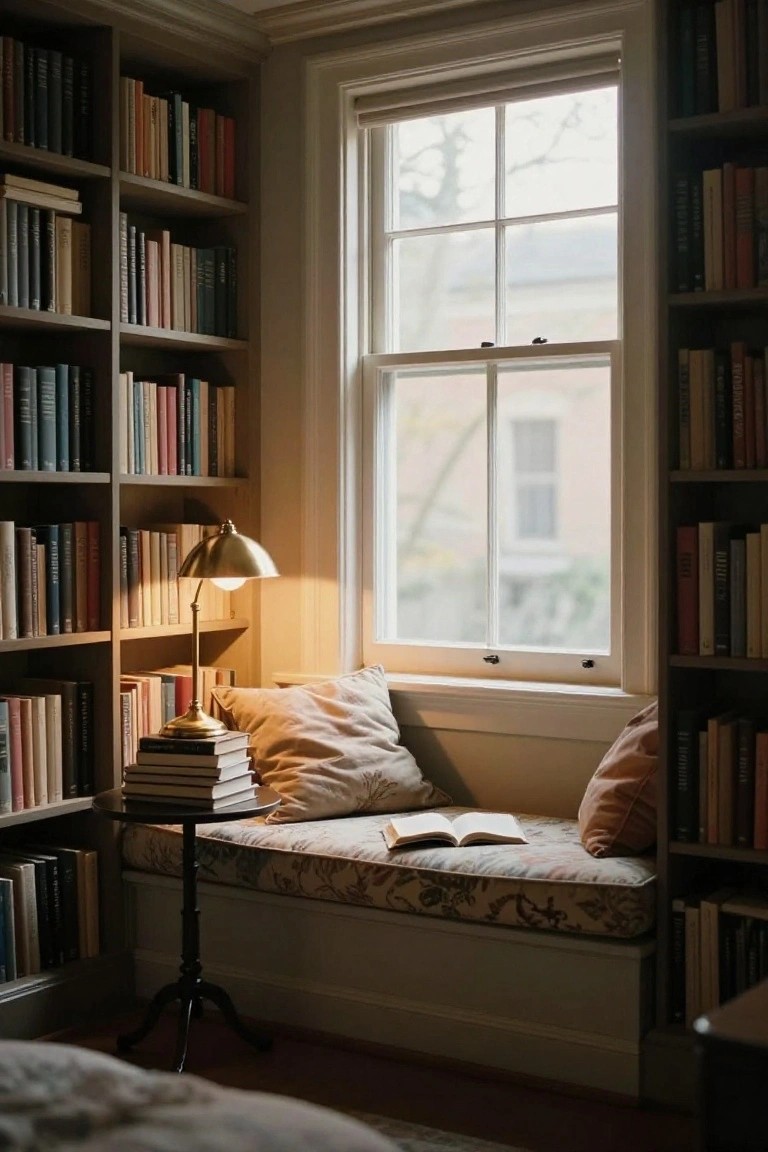
A window seat like this one turns an ordinary corner into a spot you actually want to use. Flanked by tall bookshelves packed with books, it feels snug and bookish without taking up much floor space. That brass lamp on the little table adds just enough glow to make it work day or night.
You can pull this off in older homes where windows are deep enough, or build a simple bench under one. Add some pillows and keep books close by. It fits right into colonial-style rooms, especially libraries or sitting areas… keeps things practical yet pretty.
Attic Desk with Bookshelf Hutch
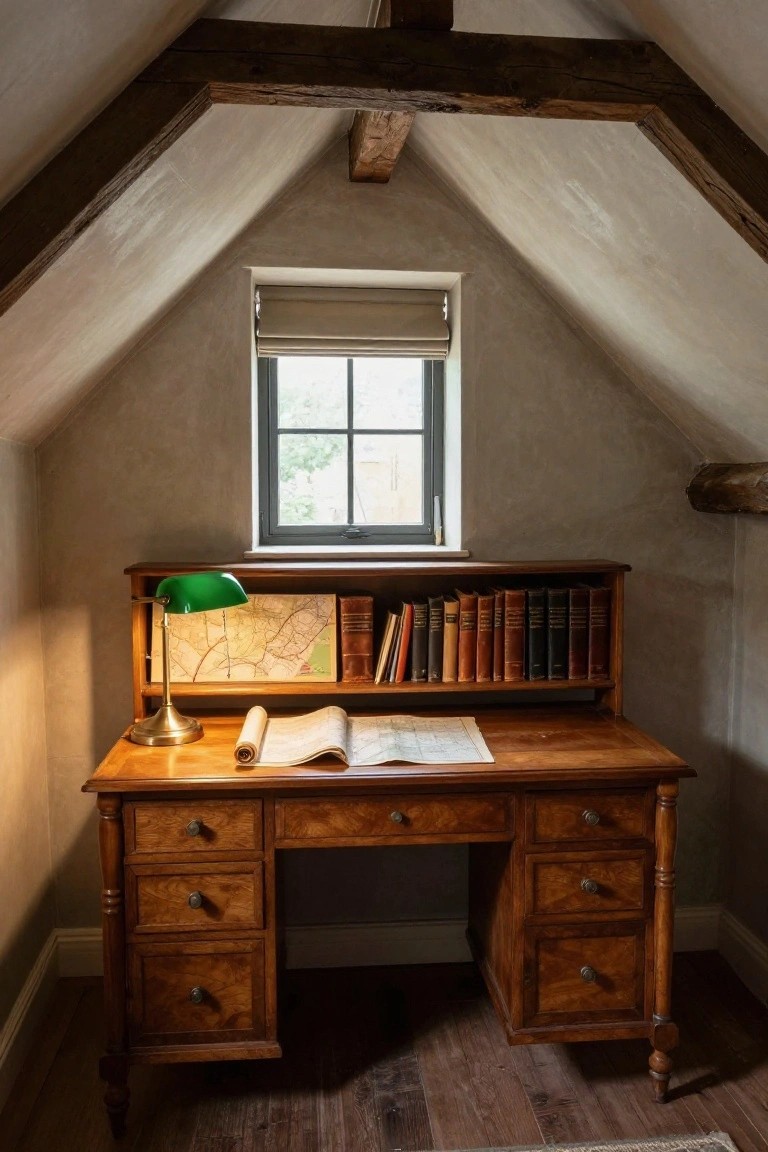
A wooden desk like this, complete with a hutch full of books, turns a snug attic corner into a real workspace. The exposed beams up top set the tone, and the green lamp pulls it all together for late-night reading or planning.
This works best in older homes where attics have that sloped charm. Pick a desk sized for your space, maybe one with matching wood tones to the beams. Fill the shelves with maps or novels… keeps it personal without crowding.
Setting Up a Home Sewing Corner
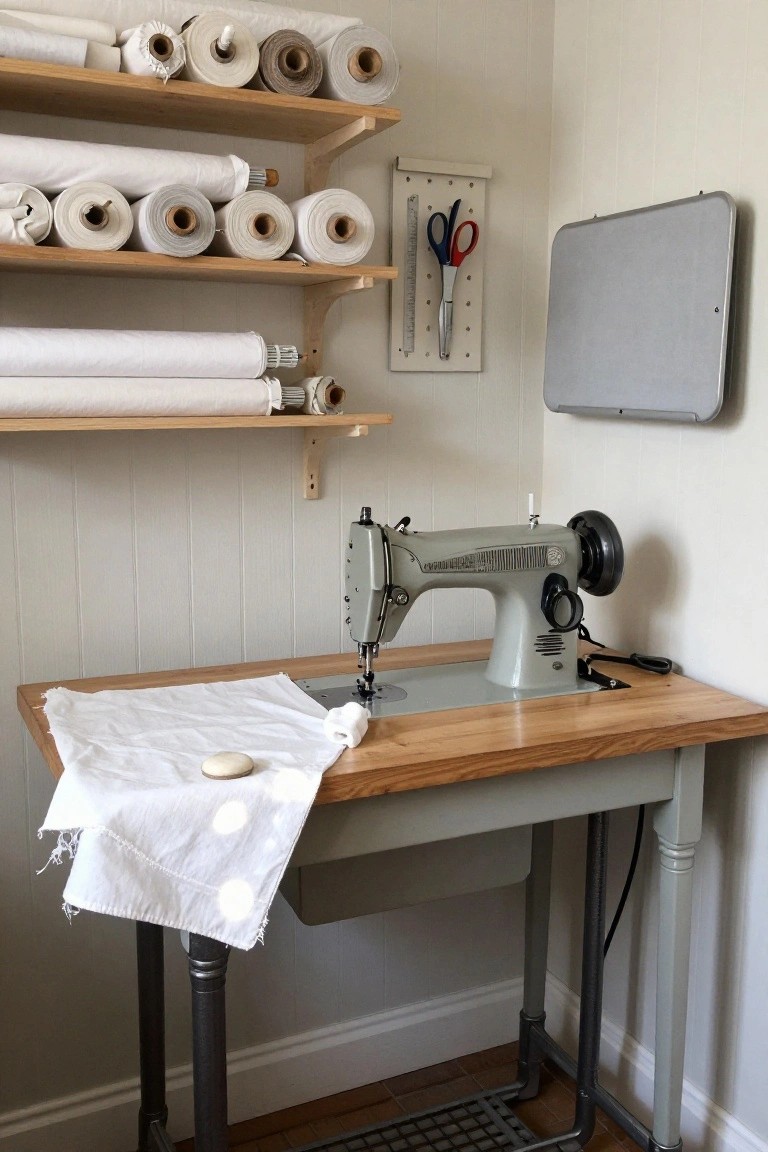
A simple sewing corner like this fits right into an English colonial home. It uses a sturdy oak table for the vintage gray machine, with bolts of white fabric stacked neatly on open wooden shelves above. That setup keeps everything handy without taking much space, and the natural wood tones match the paneled walls for a cozy, lived-in feel.
Try this in a quiet room corner or underused alcove. Pick a solid wood table low enough to tuck under, add wall shelves for fabric rolls, and hang tools on a pegboard. It works best in homes with crafty folks or smaller floor plans… just make sure good light reaches the machine.
Piano Nook in a Paneled Corner

Tucking a classic upright piano into a room corner makes for a practical music spot that fits right into English Colonial style. The piano’s warm mahogany finish picks up nicely against pale green paneled walls, and built-in shelves above hold books and sheet music where you need them. A brass lamp adds just enough light for late practice.
This kind of nook suits a study or living room with good natural light from a nearby window. Pair it with a tufted stool for easy sitting, and keep the look simple. It works best where space is tight but you still want that touch of old-world charm… without the grand piano taking over.
Tall Cabinet Storage for Craft Supplies
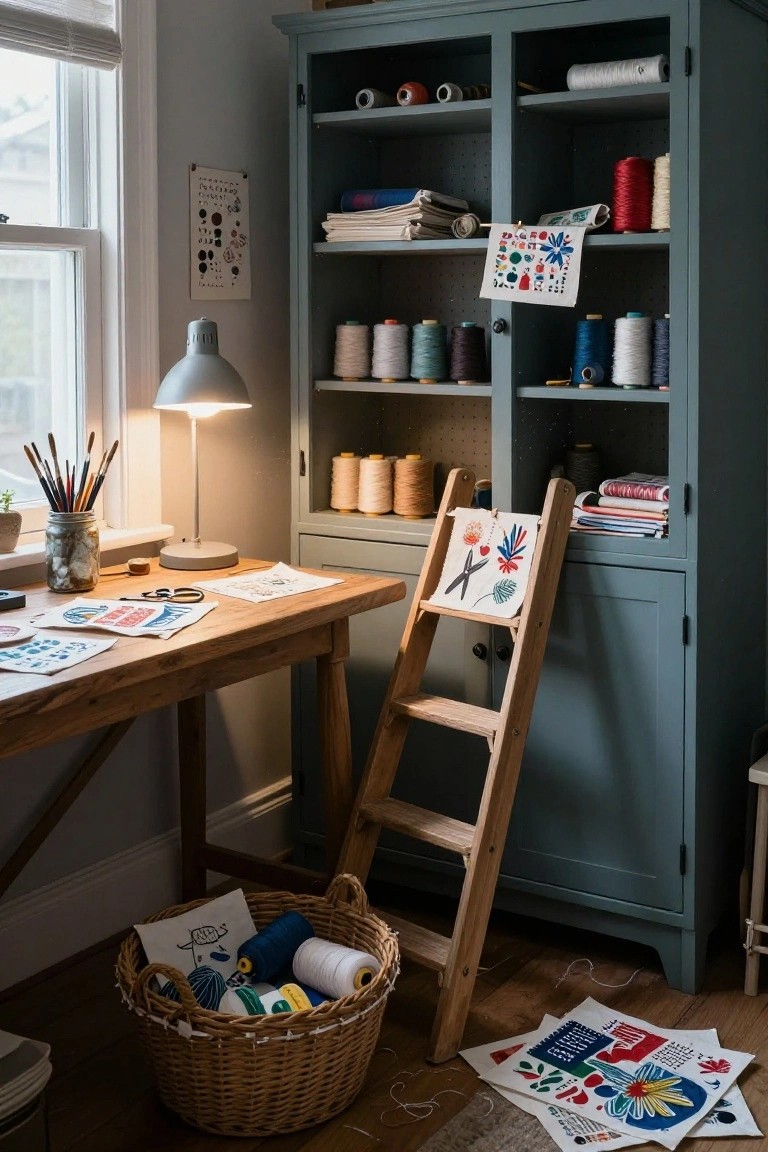
This tall teal cabinet makes a sewing or craft space feel organized and full of character. Open shelves hold spools of thread in every color, folded fabrics, and jars of brushes, all right at hand. The pegboard back keeps tools like scissors hanging neatly. Paired with a simple wooden ladder, it turns high shelves into easy reach without taking up floor space.
It’s perfect for a spare room or nook in an older home where you want hobby storage that looks good too. Paint an old armoire or wardrobe in a soft blue-green like this teal. Add shelves if needed, and use bins for smaller bits. Works best where light comes in soft through the window. Just don’t overload the top or it might feel top-heavy.
Brass Hardware on a Glass Shower
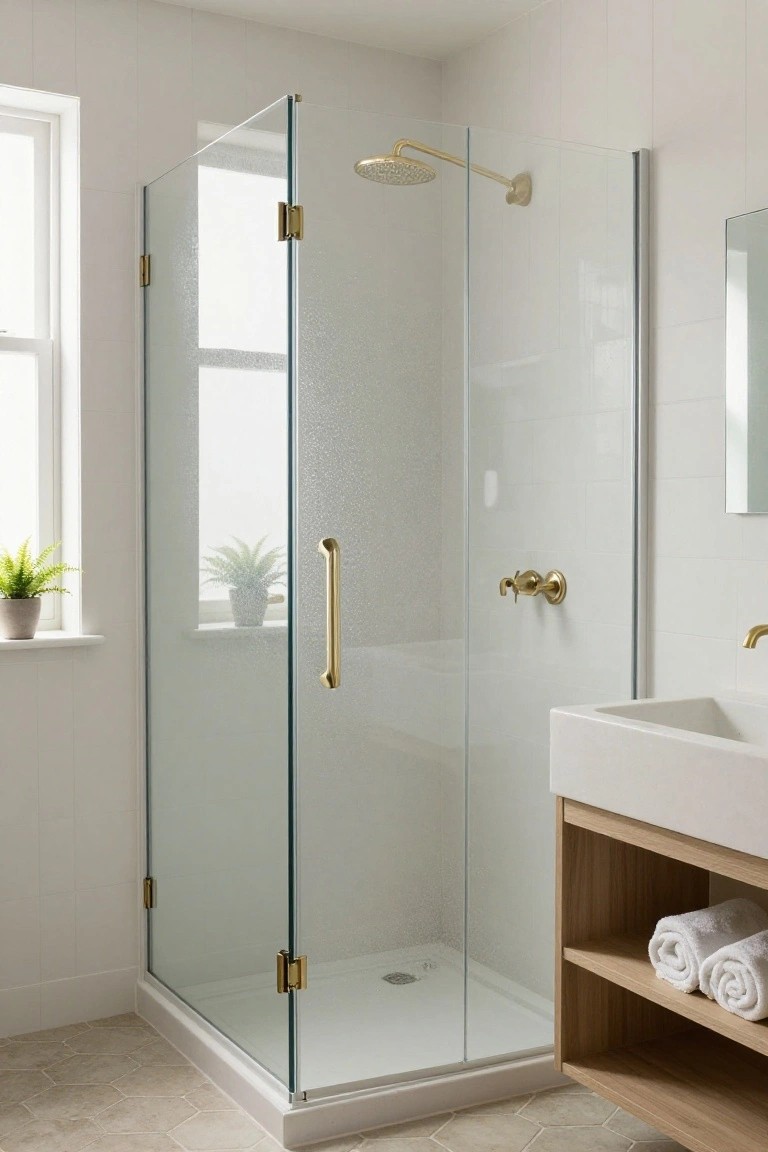
A glass shower like this one really opens up a bathroom. The brass rain showerhead and hinged doors add just enough warmth to the white tiles and clean lines. It feels fresh and a bit luxurious, without going over the top.
This setup works great in compact spaces or any room you want to feel brighter and airier. Go for it in a modern colonial style home, matching the brass with wood cabinets nearby. Pick durable finishes so it stays looking good over time.
Open Shelves with Built-In Lighting
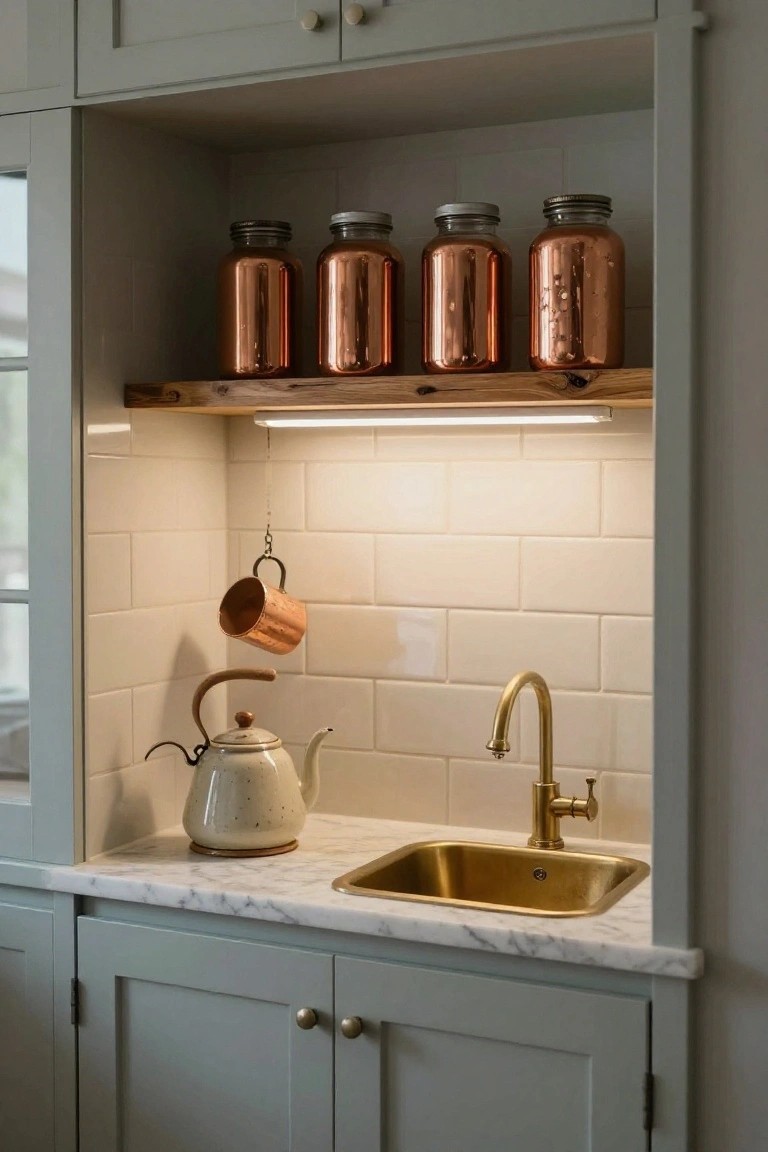
One simple way to add interest to a kitchen is with open shelves tucked into a built-in niche. Here, a wooden shelf sits under a slim LED light strip, spotlighting four copper jars. The soft glow picks up the shine on the copper without being too bright, and it sits nicely above white subway tiles and a marble counter. It keeps things practical too. No wasted space.
Try this above a sink or stove in a smaller kitchen. It suits older homes with shaker-style cabinets like the sage green ones shown. Pick warm bulbs so the light feels cozy, not cold. Hang a mug or kettle nearby if you have the hooks. Just avoid overcrowding the shelf.
Walk-In Closet Dressing Nook

Tucked into a sloped attic space, this dressing nook keeps things simple and right at hand. White built-in wardrobes line one wall, leaving room for a wooden console table topped with a tall gold-framed mirror. The setup pulls in natural light from the skylight overhead, making it easy to see what you’re doing without crowding the storage.
You can pull this off in any spare corner or attic room with good headroom. Pair plain white cabinets with a thrifted wood table and some hat boxes for storage that doesn’t feel stuffy. Add a small bench for sitting, and it works best in older homes where you want practical spots that still look put-together. Just keep the floor clear with a simple rug.
Frequently Asked Questions
Q: What’s the quickest way to test English Colonial style in my space?
A: Grab a floral wallpaper or heavy linen drapes and layer them over what you have now. That instant warmth pulls the look together.
Q: How do I pick colors that feel right for this vibe?
A: Lean into muted greens, soft creams, and hints of mahogany red on accents. Paint one wall first to see how light plays with them. Your room gains that lived-in glow.
Q: Can I mix in some modern furniture?
A: Tuck a clean-lined sofa beside a carved armchair. The old-new combo sparks interest. And it stays cozy.
Q: Where do I find affordable fabrics and rugs?
A: Scout vintage shops for wool rugs with subtle patterns. Hunt remnants online for upholstery that drapes just right. They wear beautifully over time.
