

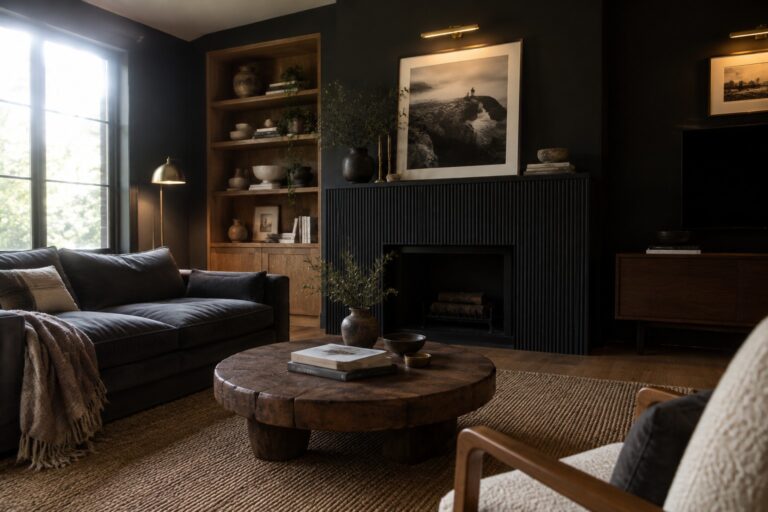
I have noticed that black walls or cabinetry can close a room in quickly if there is nothing to soften the effect.
Wood brings in natural variation that shifts with the light, while brass adds small points of reflection that keep the space from feeling static.
Balance is everything here.
When I think about trying this approach at home I usually start with one dark surface and add the wood and brass in layers so I can adjust as the room settles.
The combinations that hold up best are the ones where the materials actually support daily use rather than just creating a look for photos.
Built-In Shelving That Warms Up Black Walls
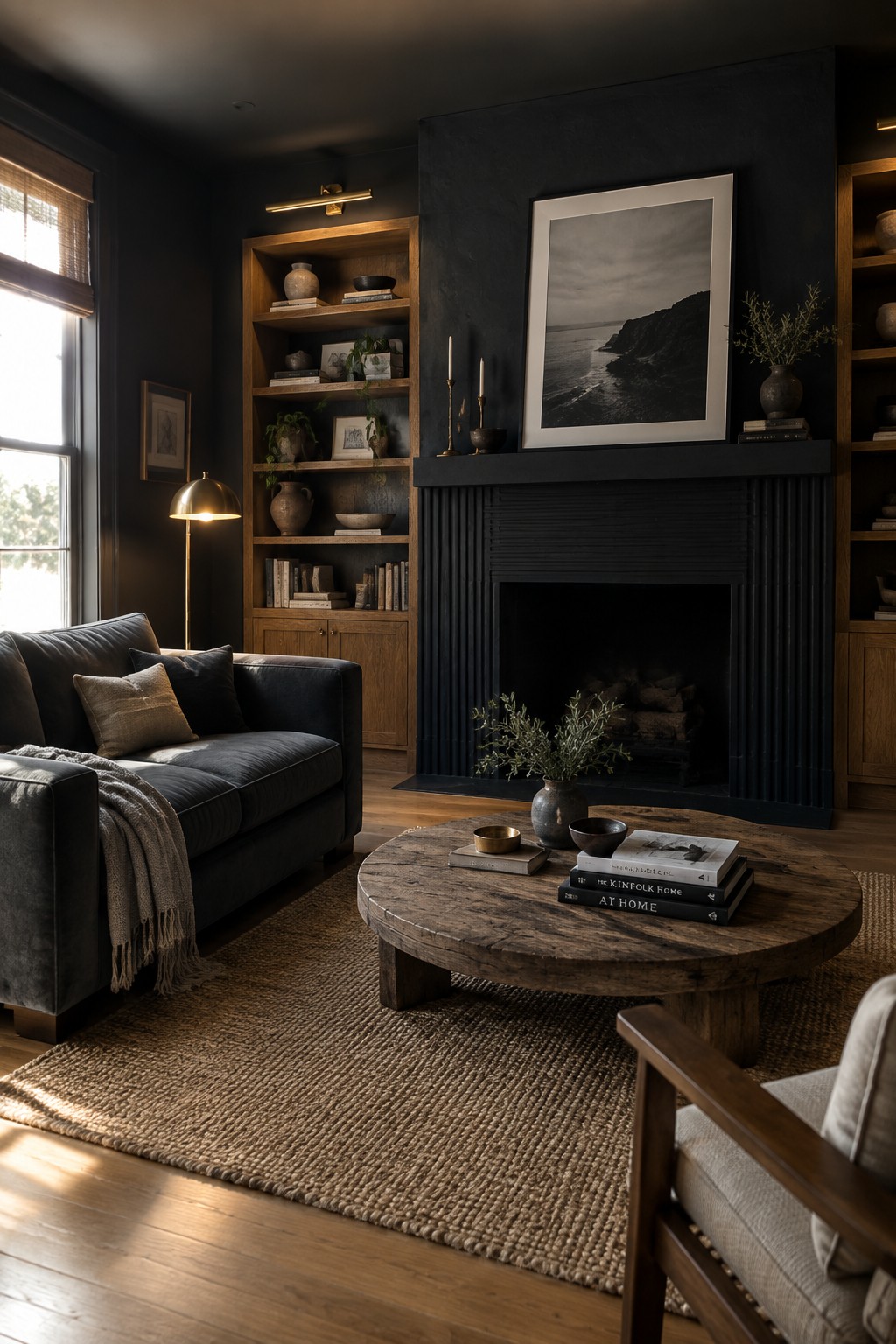
Black walls can make a room feel dramatic, but they often need something to keep the space from turning cold or flat. Built-in wood shelving does that job well by bringing in natural grain and a spot for books, pottery, and plants that add life without extra furniture.
This works best in living rooms or studies where storage matters as much as the look. It suits homes that already have wood floors or trim, since the shelves tie everything together and give you room to style without crowding the floor.
Black Walls Balanced With Warm Wood And Brass
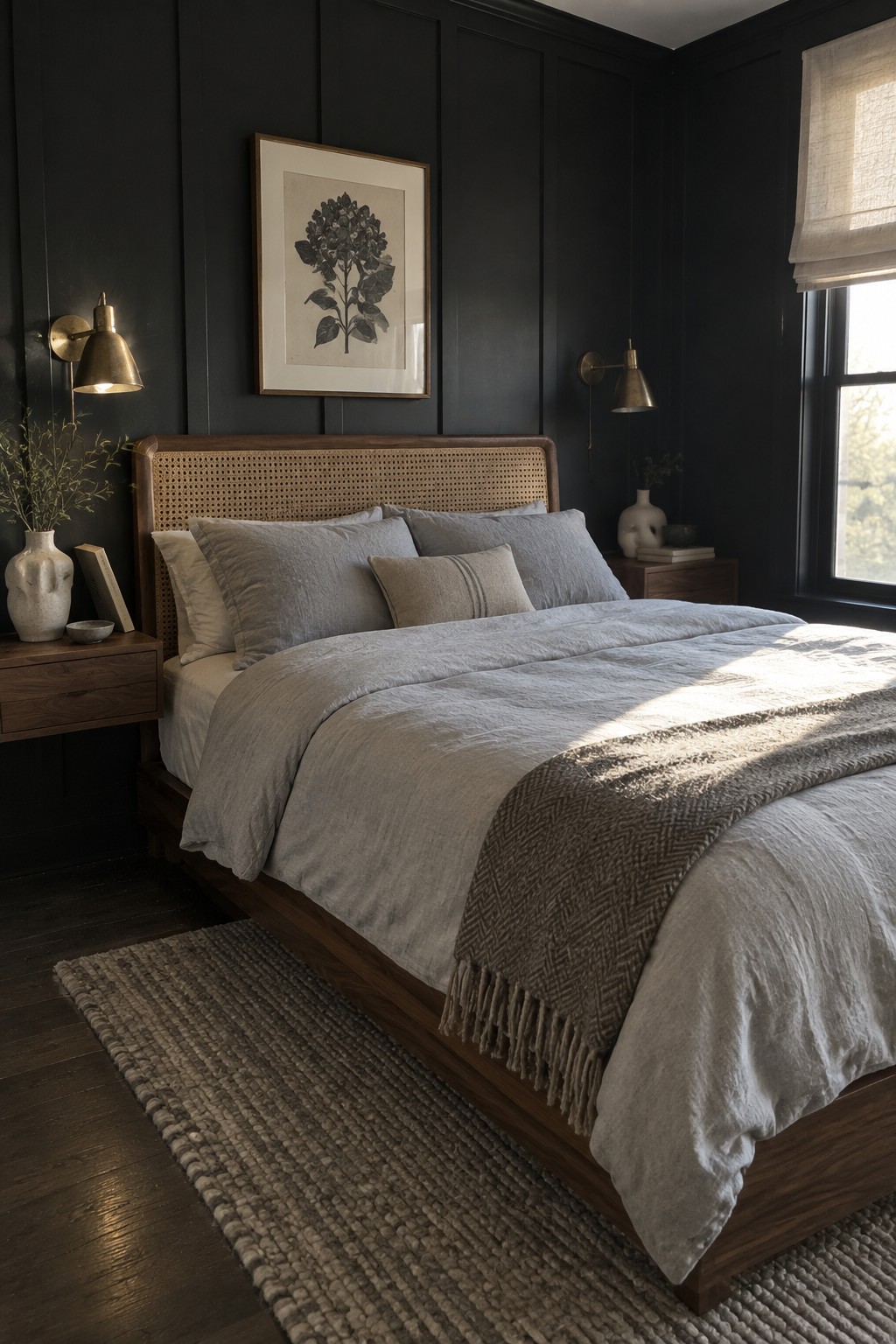
Black walls can make a bedroom feel smaller and more enclosed, but that same darkness becomes an asset once you add warm wood and brass. The wood brings natural texture and a sense of weight that keeps the room grounded, while brass catches the light and adds just enough shine to stop the space from feeling flat.
This mix works best in rooms that already have some age or character, where the contrast between the dark paint and the wood tones can feel intentional rather than stark. Stick to one or two wood pieces, like a bed frame or nightstands, and let simple brass sconces handle the lighting. Too many metals or too much wood can tip the balance, so keep the rest of the room quiet.
Balancing Black Cabinets With Warm Wood
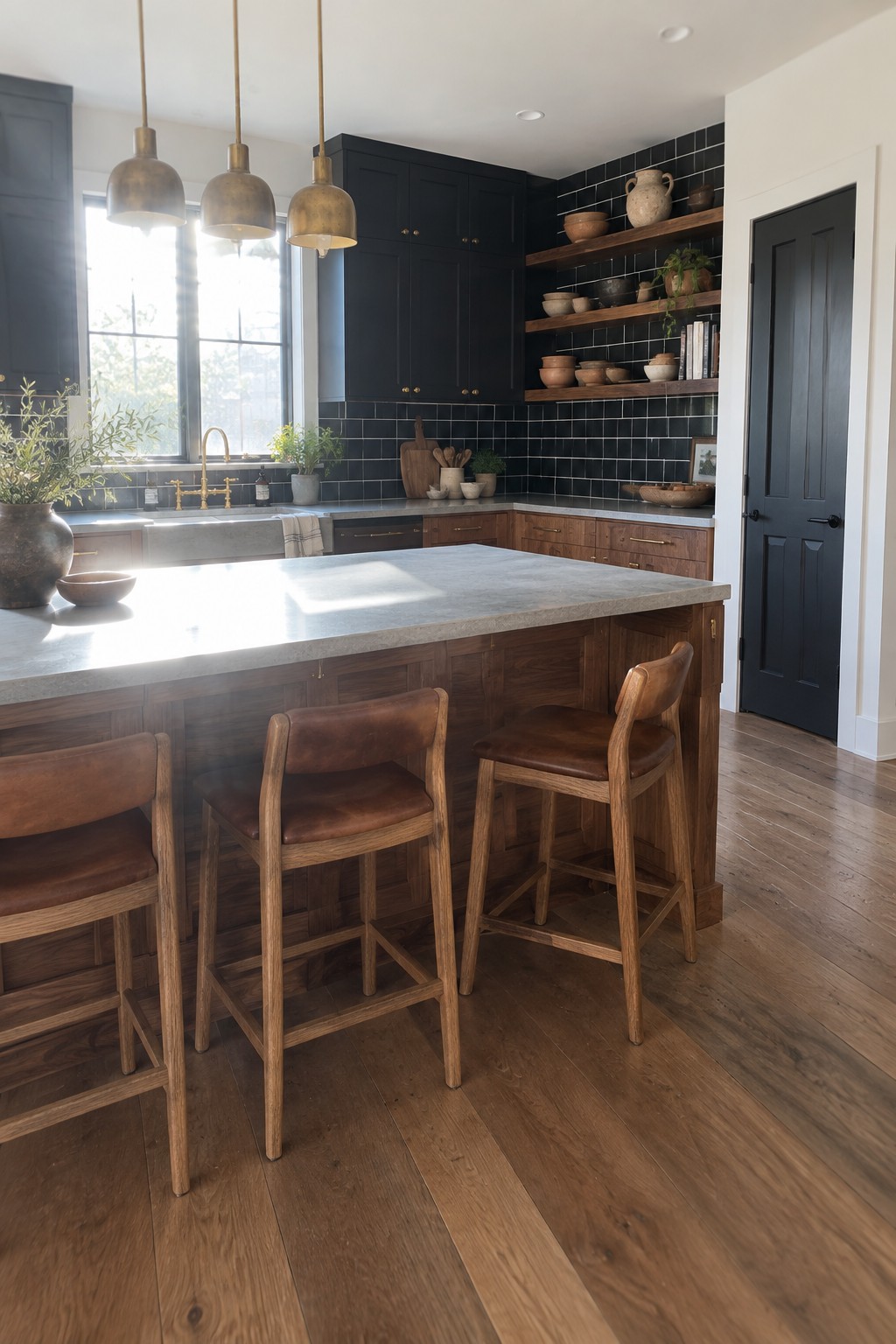
Black cabinets can give a kitchen real weight and presence, but they often need something lighter to keep the room from feeling closed off. Pairing them with warm wood on the island base and open shelves softens the look while still keeping the dark color as the main feature.
This approach works best in kitchens that get decent daylight. The wood tones bring natural variation and the brass fixtures add a bit of shine, so the black stays bold without turning heavy or cold.
Balancing Dark Walls With Warm Wood
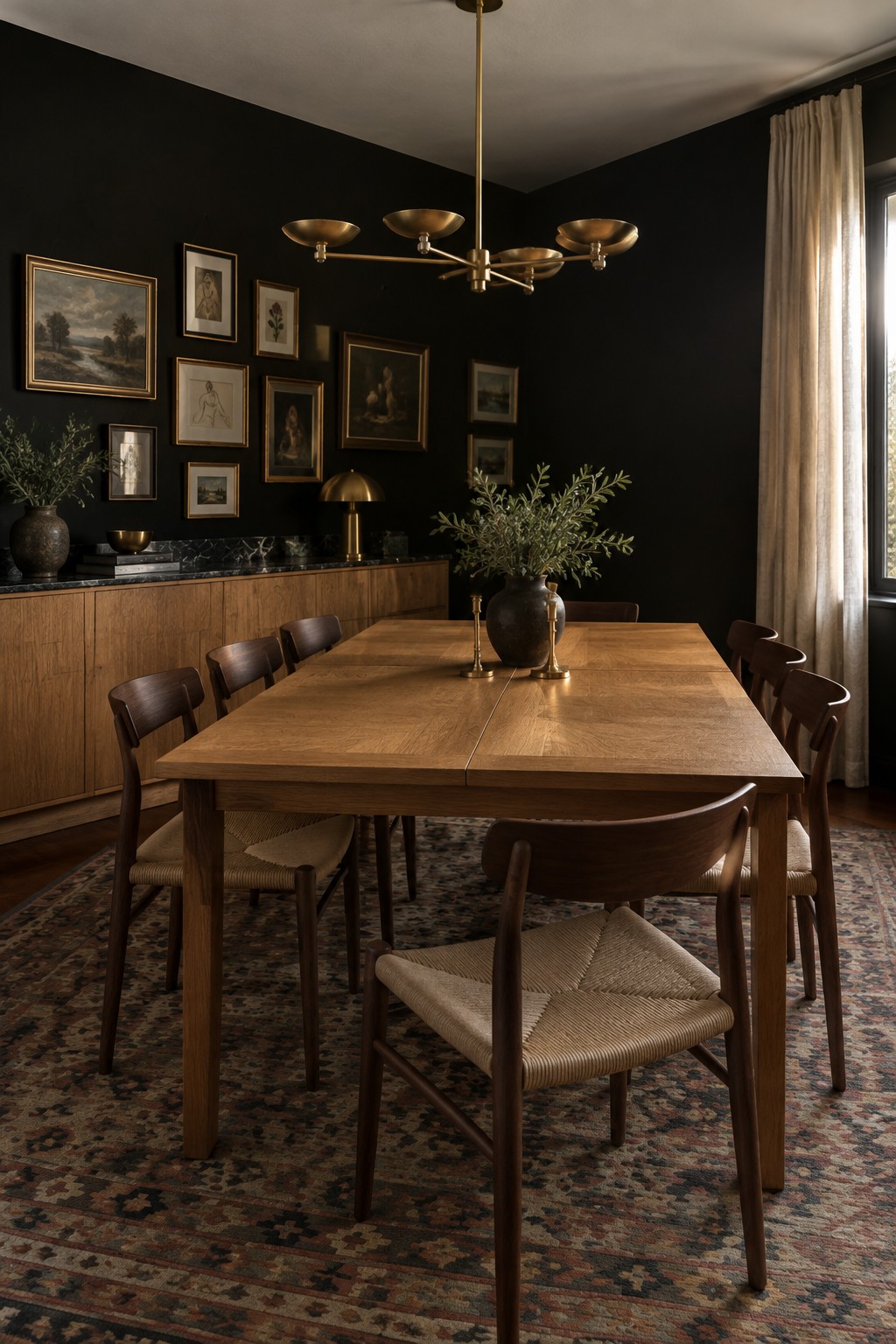
Black walls make a strong starting point in a dining room, but they need something to keep the space from feeling closed in. Warm wood tones on the table and chairs bring in natural color and texture that softens the darkness right away.
This approach works well in homes that already have wood floors or built-ins, since it ties the room together without adding more contrast. Keep the wood simple and let a few brass accents handle the light reflection so the whole space stays balanced.
Letting Wood Balance Dark Tiles
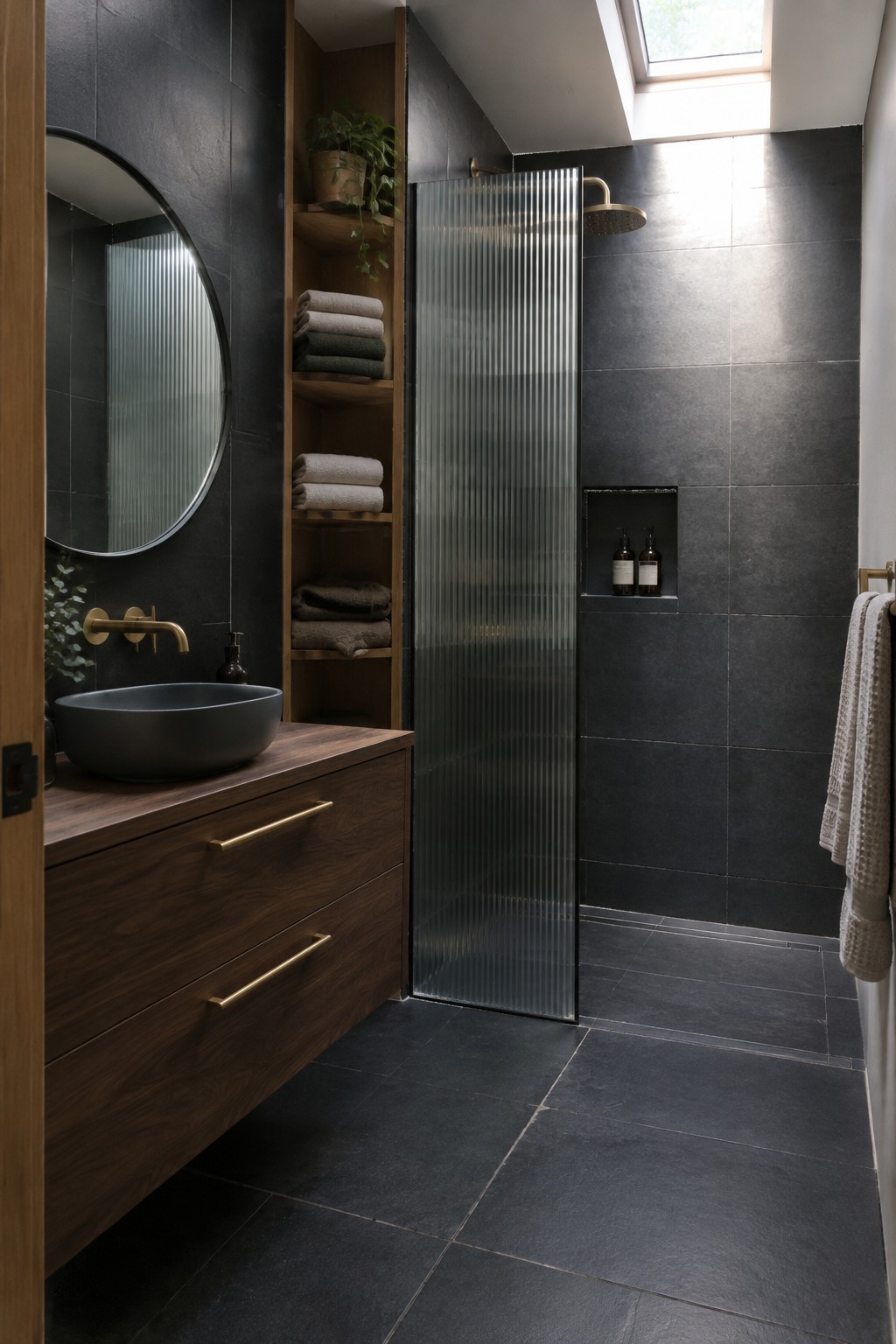
Black tiles give a bathroom real presence, but they can feel heavy without something lighter to break them up. The wood vanity here does that job by adding warmth and a bit of natural texture that keeps the dark surfaces from taking over.
This mix suits compact bathrooms where you want depth without making the room feel closed in. Keep the wood tone natural rather than stained too dark, and use simple brass hardware to tie the two materials together without adding extra color.
Balancing Black Walls With Warm Wood
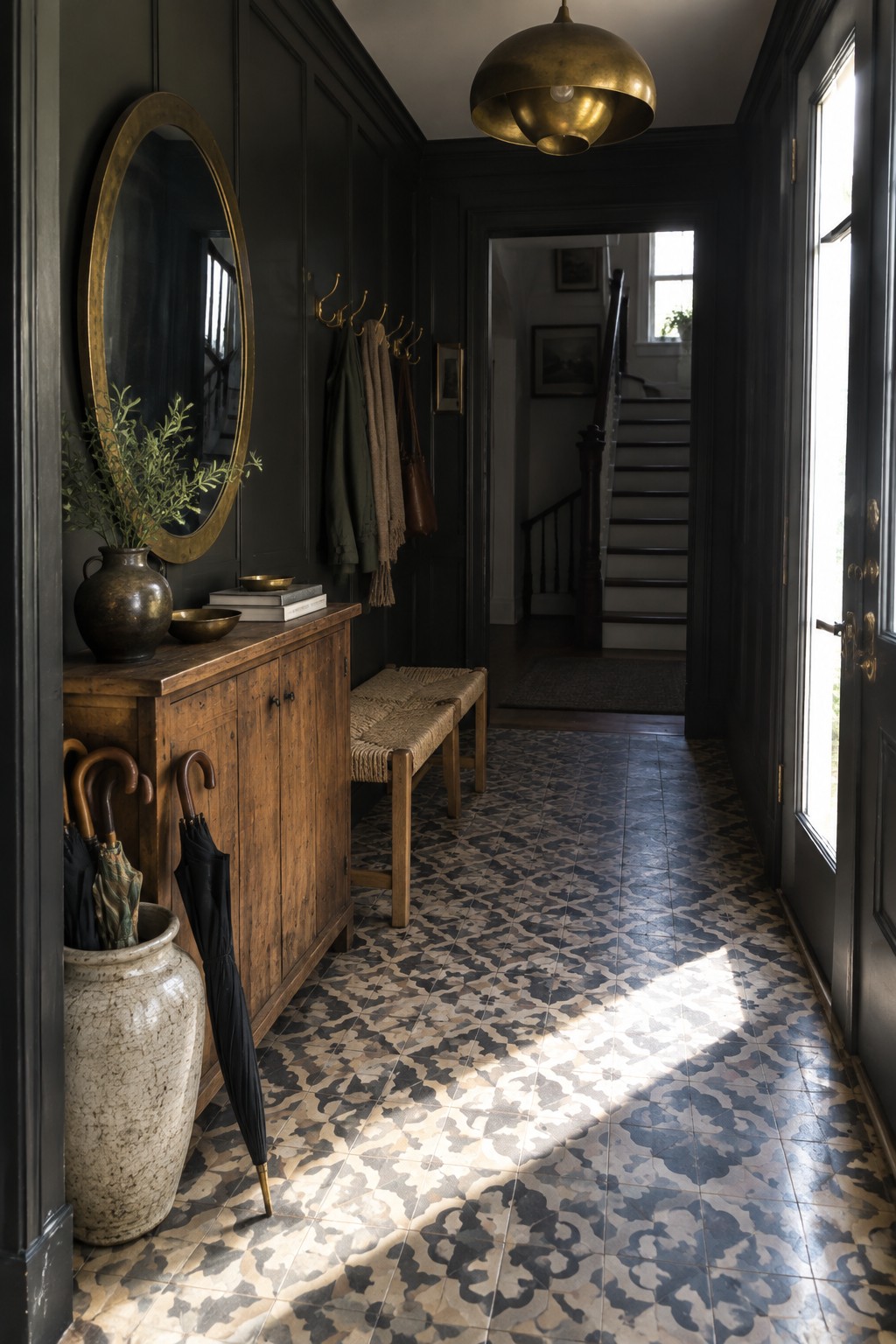
Dark walls give a hallway real presence, but they can start to feel heavy without something to offset them. A simple wooden console and bench bring in that needed warmth, and the brass touches on the mirror and light keep the whole look from going flat.
This approach works especially well in older homes or narrow entries where you want the drama of black paint but still need the space to feel livable. Keep the wood tones on the warmer side and limit the brass to a few key pieces so it reads as balanced rather than overdone.
Warm Wood Furniture Balances Black Built-Ins
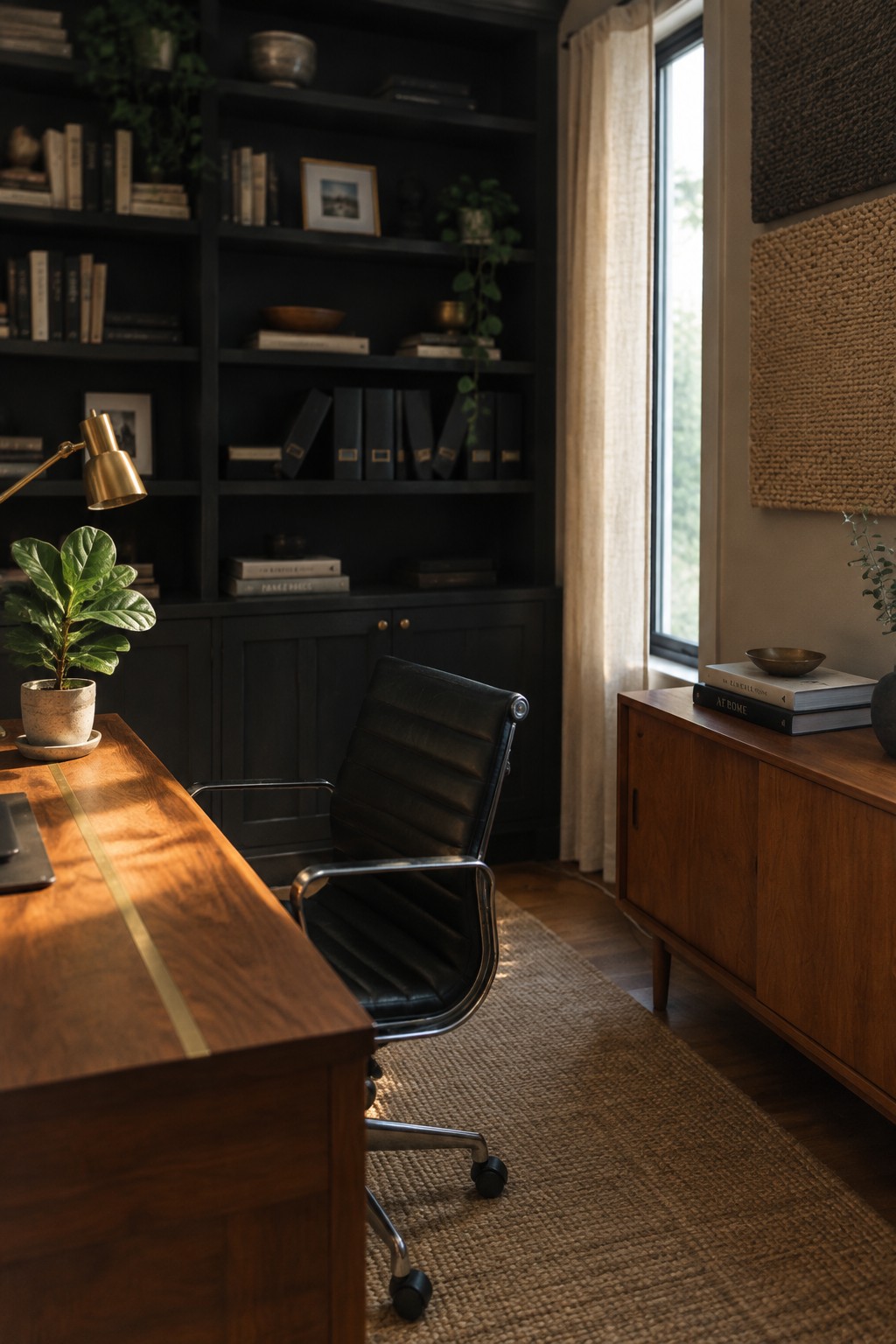
Black built-ins can make a room feel solid and serious, but they often need something softer to keep the space from going flat. Adding a warm wood desk or credenza next to dark shelving gives the eye a place to rest and brings natural texture into the mix. The contrast works especially well in smaller rooms where the black paint might otherwise close things in.
Try placing a wood desk or side table against black shelving and keep the brass accents minimal, like a simple lamp or drawer pulls. This approach suits homes that already have wood floors or trim, since it ties the darker walls back to the rest of the house without needing extra color.
Black Walls With Warm Wood Furniture
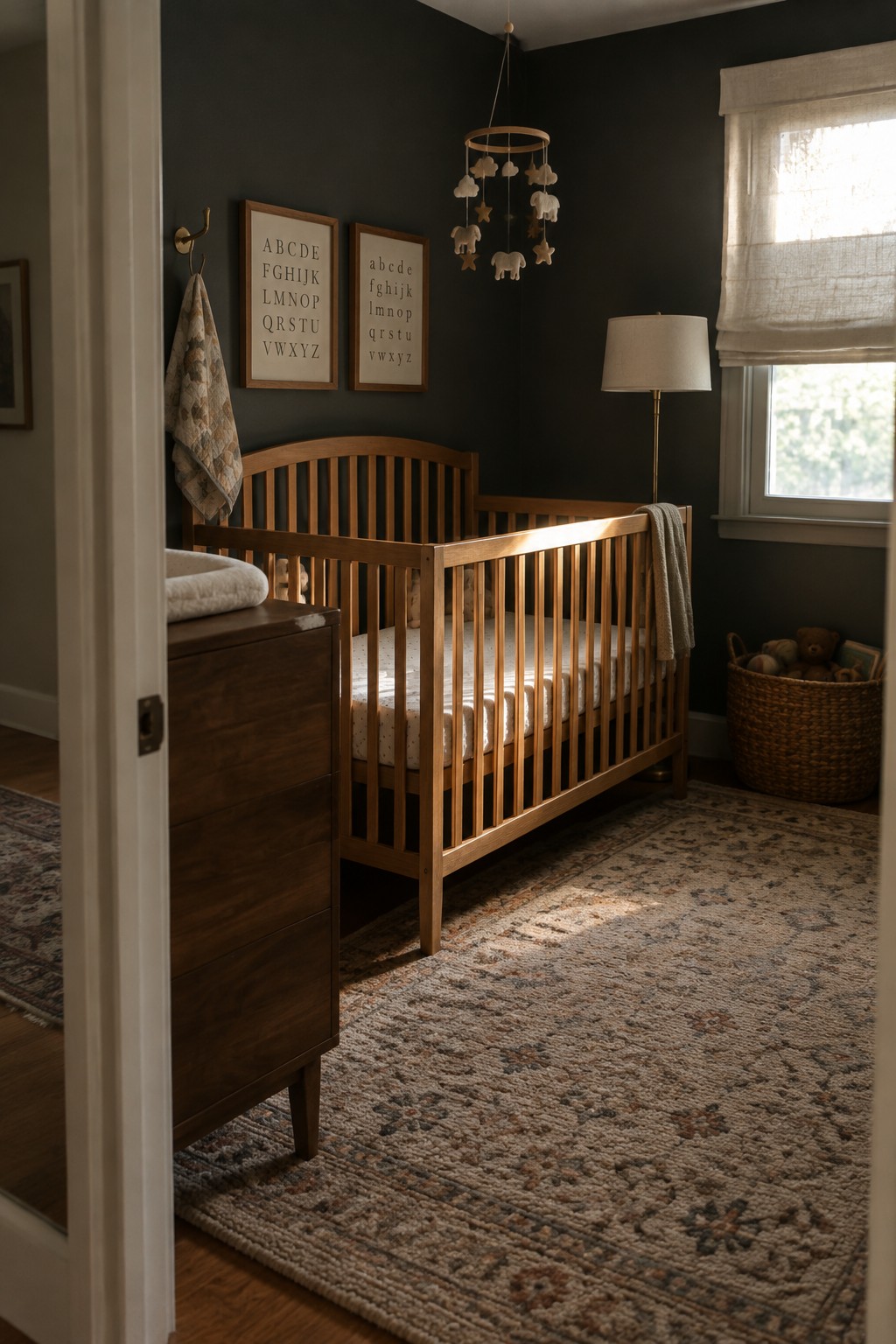
Dark walls can make a room feel smaller or heavier, but pairing them with solid wood furniture changes that quickly. The natural grain and honey tone of the crib and dresser bring light and warmth into the space without competing with the deep paint color.
This works especially well in bedrooms or nurseries where you want a calm background but still need furniture that feels substantial. Stick to one or two wood finishes and add brass in small doses so the metal reflects light instead of overwhelming the room.
Warming Up Black Cabinets With Wood And Brass
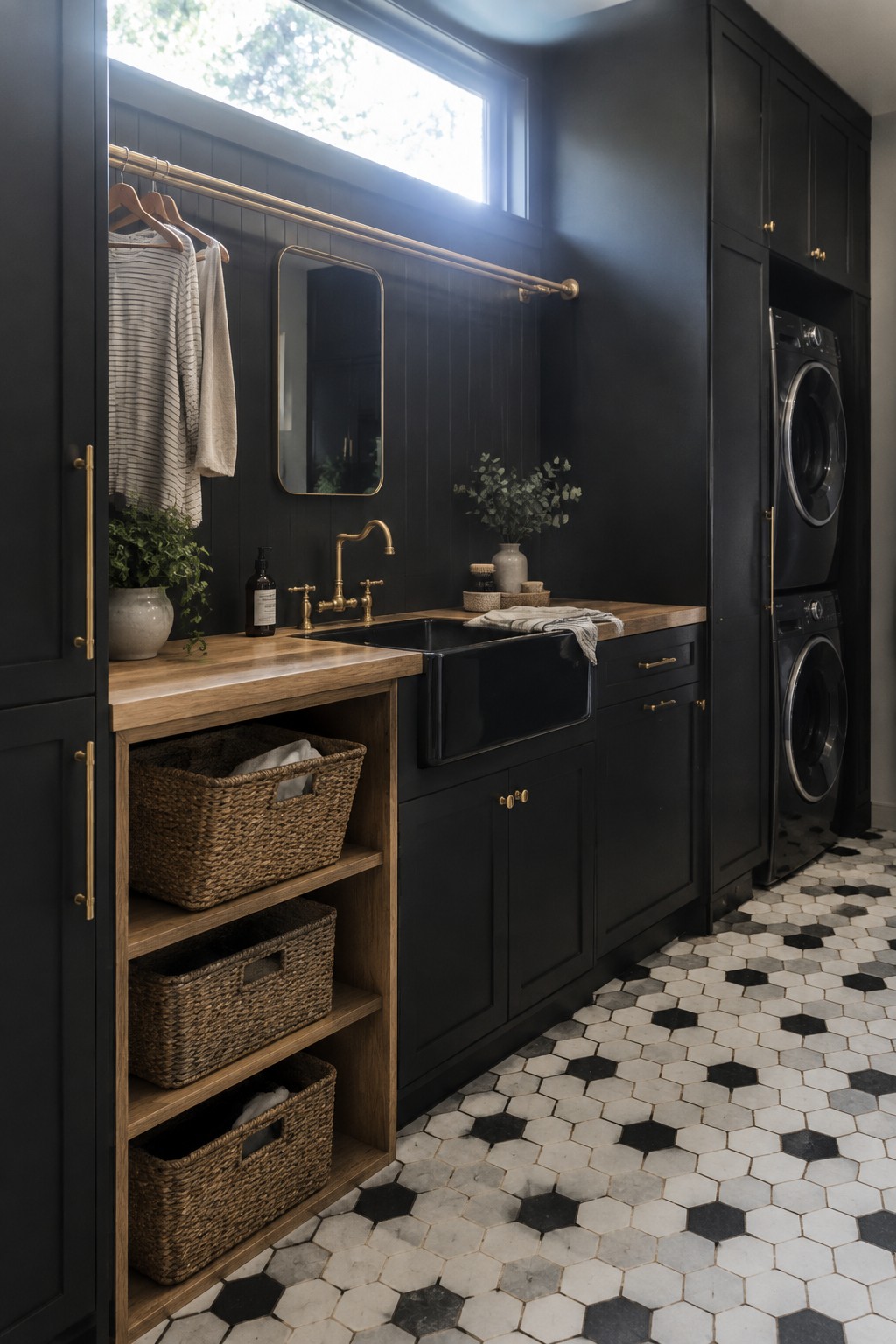
Black cabinetry makes a strong statement but can feel flat or cold without the right balance. Warm wood surfaces and brass details bring in texture and a natural tone that keeps the dark color from taking over.
This mix works best in practical rooms like laundry spaces or utility areas where you want durability without a heavy mood. Stick to simple brass hardware and natural wood tones on counters or open shelving so the contrast stays easy to live with.
Balancing Black Walls With Warm Wood
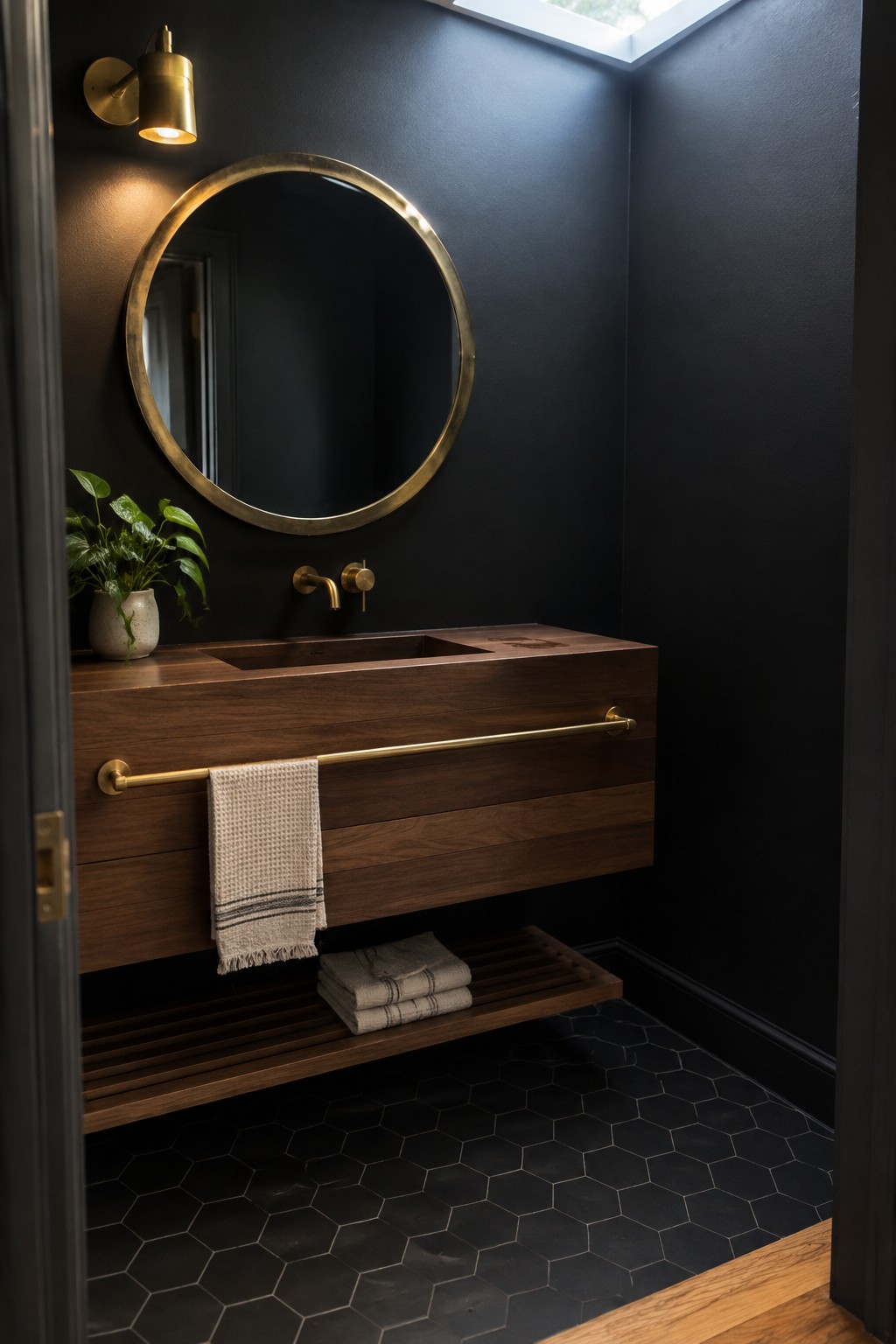
Black walls make a strong statement, but they need something to keep the room from feeling closed in. Warm wood tones do that job well by bringing natural color and texture that softens the darkness without breaking the mood.
This approach works best in smaller spaces like bathrooms where you can use a wood vanity and simple brass hardware to add warmth. Keep the wood tone consistent and let the brass catch light from a nearby fixture so the contrast stays balanced rather than stark.
Balancing Dark Walls With Warm Wood
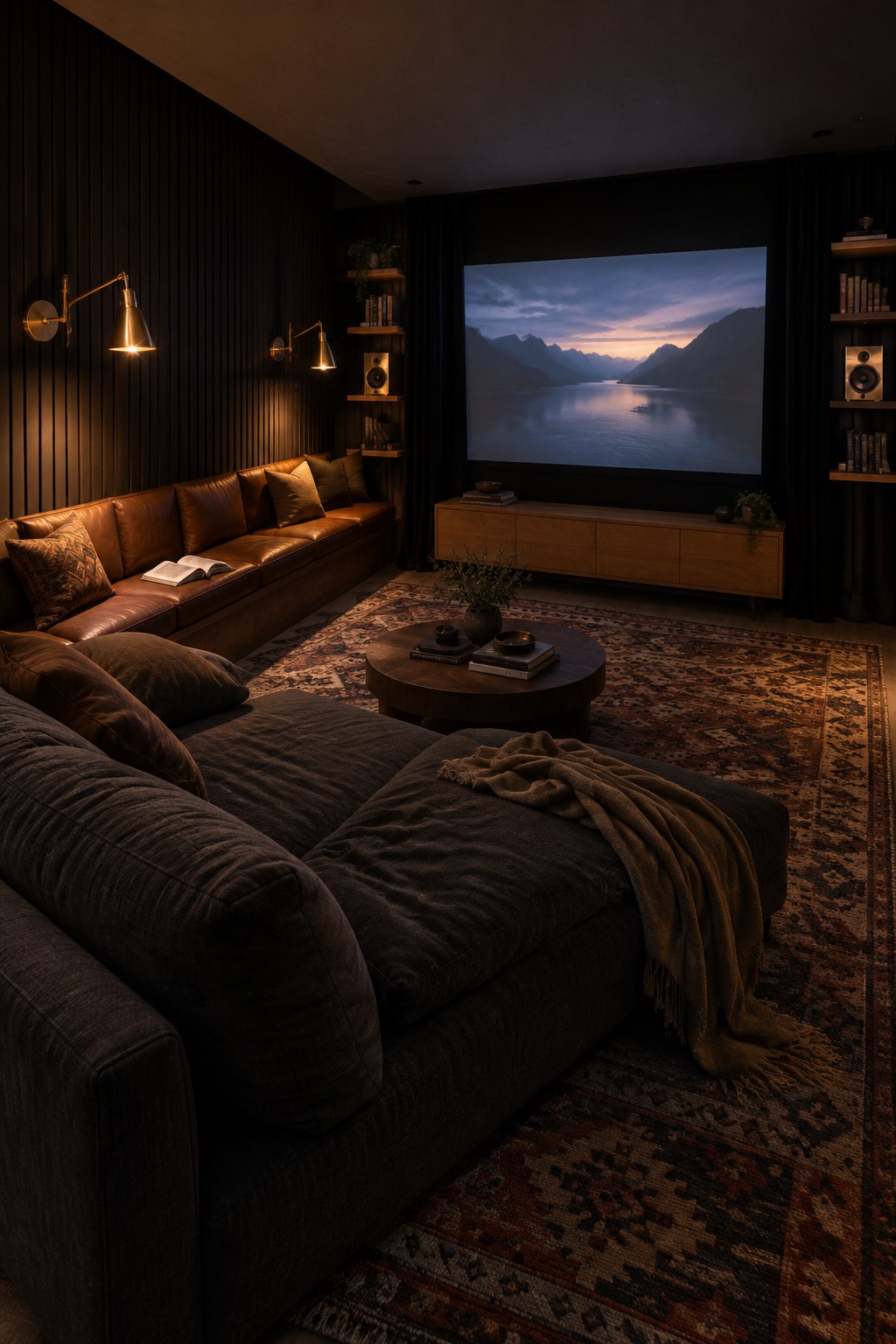
Dark walls can make a room feel enclosed and restful, but they need something to keep the space from turning cold. Warm wood tones and brass accents do that job well by adding color and reflection without brightening the whole room too much.
This approach suits living rooms that get evening use. A brown leather sofa, a low wood console, and a couple of brass sconces give enough contrast while still letting the black walls set the mood. Keep the wood finishes natural rather than too polished so the balance stays easy.
Black Shelving With Warm Wood And Brass
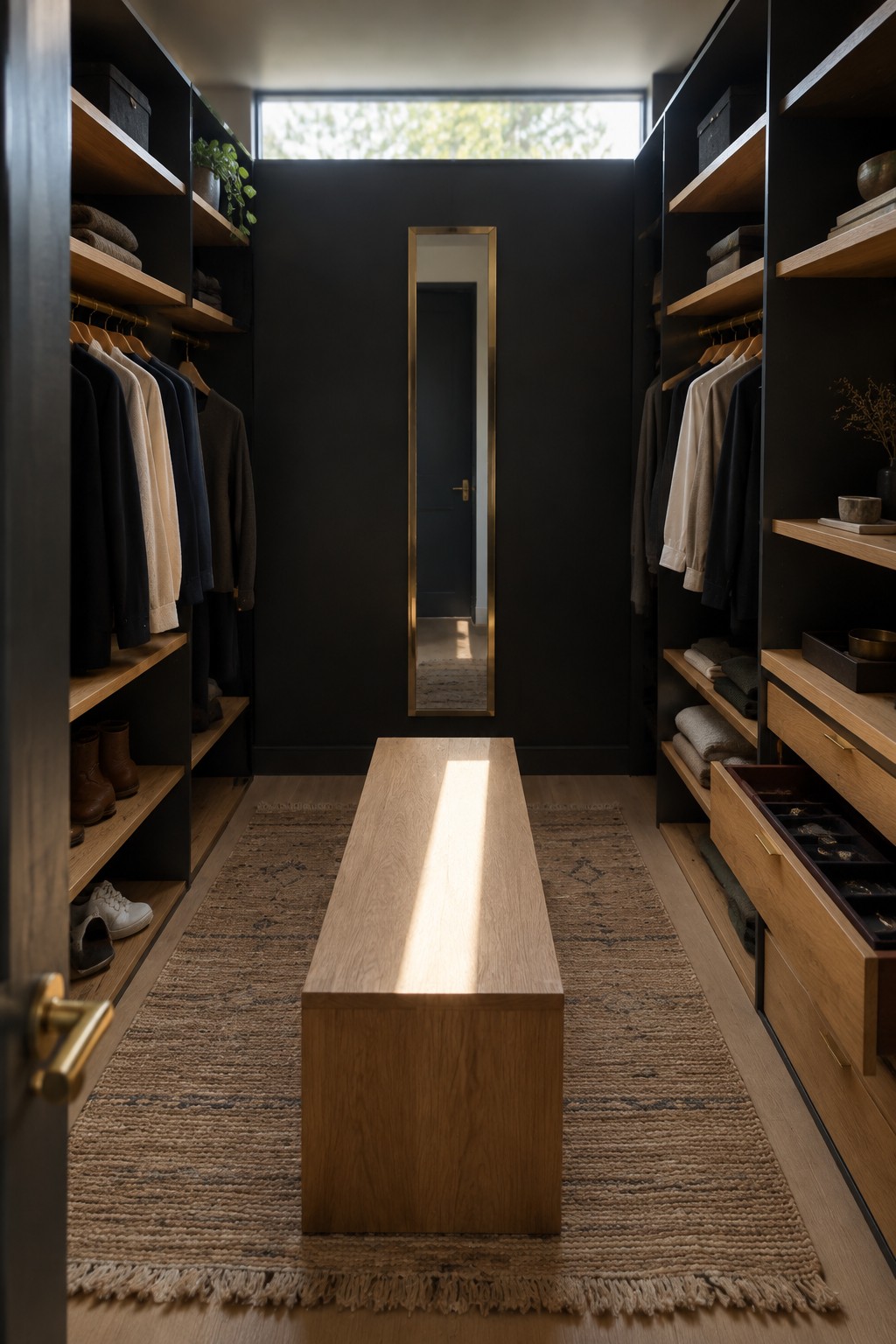
Painting closet walls and shelving black creates a strong backdrop that lets wood tones and brass stand out without competing. The dark color keeps the space feeling organized and calm, while the lighter wood brings in enough warmth to stop it from going cold.
This works best in narrow or windowless dressing rooms where you want storage to feel substantial rather than stark. Keep the wood light and simple on benches or drawer fronts, then use brass on hardware and mirror frames to add just enough shine without overdoing it.
Black Banquettes With Warm Wood And Brass
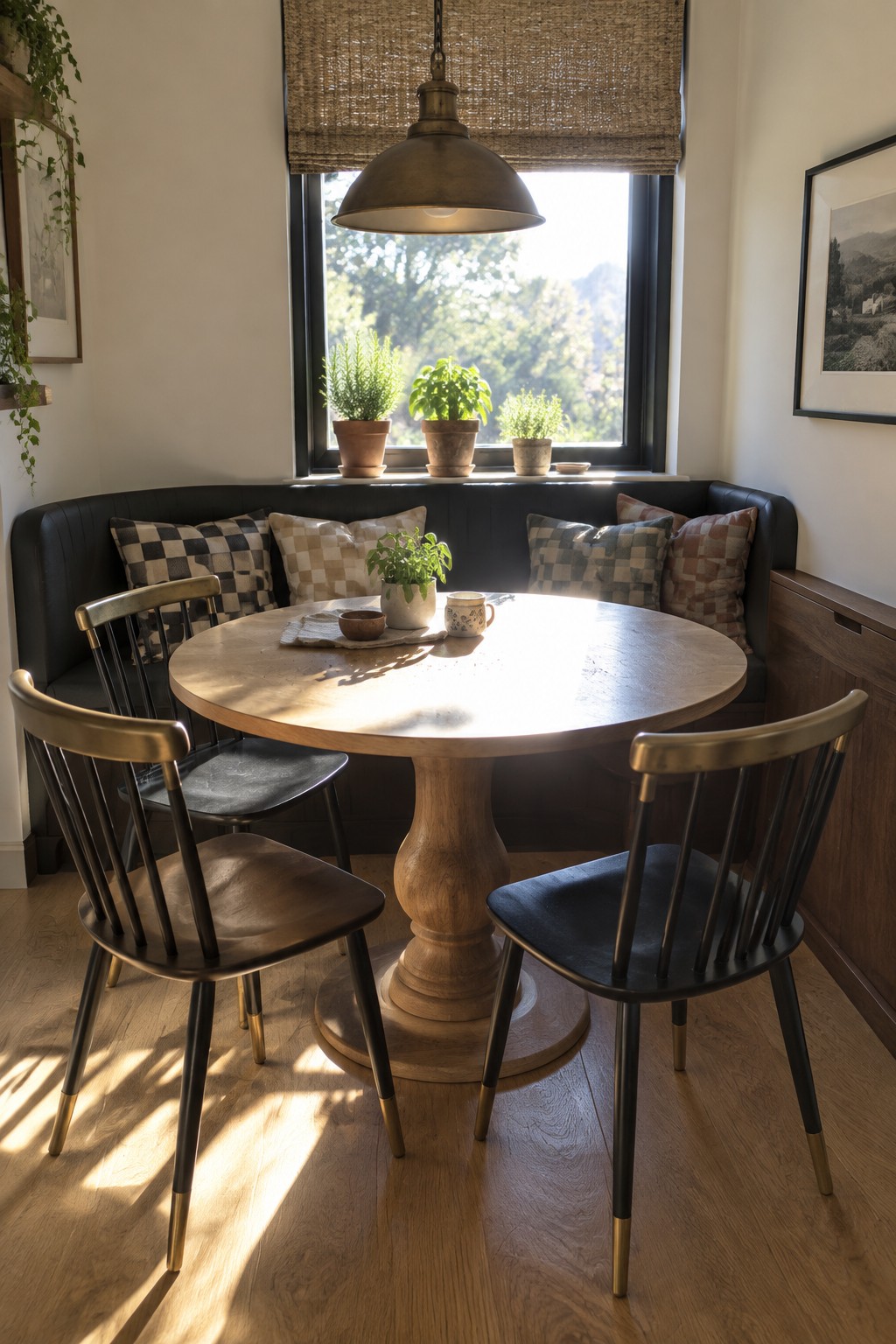
A black built-in banquette gives the dining space a clear shape and a bit of weight, but the round wood table and brass details on the chairs stop it from feeling dark or heavy. The mix keeps the corner from closing in while still making the seating feel solid and intentional.
This approach works best in breakfast nooks or smaller dining areas that get good natural light. The wood brings warmth to the black, and the brass adds just enough shine to lift the whole setup without needing extra color.
Balancing Black Walls With Warm Wood And Brass
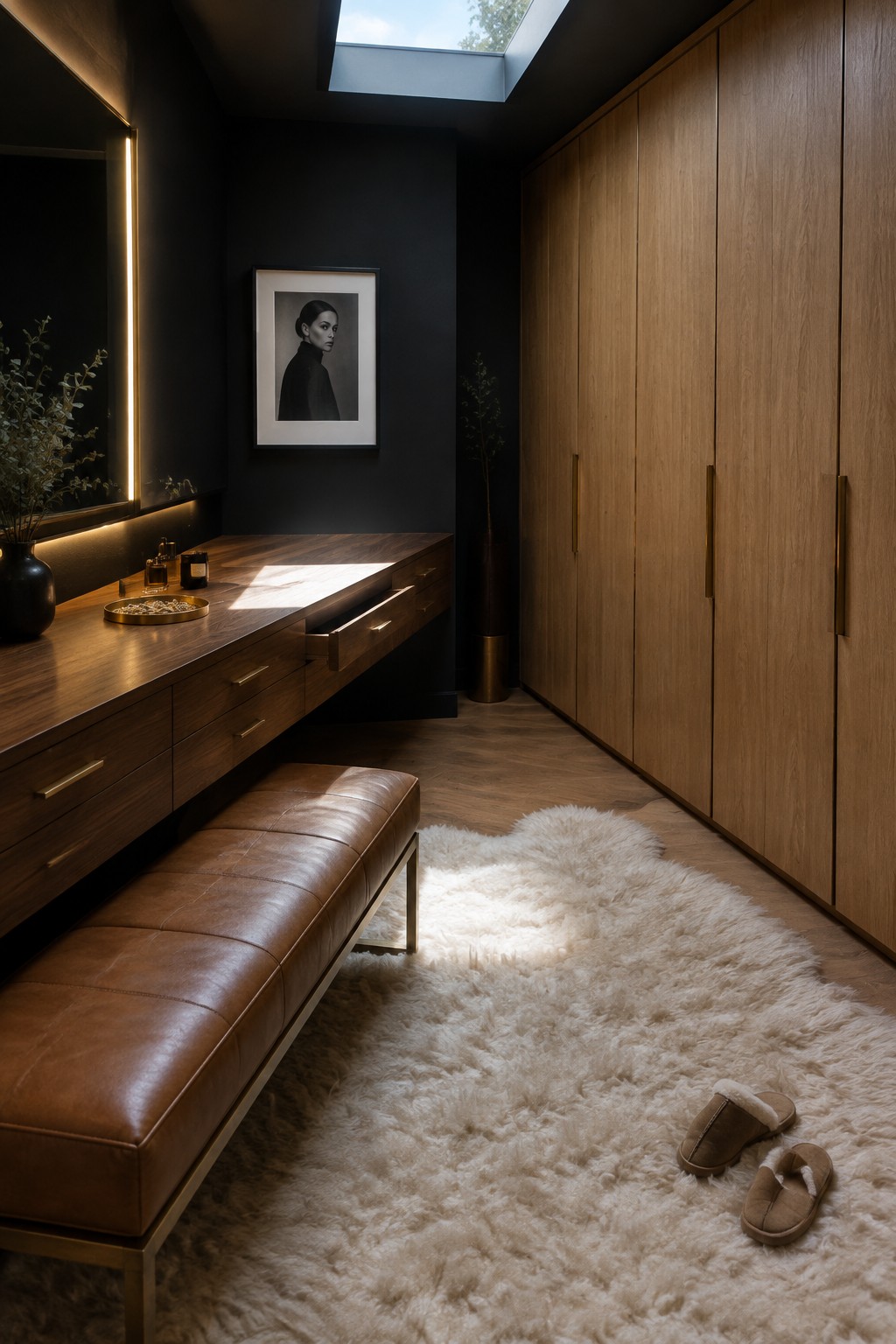
Black walls give a room a strong starting point, but they need the right materials to keep the space from feeling flat. Warm wood tones bring in natural color and texture, while brass hardware adds just enough shine to catch the light without overwhelming the dark background.
This mix works well in dressing rooms or bedrooms where you want a calm but grounded feel. Keep the wood tones consistent across furniture and built-ins, and use brass only on handles and smaller accents so the contrast stays balanced rather than busy.
Dark Walls With Warm Wood And Brass
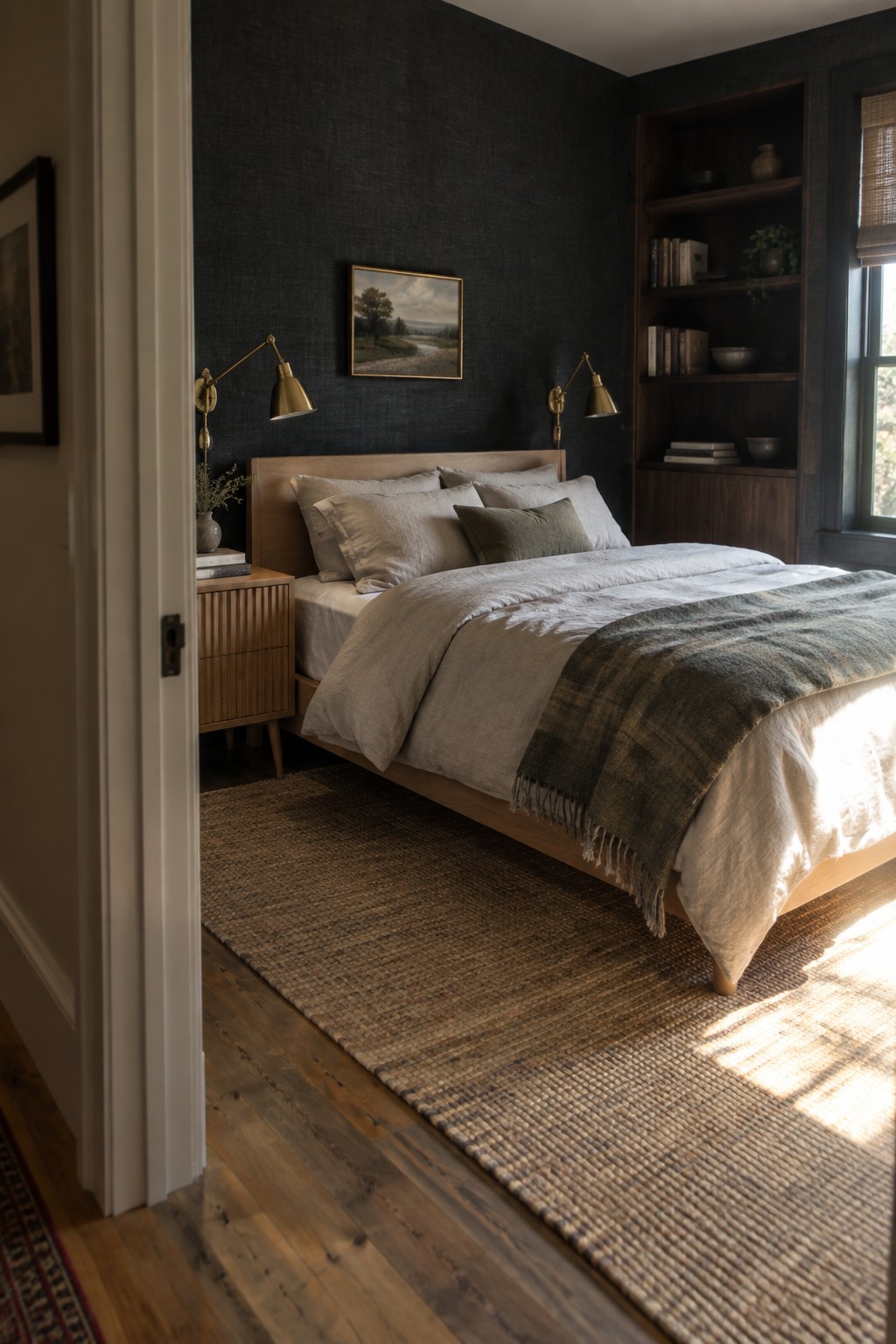
One approach that works well in black interiors is pairing the dark walls with warm wood and brass. The wood brings in some softness and natural texture while the brass adds a bit of light and warmth without making the room feel busy.
This combination suits bedrooms especially, since the dark walls help the space feel calm and enclosed. Use it in rooms with decent natural light so the wood tones read clearly, and stick to simple brass pieces like wall lamps rather than too many small accents.
Black Cabinets With Wood And Brass
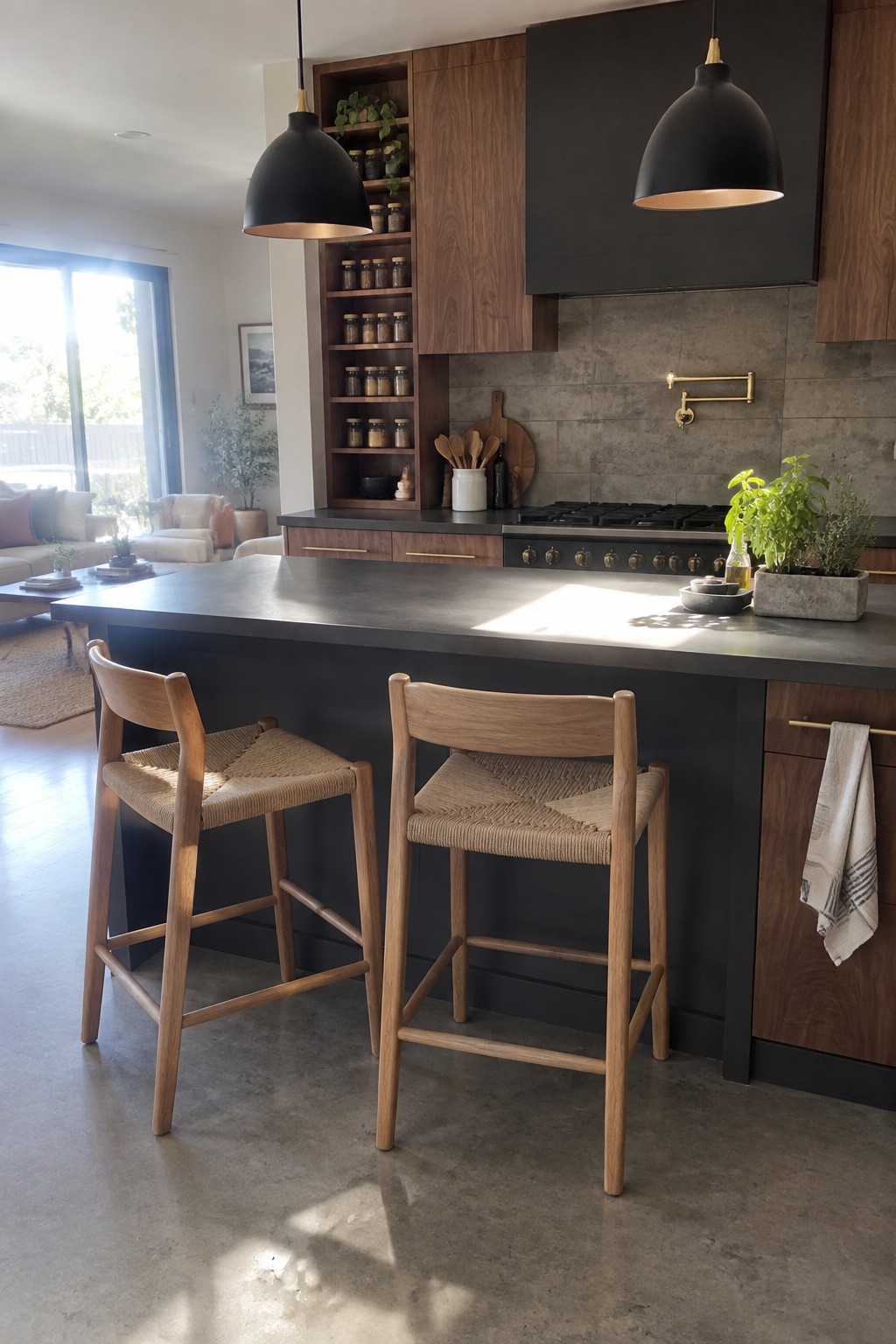
Black works well for cabinets and islands because it gives a room weight and a clean edge. The real difference comes from adding wood furniture and brass hardware, which stop the space from feeling too stark or closed in.
This approach suits open kitchens that get steady daylight and need a bit of warmth to balance the dark surfaces. Keep the wood tones light to medium and use brass only on a few details so the black stays the main player.
Warm Wood Vanities In Black Bathrooms
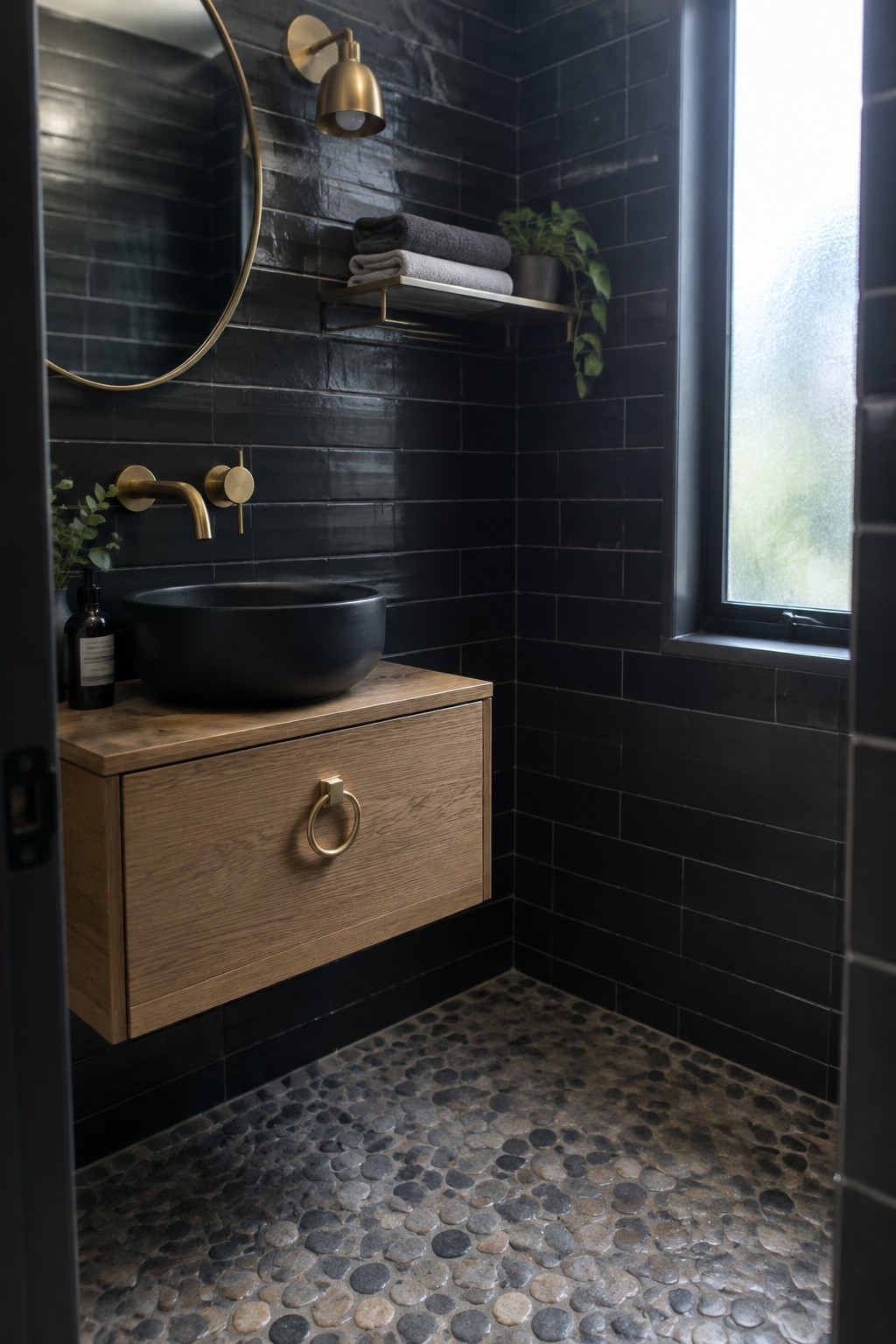
A floating wood vanity gives a black tiled bathroom a bit of needed warmth without softening the strong look too much. The natural tone of the wood stands out nicely against the dark walls and keeps the space from feeling too heavy or cold.
This works best in bathrooms where you already have a strong black backdrop. Choose a wood with visible grain and simple brass hardware to pull the mix together. Avoid adding too many other materials or the contrast loses its impact.
Wood Shelves and Brass Accents on Dark Walls
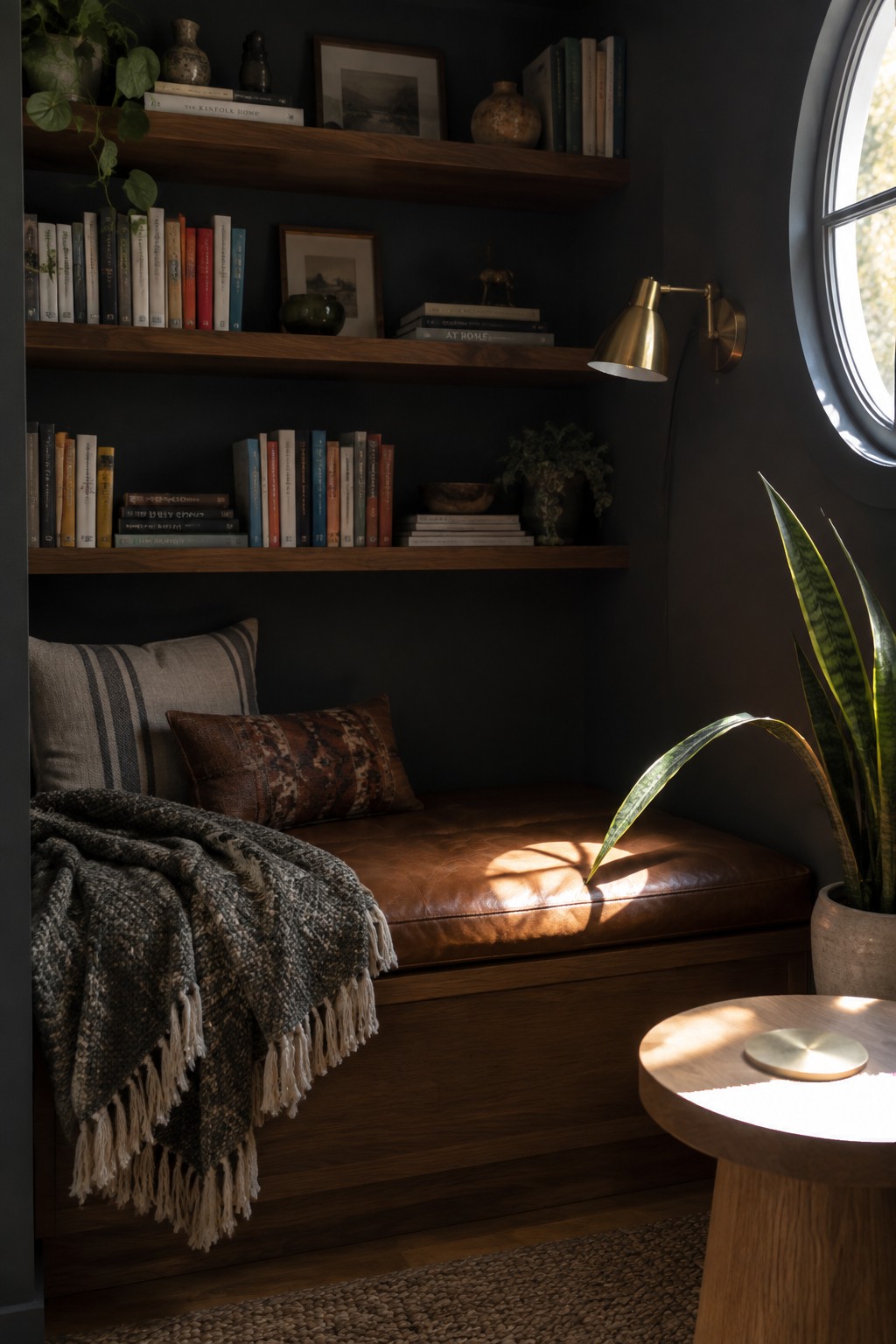
Dark walls can make a small corner feel closed in, but adding wood shelves and a brass sconce changes that fast. The shelves bring natural warmth and give plenty of room for books and a few plants, while the brass light reflects just enough glow to keep the space from feeling heavy. It turns a plain wall into something useful without needing a lot of extra furniture.
This setup works best in reading nooks or quiet corners where you want storage and seating in one spot. It suits homes that already lean toward deeper paint colors and gives you a place to display what you like without cluttering the rest of the room. Keep the wood tones simple and let the brass stay minimal so the balance stays easy.
Built-Ins That Balance Black Walls With Warm Wood
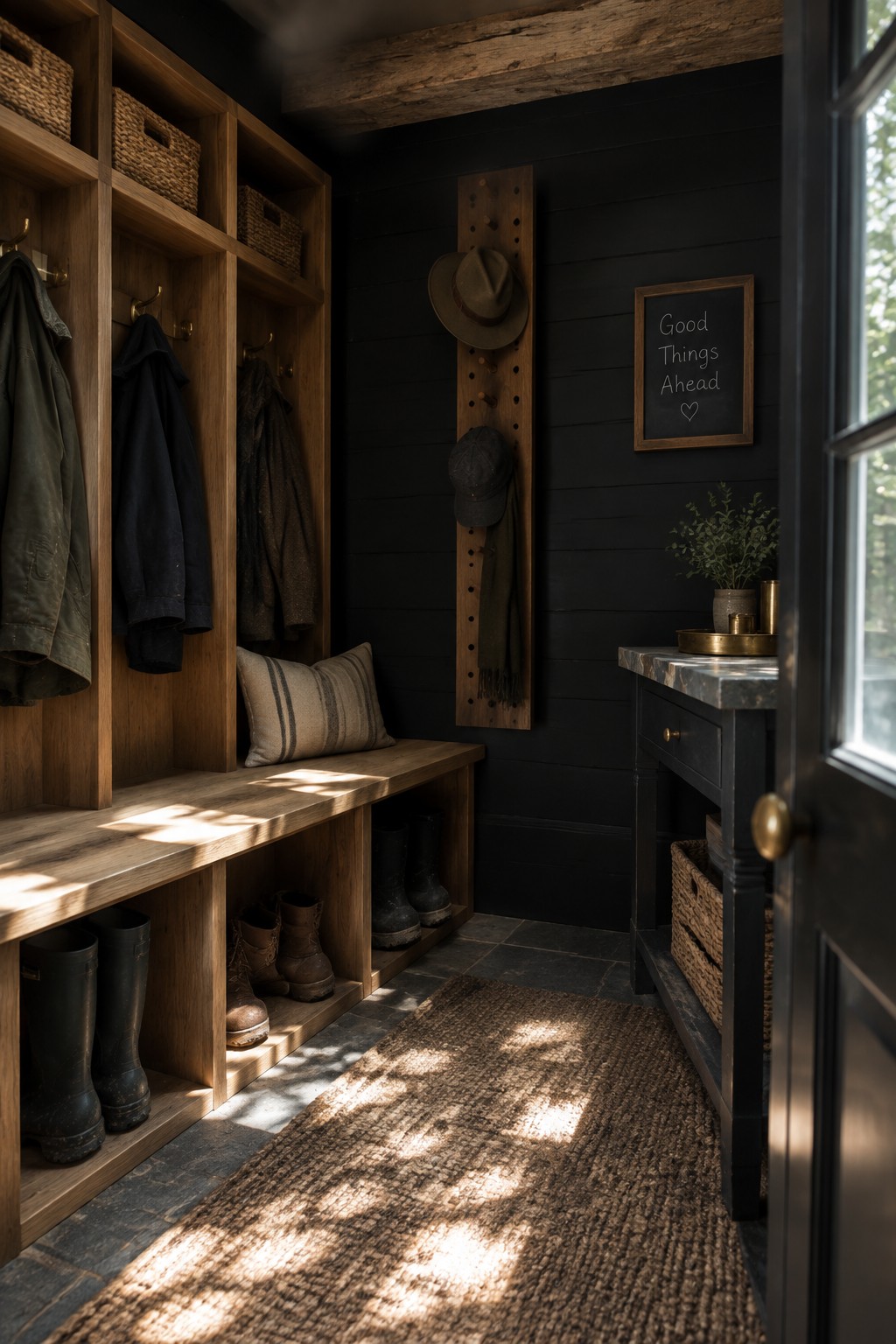
One idea worth trying in a black interior is adding built-in wood storage right where the room gets the most traffic. The wood tones bring in enough warmth to keep the dark walls from feeling heavy, and the built-ins give you a place for coats, boots, and bags without needing extra furniture.
This setup works best in entryways or mudrooms that see daily use. Stick with simple brass pulls or hooks for a little contrast, and make sure the wood has enough depth so it reads as a real material rather than just trim.
Black Cabinets in the Laundry Room
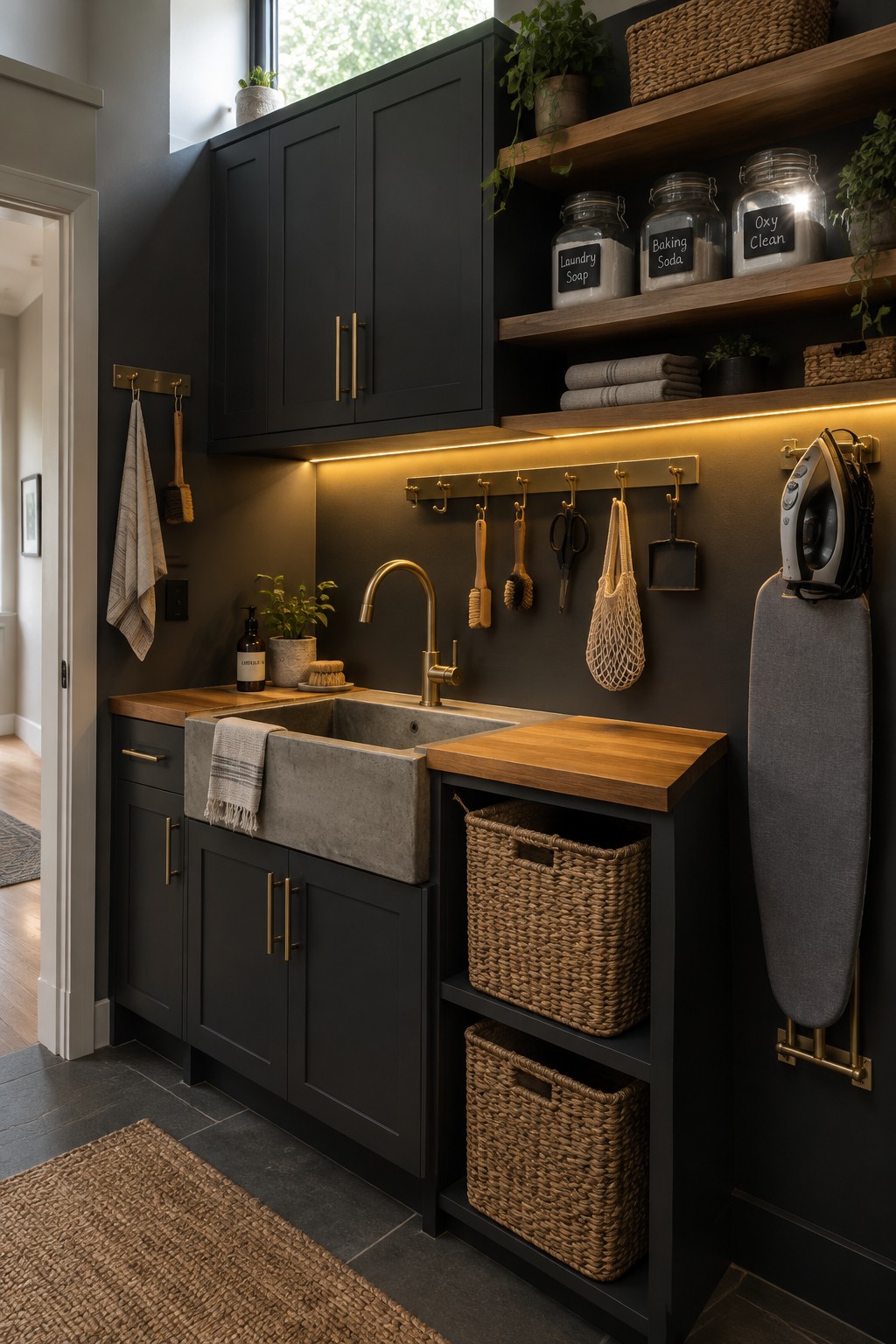
Black cabinetry can turn a laundry room into something that feels more like a finished space instead of just a work area. The dark color keeps things practical since it hides dust and daily use better than lighter finishes, and it creates a stronger connection to the rest of the house when other rooms already use black.
The key is balancing the cabinets with warmer materials so the room does not feel cold or closed in. Wood countertops and brass hardware do most of that work here, and the same approach suits older homes or smaller layouts where the laundry area sits near main living spaces.
Warm Wood In Black Tiled Bathrooms
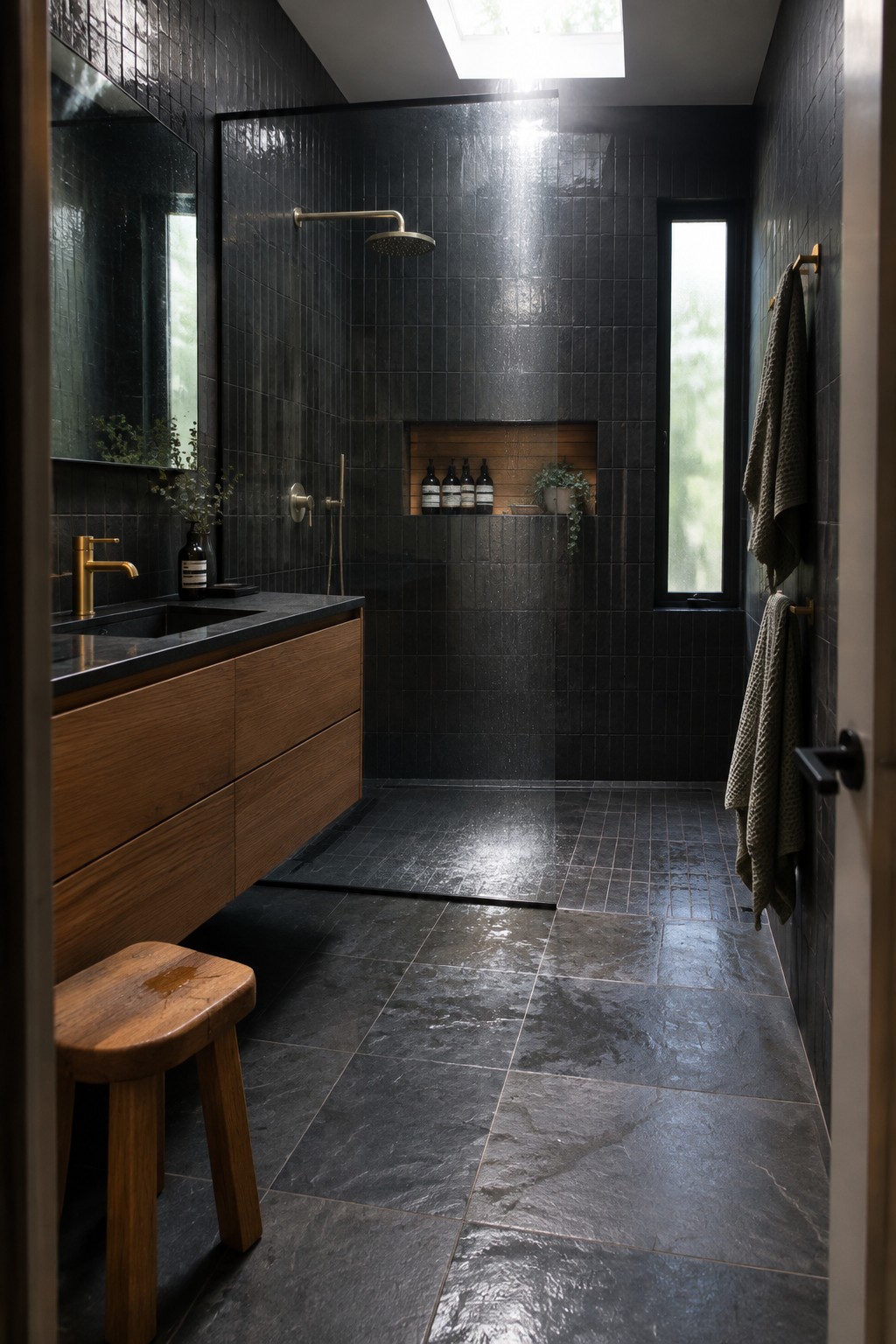
Black tile can make a bathroom feel dramatic, but it often needs something to keep the room from turning cold and flat. A wood vanity paired with brass fixtures does that job well by adding natural tone and a bit of shine that contrasts nicely with the dark surfaces.
This mix works best in smaller or medium baths where the dark walls already do the heavy lifting. Keep the wood simple and the brass finishes understated so the balance stays easy rather than busy.
Balancing Black Walls With Warm Wood
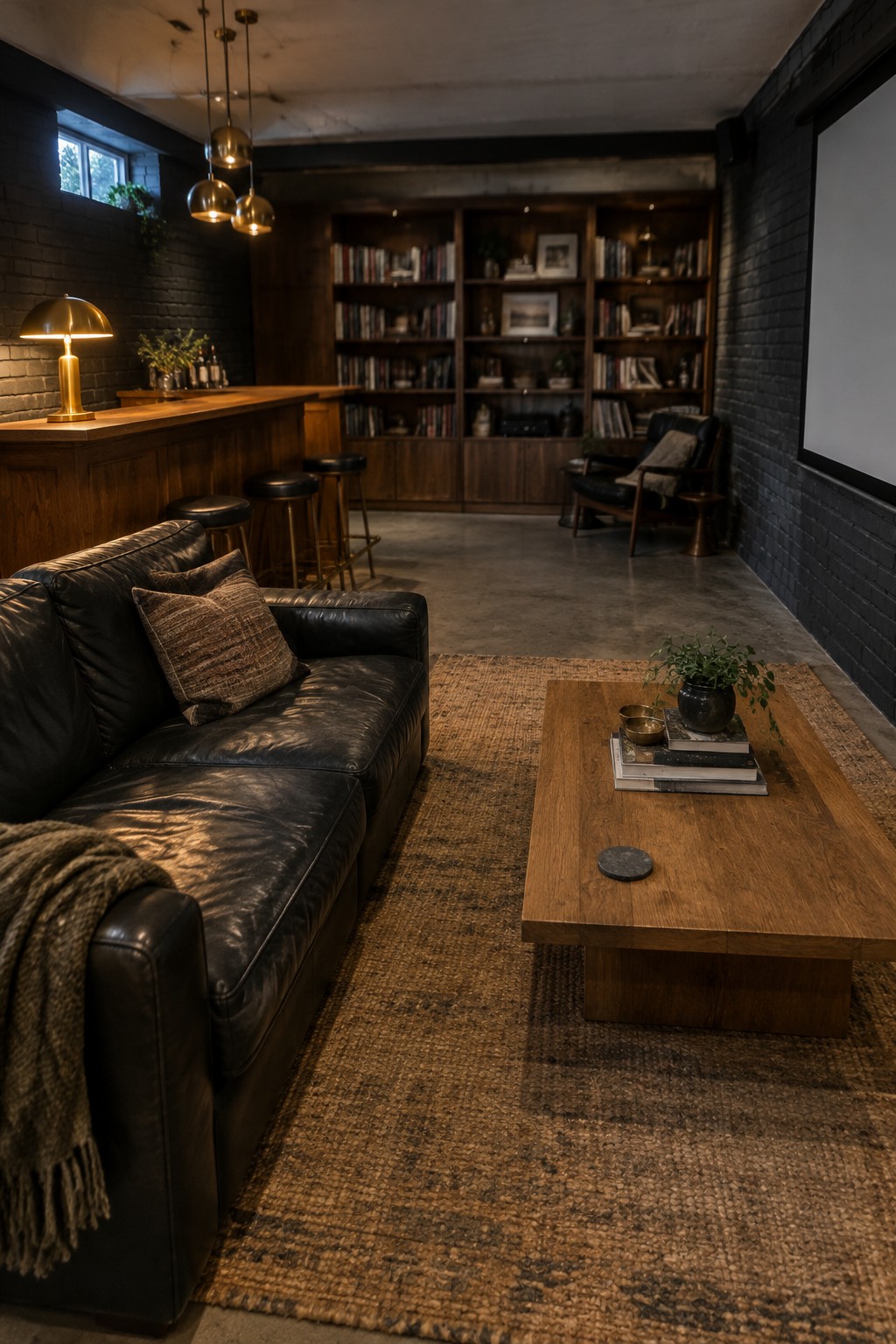
Black walls and furniture can make a room feel heavy if left on their own. Warm wood tones on bookshelves, a coffee table, and bar counters bring in natural color that softens the darkness and keeps the space from feeling cold.
Brass lighting helps reflect a little light around the room without adding much visual noise. This approach works best in living areas or basements where you want depth but still need the room to feel usable every day.
Frequently Asked Questions
Q: Should I paint all my walls black or try just an accent wall first?
A: Start with one accent wall in a room that gets decent natural light. This keeps the black from swallowing the space while letting your wood furniture and brass accents pop against it. Add more black later if the balance feels right.
Q: What wood tones work without making everything feel too heavy?
A: Choose warm mid-tone woods like oak or walnut with a bit of grain showing. They bring enough contrast to lift the black and pair naturally with brass details around the room.
Q: How do I pick brass pieces that actually fit this look?
A: Focus on a couple of larger items like a pendant light or drawer pulls rather than scattering small ones everywhere. Matte or brushed finishes help them blend with the wood instead of standing out as shiny spots.
