

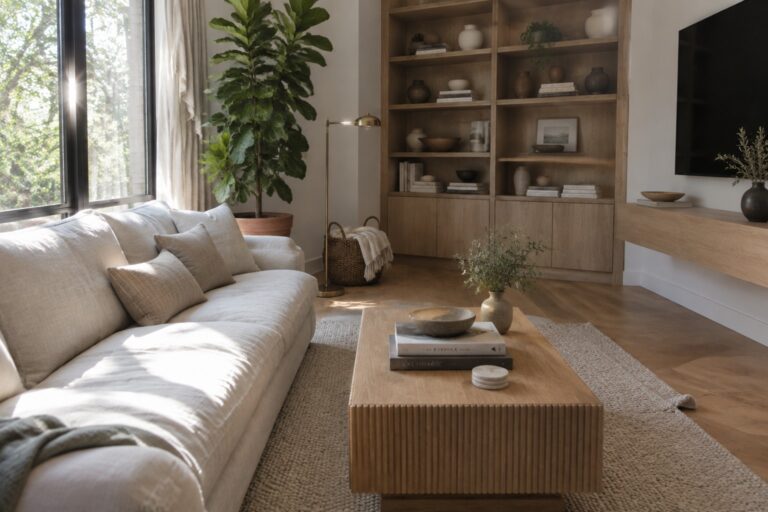
I often find that rooms feel more settled when daylight can move freely across the floor and walls without heavy curtains blocking the path.
Placing plants where they catch that light turns out to be more important than choosing dramatic varieties, because healthy growth keeps the space looking alive over time.
I have tested moving a desk closer to a window in my own place and the difference in how the area gets used during work hours was immediate.
Layout matters most.
Small adjustments like these are the ones I tend to remember when looking at new ideas for my home.
Positioning Large Plants Near Windows
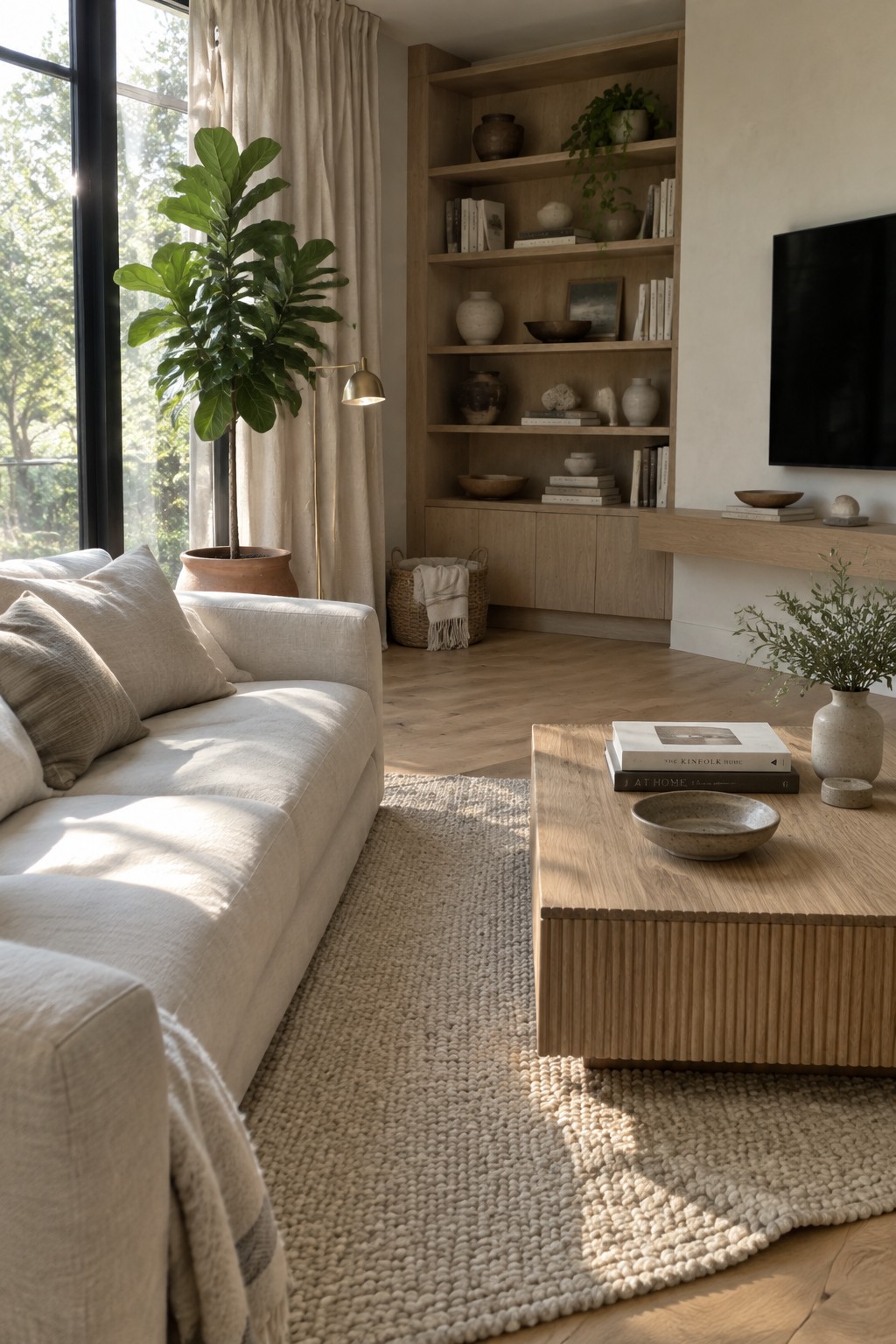
One simple way to bring a calmer feel into a living room is to set a big plant right where sunlight hits it. The tall fiddle leaf fig in this room stands beside the window, taking full advantage of the light and making the space feel more connected to the outdoors.
This approach works best in rooms that already get steady daylight and have a fairly neutral palette. It lets the plant grow well without extra effort and keeps the greenery from looking like an afterthought. Try it with any tall plant that can handle bright conditions, and keep the surrounding furniture low so the plant stays the focus.
Positioning Plants Right by the Window
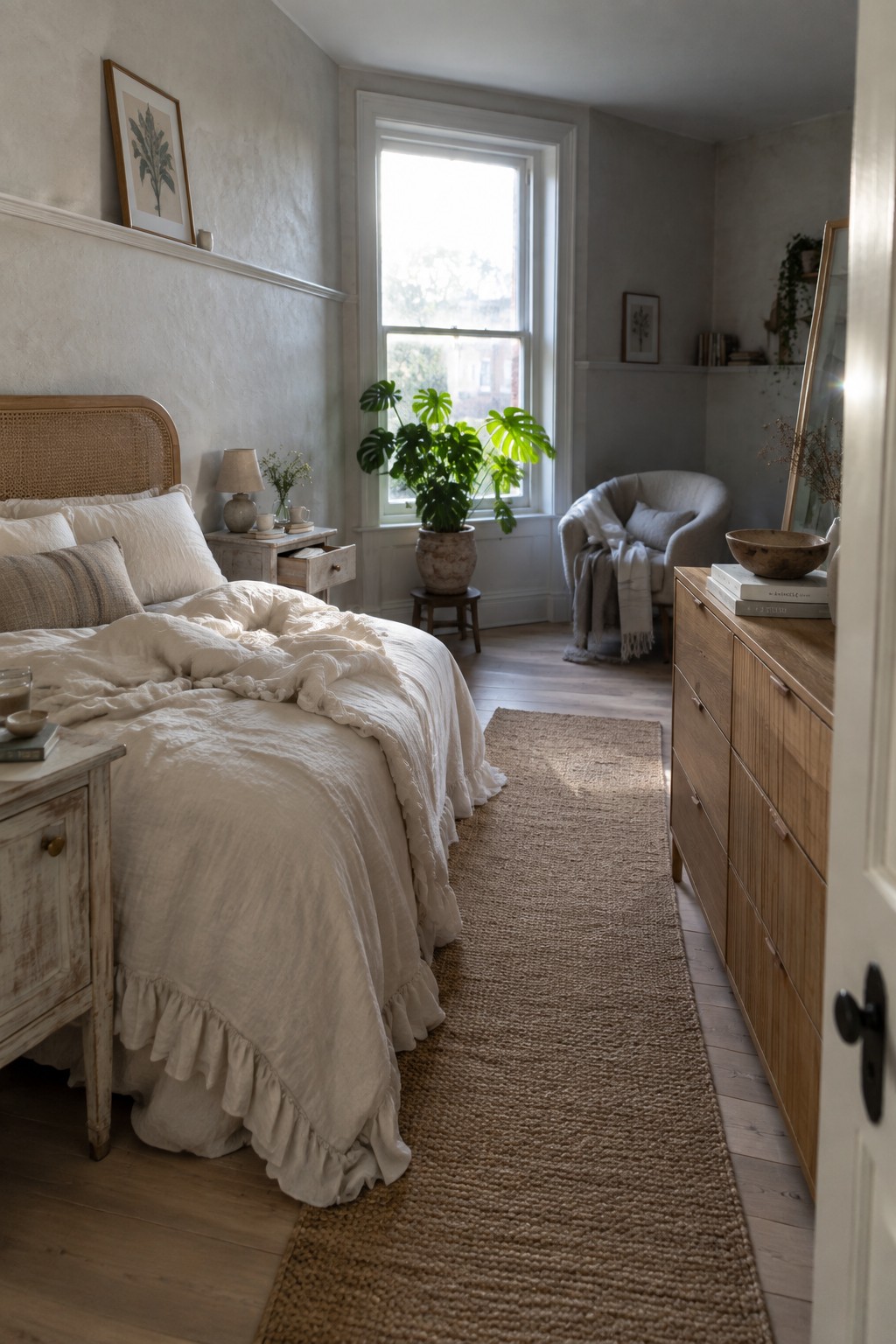
Placing larger plants directly in front of a window lets them get strong natural light while turning the greenery into part of the room’s view. It is a simple move that makes the space feel more connected to the outdoors without needing many extra pieces.
This works best in rooms that already have good window size and light. Keep the pots low so they do not block too much glass, and choose plants that handle bright conditions well. It suits bedrooms or quiet sitting areas where you want a calm effect that feels natural rather than styled.
Natural Materials for Kitchen Island Seating
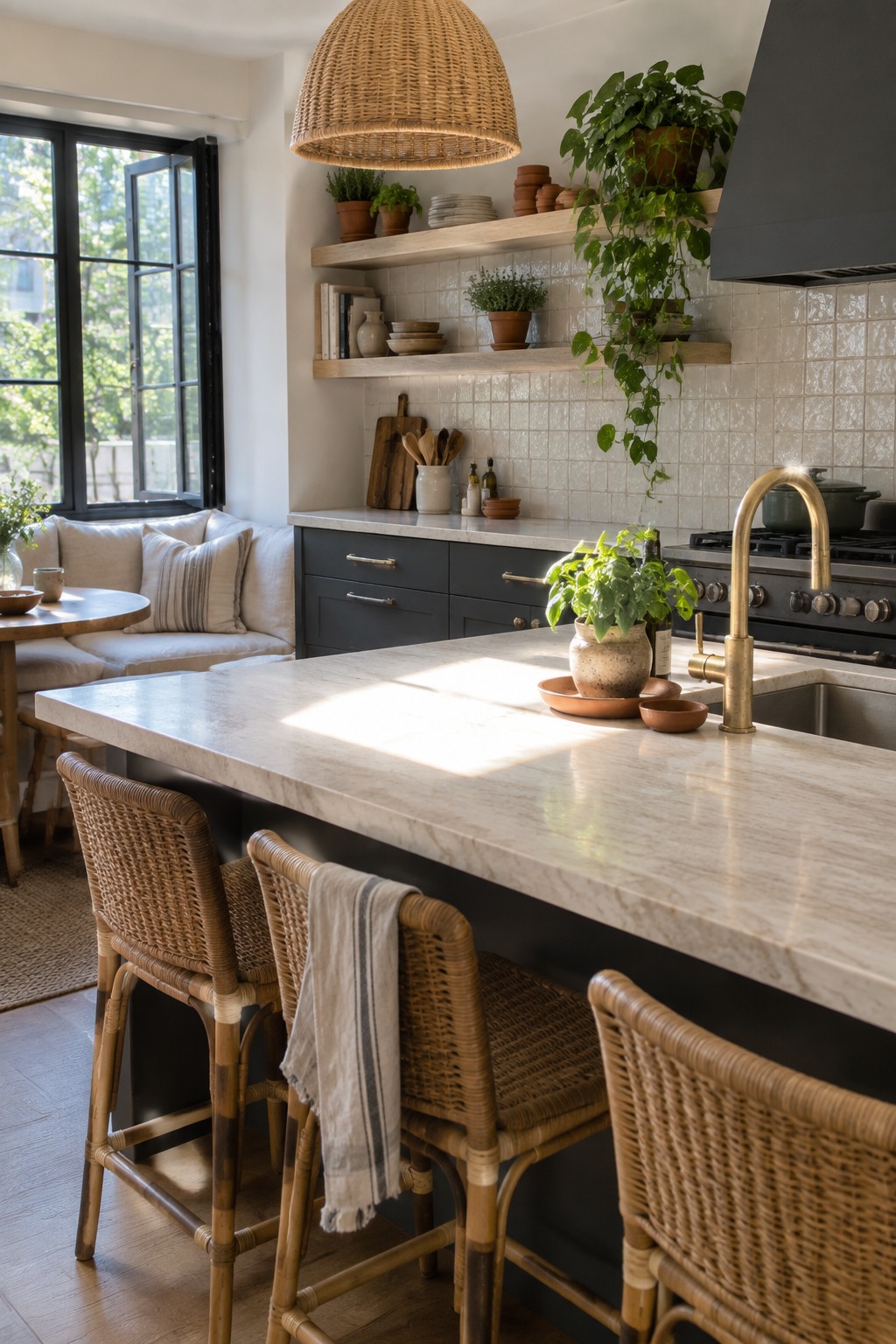
Woven rattan or wicker bar stools add an easy organic layer to a kitchen island without making the space feel overly styled. They bring texture and warmth that contrasts nicely with stone or metal surfaces, and they work especially well when plants sit nearby on counters or shelves.
This approach suits kitchens that double as gathering spots and homes that already get steady natural light. Keep the rest of the materials simple so the woven pieces and greenery stay the focus rather than competing with too many other details.
Bringing Natural Light And Plants Into The Bathroom
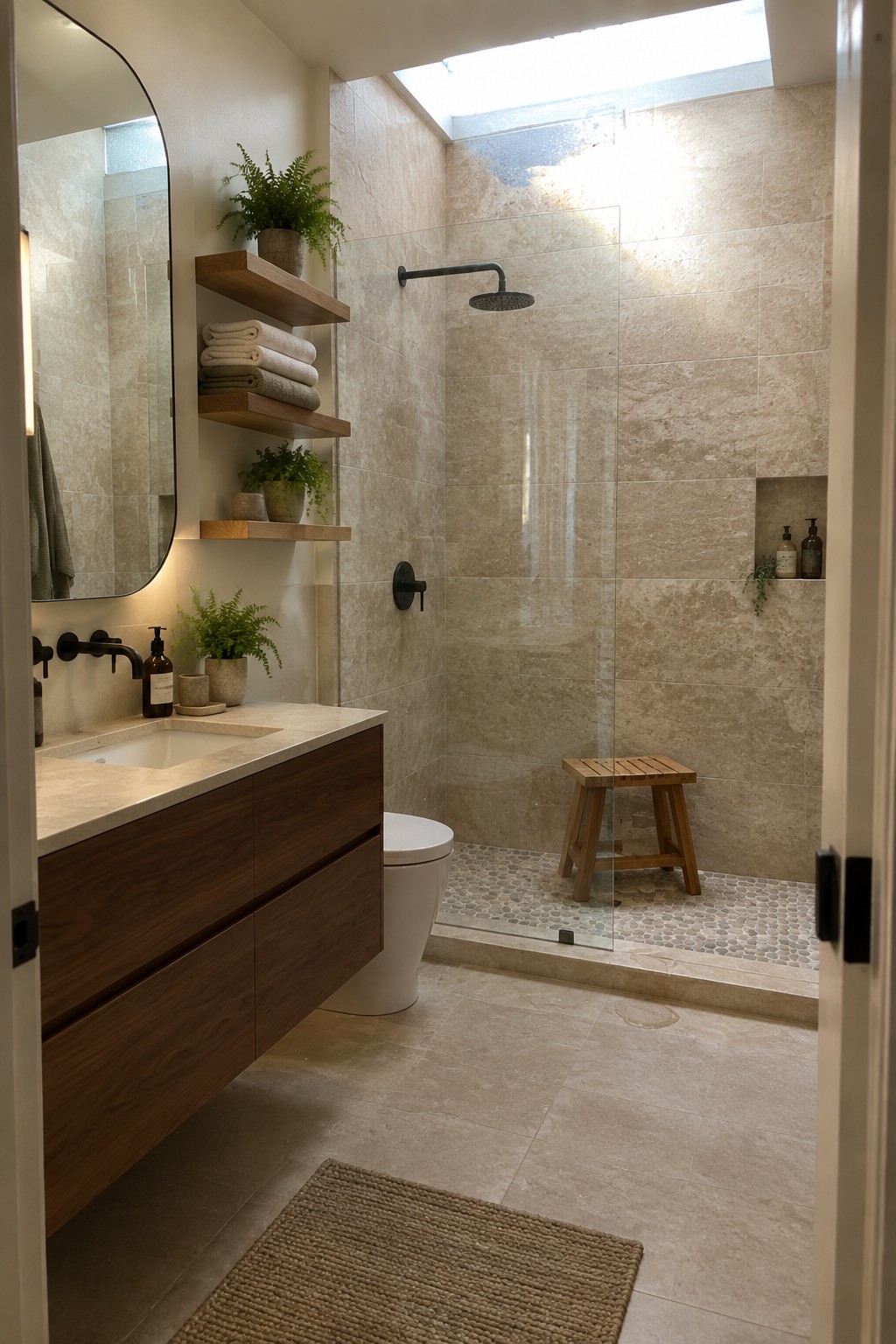
A skylight over the shower paired with plants on open shelves gives a bathroom a calmer, more open feel without much extra effort. The light moves through the space during the day and keeps the plants healthy, which makes the whole room feel less closed in.
This approach works well in smaller bathrooms where a window is not an option. Keep the shelves simple and place the plants where the light actually hits them. Too many pots can start to feel crowded, so start with three or four and add more only if the space still feels balanced.
Running Greenery Down the Center of a Dining Table
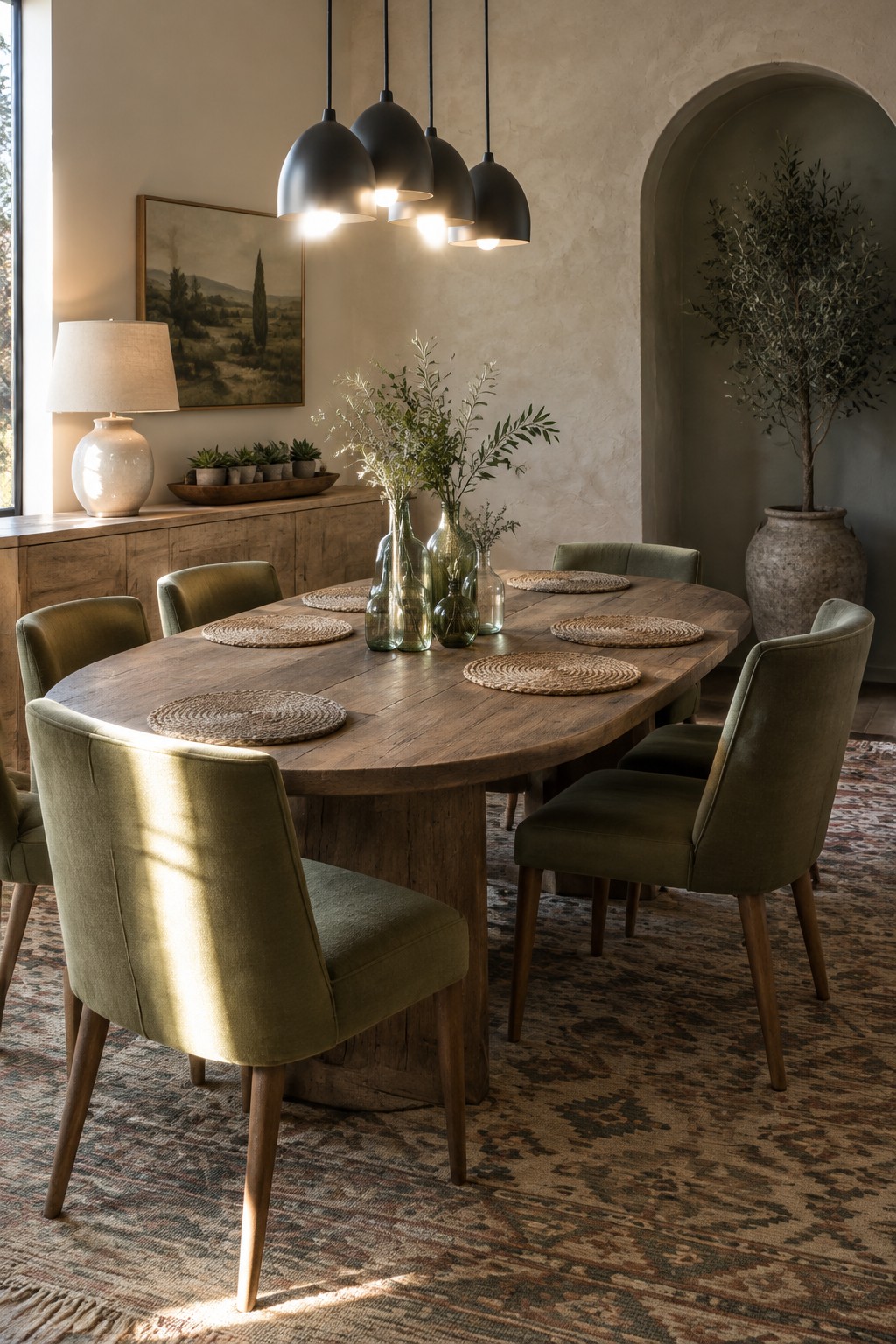
One simple way to bring a biophilic feel into a dining room is to set a row of glass vases filled with branches and leaves straight down the middle of the table. The arrangement adds life without taking over the surface, and it works especially well when natural light hits the wood and glass.
This approach suits larger tables in homes that already lean on natural materials. Use vases in a mix of heights and shapes, swap the cuttings every week or two, and keep the rest of the table clear so the greenery stays the focus.
Using a Wall Shelf for Trailing Plants in Hallways
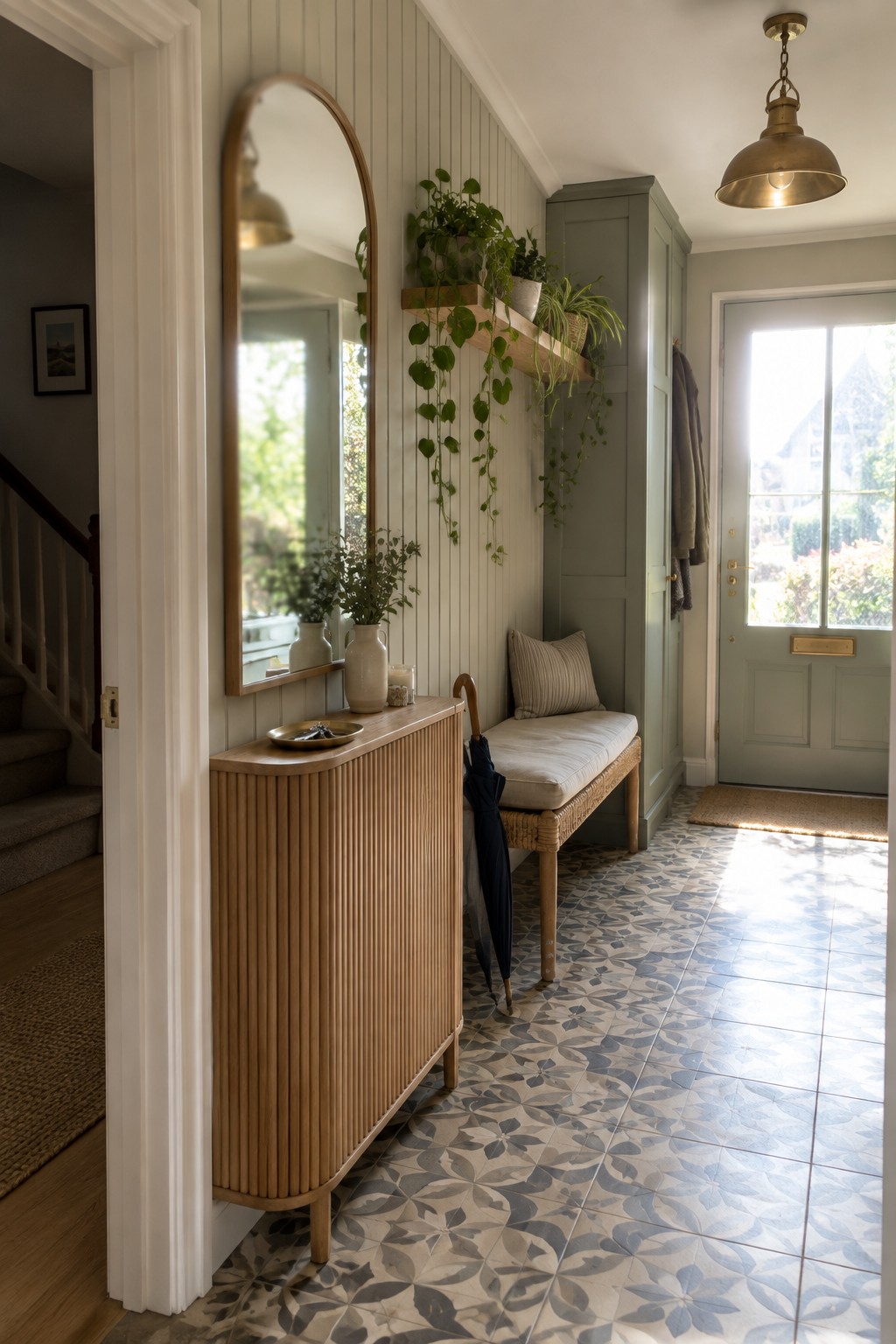
A high mounted shelf gives you room for several plants without taking up any floor space. In narrow entries or hallways this keeps the walkway open while still letting the greenery spill downward and soften the walls.
This approach works best in homes that already get decent light from a front door or nearby window. Choose trailing varieties that handle indirect light and keep the shelf at a height where watering stays simple.
Positioning a Chair Near the Window
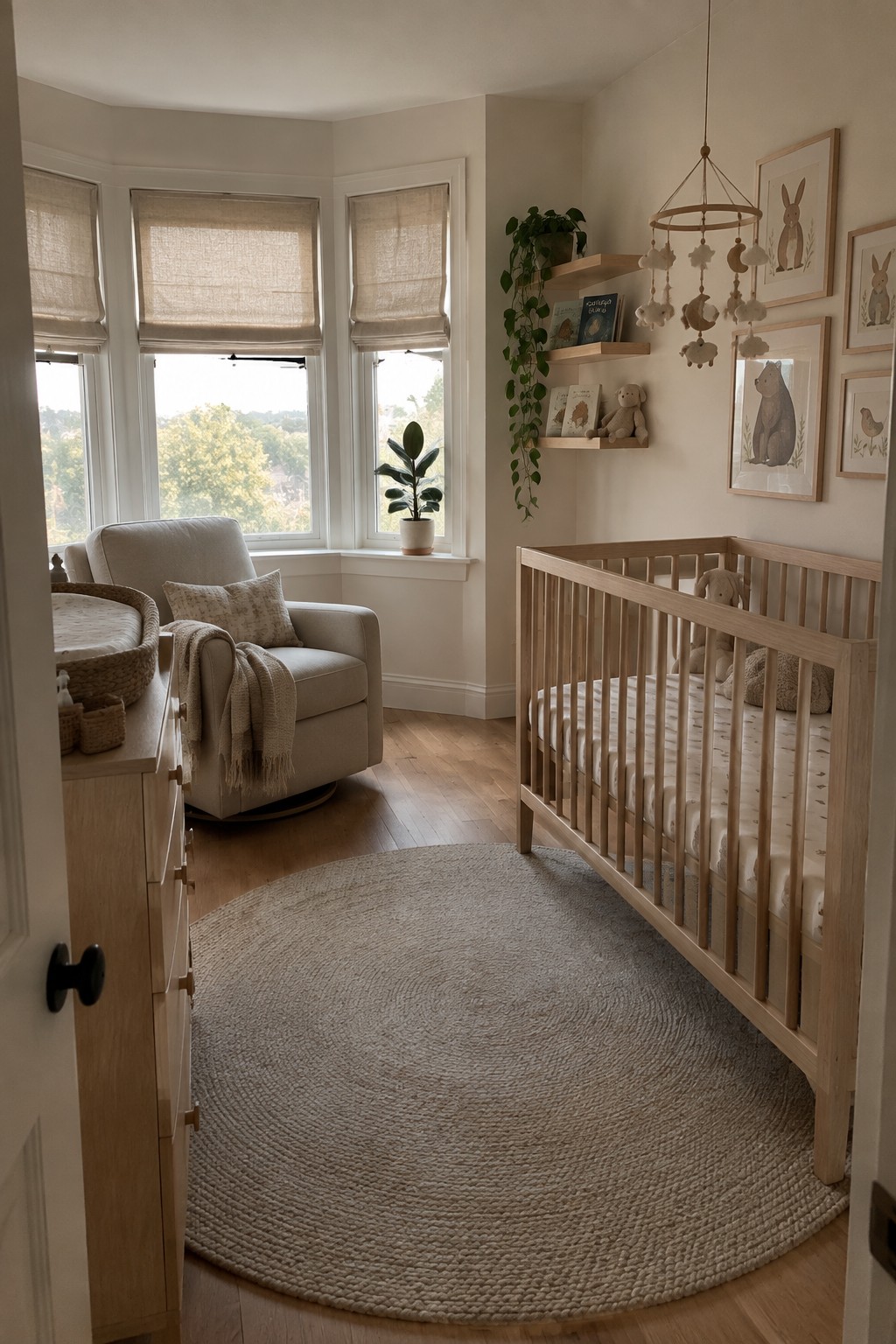
One of the easiest ways to bring a calm feeling into a room is to place a comfortable chair right by the windows. This lets the natural light become the main feature instead of relying on extra lamps or heavy decor. The light shifts throughout the day and keeps the space feeling connected to the outside.
This works especially well in smaller rooms like nurseries where you want things to stay simple and restful. A light-colored chair with a plant nearby is usually enough. Just avoid dark or heavy window coverings so the light can stay soft and even.
Filling A Home Office With Plants
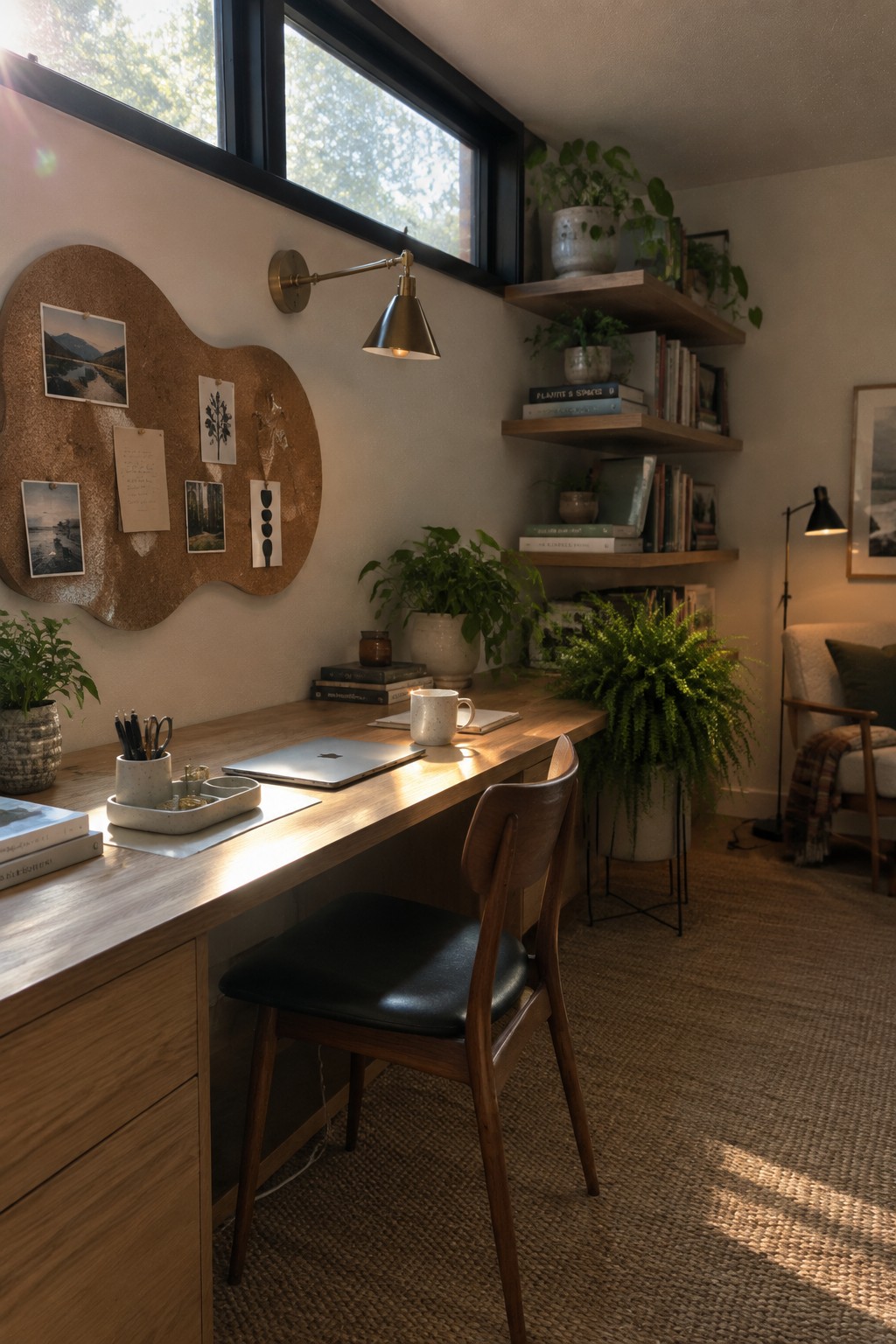
Plenty of people are putting more plants into their workspaces these days. It turns an ordinary desk area into something that feels calmer and more connected to the outdoors, especially when the desk sits right under a window that lets in steady daylight.
This works best in smaller rooms or apartments where you want the space to feel less closed in. Start with a couple of larger floor plants near the desk, then add smaller ones on shelves and the work surface itself. Just match the plants to the light levels you actually have so they stay healthy without much fuss.
Hanging Plants in Dining Areas
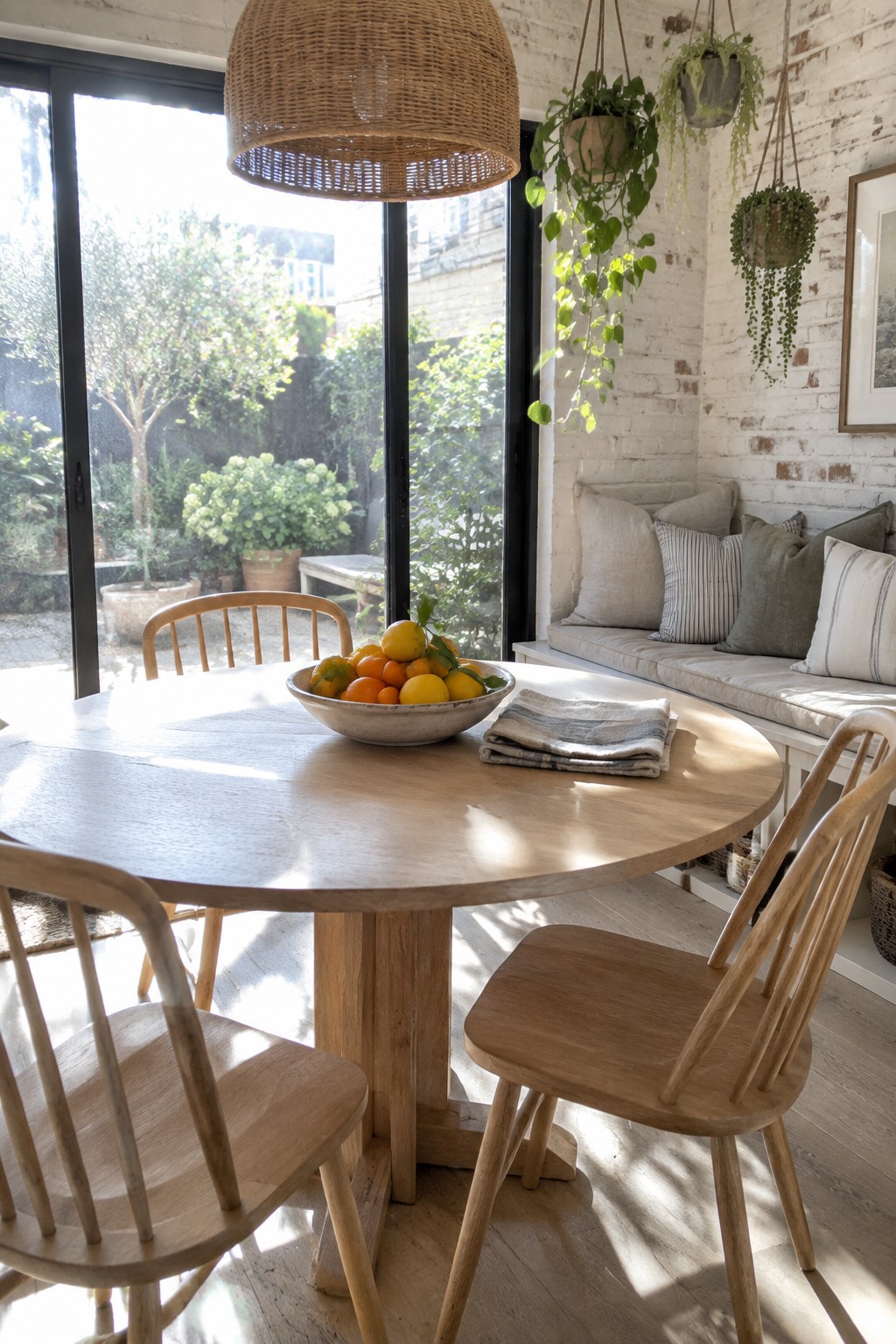
Hanging plants work especially well in dining spaces because they add greenery without using up table or floor room. In this setup the plants hang along a white brick wall beside large glass doors, so the room gets plenty of light and the foliage stays visible from the table without feeling crowded.
This approach suits homes that already have good natural light and a spot for a round table. Keep the plants at different heights so they do not block the view, and choose varieties that handle bright indirect sun. The mix of wood furniture and living plants keeps the space feeling simple and connected to the outdoors.
Placing Plants Where Light Reaches Them
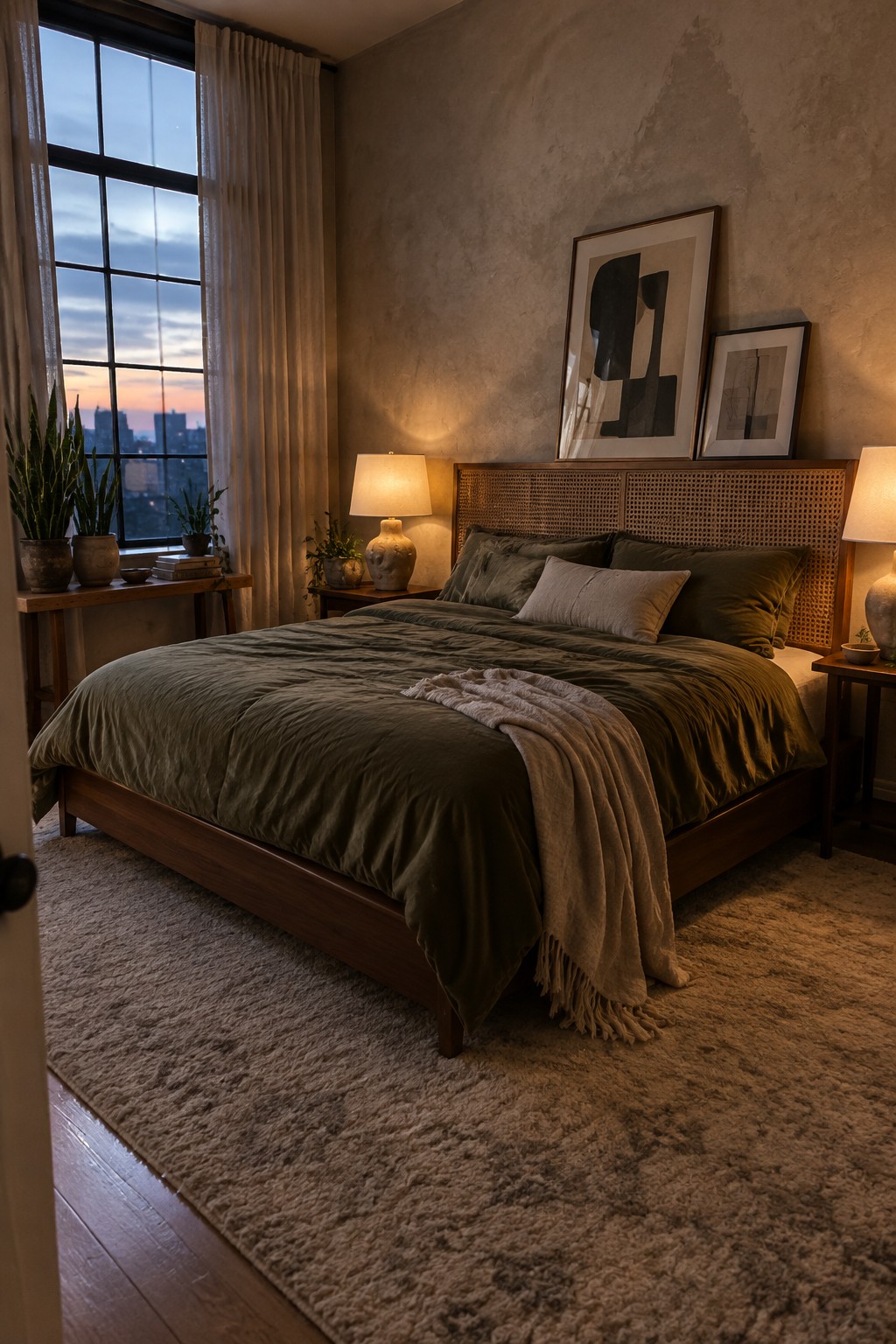
One simple way to help plants thrive indoors is to set them where daylight actually hits during the day. Here the console sits flush against the window so the plants get steady light without needing extra lamps or grow bulbs.
This approach works in any room that has a decent window wall. Use a low table or bench under the glass in a bedroom or living room, pick plants that match the light level, and leave a little space so nothing crowds the panes as it grows.
Bringing Plants Into The Laundry Room
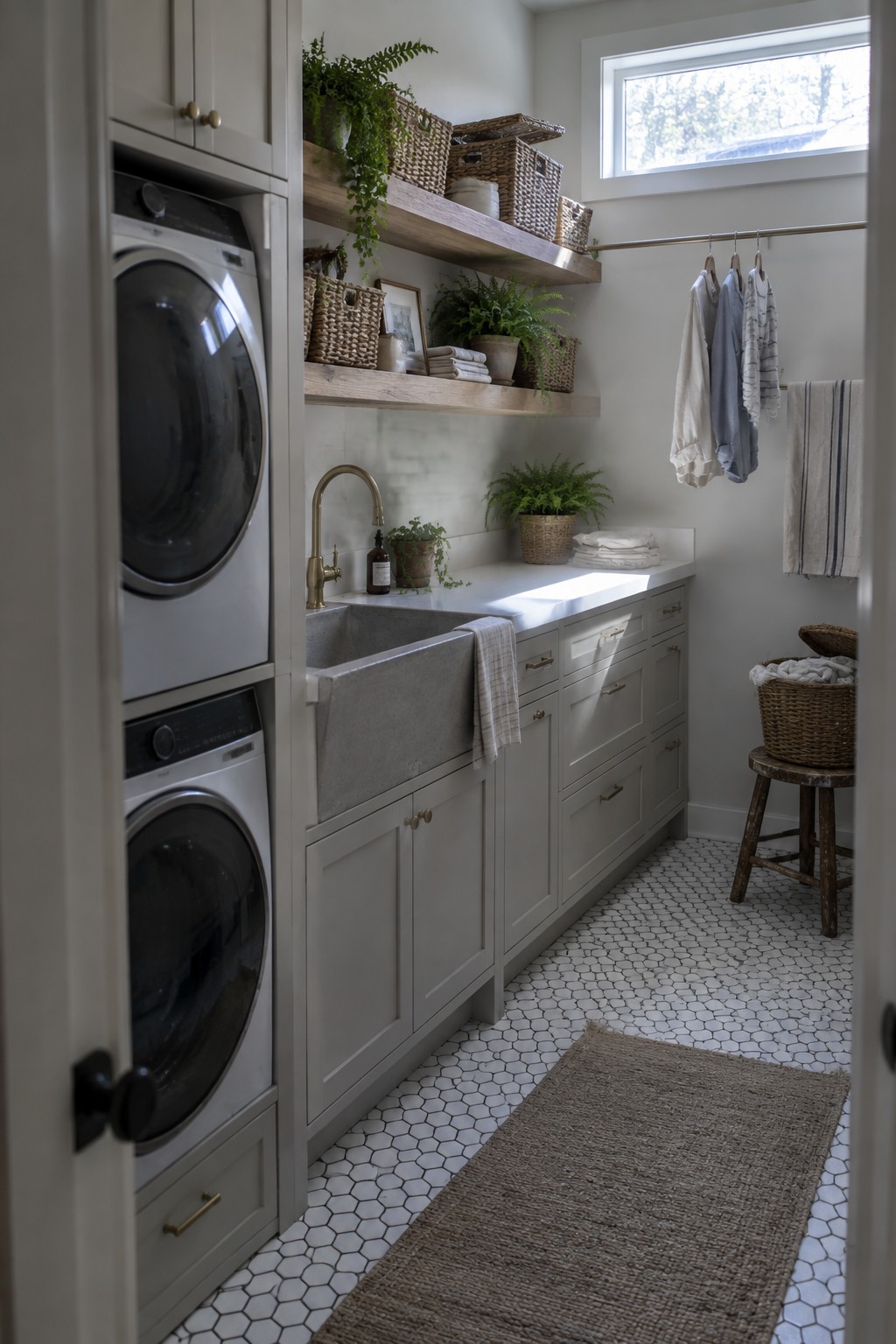
Utility rooms often get skipped when people think about adding plants. Open shelves above the work area give the greenery a place to sit without taking up floor space, and the nearby window keeps everything looking fresh instead of tucked away.
This approach works best in homes where the laundry room sits off a main hallway or near living areas. Keep the plant count modest at first so the shelves stay useful for baskets and supplies too.
Layering Plants Near Large Windows
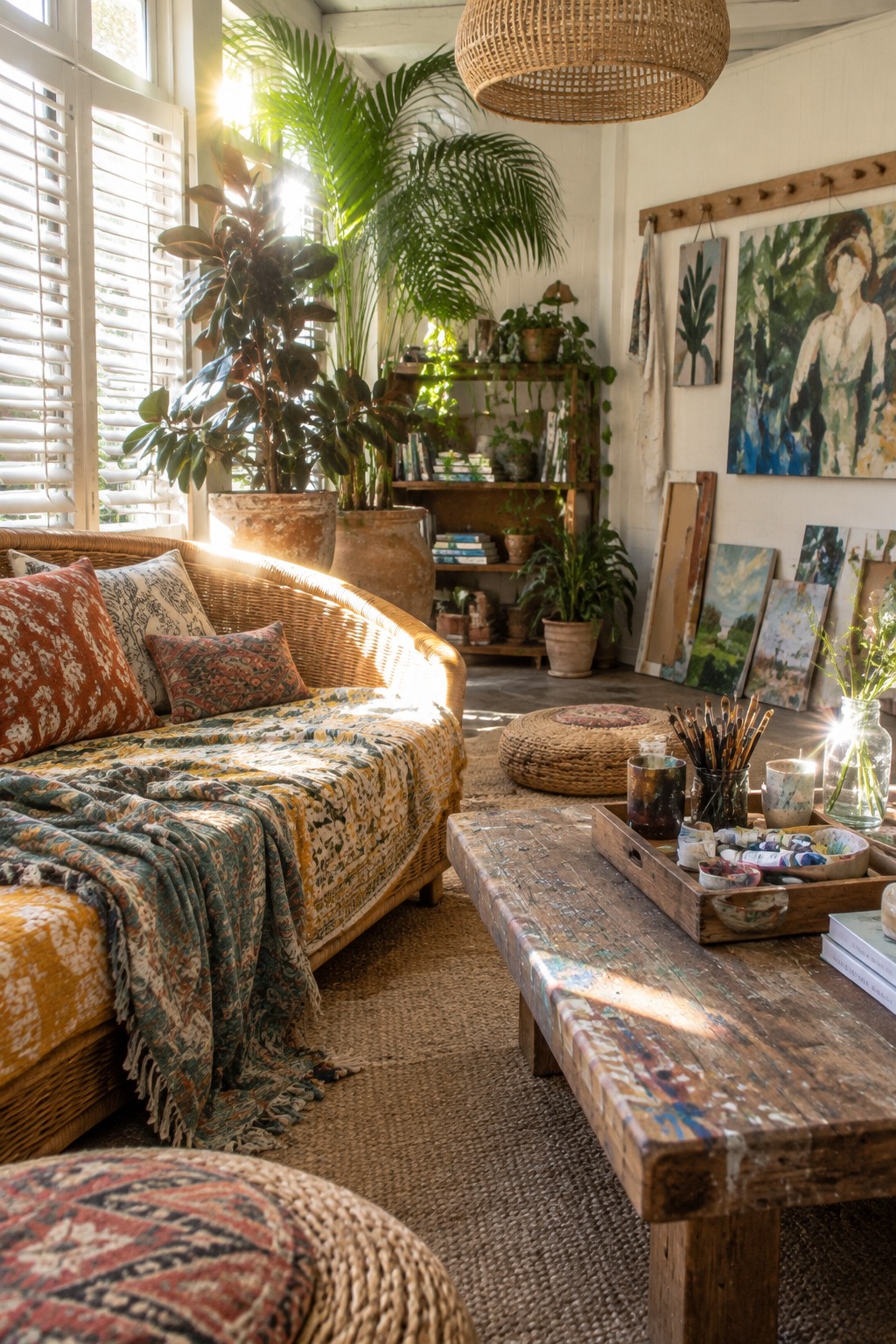
Placing plants right by big windows lets them soak up the light and turns an ordinary room into something fresher. The different heights and leaf shapes catch the sun in different ways, so the whole corner feels greener and more alive without much extra effort.
This approach works best in spaces used for reading, painting, or just sitting still. Keep the pots close together near the glass and choose a mix of sizes so the lower light reaches the smaller plants too. Avoid spreading them too thin across the room, since the impact comes from that dense cluster catching the light all at once.
Wall Planters For Narrow Hallways
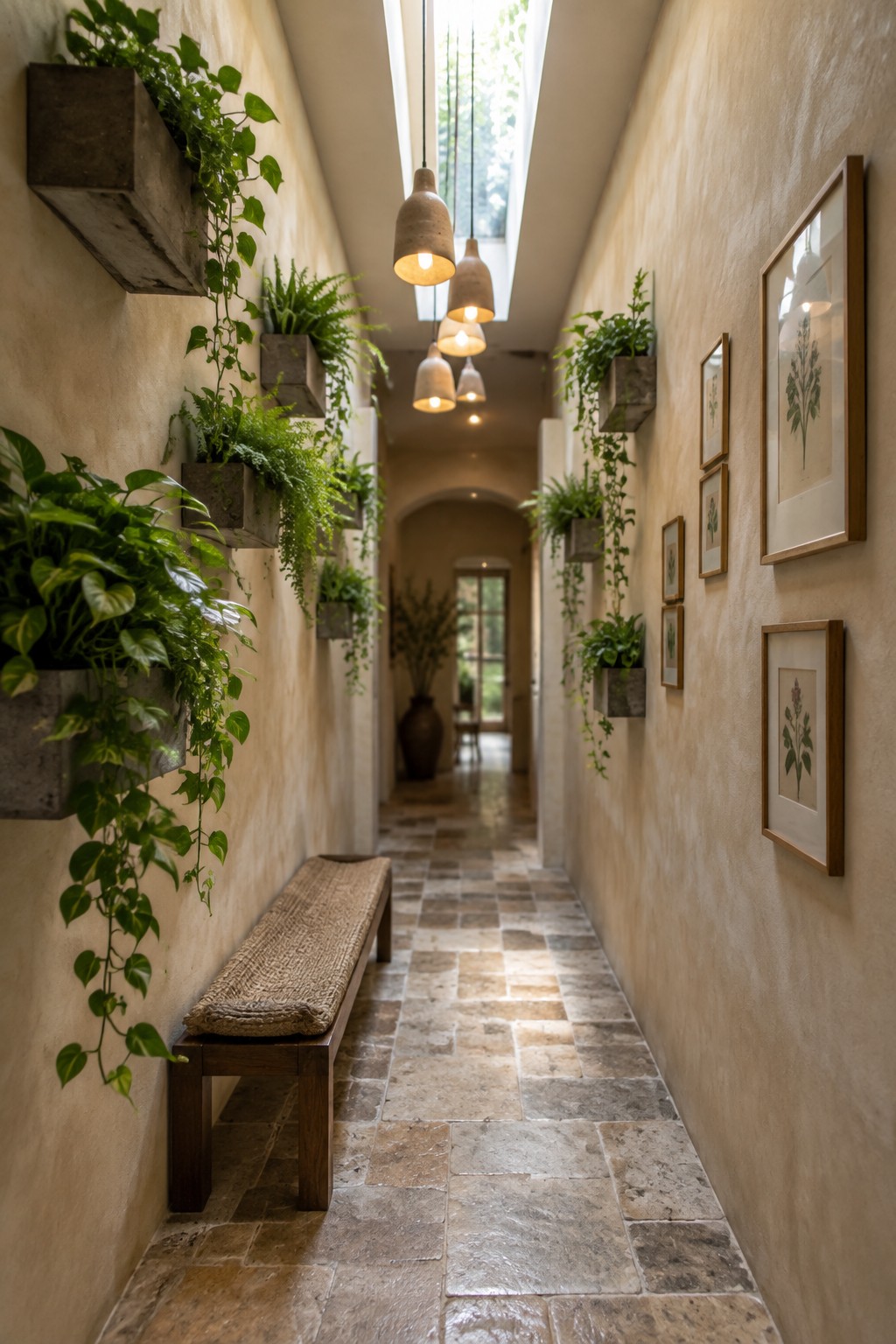
Mounting plants on the walls turns a plain narrow hallway into a greener passage without eating up floor space. The concrete boxes keep everything off the ground while the trailing vines add softness along the length of the corridor.
This approach suits homes that already get decent overhead light or have a skylight running above the hall. Keep the planters at a height that is easy to water and choose trailing varieties that can handle lower light if the space does not get direct sun all day.
Putting a Large Plant in the Mudroom
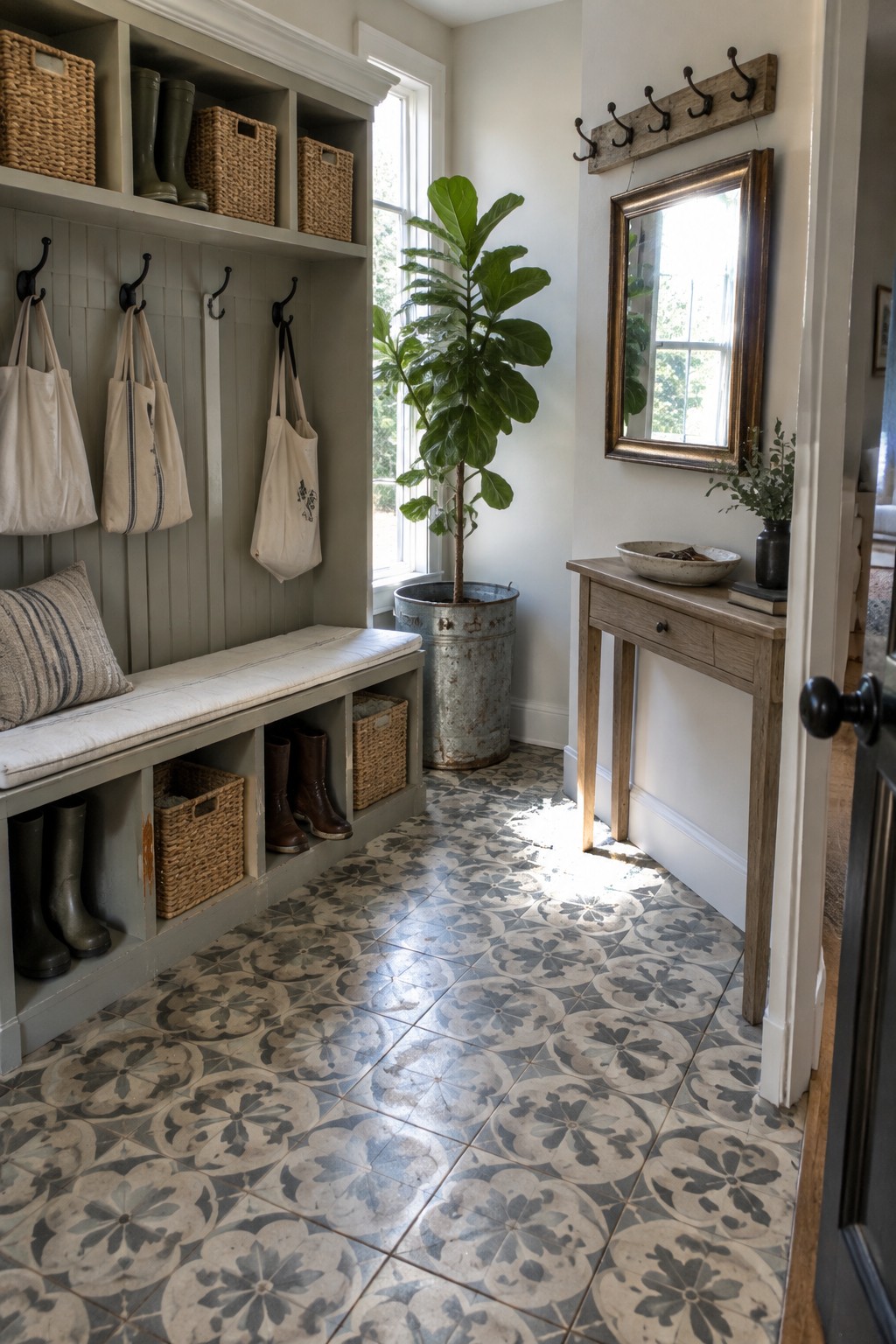
A tall indoor tree works well in an entry space because it turns a purely practical area into something that feels connected to the outdoors. The window right beside it provides the light the plant needs, and the open floor plan keeps the room from feeling crowded even with the extra greenery.
This approach suits homes that already have built-in storage along the walls. Keep the container simple and durable so it holds up to daily use, and choose a plant that can handle indirect light and the occasional bump from bags or boots.
Positioning Tall Plants to Catch Natural Light
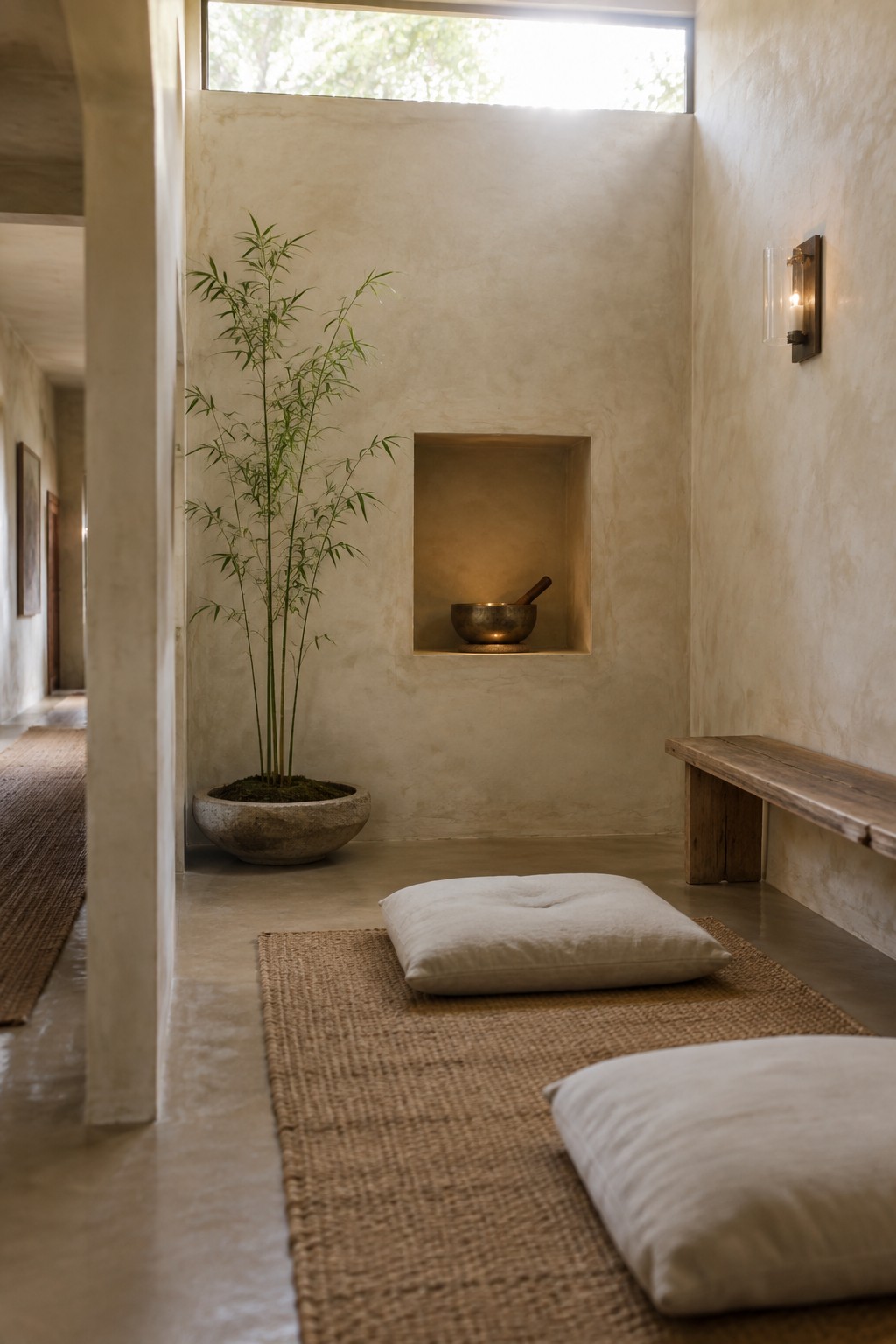
A tall plant set directly under a high window or skylight turns incoming light into the main feature of the room. The plant gets what it needs to stay healthy, and the space feels more connected to the outdoors without extra decoration.
This approach works best in simple rooms with few furnishings. Keep the plant in a large, stable pot and give it enough room so the leaves can spread toward the light. It suits minimalist homes, meditation spaces, or any interior where you want one strong natural element rather than many small ones.
Open Shelves Filled With Plants
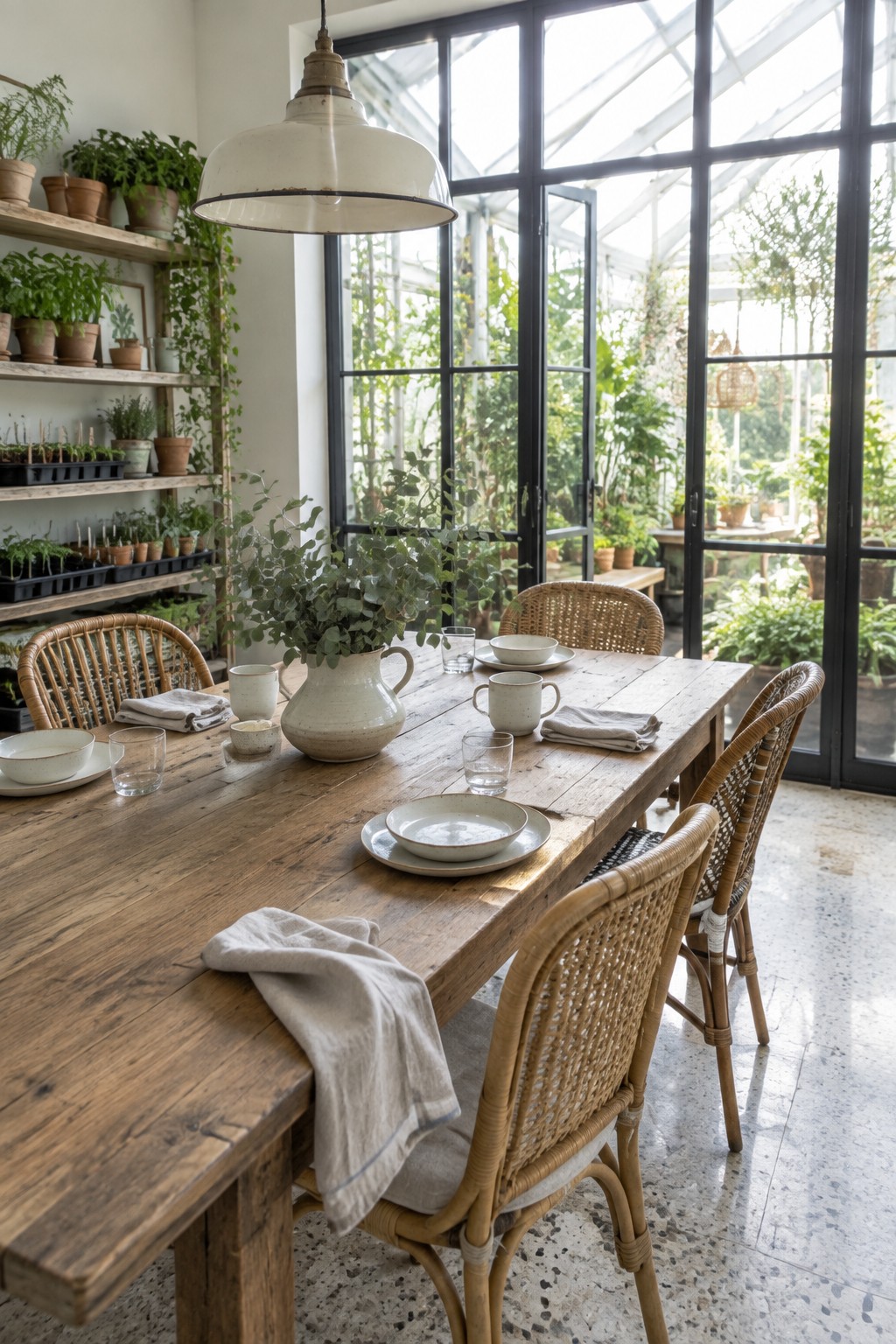
Placing open shelves along one wall of a dining room gives you an easy way to bring in a lot of plants without crowding the table or floor. The shelves keep the greenery at eye level where it softens the room, and the gaps between the boards let light reach the plants on lower levels.
This setup works best in spaces that already get steady daylight from windows or glass doors. Use sturdy brackets, leave a little breathing room between pots, and stick to plants that can handle the light levels in that spot. Avoid overloading every shelf or the look can turn messy fast.
Adding a Single Plant on a Floating Shelf
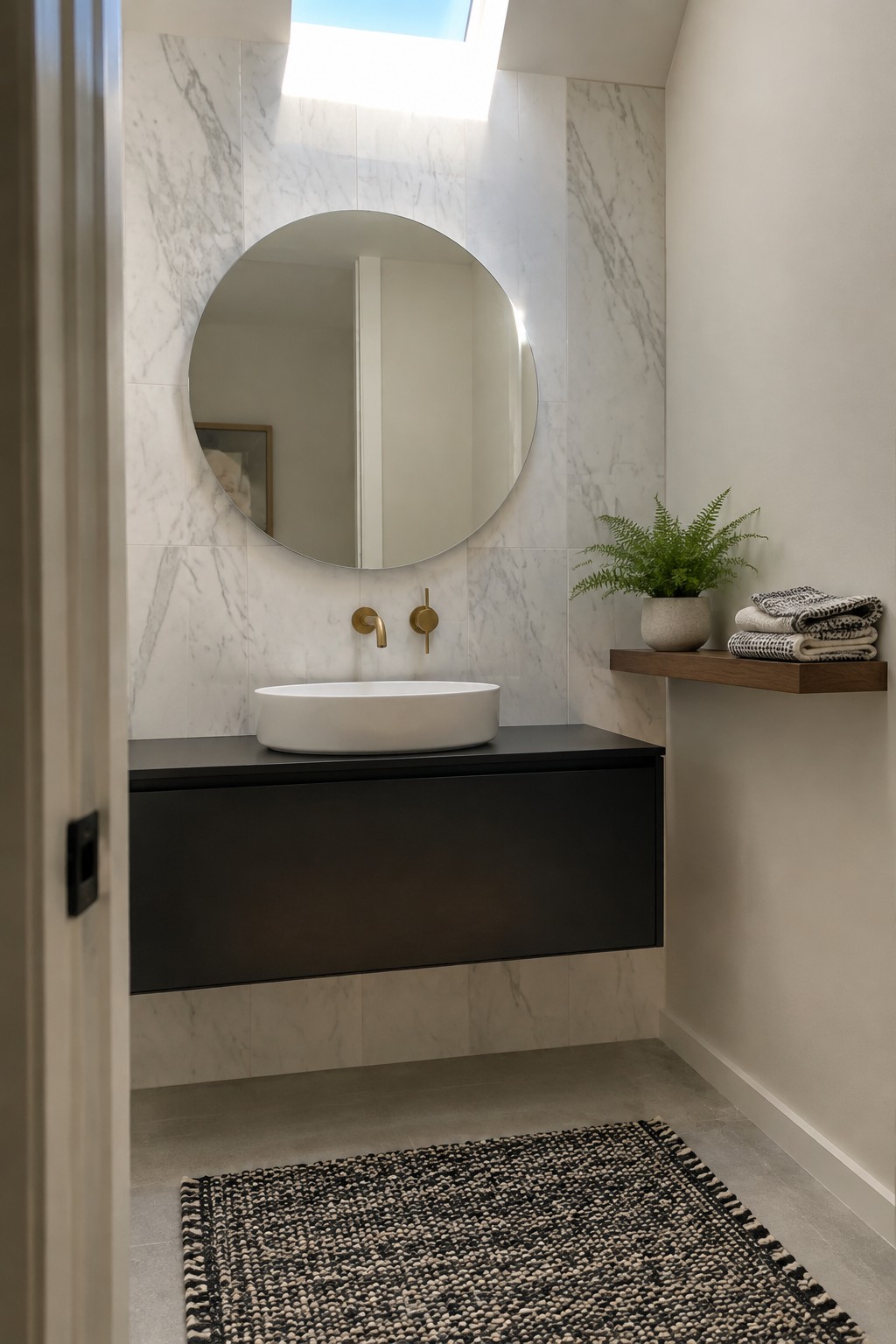
A floating shelf with one potted plant gives a bathroom a quiet touch of nature without adding much clutter. The marble and dark vanity already keep the space simple, so the greenery stands out and softens the hard surfaces. Natural light from above helps the plant stay healthy and makes the whole room feel a bit fresher.
This setup works best in smaller bathrooms where you want to avoid extra furniture or busy styling. Keep the plant compact and the shelf narrow so it does not crowd the sink area. It suits homes that already use clean lines and natural materials.
Letting Plants Catch the Natural Light
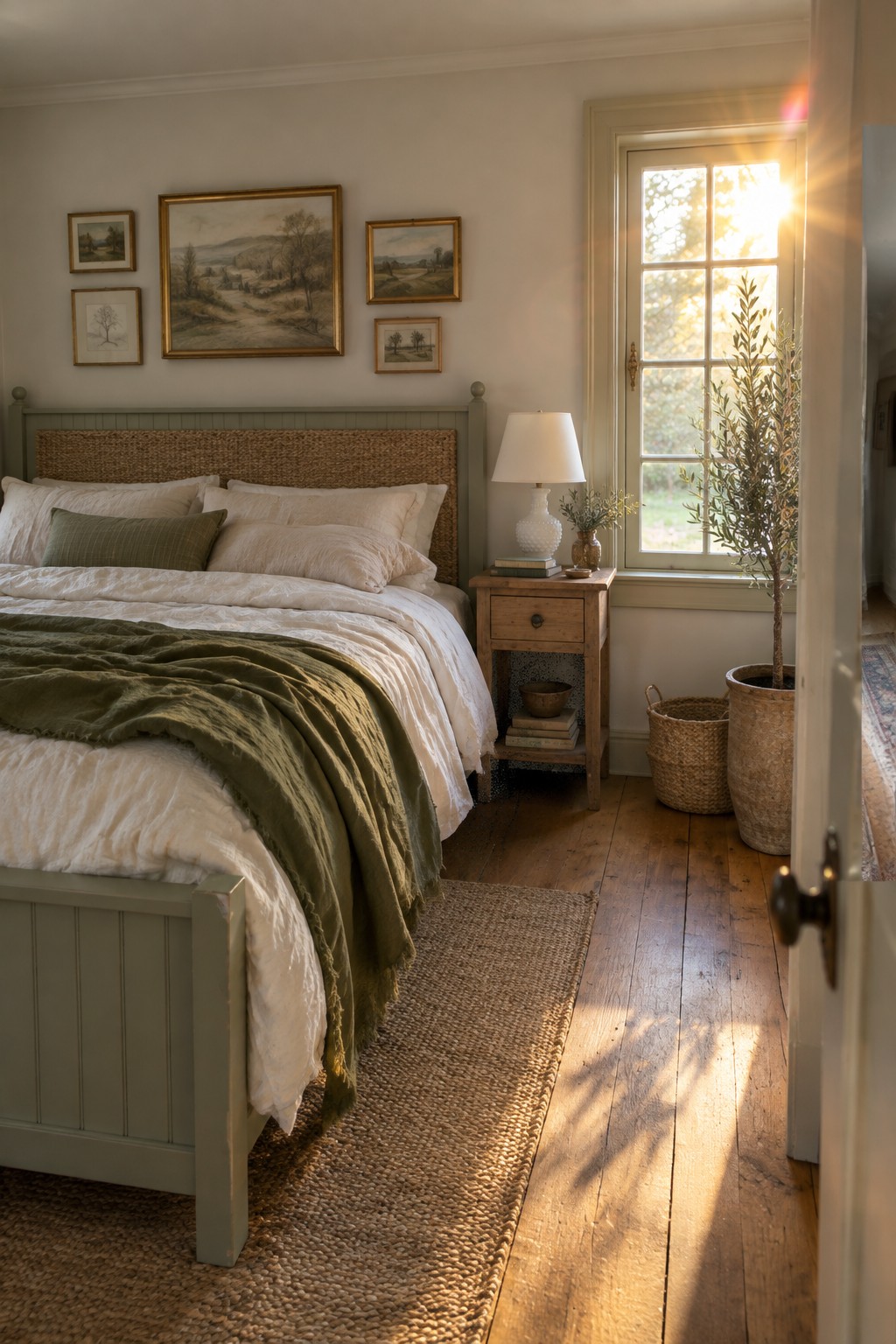
Many bedrooms feel more restful when plants sit where the sun actually reaches them. The light keeps the leaves healthy and spreads a soft, changing glow across the room that no lamp can quite match.
This works best in spaces with at least one good-sized window and not too many heavy curtains. Pick a plant that tolerates bright light, set it on the floor or a low table nearby, and let it stay there year-round rather than moving it around.
Keeping Herbs by the Kitchen Sink
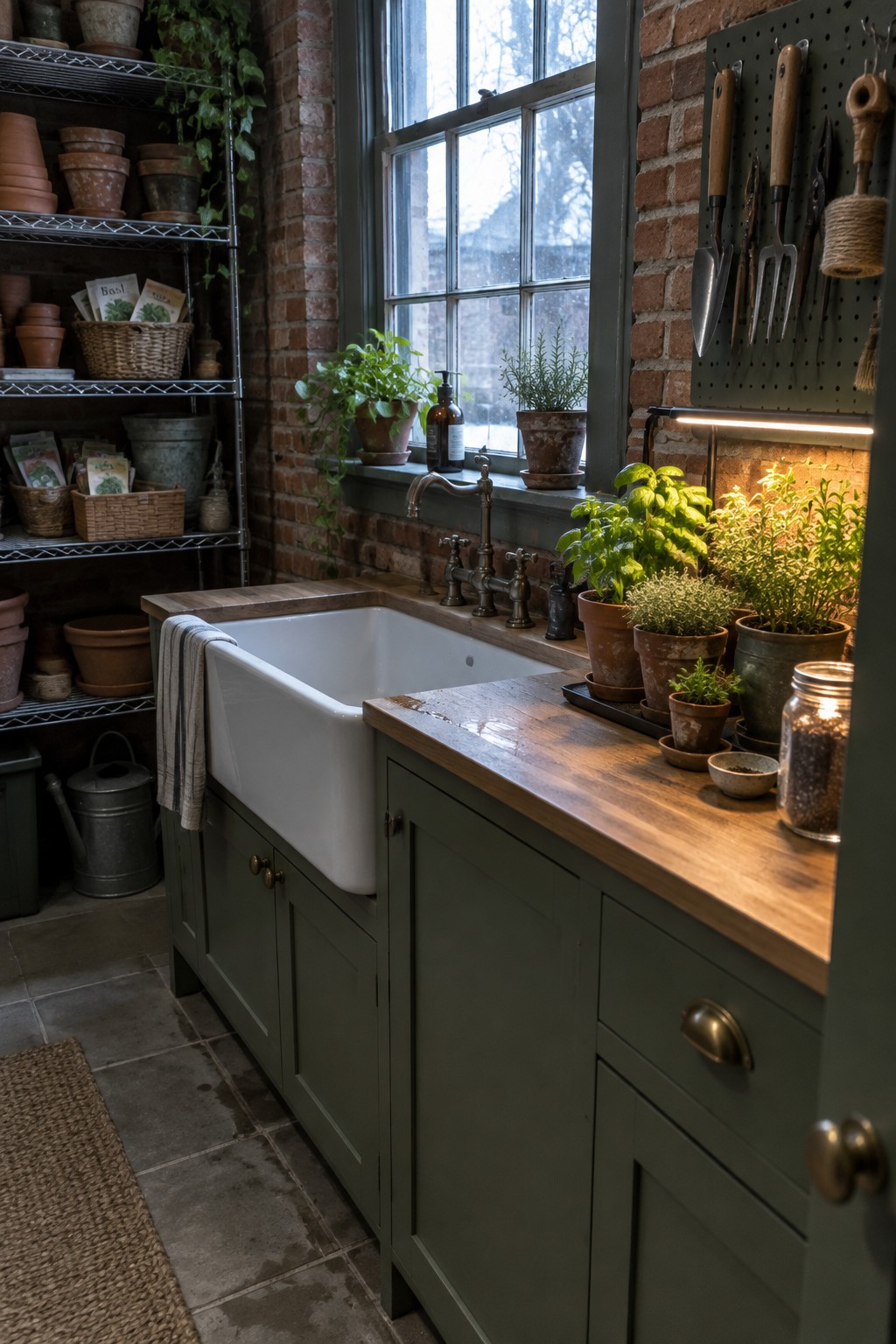
Many kitchens benefit from a few pots of herbs placed right by the sink. The location makes watering and picking easy during everyday tasks, and the window above supplies the light the plants need to thrive without extra effort.
This works well in homes where the sink area gets steady daylight and has some counter space to spare. Stick to smaller pots and herbs that handle indoor conditions, and leave enough room for normal sink use.
Built-In Greenery for Closet Islands
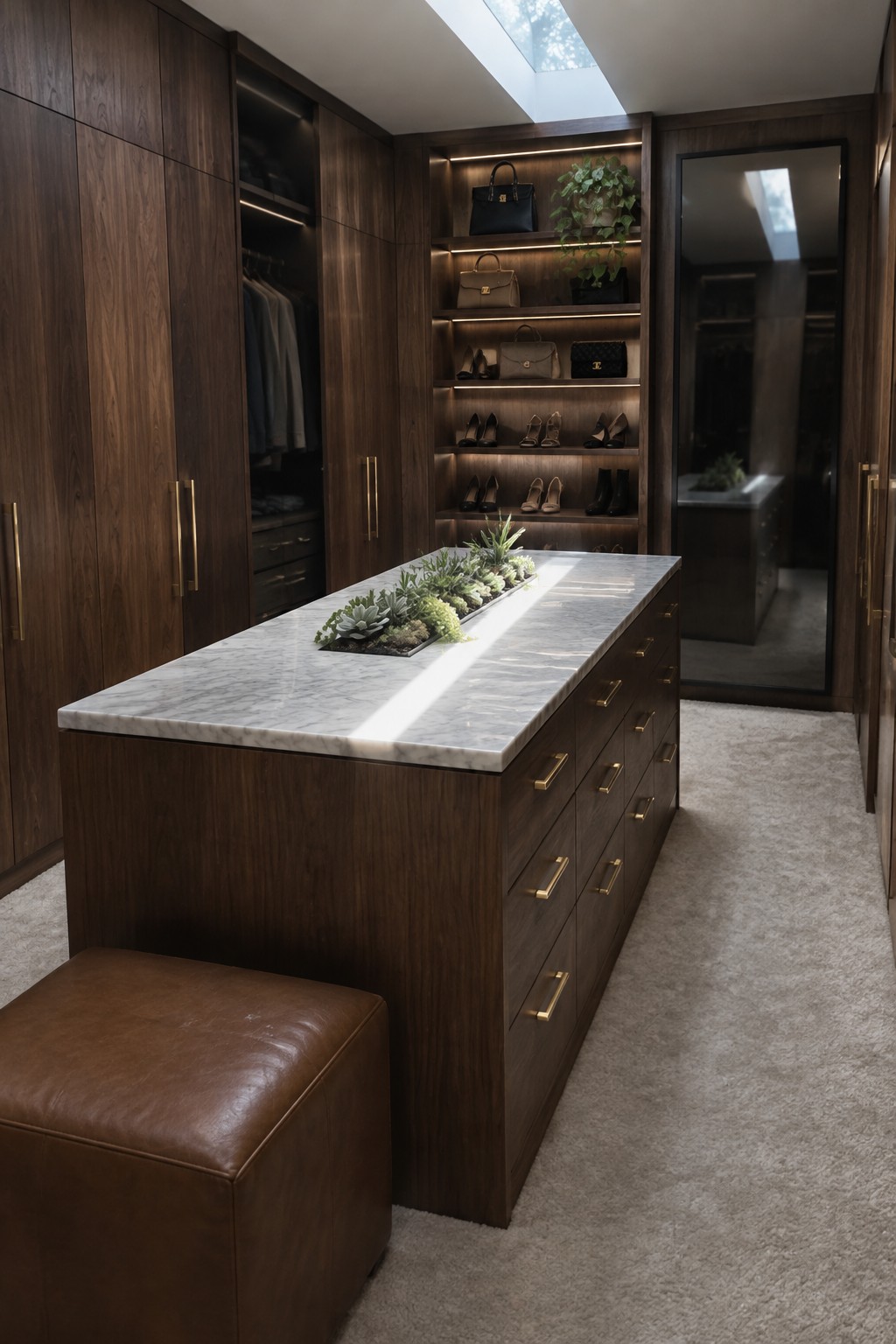
Some people want plants even in rooms that are mostly about storage and getting dressed. Setting a long planter into the center of a closet island keeps the greenery visible and easy to tend while the marble surface stays practical for folding or laying out clothes. The skylight above helps the plants get enough light without needing extra fixtures.
This approach works best in larger walk-in closets where the island is the main piece of furniture. It suits homes that already bring plants into other rooms and want the same feeling in private spaces. Just plan for drainage and pick varieties that handle the actual light levels in the room.
Adding a Living Wall Indoors
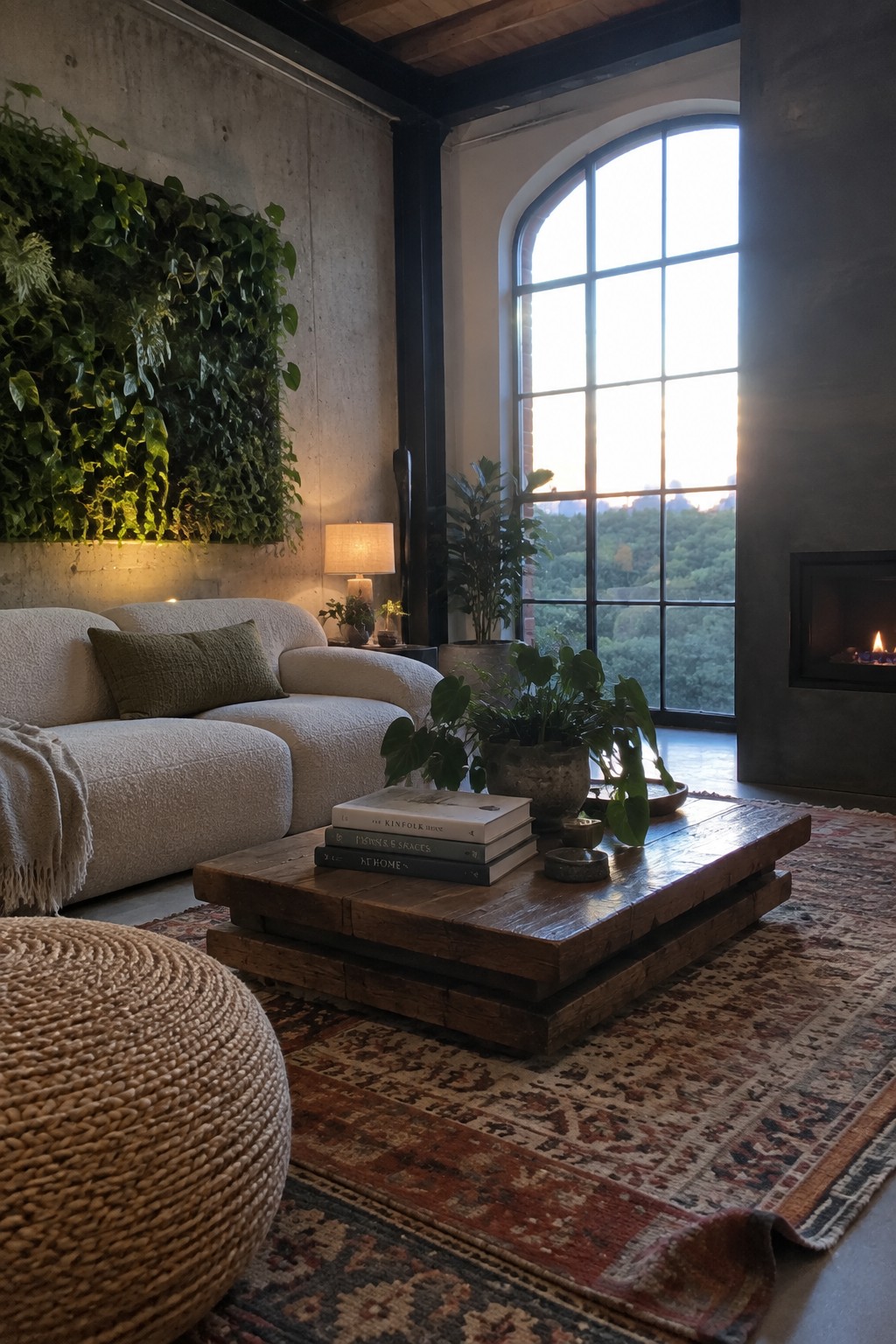
A living wall works well in spaces that already have strong natural light. It turns a plain wall into a source of texture and greenery without taking up floor space.
This approach suits rooms with high ceilings and big windows. Keep the plants simple and choose varieties that handle indoor light levels so the wall stays full without constant work.
Layer Plants Into Open Shelving
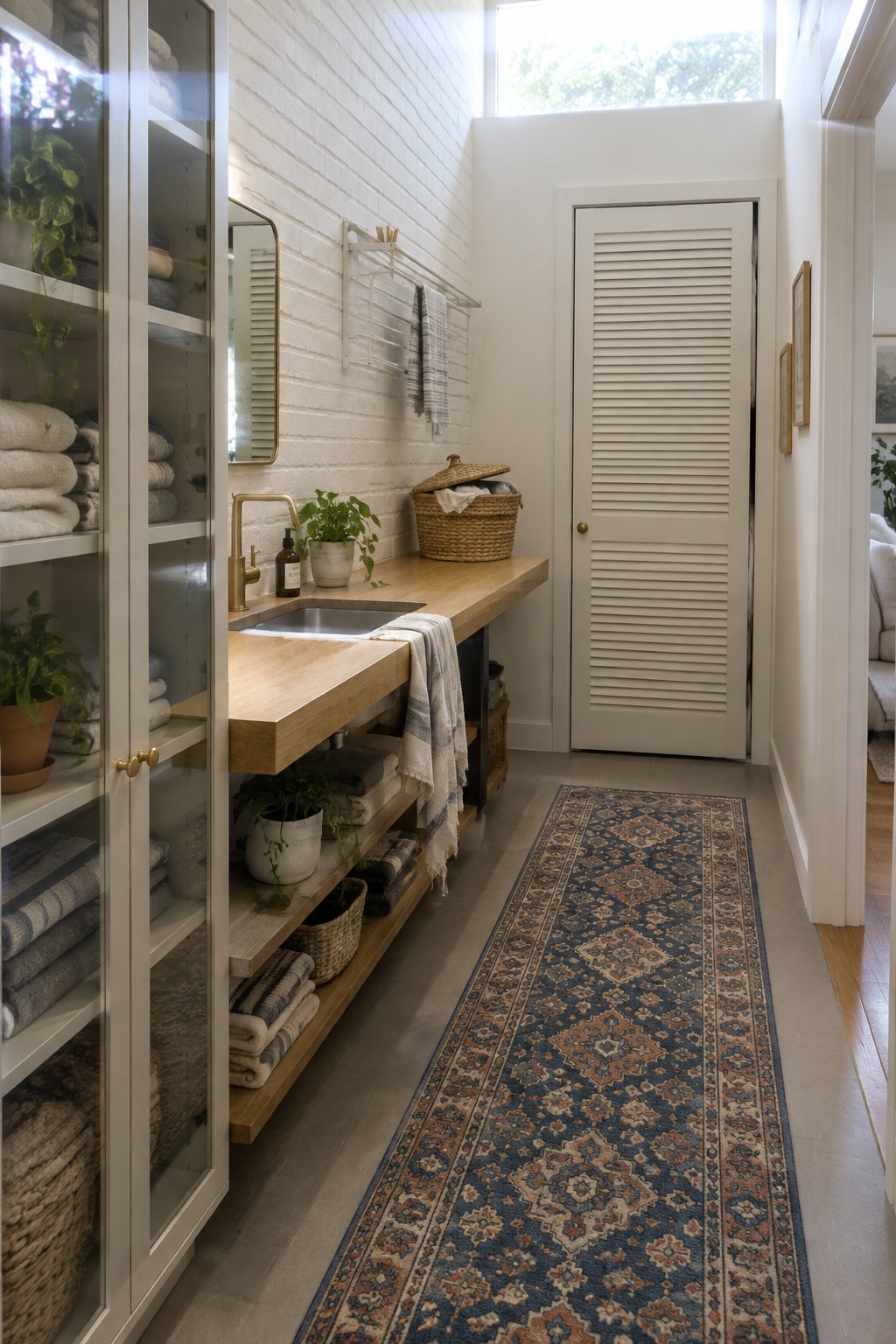
One simple way to add more plants without creating extra surfaces is to place them directly on the same shelves used for towels and supplies. The lower open shelving here shows how a few pots can sit among folded linens and baskets without taking over the space.
This approach works best in rooms that already get steady natural light, such as bathrooms or utility areas. Choose plants that tolerate humidity and make sure nothing blocks the light from reaching the lower shelves.
Skylights Help Indoor Plants Thrive
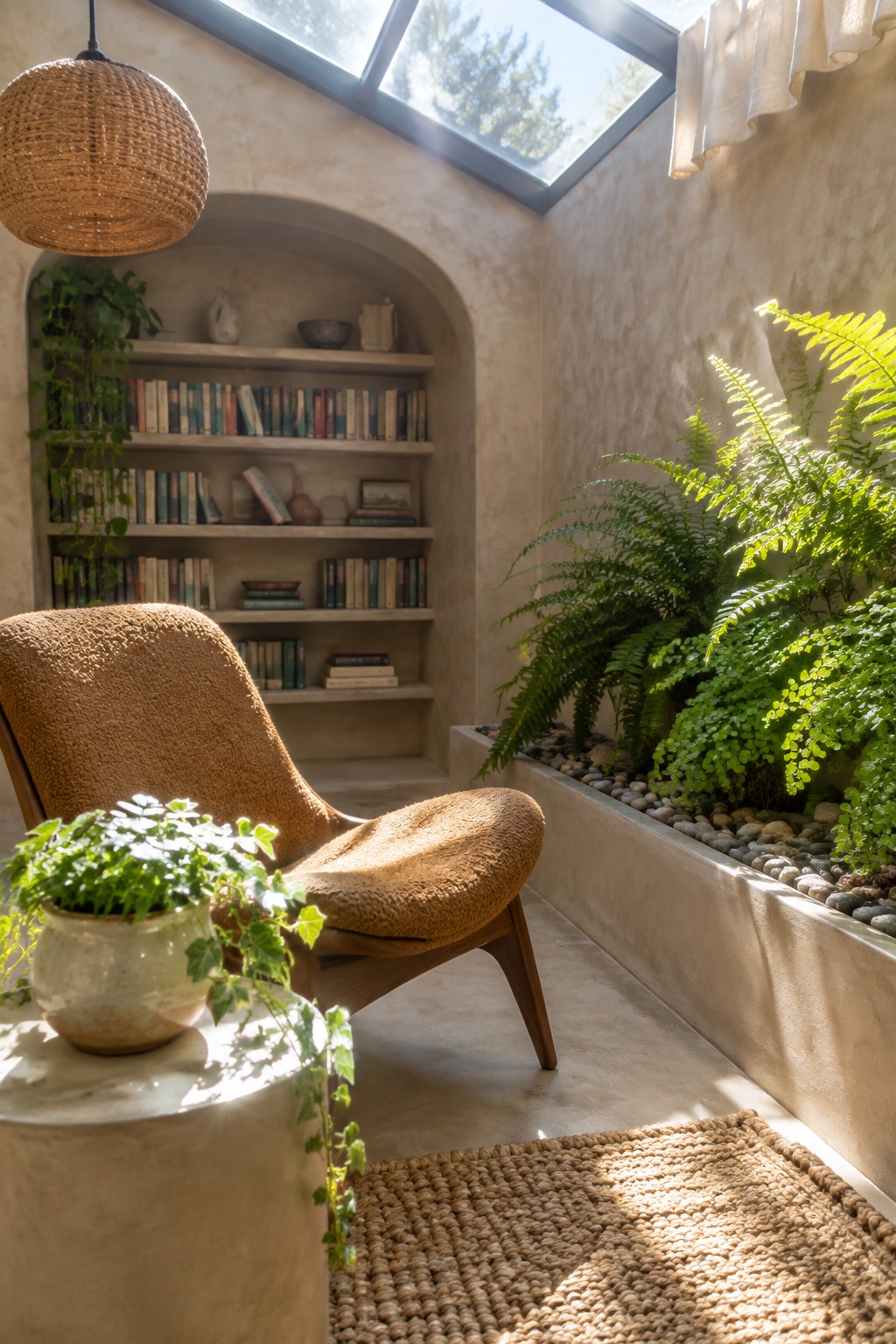
A skylight changes what you can grow indoors because it delivers steady light from above instead of relying only on side windows. In spaces that feel a bit dark or tucked away, this one change lets ferns, vines, and leafy plants stay full and healthy without extra grow lights.
It works especially well in reading corners or small sitting spots where you already want to spend time. Keep the plants at different heights so the light reaches everything, and choose a simple mix of easy varieties that like bright indirect light.
Frequently Asked Questions
Q: How do I choose plants that actually survive with the light my windows give off? A: Pick varieties like monstera or ferns that match the brightest spots in your rooms. Set them right in those pools of light instead of scattering them everywhere. Check the soil with your finger before watering so you avoid root rot from overdoing it.
Q: What if afternoon sun blasts one side of my living room? A: Hang light sheer curtains to soften the rays without blocking them completely. Move heat sensitive plants a few feet back from the glass during peak hours. This keeps the space bright while protecting the leaves from scorch marks.
Q: How often should I clean up fallen leaves and soil bits? A: Sweep or vacuum the area every few days to stop buildup around the pots. Keep a small brush handy near bigger plants for quick touch ups. The room stays fresh and the focus stays on the greenery itself.
