

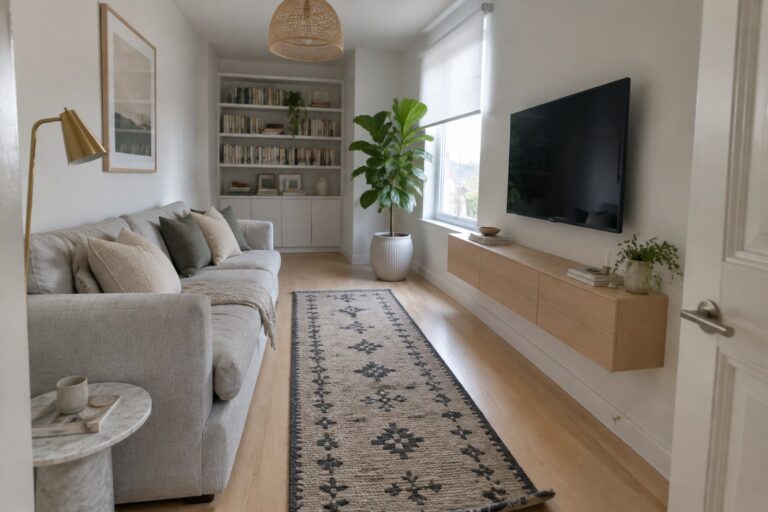
Narrow living rooms with limited width tend to feel closed in when furniture blocks the natural path from one end to the other.
I have noticed that the room starts to work better once the main seating faces the longest wall instead of fighting against it.
People usually spot the cramped feeling right away when they step inside.
Trying a few scaled down tables and slim consoles along the edges often opens up enough floor space to move comfortably without losing storage.
It is worth testing these changes in the actual room rather than guessing from a floor plan alone.
A Runner Rug For Narrow Living Rooms
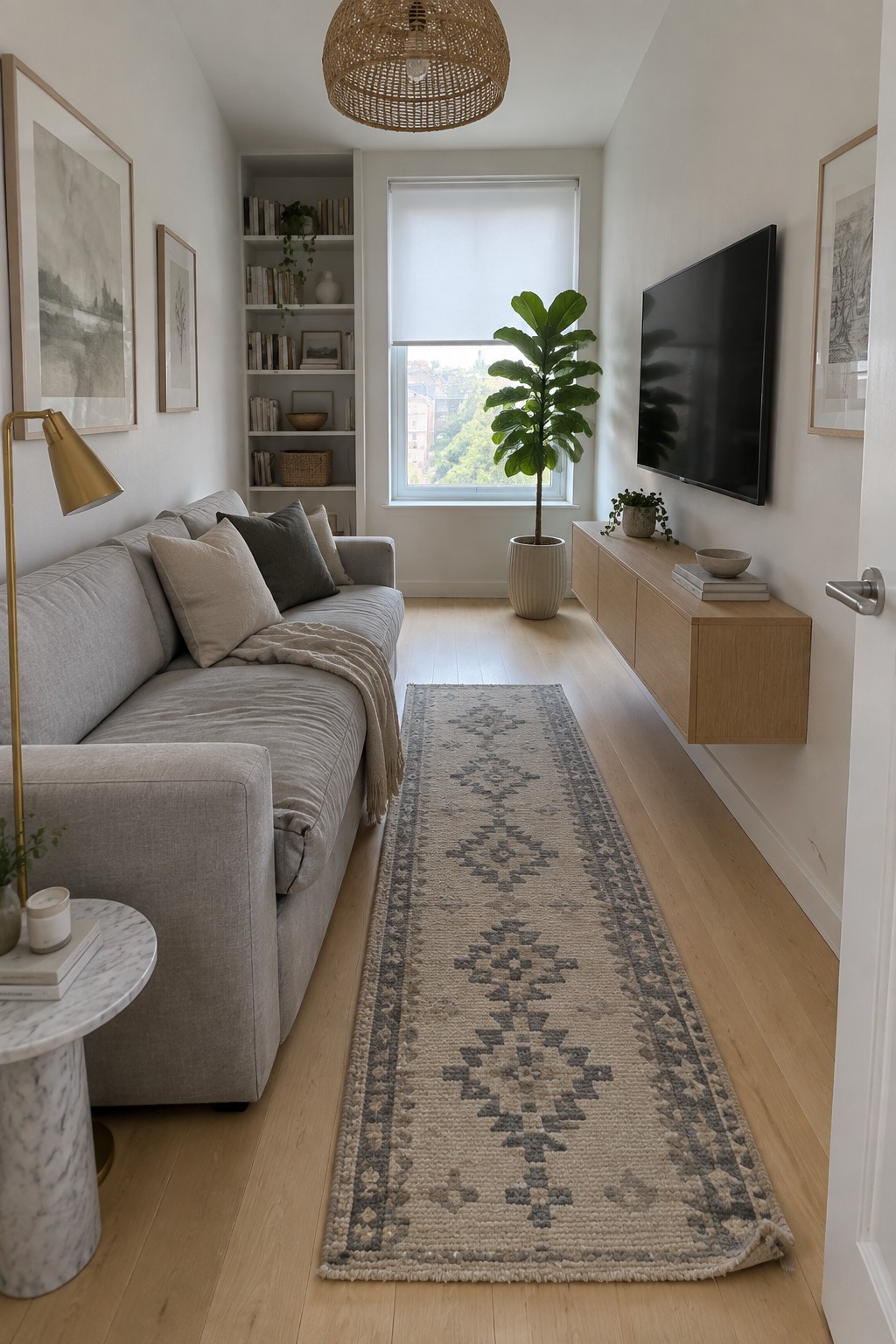
A long runner rug can help a narrow living room feel more organized instead of like a hallway with furniture pushed to the sides. It creates a clear path through the space and ties the seating area to whatever sits at the far end, whether that is a window or a small dining spot.
This works best in rooms that double as walkways. Keep the rug centered and make sure it is wide enough to sit under the front legs of the sofa but narrow enough to leave walking room on both sides. Light wood floors and low furniture help the look stay open.
Use A Long Runner Rug
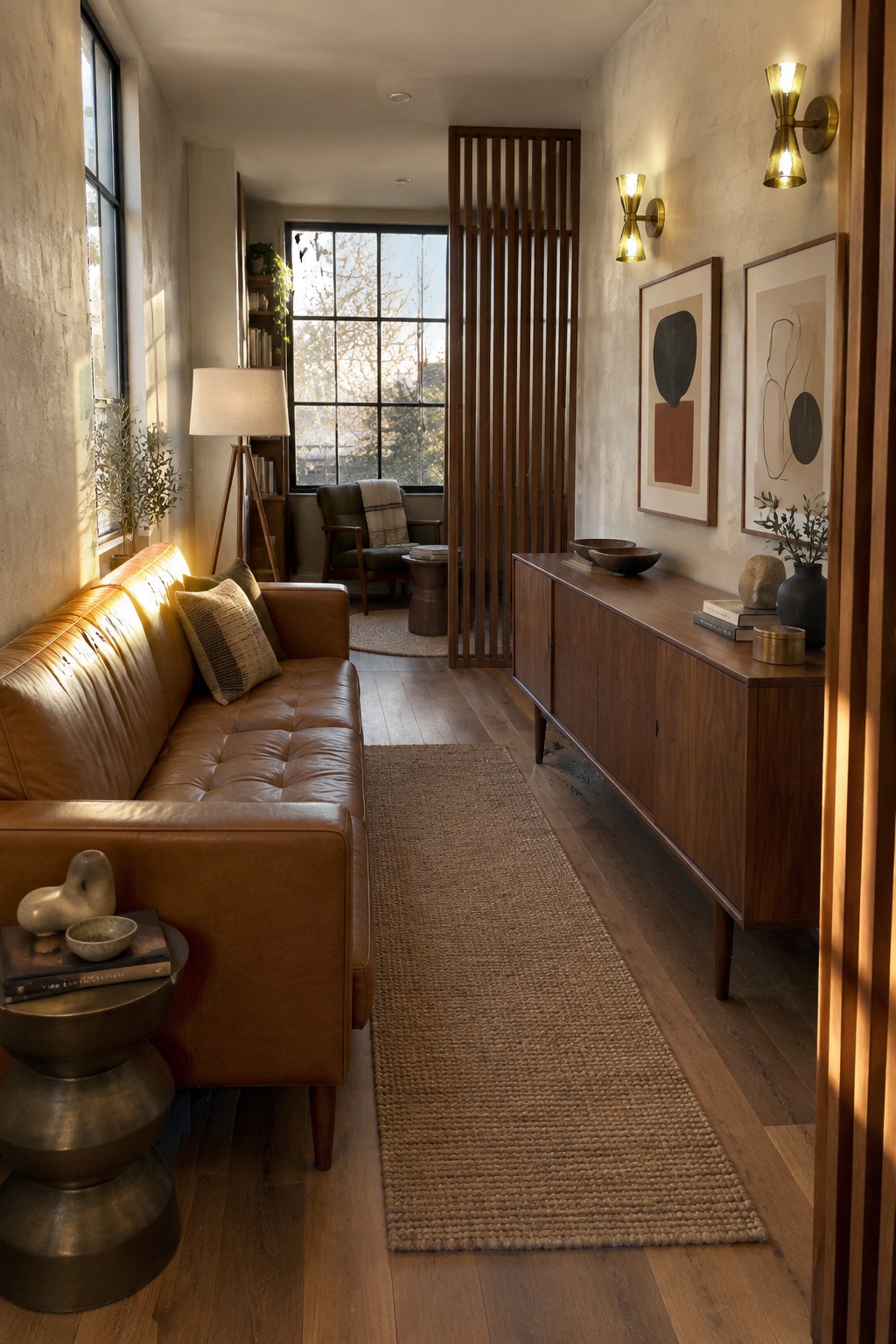
A long runner helps a narrow living room feel more open because it leads the eye straight through instead of cutting the space into shorter sections. The textured rug here sits centered on the wood floor and runs the full length of the room, which keeps the layout feeling simple and connected.
Try the same move if your room is tight and long. Keep the rug width narrow so some floor shows on each side, and let the main seating run along one edge. It works especially well in older apartments or row homes where the proportions already run long.
Built-In Shelving For Narrow Rooms
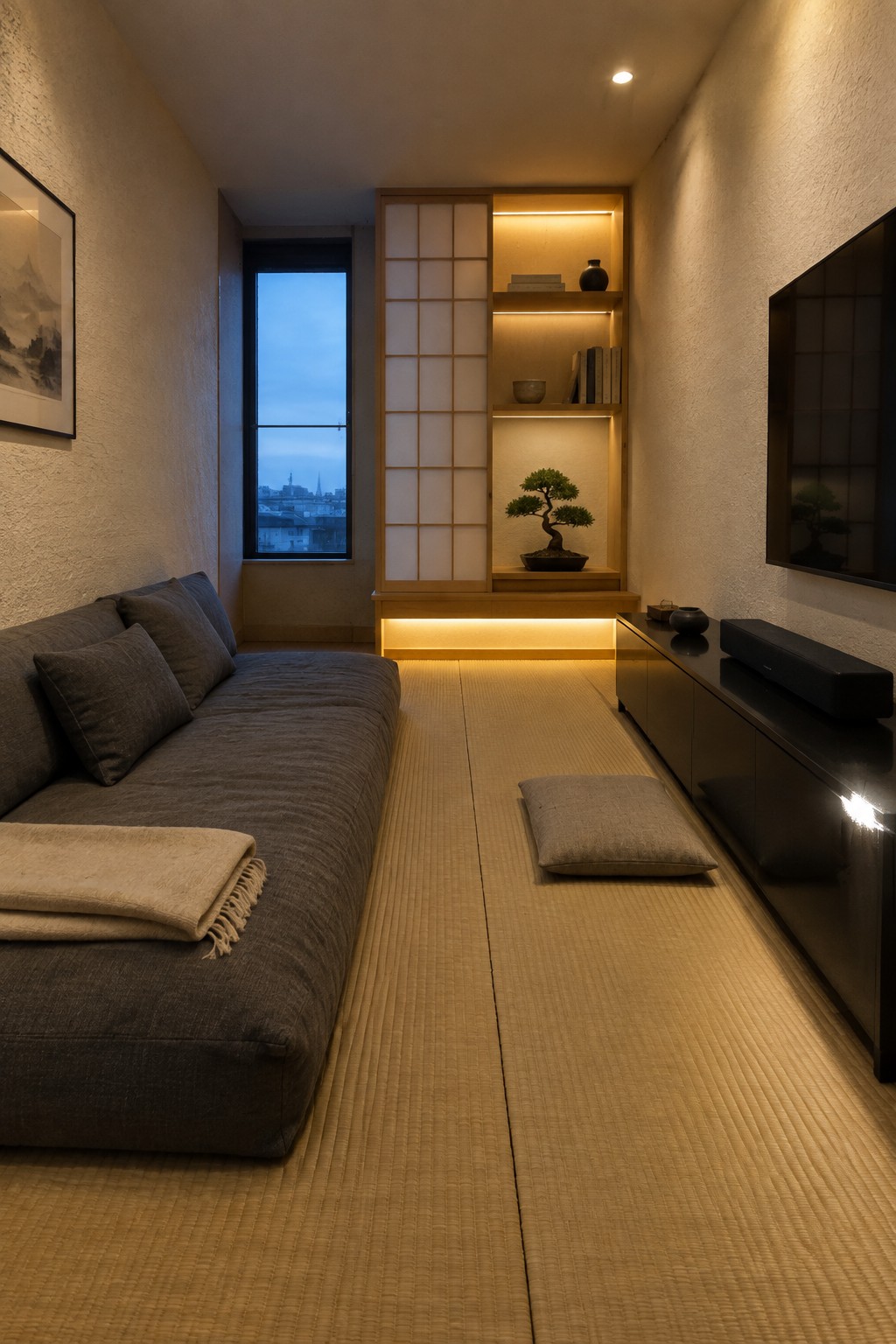
Built-in shelving tucked into a recessed wall area gives you storage and display space without eating into the floor. In narrow living rooms this keeps the walkway clear and stops the space from feeling crowded with extra furniture.
It works especially well in small homes or apartments where every inch counts. Keep the shelves shallow and add soft lighting so the area feels useful rather than heavy. Low seating and simple flooring help the whole room stay open and calm.
Add a Built-In Bench Along One Wall
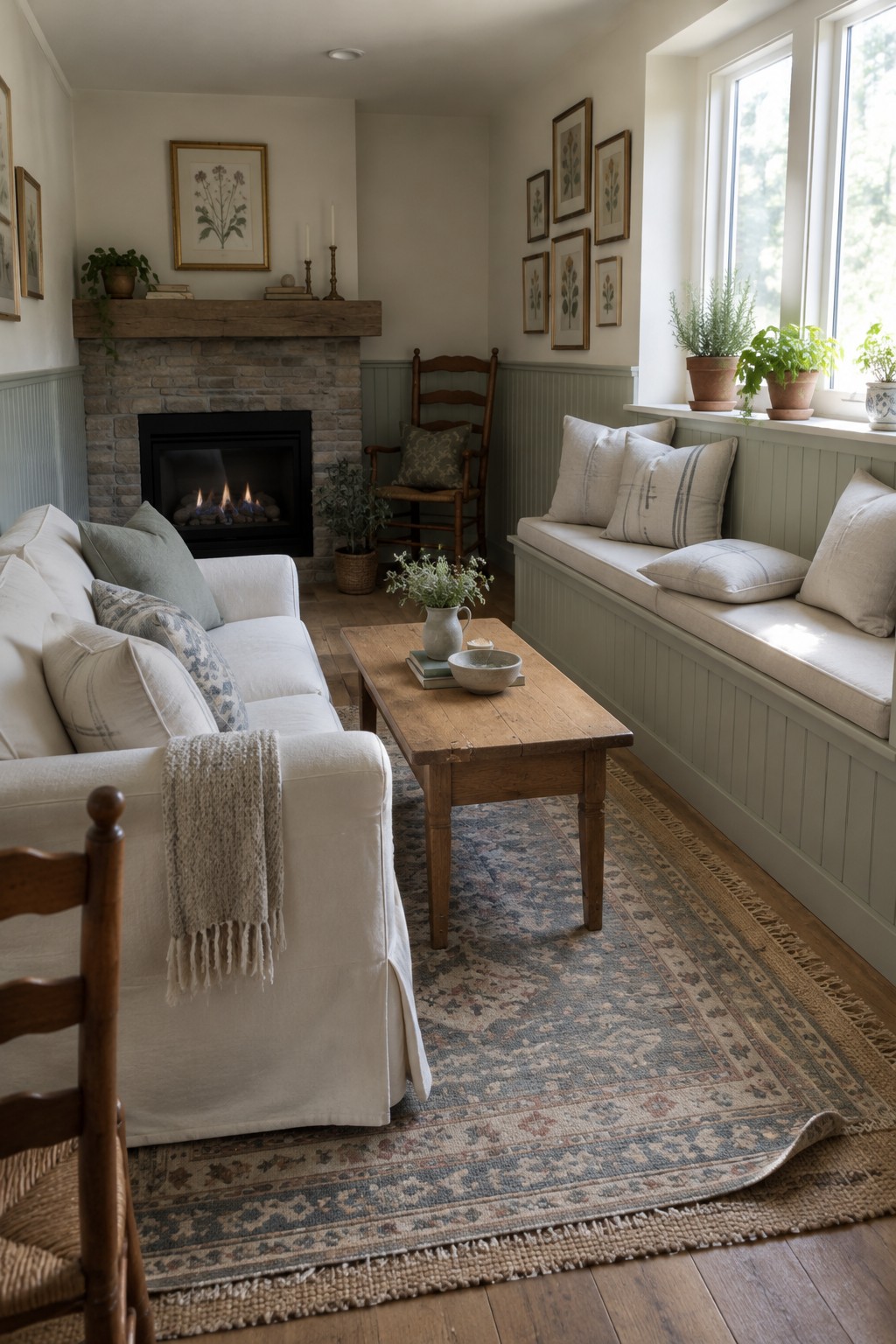
In a narrow living room, a built-in bench along the window wall adds seating without pushing anything into the middle of the floor. The bench stays flush with the wall, so the walkway stays clear and the room feels less cramped than it would with a second sofa or a pair of chairs.
This works best in older homes or any space where the windows already run the full length of the room. Keep the cushion light in color and add just a few pillows so the bench does not feel heavy. A slim coffee table in front keeps the center open for walking through.
Built-Ins Along One Wall
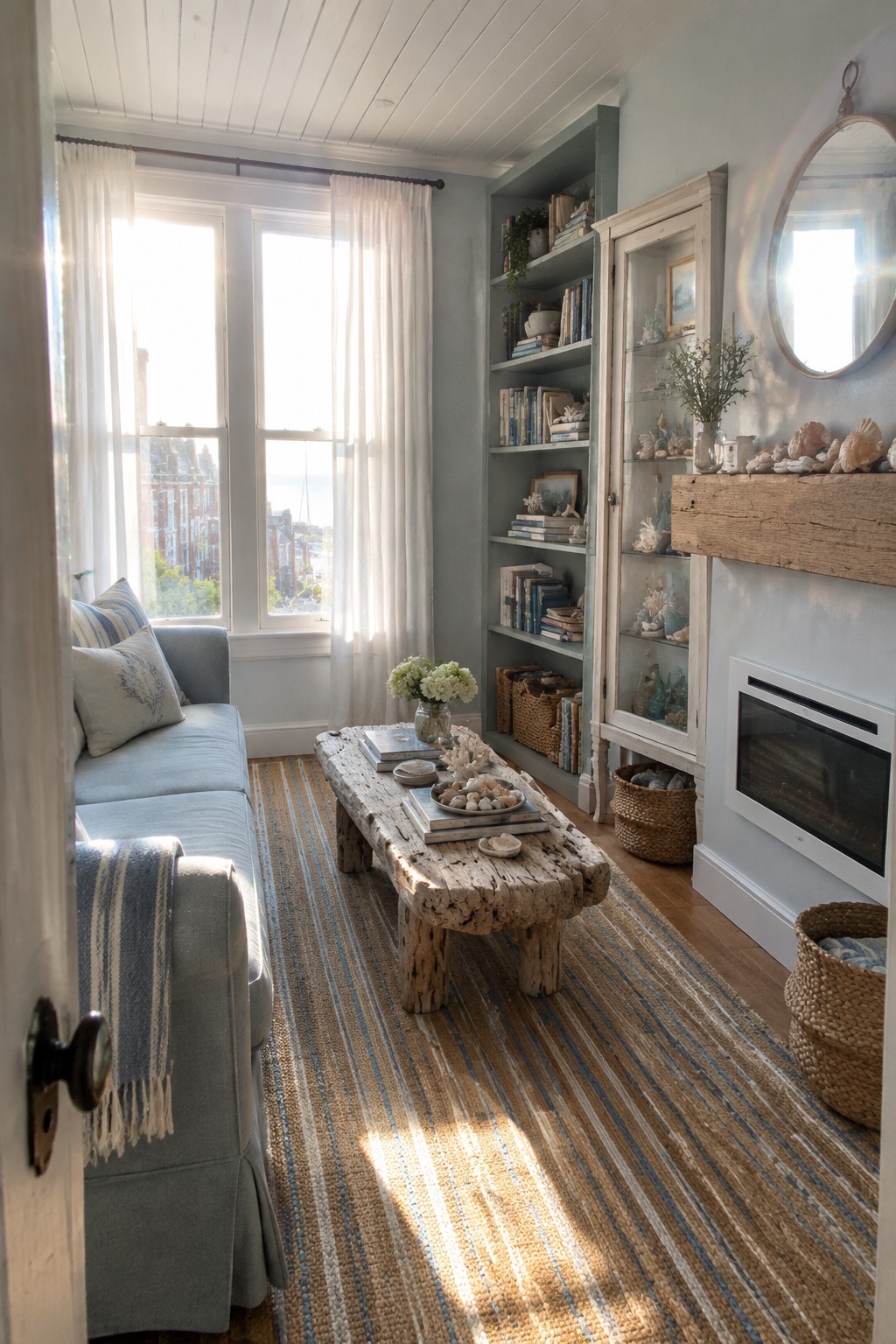
Built-in shelving works well in narrow living rooms because it uses the full height of the wall without taking up floor space. You get storage for books, baskets, and small collections while the middle of the room stays open for walking through.
This approach suits older homes or any small space where you need to keep things tidy but still want the room to feel calm. Keep the shelves light in color and mix open shelves with a few closed cabinets so the wall does not feel too heavy.
Mount The TV To Save Floor Space
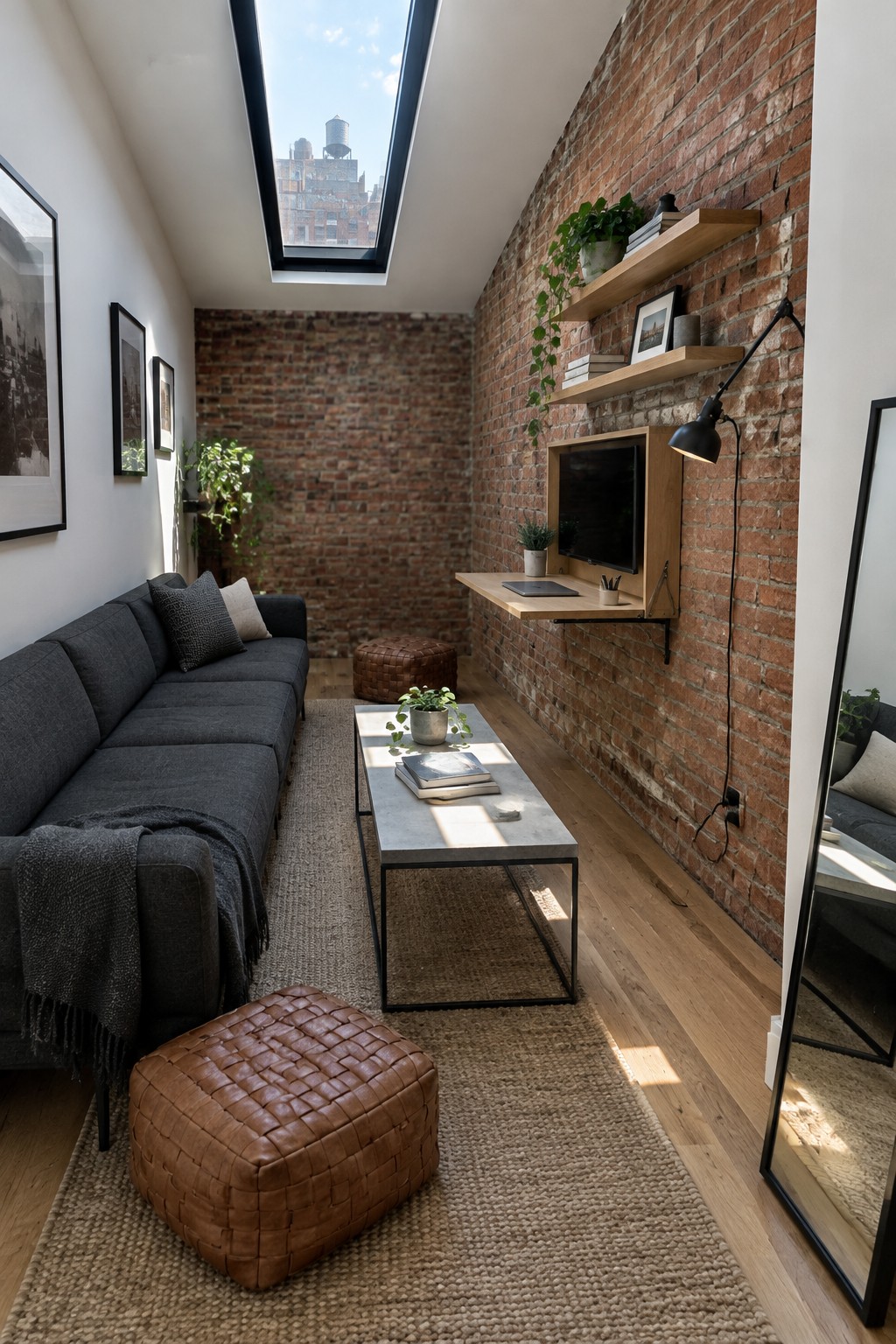
In a narrow living room, mounting the TV and a small fold-down surface on the wall keeps the floor open for walking and seating. This approach works especially well when the room runs long and tight, since it avoids adding bulky stands or extra furniture that would crowd the walkway.
It suits apartments and older homes where width is limited but length can be used to advantage. Place the unit at a comfortable viewing height and keep the rest of the furniture low and aligned along one side.
Built-In Window Benches For Narrow Rooms
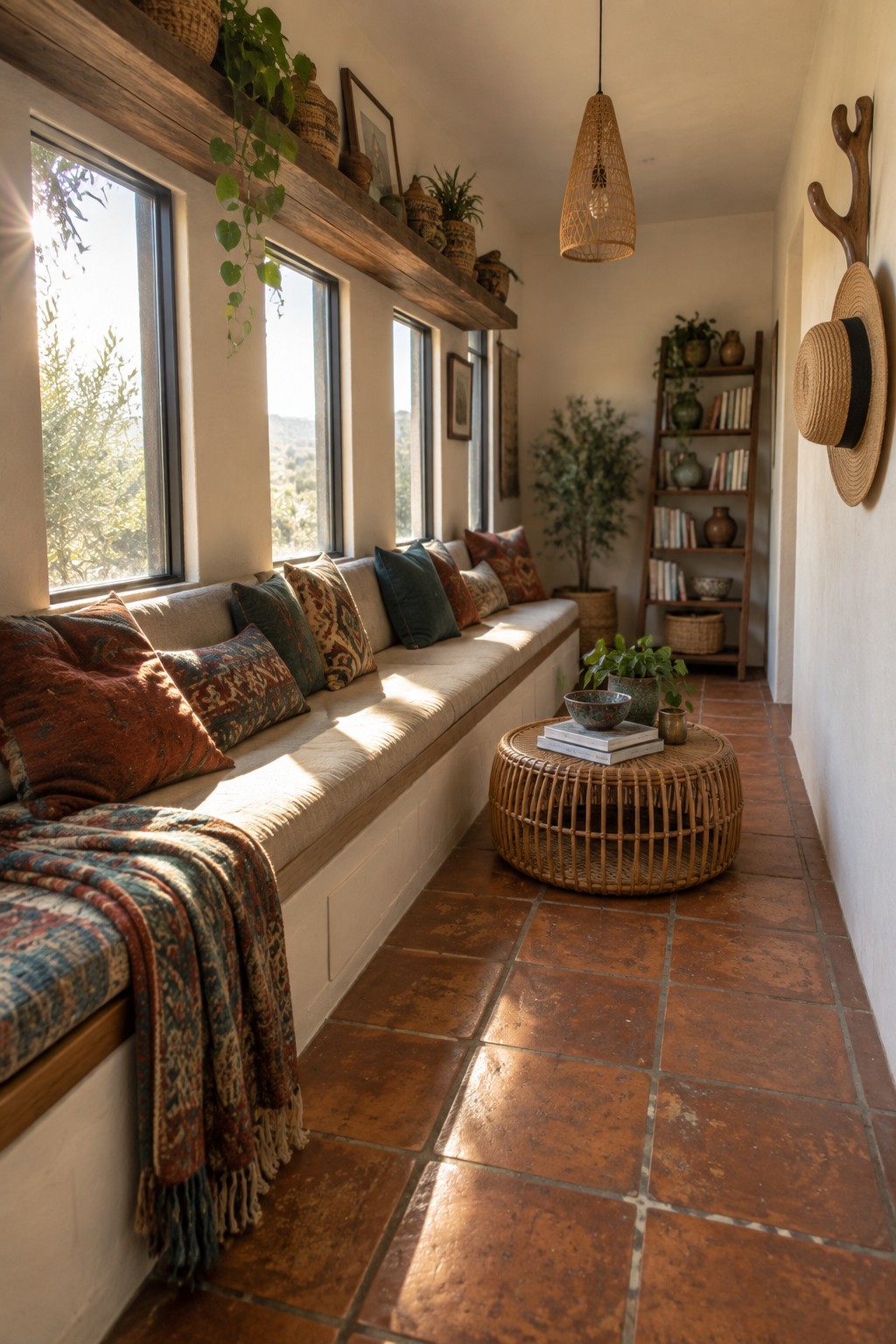
A built-in bench under a long row of windows gives you seating in a narrow room without crowding the floor. It keeps the middle of the space open and uses the wall that already gets good light, so the room feels less cramped.
This works best in slim living areas or hallways where a regular sofa would block the walkway. You can add a few cushions for comfort and store extra blankets or books underneath if the bench has a hinged top. Keep the rest of the room light so the bench does not feel heavy.
Built-Ins Around the Fireplace
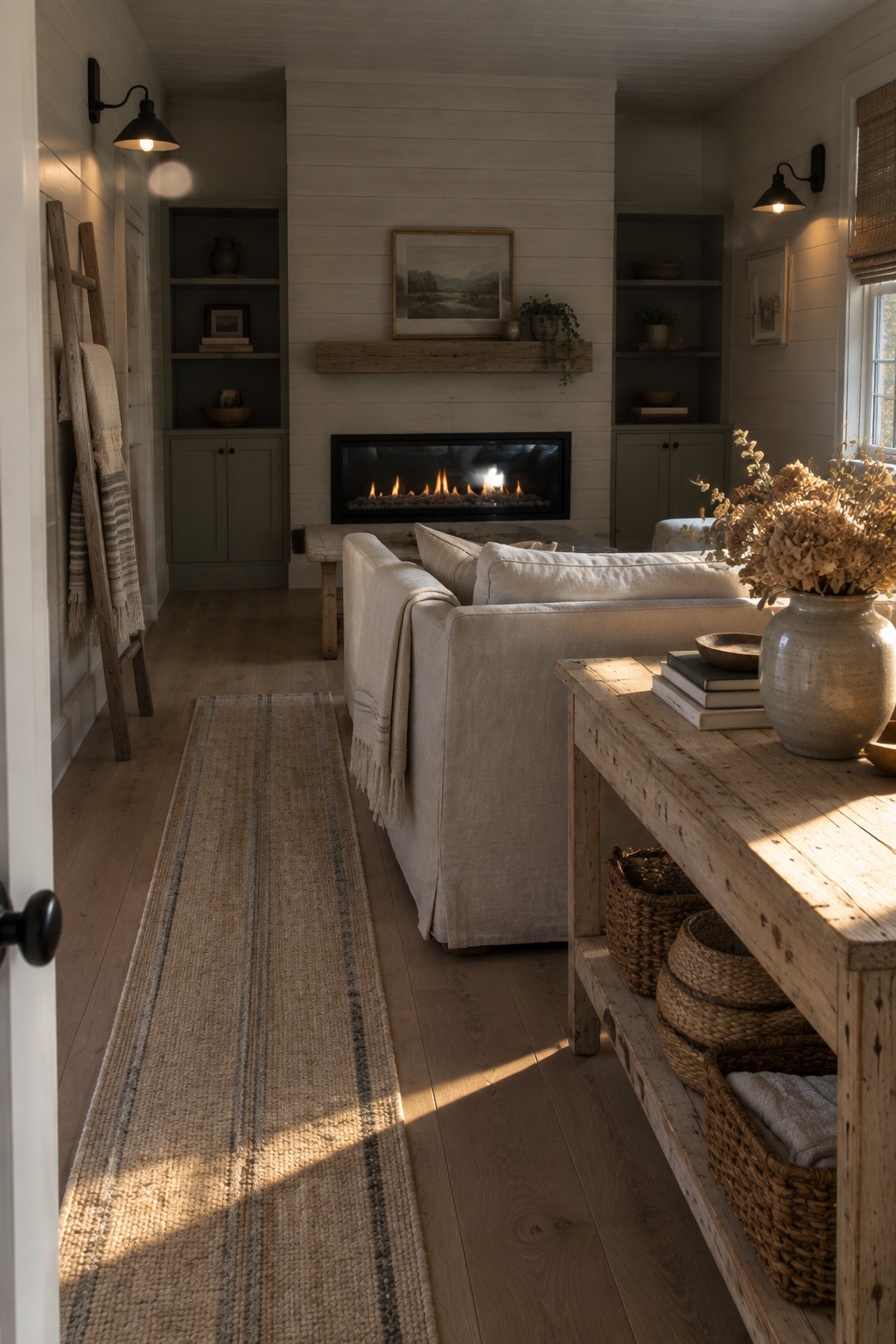
In a narrow living room, built-in shelves on either side of the fireplace add storage without crowding the floor. They also help the fireplace feel like the natural center of the room instead of just another thing pushed against the wall.
This setup works best in small homes or older cottages where every inch counts. Keep the shelves fairly shallow and stick to a light color so the whole wall does not feel heavy.
Build Storage And A Desk Into One Wall
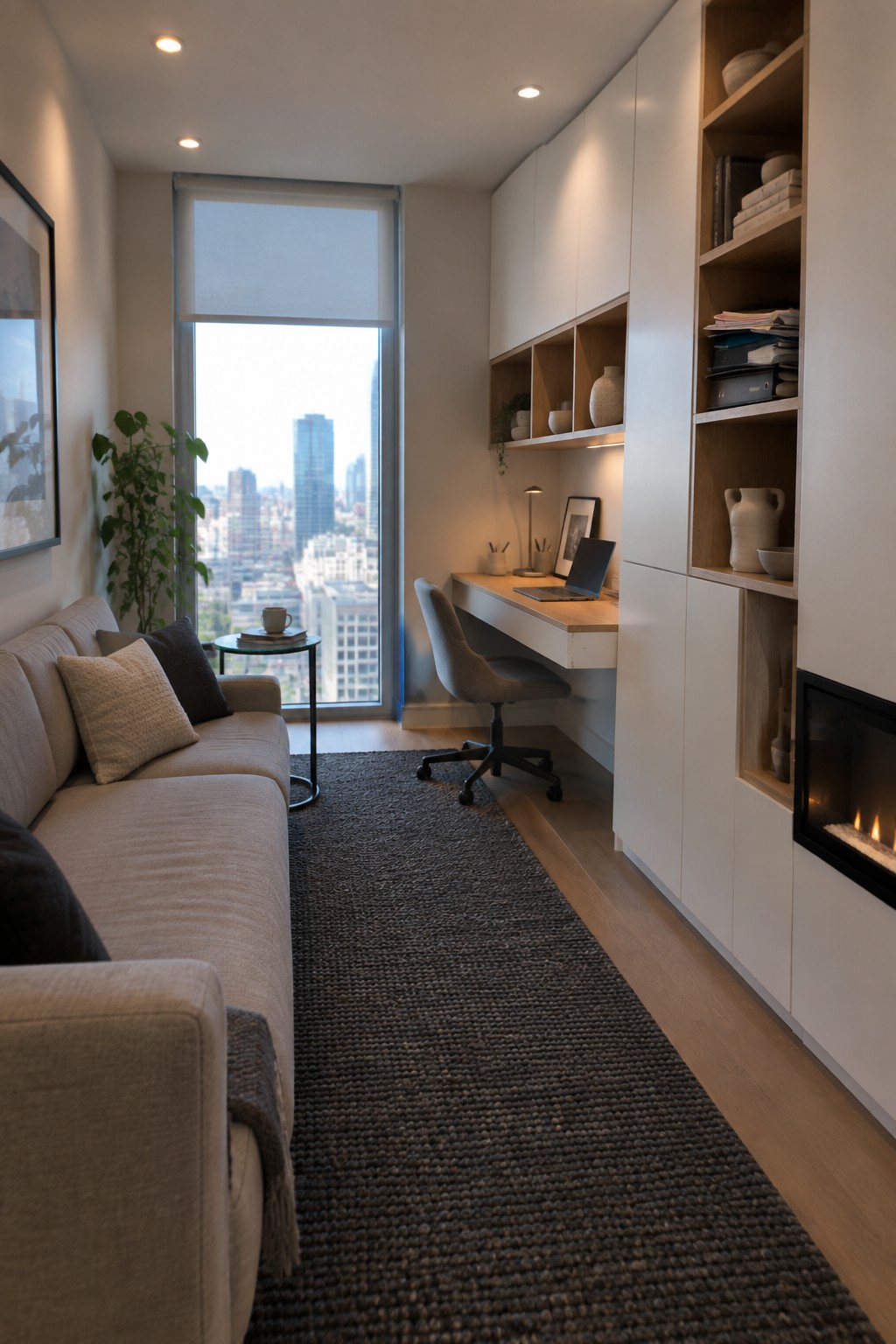
In a narrow living room, putting storage and a workspace along one long wall keeps the floor clear and the room from feeling cramped. A floating desk tucked into built-in cabinets gives you a place to work without adding another bulky piece of furniture that would cut the space in half.
This setup works especially well in apartments or small homes where you need the room to serve more than one purpose. Stick with light colors on the cabinets so the wall does not feel heavy, and leave enough walking room on the other side for the layout to stay comfortable.
Line Up Furniture On Opposite Walls
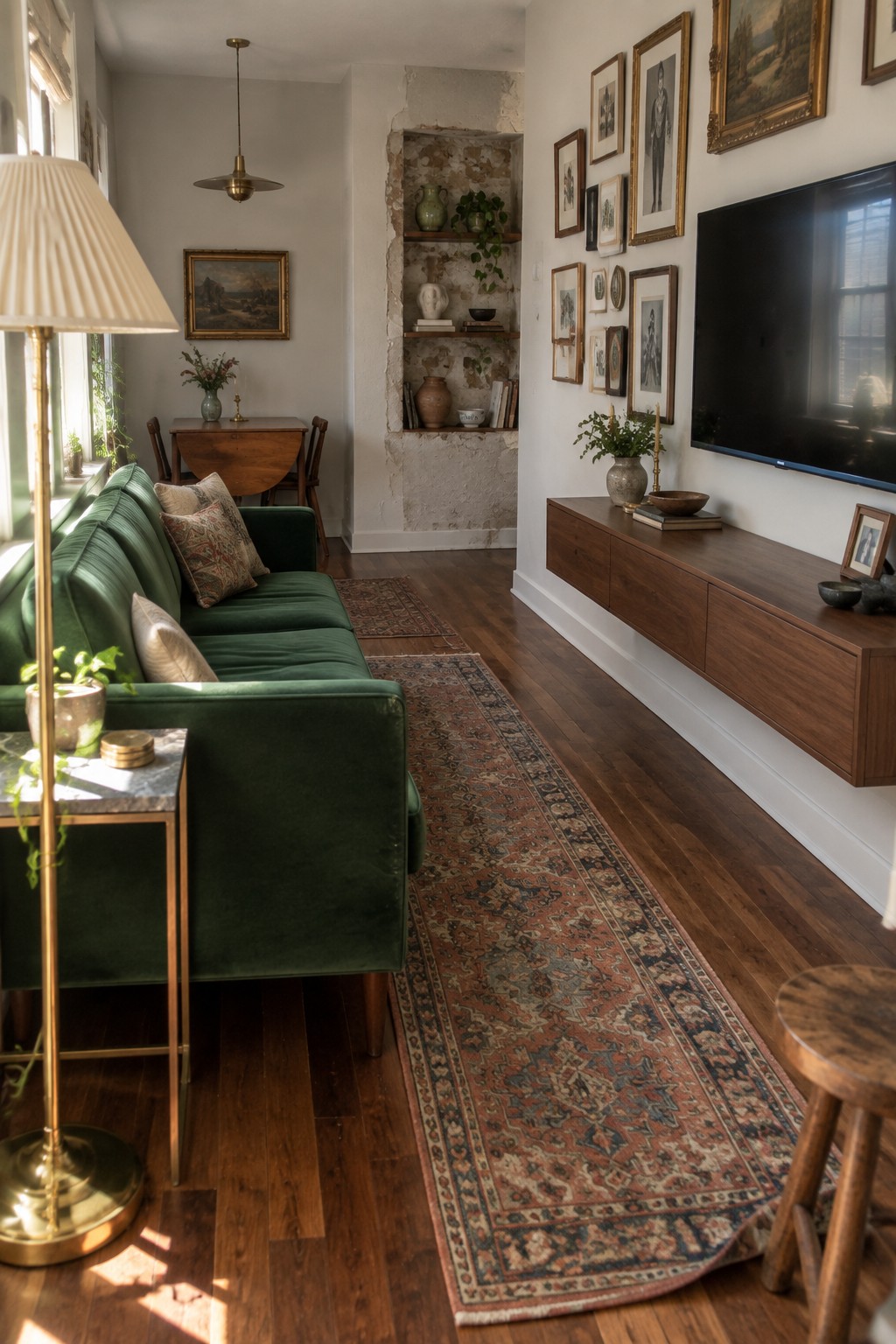
In a narrow living room, placing the sofa along one long wall and the media console along the other keeps the center open for walking. This simple arrangement stops the room from feeling blocked off and gives you a clear path from one end to the other.
It suits older homes or apartments with long, thin rooms where space is tight. Keep both pieces fairly slim and low so they do not crowd the walls, and use a runner rug to guide the eye down the length without adding extra furniture in the middle.
Run Seating Along The Long Wall
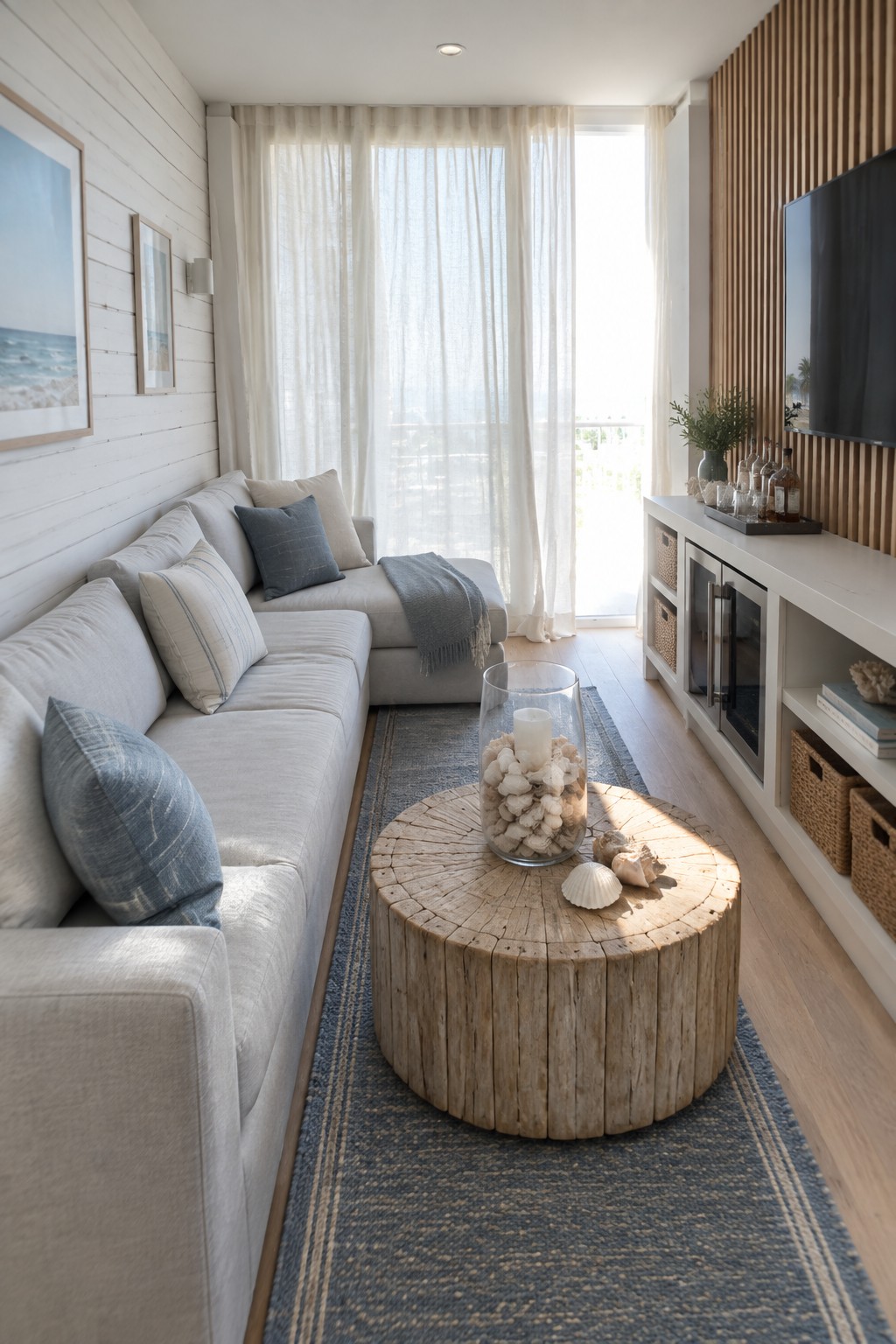
Placing a long sofa along one wall works well in narrow living rooms because it leaves the center open and keeps the space from feeling chopped up. The low round table in the middle still gives you a spot for drinks or a book without blocking the walkway.
This setup suits apartments and small homes where the room is longer than it is wide. Keep the table slim and the rug narrow so the path stays clear and the room feels longer rather than boxed in.
Place Furniture Along The Longest Wall
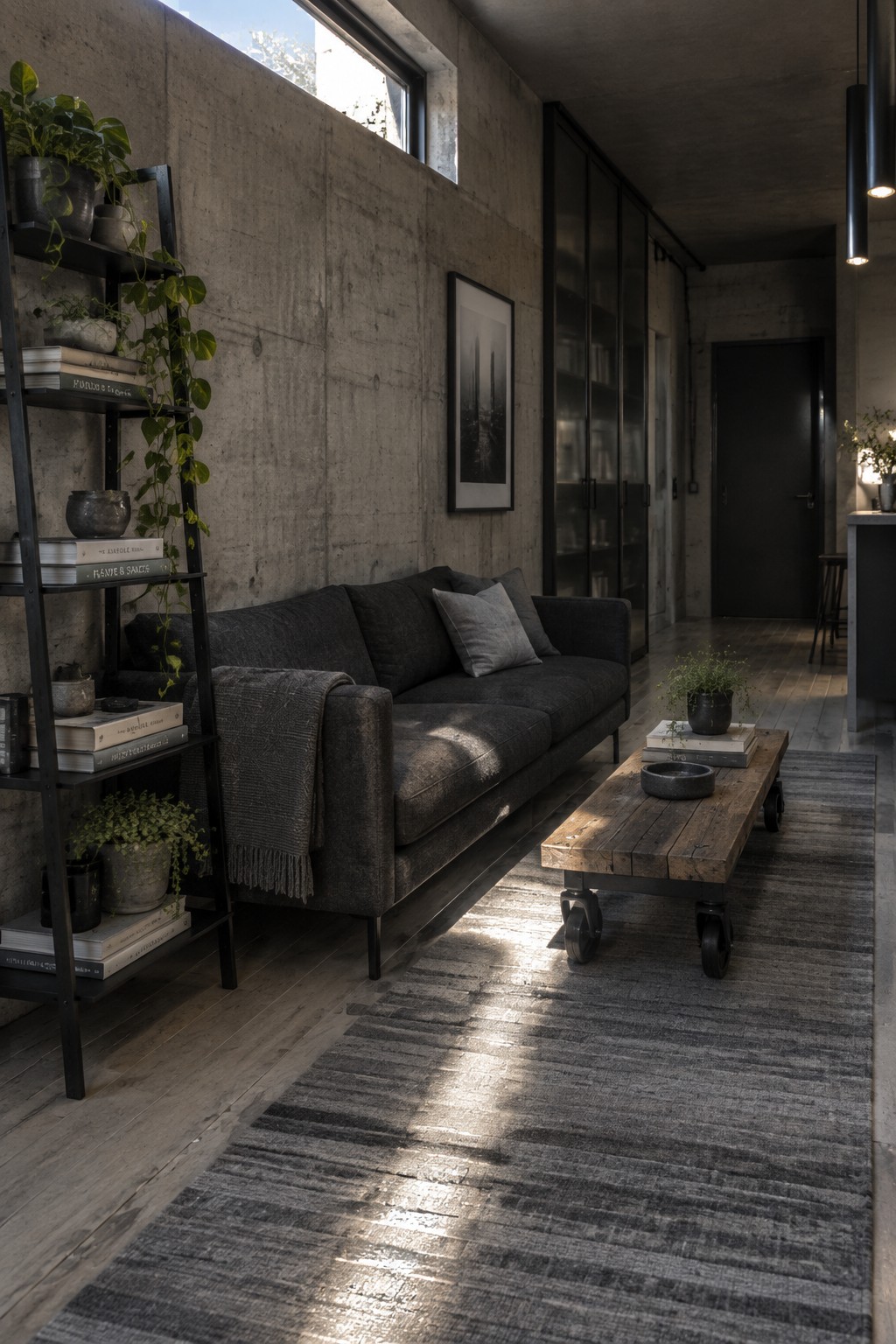
In narrow living rooms, pushing the main seating against one long wall leaves the rest of the floor open for walking and daily use. The sofa here sits flat against the concrete, which keeps the limited width from feeling tighter than it already is.
A low table on wheels works with this setup because you can roll it aside when you need more room to move through. This arrangement suits long, skinny rooms in apartments or older homes where fixed pieces would quickly block the only clear path.
Use a Runner Rug in Narrow Rooms
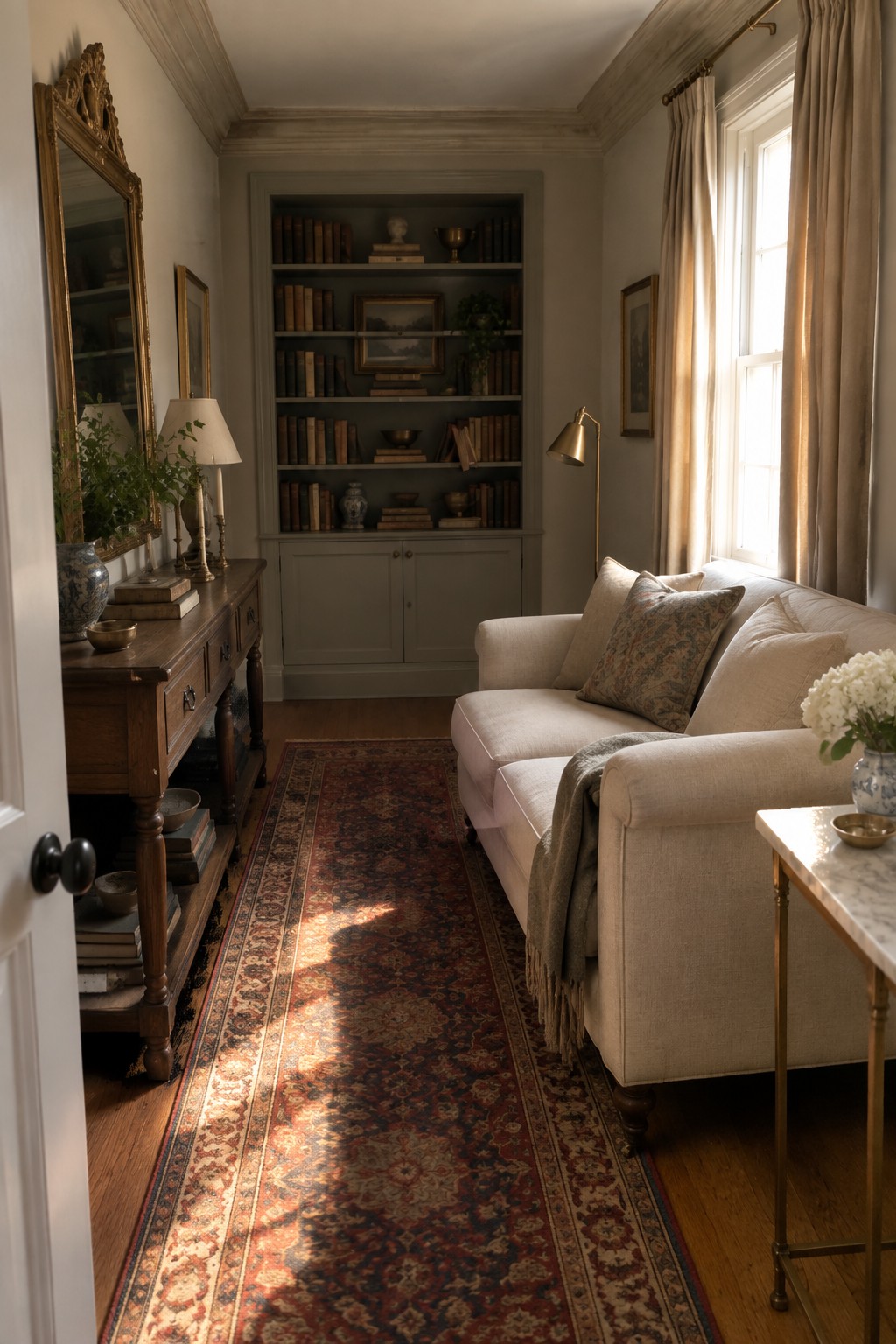
A long runner rug helps a narrow living room feel more like a real space instead of a leftover hallway. It keeps the floor from looking empty or chopped up while still leaving room to walk through without crowding the furniture.
This idea suits older homes or apartments where rooms run long and thin. Keep the rug centered and let it lead toward built-ins or a window at the end. Place seating and tables along the walls so the center stays open and the room feels practical rather than cramped.
Use a Long Runner Rug
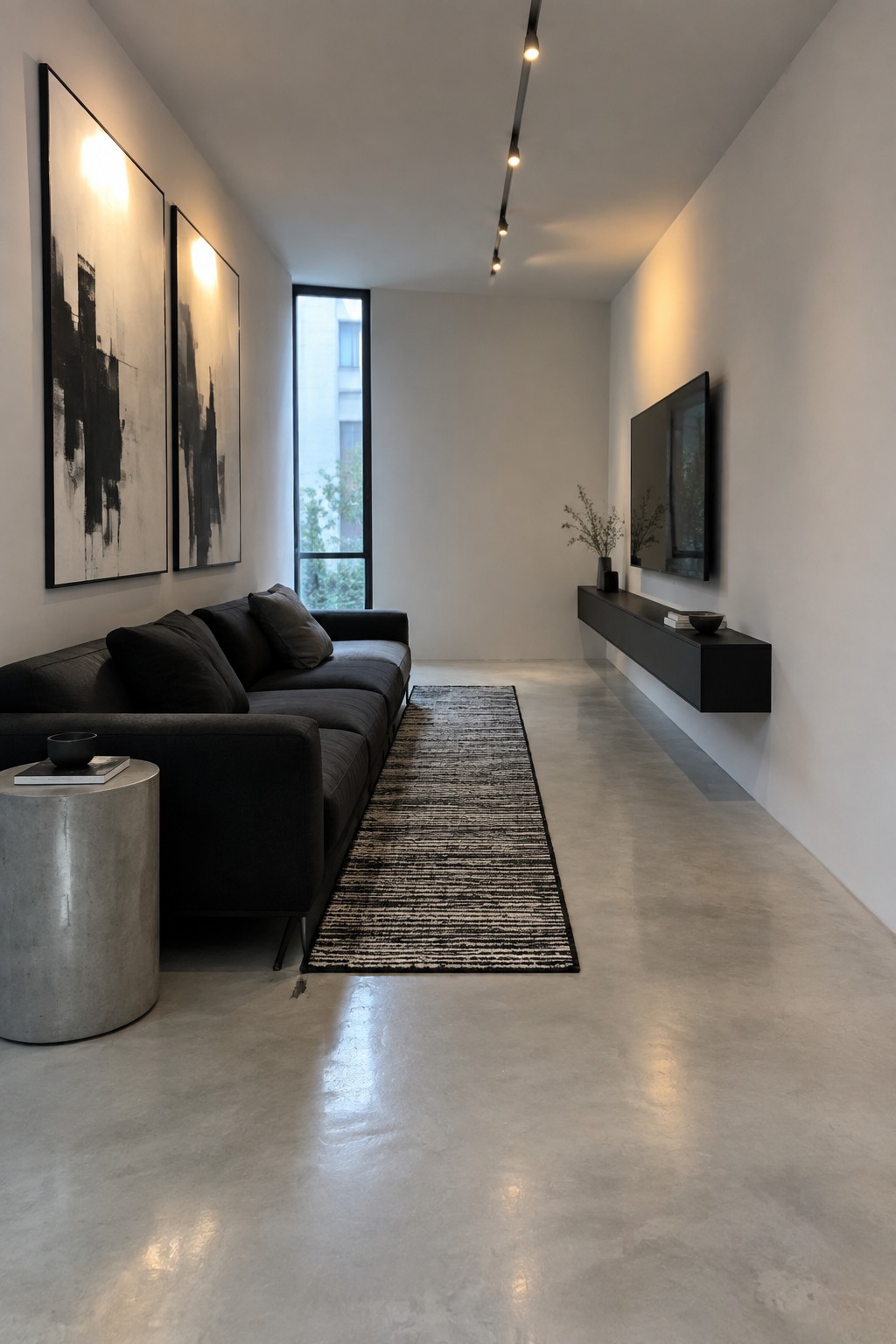
In narrow living rooms, a long runner rug gives the space a clear path without crowding the floor. It connects the seating and other pieces while leaving open space on both sides, which helps the room feel longer instead of chopped up.
This approach works well when you keep furniture close to the walls and choose a rug that is narrow enough to leave walking room but wide enough to sit under the front legs of the sofa. It suits apartments and townhomes where the living area doubles as a walkway.
Lay a Long Runner Rug Down the Center
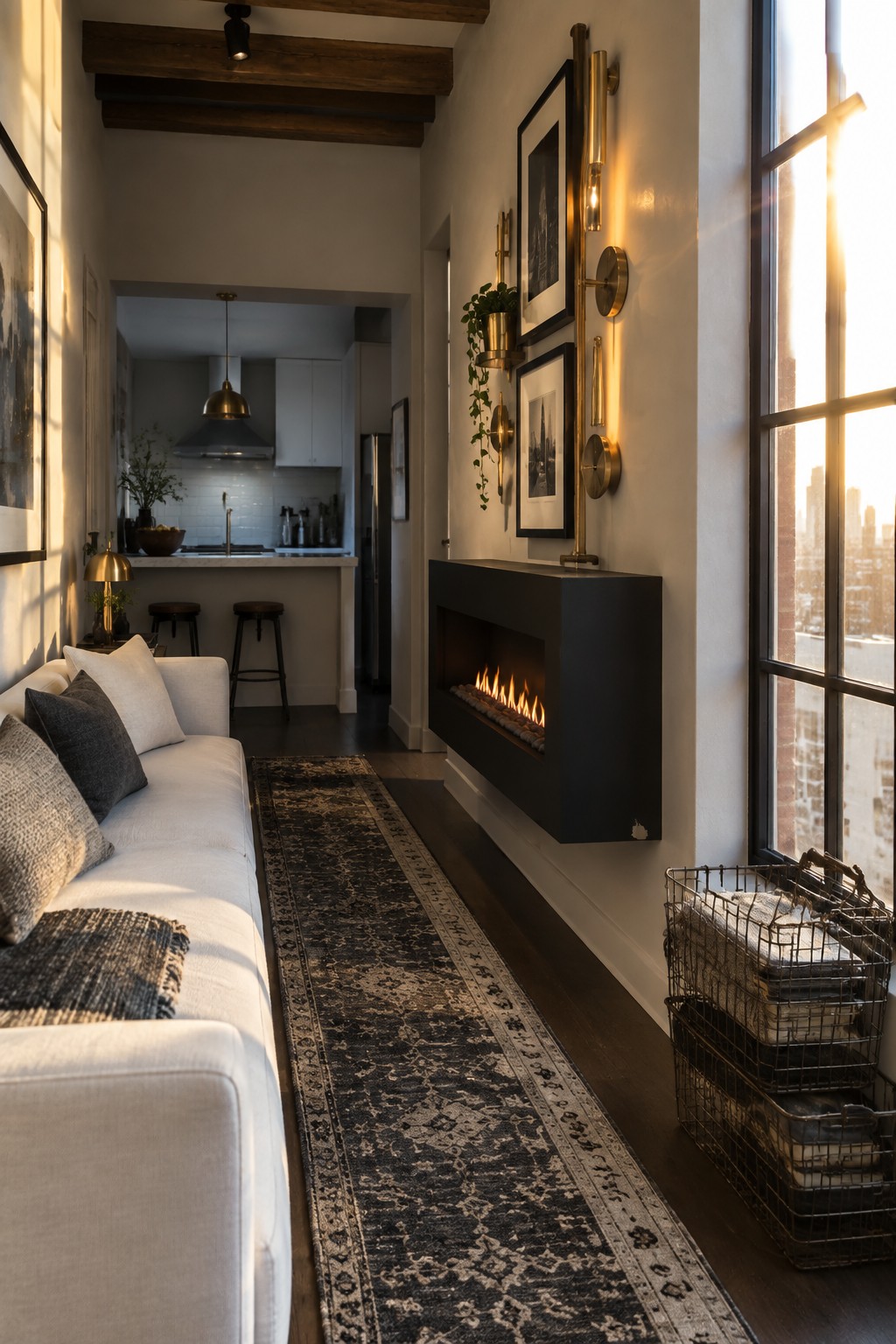
A long runner rug works well in narrow living rooms because it turns the length of the room into an asset instead of a problem. It creates a clear path through the space, keeps the sides open for seating, and stops the room from feeling chopped up by smaller rugs that would fight the shape.
Place the runner so it runs wall to wall or nearly so, leaving just enough room on each side for a sofa or chairs. This setup suits older homes, apartments, or any narrow floor plan where you need to keep traffic moving without crowding the walls. Stick with a simple pattern that does not fight the room’s shape.
Place a Sofa Along the Long Wall
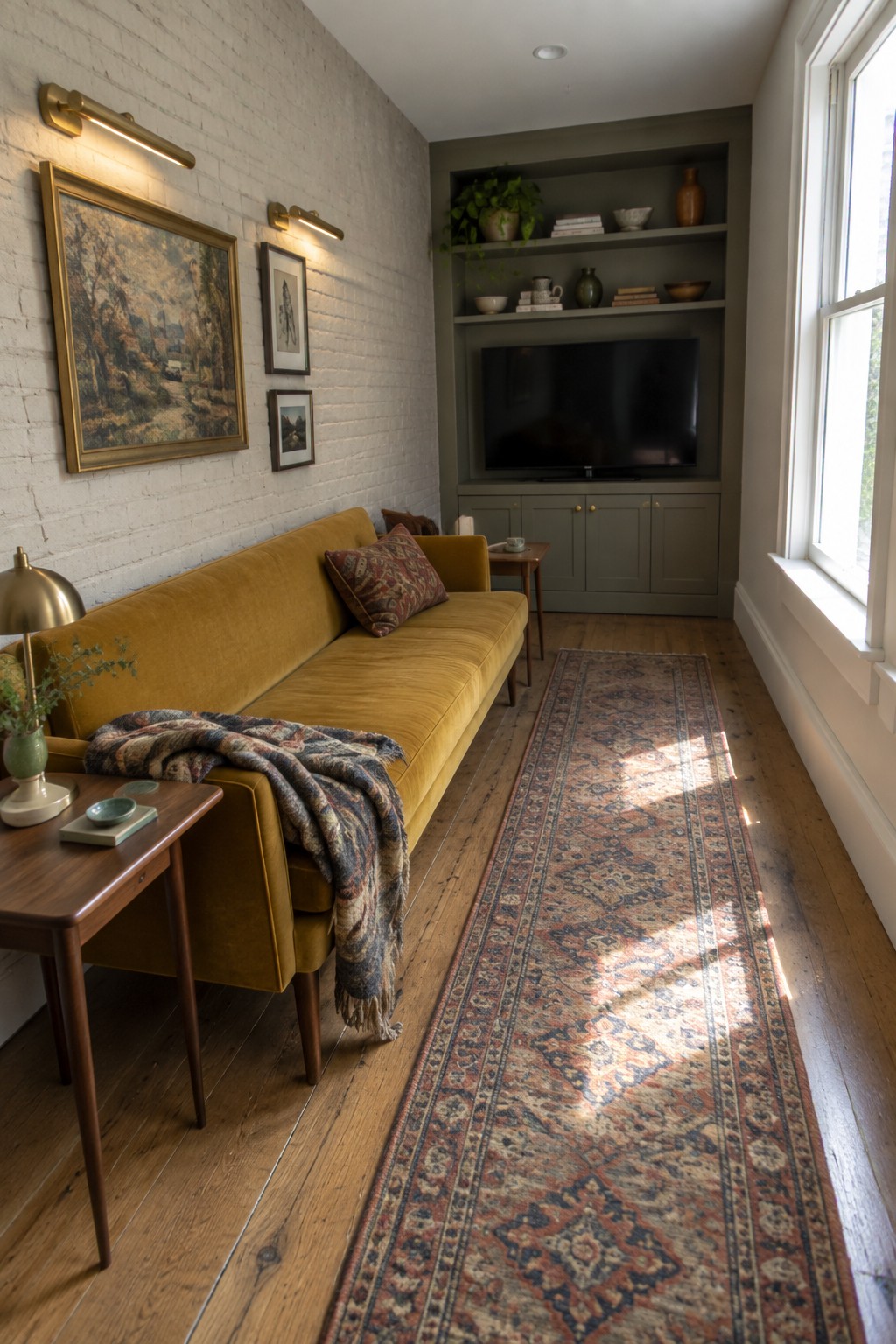
In a narrow living room, the simplest way to keep the space usable is to set the main seating piece right against one long wall. This leaves a clear path down the room and stops the furniture from breaking up what little floor area there is.
A runner rug then helps mark the seating zone without spreading out too wide. The approach works best in older apartments or row houses where rooms run long rather than wide, and it avoids the need for bulky pieces that would crowd the middle.
Built-In Bench Seating For Narrow Living Rooms
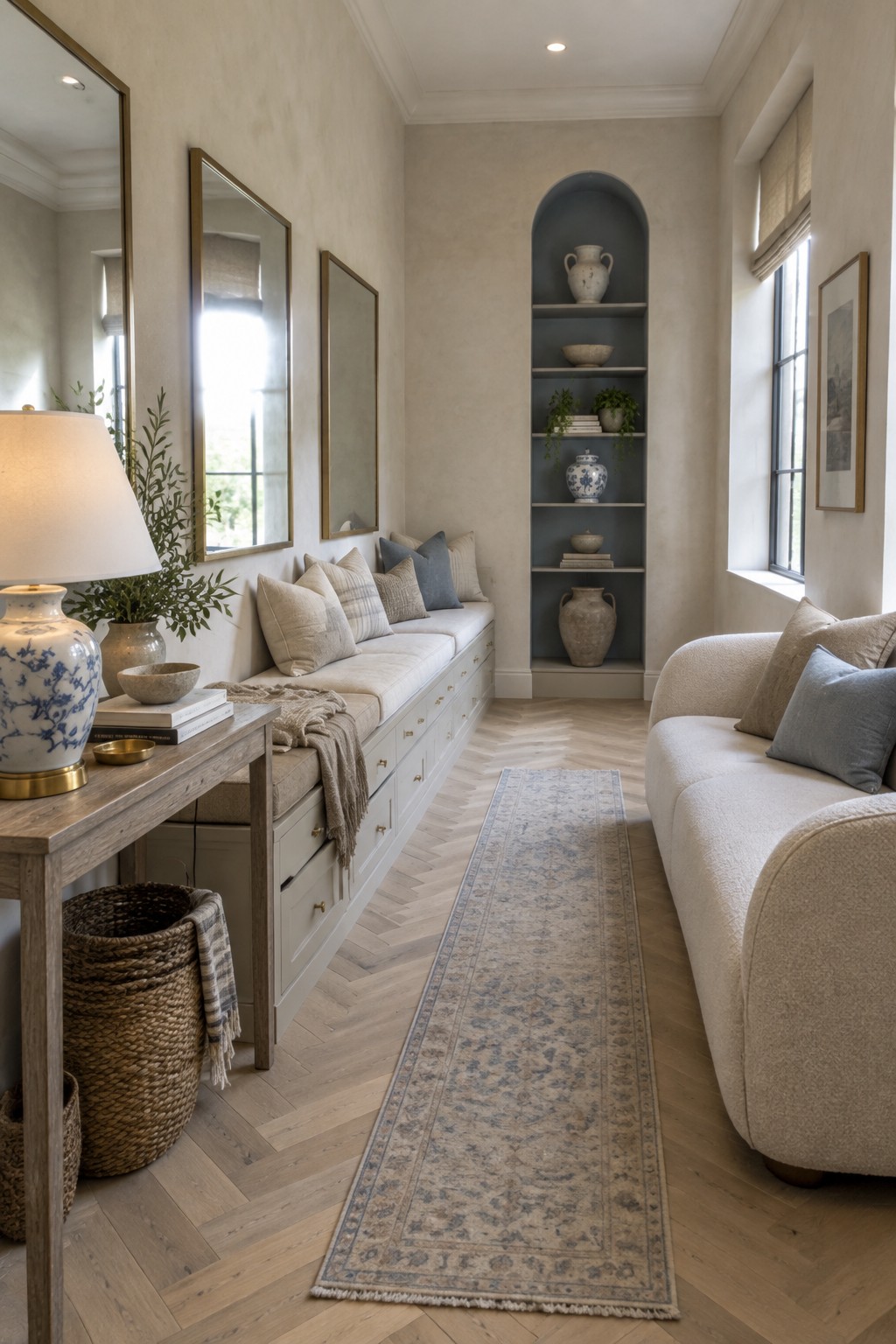
A built-in bench along one long wall gives you seating and storage without eating into the middle of a narrow room. The drawers underneath hold everyday items so the floor stays clear and the space feels more open.
This works best in slim living rooms or entry areas where you need extra seats but cannot fit a full sofa. Keep the bench depth around 18 inches and paint it to match the walls so it blends in rather than breaking up the room.
Add A Window Seat For Seating And Storage
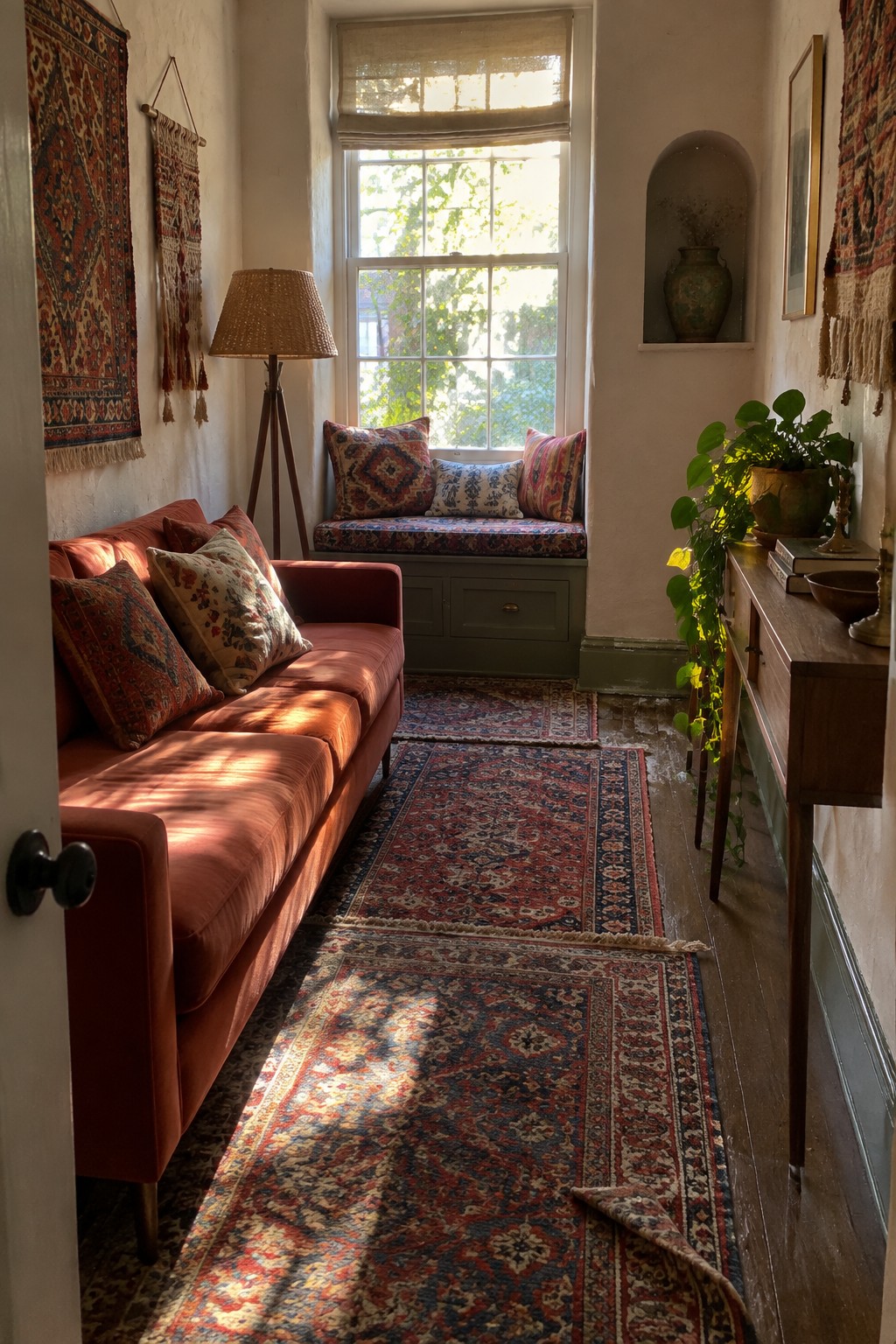
A window seat fits neatly into the end of a narrow room and turns that space into usable seating without pushing anything else out of the way. It keeps the floor clear for walking through and adds a quiet spot to sit or rest things.
This works best in older homes or apartments where the window already has some depth. You can store extra pillows or blankets inside the bench and keep the main path open so the room still feels easy to move around in.
Long Low Consoles Keep Narrow Rooms Open
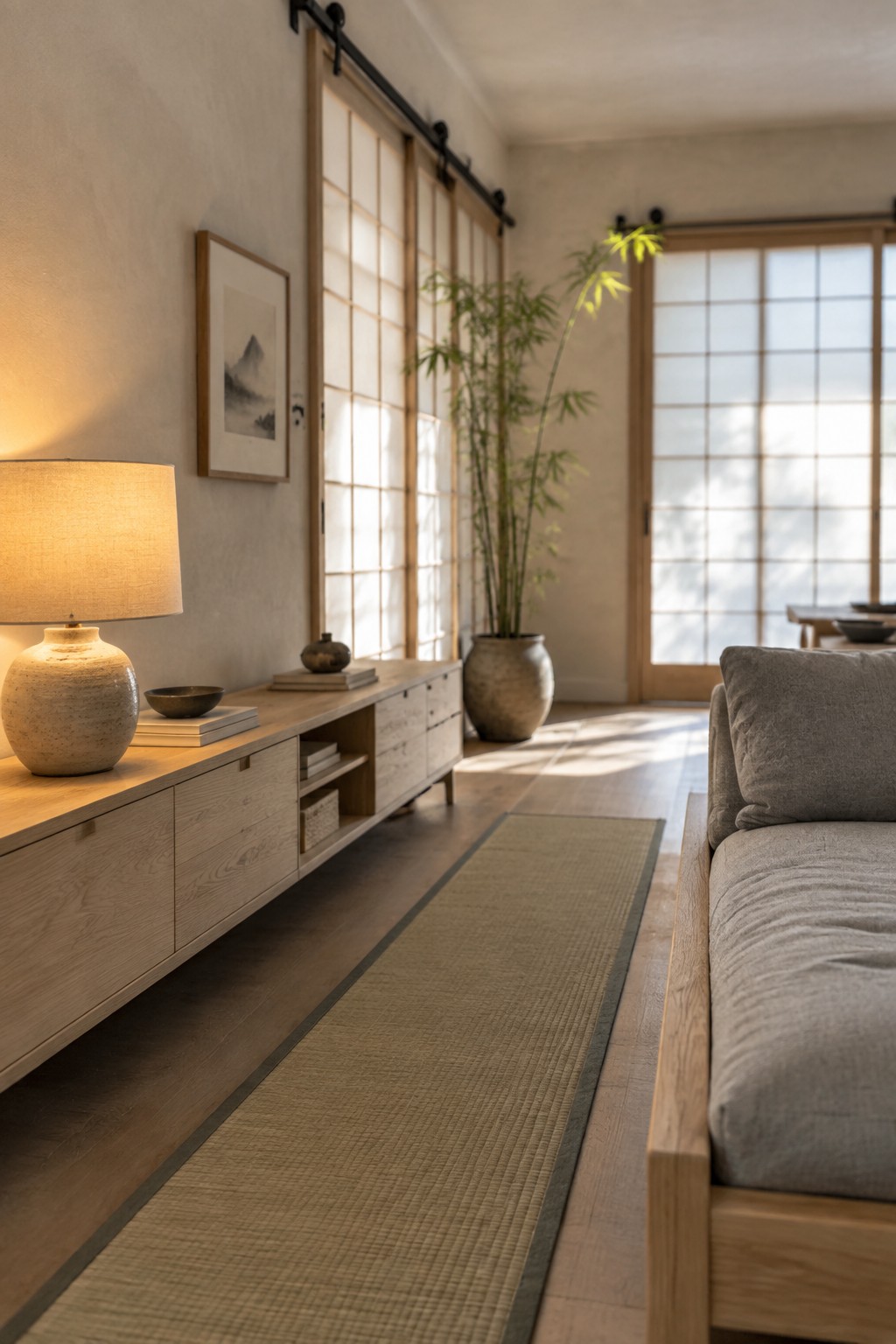
A long low console along one wall adds storage and display space without crowding the floor. In narrow living rooms this keeps the center clear and helps the space feel less cramped.
It works best when you need surface room for lamps and everyday items but want to avoid tall pieces that block light or movement. Pair it with a simple runner rug to mark the walkway and keep the top fairly clear so the room stays easy to move through.
Use a Runner Rug to Organize a Narrow Room
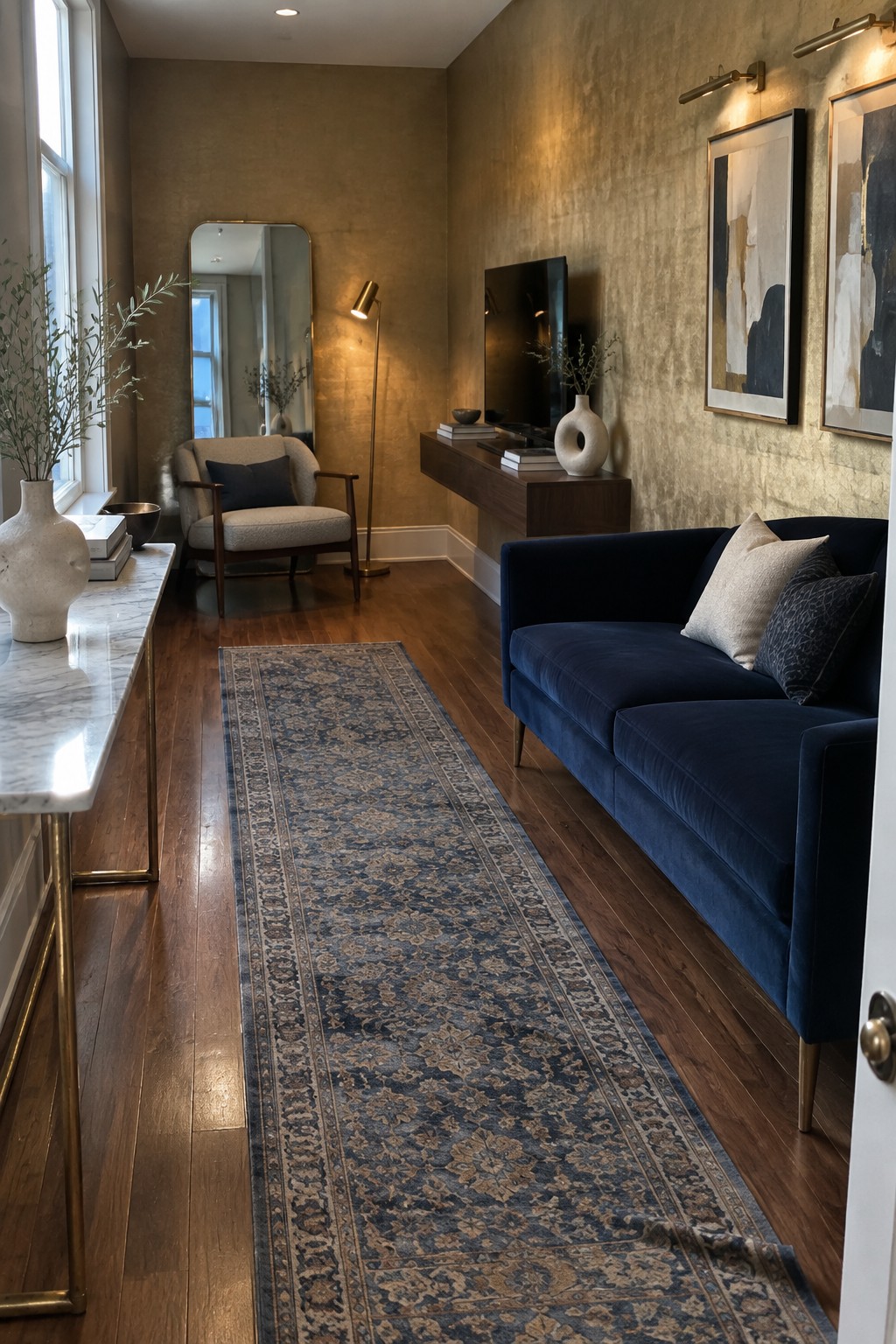
A long runner rug works well in narrow living rooms because it creates a clear path and stops the space from feeling scattered. It pulls the eye forward, which makes the room seem longer instead of pinched. In this layout the rug sits centered on the hardwood and runs nearly the full length, keeping the furniture on either side from crowding the middle.
This approach suits small apartments or older homes where the living room is basically a corridor. Keep the rug width narrow enough to leave walking room on both sides, and choose a pattern that is not too busy so the space still feels calm. Avoid rugs that stop short of the seating area, since that can break the flow you are trying to create.
Use a Long Slim Table to Open Up a Narrow Room
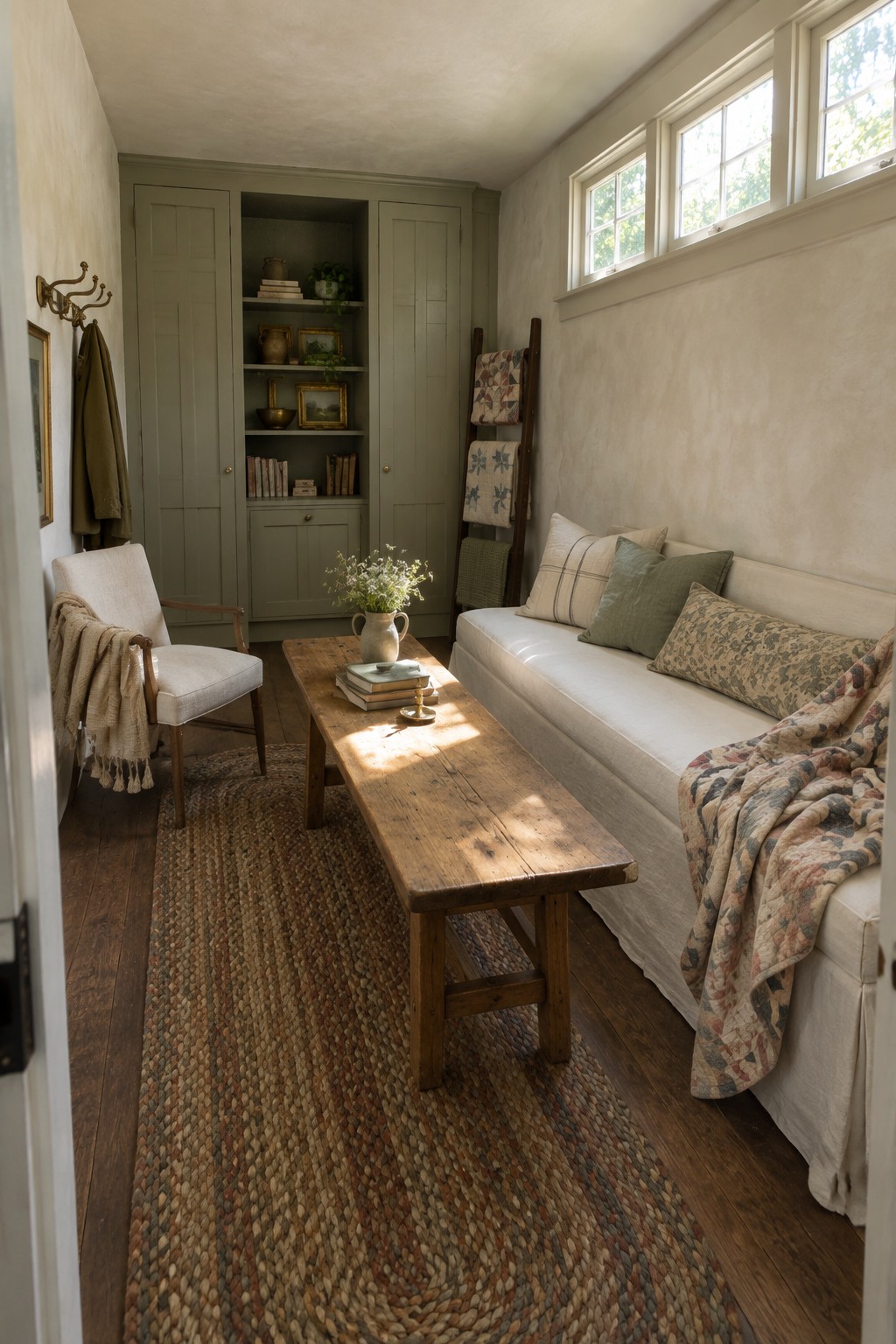
A long narrow table works well when the room is tight on width but has some length to work with. It creates a clear path on both sides so people can move through easily without bumping into furniture.
This setup fits older homes or small cottages where the living area runs along one wall. Keep the table under about 18 inches wide and pair it with low seating like a daybed on one side so the space still feels open.
Built-In Shelving Around the Fireplace
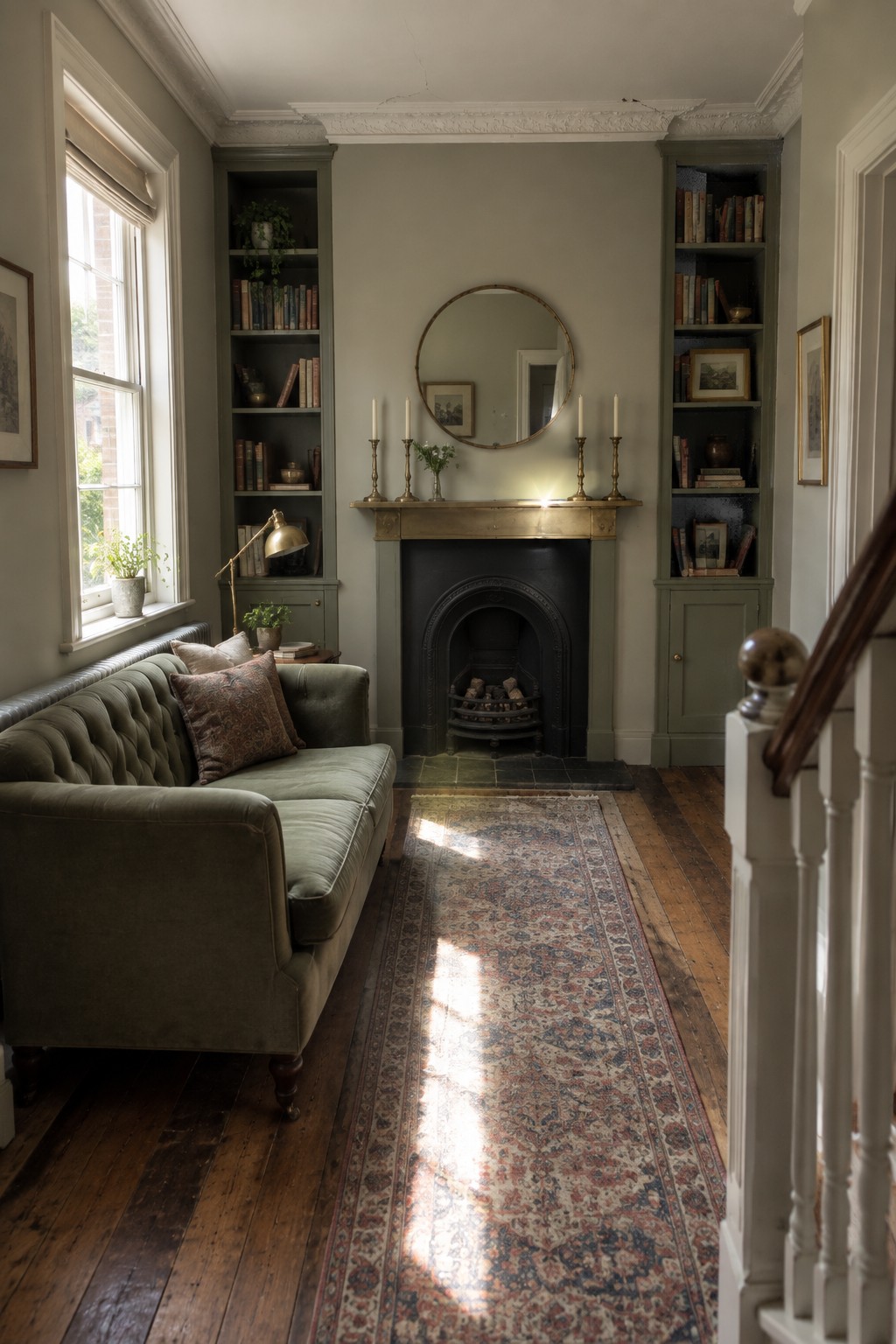
Built-in bookshelves on both sides of a fireplace give a narrow living room useful storage without eating into floor space. The shelves fill the wall height and keep the room from feeling empty along the sides, which is common in long, tight layouts.
This setup works best in older homes or any small space where you already have a fireplace or a strong focal wall. Keep the sofa along one long wall and let the built-ins handle books, lamps, and a few small plants so the middle stays open for walking through.
Built-In Bench Seating Works Well In Narrow Rooms
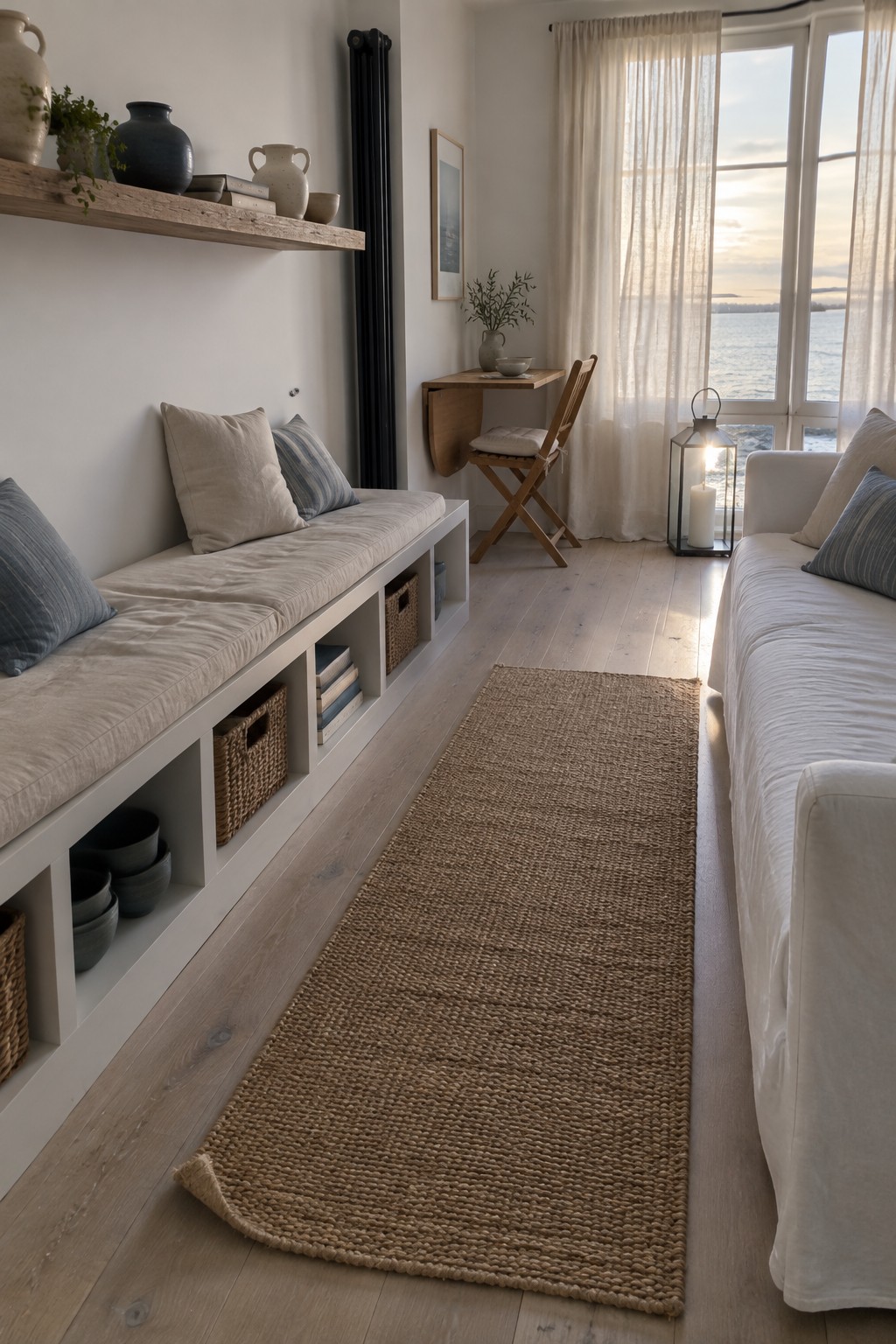
A built-in bench along one long wall gives you seating and storage without pushing furniture into the middle of the floor. In tight rooms this keeps the walkway clear and makes the space feel less cramped than it would with two full sofas facing each other.
It suits older homes or apartments where the living room is long and narrow. Keep the bench depth shallow, around 16 to 18 inches, and use the cubbies for baskets or stacks of books so the surface stays clear for sitting.
Lay a Long Runner Rug
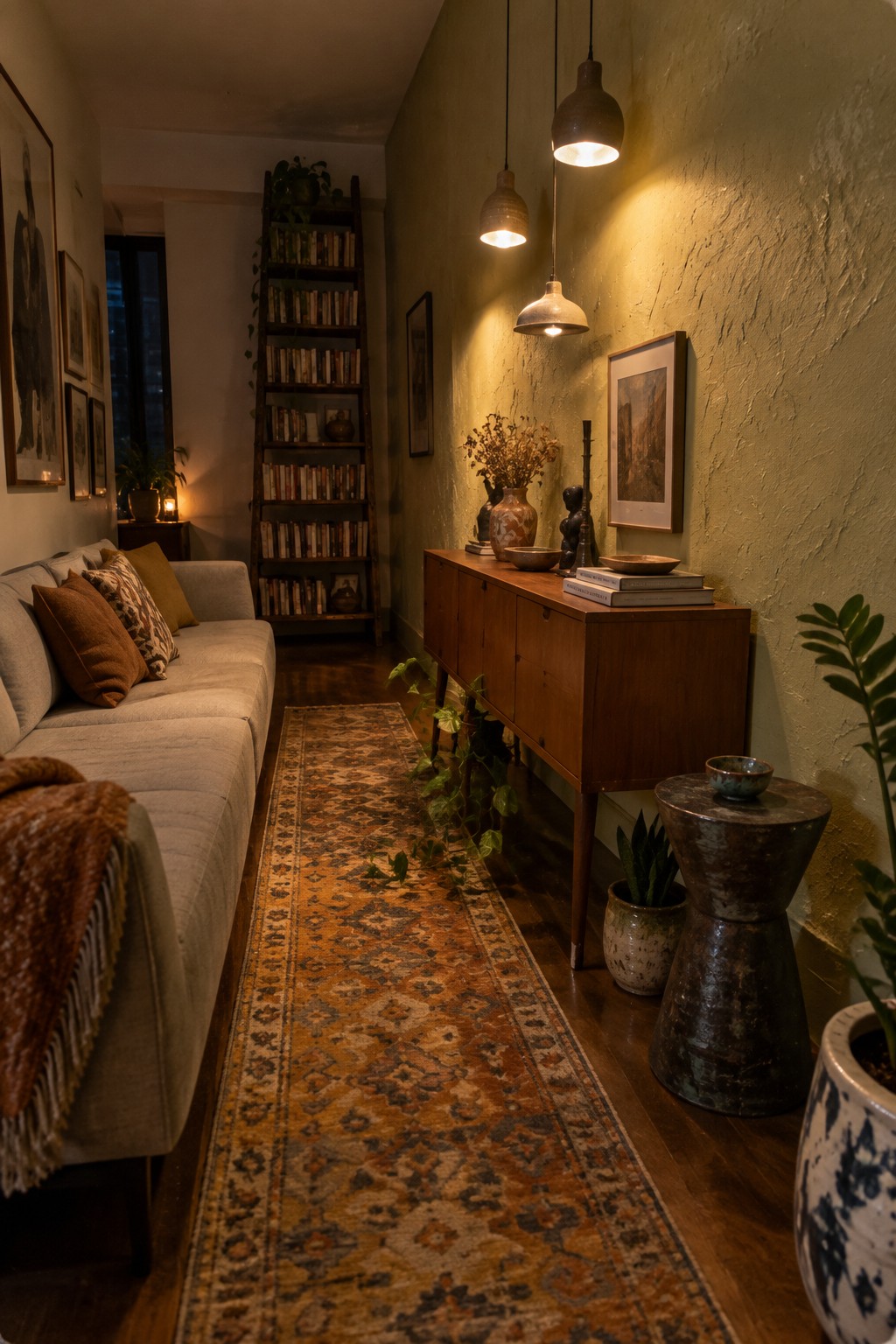
A long runner rug helps a narrow living room feel more like a real room instead of a walkway. It gives the space a clear path and pulls the eye from one end to the other without adding bulk.
Keep the rug centered with seating along one wall and a low cabinet or table along the other. This works best in older homes or apartments where the room is long and tight, and it leaves the floor open for easy movement.
Line One Long Wall With A Daybed
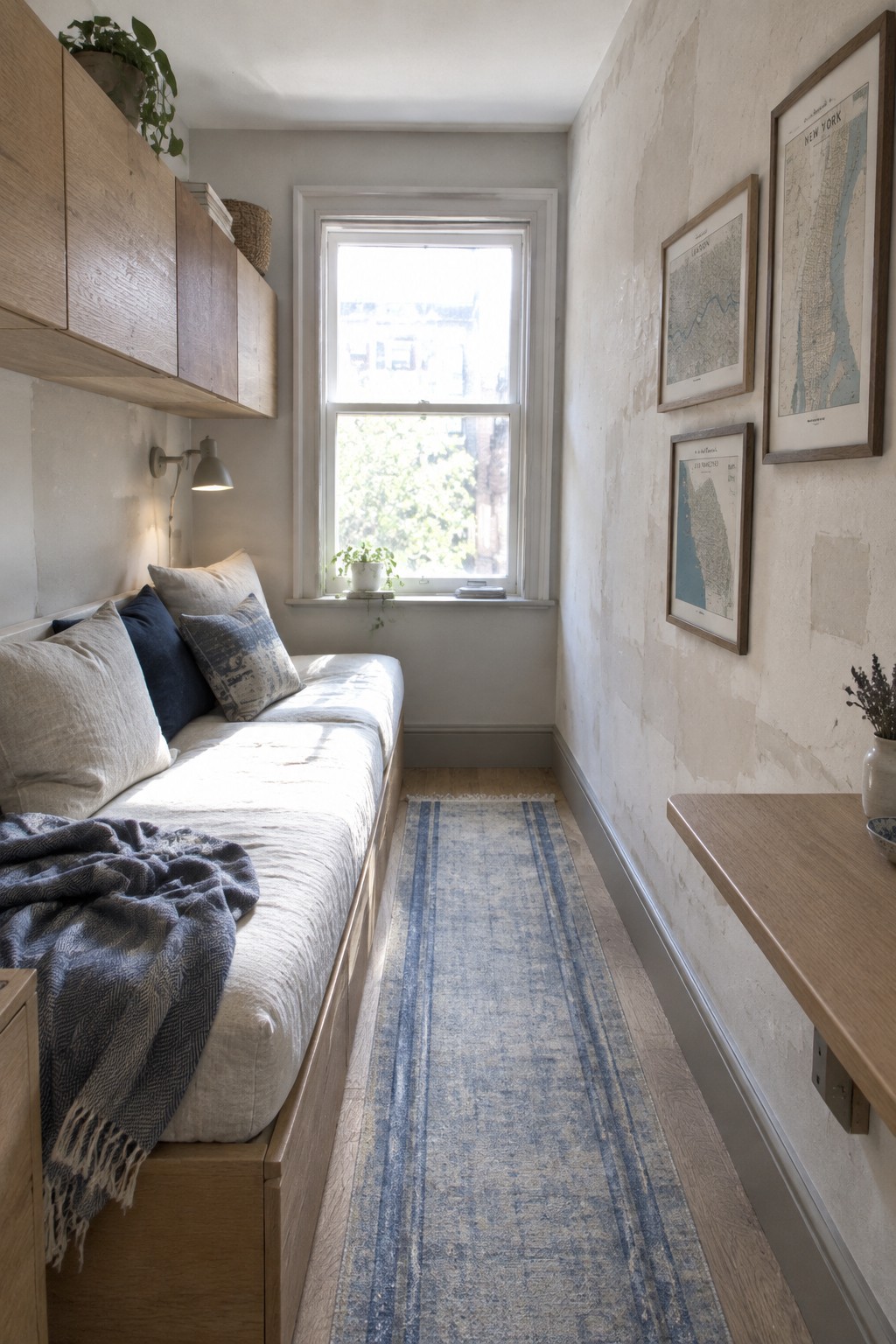
In a narrow living room, running a daybed along the longest wall turns wasted length into something useful. It gives you a place to sit, lounge, or sleep without pushing furniture out into the middle of the room and making the space feel tighter.
This works best in older apartments or homes where rooms run long and thin. Add a few pillows for comfort, use the space underneath for storage bins, and keep the opposite wall clear or fitted with something slim so the room still feels open.
Frequently Asked Questions
Q: How do I arrange seating so people can walk through easily? A: Line up a slim sofa and chairs along the longer walls. Leave the center open as a straight path. People move through without squeezing past anything.
Q: Can mirrors really open up a narrow room? A: Hang one large mirror on a short end wall. It bounces light around and adds depth. One piece keeps things simple without clutter.
Q: What storage works when floor space is tight? A: Mount a few floating shelves on the walls. They hold books or decor and leave the floor clear for walking. Skip anything bulky that sits down low.
