

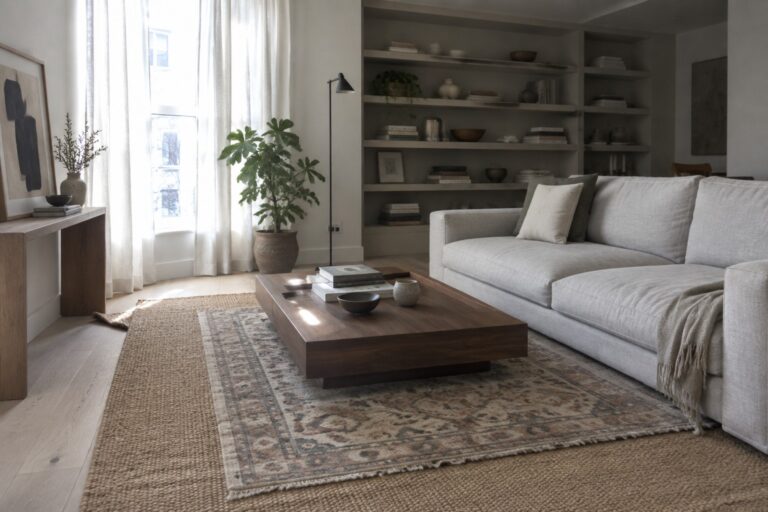
I’ve found that rooms with lower furniture tend to feel more grounded once you start living in them day to day.
The rugs on top then add a sense of warmth that keeps the space from turning cold or sparse.
What catches my attention right away is whether the seating actually invites people to stay awhile rather than just look neat.
Scale changes the feel fast.
A few of these setups might be worth testing in my own space to see how they hold up with regular use.
Layer Rugs With Low Furniture
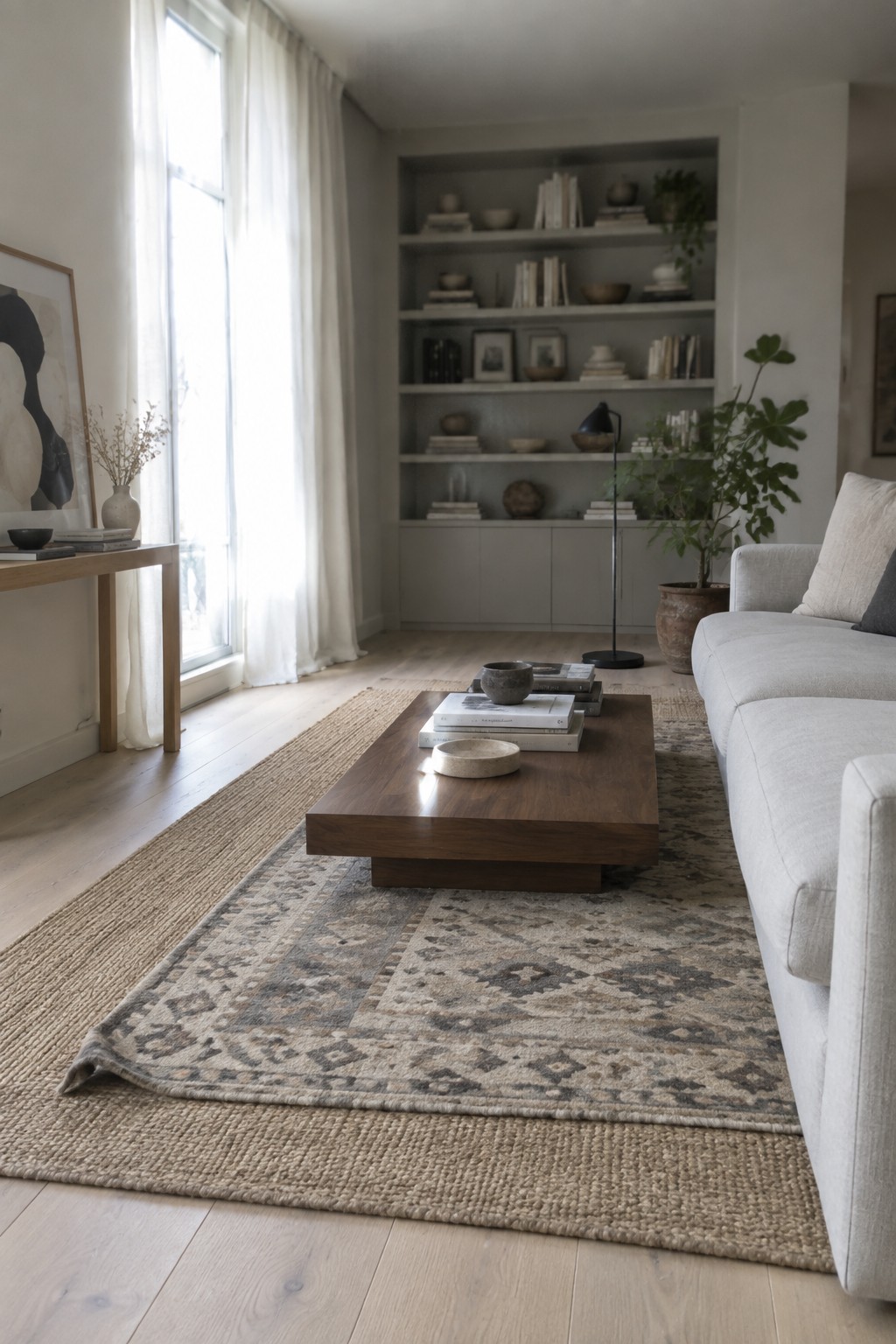
Layering rugs gives the room a soft base without adding height or clutter. The low coffee table sits right on the top layer, so the whole setup stays grounded and easy to move around. This works because the bottom rug stays simple and the one on top carries the pattern.
It suits living rooms that already feel open and light. Keep the bottom layer a natural weave that runs wide, then add a smaller patterned rug in the middle. Make sure both rugs clear the legs of the sofa and table so nothing looks cramped.
Layer Rugs Over a Simple Base
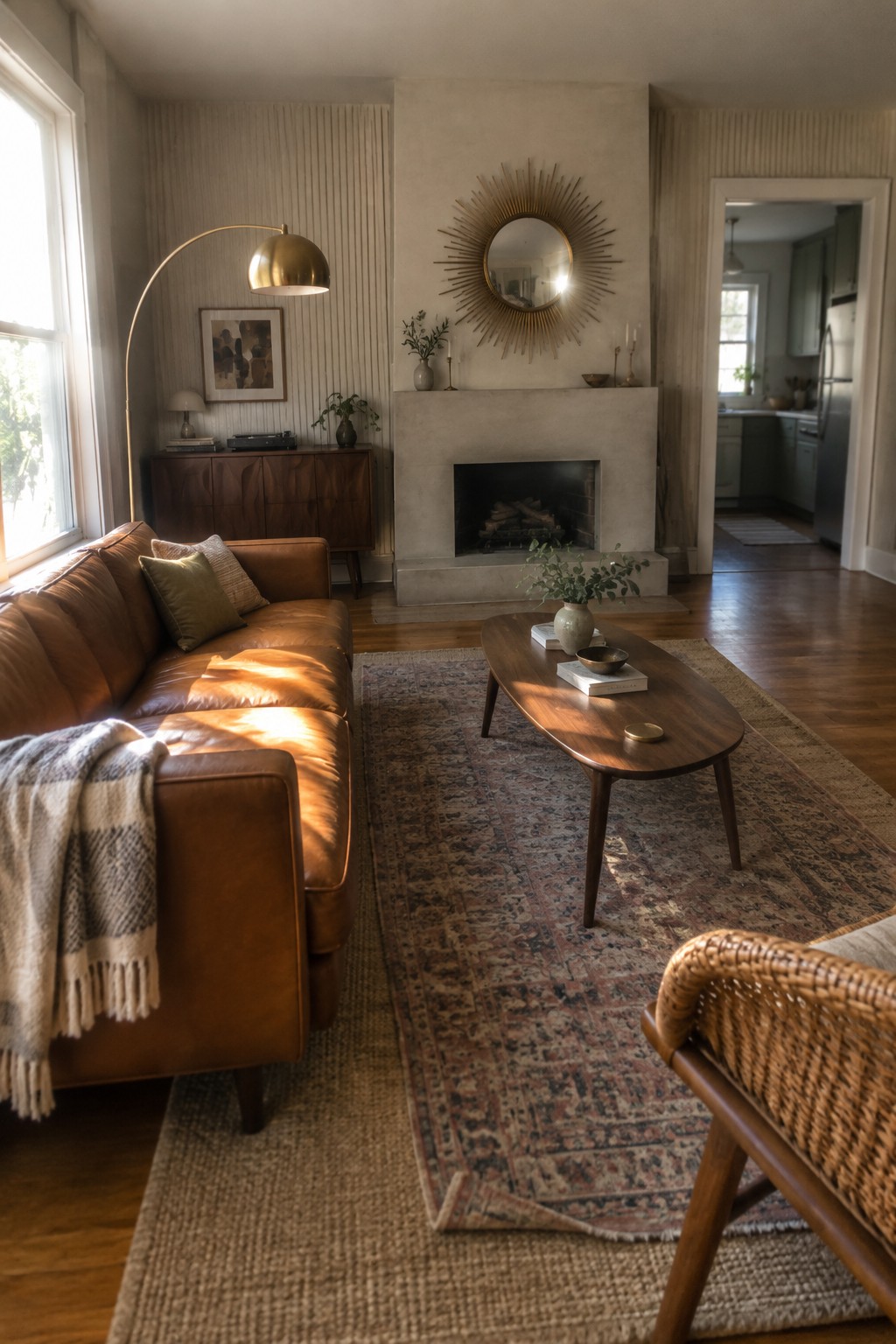
Layering a patterned rug over a larger natural fiber one keeps the floor interesting without adding height. It works nicely with low furniture because nothing blocks the view across the room or makes the seating feel boxed in. The two rugs together also soften the wood floor and pull the seating area together.
This approach suits rooms with open sight lines and simple wood tones. Keep the bottom rug neutral and a bit larger so the top one can shift slightly over time without looking messy. It is an easy change if you already have a low table or sofa and want more warmth underfoot.
Low-Profile Seating With Natural Textures
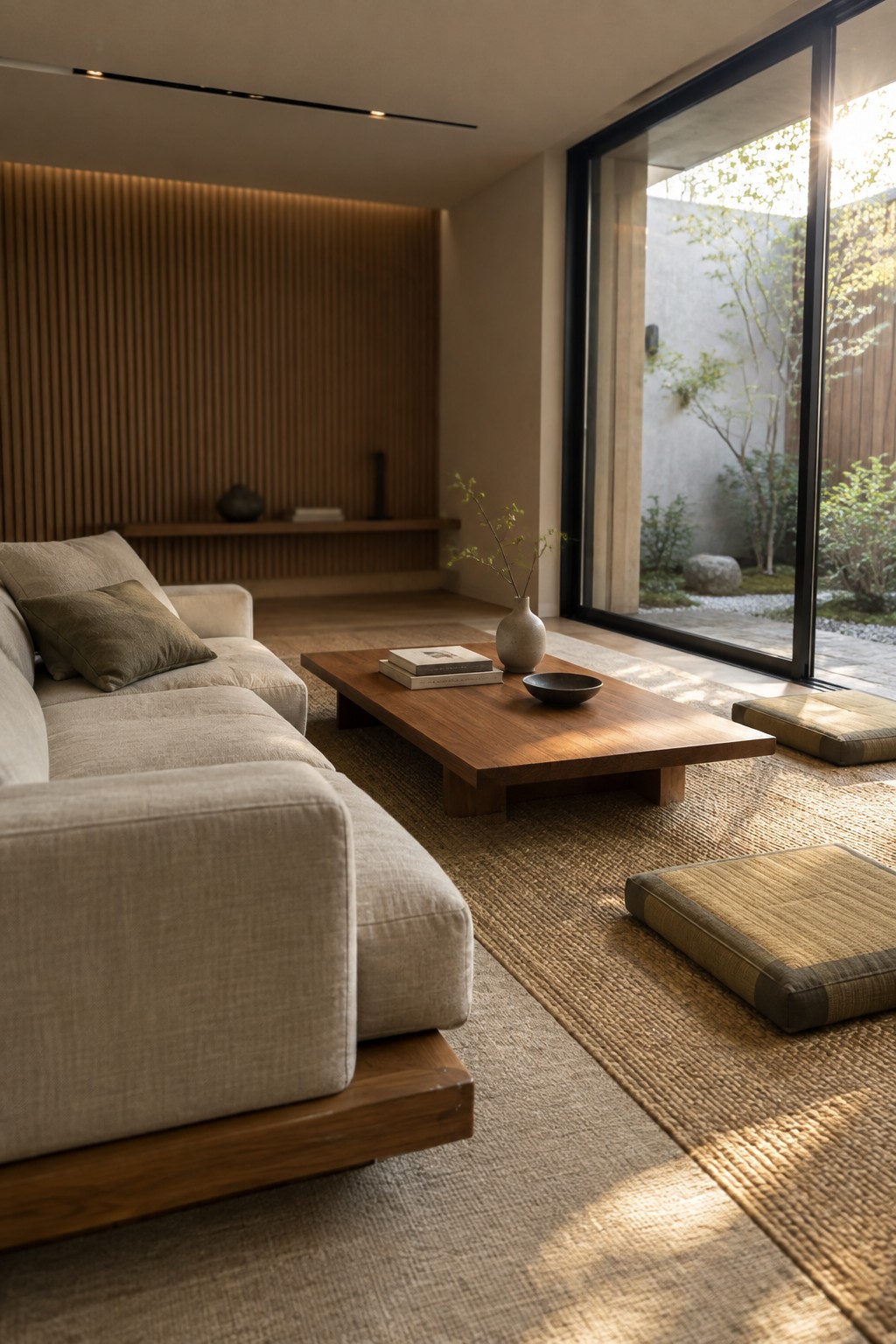
Low furniture keeps a living room feeling open and calm instead of crowded. When you pair it with a big base rug and then add smaller mats or cushions on top, the whole space feels softer and more grounded without needing much else.
This works best in rooms that get good natural light and connect to the outdoors. Use natural textures on the rugs so the layers read clearly, and keep the sofa and table heights similar so nothing stands out too much.
Layer Rugs Over a Natural Base
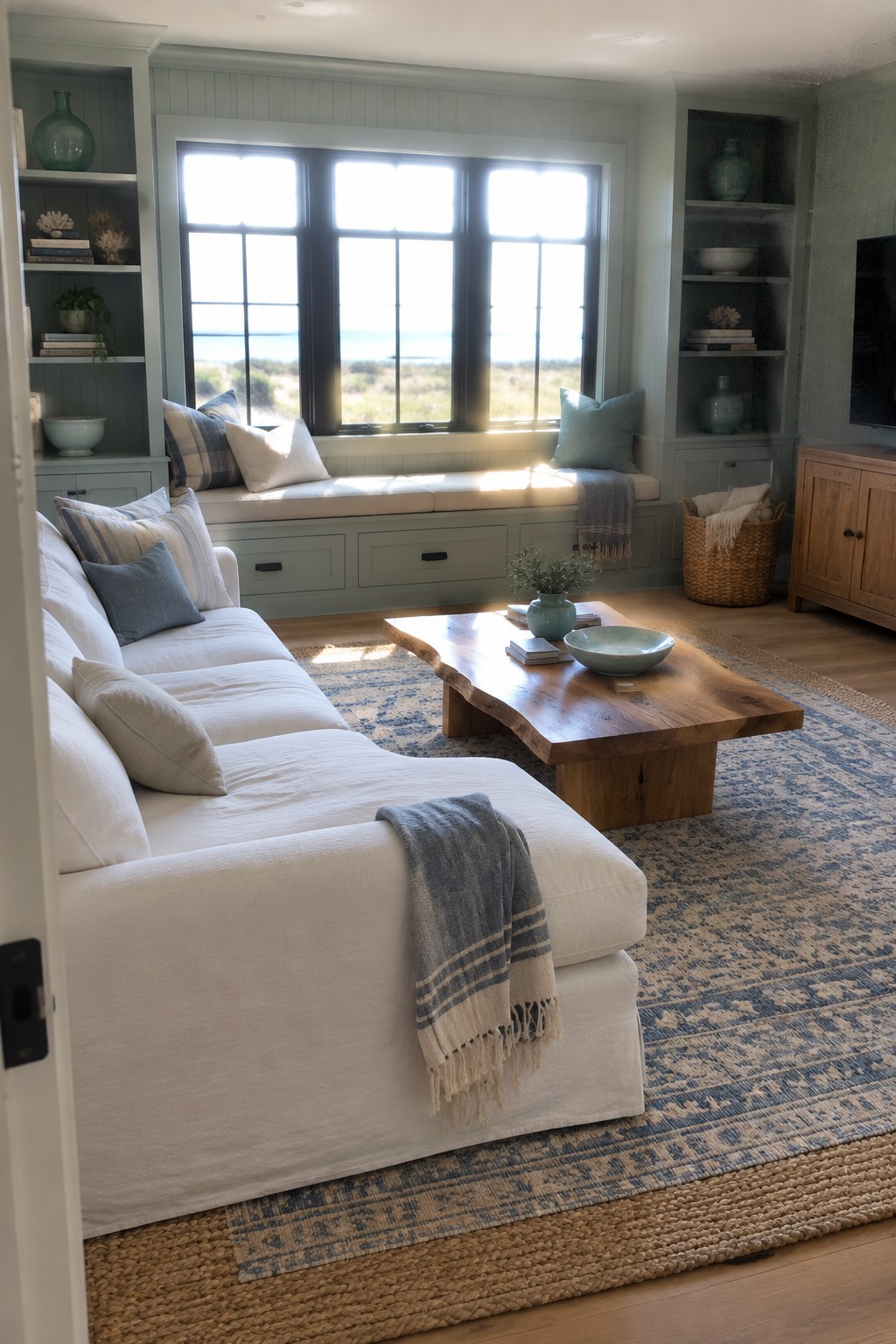
One simple way to add warmth to a living room is to layer a patterned rug over a larger natural fiber one. The bottom layer spreads across more of the floor while the top rug stays centered under the seating. This approach works well with low-profile pieces because it adds texture without making the furniture feel bulky or the room feel closed in.
It suits spaces that already have wood floors and simple furniture shapes. Keep the bottom rug a few feet larger on all sides and choose a top layer with soft colors that still show some of the natural weave underneath. This keeps the look relaxed rather than overly styled.
Ground a Rust-Colored Sofa With Patterned Rugs
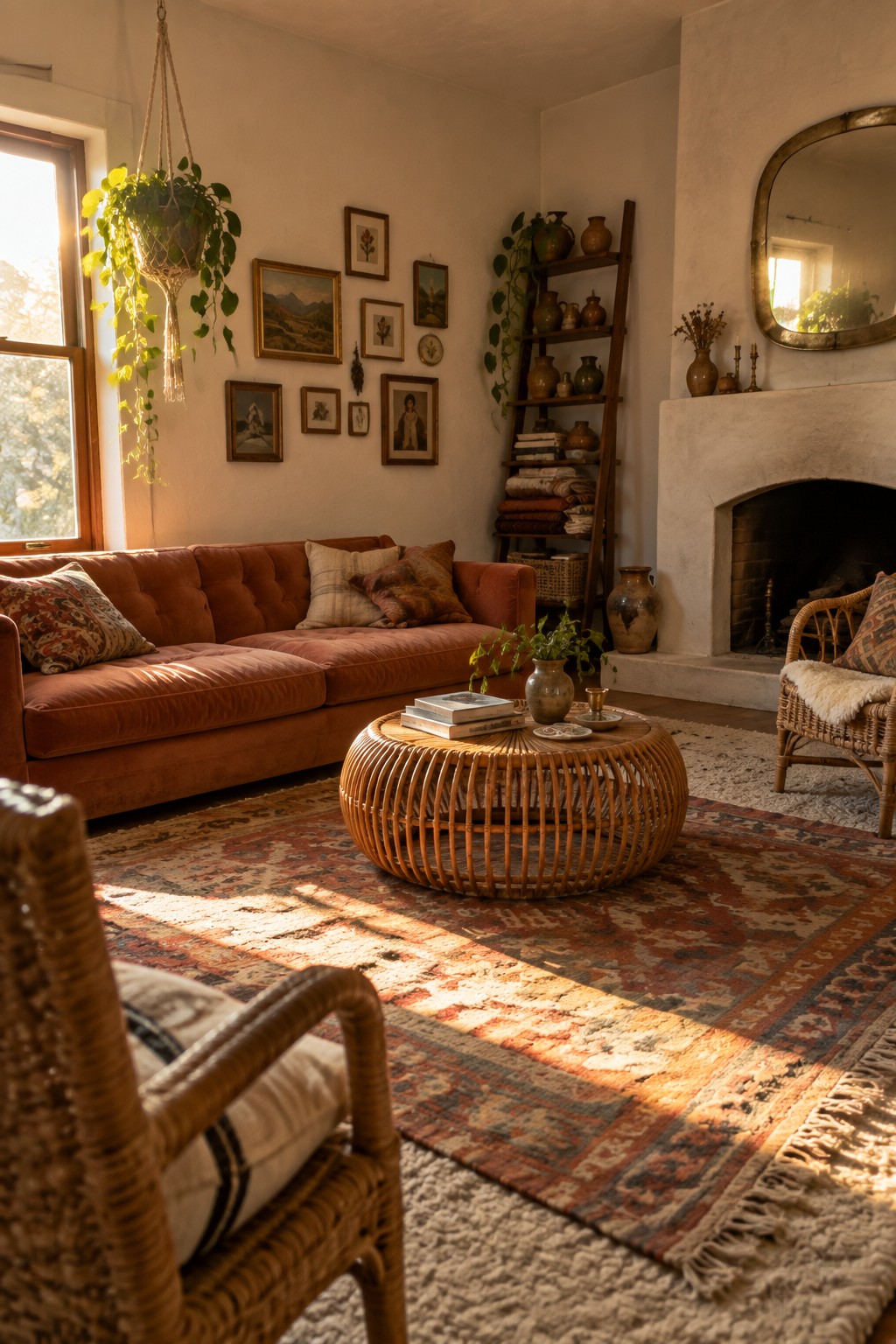
Low furniture sits better when the floor has some weight to it. Layering a patterned rug over a lighter natural one keeps the whole seating area from feeling like it is floating. The rugs add softness underfoot and help the low pieces feel more settled without raising the overall height.
This approach works in rooms that already have simple furniture lines and neutral walls. Keep the bottom layer plain so the top pattern can stand out, and make sure both rugs are large enough to sit under the front legs of the main seating. It is an easy change that adds warmth without crowding the space.
Layer Rugs to Add Texture
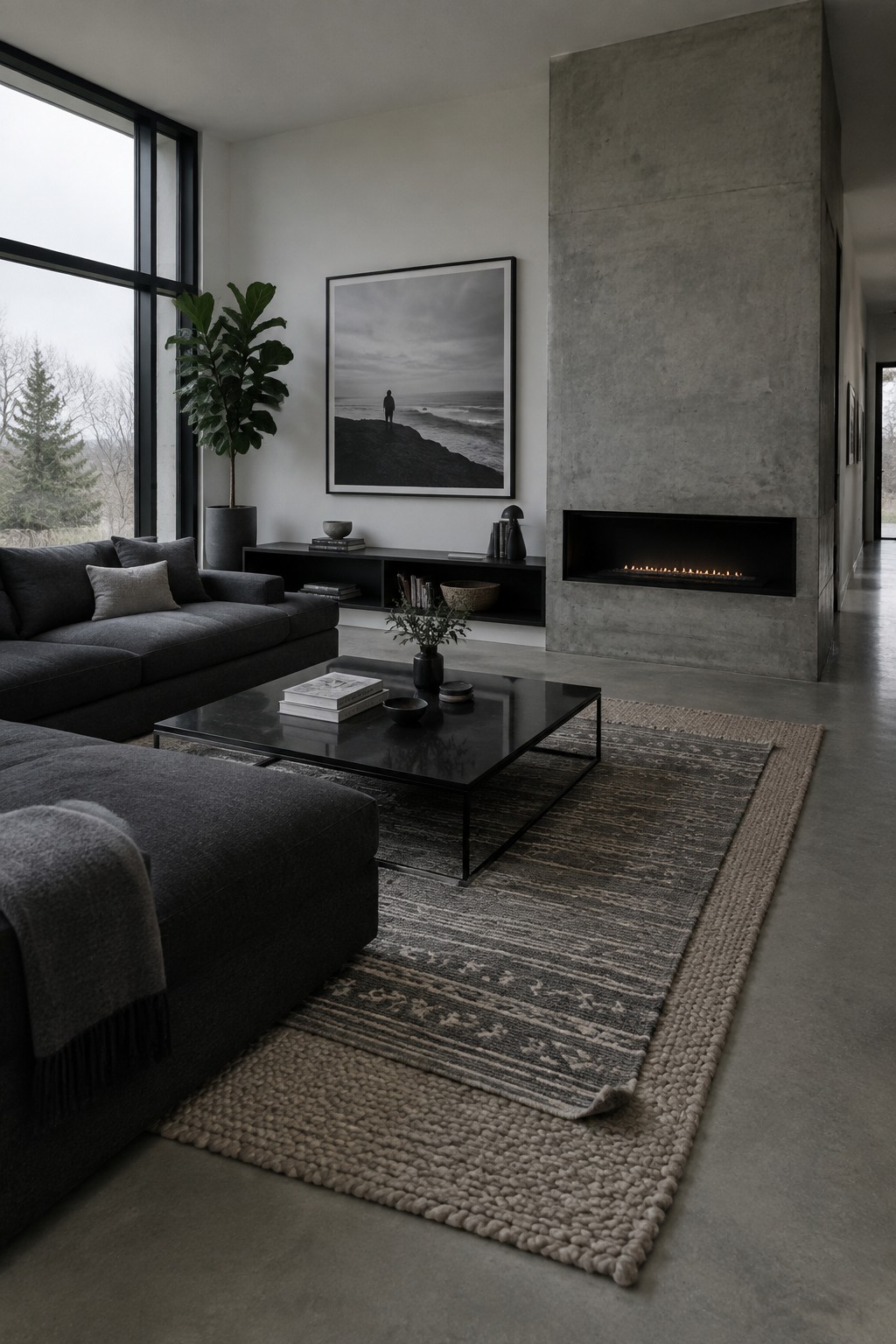
Layering rugs gives a living room more depth without adding extra furniture. A large base rug in a neutral tone can sit under everything, while a smaller patterned one on top defines the seating area and brings in some contrast. This approach works well with low-profile pieces because it keeps the focus on the floor rather than competing with taller items.
It suits open spaces with hard floors like concrete, where a single rug can feel too flat. Choose textures that differ slightly so the layers show up, and keep the top rug smaller so the edges remain visible. This keeps the room feeling grounded and a little softer at the same time.
Dark Leather Seating With Bold Rug Accents
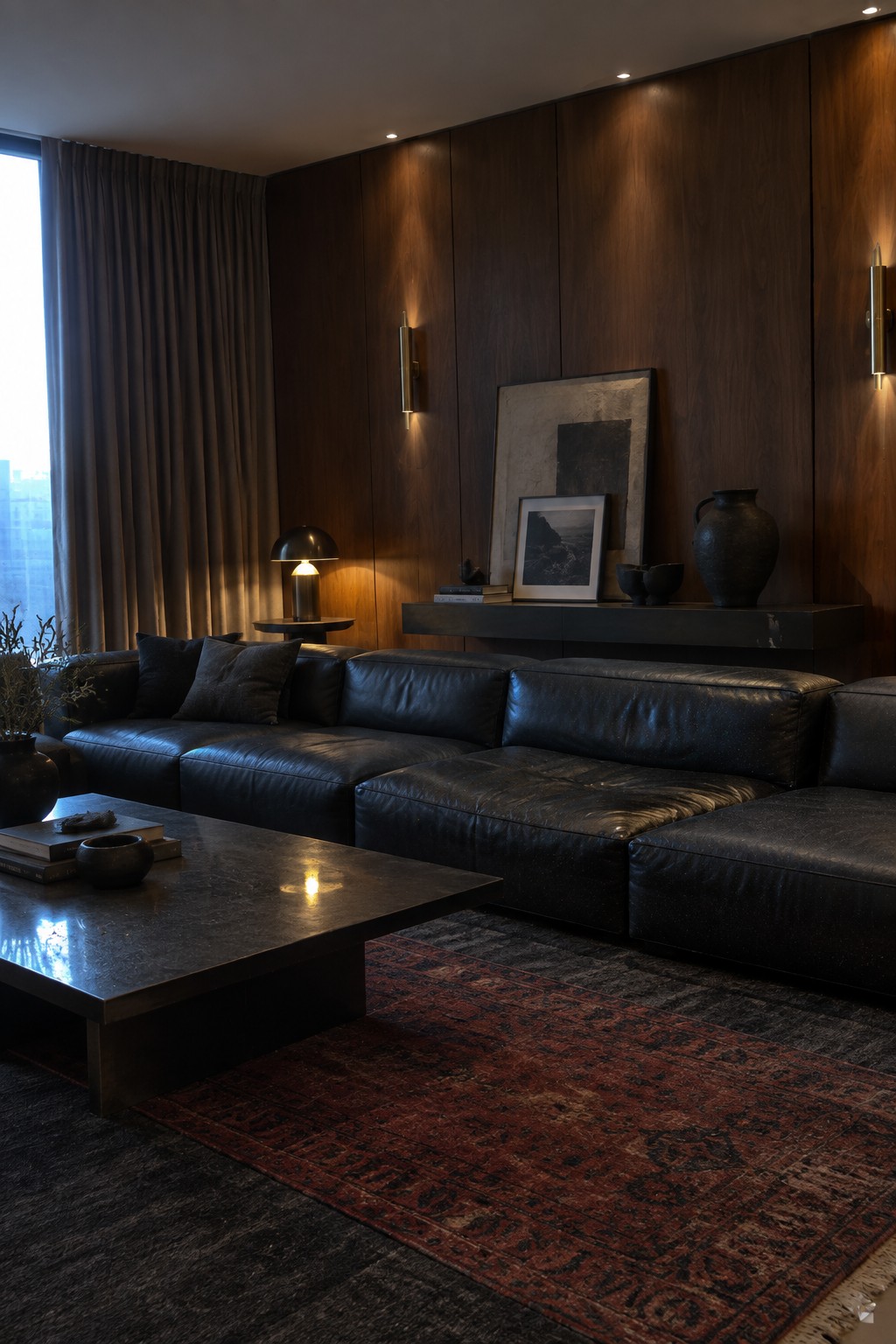
Low sofas and sectionals can make a room feel open, but they sometimes leave the floor looking bare. Layering a patterned rug over a darker base layer adds texture and keeps the low profile intact while making the seating area feel more grounded.
This approach works best in rooms with darker walls or heavy furniture like leather sectionals. Choose a base rug that blends with the floor and let the top layer bring in the main color or pattern.
Define a Neutral Seating Area With Layered Rugs
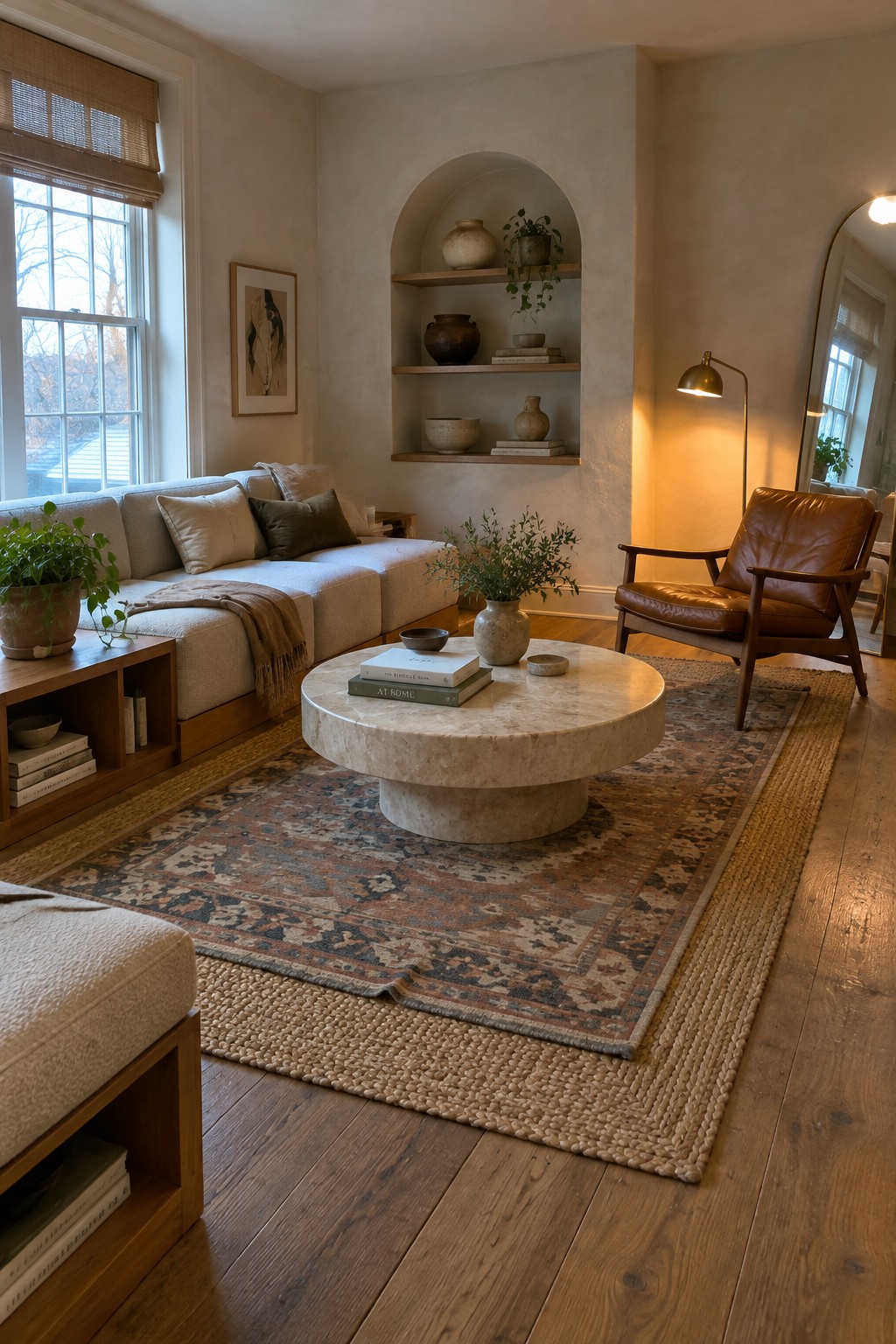
Low furniture often needs something to tie it down visually, and layering rugs does that without adding height or clutter. A simple textured base keeps the room feeling open while the top layer brings in pattern and softness right around the seating.
This works best in rooms with wood floors and a relaxed modern feel. Let the bottom rug run a bit larger so all the furniture legs sit on it, then place a smaller patterned rug slightly off center under the coffee table.
Pair Cane Chairs With Colorful Rug Layers
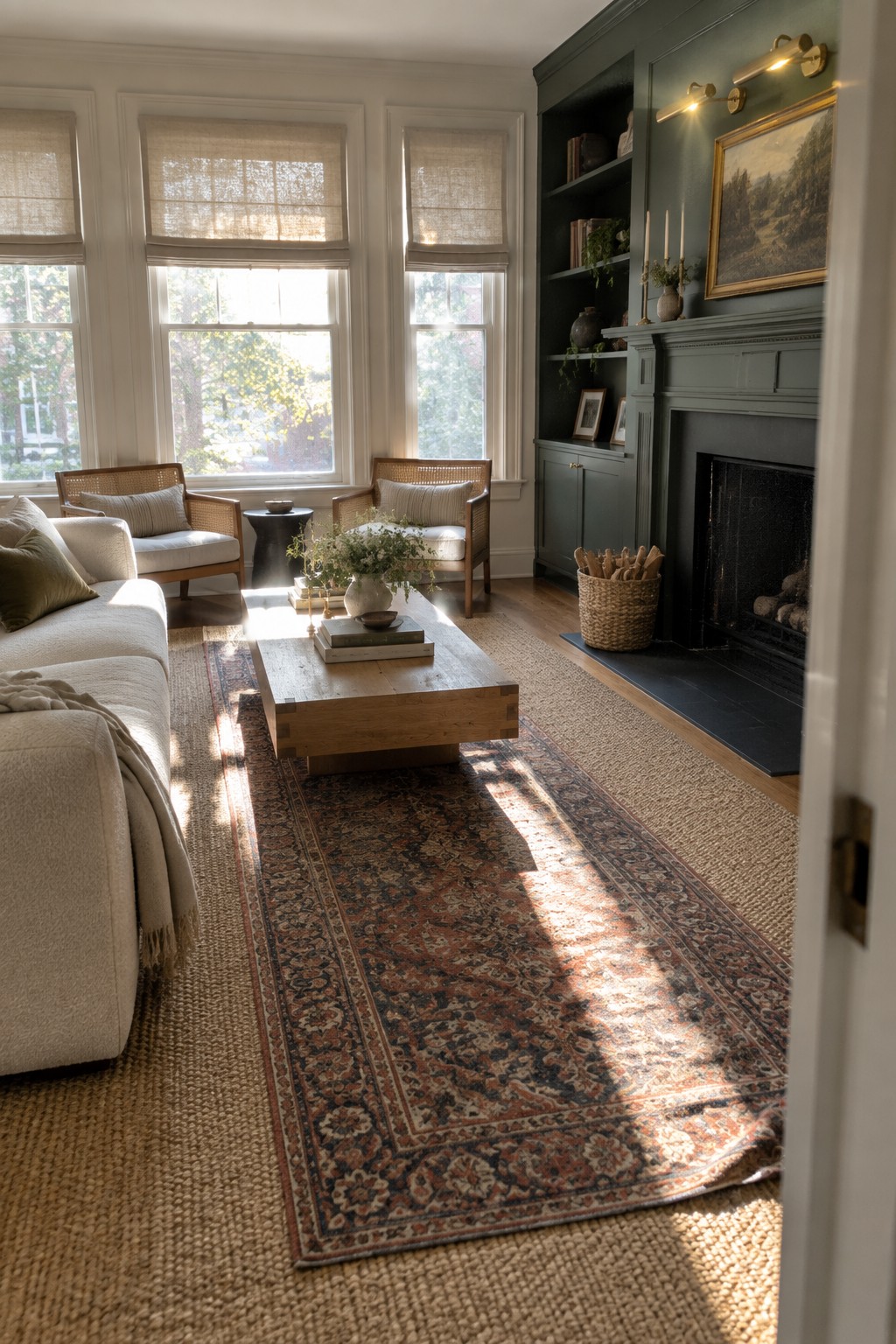
Layering a patterned rug over a larger natural fiber mat adds texture and a little color without crowding the space. The low coffee table and simple seating stay the main focus while the rugs handle the warmth and definition.
This works best in rooms with wood floors and plenty of light. Keep the top rug centered and smaller so the base layer shows around the edges, and pick patterns that stay quiet next to the furniture.
Layer Rugs Under Low Furniture
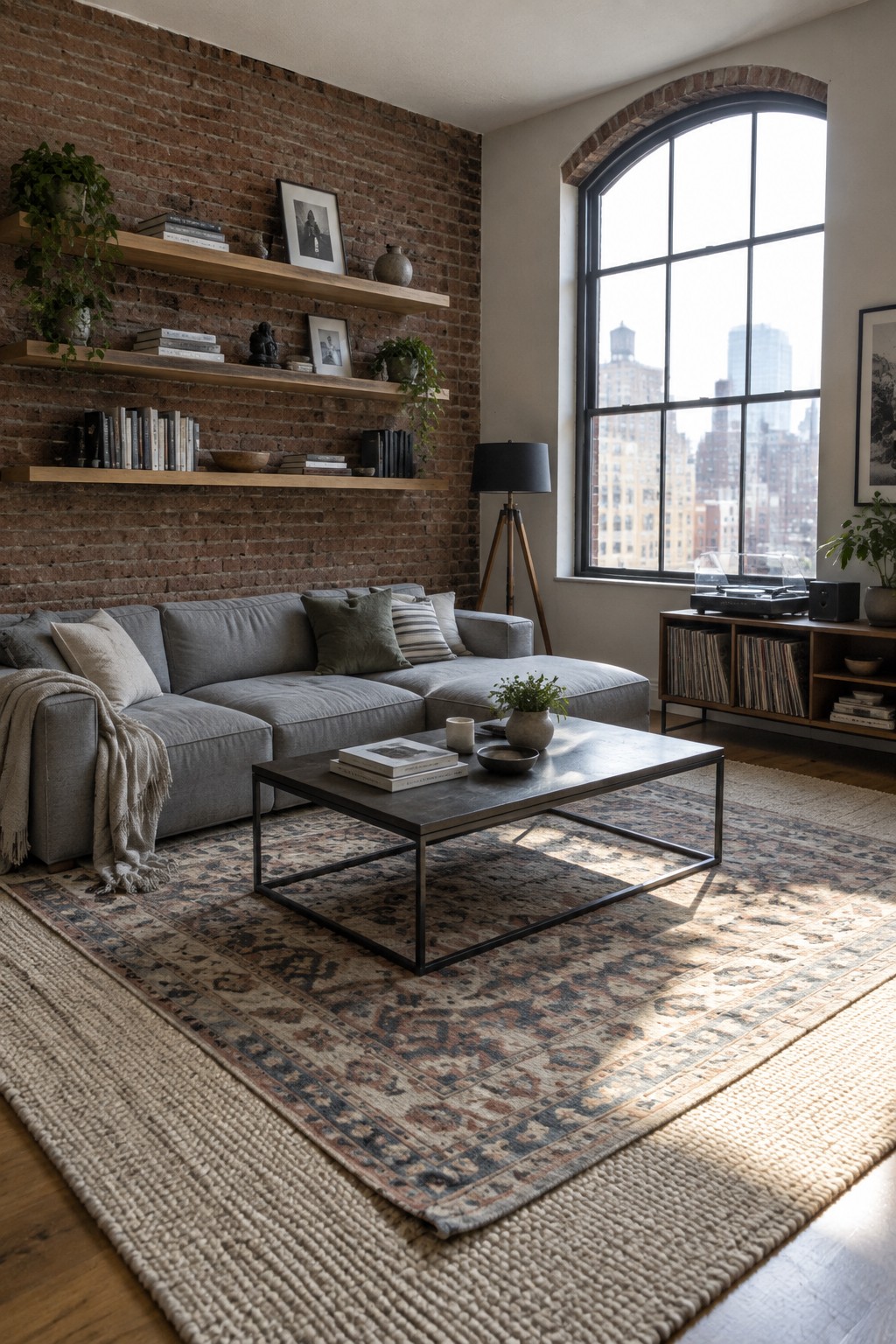
Layering rugs gives a room more depth without adding height or clutter. A big natural fiber rug on the floor first, then a patterned one centered under the seating, creates a soft base that works especially well with low sofas and simple tables. The look stays grounded and still feels open.
This setup suits rooms with wood floors and plenty of light. Keep the bottom rug a size or two larger so it shows around the edges, and stick to low-profile pieces so the layers stay visible. It is an easy change if you already have a sofa you like but want the space to feel a little warmer.
Low Furniture Works Best With Layered Rugs
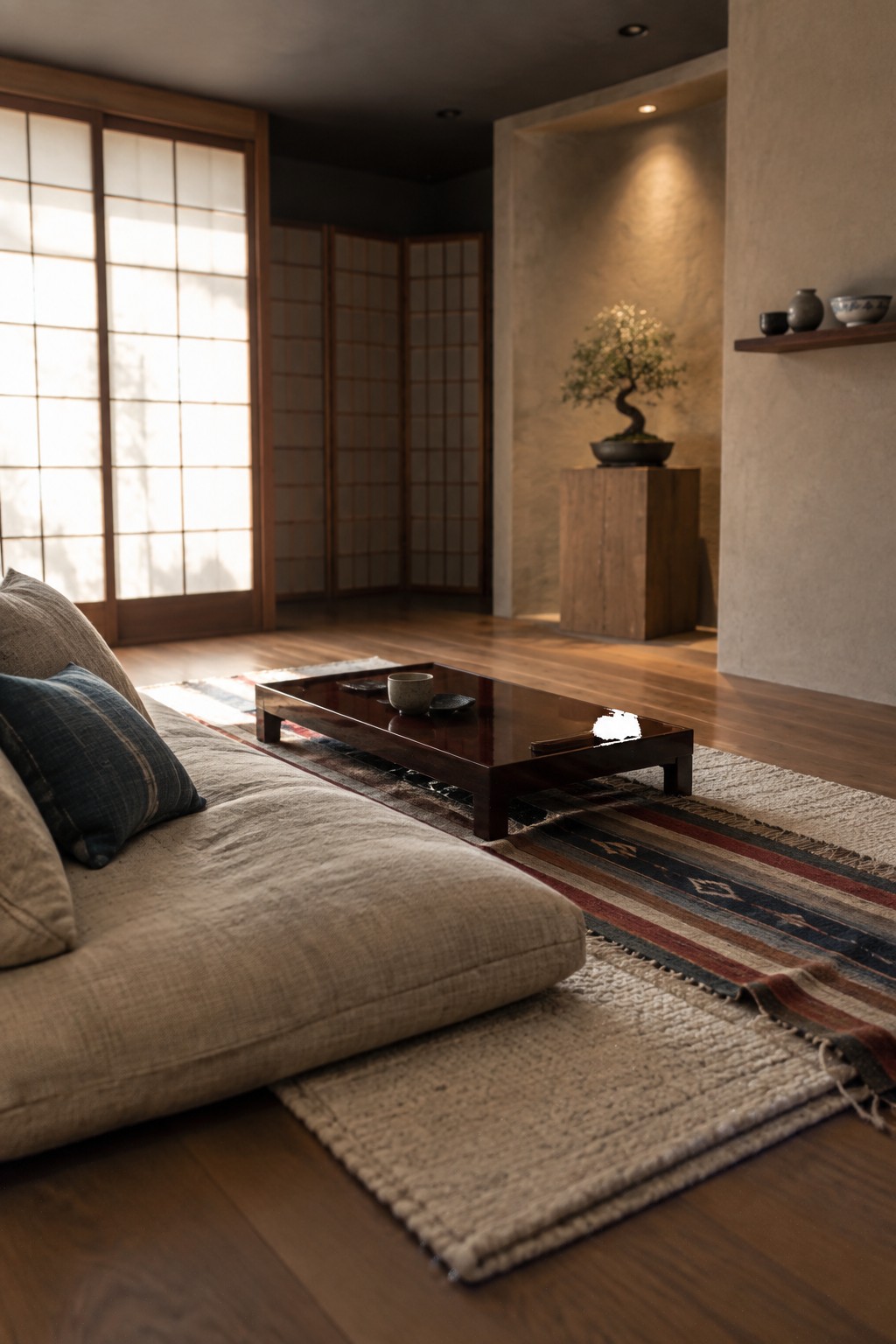
Low furniture keeps a living room feeling open and easy. When the pieces sit close to the floor they leave more wall and window space visible. Layered rugs add softness underfoot without raising the height of anything else.
This setup works well in smaller rooms or homes with wood floors. Start with one larger rug and add a second one underneath the seating area. A low table like the one shown sits right at the right height and does not fight the rugs for attention.
Layer Rugs to Add Warmth
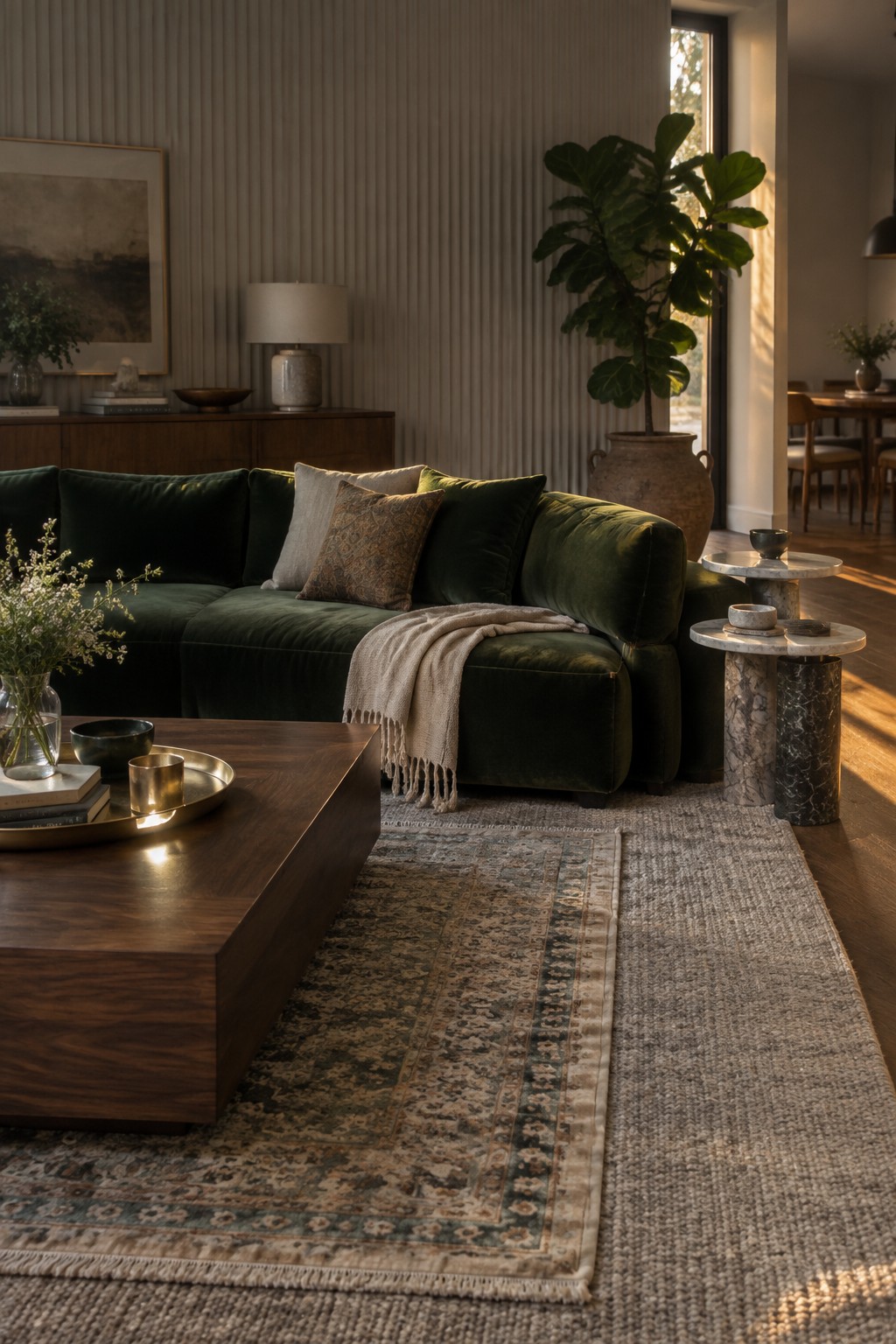
Layering rugs gives a living room more texture and a settled feel without adding height. A large neutral base with a smaller patterned rug on top keeps the floor interesting while the low sofa stays grounded and open.
This works well in rooms with wood floors where you want to define the seating area. Keep the top rug slightly off center so it overlaps the main one under the coffee table, and choose a low sofa in a deep tone to balance the pattern below.
Layer Rugs Over Hardwood For More Warmth
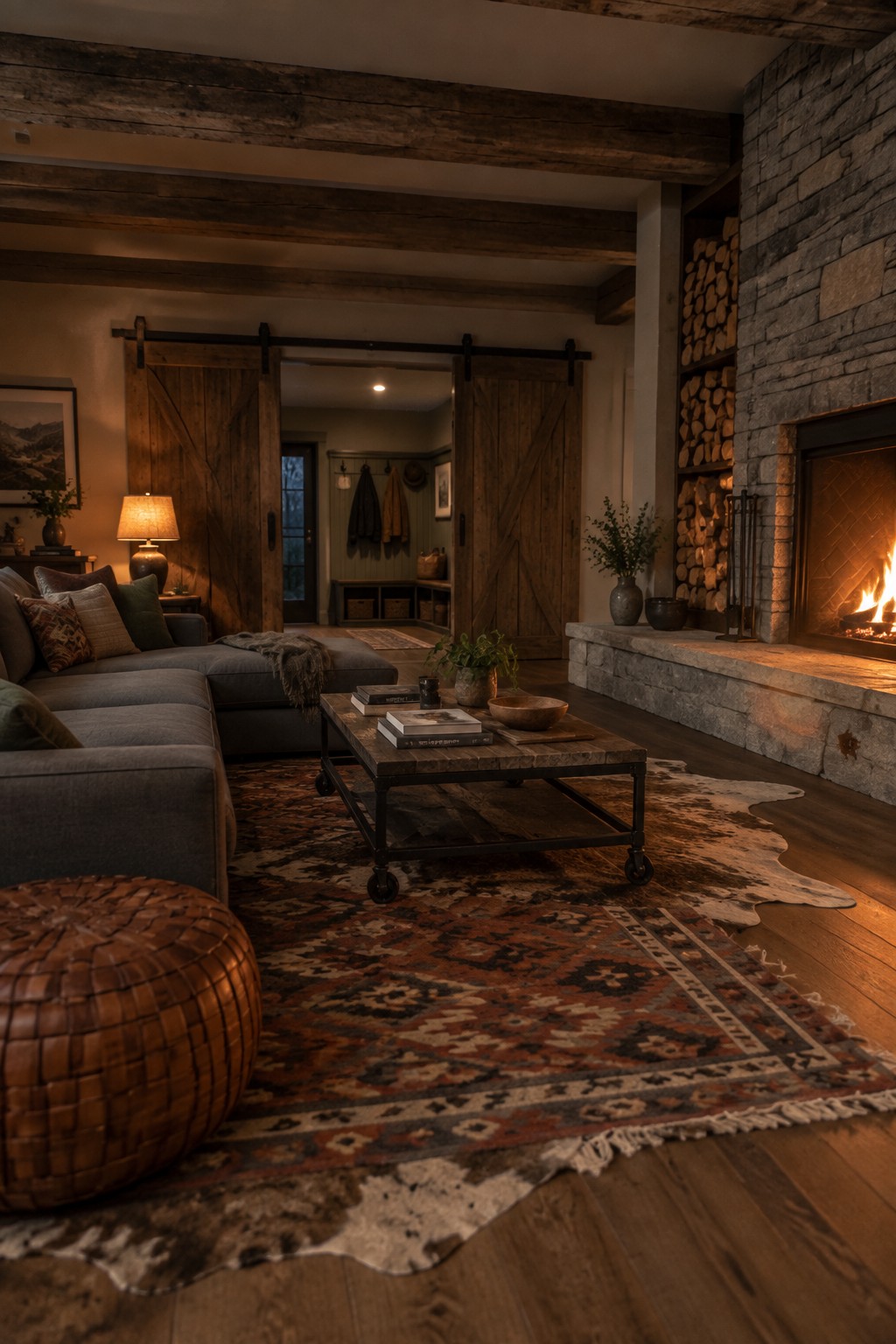
Layering rugs gives a living room instant softness without raising the furniture height. A large patterned rug with a smaller hide layered on top creates a clear seating zone while keeping everything low and grounded. This works especially well when the sofa and ottoman stay close to the floor.
The look suits wood floors and open spaces where you want texture but not clutter. Place the bottom rug first to cover the main area, then angle the top one slightly so both edges remain visible. Avoid stacking too many layers or using rugs that feel too thick underfoot.
Create a Grounded Look With a Dark Rug Base
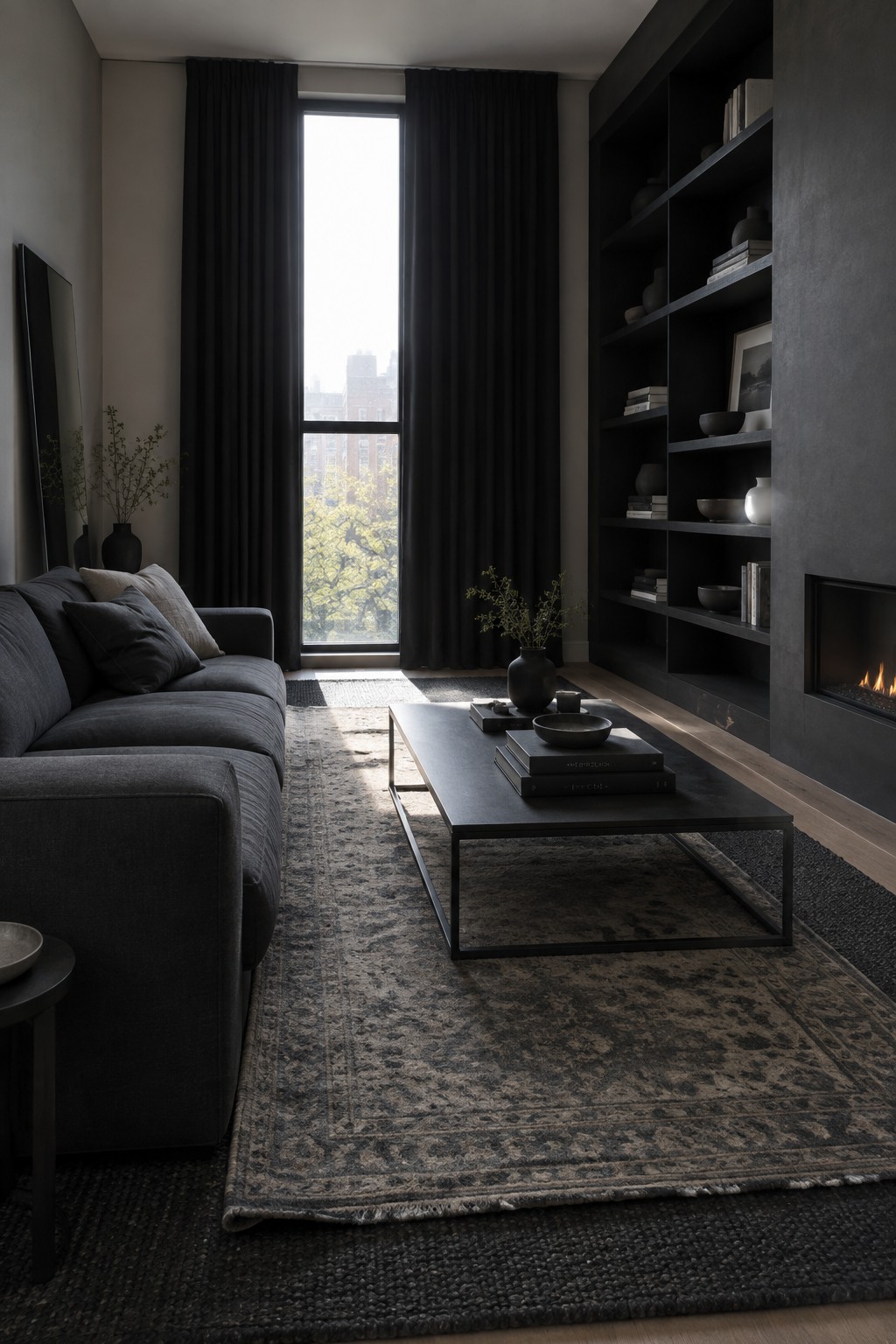
A low sofa works best when it does not fight the floor beneath it. Placing a large patterned rug over a darker flatweave base gives the seating area weight without raising the overall profile of the room.
This approach suits apartments or open living spaces where you want texture but still need the room to feel open. Keep the base rug simple and let the top layer carry the pattern so the edges create a natural border around the furniture.
Layer Rugs Over a Soft Base
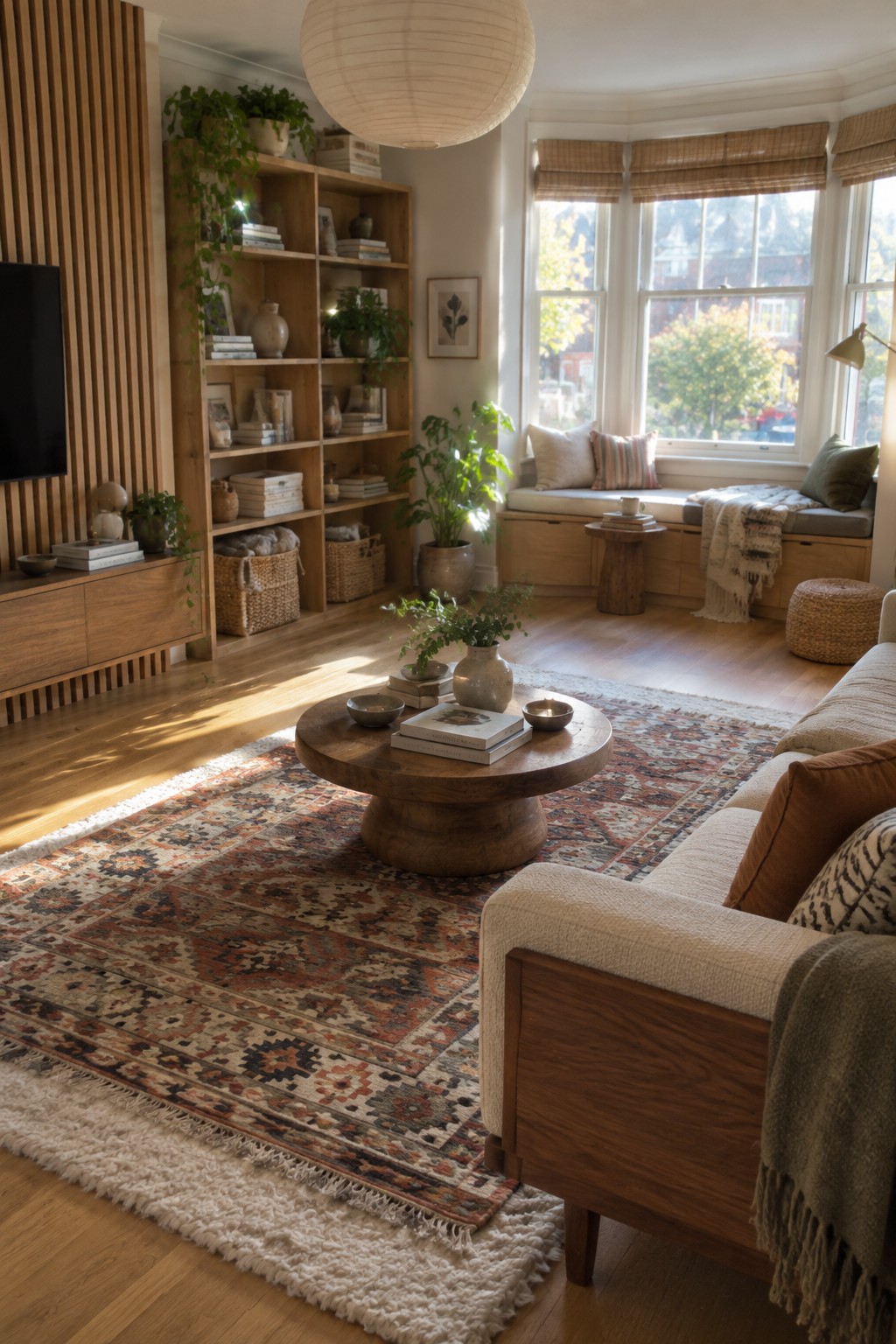
Layering a patterned rug over a thicker one underneath gives the room a softer feel without adding height. The low coffee table and sofa stay in view across the space, so the floor becomes the main source of warmth and texture. This works especially well on hardwood floors that can feel cold on their own.
It suits smaller or medium living rooms where you want comfort but still need the space to read as open. Keep the top rug slightly smaller so the bottom layer shows around the edges, and choose a neutral base if your top rug has a lot of pattern.
Combine a Leather Ottoman With Patterned Rugs
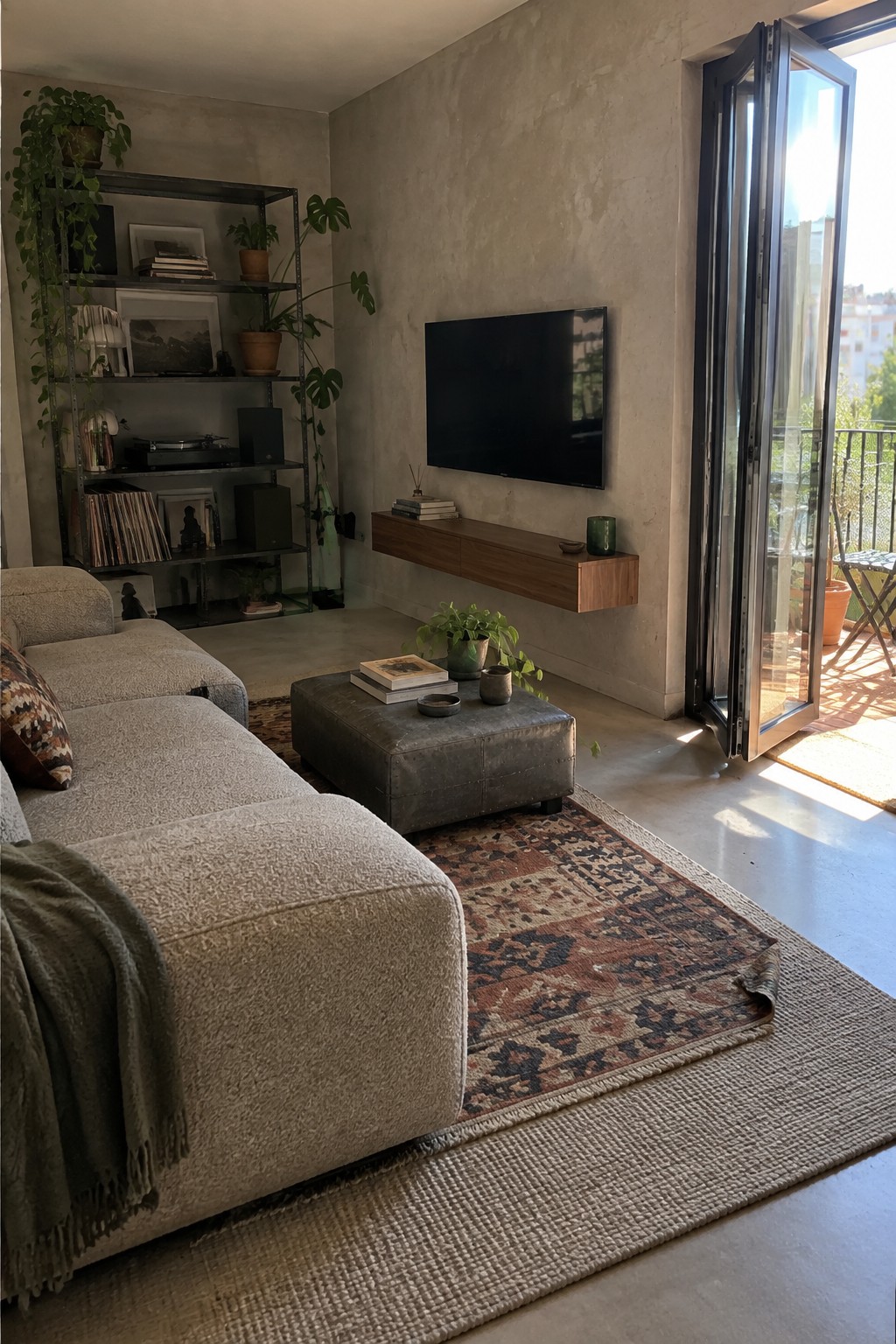
Low pieces like a big textured sofa and a leather ottoman help the room feel open instead of crowded. The two rugs stacked on top of each other add pattern and softness underfoot while keeping everything grounded and simple.
This setup works well in apartments or smaller living rooms where you want comfort without blocking the flow. Stick to one larger neutral rug as the base and add a smaller patterned one on top so the layers do not compete.
Layer Rugs Over a Neutral Base
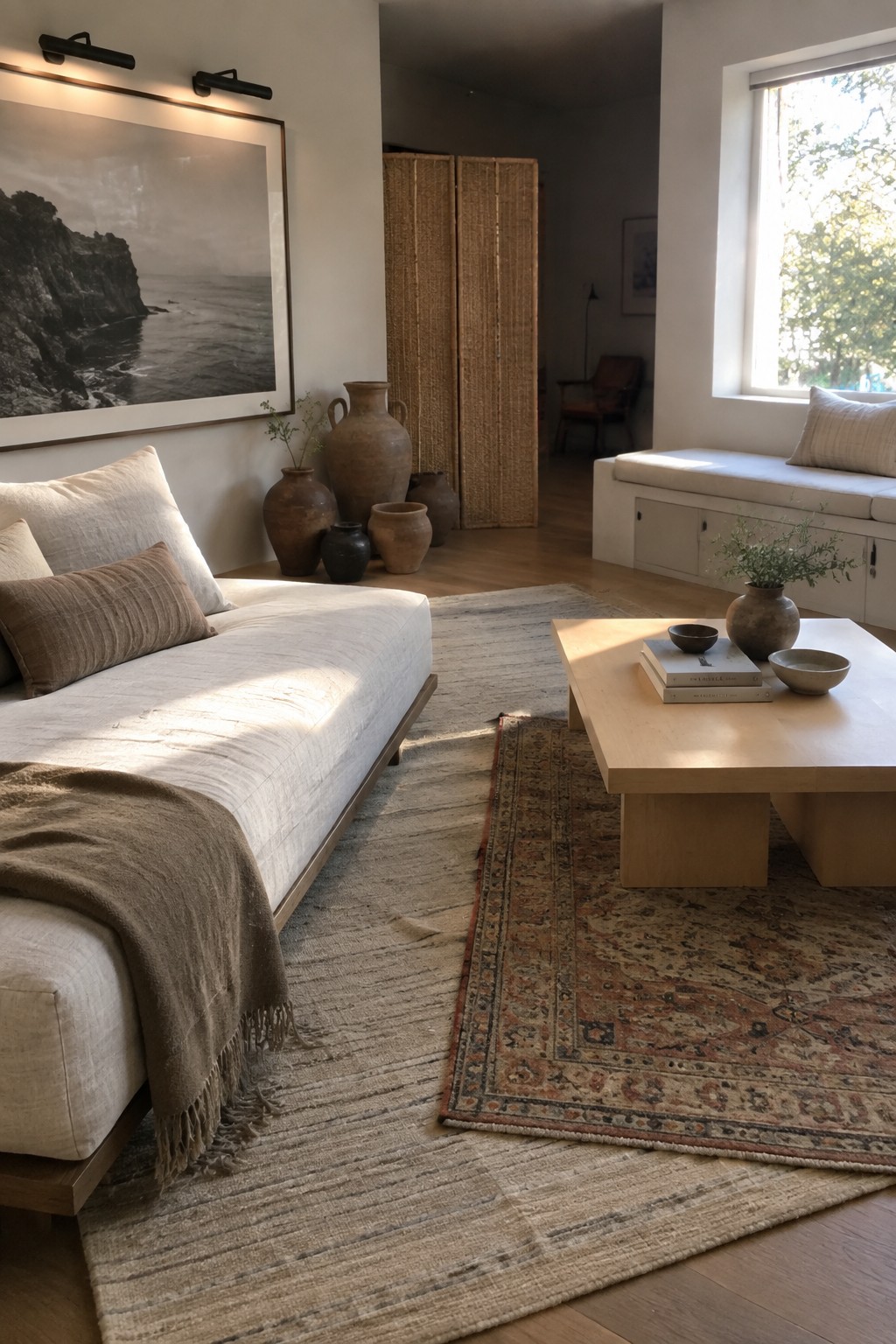
Layering rugs gives a room more texture without adding extra furniture or clutter. A large light rug covers most of the floor and sets a calm base, while a smaller patterned rug overlaps part of it to mark the seating area and add some visual weight.
This works well in living rooms with low sofas and simple wood floors because it keeps the space feeling open but still grounded. It suits homes that use a limited color palette and need a bit more warmth underfoot without darkening the whole room.
Low Sofas Work Well With Layered Rugs
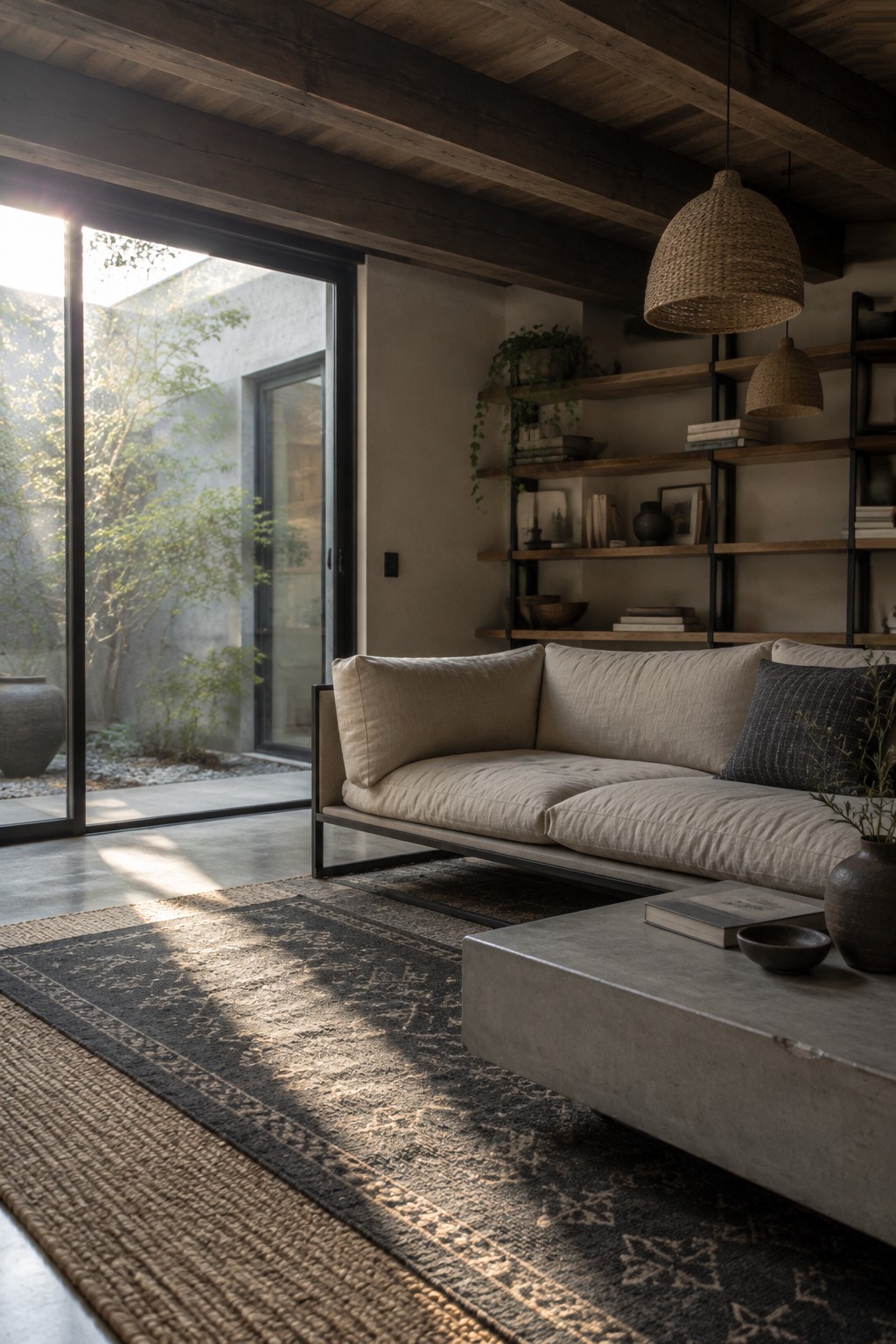
A low sofa keeps the room feeling open even when you add rugs underneath it. The layers add texture and a bit of softness without making the space feel crowded or busy.
This setup suits homes with concrete floors or lots of natural light. Put down a large natural fiber rug first, then lay a smaller patterned one so both stay visible around the edges of the seating.
Style a Tufted Chaise With Natural Rug Layers
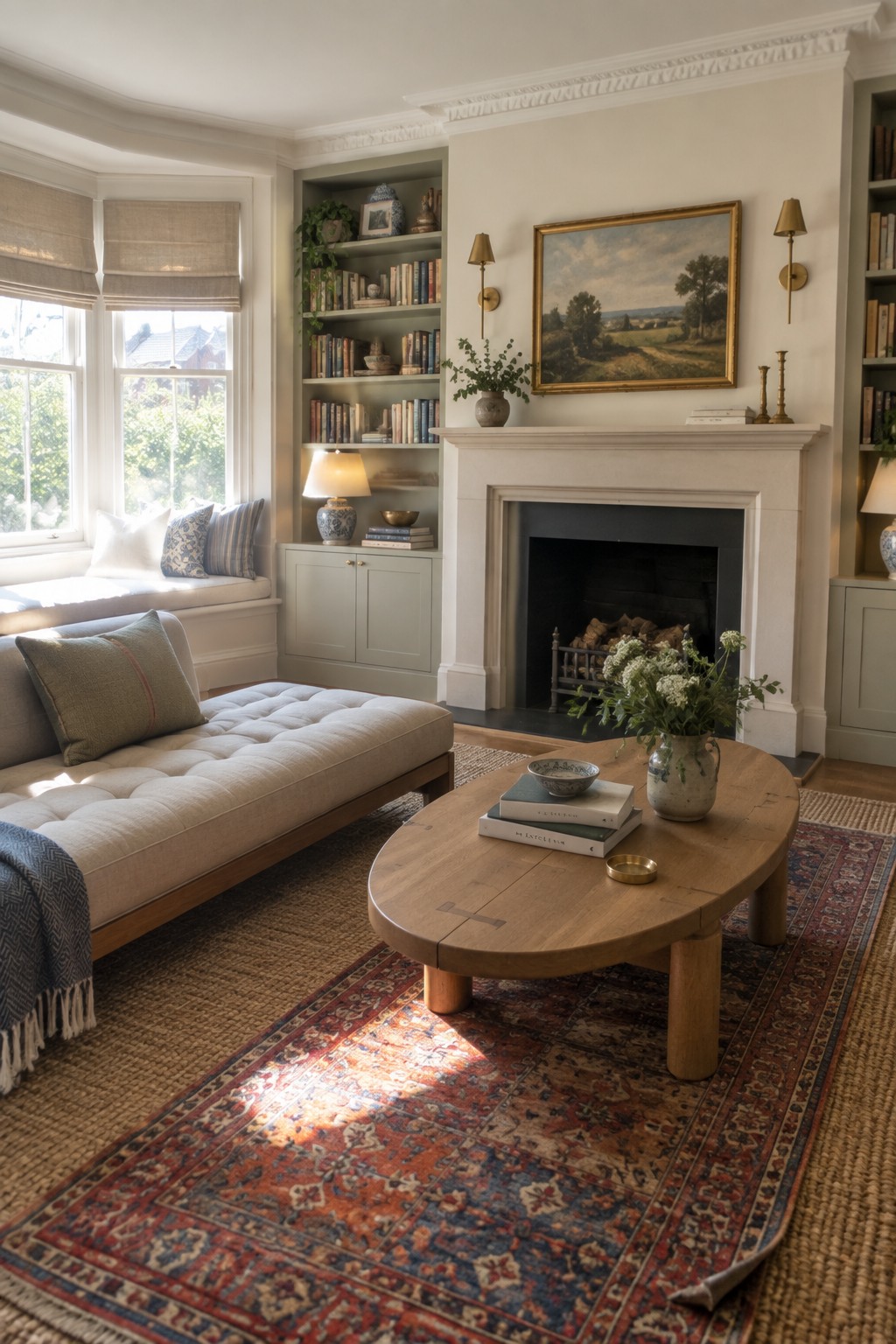
Low furniture keeps a room feeling open and easy to move around in. When you layer a patterned rug over a simpler natural one, the space gains warmth and interest without adding height or clutter.
This setup suits older homes or living rooms that already have built-ins and trim details. Keep the base rug neutral and let one bolder layer do the work, then choose seating that stays close to the floor so the rugs remain the main visual draw.
Frequently Asked Questions
Q: How many rugs should I layer in a small living room? A: Two layers work best in tighter spaces. Choose a simple jute base and top it with a soft wool rug that fits under the sofa and chairs.
Q: Do low-profile chairs feel too low for everyday use? A: They encourage a more relaxed posture that suits modern lounging. Test the seat depth in person since some models sit lower than expected.
Q: What happens if my layered rugs have different thicknesses? A: The uneven surface can trip people up over time. Place the thicker rug where people walk less often and keep edges taped down with rug grippers.
