

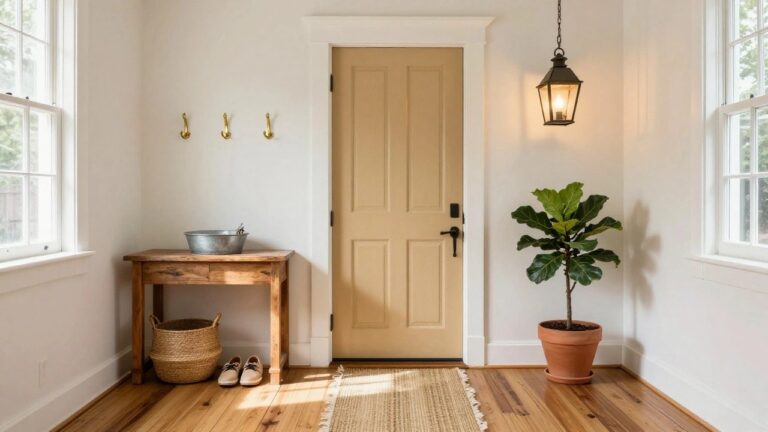
The entryway shapes how the rest of the house feels right away because it is the first space you move through each day.
In many Southern homes that balance of light colors and natural textures helps the area feel open without losing its practical side.
I have found that adding a mirror in just the right spot can shift the whole mood when natural light hits it during afternoon hours.
Storage choices matter more here than in other rooms since clutter shows up fast near the front door.
Trying one small change at a time has helped me see what actually fits the way we use our space.
Add A Sink To Your Entry Console
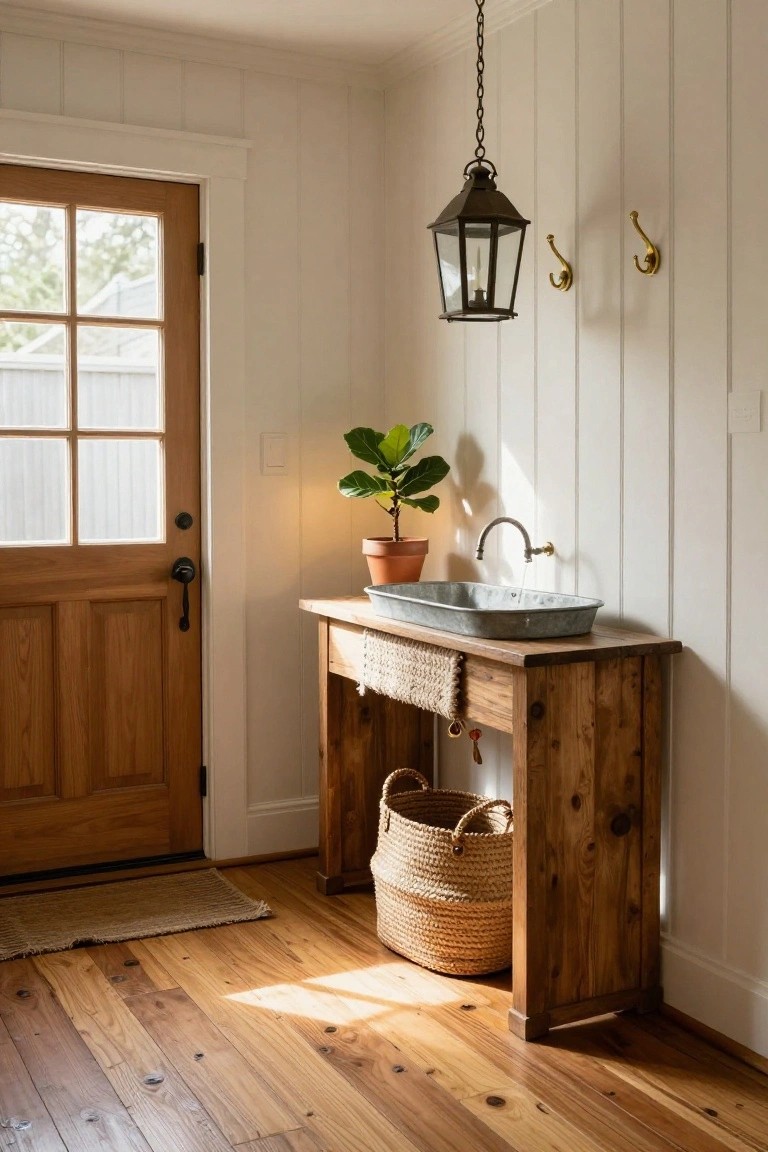
A sink near the door gives you a place to wash hands or rinse off boots without tracking things through the rest of the house. It works especially well in Southern homes where people come and go from the yard or garden often.
Place it on a sturdy console table with open space below for baskets. Keep the rest of the entry simple so the sink stays useful instead of turning into clutter.
A Console Table With A Mirror
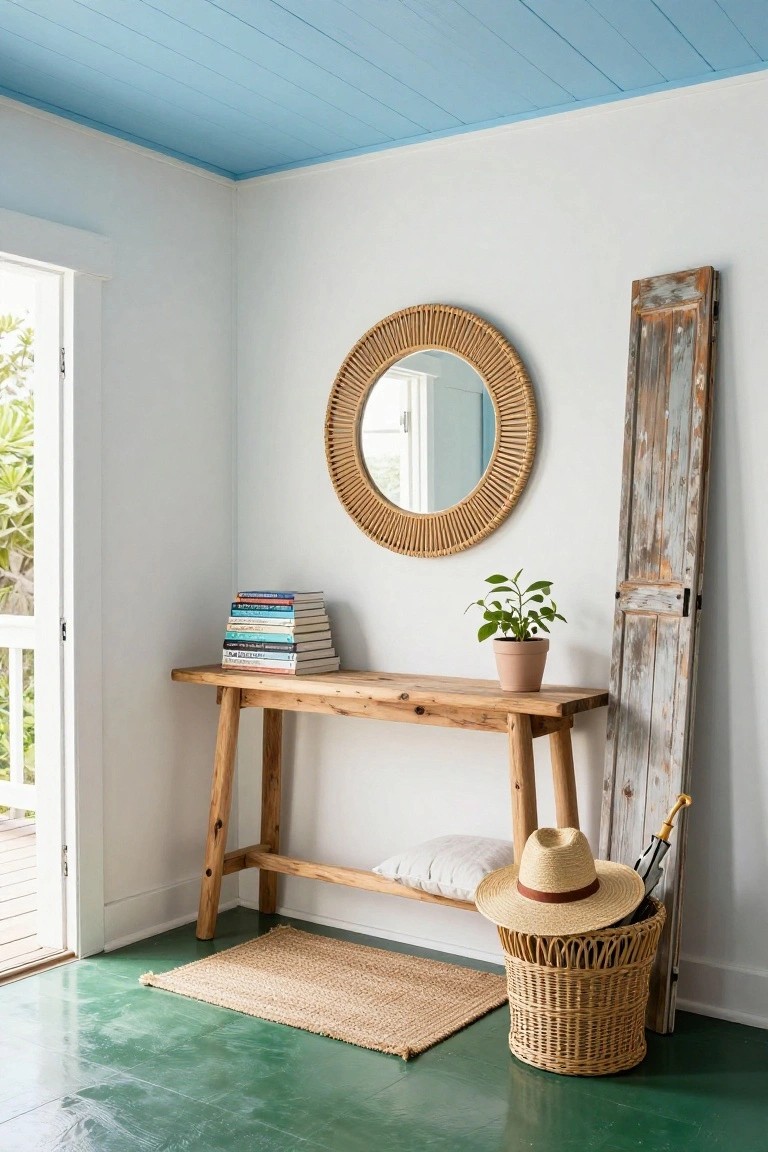
A console table topped with a mirror gives an entryway a clear purpose without filling it up. The table creates a landing spot for everyday items while the mirror reflects light and makes the space feel more open right away.
This works best in homes where the front door opens straight into a living area or hallway. Keep the table slim, hang the mirror at eye level, and leave enough room to walk past without crowding the path.
Hang a Large Portrait in the Entry
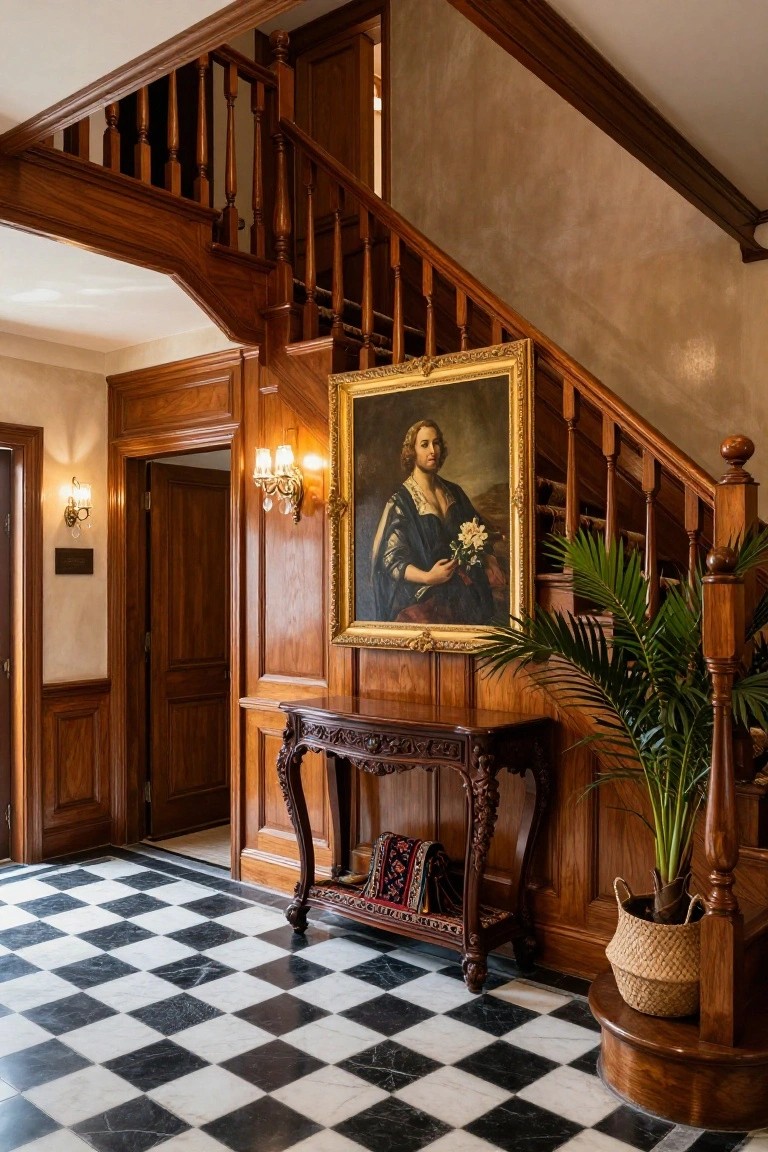
A big piece of art can give an entry real presence without a lot of extra effort. In this space the painting sits right under the stairs where it can be seen from the door, and the dark frame helps it stand out against the wood.
This idea works best in homes that already have traditional trim or paneling. Keep the table below fairly simple so the painting stays the main point, and match the frame color to the wood tones already in the room.
Floating Benches With Hooks Add Practical Storage

A floating wood bench paired with hooks above gives an entryway a simple way to handle daily items without crowding the space. The setup keeps shoes and bags off the floor while still offering a spot to sit.
This works best in homes where the entry sees steady use. Keep the wood tone natural and limit the hooks to three or four so the wall stays open and easy to clean.
Soft Painted Doors With Built-In Storage

A soft yellow door stands out here because it brings warmth without overpowering the space. The color feels cheerful yet calm, and the lower panels hold two simple baskets that keep small items off the floor.
This works well in older homes or any entry with limited wall space. Choose a muted paint color that matches nearby walls, then add baskets that fit the panel size so the door stays useful without looking cluttered.
Bench Seating in a Wall Alcove
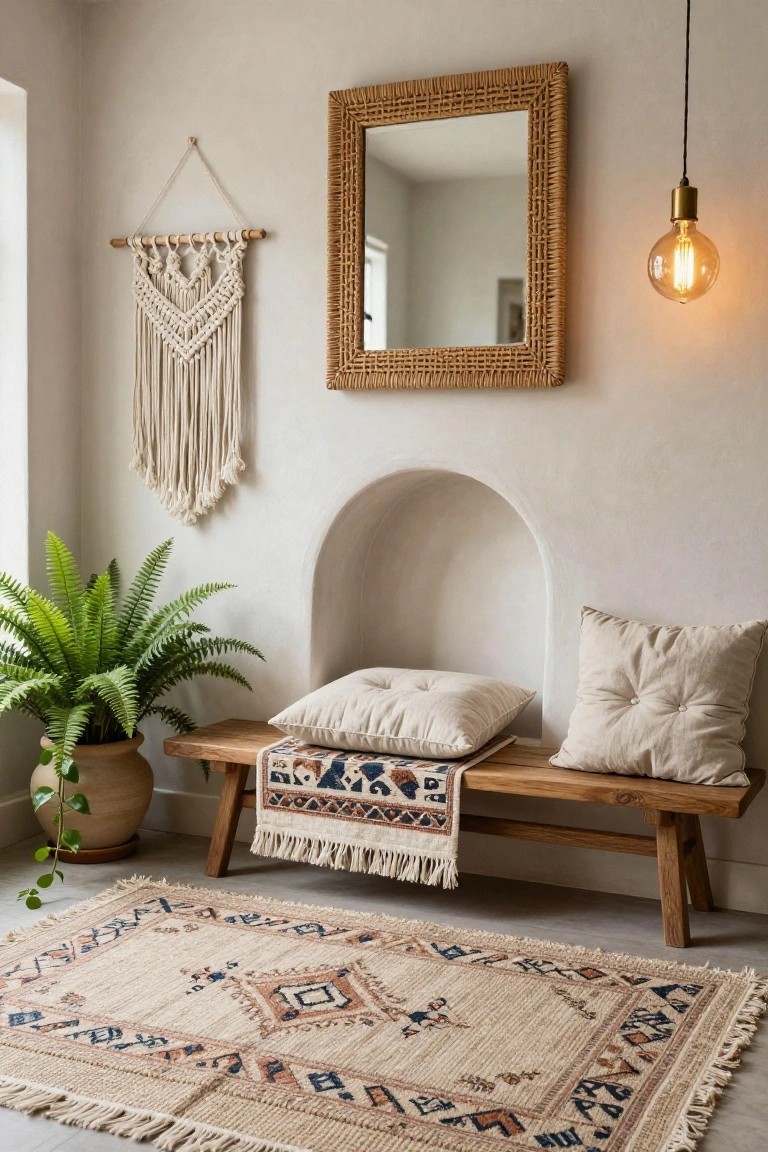
A bench tucked into a wall alcove creates a natural spot to pause in the entry without taking up extra floor space. It keeps the area feeling open while still giving people a place to sit when they come in or head out.
This setup works best in homes with thicker walls or simple architectural details already in place. Keep the bench low and the cushions plain so the alcove itself becomes the main feature.
Line Your Entry With Palms And Lanterns
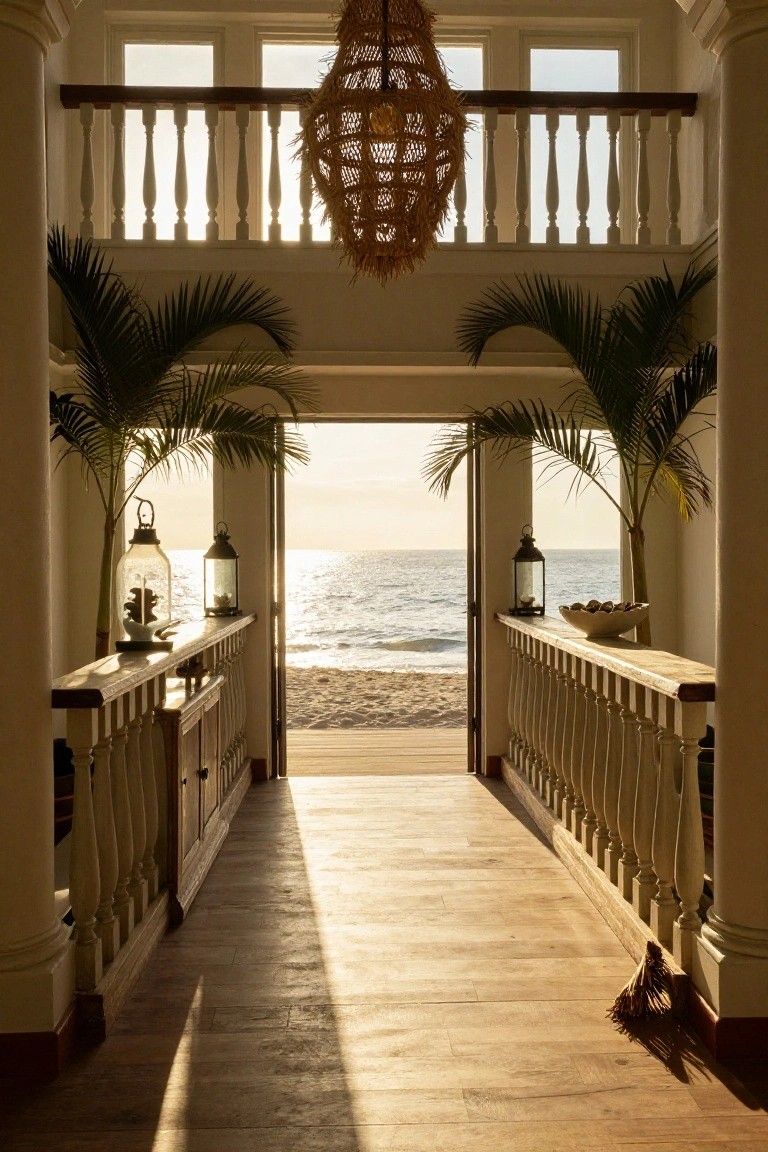
Placing tall potted palms and a few lanterns along both sides of an entry hall gives the space a calm, natural feel without much effort. The plants soften the walls and railings while the lanterns add a simple layer of light that works during the day or at night.
This approach suits homes with long entryways or those that open toward a view. Keep the consoles low and the plants in matching pots so the path stays open and the whole setup feels balanced rather than crowded.
A Bench for Holding Plants in the Entry
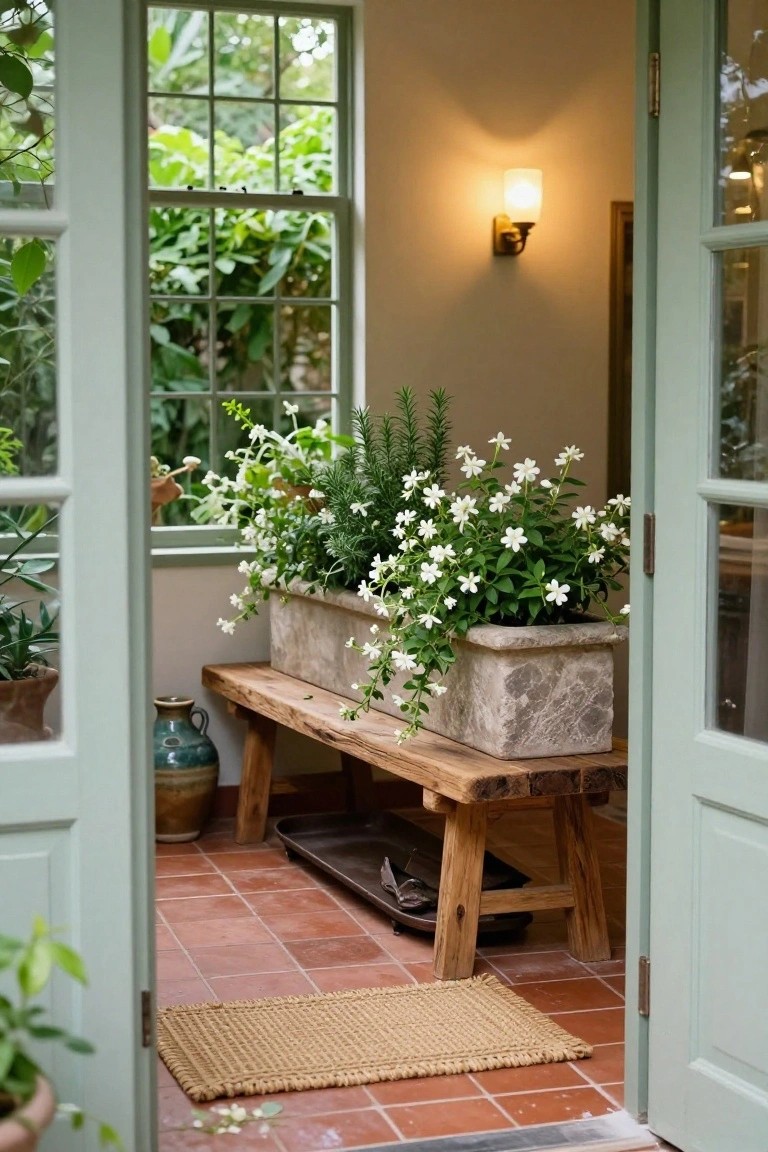
A bench placed near the door gives you a sturdy spot for a large planter without crowding the floor. It adds a bit of greenery right where people walk in, and it keeps the entry from feeling bare or empty.
This setup works well in homes with a covered entrance or a bit of extra wall space. Pick a bench that can handle the weight, and choose plants that match the light you actually get in that spot.
Put a Bench by the Front Door
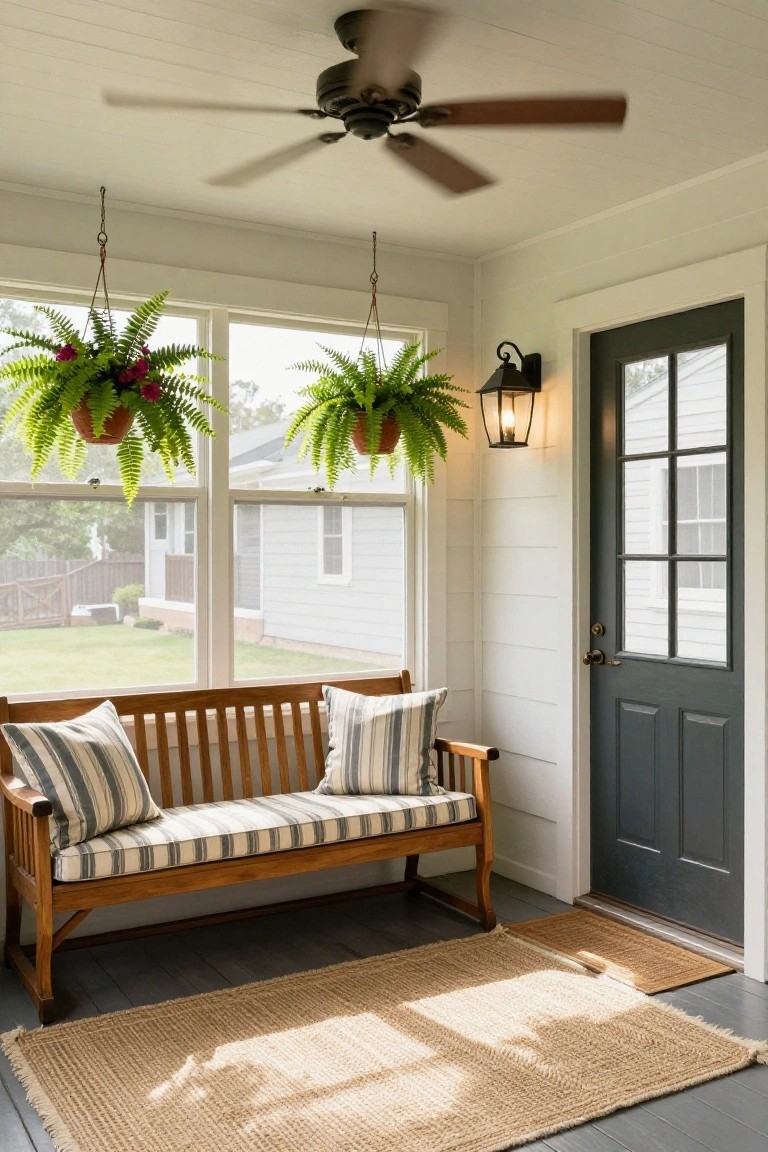
A bench right outside the entry gives the porch a purpose beyond just walking through. It creates a spot to sit, set down packages, or wait for someone without needing a whole seating area.
This works best on Southern homes with covered porches that see regular use. Keep the bench low and simple, add a cushion for comfort, and pair it with a couple of plants so the space feels ready without extra effort.
Built-In Bench Seating in a Brick Niche

A recessed brick arch creates a natural spot for seating right where you need it most. It turns an otherwise plain wall into a useful place to sit while pulling on shoes or setting down bags, and the built-in ledge keeps the floor clear in a busy entry.
This setup works best in homes with exposed brick or older construction where the arch can be added during a remodel. Keep the bench cushion simple and add a mirror above to bounce light back into the space without crowding the area.
Round Tables for the Entry
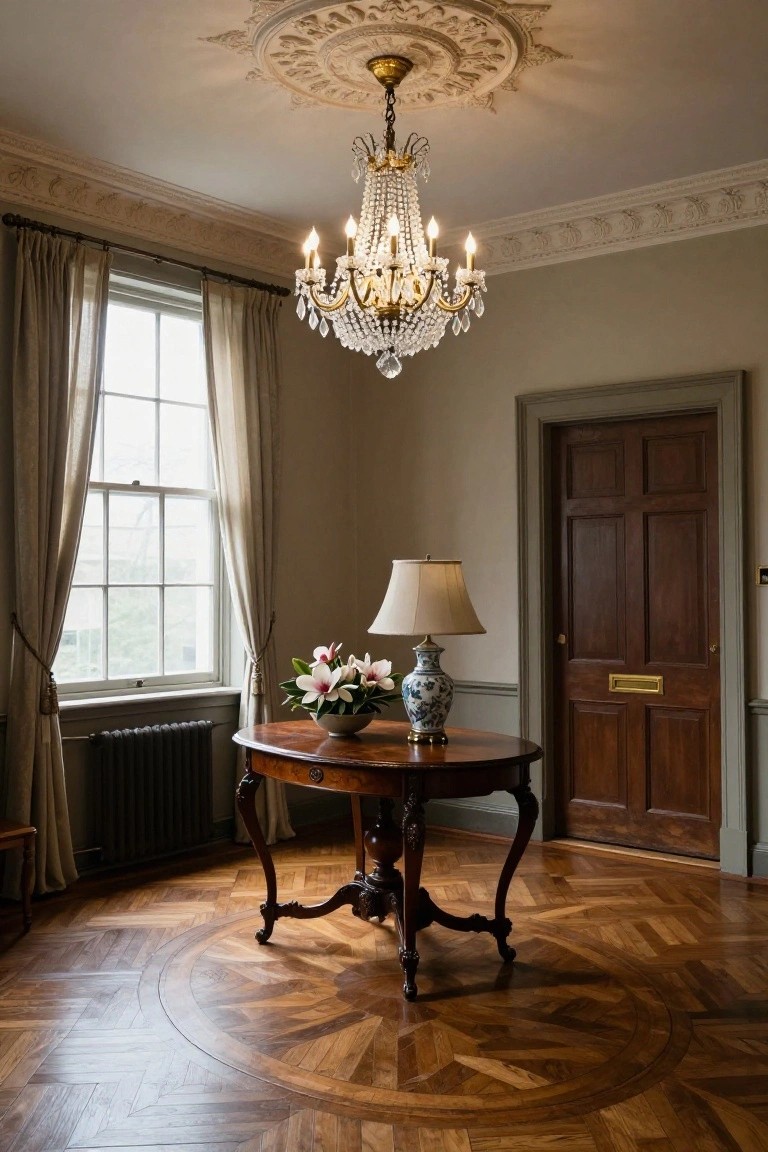
A round table gives an entryway a calm, centered feel that works especially well in Southern homes. It softens the space and makes the room feel more finished without blocking the flow from the door.
Place one in the middle of the foyer and keep the surface light. A lamp and a small bowl of flowers are usually enough. This setup suits homes with decent ceiling height and a bit of floor space to spare.
Use a Painted Arch to Mark the Entry
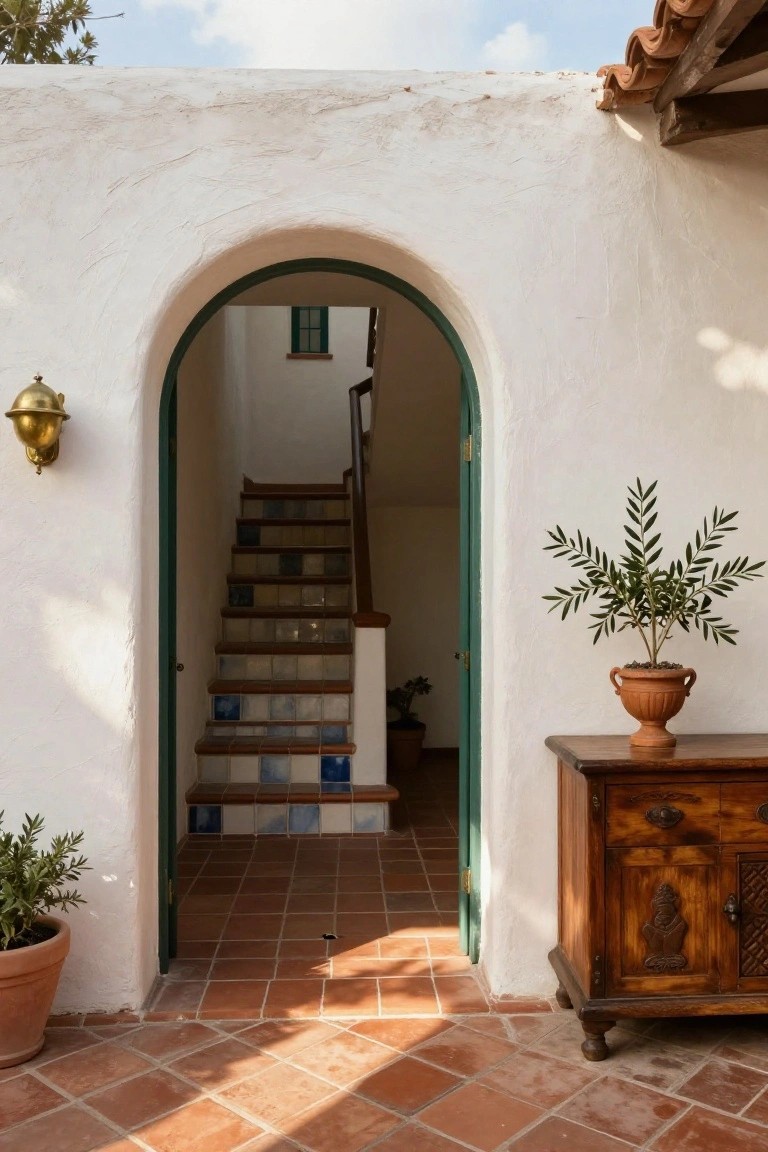
An arched doorway with a painted frame gives an entry a clear shape without feeling stiff. The soft green trim on the white wall stands out just enough to guide people in while keeping the whole look simple and calm.
This works especially well on homes with plaster or stucco walls and terracotta floors. Pick a muted color that picks up other tones nearby, like the wood of a nearby cabinet or the tiles on the steps. It adds definition without extra molding or hardware.
Console Tables with a Lower Shelf

A console table with an open lower shelf gives you a simple way to add storage without making a narrow entry feel crowded. The shelf holds a few items at floor level so the top stays clear for keys or mail, and the whole piece stays light and easy to walk around.
This setup suits smaller Southern entryways where you want some display space but still need room to move. Choose a painted wood table in a color that fits the rest of your trim or door, and keep the lower shelf lightly styled so it does not start to look cluttered.
Tuck A Bench Under The Console

A bench slid under the console keeps an entryway feeling open while still giving you a place to sit. It works especially well when the table has drawers for keys and mail, so the whole spot stays useful without extra furniture crowding the floor.
This setup suits homes that need practical seating near the door but cannot spare much width. Choose a bench with a low profile and natural materials so it stays quiet next to the console and does not block the drawers.
Use Baskets for Simple Entry Storage

Many entryways stay calmer when storage stays open but contained. A console with a lower shelf gives room for baskets that hold everyday items without adding doors or extra furniture.
This setup works best in homes where the front door opens straight into a main room. Natural baskets keep things easy to grab and put away, and they suit spaces that already lean toward wood tones and soft neutrals.
A Bench Makes The Entry More Useful

Many entryways feel more welcoming when there is a place to sit. A bench near the door gives people somewhere to put on shoes, set down bags, or wait without crowding the walkway.
This idea works best in homes that already have wood floors and simple trim. A sturdy metal bench holds up well to daily use and pairs easily with wood and soft lighting.
Built-In Shelves Over a Window Bench
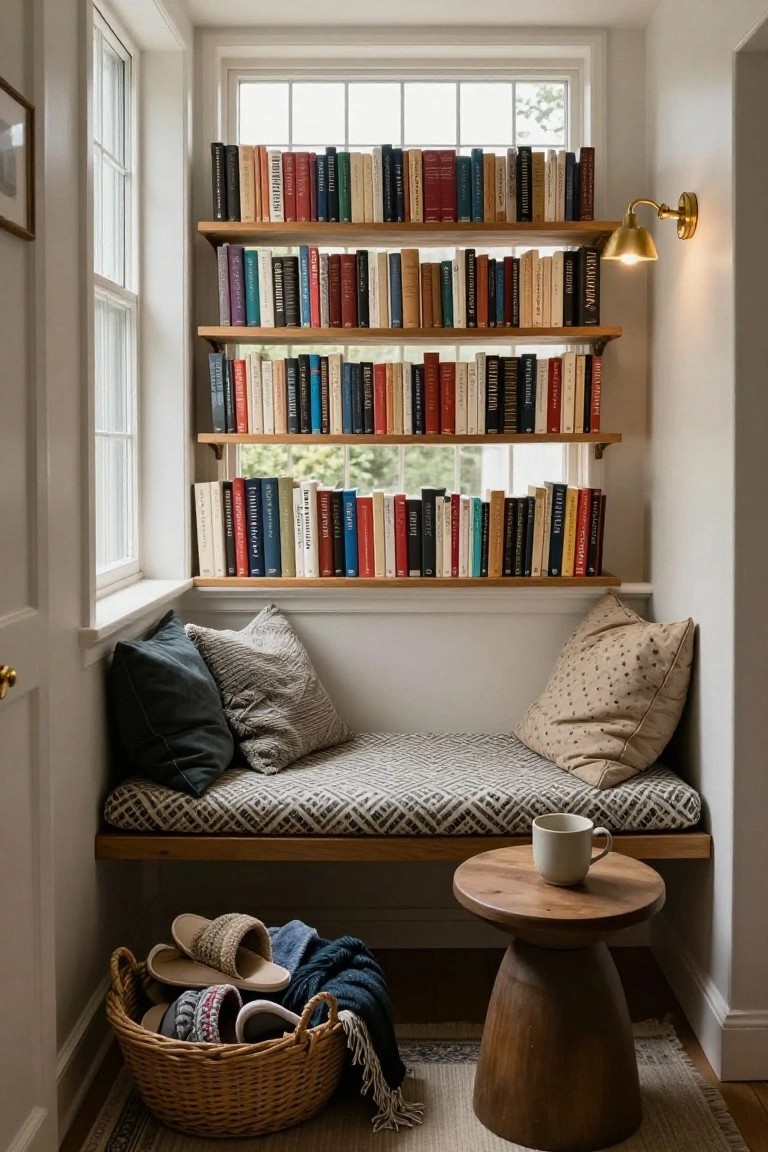
A window bench with shelves right above it turns a narrow entry spot into something useful. People get a place to sit while the shelves keep books and small items off the floor. It feels practical without crowding the space.
This works best in homes where the front door opens into a short hallway or landing with a decent window. Keep the bench height right for sitting and avoid shelves that stick out too far if the walkway is tight. The result is simple storage that also invites someone to pause when they come inside.
Add a Bench at the Base of the Stairs
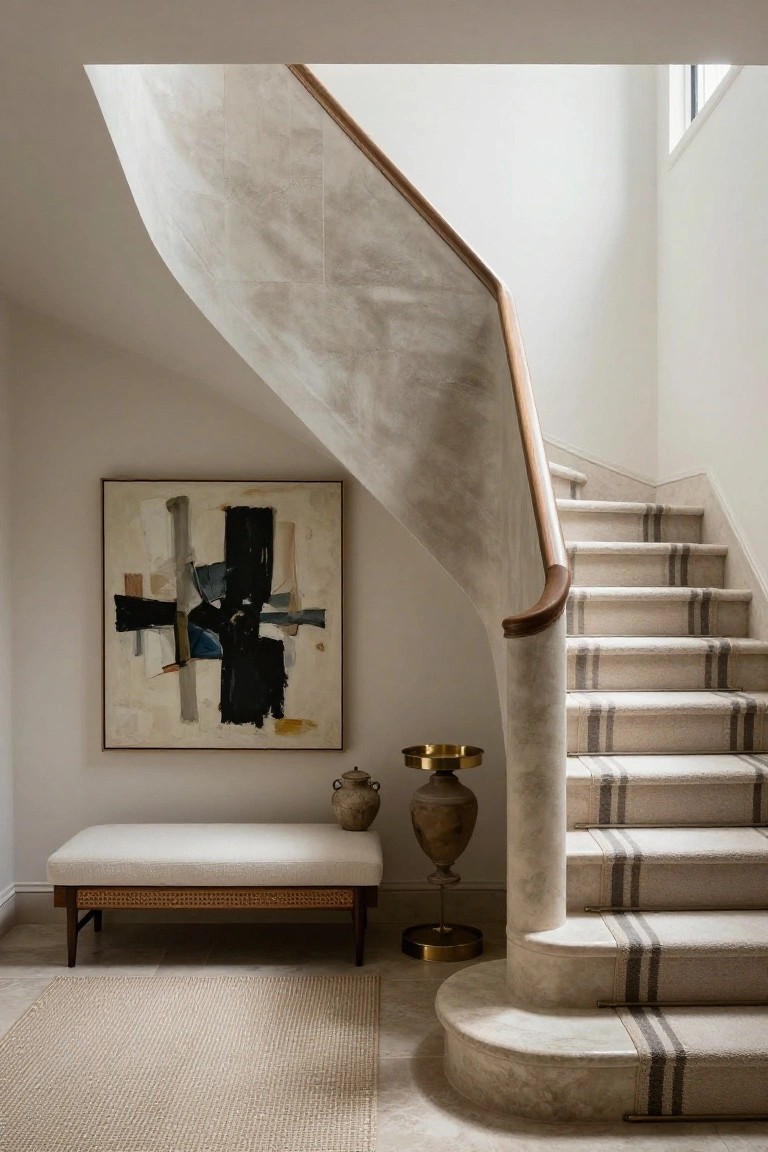
A bench tucked near the stairs turns the entry into a spot where people can actually pause. It gives the space a lived-in feel instead of leaving it as just a pass-through, and it pairs well with a large piece of art on the wall above.
This works best in homes where the staircase sits right in the main entry. Keep the bench simple and low so it does not block movement, and choose one with an open base if the floor needs to stay light and open.
A Console Table Keeps the Entry Simple

Many entryways feel more welcoming when they stay open but still have one useful surface. A narrow console gives you a place for mail, keys, or a small lamp without crowding the walkway.
This setup works best in homes with wood floors and trim that already carry some weight. Keep the lamps low and the top mostly clear so the table feels like part of the room rather than extra furniture.
Add A Bench By The Entry Door
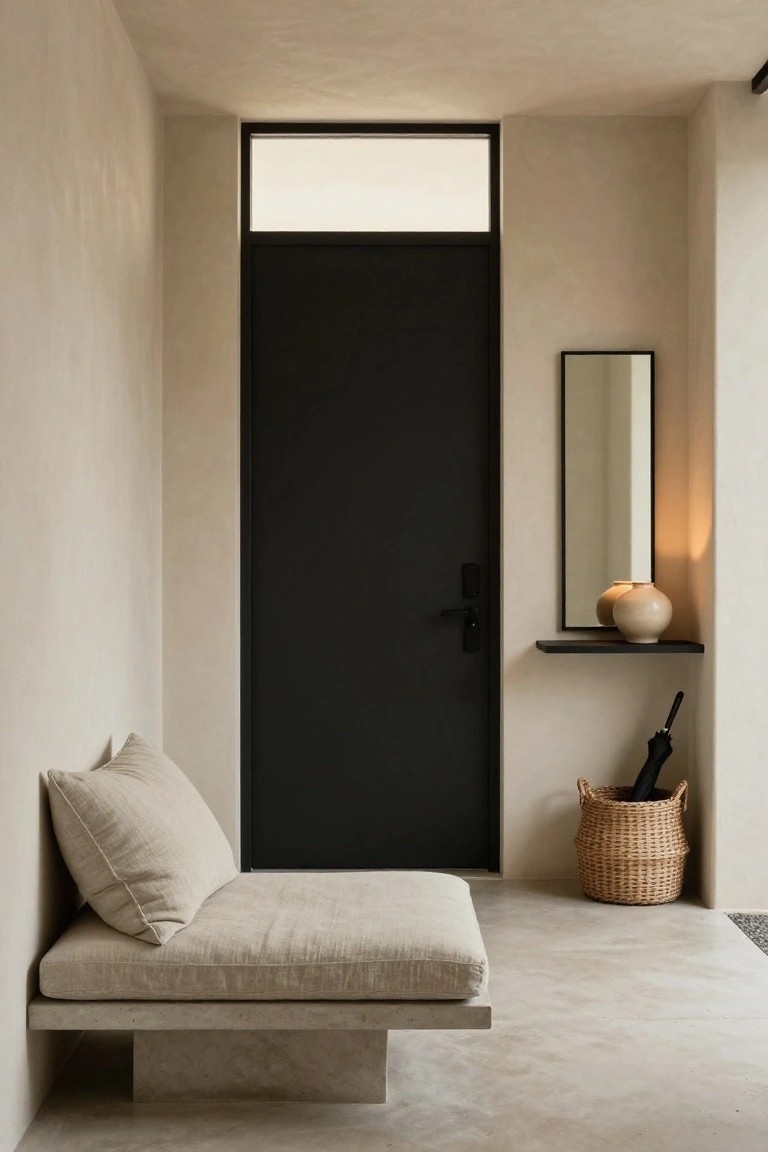
A bench right inside the front door gives people a place to sit when they come in or head out. It turns the entry into something more practical without adding much clutter.
This works best in homes where shoes come off at the door or where guests often pause. Keep the bench low and sturdy so it stays out of the way while still offering a spot to rest bags or put on boots.
Hang Keys On Wall Hooks

A row of hooks right by the door gives everyone a set spot for keys without needing a table or tray. It turns a small wall area into something useful and keeps the daily scramble to a minimum.
This setup works best in an entry with a bit of wall space near the main door. Place the hooks at a comfortable height and leave a small shelf or bench below if you want room for mail or bags too.
Frequently Asked Questions
Q: My door gets full afternoon sun. Which plants from the ideas will actually survive without constant watering?
A: Go with heat tolerant options like ferns or boxwoods in sturdy pots. Water them deeply once a week and let the soil dry between soakings. That routine keeps them looking full through the hottest months.
Q: I want to try the rocking chair look but my porch is tiny. How do I make it work without crowding the space?
A: Choose a slim wooden chair and set it at an angle near the door. Add just one small side table for a lantern and skip extra seating. The simple setup still feels welcoming without blocking the walkway.
Q: My entryway already has a basic mat and wreath. What single change would make the biggest difference?
A: Swap the lighting for a warm wall sconce or two. It brightens the area at night and pulls the whole look together.
