

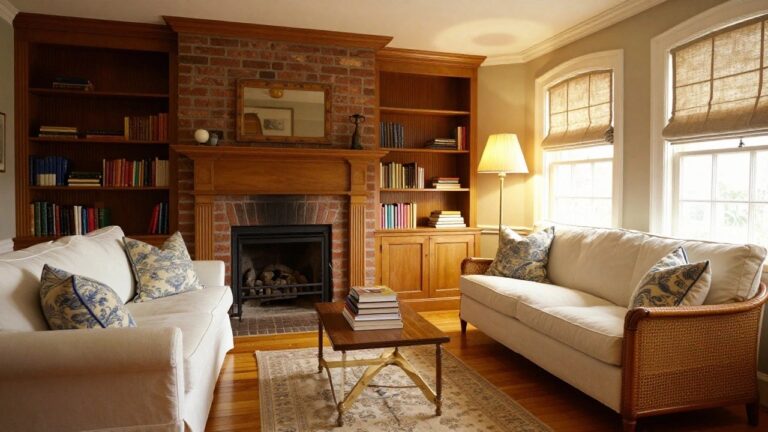
I’ve noticed that Southern rooms often feel their best when the layers build from the furniture arrangement outward rather than starting with accessories alone.
In homes where the classic pieces already suit the scale of the space the fabrics and finishes seem to settle into place more naturally over time.
Balance matters more than I expected.
When I tested a similar mix of woods and soft textiles in my own dining area the room finally stopped feeling like separate collections and started working as one.
Paying attention to how the light hits each layer throughout the day helped me see which details were actually worth keeping.
Built-Ins That Frame A Fireplace
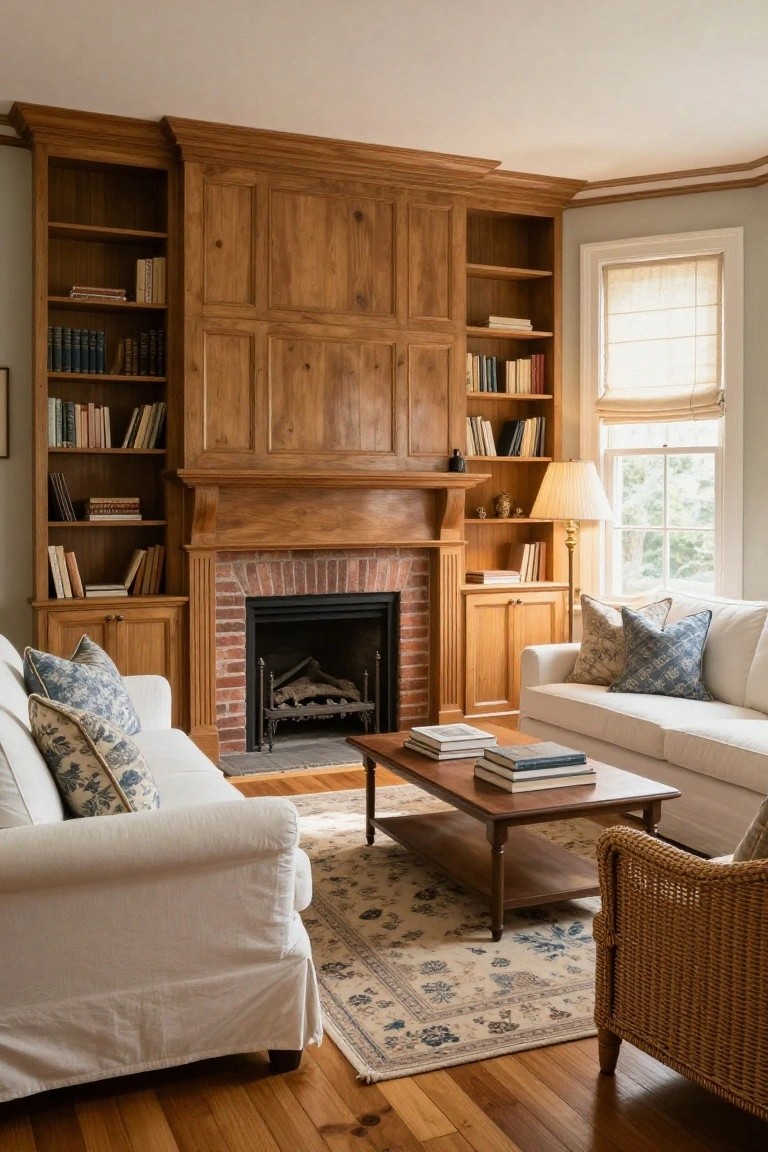
Built-ins around a fireplace give a room extra storage and display space without crowding the floor. They also help the fireplace feel like the main feature instead of just another wall.
This setup works well in older homes or rooms with higher ceilings where you want more function without adding freestanding pieces. Keep the shelves from getting too full so the wood still shows through.
Built-In Window Seating Next To The Fireplace
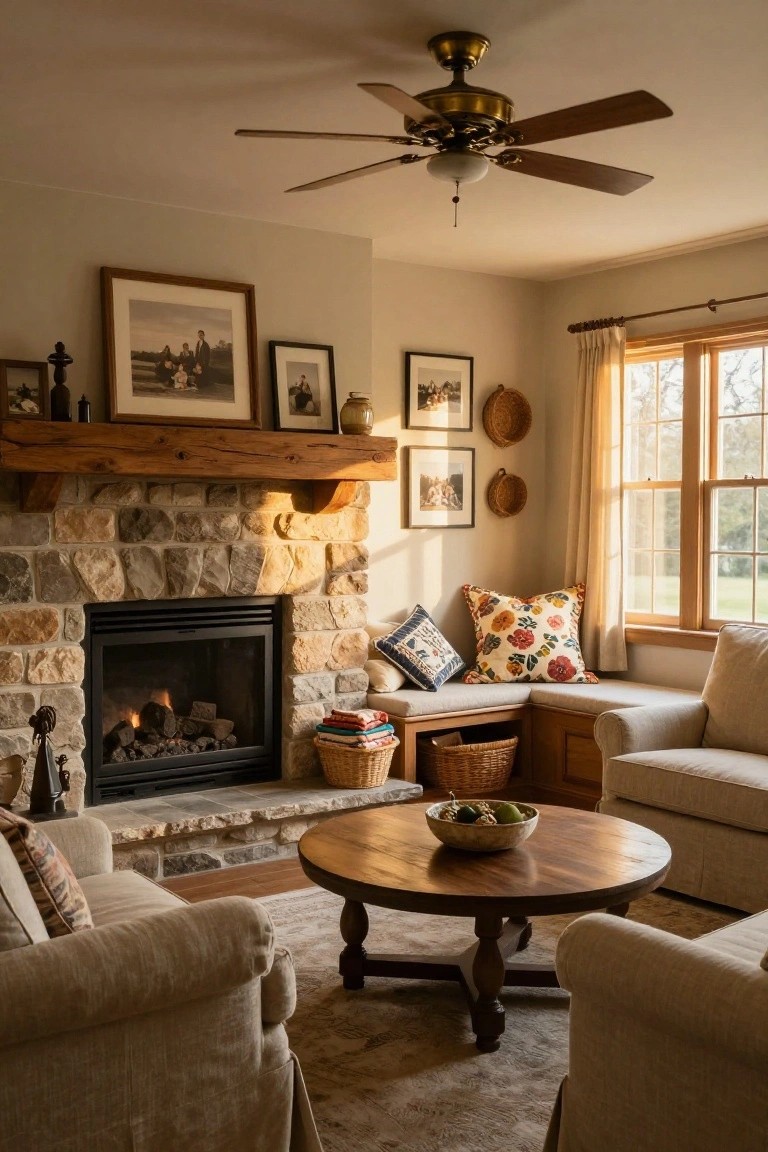
A built-in window seat next to the fireplace turns an empty corner into useful seating while keeping the room open. It works especially well in traditional homes where the fireplace already draws people in, and the seat gives them a place to settle without adding more furniture.
This setup suits rooms that get good natural light and have enough wall space along the windows. The cushions and baskets underneath keep things practical, and the seat can double as extra storage for throws or books.
Round Tables Work Well In Formal Dining Rooms
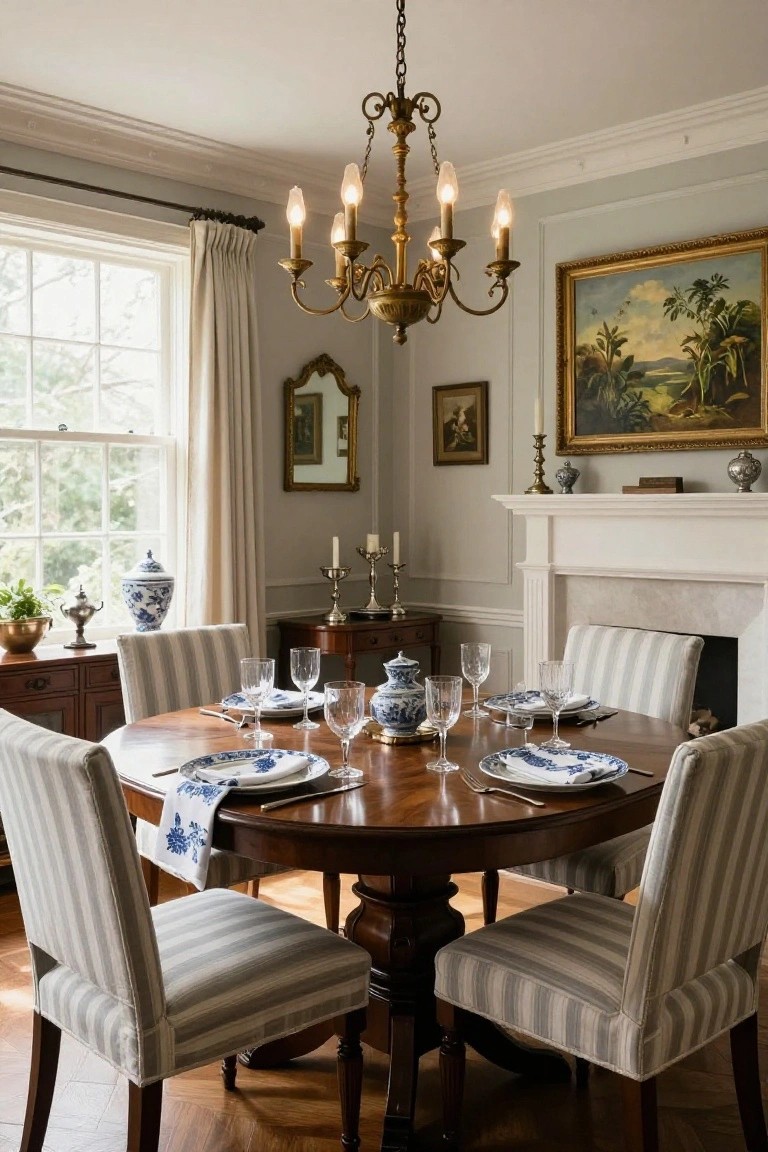
A round table softens the look of a formal dining room without losing any of the tradition. It opens up sight lines so conversation flows more easily and keeps the space from feeling boxed in by straight lines.
This setup suits older homes that already have trim, wainscoting, and classic lighting. Pair it with simple upholstered chairs so the shape of the table stays the main feature.
Soft Color On A Painted Island
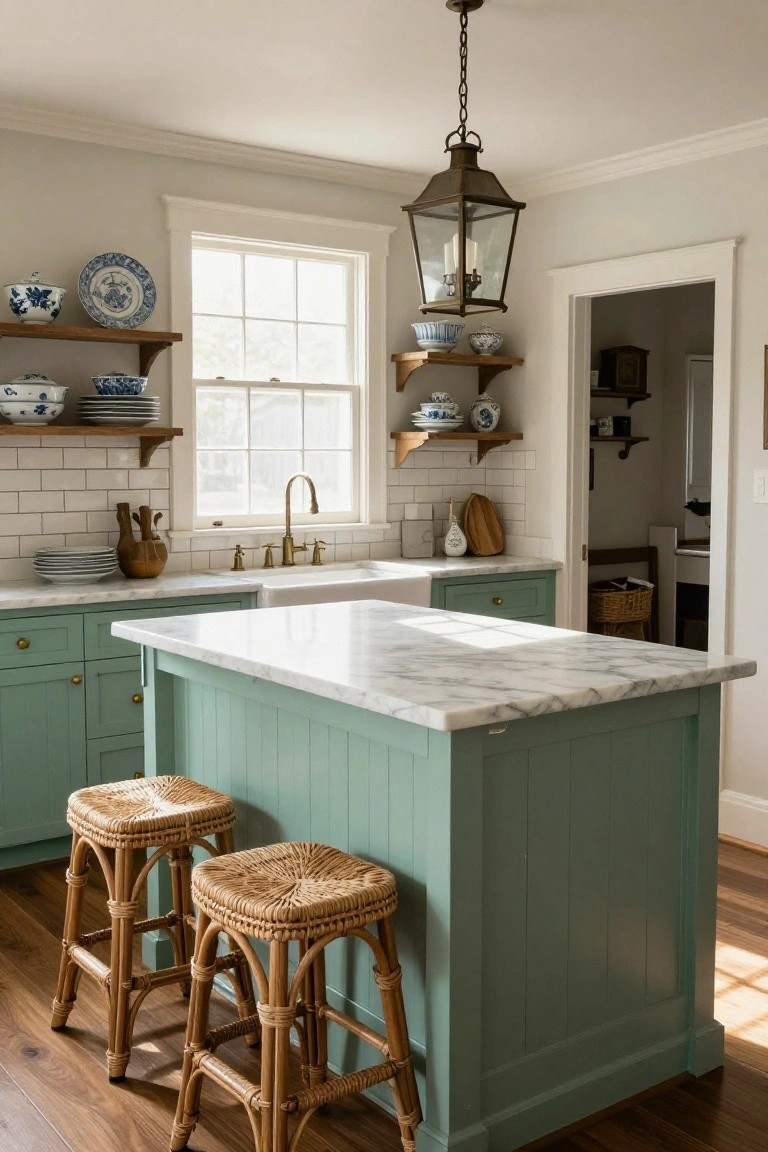
A painted island in a soft green shade gives a kitchen an easy layer of color that still feels classic. It works especially well in Southern homes where you want warmth without making the space feel busy or overly styled.
This approach suits kitchens with white walls and simple trim. Keep the top in a light stone and add natural stools so the color stands out without taking over the room.
Built-In Banquettes In Window Corners

A built-in banquette turns an empty window corner into the most useful spot in the room. It gives you extra seating without crowding the floor, and it feels more permanent and settled than pulling up chairs.
This works especially well in homes with deep window sills or sunny corners that would otherwise go unused. Keep the cushions simple and add a small table in front so the space can shift easily between meals and casual sitting.
Open Shelving Painted to Match the Cabinets
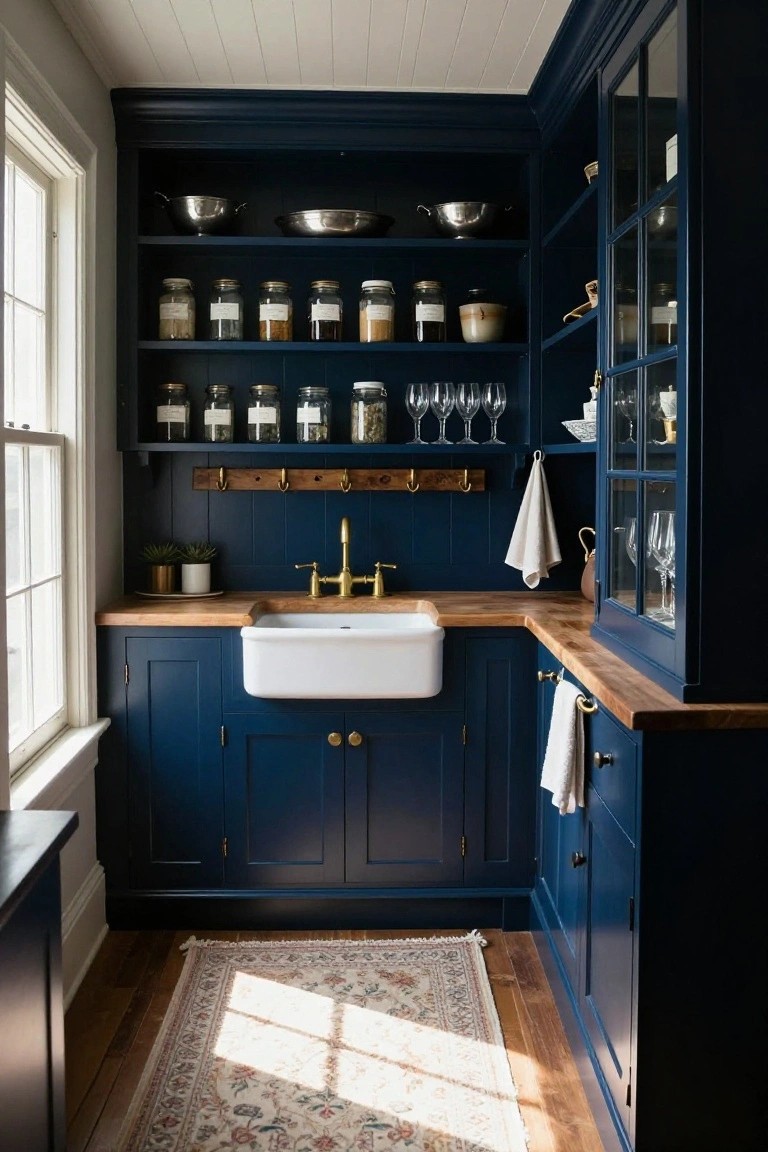
Painting open shelving the same deep color as the surrounding cabinets creates a clean, built-in look that feels intentional rather than added on. It turns what could be a busy wall of storage into one unified surface, which helps the room feel calmer even when the shelves are full.
This approach works especially well in smaller kitchens or butler’s pantries where you want practical storage without visual clutter. Keep the items on the shelves fairly uniform in color or material so the dark paint stays the main feature instead of competing with everything on display.
Layering White Bedding
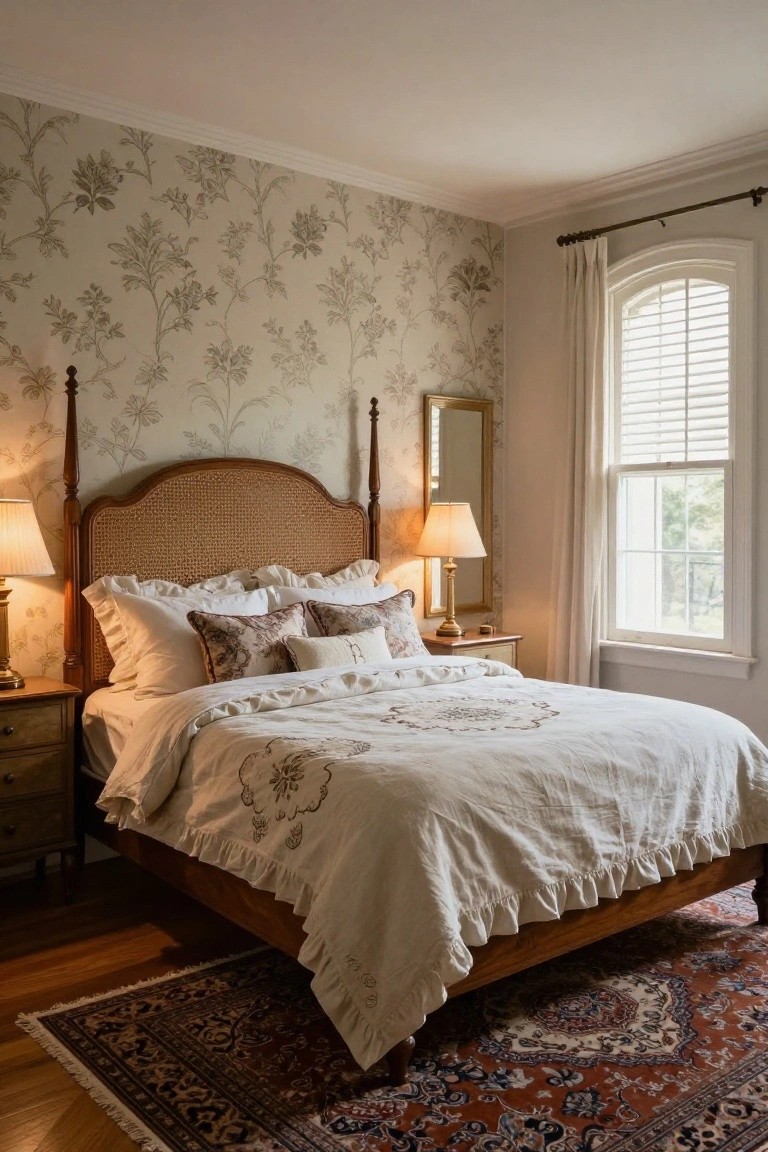
White bedding works well when you build it up in several light layers instead of using one heavy cover. The top layer can be a simple cotton or linen duvet with a bit of embroidery along the edge, while a few patterned pillows add just enough contrast without making the bed feel busy.
This approach suits older homes with wood floors and classic furniture because the soft folds help balance the harder lines in the room. Keep the base sheets and shams plain so the subtle details on the duvet stay visible, and add a lightweight throw at the foot if the space needs a little more warmth.
Built-Ins Add Storage Without Crowding the Room
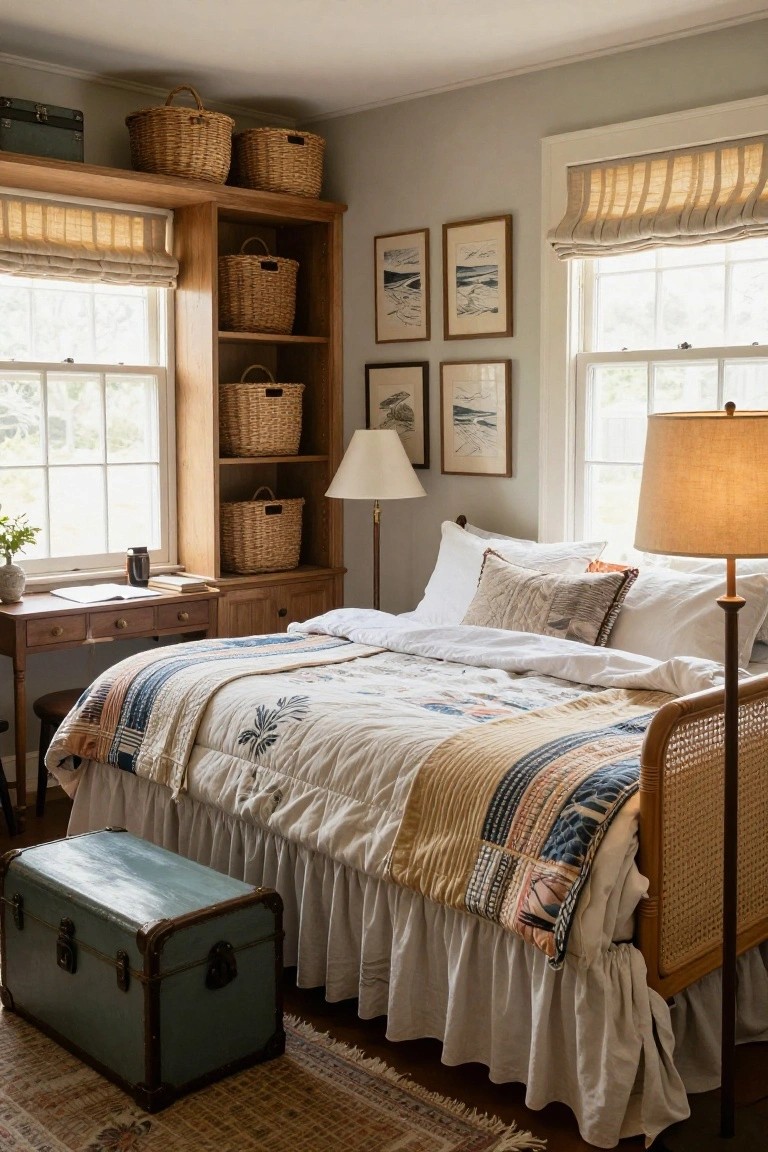
Built-in shelving works well in bedrooms because it turns unused wall space into useful storage. The wooden unit here holds baskets that keep things out of sight while still looking neat.
This setup suits older homes or any room where you want to avoid extra dressers. Stick with open shelves if you like easy access, but use baskets or bins to hide the messier items.
Open Storage For A Nursery

Open storage works well in a nursery because it keeps daily items within reach while avoiding a closed-in look. Baskets and bins let you sort blankets, clothes, and supplies without needing extra furniture that crowds the room.
This approach suits classic homes where you want the space to feel calm and practical at the same time. Stick with light finishes on the unit so the room stays bright, and choose natural baskets that soften the overall effect.
Built-In Bookshelves For A Home Office
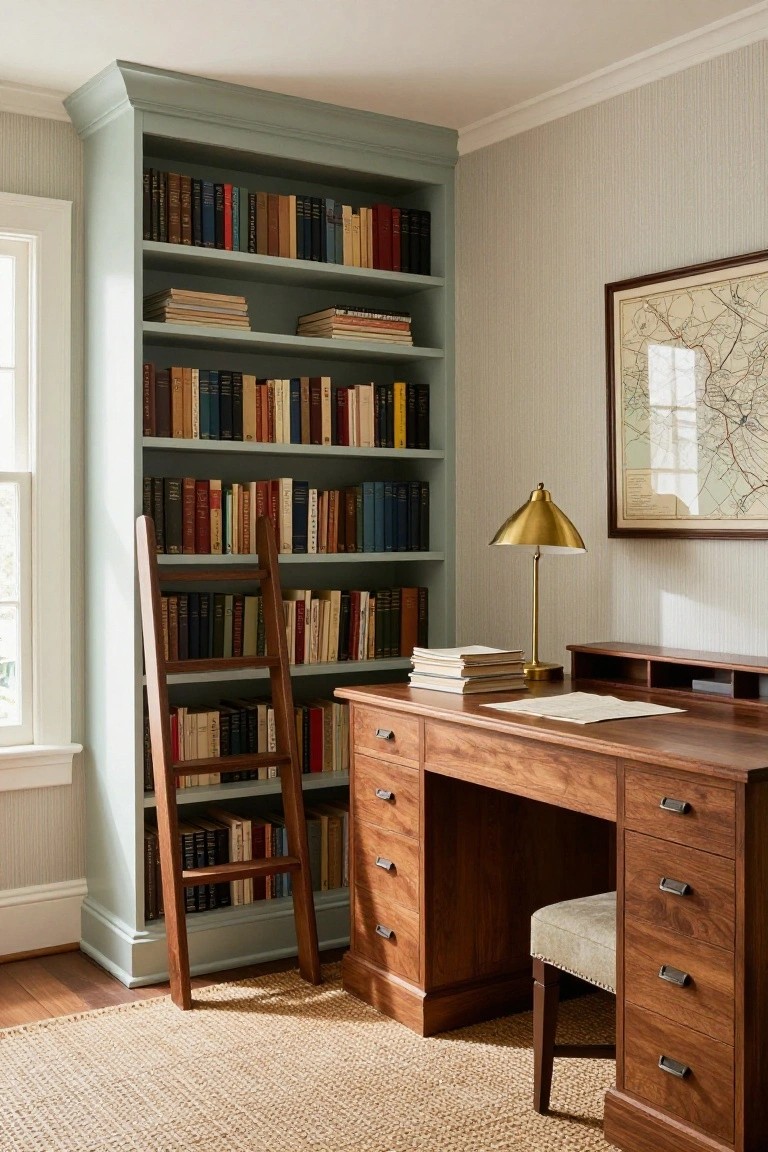
Built-in shelves give a room real storage without crowding the floor. In a space like this they hold plenty of books while leaving room for a desk and chair that actually get used.
They suit older homes or any room where you want the walls to do the work. Keep the ladder handy if the shelves go high, and stick to one wood tone so the whole setup feels pulled together instead of busy.
Painting Wood Paneling Blue
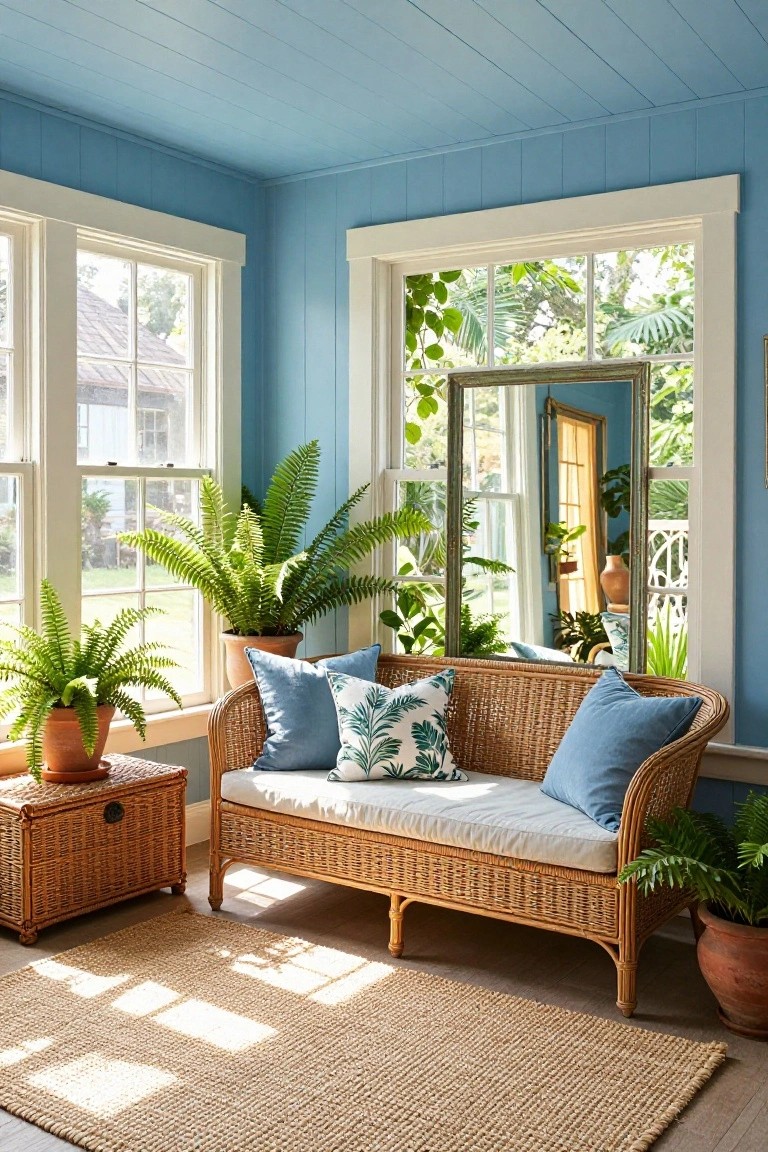
Blue paint on wood walls and ceilings works well in rooms that get strong natural light. It keeps the space feeling bright without losing the warmth that comes from older wood details, and it pairs easily with woven textures and greenery.
This approach suits older homes or any space with lots of windows. Stick to a soft shade, keep trim white, and let natural materials like wicker and jute do the rest. Avoid dark blues if the room already feels shaded.
Open Shelving Keeps Laundry Areas Useful
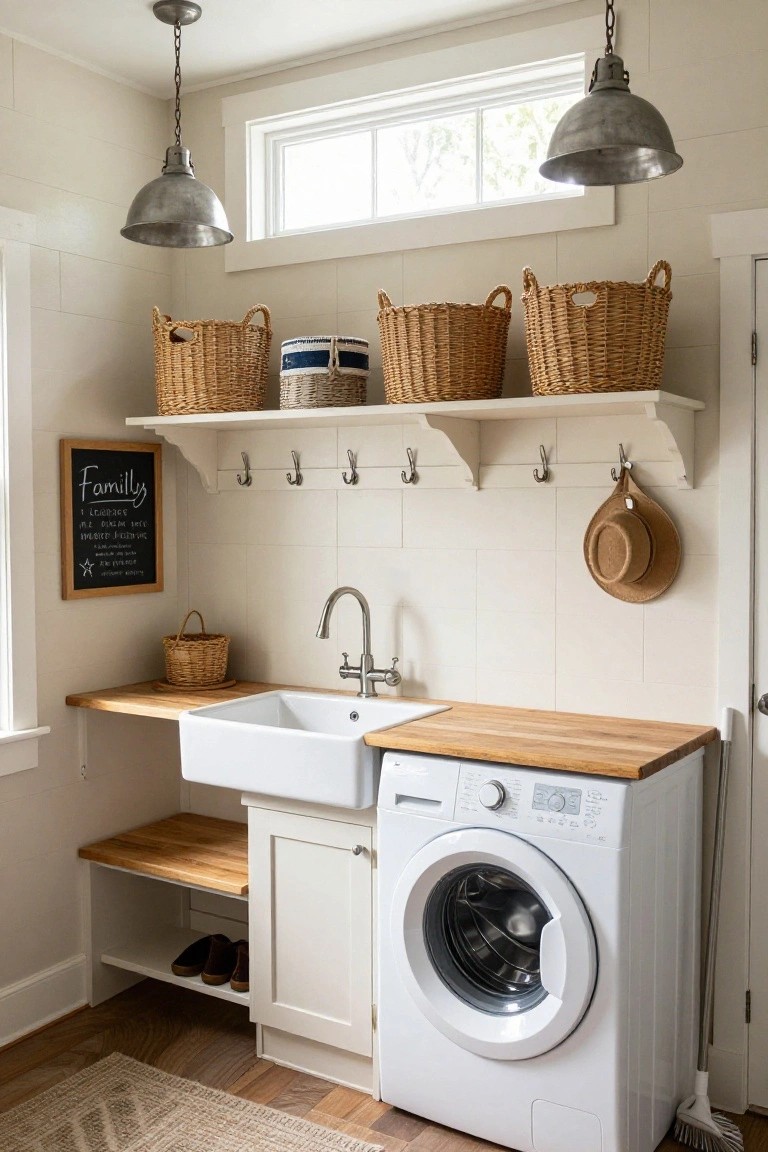
Open shelving above a utility sink and washer gives everyday items a place without hiding them away. Baskets on the shelf hold supplies or sorted loads, and hooks underneath keep smaller things within reach so the room stays tidy without extra cabinets.
This works well in homes that need the laundry space to handle regular traffic. Keep the shelves at a comfortable height and use simple bins so nothing feels crowded or hard to grab during busy days.
Console Tables In The Entry
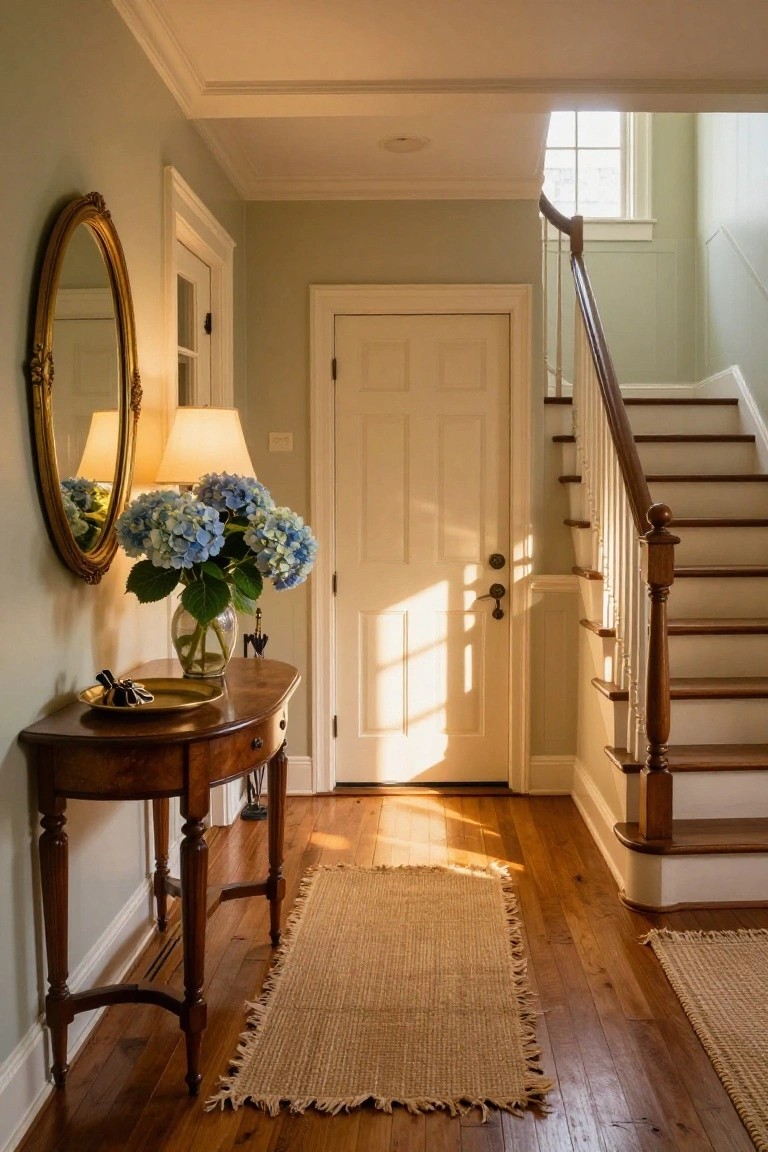
A console table paired with a mirror gives an entry a useful landing spot without taking up much floor space. It keeps the path clear to the door while adding a bit of warmth and function right where people need it.
This works best in homes with wood floors and simple trim. Keep the surface light with one or two items so the table stays practical rather than crowded.
Wood Vanities Add Warmth To Classic Bathrooms
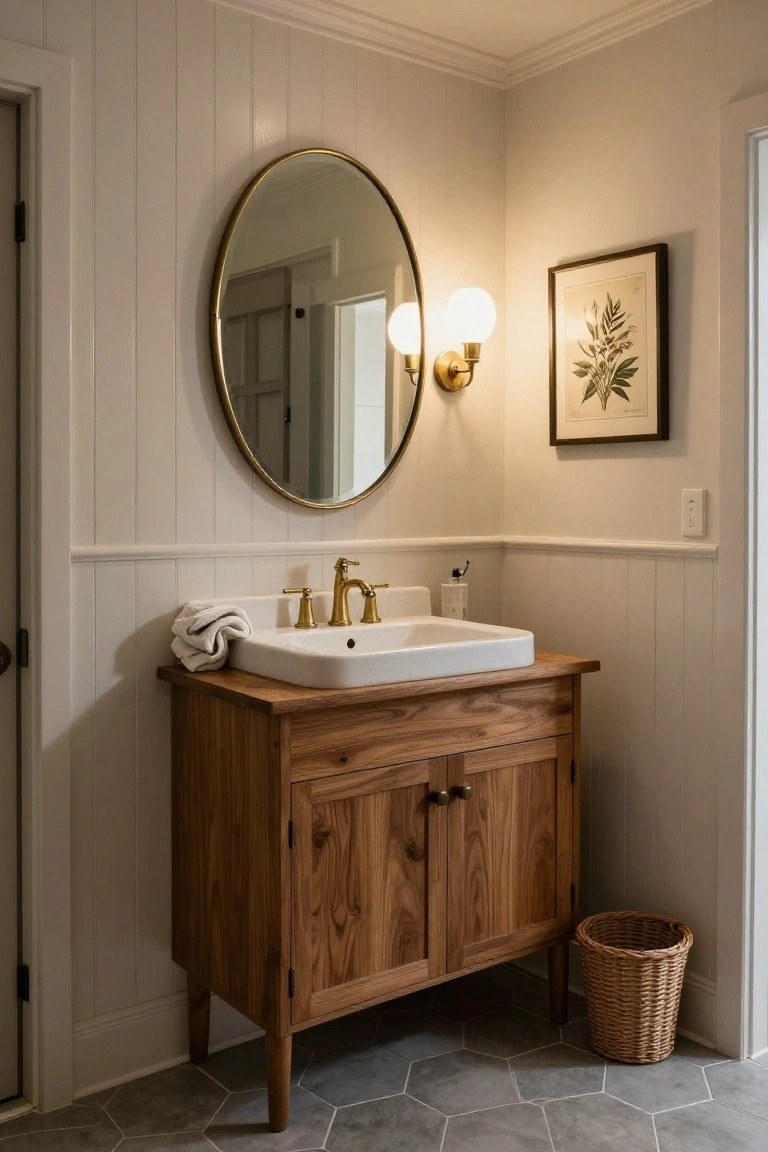
Many bathrooms lean too hard on white surfaces and end up feeling a little stark. A wood vanity cuts through that and brings in natural grain that feels warmer without making the room look busy.
This approach works best in homes that already have some traditional trim or paneling. Keep the cabinet style simple so the wood reads as a quiet layer rather than the main event.
Painted Vanities in Soft Tones
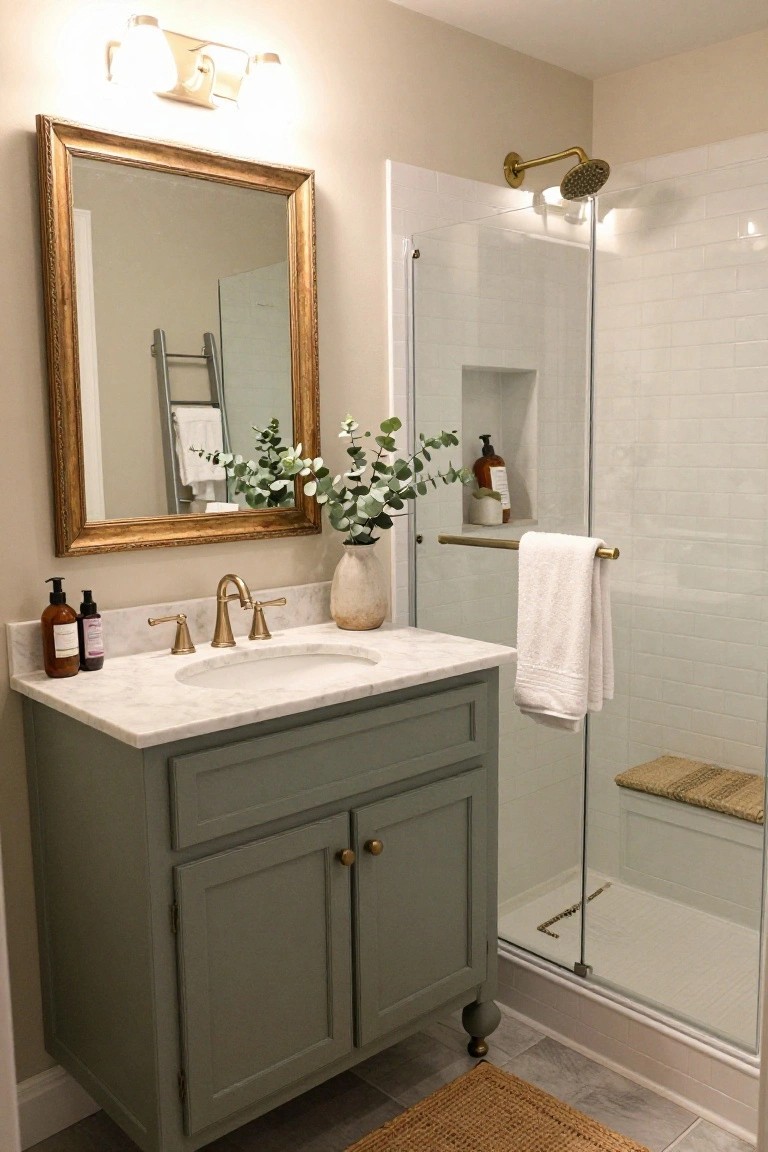
A painted vanity in a soft muted color gives a bathroom more warmth and presence than plain white cabinetry. The finish adds a layer of quiet character that works especially well with marble tops and simple tile.
This choice suits traditional or Southern-style homes that want a bit of color without going bold. Keep the walls light and stick with neutral hardware so the vanity anchors the space without closing it in.
Layering Books On Hallway Furniture
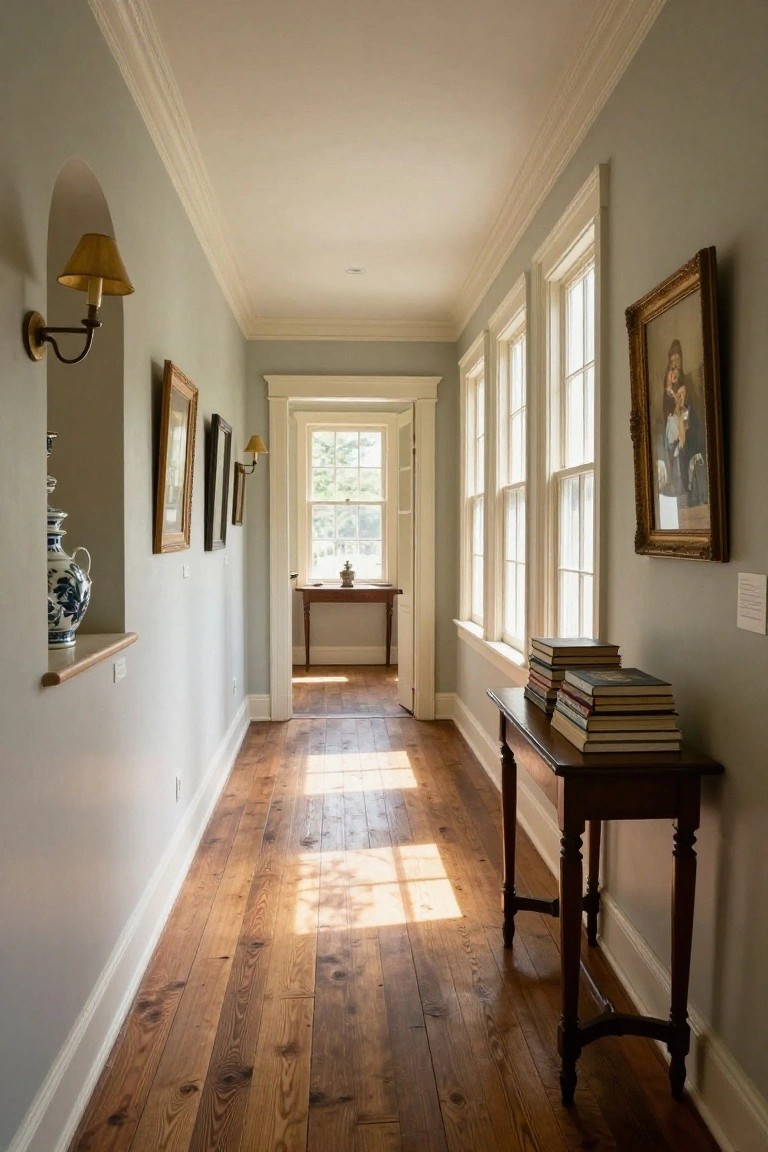
A console table with a few stacks of books gives a hallway something to do without filling it up. The wood surface and the books add weight and color against the painted walls, and the whole setup stays out of the way while still feeling put together.
This works best in older homes where hallways run long and get plenty of side light. Keep the table narrow, stick to a couple of book piles, and let the floor and trim do the rest of the work. Avoid crowding the surface or adding too many small objects.
Built-In Desks For Hobby Rooms
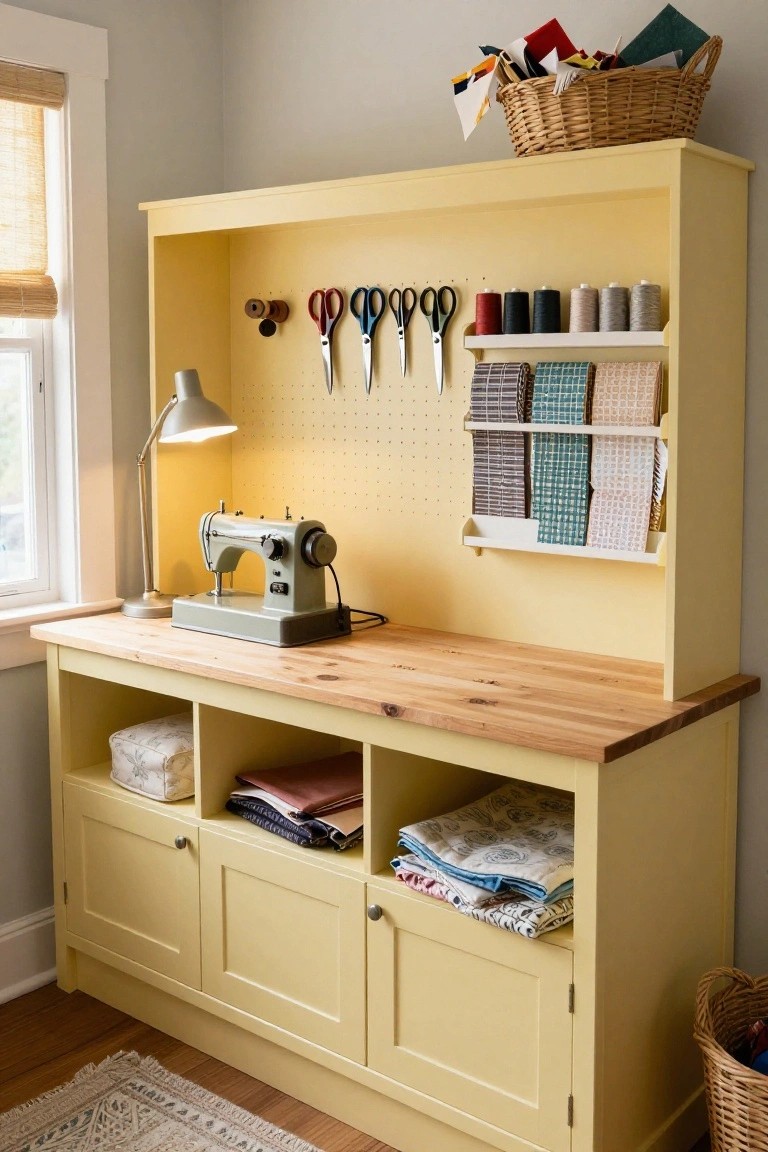
A built-in desk can turn an empty wall into a real workspace while keeping supplies close at hand. The long wood counter, lower cabinets, and open cubbies give room for both the machine and fabric storage without crowding the floor.
This kind of unit suits older homes where a spare room needs to serve more than one purpose. It works best when the shelves and pegboard stay simple so tools stay visible and easy to reach.
Art Grouped Above a Piano
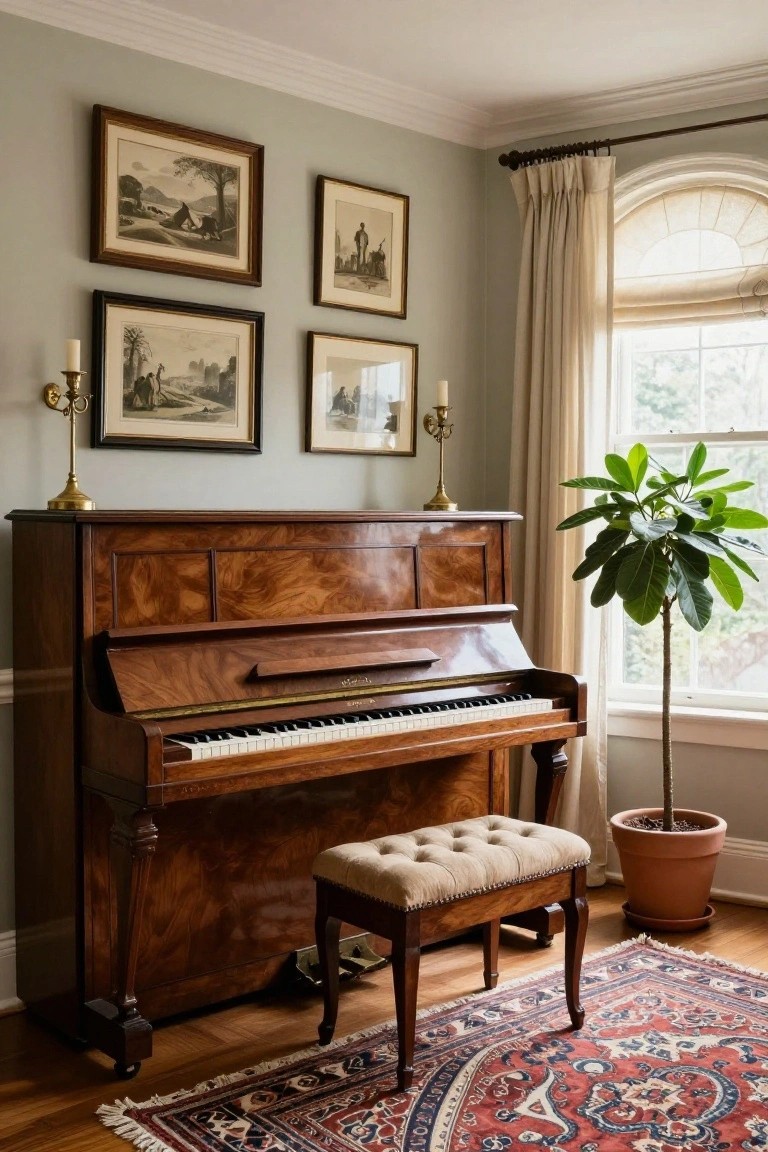
A piano gives you a solid base for hanging art without needing perfect symmetry. The frames can sit in a loose cluster that feels gathered over time rather than planned all at once.
This works well in rooms that already have wood floors and a rug to tie the lower part of the wall to the rest of the space. Stick to similar frame tones and leave a little breathing room between pieces so the arrangement stays relaxed.
Window Benches For Everyday Comfort
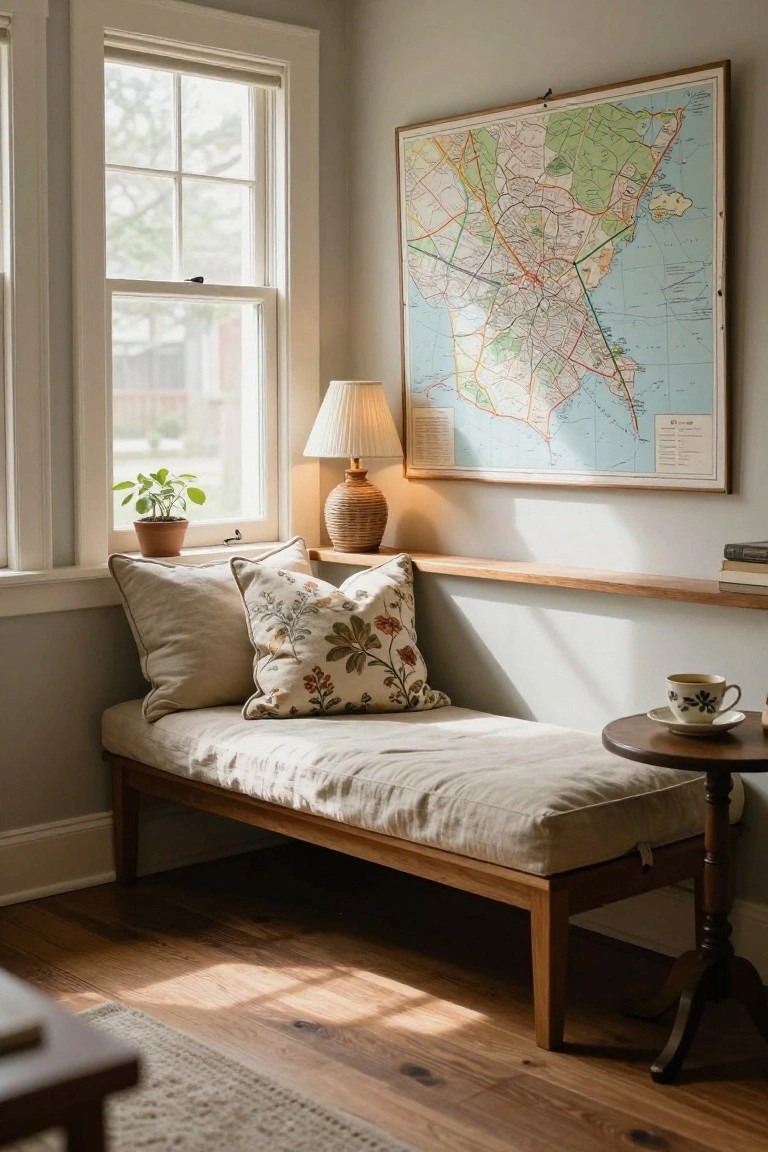
A window bench turns an underused spot into a place where you can actually sit and relax. It works especially well in rooms that get steady light, since the bench keeps the area open while still giving you a spot to rest without adding bulky furniture.
Place one in a bedroom or living room where the window already has decent trim. Keep the bench itself simple in wood and layer on a few pillows in different fabrics so the seat feels soft and inviting. It suits older homes that already lean classic and does not need much else to feel finished.
Built-Ins With Added Seating In A Dressing Room
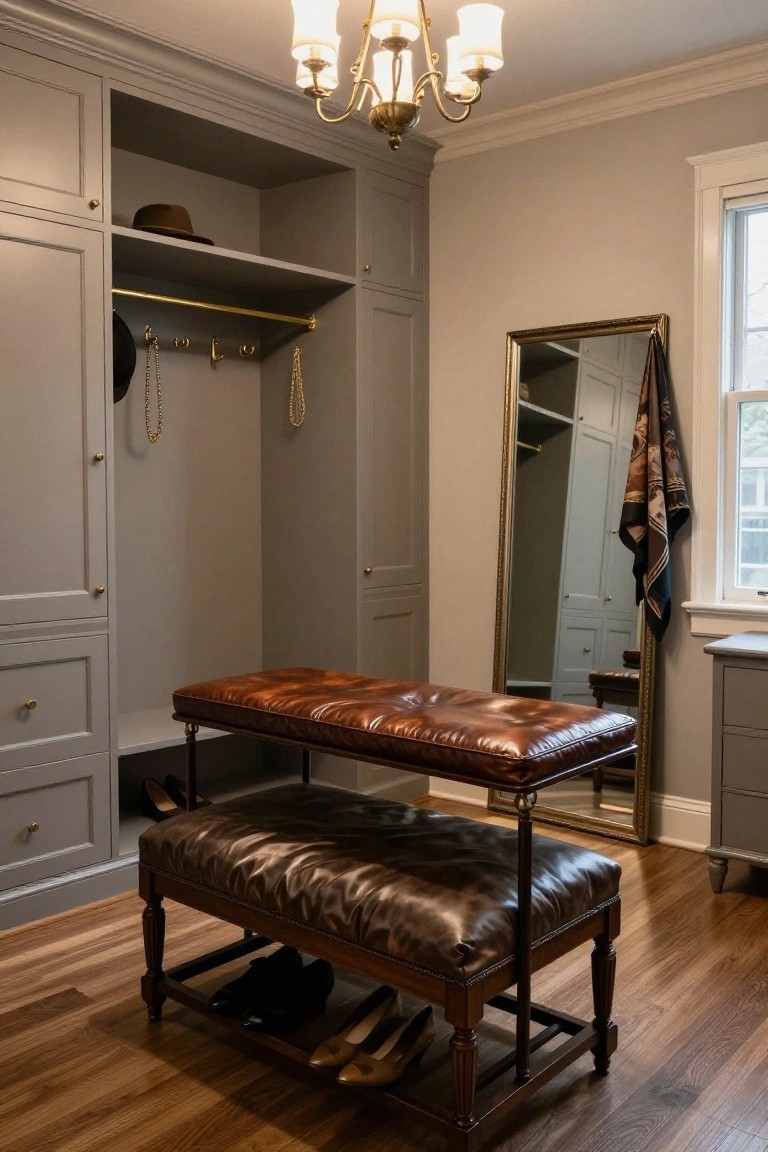
Built-in cabinetry already makes a closet feel more complete, but adding seating turns it into a space you actually use. A couple of leather benches give you a spot to sit while getting dressed and create extra storage underneath for shoes or bags.
This setup works best in homes where the closet is large enough to hold a few pieces of furniture. Keep the benches simple and low so they do not block the cabinets or make the room feel crowded.
Built-Ins That Keep Books In Reach
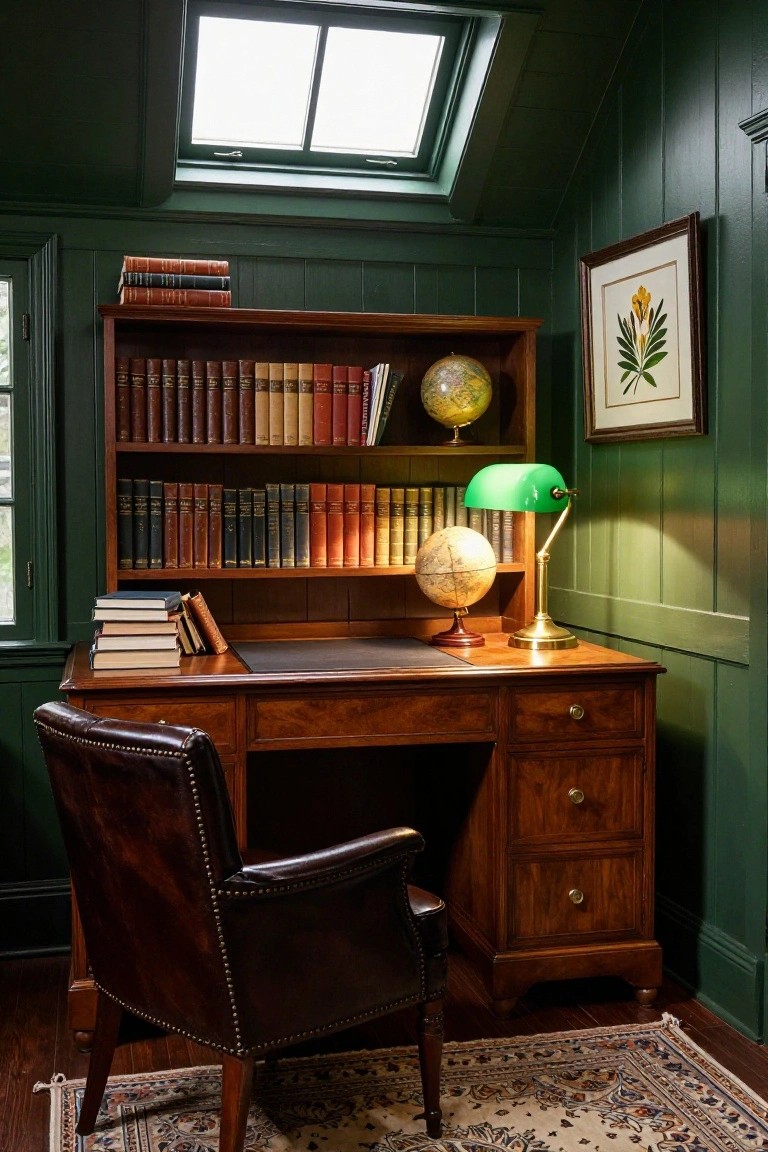
A desk with built-in shelves above it gives a home office both storage and character. The shelves hold rows of books without taking up extra floor space, and the lower surface stays clear for work. This setup feels especially at home in Southern houses where rooms often serve more than one purpose.
It works best in smaller or oddly shaped spaces where freestanding bookcases would crowd the room. Keep the wood tones warm and let the shelves fill gradually rather than all at once. Avoid overcrowding the lower desk area so the workspace stays practical day to day.
Patterned Tile In The Bathroom
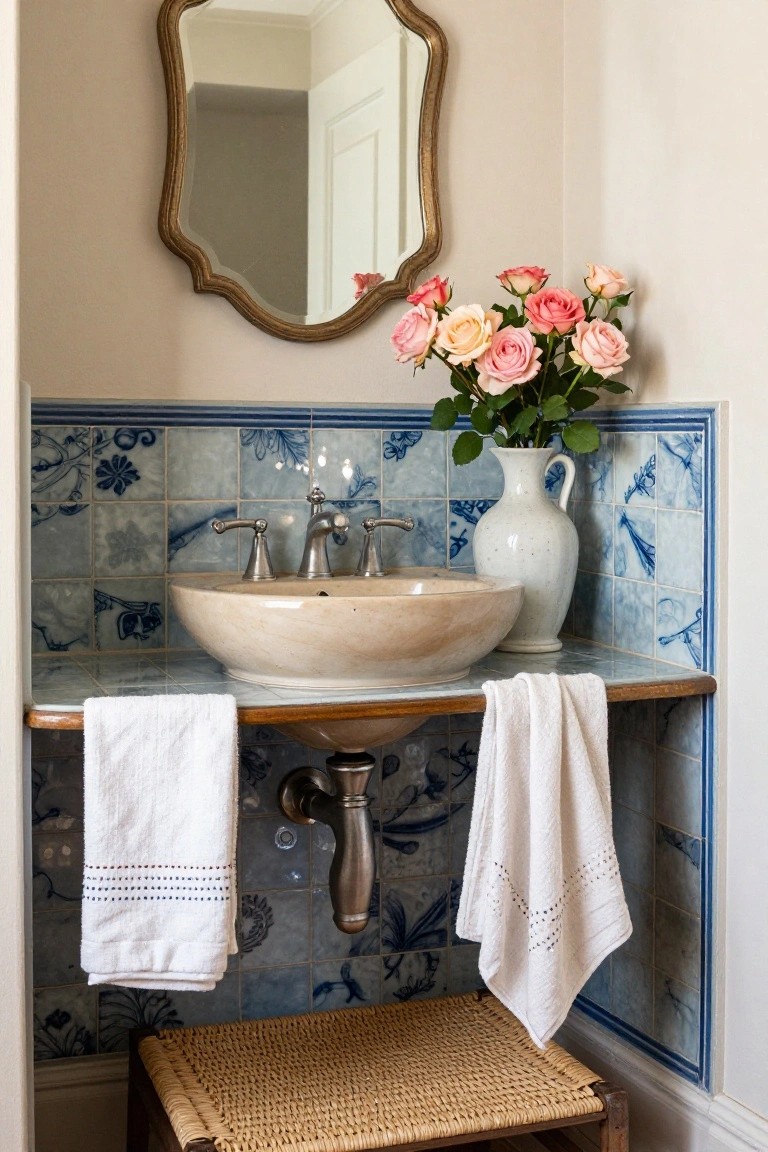
Patterned tile gives a bathroom a finished look that still feels personal. The blue and white design here adds just enough detail to the wall without making the small space feel busy, and it pairs easily with the stone sink and wood ledge.
This approach works well in older homes or any bath where you want a bit of character. Keep the rest of the room simple so the tile can stand out, and make sure the pattern is not too large for the scale of the room.
Layer Shelves and Surfaces with Books
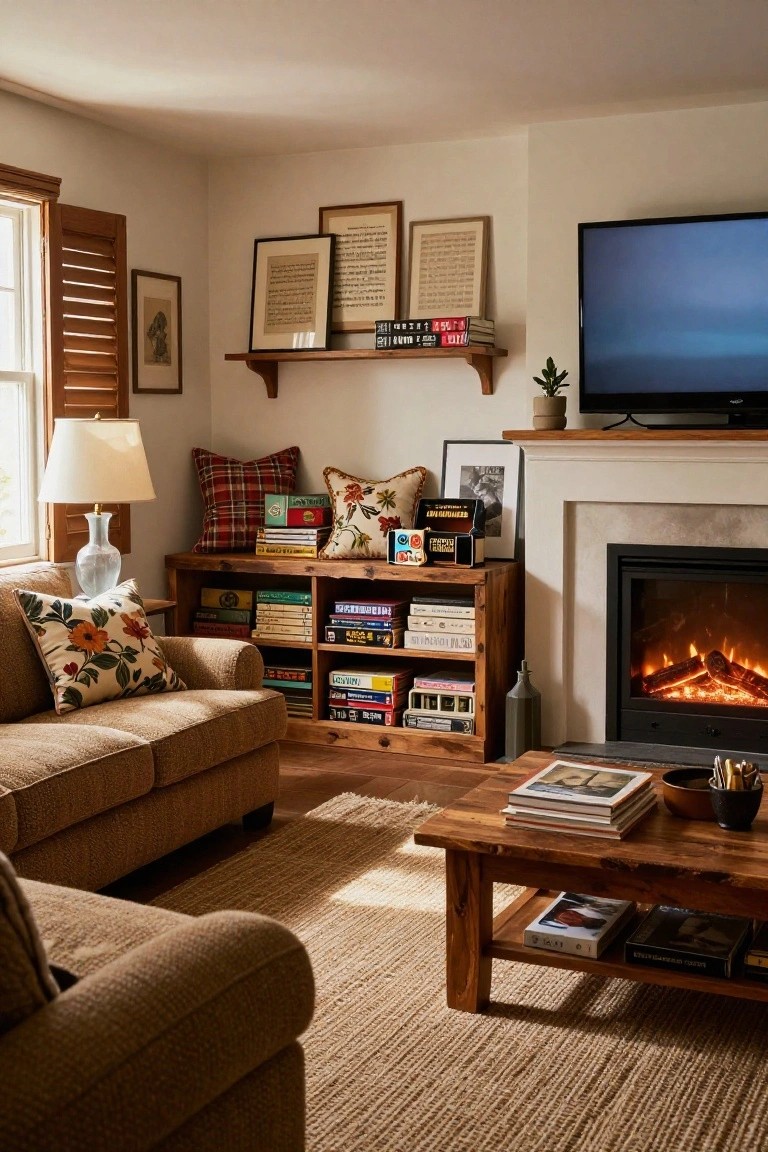
Many classic Southern rooms gain their warmth from books used as the main layering element. Rows on low shelves and casual stacks on tables add depth and a collected feel that feels natural rather than styled.
This approach works best in living rooms that already have wood tones and simple furniture. Keep most books upright on open shelves, then add a few short stacks on nearby surfaces so the room feels lived in without looking crowded.
Bar Counters With Open Shelving Above
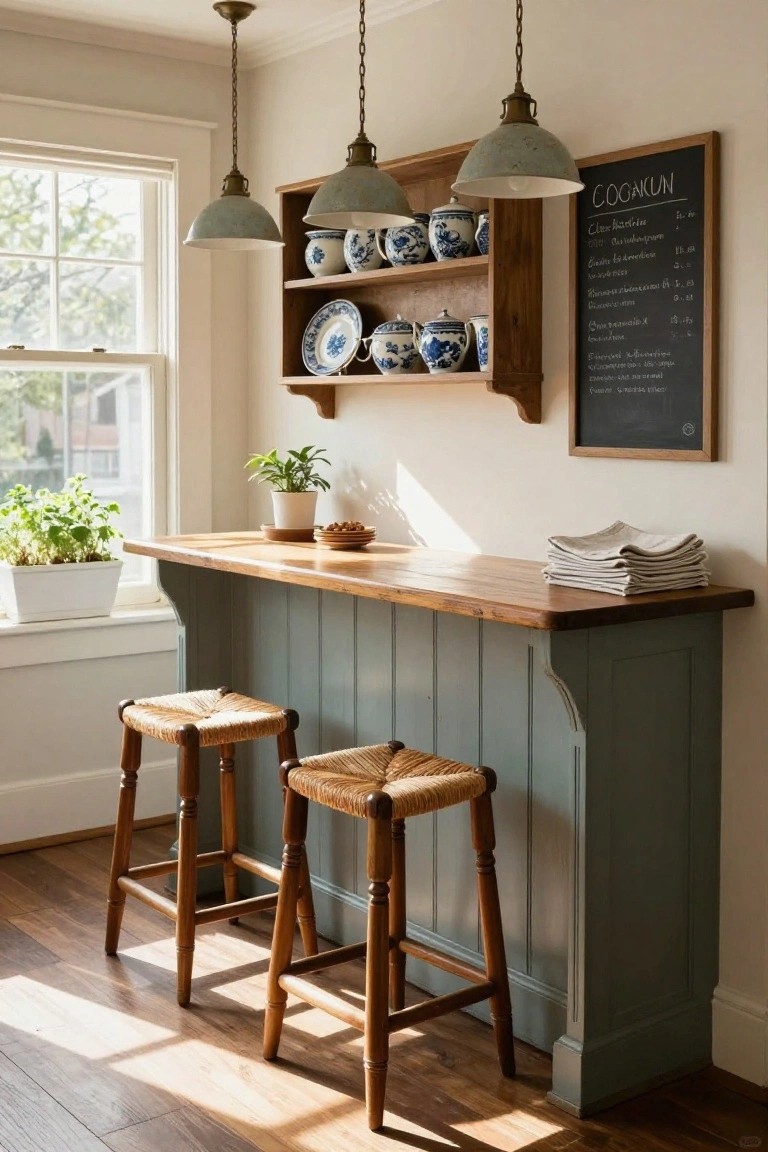
A bar counter with open shelves above it gives you a practical spot for serving or casual meals without taking up much floor space. The lower cabinetry anchors the area while the shelves keep everyday dishes visible and within reach.
This works well in kitchens that need an extra surface but still want to feel open. Keep the base color soft so it blends with the walls, and limit what you store on the shelves to avoid a crowded look.
Frequently Asked Questions
Q: How do I layer different textures without overwhelming the room?
A: Start with large neutral pieces like a linen sofa. Build up with cotton throws and a wool rug. Add one or two shiny accents like brass lamps to catch the light.
Q: Can I mix my grandmother’s antiques with modern furniture?
A: Yes, group similar shapes together so the eye connects them. Put the antique chest next to a simple chair in the same wood tone. This makes everything feel intentional.
Q: What if my room ends up feeling dark with all these layers?
A: Pick light colors for the main pieces. Sheer curtains bring in air and light.
