

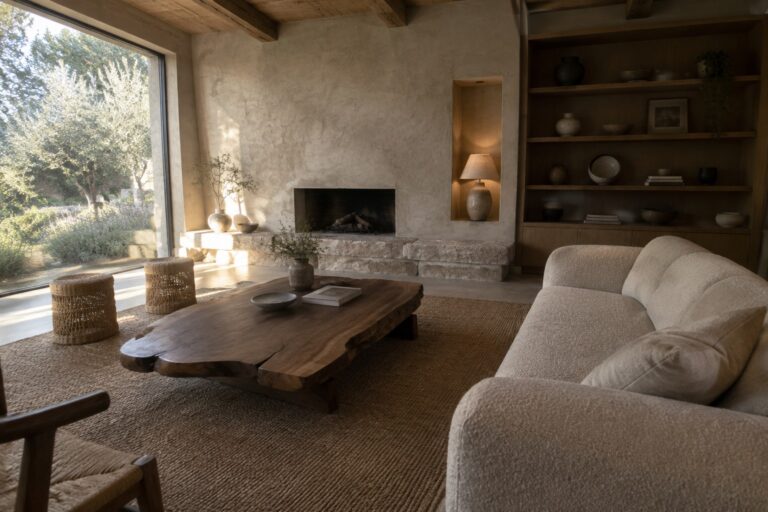
I have noticed that plaster walls paired with wood beams often soften a room in ways that make it feel lived in from the start.
Natural stone floors add a grounded quality that changes how the space functions day to day, especially when light shifts across them.
One approach made me want to test a similar mix in my own kitchen.
The balance of rough and smooth surfaces tends to highlight what matters most in a room without needing extra layers.
Trying out these material choices in smaller areas first can show whether they hold up to real use over time.
Plaster and Stone on the Fireplace Wall
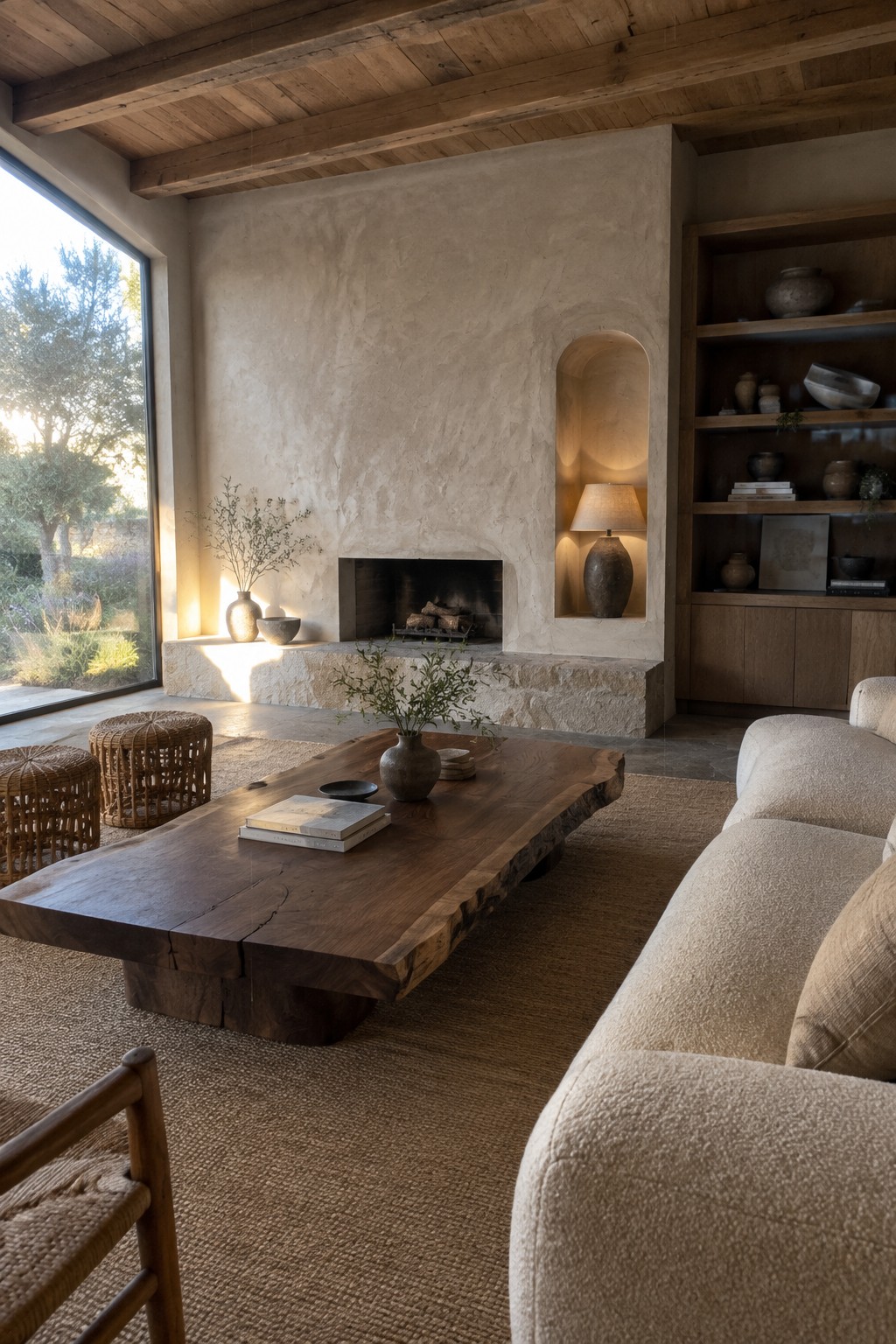
A large plaster wall around the fireplace gives the room a soft, quiet feel that works well with wood and stone. The rough texture of the plaster next to the solid stone base keeps things simple without needing extra decoration or color.
This approach suits living rooms that already have wood beams or floors. It works best when you keep the rest of the space open and limit what you put on the wall so the materials can stand out on their own.
Textured Plaster Bedroom Walls
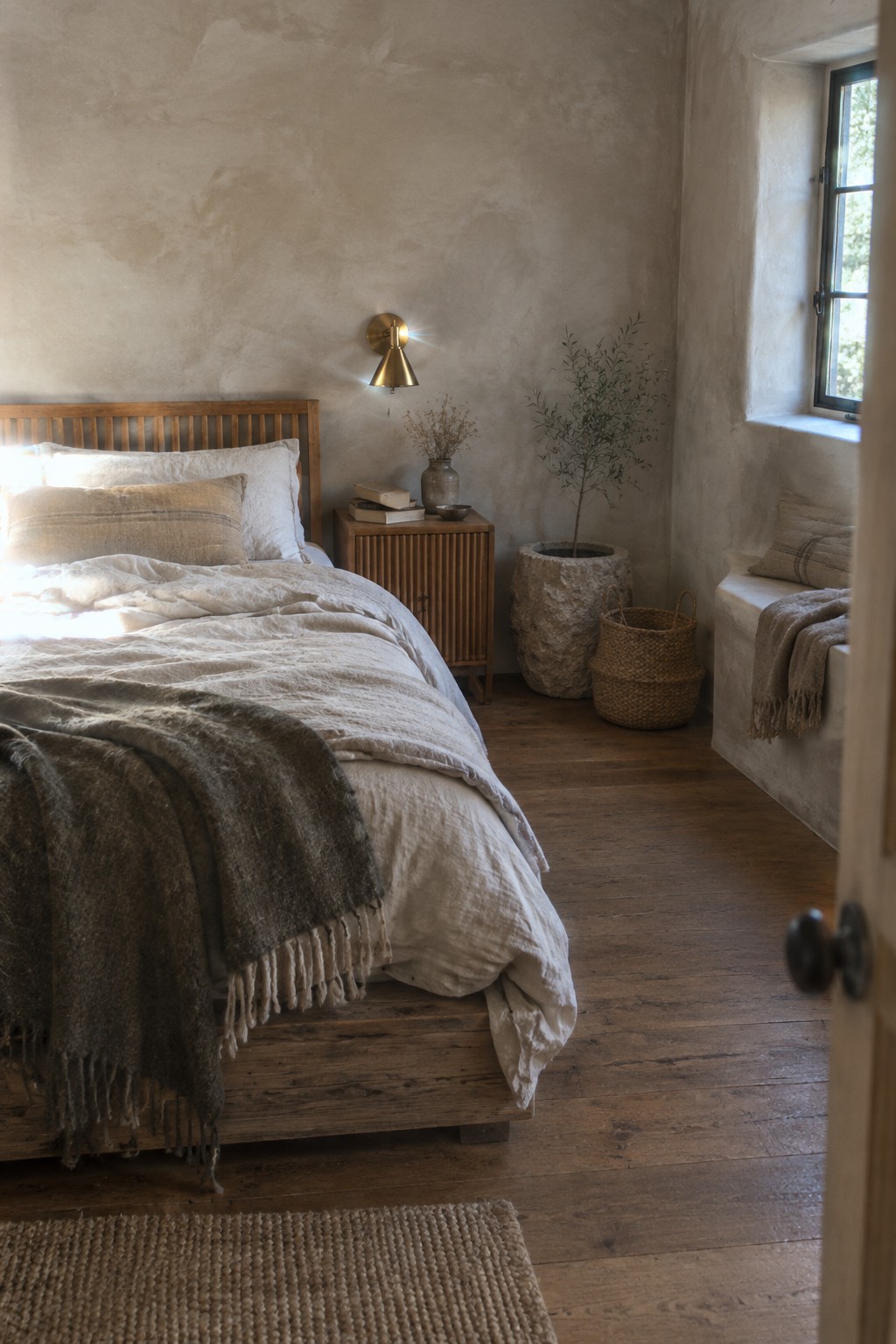
Plaster walls with that soft, uneven finish give a bedroom an immediate sense of calm. They pick up light gently and create a quiet backdrop that lets wood furniture and simple textiles do the rest of the work. In this room the rough plaster pairs with the solid wood bed and nightstand without competing.
This approach suits homes that already have some age or character, though it works just as well in newer builds if you want to avoid flat drywall. Keep the rest of the room light on pattern and color so the walls stay the main material story. Avoid adding too many framed pieces or busy curtains, since the texture itself is doing the visual work.
Plaster Range Hoods In Wood And Stone Kitchens
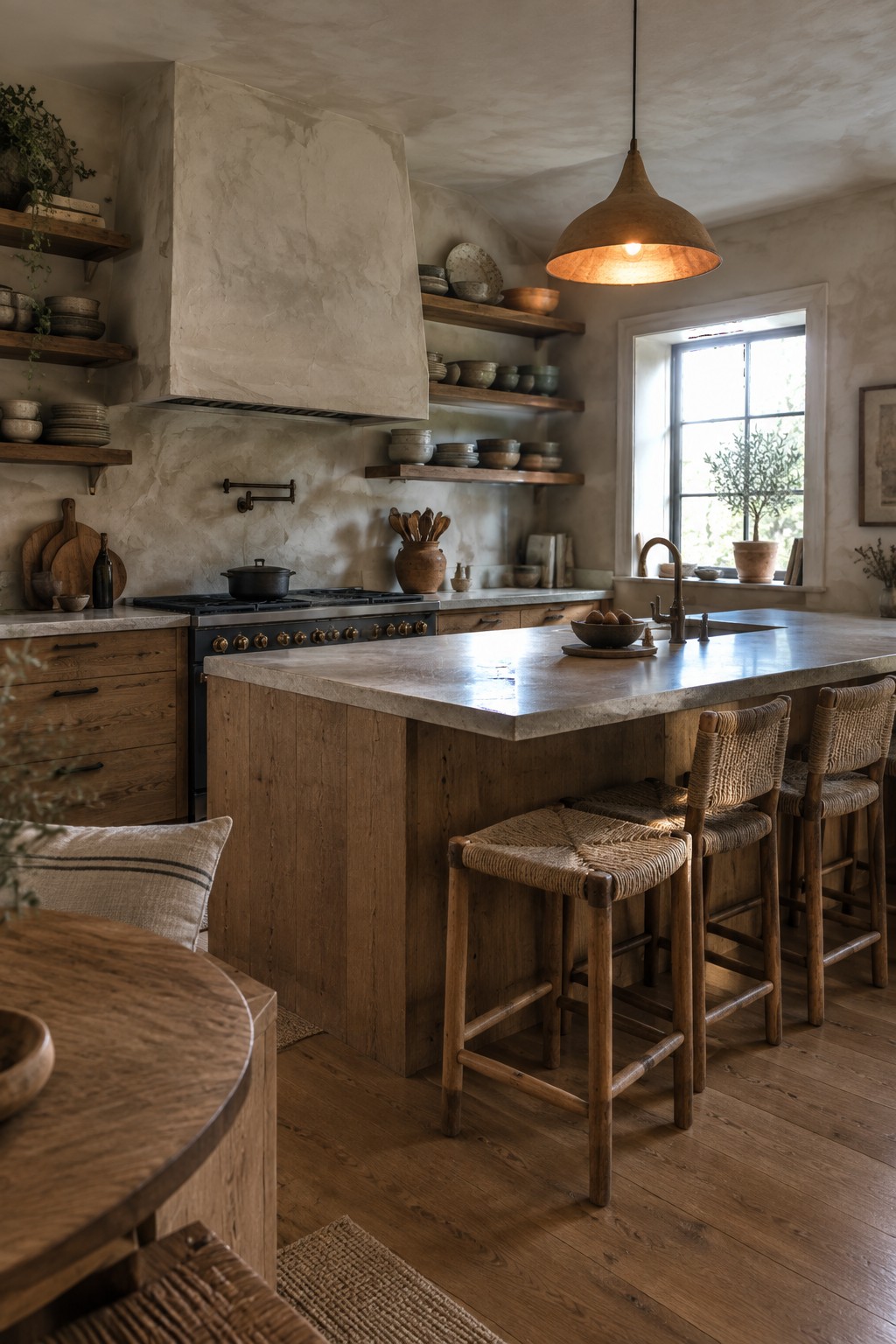
A plaster range hood gives the kitchen a soft, organic shape that works well against the straight edges of wood cabinetry and a stone countertop. It adds texture without needing extra decoration, and the material feels at home with the rest of the natural finishes already in the room.
This approach suits homes that want a calm kitchen without a lot of shine or perfect lines. It works best in spaces with good ventilation so the plaster stays protected, and it pairs especially well with open shelving and simple wood tones rather than anything too ornate.
Bathrooms That Combine Plaster, Wood, And Stone
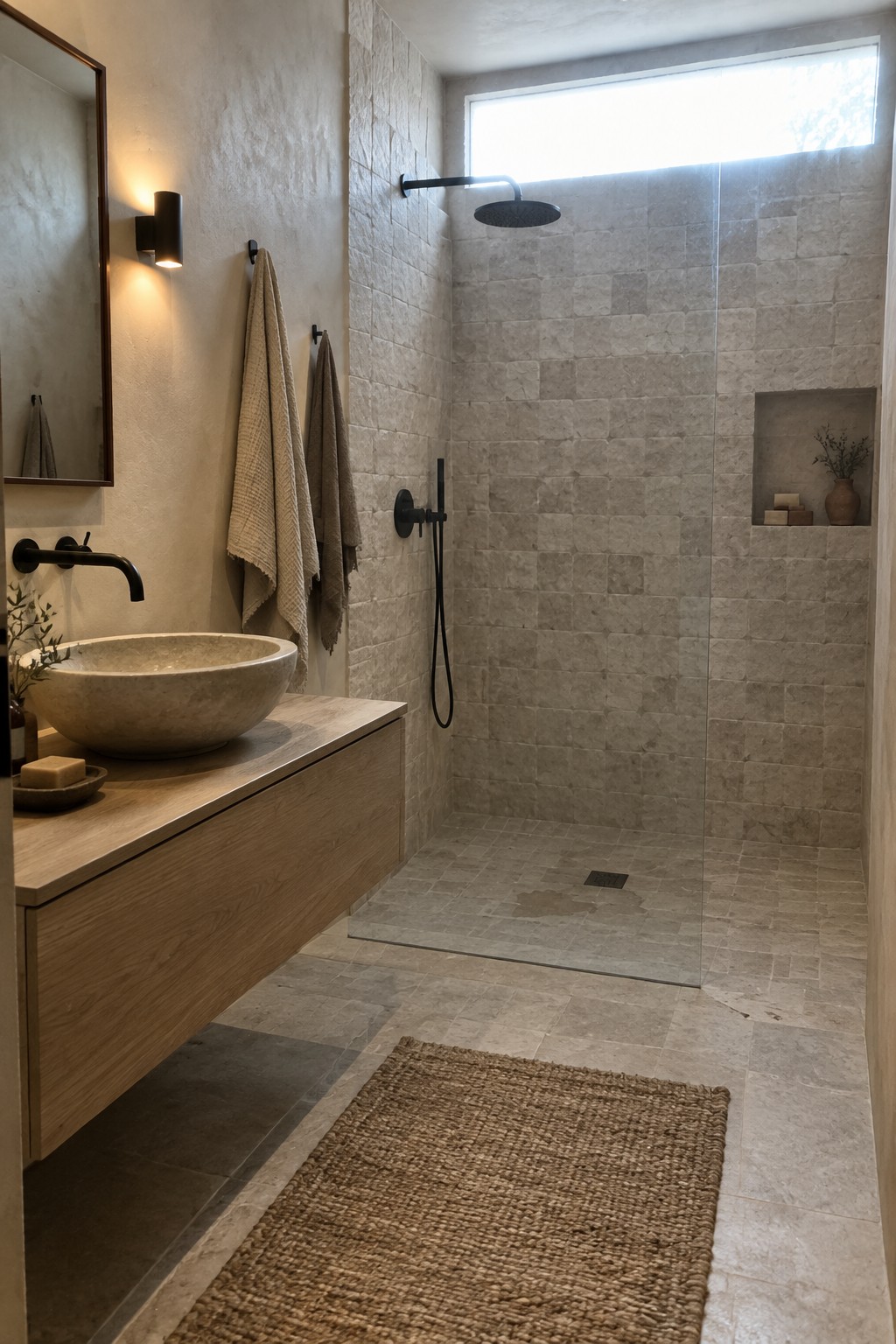
Plaster walls bring a soft, uneven texture that pairs naturally with wood and stone. In this setup the rough wall surface makes the wood vanity and stone sink feel warmer and more grounded instead of cold or flat.
This material mix works best in bathrooms that stay simple overall. Keep the palette to a few tones and let the different textures carry the interest. It suits smaller rooms especially, where too many finishes can start to feel busy.
Wood Tables Against Plaster Walls
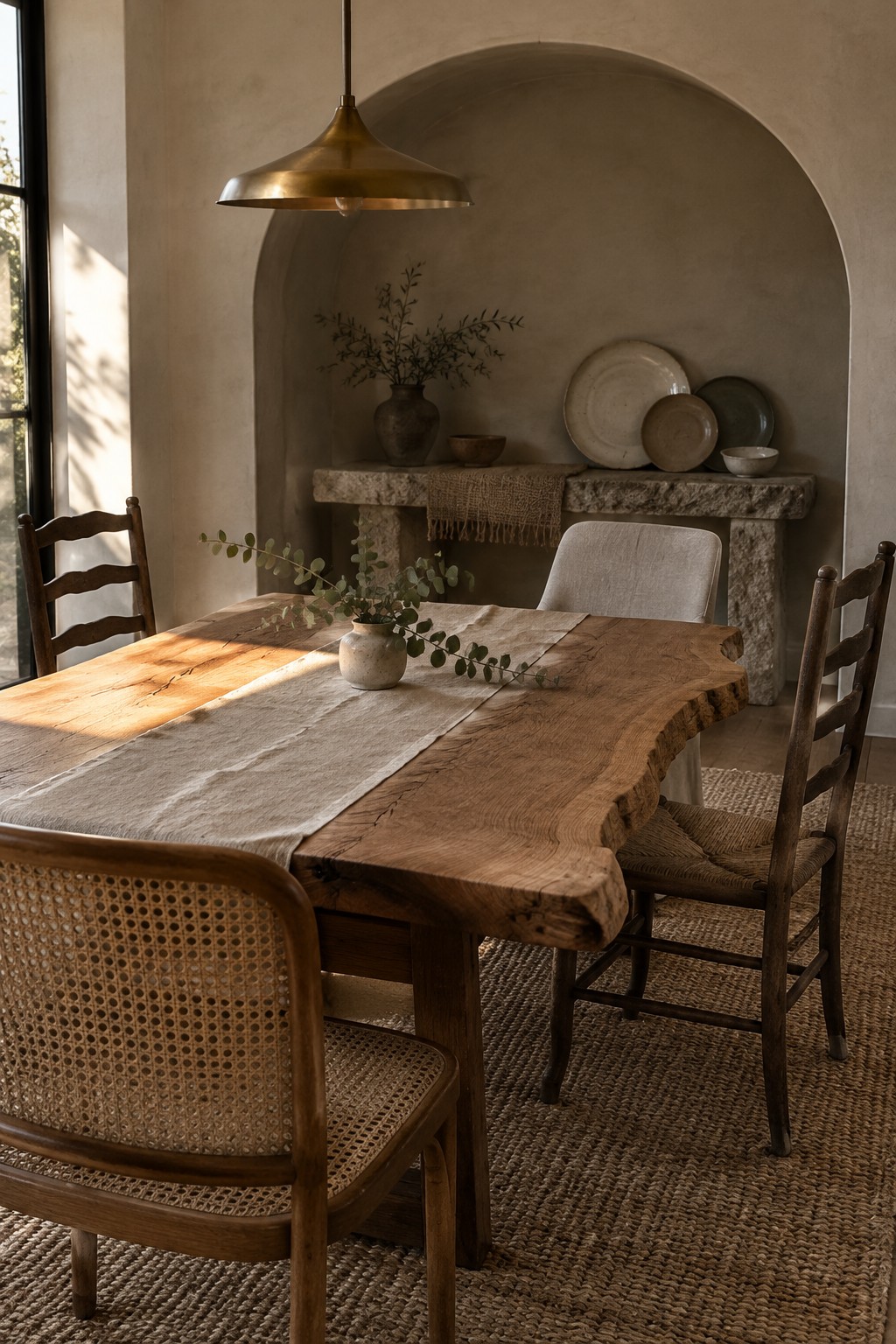
A solid wood table gives a room weight when the walls are kept plain. The surface shows its own grain and edges, so the space feels settled without extra layers or patterns.
This approach suits older homes or new builds that already have textured plaster. Let the table take the main spot and keep seating and accessories few so the wood stays the focus.
Pairing Wood With Plaster In Workspaces
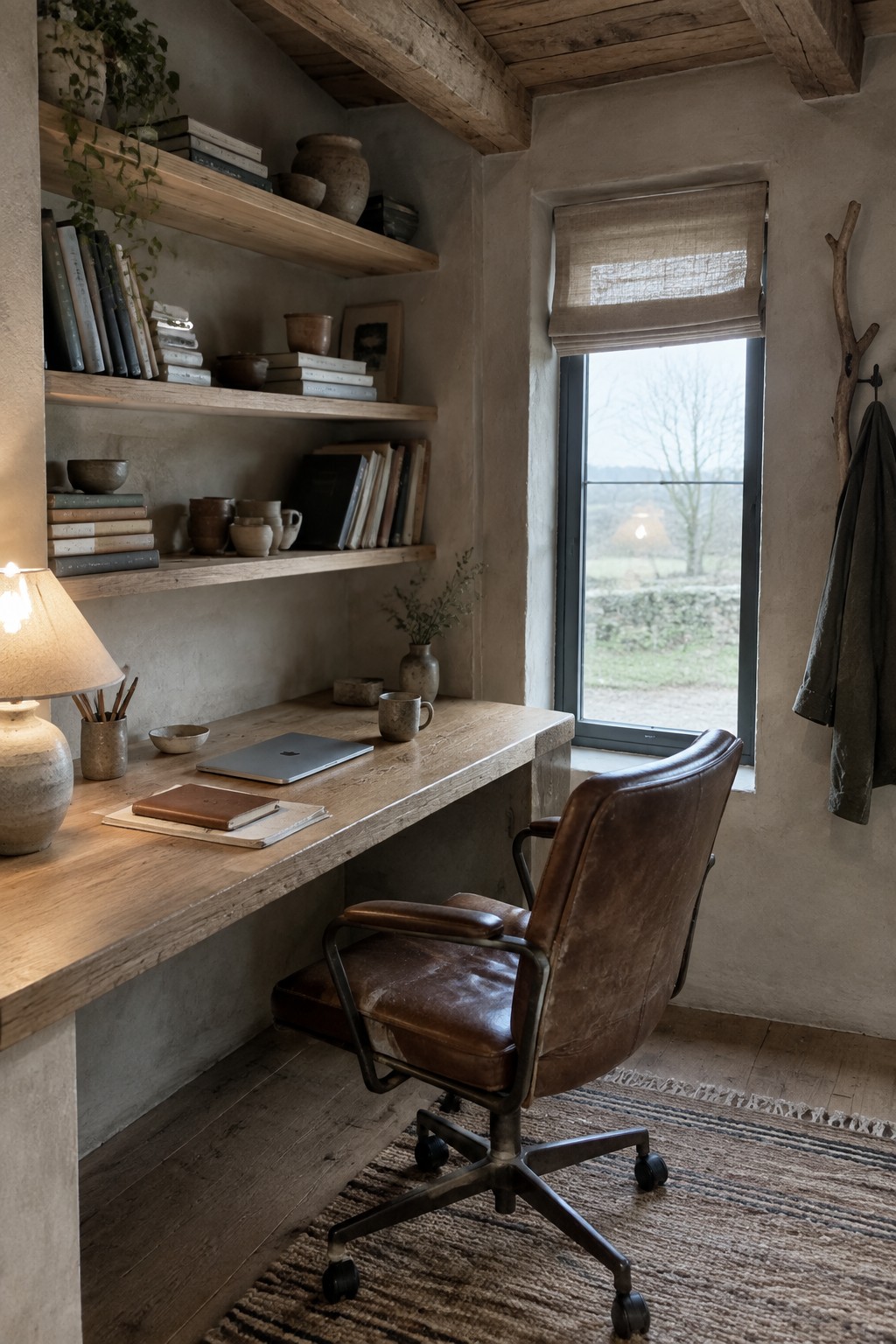
Wood against plaster creates a workspace that feels calm and settled. The raw texture of the wood adds warmth while the plaster keeps things quiet and simple. This mix works because it does not need extra layers or bright colors to feel finished.
It suits smaller home offices or studies where you want the walls to stay visible. Use a single wood tone for the desk and shelves so the plaster can show its uneven surface. Avoid overcrowding the shelves and let the natural materials do the work.
Open Shelving With Woven Baskets
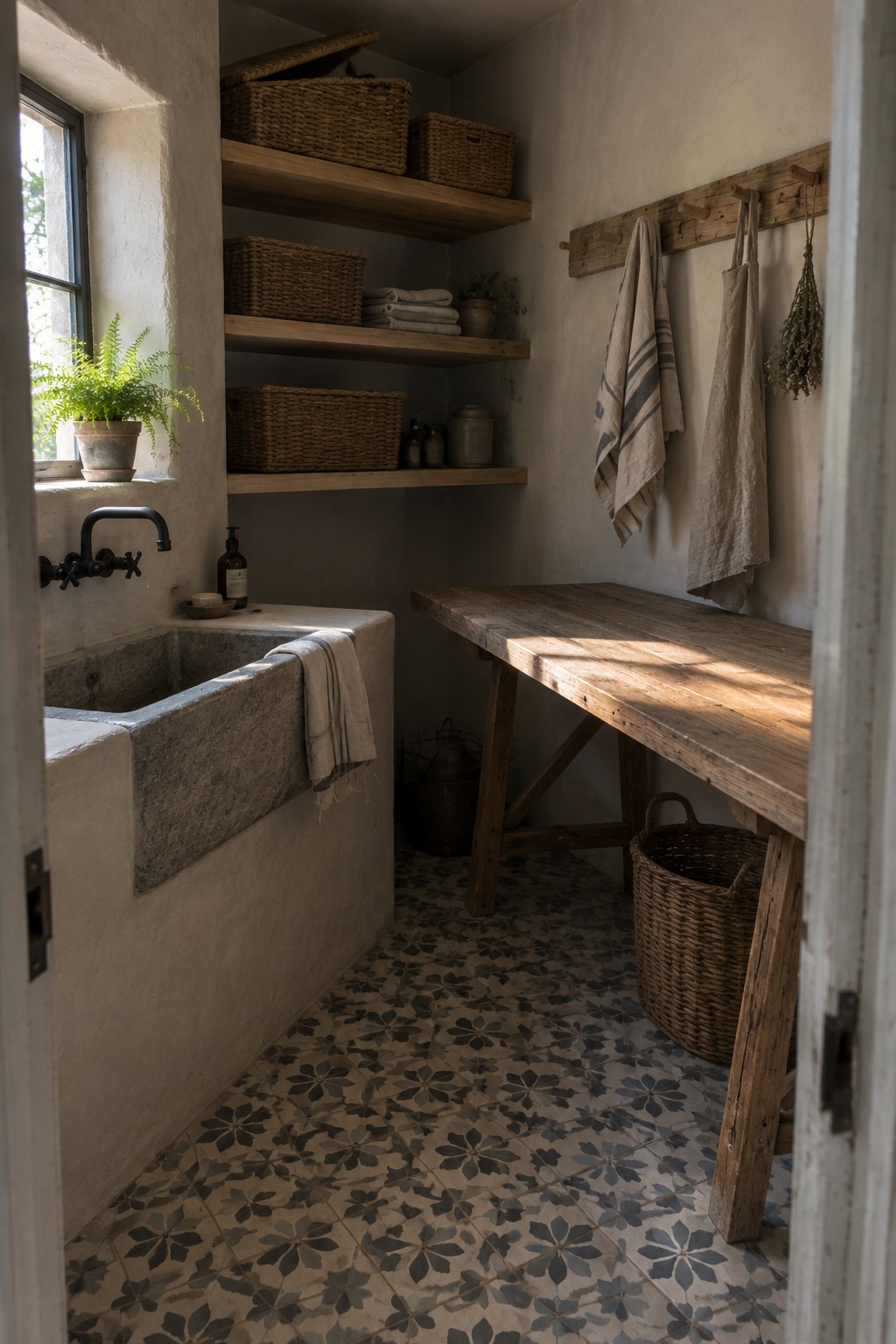
Open wooden shelves paired with simple woven baskets give a utility space an easy, natural order. The baskets keep everyday items tucked away without hiding them behind doors, while the wood adds warmth against plaster walls and stone surfaces. This setup feels practical rather than styled.
It works especially well in laundry rooms or mudrooms where things need to stay reachable. Keep the number of baskets low so the shelves do not feel crowded, and choose ones in similar tones for a quiet, cohesive look.
Built-In Benches For Small Spaces
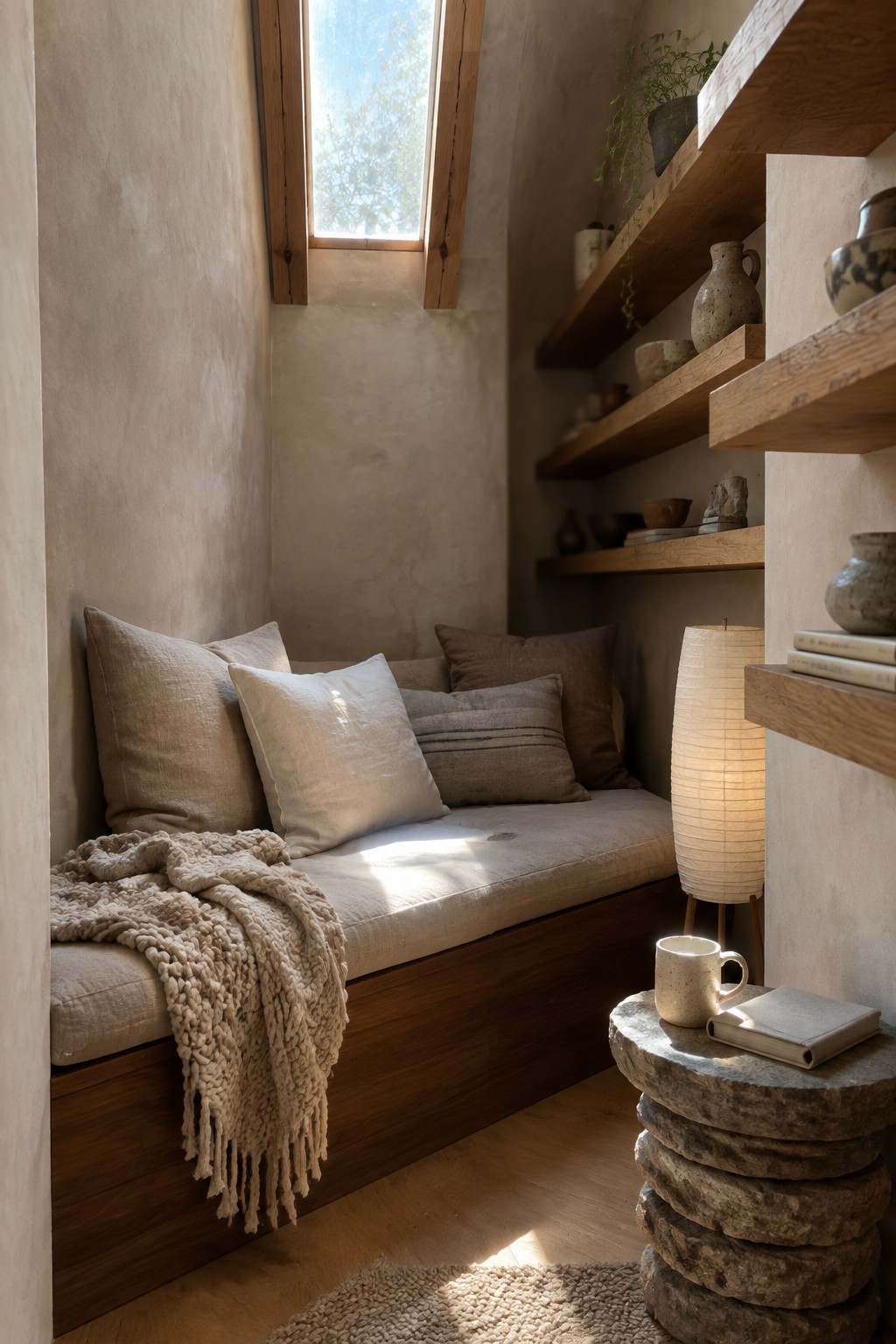
A built-in bench turns a narrow alcove into something useful without crowding the room. The wood base adds warmth against plain plaster walls, and the low profile keeps everything feeling grounded rather than busy. This setup works because it uses the existing architecture instead of fighting it.
Try it in a bedroom corner, hallway nook, or small living area where you need extra seating but do not want more freestanding furniture. Pair the bench with a simple stone side table for contrast and keep textiles to a minimum so the materials stay the focus. It suits homes that already lean toward natural textures and do not need extra storage pieces.
Low Platform Beds With Plaster Walls
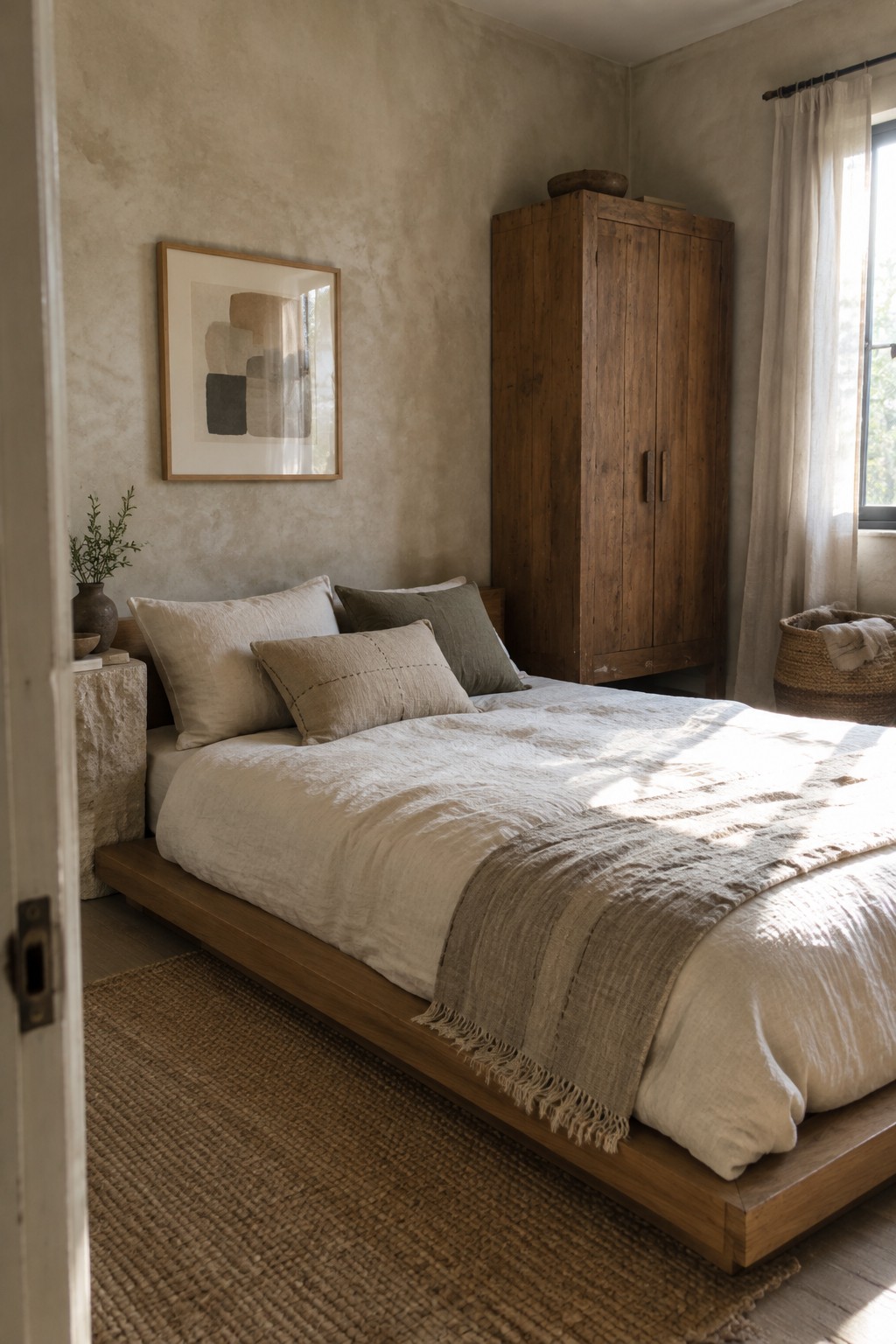
A low wooden platform bed works well when the walls have that rough plaster texture. It keeps the whole room feeling open and grounded instead of boxed in by taller furniture.
This kind of bed suits smaller bedrooms or anyone who wants a simple, quiet space. Pair it with low nightstands and minimal pieces so the floor stays clear and the materials can do the rest of the work.
Built-In Bookshelves With A Window Seat
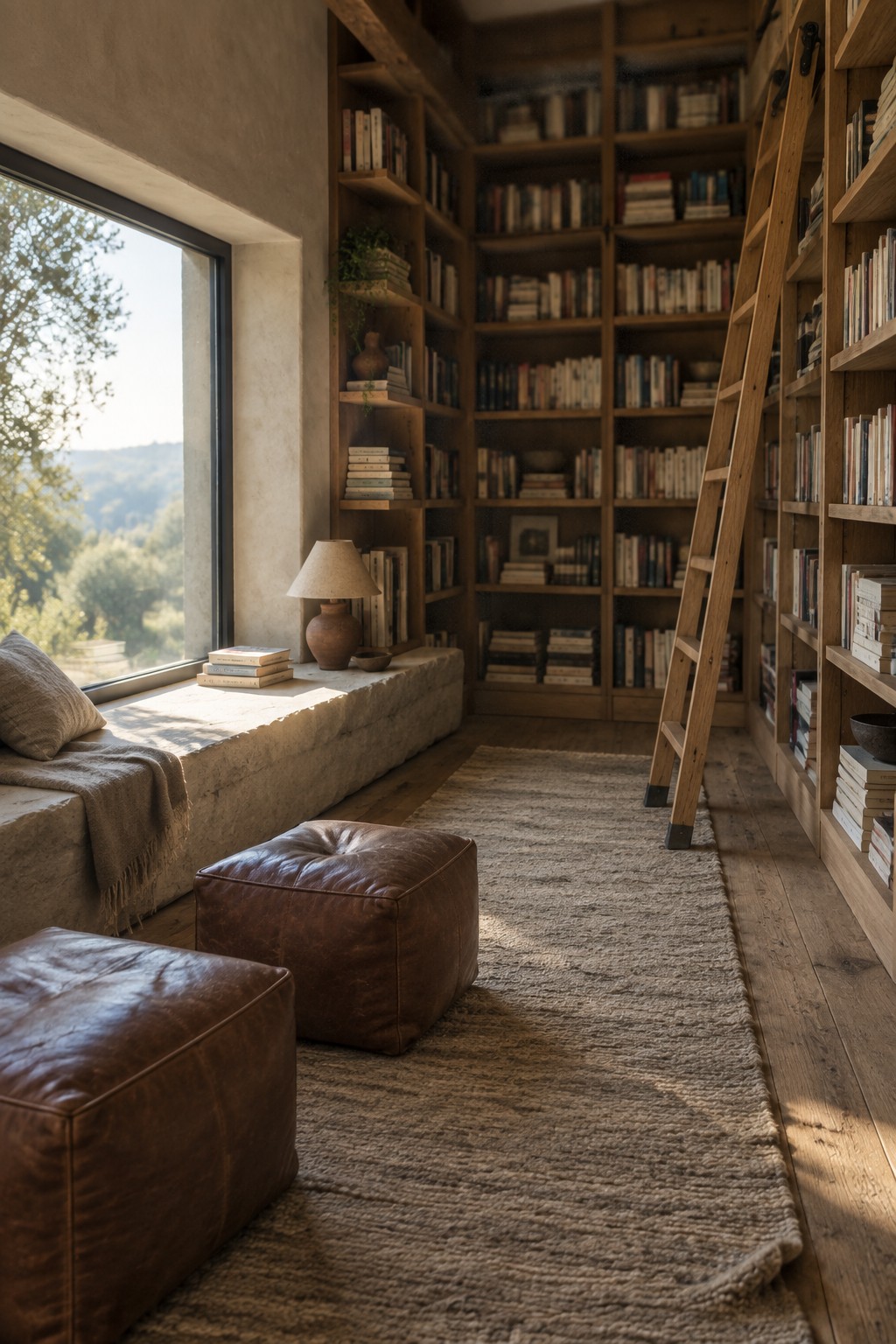
Many homes gain a quiet spot for reading by building shelves right into the wall around a window. The wood adds warmth while the plaster keeps the space feeling soft and simple.
This works best in smaller rooms or homes that need extra storage without extra furniture. Keep the seat cushion low and add just a couple of floor poufs so the area stays open and easy to use.
Open Wood Shelves On Plaster Walls
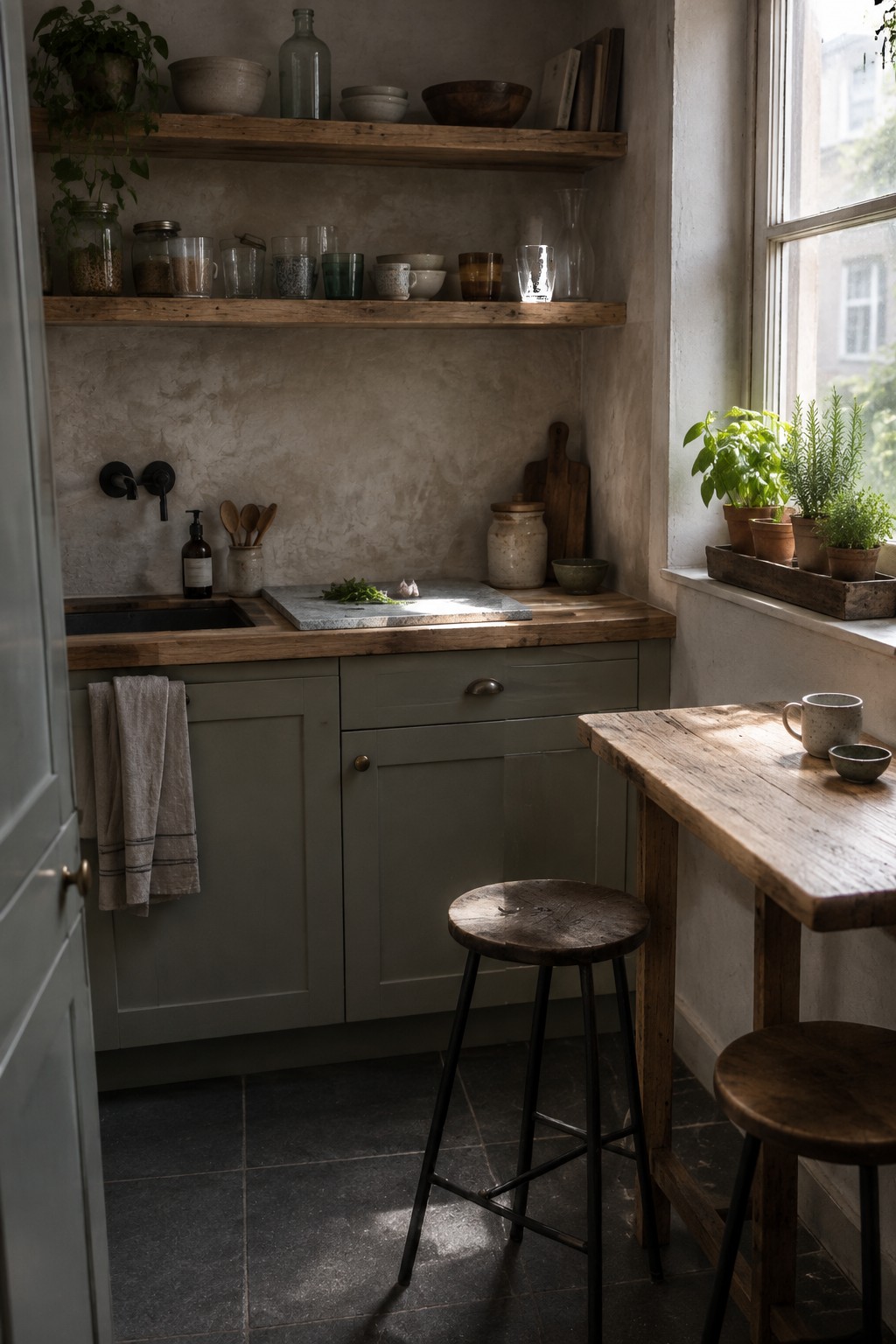
Open shelving made from simple wood works well in a small kitchen because it keeps everything in view and lets the materials do the talking. The shelves here sit against rough plaster and sit above a thick wood counter, so the grain, the wall texture, and the stone floor all stay visible instead of getting hidden behind doors.
This approach suits older homes or compact spaces where you want the room to feel practical rather than styled. Keep the items on the shelves limited to things you actually use, and let the wood and plaster age naturally over time.
Rough Plaster on Hallway Walls
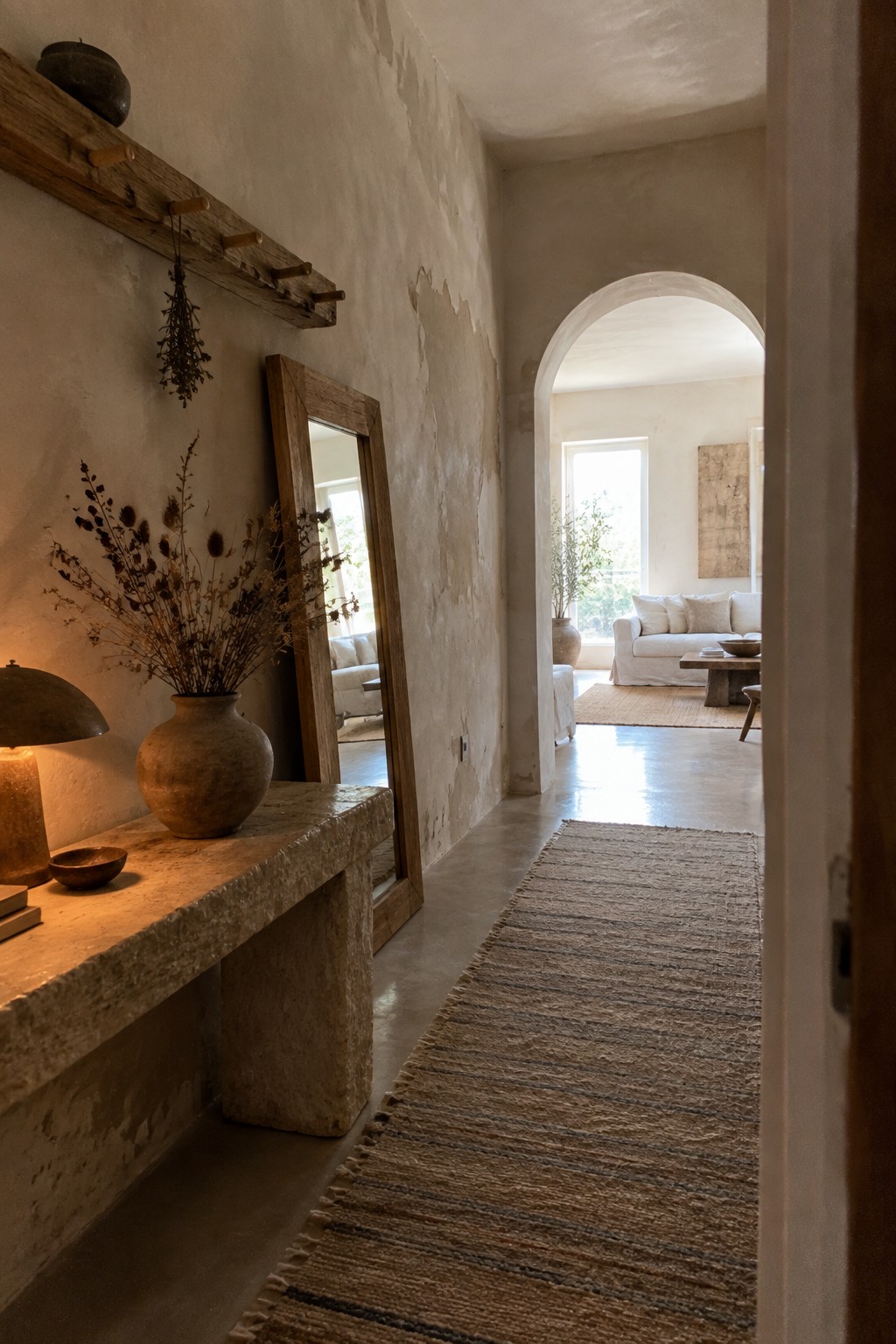
Rough plaster walls give a hallway a quiet depth that feels settled rather than finished. The uneven surface catches light softly and pairs naturally with wood and stone pieces that sit against it without competing.
This works best in homes that already lean simple. Keep furniture low and minimal so the walls stay the main texture, and let a single stone console or bench carry the weight of the space.
Mixing Stone With Wood And Plaster
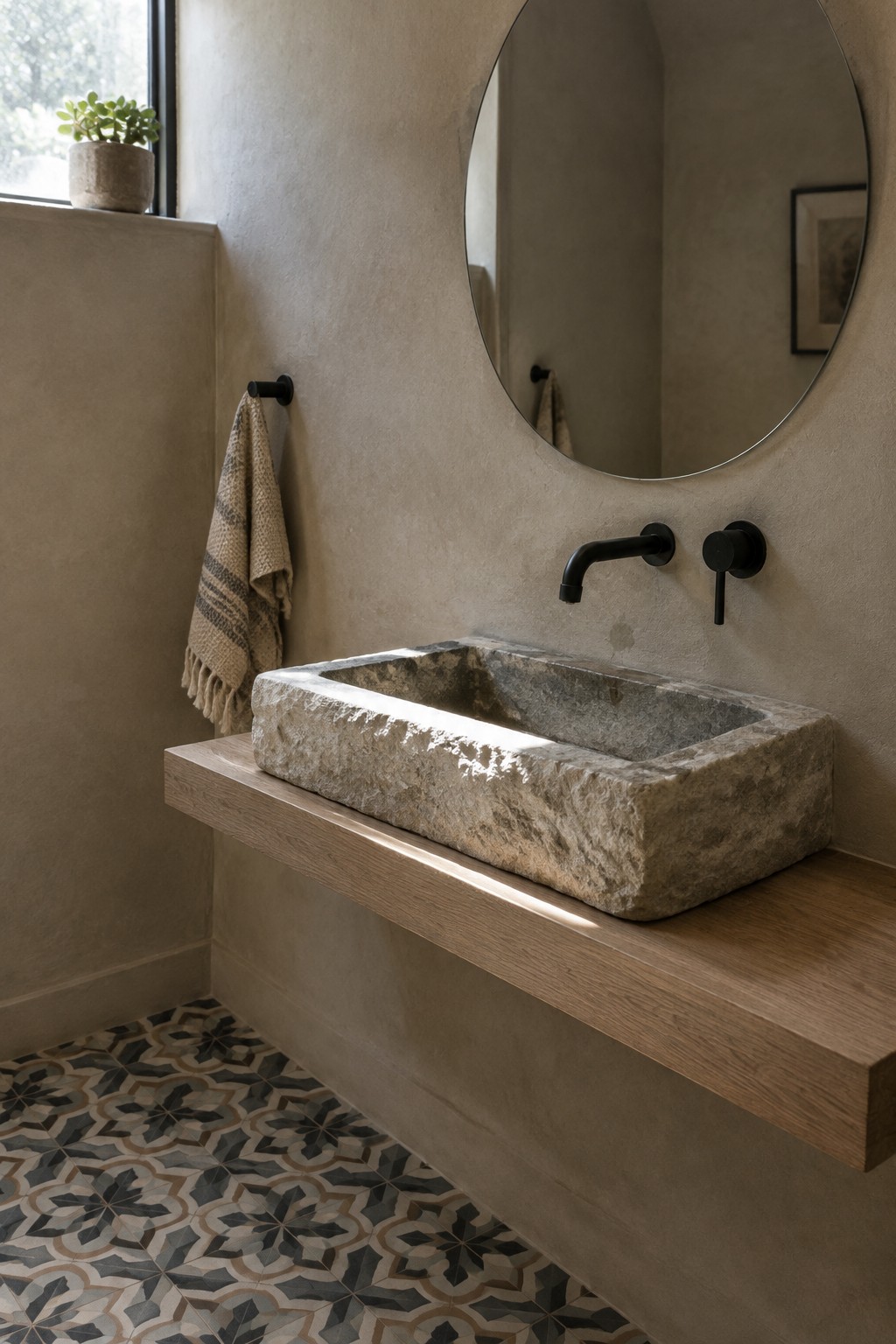
A rough stone sink on a simple wood counter brings an easy, grounded quality to a bathroom. The plaster walls keep everything quiet, so the natural textures do the talking without extra layers or finishes getting in the way.
This works best in smaller baths or guest rooms where you want the space to feel calm rather than busy. Use it when the goal is low maintenance and a quiet material palette. Skip busy tile patterns or too many accessories so the stone and wood stay the main focus.
Built-In Shelving With A Stone Bench
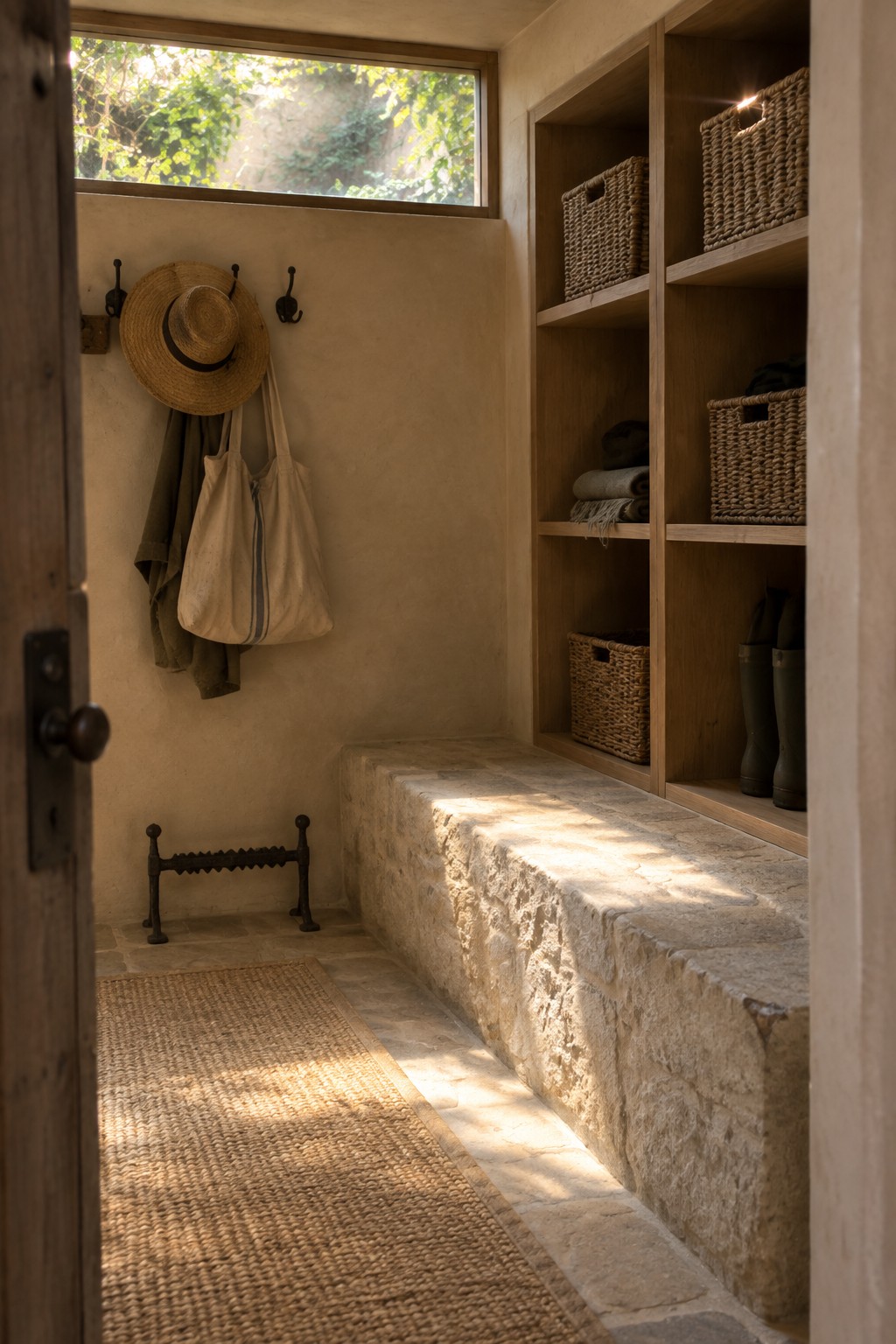
Open wooden shelves paired with a long stone bench give an entry a place for baskets, boots, and coats without needing closed cabinets. The combination keeps daily items visible and easy to grab while the bench adds a solid surface for sitting or setting things down.
This setup works best in homes with plaster walls and a steady flow of people coming and going. It suits smaller entries where you want storage that feels light rather than heavy, and it leaves room underneath the bench for larger items like boots or a low stool.
An Aged Wooden Table in a Natural Studio
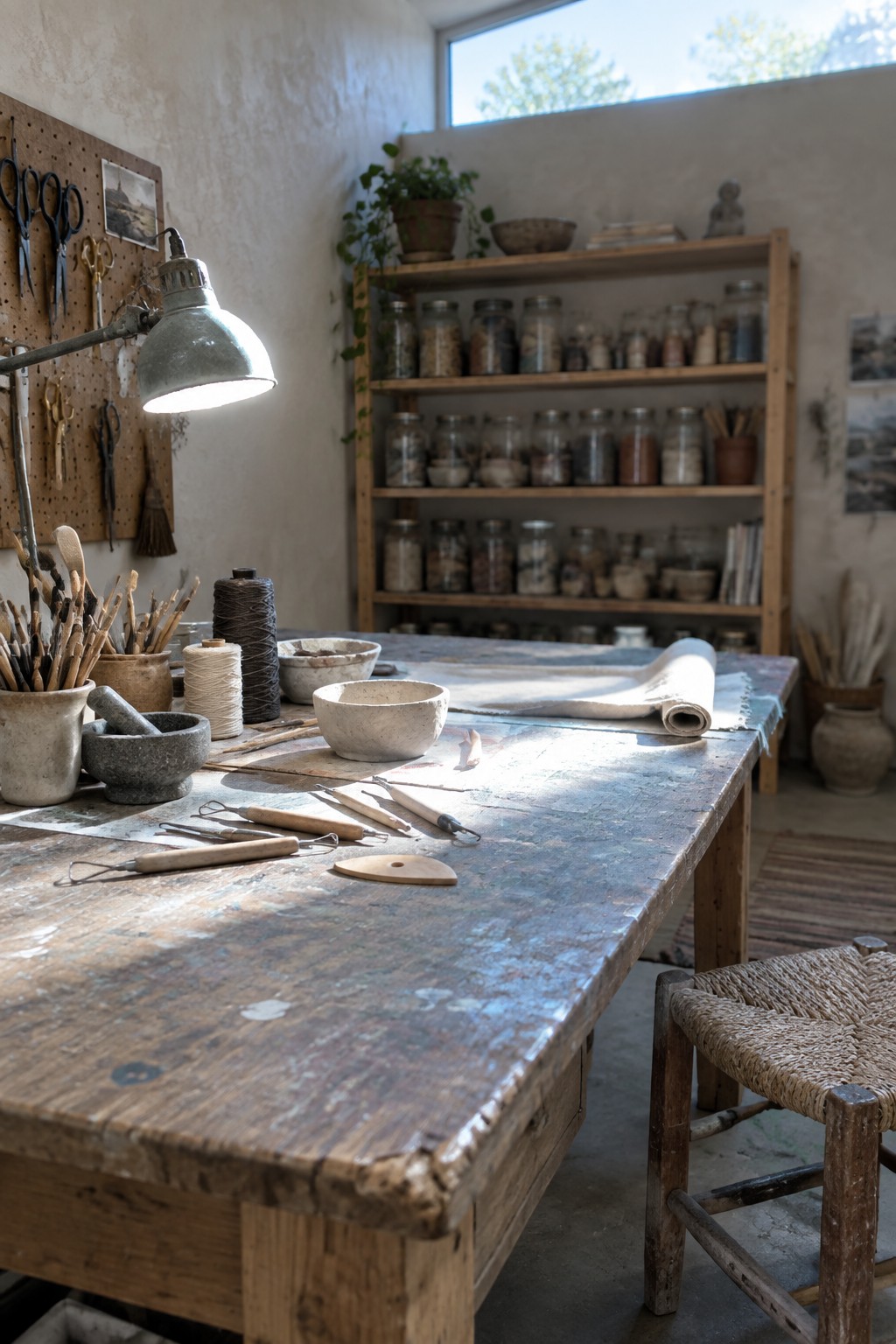
A heavy wooden table that shows years of use often becomes the real center of a creative space. The surface carries marks and texture that new furniture cannot match, and it pairs naturally with simple plaster walls and basic storage. This kind of setup feels grounded without trying too hard.
It works well in small studios or workrooms where the focus stays on making things rather than on decoration. Keep the table clear enough for daily tasks and let the surrounding shelves hold jars, tools, and supplies in plain view. Avoid adding too many new pieces that compete with the wood.
Plaster Walls With Wood and Stone
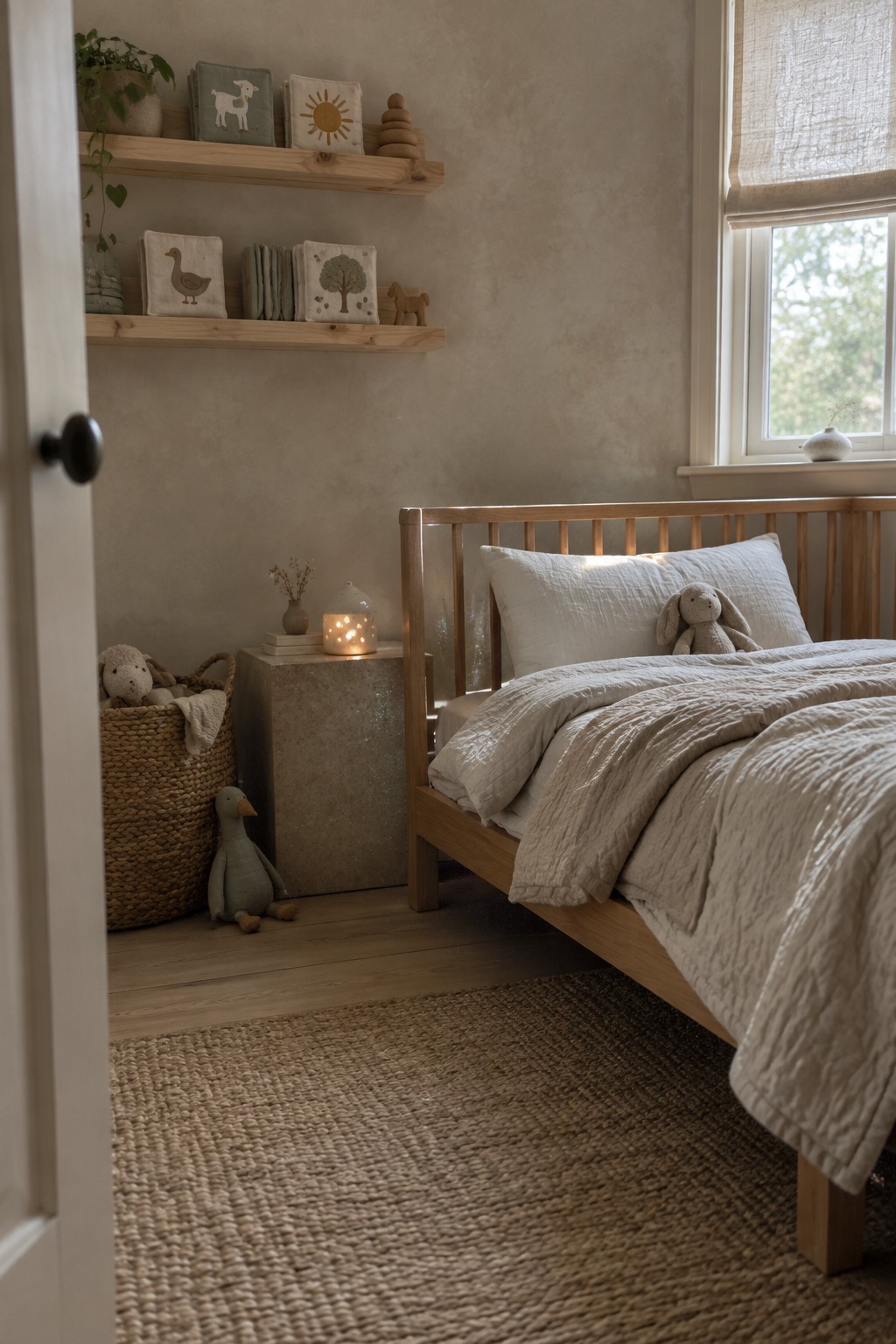
Plaster walls give a room a soft, settled feel that works especially well with wood and stone. The gentle texture keeps the wood bed and shelves from looking too crisp or heavy while the stone nightstand adds just enough weight to ground the space.
This approach suits bedrooms where you want things to feel calm and simple. It works best with unfinished or lightly textured plaster and a few solid wood pieces rather than lots of layers or bright color.
Open Shelving For Pantry Staples
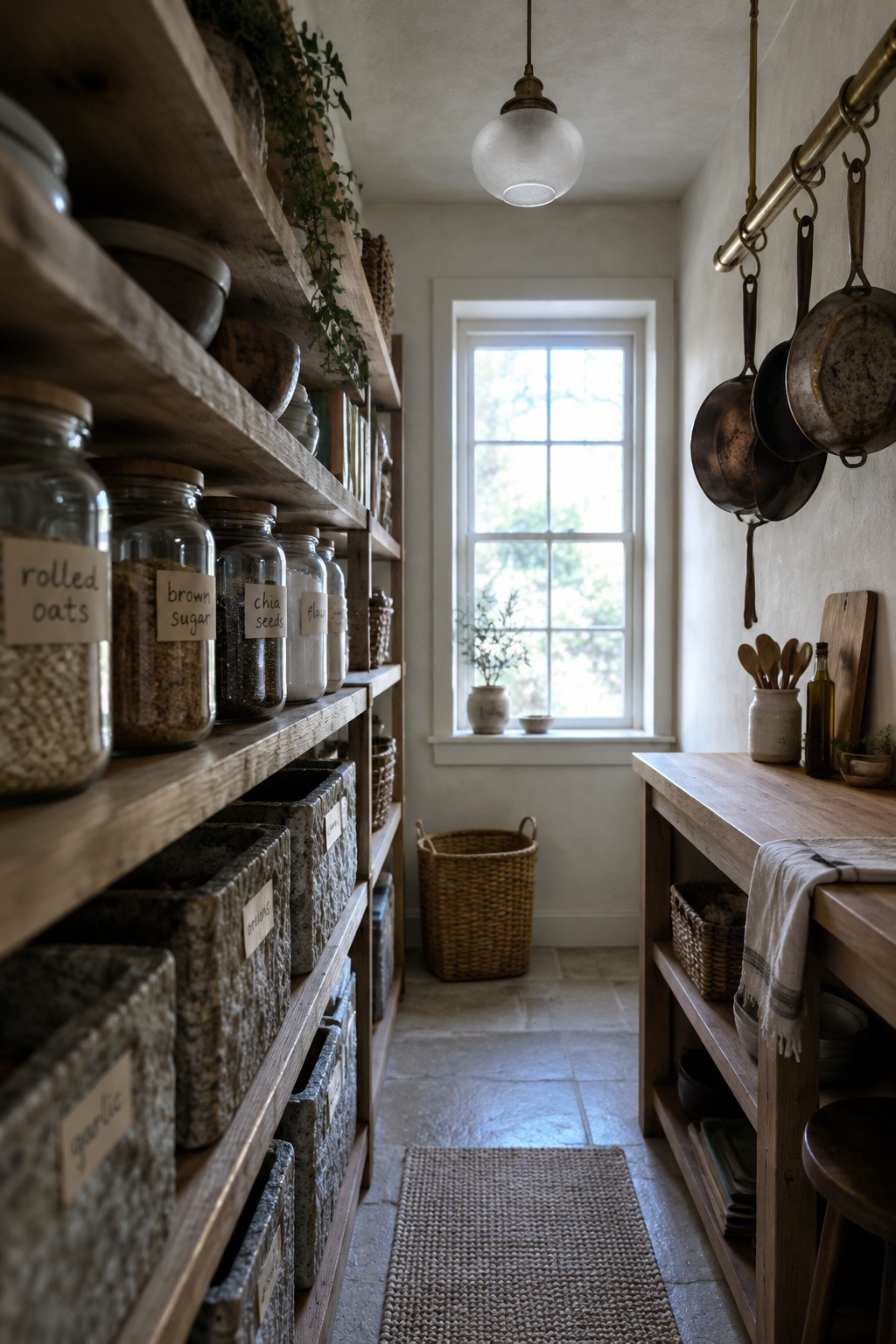
Open shelving in the pantry turns storage into something you actually see and use every day. Wood shelves hold glass jars and stone bins that keep basics visible without needing doors or extra hardware. The result feels calmer than rows of closed cabinets and pairs easily with plaster walls and other natural textures already in the house.
This approach suits smaller homes or anyone who wants quick access to what they cook with most often. Start with just a few shelves and stick to matching containers so the space stays tidy. It works less well if you tend to buy in bulk and need to hide overflow.
Plaster Walls With Natural Wood
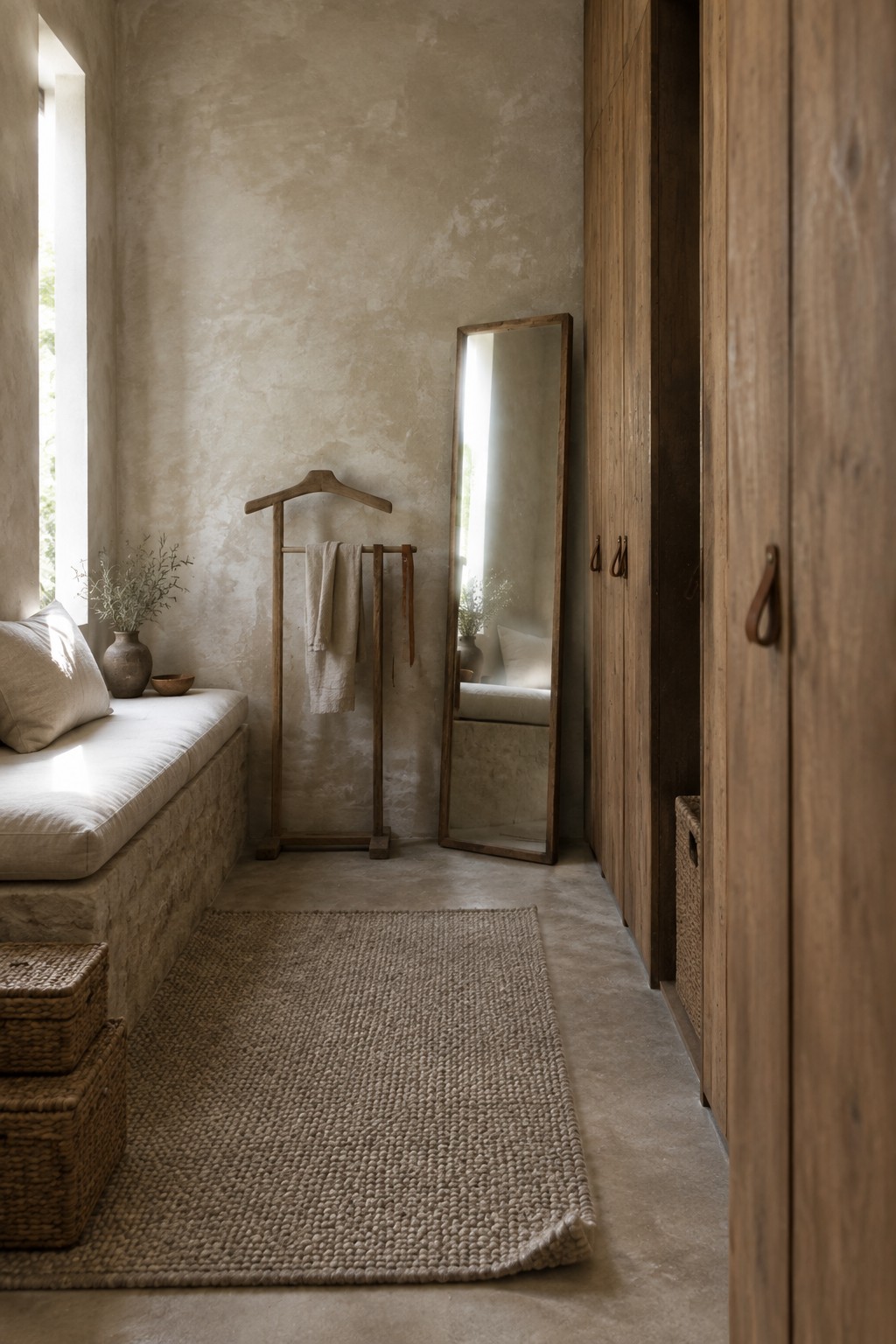
Plaster walls bring a soft, uneven texture that feels quiet on its own. When you add raw wood pieces like a tall wardrobe or a simple clothing rack, the room gains warmth without looking busy. The contrast keeps things grounded and a little imperfect, which suits the Wabi Sabi approach.
This works best in smaller rooms or hallways where you want texture but not clutter. Keep the wood unfinished or lightly sealed, and let the plaster show its natural marks. Too many smooth or painted surfaces can flatten the whole look.
Mixing Stone with Plaster and Wood
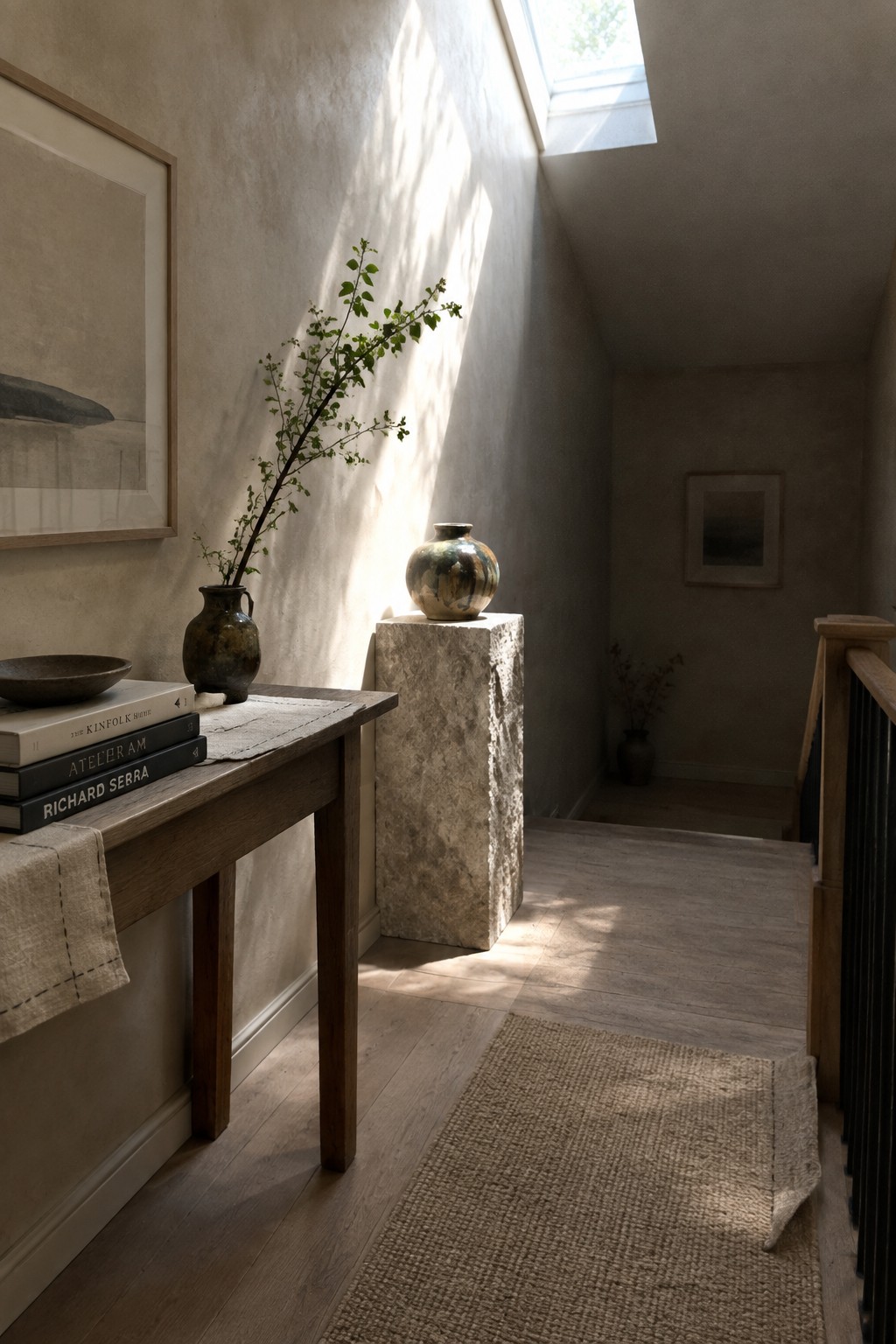
A rough stone block placed next to wood furniture and plaster walls gives the room a solid, grounded feel. The texture stands out because everything else stays simple, and the stone adds weight without filling the space with extra pieces.
This works best in hallways or smaller rooms where you want one strong material note. Keep the stone shape basic and let it hold just one object or nothing at all. It suits homes already using wood floors and plain plaster, and it helps the space feel calm instead of styled.
Frequently Asked Questions
Q: Where should I start if I want to add these materials to my space? A: Pick one wooden piece first like a bench or shelf that already has some wear. Add plaster next on a single wall to create a soft backdrop. Bring in stone last as a small surface to anchor everything.
Q: How do I stop new wood from standing out too much? A: Rub it down with a bit of oil or leave it outside for a few weeks. This speeds up the natural aging process without much effort. Pair it right away with rough plaster so the contrast feels intentional.
Q: What if my plaster develops hairline cracks over time? A: Let them show since they add to the character. Touch up only the bigger ones with a matching mix if they bother you. The rest blend in once you add wood and stone around them.
