

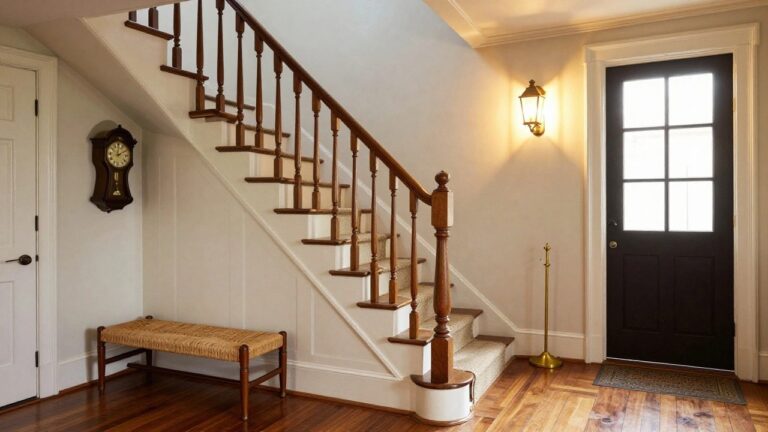
I’ve walked through plenty of colonial homes where the interiors still feel solid and lived-in after centuries.
What hits you first is often the way woodwork and plaster walls work together to make even small rooms expand comfortably.
They function best when symmetry guides the flow from entry to hearth without crowding the center.
I like how the restrained use of color lets natural light play off the details, something I’ve tried adapting in my own older house.
Certain patterns from back then hold their charm today if you scale them right for modern living.
Grand Entry Staircase
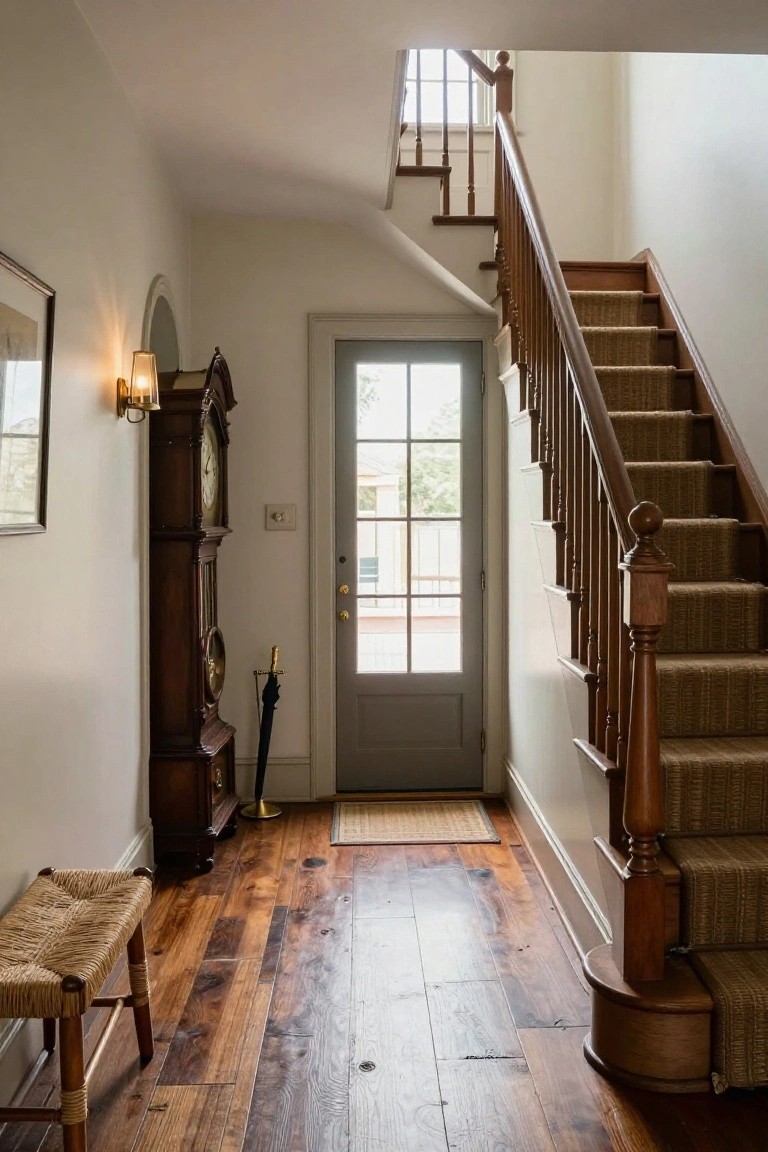
In older colonial homes, nothing sets the tone quite like a sweeping wooden staircase right in the foyer. It pulls your eye up and makes even a simple entry feel important. Here the rich wood rails and treads pair nicely with a neutral seagrass runner that adds texture without overwhelming the space.
This setup works best in homes with good natural light and high ceilings. Keep walls light to let the wood shine, and add a few antiques like a tall clock nearby for that lived-in feel. Skip heavy rugs on the stairs though. They can make things feel closed in.
Brick Fireplace Library Room
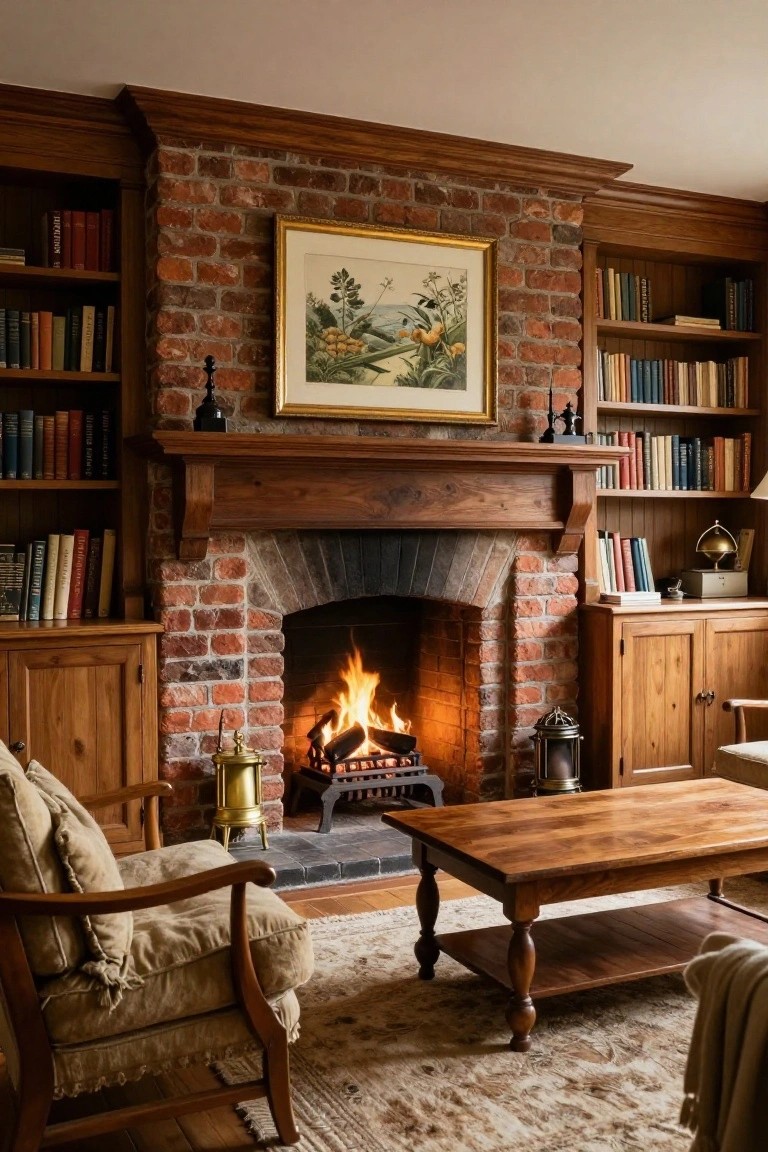
A brick fireplace makes any library or study feel like it’s been there forever. The exposed brick gives a rugged, historic touch that pairs right up with wooden built-ins full of books. It draws the eye and warms up the whole space without much fuss.
This setup shines in older colonial homes or any room with paneled walls. Build shelves around the hearth for storage and display, then add a couple of chairs and a table nearby. Skip anything too modern. It keeps things practical for reading or quiet evenings… just watch the soot on light fabrics.
Classic Wooden Hutch in the Dining Room
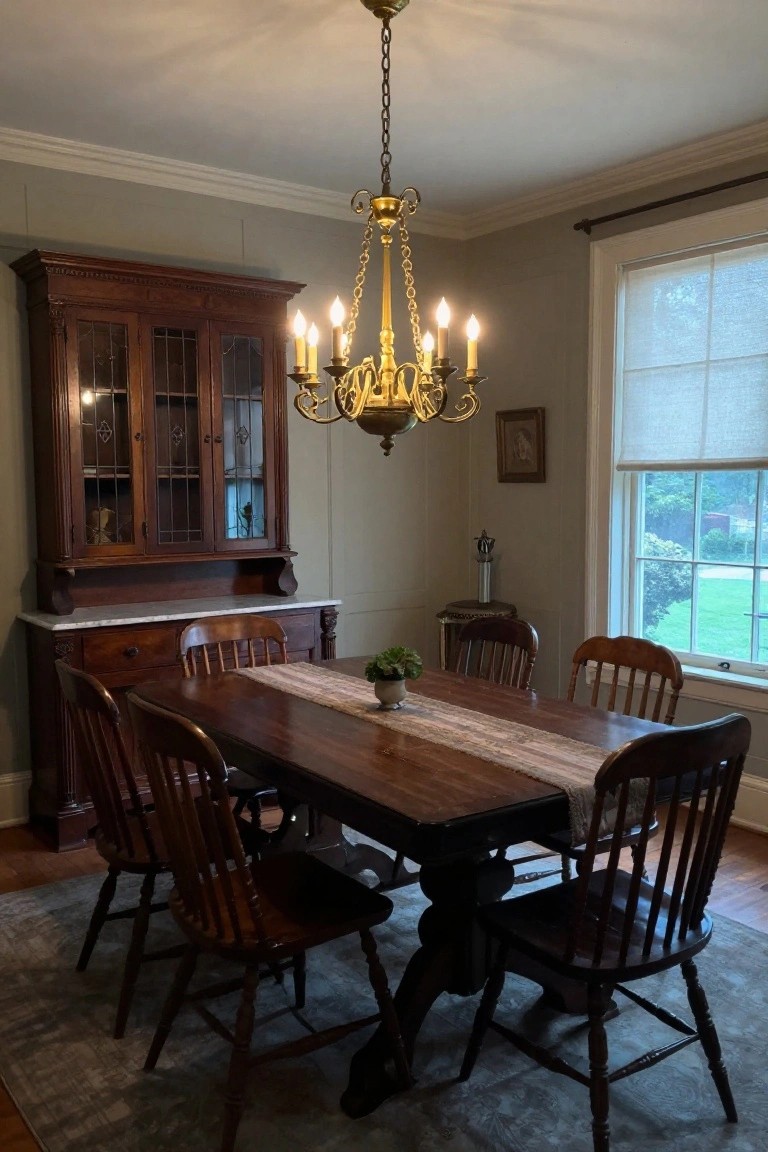
One simple way to add real historic feel to a dining room is with a tall wooden hutch like this one. It stands out with its carved details and glass-front doors that let you show off dishes or family pieces. The marble top gives a spot for everyday use too. In older homes, this kind of piece pulls the room together without much fuss.
Put it against a plain wall near the table where it won’t crowd the space. It works best in rooms with good natural light from windows. Watch for pieces in similar wood tones to the table so everything feels connected. Just dust the glass regularly… it shows fingerprints quick.
Sage Green Kitchen Cabinets
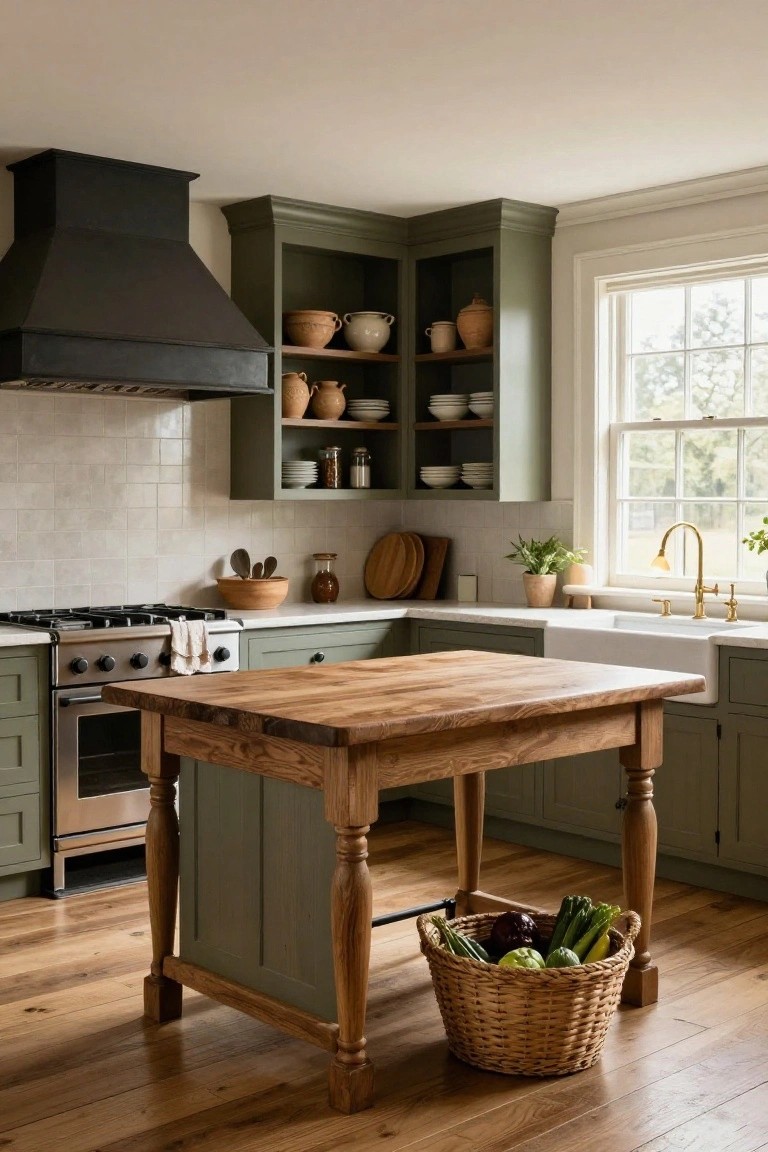
Sage green cabinets give a kitchen that old-house feel without going too dark or dated. They pick up on colors you see in colonial-era homes, especially when the paint has a soft, matte finish like this. Paired with simple white tiles and open shelves holding terracotta pots, the green keeps things calm and lived-in. It works because it lets wood accents, like a sturdy island table, stand out and add some warmth.
You can pull this off in any kitchen aiming for historic character, especially ones with good natural light from big windows. Go for shaker-style doors on base and upper cabinets to keep it straightforward. Stick to lighter countertops so the green doesn’t overwhelm, and toss in some wood furniture or flooring to balance it. Just test a few paint samples first, since green can shift under different lights.
Four-Poster Beds Anchor Colonial Bedrooms
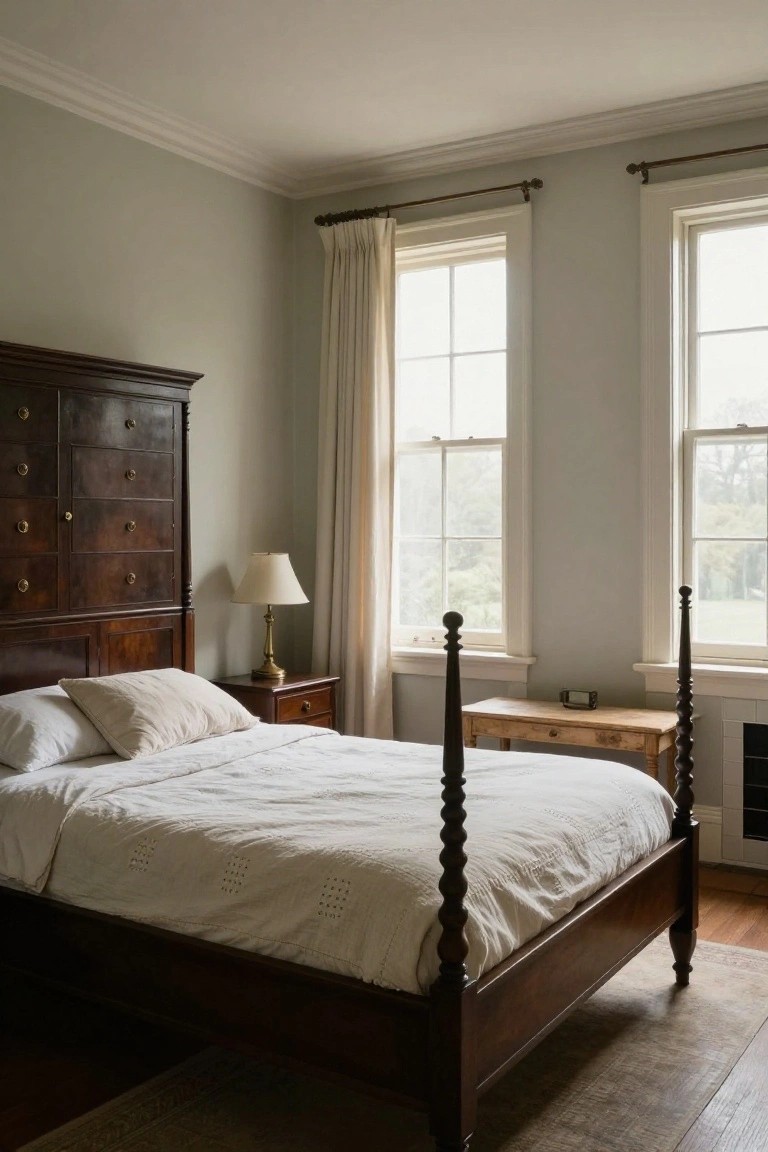
A four-poster bed like this one stands right in the middle of the room. Made from dark wood with those turned posts, it pulls your eye without taking over the space. The pale gray-green walls and simple white linens keep everything calm and open. That’s the trick in colonial rooms. The bed gives that old-house feel. But light colors stop it from feeling heavy.
Put one in a bedroom with big windows for natural light. It works best in older homes where you want history without fuss. Stick to plain bedding and maybe a wood dresser nearby. Skip bold patterns or too much stuff on the bed. Just let the frame do its job. Rooms like this stay quiet and last.
Wood Furniture Adds Bedroom Warmth
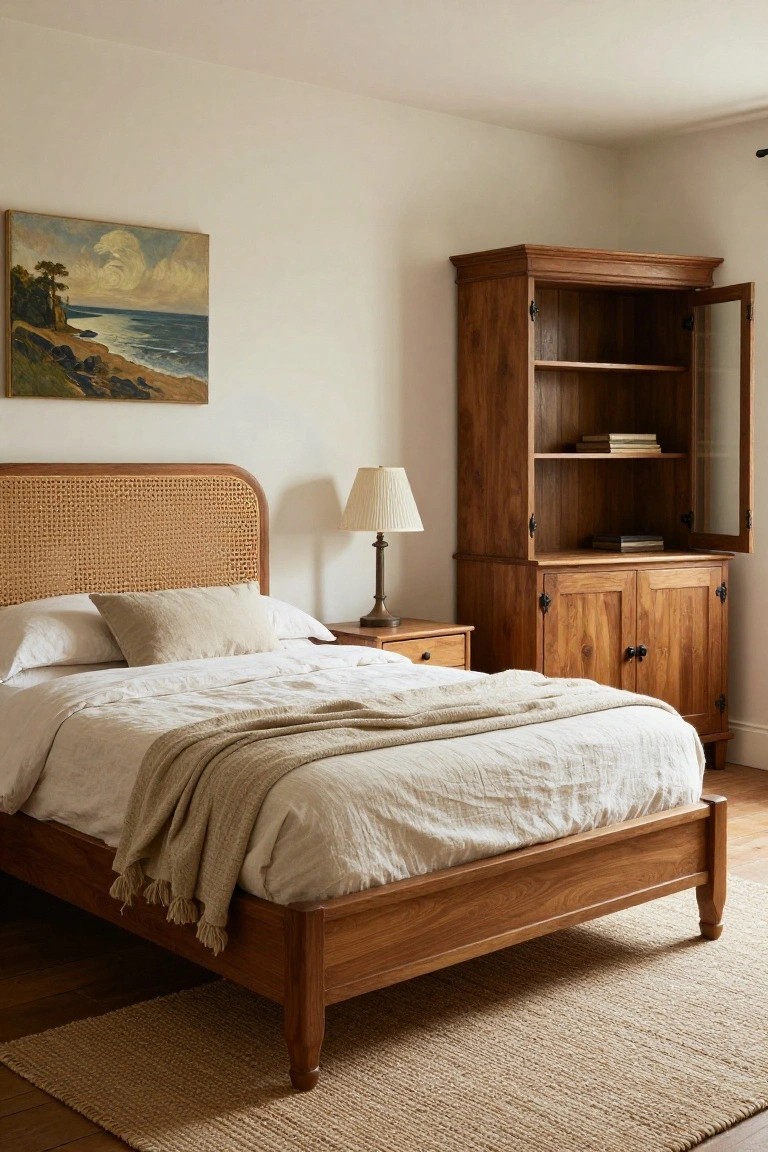
Wood furniture like this bed frame and tall armoire fits right into colonial homes. It brings a steady, lived-in feel without overwhelming the room. The warm tones pick up the natural light and keep things from feeling too stark against white walls. Notice how the rattan headboard softens it just enough.
Try this in older homes with high ceilings or simple moldings. Pair solid pieces in medium tones with light linens and one or two textured accents. It works best in master bedrooms where you want character that lasts. Skip glossy finishes, though. Go for honest wood grain instead.
Arched Bookshelves in the Nursery
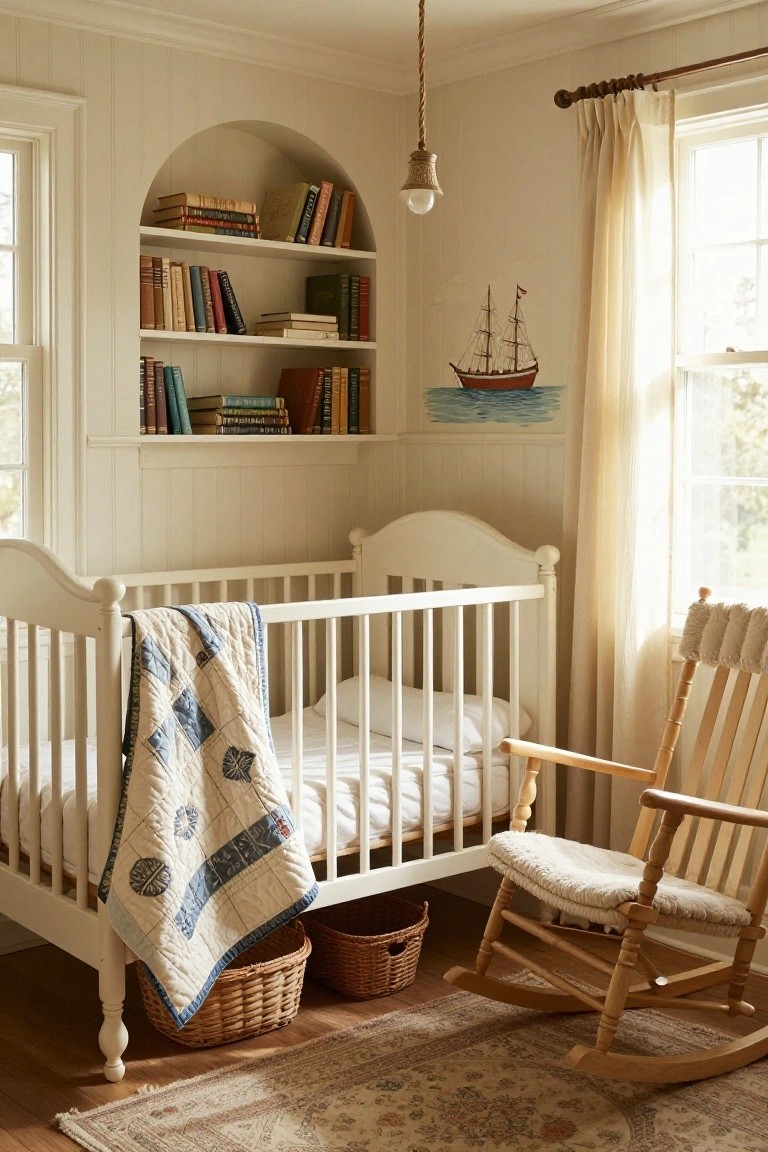
Built-in arched bookshelves like these make a nursery feel like it belongs in an old colonial house. The soft curve at the top echoes classic architecture, and they hold kids’ books plus small displays without taking up floor space. White paint keeps everything light and easy to clean.
Put them in a corner near the crib or window for that cozy reading nook. They suit smaller rooms in historic homes best. Skip heavy decorations at first… let the shape do the work.
Floor-to-Ceiling Bookshelves in the Home Study
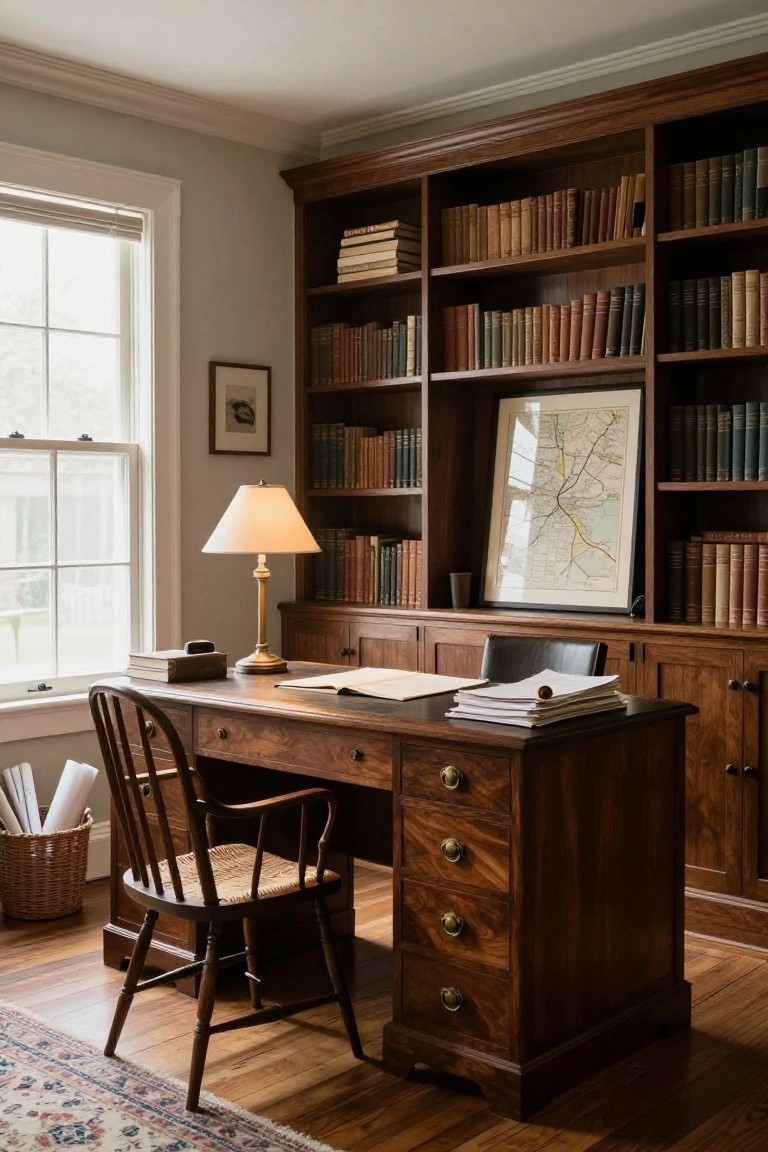
Tall wooden bookshelves cover the walls here, packed with rows of old books that fill the space with quiet character. A simple desk sits in front, pulling the whole setup together for work or reading. This kind of built-in shelving turns a plain room into something with real staying power, especially in older homes.
Put these shelves in a home office or quiet corner where you need storage without eating up floor area. They suit colonial-style houses with good ceiling height. Just match the wood tone to your furniture, and keep most shelves full… it keeps things from feeling empty. Watch the scale though, so it does not overwhelm a small space.
Cozy Window Seat Reading Nooks
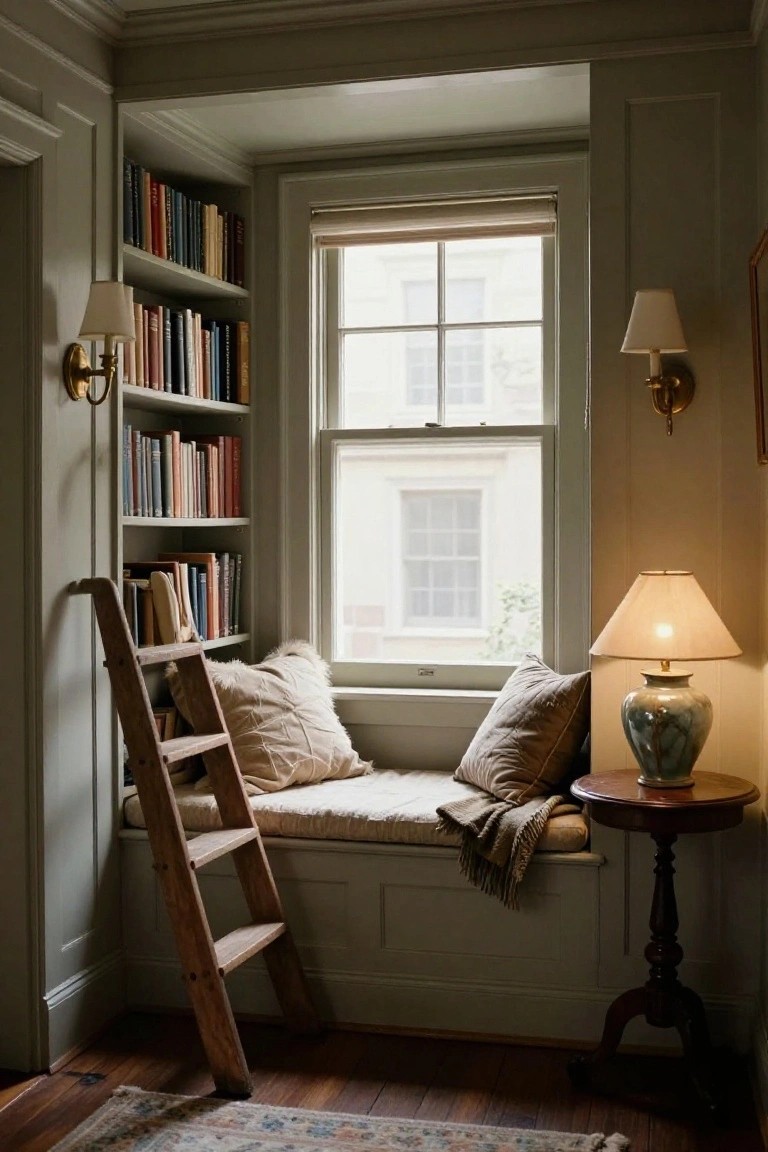
These built-in nooks make the most of a tall window by turning it into a quiet spot for reading or just sitting. Bookshelves wrap right around the seat, keeping books close at hand, and a simple ladder lets you reach the top shelves without stretching. The soft cushions and throw add comfort without much fuss, and it all feels right in a room with good natural light.
You can fit one into a hallway or under-stairs space in an older colonial home. Just build the benches and shelves to match the wood trim already there. Keep the colors neutral like creams and grays so the books stand out. Watch the window size though… too small and it feels cramped.
Wooden Vanities Warm Up White Bathrooms
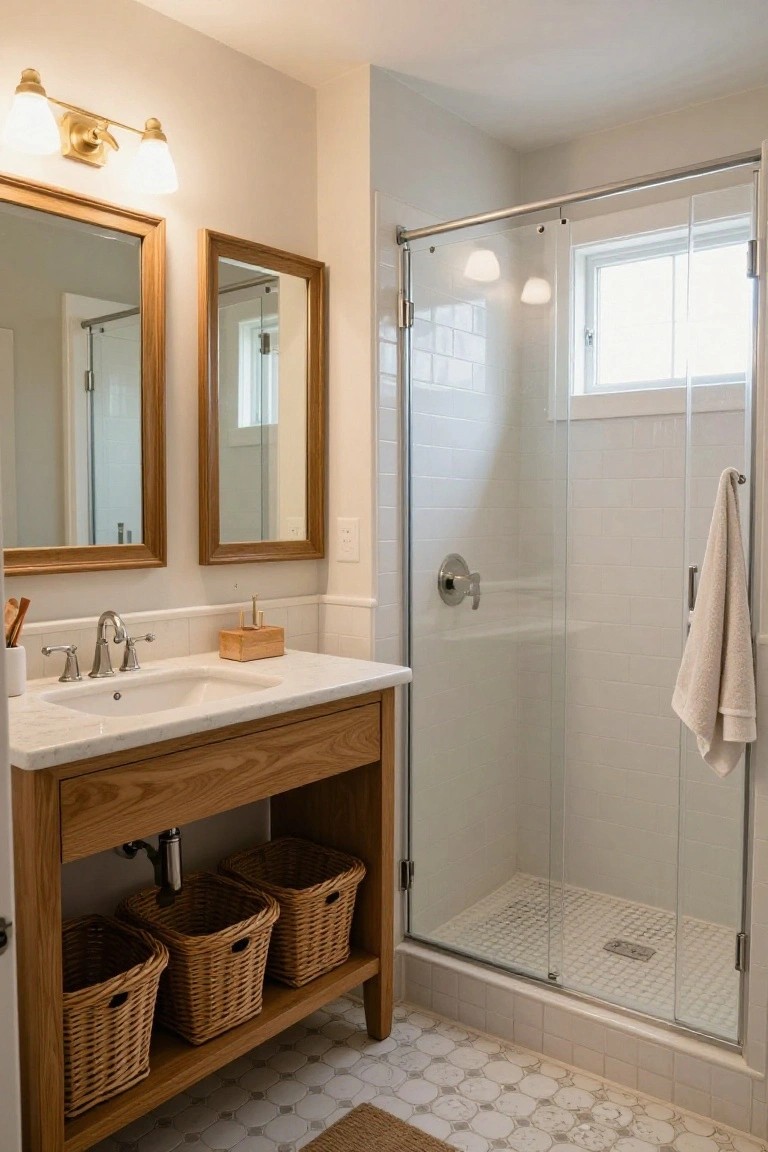
Colonial bathrooms tend to go all white with subway tile and simple fixtures. That’s clean and classic. But a solid wood vanity pulls in some real warmth right away. Here the oak piece sits under a marble sink top. It fits the historic feel without getting too heavy or dark.
Put one in a small guest bath or powder room where space is tight. Pair it with open shelves and woven baskets for towels and extras. Keeps things practical and easy to clean. Works best if the rest stays light colored.
Shiplap Walls and Exposed Beams
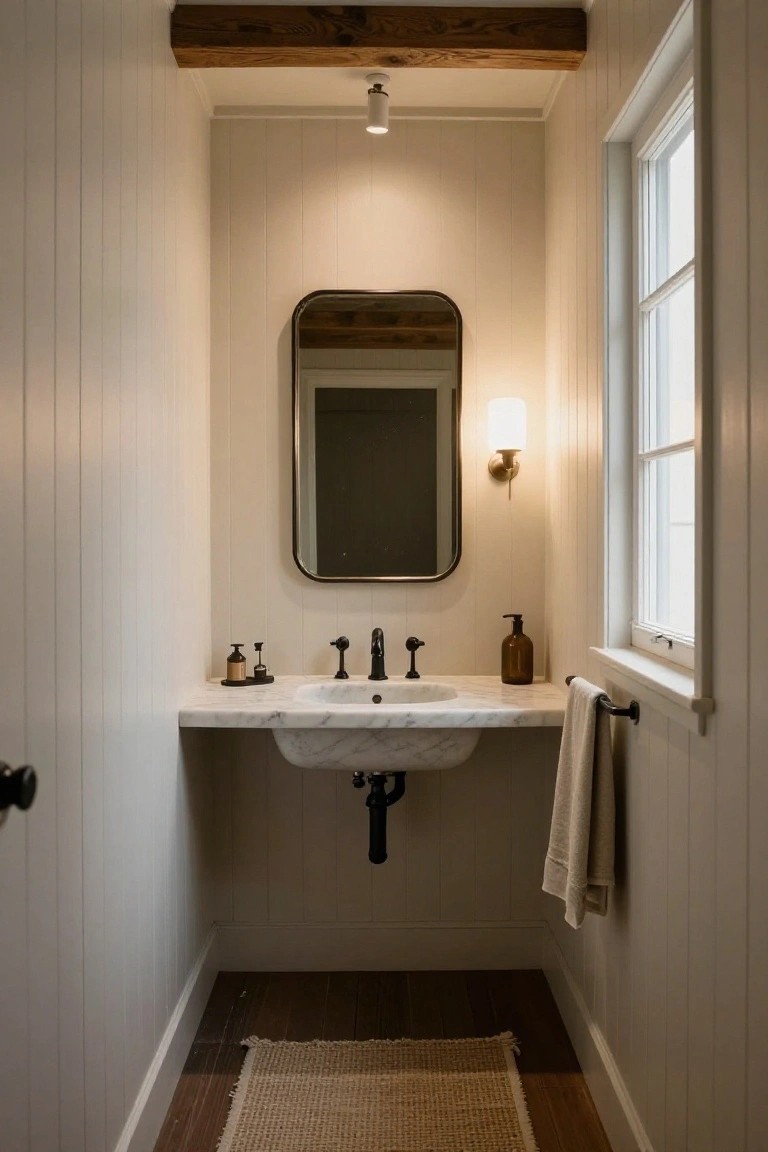
White shiplap walls climb up to a dark wood beam ceiling in this narrow powder room. That simple combo pulls off a colonial look without much fuss. The pale walls keep the tight space from feeling closed in. And the beam adds just enough rustic weight up top. It’s a nod to old farmhouses that still feels right today.
Try this in a half bath off the hall or entry. It works best where you want history without the upkeep of actual antiques. Pair it with a floating sink and basic black hardware. Skip busy patterns elsewhere. Just let the shiplap and beam do their thing.
Farmhouse Sink Utility Area
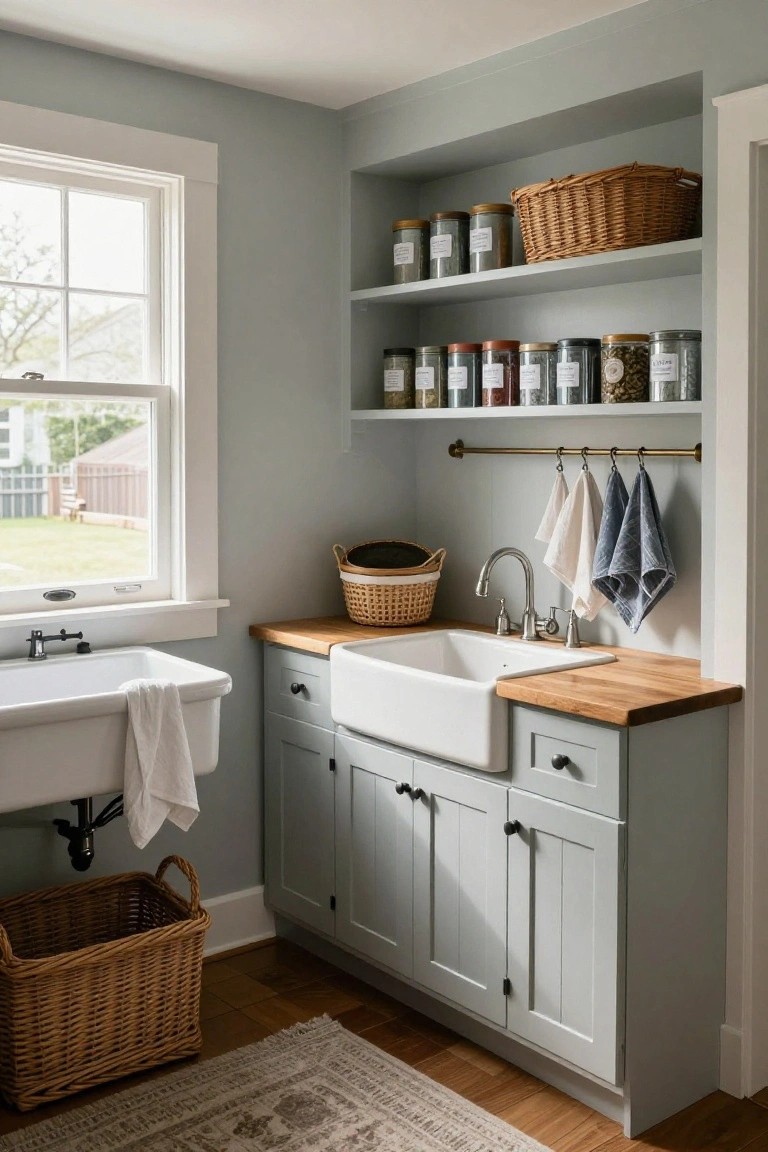
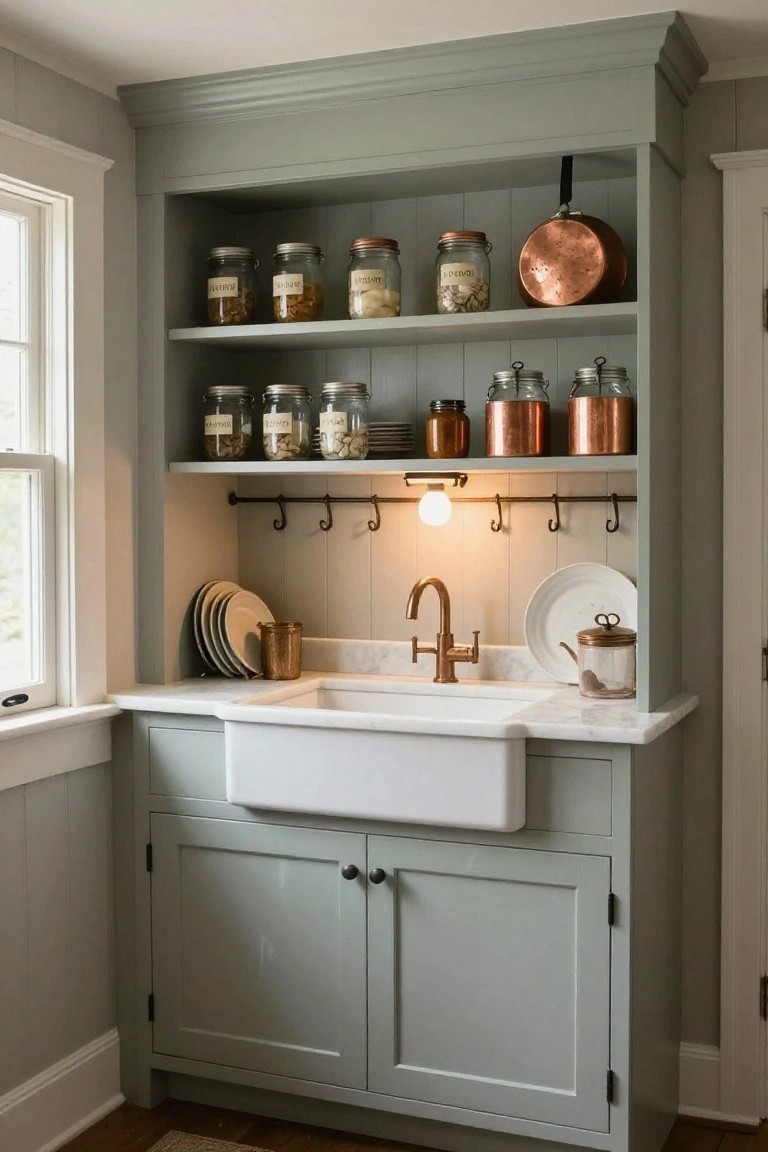
A farmhouse sink like this one tucked into a corner makes everyday chores feel less like work. It’s got that deep white basin on a sturdy wood counter, perfect for soaking laundry or rinsing garden veggies. Paired with lower cabinets in a soft gray blue, it keeps the space practical without taking over the room. In older homes, this setup nods to colonial kitchens where one sink handled it all.
You can fit this into a mudroom, laundry nook, or even next to the kitchen if space is tight. Go for butcher block counters to warm things up, and add open shelves above for jars or baskets. Watch the scale though. It suits compact spots best, so measure your wall first. Keeps the look lived-in, not fussy.
Armchairs Facing the Hearth
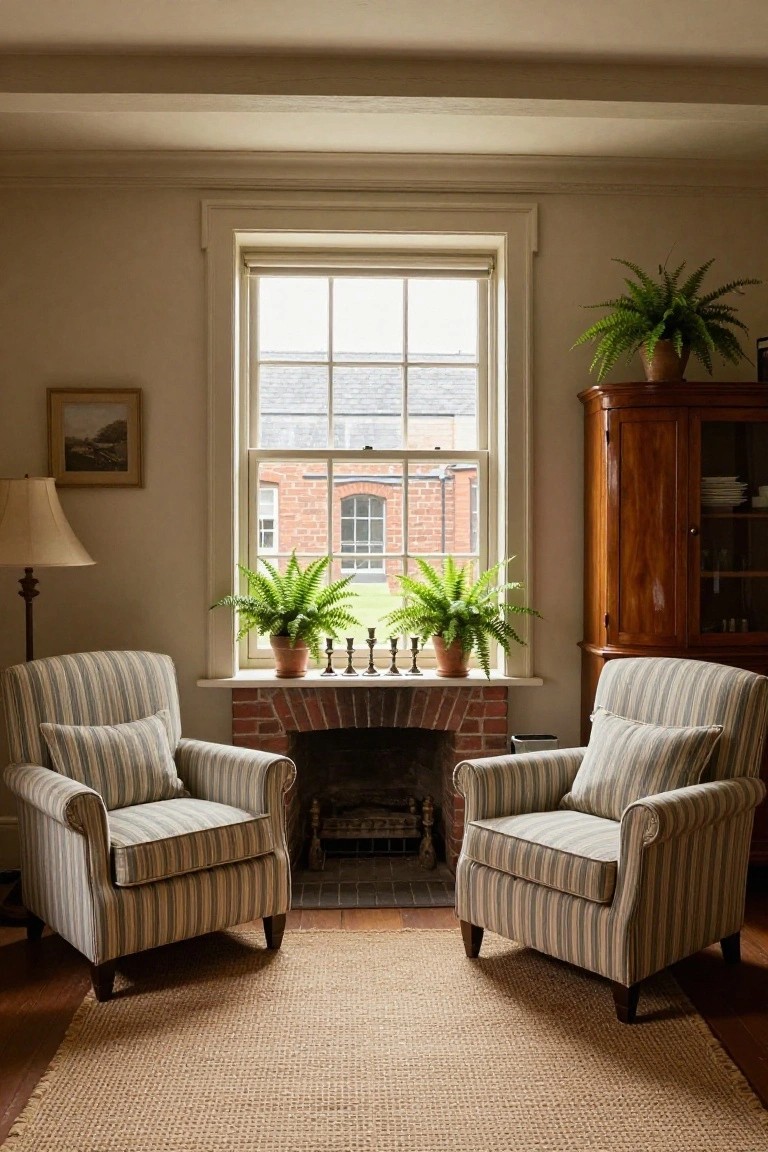
Nothing beats this straightforward setup in a colonial sitting room. Two matching armchairs sit right across from each other by the fireplace, leaving room to stretch out or pull up for a talk. The striped upholstery brings in subtle pattern that plays well with the pale walls and brick hearth, keeping the look light but lived-in.
Try it in compact spaces with a similar low fireplace. The sisal rug underneath ties the chairs down without fuss. It suits period homes best, especially where you want quiet comfort over showy furniture. Just skip oversized pieces; they close things off too much.
Symmetrical Fireside Seating
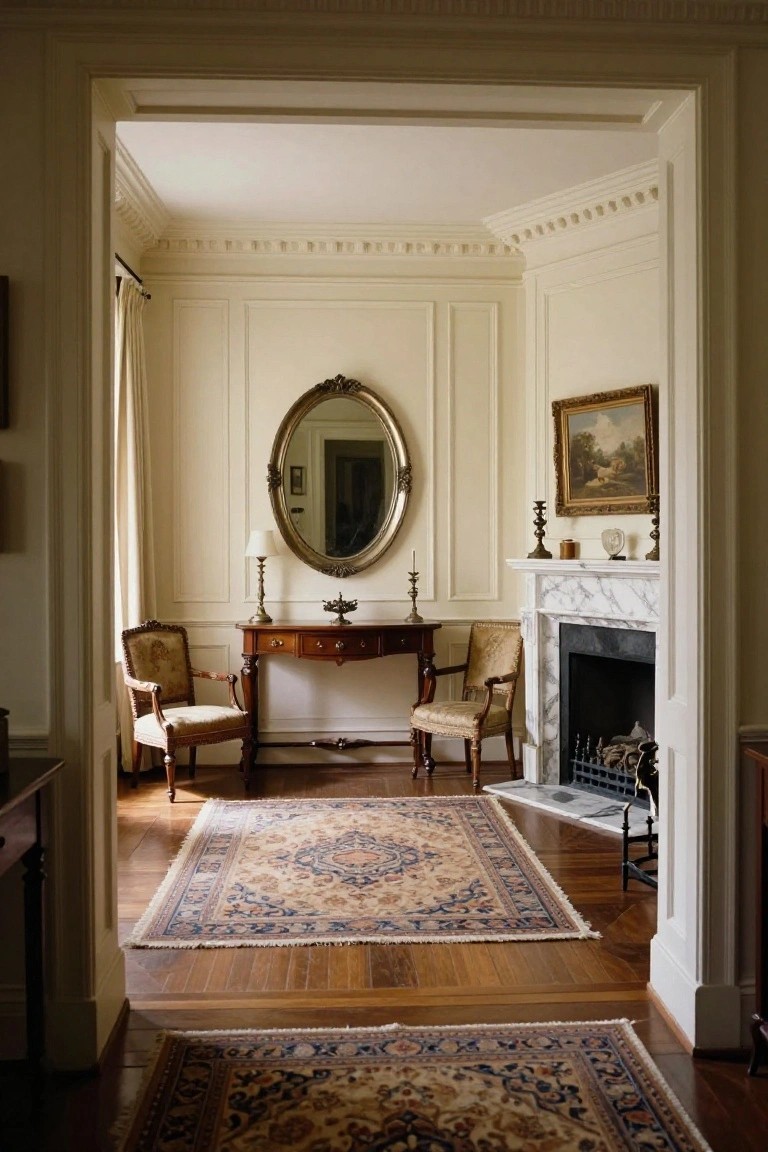
A pair of upholstered armchairs set on either side of a narrow console table, placed directly in front of the fireplace, sets up a natural spot for two people to sit and talk. The symmetry keeps things balanced without crowding the room. That wood console with its simple drawers adds just enough surface for a lamp or small tray, and it nods to older furniture styles that fit colonial homes.
Try this in a front parlor or library where you want a quiet reading corner or place to wait for guests. Pick chairs with a bit of curve and fabric that picks up rug colors… it suits spaces eight by ten feet or so. Skip bulky pieces here. They overwhelm.
Cozy Kitchen Banquette Nook

Turning a plain kitchen corner into a built-in banquette setup gives you extra seating without eating up floor space. A round pedestal table fits right in the middle, with simple linen cushions on the benches keeping things comfortable and casual. Nearby open shelves hold everyday dishes, tying the spot into the room’s workhorse feel.
This kind of nook suits older colonial kitchens best, especially where walls are white and beams show overhead. It works for quick breakfasts or lingering coffee. Go for sturdy wood on the table and benches to match the historic vibe, but pick cushions thick enough for real sitting.
Corner Bookshelves Build Historic Character
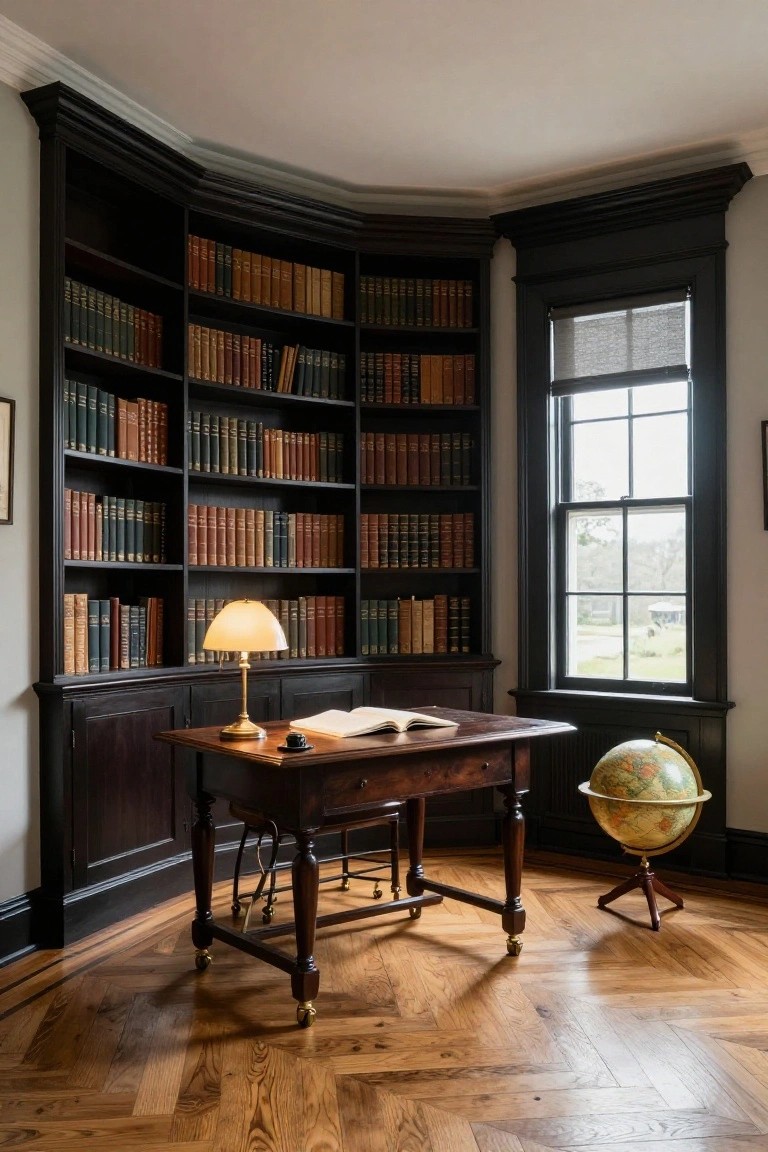
Older colonial homes often shine when you line the walls with bookshelves that wrap right into the corner. This setup turns a plain room into a real library feel, especially with dark wood shelves packed tight with leather books in deep reds and browns. It adds that lived-in scholarly touch without needing fancy updates.
Try this in a study or sitting area where you want quiet focus. A desk nearby on casters keeps things practical. It suits taller ceilings and big windows best. Watch the dust though… books collect it fast.
Rustic Wooden Armoire Storage
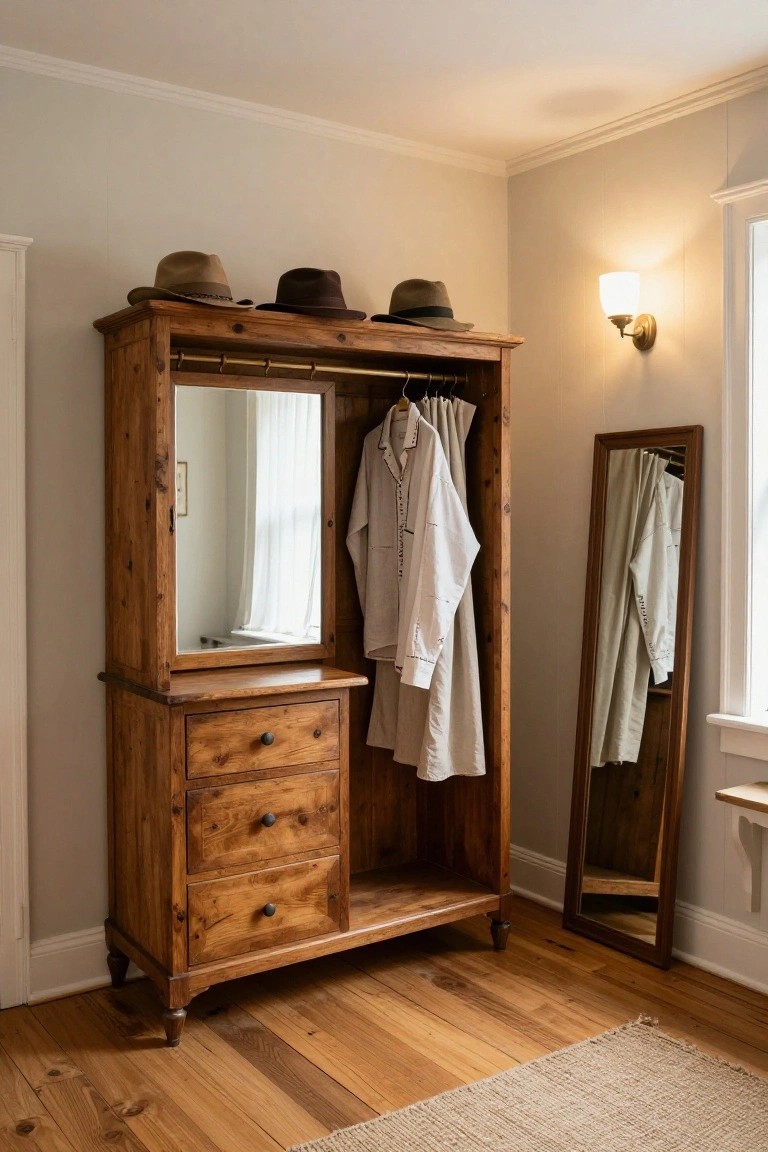
A wooden armoire like this one fits right into a colonial-style bedroom. It holds hats up top, shirts on hangers inside, and has drawers below for smaller things. That mix of open storage and the mirror door keeps the space feeling useful without taking up too much room.
These work great in older homes or rentals where closet space runs short. Place it in a corner by a window for light. Hunt for solid oak or pine pieces at flea markets…they age well and add that lived-in look. Skip anything too fancy if you want everyday practicality.
Mudroom Hooks for Easy Entry Storage
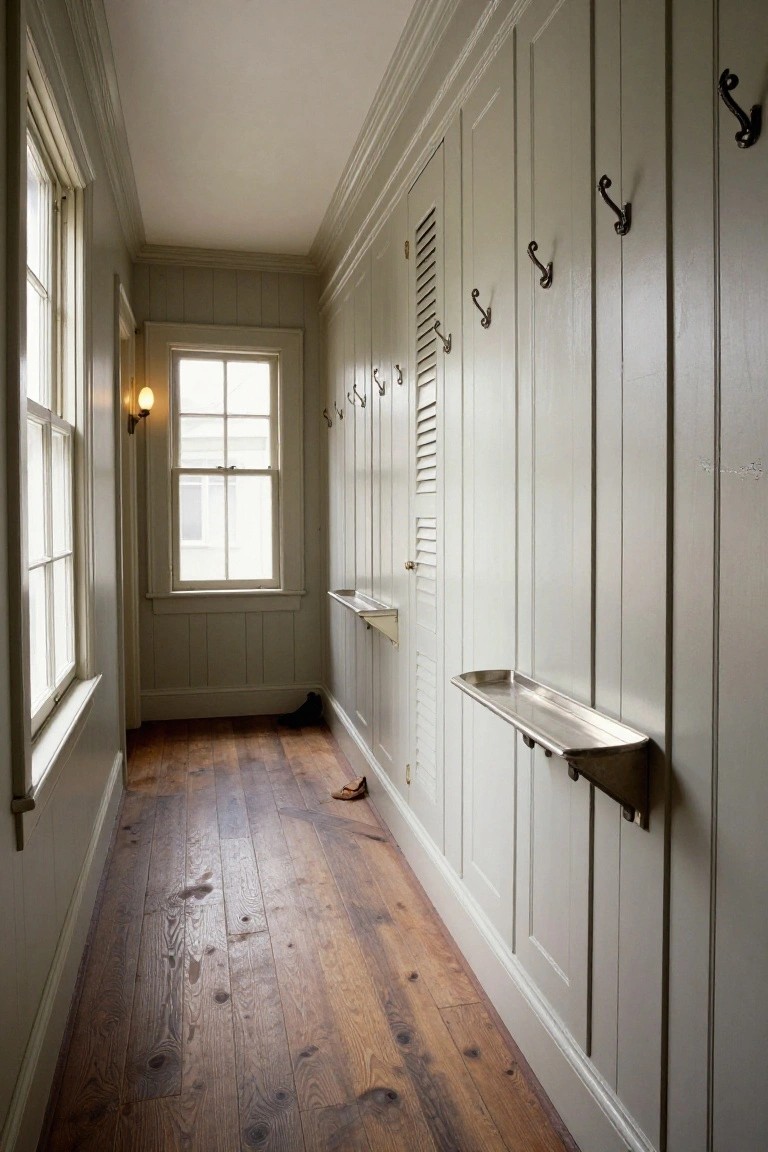
In older homes, a narrow hallway like this turns into a real workhorse with rows of sturdy hooks mounted right on the paneled walls. They catch coats and bags as you come in, and that metal shelf below works as a drip tray for muddy boots or wet shoes. Keeps everything off the floor without taking up space.
You can set this up in any tight entry or back hall near a door. Pair the hooks with soft gray paneling and wide wood floors for that colonial feel. It suits family homes where practicality matters most. Just space the hooks at different heights so kids can reach too.
Built-In Corner for Laundry Storage
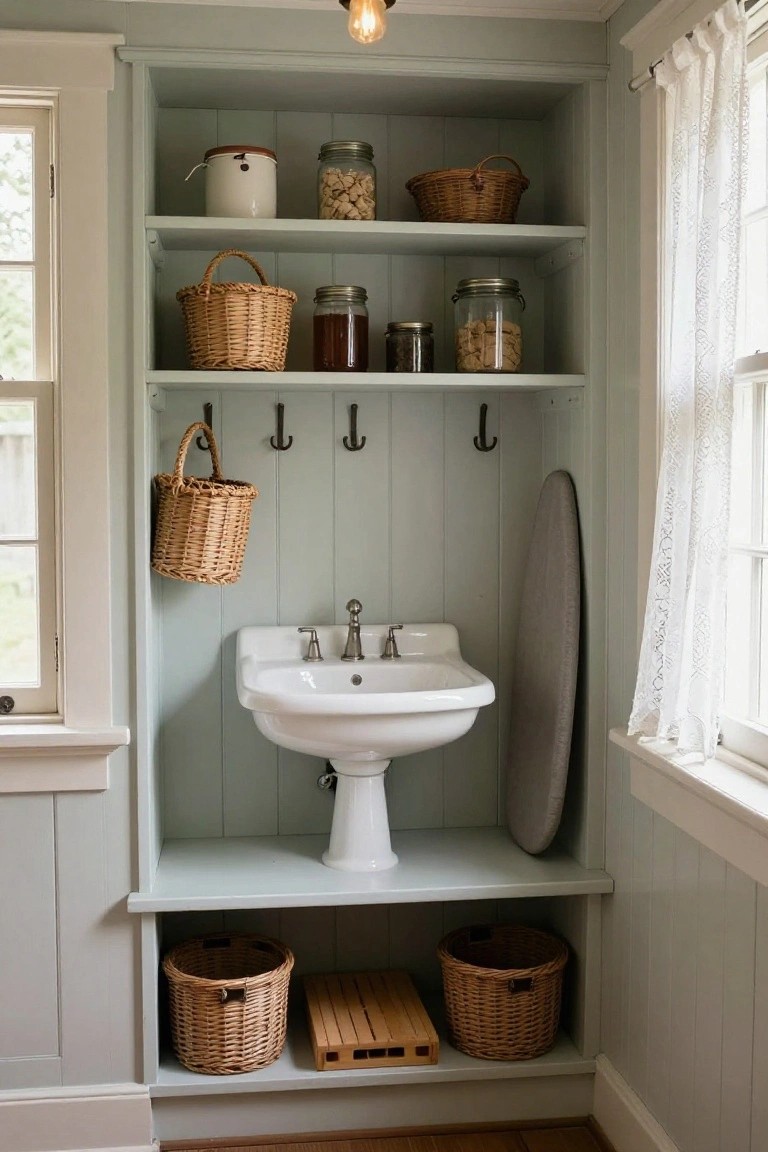
Small corners in older homes often go to waste. But this built-in setup changes that. It wraps open shelves around a simple white sink, with pale green paneling and iron hooks for towels. Wicker baskets and glass jars hold soaps, nuts, and linens right where you need them. It’s practical without feeling cluttered, and it fits the historic feel.
Try this in a mudroom, pantry, or half-bath. It works best in spaces under 6 feet wide. Start with sturdy shelves on studs, add a vintage pedestal sink, and fill with natural baskets. Skip glass doors to keep it airy… just watch moisture around the sink.
Frequently Asked Questions
Q: How do I add Colonial touches to a rental apartment without drilling holes?
A: Grab peel-and-stick wallpaper printed with raised panel designs. Toss in a few woven baskets or brass candlesticks from flea markets. You get that paneled-wall warmth right away.
Q: What’s a quick fix for fake wooden beams on a budget?
A: Buy foam or lightweight pine beams from a craft store and paint them a deep walnut shade. Glue or tape them across your ceiling. They fool the eye perfectly.
Q: Can I mix Colonial style with my sleek modern couch?
A: Throw a quilted slipcover in soft blue toile over it. Flank the sides with wingback armchairs you reupholster cheap. The old charm pulls everything together.
Q: How do I pick wall colors that scream Colonial but stay livable?
A: Go for creamy off-whites or muted sages, like you’d see in an old tavern. Test samples in morning light first. They make rooms feel bigger and more inviting.
