

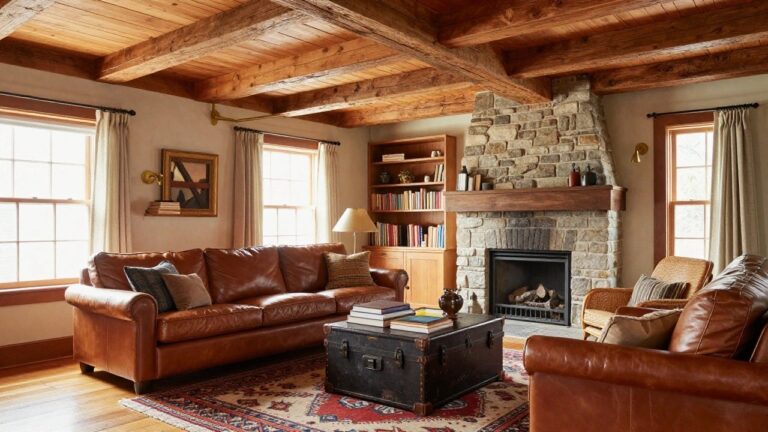
I’ve spent enough time in old houses to know that a plain ceiling can make even the coziest room feel flat and unfinished. Wooden treatments change that by adding depth and a sense of history right overhead, where your eye naturally drifts in quieter moments. In the living room I redid last year, simple exposed beams made the space feel both larger and more intimate without touching the walls. Traditional designs like these work best when they match the room’s light and furniture scale, pulling everything together instead of overwhelming it. A few from this collection are straightforward enough to test in your own home for that subtle lift.
Traditional Exposed Wooden Beam Ceilings
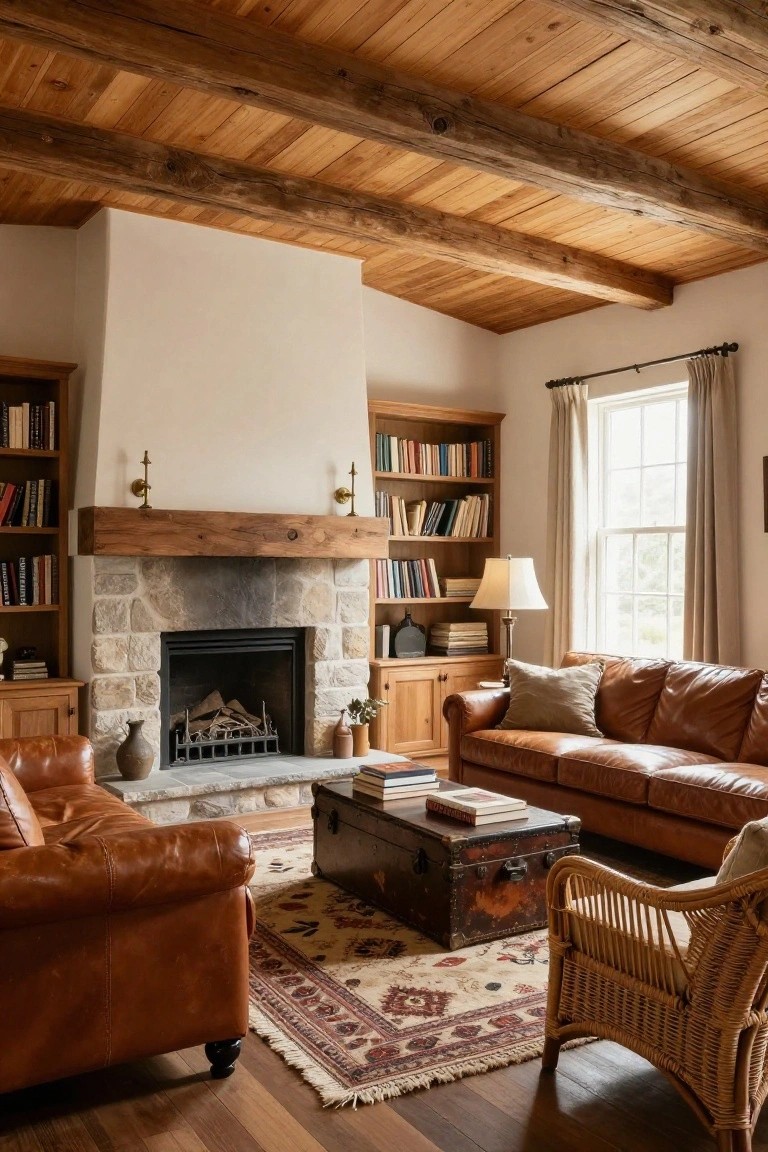
Wooden beam ceilings like these show up often in older homes, and for good reason. They pull your eye up and make the room feel taller and more connected to its rustic roots. Here, the dark timber beams run right over a stone fireplace and leather seating area, giving everything a settled, lived-in look without trying too hard.
You can add them in living rooms or family spaces where you want that warm, cabin feel. They work best in homes with some stone or wood accents already, keeping things balanced. Just make sure the beams aren’t too low if your ceilings are short… or the space might start to feel closed in.
Wooden Beamed Ceilings Warm Dining Rooms
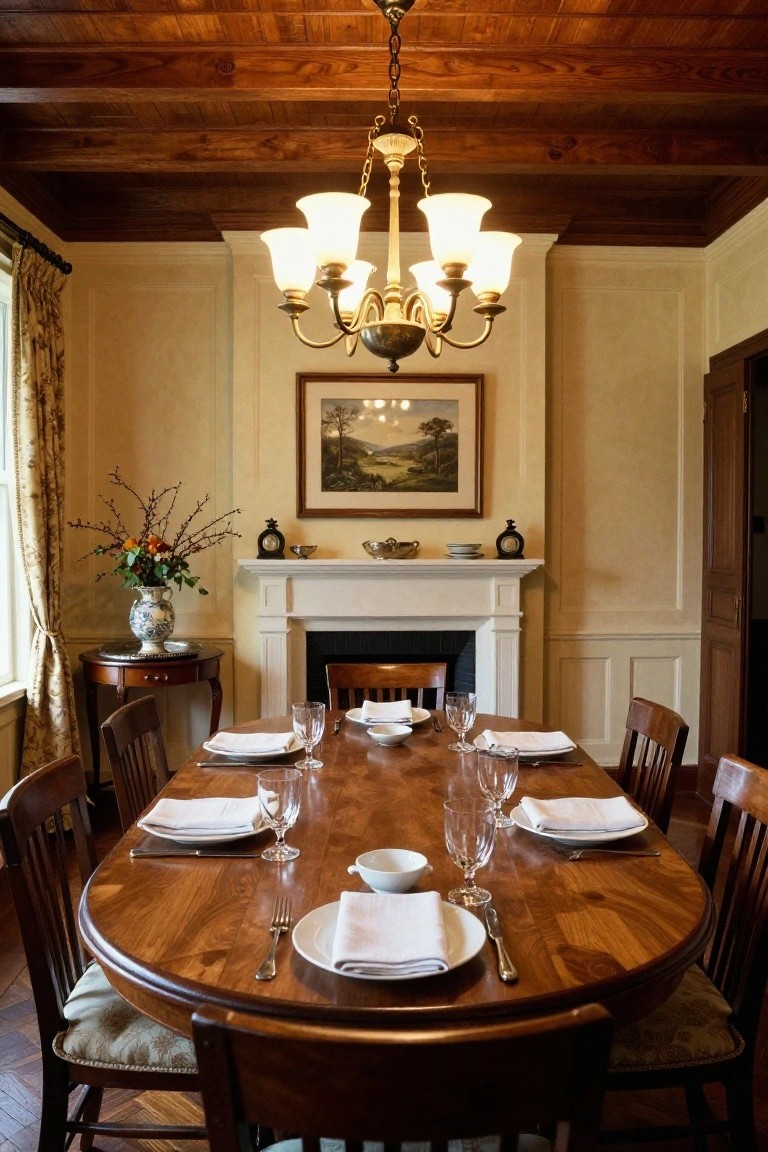
Exposed wooden beams like these stretch across the ceiling and give the whole dining space a grounded, lived-in feel. The dark wood grain picks up the tones in the oval table and chairs, making everything connect without trying too hard. It’s a simple way to add character overhead.
This look fits best in traditional homes with neutral walls and a fireplace nearby. Hang a chandelier from the beams to bounce light around. It suits bigger rooms where you want height to matter… just keep the finish matte to avoid glare.
Exposed Wooden Ceiling Beams
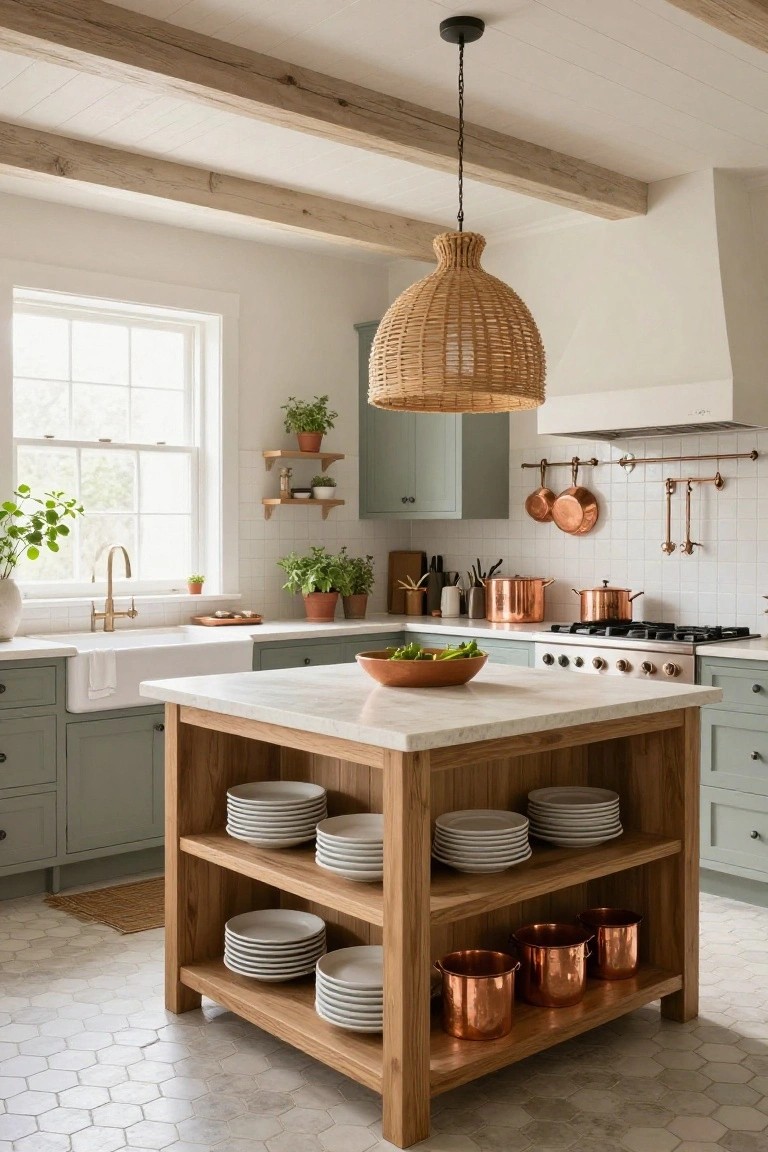
Wooden beams like these stretched across the ceiling bring a bit of old farmhouse charm to any kitchen. They catch the eye right away without overwhelming the room, especially when paired with simple white walls. The light wood tone keeps things airy and ties into the oak island below for a pulled-together look.
Try this in spaces with high ceilings or neutral palettes, like kitchens or family rooms. In older homes, uncover what’s already there. Newer spots might use reclaimed timber for that authentic feel. Just keep the finish natural so it warms up cooler tones around it.
Exposed Wooden Ceiling Beams
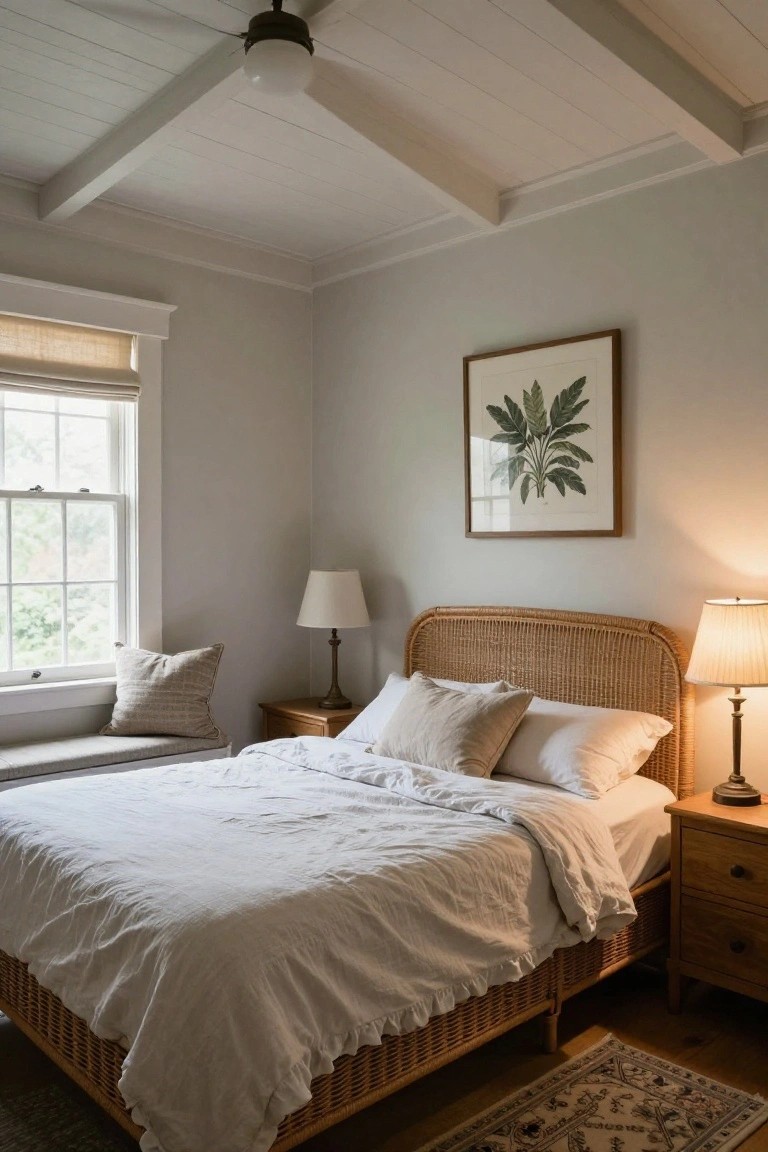
Exposed wooden beams like these add a bit of old-house character to a plain ceiling. Here they’re painted light to keep things airy, crossing over the room and drawing the eye up without making the space feel heavy. They fit right in with soft gray walls and keep the bedroom looking calm.
You can pull this off in most bedrooms or even family rooms, especially older homes with high ceilings. Stick to light stains or whitewash on the beams so they don’t darken things up. Natural furniture, like that rattan bed, ties it together nicely… just watch the scale if your room is small.
Wooden Beam Ceilings in Nurseries
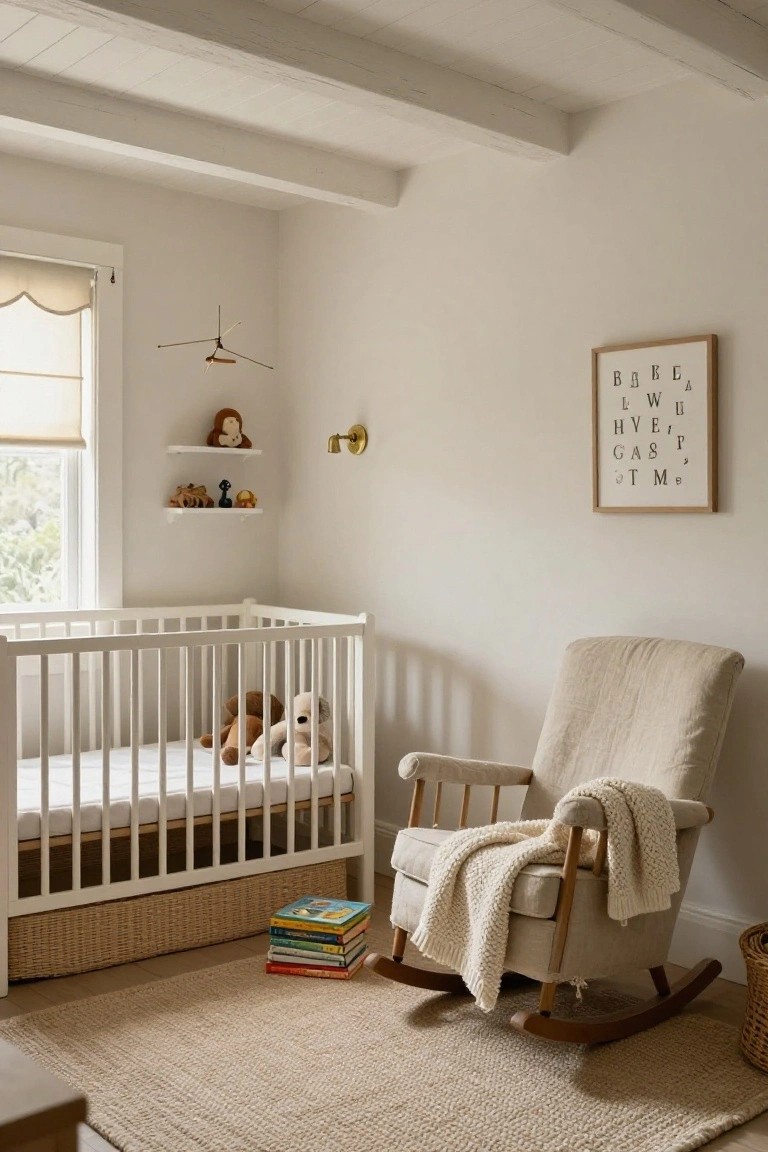
Wooden beams like these show up well in a nursery. They give the room a sturdy, lived-in feel right away. The light wood tone keeps things calm next to the white crib and soft walls. It’s a simple way to nod to older house styles without much effort.
Try this in homes with exposed rafters already, or add faux beams if you want the look. It works best in smaller rooms where the beams draw the eye up. Pair with neutral furniture like that rocking chair to keep the space easy for kids.
Wooden Beams Bringing Character to Studies
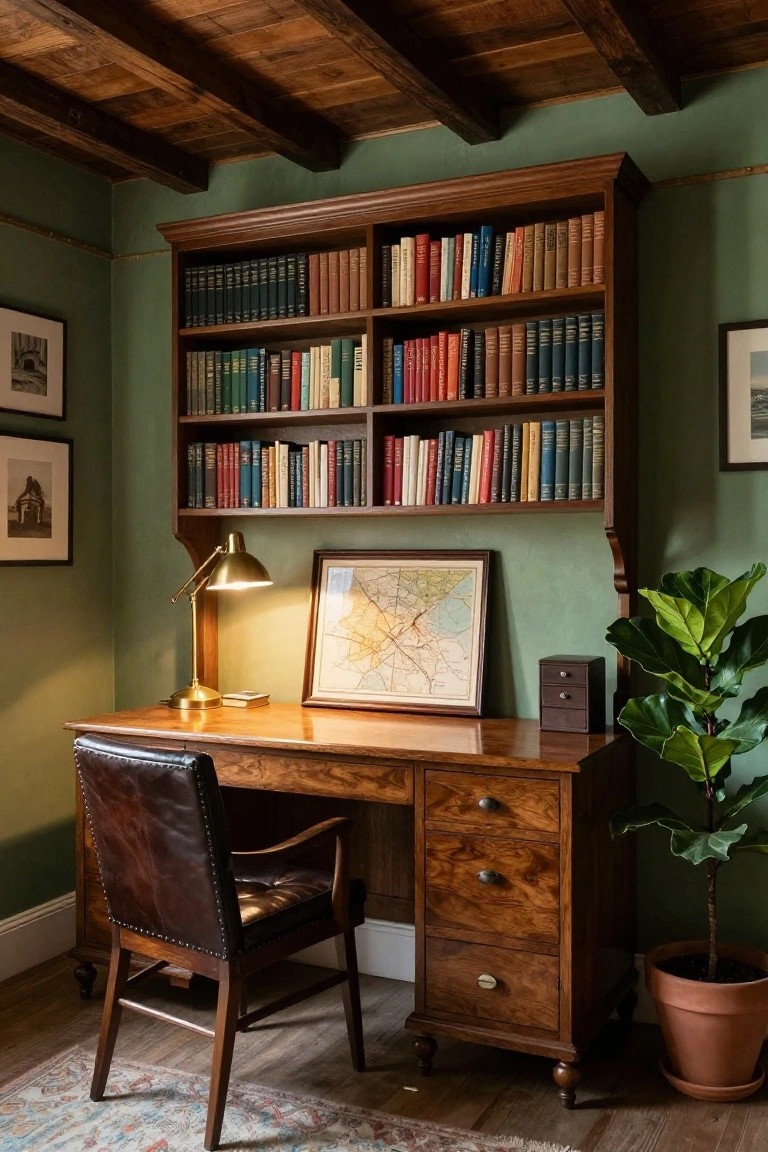
Exposed wooden beams across the ceiling give this study a real sense of age and comfort. They stand out against the green walls, drawing attention upward while tying into the walnut desk and bookshelves below. It’s a simple way to make a room feel more substantial without much effort.
These work best in home offices or reading rooms where you want that traditional feel. Go for them in spaces with some height, and match the wood tone to your furniture. In tighter spots, keep the beams lighter to avoid crowding the air.
Warm Wooden Plank Ceilings in Entryways
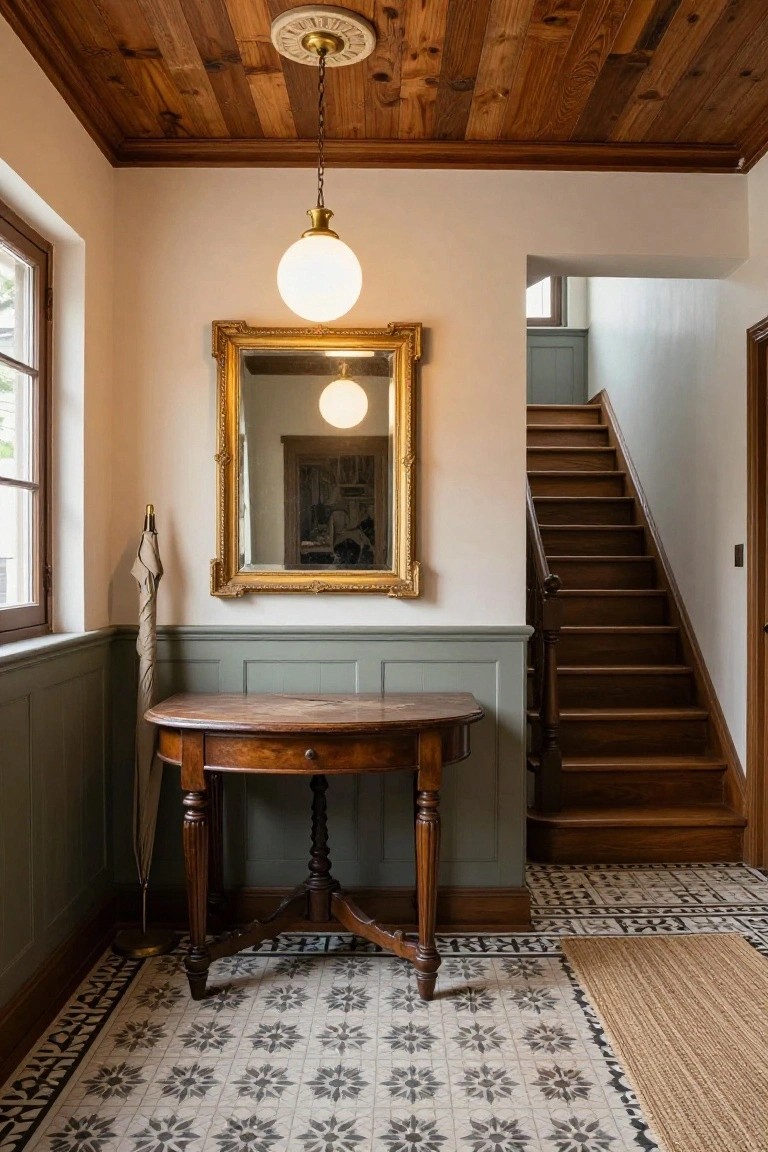
Wooden plank ceilings like this one bring a cozy, lived-in feel to entry spaces. The natural grain and warm tones pull the room together, especially when the planks run edge to edge across the ceiling. It stands out here against the soft walls and adds real character without much fuss.
Try this in a hallway or foyer where you want height to feel welcoming rather than empty. It works well in traditional or craftsman-style homes. Go for reclaimed wood if you can, and keep nearby colors muted… like the sage trim shown. Just check your ceiling height first, since low spots can make it feel heavy.
Traditional Blue-Painted Wooden Ceiling
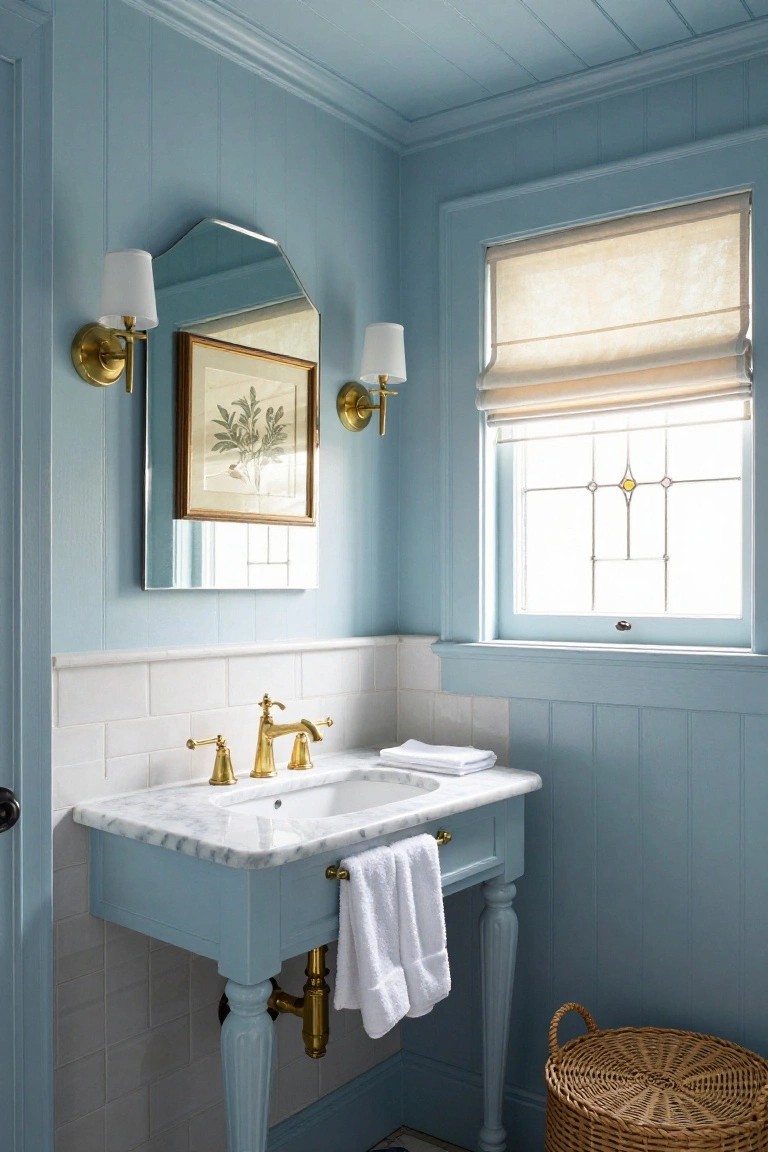
A soft blue wooden ceiling like this one takes a simple bathroom up a notch. The tongue-and-groove panels catch the light just right, making the room feel taller and calmer than plain plaster ever could. It’s that old-house charm without the fuss.
You can pull this off in smaller spaces like powder rooms or even a guest bath. Paint the walls to match for a full wraparound effect, then keep the lower half crisp with white subway tiles and a few brass accents. Works best in homes with some vintage bones… just test the color in natural light first.
Wood Ceilings Warm Marble Bathrooms
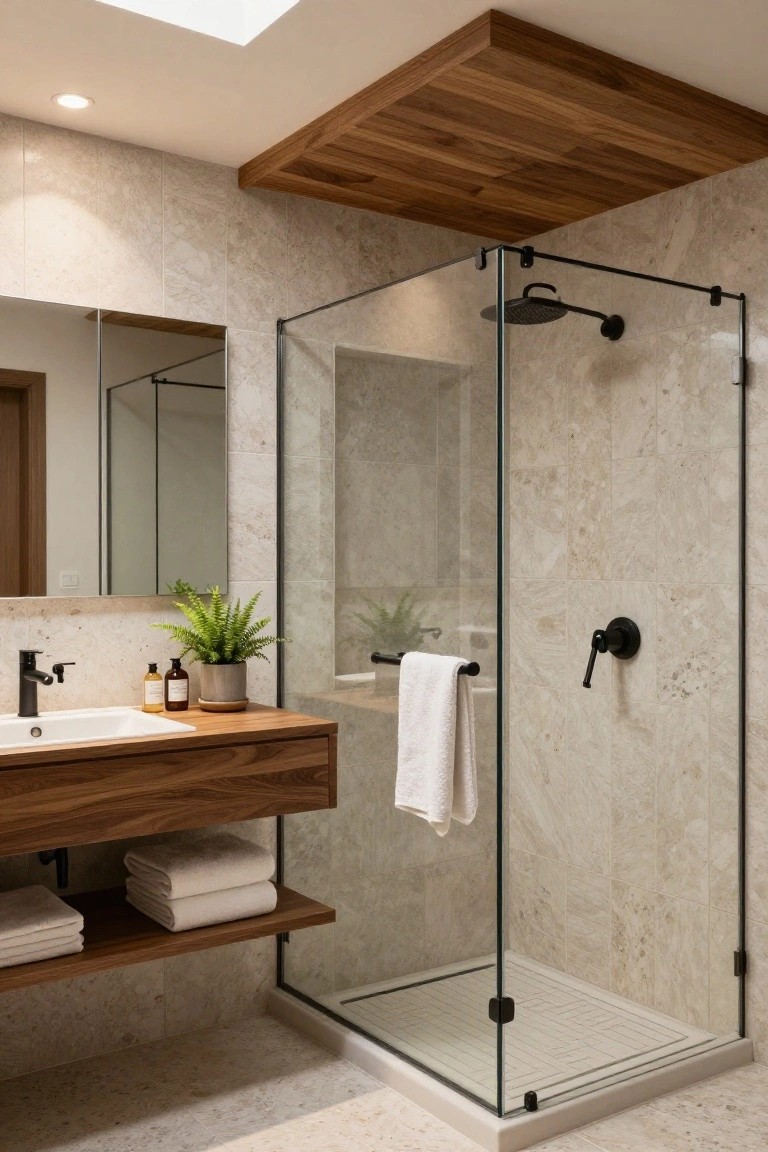
A wooden ceiling like this one works well over marble tiles and glass showers. The warm walnut tones pull focus upward and balance out the cool stone walls and floor. It keeps the bathroom from feeling too stark. Even in a small space, that overhead wood adds a bit of cabin-like comfort.
Try it in modern bathrooms with light stone finishes. Go for sealed wood to handle steam. It suits homes mixing clean lines with traditional touches. Skip it if your room already has busy patterns.
Curved Banquette for Breakfast Nooks
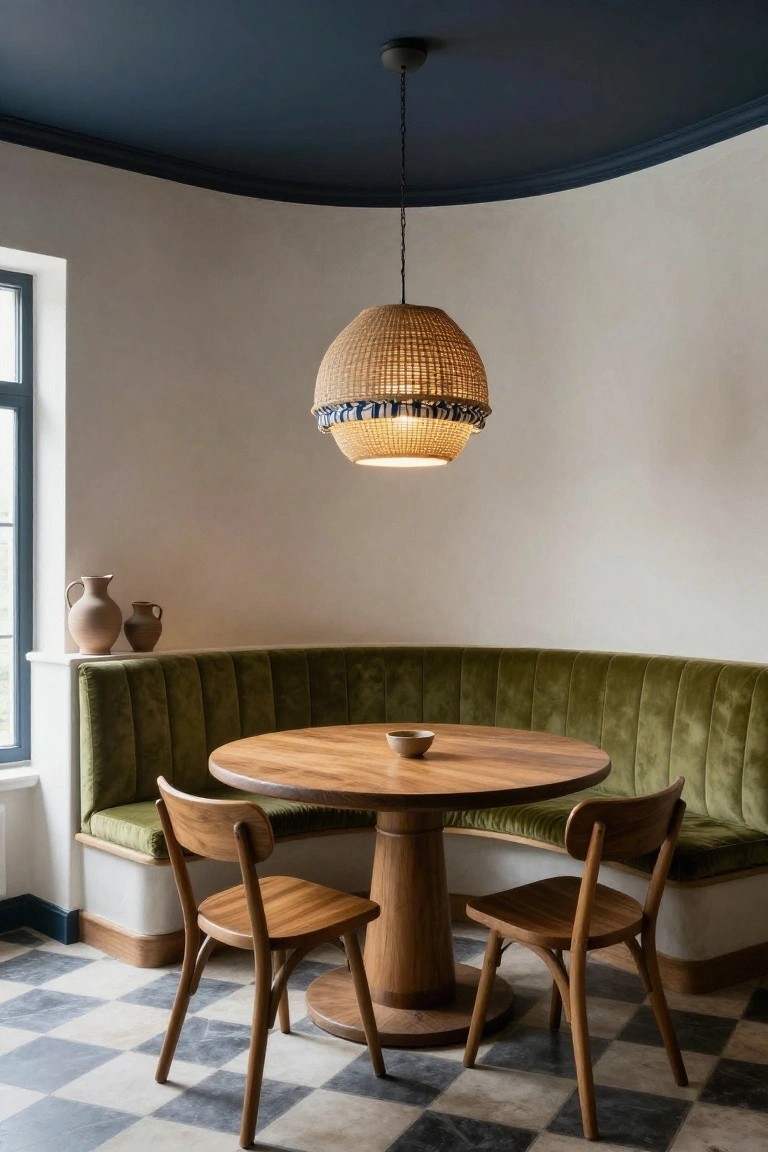
A curved banquette like this one hugs the wall to make a small dining spot feel just right. The green velvet cushions add a soft touch against plain white walls, and that round wooden table fits perfectly in the middle. It pulls the space together without taking up extra room.
Try this in a kitchen corner or alcove where straight chairs won’t work. It suits older homes with odd angles. Keep the table simple, wood tones work best, and add a pendant light overhead for evenings. Just make sure the bench is deep enough to sit comfortably.
Exposed Wooden Beams on Kitchen Ceilings
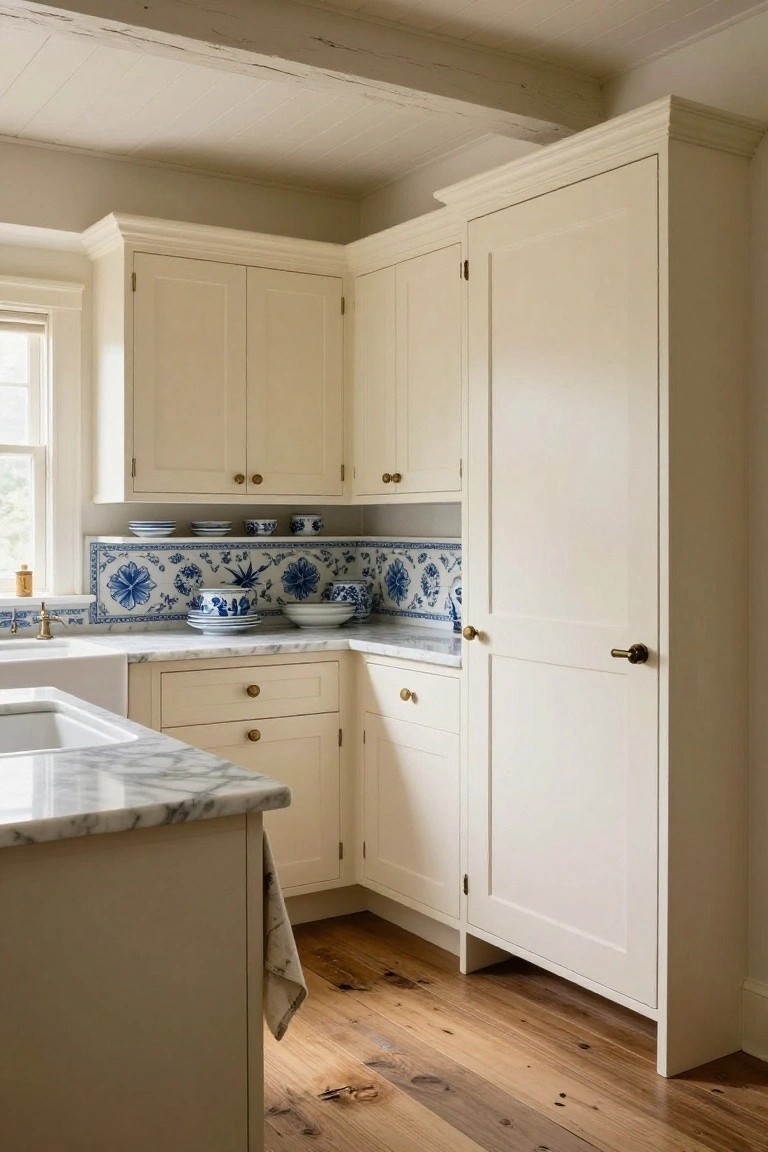
Those old-style wooden beams running across a kitchen ceiling always catch the eye. They give the room a sturdy, lived-in feel that light paint and modern counters just can’t match. Here, paired with cream cabinets, they warm up the whole corner without overwhelming it.
You can add beams like these in kitchens with high ceilings or during a remodel. They suit country homes or city apartments going for a classic look. Just check your joists first, or fake it with stained wood for easier install.
Exposed Wooden Beam Ceilings in Bedrooms
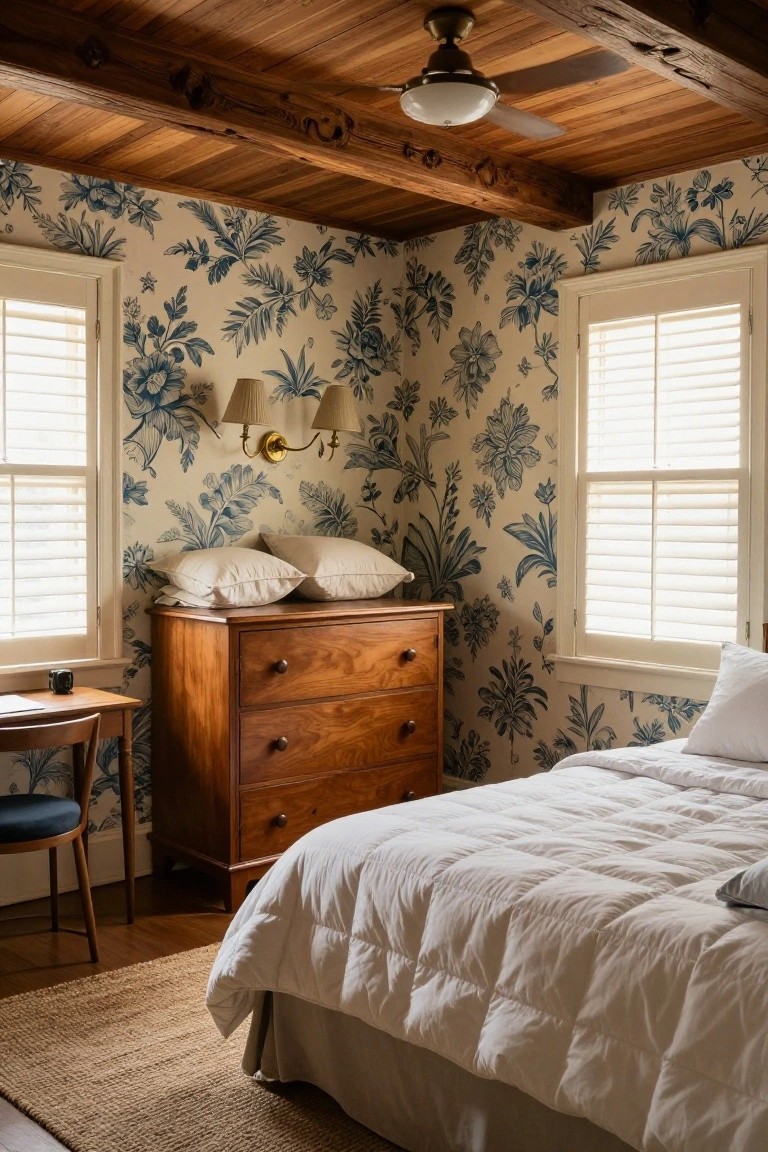
Wooden beam ceilings catch your eye right away in a room like this. The dark exposed beams run across light wood planks, giving the space a sturdy, old-house feel without being too heavy. They play nice with the blue floral wallpaper too, keeping everything tied together.
Try this in a guest room or master bedroom where you want things cozy. It suits cottages or farmhouses best. Just match the wood tones with your dresser or bed frame, and skip bright overhead lights to let the beams shine.
Traditional Wooden Beam Ceilings
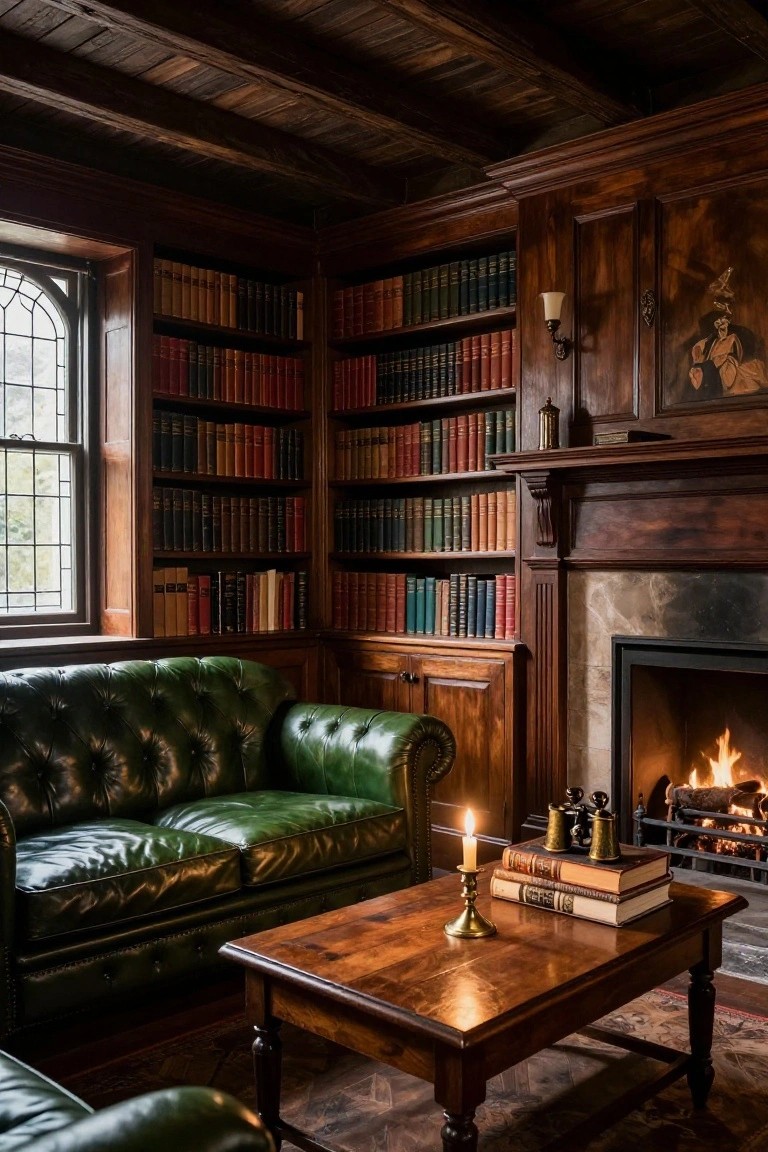
Exposed wooden beams like these stretch right across the ceiling in a paneled study room. They pick up on the dark wood tones from the bookshelves and cabinetry below, pulling the whole space together without much effort. That layered wood look gives the room a settled, lived-in feel that newer ceilings just can’t match.
Put these beams in a library, den, or home office where you want things to feel snug and timeless. They suit older homes best, especially with stone fireplaces or leather seating nearby. Scale them to your room size, and stain to blend with existing trim… otherwise they might overpower a smaller spot.
Exposed Wooden Beams in Laundry Rooms
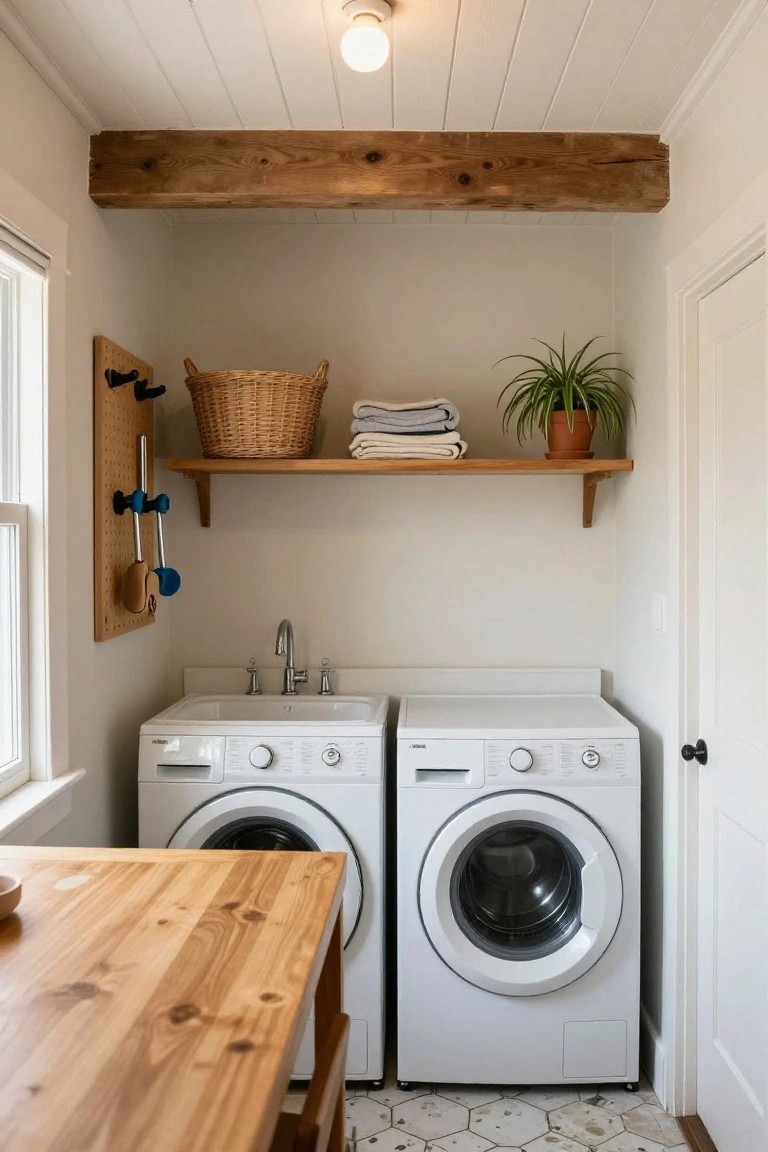
A sturdy wooden beam stretches across the ceiling in this compact laundry room. It stands out against the simple white plank panels and brings a bit of traditional cabin feel to what could be a plain work space. The rough texture of the beam looks right at home with the white washers and folding table below.
You can pull this off in tight utility spots like a mudroom or basement laundry. It suits older homes or ones with a country vibe best. Just make sure the beam matches your floors or trim so it doesn’t feel tacked on. White walls nearby help keep light bouncing around.
Exposed Wooden Beams in Attic Bedrooms
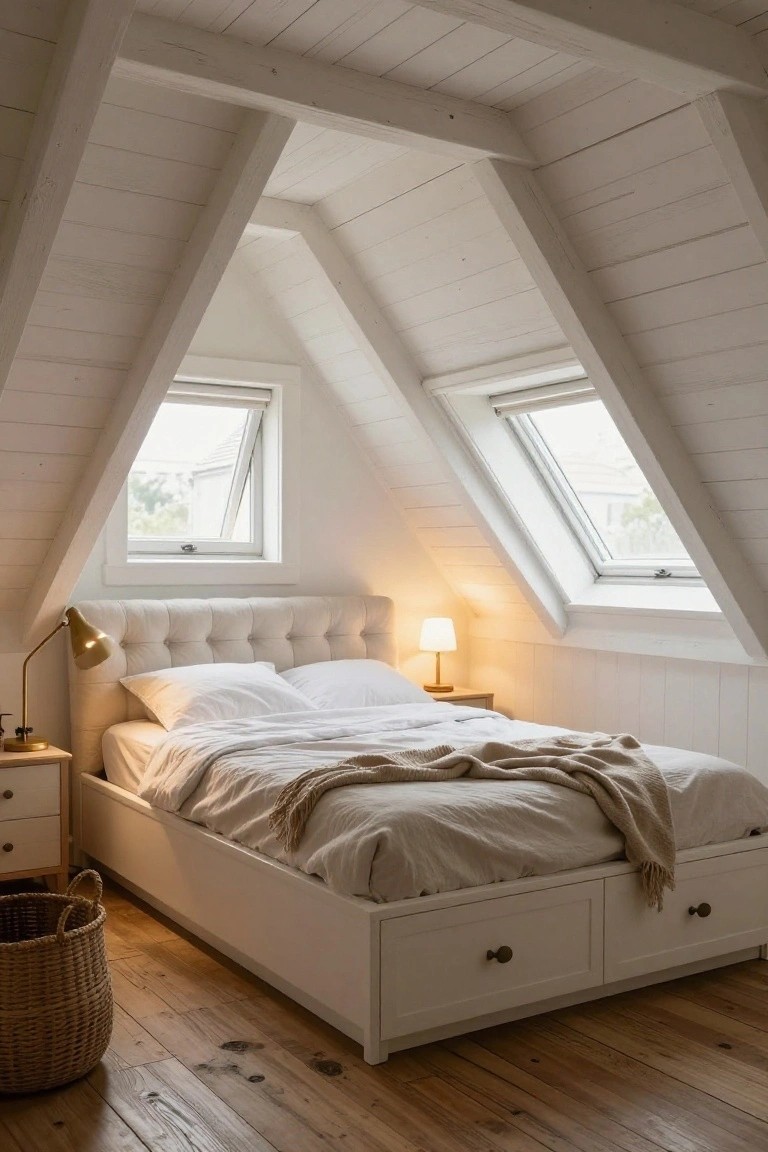
Exposed wooden beams running along a sloped ceiling turn a simple attic bedroom into something special. They add that touch of tradition without overwhelming the space. Here the beams pair with whitewashed wood panels, keeping things light while the wood brings in warmth from the floorboards and furniture below.
You can pull this off in any attic room with decent pitch. Just paint the beams a soft white if the wood is too dark, or leave them natural for more contrast. It suits older homes best, where the beams feel like they belong. Watch the scale though. Too heavy, and the room shrinks.
Rustic Wooden Ceiling Beams for Kitchen Warmth
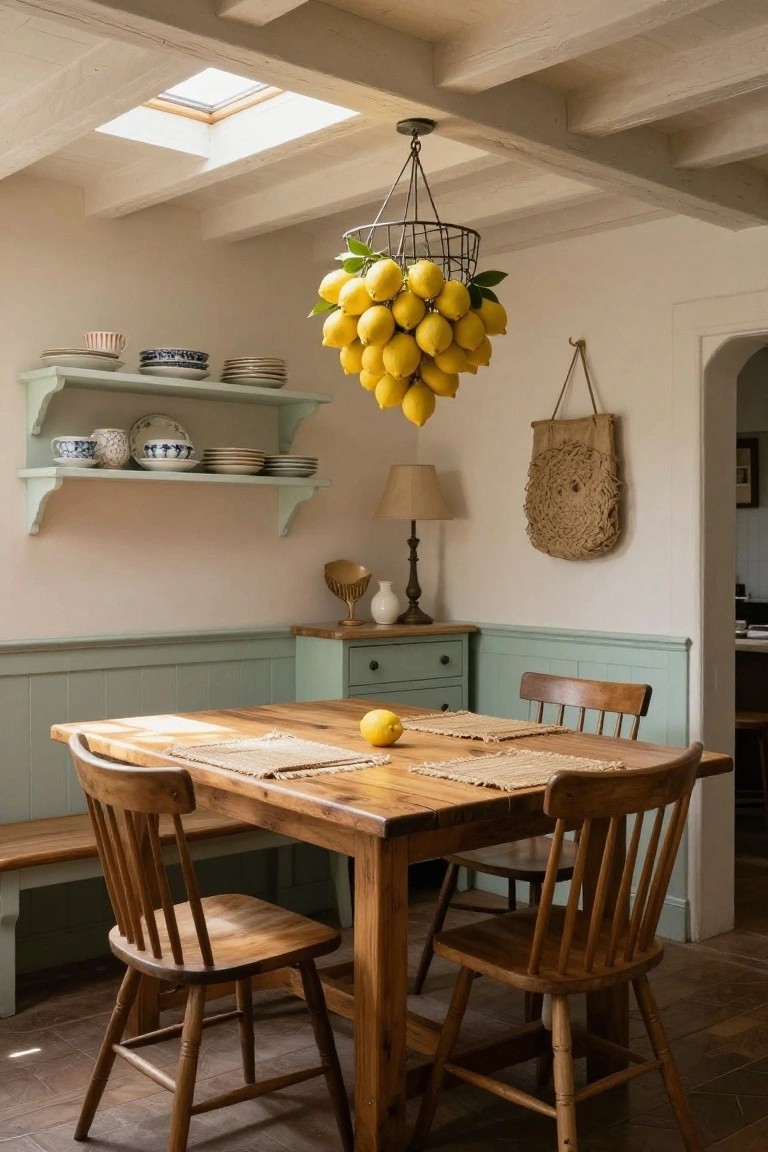
Exposed wooden beams like these on the ceiling make a simple kitchen nook feel more like home. They add that old-house texture without much effort, especially when kept light and natural. The beams catch the light from the skylight and tie right into the wooden table below.
You can pull this off in smaller eating spaces or breakfast areas. Works best in homes with some age to them, or ones you want to feel cozier. Just seal the wood well so it doesn’t darken too fast… and keep the rest of the room pale to let the beams shine.
Exposed Wooden Beam Ceilings
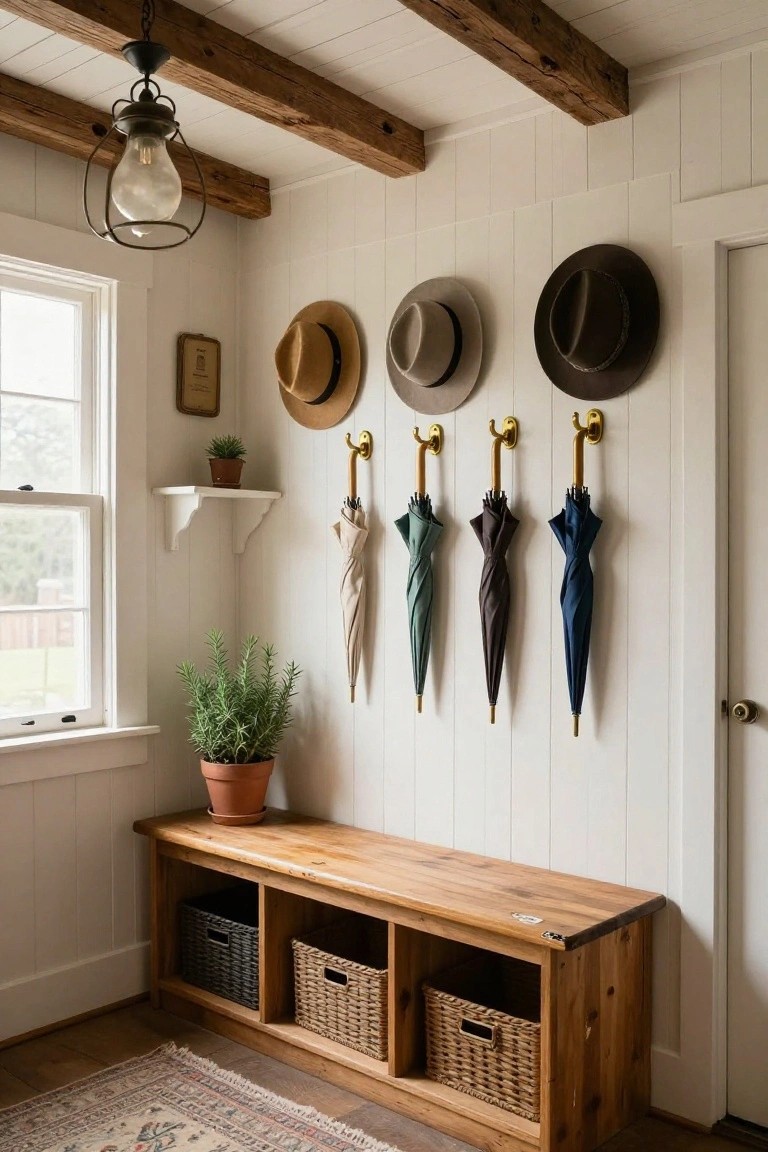
Old houses often have those exposed wooden beams running across the ceiling. They bring in a bit of rustic warmth right away. In this entry spot you see them paired with plain white walls. That contrast makes the wood pop without overwhelming the space. It’s a simple way to add character.
Try this in a mudroom or hallway where you need practical storage too. A bench below works well, like here with baskets tucked underneath. It suits farmhouses or cottages best. Just make sure the beams are finished smooth if you want less upkeep.
Exposed Wooden Beams for Cozy Sitting Rooms
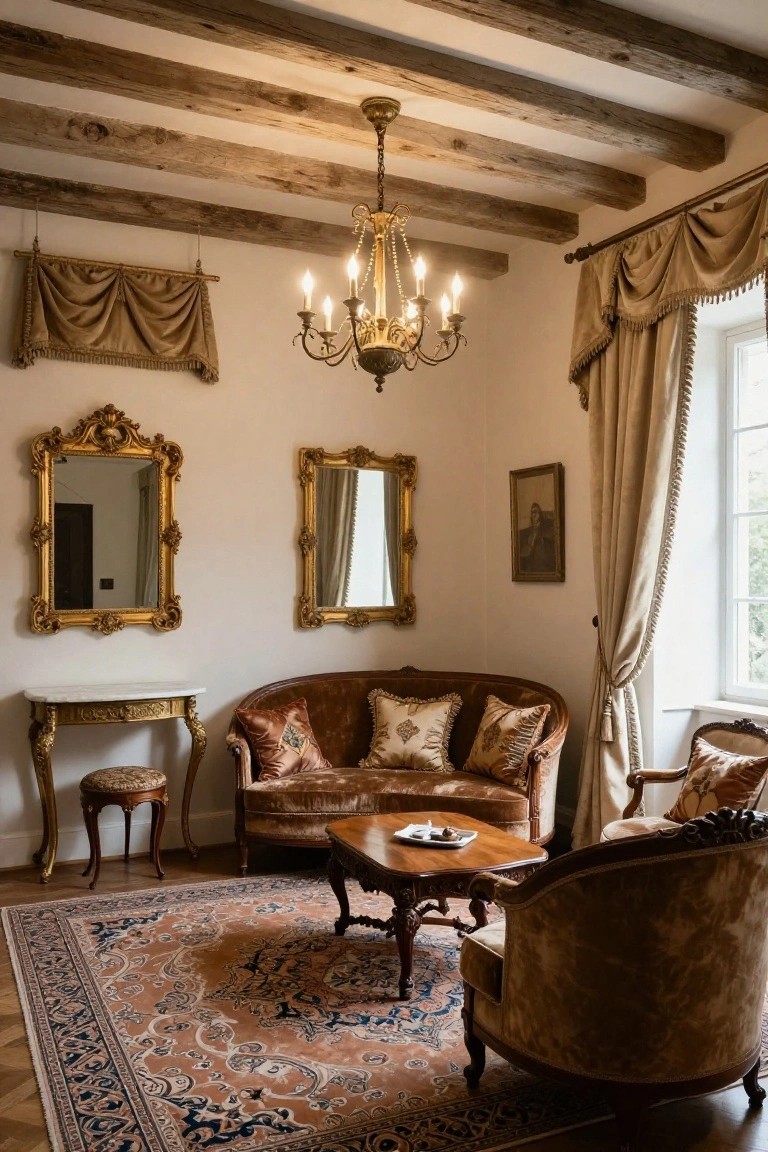
Exposed wooden beams like these stretch across the ceiling and give a room that lived-in feeling from another time. They stand out against plain walls and let light from the chandelier play off the rough texture. In this setup, the beams tie right into the warm brown tones of the furniture below, making the space feel snug without being dark.
You can pull this off in older homes or any room you want to feel more rooted. Keep the beams natural, maybe stained a bit dark, and pair them with soft seating like a velvet loveseat. Watch the scale though. Big beams work best in rooms with high ceilings… too low and they might crowd things.
Exposed Wooden Beams Add Kitchen Charm
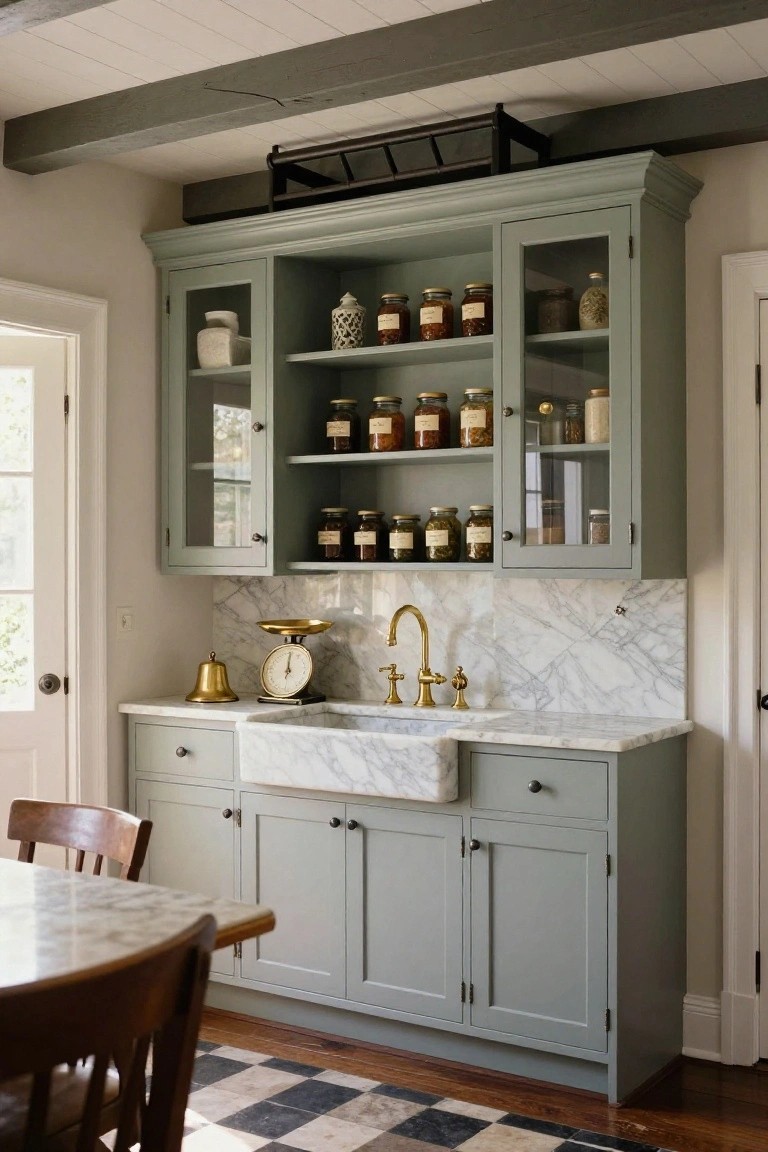
Those dark wooden beams running across the white planked ceiling bring a touch of old-house character to this kitchen. They frame the space nicely without stealing focus from the work areas below. In a room like this, with soft green cabinets and marble counters, the beams make everything feel more connected and lived-in.
You can pull this off in kitchens that get decent light, especially ones with high ceilings. Go for beams stained or painted to contrast the walls, but keep them proportional so the room stays open. Older farmhouses or cottages suit it best… just check for any moisture issues first if you’re adding them new.
Traditional Wooden Plank Ceilings
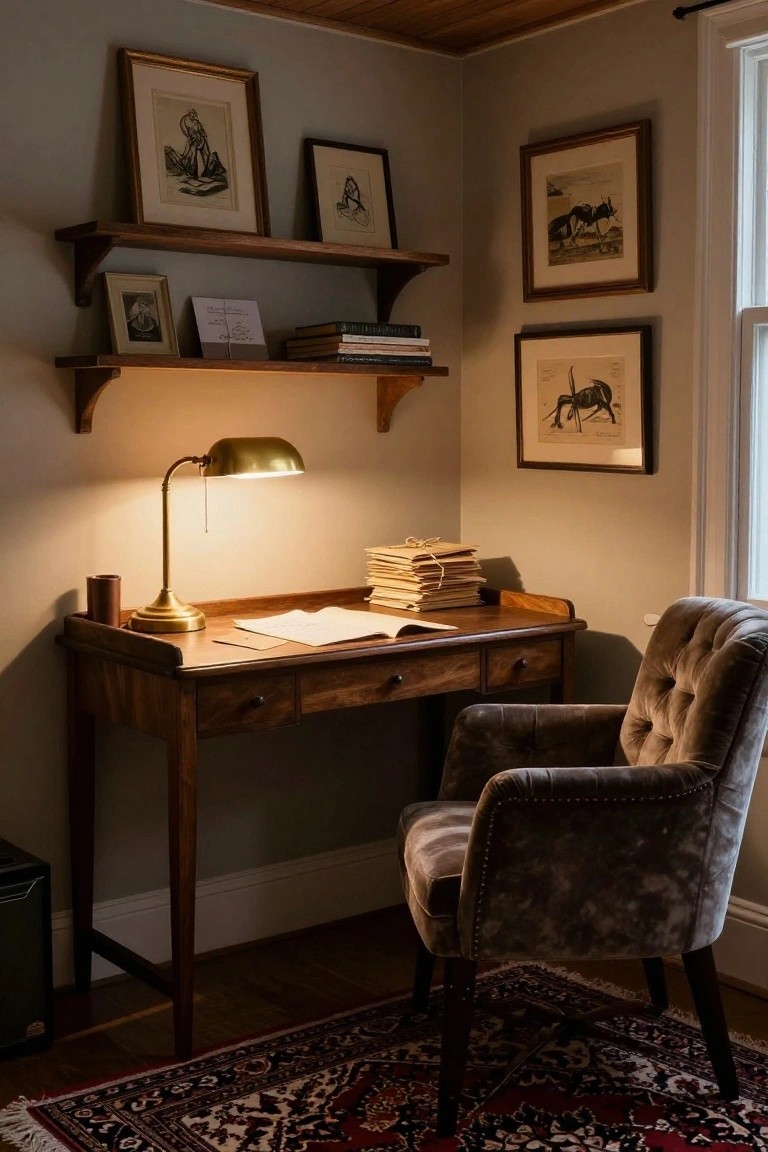
Wooden plank ceilings like this one bring a real sense of warmth to a room right away. They fit right into older homes or spaces with wood trim already, and here they pull together the desk and shelves without much effort. The light wood tone keeps things from feeling too dark, even in a smaller corner spot.
You can add these in a home office or reading nook pretty easily, especially over plain drywall. They work best in rooms with good natural light from a window. Just match the wood stain to your floors or furniture, and avoid super glossy finishes if you want that lived-in look.
Whitewashed Wooden Ceiling in a Cozy Bathroom
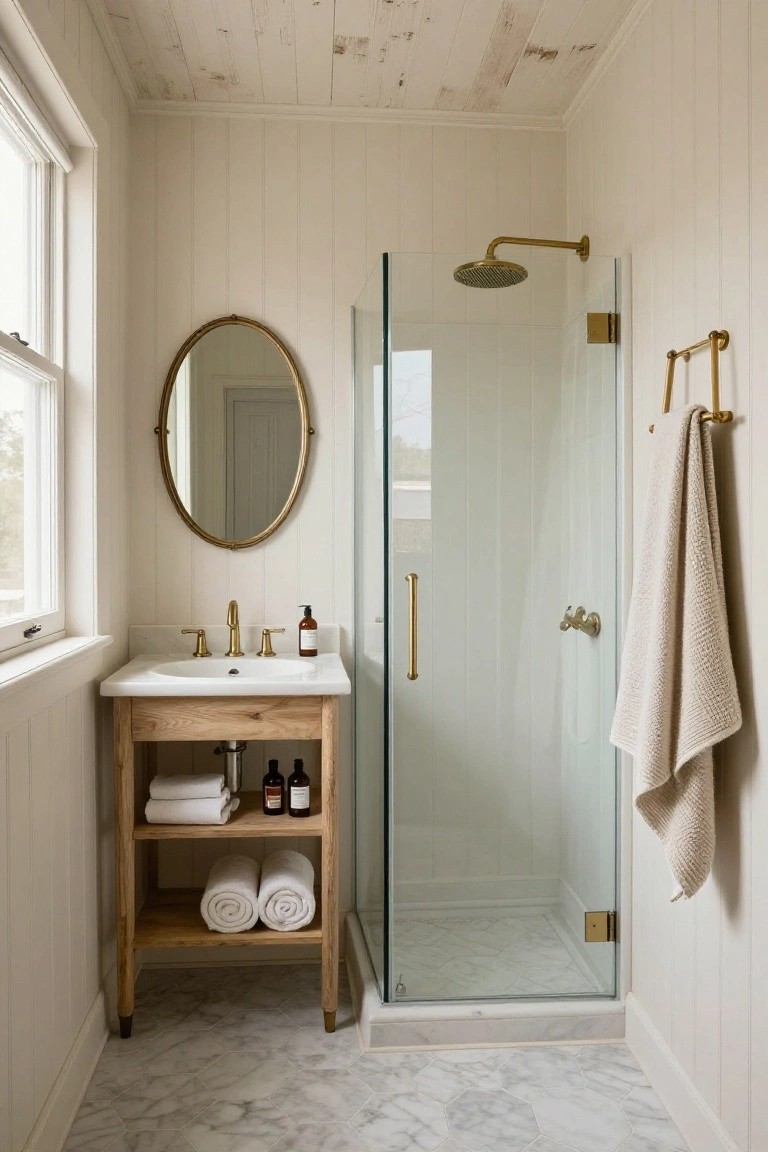
A whitewashed wooden ceiling like this one turns a plain bathroom into something special. The light planks with their soft, weathered look lift the space without overwhelming it. They add texture up top while keeping the room airy, especially in tight spots.
Try this in older homes or cottages where you want warmth without darkness. It pairs well with wood vanities and marble floors for a natural flow. Just make sure the finish stays light to avoid closing in the room.
Frequently Asked Questions
Q: Can I install wooden ceiling panels myself without hiring pros?
A: Start with tongue-and-groove pine or cedar planks. They clip right into place over furring strips on your existing ceiling. Just measure twice and work from the center out.
Q: Will a wooden ceiling work in a steamy bathroom?
A: Go for sealed cedar or teak that handles moisture well. Apply a waterproof finish before hanging. It keeps the wood from warping over time.
Q: How do I clean dusty wooden ceilings without damage?
A: Dust them gently with a soft brush attachment on your vacuum every few months. Wipe spots with a damp microfiber cloth and mild soap. And skip harsh chemicals.
Q: What’s the easiest wood for beginners wanting that classic look?
A: Reclaimed barn wood gives instant warmth… just sand it smooth first.
