

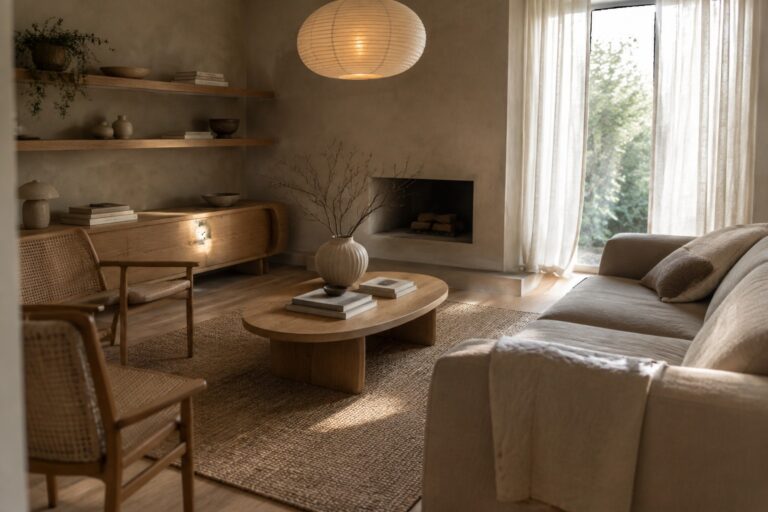
I have spent years noticing how Japandi and Wabi Sabi elements shift the way a living room settles into daily use rather than just looking balanced on paper.
When the wood tones and muted textures actually line up with how people move through the space the whole room starts to feel quieter without any extra effort.
Some mixes only prove themselves after you live in them for a few weeks.
Modern traditions add a layer of clean structure that keeps these softer approaches from drifting into vagueness once furniture and lighting are in place.
Testing one or two material pairings at a time has helped me see which combinations hold up once the seasons change and the light shifts.
Low Furniture Arrangements For A Calmer Living Room
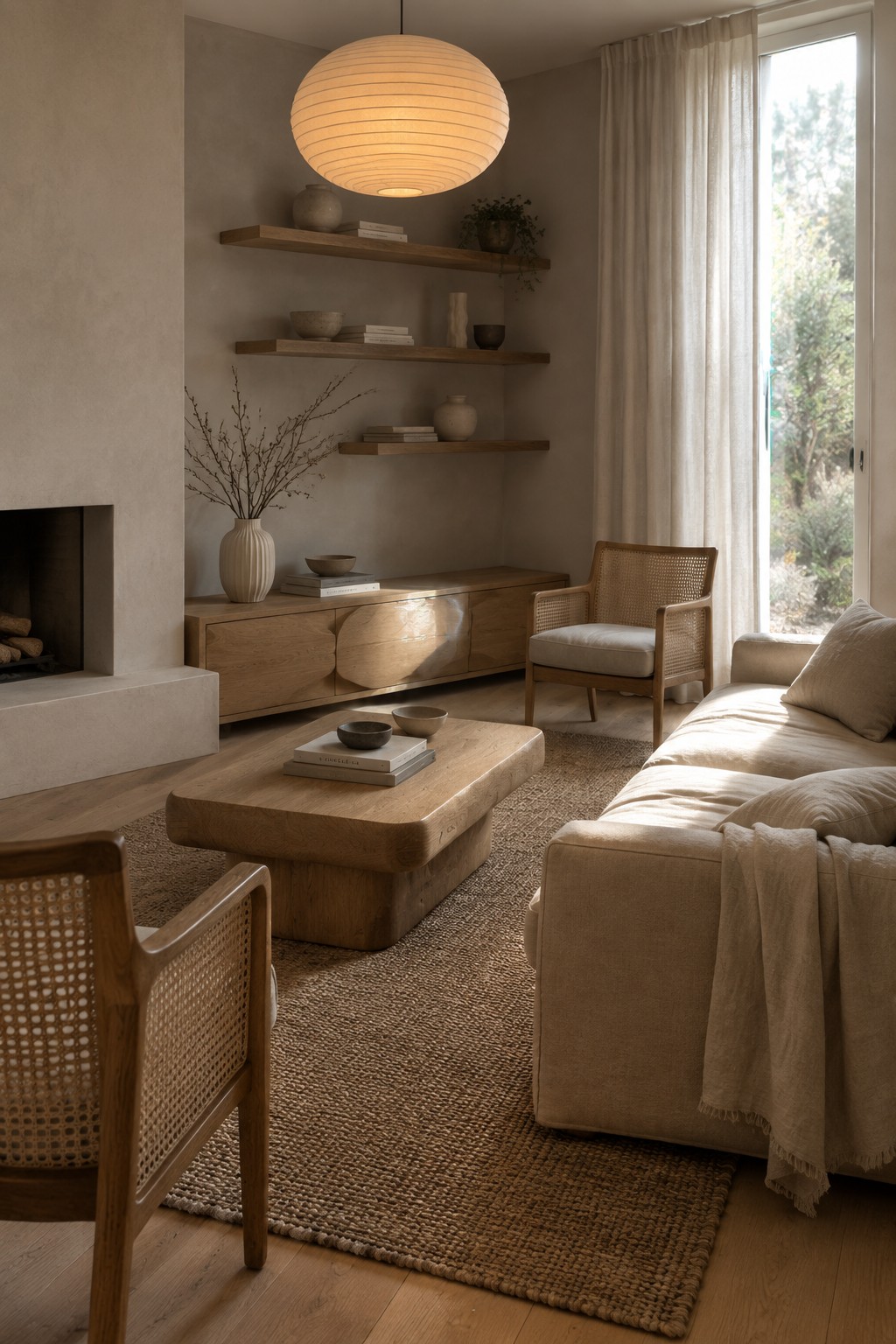
Many homes feel more relaxed when the furniture sits closer to the floor. Low tables, sofas, and consoles keep the room feeling open and easy to move through, which works especially well in spaces that already lean toward simple, natural materials.
This setup suits smaller living areas or homes that want a quiet, grounded feel without looking sparse. Stick to wood tones and soft textiles so the lower profile reads as intentional rather than unfinished.
Low Platform Beds In Natural Wood
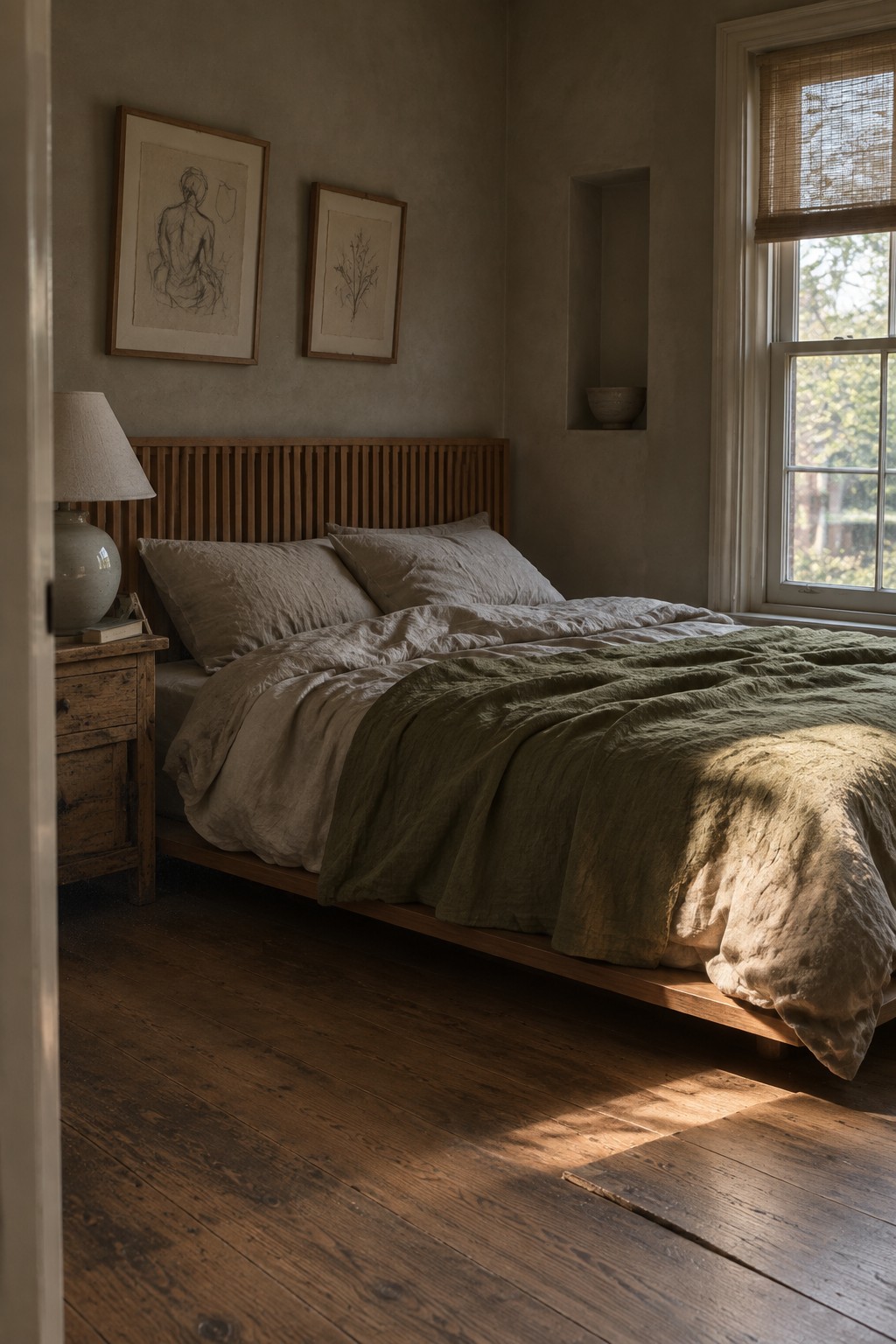
A low wooden platform bed with a simple slatted headboard keeps the whole room feeling open and steady. The wood brings warmth without weight, and the low profile works especially well in smaller spaces where tall furniture can crowd the air.
This approach suits homes that favor Japandi or Wabi Sabi styles. Pair the bed with rumpled linen in muted tones and keep other pieces low and few. Skip tall dressers or heavy curtains if you want the calm to hold.
A Wooden Kitchen Island That Works As The Daily Hub
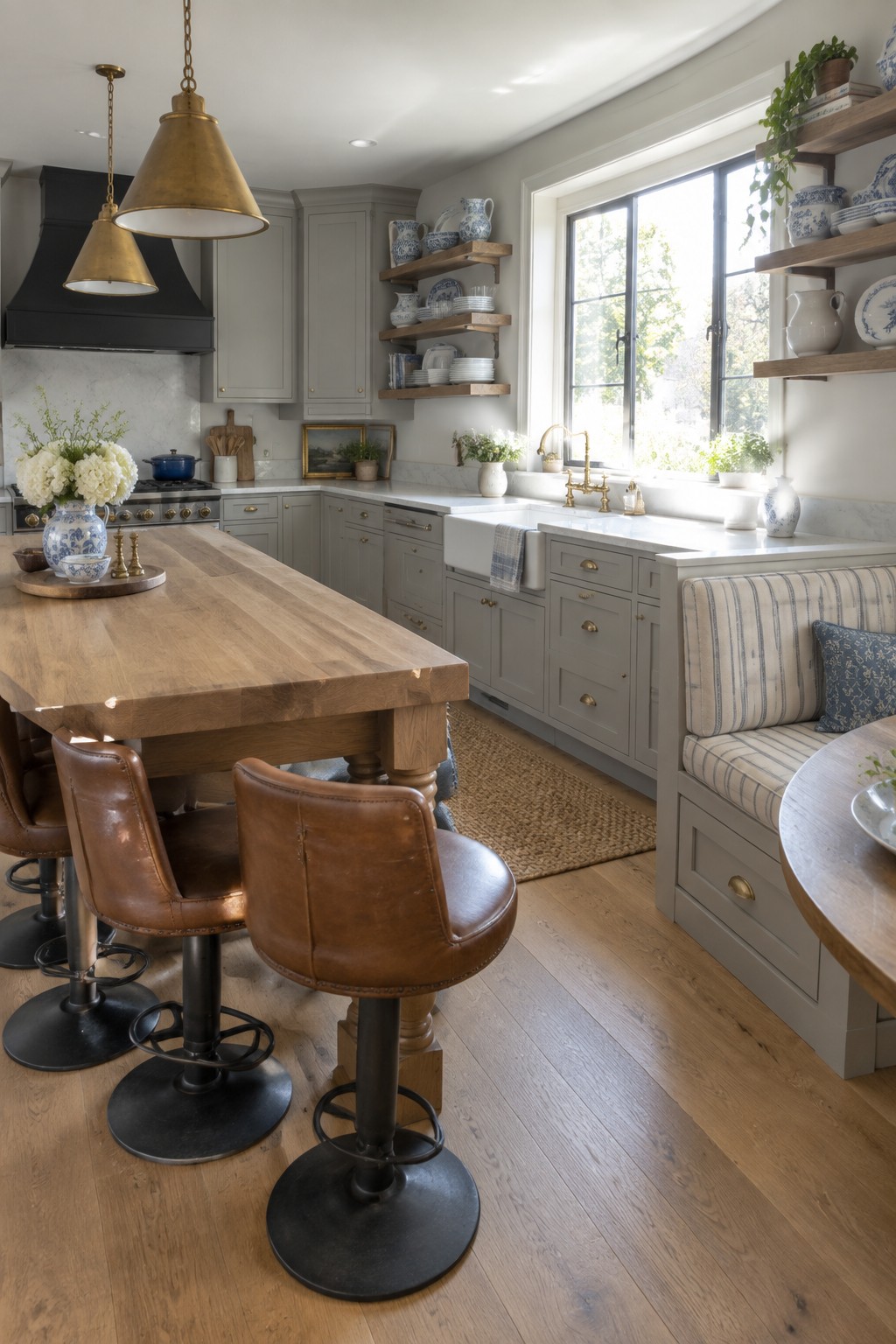
A big wood island changes how a kitchen gets used day to day. Instead of just a prep surface, it becomes the spot where people sit, talk, and linger while someone cooks. The warm tone of the wood also softens all the painted cabinetry around it, so the room feels more welcoming without any extra effort.
This setup works best in kitchens that already have decent open floor space. Keep the stools simple and comfortable so people actually want to stay there, and make sure the island is sized to leave clear walkways on both sides. It suits homes where the kitchen is the main living area rather than a tucked-away work zone.
Floating Wooden Vanities Keep Storage Simple
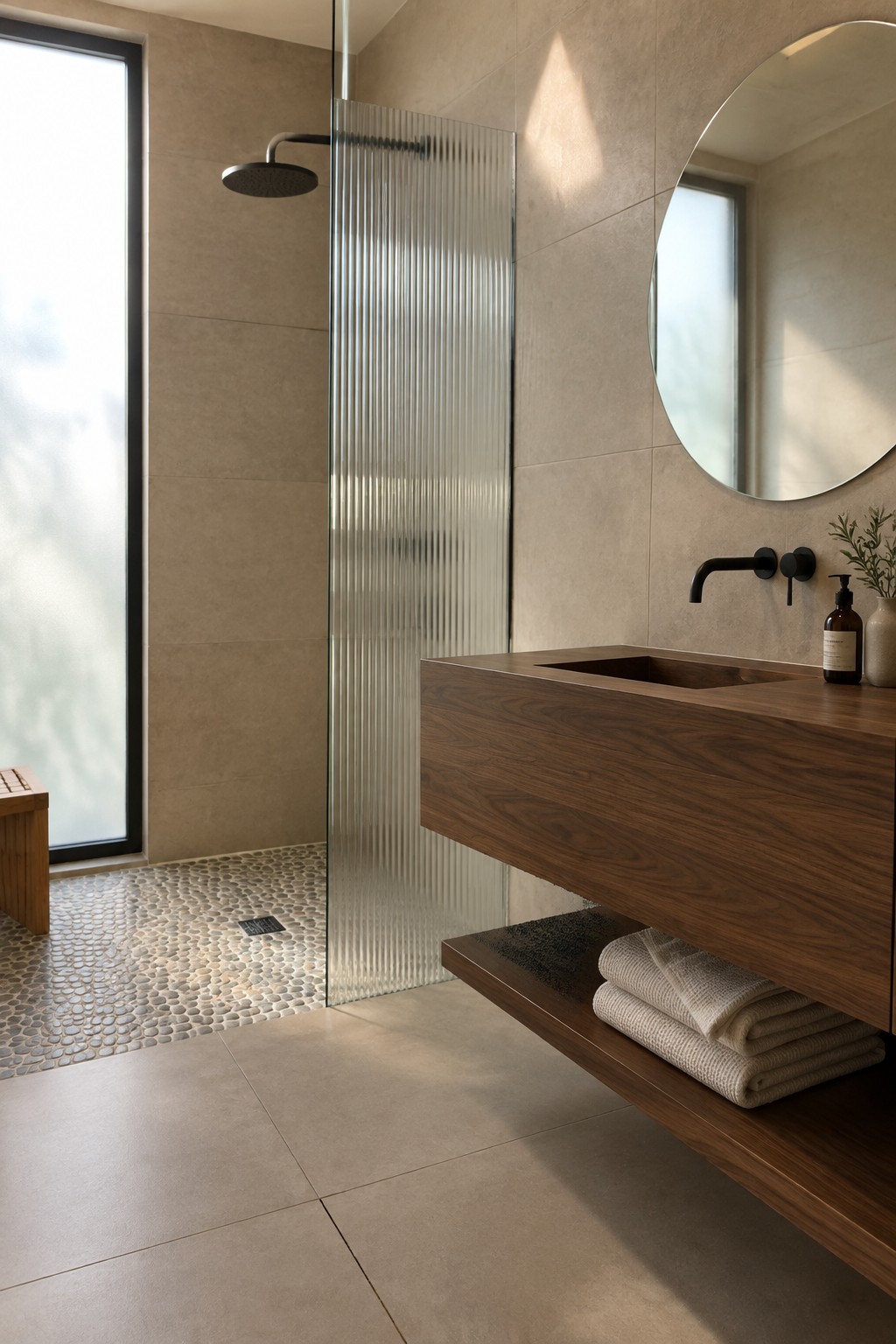
A floating wood vanity works well when you want storage in a bathroom but still need the space to feel open and easy to clean. The wood brings in some warmth against all the tile and stone, and the open shelf underneath keeps towels handy without adding another cabinet to crowd the room.
This setup suits smaller bathrooms or any space where you prefer a lighter look. Just make sure the shelf stays low enough to reach comfortably and that you pick a wood finish that holds up to moisture over time.
Rustic Wood Tables in the Dining Room
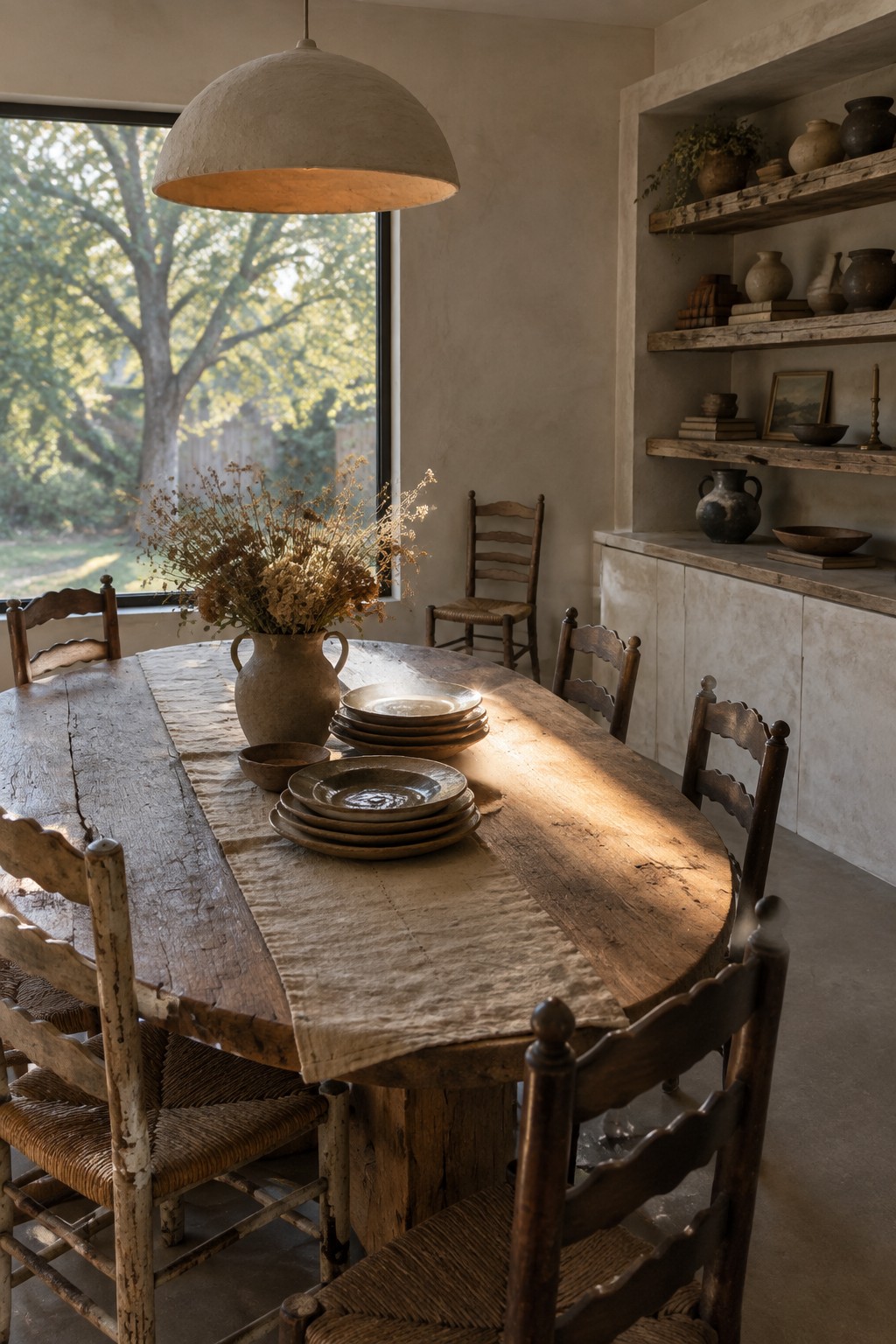
A big wooden table with visible wear and texture can carry a whole dining space on its own. It brings warmth and a sense of age that newer furniture often lacks, and it works especially well when the rest of the room stays simple.
Keep the chairs basic, like the woven seat styles shown here, and add only a few clay or ceramic pieces. This setup suits homes that want a calm, practical dining area rather than a styled one, and it holds up best in rooms with plenty of natural light.
Patterned Tile Flooring in Entryways
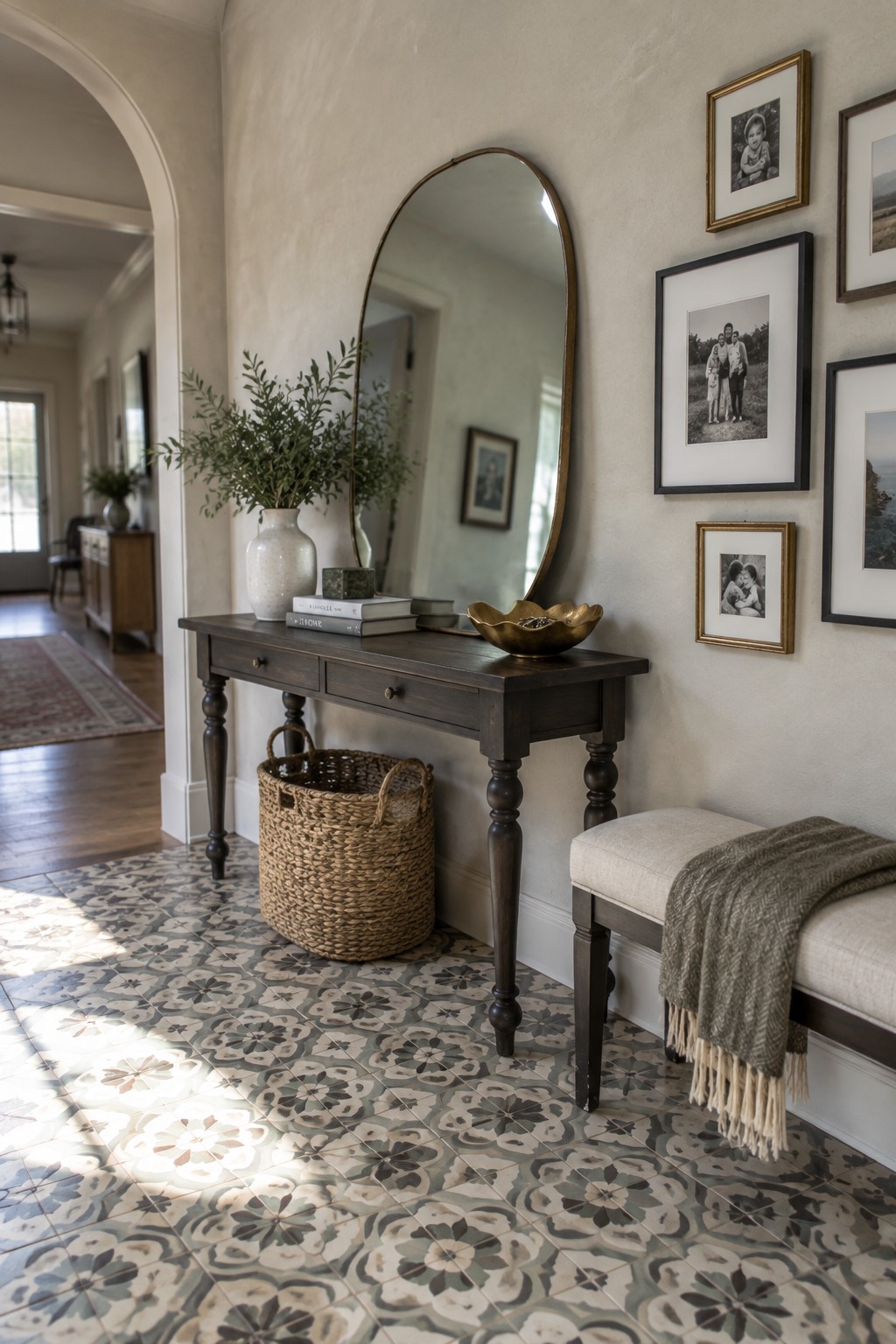
Patterned tile gives an entryway instant character while keeping the rest of the space simple. The design shows up clearly underfoot and sets a calm but interesting tone right at the door. Many people like it because it adds movement without crowding the walls or furniture.
This works best in homes with neutral walls and straightforward pieces like a wood console or bench. It suits spaces that get steady light so the pattern stays visible but not overwhelming. Keep other surfaces quiet so the floor can do the work.
Natural Textures For A Calm Nursery
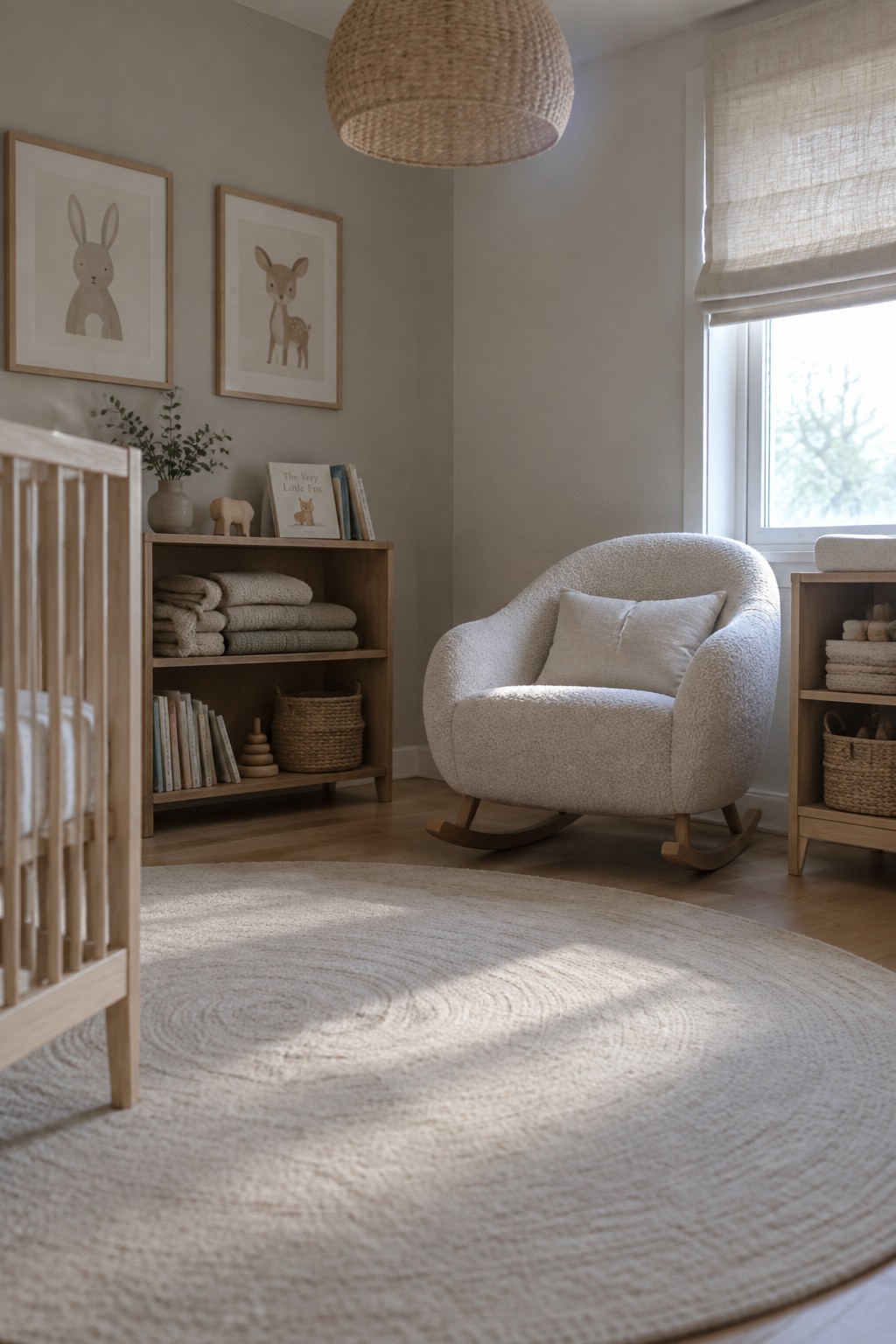
Many parents want a nursery that feels quiet from the start. Sticking to one soft palette of creams, beiges, and light wood keeps the room from feeling busy and helps the space stay restful even when toys and books are added.
This works well in smaller rooms or homes that lean toward Japandi or wabi sabi styles. Keep the same warm materials on the chair, rug, and shelves so the eye moves easily and nothing stands out too much.
Concrete Built-Ins For Home Workspaces
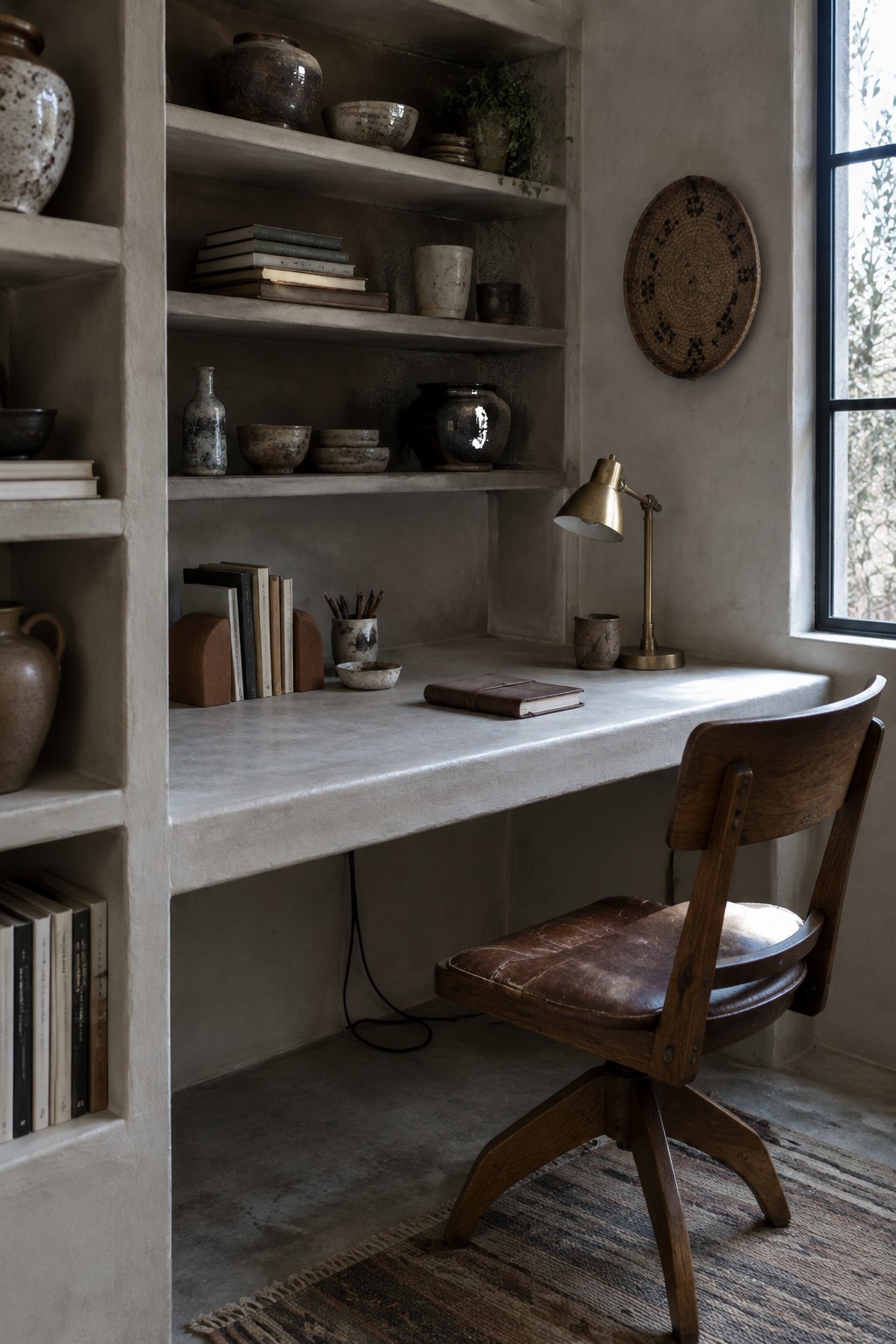
A built-in concrete desk that continues straight up into open shelves keeps the whole workspace feeling calm and connected. The single material choice removes the usual mix of different surfaces and legs and edges that can make a small room feel busy.
This approach works best in homes that already favor simple materials and need extra storage without crowding the floor. It suits smaller offices or corners where you want the desk to feel like part of the wall rather than another piece of furniture added in.
Open Shelving for Everyday Laundry Access
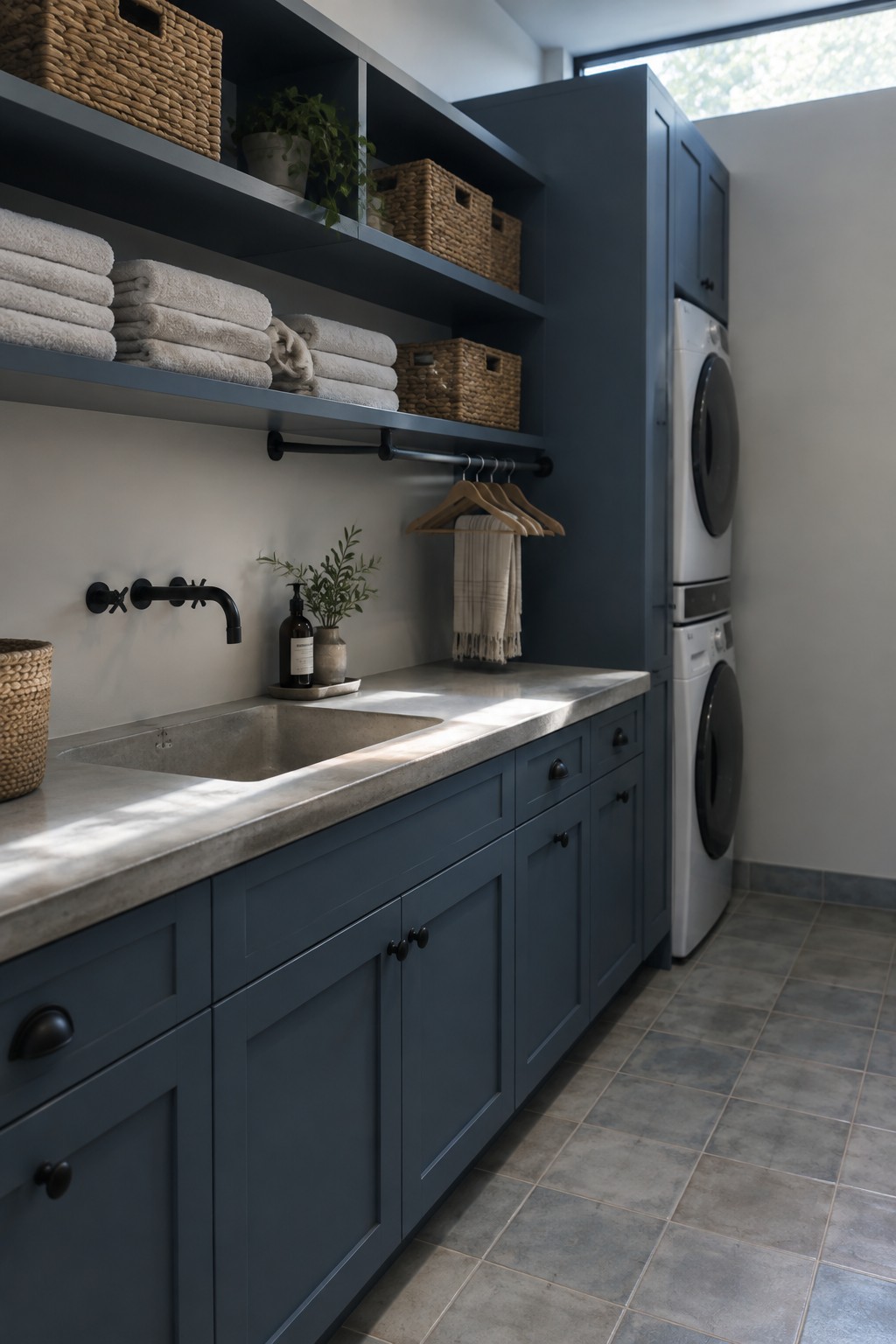
Open shelves above a laundry counter make it easy to grab towels or supplies without digging through cabinets. The setup works because everything stays visible and within reach during busy wash days.
This approach suits homes where the laundry room handles more than just clothes, such as extra linens or household basics. Use the open space for items used often and save closed storage for things that do not need to stay on display.
Built-In Window Seats With Hidden Storage
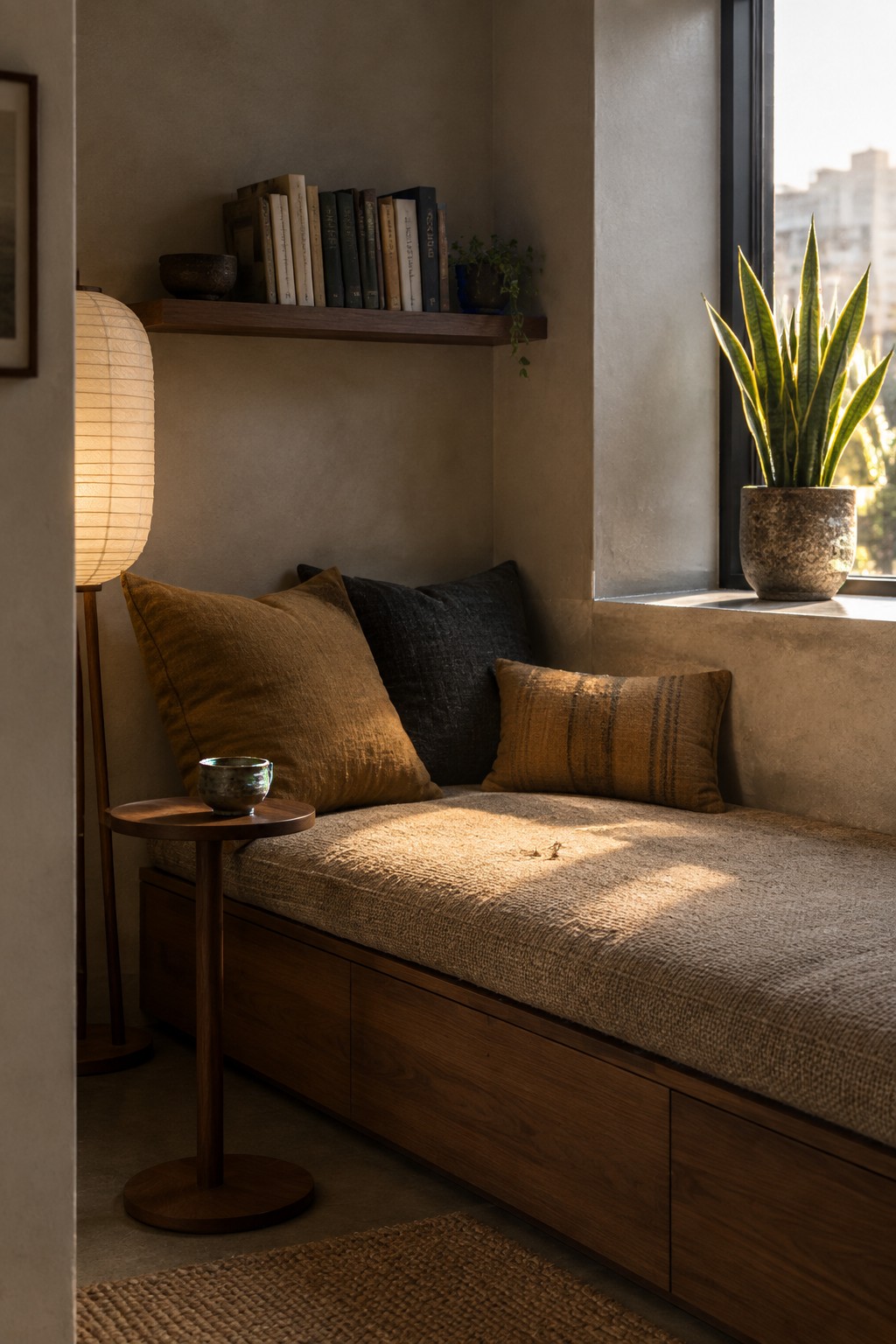
A built-in bench under a window turns a quiet corner into something you can actually use every day. It gives you a spot to sit without taking up extra floor space, and the drawers underneath keep extra pillows or books tucked away.
This setup works well in smaller homes or rooms that need one more place to land without adding more furniture. Keep the cushions simple and let the wood and natural light do most of the work.
Using a Wooden Slab Vanity for Natural Warmth
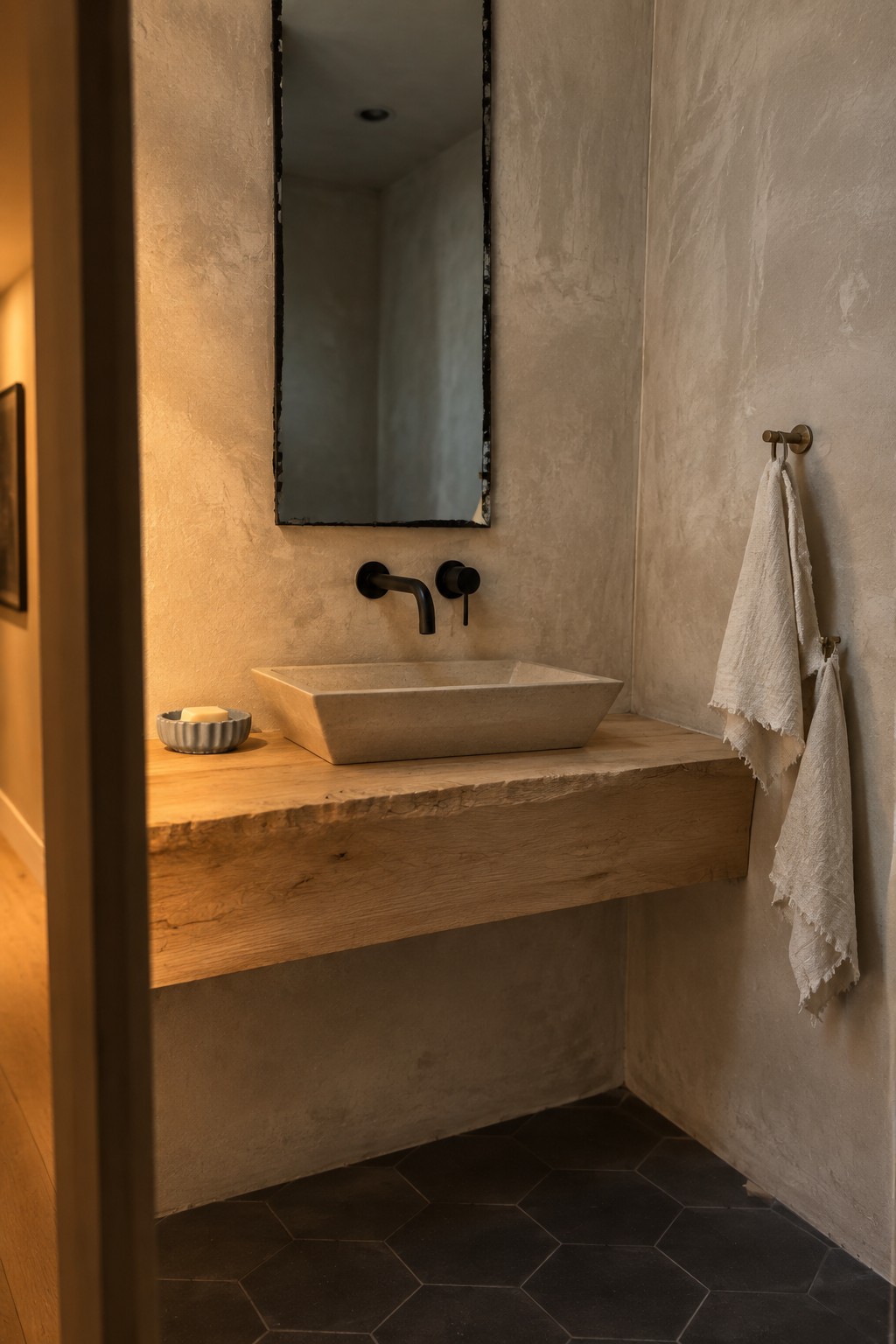
A thick wooden slab makes a strong choice for a bathroom vanity because it brings warmth into a space that can otherwise feel cold with all the hard surfaces. The wood softens the room and gives it a grounded feel without adding clutter or extra pieces. It works especially well when the slab is substantial and the edges are left a little rough.
This idea fits homes that lean toward simple, natural materials rather than polished finishes. It works best in smaller bathrooms where one strong element can carry the room. Pair it with basic fixtures and keep the walls plain so the wood stays the focus.
Using A Large Area Rug To Anchor The Dining Table
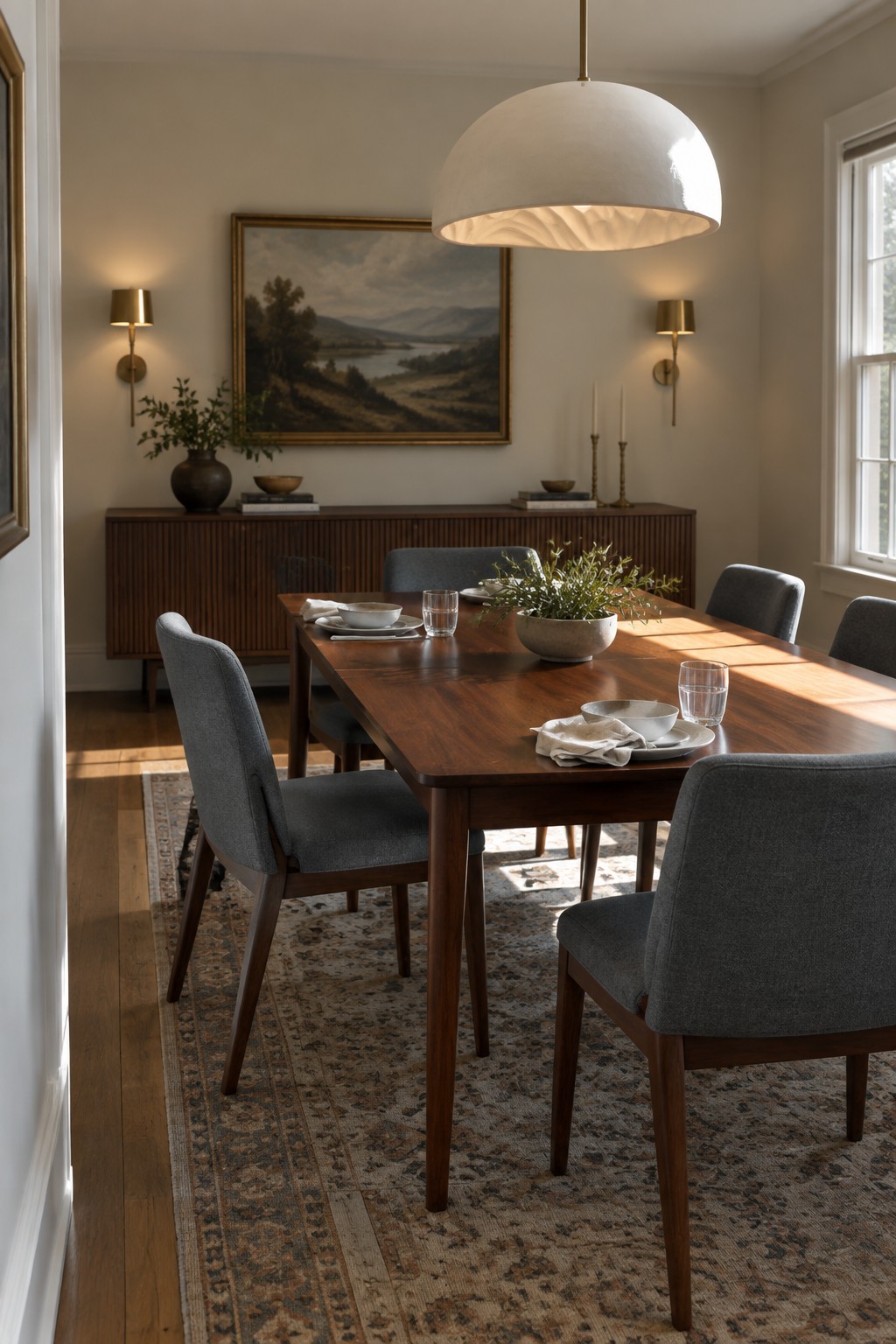
A large patterned rug under the dining table helps pull the room together and makes the seating area feel more settled. It adds texture and a bit of softness against all the wood without needing extra furniture or decoration.
This works well in homes that have hard floors and want the dining space to feel separate but still connected to the rest of the room. Make sure the rug is big enough for the chairs to stay on it when pulled out, and pick a pattern that can handle everyday use.
Woven Textures for a Calm Bedroom
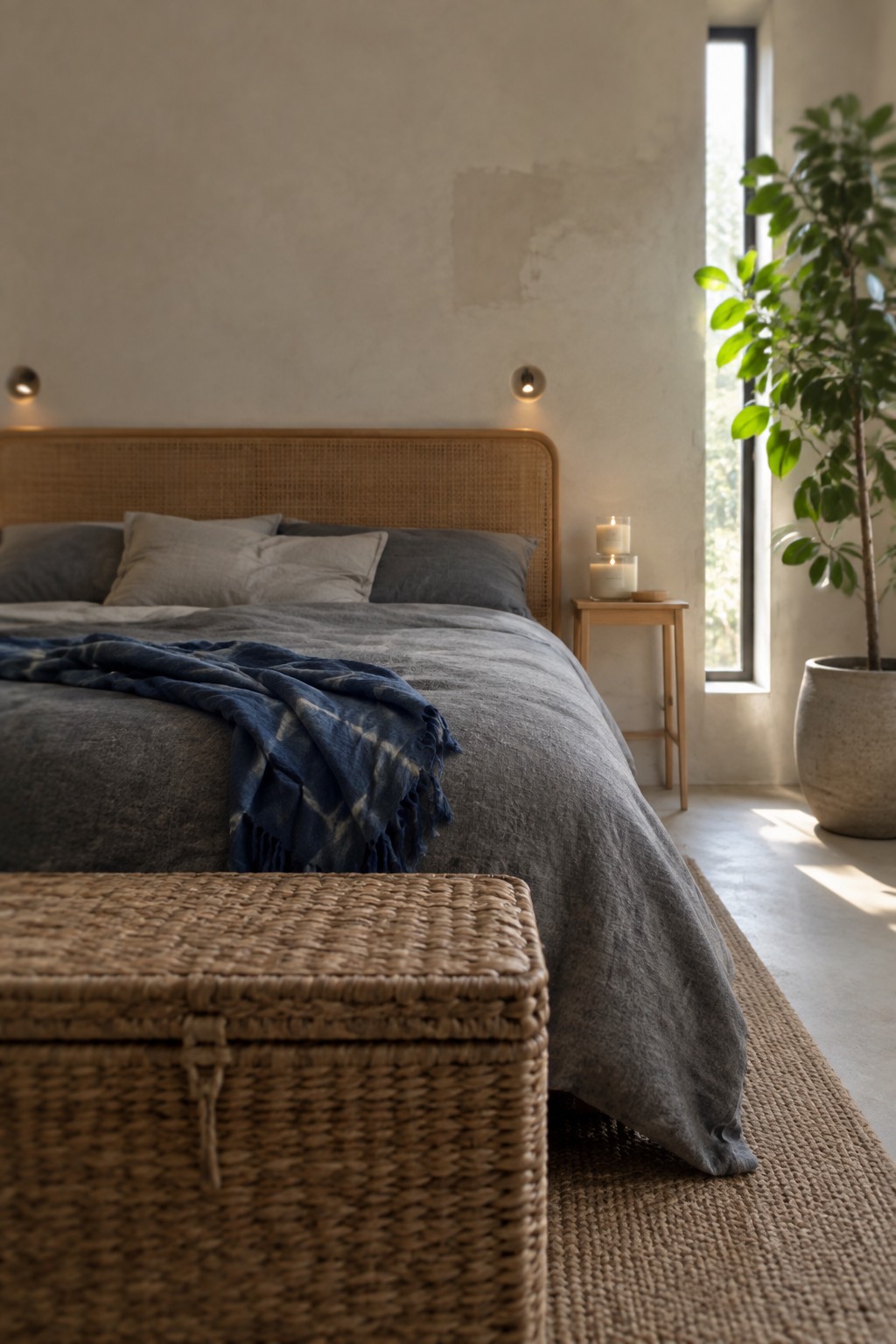
Woven pieces like a rattan headboard and a wicker trunk at the foot of the bed add natural texture in a way that feels simple and restful. The materials keep the room from looking too plain while still letting the overall space stay quiet and uncluttered.
This works best in smaller bedrooms or homes that already lean toward neutral colors and clean lines. Keep the bedding soft and the rest of the furniture low and plain so the woven items can stand out without competing. It suits Japandi or wabi sabi rooms especially well and helps the space feel warmer without adding extra stuff.
Open Shelving For Collected Items
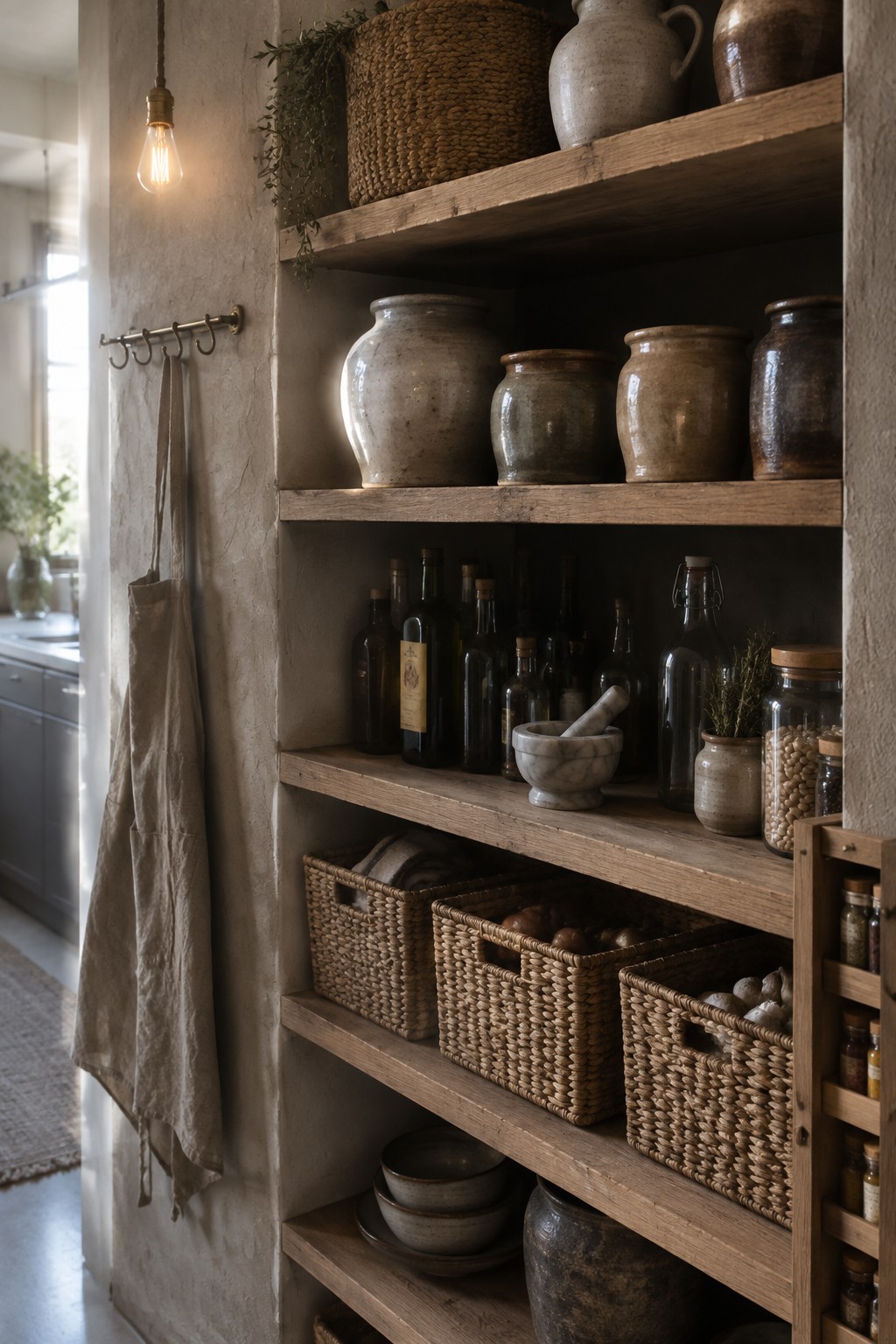
Open shelving works well when the goal is to keep useful things visible and within reach. It turns storage into part of the room instead of hiding it behind doors, and it suits homes that already lean toward natural materials and simple forms.
This setup works best in kitchens or dining areas where the collection has a purpose, whether that is cooking, serving, or just daily use. The key is leaving enough space between pieces so nothing feels crammed, and choosing items that share a similar tone or texture.
Built-In Storage Benches For Entryways
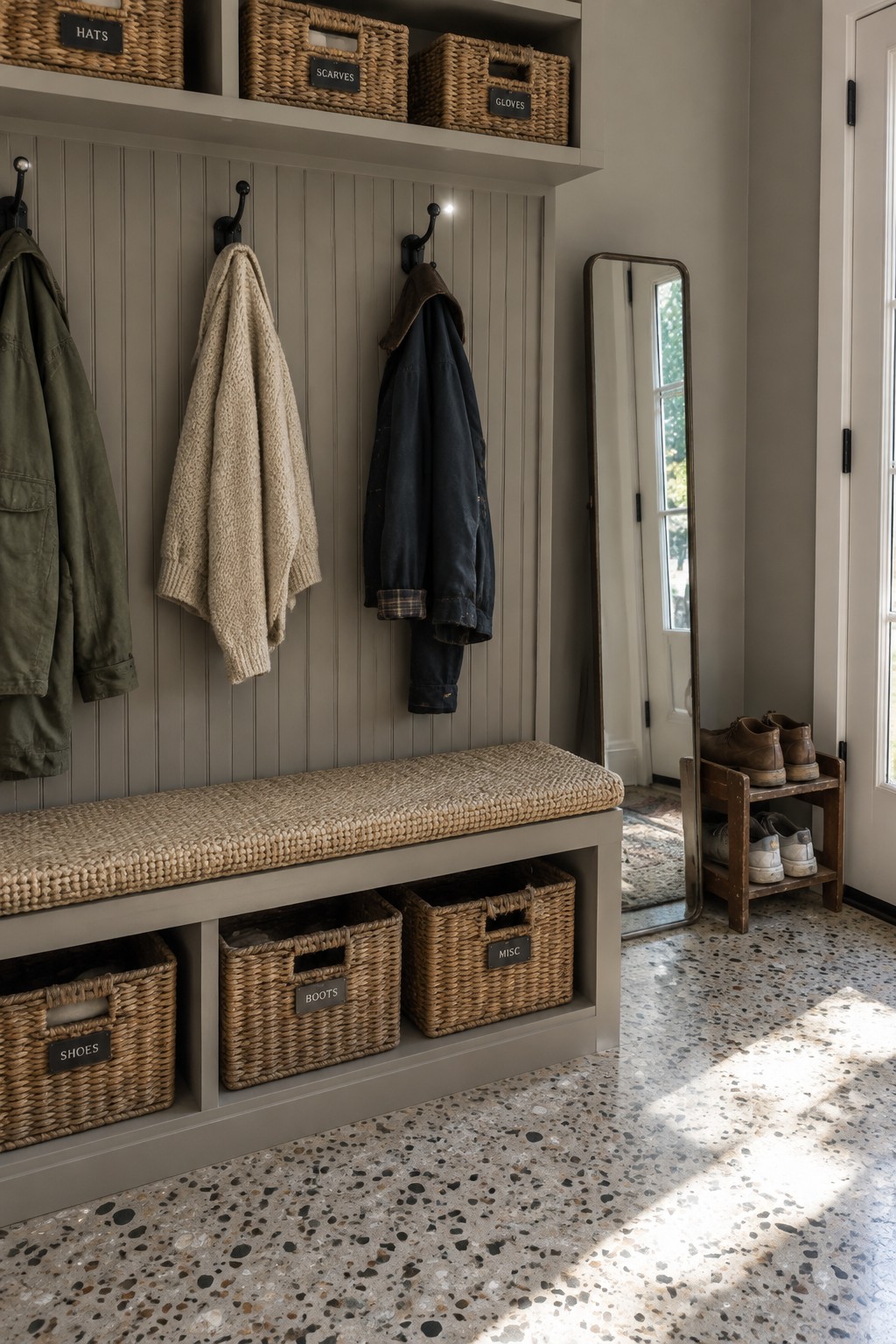
A bench with open baskets underneath gives you a place to sit while putting on shoes and keeps the floor clear at the same time. The woven baskets slide in and out easily, so daily items stay sorted without needing doors or extra hardware.
This kind of storage works well in homes that see a lot of coming and going. It fits best near a back door or in a small mudroom where people need quick access to coats, boots, and bags without hunting through cabinets.
Built-In Wood Shelving For A Calmer Closet
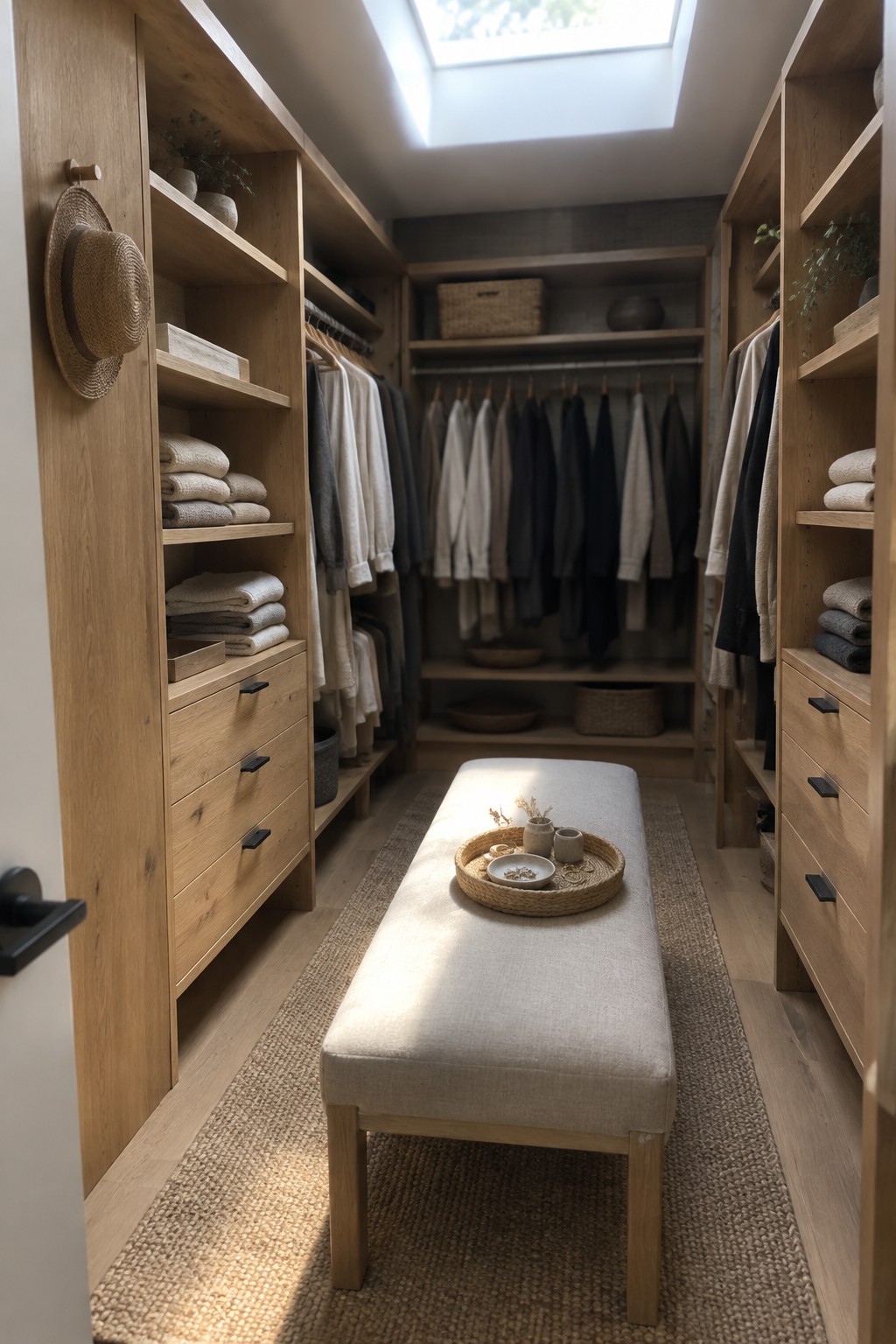
Built-in shelving made from light wood gives a closet a quiet, organized feel without crowding the space. The open shelves make it easy to see what you have, and the drawers below handle smaller items so nothing piles up on the floor.
This approach suits smaller homes or anyone who wants a dressing area that feels simple rather than busy. Stick with the same wood tone throughout and keep a bench in the center if you need a spot to fold laundry or sit while getting dressed.
Letting Wood Balance Tile in the Bathroom
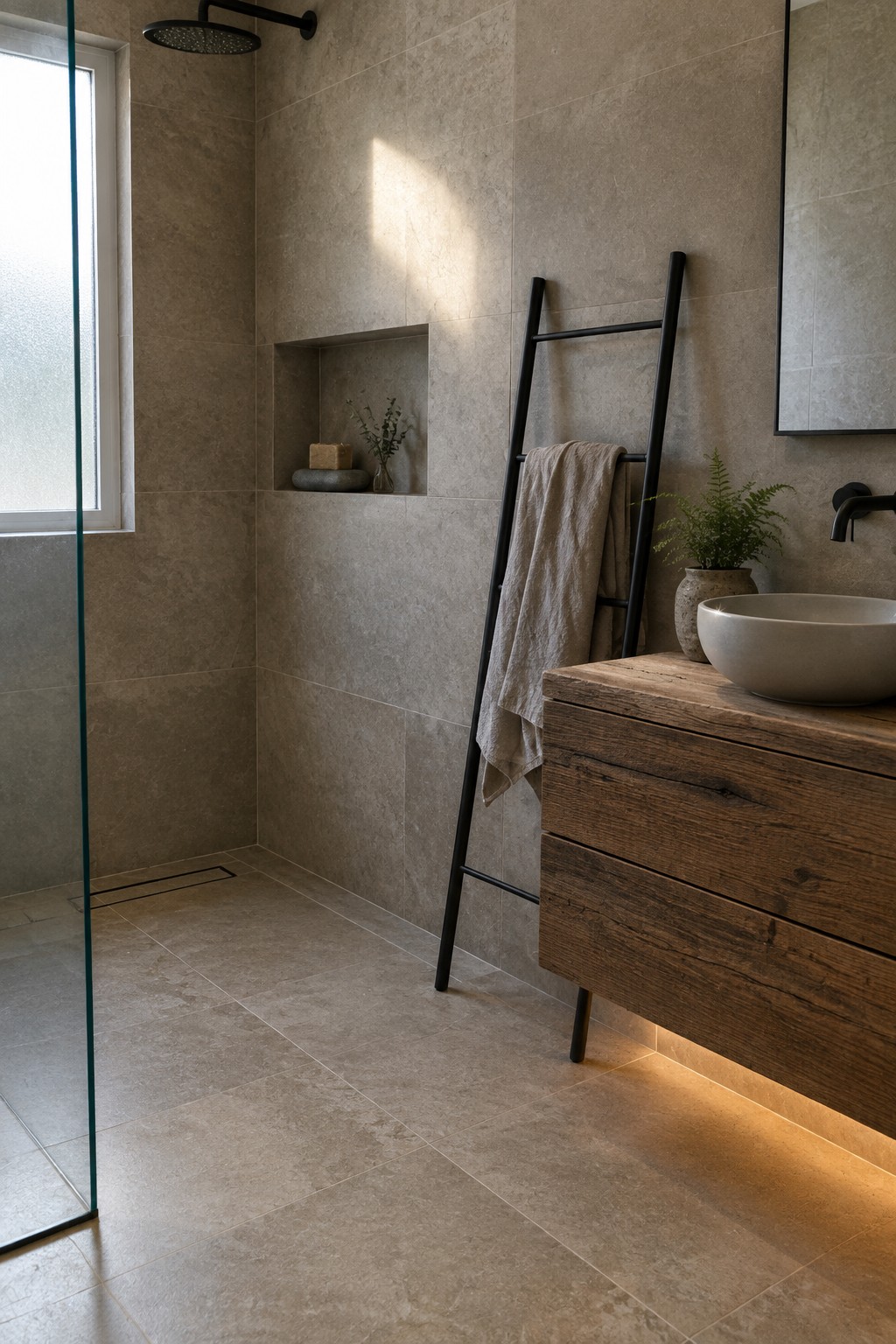
A wood vanity stands out in a bathroom full of tile because it adds a natural, warmer surface that the rest of the room lacks. The grain and tone soften the hard lines and cool feel of the walls and floor without adding clutter or extra color.
This works best in smaller baths or spaces aiming for a calm, simple look. Pick a wood with a matte finish that can handle moisture, and keep the rest of the materials quiet so the wood does the main job of making the room feel less stark.
Built-In Shelving That Holds Everyday Things
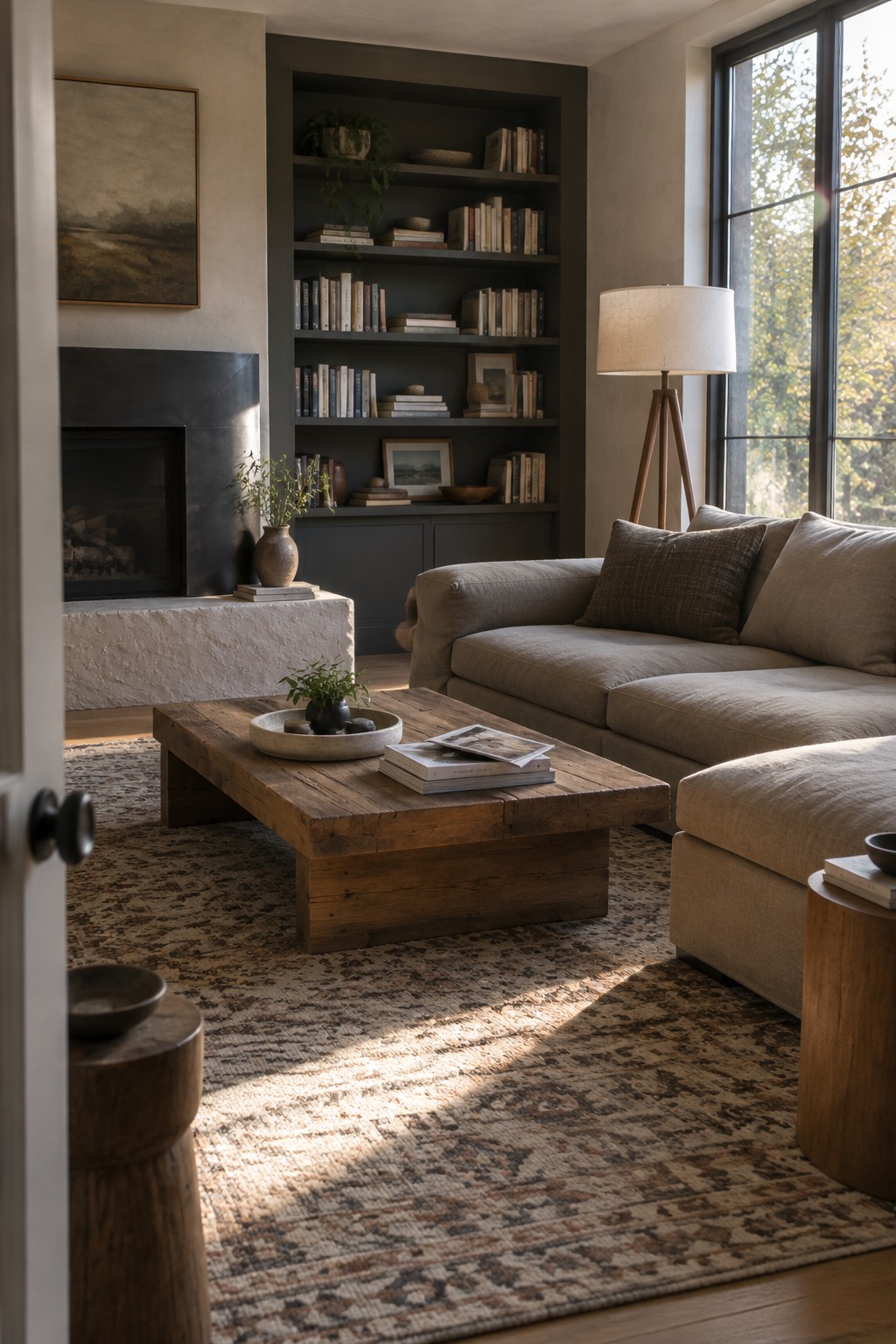
Built-in shelves work well when they feel like part of the room rather than something added later. They give a clear spot for books and small objects, which keeps surfaces clear and makes the whole space feel more settled without extra pieces of furniture.
This approach suits homes that already have a quiet, neutral base. Fill the shelves slowly with things you reach for often, and leave a little breathing room between groups so the wall does not look crowded.
Frequently Asked Questions
Q: How do I blend Japandi with Wabi Sabi if my space already has some modern pieces? A: Keep the base clean with light woods and simple shapes from your current setup. Layer in one or two handmade items that show slight wear to add that lived-in feel. Edit out anything too polished so the natural textures can breathe.
Q: What works best for adding modern traditions without losing the calm of these styles? A: Choose a single traditional shape like a low table or woven screen and set it against neutral walls. Let the form stand out on its own rather than filling the area with extras.
Q: Can I try these looks on a tight budget and still get the right effect? A: Hunt for secondhand wood furniture and sand it down to a matte finish. Swap bright accents for soft linen throws or clay pots you already own. Focus on removing clutter first so the few pieces you keep feel intentional.
